NOTE: All-Access subscribers can listen to this entire episode commercial-free here: Life on Mars Mashup.
Transcript
DOWNLOAD SRT
Welcome to StarTalk, your place in the universe where science and pop culture collide. StarTalk begins right now. Welcome to StarTalk, I'm Neil deGrasse Tyson, your personal astrophysicist. This week, we're bringing you a special sort of mashup episode. This...
Welcome to StarTalk, your place in the universe where science and pop culture collide.
StarTalk begins right now.
Welcome to StarTalk, I'm Neil deGrasse Tyson, your personal astrophysicist.
This week, we're bringing you a special sort of mashup episode.
This week, we've got a special mashup episode for you.
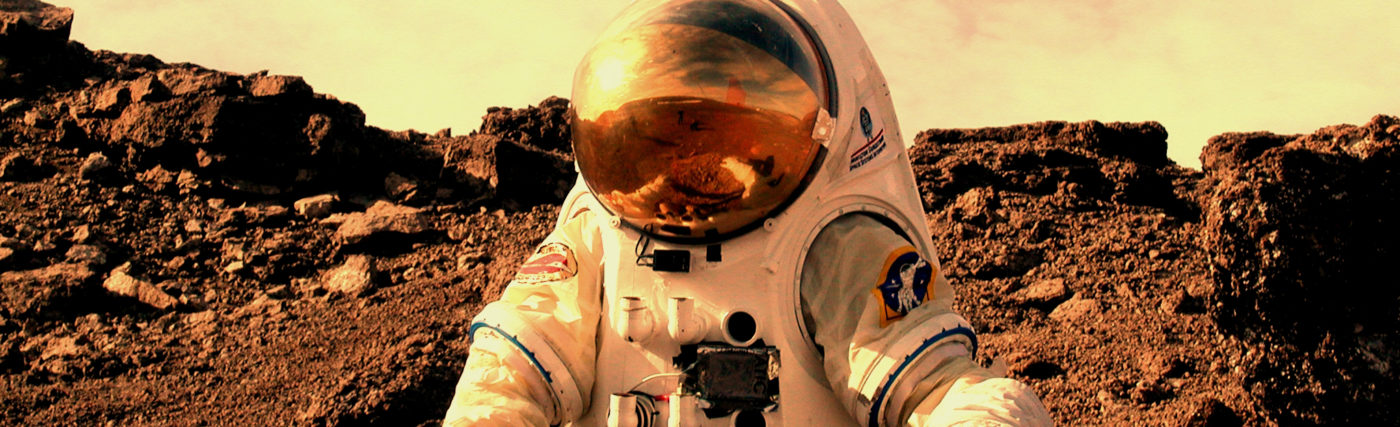
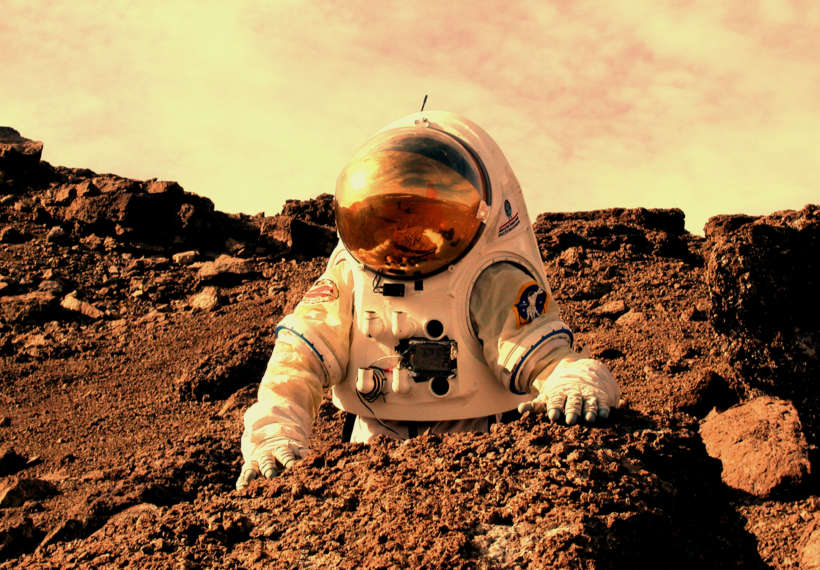
It's all about life on Mars.
What would it be like if humans lived there, ate there, and more importantly, played there?
We've wrangled clips from across the StarTalk podcast network, StarTalk All Stars, Playing with Science, StarTalk TV, and of course, the original flagship, StarTalk Radio.
The Martian by Andy Weir planted an image of human life on Mars in the public imagination.
And I remember the movie.
I couldn't get it out of my head.
Living there, eating there, surviving there.
And so we have to ask, is that image scientifically accurate?
Let's find out in our first clip featuring Bill Nye, Andy Weir, Eugene Merman, Maeve Higgins, and NASA Planetary Science Director Jim Green.
I came up with this idea for An Astronaut Stranded on Mars, but I wanted everything to be physically accurate just because I always get taken out of a story when I see some blatant physical inaccuracy.
The book is fairly accurate too, right?
Or very accurate?
Oh, the book's delightful in many ways, but you know.
Is the book delightful scientifically?
Let me think about that.
So you know, it's science fiction.
There are things in the book that, you know, we don't find on Mars.
Not yet anyway.
For example, well, Matt Damon is not on there, but there is a guy from Boston.
Probably buried.
Is that what you meant?
Buried somewhere.
So yeah, from the big dig.
Turns out that's where Jimmy Hoffa is.
The dust storm.
The dust storm.
Mars has famous dust storms.
They go global sometimes.
You can see them with telescopes from Earth.
Yeah, absolutely.
And they look gnarly from space sometimes.
But in reality, the pressure is so low.
How low is it?
It's very low.
It's about 1.7 atmospheres.
It's about a percent of what we have, you know.
And so, although the winds can be pretty hefty, it can be 120 miles an hour, but that's not enough to straighten an American flag, let alone blow away a radio dish.
Because there's so few molecules going that way.
Right, that's right.
So, did you have trouble watching the movie with all its lies, then?
Stop lying to me, Ridley.
Are you going to put it on Ridley?
All right.
Freaking Ridley.
Now, what you gotta do, guys...
You gotta check the science at the door and go on in and enjoy it.
It's enjoyable.
It's great.
You know, I do that kind of stuff all day long.
Why do I want to sit in the movie theater and think about some more of it?
Andy, as nerd man, you had to work out some serious scientific problems.
Yeah, I did.
Yes, absolutely.
The dust storm is, or the sand storm is inaccurate.
And I knew that at the time.
I just didn't care.
I wanted a good reason to strand them there.
And at the time I wrote it, most people didn't know that.
Like most people thought that a sand storm on Mars.
But then because the Martian got so popular and became a very popular movie and then got a bunch of scientists talking about it, now everybody knows a dust storm on Mars can't do that.
It was, you blew the thing over and you couldn't see.
Right.
Oh man.
Yeah, what are those chunks, by the way, that were coming out, you know?
Yeah, you know, I don't know.
Space debris.
One of my favorite things is how JPL almost ruined everything.
When I, you know, I wrote the book, it was done, it was already in final editing.
I can't make any more changes, other than like copy editing, you know.
And like, at that point, like they were deciding, they headed down to the final four candidates of where they were going to land Curiosity.
They eventually landed it, you know, near Mount Sharp and Gale Crater.
But one of the, Mount Sharp, Gale Crater.
On Mars.
The big one.
Right, on Mars.
Not the real one.
Which is, which is thousands and thousands of kilometers away from all the things that happened in the Martian, not a problem.
One of the final four candidates on where they were thinking about landing it was Marth Valles, which Mark drives through.
Like I specifically call it out in the book.
He drives through this ravine, Marth Valles.
He would have had to have gone around the rover to keep going.
And I'm like, oh, you guys are killing me with your stupid real stuff.
And then my favorite little, it's like they didn't even take it into account.
It's like they, you know, nobody asked me.
Yeah, I don't know what I was thinking.
Sorry about that.
Yeah, I know.
Well, Jim, one of my favorite final decisions.
No, actually I didn't, but we were down to the last four and I loved any one of those.
So my boss did.
And that was Ed Wyler at the time.
And so everybody, this is the real guy.
That's all I'm saying.
Just so we're clear, just so we're clear, the character in the book, Venkat Kapoor, who is in the movie Vincent Kapoor, he holds that position in the real NASA.
So if you're curious, that's who he is.
So they're tax dollars at work.
And they work too.
But one of my favorite little stories of space research screwing with me is the University of Arizona that runs the Hi-Rise instrument, high resolution camera.
Apparently we have like four of their alumni here today.
Four people who are great at clapping.
They just got the joke Bill made ten minutes ago.
In the book, well they're U of A, I mean, but somebody got it.
But in the book, I give the exact latitude and longitude of the hab.
And so the hab is the habitat, the base where most of the Martian takes place.
Where Mark Watney is stranded, where they are.
The habitat.
And so I described the terrain as being kind of flat and sandy.
There's not much going on in Nassadeli or Planitia.
It's a large empty desert and stuff like that.
And the guys who run High Rise are like, let's check.
And so they did these super high rise photos of the hab's location on the real Mars.
And they're like, well, that's nothing like he described it.
Yeah, but Ridley got it right.
You know, because there are these beautiful craters right around where that hab would be.
Yeah, and the scenery looks great.
Yeah, it does.
Those people must hate Star Wars.
Almost.
So they don't have good resolution on galaxies far, far away.
They don't have, we don't have a camera for that yet.
Yeah, we're working on it.
So the guy's on Mars.
He's got a lot of food, because there were supposed to be six people, but he's only one.
Yeah.
And they left in the book, they left after six days of a planned 31 day mission and they had redundant food supplies.
So he had enough food to last about 400 souls.
A soul is a day on Mars for the four of you who don't know that.
And well, three of you and one of her.
I know it is that, but why is that?
Why is it called a soul?
Soul is Latin for sun.
It just means because day is an ambiguous term.
Day to scientists means the time it takes for it to rotate once on its axis, just Earth.
So Mars rotating on its axis, that's one Martian soul.
I remember during the disco era.
A different soul.
A different soul.
Tell us what Studio 54 was like, Bill.
I don't remember, man.
He was there.
You don't always do that well with the ladies.
The stereotypical male in here.
I know, it's shocking.
In our next clip, I chat with Chuck Nice, astronaut Mike Massimino, and author Mary Roach about handling waste on Mars, and an unusual space snack.
We came off the segment talking about food, comfort food.
What's your favorite?
You love the lasagna, but lasagna is not comfort food.
For an Italian kid, it is.
Macaroni and cheese.
You got mac and cheese.
Shrimp cocktail is a favorite.
I don't know if that's comfort food.
I really don't know what comfort food is.
I mean, it's food you can eat without anything.
Comfort food for the bushes, yes.
We have hamburgers, comfort food for the bushes.
Depends on how wealthy you are.
You want some good food.
The idea of wanting to look out the window and not worrying about food, that's when you're applying to get on the mission.
Yeah, I don't need food.
I'll eat granola bars.
But after you get assigned, you're going to want to eat.
So the quality of the food is going to have to be pretty good, I think.
And Chuck, you said the Jamaicans, why would they make good astronauts?
Because, think about it, man.
You know, everything that you need to deal with, your stress and food issues are taken care of with one little rasta puff.
That works.
If your fellow astronaut is on you, hey man, go ahead and smoke these.
I'm guessing there's no smoking in space.
Yeah, there's not just that, but there's a few issues there.
I don't know if we want to go there.
But that might not be an easy, it might sound like an easy solution, but it might not work as well as you think.
Anyway, space flight is tough in that way.
We just put it in a pouch, you add water and put it in the oven.
No smoking necessary.
No comment.
That's right, we put them in brownies.
So what's fun is if you create a Mars settlement, there's food you might bring, but maybe you don't want to bring food.
You bring seeds, you bring sort of baby animals, and then you sort of raise livestock on Mars.
That way the astronauts wouldn't have a real burger.
You can have like Kobe beef on Mars, maybe.
I interviewed Mary Roach, author of Packing for Mars.
Let's see what she says about Mars settlements.
I think we know enough about space we don't have to send animals to Mars first.
What a waste of money that would be.
No, nobody's going to do that.
Unless someone decides there's this wonderful paper from a 1964 conference on space nutrition and related waste issues.
That's the title of the conference?
That's the title of the conference.
If you were to bring livestock to Mars, like if you're going to bring animals and have ranching going on, what would be the best species to bring in terms of how much it costs to launch them versus how many calories you get?
And he did an analysis of cows.
I would include taste in there too, somehow quantify taste.
I don't think he did because the winner was mice.
Mouse stew.
Yeah.
So mice are more efficient.
That's what he determined.
You know why I can't believe it?
Because there's not much meat on a mouse.
That's what I'm saying.
I once ate a squirrel when I was in Texas.
There's barely any meat on a squirrel.
You know there's nothing on a mouse.
Well, you've got to take it up with Max Clyburn.
Could it be that mice, they have a very short gestation period?
So they can multiply their generations very quickly?
That could have been it.
But just think of the steer.
Talk about waste issues.
No, then it's fertilizer for the plants that you're going to grow.
Or it becomes radiation shielding because you want your hydrocarbons.
So manure being radiation shield.
NASA has a device down at Ames that can take...
Ames Research Center in California.
Yes.
It's kind of like an easy bake oven where you would take waste material and kind of plasticize it in a tile and you could line the capsule with that.
On your way home, you'd use that for radiation shields.
You'd take animal poop, put it in an easy bake oven.
Or human.
Yeah, well humans are animals.
And so it hardens.
It becomes a tile, like the ceiling tiles.
And so you line your craft with this.
It's a good radiation.
Doesn't it smell?
I mean, you have to coat it.
It's sealed in plastic.
But it is interesting because if you go to another place, you're thinking you're going to take food that you would be comfortable with eating and might want to sustain.
So it would be like an ark, right?
You wouldn't just take a cow, you could take a cow and a bull.
No, more likely a cow and bull sperm, right?
Right.
Okay, because a bull sperm weighs less than a cow.
Sorry, I just did the math on that one.
Just how that works.
So Mike, if you eat mouse stew, if that's all you could eat, would you go to Mars?
That's what I would say if that was my interview question, if I could go.
Yes.
And then after I got assigned to the mission, I wouldn't be eating any mouse.
Right.
Boy, mice cannot catch a break.
I'm telling you.
No, we're not eating mouse.
I'm telling you.
You know, it's just interesting using animal waste to line the aircraft because there's still this radiation problem unsolved.
Yeah, you know, I think it shows the way you have to think out of the box for this type of trip.
And any crazy idea might seem a little bit nutty.
You need to think about if it's going to help you.
You need to think creatively.
That's more like thinking out of the butt.
Yeah, I'm sorry.
Yeah, come on, can't hold it together.
The crappy shields are coming out.
Quick poop, we're in danger.
Yeah, I don't know.
I'm trying to get some credence to it.
I.
Welcome back to StarTalk.
This week is a special mashup edition.
You're going to hear clips from our favorite discussions across the StarTalk network.
So let's get right back to it.
Hello, this is Mike Massimino talking to you from StarTalk All Stars.
I guess I'm actually an All Star.
Yeah.
I haven't been an All Star since I was 13 years old in Little League.
That was 40 years ago.
But I'm an All Star again, and you're host tonight.
And I have with me my friend.
Can I call you my friend?
Yes, please.
Maeve Higgins is my new friend.
No, we're friends.
And she is a tremendous, great space enthusiast, but more important, a comedian.
So she's going to keep us laughing.
Thank you for being here.
No, thank you for having me.
You bet.
And I'm very excited because a good friend of mine who I work with at the Johnson Space Center, John Charles, really smart guy.
He's a scientist.
He's actually a chief scientist.
Oh, so there's scientists and then there's chiefs.
There's scientists and then there's chiefs.
And there's like baby scientists.
And you got to grow up to be a chief.
You don't start out as a chief.
They check you out and they're like, OK, we're going to make this guy a chief.
And John is a really smart, well-spoken genius, although he'll never say this, but he certainly is.
He's the head of our NASA Human Research Program, chief scientist for the NASA Human Research Program, trying to get people to the moon, to Mars, off the planet, far away and taking care of them.
Well, thanks for making time to talk to us, two bozos, John.
John Charles.
I don't even like with an intro like that.
I'm glad I made it.
I'm really glad that you're here.
And we're going to talk about what it takes to get people to Mars.
People on Mars.
That's right.
People like you and me, maybe not you and me, but people like us, real people.
But John, what did you think about the movie to Mars?
I'm sure you get questions all the time about that.
What was your opinion?
Well, I enjoyed it.
I thought it was probably the best space movie since 2001.
And we can argue about whether it was better than 2001.
My wife says she prefers not to go to space movies with me because all I do is huff and puff and roll my eyes audibly, usually during the entire movie.
But she said I would behave myself well this time.
You know, Andy has said that the opening event, you know, the wind that blows everything around and causes the problem couldn't happen on Mars.
The atmosphere is too thin and the dust is not sandy, grainy, granular like that.
It's more the texture of smoke particles.
He said I asked him that question during a Q&A one time.
He said, yes, I know, but I needed to start the movie somehow.
That's how I chose to do it.
Did you just show up at a Q&A like a regular citizen?
Like he didn't know that you had all this surprise.
He actually came to Johnson Space Center and did a series of book talks and Q&As for all of those nerds.
So he was very well prepared for the audience and we all loved him.
Yeah, John was a plant.
Yeah.
But that was and the EVA scene, the spacewalking scene at the end, as soon as you mentioned that, my son and I saw it together and he said the same thing, what kind of spacewalk are they doing?
Even my son, you know, my son was picked up on it yesterday, it was very unprofessional the way they were untethered at the end.
You were like, but wasn't it cool when he pulled the antenna out of it?
Right.
I said, yeah, don't worry about that.
Matt Damon was a cool astronaut.
This one's approved.
I mean, it must be great, like PR, right?
Like that's like my, you know, when you see a great movie about space, like it makes you think highly of NASA for some reason.
I think so.
What do you think, John?
I think that was that was good for us, wasn't it?
I agree.
We got a lot.
We certainly used it for a lot of publicity.
We tried to link a lot of the one year mission space station work to it and things like that.
So, yeah, that was great, Johnny, but there's also the serious part to what the movie portrayed, which was how do you keep a crew alive?
Now, he was in a survival situation, but still, there must be a lot of parallels that with the work you're doing, what you saw in that movie, right?
Food and water and life support and so on.
Yeah, exactly.
Well, I mean, the food was was one of the actually the potato was like another supporting actor in the whole movie.
That's like in the whole history of Ireland.
But Mike, your pal, Don Pettit.
Potatoes are huge for us.
Have you heard what Don Pettit said about potatoes in space, though, Mike?
No, Don Pettit is one of my best friends and a very entertaining guy and a genius, very rare for an astronaut.
Let me add.
What did he say this time?
Don Pettit said he's never seen a potato on the space station or on the shuttle that was not sliced and had its eyes cut out, so there's no way a potato in space would have been able to grow and produce more potatoes.
But Don did actually grow stuff in space and he are growing stuff on the space.
But Don grew his own.
He grew a sunflower and he grew a squash.
Yeah, it was kind of on his own.
But he did his own little experiment.
But they have grown also lettuce on the space station as well.
On purpose, yeah.
We have special seeds.
We fly up to do that kind of research to eventually lead to growing fresh food.
I knew it was on purpose.
I didn't think it was like an accidental.
Some astronauts might do things because they are interested in their own experiments.
This was the lettuce was a real, growing the lettuce was a real project that they had and was successful.
So you can't grow your own food in space.
Yeah.
And then eat the results.
And then eat the results and they are good hopefully.
I was just going to ask about water.
Yeah, that's a good one.
Like how how on earth could you provide water for people on Mars?
Could you find it there?
What's going to happen there?
Well, you have to bring it with you probably at least the starter kit for water.
And then the point is, with any luck, you can generate water out of in situ resources.
And of course, what you have on Mars in situ is carbon dioxide.
It's a very thin atmosphere, but it's almost completely carbon dioxide.
And if you bring along the right kind of machinery that knows how to crack carbon dioxide, and if you brought along a tank of hydrogen with you, you can get oxygen and water out of the reaction of carbon dioxide and hydrogen using chemistry that is far beyond my capability to explain.
But it's a possibility.
So if you're there for the long term, you got to plan ahead and either bring stuff with you or make it from local resources.
You're also going to recycle it, aren't you, John?
I mean, that's what we're doing on this.
As my friend Don Pettit, who we referred to earlier, describes today's coffee is tomorrow's coffee.
You drink something, you pee it, and then you drink it again.
That explains Starbucks.
There's a couple steps in between there, by the way.
But that's going to be the plan too, I would assume, right, John?
Exactly right.
Exactly.
And what would it look like to live, like, where would you live in, Mark, like, what would it look like?
What would your, you know, I was going to say tent.
That's because I've seen the movie, but like, what would, like, where would you sleep and live?
Habitat.
Your habitat.
Yeah, that's the word.
Yeah, the habitat would probably look very much like, like you saw in the movie.
And that was actually based on a habitat that we're doing studies in on the ground, which was, of course, primarily designed for studies back in the deserts.
So it's probably going to look something like a repurposed spaceship.
It might be inflatable.
It might be rigidized.
Certainly we're only not just now doing research on the right way to do that.
So there's no final answer yet.
It sounds like the Burning Man festival.
I don't know if you ever sent anybody on a research trip to Burning Man where you have to like bring your own water in tents and everyone is really spaced out.
I know.
Like that.
Scared?
Where'd you get the gong?
Normally, that's how you get someone off the stage, right?
I saw the gong show.
All righty.
No, no, don't take it personally.
No, that is a royal entrance right there.
That's what the gong is for.
Now, normally, I'm sitting there.
That's right, sir.
Now, you just took your own damn show.
Now, I'm a guest on your damn show.
Weirding you out?
Are you okay?
I'll get used to it.
That's all right.
It doesn't happen without you no matter what, though.
What's up?
Neil's going to start asking us questions.
You might be able to help him some day.
Yeah, no, I'll happily be your guest on this show.
Yeah, that's when the...
Please don't ask us any questions.
It means I feel loved.
I feel loved, yeah.
That's very cool.
Thanks for being here, man.
We appreciate it.
And, of course, you are a prolific tweeter.
This is from the 2012 Olympics.
All right.
I said, how about a Mars Olympics?
Yes, all athletes would suffocate.
Ignoring that complication, way cooler than an Earth Olympics.
That's all.
Way cooler than an Earth Olympics.
I'm setting you up for tweets that follow.
Yes, I was going to say, because when you say way cooler, then you actually give us some examples of why an Olympics on Mars or pretty much any sporting event on Mars might be cool.
It's also a couple hundred degrees below zero on Mars.
So way cooler has double meaning there.
You picked that up.
OK.
So let's look at one of the Mars tweets.
And this is cycling on Mars.
All right.
So go ahead.
All right.
So this is again during the summer 2012 Olympics.
If there was cycling on Mars, try Olympic Mons, a volcanic mountain five times taller than Mont Blanc in the Alps.
Wow.
So you think you got tall mountains here.
No, the tallest mountains and the deepest valleys are not on Earth in the solar system.
They're on Mars.
They're on the moon.
So we ain't got nothing.
We ain't got nothing.
Right.
Yeah, we're not.
We're not winning those contests.
Because you know this, the atmosphere on Mars is how much less than the Earth's atmosphere?
It's about 1 one hundredth.
So if we had that.
Pressure, atmospheric pressure.
So in other words, for every breath you take on Mars, there's 1 one hundredth the amount of air in that breath.
And it would be on Earth.
Because as an athlete, altitude becomes your enemy in terms of the oxygenation.
If you're performing an altitude, but the ideal way to do this is you train an altitude, they compete at sea level.
What we need to do is go to Mars.
That's why Sherpas don't have any problem getting up the mountain while all the tourists are like, that's right, I need more oxygen.
Here's what you do.
Even better.
We're going to train on Mars.
I'm going to make a suggestion that's never been made before.
You ready?
Here we are.
You drain the Pacific Ocean.
Okay.
And then hold the Olympics at the bottom of the Marianas Trench.
But you train at high altitude, but now you compete at the bottom of the trench.
Which is six miles down.
Now every breath of air has way more oxygen than at sea level.
And so now you have heroic feats.
You don't even have to dope your blood.
The air itself will put the oxygen and force it right into your lungs.
I'm sure the IOC are going to stump up for that draining of oxygen.
I just like the fact that you're thinking like a super villain.
I'd have gone the other way and said, let's all go train on Mars, on the mountain.
On the Olympic mons.
And come back to Earth and compete.
The problem is it's only 40% the gravity of Earth.
So the weight that you are carrying is not as much going up the hill.
Got you.
Yeah.
So there is some trade-off.
Some trade-off.
There's some leaded suits.
Oh, yeah.
Yeah.
Just lead yourself down.
Another thing, once you've drained the Pacific Ocean, it has nothing to do with sports, just while we're on the topic.
If you drain the Pacific Ocean, that is the great toilet bowl of dead satellites.
Oh, really?
Yes.
Oh, yeah, because they always splash down in the Pacific.
Oh, they crash down in the dead satellite.
They're not splashing.
They're not splashing down.
They're crashing down.
Yeah.
So the reason why is the Pacific Ocean is almost a third of all possible longitudes on Earth.
So if you de-orbit and you do it, you have a lot of latitude, no pun intended, to where you begin the de-orbit so that it's going to plunk down in the Pacific no matter what.
And people don't live there, so not over the great bulk of the expanse, so it's a safe place to drop your stuff out of orbit.
But the day we de-orbit Hubble, it's going straight into the Pacific Ocean.
And it's the size of a Greyhound bus, by the way, if you know.
Hubble telescope.
So this is one of my favorite.
We actually talked about this in a different forum on StarTalk, and it's swimming on Mars.
Okay, so here it is again in the same week.
If there was swimming on Mars, the low temperature and low air pressure would force the pool to simultaneously freeze and boil.
Sweet.
How many hours does Michael Phelps have to train?
To cope with freezing and boiling simultaneously, because he's up to about 50,000 hours.
There it is gurgling, and there are chunks of ice in there as well.
So at the same time, so can you explain that?
I wonder how you get to that situation.
How do you get to that situation?
Okay, so in chemistry, in physics as well, it's called the triple point.
So, which is a cool name, the triple point of a substance is the point where it is happy being solid, liquid and gas all at the same time, okay?
So now, that sounds freaky because it's outside of our common life experience, right?
But it's less so than you might think, okay?
So take a look at dry ice, okay, CO2.
That's in a double point of its state.
So it is simultaneously a solid and a vapor, right?
It's happening all at once, okay?
You open a thing up, the vapor comes out and it's solid.
That's a double point.
That's not as interesting as the triple point.
It does make for awesome concerts.
So here's how.
I think they use other smoke for that, rather.
I think they got that done.
They used to use dry ice back in the day, but you're right.
They use smoke machines now.
But 80 years ago, when Twisted Sister performed in Ought 3.
So here's how it works.
You know that when you go to high altitude, it affects cooking times because water boils at a lower temperature.
You know this.
Instead of 212, if we're all using Imperial units, it could boil at 200 degrees or 180 degrees.
You have to increase the cooking time because the food is not at the high temperature for as long and you can't get boiling water hotter than the temperature that it's boiling at.
One of the earliest experiments I did with my kids, so they understood this.
I would start boiling a pot of water.
I give them a thermometer.
I say, measure the temperature.
And it's like 100 degrees.
Three minutes later, measure it again.
110 degrees, 120.
They keep doing this.
And I say, there's heat going into it.
I say, yep, we see the flame.
My kids are like six and seven and eight.
So then it's like 200 degrees.
They check it again.
205, 210, 212, OK?
Ten minutes later, measure it again.
Still 212.
Where's the energy going?
Right.
Oh, my gosh, it stops going because water and at that air pressure, it's got to become gas.
So now you lower the air pressure, the boiling point drops.
And the more you lower the air pressure, the lower the boiling point drops.
And eventually, the boiling point meets the freezing point of water.
And now you have frozen water, liquid water and boiling water all in the same pot.
That's great.
Awesome.
Hey, before we jump back into it, I just realized something.
So everyone wants you when you were talking about volleyball on Mars, burning the skin because no UV protection.
By the way, Mars is farther away from the sun than is Earth.
So the 1.4, carry the 2.
Don't you get it wrong.
So Mars has about one half the solar intensity than does Mars.
So in any given amount of time, all other things being equal, it would take you twice as long to get to get sunburn.
But Mars does not have a UV layer.
I mean, an ozone layer.
Because there's no free oxygen on Mars.
So on Earth, free oxygen is the oxygen we breathe.
That's O2.
O2 binds with itself.
The ozone layer high up in the atmosphere is three oxygen atoms.
And the reason why that blocks UV, do you ever wonder why, how?
I did not.
OK.
So this molecule is sitting there fat and happy in the upper atmosphere.
And one of its bonds that binds these molecules together is the same energetics as that of an ultraviolet particle of light, an ultraviolet photon.
Gotcha.
An ultraviolet photon comes in, it is just what it needs to bust it open.
Right.
So the energy of the light is gone and it got converted to breaking apart this molecule.
So basically it ate the UV molecule, ate the UV photon.
That actual molecular bond becomes a natural block, it's literally like a blocking tackle.
Natural block, and if there is a very close explosion to us in our solar system, supernova, you can calculate, because it takes a while to regenerate the ozone, right, because it is a stable layer, you win some, you lose some, re-manufactured.
Thank you Al Gore.
Okay, so watch what happens.
So if you have a nearby supernova which has a lot of UV, the waves of UV light take out your ozone, and then the next wave goes through without conflict.
Wow.
So the first wave...
It's just like an army.
It's exactly like army waves, waves of armies.
And so the ozone can only protect you so much before it has to rebuild itself if you have a major flux of UV coming in.
What's the timeline on a rebuild?
I have to calculate that.
It has many sources.
Lightning can actually regenerate.
You can put energy back in to recreate this because different chemical reactions are exothermic and endothermic.
And it's the balance of all of these that creates the chemical cocktail that is our atmosphere.
So other mechanisms can regenerate it.
Whatever those mechanisms are, you can construct actual things in the universe that will override them such as supernova explosions.
Any other planets or moons in our solar system with a similar ozone layer?
No, because we get our oxygen from life.
I used to think in Star Trek, oh Captain, this is an oxygen-nitrogen atmosphere, we can go down and breathe it.
I said, oh, all we have to do is look around the universe for a planet that happens to have the chemical mixture that Earth has.
Then I realized, no, that's not how it works.
It's not that every planet's got its own mixture.
It's that Earth has oxygen because we have life.
Right.
Because we, because the photosynthesis, all the green plants make that oxygen.
And that's like rocket fuel for animals.
And then animals can now rise up, metabolize oxygen, and we have this harmony of plants and animals.
Welcome back to StarTalk.
This week is a special mashup edition.
You're going to hear clips from our favorite discussions across the StarTalk network.
So let's get right back to it.
So this is somebody who wants to know about the atmosphere and the gravity on Mars.
But I love the way that Stephen Matlow phrases this question, somewhat inventive.
And this came over which path?
This came over Facebook.
And he says, OK, Neil, when the New York Yankees play a road series against the Mars cosmos, how big will the outfield have to be to prevent everybody from hitting home runs?
Also, will the pitcher throw faster in the atmosphere or slower?
And will he or she, this guy's very.
Liberal, he's got a female pitcher in the Major League Interstellar Baseball League, will he or she be able to throw a curve ball?
And take it back, Stephen is coming from Livingston, Montana.
Livingston, Montana.
Yes, yes, flat country.
Now, here's something.
I've never seen a mountain in his life.
That's why it's called Montana.
So I was in Montana recently.
I gave a talk in Bozeman, Montana.
Oh, really?
Yep.
Six thousand people showed up for it.
Nice.
I didn't know that many people lived in Montana.
I think you had the entire state there to be honest.
And by the way, I was joking about mountains because there are mountains in Montana.
That's why it's called Montana.
It's big sky.
Big sky.
It's big sky but they're mountains in Montana.
So here's this question.
I got the question.
You read it.
I got it.
I have good memory.
Excuse me.
I have an awesome memory from three minutes ago.
I know.
So a couple of things don't change and other things do.
The pitcher does not throw faster because that's just their musculoskeletal capacity to do so.
The ball will not slow down as much between release of the finger tip and crossing home plate because the air is thinner and there is air resistance to the ball that slows it down.
Maybe 10 miles an hour or whatever it is, five miles an hour.
It's not traveling for very long, but it will slow down a little bit.
It does that in the majors.
It will do that on Mars, but it will slow down by a little bit less.
But that's not the major thing going on here.
The Martian atmosphere is very thin.
It's like 1% of our thickness.
And it's the air, the movement of the ball through the air, that enables it to curve.
Right.
So curved balls would be very hard on Mars.
Because you don't have the air or the thickness of the air.
The thickness of the air.
For those, what do they call it, stitches?
Stitches, yes.
Right?
Is that what they call the stitches on a ball?
The stitches?
They call them the stitches.
The stitches?
Do they call the stitches on the ball the stitches?
But, you know, that's what's causing that rotation.
Well, it assists it.
Even if it didn't have stitches, you still have some, you could still move it.
Oh, really?
The stitches help it.
But without the thickness of the air, you can't get that movement?
You don't get as much movement.
Okay.
Oh, yeah, yeah, yeah.
You don't get as much movement.
Now, it is windy on Mars, so you could throw an awesome knuckle ball.
Because knuckle balls don't rotate, and so they're not stable moving through the air.
Rotating things are stabilized.
That's why a rotating football is stable.
Exactly.
It's spinning.
Spinning.
Okay.
So a knuckle ball does not spin.
Therefore, it is susceptible to any possible puff of air that comes across its path.
So you could use a windy day knuckle ball to create the effect of a curve ball.
Well, yeah, but it'll curve in a way that you can't predict.
And that's why catchers are always dropping knuckle balls because they don't know where the hell they're going.
You know, the ball's jiggling and wiggling and it comes in.
And so the number of pass balls, pass knuckle balls by a catcher is huge relative to other pitchers.
Because it's a surprise ball.
But it's a surprise ball for everybody, even the pitcher.
A curve ball, the catcher calls for the curve ball.
So he knows what he's doing.
Yeah, they know where it's coming.
So this is what I love about you, man.
I mean, I swear to God.
See, this is what's great.
We're talking about baseball on Mars.
But yet you know all this crap about baseball.
How does this happen?
No, you know what it is?
It's not like...
I mean, who does...
I'm a red-blooded American.
I like me some baseball and hot dogs, okay?
And apple pie.
So just start there.
Okay.
So now the rest of it is just because I go to a baseball game and I'm curious about it.
Like I just ask questions of the game and of myself relevant to the game.
So for example, I say to myself, suppose you're hit by a pitch on ball four.
Right.
You ought to be able to go to second base.
Right?
Exactly.
I'm just saying.
Yeah, true.
I'm just saying.
No, that makes sense when you think about it.
These are the kind of questions I asked about the game.
That's very funny, yeah.
So now...
We gotta get that rule in baseball.
That's awesome.
Okay, so now, how far...
How big a stadium would you have to make?
Martian gravity is about 40% of Earth's gravity.
So if you weigh 100 pounds on Earth, you weigh 40 pounds or 38 pounds on Mars.
So 200 pounds, you weigh 80 pounds.
Which is great because the muscles that you have for carrying a 200-pound body will now be operating in an 80-pound body.
So you'd be able to jump higher.
Yeah.
So there's...
So maybe you'd make the infield a little bigger because you'd be leaping.
You know, you'd have to sort of adjust that.
There'd be some trial and error on this to get the ideal field size.
Now, when you hit a home run, the ball is doing two things.
It's going forward and it's going upwards.
Right.
Okay?
And then it finishes going upwards and then it starts coming downwards while it's still going forwards.
Right.
Each of those have a different effect, okay?
How far you...
How fast you can hit the thing going forward has nothing to do with being on Mars.
That's just how fast did you swing it back.
Right.
That's your swing strength.
That's your swing strength.
Now, the Mars...
the ball going up, okay, the same force will have the ball go higher...
Correct...
.
than on Earth, which means it will travel farther simply because it will go higher.
Right.
All right.
And so you got to do the math.
I haven't done the math on that.
Oh, yeah.
If I were to guess, you know, make it 40% bigger.
I mean, just as a first cut.
Oh, yeah, as a general rule.
Just a first cut.
Just a first cut.
And probably if I do the math, there are some adjustments in there.
Right.
So a 400 dead center field, a 40% greater than that would be 160 more feet.
And is that right?
160 more feet.
So it'd be 560 feet dead center.
Right.
Just to recreate the same likelihood of a home run.
Now, now, now, that means outfield is huge.
Right.
Which means you got to have some fast outfielders.
That is true.
You might have to add two more outfielders to it.
That's exactly it.
Because it fans out from home plate.
Right.
So, if it's 560 dead center, you know, you're going to be missing a lot of balls.
Yeah.
Be like Little League.
You had a fourth outfielder.
Bringing space and science down to earth.
You're listening to StarTalk.
We are live from Town Hall, Midtown, New York.
And welcome back to StarTalk Live!
I'm your host, Neil deGrasse Tyson.
I'm an astrophysicist with the American Museum of Natural History right here in New York, where I also serve as the director of the Hayden Planetarium.
And I've got with me Eugene Merman, comedian extraordinaire.
Eugene, thank you.
And John, you got this regular gig on The Daily Show.
I do.
That's right.
Normally, it would be cooler, but I am sitting with an astronaut.
So it only compounds the failure that the six year old version of myself.
And Andy Chaikin, you've become a journalist in your later years, an author writing about space and a geologist by background, a planetary geologist.
Welcome to StarTalk Live.
The one, the only, the truly inimitable Buzz Aldrin.
You think that people would come, we've seen the pictures of what Mars looks like.
And I, you know, I love Mars as a planet as much as anybody.
But to look at it every day with the brown dust and the brown sky, which is the dust floating in the air, you think people would learn to love that?
People who came from the earth, their children, their grandchildren, would they start to feel like that's home?
They will be the most remembered, the most talked about pioneers that have ever set foot on earth because they pioneered something that nobody ever did and they carried it out.
The leader who makes a commitment for human beings on the planet earth, how long we've been here, we came down from the trees, whatever, and we've done kind of piddling things, but all of a sudden...
A couple of cool things, I think.
Earth is 5,000 years old, but anyway.
Thousands of years in the future, the person on earth that kind of pushed human beings to go and establish a settlement that began to grow and grow.
You don't think that's a small thing in the history of mankind?
Oh, I do.
But I think I'm asking for the people who are actually living on Mars.
Will they feel that they are happy in their lives?
There will be more movies written about them, more books and everything.
I think it's like Lika the dog.
Lika died, but it was a mutt stray dog running through the streets of Moscow, and now it's more famous than Lassie.
So if I were a mutt dog, I would want to die in space.
Because people would like to talk about me.
You've been listening to a special mashup edition of StarTalk.
I'm Neil deGrasse Tyson, and as always, I bid you to keep looking up.
See the full transcript



 Unlock with Patreon











 Become a Patron