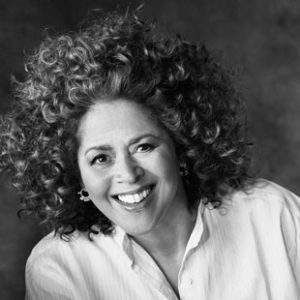
How do you create art for change? How do you use science in your art? How do art and science intersect to create a cultural or societal shift? On this episode of StarTalk Radio, Neil deGrasse Tyson sits down with acclaimed actor and playwright Anna Deavere Smith, known for her roles on The West Wing, Nurse Jackie, and her award-winning work as a pioneer of “documentary theatre.” Neil is joined in-studio by comic co-host Eugene Mirman, contemporary scholar Dorothy Roberts, primatologist Natalia Reagan, and linguist Renée Blake.
You’ll hear about Anna’s scientific inspirations for her work. She reflects on playing Thomas Edison’s mother when she was very young. We discuss her play Fires in the Mirror: Crown Heights, Brooklyn and Other Identities which explores the Crown Heights riot in Brooklyn, NY. Anna tells us why she chose to include a physicist as a main character and how she used stargazing and telescope science to metaphorically explain race relations.
Transcript
DOWNLOAD SRT
From the American Museum of Natural History in New York City, and beaming out across all of space and time, this is StarTalk, where science and pop culture collide. I'm your host, Neil deGrasse Tyson, your personal astrophysicist, and tonight,...
From the American Museum of Natural History in New York City, and beaming out across all of space and time, this is StarTalk, where science and pop culture collide.
I'm your host, Neil deGrasse Tyson, your personal astrophysicist, and tonight, we're going to explore the power of art and science to inspire change.
Featuring my interview with actress and playwright Anna Devere Smith.
So, let's do this!
To my co-host tonight, comedian, Eugene Mirman, Eugene, give it up.
And joining us is social scientist, Dorothy Roberts.
Dorothy, welcome.
Hello, how are you?
You are Professor of Law, Sociology, and Africana Studies at the University of Pennsylvania?
So right down in Philly?
That's right.
Yeah, there you go.
Founding Director of the Penn Program on Race, Science and Society.
These are big topics.
They are, they are, especially together.
Especially all in one.
And we're gonna add art.
You're a busy person, I am sure.
We'll be tapping your expertise tonight as we discuss my recent interview with writer, performer, Anna Devere Smith.
She's known for her roles on TV shows like The West Wing and Nurse Jackie.
And she pioneered the genre of documentary theater.
Who would have thought that was even a thing?
She plays multiple real life characters in a live one person show.
And I asked about any early experiences with math and science that may have helped shape her creative path.
Let's check it out.
I was afraid of math.
I don't think that's like a big deal, right?
I was okay in geometry, because I did very well in geometry, because it's logic.
I wasn't good at calculus.
But you took calculus?
Yeah, we had to.
Yeah, it was required.
Did it affect you in any way?
The science classes, did you see the world a little differently?
Well, I'll tell you this.
I think I didn't think that I had any ability in it.
I don't remember having trouble in biology or chemistry somehow, but it didn't make a mark on me.
It was more that I always thought that scientists were inventors, and that was interesting to me.
And way back in some class, third grade or something, I played Thomas Edison's mother in something that ended up on television.
Really?
Like local television.
Uh-huh.
And so I thought that that, I remember thinking it would be fun to invent something.
That would be a pretty annoyed mother, given what you know he would experiment with.
Yeah, I was annoyed.
Yeah, Tom, Tom!
That's all I remember.
I was yelling at him to come out of the barn or whatever.
The reason why I ask is whether or not someone becomes a scientist, often taking a science class and possibly enjoying it, or a math class and possibly doing well in it, can actually affect how you think later on, how you logic things through.
Well, so no, I didn't do that, but I will say that I'm fascinated with scientists.
I do still believe that they legitimize things.
I put a scientist in Fires in the Mirror, which was not my first play that I wrote this way, but the first breakout play.
I put a physicist in it who...
Well, that had to come from somewhere.
And...
People just don't think, gee, I think this play needs a physicist.
Yeah, well, no, yeah, yeah, I thought that it was...
No, I didn't, well, yeah.
How many, stop there.
How many playwrights, how many anybody says, hmm, this needs a physicist right here.
Nobody says that.
That had to come from somewhere.
Well, the title of the play was gonna be Fires in the Mirror.
Fires in the Mirror.
And I thought that I would deal with what a mirror really was.
And I'm always interested in metaphors.
And when I can make a jump like that, like bring something in to a play about race, who would expect a physicist, as you say, then I think it wakes the audience up a little bit.
So Fires in the Mirror is Anna's one person play about the race riots in Brooklyn in the 1990s.
I think I remember those too.
And so, I mean, Dorothy, what do you think about Anna bringing a physicist into a story about race relations?
Well, as she said, it wakes up the audience because you don't expect it, because we're so used to these divisions that scientists have one way of thinking about reality and artists another way, and then policymakers another and social scientists another, and they're so often divided from each other instead of thinking about how we can contribute to each other's view of reality.
And so I think it was genius.
She should be head of the department or something.
That kind of point of view.
No, I'm avoiding that.
Yeah, there's a lot of paperwork.
You want to be right below it where you get to really do the stuff.
That's exactly right.
Yeah, I know.
Somebody give me a master's.
So I'm interrupted.
I'm sorry.
No, I think it's genius as Anna Devere Smith is to bring together these different perspectives and it forces people to think about the world differently.
Because it's almost like comical.
I mean, in a sense, Eugene, do you think plays and TV should have more physicists in it?
I can think of a lot of situations in my life where I could have really used a physicist where I would have benefited.
So, Dorothy, Anna played Thomas Edison's mother in third grade.
So, how important is it for kids to have performance opportunities like that?
It's really important.
A lot of children are in situations where they don't have the structures that allow them to imagine being an inventor, for example.
I actually want to play a game where you both have a chance to guess whose mother of invention this is.
Oh, okay.
So, I'll read a quote, and you guess the person.
If you don't have anything nice to telegraph, don't telegraph at all.
Um, I don't remember who invented the telegraph.
I mean, Edison, like, perfected the telegraph.
Yeah, this wasn't about who made it perfect.
Oh, yeah, no, I forgot who.
But let me, let's, what if I, uh, one, two?
Oh, Morris, Samuel Morris?
Yeah, his mom.
Oh, his mom, okay.
Okay.
Now you get the game.
Yeah, I'll give you a hint.
I'm not trying to trick you.
Okay, Samuel Morris.
Okay.
Okay, mom, yes.
I told you not to go out in a thunderstorm.
Oh, I have to answer.
Oh, you're a Philadelphia lady.
Benjamin Franklin.
Because, you know, coming from Penn, if I didn't get that answer, then I might be making sure of the apartment.
Like in game shows, right?
I don't care if you invented it, so help me.
I will turn this car around.
Hand me four.
No, no, no.
No?
I didn't know it was a trick question.
Okay, no, no.
It's Carl Benz.
Wow.
They invented the internal combustion engine.
Before then, they had cars, but they would like ran on like steam.
We had steam power.
We called them trains.
Trains, right?
And they said, let's make a car out of that.
But then you had to like shovel coal into it.
You know, it was just not convenient.
So yeah, Carl Benz and his niece, I think, was named Mercedes.
Are you serious?
Mercedes Benz, yeah.
That sounds made up to me.
Sounds believable.
I think he just made it up.
Just what I say sounds like it's made up doesn't mean it's made up.
I'm just saying, I could say stuff.
We'll look it up later, Mr.
Liar Fance.
Okay, whose mom said this, if you don't have anything nice to tweet, don't tweet at all.
Who invented Twitter?
No, it's not who invented Twitter, it's whose mom said that.
And by that I mean...
Oh, that'd be Donald Trump, of course.
Not what it says here, but you're probably right.
But what's the official answer?
That's a good answer.
Neil deGrasse Tyson's mom.
I liked your answer.
That was great.
So I asked Anna, remember she spoke in that last bit about metaphors.
The mirror was the subject.
And so I asked her more about the science-inspired metaphors in her one-person play, Fires in the Mirror.
Let's check it out.
If you want to see the stars, you make a big telescope.
And if it's not perfectly parabolic, two stars are going to look like one.
And then you've blown it.
And I was using that, I don't even think the audience necessarily got it, to suggest that in the study of race relations, if we mush it all up, we can't possibly really fix it.
It has to be very distinct.
We need a big telescope.
We need a mirror.
We need good optics.
We need good optics.
See the metaphors out there.
By the way, I was thinking that pre-Fires of the Mirror, when I was trying to write something about race, I knew I was doing that, again, one of the first people I went to talk to was a geneticist named Marcus Feldman at Stanford, who...
You've been all into science.
Well, play it back.
Pretend like you hadn't done some science, girl.
He studied twins, and he was trying to fight down Shockley and all those people.
And I went back again when I wrote a play that included some stuff about Thomas Jefferson.
The story was breaking about how Sally Hemings had had Jefferson's children, and as you know, somebody came up with the DNA and all that.
So yeah, scientists are very, very important to me.
That means having her own children, but...
And that's well said.
I never heard anybody put it that way.
Yeah, so I, yeah, I, as sitting here talking to you, I realized that for some reason that I can't answer, I always want to have a scientist as a part of my research.
And then if I can get them into the play, I want them in the play.
So Dorothy, are there any favorite metaphors that you might gravitate to when you're teaching students about social issues?
My favorite, I think, or at least one I gravitate to a lot, is a lens that, there are multiple lenses with which we view society.
And some are rose-colored.
Some are rose-colored, some are distorted.
Funhouse mirrors.
But depending on where your place is in society, you may have a different, you will have a different lens.
And so it's important to look at lots of different lenses.
I often say, let's use a critical lens to look at assumptions that have been passed down and that many people just adopt without questioning, how can we critically look at them through a particular lens?
That's a lens to analyze all other lenses.
Yeah, that's true.
That's right.
A super lens.
I try to give my students a super lens to look at.
That's my lens.
So she swiftly and briefly mentioned William Shockley, who's a physicist, was a physicist at Bell Labs, co-inventor, co-discoverer of the transistor.
Just another answer.
Of the transistor.
It's so bad to say Bell.
He discovered the bell?
Bell Telephone Laboratory, the research arm of the Bell system.
He discovered the transistor, which transformed modern electronics.
We could go from tubes that you'd have to swap in and out of TVs to tiny little electrical components.
And he later decided, after he won his Nobel Prize, he just thought it'd be really cool if he bred Nobel Prize geniuses.
And so he started a sperm bank of Nobel Prize sperm.
But he wasn't one of those like creepy people who, like...
Used his own...
Yeah, people were like, I'd like to...
Anyway, you get it.
He wasn't like a sneaky doctor on law and order.
Right, right.
No, no, no.
It was a sperm bank and you'd pay.
And it was all just him?
Wow.
No, he'd get his fellow Nobel laureates and things.
And he also, out of that came this...
Go on.
He was an exponent of sort of the racial biasing as a result of that.
Saying, well, you don't want any black people's sperm because they're not smart and you want the white people's.
This is like part of the posturing that he took.
And that...
And by the way, that's not the first time you had this sort of case where people are trying to establish your intelligence.
You go back a hundred years, you had phrenology, this study of the bumps and wiggles and irregularities in your skull.
And there was a claim that if you had a bump here, you're a criminal type, and if you had this, you're kind.
And so I'm just wondering, Dorothy, in your work in sociology, at some point you have to encounter these forces operating from outside your field, influencing how society structures itself.
Absolutely.
And I wouldn't leave sociology out.
Those forces exist even without various forms of science.
And so this is why I say we have to be critical even of science, because some scientists have promoted myths like William Shockley, that races are biologically distinct and some are superior to others, that there's such a capacity as intelligence that can be measured, even with a single number, that it's inherited.
And that the reason why there's social inequality, this is what Shockley was getting at, the reason why there's racial inequality and poverty and other forms of inequality, he argued, as others at Eugenesis, for example, argued.
It goes back because of inherited traits.
And those ideas unfortunately continue to circulate today.
And it's important for scientists and artists and social scientists like sociologists and others to refute those myths that have caused so much damage.
Well, you've been failing at this, so get back to work.
I am trying my best to challenge those ideas.
Well, up next, Anna Devere Smith explains how blowing your mind with science can open up a universe of new ideas when StarTalk returns.
We're featuring my interview with actor and playwright Anna Devere Smith.
Let's check it out.
In my new play, Notes from the Field, which is about education and jails and kids who can't get through school and get incarcerated.
What's the tagline?
Incarcerating is all about education?
Well, it's the school to prison pipeline.
It's about that.
But, one of my favorite people who have talked to.
The fact that that's even a sentence that we all understand is tragic.
Yeah, it is.
But anyway, one of my favorite people who I interviewed and evoke all the time when I'm doing interviews now promoting the movie is a scientist, Bruce McEwen at Rockefeller University, who's a neuroendocrinologist.
And he's trying to find the interventions that can help kids, you know, now they know or they say they know that biologists that trauma and stress, toxic stress, can affect cognitive development, not just emotional development.
So he's working on that, that's interesting to me.
And, you know, so yeah, I do look to scientists because I think they are stimulating in a different way.
I enjoy, especially if we're gonna have the discourse of activists, I like to have a nice, understandable scientist to blow my mind, to open my mind, and then sometimes they end up in my play.
I like that.
Joining us now to help blow our minds with science is StarTalk All-Star, Natalia Reagan.
You're a science educator specializing in anthropology?
Primate anthropology in particular?
Yes, I studied spider monkeys.
Spider monkeys.
Yes, exactly.
And so in what way should anthropology, when I think of sociology, I think of people in societies, in what way might anthropology be important in discussing social issues?
That's a great question.
So anthropology is the study of humans.
And in theory, anthropology is a four field approach.
It studies the past, archaeology, the present, current cultures, linguistics, the study of language, and also biological anthropology, which is the study of how humans became human, forensic anthropology, genetics, and so on.
Anna Devere Smith is a hero of mine because I think that the social sciences have an obligation, a need to inform the audience about what we know about the fact that race, there's no biological basis to racial classification.
It is a social construct, which is real, but it doesn't mean that there's actually lines you can cut between the races.
So we bring different scientists.
So we have different scientific lenses, like we talked about, you know, so sociology.
I'm liking the lens metaphor, just so you know.
Yeah, right.
I love the metaphor.
And we also involve activists.
So there's performance too, because we want it to be all scientists with lived experiences.
So I kind of sit back, and it's the scientists that tell their story and use their own work to explain social issues in a way that hopefully promotes tolerance.
So we have less pro-clutching white ladies calling the cops on kids.
Because that is a thing that needs to stop and needs to change.
So Dorothy, let me ask you, if you're talking about social issues, is there any lines of research that are just simply taboo?
Because people are afraid what they might find if research in race, gender, any of these topics?
Well, I'd actually like to turn that around.
Sure, do it.
Because there's this idea that there is really these differences deep in the biology of people of different races or people of different sexes and genders, and that it's taboo for social scientists to explore them.
That's what I'm asking.
Isn't taboo.
But that's not true.
That's not true.
The long lasting myth is that there really are biological races, when in fact, social scientists, as well as evolutionary biologists and anthropologists have proven that race is invented.
It's not a natural division of human beings.
But yet, that idea continues.
And I think it's the people who want that idea to continue, who claim that there's a taboo against it, when in fact, there isn't at all.
It's well established in science.
And it's the scientists and social life, biological scientists and social scientists and artists and community activists who have to come together and work to rid science and society of this false claim of biological division that's absolutely essential to humanity, to equality, to human rights.
You should be head of our own department.
No, I don't think you understand.
Natalia, you work with spider monkeys in Panama.
Is there anything we can learn about human society from other primates?
Well, they can be jerks, but we got that covered.
The humans or the chimps?
We are jerks.
This is an actually interesting study.
Years ago, Harry Harlow did a study, which is very controversial nowadays or even back then, where basically he was studying macaque monkeys and he was giving them access to a real mother.
Some monkeys had a terry cloth mother.
Soft and squishy.
Soft and squishy, but still not a living being.
And then other monkeys were given a wire monkey, or, you know, figure.
Meaning one was a better fake monkey?
Basically.
Yeah, exactly.
Sounds controversial.
But basically, I call it like a no-duh study, where he discovered that those that had the wire figure had years of basically emotional disturbances, acted as, you know, would rock back and forth and were never quite the same.
As developing baby monkeys.
Exactly.
And as adults.
I mean, they never recovered.
They never recovered.
And so...
Because their fake monkey mom was very firm?
Firm, yes, and lacking of the love and affection that they...
Well, the terrycloth mom was...
At least absorbent.
I've read about this study.
The point being, though, that what monkeys and apes can tell us about our own species, because we're primates first and foremost, is that we're social species.
And that's one of the things I think is also interesting about anthropology.
We look at our species as not just a biological species, but a cultural one.
And we need to be around one another.
And so to be sequestered in a way from love and affection or to be disciplined in a school setting in an exclusionary fashion is going to lead to problems down the line.
Anna also mentioned neuroendocrinologist.
I counted, I think I got eight syllables there.
Natalia, what do you know about how stress and trauma can...
I mean, you mentioned the macaque study.
Stress and trauma can affect development.
There's epigenetics, I've heard.
It can actually turn on and off gene expression after you've already have a genetic profile.
Yeah, so you're born with your genome is intact and then think of the genome as your hardware and the epigenome as the software.
So you have, you know, your genome is there and all...
And epi means above.
Like epi center is the point of the earth above where the earthquake actually took.
So this would be a genetic influence above your genes.
Above your genes.
And markers, you're born with certain markers and it's interesting because they can be rewritten throughout your life.
So it's like a code.
And every experience you have could potentially change the markers on your genome.
And this can either turn on or turn off certain genes that are expressed.
This means in sociology you can't just only think of behavior outside of the biology that could also have been affected by it.
That's very true.
It's absolutely true that we have to think about the relationship between biology and social life.
But let's not forget that it is the inequality that produces these biological changes and not turn it around the way William Shockley did and argue that biology determines social status.
We got to take a break.
Natalia, thanks for joining us on StarTalk.
Natalia Reagan, everybody.
Up next, we're going to explore how the science of language shapes identity when StarTalk returns.
Unlocking the secrets of your world and everything orbiting around it.
This is StarTalk.
Welcome back to StarTalk.
We're featuring my interview with playwright and performer Anna Devere Smith.
She pioneered the genre of documentary theater.
And I asked, what sparked this unique form of storytelling?
Let's check it out.
A question.
A question.
A question.
Yeah.
A question without an answer.
A question without an answer.
To understand something about language and identity and feeling.
So yeah, so it started with that question and then it ended up as an experiment.
I fumbled around a lot and experimented.
I did several plays like this.
And then it takes somebody to acknowledge the value of it.
And in this case, it happened to be Frank Rich in the New York Times.
Now, there was a critic in San Francisco who saw the same method and completely dismissed it, right?
Now, if Frank Rich had dismissed it, I wouldn't be sitting here with you.
So, I mean, I think that's-
I don't wanna believe that.
That's also the thing about creativity.
But I agree with you, I don't want that to be true.
It's almost like it needs, even if you've invented it, it needs somebody to receive, understand it and understand its value.
We've brought language into the equation and we gotta bring in some language expertise, which we've just done.
So joining us now to discuss the power of language is linguistic expert, Renée Blake.
Renée, welcome to StarTalk, your associate professor in the Department of Linguistics and Social and Cultural Analysis at New York University.
That's correct.
So Renée, what is the science behind the origins of human language?
Well, this is fascinating because we actually don't know how language originated.
We like thinking of ourselves as special being humans and having language.
Of course, and I think we are special.
Thank you.
And so look, we don't know how language actually originated, but we can actually infer if we look at present day.
So if we look at language diversity, if we look at language acquisition studies, look at fossil records, archeology, then we can infer how language might have originated, either let's say through monogenesis.
So it starts with one language and then it's the language from which all languages come.
The root language.
Exactly, or polygenesis, so that it actually starts in different areas and then it expands through time and space, evolves through time and space.
So I was trying to figure this out.
I like that she said time and space.
So I asked Anna Devere Smith how she actually captures the language of the people she portrays.
Let's check it out.
It's been this big, big experiment of studying people and how they talk and how they, the fact of their having absorbed something about the world around them is imprinted on their language.
But I don't know the scientific reasons for that.
I just know it is so.
So language as it is expressed by one individual to the next becomes a window into their soul.
The world.
The world.
The world around them.
As seen through them.
It's their lens.
It's their lens.
They see the world a certain way.
And so I believe that circumstances, the actual circumstances of how you live or what you've gone through, begin to have an impact on how you express yourself.
So you capture this and you put it on in a performance.
Yeah, I hope so, yeah.
That's the goal.
That would be the goal, exactly.
Rene, how difficult is it to capture and perform the language and especially the dialect of others?
Well, I'm horrible at it, but it doesn't mean that people can't, right?
And so it's difficult to the extent that dialects of language are meaningful for us.
It tells us about our childhood.
It tells us about our friendships.
It tells us about our communities.
So you're not really inclined to want to give up your dialect, but there are people like Anna Devere Smith who is actually doing this kind of very important work where she is mimicking other dialects.
She does a wonderful job at it.
Some people believe that more people who are more musical can do better at mimicking dialects.
Oh, interesting.
I'm horrible.
Carrying a note, yeah.
Yes, and I don't even think I'm that great of a singer except in the shower, but you know, so I-
You all sing awesome in the shower.
Exactly, exactly.
So Dorothy, how does language and dialect influence cultural identity?
Well, communities have particular experiences based on their status in society, the way others treat them, the way in which they've had a joint history, joint experiences, and so that affects the way they express themselves.
So Eugene, you're born in Russia.
Yeah, I remember.
And yeah, you remember when you were born, yeah.
So how did that affect your sort of language identity?
What age were you when you left?
Well, I was four and I grew up here during the Cold War, a famously great time for Russians in America.
So you left me four, so you didn't really have language yet?
I had Russian language.
Russian.
And I nailed your language.
Oh yeah, okay.
Yeah, yeah, you're pretty fluent, yeah.
So Renée, what's the most important thing you want your students to know about the science of language when you teach it?
My students and everyone out there is that language matters.
And I'm actually using it in two different ways.
So that language is, we should study language in terms of how words themselves, the lexicon, the morphology, the sound system, the phonetics, the phonology, how words are put together, the syntax, to understand the brain and how the brain works in communication, but also matters of language.
Language matters in terms of the fact that we can change through language how we treat people, that we can be change agents using language, that language has the capability of hurting, but also has the capability of changing the world for better.
My goal is for students to understand that the better world is the world where we can use it for the good.
And then how do we, when it is used in a bad way, how do we recognize it and how do we turn it on its head?
And how do we challenge notions through spoken word?
Language for a better world, very cool.
Renée, thank you for joining us on StarTalk on our language segment.
Up next, we explore the language of science when StarTalk returns.
Hey, we want to give a big shout out to some of StarTalk's Patreon supporters.
A big thank you to John Janusz, Peter Kronenberg and Jane Tanner.
To hear your name here and to get other benefits like ad-free audio and video episodes, visit patreon.com/startalk.
The future of space and the secrets of our planet revealed.
This is StarTalk.
Welcome to my interview with actor and playwright Anna Deavere Smith.
And her show, A Rat on Race, acts out a conversation recorded in 1970 between anthropologist Margaret Mead and essayist and novelist James Baldwin.
So I asked about the dynamic of that famous and unusual conversation.
Let's check it out.
They fought a lot and the fighting was very often about the, because Mead wanted to know facts.
Margaret Mead, the scientist.
The scientist wanted to know, talk about facts.
And he only wanted to talk in metaphors.
And it was very frustrating to her and to him, you know, at that moment in the black revolution or whatever, he was, I don't care about your facts because I think they're lies.
And to me, that's almost the most interesting thing about it is the scientist is the fact finder and the artist is the metaphor maker.
So Dorothy, do you share that view?
I actually have a bit of a problem with the view that scientists are fact finders and artists are metaphor makers as if those are two separate ways of explaining reality when in fact scientists produce metaphors and artists help us understand facts.
So I think it's not as clear cut.
And James Baldwin was not saying to Margaret Mead, I don't care about facts.
He was saying your interpretation of reality is wrong and it has harmed black people.
That's what he was saying.
That certain forms of racial thinking and mythology make it difficult for many Americans to reach reality.
It makes reality hard to reach.
And that is almost a scientific statement.
How can we reach reality?
And he recognized that racism blinded many white Americans to the reality of racial inequality in America.
And that's what he was referring to, I think.
Well, our StarTalk fan base had questions of their own on this topic, which brings us right now to Cosmic Queries.
Where we take your questions about your favorite scientific metaphors.
Loretta Azada in Charlotte, North Carolina asks, imagine when chemistry became biology and the first cell divided itself producing a second one.
Can we use Adam and Eve as a metaphor for that moment?
Ooh.
Ooh.
No apple.
But it ends really quickly.
It just, because Adam and Eve don't divide.
No.
Well, there's a rib.
That was to make them in the first place.
They didn't keep using ribs to make their kids.
Not everybody, but some did.
Right.
Right.
They didn't just like amoebas divide.
Well, I don't know.
It's the very, yeah, you're right.
I think the idea that it's the first, so here's one.
Here's one.
There's the mitochondrial Eve.
So you can go back in the Tree of Life and find, sorry, you go back in human ancestry and find the woman who is the mother of everyone who's alive today.
And she has for some been called the mitochondrial Eve.
Like the first woman, but in fact she wasn't the, that's wrong.
So while she's the mother of everyone who's alive today, she's not the first woman, nor was she the only woman at the time.
There were other women, it's just that none of them have descendants that are alive today.
So in that sense, you know, so the religious communities grabbed onto it, we have found Eve.
But fine, but that as a metaphor only works so far.
And you part the curtains and there's much more going on there that does not apply to Eve.
Well, maybe you'll like this one also.
Starfarer14 on Twitter asks, if Newton had found himself under a tree on Jupiter, ignoring the lack of solid surface, thank you, would he get a concussion or worse?
Oh, okay, so Newton was not actually hit in the head with the apple.
He saw an apple fall while the moon was in the sky.
And he wondered whether the same phenomenon was responsible for both.
And most people say, well, this is an apple falling.
How could it possibly relate to the moon?
But he was so brilliant, he went deeper than the surface features and said, this is precisely the same thing.
Both the apple and the moon are falling towards Earth.
The difference is the moon has a sideways speed, so that as it falls towards Earth, it never actually reaches Earth.
And he described the very first orbit.
So they both fall towards Earth.
One has sideways motion, the other doesn't.
And in fact, when you see spaceships launch, they say, oh, it's going into space.
No, it's going horizontally into orbit.
Very quickly after it launches, it goes sideways.
Most of the energy of those engines is to get enough speed so that as it goes sideways, it doesn't fall and hit the ground.
It goes downrange far enough so that by the time it fell afoot, the curvature of the Earth curved afoot.
Cool.
Yeah, that's pretty cool.
You got that?
There you go.
Yeah, so I think the flat earthers, it's a plot to have them all shot into orbit on the first time we get to send tourists.
I think it would be worth a project that sent flat earthers into space.
You didn't say, though, if you would get a concussion if a tree fell.
Oh, OK, so an apple, your skull is harder than an apple?
Yeah.
So what would happen is the apple would fall and just crush on its skull.
It's not going to break its skull.
Even on Jupiter?
Even on whatever?
Jupiter doesn't make the apple harder.
Why not?
Because it's an apple.
Yeah, yeah, meaning it doesn't make it...
So the way to do this is if it was a coconut that didn't fall very far and it hurt on Earth, and then you're on Jupiter, yes, it would crush its skull.
But an apple would...
No.
Well, how fast...
You could probably...
Could you shoot an apple so fast it would crush someone's skull?
Or no?
I don't think...
I don't think so.
Or what about the height?
Because they always say you could drop a penny from a tall building.
It's much harder.
Penny is much harder.
Yeah.
I'm saying...
And smash it with my fist.
Very impressive.
Okay.
And that's been StarTalk.
No, I'm just saying if the thing is crushable and you have a hard head, your head will crush the apple.
Worry about the safety of the apple, not the safety of your head.
But if it's a coconut, it's a 50-50, you know.
No, that's terrible.
Total drop of coconut on Jupiter, guys.
We got to go to commercial.
Up next, Bill Nye the Science Guy gives his thoughts on the symbolic power of art and science when StarTalk returns.
We're talking about the power of art to inspire change.
And my buddy Bill Nye has a dispatch for us on that topic.
Check it out.
Why do we create art?
Well, I claim it's to evoke emotions, to make you feel something.
Now, these open work sculptures were created by an artist named Simon Rodia, virtually single-handedly in the 1920s.
They're in the Watts neighborhood of Los Angeles, and they're called the Watts Towers.
Now, when I'm near them, I feel their imposing height and their strength.
But when you look closely, you see they're adorned with mosaics of subtle beauty that were created from artifacts found right here in the local community.
Now, these towers have come to stand for the strength required to fight injustice.
Because after all, they're in the Watts neighborhood, which was infamous for the riots of 1965 in which 34 people died.
Those protesters were angry and very frustrated with the way things were.
But as angry as they were, they did not touch the towers.
Somehow their subtle beauty reminded people of the strength required to fight injustice and to appreciate the beauty around us.
And really something.
Back to you, Neil.
Dorothy, Anna Deavere Smith's play Twilight Los Angeles, 1992, which I've seen twice, actually.
Once live and another one once on TV.
It addressed the riots in Los Angeles after the Rodney King verdict came through, where the police were judged not guilty.
So I'm just curious, as a sociologist, how do events like that reshape society?
Because it's not just a thing, oh, look what happened.
We're on a different path after that, aren't we?
Yeah, because the protest is a message to society that there has to be change.
It's usually by people like the uprisings in LA that Bill Nye talked about and that Anna Devere Smith performed about.
People who don't have other means to change society because they've been excluded.
There may be barriers to voting.
There may be barriers to becoming a politician.
There may be barriers to having TV shows or op-ed pieces in the paper.
And so without the ability to protest, without people listening and watching, there would not be the changes that we've seen in America today without those kinds of protests of everyday people who rise up against the injustices they see in their communities.
So these are pivot points.
Absolutely, yeah.
Well, I had one final question for Anna about the purpose of her performance art.
So let's check it out.
When you perform in voices, is your objective to effect change in our culture for people having seen you?
Or are you putting ideas in people's heads where they go off later on and then they're just changed and they might not even know why?
Is that a fair question?
It's a very fair question.
I mean, my work is very emotional.
You know, it sort of starts with rage, then you go to grief, then you go to, you know, love.
It usually, you know, moves along.
It's an emotional journey.
And I do want people to do something about the fact that...
Act on it.
Act on it.
I want them to, you know, run for office.
I want them to write checks.
I want them to, you know...
Whatever is in your power of action.
Just do it.
That interview in my office was with an artist, and we spent the time talking about how to spawn positive forces on our society.
I do science, and without a TV show, without a book, without some means of reaching the public, no one would have any clue what I'm doing.
I'm in my office, I'm in the lab, I'm in an observatory.
That's true for most of science.
Most people don't even know a scientist.
And so, I've always valued artists who reach for science to help them tell their stories.
I will go as far to say that art is a source of meaning for what it is to be human, and science has no meaning without art to express it.
That is a cosmic perspective.
And I've been your host, Neil deGrasse Tyson, your personal astrophysicist.
And I want to thank Eugene Mirman, Eugene, Dorothy Roberts.
See the full transcript



 Unlock with Patreon


 Become a Patron