





 Unlock with Patreon
About This Episode
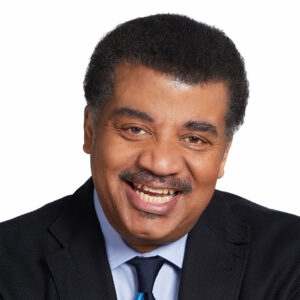
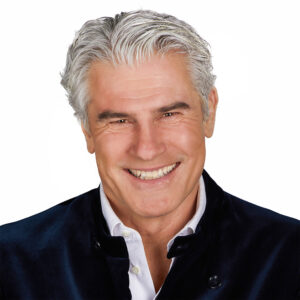
What does loneliness do to our brains? Neil deGrasse Tyson, Chuck Nice, and Gary O’Reilly sit down with neuroscientist Ben Rein, author of Why Brains Need Friends: The Science of Social Connection, to explore how the loneliness epidemic impacts our minds, bodies, and even our lifespan.
What’s the difference between being alone and being lonely? Why can you be surrounded by people and still feel alone? We break down the neurobiology behind social connection, how oxytocin, serotonin, and dopamine reward our interactions, and what happens when we’re missing those signals. From rising cortisol levels to chronic inflammation, we learn how prolonged loneliness can actually damage organs and shorten lives.
Do extroverts live longer? How much social time is “enough”? We dig into personality, empathy, and why virtual interactions often leave us unsatisfied. Could our brains be losing their ability to read social cues online—and is that fueling the hostility of the internet age?
Can we medicate loneliness away? How do drugs like MDMA affect empathy? We get into why oxytocin is nature’s antidepressant, and how our pets might literally make us healthier. We get into research on what makes for good socializing and how loneliness leads to more loneliness. How do we dig ourselves out?
Thanks to our Patrons kendrick bell, edthri, Patrick Canada, Robert Reyes, Rob, Link and Zelda, sweetheat223, Austin Liu, k, Brian Crimmins, Dominic Miller, Thomas Hammer, Tanuj Khandelwal, Adam Bukowski, Gavin Jones-Verity, Powell Houser, Paul Westenheffer, Diego Escamilla Quintana, Mark Johnston, Sam Richie, Kate Bornstein, Terry, Roger Craig, Lawrence Sansevere, Paul Medrano, Maaz Gundagi, Ken Dodge, Bob Wilson, Airshipguy, Adam Omelan, Joseph Jones, Athena Conkins, Peter Keller, Keitumetse Tlokana, The Clacken, Kris Fisher, Jonathan, Tamos Memes, Jesse Krist, Stephanie Thorsen, Scanman, Samuel Steffen, TheEvilSensei, Amporn Rabuenam, Danielle, James Gill, D. Jerome Johnson, Paul Seikel, Quentin, Max Gueli, Sascha, Ed Parker, Kevin Kazaryan, Sean Dowd, Steve Lauson, Jeff Franz, skymaster, Nikolas Holloway, Brando Kaminski, CapApolllo, Mario Hill, WayToOReckless, Sven Felske, Gabriel Garus, Rick Lowes, Raul Luces, Bruce A. Hill, Donkey Kong, Villanarei Cosplay, Rion Hallaran, Travéz Pinto, Doni Black, Terrence Romero, Marie Willumsen, Tristan, Кристиан Михайлов, Gabriel Lee, Diana, Mike Neal, Professor Pixel, jkos21, trolows, Mithun Manivannan, JoshB, Kim DeLaquil, R Schultz, Robin Edser, david halliday, James LEwandowski, John Johnston, DJ BeeAre, writerseye, Tomer Dvir, Murph, Dan Burke, Lord Beerus, VIctor Rivas, Melinda, Enrique, Richard Denson, Nate, Jen Carr, Marc-Antoine Robichaud, José Cabral, Alex Osborn, Devyn Fidel, and David Villasmil for supporting us this week.
NOTE: StarTalk+ Patrons can listen to this entire episode commercial-free.
Transcript
DOWNLOAD SRTOn special edition, we finally got neuroscientists on top of the lonely situation.
Good, about time.
Yeah, and what’s the cure?
Bring a friend.
Coming up, all about loneliness and what we’re doing about it.
Welcome to StarTalk, your place in the universe where science and pop culture collide.
StarTalk begins right now.
This is StarTalk’s special edition.
Neil deGrasse Tyson here, your personal astrophysicist.
And when you hear special edition, it means Gary O’Reilly is in the house.
Hey, Neil.
You and your editors cooked this stuff up.
Yes, we did.
And today, it’s like the lonely brain, all human physiological conditions.
Yeah, and this is something that we’ll explore.
Okay.
You’ll understand why when we get in the middle.
We’ll do that.
Chuck.
Hey.
Lonely everything.
Just lonely.
Lonely man.
Brain and everything else.
We’ll see what we can do about that.
Well, set us up here.
We’ve been hearing there’s a loneliness epidemic, whether you’re male, you’re female, you’re rich, you’re poor, you’re young, you’re old, or for a variety of reasons, people are getting lonelier.
But what does loneliness actually do to our brains?
Are our brains equipped to deal with the social isolation of modern life?
Does loneliness make us less healthy?
We’ll learn about why social interactions matter so much to our health, and whether they can be stimulated through drugs like MDMA.
Yes!
Yeah, I knew that would wake you up.
You’re back in the room.
Now we’re talking.
Yeah.
A little Molly in the action, man.
When I hear MDMA, I think of medical doctor and master of arts as an academic.
That’s not what it stands for.
That’s not what it stands for.
I was gonna say, you sound like a blast at a nightclub.
Hey, you got any medical doctor and master of arts?
Well, we found one of the world’s experts on that very subject, a neuroscientist that goes by Ben Rein.
Ben, welcome back to StarTalk.
Yeah, thanks so much for having me.
One time, you came in virtually.
Yeah.
Way better to poke you in the flesh here.
It’s awesome to be here.
You actually do exist.
That was not a bot that you set up.
That was my AI avatar.
I’m looking at your, I mean, I can’t, how do you have this many, you’re a neuroscientist, chief science officer, that’s badass.
Of the Starship Enterprise.
Yes, we’re saluting.
No matter what follows that, that’s a badass title.
Chief science officer, which was Spock on Star Trek, of the Mind Science Foundation.
Ooh, clinical assistant professor at SUNY Buffalo, and that’s where you’re based, up in Buffalo, New York, where they invented buffalo wings, as I’m told.
We can get them to verify that.
It’s true.
Adjunct lecturer at Stanford University, you’re bi-coastal because you actually did some work out at Stanford, so they know you, they’re familiar with your work.
And you’re author, just recently, of Why Brains Need Friends.
Ooh, the neuroscience of social connection.
I hear the theme song now.
Do do do do do do do do.
Okay.
We got there.
Oh, the friends.
Was that your attempt?
That was my, yes.
It wasn’t that bad.
All right, let’s get to the bottom of this.
It’s possible to be alone, but not lonely.
It’s possible to be surrounded by people, maybe even your best friends, and be lonely.
And it’s possible to be completely alone and not be lonely.
So where do you fit in to this matrix?
Yeah, so what you’re describing or alluding to is the distinction between loneliness and isolation.
Oh, isolation is another word.
We got another word.
So isolation is the objective state of being by yourself, right?
You’re by yourself, you are isolated, you are alone.
But you can be lonely while amongst others.
Loneliness is the feeling that your social needs are not being met.
And so it’s complicated because you can come home from a family vacation with your entire extended family for a week and go sit in your family room by yourself.
You’re alone, but you are not lonely.
You are just where you need to be.
You wish you, you know, you’re very satisfied with the level of social contact you’re getting because you had way too much.
Or you can go to a concert where there’s 20,000 people around you.
But if you go by yourself and you’re not interacting with anybody and you feel alone, you can be lonely in a crowd.
Especially because everyone else is not lonely because they’re enjoying the concert with their friends, their loved ones.
So the fact that everyone else is not alone has made you alone.
Is that a fair way to characterize that?
Yeah, I mean, I think you can feel lonely without acknowledging that the people around you aren’t lonely too, right?
But I think once you notice that, it maybe makes it worse, right?
I’ve had times where I’m traveling by myself and I go sit at a restaurant and I wish I had people with me and the table next to me is all happy and everyone’s gathering and I’m, you know, it draws attention to…
You should bathe next time before you…
There are other reasons why you…
So this new word, tell me again, isolated?
Isolation.
Okay, so it’s commonly reported, I think, even in the Guinness Book of World Records, they say, the loneliest person ever.
And they cite the person who’s running the command module that’s orbiting the moon while the other two astronauts are down on the lunar surface walking around.
And so the three of them go together, they’re not alone, they’re not isolated, they’re not lonely, they get to the moon, two drop out and the other stays in orbit.
So while two are on one side of the moon and the other one goes to the other side of the moon, he’s not only farther from Earth, he’s the diameter of the moon away from his fellow astronauts.
So in the case of Apollo 11, it was Michael Collins, but any of the Apollo missions would have had somebody the full diameter of the moon away from fellow astronauts.
And they call that the loneliest person, but I will not say that anymore.
He’s just isolated.
He’s just isolated.
That’s right, he’s the most isolated.
It’s kind of a scary place to be, it sounds.
Not for me.
It sounds like the best place in the whole universe.
The best place not in the world, okay?
That’s what that is.
And if he has children, he is very happy.
See, that person may be not lonely in that moment, right?
If you just flew to, I don’t know how long it takes to get to the moon, but you just sat with-
Three days.
Okay, so you’re three days of social interaction with two people.
The other two people go out and you’re by yourself.
You’re like, oh my gosh, this is amazing.
I thought they’d never leave.
Exactly.
I gotta go to the bathroom.
I’m taking off this suit.
I’m gonna sit here naked.
When you experience un-isolation, when you are in a state of loneliness, what’s happening in the brain?
So, being isolated or lonely, it’s a form of stress.
We human beings are social animals.
When we are taken away from our tribe, we experience a rise in cortisol, the traditional stress response, the HPA axis in the body, which is the body stress response system.
The switch turns on, cortisol starts flowing into the blood, and we feel stressed.
Where does the cortisol come from?
So, the cortisol comes from the pituitary.
That’s what I was wondering, okay.
But, yeah, so, it’s not healthy for us.
It’s not what we’re designed for, right?
We exist best in groups, we survive best in groups, and so when we are apart from our group, this sort of threat signal in the brain flips on that says you are at risk, you are in danger.
You’re getting picked off from the tribe.
Right, exactly.
By a lion.
Right, and what’s interesting is you look at solitary animals.
There’s, you know, like tigers, for instance.
Yeah.
Tigers don’t exist in groups because they’re, you know, they’re so effective.
Because they don’t have to.
I’m a tiger, that’s what I do.
Do your head like that.
That’s right, you see how I roll by myself?
Because I’m a tiger.
So tigers are not as sociable as lions.
Yeah, to my understanding, yeah.
It’s sort of not my space, but yeah, I understand that tigers specifically are solitary.
And so what’s interesting about that, as I mentioned, when humans are isolated, cortisol starts going up, stress response triggered.
When tigers are placed around each other, they show that response.
Cortisol starts going up.
When they are by themselves, they feel content.
Because they know what the other tigers have.
They have those big teeth and those big sharp claws.
Is that what I look like?
There’s too many tigers in here.
They never looked in the mirror.
Am I that bad?
I mean, they’re horrifying.
But they’re competing for food and resources.
So their brain’s threat signal is saying, hey, if you’re around these tigers, you might go hungry because they’re so good at hunting, they might steal all your food and kind of deplete the area of resources for you.
And so we are wired accordingly.
We are wired for the way we survive best, which is in groups.
Chemically wired.
Yes, and so-
I say that only because there’s other electrical signals in your brain.
And this affects the electrical signals?
Yeah, it’s all intertwined, you know.
I’m just being a physicist on you.
Yeah, I appreciate it.
No, that is also an interesting thing, total aside, but people think the brain is all electricity or they think it’s all chemicals, but it’s actually, the system works in a way that it goes back and forth between chemicals.
Electrochemical.
Yeah, yeah, so the electrical signal travels and then chemicals come out and then-
Chemicals pick it up, yeah.
So they’re one and the same.
In synchrony.
Yeah.
Okay.
So being isolated is, as I said, a form of stress.
But on the opposite side of that, getting to this idea of, you know, we’re wired to be social, being alone makes us feel stressed.
But being around others also makes us feel good.
We have these social reward systems in our brain where when we have positive interactions, we’re around others, basically these three neurotransmitters that many people have probably heard of, oxytocin, serotonin and dopamine, those three work together to create this sense of social reward.
And specifically, when I say reward, it’s not like, oh, you’re getting a treat or something.
It is rewarding and reinforcing.
It is pleasant to be around others.
And so your brain is telling you, this is something that you should do again, because this is pleasant.
It’s just the same way that eating a delicious, nutritious meal will drive dopamine release in your brain, because that’s your brain’s way of saying, hey, this is good for you.
And dopamine is like the molecule of reinforcement, right?
Come back and do this again.
And so the same thing happens when we socialize.
So we are we are wired to feel good around others so that we keep coming back, and we’re also wired to feel badly when we’re alone.
But to be around others, and that brings in the which chemical?
Oxytocin, serotonin, dopamine.
Okay, the sweet of chemicals.
And then I am pleased by that.
But if I don’t do it, and those chemicals don’t appear, I’m not depressed, I just don’t experience that joy.
So why is the absence of it bad just because the presence of it is good?
That’s a good question.
Man.
You’re getting better at this.
You should do a podcast.
It is a good question.
It’s up for you to judge whether it’s a good question.
No, it is a good question because it points out an important nuance that basically the absence of interaction, isolation, the neurobiological signature of that is a distinct problem from the absence of the pleasure.
See, I told you it was a good question.
It was a good question.
And how long does that take because if I’m isolated for a short period of time, let’s say I’m going on a drive by myself, it is pleasant.
I would assume that the cortisol release happens when you realize that this isolation is a sustained state.
Yeah, I mean, it’s probably at the point where, I don’t think anyone’s really tracked that down exactly, but I would think it’s at the point where you realize it’s a problem, right, and it feels wrong, something feels wrong, and that sort of signal may be subconscious in many cases, because I think humans tend to be pretty bad at detecting when we are lonely.
Oh, interesting.
We’re very good at detecting when we are satiated.
Happy with other people.
Right, we’ve had enough, it’s time to go home from the party, but we’re not as good, I think it’s because our lives are so complex, right?
We have all these other stressors, work, sleep, you know, there’s so many reasons that you can explain, this is why I’m not feeling so good today.
My work is stressful, I didn’t get a good night of sleep, whatever it may be, and I don’t think a lot of people think it’s because I haven’t seen my friends in a while.
That doesn’t really pop into the consciousness of today’s culture, in my opinion, and you know, the truth is, the more isolated people, the longer you spend alone, you know, depression rates increase, anxiety increases, and as I hope we’ll get to in this conversation, aside from the mood problems, there’s all sorts of health problems as well.
So, what happens to the brain once it gets into a long-term loneliness?
So, you’ve got this rinse and repeat of chemical, electrochemical pattern going on and on and on.
What just goes on then?
Okay, so, I mentioned that isolation is stress, and it drives cortisol levels up.
So, in chronic stress, when cortisol is high, elevated for too long, what happens is cortisol loses its anti-inflammatory properties.
So, let me back up here.
When you have a short period of stress, cortisol comes in, and what it can do is reduce inflammation, which is actually a great thing, because you’re facing some sort of challenge, your body’s telling you you’re stressed.
We’ve got to get this inflammation out here because we maybe need to fight a saber-tooth tiger, whatever it may be.
But over time, if the cortisol remains high, then the tissues of the body sort of stop responding to it, they become desensitized to it.
Is that called addiction?
Addiction?
When you’re addicted, you no longer respond to the same dose.
So I guess so, yeah, it’s like it’s in a way.
A form of addiction.
Yeah.
Okay.
The body’s tissues have become desensitized to cortisol.
And so with that, one of the body’s main anti-inflammation systems is out of order.
And that’s bad because it can lead to chronic inflammation.
Chronic inflammation, which I hate because it’s become such a sort of a social media thing where everyone’s just throwing out there, like chronic inflammation, chronic inflammation.
But it actually is a serious problem, health problem, associated with chronic stress and seemingly associated with isolation.
And so let me let me talk about a very specific mouse research study that will just sort of explain.
Yeah.
So there was a researcher, Louis McCullough, at University of Houston, and they were doing stroke research.
They were looking at if you induce a specific stroke, you know, by very scientifically, right?
This isn’t like, oh, the mouse had a stroke.
It’s like we occluded the artery for 30 seconds exactly, right?
And it produces a very reliable area of damage in the brain because the oxygen and glucose aren’t flowing.
The cells die.
Here’s this part of the brain that is now dead because there was no blood.
They noticed that some of the mice were experiencing much larger areas of damage.
For some reason, they had more dead cells.
Couldn’t find an explanation.
Turns out the mice that were having worse strokes were living alone.
They were singly housed mice.
Even though they were experiencing the exact same loss of blood flow, they had worse damage in the brain.
How can that be?
Well, it’s true what I mentioned, that chronic isolation drives up inflammation.
Well, maybe this inflammation is sort of making the neurons less healthy and resilient to this sort of insult.
And so what they did is they blocked these inflammatory markers in the isolated mice and found that that reversed the problem.
So when they turned down the inflammation that isolation was inducing, then the mice had the same size stroke that they would be expected to have.
So now, if you could repeat that experiment, but instead of inducing the stroke with the restriction of glucose or whatever, and just have them smoke cigarettes and drink alcohol for many years, while working a job that’s killing them, I think you’ve had a better result.
I don’t know if you could get a mouse to smoke a cigarette, but I think that would definitely not be approved by IRB.
The French mice will smoke a cigarette.
But I think it would have a similar effect.
And the reason I…
Squeak with a French accent.
The bacoster, squeak, squeak, squeak.
The reason I tell that story is because I think it helps paint a picture of like, why is isolation actually bad?
Why is chronic inflammation bad?
Well, it’s to the detriment of the function of your organs, your brain.
The two words you haven’t used yet, but we’ve all heard it in our lives, and it feels like it derives exactly out of everything you’re saying.
And it’s, are you extroverted or introverted?
That’s what it sounds like you’re describing.
And taken to its extremes, extroverts will live longer than introverts, with less disease and overall greater happiness.
Or would they?
They do.
It seems that they do, yeah.
I mean, there are studies showing that extroverts are generally happier.
First off, is the chicken or the egg?
Are they so extroverted because they’re so happy all the time and they just want to talk?
Or is it that they’re talking more?
Well, if you ask people who are extroverted to talk more with others and be more extroverted, their mood even improves.
So it seems that mood benefits are related to the extroversion.
But as for the health benefits, so this is where it gets delicate.
Because to tell the average person, go spend every afternoon socializing, right?
Get coffee with friends, see friends all the time.
For someone who is more introverted, that is not a healthy prescription.
That’s stress right there.
Right, exactly.
What am I going to wear?
I’m not talking to him anymore.
It’s all sorts of dynamics in there, yeah.
But for an extrovert, that actually probably will be good for them and extend their lives.
And there’s a recent report that came out on these super-agers, these people who are…
Live to 100.
Not necessarily they’re living to 200 years old, but that they are, I think, 80 and above.
But if you scan their brains, their brains look closer to 60-year-olds.
They’re resistant to aging, the traditional path of aging.
Very cool.
And what’s amazing is that the one unifying trait amongst these super-agers is that they’re all extroverts and that they all claim to live very social lives.
And this paper came out and every single metric that they looked at made perfect sense.
They did all this brain imaging and it made perfect sense.
They showed lower levels of inflammation.
They showed thicker certain brain areas.
And it makes sense that as you’re continuing to live a social lifestyle and you’re exercising these brain areas, because socializing is indeed an exercise for the brain.
It’s like a workout for your muscles.
But if it causes stress to an introvert, that can’t be good for them.
Right.
Okay, so we’re weaving a lot of topics together here, so I want to separate them.
So, introverted people still benefit from socializing, but the sort of threshold of where that becomes unhealthy or unpleasant is way lower.
So, if you have an introverted person, let’s say, come into this room right now and pretend to be an extrovert for 10 minutes, they’re going to…
They’re going to leave exhausted.
Well, no, actually, that’s what you’d think.
I mean, they’d probably kick and scream on the way in, and please, I don’t want to do that.
But they would actually feel better afterwards, because there’s only 10 minutes.
But if you ask them to do the same thing and say, okay, for the next week of your life, pretend you’re extroverted, do just the same thing you just did, they are going to be miserable at the end of it.
But if you have an extrovert do that, just like the 10 minute period, they’re going to feel great after, and after a week they’re still going to feel great.
So it’s like, people talk about their social battery, you can sort of think of it as, introverts have a smaller social battery that charges up faster and…
And depletes faster.
Well, extroverts…
No, introverts, I’m saying.
Yeah, so introverts’ battery charges up faster and actually depletes slower, because then they need to be recharged less frequently.
Is it about learning your own limit as to what social interaction, because you can have, even for an extrovert, there can be too much social interaction.
Yes, absolutely.
So, there’s trait extroversion measures.
People often think that, oh, I can be, you know, introverted in the morning and extroverted in the afternoon.
But the truth is, everybody has a very stable level of trait extroversion.
The higher you score on extroversion, the higher your social intake should be, basically, to make you happy.
The more tolerant you are, the larger your social battery is.
And so…
The more capacity you have for it.
Right, right.
And the more energy you get from interacting, the more you can tolerate before you get frustrated and want to be alone.
So, actually, in my book, I have a trait extroversion scale that people can take and then sort of figure out where they land on that.
And then the second sort of practice that I…
It’s a little quiz that you can take.
Yeah, and it’s 20 questions.
It’s things like…
Some of them are obvious, like, oh, I, you know…
How come it’s not 19 questions or 17 questions?
Because the scientists, in this case, decided to be trendy, you know?
I’ve just…
I always wondered when…
There’s a nice round number of fundamental questions.
They probably threw in a few extra just to make it easy to remember.
I can actually tell you why.
It’s because this is one dimension of the big five personality test, and so it’s 100 questions.
Each dimension is five, or a fifth, so it’s 20.
You’re right, because it’s scaled to one to five.
So it just…
You scale to 100.
So make friends easily, warm up quickly to others.
I show feelings when I’m happy.
I have a lot of fun.
I laugh a lot.
I take charge.
I have a strong personality.
I know how to captivate people.
I see myself as a good teacher or leader.
I can talk to others into doing things.
I’m the first to act.
I’m easy to get to know.
I don’t keep others at a distance.
I reveal a lot about myself.
I often get caught up in excitement.
I’m very enthusiastic.
I have talent for influencing people.
I don’t wait for others to lead the way.
I don’t hold back my opinions.
And I have an assertive personality.
That sounds like an asshole.
Some of them are interesting, aren’t they?
I’m just saying.
I don’t want to hang out with that person.
No, I’m joking.
I am that person.
Oh man, that’s scary.
That’s perfection.
I don’t think so.
I think there’s degrees to that.
Because actually every single thing there, that is me.
But in different gradations.
You’ve got more of one.
I’ve got more of one than the other.
But I’ve got them all.
How does the Autism Spectrum dovetail to this description?
Introversion, extroversion?
Yeah, yeah, yeah.
That’s a good question.
See, I got another good question.
I know, you’re on fire.
I’ll admit before I answer this, I haven’t read any literature on this specifically.
Will you answer the question for you?
Okay, I’m sorry.
I think I understood how that was intended to be.
Yes, exactly.
I try my best not to do a real impersonation of them, because, you know.
I would postulate that those on the autism spectrum can land anywhere on this continuum of extroversion, right?
It’s not necessarily, you know, extroversion is as described there.
It’s really sort of a personality.
And, you know, I’ve met plenty of people who are diagnosed with autism and are very extroverted.
What about the person who is introverted until they’re extroverted?
So they have certain situations, and I know people like this.
They don’t have a word to say.
And then when they’re around me and one other friend, they’re freaking nuts.
Like, I mean, they’re mad.
They’re like a madman.
And then you get them outside.
It’s like the frog.
The frog is just like, hello, my baby.
Hello, my dog.
Right?
And then he says, hey, I got this frog.
He’s like, ribbit.
So what is that?
Well, I’m not really sure.
I mean, I think that…
Is this a frog in the top hat and cane?
Yeah.
Is this the one I’m remembering?
And he’s like, oh my god, I got this frog.
And he sings and dances.
Right.
And then as soon as the people leave, then he’s like, hello, my baby.
See, there are performers and athletes like that.
Yeah.
I knew players before the game.
Nothing going on.
Cross the white line, go out on the field.
Onto the pitch.
Yeah.
I said that right?
On the pitch, on the field.
Thank you.
He said field.
Yeah, I know.
He’s been here too long.
They become a very different person.
Very, very different.
So it’s that kind of almost light switch moment that Chuck’s talking about.
So what I’m saying is if that person who’s an introvert but has their extroverted kind of supercharge and they get that all the time, will that make them the same as an extrovert being happy over a period of time?
Okay, so I think what you’re getting at is all this neuroscience that I’m describing about, like how we benefit from interactions and how we don’t benefit from being isolated, it all fits within the complex nature of our lives and how we’re influenced on a daily basis.
And so we’re trying to fit these like really specific neuroscience pieces, puzzle pieces into interactions that are constantly changing.
And so one of the sort of exercises that I encourage is for people to do introspection and ask themselves, like reflect on, how was the experience I just had, the social experience?
I call this idea social journaling.
You come home from an interaction and you jot down some notes.
You could use a template.
I have a template in the book too of like a bunch of prompts, things that matter.
By understanding what social situations you feel the most comfortable in, you can start to sort of curate your social diet, you know, the interactions you’re taking in.
So it sounds like your friend feels super comfortable and capable of being themselves and being really outgoing in this certain context that you’re describing, and maybe, you know, certain athletes, when they’re around their teammates, they may feel like they can open up.
And so that’s important, you know, to find that identity and self-expression is important.
And I can guarantee that if you ask your friend to, you know, on a scale of one to ten, if you gave them a survey after you hung out, how much did you enjoy this experience?
How’s your mood?
They probably feel much better after those interactions where they are more extroverted and they are more sociable than the interactions where they’re sitting there quietly.
Okay.
We know all social interactions aren’t the same.
There’s different levels, there’s different engagements.
How does the brain react to an in-person encounter as opposed to a virtual?
And before you get to that, surely there’s a difference between walking to a room of people you know and walking to a room of entire strangers.
And personally, I’m completely comfortable in a room of strangers.
There’s just more people to meet and to learn what they do.
That’s how I view it.
But I know people who just are only comfortable with friends and they don’t see that as an opportunity or anything positive.
Yet, it still fulfills the tribe sense that we’re around other people and that should boost your chemicals, the good chemicals.
Yeah.
See, I’m just the opposite.
I want to walk into a room of strangers because they don’t know me and they’re like, they don’t know what an a-hole I am.
All the people who know me are just like, God, that guy’s here.
I think what you’re asking about, it really comes down to an element of extroversion, right?
I believe one of the questions on there was like, I make friends easily, right?
And so more extroverted people will feel more comfortable in a room full of strangers.
It’s built into the understanding of scale.
Yeah.
Okay.
So now, virtual real.
What’s the difference there?
By the way, I no longer value the virtual conversation today as I did during COVID.
During COVID, oh wow, that’s cool, I can still, and I realized there was something missing.
Only after the fact am I saying that was not a real interaction.
I couldn’t smell you, I didn’t see you, I don’t know what you’re wearing, I couldn’t read your moods.
It was not an interaction.
I might as well just looking at a picture in a book.
And so.
You needed a better camera.
It was the best we could do.
So have you studied what the brain is doing in either of those cases?
Yeah, so as for virtual versus in person.
You know, we humans have been living as a social species for, you know, and our ancestors included, millions of years.
We are built for detecting and processing and understanding social cues that we are giving one another, right?
Different facial expressions, vocal tone, body language.
There’s so much information just in this room right now, right?
And by the way, that’s one of the reasons why I mentioned it’s like an exercise for your brain.
You’re constantly processing all this information.
In the absence of those social cues, like when we are messaging or interacting with someone on Twitter or X, or when you’re on FaceTime, you know, you can sort of think about how each of these various media of interaction strip away certain social cues, right?
When we go from in-person to video, yeah, it’s like, oh, I can see them, I can hear them.
It’s realistic, but it’s not because you cannot make eye contact.
It’s impossible.
You cannot smell them.
There are smells that your brain is probably detecting in the background.
You cannot see their entire body.
You know, you can only see whatever this picture.
And so you’re missing some of that information that feeds your brain.
When you go to a phone call, you can’t even see them anymore.
Facial expressions, body language out the door.
You go to a text message, you can’t hear their tone of voice.
It’s just the words.
And so my belief is that as we strip away this sort of texture of our interactions, we’re losing a lot of the important signals that tell our brains we are interacting with the human.
So that fully accounts for my reactions.
I found them much less fulfilling.
And that’s also shown in the data.
So there are, like I said, there’s not much data on like brain responses, but there are data on mood responses.
And people basically don’t feel as good after interacting online.
And it seems like the less lifelike the interaction is, for instance, texting is less lifelike than video call, the worse the benefits are.
So they don’t feel quite as good, but they still feel better having less lifelike interactions than they do having no interaction at all.
That’s why I gave up my real doll.
So is there a science behind people being likable?
A proven science?
Or is that just like, it’s the way they look?
That’s part of it, actually.
But yeah, there is a proven science.
There’s a lot of psychology research on this, about what makes people likable.
Sort of an arguably shallow topic to study.
But it’s important, because it may sound shallow, but the truth is being well-liked is very important.
Obviously for…
It’s how you get elected.
It’s how you get elected.
It’s back in the day when we were like, 100,000 years ago, a couple hundred thousand years ago, it was how you stayed alive by being with your tribe and not being kicked out for being annoying and disliked.
So, just giving Chuck a moment to speak on that.
That’s how I’ve learned to survive on my own.
I’m just trying to picture the annoying person in the cave getting kicked out.
How do you be annoying in a cave?
It’s a closed area, so all I can say is it has to do with what you ate earlier.
Is that true?
So, there’s a lot of ways I could describe this.
Let me put it this way.
There’s a research study that I really liked because they had people come in to the lab and interact with either a likable character or an unlikable character.
And they didn’t know the person they were interacting with was an actress, but she was instructed by the researchers to do one of two things.
In the likable condition, she was super attentive.
She was the same person.
Same person, yeah.
So in the likable condition, she was really polite and obviously made a lot of eye contact, listened a lot, had a good interaction, was very just supportive of them in general.
In the unlikable condition, they instructed her to avoid eye contact, to speak about controversial topics, wait for the other person to voice their opinion, and then purposely voice the opposite opinion, to not be attentive, to actually set an alarm on her phone as if it was ringing, and then basically from there on, sitting on her phone and ignoring the person.
To me, that sounds pretty unlikable, right?
You would definitely have a different experience interacting with that person.
And I like to share that, one, because I think it’s funny that these scientists had to come up with, like, how do we make this person unlikable?
And that’s what they did, but that’s all based on research.
You know, people view all those characteristics as unlikable.
But it reveals a lot about how we sort of interpret others.
And, you know, there are brain areas, most of them are in the prefrontal cortex, that are sort of devoted to determining how well-liked, or how much you like someone else.
Catch me up on something.
There’s the frontal cortex, then there’s a prefrontal cortex, there’s a cortex on top of the cortex.
So the prefrontal cortex is like the foremost part of the frontal cortex.
Why isn’t that just the frontal cortex?
The frontal cortex involves, includes the prefrontal cortex.
The frontal cortex is just this whole thing.
Oh, the whole thing is the frontal cortex.
Yeah, the whole thing.
Okay, okay, thank you for clarifying that, because I’m thinking the prefrontal cortex is some extra other place, but it’s just an area of the frontal cortex.
Is that fair?
Yeah, it’s the form, it’s the front most area of the cortex.
So it’s not like your oven, like there’s a dial and then it says prefrontal cortex, and then full cortex, and frontal cortex, and then, yeah.
Yeah, it’s the very front, and that area is one of the areas that’s very evolved in humans.
Yes, seems to me part of what it is to be likable is, you perceive that the other person cares about you.
In some way they’ll ask about you, and at some level that’s empathy, right?
The capacity to even be able to do that.
Is that a measurable thing in your brain research?
Empathy?
Yes.
Oh yeah, yeah.
There’s a lot of research on empathy.
Some of the research I’ve done myself at Stanford is on empathy.
Would war even be possible if everyone were empathetic?
I’m just thinking of these things taken to extremes, the absence or existence accounts for practically everything that disrupts society.
Yeah, you know, I’m reading one of your books right now, and you use the term Goldilocks Zone to refer to…
It’s in the field, the Goldilocks Zone, yes.
But it’s the idea that it’s in the perfect place, right?
For planets.
Yeah, if the planet were any further from the sun, we would have frozen lakes, and if we were any closer, we would burn up, right?
That’s kind of how I view empathy.
I think we have empathy in the Goldilocks Zone, that if we had any more…
And we…
Let’s say, for instance, you saw, you know, I broke my finger, and looking at my broken finger, you felt the full sensation of your finger being broken.
That would be terrible.
That’s too much empathy, right?
Because if you wanted to help me, you would have to look away while you’re bandaging up my finger, right?
It would just be too much.
It’s way more than is necessary to motivate you to support me.
And that, by the way, is sort of the purpose of empathy.
You could tell someone’s hurt, you’re like, oh gosh, let me help.
Or if you see they’re happy, it’s a way to communicate emotions non-verbally.
Empathy is also positive.
But if you had no empathy, you saw my broken finger and you’re like, who cares?
You would have no motivation to support me or to help me.
That’s psychopathic at the extreme limit of that.
You harm someone and you don’t even care that you harm them or feel any of the pain that they might experience.
Right.
And humans, on average, of course, there’s a range of empathy.
That’s psychopath, sociopath, I think.
Psychopath, no, psychopath.
Psychopath, is it?
Okay.
So humans, on average, of course, there’s a range.
Most people fall into this range where we feel some empathy for other people, but it’s not so much that we’re totally taking on the full sensation.
And what’s important on the note of war is that, you know, I mentioned earlier that the brain sort of evolved to treat those in our in-group differently.
Empathy is one of those things.
We are, there’s plenty of studies showing that people’s brains, the brain areas that are associated with empathy, they will activate more for others that they view as in their in-group.
And it doesn’t really matter, like, really what that in-group is.
It can be race, it can be religion, it could be political affiliation.
You know, there’s all sorts of things.
And so when we see others as unlike us, and there’s this concept of self-other overlap.
If you picture two, like a Venn diagram, right?
You’re one circle, the other person is the other circle.
How much of an overlap are those circles?
The further apart those circles are, the less empathy you’re going to experience and the less activity in those empathy areas.
The easier it will be for you to kill them.
Right, the less painful it will be for you to witness that I should have said it, yes.
And so in war, this is a clear outgroup situation.
With propaganda to even, that even feeds the separation of the Venn diagram.
Right, and what that does is it basically dehumanizes your brain’s representation of that person, that it doesn’t respond, like I mentioned on social media, right?
We don’t see social cues, the brain says, I don’t know if I’m interacting with a person, this could be, this is a screen, right?
If you can get a person to dissociate the human so far from themselves that they see nothing in common, then those empathy areas aren’t going to come online and it’s going to be easy to harm them.
So then social media does that add to the desensitization of empathy in others because you’re not having a human to human interaction?
There’s this technology in between you?
So we don’t know that yet, but I published a paper on this a couple years ago, I called it the Virtual Disengagement Hypothesis.
And what journal does those go in?
So that journal is called Neuroscience.
Duh, okay.
Good journal title to publish it.
It’s a little on the nose, but okay.
It felt like it was appropriate for the topic.
But yeah, and so this idea that my student Maria Tabaris and I published is that when we are not experiencing these social cues online, there’s no reason that the empathy areas in our brain should turn on.
And so this could potentially explain why there’s such hostility online.
I mean, raise your hand if you’ve experienced harassment online.
Hostility you know would never happen one-on-one.
You just know this.
Exactly.
Even with people with highly different views from you, it just degrades immediately.
Yeah, and by the way, there’s a whole research field on this.
It’s called computer-mediated communication.
That’s what they called it in the 80s before social media and all this came about.
So when the computer came about, they started doing research where they would have people interact through computers, which is what we now do almost every day, pretty much every day.
And they found that people behaved differently.
They were more unfiltered, they would be swearing, they would be hostile, and that wasn’t like the finding, but it was part of what they saw, and they didn’t have an explanation for it.
Because modern society likes to medicate things, are there good and bad medications that are being taken that will affect people’s isolation or inclination to be more sociable?
You mean drugs?
Just say it.
No.
Drugs.
No, you can’t make me.
I didn’t know if you were talking about like behavioral interventions or like drugs.
Two drugs, yeah.
Yeah, like, okay.
Yeah, for sure.
I mean, there’s a lot of research on, and not very well recognized research.
I know, because I’m the one who did it.
Subject.
On how drugs influence the social brain.
And you know, there’s research, for instance, on painkillers, right?
When you take a painkiller, we all know that painkillers, you know, this is over-the-counter stuff, can reduce our pain, obviously.
But did you know it can also reduce your empathy for someone else’s pain?
So if you have painkillers in your system, and you’re asked…
Why am I only learning about this now?
Right.
Because I only just asked a question.
Because Gary had a great question.
Okay.
It also reduces social pain, too, by the way, because there’s a significant overlap in the brain between physical pain and social pain, how it’s processed.
So if you take acetaminophen and someone insults you, you’re not probably going to feel as bad.
Really?
Yeah.
Can you take a bottle of acetaminophen?
Does that help?
For a comedy performance, I’d say, drown out that thought.
For a hushful crowd.
Exactly.
Bring it on, bitches.
I’m sorry.
And the other thing, too, is that not only does it reduce your social pain, but also the pain of others.
So if you are on acetaminophen and you see someone who is socially excluded, for instance, from a group, you’re probably going to feel less bad for them.
It actually sort of blunts the brain’s ability to turn on these areas, brain areas, that process and make us feel pain.
And the emotional component of pain, not the physical part.
I don’t know if that’s unusual or right.
But I wanted to be a protector of the geeks.
Because geeks, back in my day, before geeks were the richest people in the world, they were completely abused by the football quarterback and get wedgied up on the thing.
That’s still happening.
That’s still happening.
Don’t worry, I’m pretty sure that’s still happening.
But I was a little bit bigger than most people, and I was probably physically fit a year and a half before my chronological age.
So I could kick your ass if I had to.
But I was also a geek.
So if I ever saw someone who was under socialized, getting abused, it would be almost an irrational level of rage I would feel.
And I want to just, this is where the superhero feelings come in.
I want to just jump in the middle there and just pummel the person who’s abusing one of my people, one of my geeks.
The incredible nerd hulk.
That’s pretty much what you are in real life now.
Oh, I know.
I guess this is, protecting my tribe, I guess, it’s still yet another step to want to harm someone who, I mean, I could just separate them, but I felt this urge to just do what the superheroes do to the bad guys.
Yeah.
Well, yeah, I mean, that’s entirely natural for a human being, right?
You want to protect your group, and sometimes that means eliminating the threat.
That’s very militaristic, say, eliminating the threat.
We talked about…
That was very Pete headset on you.
Yeah, sorry.
Sorry, guys.
Optimum lethality.
So we’ve gone through painkillers and how they can affect…
So what are the positive drugs?
I mean, is it just alcohol, or what else are we going to go to?
So I would actually argue that alcohol is not a positive drug.
That’s definitely not positive.
I mean, it feels positive when you’re consuming it.
So it’s short-term.
So alcohol, it relieves anxiety.
There’s a study that showed that for every drink consumed, people show a 4% reduction in social anxiety.
And actually, the way alcohol works in the brain is it turns down the activity of neurons, and it’s been shown to do so specifically in the amygdala.
It’s emotional.
Fight or flight.
When you say drinking, you mean like the classical drink.
So a shot, a glass of wine, a bottle of beer.
4% is not much.
But if you have five of them, now we’re talking 20%.
That’s pretty good.
And at the same time, does it lower inhibition as well?
Alcohol makes your brain cells better at turning each other’s activity down.
And so what happens is what your brain’s normally doing that all the time, the activity of your brain goes down.
And when this happens in, say, the prefrontal cortex, normally a lot of your behavioral inhibitions stem from the prefrontal cortex.
You might get an urge to, you know, lean over and kiss someone or start a fight.
And your prefrontal cortex is like, that’s not a good idea.
Let’s not do that.
But those higher level processing areas, their activity is going down.
And so they’re not quite as effective at shutting down those impulses.
So it’s not just, are you more sociable?
Are you more likely to get into a fight?
Yes.
Both of those can happen here.
Right, exactly.
That’s why I argue that it actually makes us less effective interactors.
It reduces social anxiety.
It reduces how much distress we feel in interactions.
But what that also means is that, for instance, when people are shown negative social cues in research labs and they’re given alcohol, their amygdala responds less.
So they show less of an emotional reaction to negative social cues.
So now let’s think about putting that in the context of a bar.
You go to kiss someone, they’re showing you a face that tells you, don’t kiss me.
Your amygdala is not saying, this is bad.
You want it.
Right, exactly.
You can’t resist this.
Give us a kiss.
You are failing to properly interpret their emotional cues, right?
Or you try to, you know, whatever.
You say a really inappropriate joke and it doesn’t land and it’s insulting and you hurt someone’s feelings, you’re much more likely to brush it off.
Or you just actually did something damaging to a relationship.
And so it may make us feel less, but it probably actually makes us act worse because we could become less considerate of others’ emotions.
So you’ve done research with Molly.
MDMA.
MDMA.
Does that have a positive effect on people’s ability to be sociable?
Yeah, so the full name by the way, since we’re going there, 3,4-methylenedioxymethamphetamine.
That’s why it’s shortened to MDMA.
I didn’t want to show off and say that.
We all knew that.
Yeah, it’s just a fun one to throw out there.
You memorize that, you have to use it.
One more time, let’s hear it.
3,4-methylenedioxymethamphetamine.
Got it.
And you may notice the last couple of syllables, methamphetamine.
Well, we know what that is.
It’s very similar.
It acts similarly in the brain as well.
Unlike alcohol.
Unlike alcohol, MDMA makes people much more social.
It’s pro-social.
In fact, it’s also been shown to increase empathy.
It’s one of the only drugs on the planet that’s called an empathogen because it enhances empathy.
And actually, my research…
Empathogen.
Empathogen.
That’s sneaky there.
Yeah, right.
Instead of a pathogen.
Yes.
Empathogen.
Thank you.
Opposite.
Yeah.
In my own research at Stanford, in mice, not in humans, showed that the empathogenic properties, this ability to increase empathy, is related to this serotonin release that it drives.
It does the same thing in us too, right?
It does the same thing.
We just don’t know yet in humans whether the specific signal that we track down in mice is also the same in humans and irresponsible for the empathic properties.
Now, do the mice break out glow sticks and start listening to music and just dance non-stop?
No, they just like hanging out around each other a lot more.
It’s really funny.
So some research that I didn’t do, but another colleague of mine, Boris Heifetz, did.
If you have an arena and there’s a cup here with a mouse underneath it and a cup over here with an object, an inanimate object, and you let a mouse run free in this little chamber, most mice will spend more time near the other mouse.
But if you give that mouse in the middle ecstasy, they will spend way more time over here with the other mouse.
But the thing I love about this is if you give the mouse under the cup ecstasy too, so now they both have ecstasy in their veins, this mouse, even though it’s the one in control, will spend even more time near that other mouse.
And they’re both just up against the cup like, I love you so much.
Wait, just to be clear, forgive my drug illiteracy here, ecstasy is the same as MDMA?
Ecstasy is technically the street version.
If you get the good stuff it is.
I should use MDMA, but people know the word ecstasy.
Ecstasy is the street version, which can also be mixed with other things.
Right, thank you for clarifying that.
So yeah, I’m referring to MDMA, the drug, MDMA specifically, because obviously in the lab we are using pure MDMA.
So what’s the downside of the drug?
The love drug.
Oh, I mean, what it does is it drives the release of these three neurotransmitters, serotonin, dopamine, and norepinephrine, mostly serotonin and dopamine.
And by the way, just want to mention that this is also the same neurotransmitters that are released in social reward.
And so it can kind of make sense why MDMA enhances those feelings of connectedness.
It’s acting on those.
And by the way, there’s a writer called norephrine.
Is that what you said?
Norepinephrine.
Nore?
Yeah, well, it’s noradrenaline, but it’s norepinephrine.
Norepinephrine.
Norepinephrine.
No, noro.
Nor, N-O-R.
Oh, just nor?
Norepinephrine.
Okay.
You’re saying it like you knew what you were talking about.
No, I thought that’s what he said.
What’s the downside?
There’s, okay, there’s a lot of downsides.
I mean, it’s not a drug that like, there’s no future for this drug to be taken daily like a prescription, right, because it’s too toxic.
It would not be good for you.
It’s been shown to disrupt the serotonin-producing neurons in the brain with repeated use.
It’s a really intense, powerful drug that’s not necessarily clean for the brain, but it’s also sort of demonized.
It’s funny because there’s some research where a study decades ago gave MDMA to primates, and they found that after giving them some amount of doses, they looked at their brains and they found just holes in their brains.
The brains were like eaten away.
Turns out, the study was published, the news broke and everything.
They came back later and they were like, whoops, we mislabeled our vials.
That was actually meth that we were giving them.
And so it’s actually not quite as toxic as meth, but there’s this kind of public impression that it will put holes in your brain and stuff, which is not true.
There are no holes in my brain.
So is there a chance that the lonely epidemic that we’re going through can find a medication that works?
Oh, good question.
I think so.
I mean, so the purpose of the research I did at Stanford was to figure out what part of this MDMA drug that’s doing all these things in the brain and body, what specific signal is driving the empathy.
And we figured it out.
It’s serotonin release in the nucleus accumbens, this one particular brain area.
So theoretically, if you had a person who wanted to increase their empathy, one of the only ways to do that would be to take MDMA.
But MDMA has all these off-target effects.
I mentioned methamphetamine.
It’s a stimulant.
It can have…
There are sensitive populations who should not be having this drug.
You know, it can be distress on the heart, you know.
And of course, we think of the canonical person on MDMA.
They’re grinding their teeth, they’re running around, you know, their pupils are dilated, right?
This is the stimulant component of it.
But if we could just have a drug that only stimulates serotonin release in the nucleus accumbens, this one signal that seems to be the part that drives empathy, maybe that’s actually a feasible drug.
It’s a future in the pharmaceutical portfolio.
And maybe that could be something that people take daily if they wanted to, right?
And so it becomes a really difficult philosophical question of, like, could this be a cure to our loneliness issue?
Because it’s like, well, do we need to turn to pharmacological agents for this?
I don’t think so.
You know, I think that…
Go to Bingo.
Get a pet.
Yeah.
I know it sounds a little glib, but pets have been seen to be so therapeutic, especially for people that are lonely.
Yes, specifically dogs, in fact, because of similar reason that…
Because cats don’t give a rat’s ass about you.
Well, think about the tiger, right?
Cats, solitary?
Yep.
Dogs are, through the last 30 or 40,000 years, humans and dogs have evolved together and so dogs have taken on all these social…
And dogs were, and wolves are social animals.
Yeah.
Yeah.
So the pets play a role, yes, as we know.
We all know from airplane riding, because people bring the emotional support pets.
But there are people who have a deficiency of serotonin or maybe a deficiency of dopamine, so wouldn’t that help people like that?
Just to…
I mean, there are already SSRIs out there and there are also dopamine reuptake inhibitors, but wouldn’t that help somebody that’s in that position where they can’t produce it on their own or enough of it or…?
Yeah, I mean, it’s not like a dopamine deficiency or serotonin deficiency is like clearly linked to any one condition.
Oh, okay.
Yeah, so like it used to be thought that like low serotonin was the cause of depression, not the case.
By the way, that doesn’t mean SSRIs aren’t effective, because the increasing serotonin can act on other systems in the brain.
It doesn’t have to be that it’s low serotonin.
Anyway, so…
So it’s not isolated that way that you can just say, okay, and now you take this and boom, I got you.
SSRI?
Selective serotonin reuptake inhibitor.
That’s what that means.
Yeah, so SSRIs increase serotonin signaling between neurons.
Selectively?
Selective to serotonin, correct.
By the way, I was going to say this, when we think about dogs, maybe they could fill that void, having a pet.
So when you look into the eyes of a dog, both you and the dog will probably produce oxytocin.
That’s what research says.
That will not happen in a wolf.
I assure you.
And it’s true that it will not happen in a wolf.
I’m not sure if the human produces oxytocin.
The wolf definitely does not.
But the reason that matters is because I mentioned earlier that we have the benefits of interaction and the detriment of isolation.
When we think about the benefit of interaction, oxytocin is one of those signals that we think of oxytocin as this love hormone and this social bonding, which it is.
It drives that social reward, which makes us feel good around people.
But oxytocin also has a bunch of therapeutic properties around the body.
So it’s actually been referred to as nature’s medicine by certain researchers, because it can be anti-inflammatory, neuroprotective.
There’s research showing that it can support immune function, bone growth, all sorts of things, which it makes sense because when you are, let’s say, raising a child, you are producing a ton of oxytocin, bonding with the child.
Also, it’s important for you to be healthy to protect the child.
And when you have a romantic partner and you are in position to reproduce, it’s important for you to be healthy so you can successfully reproduce.
It’s like an evolutionary mechanism so that when we are connecting with others, our bodies are becoming more healthy.
And so, on the topic of dogs, dogs have been shown to drive oxytocin release in humans.
So if you’re looking to sort of supplement some of that connection you’ve lost out on, a dog could actually hit that molecular mechanism.
So if we’re looking at long-term loneliness being detrimental to your health, possibly even taking you all the way to the finish line early, is it patient heal thyself?
Or are we in need of community?
Are we in need of the support groups?
If so, where are they going to come from?
Because if there’s an epidemic of loneliness, then are we in need of these things?
I think it’s the kind of thing that we can do on our own.
I think that actually it’s been a lot of external forces in society and culture that have driven us to this point.
I tend to blame personally this, I call it the automation of everything.
You can do anything now online.
Our first podcast was online.
You can go to the bank and take out money with an ATM without talking to a person.
You can order groceries without interacting with your community.
You can even tour a house on Zillow without going to the house.
You can do telemedicine.
You can do anything online basically.
And we have, I think, stripped away all of these sort of micro-interactions that we used to have in our lives, they’re just no longer there.
And so we’ve kind of been like persuaded into this position by the convenience of these services.
But I think that’s kind of happened without us really noticing.
Plus, you had COVID in there and then the whole thing explodes.
But what says that we can’t get ourselves out?
You know, I think that if people understood the significance of isolation in terms of the health effects and the way it affects their brains, I think that they would care more.
It’s almost like if we were living in a world where nobody understood what it’s like to have sleep deprivation.
What would society be?
How much different would the world be if science had not discovered that getting four hours of sleep a night is bad for you, right?
Or that eating an unhealthy diet is bad for you?
Like, I think we’ve gotten there with sort of educating the general public about the importance of these various features.
But I don’t think that people truly understand the significance of socializing in that context.
And so I’m hoping that maybe we can…
So that public awareness is being presented in your latest book.
That’s right.
Is this your first book?
That is my first book.
And your only book?
And my only book, yeah.
Okay.
The brain is an endless frontier.
It is.
So this surely will not be your last book.
That’s right.
Definitely not.
Why Brains Need Friends, The Neuroscience of Social Connection.
And that book is actually exactly what I just described.
And it’s accessible for anyone.
The first page is a no big words clause.
It’s my clause where I say, I will not use big words.
You guys are especially guilty of that.
I know.
I’m mad at my field for it.
Good.
I’m mad at all of science for it.
The jargon is unnecessary.
But it’s meant for anybody to read and understand.
We’ve got good words in my people.
Big bang, black hole.
You also mentioned that in your book.
You know, quark is a, you know, there’s some.
But if they’re fun words, even if they’re a little obscure, they’re not multi-syllabic words.
Like dorsolateral prefrontal cortex.
Or norepinephrine or preformethylene-dioxymethamphetamine.
That one’s out of control, honestly.
So what is the cost to our life expectancy if you’re lonely?
So there are studies tracking hundreds of thousands of people over like a decade.
That’s a good number.
That’s a good time.
A strong number.
And a good time.
Yeah, for a decade.
And just looking at pure mortality, who died.
And what they found is that those who are the most socially isolated were 50% more likely to die by any cause within that decade window.
That’s quite an indictment.
It is.
And I mean, there’s a lot more than that, right?
Those who are isolated are at higher risk of dementia, I see.
Yeah.
Cardiac disease, diabetes, interestingly.
Because there’s not someone else in the place saying, Don’t eat that.
Yeah.
There’s always the annoying other person you’re living with that’s checking out what you eat.
And that’s actually interesting, too, because there’s studies showing that in people diagnosed with colorectal cancer, those who are married are 28% more likely to survive.
There are certain forms of cancer that being married is actually a stronger predictor of life of survival than chemotherapy.
And part of it, by the way, that doesn’t mean chemotherapy doesn’t work.
Part of it is because their partner is saying, Please do chemotherapy.
Plus, even in unhappy marriages, they’re probably yelling at each other all the time.
You’re definitely not lonely there.
Right.
You just want to die.
No comment.
I also worry particularly about older people.
There are studies, as we age, at least in America, we get more and more isolated.
It’s just the way our culture works.
We spend less time with others.
And I think that’s a shame and a tragedy because we are entering this period of isolation where isolation is making us more prone to all these conditions and the outcome, negative outcomes, while we’re also becoming more sensitive as we get older.
This is the value of retirement centers, where you have a social network there.
Yeah, and so I mentioned the 50% number.
By the way, there’s other studies showing 30% higher risk of mortality, 50% is the one in 300,000 people.
But in people above 65, social isolation is linked to a 78% higher risk of death in men and 57% higher in women.
And isolated seniors are more prone to dementia, and if they’re isolated, their memory declines twice as fast.
Wow.
But does it make a difference if you are spending time with more old people, or is it just family or go find some young people to hang out with?
Does it make a difference, your social network, or just have a social network?
In graduate school, I was in an apartment complex.
It was an 80-year-old lady that lived there.
And we’re all convinced we just kept her alive.
Yes, because she was stealing your blood while you were…
So actually…
Just the energy.
You know, everyone is young, they’ve got energy.
There’s parties at night.
And it’s known as just walking slow, talking about their health.
Right.
I think probably, I mean, interacting with younger people may be helpful.
There’s actually a really interesting study.
It’s in mice, but it’s the only way they could do this type of controlled experiment, where they took old mice and they would have those mice interact with younger mice, who are like adult age, for just 15 minutes a day.
And they found that those mice, they lived 33% longer.
If they interacted for just 15 minutes a day.
So you may have actually extended the life of that woman in your apartment.
It’s interesting.
Look at that.
Yeah.
Yeah.
So if you come upon a lonely person, are you assuming they don’t want to be lonely?
And if that’s true, that they don’t want to be lonely, how do you get socialized if you’re no longer in middle school or high school, just as an adult?
What do you recommend here?
One thing that’s important to recognize is that when people become lonely, their brains actually start processing social information differently in a way that makes them continue to be lonely, often.
You know, when lonelier people actually experience less social reward from interactions, they show lower rise in oxytocin after interacting, they struggle with trust.
Yeah, and so it’s very likely that for someone who’s really isolated and very lonely, when they say, you know what, I’m going to do it, I’m going to go to this party, I’m going to see people, and they feel horrible, that that could just continue to spiral.
And so it’s likely that you may need a few interactions to sort of bump yourself out of that.
So to answer your question, does a lonely person mean that they’re craving interaction?
Not necessarily.
They may have sort of distanced themselves from that desire.
But if they want to lead a longer, happier life, they should figure out how to do this.
But I don’t know that there are classes on how to be socialized.
But when I grew up, both of my parents were highly social, and they were entertaining.
We had people coming in every week.
So I was exposed to that from very early, that this is what people do.
We talk to each other, we hang out, tell jokes, have fun.
And so I didn’t know a life different from that growing up.
But as an adult, I mean, how would one adjust?
I think you have to find a community first.
Like, that’s the first step.
It’s like step outside of your daily routine and find a community no matter how small it is, and then interact with those people on a consistent basis, and then try to expand from there.
But the first step is just finding a small community with something that you like to do.
Did I ask you this question?
I don’t, were you?
Hey, that’s a good answer.
No, I agree because it’s ideal if you can find a community where you have something in common.
Because as I mentioned, the brain treats people differently if they’re perceived as different from you.
And I think having something in common, and it can be that you really love mountain biking and it’s a mountain biking club.
It doesn’t have to be like religion or whatever.
It could be anything.
Because first off, that allows you to enter the room and meet other people and feel more comfortable because you know you have something in common.
You know that their brain is going to treat you favorably because you have something in common with them.
And I think also in today’s very divided America at least, I think when we can meet someone and the first thing that we perceive about them is that they are similar to us in this one way, it kind of allows us to pocket all those other perceived differences that often get in the way.
Is there a simple way out of this?
I hate to say it because it’s so obvious.
What’s the solution to our social problem?
Well, we should socialize.
There it is.
That seems obvious.
All right, wrap it up.
But I think what’s really important for people to recognize is that our brains have a lot of pitfalls where we happen to be very bad at estimating socializing.
What’s going to happen?
How we’re going to feel?
How they’re going to respond to us?
There’s all sorts of evidence on this.
We expect that people are going to reject our advance at a conversation when in truth that very rarely happens.
We expect that giving someone a compliment is going to be weird.
They appreciate it.
We expect that the longer we stay in a conversation, the worse it’s going to get when in reality that doesn’t happen.
We expect that after we leave, if we try to think to ourselves, how much did that person like me?
We almost always underestimate that.
We actually are better like than we expect.
And so, I think my advice is like your brain kind of sucks at socializing.
By the way, I remembered distinctly all of that in high school.
And I had to learn more about what people were actually thinking and feeling to realize how on the negative side I was in interpreting the entire social exchange.
Right.
And people also tend to underestimate their own social skills, too.
If you ask them, how are you relative to the average person, most people will say below average.
And so, I think we put all these obstacles in our way, where we tend to think this is not going to go well.
And so, I think when you think about that dilemma of it’s Friday night, you’ve been invited out, you’re sitting on the couch, your TV is right there.
And it’s like, do I really get dressed and drive to this interaction?
And then all of a sudden, those barricades start popping up.
Oh, you know, the person is not going to like me.
I’m going to say something weird.
You know, you can place all these barricades in front of yourself that are actually just fake.
They’re actually just made up.
Is it a fear of rejection?
I think it is.
I think so.
Because I think, again, if you think about this, we are evolutionarily sort of built for connection and tribe, existing in tribes.
If we fail in an interaction, and we are rejected by our tribe, there is a significant consequence associated with that.
You’re dead.
You should have a cave again.
You should have a cave.
And so our brains are wise to always be thinking, I want to put my best foot forward, but that often creates unnecessary anxiety.
And so, you know, if you’re a person who experiences social anxiety, you’re not alone.
This is almost like ubiquitous in the human race.
Like everybody experiences some level.
Obviously, everyone is kind of different on that, but it’s natural to feel that way.
And, you know, my big sort of prescriptive takeaway is to not fear it.
Just enter, and I promise you, and most people have experienced this, when you do go to that event, you actually feel better at the end than you expected.
Okay.
All right.
Get out there, people.
He’s going to be a great dad.
Yes.
He knows all about it.
And he’s about to have a baby.
Yeah, well.
Your first kid.
Well, your first kid is going to come at the same time as your first book.
Two weeks apart.
Two children, birth at the same time.
Nice.
I’m terrified.
I’m not going to lie.
This one will help you pay your rent and the other will be the opposite of that.
Yeah.
All right, dude.
Thanks for coming on Star Talk.
Thank you for having me.
For a second time.
Yeah, thanks for having me twice.
Okay.
This has been another installment of Star Talk Special Edition.
I’m Neil deGrasse Tyson, your personal astrophysicist.
Gary, Chuck, always a pleasure.
Thank you, Ben.
All right.
Until next time, keep looking up.


 Become a Patron