You’ll learn why the Air Force needs a Space Command to begin with. Get the history behind Thule Air Base and its close ties with the Cold War. Discover why the workers at Thule must adapt to the unique weather conditions of being so far north. Find out how Thule detects imminent threats using the Upgraded Early Warning Radars which can detect possible threats from 3,000 miles away. Then, you’ll hear what happens after an incoming threat is detected.
We debate how effective deterrence is as a national security strategy. You’ll learn how important satellite communications are to national security. You’ll also find out why Thule is called the space traffic controller for the global satellite communications network. General Shaw explains why space is now seen as a war-fighting domain. We discuss the recent administration’s proposed “Space Force.”
Thule also has telescopes that map deep space so we dive into the science of black holes. Priya tells us why every depiction of a black hole you’ve seen is wrong. Learn more about the scientific roots of the black hole seen in the film Interstellar. We also ponder if, like in the film Gravity, a chain reaction of satellite explosions could really happen, and whether measures are in place to make sure it doesn’t. Bill Nye drops in to get us thinking about the current state of global relations. All that, plus, Neil tells us why space exploration might be the greatest source of peace ever introduced.
Thanks to this week’s Patrons for supporting us: Renee Douglas, Ernesto Chavez, Julia Lyschik, Sydney Reising, Andy Green, and Cherrico Pottery.
NOTE: StarTalk+ Patrons and All-Access subscribers can listen to this entire episode commercial-free.
Transcript
DOWNLOAD SRT
From the American Museum of Natural History in New York City, and beaming out across all of space and time. I'm your host, Neil deGrasse Tyson, your personal astrophysicist, and tonight, we're featuring my visit to a remote military base...
From the American Museum of Natural History in New York City, and beaming out across all of space and time.
I'm your host, Neil deGrasse Tyson, your personal astrophysicist, and tonight, we're featuring my visit to a remote military base in the Arctic, where Air Force Space Command keeps constant watch for incoming threats from space.
So let's do this.
Whoo!
So my co-host tonight, Chuck Nice.
Tweeting at Chuck Nice Comic.
Thank you, sir, yes.
Also joining us is space security expert, space security expert, Laura Grego.
You're a senior scientist, the Global Security Program at the Union for Concerned Scientists.
That's right.
That's what we need, more concerned scientists.
Yes.
Yes.
Yeah, not those guys that just don't give a damn.
You focus on national missile defense technology and space security.
And you have a background in physics and astrophysics?
I do.
I was an astrophysicist until I switched over.
So we'll need your expertise tonight because we're going to discuss my recent tour of Thule Air Force Base in Greenland.
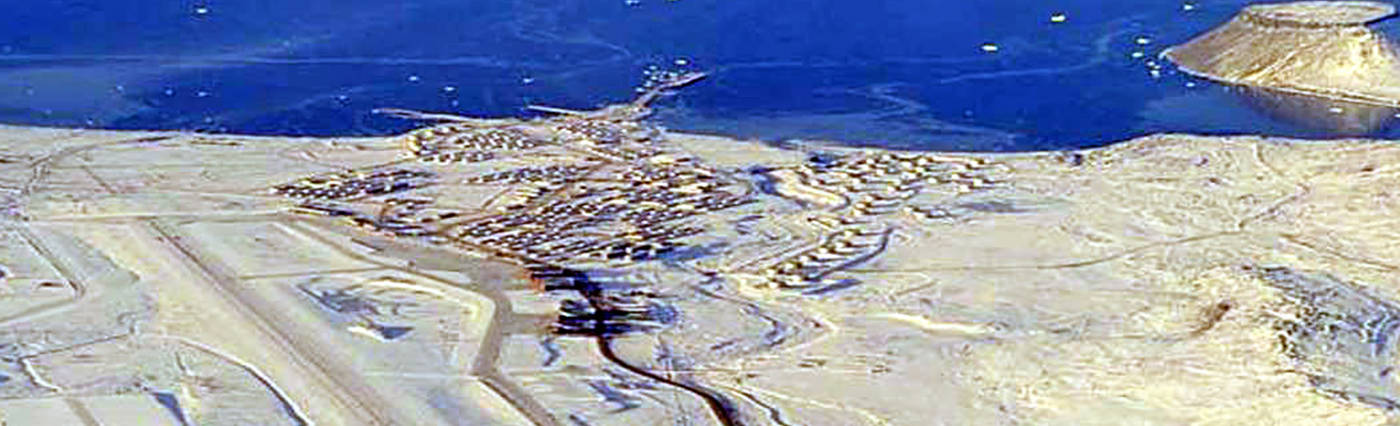
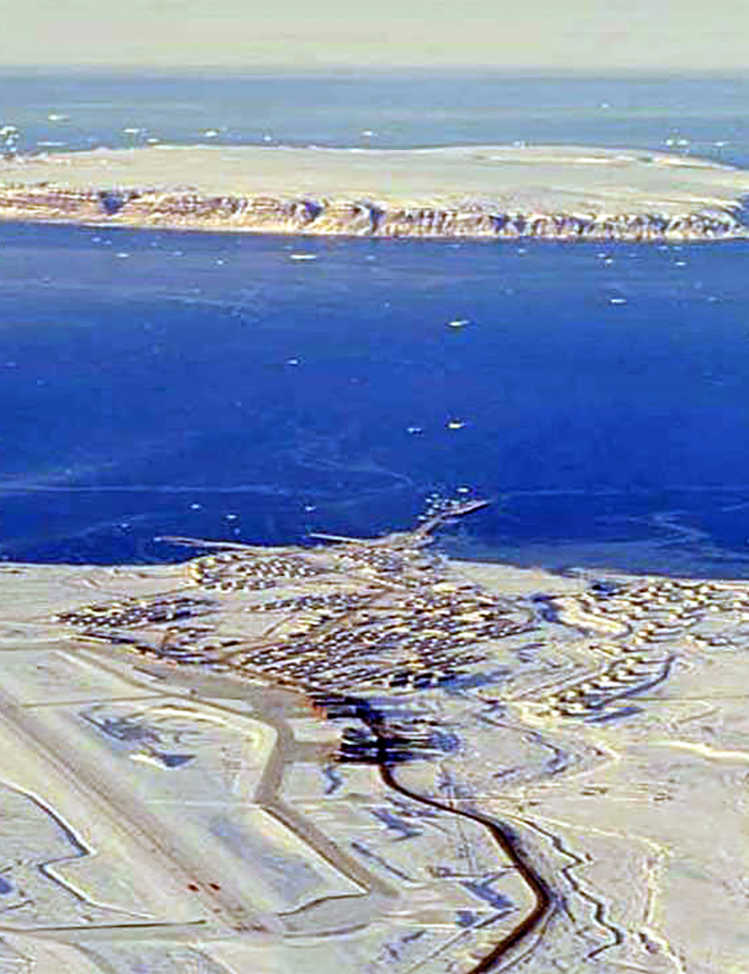
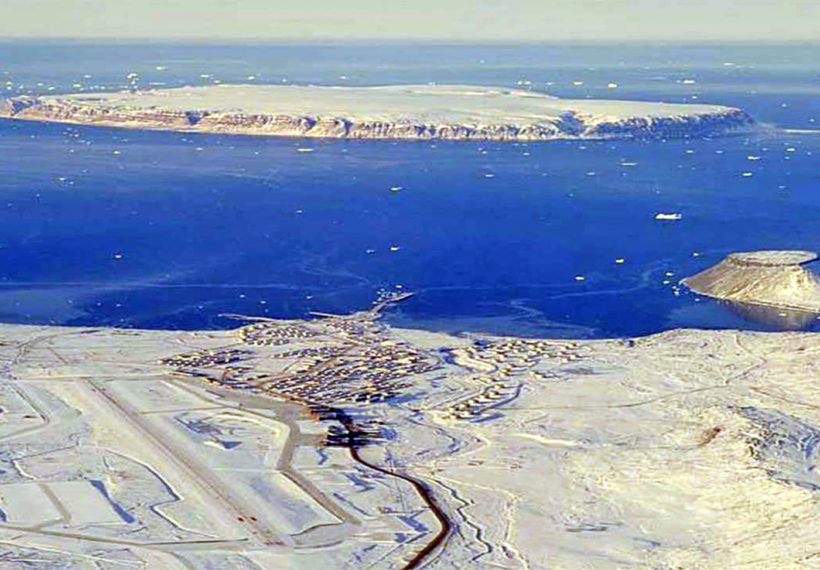
And it's the US military's northernmost base, 900 miles from the North Pole.
Wow.
900 miles.
That's pretty far north.
Yeah, that's pretty far north.
You can see Santa Claus.
It's a strategic location juxtaposed between the Soviet Union and the United States during the Cold War.
It's now operated by the US.
Air Force Space Command.
Space Command.
Space Command.
I recently had a special invitation from the Air Force to visit this remote base at the top of the world.
Check it out.
Everybody.
It is.
Thank you.
You guys just live in this temperature, right?
Is this balmy?
It looks a little different than other air bases if you've ever been to one before.
Uh-huh, uh-huh.
Everything's built uniquely for the Arctic up here.
That's actually the sun rising above the ice cap.
The ice cap is here.
It's there, and it's almost a spiritual moment for me.
We're well within the Arctic Circle, which starts at 66 and a half degrees.
So, of course, we're so high in latitude, the sun doesn't get very high above the horizon.
Even after it rises, it just stays very low.
Plus, I'm intrigued by how much of a sort of Cold War legacy is there, like the enemy is the enemy over there, over the pole.
So it's a, it's there.
You feel it.
So what goes on here?
So welcome to 12 Swiss.
This is our missile warning radar.
We perform missile warning, missile defense, and space surveillance here.
We're going to take you inside and show you some of the interior, introduce you to some of the folks that are actually doing the mission up here.
But as we walk inside, I need you, sir, to turn off your cameras.
Oh.
We can't, cameras are not allowed inside.
Okay.
Yeah, these guys will get really upset if we try to bring cameras inside.
So you're not authorized.
Who knew that our space, that it was operated like a trendy nightclub?
Little velvet rope.
Yeah, little velvet rope access.
It's like, yeah, you could come in, but your ugly camera people got to stay out here.
Yeah, but I had security.
That's security clearance.
Wait, you have a security clearance?
Yeah.
That's very cool.
I didn't tell you about it?
No, you did not.
That's part of your security clearance, right?
So Laura, why does the Air Force need a space command?
Yeah, well, the military has been using space since the jump.
You know, instead of having to fly a plane over the Soviet Union to see what was going on, we could launch satellites, right?
Which weren't so vulnerable.
The military...
You can't just shoot down a satellite.
The way you can shoot down an airplane.
Yeah, definitely not back then.
Back then, yeah.
Yeah, for sure.
You know, you could use satellite-based sensors to make sure that missile, you know, you could catch when missiles are being launched.
And even a navigation system started way back then to help nuclear submarines know where they were.
That was the beginning of GPS.
So military has been doing, you know, satellites for a long time.
But the Space Force, under the Air Force, wasn't established until 1982.
1982, I got, pulled those all together and got Space Command.
So why do we need a base at the top of the world?
Yeah, well, that original location is really a Cold War relic, right?
So we kind of think, politically we think East-West, you know, Soviet Union, US.
You go around the world this way.
Right, but the world's round.
Right, so the shortest path.
For most people, the world is round.
Right.
Most of us.
Yes.
Yes, for this.
So, you know, the shortest path for a missile, you know, will often come far north.
Not, it doesn't go around East-West.
It comes close to the pole.
And so this was a place where you could watch for those things happening.
Well, because it's so far north, the Thule Air Force Base has months of daylight in summer and months of darkness in the winter.
And many people don't think about that.
Because when you're above the Arctic Circle, that's the boundary between when you could actually have 24 hours of light or dark and when you don't.
And so the farther north you go, every like inch north of the Arctic Circle, you get more and more days that are full 24 hours of daylight or full 24 hours dark until you get to Santa Claus.
And then you get six months day, six months night.
Yeah.
That sounds really bad.
Like those elves must be so very, very sad.
Especially in the winter.
Exactly.
Yes, winter time.
It's like that's the max.
It's dark, all dark all the time.
Slave labor at night.
So Chuck, what do you think of being like the station up there?
Listen, all I'm going to tell you is this.
You will not find a frozen brother nowhere on this planet.
They're not the ones that are chipping out of the glacier that's receding.
Exactly.
You know what I mean?
It's like you might find Encino Man.
You will not find Compton Man.
That's all there is to it.
But the temperature drops to 40 below in the wintertime there.
40 below, okay?
As I said, no black people.
You know what's good about 40 below?
What?
Please.
It is where the Fahrenheit and Celsius temperature scales cross.
Really?
So 40 below Centigrade equals 40 below Fahrenheit.
40 below Centigrade is still 40 below...
Equals 40 below...
Equals 40 below Fahrenheit.
That's where the two temperature scales cross.
So you can say 40 below and then leave it at that.
It's always 40 below.
Right.
And you know that it's the same.
And if people ask you, you just know.
Right.
Well, after my peek inside the base, Colonel Colvin took me to see how the missile warning system actually works.
Cool.
I know.
Let's check it out.
So being inside the building, you told me that there was a big radar above our heads.
That's got to be that right there.
That is that.
So that is our solid state phased array radar.
We call it the Upgraded Early Warning Radar.
And there's actually another face on the other side of it.
So with those two faces, it looks out 240 degrees, in our case, now towards the pole, to watch for anything that's going to happen over the pole.
So this is beaming out energy, looking to see if any of it gets reflected back to you.
Absolutely.
So it's not only a transmitter, it's a receiver.
Yes, you can look out about 3,000 miles.
So if you think about somebody throwing up a basketball in Los Angeles, if I was in New York, this radar could pick that up.
So here we are 900 miles from the North Pole, and looking north, if there's any missile launched from that other side of the Earth, they will see it first, rising up over the horizon.
Is it headed for a city?
Is it headed just for the ocean?
Somebody is thinking about that, and that's a good thing.
So Laura, these are missiles that go from continent to continent.
That's right.
And they're ballistic, which means they move under purely the influence of gravity once they're launched.
And so they're intercontinental, they're ballistic, and they're missiles.
ICBMs, I guess that's where we get the abbreviation from.
Was that a game changer?
It was.
Going back to the Cold War, I guess.
Back to the Cold War, right?
One thing, they go fast, right?
Intercontinental, they can go 6,000 miles in a half an hour, 40 minutes, right?
So you don't have to send airplanes with bombs.
And there's no time to do anything about it?
Right, they're coming fast.
They're going so fast, you know, 30 times the speed of a jet.
So yeah, really hard to defend against.
And they're very precise.
You know, you can send them that far and hit, you know, basically in a city block.
You know, you choose that's where you want it to go.
With a nuclear device attached to it.
Right, yeah.
In the nose cone.
In the nose cone.
Right.
I just thought of a new name for ICBM.
What?
I cause bowel movements.
Wow.
But yeah, fast, deadly, accurate.
It was profound.
And even though none has ever been used, we knew what their potential was.
Yes.
Right.
So there was the whole process of trying to figure out how to keep a nuclear war from happening, of course.
So you don't even use these.
Right.
And this would be the primary delivery mechanism for nuclear warheads then.
At one point, right.
So today we have land-based ICBMs.
We have submarine-based ballistic missiles.
So they're launching.
Challing out at the sea, hunt for red October stuff.
Right.
Yeah.
And then bombers.
So you carry nuclear weapons on airplanes.
There are.
There's just, you know, we can talk some more about where that's going from here.
But, you know, during the Cold War, there was some.
It was tricky to know.
We didn't want to get a nuclear war.
How do we communicate, you know, deterrence?
How do we say, I don't want you to use them on me?
And I want to make it so the result so painful, you'll never do that.
I spent some time putting that in this book.
It just came out.
Yes.
Accessory to War.
I feel really crass holding this up on my own show.
Here, let me do it for you.
But, yeah, just accessory to war, the unspoken alliance between astrophysics and the military, probing all the ways that we've been sort of handmaidens to military conflict.
Like forever.
So Laura, how effective is this system in Greenland at deflecting missiles?
Suppose they come from South Korea, I mean, from North Korea instead of Russia.
So the job of those systems is not to deflect those missiles, but to detect them.
And what they do is they catch, just because we're going to come to the deflection later, they're sitting there and they're looking.
They're waiting to see something come on over.
Luckily, we don't see those happening.
But between the radar and Thule and the other radars we have, and we have space-based infrared sensors that can catch that big plume from a launch.
The heat plume, right?
So when ICBMs launch the engine burning, the US can detect a missile as soon as it's launched.
I mean, it can see everything, right?
And that helps us...
how?
Right.
Because right now you kind of sound like my alarm system, because, you know, they give me a call, and they're just like, hello, Mr.
Nice.
We've actually detected an alarm on Zone 5, and I'm just like, yeah, well, I'm in Chicago.
So what is going on?
Can you help my house is what I want to know.
Well, it's good that we're detecting that they're not coming, right?
So we know all the time that they're not coming.
See, that's the information.
There you go.
Knowing that they're not coming.
I am going to sleep so well tonight.
Sleep beautifully.
Well, after I visited Greenland, I had a visit to my office, the commander of the Air Force Space Command, four-star general John Raymond.
And I asked General Raymond about their presence in the Arctic.
Check it out.
24 hours a day, seven days a week, 365 days a year, those crews are on alert, fully ready for any threat that they may face.
I imagine that it may be hard to convince the American people that the fact that we haven't been attacked is not because no one wants to attack us, it's because we've had effective deterrence.
It's got to be hard.
It's got to be a hard sell.
So I lived in North Dakota once, and I was driving down the street, and I hit a deer, totaled the car.
And I got back to my unit the next day, and I was telling my friends that I hit a deer and totaled my car.
And one of the guys that I was stationed with, who happened to be from North Dakota, said, so you don't have deer whistles on your car?
I said, well, what does a deer whistle do?
Well, deer whistles, when you drive, make a sound and it keeps the deer away.
And I asked him, well, how do you know if it works?
You don't unless you hit a deer and then you know it didn't work.
So it's, but it's deterrent, and it's something that is hard to...
You didn't have a deer whistle.
I didn't have a deer whistle.
Laura, how effective is deterrence as a national security strategy?
Right, well, if you're trying to deter someone from doing something by saying, I'm going to do something back to you, you've got to understand each other pretty well.
And during the Cold War, the US and the Soviet Union kind of struggled to understand each other.
And to, you know, our idea of deterrence ended up being sort of more nuclear weapons, more kinds of delivery systems.
And we ended up, you know, in 1985 with 60,000 nuclear weapons.
And still none were used.
So we can say it was working.
But that presents a lot of risks, right?
And even today, we've scaled back down.
There's about an eighth of that number.
We've got, you know, we don't have as many nuclear weapons today.
But you'll see, you know, Vladimir Putin making announcements like we're developing these new kinds of delivery systems, an underwater drone that can blow up coastal cities.
And the US is considering some more smaller, usable nuclear weapons.
So it's this game of, I'm trying to deter you by saying the cost will be so high, but it has to be something that you think I might really do.
It's tricky.
Is it, will be the day when we don't need the Thule Air Force base?
Where we say, no, we know them, our enemy, our former enemy well enough, it ain't going to happen.
Well, I certainly hope there's a day where we don't have nuclear deterrents and we don't organize our society around nuclear deterrents.
It won't be happening right now.
Well, coming up next, we'll have more of my tour inside the Arctic base of the US.
Air Force Space Command when StarTalk continues.
The future of space and the secrets of our planet revealed.
This is StarTalk.
You are.
Air Force Space Command in Greenland.
It's a crucial hub for the US military to connect with satellites as they pass over the top of the world.
Let's check it out.
So here we've got two satellite dishes that are both transmit and receive sites, and they talk to more than 170 satellites that we have within the Department of Defense, the United States government, and some of our allies as well.
Each of the different space operation centers in all the different places around the globe are actually piping into this and commanding and controlling their satellites through these shared use domes.
Wow.
Wow, that's right.
Absolutely beautiful.
42 feet across.
It's a brand new construction.
It does.
It tracks satellites all day long.
Wait, acquires them and tracks them.
Yes.
One of the neat things about this, is this an inflatable dome?
It's not rigid.
Correct.
So in the high winds that we have up here, that's beneficial to us, because the dome can sort of flex a little bit no matter what it's like outside.
How windy does it get?
We've clocked winds at about 209 miles an hour out here.
And there wasn't a hurricane?
There was not.
There's a regular wind at 200 miles an hour.
That's right.
And that's not a missile warning.
This is actually, we're gonna start moving the satellite dish a little bit here.
So it looks like it just acquired a satellite.
It did.
And so depending on what they wanna talk to the satellite about, it depends on how long they're gonna track it.
Sometimes they'll track it all the way across the sky.
Sometimes they only need to talk to it for a little bit.
Yeah, so it's tracking an object orbiting Earth that's going 17,000 miles an hour.
Except it's several hundred miles up.
So it moves at a very slow, sort of angular rate across the sky.
This place feels alive.
That's right.
So Laura, how important is the satellite communication network to national security?
Yeah, so what that dish was doing was talking to satellites, saying, hey, how's it going?
How's your fuel?
Is everything working well?
This is what I want you to do today.
This is what I want you to look at.
And hey, do you have those pictures I asked you for yesterday?
I'm gonna download them.
So it's that whole communications channel that underpins basic modern militaries, precision-guided munitions, weather prediction, long-distance communication, troops who are in the field.
Like that's how the United States does what it does, is using these satellites.
This is the space support for what previously was only done by ground communication channels.
Right, there's been a real revolution in the last couple of decades, and basically satellites underpin everything the military does.
What's the risk of some rogue enemy state targeting our defense satellites?
So one thing about being in space is that you're kind of vulnerable, right?
It's not like you're dug in in a bunker in your own territory.
Part of the reason you're in space is that you can see other people, you can communicate, so you're gonna go over their territory.
So, and space is not all that far, you know?
These low earth orbiting satellites are not any further than the train I took from Boston to New York today.
I mean, that's-
Yeah, I mean, that's where the space station is.
Some of these are a bit further, but it's kind of in the neighborhood, right?
So, there are ways you can kind of interfere with them.
You can mess up their communications.
It's called jamming.
And of course, they're close by and you can think about actually physically destroying them.
Taking them out.
Yeah.
Right, we haven't, we're not doing that, right?
So no country's ever done that to another country.
But the first country that does do it is actually gonna start something big.
Yeah, something bad.
Right, so-
And I am just a person that-
Wow.
Well, I had the commander of the US.
Air Force, Space Command, in my office.
Again, because that's how I roll.
And I asked General Raymond about securing our assets in space.
I had to get some understanding of this.
So let's check it out.
The United States Air Force tracks all the objects that are in space.
It started with Sputnik as object number one.
Today we track 23,000 objects in space.
And we act as the space traffic control for the world.
On average, about once every three days, a satellite maneuvers to keep from running into another.
And on average, about three times a year, the International Space Station maneuvers to keep from, to avoid a collision with a piece of debris.
And we provide that surveillance of space to make sure that we keep track of all those objects and that we keep the domain safe for all.
Laura, how crowded is that?
With 23,000 objects, is all satellites plus significant debris, I guess?
Right.
So one thing we do at my organization is we keep track of the actively working satellites.
So there are about 1,800.
And then the rest is debris and stuff.
And that could be, you know, an astronaut lost their glove or a bolt broke off or maybe a stage, a launch stage had some fuel left in it and it exploded later and it had a bunch of stuff there.
So there's a lot of stuff.
I mean, space is big, right?
So it's not, you know, super crowded, but it gets more and more dangerous.
You're not ducking it, right?
You're not ducking it, but it's, you know.
I would love to put that to music, is all I'm saying.
So Chuck, would you have guessed there were that much stuff in space?
You know what?
I probably would have.
And here's why.
Because I know that there are, you know, there's quite a bit of stuff in space.
I mean, when you, at the lowest is the ISS, right?
Right.
Right?
As a zone of low.
As a zone of low, right?
You got your ISS, okay?
Then you go right above that, you got Hubble.
Right?
Then if you go a little bit above that, this is the stuff we know about with all the satellites right up there.
But then the next layer, there you go.
It's all the kids that let balloons go.
Right.
Right there, that's what happens.
Then the level after that is all the empty vodka bottles thrown out from the Soyuz.
Which is the Russian transport to the space station.
You act like you got a rolled down window to toss out the garbage.
And then, of course, the final layer is frozen astronaut pee.
Oh.
That's right.
That's right.
So Laura, what's the worst case scenario?
We also saw the movie Gravity, where one satellite takes out two, takes out 10, takes out 100.
This Kessler effect, I think it's called, is how real is that given our current situation?
Could someone set that off intentionally?
Yeah.
And do you have a plan to fix it?
Well, these are good questions, right?
So the cascade effect you're talking about is, you might have a satellite and then a smaller piece hits it, that breaks up and makes other small pieces that can hit others.
That themselves become lethal projectiles.
Become lethal projectiles, right?
And we can track lots of these 23,000 objects, but the stuff that's hard to track, these little things like marble size, that can take out a satellite too, because they're going so fast.
17,000, 18,000 miles an hour.
Right.
Five miles per second, that is.
So you can't track them, but they can damage you.
So you got to be really careful about how much debris you make.
So what's the resolution of this?
What are you doing about it?
So there are good rules being developed, just kind of like, you know, to put your car on the road, you have to get inspections.
We're starting to do that about space.
You know, your satellite has to be, you know...
Are there that many people shooting crap into space that you can ask that you have to worry about the quality of what they're putting up there?
Oh, yeah.
Yeah, that's where we're at.
Right.
And so there's lots of just, you know, basic housekeeping and stuff.
And when a satellite dies, you need to deorbit it or put it in a great...
So they've got to have fuel for deorbit.
Right.
You've got to have death fuel.
You have to save the last of your tank in order to be a good citizen.
I call that the Thelma and Louise.
You take it down.
But, you know, all of that could work.
All of that, you know, good housekeeping, all those good rules, you know, that can get swamped if you intentionally destroy a satellite.
So we've done a calculation using the NASA breakup model.
So for a big spy satellite, like a 10-ton satellite, if an anti-satellite weapon destroyed that, it could break up and it could basically double or triple the number of large debris.
And just those orbits that we use the most.
So to have a really good solution, you have to deal with the space security question.
Like, how do we not target other people's satellites?
How do we not target satellites?
And just to be clear, a 10-ton satellite is weightless in orbit.
Just to be clear.
I don't mean it doesn't hurt when you get hit with it.
I'm just saying.
It's just weightless.
It's just weightless.
It still has mass.
Right.
The Newton equations have mass in them when you calculate in momentum and energy and that sort of thing.
Right now, you are speaking Japanese to me.
Well, up next in my visit to the Arctic, we check out a telescope that can peer into the depths of a black hole when StarTalk returns.
This is StarTalk.
Welcome back to StarTalk from the American Museum of Natural History right here in New York City.
You are featuring my recent visit to a remote base in Greenland.
Check it out.
Got another telescope to look at.
I keep calling these telescopes.
They just call them dishes.
It's really really really cold.
Well, Neil deGrasse Tyson, it's a pleasure.
Welcome to the Greenland Telescope Project.
You are Tim Norton.
Tim Norton.
It's a pleasure to meet you.
Excellent.
So let's take a look at the telescope.
Wait, don't you need a coat or something?
I'm up here all the time.
I'm really used to this and I'm out of, I grew up skiing in Northern New England, so.
Oh, okay.
So it's not usually the same.
You're a homegrown New Englander.
You're just showing off now.
So what do you have here?
So we have a, it's a 12 meter dish, and the telescope was a prototype for the ALMA array in Chile, and Academia Seneca came in with most of the resources to rebuild this.
Code for money, yes, go on.
Money, the telescope for the cold environment.
So the neat thing is right now, we don't have a picture of a black hole.
No, we don't.
We've got a lot of great artist renditions.
It's over there in that dark area.
That's right, and it looks like this.
We've got some great pictures out there.
They show up in movies, shows everywhere, but we don't have a picture.
So how does this convert to anything that's gonna contribute to our understanding of black holes?
So basically you have to think about this as what can we resolve?
The best targets are in M87 and in our galaxy.
The huge elliptical galaxy, M87.
It's considered a super massive black hole, but from where we are standing, the size of that black hole is about 50 or 60 micro arc seconds in size.
So in order to see that, we need to be able to resolve at a fraction of that size.
And the way to do that is to tie in radio telescopes from around the world.
When they work together, they have the resolving power, essentially of an earth-sized telescope.
And if you can resolve with that, this paints a much more detailed picture of the universe.
All we know is black holes are black and they got a lot of gravity and stay away from them.
And they're honing in on them and I can't wait till they come online.
And they can tell us what's going on at the event horizon.
Because that's the spot where black holes are eating anything that wanders too close.
There's a lot of action there.
So I'm going to watch this space.
Okay, joining us to discuss what black holes might actually look like is theoretical physicist Priya Natarajan.
Priyam, welcome.
Welcome to StarTalk.
You're a professor of astronomy at Yale and you specialize in studying the physics of black holes.
So the black hole at the center of our galaxy is four million times the mass of the sun.
Is that about right?
That's right.
We've never actually seen it.
Right, so first of all, I think black holes are pretty bizarre, crazy objects.
And every rendition you've seen of them is incorrect.
So they're very complex.
I think there's two simple ways to think about what a black hole really is.
One is we can think of the intense gravity that it has.
So for example, if you look at the Earth's gravity, to escape the Earth's gravity, we have to shoot rockets out at about 11 kilometers per second.
That's the escape speed from the Earth.
Seven miles per second.
Thank you.
Yes.
That's about 30 times the speed of sound.
So that's why we need rockets and rockets.
So if you can imagine that the gravity of an object is so intense that the speed of light to 300,000 kilometers a second is what you would have to exceed to escape its gravity, that's what a black hole is.
So not even light can actually escape a black hole.
So that's like one way to think about the intense gravity of it.
The other way to think about it is the packing, the density of how compact it is.
So for the Earth to behave like a black hole, to be packed like a black hole, and you know, we astrophysicists like to think of black holes actually as objects because the end states of stars.
So it's kind of a convenient way to think about it.
As a thing.
As a thing.
In reality, they're much more complex because, you know, there are sort of pock marks in this four-dimensional space time and so on.
But if you pack all of Earth's mass into less than 10 millimeters, that's the kind of density and packing you have inside a black hole.
So now, but how do we know we have a four million times the mass of sun black hole in the center of our galaxy?
So we've inferred the mass.
No, I wouldn't stray close.
It would be totally bad for you.
Yeah.
So it's from the gravitational influence that a black hole exerts on its vicinity.
So it impacts the motions of stars that are right around it.
It sort of, you know, slings them and brings them back, has captured them in orbits.
So now astronomers have actually tracked the speeds and the orbits of stars that are right around the center of the black hole.
The only way they're moving...
Oh, so the center of this thing?
Of our galaxy.
Yeah, no, no, but they track the orbits.
They don't know what's there yet.
That's right.
They look at the speeds.
They look at the speeds.
They map the orbits.
Yeah, they calculate, they map the orbits, they close.
So, that tells you, a la Kepler's laws, you need to have something quite massive that's at one of the foci and small, very compact and that sitting there.
And so, from the motions of these stars that have been tracked now for 20 years, we actually know that there's a very dense, compact object, quite massive, that's sitting there.
So, the general public's exposure to this kind of information, I think, hit a peak recently with the film Interstellar.
I love that.
And they brought on Kip Thorne, Caltech physicist, not only to help write the storylines, but as one of the executive producers.
And he modeled a black hole for scenes in the movie.
So that in the movie Interstellar, so what was modeled was a black hole called Gargantua, which was actually spinning very rapidly.
So the other way in which you infer the presence of black holes is the extreme light bending.
Because the gravity is so intense and space is so seriously warped around a black hole that light gets trapped in a very, very particular shape.
And you can sort of see the shadow.
The path of light gets trapped.
The path of light gets trapped.
So it is actually taking the path of light, bending it, so that now the light itself is almost like orbiting the black hole.
Absolutely.
And in fact...
The black hole is a bad ass.
That's really...
That's hot.
That's hot.
So Chuck, was that what you thought a black hole might have looked like, do you think?
Now you know.
There's no way.
I mean, that was based on math.
Well, Priya, thank you for joining us tonight in Illuminating Black Holes.
Up next, more on the science of space defense.
Hey, we want to say a special thank you to the following Patreon patrons who are helping us in our little journey through the cosmos.
Sydney Reising, Andy Green, Cherrico Pottery.
Hey guys, thanks.
And if you'd like to get a shout out, make sure you support us on Patreon.
The future of space and the secrets of our planet revealed.
This is Star Talk.
We're featuring my recent visit to a remote base in Greenland, where the US.
Air Force Space Command keeps a constant eye on the sky for an incoming missile attack.
Let's check it out.
All right.
So come on in.
This is our simulator.
I've got Staff Sergeant Snyder and Second Lieutenant Milligan.
They're going to be running through some scenarios with you today, okay?
Okay.
So this is, what is this, this room is what?
So this room is our simulator for the missile warning radar.
So most of our weapon systems have a simulator where the operators can come in and they can learn how to run the system without actually getting on the system first.
So we'll get better, we'll get smarter, we can run different scenarios.
It's part of what we call the space mission force.
And if there's a missile launch, if it's a threat-based launch, it's the type of thing that you're not going to know is coming, right?
So it's going to be launched in aggression.
So that's really what they're there for.
But they're not going to see the launch, because you're only seeing what comes over the horizon.
It's already been launched.
Correct.
So you might combine that with satellite data that says, hey, something's suspicious.
Mm-hmm, right.
So I think you'll see that a little bit in this scenario as well.
Let's take a look.
So the first thing we get is the launch notification.
See the launch notification?
And it tells us exactly where that launch is coming from.
And now we see here, we're getting these X objects.
These are what the missile launch's indications will come on.
Our screen looking like.
And we get the constant beep until we acknowledge that we've actually got it.
So he'll call the techs.
We're seeing missile launches.
This is Thule.
We are receiving missile data.
So now we're passing this information of the launch predicted and impact of these missiles and say this is valid data.
That's the end of our observation.
Shouldn't sirens be going off or something?
Shouldn't they be like flashing red lights?
That's our beep.
That little tone?
That tone.
That tone?
It won't stop until we acknowledge it.
Okay, so what you're saying is you guys are badass enough.
You don't need a loud siren.
That low tone is that'll get you going.
Yes, sir.
And one of the things about this simulator down here is to get them ingrained in how to use the system all the time.
So they can continually practice and practice and practice so when they're on the shift, they're able to go all the time.
Oh, cool.
Thank you, gentlemen.
Wow.
I'm just saying that I'm really happy that those guys are there, but I got socks older than them dudes, man.
Those are some young, young guys, and they are responsible for the missile defense of our entire nation.
They probably think, like, radar is a dating app.
That's crazy, man.
You see how young those dudes were?
Yeah, but they, you know, they play video games their whole life.
They're probably better at that than you will ever be.
This is true.
I got to get...
No, you know, you make a good point there.
I'm just saying.
My son, you're his hero right now.
Now you gave him an excuse.
Just like, Dad, but I want to save the country.
So, Laura.
Yes.
We detect incoming missiles.
What happens next?
Right.
So, if a ballistic missile is launched somewhere on the Earth, you are right.
Satellite-based sensors will see that bright signal.
And there might be forward-based radars, like around North Korea, for example.
We have radars that are ready to catch that.
And they'll cue radars like Thule and tracking radars.
And those radars will take a look and they'll figure out where it's going, because we talked about ballistic missiles, right?
Once you figure out where it's going, you got the whole track.
It's not maneuvering, it's not an airplane, you got the whole arc.
It's like hitting a base.
That's a ballistic means.
It's just following the force of gravity.
Exactly.
So that information goes to command and control.
And they make a decision, is this something we're going to intercept?
And so you wanted to talk about missile defense systems.
So we have one system, which is you launch an interceptor.
Those are in Alaska.
So the way it's supposed to work is that this interceptor sort of hurls what's called a kill vehicle.
It's basically something the size of like a file cabinet.
And its job is to maneuver itself and run into an incoming nuclear warhead and destroy it with a force of impact.
That's what it's meant to do.
A kinetic kill.
A kinetic kill, right, destroys it.
That's really hard to do.
Yeah, I was going to say, don't they call that shooting a bullet out of the sky with another bullet?
Yeah, hitting a bullet with a bullet, right?
It's really hard, and that's hard to do, and we've been trying to do that for 20 years, and the test record is about half, right?
And this is a really difficult job that, you know, it's probably one of the most complex military systems ever built, and certainly one of the most expensive.
Wasn't that, I think the number was a $6 billion ticket on that.
$67 billion.
Oh, 67.
67 will be the price tag, yeah.
We have that in our couch cushions.
It's America.
$67 billion.
Go look at the sofa.
So, Chuck, do you trust the detection system there?
You know what, I got to tell you, to be honest, you know, I just, I didn't appreciate that alarm system that they had.
Like me.
I didn't, I couldn't, I couldn't get over that.
You could have gone with a much better alarm system, all right, like even like the annoying alarm clock, you know, that would have been better than what they had that little, you know, so I mean.
Yeah, the boop.
You know, what is that?
Like, that's ridiculous.
I have some better alarm systems.
Do you?
I do, for them, all right.
Here's your standard alarm.
Inside the room, right?
Then of course there's the AI, the crowd pleaser, you know, like just the...
For!
Right?
Right?
You know?
And of course, like, this is one of my favorites.
It's just a goat.
You know what I mean?
You want to add...
Yeah, the goat.
Like, here you go.
That's a great alarm!
All right?
And here's the thing, if you really want to make it, like, for those young dudes, right?
Something they would really get into, just put it all together and put a club beat under it.
Check it out.
Look.
That's good.
That's the best alarm I've ever heard.
There you go.
All right, up next.
Up next, Bill Nye, the Science Guy, my good buddy, shares his thoughts on sending weapons into space when StarTalk returns.
This is StarTalk.
Air Force Space Command in Greenland.
I visited an abandoned part of that base, which shows the past and the future of protecting America from high up in the Arctic.
Check it out.
This feels like Cold War Rust Belt right here.
It sure is.
So where are we?
So this is one of four anti-aircraft sites that were built here on Thule in 1957 to 1958.
It was a Nike Ajax site, and what it was is anti-aircraft defense of Thule Air Base.
This area here.
This area right here.
That's right.
So...
There are multiple launchers here that were underground that could bring missiles, elevate missiles up for launch and then launch them at any enemy aircraft that might be attacking Thule Air Base.
And the missiles were stored underground, and then if a threat emerged, then they would emerge.
A missile would be erected upward and then fired at its target.
So I see there's a lid open over here.
What is this?
That's one of the entrances to the underground part of this facility.
You couldn't go down there, but at least you can see, get a feel for...
So that's ice right there.
That is not the floor.
Holy calf.
So this is a relic of our need to defend what was going on at the Air Force Base.
That's right.
And today, those needs are different.
Yeah, so now our space capabilities are under threat today, and we consider space to be a warfighting domain, just like the other domains of land, sea and air.
So the common denominator from 1958 to today is that this latitude on Earth, in this position in the Northern Hemisphere, remains of strategic value to the United States.
That's absolutely true.
This is a strategic position, and I think it will be instrumental in deterring attacks and winning as necessary in any wars to come.
And those wars may extend into space.
So, Laura, he talked about, the general talked about extending war into space.
Yeah.
Would this be part of the mission objectives of a space force that has been recently proposed by the administration?
So that's a good question.
Space force, you know...
A new branch of the military.
Right.
Totally new, never seen before.
Space force.
So, you know, space force could be the stuff that we're doing already, which is trying to keep satellites working without interference and potentially interfering with other countries' uses of it, right?
That's a possible model for it.
And whether a space force is really what you need to do that, you know, that's a bureaucratic change, and I start to glaze over.
I don't think people are saying, space force, space force are saying, bureaucratic change, you know, better acquisitions.
I don't think that's what people are talking about.
That wasn't in the speech.
He's never been the one in my rallies.
Right, right.
Basically, what you have to do is figure out, you know, how do you create rules and agreements, and we have an influence we can use to shape that in a peaceful way.
Okay, Bill Nye, the Science Guy, is a dispatch for us tonight.
On the legacy of opening the domain in space.
Let's check it out.
Rockets like this one can slip the surly bonds of Earth, pass right through the atmosphere, and land pretty much anywhere we want, for good or for otherwise.
And while space exploration in many ways brings out the best in us, it's also enabled us to build weapons that can be delivered from one side of the globe to the other in about 41 minutes.
That's not very much time for a government to react.
So militaries on both sides have built up extraordinary inventories of these very, very powerful weapons that could cause total destruction in the hopes that neither side will ever use any of these weapons.
Now something that's always fascinated me about doomsday machines like this one is oftentimes the shortest distance between the adversarial cities goes over the North Pole.
Very few people live up there, so we've established extraordinary air bases to provide us early warning in case of an attack that would cause a very fast, massively destructive war.
But I'd like to thank the men and women of our military who've turned the Air Force into the Air and Space Force.
Thank you for watching the skies.
Thank you for your vigilance.
Carry on.
Thank you.
So all this talk about branches of the military, each defending us in one regime or another, be it land, sea, air, space.
The premise is always, we are going to prepare for war and fight a war if we have to.
But that's actually sensible, given the conduct of our species, ever since we've been human.
So I get that, we don't always get along.
But when I look at what role space exploration might play in the future, I kind of want demonstration that we treat each other nice on earth to then believe that an outer space treaty is going to work at all.
So I'm a little skeptical on those grounds, but you know what gives me hope?
Some fraction of all wars that have ever been fought, I don't know the number, a third, maybe a half, have as their foundation conflict based on access to limited resources.
Fighting over access to something that you need as a culture, as a tribe, as a nation.
When I look in space, an asteroid has huge supplies of gold, silver, platinum, iridium, cadmium, raw ingredients that we use to drive our modern technologies.
There are comets that have basically unlimited sources of fresh water.
We have the sun beaming down 24-7-365, providing energy.
So much of why we fight each other here on Earth comes from limited access to resources, yet space has unlimited resources.
So dare I suggest, dare I hope, that all this effort to go into space and we turn space into our backyard, lassoing comets and asteroids, and there's an asteroid for everybody.
When that becomes our actual backyard, there are no more wars over limited access to resources.
So the very act of the exploration of space may be the greatest source of peace ever introduced into our species.
That is a cosmic perspective.
Let's go.
See the full transcript



 Unlock with Patreon





 Become a Patron