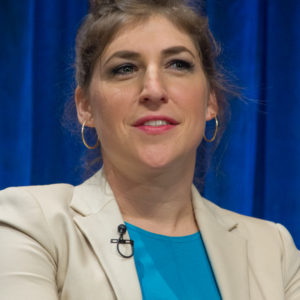
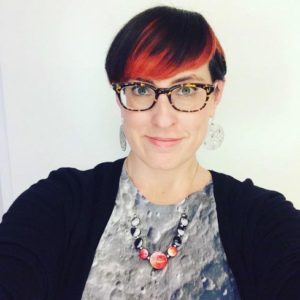
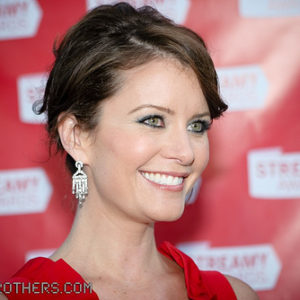
Is science trending on TV and in pop culture? Could that encourage women to get into STEM? Find out from Neil Tyson and his guests this week: neuroscientist and actress Mayim Bialik (Amy Farrah Fowler on The Big Bang Theory), astronomer, STEM advocate and StarTalk All-Stars host Summer Ash, and actress/writer Taryn O’Neill. You’ll hear how a high school biology tutor inspired Mayim, who was starring in Blossom at the time, to believe she could become a scientist, eventually earning a Ph.D. in neuroscience from UCLA even though it didn’t come naturally to her. Summer describes how the reality of women in science goes deeper than the “extreme nerd/girly girl” dichotomy, while Mayim discusses the difference between Amy and Bernadette on TBBT when it comes to “sexiness.” Data journalist Mona Chalabi dives into the statistical discrepancy between how men and women are treated in science, and Taryn explains why it’s so important to showcase stories of women scientists, from particle physicists at CERN working on the Large Hadron Collider, to entomologists in the Amazon rain forest. Find out about the reality of imposter syndrome, and the role hard work plays in success. Explore the differences between geeks and nerds with co-host Chris Hardwick, the original Nerdist, who revisits some early nerd role models and explains why it’s better to be punched by a jock than attacked by a nerd. Plus, Chuck Nice heads out into the street to ask people if they can name any women in science, and Bill Nye talks about science on TV and the importance of harnessing all our available brainpower (i.e., women!) to change the world.
Transcript
DOWNLOAD SRT
Welcome to the whole of the universe of the American Museum of Natural History right here in New York City. I'm your host of tonight's Star Talk. I'm Neil deGrasse Tyson, your personal astrophysicist. And tonight, we're featuring my interview...
Welcome to the whole of the universe of the American Museum of Natural History right here in New York City.
I'm your host of tonight's Star Talk.
I'm Neil deGrasse Tyson, your personal astrophysicist.
And tonight, we're featuring my interview with actress Mayim Bialik.
She plays a neuroscientist on the hit TV show, The Big Bang.
And she not only plays a neuroscientist, she is a neuroscientist.
She got a PhD in the subject.
So, that will be the basis of our conversation on the portrayal of science on TV.
So, let's do this.
I never do this alone.
I can't do this alone.
I got to bring in help.
My co-host, comedian tonight, is Chris Hardwick.
The one, the only.
And you don't only go by Chris Hardwick, you go by The Nerdist.
Nerdist, yeah.
That was the website that I started and the podcast and everything.
Well thanks, you turn being a nerd into a community.
You were early out of the box doing this.
I mean, I don't know if I, I think a lot of proto-nerds would disagree with that.
That's a thing, a proto-nerd.
Proto-nerds.
Not yet fully formed, proto-planet is being formed.
No, I mean like the early days and like the old school nerds, I mean it just, when I was growing up in the 80s, you know.
Revenge of the nerds.
Revenge of the nerds, exactly.
I was in chess club and math club and computer classes and I got my first computer in 1981.
And so it was not a cool thing to do at the time.
We were socially ostracized.
And so now it's kind of cool and science is for everyone and nerd stuff is for everyone.
And so I just kind of helped try to be as inclusive as possible.
And to create that community.
He's feeling it.
I am.
And my special guest this evening, Summer Ash.
Summer.
You come to us from Columbia University where.
Not far away.
Not far away.
A subway ride.
We can easily afford that.
And you run the outreach program or the astronomy department there.
By the way, that's the department where I got my PhD.
But Summer, we have you on the show because you are also a big advocate of STEM.
I am.
Science, technology, engineering and math.
And particularly women in STEM.
Women in STEM as well.
You have a superhero's name.
You know that, right?
Summer Ash is like.
I had not thought of that.
That's like a comic book.
You know what's going to happen?
You're going to have some awesome lab accident and get superpowers.
And you're going to go fight crime.
And I'm going to say I knew you when.
I already have a bionic heart actually.
Are you serious?
How did that happen?
I had heart surgery three and a half years ago.
That's amazing.
Wait, wait, but you have a glowing thing in the middle of your.
You have an arc reactor like Tony Stark?
Almost.
That's awesome.
I hope you're okay, by the way.
We're making jokes about this.
I hope you're all right.
I'm good.
I'm good.
So the two of you together will help me do this, right?
Talk about the role of science on television.
We've got my interview with Mayim Bialik.
The Big Bang Theory, it's one of the most successful shows on television.
Began in 2007 and it's, I don't know if I can explain it before I show you a clip of who the characters are on this show.
Let's check it out.
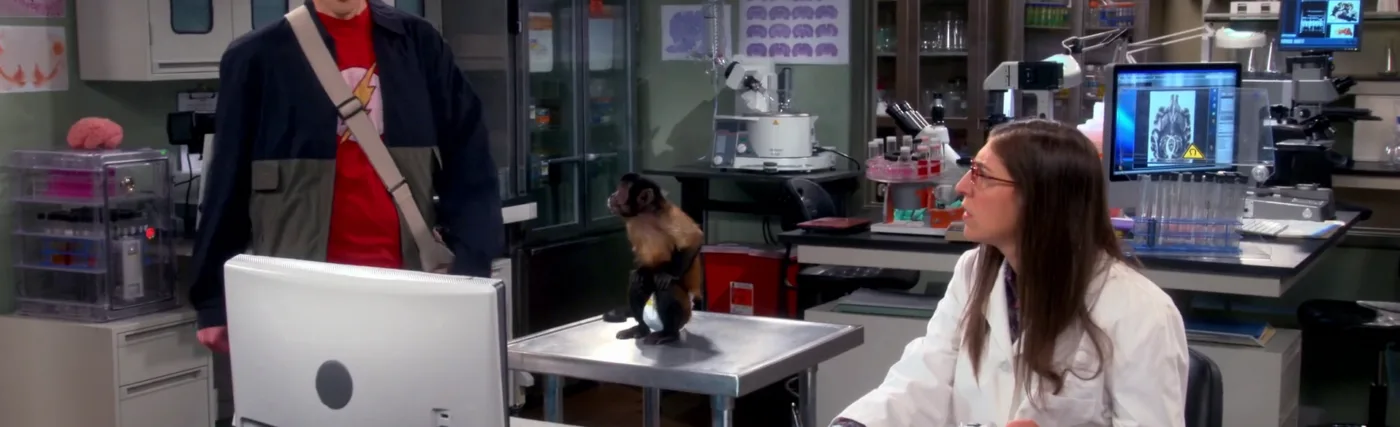
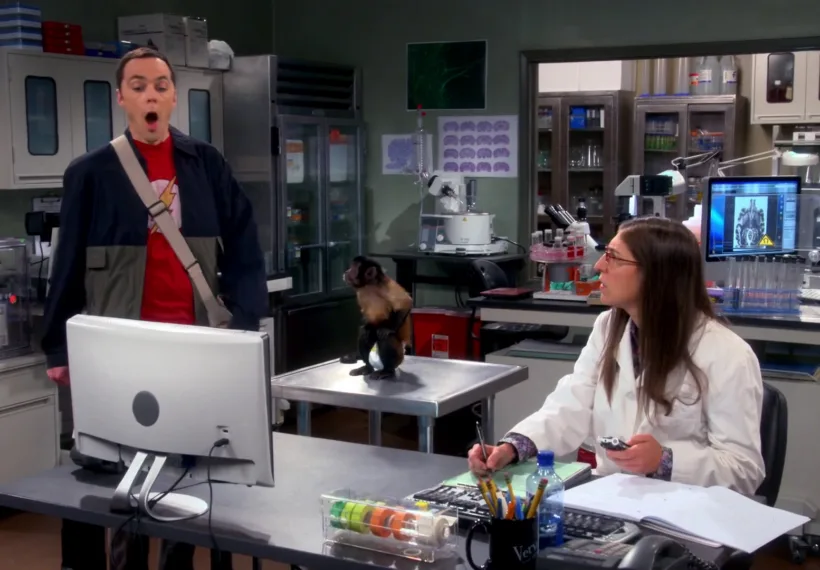
Aren't you slicing that man's brain a little too thin?
It's too thin if I were making a foot long brain sandwich at Quiznos.
For examination under a two photon microscope, it's fine.
So what we have there is a set of sort of over achieving scientists and it started out with guys in this role and then they slowly introduced women over the years.
The show is in its eighth or ninth season going strong and one of the characters we just saw introduced was Mayim Bialik and I wanted to ask her about her early experience with science.
Well, I know already she became a scientist, but she's an actress.
So as is often the case on Star Talk, I try to get to the bottom of how people became who they are and to see what role science may have played in it.
Let's check it out.
It wasn't until I was later in high school that I had my first biology tutor who sort of gave me the confidence that I could be a scientist.
So it's a tutor because you're acting.
Correct.
So I was on this show Blossom from the time I was...
No, you were Blossom.
I was Blossom.
On the show Blossom.
You were Blossom.
To make that clear.
Correct.
Once I met this woman who was my biology tutor, that was sort of my real kind of coming out party of believing that I could be a scientist.
I didn't even have the skill set because I had been paying attention all the previous years in math and science, but really just doing what I needed to to get by.
I didn't really understand the beauty of science and math and that whole world until I was later into high school.
Then obviously pursuing it in college was, you know, it was a party.
So this saddens me.
You know why?
Not your story.
I've heard that before.
That if that single person made a life difference to you, how many people are missing that single person who can make a life distance?
I mean, I'm sure we could all run the stats on it.
Many girls is the first answer.
That's the first answer.
And that's because, I mean, that's because of a historical difference in the representation of women in these fields and probably a cultural bias on the part of teachers and instructors and even administration.
How much intellectual capital lay untapped in this world?
Do you want a number?
I want numbers.
Give me numbers.
Don't just say it.
I don't have them.
I think it's a...
Wait, wait, wait.
This is Star Talk.
We don't leave you numberless when we can put numbers in the situation.
You have the numbers?
I have the power.
I shouldn't have doubted you for a second.
No, I don't have the power to give you the numbers.
I have the power to get someone to give you them.
That's how that works.
I have the power to listen to those numbers.
So, Mona, can I get some numbers, please?
All right.
She's a data journalist.
Did you even know that thing existed?
Mona, you got some numbers for us to bring some of this into focus.
I do.
I wanted to try and answer Mayim's question as directly as possible.
So I wanted to find out how many female scientists America is missing.
And the number that I came to is 80,000.
Missing meaning they might have been scientists, but some force prevented that from happening.
Exactly.
And I just took biologists, chemists, and a category called other natural scientists.
And I worked out how many women you would need to just get to a 50-50 gender split.
And that's when I got 80,000.
So when you say 80,000, it's just 80,000 in those professions.
Exactly.
You're leaving out engineering and physics.
Mathematics.
Mathematics and all the rest of this.
Okay.
But presumably, equal access, equal opportunity, doesn't require equal outcome.
So that missing number presumes that if everything were even, then everything would be even.
Right.
But we know that we don't have equal access, right?
Mayim touched on it in the clip and it's really, really relevant.
So I also looked at some of the cultural barriers that stop women from going into the sciences.
Now, we know that statistically, women are less likely to be hired by science faculty, they're less likely to be asked to perform mathematical tasks, and they're less likely to have their academic papers deemed of high quality.
And I know that last bit because of research by a female scientist called Emma Pearson.
Now, what Emma did was she looked at 938,301 academic scientific papers.
And she found that the average male scientist publishes 45% more papers than the average female scientist.
So, you're saying we're messed up.
That's what you're saying.
How to be messed up in numbers.
Numbers are showing how messed up you are.
That's right.
Well, Mona, thank you.
Well, we summoned you from the dark.
Mona Chalabi, thank you.
Sort of thank you for the bad news.
Yeah, yeah, thank you.
Yeah, yeah.
Next time, bring some good news, please.
So, Summer, is this consistent with your life experience?
Yeah, absolutely.
So what are some of the solutions?
Is it creating mentoring programs or is it taking active roles in your...
Well, I can tell you this, Chris, that if we are all products in some way, even if only subliminally, of pop culture, then it seems to me more visible people who have succeeded would matter to culture and to pop culture.
So in television, we went for decades with no women portraying scientists, just as an example.
Can you be one if you don't see one?
In fact, I remember growing up, it was clear that no one was thinking of me to be an Apollo astronaut.
They just looked really different from how I looked.
I don't know what I remember.
So I think that matters.
I also think it would be interesting because before we were relying on the media, we were relying on big media companies run by older men a lot of the time.
Who were just going, ah, put that on the net.
But now with social media, with YouTube, with Snapchat, with Facebook, I feel like is some of the onus on people who are already scientists to start becoming those role models in social media themselves rather than relying on big media to catch up.
To choose what role model that anyone would have.
So the real people are becoming the real role models.
The real people are becoming the real role models.
And that's exactly what built YouTube culture.
So Summer, can you point to individual people who served as your role model, going up, as did Mayim?
Oh, that's interesting.
Well, so actually, I think I had many, but I was kind of born excited about science.
And within a month of each other, the movies Top Gun and Space Camp came out.
And I pretty much saw both of them, and I was like, yes to all.
Like, yes, yes.
And if you think about it, in those movies, obviously Top Gun is male dominated, but Kelly McGillis has a PhD in astrophysics.
Yes, because every astrophysicist is an expert on an F-14 plane.
Which is a little bit weird, but who cares?
We didn't question, it was the 80s.
They played volleyball.
It's the first time I heard of that, so that helped.
And then for Top Gun, you have, I'm not going to remember the actress' name, but the lead woman who's already a jet pilot and an astronaut candidate.
You mean in Space Camp?
Yeah, and then you have Lee Thompson and Kelly Preston, and they're both playing women that are interested in science, and the three of them are the main part of the movie.
It's fantastic.
Yeah, I guess the question is, what can ordinary people do?
So as a guy who's not a scientist, what can I do to help?
Do you have suggestions for how just ordinary people who are not scientists or educators can help, you know, help improve women in STEM, help improve people getting involved?
Well, I think the one big thing is that call out barriers when you see them.
So if you see people that are expressing or sort of sexism or doubts about women's capability or people of color's capability to do these things.
So it's an extra pair of eyes out there.
To speak up.
To monitor the perimeter.
Yeah, exactly.
Like, teach your bros.
Yeah.
Yeah.
So what I continue to do with Mayim is explore how is it she became an actress?
Because I know she got a PhD in neuroscience, but she actually started as an actress and was well known at age 14.
Yeah, most child stars don't even complete a traditional education program, much less go on to get a PhD.
Right, right.
So I said, why, he, you could have just kept going.
And, but she didn't.
She stepped out and then stepped back in.
I had to get to the bottom of that.
Let's check it out.
I come from an immigrant background.
My grandparents were immigrants to this country, and college was emphasized over everything else, no matter what.
So it was, you know, it was, I mean, my, on my mom's side, my grandmother, I don't think she finished middle school.
My grandfather didn't finish middle school.
So, you know, they came to America and they worked in sweatshops.
And so I was raised with like a go-to college mentality, even if you think, yo, you're a big shot because you were on TV.
So you had the expectations of generations of your ancestors.
Correct.
Requiring that you go to college.
Because the American dream is staring you right in the face.
You know, they left war for this.
So I guess the notion of being a child actor didn't feel like I was satisfying, honestly, the historical and cultural dream of thousands of years of exile.
Whereas going to college and, you know, pursuing something that was very challenging academically, that felt like it was gonna be more satisfying as a human being, you know, than being a famous person.
Well, so I looked up the title of her Ph.D.
dissertation.
What was it?
The Hypothemic Regulation in Relation to Maladaptive, Obsessive-Compulsive, Affiliative, and Satiety Behaviors in Prade and Willie Syndrome.
I wrote a very similar paper to yesterday's job on Talking Dead.
A lot of syndromes going on in Talking Dead.
Surely one of them was that.
One of them, yeah.
We're just trying to solve the zombie crisis.
So this is a genetic disorder.
It turns out that there's a chromosomal deletion in the person where you can literally eat yourself to death.
There's nothing to regulate your appetite.
You just keep eating until you die, and there's no cure.
And so she studied this.
So neurologically, you can ask, can you overcome that?
Can you fix it?
Can you repair it?
Genetically, later on?
It's an unresolved frontier.
And so she was in it.
Now, she went to UCLA.
I went to UCLA, too.
You went to UCLA.
I was on a different side of campus than she was.
I was on the philosophy quad.
So I heard rumored that you roomed with Will Wheaton?
Will Wheaton, yeah.
We've been friends since college.
Will and I have been friends since college.
And he was the child actor in...
He was in Stand By Me.
In Stand By Me.
He was in Ensign Crusher.
He always saved the enterprise whenever there was eminent danger.
When it was time for a kid to do the same.
Yeah, exactly.
It was time for a kid.
He was also a child actor.
He was a child actor.
And he's actually cameoed many times on The Big Bang Theory.
And he's a brilliant man and a wonderful human being.
Yeah, so.
I went to school with a child actor, too.
Who's that?
Fred Savage was in my year.
What?
Fred's awesome.
But I just want to point out that Fred does not have a PhD in science.
But.
Danica McKellar.
His co-star Danica McKellar does.
Is a mathematician.
And she's the only out of over 100 female people, female actresses, but who is also a scientist to guest star on Big Bang Theory.
Oh.
So we need to fix that because one out of 100, not good enough.
Well, more on the fusion of science and pop culture through the lens of television when Star Talk continues.
We are featuring my interview with actress Mayim Bialik.
She is the neuroscientist on the hit TV series, The Big Bang Theory.
And I asked her about the portrayal of women scientists.
Is it good?
Is it bad?
Is it working?
Let's check it out.
But we did an episode where Bernadette poses for a sexy scientist photo shoot.
And Amy has a very big problem with this.
I remember that episode.
And it's something that I'm asked about a lot because I do advocacy for STEM and young women.
And I'm often asked, what do you think about the white start shirt open with the black bra and the glasses down and the red lips?
And to me, I don't knock women or scientists who want to do that.
For me, that's not the way that I choose to portray women in science.
I don't think we need to take our clothes off to show that women in science can also take their clothes off.
But I think part of the advocacy that I try and do is to put a fresh face, a positive face and a female face on these subjects.
I think that a lot of also what's missing from trying to engage young women is not just the sex factor or the attractiveness factor, which I do agree might be more important in this day and age than it might have been 10 or 20 or 50 years ago.
But I think also that a lot of women don't know the kinds of careers that are available to them.
And people picture themselves, or at least I did, I don't want to be alone in a lab for the rest of my life.
I don't want to be in a nerdy lab coat and ugly glasses for the rest of my life.
And that's what, when I was in elementary school and junior high, that's what I thought it was.
But when I got older and I understood, oh, marine biology is actually being a scientist.
Working in the field, working with animals, working in the environment, all those things are also science.
If you like engineering and you want to do coding, knock yourself out.
But there are many careers that involve a lot of creativity and a lot of being out and about.
And that's, I think, what we need to try and communicate to girls as young as possible.
So the Bernadette character that she refers to is one of the other scientists on the show.
This is the assembly of women that the show accreted over the years, having been male-dominated in its first few seasons.
I'm just curious, Summer, were you able to resonate with those sentiments at all?
Well, I think the problem is that too often women in science are stereotyped at those extremes.
Or women get stereotyped at those extremes.
And so you have like the nerdy ones and then you have like the girly girly ones.
But there's an entire spectrum in between.
You're missing the entire middle.
And science is a human endeavor.
People do science and people come in all shapes, sizes, genders, races, identities.
And so I think the important thing is to allow scientists to be portrayed as all those different things.
One of the other characters, her name is Penny.
She's an attractive woman who lives across the hall who is not a scientist.
Well, when she heard that Bernadette was going to be in a magazine, Sexy Women in Science, I've got the quote from the show.
Maybe if fashion magazines had female scientists in them, I would have become a theoretical physicist.
And I was struck by it.
I'd never heard it quite put that way.
And I'm wondering, is that sentence embraced or rejected as a means of possibly attracting women into science?
Well, I think all avenues for attracting women into science should be taken.
But you know there's certainly people who would object to that.
Absolutely.
But there would be people that would object to the fact.
There's also this part of the culture that says that you shouldn't dress sexy or you shouldn't care about fashion or you can't be both that and a scientist.
And you can.
And so I just feel like it needs to be communicated to girls that they can be anything they want and a scientist.
So they can care about whatever they want and do science.
So there's a way to analyze films and how women are portrayed.
Do you know about the Bechdel Test?
Yes.
Of films?
Yes.
It's fascinating.
If I can recite it accurately, it's if a film has at least two women in it who speak to one another about a subject that has nothing to do with a man.
There's one more.
It passes the Bechdel Test.
They have to be named.
Named.
So you can't just have two people at the start of a film.
On a street corner.
Exactly, and then go to your main story.
Speaking to one another on a subject that has nothing to do with men.
Correct.
It is astonishing how many films fail that test.
Yeah, it's tragic.
It's a famous film.
When you start noticing it.
It's like 40%.
When you start noticing it, you start feeling sad.
Because every movie you're like, not this one too.
I know, that was my favorite movie.
Yeah, because it turns out a lot of movies that do have a lot of women characters, but then they're not talking to each other.
They're only ever talking to men.
So, Summer, you do science, and Mayim is both a scientist and an actress, plays one on TV.
And then there's Taryn O'Neill.
So she's an actress who's not a scientist, but she's on a mission to share science with women.
And we have her standing by live on video call.
I think we get, do we have her on already?
Is Taryn there?
Taryn, hello.
So you're a science fiction actor, writer, producer.
So you know explicitly, because you're in the business, how potent such roles can be as an influence on society.
Oh, yeah, absolutely.
I think that if you can show different characteristics of women on the space station, on a boat where they're, you know, where they're a marine biologist, where they are at CERN at the Large Hadron Collider because they're particle physicists, where they don't have to be in the lab.
They can be in the Amazon because they're an entomologist.
I think the more narratives we can create around a female scientist, especially in media, will really encourage young girls to, and boys too, that science isn't in this little box.
It's not in this ivory tower.
It's everywhere because science is life.
That's a Star Talk motto right there.
And how did you get interested in science at all?
You know, I produced a sci-fi web series which inspired me to start writing my own sci-fi and I went down the rabbit hole.
I wanted to make my fiction as theoretically feasible as possible and I basically came out this science convert where I fell in love with the laws of nature that govern our existence and I want to know everything.
I fell in love with the laws of nature that govern our existence.
That is the quote of the show.
Taryn, thanks for being on Star Talk.
All right.
Next on Star Talk, our man Chuck Nice hits the street and he asked random passers-by what they know about women in science.
For this show, we've been talking about how women in science are portrayed.
And part of how we came to understand that is going to Chuck Nice, one of our men about town, talking to the man in the street.
Let's check it out.
That's right, Neil, here on the streets of New York City, talking to men and women about women in science.
Name a famous female scientist from any point in history.
Mary Curie.
Okay, name two more.
Oh, Jesus.
Can anybody name a female scientist?
Anybody, female scientist, name one.
Oh my God.
Who's that lady who made the like?
Mary Curie, very good.
Female scientist, not at all.
Blank, Zippo, Zilch.
How can we get more girls into science?
I think we just need to make it more accessible.
Like right now, everyone just kind of assumes it's a boy's job.
I think a lot of times girls are told that they have to abide by some kind of rule where they have to be girly and they have to be into fashion and things like that.
Girls shouldn't feel boyish for wanting to play with a chemistry set when they're little.
Or blow things up.
Exactly.
It's totally female to blow things up.
Exactly.
Ask my wife.
Well, you have to make it more attractive, I would say.
Girls in science.
Women are often judged by their looks, even though it has nothing to do with their ability.
Mm-hmm.
So let's turn that around.
Name the sexiest male scientist.
I'll give you a hint.
His name starts with Neil.
Oh, did you say Neil deGrasse Tyson?
Oh, Neil deGrasse Tyson.
That's right, that's right.
Yeah, he's pretty cool.
Is he sexy?
For sure.
Oh.
Say hi, Neil.
Hi, Neil.
So we learned two things.
One, everyone knows Madame Curie.
And nothing else.
Two, apparently, Neil, you are very sexy.
It was very, it was between you and Neil's boar.
It was very close.
So, we're featuring my interview with Mayim Bialik, and I asked her how much of her background as a scientist informed her portrayal of a scientist.
That's a natural question to ask.
If you're a really, really great actor, maybe you don't even need to have that background.
But she has that background.
So, let's see where that took her.
Check it out.
I actually based my character on, I will not name her, a specific professor in my life.
So, there actually is a person with elements of Amy, but.
Wait, wait, does that person know that you based her character?
No, I mean, she may watch it and say, oh, look, that's me.
No, I don't think so.
But because when I was asked to be on the show, or when I was asked to audition for the show, I was asked to do an impression of Jim Parsons.
That's literally what they wanted.
But there are aspects of, you know, my meticulousness or female professors that I've had in particular.
There's some male professor energy in her too.
You know, there are people that I've known in my life that do remind me of Amy, but all the other shows that I grew up with was about attractive people and who had sex with who on which week.
I mean, that's just, that's literally, and I watched, I tuned in every week to see which attractive person's going to couple with that attractive person.
And our show's about the people who watch those shows, you know?
Well, the Big Bang Theory, in its, any premiere episode, garners 20 million views.
Not views, viewers.
Right.
Yeah, it's not a YouTube clip.
It's like, the show, when it premieres, was it Thursday night, 20 million viewers.
It's huge.
Like, those are, those audiences are not that big anymore.
Like, it used to be very common in television.
It's not anymore.
That's an insane number.
So to even get that in modern times.
To get that in, yeah, to get that today is crazy.
And so, would you say that now more than ever, science is reaching the public, especially through comedic means?
And you are a participant on that landscape.
Yes, I would.
Now more than ever, science is reaching people through comedic means, and I am a participant in that landscape.
Let the record show he would say that and did say that.
Objection.
But the internet has really given people a community.
Because when you are growing up in your town, I grew up in the south, there were like three other people in my school who were into the stuff that I was into.
And that's what's so great about comic con and having it be such a pervasive part of our culture is that these giant safe zones have spilled out.
And now, when I was growing up, it used to be an insult to tell someone they were a nerd, and now the big insult is, you're a fake nerd.
You're like, no I'm not, I'm totally a nerd.
Here's my badge.
Yeah, seriously, like now that's the insult is calling someone a nerd.
But settle this now, a geek or nerd?
I tend to be more geek leaning.
I always thought, you know, there's a lot of.
You gotta say nerd, because that's the name of your freaking company.
It is, it is.
I think ultimately, colloquially, we're saying the same thing.
I think, you know, the word nerd I think has, is, is Sucian in origin, and the word geek is a, is a German word, gek, which was like a circus freak that would bite the heads off snakes and chickens.
And so, some people say that geeks are more pop culture obsessed, and some people say that nerds are more actually like engineer types.
I think we're ultimately saying, we're all saying the same thing.
We, I don't think what, I don't think what people like makes them a nerd.
I think it's the way we process information.
I think a nerd will try to understand something more than any other living creature, and then try to use that information against them.
And that's becoming entertainment for others who are not nerds.
Absolutely.
I would so much rather be punched by a jock than endure the psychological warfare of a nerd.
Like jocks online just tell me I suck and that's fine, but when a nerd doesn't like something I do, I get like a nine page dissertation with footnotes and an annotated bibliography of why I suck and I gotta go, yeah, I do.
Several automated.
Several, yeah, absolutely, yeah.
You don't wanna piss off a nerd.
That's the lesson of this segment.
So coming up, we're gonna have some fun with science memes, and we're gonna find out that success takes work.
Tonight, we're talking about the geekiness and the success of the Big Bang Theory TV stick com.
And it shows that being a nerd, being a geek is cool, or can be cool.
And I think you feed right into it.
You, your show on Comedy Central at midnight, this is like Geek Central.
You'll show some image from the internet and get comedians to give a caption for it, or perhaps invent a new meme.
So, I've noticed that as my visibility grew, I got memed a few times.
You're big in the meme verse.
The meme verse, and not on purpose.
I'm just, I don't know that, I had nothing to do with it.
So, yeah, so I'm flattered.
What I like best about it is that those memes were not even about me.
They were using me as an excuse to celebrate science.
So, we're getting back to my interview with Mayim Bialik from The Big Bang Theory, and I asked her about her path to becoming a scientist.
Let's check it out.
The notion that if you're not good at something, you know, from the get-go, that it's not for you, is actually not true.
And when I was in school, and I was born in 1975, so from the time that I was, you know, from 1980 on, and for those 10 and 15 years of school, that was what was assumed.
Like, oh, you're not naturally good at math, better like English, you know?
And I think now we're seeing such a shift in understanding that everybody learns differently.
And most people may learn one way, but there's a percentage of people in a classroom who may be terrific mathematicians and scientists, but they need to be taught at a different way.
And I'm grateful that I had a one-on-one experience with a female role model, you know, when I was 15, who helped me see that there is a way for me to understand things.
But when I got to college, I mean, I went to UCLA, it's a school of A students, you know?
And they have to set a curve, and I struggled a lot.
I'd say a good 75 to 80% of people in my classes, this came very naturally to, and I worked my butt off.
I did not have a social life.
I got mononucleosis, because I studied all the time.
I rested very little, and I was pulling a C-plus in organic chemistry and crying every night that I couldn't go to med school.
So Chris, you have many hats, producer, actor, host, writer, all of this, and what are you best at that did not come natural to you?
I mean, for me, everything, like my language was comedy when I was growing up, so anything that was presented in a comedic way, and you know, it really was portrayal in pop culture.
When the movie Revenge of the Nerds came out, I wanted to be a tri-lam.
There was a movie called Real Genius, and it was the first time Val Kilmer played a character who was like a super cool, super genius.
Oh, so he's a cool genius.
Very cool genius, and so the whole movie was about basically using your mind in creative ways, and there's a big message in the movie about the sort of the nexus of science and philosophy.
It's like, it can't be all science or all philosophy, but both, and those had really big impacts on me and what I was interested in.
I didn't get the philosophy part of that, but you were majoring in philosophy.
I majored in philosophy, yeah.
So therefore, there's a philosophy component.
Yeah, and Dungeons and Dragons was something that I played when I was growing up, is it's basically, it's the perfect crossroads of fantasy and math, of statistics and probability.
So Summer, you do a lot of different things.
You freelance, right?
You blogger, and did I understand this correctly?
You're like the, who's show do you, you're like the astrophysicist.
I'm the in-house astrophysicist for Rachel Maddow.
For Rachel Maddow.
Oh, it's awesome.
That's why she stopped calling me.
And then I said, well, she doesn't text, she doesn't write, and you got the gig.
Oh my gosh.
So we all have succeeded in various ways, and not all of them come naturally out of what an educational system tries to do with you.
Sure.
And I did a lot of research when I was trying to, when I was in my early 30s.
I, you know, I got straightened out of my life, I got sober, I quit drinking, I started focusing on, you know, constructive ways for uses of my time and my kind of obsessive brain.
And I studied success and I studied time management and I studied self-improvement.
And what I learned is that anyone that you see that you think, well, they've got it covered, they must have had a natural ability, you're really robbing them of how much work they put into making something look easy.
Someone said something to me once that has resonated with me forever.
And it's a boxing metaphor of all things, but they said line, speed, beauty.
You have to learn the line behind something, you get that down, then you can master speed, and then you can make that beautiful.
But it takes so much work to get to that point.
So I always tell people like, don't ever be discouraged if you don't get something right away.
You will get it if you stick to it.
There's no secret to that.
It's just stick to it.
You know, everyday incremental change, and over time it becomes formidable.
Summer.
So there's a thing that is being talked about more and more, and I think it started in academia, but I think any profession experiences it, called imposter syndrome.
Which is basically the idea that everybody else knows exactly what they're doing except for you.
And so that's the thing.
So you are an imposter.
Yeah, you think any second now they're all gonna find out that I have no idea what I'm doing, I don't belong here, they're gonna kick me out.
And it happens to people, at least for scientists, it happens to people at all levels.
Everyone.
Chairs of departments.
Can I tell you, we had Paul McCartney on our podcast.
Paul McCartney on our podcast.
And he said.
What a deadbeat.
Yes.
And he said he only just recently got over imposter syndrome, and that's Paul McCartney.
So no one.
Therefore.
Yeah, no one really knows anymore than you do.
Some people just focus a little more, and apply, and work, and you know, but ultimately you can achieve anything if you want to.
Well coming up on Star Talk, we'll answer your questions about Scientists on TV when we return.
We're talking about science as portrayed on television, and now it's time for the Cosmic Queries segment.
And this is where I'm asked questions that we've summoned from our fan base on whatever topic is of the moment.
And these are questions on the portrayal of science on television.
So I'll try to answer them.
If I can't, I got Summer's backup.
You got my back here?
I'm gonna try.
You're gonna try, all right.
And Chris, I've not seen these questions.
You have not seen these questions?
By the way, I always enjoy going to your Twitter feed after a movie with some science comes out and be like, all right, was this legit or not?
Neil's gonna set the record straight.
All right.
Here we go.
Query one from Brian Lefkovitz in Staten Island, New York.
A local guy.
Local guy.
Do scientists ever hit as many buttons in real life as they do in a movie?
Ah, can I tell you?
Every time I visit NASA Mission Control, I ask, where's the red button?
I wanna push it.
It's just an urge.
I don't know.
But yeah, there are a lot of buttons.
I mean, if you go to a telescope and you're in the control room of the telescope, there are multiple monitors tracking every little aspect of what the telescope is doing, where it's pointing, what is the temperature of the dewer that contains, that's the insulated container that contains the chip that's doing the detecting.
So all of this, there are buttons, there are screens.
And so, yeah, it's kinda, it feels good.
All right.
Yes, you're pushing as many buttons, not as many of them are red.
All right.
All right.
This is from Jessica McLeod in Houston, Texas.
Which actor would you want to portray you?
Ooh.
It's gotta be Denzel.
Mm-hmm, yeah.
No, no, it depends on, wait, wait, wait.
It depends on if it's, Denzel, if it's like a drama, but if I get superhero powers, cause it's a highly fictionalized version, then it's gotta be Will Smith, of course.
Right.
I met Will Smith for the first time.
Oh, you did?
Yeah, just at the US premiere of Batman vs.
Superman.
He showed up on the red carpet.
That's awesome.
So yeah, it was fun.
We embraced and it was cool.
Was he a fan of, did he know who you were?
I think he does, cause he, he'd filmed some, he'd done some films in New York, and his son, Jayden, who's not in school cause he's an actor, he wanted to know if he'd come by and I'd teach him some physics.
But the schedule.
Some physics?
Yeah, just teach me a little physics.
The schedule didn't quite work out, but so we know each other.
Excellent.
From Akal Gandhi in Chandler, Arizona, is there any study correlation between the nerdiness of a scientist and level of social awkwardness, i.e.
Sheldon Cooper?
Ooh.
Okay, if you go to any Comic Con, everybody there is a nerd, and everybody knows how to socialize with one another.
I think you have these problems come about when if the nerd tries to socialize with the hip people, and then there's the rejection factor that's there, and they're not saying the right thing at the right time, but among nerds, there is no wrong thing at the wrong time.
Everything is good.
Everything is worse because they know you're speaking your mind and your heart.
That's, I also think that people who are attracted to what would be classically thought of as, you know, the nerdly arts and sciences is, I think you live more of an internal life, because when young kids are popular, like right off the bat, because they're like, I play sports and I'm attractive or whatever, and all the kids just bring them things.
They don't develop that kind of internal-
Introspection.
Introspective monologue that I think that nerds, so I think it's kind of, it contributes to both.
I think nerds are naturally introspective because of the things that are interested in them.
They're creative internally, they create worlds internally.
That kind of creates a boundary between what some of the other kids are into, and then those other kids kind of ostracize them.
I got a better explanation.
There are some professions that don't require you to be socialized at all, to be good at them.
So, while it may also have socialized people, you can be successful even if you're not.
Whereas there are other professions where you kind of have to be socialized at some fundamental level, otherwise you will never be received into their ranks.
And so, it's not so much that it attracts under socialized people, it's that it does not reject them.
Right, and then I also think some people who lead very internal lives when they're young just don't spend the time practicing socialization in those ways.
Summer, where are you on that?
No, I was just gonna say that I think nerds can be hip.
And I also-
That was the Val Kilmer character in-
They are now.
In the real genius.
Absolutely now.
No, but I mean, I think as a person can inhabit both qualities.
And so also that I feel like I've heard of girls who are popular but really like the math and science but hide it because then they think that all their other popular friends are gonna group them.
But Comic Con is all about not having to hide it.
No, exactly.
I think that's the thing.
We are what we are.
Yeah.
And that's where I feel like we need to put more role models out there that say to people like, yeah, you don't have to hide this stuff.
Yeah, exactly.
This makes you powerful.
This is so empowering and it makes you so much more interesting.
You can deprogram someone's computer if they can.
Yeah, exactly.
Yeah, you can ruin their credit.
Chris, you got a last question there for me?
From Humberto Quiroga in Dallas, Texas, Dr.
Tyson, would you rather have a celestial object named after you or a star on the Walk of Fame?
Ooh, well, there's the real stars that are in the universe and then there's whatever we call one another if you become famous.
But as an astrophysicist, I am partial to the celestial phenomenon and celestial objects.
And in fact, I do have a celestial object named after me.
It's an asteroid called 13123 Tyson.
Aww, that's awesome.
And by the way, when it was announced that I would, I'd get this on, I was very honored, I'm deeply honored by it.
I double checked to make sure it wasn't headed towards Earth.
You don't want to be that asteroid, right?
Exactly.
You don't want to be destroyer of worlds?
That'd be amazing.
And you don't want to be on the Walk of Fame either.
No, no, I walk that along.
It's dirty, the Hollywood Boulevard's dirty, like no one's going to pee on your asteroid.
That's true.
So up next, my buddy Bill Nye the Science Guy is going to explain how science and television can join forces to change the world.
Next on Star Talk.
We're wrapping up my interview with Mayim Bialik, real life actress and real life neuroscientist on the Big Bang Theory.
Check it out.
My fan base is very unusual in that I have Big Bang Theory fans, but I also have people who are science people and people who are religious people or people who are interested in current events the way someone in the public eye would perceive them, women's issues, things like that.
So it's kind of like we're sort of exploring what is this fan base, you know?
People who are followers of the Big Bang Theory aren't necessarily interested in hearing my perspective on women's issues, but some of them may be.
And this is sort of where we're trying to help this grow.
And if I can encourage something that you've already done a bit of, is bring your scientifically literate perspective to social issues that people think can only be solved in the absence of science when often science informs the conversation.
Well, and I think it's important to point out also, no matter what you do with your life, the training you get as a scientist, the way you see the world as a scientist, it literally is the prism with which you experience the rest of your life no matter what you do.
And you don't have to be trained as a scientist in order to love science, but that kind of training and appreciation never leaves you.
Summer, you must agree with that for sure.
Absolutely.
Yeah, yeah, it's a lens.
It's a lens of nature.
Yeah.
You understand how things work.
And what it does for me is that every time I encounter something new, I have all these questions.
And I want to know more things about it.
That's because you're still a kid.
Because scientists are just grown up kids.
Yeah.
So Chris, you were a nerd your whole life.
So that surely shapes your worldview and your lenses, right?
I mean, you agree?
Yeah, I do.
I just think it's always important to keep asking questions, but it's important to learn how to ask good questions.
Oh, nice.
So I think a lot of people-
And not all questions are equal in spite of what some people want to believe.
Well, I think, especially with self-talk, like with self-dialogue, you know-
That's a thing, what does that mean?
It is a thing.
Well, I think it's when people who are having a difficult time go, why do I always fail at everything?
Then your brain will give you an answer or go, well, because you're dumb.
Oh, okay.
But if you say like, how can I learn from this experience?
What can I do better?
Who could I ask?
If you're not afraid to ask good questions, your brain will give you those answers as well.
I just remember being in schools, particularly high school, and every next subject that I took, which would have been new to me, the first time I took biology, first time I took chemistry, it was like, hey, is that how that works?
Is that what I saw?
Is that?
And so it was so enlightening.
It was as though there was a fog that was sitting in front of me, and with every new thing I learned, the fog would get thinner and thinner, and ultimately it would dissipate entirely, laying bare the operations of nature.
Absolutely.
So.
Oh, what did I just say?
That was really, it's a new meme.
Let's hear it with Bill Nye the Science Guy, my buddy, in this latest installment of Nye Times in the City, what he has to say about inspiring future scientists through television.
Check it out.
Wow.
It looks so real.
Oh wait.
It is real.
For a second I thought I was a scientist watching TV, but actually I'm a science educator on TV.
I love science on TV.
I grew up with Watch Mr.
Wizard.
Kids today have Bill Nye the Science Guy.
It's the best.
Seriously, what I love about science on television is we can take you places you wouldn't ordinarily go, unless you have flame retardant coveralls or deep sea dive gear or a space suit.
We can take you to a volcano or the bottom of the ocean or outer space just like that.
We can even take you to a park in New York City built on a railroad from the 1930s elevated over city streets.
This is Highline Park.
See, television is inclusive.
Anybody can watch it and explore the world and the cosmos.
And as I often say, half of the humans are girls and women.
So half of the scientists and engineers can be women.
And then we'd have twice as many brains to solve problems, make discoveries and build things.
We could change the world.
Science on television is more popular than ever.
We have the Big Bang Theory and Star Talk.
Come on people, turn it up loud.
So let's try to land this plane.
Chris, do you have any sort of parting reflections on just the role of getting people interested in the sciences?
I think watching people be excited and interested in things is contagious.
Make it empowering, make people understand that you will make the shiny things for our culture.
I don't know, what do you think?
Yeah, Summer?
I think my parting thoughts are that anyone can be a scientist and that if you know anybody, especially young women and young people of color who want to be a scientist, ask them how you can help and support them in their endeavors and tell them that they can do anything they want.
I'm feeling it and you know what else I feel?
The fact that as children, we all remember being curious about everything around us, turning over the rock, climbing a hill, digging through the soils, and really that is all a scientist does as an adult.
And somehow, sometime between that time of our childhood and adulthood that gets beaten out of us is that the educational system where they prioritize pouring information into your head rather than stimulating curiosity, I think it must be that.
You know why?
Because how many schools have you seen, been to, school yards, even your own schools that you attended where at the end of the day, school's out.
At the end of the spring semester, school's out and everyone runs away from school as though it's something to escape, as though you were suffering under the burden of having to learn.
And I think about this and I say, maybe school shouldn't be cramming information in your head.
Maybe school should be stimulating a curiosity for why you would want to learn in the first place.
And when that happens, no one will want to leave school.
No one will want to go on summer vacation because school is where it's happening.
School is where the action is.
And I think that will affect everyone, especially those who previously have been disenfranchised thinking that academics and learning was something only for smart people when in fact academics and learning is something for anybody who is curious.
You've been watching Star Talk on the National Geographic Network.
I've been your host, Neil deGrasse Tyson.
As always, I bid you to keep looking up.
See the full transcript



 Unlock with Patreon
 Become a Patron