Every now and then it’s good to take a tour around your own backyard. What a wondrous place our solar system is, from the terrestrial planets Mercury, Venus, Mars and Earth that orbit close to our Sun, to the gas giants Jupiter and Saturn that have moons with the potential for life, to the icy outer giants Neptune and Uranus, which are still hold many mysteries. (Pluto, although no longer considered a planet, is discussed too.)
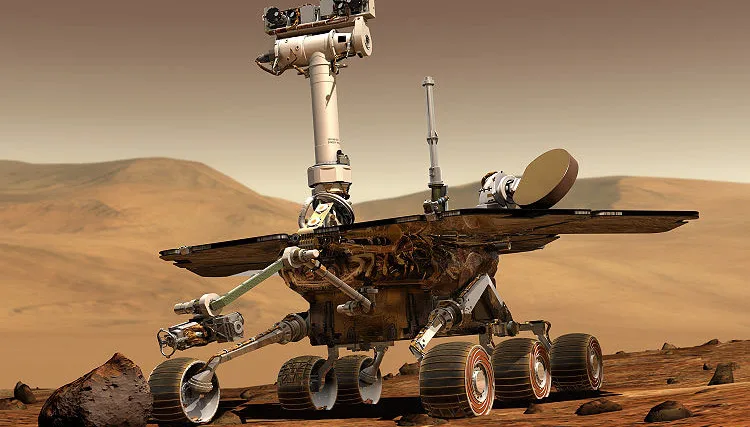
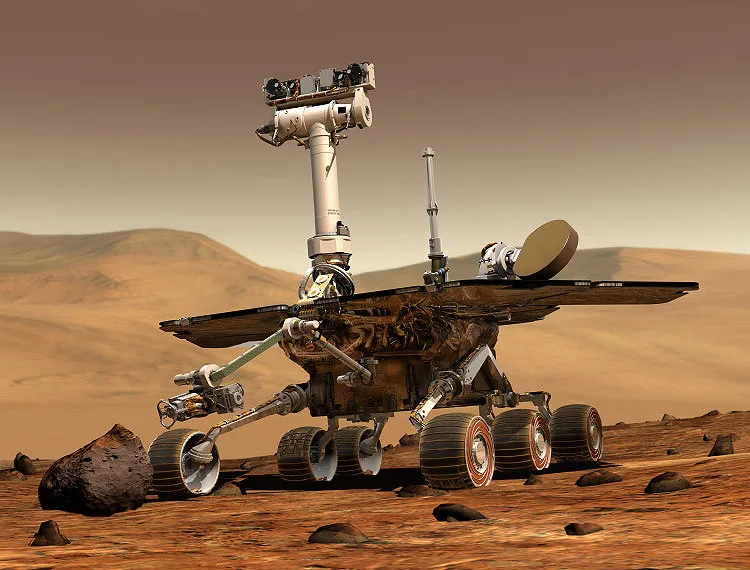
Steve Squyres, the Principal Investigator for the Mars Exploration Rovers Spirit and Opportunity, talks about what it was like living on “Mars time” and why he feels like he’s been on the Red Planet. Heidi Hammel reveals her love for the ice giants Uranus and Neptune. They also discuss how astronomers have found evidence for hundreds of planets orbiting stars other than the Sun, leading many to think we’ll eventually find alien life in those far-distant solar systems.
Transcript
DOWNLOAD SRT
Welcome to StarTalk, your place in the universe where science and pop culture collide. StarTalk begins right now. Welcome back to StarTalk Radio, I'm Neil deGrasse Tyson. I'm an astrophysicist and director of New York City's Hayden Planetarium. And joining...
Welcome to StarTalk, your place in the universe where science and pop culture collide.
StarTalk begins right now.
Welcome back to StarTalk Radio, I'm Neil deGrasse Tyson.
I'm an astrophysicist and director of New York City's Hayden Planetarium.
And joining me this week as my guest co-host, Chuck Nice.
Chuck.
Thanks for having me back, Neil.
I will not soon forget the Super Bowl show, the football show.
You were on fire.
Dude, that was great fun.
You were out of control.
That was great fun, man.
Ready to get back into it today and get high on science.
We're going to get really high on science.
Today's show is a tour of the solar system.
Sweet.
A tour of the solar system.
I think every now and then you got to take a tour of your backyard.
Fantastic.
That's what you got to do.
Will you be our tour guide?
I will be your tour guide, but I have some help from two very competent colleagues of mine.
One of them is Steve Squyres.
He's the scientist behind the Mars rovers.
Wow.
We all read about the rovers and you saw pictures of the terrain.
He's in charge.
These are his babies.
Did they blame him when they broke down?
No, they blame him when they saved...
These things should have broken down long ago.
Oh, really?
Way long ago.
So he's been saving them.
He's their savior, as it were.
Fantastic.
We're also...
We'll be hearing from Heidi Hammel.
She's a research scientist at the Space Sciences Institute in Boulder, Colorado.
Colorado, yeah.
Yeah, so that should be fun.
But you know who's a friend of StarTalk Radio.
I do know.
Bill Nye.
Bill Nye, the science guy.
So were you influenced by him when you were a kid?
Absolutely, absolutely.
And by kid, if you mean 20, yes.
So I got ahold of Bill Nye.
And by the way, lately he's the executive director of the Planetary Society.
He finally has like a real job, you know.
Oh really?
He gets a paycheck and everything.
Honestly, I always wonder what else does he do?
What does he do?
Except show up on TV and talk to kids.
Exactly.
No, no.
He's actually talking to grownups now, including Congress.
So he's going to start us off and put us in a good way, getting us to think about where we are in the solar system and where we might one day go.
The most recognizable image to anyone on Earth is the Earth, as seen from space.
When you look above you at night these days, I hope you notice occasional very bright objects among the stars, other planets.
Humans have spent centuries trying to know all about them.
By exploring the solar system, first with our eyes, then telescopes, and these days with extraordinary spacecraft, we have come to know that Mars is cold, Venus is hellishly hot, Saturn would float, if it could, and our Earth is but one world among thousands of objects, whirling about a common star.
Between and beyond the planets are all manner of objects, comets, moons, asteroids, distant icy plutoids, and dust.
Often as a young scientist, I'd be given a textbook with a place to write my name inside the cover.
Below that, my street, my city, and state.
But I'd go on.
United States, North American continent, Earth, and sun.
Because we've explored our solar system, I could have added the third rocky ball from the medium-sized star.
Have a look around.
Your life is changed every day by explorers who've pondered our place in space.
For StarTalk Radio, I'm Bill Nye, the Science Guy.
That's my boy, Bill Nye.
Nice.
I just got to ask you man.
What's that?
Plutoids.
Plutoids.
Is that like a cosmic mint?
Plutoids.
A plutoid?
That's a great product name there.
We should start that out.
What would your breath smell like?
That's the question.
Hopefully not cosmic dust.
That's cosmic, yeah.
You've got to watch out what stuff smells like out there.
So the solar system, its formation was four and a half billion years ago from a huge giant gas cloud.
And right in the middle of that gas cloud, where it's densest and hottest, that's where you get the sun.
And that's what forms first.
And then you get planets and other stuff forming around it.
It was a day when if you learned about the solar system, it would be like an enumeration of the planets one after another.
But, excuse me, the solar system is so much more than that, from the moons around planets to the dust in the plane of the solar system to asteroids, some of which hit the earth, comets.
It's a very rich, dynamic place.
And in case you really want to geek out on the sun, the sun has an actual official classification code.
It's a G, capital letter G, Arabic numeral 2, Roman numeral 5.
So G2-5 in three different languages and letters and alphabets and number systems.
Each one means something different.
Each one means something different.
If you want to geek out on the sun, that's what it is.
Now, why G2-5?
Because that really...
I don't get it.
G2-5.
G tells you what the temperature is, okay?
Which is a gazillion degrees.
That's what G stands for, a gazillion notes.
For a moment, I almost felt smart.
I was like, I got it right.
So, a star is in order of decreasing temperatures, OBAFGKM.
So, the sun is one of the cooler of the stars.
You know it is, baby, because it's here in our solar system.
It's cool, but it's actually white hot.
And a sun is often portrayed as yellow, but it's actually white.
Just go outside and look.
It's white.
In broad daylight, it's white.
What happens when it gets low on the horizon, then you can look at it without burning out your eyes.
Hey, look, the sun is yellow orange, because the atmosphere just changed its color.
So those are particles in our atmosphere that actually change the color.
Actually what the particles do is scatter the blue light out of the rainbow, leaving behind the red and the orange.
So basically, if you were in space, you would look at the sun.
It'd be white no matter what.
It'd be white no matter what.
Burn your eyes out and that'd be the end of it.
That'd be the end.
The last experiment you did.
So what I've got is, let's go to my colleagues.
They visited me in New York in my office, Steve Squyres, principal investigator of the Mars Rovers, professor of astronomy at Cornell University, and Heidi Hammel, who is total planet babe.
She's all about planets.
Sweet.
And so let's find out what we all had to talk about.
So Steve, I keep thinking of you as like Mr.
Mars.
Anytime I look up in the sky and Mars is there, I'm thinking of your two rovers there.
When you look up at Mars in the night sky, do you think that too?
Would you just wish you were there?
Mars looks different to me than it used to.
It used to be, I can remember before we launched them, looking at Mars in the night sky and it just looked impossibly far away.
So now it's your backyard.
I look at it now and I think I know this place.
You're a kid playing in your backyard.
It's a sandbox.
It feels totally different to look at Mars now than it did a long time ago.
Do you see it though, when you see it in the sky, do the pictures from the rovers, is that what you see?
Kind of, except I don't think in terms of pictures.
I sort of feel like I know what it would be like to be there.
Not just the pictures of the surface, but I know what the clouds in the sky look like, I know the seasons.
The rovers are his avatar.
It kind of feels like that, yeah, it does.
We've experienced Mars through those rovers for so long, I kind of feel like I know what the place is like now.
Yeah, but are you now sort of, do you have Mars on the brain so that it's hard to think about the rest of the solar system?
Because Heidi, you get around the solar system, right?
I sure do, yeah, I look at a lot of other planets besides just Mars.
We don't have those images, we don't have those rovers on the surface, so I still think a lot in pictures.
Plus half your planets don't have surfaces.
Well, that's true, yeah.
I have to ask, what's your favorite?
You know, it changes with time.
Just like picking your children, right?
Yeah, exactly, I don't play favorites.
You know, at different times, different planets do different things.
And so if you were looking at, you know, Uranus at Equinox and it's busted out with clouds.
It's Uranus.
Yeah, you know, I kind of gave up on that whole thing.
I gave up on that.
You matured.
For a while, I was on a mission to educate people about Uranus.
And then my own hometown paper wrote a story about those yellow lights, you know, that they were trying for cost efficiency.
And the headline.
Oh, for the night time streetlights, right, streetlights at night so that it would be darker, less light pollution.
And some people didn't like it.
They ran a headline about the Uranus colored lights.
And that's when I gave up.
I would call it Uranus.
That's more traditional.
But, you know, when Voyager flew by Uranus in 1986, it was dead.
There was like maybe 10 clouds.
It really stretched the contrast.
So Uranus was a big ball of gas with no surface features.
Basically, yeah.
I mean, that's right.
You and I were on a spaceship outside it.
When Voyager flew by, when Voyager flew by, it didn't see anything.
And so everyone thought it's dull and boring.
Well, that's not what it's like right now.
It's in a completely different season.
And the atmosphere is turning on.
And there's bright clouds and there's dark spots.
And there's all kinds of activity on this planet.
And it's just my favorite right now because it flies in the face of what we were taught in school about Uranus.
You know, we were taught that...
I remember the books.
Uranus was an example of a boring...
It's the boring one, yeah.
That's right, which is just absolutely not true right now.
And the books are starting to finally catch up with reality.
Now, Mars, of course, is a dynamic place.
Yeah, it's changing all the time.
I mean, it's got seasons very much like the Earth does, very different at different times of year.
It's not only very much like...
It's almost exactly like the Earth does, right?
I mean, it's tipped how many...
25 degrees.
And we're 23.
23 and a half.
So it's almost the same.
The year is longer, of course.
It rotates once in how many...
24 hours and 39 minutes.
Let me tell you, if you're operating rovers on Mars, that just plays havoc with your life.
Okay, next time that happens to me, I'll keep that in mind.
You know, you would think...
Listeners, when you're operating rovers, just get ready for this.
You know, you would think it would be nice to be able to sleep in it next to 39 minutes each day, but it kind of adds up in weird ways.
It gets out of sync.
You think it's like a slow jet lag.
We lived on Mars time for months.
We had Mars alarm clocks, Mars stopwatches.
We had food service on Mars time, maid service in an apartment on Mars time.
We had blackout curtains on the windows, so you couldn't tell if it was daytime or nighttime.
It was like being in a casino.
Did you adjust to it, or did you really feel human and terrestrial?
Because your bodies couldn't adjust to it.
Our bodies could adjust to it just fine as long as Earth did not interfere in our lives.
In other words, the blinds on the windows were absolutely...
That was fine, and if you have to live a day that's 24-39, it's perfectly easy to lead unless you have to interact with real human beings in the real world on Earth.
Like a spouse.
Like a spouse, or you walk your dog or something.
That sort of thing.
So what you're saying is you were basically in a Mars habitat.
Yeah, we kind of were, but then there would be events...
Somebody would decide there had to be a meeting at 8 o'clock in the morning Pacific time, and if it's in the middle of my night, I was still expected to show up, and that was when it got difficult.
Wait, I thought you were in charge.
Not when it came to interacting with the press.
When we had press conferences, they were at 8 a.m.
Pacific, and that was it.
Telling CNN that we want to have our press conference at 3 a.m.
just didn't work real well.
So the press likes your rovers?
Geeking out on the planets right there.
Dude, that was like Geeka-palooza.
Geeka-palooza.
Isn't it great?
Everybody has a favorite planet.
How many people in the street, just, well, that's my favorite planet for these 11 reasons?
Yeah, well, most people you ask, what's your favorite planet, they're going to be like, the one I'm standing on.
Not the one, well, this one used to have no service features and then cloud layer.
There's a whole analysis of what they follow and why, and it keeps them pumped every single day.
Yeah, I'm just glad to know that Mars has seasons.
Yes, and polar ice caps.
This accounts for its allure in the history of science fiction writing, why people have chosen Mars as a target for life, more so than other planets.
Oh, darling, I can't wait until we take spring in Mars.
Not only that, what we have on Mars is not only the rovers, there are orbiters as well, so that we can know where we might send the rovers next.
Otherwise, you're kind of driving blind.
And what's good about rovers is it's a mobile geologist, and you don't have to go there.
Plus, the rover doesn't have to come back.
So if you send a human being, they usually want to come back.
Normally.
You got to feed them, you know.
You got to send a misanthrope.
I hate you guys.
Yeah, get out of here and go to Mars.
So one of the things we found recently in Mars is methane emanating from the sides of ravines in Mars.
Really?
Yeah, and methane is the kind of gas that is produced in the anaerobic digestion of food.
So actually Mars is a big giant fart, is what you're saying.
Well, no, did I say, did I?
I did.
Chuck, that's why we have you on the show.
That actually sounds more like Uranus.
Or should I say Uranus?
We just got schooled on that one.
Uranus.
That's what it is.
Uranus.
So after the break, we'll talk about the search for life and how the search for water is driving the search for life because everywhere on Earth where you find liquid water, you find life, every place, including places like the Dead Sea.
The reason why they call it the Dead Sea, they didn't have a microscope to tell them what would do the backstroke in the...
But there are things alive in the Dead Sea.
Not fishes, but there's other stuff that's alive for sure.
We've got to take a quick break, but more StarTalk when we return.
Welcome back to StarTalk Radio.
I'm Neil deGrasse Tyson with Chuck Nice, comedian and TV host and all around good funny guy.
And I got him here just to chew the fat.
And I appreciate it.
Well, it is a pleasure and an honor to have you on board.
Thank you, sir.
And we're talking about the Solar System today, a tour of the Solar System.
Basically, we have two of the world's experts to serve that up.
One is Steve Squyres, who runs the Mars Rovers, which we've all heard about.
Everyone's heard about the Rovers, even if you didn't know he was the man in charge, as there's a whole team, of course, but he's the main...
He's the top banana.
The top banana.
And Heidi Hammel, who's an all-around planet geek-tress.
I mean, is that the word geek-tress?
Geek-tress, you just made it up.
If not, we make it right on the spot.
And so the Solar System is full of a lot of alien worlds.
There are moons and planets and comets and asteroids, and one planet is different from the next, one moon is different from the next.
These are exotic places.
Yes.
Is there any place, one of these, you might want to visit one day?
Pandora.
I just love those blue people.
They're so adorable with their little tails.
I love them.
And they're so nimble on tree limbs.
Exactly.
You worry about me, too, don't you?
You know, because there's so much going on in the Solar System, not everything has a perfectly circular orbit around the sun.
A circular orbit is the only orbit you can have and not hit something else.
If you do not have a circular orbit, there's a chance you're going to hit something.
Something's going to hit you.
Now, from what I understand, aren't there planets here in our Solar System that have an elliptical orbit?
Yes.
No, not anymore.
Pluto.
Don't get me started on Pluto, because we'll take it outside.
Let's go back to Steve Squyres and Heidi Hammel.
They're going to tell us what kind of a shooting gallery the Solar System actually is.
Now, Heidi, you go way back with the press.
My first encounters with you, as I think with many, were with the comet impact on Jupiter.
You were like the face of the comet.
The first impact on Jupiter.
Yeah.
There's more than one.
We just had another one in July.
Oh, I know about that.
I forgot all about that.
I've been busy.
I'm sorry.
I'm sorry.
It's an impact.
It's the size of the Earth kind of thing.
Big explosion.
So Jupiter is kind of asking for it, right?
Well, yeah.
It's a big target.
Well, it's there to take one on the chin for us.
It's a big target.
That's really true.
It's protecting us.
It's protecting us.
It's a big brother protecting us.
But yeah, my first interactions with the press on any large scale were back in 94, when we were doing weather broadcasting from Jupiter live.
So what was going on every day on Jupiter?
Absolutely.
It was pretty exciting stuff.
So if that happens just in the last couple of decades, this must be going on all the time, right?
We're not living in some special time when Jupiter's getting hit.
We thought we might have been lucky the first time.
And when it happened just exactly 15 years later, we realized, hmm, maybe we aren't so lucky.
Here's a question.
Now that you know what to look for, now that you know what an impact on Jupiter looks like, is there data mining you can do?
Can you go back to old pictures?
Data mining.
So it's like looking back and...
Even after the 94 impact, some folks went and did do that.
They went back and looked.
We had the Planetary Patrol telescopes, I don't know if you're aware of that, network of 24-inch telescopes that were just studying Jupiter, you know.
Creating an archive of data.
And there's nothing like Shoemaker-Levy 9, you know, the big one in 94 was there.
So you would have seen it.
The pictures are good enough that you'd know.
That's right.
And people do talk about the historical record.
There's reports of Cassini himself, not Cassini the spacecraft, but...
Cassini the guy.
It's weird to think there are people with names after spacecraft.
What a coincidence.
When you say Galileo, you know, we're talking about Galileo the guy or Galileo the spacecraft.
Cassini drew pictures of...
Or the European navigation system, Galileo.
That's right.
Their counterpart to our GPS.
You've got to get some more astronomers' names in play, like, you know, Neil deGrasse Tyson.
These are named after dead people, yes, okay.
People did go back and look, and they haven't seen conclusive evidence in the past of any big events like this, but I'll tell you, nowadays these amateurs have terrific telescopes.
They have amazing CCD systems.
Allow me to clarify, in most professions, if you accuse them of being an amateur, it would be an insult, whereas in astronomy, amateurs are a badge of pride and courage.
Well, and also, they do terrific science now.
There's a synergy between the professional astronomy community that basically has the really huge telescopes and the amateurs who have smaller telescopes, but they're terrific and they have tons of time because the amateur just goes out at night and spends all night looking whereas...
And they're in every time zone.
Every time zone, all around the world.
When you use big telescopes like Hubble or the Keck 10 meter, you might get half an hour a year.
And that's all the time you have to look at your objects.
So we rely on the amateur community to feed us information about things like impacts on Jupiter.
It was an amateur who spotted that and alerted the professional community and then we...
This is later, the second impact.
The second one.
That's right.
So I'm sitting between two very different kinds of scientists now.
One who, you, Heidi, who are still using telescopes.
She's kind of behind the time.
You're still looking at stuff.
And Steve, you're just there, you know.
You don't worry about the optics.
You don't worry about bad weather.
You're just there.
Oh, we worry about both of those, my friend.
First of all, we got optics all over these rovers.
Second, we are very, very sensitive to the weather on Mars.
Okay.
But it is true that he can send spacecraft to his object and get them there within, you know, a reasonable funding cycle.
Before he dies.
Before he dies.
Yeah.
If we want to start talking about planets around other stars, we aren't going to be sending spacecraft.
Or even some of the, you know, some of the planets in the outer solar system, if you're talking about a Neptune, a mission to Neptune, the time scales for pulling that off are very long.
Well, so that's why the Pluto mission, the New Horizons, that was like a light payload with some really huge engines to get it there.
That's right.
Yeah, that one was, that was booking.
And it's still on its way.
And we got years to go before it gets there.
So it's, it's humans attack the solar system.
That's what this is about, Jack.
I've learned some things, man.
Well, this is what we're, this is at the point of the show.
The thing I learned that most stuck out was that in astronomy, size matters.
Everybody has telescope envy.
Yeah, so whatever size is your, in fact, you go to astronomy conventions, how big is yours?
Right.
It's true.
But here's the problem.
At some point, you got to carry the thing to the observing site.
And above a certain size, you just can't do it.
You can't even do it.
Yeah, I know what you mean.
It's not, Chuck, out of control.
Okay, let me shut up.
So what we have going on in the solar system is that planets are no longer just dots of light with pretty atmospheric conditions that photograph through a telescope.
We can actually go there and look at surface features.
And so there's a whole frontier of planetary science called comparative planetology.
And if there's a mountain on one planet, look for a mountain on the other.
There's craters, valleys, riverbeds.
You compare one object to another.
And especially for the terrestrial planets Mercury, Venus, Earth and Mars.
They're small, they're rocky.
And so we can learn about one by studying another.
For example, so we can ask, well, while we've been going to Mars for the past 30 years, guess where the Soviet Union back in the old days, guess where they went the most?
Well, Venus.
Really?
Yes.
And they had a whole series of Venera spacecraft.
Venera spacecraft.
Yes, that's what they're called.
That's right, Venera.
So that's the genitive.
Kind of sounds like a medical condition.
That's all I'm saying.
I'm just saying.
Well, it's funny that you should ask.
Man, I got a bad case of Venera, man.
Let me tell you.
So what happened was astronomers, when we figured you try to come up with words for names for where you come from, if you're from Earthling, if you're from Jupiter, you're Jovian.
You didn't know that?
You didn't?
By Jove.
By Jove comes from...
Jupiter, of course.
Jupiter.
Of course, yes.
And Venus would be Venusian.
If you come from Venus, you're Venusian.
And so the reason why we came up with Venusian is because the proper genitive form of Venus is venereal.
And the medical doctors got to that word before we did.
I am so pissed off.
That is so cool.
I am so angry about that.
And they took the word right out from underneath it.
And why name it after Venus?
Because it's the diseases common to love and beauty and all that go with it.
That makes sense.
And that's Venus, the goddess of love and beauty.
Oh my God.
I'm just happy to know that this little condition I have that it needs antibiotics is so romantic.
TMI right there.
Oh, it'll clear up.
Don't worry.
Now, here's the problem on Venus.
If we sent you to Venus, it would all be cleared up because it's 900 degrees Fahrenheit there.
Oh, sweet.
There's a runaway greenhouse effect going on there.
And that makes it very hard to investigate because your metals melt.
It'll melt lead, for example.
You can't have lead solder or anything.
Only Superman can do that.
So that's hot.
Is that right?
Yeah, his laser vision.
Oh, okay.
We should do it.
What's funny, he couldn't see through lead, but yet he could melt it with his heat vision.
Interesting.
How crazy is that?
That's crazy.
You know, we're going to do a special show on the physics of superheroes.
Get out.
Should we invite, should I get you back for that?
Oh man, if you don't, I will never speak to you again.
All right.
That's not, we'll work that one out.
And so of these destinations, Pluto is on our targets, the ex planet Pluto.
It's got what's called the New Horizons mission.
It's booking.
It's the fastest hunk of hardware we have ever sent anywhere.
It's on its way to Pluto right now to get there in 2015.
And that's, we're headed there.
That's one hell of a road trip, man.
It's one hell of a road trip and it's on hugely powerful rockets because the principal investigator of that mission wants to make sure you get to Pluto before he dies.
See, that's how that works.
This is the number one rule of scientific investigation.
And so we have spacecraft going to comets, to asteroids, and so we're all over the solar system now.
It's a fun time to be alive because the solar system is no longer this distant place.
And when we come back after the break, as I promised before, we're going to talk about life, the search for life in the universe, what are the conditions that a planet or an object have to have in order for there to have life as we know it, because maybe this could be some stuff that life as you don't know.
Bye StarTalk Radio, we're back.
You know, over the break, Chuck Nice and I were talking about this mission to Pluto, and he was bugging out the whole time.
Yeah, well, first of all, you told me that this thing starts in 2006.
Yeah, it was launched in 2006.
And then you said, when we were talking on the air, 2015.
Yeah, it took 10 year mission, yeah.
So what do you do in the 10 years?
Oh, so the PI is...
I mean, you shoot the thing up there, and now you got 10 years.
You go to the Bahamas for 10 years.
No, I think that I'm told that they're working hard, trying to make sure.
No, you actually can take images, you test the equipment along the way.
You get data, it passes other planets, it needs a gravity assist.
Okay, gotcha.
You know, it's doing things, it's not just...
Let's see, the thing is Pluto is moving.
Yes, it is.
So...
Not very fast, but it is moving.
Yeah, so now you're shooting a rocket at a moving target.
Yeah, you're not shooting where it is, you're shooting where it will be when you get there.
Or at least you hope.
Well, that's when laws of physics, you don't have to hope.
Oh really, is that...
So it's not like, you know...
Still there.
Hey man, we got here, Pluto's not home.
Yeah, that would be bad.
It's like, yeah, it was here three days ago.
Okay, so cool, actually.
Newton's laws of physics allow you to hit it where it will be, when it will be there.
Hence the gravitational adjustments.
Is that what you're saying?
No, we know the gravity fully and advance the whole route.
We have the capacity to make tiny, mid-course adjustments if there's something we hadn't figured, but lately these things have been going without hardly any use of fuel.
Sweet.
Oh yeah, yeah, it's a lob shot, basically.
So now we're not going to Pluto to look for life.
It's too cold, it's too far, it's too dark, it's too everything that we can imagine that could serve life, but there are other places in the solar system that could serve this need.
And we talked to two of my favorite colleagues, Steve Squyres and Heidi Hammel, too.
We had a geek fest in my office.
Geekin out.
We were geekin out on the solar system.
Just giddy, I can hear the giggling now.
We were giddy.
Let's find out what they say about our search for life in the solar system.
We love the planets, but the real goal is we want to find life.
Mars has been a seductive prospect for life since the beginning, since Lowell.
Okay, Percival Lowell thought he saw Mars.
A little misled, but he had the right idea.
His heart was in the right place.
He's the one who invented the canal story.
Quickly tell us that, the canal story.
Well, basically what happened was that people looked through a telescope and they saw...
Yeah, 100 years ago.
In moments of brief atmospheric clarity, they could see what looked like a fine network of straight lines on the planet surface, and they were so straight and so regular that the people looking at these concluded that not only were they evidence of life, they were evidence of intelligence life.
Now, they were correct, but the life was at the wrong end of the telescope.
What they were seeing was an optical illusion.
And didn't know enough about illusions to find that.
Yeah, and in fact, there's nothing of the sort on the surface of Mars, but as we've learned in recent decades, Mars is very interesting in other ways.
Nonetheless, nonetheless, with possible evidence of running water.
So the two water places that I know of is Europa, one of Jupiter's moons, one of my favorite places just to think about, to dream about, because I want to go ice fishing on Europa one day.
And of course Mars, possibly under surface aquifers.
And Heidi, how's Europa kept warm?
It's not the sun.
It's really kind of a gravitational tidal pumping with the other moons around Jupiter that kind of bend it.
You know, the analogy I use is if you take a credit card and you bend it back and forth, a lot of it gets warm.
I try not to do that.
With old credit cards.
Piece of coat hanger where I want to bend it.
A paper clip, how's that?
You bend a paper clip back and forth a whole bunch and you touch it, you feel it gets warm.
Same thing is happening with this moon, Europa and Io.
They're kind of getting flexed and bent, flexed and bent and it heats them up.
You know what?
Don't forget about Enceladus when you're talking about water worlds.
Enceladus we now know is just the last moon of Saturn.
Little tiny one too.
It's also tidally heated.
Tidally heated, the same flexing to heat it up, but it's just blasting water out of its southern pole.
Are these not ice volcanoes or what are, I don't know.
It's liquid water coming out.
It's water.
Yeah, you could think of it as volcanoes.
It's just that the magma is water instead of being molten rock.
I mean, you could, if you...
It's pressure that builds up and it spews water.
It's water.
I mean, if you flew a spacecraft through it and collected it and you were able at room temperature, you could drink this.
And of course, every place on Earth we have liquid water, we have life.
So therein is the temptation.
That's where the temptation is.
What would you bet on Mars or Europa as the place, if there's life other than Earth and the Solar System, that we would find it?
Today.
Today.
Yeah, see, that's the question.
Is it you're talking about life today or life ever existed?
Because it's a different question.
I would say Europa.
If I knew how to do submarines on Europa, I wouldn't be screwing around with rovers on Mars.
Yes, sir.
What if you dug down into Mars?
Yeah, it does.
Can't you?
And you got water as you get further?
Yeah, I don't know how to drill down hundreds of meters on Mars either.
Well, but you know, if you don't know how to drill on Europa, I mean...
Yeah, I mean, they're both huge technological challenges.
But if there truly is...
Wait, wait, just how thick is the ice on Europa approximately?
We don't even know for sure that there's an ocean there.
It's some 10 kilometers, 100 kilometers.
It's likely what it is.
I saw the ice.
It looks like...
I know.
I can make a picture for you, Neil.
It looks like, but you're going to spend tens of billions of dollars doing a submarine mission to an ocean that you don't know for sure exists?
We got work to do there.
Yeah.
We got to learn a lot about the environment.
I want this to happen in my lifetime.
You got two key people here.
Eat healthy.
Get lots of exercise.
Go on that low calorie diet.
1700 calories a day.
That'll get you an extra year per year.
Wear my seatbelt, too.
But you know what?
What might happen in your lifetime is we may find Earth-like planets around other stars in a distance from that star where water could be liquid.
I'll tell you another one that could happen in your lifetime, and that is bringing rock samples back from Mars that contain definitive evidence, one way or the other, fossilized, on whether or not there was life at the location from which the rocks came.
And ideally, you get to choose your own rocks.
Yeah.
See, I mean, we have rocks from...
In fact, I'm sure you've got them in your museum here.
We've got rocks from Mars here on Earth in the form of meteorites, but these are rocks that literally fell from the sky.
We don't know where on Mars they came from.
We didn't pick them.
They just came here.
They don't have the pedigree that you need to...
Mars is a very, very complex place geologically.
And to be perfectly honest, most of Mars is pretty boring.
Most of Mars is just covered with lava, very dry, very desolate.
Solid lava.
No evidence that water was there.
Solid lava.
Solid lava.
And very ancient volcanic rocks.
And evidence for life, you're not going to find in a place like that.
To find it, you got to go to the special places where you have the right minerals, the right sediments, the kind of stuff that can preserve evidence of ancient habitable, watery conditions.
And those are few and far between.
OK.
So we have Mars as a good example of where to look for evidence of past lives.
Europa as a place to look for possible evidence of current life.
You could look for evidence of current life on Mars as well, but you probably have to drill deep.
And that's hard.
Geekfest continues.
Man, that was serious.
Now, Chuck, you realize that interview in my office took place a few weeks before the announcement that we found Goldilocks planets orbiting, exoplanets orbiting distant stars.
Yeah, where they're close enough or far enough from the sun where they can have water.
At the right distance, not too close, not too far.
You evaporate too far.
Hence the Goldilocks, right?
The Goldilocks, exactly.
And so for them to say, this will happen in your lifetime, then happen three weeks later, you know.
You ask, you receive.
Yeah, like they forked it up.
We have a tweet that someone asked from a tweet.
This is Trudvertite.
That's the Twitter handle.
Is the thought of exploring and terraforming Mars even relevant if we can't even take care of our own planet?
Yes, it is.
Let me just field this one.
Okay, this one goes to Chuck, apparently.
We're going to need a place to go.
After we mess up the Earth.
Because we're screwing this one up royally, buddy.
So we need a place to go.
Okay, so you have the opposite sense of this question.
This question is, we don't deserve another planet if we can't take care of our own.
You're saying it's because we can't take care of our own that we got to have the planet.
My reply is if you have the power to terraform another planet, you have the power to fix your own planet.
Wow.
Just think about that.
Wow.
If you have that much control over geoengineering, what's a few degrees warming?
Just crank the knob that lowers the temperature back again.
Exactly, because you'll know what to do.
You'll know exactly what to do.
Basically, you'll be able to create a geothermal thermostat.
A thermostat.
Exactly.
Awesome phrase.
Chuck.
I don't even know where that came from.
A geothermal thermostat.
Awesome.
Dude, hanging out with you is rubbing off on me.
This is great.
That just felt good.
I felt smart for a second.
Still don't know what I said.
And so, we got these places.
Heidi raised an interesting point, and that if you're looking around for other solar systems, star systems, we don't know yet how common our star system is.
We've got these eight planets.
Get over it.
We've got eight.
We've got Earth and Mars in the Goldilocks zone, but we have these places outside of the Goldilocks zone kept warm.
In the case of Jupiter, it's Jupiter's gravity stressing the moons.
By the way, in the old days, people said, let's find a planet with life.
But you can have a moon if the moon is big enough.
Why not have life on a moon?
And if the host planet keeps the moon warm, you don't even have to be in the Goldilocks zone of the host star.
So now when you guys were talking about this, wait a minute, tidal heat.
Oh, tidal heat, yes.
Is that when the gravity moves the planet back and forth or stretches it and that creates the heat?
It's a stretching kind of gravity and it does that to the oceans of the earth that stretches them and earth turns inside and out of the stretched ocean on the earth.
Yeah.
Oh yeah.
More about tidal heating when we get back on StarTalk Radio.
Welcome back to the show.
You know, there's a mission up there right now getting data like gangbusters called Kepler.
Kepler.
Kepler, named after the famous mathematician from the German mathematician, late 1500s, early 1600s.
He was the first to write down an equation that told you how planets orbit the sun.
They call Kepler's Three Laws of Motion.
Wow.
It was awesome.
The first law of science in the universe was Kepler's Three Laws of Motion.
So basically, predictive physical science has only really been around for 400 years since he wrote down those equations.
So we're pretty new at this.
We're kind of new, yeah, compared to other stuff that humans have been doing.
So Kepler's specially designed to find Earth-sized planets orbiting sun-like stars.
And there's a recent data that was released that had a set of 1,000 stars, 1,000 planets orbiting other stars.
And so it tripled the number of total, so we went from 500 to now 1,500 stars, 1,500 planets.
1,500 planets.
An orbit around stars that are not the sun.
And out of those, there's about 40 or 50 Goldilocks planets that were found.
So there's about 40 or 50 other Earths floating around out there.
That could sustain liquid water.
That could sustain our life, or have water.
Or Jupiter-sized planets with moons that are outside the Goldilocks zone.
So we're casting a pretty wide net in the search for this.
Do you realize this whole field, the search for life in the universe, it's called astrobiology.
That's a term, if you went 20 years ago, the term never, no one knew how to use it.
Nobody even knew.
It was not really part of the parlance of scientific discourse.
It was a field essentially invented by NASA.
Right, so 15 years ago, that would have been just called BS.
Well, you need data.
Data converts BS to real, to real discourse.
Carl Sagan was, of course, a very early proponent of the search for life in the universe.
And we can call him the father of astrobiology in that sense.
Although there are other people who have done sort of Earth-based bio experiments that preceded that.
But do you want to stay current on the frontier of astrobiology?
There's an online NASA magazine called AstroBio.
astrobio..net..net.
The astrobio.net.
For all of your astrobiology needs, it's astrobio.net.
So now, one of the great frontiers here is where you have to ask, how are you going to explore the nearby planets or the distant ones?
Do you send a robot?
Do you send a human?
Do you send a robot to do what a human can do?
This is the major issue, a major question.
And I brought that up with Steve Squyres and Heidi Hammel.
And let's see what their take is on it.
One of them is a geologist, and one of them is a telescope astronomer.
Let's see where they take us on this issue.
Given the choice, because it costs more to send people than to send robots, if you had the choice of sending 30 robots to 30 different locations on Mars, were you going yourself?
As a scientist, not as an adventure explorer, Indiana Jones hat wearing expedition head, I'm talking about as a-
How about if we talk about sending you instead?
Oh yeah, I forgot about whether we should bring him back.
No, look, I see where you're going with this.
Where's the trade-off?
The answer, my personal answer is that I would send a human, okay, and I'll give you two reasons for that.
One reason is that what humans can do is so much greater than what robots are capable of now or for the foreseeable future.
Wait a minute, every time we send a human, they bring out a black box that makes the measurement.
Well, why not make the robot pull out the black box?
No, no, no, there's much more to it than that.
Okay, Neil, I have spent the last 20 years of my life trying to design and operate robots that can replicate what a human might be able to do on the Martian surface.
What our rovers do in a day, you and I could do in about 30 seconds.
That's one thing.
The other thing is that humans have a capability to synthesize information, to digest it, to figure out the next thing to do and to improvise.
Robots can't improvise the way humans can.
It's not just that we're not there yet.
I mean, Moore's Law get us this ever increasing rate of...
I think you've got a couple of million years of evolution to go to that point.
We're very, very far away from that.
The other reason that I would send humans...
So the brain is still a pretty good device.
It's a terrific process.
The other reason I would send humans is that humans have a capability to inspire that robots simply lack.
Someone once famously said nobody's ever gonna give a robot a tech or tape parade, and there is something to that.
It's a little squishy, it's a little intangible, but I will tell you that our rovers were built by people like me who grew up in the 60s and 70s watching Mercury and Gemini and Apollo on TV and dreaming of sending spaceships to Mars someday, and now we do that, okay?
We were inspired by what we saw as kids, and I think sending humans does that in a way that robots never will.
So I think there's a real value to it.
Where do you wanna go?
We could send you somewhere.
And bring you back.
You know, there's a lot of great stuff in the solar system to see, and just picking off the low-hanging fruit, you know, I'd love to...
But where would you go?
I didn't really know.
The next place that I would go...
The fruit wouldn't have to be low-hanging.
Reach for it.
Where would you go?
I'm so intrigued by the outer solar system because we know so little about it.
It's good scientific juices flowing here.
Yeah, we just know absolutely nothing about it.
You're drawn to where you are most ignorant.
Yeah, because that's where you learn the most.
Most people are only comfortable where they know the most.
Oh no, I wanna uncover some of these things that we just don't know.
So give me a place.
I would like to go to Neptune.
It's warm to Neptune.
Yeah, because that planet system, not just the planet itself, but it's got an incredible ring system that's chunky and it's not smooth and beautiful like Saturn.
It's clumpy, it's very dynamic.
It's changing with time.
It's got a terrific moon called Triton, which was captured.
It wasn't born with Neptune.
It was some object that just got, oops, too close, and Neptune was probably stolen.
Stolen, grabbed from interplanetary space.
This thing is like a twin to Pluto.
And we know that it has...
Triton is a twin.
Triton is a twin to Pluto.
We know it has ice volcanoes.
It's got geysers.
We've seen them.
And so this moon is dynamic and changed.
So the whole planetary system has something for everyone.
I mean, we've just learned so much.
So you're attracted by the abject ignorance of what we know of the system.
That's what attracts you.
Well, it's just really alien.
It's very different.
I mean, these ice giants are just so different from Earth.
I mean, they don't have surfaces.
You couldn't land on it.
But you could land on one of its moons.
And that would be great.
See, since I'm fundamentally like a galactic person, not a planet person, my destination within the Solar System has nothing to do with how much we know.
It's just what looks the coolest.
So where would you go?
I would so go to Titan and just watch Titan.
That's the one with the rivers of methane.
Lakes of liquid methane, and meanwhile, you're orbiting Saturn.
Well, I'll tell you, if you want to go there, you really better eat healthy and get plenty of exercise.
It's going to take a while.
All right.
Thanks, guys, for being on StarTalk.
Chuck, you know, if we find life on Europa, you know what we should call it?
What?
The Europeans.
So Chuck, take us out of here.
What do you?
You know, I was listening to that, and I could just think, you know, if the advantage of sending a robot is, you know, they're never going to ask, are we there yet?
You've been listening to StarTalk, Neil deGrasse Tyson, and as always, I bid you to keep looking up.
See the full transcript



 Unlock with Patreon



 Become a Patron