


 Unlock with Patreon
About This Episode
What’s the fastest a car can accelerate? Neil deGrasse Tyson and co-hosts Chuck Nice and Gary O’Reilly explore goal size to goal scoring ratios, the doppler effect, and the maximum acceleration for a car.
Why isn’t there more scoring in soccer? Is the goal not big enough? We break down the math of available scoring area versus the size of the ball. Why do hockey games score more despite a smaller goal size?
Learn about doppler shift and the noise objects make as they come towards you and go away from you. What causes a sonic boom? We discuss different frequencies and the experiments by Cristian Doppler that gave the doppler shift its name.
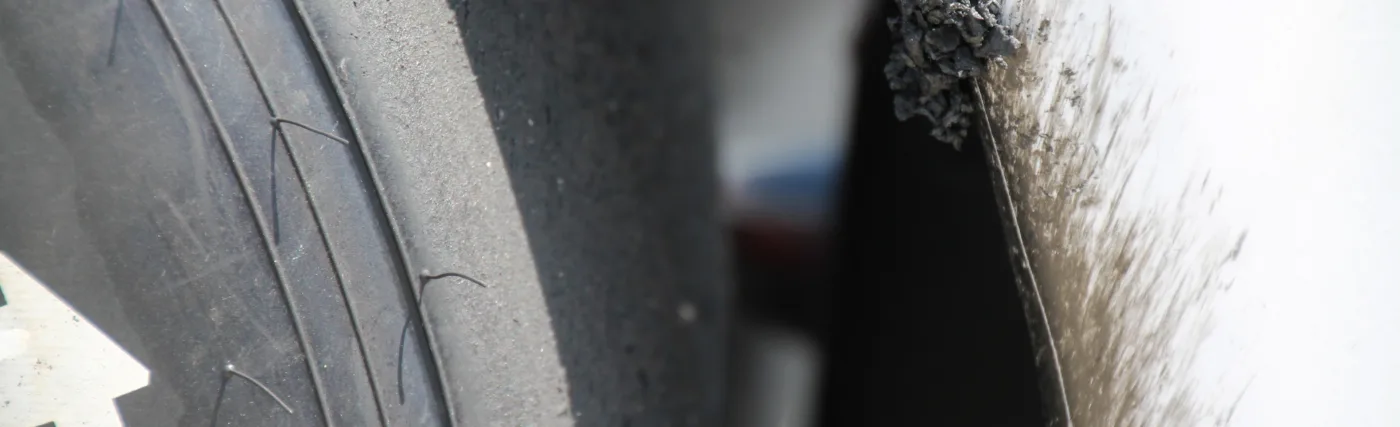
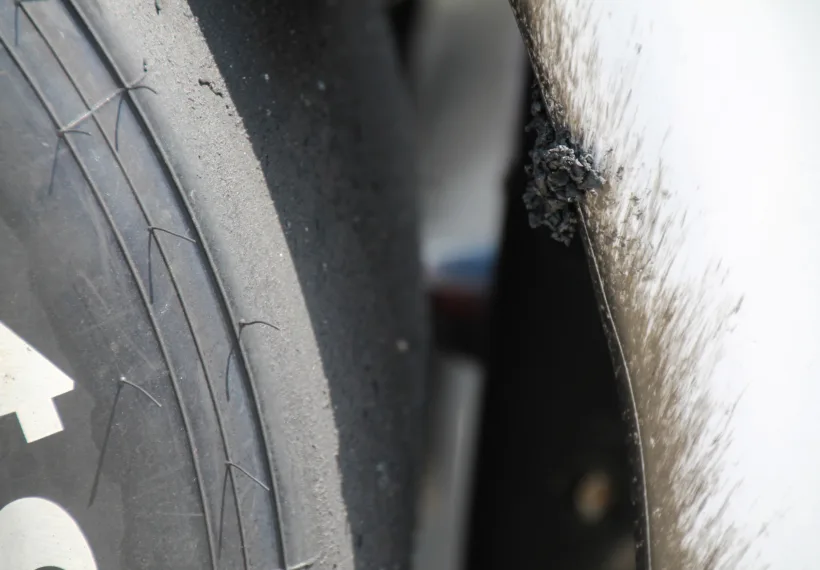
What’s the highest possible acceleration for a car? We go over the physics of how a car accelerates and the interplay between air, gravity, and friction. How fast can an object in free fall go from 0-60? Plus, find out the cool ways that race cars hack physics to accelerate faster.
NOTE: StarTalk+ Patrons can watch or listen to this entire episode commercial-free.
About the prints that flank Neil in this video:
“Black Swan” & “White Swan” limited edition serigraph prints by Coast Salish artist Jane Kwatleematt Marston. For more information about this artist and her work, visit Inuit Gallery of Vancouver.
Transcript
DOWNLOAD SRTIf I recited that Doppler effect sound differently, you would say, what’s wrong with you, right?
If I went…
Nyee-yung-yung.
No, you know intuitively that that’s wrong.
That’s true.
Or…
Nyee-yung-yung.
No, it’s…
Nyee-yung-yung.
He-he-he.
Stop laughing at my Doppler shit.
Welcome to StarTalk, your place in the universe where science and pop culture collide.
StarTalk begins right now.
This is StarTalk Sports Edition.
This version is a Things You Thought You Knew edition.
I got Gary O’Reilly, Gary, co-host.
Hi, Neil.
All right, dude.
And we got Chuck Nice, Chuck.
Hey, what’s up, guys?
By the way, Gary, the World Cup final was…
It was so good that I had to text Gary while it was going on.
Oh, trying to get some street creds with Gary.
No, it was so good.
I couldn’t believe it.
Like, I like soccer.
I watch it.
Like, they have Bundesliga that comes on here in America.
That comes on Saturday morning.
And Premier League, I think it’s called, comes on…
Premier League, I’ve seen that.
Yeah, Premier League comes on as well.
And, you know, it’s like sometimes I’ll just, like, stop as I’m going across the channel and I’ll watch it because, you know, what gets me more than the game is the fans.
The fans are insane and I’m, you know, they’re singing songs and they’re…
And none of them are sitting down.
Yeah, they’re all standing for the whole game.
This is two hours.
I know.
Pipe for a seat and don’t use it.
I don’t even know why they put seats in the stadium, to be honest.
And the great thing is, Chuck, every club, all the fans have their own particular set of songs that they will sing all through.
And then that way, go to Argentina.
Go to Argentina.
And they’ve got songs for players.
Yeah, yeah, yeah.
So, you go to Argentina, it’s like you’ve rocked up at a rock concert because there’s the music’s there, the fans are singing, and you’re like, wow, and then a game of soccer broke out.
Exactly.
You went to a concert and the game of soccer broke out.
It’s, you know.
But anyway, I watch it.
It’s not my favorite sport, but if I come across it and it looks, I just think the field is too big.
If they shortened the field, I would become a soccer fan.
Okay?
But when you got to watch…
Okay, wait, wait.
Chuck, did you see the tweet?
Somebody tweeted.
It was, you know how to improve soccer?
First make the field smaller.
Okay.
And then use five players instead of 11.
And make the net smaller.
Okay, that’s basketball.
Wait, no, no, no.
Then just do it on ice and then that’ll make it smaller.
That’s hilarious.
But it takes them like two minutes to run up the field.
So I’m just like, that’s really the hardest part of the game for me.
But I understand if you really know the game, that is part of the game.
See, that got me thinking, Chuck, okay?
How come there’s not more scoring in soccer?
I just was wondering this.
Then I said, could it be that the net is not big enough?
Could that be?
I’m just asking.
It’s 24 foot by 8 feet.
How big do you want it?
Well, how many games end 0-0?
That’s 24 feet wide.
That’s 24 feet across.
By 8 feet high.
Okay, so here’s how you do this.
You want to do this sort of geometric mathematically.
You’d get the cross sectional area of the net.
So it’d be 24 feet by 8 feet.
The depth doesn’t matter.
It’s in the front line.
It’s in.
Okay.
So then you get the total square footage of the net.
Then you subtract away the area that the goalie occupies.
So I approximated a goalie as being 2 feet wide by 6 feet tall.
So it’d be 24 square feet.
Okay.
I mean, whatever it is, it’s not going to be far off from that number.
So what you do is you divide those two numbers.
Did you include the Mickey Mouse gloves in the total area of goalie?
Totally Mickey Mouse gloves.
Oh my God.
You got to include the Mickey.
Every time I see a goalie, I just, hi kids, like that’s what I’m waiting for.
Oh man.
All right, so first, the goal, the net area relative to the ball, okay?
So it’s a relatively simple calculation because the ball is about nine inches in diameter.
So you do half that to get the radius, you do pi r squared, you get the cross-sectional area of the ball.
Of the ball, okay.
And the cross-sectional area of the net.
You divide them and you learn that the net is 440 times larger than the ball.
Now subtract the area occupied by the goalkeeper.
Is that what it’s called?
Goalkeeper, not goaltender?
Yes, it is.
Goalkeeper, thank you, thank you.
You got to compliment me when I get that stuff right.
No, you’re on a roll, man, keep going.
So when you subtract that out, the open area available to the scorer, relative to the player, for the ball, it’s 384 times larger than the ball.
300.
Are you making it sound as if people out there playing soccer, football, are talentless?
Like, get in a space that big.
It is true that if I take a, what do you call it, a penalty kick, if you’re, and you’re the goalkeeper, if you’re leaning the wrong way, I score 100% of the time.
Because your body weight is committed to over one leg, and you have no chance, really, to then move laterally.
What I’m saying, it’s a reminder.
You have so much area to put that ball through, that it’s almost impossible for you to miss.
I know, but Neil, the thing is, the goalkeeper is not going to be leaning up against one post, one part of the frame, allowing the rest of the goal.
I’m just saying, the chances of them not scoring on a penalty kick if the goalie is leaning the opposite way is near zero, okay?
So, it’s huge, it’s huge.
Yeah, but it should be the advantage with the penalty taker.
However, once you start to stand behind the ball, step backwards, ready to take a penalty kick, let me tell you what goes off in here.
It’s a mind game, a totally mind game.
Honestly, the ball gets larger and the goal gets smaller.
You might as well be in Wonderland with Alice.
Forget the laws of physics.
Laws of physics don’t matter.
That’s hilarious.
Now, stick it in a World Cup final where this isn’t just a game.
This is more than a game.
This is for country.
This is for millions and millions and millions and millions of people.
This thing goes bonkers.
Unless your country doesn’t have millions of people.
And I was going to say, by the way…
Most countries do.
Most countries do.
And by the way, that’s kind of the problem is you guys need more sports, okay?
Because any time your whole country is relying on one sport…
Like in America, we have like 30 sports where somebody gets to be world champion because nobody else plays the sport did us.
Oh, there you go.
There you go.
That’s why we go, you know, the World Series, right?
I know it’s supposed to be like the New York World newspaper or whatever, but still it implies that if you’re best here, you’re best anywhere.
Yeah, so what’s the relativity from soccer then maybe into other sports?
Into hockey.
So let’s do hockey, okay?
So the net is 1,150 times larger than the cross section of the puck.
Really?
Okay, but the goalie takes up a third, if you look at the fully equipped goalie with the pads and the stick, and they got a fatter stick.
So once you subtract that out, they basically cover a third of the total openings.
But still, when we’re done, the available space is 770 times larger than the puck.
So here’s an interesting fact.
The available space, all other things mean, forget the talent of the goalie.
Ignore that for the moment.
How much area is available for you to score in?
And if you run these numbers, it’s 770 for the hockey player and it’s 385 for the soccer player.
So there’s about twice as much available area to score in hockey as there is to score in soccer.
So then we can ask, on average, how many more goals are scored in hockey than in soccer?
I’m thinking it’s about a factor of two.
It is, because when you think about it, I mean, okay, I don’t know this for a fact, so I shouldn’t say it so definitively, but in my experience watching hockey, which by the way I do, I know people, I know.
Yes, I do.
I worry about you, Chuck, sometimes.
Way too much about hockey, NASCAR, I don’t know where you were born.
You tell us it was South Philly, but we’re gonna learn one day.
In West Philadelphia, I was born and raised, but you know, by a bunch of hayseeds.
That’s right, damn it.
Anyway.
But yeah, if you look at like the average hockey score at the end of the game, it’s like three to two.
Three to two.
Right.
That’s about five goals.
That’s about five goals.
You’ll get a zero zero tie in football.
You’ll get one one, you’ll get a two one, which is supposed to be the most common.
Mostly it’s two one.
It’s a two one thing.
So it’s about twice as much.
It’s about twice as much.
And if cocky goes up to five or six, usually one of those goals was one of those free goals at the end where they pulled the goalie.
The other thing, Neil, here, how much of this is down to actual speed?
So the speed at which a player can run, the speed at which a player can skate on ice, the speed at which the soccer ball can travel, and I suppose the fastest it will be kicked could be north of 60 miles an hour.
Okay.
Which is nowhere near as quick as an ice hockey puck who could be clocked at triple digits, Chuck, am I right?
The way we do this in physics is, you say what is the simplest case to analyze?
And that would be the baseline on which you would then add these extra variables.
So for me, the baseline is, how much available area is there for the puck?
Oh, that’s clear, yeah.
And you just start with that.
And then you can say, are whose reflexes are better, whatever, and that would put nuances on it.
But this simple fact that a hockey net, what remains after the goalie blocks it, is twice as large as a soccer net after the goalie blocks.
Well, that shouldn’t happen.
It tells me that we should have twice as many scores in hockey and we do.
And it looks like we do.
It kind of looks like we do.
That’s all pointed out there.
Now with respect to reflexes, I’m going to call that a draw.
And the reason I call that a draw.
Well, they’re both high level athletes.
They’re both high level athletes.
But if goalies, hockey goalies, have better reflexes than goalkeepers, they wouldn’t have to wear a dog on a mattress.
You know what they look like?
They look like those guys who go out with police dogs ready to be attacked.
Exactly.
They look like that movie The Hurt Locker, where the bomb squad.
You know, the bomb squad dude.
That dude, more the one that the German Shepherd attacks.
Right.
That’s it.
So the other thing is, Chuck, I have to give credit to the hockey goldminers, because that puck generally isn’t coming from 25, 30 yards away.
No.
It’s coming from close range, and they get blocks, their reaction speeds must be absolutely ridiculous.
Well, you get blocking in soccer too.
I’m just saying, but everything is just broadened out, right?
And slowed down.
And slowed down.
Right.
No, I’m just looking at reactions.
I mean, football goalkeepers, I mean, they’re all a variety of nuts in a jar, but their reflexes are awesome.
But they are, trust me.
But hockey goal-minders, their reaction speeds are frightening.
Yeah.
Absolutely frightening.
Especially when they drop down and do the splits and then catch the ball in the glove.
That to me is probably, you know, one of the greatest feats in sports.
Yeah.
That’s showboating, but you know what?
If that’s what it takes, that’s what it takes.
There it is.
They’ve split so much.
That’s why they waddle off the court.
So, Neil, in case they waddle, because they left the groin in the net.
It’s like, why are you waddling?
Because, man, my testes are frozen from resting on the ice half the day of the game.
So, guys, that’s my little bit there for whose net is actually bigger relative to the scoring, relative to the object you’re using to score and it’s hockey relative to soccer.
You might not have thought that, but there it is.
No.
Okay, we’re going to take a break.
And when we come back, more things you thought you knew, StarTalk Sports Edition.
We’re back, StarTalk Sports Edition, things you thought you knew in this segment.
I want to tell you guys a little bit about the Doppler shift.
You might know a little bit about it, but I want to sort of flesh it out some more.
That’d be good for me.
You’ve surely heard of it.
This is the shift in the frequency of sound between when an object is approaching you versus when it’s receding.
And we know it intuitively.
That’s the fun part about it.
Even if you didn’t know there was a word for it, we know it because, for example, if you’re on the side of a freeway or even at a racetrack, there’s the sound of the car as it approaches you.
And it goes.
And that’s different from the sound it makes as it recedes from you.
It goes.
And you put them together, you got.
That’s what happens.
See, I know it because there is a meme of you giving a talk and doing that.
And as soon as you do it, they show a hurricane and a sign that knocks a woman.
What?
Okay, I’ve seen one of those memes where somebody loads a fish into a cannon and then shoots the fish.
And then it goes, and then it lands in a fish shop somewhere.
Yeah.
So, okay, I didn’t know that they kept going.
But the one with you is hilarious.
You do it and then they show a hurricane, take a sign and then, well, no, first they show the hurricane.
The sign comes off of its post.
Okay.
And then you go, and then it goes back to the sign and it clasps this woman and knocks her.
It’s actually mean, but it’s so funny.
Is it mean?
Only a professional comedian is allowed to say that sound.
It’s just mean, but it is hilarious.
It is mean.
It’s mean.
So, see, I never, having never grown up near a NASCAR track or a racetrack of any kind, I would know what you’ve just described from aircraft that would fly overhead on…
It would be easier at an airport.
You’d get more of that.
Yes.
Okay.
So the point is, if I recited that Doppler effect sound differently, you would say, what’s wrong with you?
Right?
If I went…
No, you know intuitively that that’s wrong.
That’s true.
Or, no, it’s, stop laughing at my Doppler ship.
It just sounds like a car going by with a cat hanging out the window.
That’s having the time of its life.
I think Chuck is jealous because he wishes he could be in the Doppler ship.
But, so it turns out that the frequency of sound that is actually being made is accurate only when the car is directly in front of you, passing by.
So, when it’s coming towards you, the sound waves are compressed, which puts more crests and troughs by you per second, more wiggles.
And if it’s more per second, that’s a higher frequency.
That’s what frequency is, how many crests per second.
So, higher frequency sound, another word for that is a higher pitch.
Okay?
As it’s receding from you, each next sound wave is now stretched from the previous one.
And so that’s a lower pitch.
But if it’s right passing in front of you, it’s neither coming towards you nor away.
So the only truly accurate signal you can receive from the car is right when it passes in front of you.
Just a point of information there.
So, what do we do with electric cars?
Okay, so now it turns out-
Okay, it turns out that not all of the sounds you hear is the engine.
No.
Okay.
And in fact, depending on how fast the car is going, some, and in some cases, most of the sound is the air passing over the car and the sound of the wheels turning-
Fires on the track, yeah.
On the track.
Those make sounds unto themselves.
Now, those who live in Los Angeles, okay, there’s an in-and-out burger joint right beside LAX.
There is.
And it is right there in the approach for planes landing.
And you sit there, eat your burger, and you just watch it happen.
The sounds you hear, the plane does not need engines to come in for a landing.
It’s basically a glider at that point.
Yeah.
So if you want to know, yes, the engines, they’re on, and so they’re making some sound, but that’s not the dominant sound.
If you want to know what a pure airplane sounds like with air going over the airfoil, it’s what the planes sound like.
As a very high pitched sound, it’s like, it’s like, Chuck, I can’t get it.
It was like, yes, yes, yes.
Good one, Chuck.
So it’s-
I used to work at that In-N-Out Burger, so.
Oh, can you imagine this burger joint, right, by LAX?
It’s packed to the rafters with aviation nerds.
Just sat there, waiting.
Well, they better come sponsor the show.
So, the point is, we’re talking about this because of NASCAR, all right?
So now, I’ve been to a couple of NASCAR races in my life.
Okay.
One of them was at Daytona.
In Florida, FLA, okay?
And…
Oh, my God.
What?
Oh, no, I’m just saying, brave man.
No, that’s all right.
Good for you, man.
It’s not the anti-Belham South anymore, Chuck.
Let me…
Ain’t you that science guy?
Chuck, stop imitating everybody.
I’m sitting there, and so I was so disappointed.
You know why?
They have speakers all around the track.
So you don’t get the pure sound of the car moving from your left to your right.
The speaker is giving you the sound of the cars as they are, not as they are Doppler shifted towards you and away from you.
So you’re actually missing the most beautiful Doppler shift you could possibly have, and that’s a 200 mile an hour car coming towards you and going away from you.
Screaming at you as it goes around.
Can you imagine how high that frequency would be at 200 miles an hour and how low it would be going out the other side?
And they got some loud ass engines on that.
So you get the airfoil noise, the track noise and the engine noise.
But if you’re in the crowd, if you’re in the crowd, Chuck, and you’ve got these PA speakers around the track, it is literally a constant wall sound.
Yes, it’s constant.
That’s correct.
And therefore they don’t lose out on this sound when the cars are on the far side of the track.
I think that might be the motive.
That’s probably why they do it.
And I’ve only been to those couple of tracks, so I can’t speak for, you know, Talladega.
I don’t know.
But so I was so ready to just feel the Doppler shift and it wasn’t there.
So you know they do that on the televised broadcasts.
If you watch the televised broadcasts of NASCAR, what you hear from the wide shot when you’re looking at all the cars is…
And that’s it.
Yeah, yeah.
It’s just a constant hum.
The only time you hear the Doppler is it’s a single camera in the ground and the car goes by you.
Okay, okay, right, right.
Chuck is really into NASCAR, isn’t he?
You should tell us.
I got to tell you, as much as I make fun of it, sometimes I do like watching it, but not as much as Formula One.
Nope.
Get those racing overalls off, here we go.
Put that jumpsuit on, take those overalls off.
So Doppler traces back to a German physicist, a German physicist, Christian Doppler, and he first measured this.
Did he have a twin?
Did he have an identical twin?
No, no, that was Einstein with the twin paradox.
I was going to say it was Christian Doppler Ganger.
Oh, Doppler Ganger.
Thank you.
Sorry.
Chuck was there.
Leave Chuck to tell the jokes on this one.
Gary, you were not hired to tell jokes.
Apparently not.
So he did it with a train, a railroad.
That’s a big thing.
It’s on a track.
You’re doing this before you had automobiles.
This was in the 1800s.
You’re going to use a track.
And it was some years later, forgive me, I forgot the guy’s name, who decided to do this with two orchestras playing on flatbed rail cars.
And each orchestra was told to play exactly the same note, it’s a subset of an orchestra, as the other orchestra.
So, they each were playing the same note and they’re coming towards you, okay?
And so you hear, so the funny part is, as they pass in front of you, you hear the note, but all the notes were higher pitched as they came towards you and lower pitched as they went, yet you know they’re playing the same note.
That’s what they were instructed to do.
So, this was the people’s fascination with this phenomenon.
And, I mean, it was quite the discovery.
And by the way, this extends into the universe.
We look at light shifting because objects moving towards us are away from us.
And we can determine exactly, oh, yeah, so I didn’t make it clear.
Does it make sense to you that the amount that the wave shrinks, or the amount that it expands, should be related to the speed of the object?
Would you agree together on that?
Right.
So the faster it goes, the higher the pitch, or the lower the pitch, but each of those would be more with a higher speed.
It turns out there’s an exact relationship between the change in frequency and the speed, and it’s the Doppler formula.
Okay, so what happens if I break the speed of sound?
Am I now ahead of?
Ooh, steady, steady.
In that case, the note being played bursts your eardrums.
You dissolve into a pile of goo.
All right, so here they are coming towards you, and you have this frequency that is broadcast, and the moment you…
Because the sound speed is sort of the same in air, except now you’re moving through the air.
So the next crest is compressed relative to the previous one.
If you keep increasing your speed, the wavelength gets smaller and smaller and smaller.
The frequency gets higher and higher and higher.
The pitch gets higher and higher and higher.
There is a speed with which the next wave lands exactly on the wave you just emitted moments ago.
When you are doing that, you are traveling the speed of sound.
And every one of your waves is on exactly the same wave front.
So there is a focusing of all of the sound that came in front of you into one place.
And that place is a shock front moving at the speed of sound.
So that’s your sonic boom?
And that’s the sonic boom.
So what if I floor it and I go faster than the speed of sound?
Do I then dismantle the Doppler shift?
Okay, so the Doppler formula works only up to the speed of sound.
After that, it doesn’t make sense to talk about a frequency because everything is jammed.
It’s just a cacophony.
So it’s what we call the linear regime of the phenomenon is where the Doppler formula applies.
Right.
Wow.
Yeah, so I think because if you can’t get it at NASCAR for the reasons I described, then walk up to the side of any freeway.
Any freeway.
And you will hear, and of course you can tell which are the electric cars and not because one will have an engine, but they’ll all make sound.
Every one of them will make sound.
That’s good to know.
Next time I’m selling oranges, I’m going to actually try this out.
Oh, is that how you supplement your income from StarTalk?
Listen, get out to the Major Deegan here in New York City.
But, you know, here is mango.
The Major Deegan is Interstate 85, 87.
87.
By the way, in New York, it’s mangoes.
In LA, it’s oranges.
Yeah, people sell mangoes on the freeway here, which is so weird because it’s a tropical fruit and we are nowhere near the tropics.
Don’t worry.
We will be soon.
That’s another episode.
Excellent.
Yeah.
So, all right.
I just want to throw some Doppler shit out there.
Maybe you knew about it or you didn’t, but those are the details.
And it applies to trains and orchestras and objects.
I want to know who it was who put an orchestra on two flat big rail cars, right?
Was it Count Vonth Loaded?
Count Vonth, way too much money.
Wait, let me get…
I know who it is.
This sounds so, so upper class.
Please have the Butler assemble the orchestras on two flat big rail trucks.
I’m getting this from a book that is coming out this fall.
It’s the third installment of a StarTalk book in a collaboration with National Geographic.
Very nice.
It’s a book I’ve co-written with one of our senior producers, Lindsay Walker.
Amelios.
So, yeah, here’s the paragraph.
In 1945, a Dutch meteorologist, CHD.
Boijs Ballet, interesting name there, Wow.
conducted a simple yet brilliant experiment to demonstrate the Doppler effect to anyone in doubt.
By the way, the original Doppler effect was described just a couple of years earlier, 1842.
So, he positioned one band of trumpeters on a train platform and another band of trumpeters aboard a train to pass them by.
And both were instructed to play the same note at the same time.
And so, then this whole thing was observed by all the curious onlookers.
So, yeah, it’s a fun thing.
But, by the way, remember I told you the change in frequency is your speed in a formula?
This is what radar guns do with the police.
Right.
They boop you with a radar gun, and they’re looking at the change in frequency of microwaves that are reflected off your car.
So, if your car absorbs all microwaves, the cop will have no signal back to them, and as far as they’re concerned, your car isn’t even there.
What if I cover the whole car in an aluminum foil?
Well, the aliens will not be able to read your thoughts.
You’ll be safe.
You’ll be safe.
Who doesn’t want to be safe?
So, but if what you put there reflects them back, then it works in the favor of the cops.
So, the point is, they can get their most accurate measure of your speed if they’re standing exactly in the middle of the street as you drive towards them.
But they have to be directly in front of you.
To get the correct speed.
Correct, but they’re not in the middle of the street.
They’re on the side somewhere.
Or if they’re clever, they’re on a turn, and right before the turn, you are driving directly towards them.
But typically, you’re on a straightaway.
And so, if they clock you speeding, and they were not standing right in front of you, you were speeding.
Because at any angle from being directly in front of the car, there’s a cosine diluting of the speed that they measure.
So, if they’re at an angle to you, and they clock you going 100 miles an hour, you’re probably going 115 miles an hour, but you still get the ticket.
But they can’t ticket you for 115 because they can’t measure that.
See, and that’s why I have a problem with them doing that to the black NASCAR drivers as they go around the track.
I’m like, why are you shooting him?
Why are you shooting him with a radar gun?
That’s only the only NASCAR driver to ever have lights and sirens go off.
Whoo!
Whoo!
Chuck has an active imagination here.
So, all I’m saying, so that’s…
So, by the way, there’s a whole other…
In principle, there’s a way to thwart that, that invokes laws of physics that relate to your car, but that’s for another day.
Plus, I don’t think I should be giving instructions on how to break the law.
Okay.
Why?
I think a lot of people listening right now have Chuck’s question on the table.
Listen, you’ll probably be the only person I would take advice from on how to break the law, because everybody else I know is too damn stupid.
What it comes down to is at any moment, no matter how fast you’re going, there is a part of the car that’s not going forward at all.
Ooh.
Ooh.
Maybe I should save that for another segment.
You damn sure should, because that is insane.
Oh, okay.
Okay.
All right.
That’s a teaser.
I’m going to dangle that in front of you.
All right.
And for some trains, no matter their speed, there’s a part of them that’s moving backwards while they’re going forward.
Are you just messing with us now?
It’s just like…
I believe for that car, you have to have a flux capacitor.
Wow.
All right.
That’s another day.
Okay.
All right, guys, we’re going to end this segment.
Thanks for watching.
We’re back, StarTalk Sports Edition.
We’re doing some things you thought you knew.
We’re putting those together for this one episode.
And so, I got another one for you.
And that is, there is a highest possible acceleration for an automobile.
I don’t know if you knew that.
I did, I’d say, yeah.
But you did know that, okay.
But it’s a Tesla in free fall.
Isn’t Tesla in free fall anyway?
Is that not a euphemism, Chuck?
Tesla in free fall.
Well, that’s kind of what I’m getting at.
I thought you were.
So, what you’re saying to me, Neil, is it’s not, if you use an internal combustion engine, it’s not about horsepower and torque, or if you’re using an electric motor.
It’s got nothing to do with those?
Correct.
Okay, so watch what happens.
So, let me lead you up to that.
So, there’s the car sitting there at the starting line.
And what do you have to do to have the car accelerate?
Well, you want to have the wheel made of rubber, typically in contact with cement or asphalt or whatever.
And you want that wheel to propel the car.
And now you say to yourself, I want to accelerate even faster.
So, you press the pedal down even harder, right at a zero start.
We’re talking about zero to 60 here, let’s say.
So, now you say, I want to go even faster.
There’s a point where, as you press down the pedal, the torque on the wheels will be so high that you’ll skid out.
You’ll no longer be attached to the road.
Burning rubber, baby.
So, you’ve lost control of the vehicle.
You’ve lost the friction that moves you forward.
Because it’s friction between the tire and the road that moves you forward.
So, one way to improve the traction is to increase the force over those wheels.
I don’t know if you’ve ever seen these entrepreneurial folks who have pickup trucks.
In the old days, they were all rear wheel drive.
But the engine is in the front.
So the weight over the front tires is way more than on the back tires.
And they want to equip them with a snow plow.
And then they go by in a snow storm and say, why don’t you plow your parking lot?
And they pick up money on the spot.
So, they will not have traction unless they do what?
You know what they do?
Normally, they just have chains on the car.
Oh, that helps.
They’re going to have to weight the back of the car.
They have to weight the back.
And there’s an easy source of weight to do that with, and that’s the snow.
So, they will shovel snow into the back of the truck, increase the downward force on the drive wheels, which in that model that I’m describing were the rear wheels.
America went through rear wheel drive for most of the 20th century of our cars.
And so that increased the pressure there so that the wheels would not skid out.
Okay?
Okay, so no.
But wait, as you increase the weight, the energy to accelerate has to move more mass, working against your ability to accelerate.
So you need more power to propel the car because you have more mass, absolutely more weight, pushing down on the car.
Yes, but in order to get the traction, you increase the weight.
But what I’m saying is, by increasing the weight, you have to then have a more powerful engine in order to make this happen.
And they scale exactly together.
Oh.
See, now you can get downward force through air flow.
I’m going to get there in a moment.
I’m going to get there in a moment, okay?
But I can tell you this, you’re not having much of any downward air pressure starting from zero.
No, you’re not going to get it.
You have to go much higher speeds for that to really matter here.
But at race car speeds, they do matter.
From zero, it doesn’t matter.
You’re not going to get it.
Zero, air is not helping you.
So, to Gary’s point, when you have air pressing down by using an air foil of some kind, the spoiler, which you can look at, it’s cross-section, it’s an upside-down airplane wing.
You can have air intakes inside of vehicles.
You see them on race cars.
There are other aerodynamic elements that you can add.
That’s right.
How does the car look in a skirt?
But then you have vents that direct air underneath the body of a race car.
So we have faster-moving air going under the car.
That creates a net positive pressure down of just air.
And the spoiler in the back, depending on its angle, will also increase the pressure.
That way, you increase the weight of the car without increasing its mass.
And that improves your traction.
But what I’m saying is that when you run the numbers on this, what you get is that the fastest you can accelerate is 1G.
Wow.
Okay.
That’s it.
All right.
You cannot accelerate with just normal friction between a tire and a road than the acceleration of gravity downward towards Earth.
And when you run that calculation, you say, well, if you would just free fall, how long does it take to get to 60 miles an hour?
It takes about 3 seconds.
Free fall for a stone to reach 60 miles an hour.
So, horizontally, this is playing out with the weight of the car and your ability to have the thing move forward without spinning the wheels.
So, there are two ways to improve on this.
Alright?
One of them is lace the tire with sticky gum.
Or more practically, you heat the tire.
Heat the tire.
Which they do.
Then the tire gets gummy.
So, it sticks to the road.
They use different compounds, Neil, don’t they?
I mean, think about the hot rod drag racing.
They’ve got these tiny little bicycle wheels up front.
Like T-Rex arms.
And then they’ve got these gigantic pieces of rubber right at the back.
Monster truck slicks in the back.
Correct.
And that gummy compound that they use.
And so they probably, you can spin it to heat it up to that, and it’s gummy, so it’s sticking to the road.
When you stick to the road, then you’re not relying purely on friction to move forward.
In physics terms, the coefficient of friction is greater than one.
Okay?
And you can only achieve that.
Oh, by the way, the coefficient of friction between rubber and roads is very high.
It’s like.9, you know,.8,.9,.95.
So rubber and roads are a match made in heaven.
And now you keep getting that up to one, then you’ll accelerate forward at the downward acceleration of Earth’s gravity.
You cannot do higher than that unless it grips the road in some kind of gummy way, sticky way.
Or you know how to do it perfectly?
You have gears.
Okay.
Then it’s not friction at all.
Your teeth and your gears are pressing against something else that’s embedded in the road.
You can accelerate to any rate you want at that point.
So it’s all a matter of whether you’re only depending on friction or not.
So you’re not going to have a car accelerating at two seconds from zero to sixty unless either it has something digging into the road, pockets of holes in the road, or there’s a jet engine.
So I mean, electric cars, there are electric cars.
Neil, there are electric cars out there, must be close to about two and a half, three seconds, nought to sixty.
Bikes certainly can.
So if, so what typically what’s going on there is that’s on a particular track where the kind of tires they use is actually digging into the road.
That’s what’s happening there.
So, but you’ll see there’s a convergence down around three seconds from zero to sixty.
And this is the reason.
You’re limited by Earth, basically.
And the acceleration of gravity on Earth, you’re only relying on friction.
But like I said, put a jet engine there, or a rocket engine, and then you’re not relying on friction.
This is the big issue with the land speed record.
Are you allowed to have a rocket engine where there’s thrust coming out the back?
If that’s the case, that’s just a rocket going horizontally.
What are you proving with that?
They’re not going to be popular in traffic, are they, Neil?
Rocket cars.
I actually, did I tell you I rode Jay Leno’s jet car?
No.
I’m on one of his episodes of, what do you call his episode?
Jay Leno’s Garage Garage.
Yeah, so look at the one where, he has a commercial jet engine in the back of his car that’s powering the drivetrain.
There was once a British guy that took the engine out of a World War II Spitfire plane, right?
Which would have been a 24-liter Rolls-Royce Merlin engine and built a car around it and then would drag it down the autobahn and just duke it out with Ferraris and Porsches.
This absolute monster.
Yeah, he’ll win because he’s not using normal fashion.
Exactly.
Right, right.
He’ll leave the Ferrari in your dust or in your balloon.
It looked like one of those old-fashioned 1910 Bentleys.
You know, that big open wheel thing going on.
Right, right, everything was round on it.
Yeah, yeah.
With this massive Rolls-Royce aircraft engine in it.
And so Jay Leno’s car was street worthy.
Oh.
And he even had like a stereo in it.
I’m thinking, really?
Really?
Yeah, how do you hear that?
I got a jet engine right behind me.
It’s a two-seater.
The jet engine is like behind my head.
And I’m wearing a helmet, and he wants to hear Blue Danube.
That’s not happening.
Turn that up.
That’s my jam.
Yeah.
He wants to hear Enya.
Enya’s not getting through.
What was the heat like?
The jet engine.
It strapped in to a rocket.
That must have been ridiculous.
Well, no.
So it has a cooling system, and it’s behind you.
That’s nice.
So that was working fine.
We were at Edwards Air Force Base, so they closed one of the tracks for us.
And at something like 150 miles an hour, one of the windows blew out, and they caught that on slow motion.
But the car could have gone faster.
And I said, Jay, obviously I’m in the passenger seat.
I said, Jay, why don’t you take it up higher?
And Chuck, you have to imitate him now.
I’ll tell you, Neil.
He said, I don’t want to be known as the guy who killed the astrophysicist, Neil deGrasse Tyson.
Yeah, yeah, yeah, you know, people like you.
Yeah, man.
That’s insane.
So you’re actually limited by the acceleration of gravity.
That’s it.
Pure and simple.
You got it.
Wow.
And how fast is it when you shoot a car in the space?
You want to shoot a Tesla Roadster into space.
Yeah, exactly.
Yeah, I mean, the sky is the limit.
Relativity is the limit, but there’s nothing to stop any rate of acceleration in space.
Look at that.
If you have engines and if you have rocket engines, just how fast, how good your engine works, that’s all.
Right.
Nothing else is otherwise limiting you.
But look up the acceleration speeds.
And if you find something significantly faster than three seconds at zero to 60, look carefully at what the conditions were of the track, the road, what kind of rubber they used.
And whether or not it was on rails.
Oh yeah, yeah, that’s right.
Rails, that’s a whole other thing.
Yeah.
That’s another conversation we’re going to have.
Like I said in a previous segment, if you’re on a rail, then part of your train is actually moving backwards while you’re moving forwards.
I’m still trying to wrap my head around that.
Really.
I’m telling you what, we got it.
I can’t wait to do that.
Save that one.
That’s got me scratching my head there, Neil.
All right, guys, Chuck, Gary, that’s another sort of Things You Thought You Knew.
Yeah, thank you.
This has been StarTalk Sports Edition, Things You Thought You Knew.
Neil deGrasse Tyson here, your personal astrophysicist.


 Become a Patron