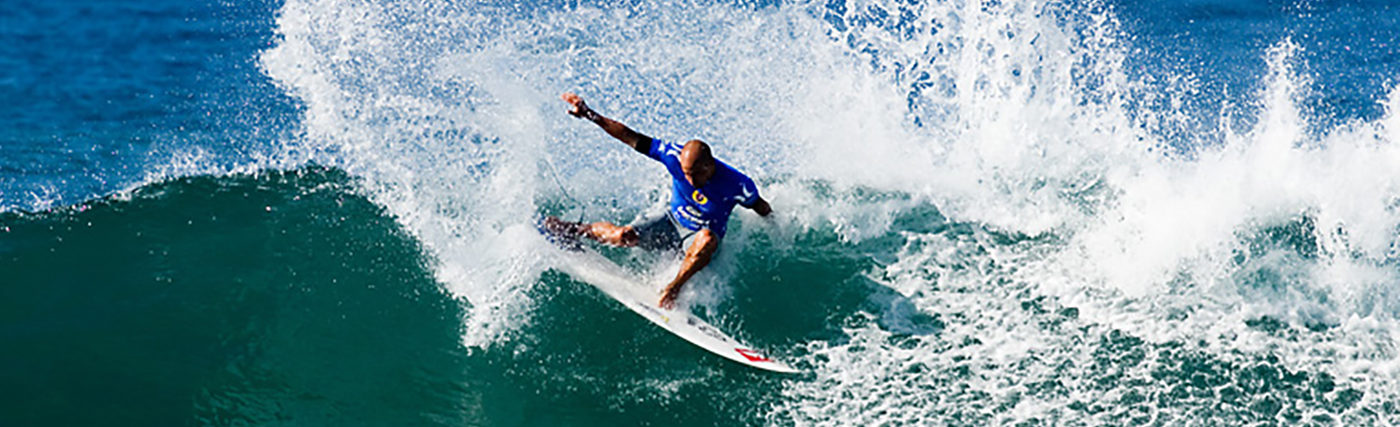
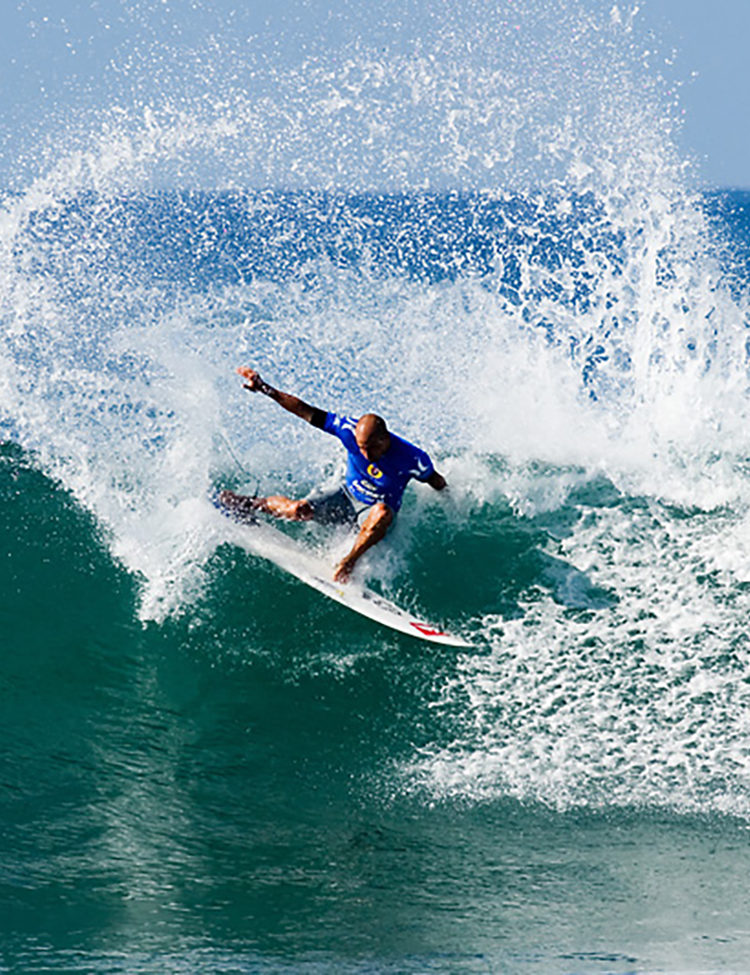
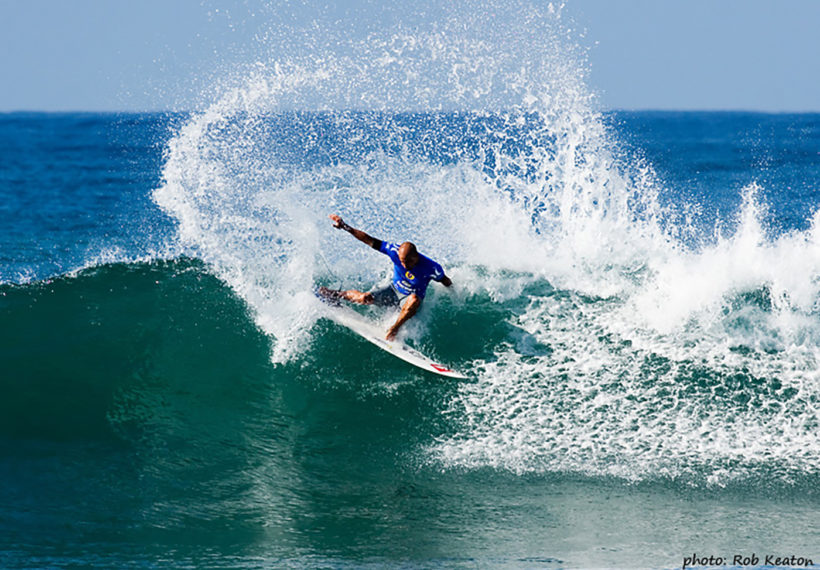
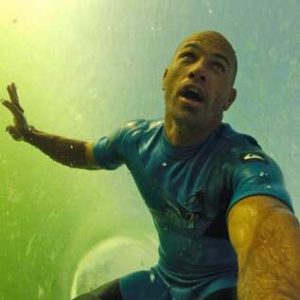
What does it feel like to ride the perfect wave? Can you artificially create the perfect wave? What’s the key to surviving a brutal wipeout? On this episode of StarTalk Radio, Neil deGrasse Tyson sits down with world class surfer Kelly Slater to uncover the science of surfing and making waves. In-studio, Neil is joined by comic co-host Chuck Nice, journalist and author William Finnegan, author of the Pulitzer Prize-winning book Barbarian Days: A Surfing Life, oceanographer Travis Schramek, and Adam Fincham, the lead wave scientist at the Kelly Slater Wave Co. Surf Ranch.
Kelly tells us about his connection to NASA and his intimate memories of the Challenger disaster. Find out what’s it like to ride a wave, physically and emotionally, and how hard it is to find the “sweet spot.” Kelly tells us how the surf board interacts with the waves and the delicate balance a surfer must maintain between managing forces from the ocean and exerting force from their board and body. You’ll learn how waves are formed based on the topography of the ocean and deep energetic water. Chuck leads us in a game of “Surf Talk” where Neil tries to guess what certain surfing lingo means out on the water…and he’s better than you think. Immerse yourself in the physics phenomenon that happens when you’re riding in the barrel of a wave. You’ll hear which elements of physics are most important in surfing.
We answer fan-submitted Cosmic Queries about the impact of the Moon and the Sun on the creation of waves, our “souls surfing waves on another dimension,” and the best place to catch a wave in the solar system. We dive into the secret science of artificial wave creation at the Kelly Slater Surf Co. Wave Ranch. You’ll explore how Kelly, Adam, and their team created the perfect artificial wave. William gives us some context about the importance of this creation in surf history. Discover how to survive a wipeout no matter how gnarly the fall. Bill Nye the Science Guy checks in to give us his thoughts on surfing science. All that, plus, Neil gives us the cosmic perspective from one of his favorite poems. Surf’s up!
Transcript
DOWNLOAD SRT
Welcome to StarTalk, your place in the universe where science and pop culture collide. Star Talk begins right now. Welcome to the hall of the universe. I'm Neil deGrasse Tyson, your personal astrophysicist, and tonight we're exploring the science of...
Welcome to StarTalk, your place in the universe where science and pop culture collide.
Star Talk begins right now.
Welcome to the hall of the universe.
I'm Neil deGrasse Tyson, your personal astrophysicist, and tonight we're exploring the science of surfing, featuring my interview with all-time world champion surfer, Kelly Slater.
Dude, let's do this.
My comedic co-host tonight is Chuck Nice.
Tweeting at Chuck Nice Comic?
Yes, sir.
And you're also co-host of the spin-off of StarTalk called Playing With Science.
Yes, sir.
Yes, it is.
All about sports.
Where jocks and geeks collide, and the geeks don't walk away with a concussion.
Well, so I don't have much particular expertise in surfing, so we brought someone who does.
And we've got prize-winning author William Finnegan, staff writer at The New Yorker, author of the Pulitzer Prize-winning memoir, Barbarian Days.
What a great name for a book.
A surfing life.
So we'll be tapping your perspective tonight as we explore my interview with surfing legend Kelly Slater.
And Kelly has dominated the sport of surfing like his whole life, his entire life.
He has the most championships in the history of the sport, 11.
He was the youngest to win that title at age 20, the oldest to win that title, at age 39, and he's had a little space connection going on also.
Really?
So you know that's the first thing I have to ask him about.
So let's check it out.
So you grew up in Space Coast.
I did.
Space Coast, Florida.
Yeah.
So do you feel space in you?
Definitely.
My mom worked at NASA.
NASA Kennedy Space Center.
Kennedy Space Center, yeah.
And she was there when Kennedy came the first time to visit.
Yeah, so it was a huge part of our daily lives.
I watched the first 24 launches and the 25th was the one that exploded.
You mean Challenger.
Challenger.
Yeah, yeah.
So I had watched everyone up until that point.
And I had flown back from California the night before at a surf contest.
And I missed school that day.
It was the coldest day of the year in Florida.
Part of the problem.
Part of the problem with the O-rings.
Yeah, with the O-rings.
But I was laying in bed, and I heard the shuttle go off.
And I had seen so many of them, it wasn't even a thing for me anymore.
I mean, people fly from around the world to see these things.
And I'm like, well, I've seen them all.
So I looked out the window, kind of saw it going up, and I laid back down, didn't watch.
And then I remember the whole house just rattling.
Like the whole house shook like I've never felt.
And I was like, I remember thinking, that was weird.
And I went back to sleep.
And I woke up about three hours later, my mom was crying, and she said the shuttle exploded.
And, you know, this is something that's so dear to people's hearts in Florida.
It's in the culture.
Yeah, it's in the culture.
But yeah, it was super fun time as a kid to see all this space program.
So any memorable science teachers or math teachers, either good or bad?
I try to forget all of them.
But I always kind of thought math mattered somehow.
I always thought of the wave as an equation, but I got my worst grade ever in geometry.
I had never had a C, and then I got a D in her class.
It was pretty heart-wrenching for me as a freshman.
That could completely mess with you.
It messed with me.
Man, I got to stop staying up late and not studying.
But no, I did well in school, and I, for the most part, enjoyed it.
But I remember being in probably kindergarten or first grade and thinking, gosh, I think I'm a surfer.
That's what I like to do the most.
So, Bill, how big of a star is Kelly Slater in the surfer world?
Well, his nickname is The King.
I mean, he's been...
Wow, we share the same nickname.
He has been the consensus best surfer in the world for 25 years.
So the world, the surfer world, you describe in the subtitle a surfing life.
So what is a surfing life in the surfing world?
Well, for me, I'm in a surfing life, and I'm pretty typical, really.
It's just an obsessive pursuit of good ways, usually in the company of friends.
That's pretty clean.
That's very clean.
But then there's the struggle to fit that obsession into a life-life.
Not so easy.
So Bill Kelly said he always thought of a wave as an equation.
When you're surfing, do you feel some kind of math vibe the way he does?
That's a good metaphor, actually.
Oh.
Yeah, I mean, a wave kind of presents you with a question.
There's a whole philosophy here.
I didn't know that.
That's what I love about surfers, man.
Everything is a philosophy with you guys.
A wave.
It never ends.
It's a question.
And you have to come up with an answer that follows not really math rules, but at least sort of the rules of physics.
And you can come up with an elegant solution, a dazzling solution, or a mess that kind of gets you from A to B, or just get the wrong answer entirely.
And get thrown on your ass.
Exactly.
Just get thrown on your ass solution to the equation.
Chuck, how would you calculate the math of surfing?
I'm very glad you asked me that, Neil.
Because seeing as I'm the scientist here.
Actually, I have it right there.
It's the square root of nar-nar over epic shredding is equal to the absolute magnitude of totally tubular righteousness.
Oh, very nice.
So the two vertical lines on each side, that's the absolute magnitude of.
There you go.
Very good.
Thank you, sir.
I had to make it a real equation, otherwise I would have to suffer your wrath.
So I'm a non-surfer.
There's not a word for that, I guess, other than non-surfer.
Oh, there are, but yeah.
Oh, there are words.
So it was hard for me to sort of fully grok how riding a wave actually works.
So I asked them to help explain the dynamics of surfing to me.
Let's check it out.
So tell me more about the mechanics of you in the wave.
It seems to me there's, dare I call it a sweet spot, where all the forces work to sustain you in that spot.
Could you just talk me through what's going on in the wave?
Yeah.
Either mechanically or even emotionally.
Yeah.
Well, spiritually.
I mean, a lot of things are going on.
It's a moving zen, you know.
There have been surfers over the years, and I don't know if they're friends with Timothy Leary or not, but they've talked about it being like revisiting the womb.
I mean, there's some spiritual stuff going on there, yeah.
But you're right in that you're looking for a sweet spot on the wave because a wave forms, it builds, it has a certain speed, it has a certain shape.
There's just a balance with gravity is really what it comes down to.
Well, so how hard is it to find that sweet spot in a wave where you're balanced against gravity?
Well, Kelly makes it look easy, but for the rest of us, it takes a ton of practice.
That's a sign of a true champion.
What you do, you say, oh, I can do that, and then, no, you can't.
Yeah.
Right.
So Chuck, have you ever tried surfing at all?
Absolutely.
You have?
I really have.
How'd you do?
Actually, we can just do that right now.
I bought something for us to surf on.
You brought this in?
Absolutely.
Check it out.
Let's go.
Balance trainer, use at your own risk.
It's physics, man.
I got this.
If it's just physics.
It's just physics.
I'll try it.
Let me see here.
Okay.
Oh, you need the surfer music?
When StarTalk returns.
Welcome back to StarTalk from the Hall of the Universe of the American Museum of Natural History.
We're exploring the science of surfing, featuring my interview with surfing champ Kelly Slater.
Let's check it out.
My board is a planing surface, right?
So I think of anywhere on the wave that my board is at, of course it's a curve, a wave's a curve.
You have a flat board on a curved surface.
Yeah, so I think of the whole wave as just millions of flat surfaces.
That's kind of how I picture it in my head.
And I'm always pushing down against that energy.
So I have gravity and I have momentum in my inertia, going in a certain way.
You're saying that the curved inner surface of the wave is a series of flat surfaces and you're finding a flat surface to put your flat board on.
Correct.
I'm picturing that flat surface and I'm pushing against that in a certain way.
And so there's, I almost feel like it's track.
So the ultimate thing in surfing is to get a super deep tube, barrel, we call it.
Like a tube would be like, you're kind of in the curl of the wave, right?
A barrel is like when you disappear, back deeper in the wave.
Well, joining us to help break down some of the science of surfing is oceanographer Travis Schramek.
Travis, welcome to Star Talk.
So you're a doctoral candidate.
You're getting a PhD at the Scripps Institution of Oceanography, UC San Diego.
So your colleagues recently came up with an equation for a wave's sweet spot, is that right?
That's correct.
One of my colleagues named Nick Pizzo at Scripps Oceanography actually figured out how the math behind the sweet spot works.
So if we think about the shape of the wave, just like Kelly was just writing, those big barrels, the peak in velocity in the wave itself is actually the lip as it projects.
But the peak in acceleration is the curl of the wave, just under that lip that's projecting out from the edge of it.
And in that little area, that sweet spot, you can have velocities up to 4G.
So when he executed the tube ride, what kind of physics is going on there?
So when a surfer's sort of finding that sweet spot, just like you said, you're applying forces back and forth.
The feet of the surfer are applying a little bit forward, a little bit back to try to inch its way, inch your way up into the wave.
And then that wave is actually pushing forces back into the board.
So if you look at most surfboards, they're two pieces of foam with a wooden stringer down the middle.
And they're communicating the forces balance between the wave and the surfer themselves.
And so that wave is actually driving that board and torquing it as the surfer's moving down the line.
And the surfer's then communicating back and forth with its forces.
It never occurred to me, because since I don't know what I'm looking at, it just looks like they're standing there getting pushed by the wave.
And what you're saying is the difference in pressure between a back foot and a front foot can actually help maneuver where they are in the curl of the wave.
Most definitely.
As you're trying to accelerate, you'll kind of put more pressure on your front foot.
And as you want to sort of slow down and you'll see them kind of stall in a wave and try to wait for the barrel to come over, they'll put a lot more pressure on their back foot.
So what happens when you see a surfer's board break?
Is it just, it was made in China or what happened?
No, waves are really powerful when you see-
Look, that was a shark.
Well, first you look for the guy or girl and make sure they're okay in the water, hopefully.
But then you kind of look as the wave comes down, they kind of can act as a cleaver and just slice a board basically right in half.
That's why that wooden stringer is typically in the middle of a board to give it that rigidity, an extra set of forces to communicate the surfer's actions into the wave.
But they can just snap because of how strong waves can be.
So this kind of barrel-shaped wave, what conditions create that?
So typically when we see barrels, we're looking at swells that have come from deep, energetic water.
And then those swells are moving throughout the whole world's oceans.
And then you look for areas where it goes from deep water to shallow water really quickly.
And as that energy comes in the shallow water, it'll break very, very rapidly and create barrels.
And so we typically see these around island systems and coral reefs because of that difference.
These would be archipelago islands.
Exactly.
They're just volcanoes that have come up from underneath the ocean.
And so they're going to have a volcanic slope down, right down to the bottom of the ocean.
And you'll even see areas like in California, there's a wave called Mavericks that the point kind of sticks out really far and the deeper bathymetry, the actual contours of the ocean, allow that energy to get directed to a single focal point and make very big waves.
So Bill, that's kind of the science of what's going on.
But what's it like, what does it feel like to be inside the barrel of a wave?
Oh.
Like the womb.
Like.
No, I won't go that far.
It is that, it's this thing you've worked toward a long time, trained a long time to be able to get in a barrel cleanly and come out in one piece.
So, there's generally a sense of intense joy in there.
And people often say, time slows down when you're in the tube.
But I, my experience.
In spoken Einsteinian relativity?
See, this guy has no limits to where he's taken.
But I'm disagreeing.
Okay.
Because my experience isn't that it's slow so much as that it's indelible.
You know, that that moment really imprints on your memory.
Just all the fine details of what you saw inside and also what you felt.
So is that part of the moving Zen that he's describing?
Yeah, I think what he means there is that that's a moment when you have to have absolute concentration you know, and kind of everything else out of your mind and focus so much on what you're doing.
That's the sort of Zen of barrel riding.
But of course, Kelly Slater is doing that at a level that the rest of us are not.
So Chuck, you're keeping up with these terms?
Zen, barrel riding, you got this?
I actually have a little game that I'd like to play right now.
It's called Surf Talk.
Yeah.
Oh.
I'm glad you wasn't big enough to send you to an island.
And that's exactly why it's Photoshopped.
All right, so here's what I'm going to do.
I'm just going to give you a term, Neil, and then you can describe it, and then you can tell us if it's right or wrong, and then you can use it in a sentence.
All right?
That's an interesting game.
Everybody at the table, okay?
Here we go.
The first one is hang loose.
Hang loose?
Hang loose.
Surfing?
I think if you fall off the board, you don't want to get too tight, otherwise you might break something, so you just go with the wave, with the crashing wave.
That's what I think that means.
It means relax, yeah.
Relax.
That's correct.
Can we get it in a sentence, please?
Okay, please in a sentence.
Oh, are you going to wear these Speedos or are you going to hang loose?
All right, tomb stoning, tomb stoning.
Tomb stoning.
Yes.
Maybe after you fell off, and you're buried under the wave, and the only way we know where you are is where your surfboard is, because it's the only thing floating.
But it's floating how?
Oh, vertically, I guess.
That's tomb stoning.
That is tomb stoning!
The point of your board comes out of the water, and it looks like a tombstone, right?
Yeah, you never want to be underwater.
You never want to be like that.
That's bad.
Yeah, that's very bad.
All right, here's the last one.
Hang 11.
No hints for this one, Neil.
Hang 11.
Hang 11.
I think that's what you look like in that last photo of yourself underwater when two feet sticking up.
That's just the number 11.
Hang 11, so that's your guess.
So your head first.
Travis?
Feet out of the water.
I only know hang 10, and that's with your toes all over the edge of the board.
Over the edge of the board, okay.
Just gripping it.
That's hang 11.
I don't know hang 11.
Hang 11, a dude surfing nude.
Chuck, guess what the extra one is?
Well, surfing champ Kelly Slater told me about another physics phenomenon that goes on when he surfs big waves.
Check it out.
Another thing that happens, maybe you've seen footage of this, you know, when a wave breaks, sometimes it will spit all this water out the end, like the air pressure.
It's kind of like a fire extinguisher or whatever.
So, in a tube, you have all this air expanse, but then when that collapses, that air's got to go somewhere.
And so it will create this pressure, high pressure, and just shoot you out the end of the wave.
So, you're dealing with high and low pressures.
So, if you have a wave...
All this is going on.
All this is going on.
So, sometimes you have a tube, sometimes guys will be in a tube and they'll say, it spit back in my face or breathed on me.
And so what happens if you have a wave that kind of starts not real hollow, it just kind of feathering tube, and then it barrels and the tube gets bigger like this, it pulls air back into it.
Because it's open, it's basically suction.
Yeah, it creates a low pressure back there, it needs to fill that.
And so it creates like a back draft.
And that sometimes will just knock you off your board.
Or it'll, so we say it spits back at you because it'll bring water with it and it hits you in the face and it can kind of sting your face or whatever.
And then all that water when the tube sort of all breaks at once, it just collapses on itself, it shoots all that air out and that'll shoot you out of the end of the barrel.
So there's a lot of things that are kind of happening at once.
Yeah, that is awesome.
So Bill, are you thinking about all these things when you're surfing?
Not really, you're just reacting.
You sort of think about it later, discuss it over beer.
And Travis, and how about you?
Because you're also a surfer, you have some awareness of this, but it doesn't happen on every wave, right?
So when you model this stuff, you have all that factored in?
I agree with Bill.
When you're actually on a wave, your mind's kind of going with that moment and you're focused on that.
But when I'm in the water the rest of the time, I'm thinking about computer models one after the other.
I'm thinking about big swell forecasting and how waves are coming from either the Southern Ocean or the North Pacific and how observations are taking in and how they're reacting to the computer models.
So what's the most important sort of physics factor in surfing, would you say?
In surfing, if you're actually talking about catching the waves, I think it's actually the speed of a wave and the speed of a surfer.
If you can't catch a wave.
Wait, wait, wait.
So a wave comes in, but you're not surfing it in, you're surfing it sideways.
Exactly.
So isn't it like the speed at which it's sort of crashing sideways?
Crushing sideways, down the line.
Yeah.
So, but first we have to think about like how waves are breaking and the speed at which they're breaking.
So they break at the square root of gravity times the depth of the water.
When you're going to catch a wave, you have to be moving almost that fast when you go to catch waves.
So if you see the bigger waves that guys and girls will get towed into, you have to be moving just as fast as those bigger waves are moving.
Otherwise it leaves you behind.
Exactly.
It'll leave you right behind.
And bigger waves break in deeper water, so they move even faster.
So you can paddle for smaller waves at a relatively slow speed, and you need to move very fast to catch big waves like that.
So I think that's probably the most important factor in surfing itself.
Well, we come to a segment called Cosmic Queries.
This is where we take questions from our fan base.
And these questions are all about the physics of surfing.
I got people here who think about this, who write about it, who research it.
So I'll just be mute the whole time as these questions go to our guests.
Nah, you got to chime in too, man.
Okay, here we go.
This is question number one from Mikey Cups from Instagram.
Would like to know, if the moon suddenly disappeared, how would it affect the waves of Earth?
Travis?
So the waves of Earth are generated by the wind on the ocean.
So the tides regulate how water moves around and drive a lot of currents.
But most of what we see in terms of waves is actually driven by the wind.
The question then is how does the lunar cycle then drive the wind and that's a whole nother factor.
So I think-
And not much, it's mostly the sun.
Uh-huh, I see.
I told you you would tell me.
Yeah, the sun, unequal heating on Earth's surface generates pressure differences.
So air feels high pressure here and low pressure here, so it all goes there.
And then you have wind.
That's basically what happens.
And if you have, you can have cyclonic activity, where air's not just moving from here to here.
It's trying to get to that one spot, but it like overshoots it.
So it's got, and wraps around, so you get like hurricanes and stuff.
I'm just glad you were going to leave this to the guests.
This is Kevin Van Skyle from Facebook who says, if our energy continues when we die, what's our chances of surfing gravitational waves on another plane of dimension?
Where do they barrel?
Tips for light speed paddle in maybe?
I'm gonna let you handle this one.
What's he been smoking?
I don't know.
Uh, Travis?
That one's outside of my barcode.
Well, I mean, what's interesting about waves is that they have certain properties in common with one another, be they a sound wave or a liquid, you know, a medium, wave and a medium of any other kind of liquid medium.
So there's certain commonalities of the physics treatment as you would do that.
I happen to know that in Star Trek, their warp drives, what they do is they sort of compress spacetime in front of them and then surf the wave as they re-expand it going forward.
So they can easily go faster than the speed of light.
So I can imagine doing this, but not in the state of being dead, which was how that question began.
Yes.
Yes, exactly.
No, I don't see your spirit, energy, surfing, gravity waves across the universe at all.
You're just dead.
All right, so Kevin, your answer is you're dead.
Right, okay.
All right.
And finally, this is Carl Rubin from Instagram, who wants to know this.
Assuming the presence of liquid water on all the planets of the solar system, which planet's gravity would allow for the biggest waves?
So just if there was liquid water everywhere, including gas giants like Jupiter, look at that gravity.
What planet would have the biggest waves to surf no matter where we are?
So I would say Earth four billion years ago.
Wow, really?
Travis, why is that?
I was about to ask the same question.
Because that's the formation of the moon.
And all evidence and ideas about the formation of the moon tell us that the moon was formed by a collision between a Mars-sized protoplanet, side-swiping Earth, casting our crust into a ring around us, much as Saturn has a ring.
And that ring then coalesces to form our moon.
What matters here is that our moon would have formed at a distance 20 times closer than where it is now.
And the height of the tides goes as the cube of the moon of the distance, so 20 times 20 times 20 is 8,000.
So the tidal, the size of the tidal waves at the beginning of the formation of the moon would have been 8,000 times higher than they are today.
So I'd want to be around then to check that out.
Well, up next, Kelly Slater tells us about his top secret professional facility to create the perfect wave when StarTalk returns.
Featuring my interview with world champion surfer, Kelly Slater.
And Kelly has a little side project going on recently, a secret facility intended to create the perfect wave.
Check it out.
We call it the surf ranch.
The surf ranch.
Yeah, our actual place we call the surf ranch, but we created a manmade wave using a foil, a type of foil technology to create a swell and then create a bottom with certain symmetry to break the waves.
So what's the difference between what you're describing and what I see in my water parks?
Water parks, well.
I hope I didn't insult you by saying that.
Absolutely.
Oh, we did that, I did.
I actually think time's up.
What time is it?
This interview's over.
When I was a kid, I went to Wet n Wild in Orlando and they have a little wave pool and they got kind of this hydraulic push and pull system and these pistons or whatever and they create these little sort of weak waves, you know?
But we used to go in there and grab a little boogie board and try to ride them or body surf.
But-
Manzie-Pansie waves.
Manzie-Pansie, yeah, they're just weak waves.
We call those wind swells basically.
A wind swell is a swell that's never quite formed as energy over a long period of time and it's just kind of jumbled everywhere.
Mm-hmm.
What we did with our wave technology was create a soliton, a solitary wave.
Is my grade going up?
You're up to B plus right now.
Am I getting there?
Nice, nice.
It's a solid B plus.
So we wanted to create a soliton which is a wave you can send an infinite amount of distance and it wouldn't lose its energy.
And I basically went out and got a consortium of people and said, look, I wanna create this wave.
I think it would be interesting for surfing.
A designer wave.
Designer wave, yeah.
But also perfection.
We wanted to make something that looked different than any other wave anyone had ever made before.
Thank you for watching.
So Bill, is there a most perfect wave you've ever surfed in your life, a single most perfect wave?
There was a place in Fiji where I camped in my youth that had the best wave I've ever surfed.
Perfect's not a great word for what Kelly's got going on at that surf ranch.
It's more, I mean, that thing is flawless.
So Travis, so a perfect wave does exist?
In the eyes of the surfer, yeah, I think.
Depends on what surfer you're talking though to.
If you want a big barreling wave, that's for one surfer.
But it sounds like he can just dial up what kind of wave he wants, ultimately.
The cool part about the engineering that they're developing out there is you can manipulate the wave and how it breaks.
So can you tell everybody what a soliton is?
So a soliton is an isolated disturbance that propagates freely where the wave form itself, the shape of the wave doesn't change.
And that has unique nonlinear processes that allow it to transfer through other waves without changing as well.
Now, can you say that again in English?
So this single wave that has a very unique shape is driven by their pool and has the ability to just break exactly how they want to due to the fact of how it's generated.
Soliton.
Soliton.
You idiot.
You didn't get that?
No, I just was doing it for the people that are there.
So is it hard to do what he's doing there?
So the first man-made soliton was made in 1834 by this scientist who was pulling a cart down a canal with his horses and he abruptly stopped them and the soliton shot off the front of the bow of the boat that he was towing down the canal.
And it ran on and on and on and he chased it with his horse and saw it continuously move on.
It sparked a bunch of curiosity and he went home and built a wave channel and started to study these things.
So those goods never got delivered on the canal?
I think you got the strap.
Because physics mattered first, right?
So Bill, would you go surf at Kelly's Ranch?
Oh yeah, nobody has made an artificial wave that even comes close to this thing he's come up with.
I remember when he sort of pulled the curtain back a couple of years ago and they've been working on this for many years and he pulled it back and we all saw what it was and it was a major shock in surfing world, like an earthquake.
I have a friend who's a surf historian who says that.
That's a thing?
That's a thing.
He's the one named Matt Warshaw.
Anyway, he says that everything in surfing now will have happened BP or AP, before pool or after pool.
So is this because you can now train and hone your skills on a repeatable wave?
There is that.
I mean, this park, this incredible technology has come up with hasn't been replicated.
I mean, it's just that place in Central Valley of California.
So it's not implemented yet, but no, it's because, I mean, it's the philosophical challenge that philosophy interests surfers, as you guys know, and it's not the ocean, and yet it's this dream wave.
It's flawless.
There's nothing in the ocean is.
Now, clearly some effort went into building this.
So Travis, is this a PhD thesis right there?
I think it's a great PhD thesis.
What's your PhD thesis on now?
I'm studying how the ocean interacts with islands.
So out in the tropical Pacific, we look at how.
Well, good luck, and I hope you get it in in the next few years, because there ain't going to be no islands soon.
So had this come up, would you switch your topic early enough to?
I am an engineer by training, and this is actually what I wanted to go to college for when I first started out.
When I was 17, I wanted to go to college to develop artificial surfing waves.
So it's cool to be a part of this and talk about this kind of wave now.
You have just told us why this is the greatest country on the face of the earth.
I wanted to go to college so that I could actually make artificial waves.
No place else in the world will you hear somebody say that.
So you can ask how might that engineering work in this secret facility.
But this is StarTalk.
We don't have to guess because we bring in the expertise when we need it.
So right now we have on video call wave designer Adam Fincham standing by live right now.
Adam, hey.
How are you doing?
Adam, your chief scientist.
Thanks for being on StarTalk.
Your chief scientist for the Kelly Slater Wave Company.
That's a thing?
Yeah, that's a job that is available sometimes.
I mean there's one thing about being a wave designer and the other thing is about being a wave generator or wave creator.
So you can't design something, it's like your Levi's.
You need the base model before you get to design a model.
So first was to generate a wave and then start tweaking it, i.e.
designing it.
And so this is, so it's not only the math and the physics, you got to actually make the machine to do it.
But why is it so hard?
Well, you know there's a lot of things, a lot of things.
First off, these type of processes are not easy to scale.
So you might produce a very beautiful little wave in your laboratory and it looks pretty and you wish you were small.
But to bring it up to full size takes several things.
You need to be able to scale it.
And then the engineering feat, you're moving thousands of tons of water in a very short period of time.
And water is heavy.
So the engineering is heavy, large scale engineering.
And then the costs.
This costs a lot of money to do this.
So it's not something that many people would be given the opportunity to take a risk without being sure of the science.
So just to emphasize this challenge, which is not unique to wave design, there are a lot of things where you can make it look good in a laboratory, a smaller scale model.
And when you scale it up, the forces interact slightly differently, so you don't get to reproduce what looks so good in the lab.
Yeah, so exactly how does it work?
Or will you have to kill us all if you told us that?
Well, you know, we've been working on this for more than 10 years, probably 12 years now, and we have a dozen or so patents to back it up.
But if after the show I see you clearing land in your backyard, we might have to have a stern talk.
Well, Adam, thank you for sharing your expertise with us tonight on StarTalk.
Okay, thank you.
Thank you.
Well, coming up, Pro Surfer Kelly Slater explains how to survive even the worst wave wipeout.
Star Talk from the American Museum of Natural History right here in New York City.
We're featuring my interview with pro surfer, Kelly Slater.
And I asked him about surviving a wipeout on a humongoid wave.
Let's check it out.
One of my friends who's one of the craziest big wave guys in the world, an Australian guy named Ross Clark Jones.
I was gonna say, of course he's Australian.
Anyways, well, he had this interview where they asked him about falling and what happened on this one wave.
And the waves were about 50, 60 foot faces this day.
And somebody said something to him, like, what happens when you fall on that kind of wave or whatever?
And he goes, oh, well, he goes, it's kind of like you're just enjoying the ride and then you have a whole different kind of ride and you gotta enjoy that one too.
So the idea being that-
It's all in the attitude.
Well, it is because you gotta keep your heart rate down.
And so the more calm you are, the more confident you are in not only your own abilities physically, you're trained up and ready for that, even for a bad situation where you maybe get the air knocked out of you and you understand you still have oxygen in your red blood cells and you're not gonna die.
You just gotta relax and keep your heartbeat down as much as you can.
You kinda gotta go to a happy place.
But there's a dissipation of energy.
The wave breaks and as soon as it does, it's spreading that energy out.
And it kind of keeps, it almost sort of keeps breaking in this circular fashion until it gets smaller, smaller and smaller.
And then, so you're just kind of waiting.
That energy is very rarely gonna keep you with it going at the speed of the wave because you have, you know, the water slowing you down or whatever.
So that energy's moving away from you.
And you're hoping you're not trapped in sort of a vortex of energy.
And if you are, you still gotta just kind of wait it out.
It's never good to be trapped in a vortex of energy.
It depends.
It could be positive energy.
Whether or not it's an ocean wave.
It could be spiritual, maybe.
Or in the cosmos.
Do you agree it's not good to be trapped in a vortex?
My real fear is, my worst fear is of what we call a two wave hold down.
You know, where you're being held down by usually a bigger wave, extra long, until the next wave comes, you still haven't made it back to the surface and the next wave breaks over you.
Down again.
You just stay under it for that amount of time.
I mean, people survive two wave hold downs, but I mean, I think even the people who survive them who don't drown think while they're happening that they're going to drown.
So can you guys control your heart rate the way Kelly asserted?
I think if you're underwater for long enough, you don't really have a choice.
Or you might panic, but the choice is calm down and wait or freak out.
How do you calm down?
What does that even mean?
Yeah.
First of all, it's not my heart rate I'm worried about.
It's about, it's my loss of sphincter control, quite frankly.
Messing up my wetsuit.
No, no, I'm just curious to say, well, you're now in a sort of Mixmaster crashing wave, but keep your heart rate down.
How's that even possible?
Don't you think you can slow your heart down when you're scared in big waves?
I mean, there are times when you can't, you're panicking, and then it gets more serious, but I find, and I just get really, really methodical.
I think it's when you accept that you're in an area where you have to do that, it's when you can actually calm yourself down.
Which is what he's talking about.
What you're saying is you make peace with death.
What is he saying?
That is what he's saying.
On the spot.
That's right.
And then if you come out, that's fine.
Right.
As Kelly said, you go for the next ride.
And you know that it's going to eventually end, but you just hang out for a minute.
So I'm just curious.
When you have wiped out, is it just total turbulence down there?
It's incredibly turbulent.
So there's a couple of things that are happening when you wipe out.
First you saw when somebody falls on a wave that big.
Again, this is way outside of my zone surfing.
But when somebody falls on a wave that big, they skip off the surface first.
So that knocks the wind out of your lungs.
That's really fast.
And then you get driven down deep in the ocean in the super turbulent area.
White water, that whole white mess where the wave breaks, is much less dense than the regular ocean water.
So you can't propel yourself through it.
Exactly.
So you can't really swim very well.
And so that's why you really have to relax.
Because until the aeration in the water dissipates, you can't really swim to the surface anyway.
So you'll grab your leash and ride your tomb-stoning surfboard back up sometimes, because you're just…
So is there a competition that involves just big wave surfing rather than just maneuvering on smaller waves?
Yeah, there's a whole series now, a whole circuit that the World Surf League does that's just focused on big waves.
They did a contest very recently at Piyahi in Hawaii, which is another also called Jaws a few weeks ago.
What's the biggest wave ever surfed?
Biggest wave ever surfed?
You might know this better than I do.
Oh, there's so much hype around that.
As you can imagine.
It's like how big was the fish you caught.
Exactly.
Okay.
And the perspective of the observer makes a huge difference.
And how you manage...
I mean, I'm sure you've got a scientific way to measure wave size, but surfers do not.
So you guys say surfing is hard, but I had some evidence that maybe it's not as hard as they say.
And I asked world champion Kelly Slater about this.
About this very clear evidence that maybe it's easier than they think.
Check it out.
What's this with the surfing chihuahuas?
You know, there's always a YouTube...
I have a chihuahua...
With a lap dog surfing.
I have a chihuahua and she hates the water.
I mean, it's like kryptonite.
She just hates the water.
I'm just saying, if a dog can surf, how hard could it be what you're doing?
That's not hard at all.
I mean, look, there's Flat Earthers doing science.
How hard can that be?
That's so cool.
We've been talking about the science of surfing.
Right now we have a dispatcher on this topic from my good friend Bill Nye.
Check it out.
Yo, Neil, catch a wave on one of these things and you're sitting on top of the world.
And we surfers say that because of the feeling we get when we borrow a bit of energy from the ocean and make it our own.
When a wave passes through water, a boat or a buoy will bob.
They'll move up and down a bit.
But when a wave reaches the beach, the slope of the beach makes that wave curl over, hurling tons of sea at the sand.
Oh, the joy.
So if a surfer boy or surfer girl can get on top of that wave, gravity will carry them to the shore.
This works because a surfboard floats.
But once in motion across the face of a wave, the surfboard gets up on a plane.
The combined motion, following and forward, pushes a considerable amount of sea water down.
And that exchange of energy with the ocean makes for transcendent transportation.
Surf's up.
Back to you, Neil.
So I recently learned that Bill is a bonafide surfer.
I didn't know that.
And in his garage at home, well, he has two homes, because he works both in New York and LA, he's got a whole line up of surfboards.
Apparently one is not enough.
You need a few, right?
You need a whole quiver.
A quiver.
Look at that.
Just pull one out.
Like they're arrows.
So I'm just curious, there's a lot of science in this.
Is studying the science just an excuse to get closer to the wave?
I think studying waves is really important for ocean sciences.
The ocean and the atmosphere talk to each other via waves.
They talk to one another.
Yeah, they talk and the reason or the big idea behind the way that they talk now is the waves are the means by which we transfer momentum into the ocean and how we transfer gases.
And so to understand how we're going to live through future climates, we have to understand how waves talk to the ocean via the wind.
So Bill, you're book Barbarian Days, The Surfing Life, Pulitzer Prize winning.
I'm not even mentioning that it was like a New York Times bestseller because who cares if it won a Pulitzer Prize.
What makes surfing transcendent?
Ooh, that's a good question.
Well, there are those peak moments we've been talking about, you know, great barrel rides and it's, transcendent is a good word for the fact that you can have an experience so thrilling, you know, so moving, so kind of rapturous just on any given day off an ordinary patch of coast.
But I really think that most people who surf don't do it for those peak moments.
It's much more, you know, the practice in the Buddhist sense.
I know you know what I mean.
I mean, just the doing it every day, you know, kind of in all conditions and the way that makes you feel both on the day and sort of over the long haul.
Well, in this final clip, I asked pro surfer Kelly Slater about the deeper meaning he gets from riding an ocean wave.
Check it out.
Surfing to people who dedicate their lives to it, it's a profound experience, you know.
It is a spiritual experience for us.
And I don't know that you necessarily need to be spectacularly good at it to have those experiences yourself.
Have those feelings.
Yeah, have those feelings, yeah.
So, I mean, I only know what it feels like for myself, but it just feels so natural.
It just feels like when I surf and it's all linking up, it just feels like I was meant to do that, you know, more than anything else.
Born to do that.
Born to do that, yeah.
Yeah.
I've actually had people say to me, they didn't want to learn too much about how stars work, because that might distract them from their appreciation of the beauty of a sunset.
And my reply in every case is, it does not distract from the sunset, it enhances it.
Yes, the beauty of a sunset, there's art and majesty to that.
But there's also strength of knowledge to understand what's actually going on inside of the sun.
And this juxtaposition of the machinery that's behind what is making what is beautiful, is something that plays out all around us, not only on earth but across the universe.
So, when I see people wax poetic about surfing, and especially when they know what kind of physics and engineering and mathematics underpins it, they are taking that sport, they are taking that activity to another level.
And I'm reminded of a poem.
I'll read to you now.
It's called The Learned Astronomer.
When I heard the learned astronomer, when the proofs, the figures were arranged in columns before me, when I was shown the charts and diagrams to add, divide and measure them, when I sitting heard the astronomer where he lectured too much applause in the lecture room, how soon, unaccountable, I became tired and sick, till rising and gliding out, I wandered off by myself into the mystical moist night air and from time to time looked up in perfect silence at the stars.
Walt Whitman, Leaves of Grass.
This is a poet who came to recognize, yeah, you can have columns of numbers describing the universe.
You can even embrace that.
You can go outside and embrace the universe that way, but it is the juxtaposition of the two that is truly transcendent.
And that is a cosmic perspective.
You've been watching StarTalk.
I've been your host, Neil deGrasse Tyson, your personal astrophysicist.
As always, I bid you to keep looking up.
See the full transcript



 Unlock with Patreon


 Become a Patron