


 Unlock with Patreon
About This Episode
How do you make snow? On this episode, Neil deGrasse Tyson and co-hosts Chuck Nice and Gary O’Reilly learn some cold, hard facts about snow and ice with atmospheric scientist and snow maker Peter Veals, PhD and glacial scientist Twila Moon, PhD.
How does snow even form? We learn about how the fluffy stuff falls from the sky and the many types of snow. Learn about deposition, sublimation, and the different freezing points of water– ever wondered why distilled water won’t become solid at freezing temperatures? We answer the age old question: is every snowflake really unique?
We learn about how we humans make snow for ski slopes and events like the Olympics. Will we have to produce snow for future Olympics? How does refrigeration work? Can you produce snow and leave a carbon neutral footprint? What type of snow is best for skiing? We break down industrial snowmaking and Peter’s startup, Quantum Snow, where they grow their own snow crystals. Explore the snow situation for the Beijing Olympics. Will there be enough?
Next, we speak with Twila about glaciers and other icy environments in the cryosphere. What is a glacier? How have snowfall patterns changed? How fast do glaciers move? How is the cryosphere and our ~thermohaline circulation~ affected by climate change? Should we geoengineer solutions to our snow and ice problems? All that, plus, is it possible that Chuck can come up with more snow jokes?
Thanks to our Patrons Takeyla Tyson, Brad Respondek, Jacob D. Fisher, Thyash Maney, Kem Phillips, Chris Pisst, and J Maji for supporting us this week.
NOTE: StarTalk+ Patrons can watch or listen to this entire episode commercial-free.
Transcript
DOWNLOAD SRTWelcome to StarTalk, your place in the universe where science and pop culture collide.
StarTalk begins right now.
This is StarTalk Sports Edition.
Neil deGrasse Tyson here, you’re a personal astrophysicist, and today’s topic is all about snow.
Let it snow, let it snow, let it snow.
Because this year is the Winter Olympics, and snow has become kind of a commodity lately.
There’s been less of it in some places, more of it in others, and we’re going to devote an entire program on just that topic.
I got Gary O’Reilly.
Gary, always good to have you there, man.
Bring professional authenticity to the Sports Edition version of StarTalk being ex-football pro over in the UK.
And, of course, Chuck Nice.
Hey, that’s right.
Chuck Nice, you’re Chocolate Snowman.
That’s right.
Not allowed to say that.
Not allowed to say that.
Only you can say it.
Right, exactly.
Like, oh, my God.
All right, so here we go.
We’ve got ski slopes in the world that should have had snow by now.
We’re recording this in January.
And they don’t, or there’s not much snow.
There’s a little bit of it.
They have these snow machines, and sometimes it’s icy.
And it doesn’t ski the way real snow would.
And so climate change is affecting this, of course.
That’s the 900-pound gorilla behind the curtains.
And so something is disrupting our expectations of how, when and where we would get snow.
And my wife is from Alaska.
I get sort of news from her friends and relatives who are still there.
And I learned that Alaska has recorded its highest temperature ever in the month of December.
And was it a Kodiak Island had 67 degrees?
Something was messed up!
Or is it a New World Order that we’re not ready to embrace?
So since none of the three of us have any expertise at all in this, we had to bring in someone who does.
And that is Professor Peter Veals.
Peter, welcome to StarTalk, dude.
Thanks, Neil.
Huge pleasure to be here.
The real snowman.
The real snowman, okay.
And notice, Chuck, he’s white.
The way it should be.
If your snowman is black, you live in a very polluted area.
Oh, God, I will be canceled by the end of this show.
If they don’t cancel you, weenie will.
So Peter, you’re Assistant Professor in the Department of Atmospheric Sciences at the University of Utah.
Utah cares a lot about their snow.
And in fact, if I remember correctly, on your license plates, don’t you have a mountain range, or is that Colorado, or both of you?
A mountain range and the state tourism board or whatever trademarked the slogan, the greatest snow on earth, and they have it on the license plates here, too.
Yeah, this is a place that cares a lot about snow.
Okay, and you’re in the right place because you are co-founder of a startup company called Quantum Snow that’s producing fake powder snow, or maybe it’s real snow, but artificially produced.
We’ll get to that in the second segment, but we want to totally learn about how you got into that and why and what’s different about it.
So let’s just start out.
All three of us are overrun with questions for you.
So let me just start out by saying, what’s going on in the world?
How about this?
I guess we can talk about what’s going on in the world too, but also maybe I can explain a few kind of fun things about snow.
Let’s do that.
That might kind of focus the question too, because I know what you mean.
It’s a big atmosphere out there and there’s a lot going on.
We’ve got the processes in clouds, we’ve got snow, and then the climate change component of it too, which of course we definitely have to talk about with snowmaking.
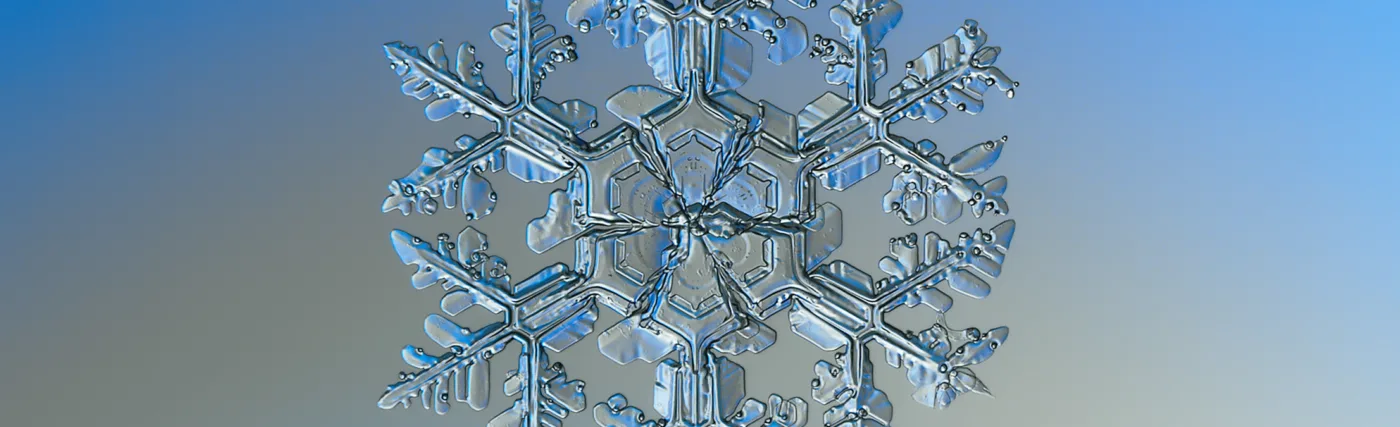
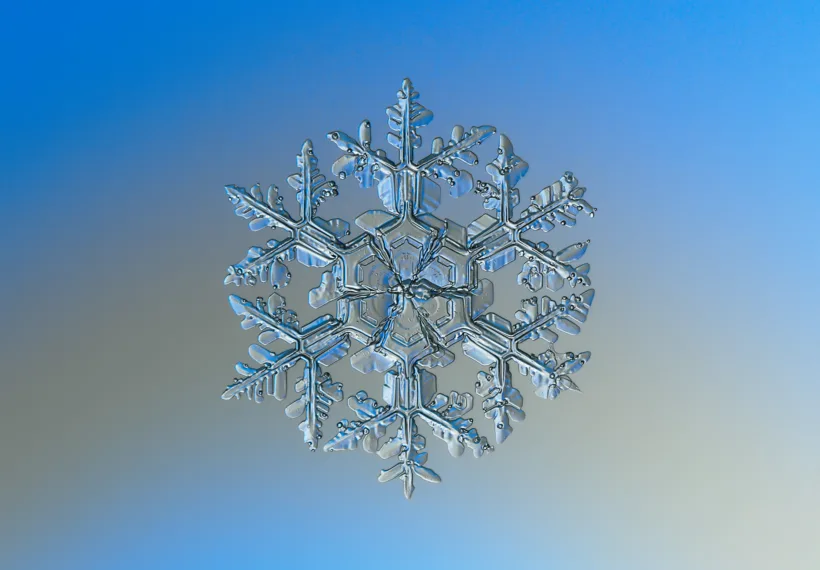
Snow, when we talk about these snowflakes, those perfect star shapes that you cut out in elementary school or whatever, those six-sided crystals, those form in clouds, that’s the start of a snowflake, and those actually form via deposition, so the phase change directly from gas to solid.
I thought you meant that a lawyer actually talked to the snow.
No, talk to the gas.
Moisture.
No, talk to the water vapor and say, where were you on the night of the 5th?
Anything they say can and will be used.
Where were you on the night of the 5th?
And then the water vapor goes, oh, the gig is up.
That’s a very boring deposition.
No, this deposition is more fun.
And just remind me, Peter, a deposition is the chemical opposite of sublimation.
Correct.
Is that correct?
Like CO2, dry ice goes right from solid to gas.
Correct.
And now you’re talking about going directly from gas to a solid state.
Okay, so we’re with you now.
Correct.
Yeah, because if you just froze water, you know, if you just started with liquid and then froze it, you know, it went from liquid to solid.
You got ice now.
Yeah, you just have a ball of ice.
Right.
That’s what will happen.
So to grow these crystals, they actually grow via deposition.
And so then what happens in the cloud is they fall through.
And then the really cool thing about most snow clouds is you actually have all three phases of water coexisting at the same time.
So you start, so you’re growing via deposition.
You’re growing a solid flake.
Then it’s falling through and you have super cool liquid droplets.
Wait, wait, just to be clear, it’s something you didn’t mention.
So we are high enough in the atmosphere, away from Earth’s surface, that the temperature has dropped below freezing for any of this to happen.
Yes, or below zero C, because technically, and this is why this can all happen, technically the freezing point for pure distilled water is closer to minus 40 Celsius.
It’s not zero Celsius.
So you could call it, yeah, the freezing point of impure water or I believe the word is heterogeneous freezing point.
Every molecule in it is water, is the water molecule with nothing else in it.
So, yeah, to get water to freeze above minus 40, minus 38 C, you need a seed or a condensation nucleus to start the process of freezing.
So that’s why, so you have in these clouds, you know, you have liquid droplets.
Wait, wait, wait, wait, wait.
I did this once.
I did this once.
So we had not distilled but purified, triple purified water in a plastic water bottle in the freezer.
And it just sort of was taking a long time and it wasn’t freezing.
So I pulled it out in anticipation of this.
And I slammed it in the ground, opened the lid, allowing impurities to get in, and the whole thing froze instantly.
It was a most beautiful thing.
It looked like a wave, a freeze wave going through from top to bottom.
That was fun.
Yeah, the only problem with that is you got to wait a day to drink your water.
I just watered my need for water there.
So it was too pure.
It was triple filtered.
Yeah, it was too pure.
You can do the same.
If you shake that too, something about it, if you jostle it just enough, one of the billions of molecules gets into a hexagonal configuration, and that will start the freezing too.
Like, jostling the water somehow can seed the crystallization process too.
Wait, not to change the subject or to extend the subject, but it seems to me that can happen on the other end as well.
I’ve had water in the microwave, and I said, well, that’s not boiling yet.
And then I touch something to its surface, and then the whole thing rapidly starts boiling.
Yeah, so that would be superheated water, because we call supercooled water water that’s liquid below zero C, but is still liquid, so that would be supercooled.
So it’s not Neil in the super power.
Doctor, snow doesn’t come in just one standard form.
You’ve got all different types of snow.
So what is going on to kind of make those differences?
Yeah, that’s a great question, Gary.
So it’s how all of those things interplay in the cloud.
So you have your solid crystal growing, but then as it’s falling through those supercooled drops, those will freeze instantly onto the solid flake.
And so you’ll start getting, if you look, you’ll start getting, it looks like kind of fuzz on those.
If you look at, next time it snows, if you look at a snowflake really closely, you’ll see.
So that’s called rhyming.
And eventually, if you get enough of those on there, it just turns into a ball.
And that’s where, like, you see those kind of dipping dots falling sometimes during a storm.
That’s called groffle.
That’s where the whole thing has been covered in those bits of rhyme.
So that’s how you get sort of this whole spectrum of everything from your cure.
But you say it’s called a broffle?
What did you say it was called?
That’s kind of snow, I was just saying.
I’m not familiar with that study.
No, what did you call it?
Gropel.
Gropel.
Yeah, with a J.
Like grapple with an O.
Yeah, yeah.
Exactly.
Gropel.
Yeah, so if you want to get weird looks next time it’s snowing outside on the street, collect some on your sleeve and take a look and you’ll kind of see that anywhere from a perfect crystal to a perfect crystal covered in fuzz to a dipping dot kind of thing.
I think you said it, but once again, the big giant fluffy flakes that fall, I mean they’re huge, what would those be?
Those are a bunch of crystals then that aggregate together.
So an individual ice crystal isn’t more than a quarter inch across.
So if you get those big quarter size, half dollar size flakes falling, you look at those, there’s probably hundreds of individual ice crystals in there that have kind of stuck together.
Oh, that’s kind of cool, man.
Yeah, I get made fun of a lot because whenever it’s snowing, I collect them nicely and then I look at them.
But you get used to that kind of thing in science.
You have been able to produce powder snow, correct?
I got to tell you something, I’m sorry Doc, but I too was able to produce powder snow and it got me five to eight.
I had to do it, I’m sorry.
Go ahead.
That’s my one and only snow joke and I was holding back.
When you said powder snow, I couldn’t help it, Gary.
Okay, so Chuck, we’ll give you credit for having held back.
Exactly.
Go ahead.
So you’ve made powdered snow and that is, if I’m right, thank you, if I’m not, correct me please, that’s 5% density.
So if we did, so that’s downhill skiing, say snowboarding or cross-country skiing, are you going to be using the same sort of 5% density snow for those events like ski jumping?
That’s a great question.
That’s cool.
Or does each event have its own unique snow quality that you could possibly dial up if you’re bringing it in from the outside?
What I said, but only better.
No, this is perfect.
So this is right where now since we’re technically sports and science, this is where the snow intersects the sports.
So the snow that we’ve been able to produce, yeah, it’s 5% density, it’s light, it’s fluffy.
The snow that’s produced by traditional snow making is just blowing water droplets out of a hose, getting them as small as possible, and then those freeze in sort of miniature tiny BBs and stack up.
And that’s sufficient for skiing.
In fact, that’s actually, for the Olympics, for particularly ski racing events, they actually want that icy dense snow that’s produced by traditional snow making.
In fact, they’ll actually make snow skis.
Are they like ball bearings?
Because you’re rolling on the spherical frozen bits of snow?
Does that make you go faster?
Yeah, I mean, sort of.
So the way that I understand it, the way that skis work with snow, I think it’s the same with ice skates, is that when you’re applying pressure on the surface, you are locally lowering the melting point such that you have a thin film of liquid water that you’re allowed to glide on.
And that’s what you’re really gliding on is the water.
That’s even better than the ball bearings.
Skiing is nothing but surfing on land.
That’s really the idea.
Yeah, but you know, when you talked about the small droplets freezing and then being the surface on which to ski, if you’re downhill skiing, the good thing about that is the icy element of what you just described, little balls of ice, allows you to cut into it when you’re turning.
So they want that kind of, you know, more dense, somewhat icy because you need almost like a blade on the inside of the ski to grip and that allows you to do the slalom.
And this is the only show ever in the history of the universe where a black man is giving skiing advice.
Oh, that caught me by surprise.
Neil, you got me.
I’m going to let that come successfully.
Yeah, Gary and I aren’t touching that.
All right, so here we go.
Our audience are going to want to know this.
Is A, every snowflake unique in its shape?
And in the snow that you make, are you making unique crystals or are you just producing clouds?
Clouds, ooh, that’s a dig right there.
No, that’s a great question, Gary.
I believe every snowflake is unique just because, you know, the way these individual molecules are attached.
Wait, wait, Chuck, you heard that.
He says, I believe.
So Peter, I didn’t know it was a religion, right?
I believe.
When I say I believe, that’s science for I’m like gathering things that I know and hoping that I’m saying the right thing.
And one of my colleagues might comment on this podcast and say that I was wrong and they can be identical.
But in nature, I think because you’re stacking these molecules according to these conditions and the conditions are varying so much throughout your, at a molecular level, you’re not going to stack these molecules in the same form.
And crystallization is chaotic too.
Small changes produce these nonlinear feedbacks.
And so, yes, our crystals, because they’re formed by deposition, by that vapor to solid transformation, and in nature, all those are forming uniquely because of this nonlinearity of crystallization.
So Peter, I did a calculation once.
I computed how many total snowflakes have ever fallen in the history of the world.
There are ways to estimate that.
Here’s how I end this story.
And that’s how I spent my entire teenage years.
So that gives you a base number.
And you can ask how many molecules are there of water in a crystal of water, in a single snowflake.
And the number of molecules in a snowflake exceeds the total number of snowflakes that has ever fallen.
Sorry, not just the number, but the ways that they can configure.
And so you’re looking at the, it’s a, probabilistically, you can look at how many total outcomes are there among the molecules, as Peter was describing, compare that to the total number of snowflakes that has ever fallen, and one number vastly exceeds the other.
So you can say with good confidence that no two snowflakes are alike, even though you’ve actually never checked it.
That’s all I’m saying.
We got to take a quick break, but when we come back, more with Professor Peter Veals, who’s one of the world’s experts on not only what snow is, but on how to make snow.
And we’re going to find out more about that and what that has to do with the future of snow sports, especially the Olympics, when StarTalk returns.
We’re back, StarTalk Sports Edition.
We’re talking about snow, and where it comes from and why, and where it’s going and why, and where has it been, and shouldn’t it be there, and how come, there’s a lot of issues we have today with regard to snow.
For example, Gary, did you want to tell me that in Vancouver, for the Vancouver Olympics, what happened there?
Yeah, so 2010, Vancouver was snow poor.
So they had to airlift snow in, they had to truck snow in, because it wasn’t falling out of the sky for free.
So this made us think, so we got the StarTalk lens out and we just look through it the way we do at Winter Olympics and snow-stressed events.
And if you look at the Winter Olympics coming up in 22 in Beijing and China, we might have issues, but let’s ask the doctor, really, what he feels.
Peter Veals, Assistant Professor of Atmospheric Science, University of Utah.
So Peter, what’s, it sounds like there’s a huge sort of industry of people putting snow where it needs to be.
And can snow be treated like sand?
For example, there are beaches that have lost sand and others that gain it, and so they just sort of bust the sand from one beach to another to even that out again and it gets sold and it’s a commodity, really.
So is that what snow is today?
Yeah, I mean, in some sense, although, you know, the way snow has been made traditionally, you know, for the last like 50 years is you set up this vast infrastructure on the mountain of high-pressure hoses, you know, they’re set up along a run strategically, and then you have compressed air and water running into those and you’re blowing these droplets out.
And so, you know, you can…
And, by the way, they rely on the air being below freezing in order to freeze, correct?
Somewhat, yeah.
So it’s…
There’s two things that the compressed air does.
One, it helps fracture the water into the tiniest possible droplets, which will, you know, freeze more readily before they hit the ground and provide a better skiing surface.
And then also, as the pressure drop coming out of the hose leads to a rapid temperature drop, which also helps freeze those drops.
That’s how refrigerators work.
That’s very good.
Right.
Right.
Exactly.
In a refrigerator, you have the coolant, which is compressed by the compressor.
And as it comes out the other side, the rapid expansion cools it well below freezing, and then you extract that very cool region of the…
Is it the coils?
Then sucks the heat out of the refrigerator.
It changes the state of the coolant again, and then you got to go back and compress it.
So, this is basically a bit of technology borrowed from your refrigerator.
Right.
Right.
Although, you know, that’s…
So, that’s what traditional snowmaking does.
Our snowmaking method, you know, that I developed through my process and company actually uses actual refrigeration.
So, there’s similar to refrigeration, and then there’s actual refrigeration too.
Is this something that you, you know, you get on a bat phone and they call, you know, Professor Veals, and then he shows up with a machine, or is this something that they can embed permanently in snow banks, on ski slopes?
Yeah, this will require our, the method that we developed at Quantum Snow will require similar infrastructure to, you know, what’s set up on these mountains, you know, where you have, you know, air or you have, you know, water and power lines and mounts, you know, steel mounts and all these.
So, why is your method better?
Why do we need you?
This is where, you know, it’s we, we differ from the Olympic kind of requirements here.
So for the Olympics, like I was saying, you know, you want, they often want very dense icy snow because it allows you to ski fast and to dig those sharp steel edges into the snow.
But for recreational skiing, people want that really light fluffy snow.
You float nicely on top when you’re skiing down.
It feels really cool.
You know, it feels almost like flying, to be honest.
I know it sounds cheesy, but just, you know, you can be going 40 miles an hour and feeling almost weightless and you can turn and, you know, swoop however, however you want to.
And so people pay huge money to ski snow like that, to ski fresh snow.
Yeah.
It’s all about the fresh powder.
Yeah.
Because everybody wants to be in the YouTube video where the guy drops out of the helicopter, skis down the side of a mountain and is leaving a trail of what looks like smoke because that’s how light and fluffy the powder is.
And people pay huge money for that.
Everybody except me who wants to just be at the bottom of the mountain, inside, drinking scotch.
At the fireplace.
At the fireplace.
In the log cabin fireplace.
With a brandy snifter in my hand and going, how was your ski?
So Doc, can you produce snow and leave a carbon neutral footprint, just like it would if it fell out of the sky?
Yes.
You can.
You just have to have the power, the electricity that is required for snowmaking, you have to have it come from renewable sources, you know?
Right.
That’s similar, you know, I’ve heard a lot of questions about, you know, the ethics of snowmaking.
And, you know, if you think about it, it’s not really…
Wait, wait, wait, wait, wait, wait.
I’ve never heard the word ethics and snow in the same sentence, right?
There’s like the ethics of, you know, crime and punishment and snow, okay?
So…
I actually get what you’re saying when you say the ethics of snow, and I’ll just give you a quick aside.
There’s a commercial running right now, I will not say the car company, but the person lives in California clearly, and they pull up to their driveway, and they have a snowmaker for the kids, and the kids step out of the car in their sandals, and they’re stepping on snow, and of course, because they’re raised in California, they don’t know, oh my God, there’s snow.
And the first thing I thought was, so you guys actually used up all this dirty electricity and you’re touting an electric car, so it’s that kind of juxtaposition.
Yep, yep, exactly.
And there’s the thought with climate change, you’re like, well, it’s getting warmer and nature is taking this thing away, and then you’re using electricity, which is, if it’s not coming from a renewable source, which is contributing to the climate change problem, you could see that being questionable, but the trick is, like anything, it has to come from a renewable source.
And there are a gazillion things that humans do recreationally that are irresponsible from an energy perspective.
Just the existence of Las Vegas or Dubai in July is irresponsible.
If people like, jeez, I mean, we don’t have that many things to enjoy these days.
I can see it now.
Right?
God is making earth.
They say, OK, like this is desert, no one will want to live here.
Let’s just make it desert.
Vegas.
You know, you know, they have an indoor ski slope in Dubai, in the Kopinski Hotel.
Here in Jersey.
Seriously, about about 15 minutes from my home.
It’s a big giant.
But Jersey isn’t in a desert.
Right, which makes it even worse.
OK, so let’s get back to what is the ethics of snow.
So, yeah, so you think about, yes, you are using energy to produce a thing that people enjoy.
But like, geez, if we can’t use any energy to produce anything that people enjoy, that’s air travel, that’s like going to the movie theater.
It’s everything.
It’s driving something.
You know, like, at some level, the human existence requires energy, you know, for food, but also recreation.
And so the trick is to just power everything with renewables, you know.
So it’s all about, once again, changing the source.
If you change the source, then you solve the problem.
Right.
Right.
By the way, when I first drove the Tesla Roadster, this is early on, not even many models had existed, there was one at a power plant and it was plugged in to one of their ports that actually generated energy through solar panels.
Nice.
And so when I test drove it in that moment, I said, this just feels really like I feel good.
Yeah, because it’s end-to-end.
It’s an end-to-end solution.
Not in the construction of the vehicle, but in the power used to drive it.
I had an extra feeling of goodness about that.
But let’s get back to why your process is different.
So it goes…
How you make snow.
It goes just right to the molecular level.
We grow snow via deposition.
And traditional snowmaking is just grown via freezing of liquid to…
It takes time.
I know.
I learned from my eighth grade chemistry class.
It takes time to grow crystals.
Okay.
Much more time than it takes to freeze something.
You also need a low-pressure system moving in from the north.
Chuck, you’ve got a future in TV and radio.
Chuck has an A plus on that one.
So how do you do this fast enough to be functionally useful on a ski slope?
So without giving away sort of the trade secrets of quantum snow, we just had to develop a way to do it that was as fast as possible per unit area, you know, or per unit volume.
And then you scale that up to a large enough machine to produce it.
Okay, so if you’re not going to give away the trade secrets, let me just ask you, how long does it take you to drop an inch of snow over some section?
Oh, that’s a good question.
Yeah.
So this is, yeah, that’s a perfect kind of startup progression.
Excuse me, how long does it take you to drop a centimeter of snow?
That’s a perfect startup and scaling question, because right now, our first prototype is this little glorified mini-fridge that I built partly in my garage and partly in the lab here at the university.
I mean, it would drop a centimeter of snow in that chamber.
I mean, it would take like an hour, because that was our demonstration proof of concept prototype.
So with startups, every step you’re scaling up, right?
You’re faster, you’re larger volume, you’re cheaper, more economical.
So what we’re working on right now is our next prototype, which actually works outside.
You know, it runs up and down a short little slope, so someone could actually turn once or twice in it.
And the spec that we have for that, that I’m working with, we have some awesome engineers that came on board, and what we’re working with is about an inch an hour that we’d be laying down the snow.
Okay, so they do this overnight then?
They do this overnight.
Right, right.
But even if we…
However, an inch an hour is a lot of snow.
If you have a storm that moves into your area and it’s dropping an inch an hour, that’s a blizzard.
That’s a real storm.
That’s a very good analogy there, Chuck.
Chuck’s got some random great weather knowledge that he just blows out.
And he knows way too much about…
Chuck’s got random knowledge.
He’s totally right.
An inch an hour is a jumping snow.
He knows way too much about skiing for my comfort there.
So, Doc, what size equipment do you need to produce an inch of snow?
Excuse me, that’s 2.54 centimeters of snow, precisely.
Okay.
Let’s keep it metric here.
I’m English and I’m in America, so it’s in GT.
So it’s not…
You’re not like Ghostbusters.
You’re not turning up and just producing this off a backpack.
If you’re going to do scale, you’re going to need large equipment.
And that’s just…
You’re dragging it up a mountain.
Right, exactly.
Yeah.
Although, I mean, the equipment that’s used now for snowmaking, the great thing is we don’t have…
The bar is pretty low for our competition because, you know, a lot of these mountains, these big ski resorts, they have an entire like warehouse size room that’s all giant compressors.
It’s a giant like compressor factory.
And they run these compressed airlines all up over the mountain.
They spend a million dollars worth on power bills.
And, you know, they use like…
Wow.
Billions of gallons of water, millions of gallons of water.
You know, I don’t know the scale on that, but…
Billions feels a little high there.
Maybe millions.
We’ll say millions.
Especially since an inch of water makes 10 inches of snow.
So a billion is…
Well, of ours, of the snow that, you know, Quantum Snow is trying to make, the current snow making, you know, where you’re blowing these droplets out of the hose, that’s going to pack much more densely.
That’s like a 50% density versus ours is like a 5% density.
So yours is much closer to authentic snowflakes, is what you’re saying.
Wow, that’s great.
Wait, wait, how about this?
How about this?
If one of your snowflakes fell on my shirt and a real snowflake fell, would I be able to tell the difference?
You would not as long as the other snowflakes, so when they fall, they’ll often, you know, snowflakes are really delicate, they’ll hit and they might break in half or something.
Ours resemble like a half of this six-sided crystal.
Wow, you guys are like the diamond growers of snow, because that’s exactly what they do when they grow diamonds.
Right, exactly.
Yeah, and there’s a lot of cool, like you can really geek out on crystal growing processes.
You know, like when they make jet engine turbines, they want the whole thing, they don’t want any seeds for any crystals, they want the whole thing to be one crystal, because I guess it’s less prone to shatter, like when you’re cooling the metal.
Yeah, there’s all kinds of like this process of seeding or not seeding a crystal as like something turns into a solid is like a really cool branch of chemistry that I didn’t really ever think I’d be into.
Okay, so we’ve got the Beijing Olympics, for the Winter Olympics, and are we going to find ourselves sort of returning to the Vancouver 2010 scenario and this being a snow poor tournament?
So, yeah, that’s a great question, Gary.
You’re going to be shocked, I think.
All of us are going to be shocked when we see the mountain range northwest of Beijing at how little snow there is.
Like, some of these places, the nearest climate sites, get like a few inches of snow the whole winter.
This is like an extremely cold and dry mountain range.
But the trick is that it’s cold, so it’s a perfect place for them to make this artificial snow.
But it’ll just look kind of bleak because you’ll have like potentially bare ground or maybe an inch or two of natural snow alongside.
Where the camera zooms back.
It zooms out.
Instead of a snow-capped mountain, you have a snow-striped mountain.
Yeah, exactly.
They call that the white ribbon of death in the skiing world.
You don’t want to fly off the side because you’re just going to have rocks on the side.
So it’s mountain pattern baldness.
So let me just ask, before we close this out, some places are getting higher than normal average amounts of snow.
So is this just a redistribution of snow in the world, or is there any net total change from climate change effects on the world?
So that’s a great question, in fact.
And Gary, what’s that place you mentioned and you found in the notes?
Chicago, right?
End of 21, Chicago had no snow in the latter half of the year until December 28.
They got their first dusting of snow.
So they went through a snow drought, whereas Lake Tahoe got a 50-year record high of 16 foot of snow in December.
So you’ve got this big snow dump in one place and a snow drought in another.
How does that reconcile with our thinking about the global warming?
The general pattern is going to be, yes, more extremes of drought and plenty of pluvial with the snow, large snowfalls.
But then, of course, when you talk about the average, places that are very cold are typically very dry.
And so actually, as you warm those places, as long as you’re not warming them above freezing, warmer often means more moisture in the atmosphere.
So a lot of the very cold places on Earth are actually going to get more snow as the climate warms.
Interesting.
And then that’s on average, of course.
But then these places with more marginal snow climates are going to get less snow on average.
Okay, now this also affects the water tables, right?
Because the snow collected over the winter on mountain slopes melts and goes back down into the valleys.
And so there’s a whole hydrology equation that civilization depends on, right?
That’s going to get disrupted as well, right?
And that’s what’s most important, because it’s a snowpack, and the way that it melts, it melts over time as opposed to rain, which just all comes at once.
Right, exactly.
Yeah.
And, you know, I think that’s a great tie-in, too, with snowmaking, because that’s part of the ethics of snowmaking also, is you want to use less water, because if you’re in a place that’s getting less water, you know, from natural snow, you are using that also to make snow.
But, yeah, in, you know, in all of these mountain ranges of the world, that’s going to be a big question.
You know, and it’s interesting we’re dealing with this very cold, very dry set of mountain ranges northwest of Beijing, because those are potentially one of the few kind of climates of the world that could benefit from a warming climate.
The key is, few, you know, the vast majority, right, of these mountain ranges are not in for great things as the climate warms.
But, yeah, you really, it’s a big deal for all of humanity to have mountain ranges getting less snow and snow packs that are melting sooner.
Well, that’s the note we’re going to end on.
Peter, this has been a delight to speak with you.
We love this kind of obscure expertise.
Anytime you can make snow interesting on a molecular level, we’re good.
You’re doing something great, man.
We’re good.
So, Peter, how can we find you?
Are you on social media?
So, I’m on Twitter at pveals and then QuantumSnow is on Instagram at quantum underscore snow.
Nice, nice.
So, when you guys go public, give us a call.
I know you’re not supposed to, but do us a favor.
Before you go public, give us a call.
Exactly.
Don’t be shy.
Drop a dime.
Oh, thanks, guys.
This has been really fun.
I appreciate you having me.
Guys, we’ve got to take a quick break, but when we return, we’re going to have Professor Twila Moon as our guest, and she’s one of the world’s experts on glaciers.
Big hunks of ice made by snow.
So, Peter, we’re going to say goodbye to you here.
It was great to have you on, and stay with us.
We’re back, StarTalk.
Let it snow, let it snow, let it snow.
That’s our running theme.
And we’ve got with us for this segment, Dr.
Twila Moon.
Did I pronounce your first name correctly there?
You sure did.
Excellent, excellent.
I love your last name, by the way.
I see what you did there.
I’m just biased about that.
I see what you did there, Neil.
I’m just saying, I can’t let that go.
I can’t let that go.
And you could tell people, I’m going through a phase, you know, this is how.
So, this brief bio here is just stunning that anyone in the world has this expertise.
And it’s like, if no one did, you’d have to invent that person because she’s from National Snow and Ice Data Center, University of Colorado, Deputy Lead Scientist at the Cooperative Institute for Research and Environmental Studies at the University of Colorado, Boulder.
Of course, it’s at Boulder.
A TED Talker at TEDx Big Sky.
But you’re an expert in ice dynamics, glacial sea ice interactions, glacial hydrology, and all things glacial.
So, I love it because glaciers are this otherworldly thing that we don’t think about here in the lower 48.
My wife is from Alaska, she thinks about glaciers.
And so, I’m delighted to have you on StarTalk.
Thanks for being here.
And don’t forget to mention that she’s an expert on the cryosphere.
And then I’d like to ask, what the hell is the cryosphere?
All of you are thinking about putting in for your future lives in a hundred years of being frozen.
But no, the cryosphere is all things frozen in the earth system.
So, we’ve got sea ice, we’ve got land ice, which is glaciers, Greenland ice sheet, Antarctic ice sheet, snow, frozen ground, which is also known as permafrost.
So, there are a lot of icy bits or cryo pieces in the earth system.
And we call them all together the cryosphere.
Sweet.
Okay, Gary and Chuck, what’s really going on here is if global warming completely plays out, she’s out of a job because there’s nothing left frozen in the world.
There’s nothing left of us anyway, so.
It’s a good time to be out of work.
Oh, there it is.
So, Twila, tell me, remind us all what a glacier is.
Because you walk by it, it looks like there’s chunks of ice.
So, when we think of ice, we think of you take water and freeze it, but a glacier is not exactly that.
It’s something else.
So, just remind us what a glacier is.
Yeah, and actually, another thing that sometimes gets confusing is sea ice.
So, people talk about the ice cap in the north, and often, actually, what they mean is sea ice, ice that has formed from freezing ocean water and sits on the top of the ocean.
But what we have with glaciers and that broad category of land ice.
Wait, wait, just before you leave that subject, of course, Santa Claus’ entire workshop is on sea ice, if he’s on the North Pole.
And no one ever, I tweeted one point, I said, how come every time I see Santa Claus in his workshop, there are trees and mountains in the background?
This sucker’s on the freaking North Pole and that’s an ocean, the Arctic Ocean.
And if he’s on anything, any surface at all, it’s ice.
Yeah, you are absolutely right there.
Santa in the North Pole should be hanging out on ice.
I did see NORAD tracked him taking off from an airport in Northern Greenland this year.
So, you know, probably to keep some of that transportation on land rather than mobile CI.
Okay, so tell me, so what is a glacier?
Yeah, this is formed from snow.
So the whole point of building a glacier is that you have to have enough snow falling in winter that it’s going to stick around the following summer and then get more snow piled on top of it.
And so you get layer of snow, layer of snow, layer of snow and over hundreds and then thousands and hundreds of thousands of years, all those layers start to compress and they become more dense and they become glacial ice.
And glacial ice has more air bubbles than like the ice in your freezer and those air bubbles we use for cool science too.
So glaciers and the world’s ice sheets, Greenland and Antarctica, they are all formed from year after year of snow building up.
And one of the cool things is that…
So you’re saying snow under pressure that becomes solid looks different from an ice cube I just made in the freezer.
Yeah, exactly.
Because as that snow is getting compacted, it tends to keep some of those little air bubbles in it.
And so actually after a couple years, as that snow becomes more dense, it becomes something that glaciologists call fern, F-I-R-N.
And then it takes a bit longer to become even more compacted and then it becomes glacial ice.
And that glacial ice is gonna have lots of little bits of air in it and big ice crystals which help to give it that new color.
This is how when you see the scientists drilling down and taking out those super long cores, they, at that point, they can actually find air, if you want to call it that, from like hundreds of thousands of years ago.
And then they could tell how much carbon was in the atmosphere by those little bubbles that are all the way down at the bottom of those cores.
Absolutely.
So this is how we know 800,000 years of climate history thanks to ice.
Wait a minute, let me do it.
Let’s not go back there.
I gotta do it.
Go on.
Damn, that’s cool.
That’s cool.
You happy now?
Are you happy now?
I’m sorry, guys.
Have you scratched?
Have you scratched my…
Are we done?
I know.
It was the ice cream in the freezer.
You had to have it.
So, okay.
So let’s think just in the last 10 years, Doctor.
Snowfall patterns seem like they’ve changed.
I mean, we’ve got the remnants of Hurricane Larry in September 2021 drifting up towards Greenland and depositing snow in September.
Are we seeing a lot of changing patterns now in Greenland’s ice and snowfall?
And therefore, this sort of continuation of snowfall to produce glaciers, has that been affected dramatically?
Yeah, absolutely.
We’ve seen really big changes, not just in snowfall, but actually more in temperature.
And the Arctic, where Greenland sits, is warming faster than any other part of the globe.
And some of that big warming is in winter.
Fortunately, it’s still cold enough there in winter that we’re getting snow in winter.
But now, more and more in summer, we have long warm melt seasons.
And that means that now every year since 1998, we’ve been losing ice from the Greenland ice sheet.
And that has been transforming that.
So, just to be clear, when it is announced that the temperature of the Earth has risen by whatever fraction of a degree, that’s an average, right?
And an average would have numbers below it and numbers above it.
The numbers that are significantly above it, if I remember correctly, are all polar.
So the biggest temperature shifts are in the poles.
And you don’t even think about that because they only report the average.
Is that correct?
Yeah, that’s absolutely right.
Warming is actually stronger on land than over the ocean and warming is stronger in the Arctic than in other places around the planet.
Oh, that’s just bad news.
Is Greenland getting a positive mass balance in terms of its ice sheet and the replenishment of snow?
Yeah, so I like you use this phrase, mass balance.
And that is sometimes confusing as we measure kind of starting in fall as the ice sheet starting to get snow and then all the way through the next summer, how much mass of ice is it getting in winter?
And then how much mass of ice is it losing in summer?
So that’s the mass balance.
And because we’re losing ice overall, it’s a negative mass balance.
And that has now been true for more than a couple of decades for the Greenland ice sheet.
So the coast and the shape of the Greenland ice sheet has been totally transformed.
And then of course that’s also transforming our coastlines in places very far from the Greenland ice sheet.
All right, so let me ask this.
When you talk about land ice, what you just mentioned, and I don’t wanna mess this up, so I’m gonna let you guys take this.
Neil and I did a thing where we were talking about sea ice and the melting of sea ice, but the volume of ice when water freezes, I don’t know if it’s the same when ice has salt in it or saline, but it becomes bigger.
So when ice melts in liquid, it actually has less volume.
And so what does that do for the rising of sea levels?
If I ask that question correctly, if not, then please explain, because I don’t know what the hell I’m talking about.
You get an A minus.
You get an A minus.
Yeah, so when we think about melting and formation of sea ice, the biggest impact factors there are not sea level because we’re freezing ocean water and then we’re melting that ice that was formed from ocean water.
And so there are some little changes in sea level, right?
But that’s not what you’re writing home about.
But when it comes to losing ice from glaciers or from the Greenland or Antarctic ice sheets, because that ice is sitting on land, it’s all of the water that we lose as that ice melt is getting newly added to the ocean.
And so we’re really increasing the volume of the ocean in a way that we just aren’t when we are melting sea ice.
So you’re not just turning on a spigot here because the oceans are sailing, but glaciers are pure…
It’s pure…
Fresh water…
.
water.
Yeah.
Fresh, what’s the word?
It’s pure fresh water.
So you’re actually diluting the ocean with fresh water for doing so, is that…
Yeah.
That can’t be good.
Yeah, it makes changes to ecosystems.
I mean, in Greenland, one of the biggest industries there is fishing and what those ecosystems look like as far as ocean temperatures and also salinity and freshwater are changing, but it also can impact some of the big ocean circulation systems we see as we add fresh water to those.
So yeah, it’s not just the volume of losing this ice and adding it to the ocean, but it’s also that it’s freshwater instead of sailing.
Well, let me show off in front of you.
I will try to use this word in a sentence.
So does that disrupt the thermohaline circulation?
Wait a minute, wait a minute.
Is that the world going bald?
The thermohaline, the thermohaline circulation?
Is that the world just going bald?
I’m telling you, the world’s worried about it.
No, no, but of course, we know about ocean currents moving horizontally, but there’s also ocean currents going top to bottom, right?
And so, and there are fishes that need or require that.
So do you care about fishes at all?
Do you have colleagues who you collaborate on with?
I have colleagues who I collaborate on that.
So I’m not out there collecting fish in my research directly, but it’s all a connected ecosystem.
So we have to be talking with each other, the people who are studying the fish and the big marine mammals and the ice and what’s happening with snow and the atmosphere.
So it’s all connected.
Dr.
How fast do glaciers move?
And if…
Wait, wait, wait, wait.
Why do they move at all?
You’re telling me it’s ice?
I’m fine with ice.
Now you’re going to tell me it’s a river?
And actually that’s one of the primary requirements for ice to be a glacier.
Is that it is moving.
Because ice is still mobile.
And when you have so much of it built up, you start to create deformation in that ice.
And so it does move like a really slow river.
And then sometimes depending on the interface between the ice and the ground underneath it, it might also slide on that surface.
So-
To the lubrication down there.
Yeah, so you can have kind of a wet surface between the ice and the land underneath it.
And so glaciers do move.
It’s absolutely necessary for us to call them a glacier.
And there are a wide variety of speeds in which glaciers move.
There’s around the Greenland ice sheet, you can kind of imagine it like a big reservoir of ice.
And then it’s got all these, what we call outlet glaciers, kind of like if you had an outlet stream, draining water from a lake.
But we have hundreds of these outlet glaciers all around the edge of Greenland.
And some of the fastest ones move 15, 16 kilometers per year.
So they are really driving that ice from the interior of the ice sheet out into the ocean.
By the way, I’m sorry, I went to public school here in America.
What is 15 kilometers in way I can understand?
Well, that’s gonna be somewhere around 10 miles per year.
That’s pretty impressive.
I can see the cartoon now, a cartoon where somebody’s running and the glacier is chasing them down the valley.
The Freddy Krueger of glaciers.
So if Greenland’s glaciers are responsible for, I believe, something close to an inch in the rise in sea levels over the last 15 years, is there a possible way to slow them down?
Because there’s something called geoengineering, is there not, that does things, that slows things down or can push back or?
You tell me, because you are the expert.
So geoengineering is a word that creates a really big umbrella.
And there are a lot of things that count as geoengineering.
There are some things that are already things we’re really hoping will work, like capturing carbon dioxide from the atmosphere and storing it away in the earth and rocks or something like that.
We really want that technology to work because that is part of our plan for keeping global warming under check.
But there are other parts of geoengineering that I personally don’t think are a very good idea.
And they tend to be things that are like, oh, let’s build something really monstrous to hold back the ice over here.
But we’re sort of forgetting about the scale of ice.
So the Greenland ice sheet covers the world’s largest island.
The Antarctic ice sheet is a whole continent.
And I don’t see a space where the construction and the finances of trying to change these ice sheet behavior is going to work out for us.
But there are…
The Chinese built a 3,000 mile wall 1,500 to 1,000 years ago.
They got to build it on land, right?
They didn’t have to go build it in Antarctica, where we can hardly get research ships to go, and it’s really expensive.
And how do you build at the bottom of the ocean?
Construction is going to have a local impact on ecosystems.
The thing is, doctor, is it not effective to do something at the source rather than try then, when the water levels have risen so high, to build seawalls around the world’s coastal cities, which would cost trillions and trillions of dollars?
100%, we should be doing something at the source.
But you know what the source is in this case?
The source is climate change, and the source of that is greenhouse gas polluting gas emissions.
And that, by the way, is manmade.
Let’s just please, please, because there are many people who, once you say that, greenhouse gas, they’re like, well, you know, water vapor is the most, and I’m like, shut up, it’s us, we’re doing it.
Absolutely, manmade.
It’s Chuck’s bedside manner, right?
Trying to convert people.
All right, doctor, let’s pick on Florida.
Gary, we got to begin to land the plane.
So we want to get to…
All right, so let’s pick on Florida before we get to the airport.
And so what would it take to flood the coastal cities in Florida?
Therefore, give Chuck a big smile on his face, because that means Tom Brady can’t play football anymore.
Well, I don’t know if any of you have visited coastal Florida recently, but they are already dealing with a lot more flooding than they used to.
So that’s kind of a question that’s already in the past.
We’re already seeing increased flooding all along the coast, the Gulf Coast of the US especially hard hit.
And when we look at the future, we’re sort of at this little point here, and those futures diverge.
All of them, seas continues to rise.
But in some of them, those seas rise way faster and way more.
And that difference, that is human action.
That’s terrible.
So anyway, with respect to the coastal areas of Florida, those areas are beautiful and good.
Is there any way that we could skip over them and flood the interior where all the crazy people live?
Well, I’m just going to tell you that actually, I’m guessing you were hoping that would just be a joke.
But I’m telling you, when you raise sea levels, that also influences groundwater, and you can actually get interior flooding that is a result of sea level rise.
But climate change is also changing precipitation, and we got lots of flooding due to different rain events as well.
I haven’t thought about this.
So of course, if the ocean levels rise, then all levels of water that are inland will be influenced by this.
And so the ground might have had a certain absorbency to accommodate a rainfall that it won’t any longer because the water table is higher.
And so you’ll flood sooner than you would have, you’ll flood more often than you ever did.
Is that a fair assessment?
Yeah, yeah, that absolutely can happen in places.
And also that what you were bringing up earlier, freshwater versus saltwater, suddenly we have this salty ocean water getting into this groundwater table and working away at the coast and we can run into problems with our fresh drinking water too.
Oh my God, that’s, wow.
All right, before we get to land, Dr.
one more question from me.
How does not eating a burger a week help save the ice?
Well, one of the things, as we were discussing, the source of ice loss is manmade climate change.
And there are a lot of things we can be doing to address manmade climate change and it will require systemic change.
So we can’t just look to ourselves to do all the best things, but every one of us is part of this system.
So, hey, if I’m gonna be a part of this system, I’m gonna start to do some more climate friendly practices and I’m gonna tell my friends about it and my neighbors and my colleagues and all the people I work with.
And that’s how we create this movement.
So we get individual action and systemic change and we actually move towards this future where the air is cleaner, the water is cleaner and everything’s not melting into the ocean.
Oh my God.
Oh God, thank you so much.
I’m just, you know, for the longest time, scientists who work like you, they were because we need to move policy and we need to move corporations.
What they were saying was individual action can’t really make a difference here.
You’re the first one to articulate it in such a way where it’s not necessarily dependent upon us, but we all have a role to play.
And thank you for saying that.
Yeah, absolutely.
Because that’s how we create movement and social movements, social tipping points are a huge part of making climate action something that we’re not even thinking about.
Like I go to get a car, I want a big Silverado truck and the thing I get is a electric because that’s what you drive.
So there’s a big part of creating a system change that is made up of all of us as individuals working together, making our ideas ripple, getting things started locally.
All right, we got to end it there.
Twila, thanks for this.
It’s really fun information.
We’ve all heard of glaciers.
We know rudimentary things about them, but how often are we in arm’s reach of an expert who’s devoted their life and career to it?
So thanks for being on this.
And we should do one day a Cosmic Queries with her because we get our fans to write in.
We could totally fill a show with what we know will be people’s questions on this topic.
Gary, always good to have you, man.
Pleasure, my friend.
All right, Chuck.
Yes, sir.
And Twila, how can we find you on social media?
What’s your presence there?
You can find me on Twitter at TwilaMoon and also at changingice.com.
All right, there it is.
This has been another installment of StarTalk, the ICE edition.
Neil deGrasse Tyson, as always, keep looking up.



 Become a Patron