


 Unlock with Patreon
About This Episode
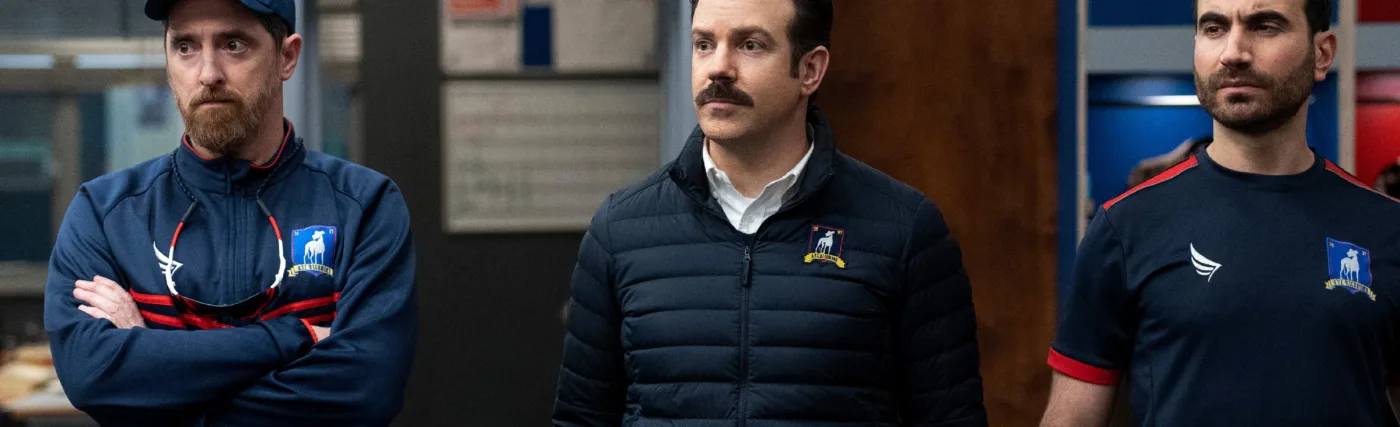
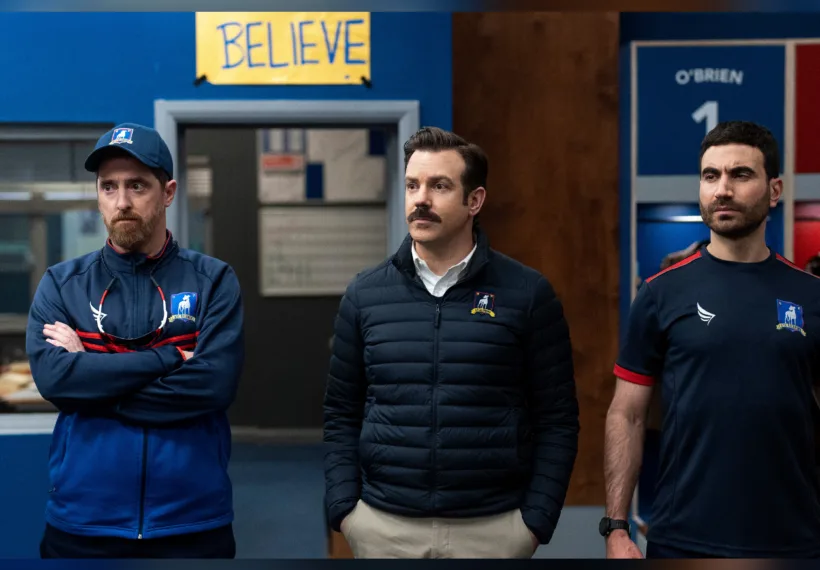
What’s the science behind kindness? On this episode, Neil deGrasse Tyson and co-hosts Chuck Nice and Gary O’Reilly discover the science hidden in the hit Apple TV+ series Ted Lasso with its creators Jason Sudeikis & Brendan Hunt and neuroscientist Heather Berlin. Is it better to give than it is to receive?
How do we find common ground with others? We get into Gary’s experiences in professional soccer and how the character of Ted Lasso came to be. Do good comedians have to understand the psychology of their audience? Is it true that nice guys always finish last? We break down what it takes to design a character that is kind. Was Gary a mean player or a nice player on the pitch?
What is leadership? Learn how the Ted Lasso team defines good leadership and how they approach toxic masculinity and incorporating therapy into the show. Is Ted Lasso the personification of magic mushrooms? We discuss drugs, sports therapy, and the “suck it up” generation. What is it like now that athletes are able to prioritize their mental health?
Next, we bring on Heather Berlin to offer her scientific take. What happens to the brain when it’s involved in an act of kindness? Is it actually better to give than it is to receive? Is there such a thing as toxic positivity? Is being happy all the time really the goal? Find out how your sweat can impact responses in others and how the amygdala impacts heroic acts. What does Heather make of their claim that Ted is the personification of mushrooms? We discuss the treatment uses of psilocybin and how it works to treat depression and anxiety. And finally, does the brain of a good leader look different?
Thanks to our Patrons Tor V Eystad, Andrew Nelson, Honza Rek, Michael Webber, Toni Pomeroy, Zarin Taylor, and Justin Nelson for supporting us this week.
NOTE: StarTalk+ Patrons can watch or listen to this entire episode commercial-free.
Transcript
DOWNLOAD SRTWelcome to StarTalk, your place in the universe where science and pop culture collide.
StarTalk begins right now.
This is StarTalk Sports Edition.
I’m Neil deGrasse Tyson, your personal astrophysicist.
And today, we’re going to take a deep dive into the waters of Ted Lasso.
Ooh, Ted Lasso.
If you haven’t seen it on Apple+, it’s a TV series.
But why it interests us in particular is because there’s a lot of psychology, sort of neuroscience going on in that show.
Ted Lasso is a coach, an American coach coaching a UK football team, soccer team.
And there’s a lot of interpersonal dynamics that brings them to this program.
And any time we have neuroscientist issues, we bring in Heather Berlin.
She’ll come in actually in the third segment of this program.
But in the meantime, let me first introduce my two co-hosts, Chuck Nice, Chuck.
Hey, Neil, I got to tell you, a deep dive into the waters of Ted Lasso sounds very erotic.
I like it.
Everything is that way to you, Chuck.
And we also, of course, have Gary O’Reilly.
Gary.
Always good to have you there.
A former professional soccer player in the UK.
So this is right, right down your alley here.
Now, of course, in order to make this work, it would be better if we had like folks from the show.
So why not?
So we invited and they agreed to appear to the co-creators of the show Jason Sudeikis and Brendan Hunt.
Guys, welcome to StarTalk Sports Edition.
Hello.
Nice to be here.
All right.
Excellent.
Excellent.
Jason, you and I had met some years ago.
I think we just crossed paths in a sound studio, but it was a fun encounter.
And I don’t know if I can officially call you a friend of mine, but you’re somebody I watch and follow and it’s always great to see you doing very cool, interesting things, comedic and dramatic.
Thank you.
So thanks for being on the show.
So the two of you guys created this sort of fictitious character playing for a fictitious Premier League football club.
And the show is globally famous on many levels.
And so what we want to know is how is it that Ted Lasso, this character, who is a coach, but he’s just really, really a nice guy.
And it’s like, no, these people don’t exist.
Should they exist?
Should there be a law against them?
And then somehow it works, and it works convincingly, not in some weird fantasy way.
And so we’re going to delve into how you guys turned Ted Lasso into a modern-day superhero with a different portfolio of powers than we normally find in the Marvel…
The power of kindness.
The power of kindness.
So I’m going to lead off with Chuck and Gary, because they’ve been thinking about this ever since we first floated the idea.
So Gary, I’m going to let Gary go first, but I got to say this before we start.
Before we start, I just got to get this out of the way for Brian and Jason.
Brendan.
This is a thank you from…
Brendan and Jason.
I’m sorry.
Brendan, not Brian.
Brendan.
I’ll get Brian in here, too.
Get Brian.
Get Brian in the worst.
Stay, stay, stay, Brian.
By the way, Brian’s an a-hole.
I don’t even know why I brought him up, okay?
Brendan’s so much cooler.
But let me just say this.
Thank you to you guys from the rest of the world for making America give a damn about soccer.
Without this show, man, seriously, it’s like I’ve never seen more people get into soccer because of you two.
Now they know the ball’s inflated and not stuffed.
There you go.
Baby steps.
Baby steps.
Kindness is the Trojan horse.
We’re actually just trying to get soccer going out there.
We’ll get you America.
Grow the family.
Okay, chaps.
Here we go.
Strength of community.
Chaps.
Listen to that.
They’re Anglicized now.
That’s fine.
You look great.
Okay.
Don’t have me calling them blokes by the end.
I don’t know what I’ll do.
Humankind success has been on community and cooperation, yet you put Ted in the all about me, Rolls Royce, us and them, Ferrari world of Premier League football.
And you repeatedly demonstrate how we find common ground.
I mean, what on earth inspired you to do that?
Golly, I mean, I think Brendan and I both come from a background in improvisational comedy, which is as much of playing on a team, playing team sports as much as working in some environment, a chosen family environment.
And just that whole notion of yes and is almost like a prayer in improv, where you accept an idea, you support the idea, and then you add to it.
And so I think it was just rooted in the way that we played together, specifically Brendan and I and our buddy Joe Kelly, who we did these commercials back in 2013 and 2014, where that’s where the character initially started.
And even the way we went about making those commercials for NBC Sports with the Tottenham Hotspurs and et cetera, we didn’t write a script.
And this isn’t a thing that we invented.
I mean, they do this all the time on shows like Curb Your Enthusiasm, et cetera, where we just had beats written out.
But this was a multi, multi-million dollar ad campaign.
And we were just…
I wouldn’t say we were winging it, because there was absolute intention behind everything we were doing.
We just didn’t have a hard copy of the script that people were going through, and we just trusted each other.
And we knew that if Brendan and I knew we were making Joe laugh, and I was making Brendan and Joe laugh, and Brendan was making Joe and I laugh, then you just…
When you have that alchemy of a little triangle, you just know that there’s good stuff happening there.
And so we just sort of followed that.
And so it was made in kindness with friends, and then that just like…
It was sort of in the DNA of the thing.
We didn’t know we were doing it, especially the very first one that it was about.
Because I would say the first commercial isn’t about kindness.
It wasn’t until we got to the second one that really unlocked Ted’s optimism and hopefulness and his curiosity and whatnot.
And then by the time a couple years after that, when we started talking about the TV show, we were really as a country being inundated with a lot of negativity.
I mean, little did we know how far…
The prime example of ignorance and arrogance hadn’t quite come down the escalator in Trump Plaza yet, but there was a disturbance in the force.
And so we wanted to make a show that didn’t rely on sarcasm and cynicism.
I know I personally didn’t want to play a character that would have felt derivative to David Brent or Michael Scott, all these great characters that were kicking butt on television.
So it was really about what we didn’t want to do, and it lent itself time and time again to kindness and to empathy.
Words that I don’t think we were necessarily aware of, I mean, aware of, yes, but weren’t speaking about in the writer’s room or even in my dining room at my house in Brooklyn.
Joe and Brendan and I beat out the idea for this show.
So it’s really true.
So I got a compliment as a scientist for viewing your sort of comedic commercial spots as tests.
You’re testing the idea.
100%.
100%.
Yeah, it’s science.
If you have an idea, you got to test it.
Otherwise, you know, the data might not.
Can we get a sense of the meeting where this multimillion dollar project fronted by NBC and they asked for the script review?
It’s like, hey, Brendan, Jason, you know, we gave you a few million dollars.
Can we see this?
They didn’t give that million dollars to us, my man.
That was entirely for the purposes of the NBC networks and reach outs.
But we didn’t know about this meeting, but this meeting kind of happened.
But we are at the Tottenham Hotspur Training Center.
We are in our RV, me and Joe and Jason and Jeff, Jason’s manager.
We’re playing Catan.
We’re literally playing Settlers of Catan.
And we’re watching Bumper and Sons videos.
And remember, we watched a ton of Coming to America, like just clips from Coming to America, just like on YouTube.
We were just like, we were passing time.
Meanwhile, outside this van, go ahead, Brendan.
Yeah, like between setups, like we’d done one bit, we’re going to do the next bit.
And we told them like, oh, yeah, we’ll do like Ted, like in like playing FIFA.
So set that up.
We’ll be there.
And they don’t work that way.
So outside this, you know, RV of fun, dozens of English crew members are just like, What’s happening?
Sounds about right.
Yeah, crew members, but also NBC executive sports executives, you know, like people being like, what is going on?
And we’re just in there.
Just, you know, I’ll trade you wood for sheep, you know, and sell this off.
Just like children, you know, and again, but not being arrogant about it, you know, like just just we didn’t know anybody.
It was our ignorance towards the process, you know, and their ignorance for hiring us.
So let’s rewind it back to the psychology.
What expertise did you draw from in psychology to and for those of us who have watched series one and two, you persistently infuse the plot lines with this material.
Do you actually retain a mental health professional on the show?
On the show, no, but I think a great number of our writing staff do personally.
I’m going to go with 95%.
We’re all in therapy.
Everybody’s in therapy.
We don’t need a mental health professional.
A lot of it is rooted in, again, tenets of improvisation.
Which have very macro view versions and different sayings.
Follow the follower, yes and, those notions.
I found the writings and the philosophy of John Wooden, the great UCLA college basketball coach, to be profound.
And his philosophies were things that I used to teach when I coached improv teams and taught improv.
And his pyramid of success was something that I thought really broke down nicely.
And take care of themselves, but then also support the people with them.
Which is really an ideal head space to be in when making stuff up on the fly.
Much less life, driving on the highway, anything.
You’re dealing with other people.
Well, two of you with comedic chops.
And I think Jason, didn’t you have a stint on Saturday Night Live?
I did.
I was there briefly.
I hear they like to do improv sometimes.
Every now and then.
Every now and then I think they like to do improv.
Okay, so guys, can you explain?
Wait, wait, wait.
Let me finish this.
So, Brendan, Jason, good comedians have to completely understand their audience.
What they’re thinking, how they’re going to emote.
And it seems to me that could, not to trivialize any profession, but that seems to me is half of what therapy is.
Knowing what the person is thinking.
Because if you don’t, you’re just shooting in the dark.
And the way you’ve scripted yourselves and the way you interact, there’s always a little bit of insight into what’s going on in the person’s head.
And so you’re telling us that that comes to you from your comedic backgrounds.
I’d say.
And like, I’m not sure that we know what our audience is thinking so much as we give our audience a lot of credit.
You know, we just expect that our audience is right.
And as I have a saying that I have heard in improv, the audience doesn’t get what they want, the audience wants what they get.
So if we just assume that they’re bright and they’ll go along with us, if we’re doing our best, then they’re more likely to go along with us.
So that’s all we can worry about there, I think.
By the way, Brendan, that’s my same philosophy on Christmas for my children, just to let you know.
Smart, smart.
You want what you get?
Hey, Brian, Christmas is canceled!
Mariah Carey, we have a rewrite on your hit song, on your Christmas anthem.
My favorite quote that’s exactly in line with that was one that Del Close said, who’s like an improv guru who I got to study with in the late 90s in Chicago, was like, if you treat your audiences like poets and geniuses, they will rise to the occasion.
And so it really is less thinking about, it’s less thinking about what are they going to get this?
Are they going to do that?
In every step of the process of creating the show, we have been cognizant and intentional about leaving space for people to lean into it, whether it be the, you know, the Brandon Joe and I, the fellow writers, our fellow co-creator, Bill Lawrence, let him lean into it because he’s done thousands of hours of television.
He knows the form so well.
And so we want our actors to lean into it, to not just, we’re not, they’re not action figures that we’re puppeteering.
And like, you have to say the words just like this.
You know, we have every actor lean in, you know, because we’re Americans and, you know, the anglicized things like, oh, we don’t say it that way.
We had the word ma’am because, you know, Ted said ma’am in the pilot so much.
And the very first time Jeremy Swift, who played Higgins, called Rebecca Welton ma’am, it sounded like mom.
And I was like, oh, that’s a different show.
That’s a different show.
You can’t have that.
And we do that with the prop department, the hair, makeup people, everybody.
We leave space and we try to do that for the audience too, where I think some of the things you might be picking up, Neil, not to talk about how the sausage is made too much, but from my money, we’re really in the editing process.
We want people to see the actors say the lines and for people to receive the lines, then show the actor receiving that line too, because I feel that’s how we watch things at home.
We’re all listening to each other now.
And that for me is the 50% that sometimes when you have to, on network television, you have to get to the commercial break and you only have like 20 minutes to tell this three act story.
We had the luxury of not having to follow that paradigm because of being on streaming and being on Apple TV Plus and them accommodating the style we’re trying to do.
It wasn’t boom, boom, boom.
We wanted to leave space and grace for people to lean in and hear and receive the information in time with the people.
We’re going to take our first break in a couple of minutes, but let me just add to that.
If you’re giving me room to participate in the emotions of what you’ve written, it is working because every episode that I’ve watched, there’s some moment when I well up.
There’s some tender moment I get a little teary, emotionally teary, and that wouldn’t happen unless you invited me in to what’s going on.
And if you weren’t willing to be invited.
Kicking and screaming, I don’t want to cry.
Gary, you got one last question before we hit the break?
Okay.
So nice guys finish last.
We’ve seen teams that win nasty, dirty, bend the rules, break the rules, whatever you can get away with.
Maybe if you don’t like the Yankees, it’s the 77 and the 78 Yankees who won stuff and weren’t liked because of it.
Yet you end up micro dosing us.
You give us this kind of feel good virus during a pandemic.
I mean, what about that old adage, nice guys finish last?
Was it an intention upfront to kind of stand it on its head?
Yes.
I mean, 100 percent.
I mean, I referenced like Trump earlier and I didn’t mean to be too cheeky about it.
But I have found that the worst version of a human man is the cocktail of someone that is ignorant but arrogant, you know what I mean?
And you can see that played comedically all the time.
You know, someone uses the word versimilitude and a character is like, oh, yeah, yeah, no, I know what that word means.
Yeah, yeah, versimilitude.
Yeah, yeah, yeah.
And you clearly that they don’t.
We wanted Ted to be like, hey, what’s that word mean?
Versimil what?
You know, like to be curious, to be ignorant, which nothing wrong with that.
But then to ask the question, you know, be like, what’s going on there?
What’s going on there?
And in the writers room, we were conscious about not, you know, we were still very cynical and sarcastic in the writers room.
We just, we just, and those are sometimes, you know, comedically, our first choices.
And we would go to our second or third choice.
We would try to make the other choice of turning it on its head, being like, okay, let’s not, let’s not be, let’s not have someone come in and go, you know, nice hat, you know, have them come in and be like, be like, like, literally, that’s a great hat.
Where’d you get that?
Like, can I try it on, like, you know, you know, and just, yes, ending, just supporting whatever was going on.
So may I please right now ask, what does verisimilitude mean?
We will tell Chuck over the break what verisimilitude means.
When we come back from the break, Gary, I want to know if when you played, were you a nice player or a mean player?
We’re going to find out when we come back.
So this is StarTalk Sports Edition and we’re unpacking Ted Lasso and all that is and what it means to us going forward as not only as a show, but as civilization itself when we return.
We’re back, StarTalk Sports Edition.
We’re unpacking the psychological complexities of the hit TV series on Apple+, Ted Lasso.
And in our third segment, we’re gonna bring on our favorite neuroscientist, and you know who she is.
But right now, we’re in the middle of our conversation with Jason Sudeikis and Brendan Hunt, who are co-creators and writers and actors in that series.
And it contrasts really nasty people with really friendly, happy people.
And I just want to know from my co-host here, Gary O’Reilly, Gary, when you played soccer, were you one of the mean people or were you one of the nice people?
Naughty but nice.
Oh, that’s mean, if I ever heard it.
There are moments when you have to be certain things.
Moments when you have to be other things.
Generally, you would not want to hurt or be mean or nasty, but sometimes, you have to deal with it.
I mean, there were certain rules when I came through as a professional player in the early stages.
If their tackle came in high, you came in higher.
This just, you know, the rules were survive out there.
Be, this is, no one’s going to give you an easy passage here.
You’re going to have to put up and deal with it.
So, in certain circumstances, you learn to be, but generally, I was the nicer variety, but on occasion, I could be the not so nice.
I don’t know about that, Gary.
You know, you sound kind of sketchy.
Is my nose growing?
Yeah, man.
Let me just say this.
There’s a picture of Gary running down the pitch and he’s wearing a pair of short shorts and he looks so handsome and good, like I was attracted to you.
I was looking at him.
And I know any man who is wearing short shorts and looking that confident is kind of a dick, okay?
It’s like…
Thanks, Chuck.
This is why I don’t need enemies, because I have these kind of friends.
So let me broaden this platform here.
There’s the goodness in Ted Lasso.
There’s the highly varied personality profiles of the players.
Some go through evolution, others just dip in and out of being mean and kind.
But in the end of the day, we’re talking about leadership.
Let me just tee up the ball with that.
And you guys, where did this notion of leadership come from?
Mixed in with this whole psychological profiling of nice people interacting with mean people.
Some of it’s intrinsic just to the notion of being a coach.
And Jason has much more experience in athletic coaches than I do.
I have experience with acting teachers and acting coaches who had an impact.
But if we’re making a show about a coach, we want that coach to have an impact.
And Ted’s brand of leadership is how he goes about it, which as Jason says is partially drawn through John Wooden and partially the improv coaches that we’ve had.
It was really about mentoring in general.
And then you could even go zoom out even further and say that it’s about parenthood or fatherhood, specifically with the show.
But I had always felt that a good mentor was someone that saw something in you that your baggage disallowed you to see in yourself.
You know, so…
Jason, that’s beautiful.
But I mean, I’ve benefited from that.
I had a teacher, Sally Shipley, in high school who was like, hey, you could do like this radio TV stuff, like this class we had in high school where we made like a weekly television show, like a news show.
But still, you could do silly stuff like Man on the Street or Tina Fey when I showed up at SNL as a writer was like, she was like, if you can improvise, you can write.
Lauren hired me.
I mean, I think that happens with a good creative partner, a good romantic partner, coaches, mentors, a good teammate, someone that can say, why are you being so hard on yourself?
Why aren’t you seeing for yourself what I see for you?
And you can pair up any two people on the show.
That’s what Rebecca is doing for Keely.
That’s what Ted is doing for everyone.
That’s what Keely does for Roy.
It happens all over the place.
And we have the opportunity to take life and create life while we’re here living life.
And why not try to use that as best as you can and think that there’s plenty of pie for everyone to have a bite.
It was rooted in that.
And we also wanted to mess around with the assumptions of toxic masculinity, even though we weren’t necessarily aware of that term.
But you put it in, as Gary was saying, the Ferrari ego-driven world of professional sports or just athletics in general.
The preconception is that they’re all a bunch of turkeys.
And we wanted to show that, yeah, there are some, but some of those people just didn’t realize that they can’t be a better version of themselves.
And, yeah, they just want to be encouraged.
Several of the characters, nearly all of the characters, at some point you dragged them through the thistles.
You put a little torture twist on them.
And on some of the conditions that you show, they’re treatable with medication, such as anxiety, such as the panic attacks.
But instead the show uses therapies rather than medication.
What’s the role of therapy relative to medications?
Did you think through that sort of situation of using therapy, maybe medication in the show?
How did you come to that conclusion?
We did have an early…
Oh, go ahead, Brendan.
Well, I was just going to say we did have an early, you know, a storyline about the Roy Kent character who was, you know, in the autumn of his career that maybe that was going to lend itself to self-medicating, you know, with pain pills, you know, and him trying…
I’m going to play one more season if I just keep taking these pills, you know, because who wouldn’t want to be paid a bunch of dough to play a game for a living?
And also, psychologically, who am I if I’m not doing this?
I’ve done this since I was a little boy.
Who am I, you know, if I am not Roy Kent?
I mean, that’s what, you know, in episode 109, he has that whole conversation with Keely about exactly that as he’s being moved from a starter to, you know, a support player off the bench.
And we did toy with the idea, and we just found ourselves time and time again wanting to, for people to own their stuff, especially like men, men that have been deified, men that have been paid well, and yet they all still have the same stuff, you know, and we’ve had the same stuff for thousands of years.
You know, it’s like, so we want to keep it at a mythological level, again, to allow people, you know, ourselves, you know, as writers and actors, but then everyone in the audience to like lean in and maybe see versions of themselves in these different characters.
So, you know, you can maybe take the journey, one episode with a Keely character, and then, you know, then find yourself relating more to Ted or Rebecca’s, you know, arc in a different episode.
But we just wanted people to care about these people so that the smallest arc, like, mattered.
You know, it doesn’t have to be saving the world.
It could be just saving face, you know, or saving their own heart in that moment.
And I think that to do it without drugs, you know, to try to do it within oneself is what the whole second season is about, and the first season is really about, you know, realizing that you can lean on others, the first season.
So, like, the, you know, human element and the, you know, the healing powers of one another versus, you know, very, you know, like, medication is super helpful to, you know, super, but it’s not as, probably, it’s not as fun to write, you know, Opens Pill, Pops Pill.
That’s a good point.
I mean, unless the medication is abused, right, if it’s just taken, then nobody has any problems, you got nothing to write about, I guess.
Yeah, and where about 95% of our writing staff has a psychologist, I think we’re at a solid 60% has a psychiatrist, too.
So, we’re not taking some stand here by anything.
And that’s the funny thing about, you know, when you’re taking psychiatric medication is that when you take it, it just works and nobody knows you’re taking it.
It’s actually kind of boring.
Right, right, right.
You got no story.
I will say that, you know, a book that came out right as we were writing the pilot was How to Change Your Mind by Michael Pollan, who was talking about the use of, you know, psilocybin and LSD and MDMA as a way to treat PTSD, to treat depression, to treat anxiety.
And so Ted was, and we spoke about a lot, you know, me, Brendan, Joe, and Bill, about Ted being the personification of mushrooms.
You know, that there’s an eagleness that he carries, that when someone presents themselves to him and they’re angry, like, he knows that it’s not about them.
He’s just a mirror for that right then.
You know, it’s like, you know, you never know what battle someone’s dealing with, you know, inside their own, you know, head, heart, and soul.
And so we just wanted to, Ted was an opportunity to personify that.
And he’s almost like a weevil wobble.
If you remember those toys growing up, you know, like, you know, they get knocked down, they get right back up, and it feels funny because in today’s day and age, especially again, you know, over these last six years, it was about fighting back, punch back, you know, hit back harder.
Like, that became language that our…
Stand your ground.
You know what?
You just made me think of something that is just a great representation of that in actual sports.
I love watching the NFL when they put the microphones on the guys and you see them on the field, right?
And you would think that they’re out there just like, I’m going to kill you.
I’ll rip your nuts off.
Arr, arr, arr.
Right?
But when you listen to them, often they’re talking to their opponent and they’re just there.
They don’t help each other up.
They used to do that, but they don’t now.
Coaches stop that.
But they look at each other and they go, all right, buddy.
Hey, man.
Hey, good one, man.
All right, man.
All right.
I see what you did there.
We’ll meet again.
Right.
We’ll see each other next time.
They’re not like, I’m going to kill you.
It really is a positive experience and exchange.
You know, it’s pretty wild.
Yeah, I’m going to kill you is more Gary’s vibe.
Chuck, I’ll tell you now, when you’re miked up, you don’t say none of that other stuff.
When there are mikes on someone else, I am going to put your head on.
I am going to stick it in a bag and I’m taking it home with me.
So you’re saying they’re acting.
You’re telling me they’re acting.
Oh, reminder, I’m wearing a microphone today.
Hello, opponents.
This has been a formidable contest.
I’m wearing a wire.
So, Brendan, I got another question here.
I was very happy the entire first season watching Ted Lasso be coach therapist, basically.
All right?
He was coach and part-time therapist dealing with this conflagration of personalities.
But then you bring in an actual therapist.
And I thought to myself, what’s Coach Lasso going to do?
Does he have any job left now?
And then we find out that he could benefit from some therapy.
So what was going on in the decision to bring on an actual professional therapist, and a sports therapist even, not just a random person out of the catalog?
Yeah, I think a few things went into it.
So I don’t want to speak for Jason here too much.
But one thing that was big in my mind was that, you know, in season one, we showed Ted having panic attacks.
And that’s a big thing.
And I personally kind of felt like it would be irresponsible of us to just kind of let that have floated out there, like some kind of plot point for a couple of episodes, as opposed to being something that indicated there was a larger thing to address.
So then it became how to address it.
And yeah, there’s just a lot of teams right now, even in England, with all of its stigmas about mental health, even in England, plenty of teams now have a sports therapist on the side.
Oh, it’s a regular thing.
Yeah, more and more.
People are much more aware of it’s not just your body, it’s the space between your ears that’s really quite vital.
What I’m interested in, because you…
Wait, wait, wait, Gary, I have brains between my ears, not space.
That’s because you have astrophysics going on.
Just saying, I’m just saying.
You know, that’s what it is.
So in a dressing room, a locker room in a Premier League team, group dynamic is not everything, but it’s so vital.
You’ve got your individual components because there’s always a star, then you need a couple of water carriers, then you need someone solid and dependable, and you’ve got all of this going on.
And if you do not manage that, whilst managing all of the other individual component parts, it falls apart quickly.
That was my experience in clubs that I played with.
So how did you, going into that, look to see where you could mine your storylines?
I mean, a lot of them were Trojan horsing our own personal philosophies and stories.
You know, one of the nice things about writing a show about, you know, in this tone, which, you know, about, not about, but deals with, you know, and set in the realm of kindness and empathy is that our writers’ room was very, everybody was open-hearted and shared their experiences of dealing, you know, within their own family, you know, within other, you know, work situations.
You know, possibly if people played, you know, sports or did anything ensemble based.
And you have people from different walks of life of how similar they are and how much things overlap.
And you’re kind of like, oh, we call that something different.
But yeah, we got that.
We do that.
And that was one of the neat things about the show finally coming out, was then we had people, like for us to have, Brendan and I had to have the opportunity to, you know, do a Brené Brown’s podcast and all of her, you know, acumen and skill set in explaining like vulnerability and the vocabulary she used to explain the show back to us in a very, like not erudite way, but like with vocabulary that we never would have thought of in a million years.
It felt very similar to taking improv classes where it’s like, oh, that’s what it’s called when I play like this, you know, as a kid.
Okay, so I’m, I’m heightening.
I just thought I was just making it funnier.
You know, it’s like, no, that’s called height.
You know, it’s given, it gives you vocabulary for it in a way that we, you know, we just really leaned on each other and relied on each other and felt vulnerable enough in the writer’s room to share that.
And then once again, when you get to the actors, then they put their own experiences into it.
So it was really about just taking our own stuff and just, you know, hiding it in these people.
And it strikes me that that’s a big part of what therapy is, giving the vocabulary to describe stuff, you know, starting from, we’re trying to do this with kids now.
Like, you’re having a feeling right now that we have to try to be able to describe for you.
And, you know, maybe where a lot of people get into trouble is that they’re just going through stuff that they can’t even describe.
And the more we can let people describe what they’re going through, maybe it’ll be easier for them to deal with it.
You know, it’s funny, I’m listening to all of you right now that you keep this these words keep coming up during this conversation.
Vulnerability and support and like, you know, teammates and, you know, therapists.
And it just occurred to me that you cannot give or receive support without being vulnerable.
Because if you’re giving support, you have to trust, you have to be vulnerable and open to trust that person to help them.
And if you’re receiving it, you have to be that much more vulnerable and open to receive it.
So it’s actually a pretty brilliant construct for a sports, you know, arena.
I just love it.
The thing is, Chuck, if you travel back to my time as a player, you dealt with it on your own.
There was no safety net.
There wasn’t a therapist.
You didn’t want to talk to people around you because you would be weak.
And the whole thing about being a professional athlete in an ultra competitive environment is you are strong and show weakness.
And then everybody just, you know, you generally don’t play 100% fit.
In fact, you never play 100% fit.
You’re always carrying some kind of injury physically.
Now, adding to the component of a medical problems, things can really and you talk about how players go out of form and cannot deliver.
There’s a lot of things going on now.
As we understand, there are therapists around to identify certain issues rather than have this person fall apart in front of you.
Hey, let me ask you this, then.
All of you, all of you, let me ask you this, because we’re all…
We’re running short on time.
Are we running short on time?
Alright, Chuck, so if you make it quick.
I’m going to make it real quick.
Make it quick.
Okay, because it looks like we’re all from the same generation of suck it up, as far as I can tell.
So how do you feel about these athletes now who basically say, look, my mental health is more important than, you know, achieving the win?
Yeah, I got to support it.
You know, and different strokes for different folks, but I’m not going to…
It’s hard.
It’s really hard.
And Breeze.
So we’ve got to close out this segment and actually say goodbye to Jason and Brendan.
But I just want to just comment that in a very tight format of this program, you managed to successfully go in and out of and explore every permutation of human dynamics and relationships.
And only after I saw, watched it, did I say, wow, we just talked about boyfriend, girlfriend, mother, father, son, daughter, children, old people, young people, death, birth, right?
It’s all of that’s in there.
It’s like, how did they do that?
How did they do that?
And you made me care about them.
And you’re making me cry every episode.
So stop it.
No.
Just telling you that.
No.
You have my permission to carry on.
Just saying.
Keep on carrying on.
Keep on carrying on.
Brendan and Jason.
Jason, first, it’s great to see you again, dude.
And Brendan, it was great to meet you for the first time here.
And good luck with more seasons of the show.
You clearly teed up another season in that last episode of season two.
And so we’re all waiting for that to drop.
So it’s great.
Just best to you.
Keep up with the comedy.
On StarTalk, we’re big fans of comedy here.
And we know that comedians hold the spirit, energy, and the soul of what makes civilization work.
And so all of life is not just drama.
You have to smile every now and then.
And you guys know that formula and recipe.
And you’re inventing new formulas as you go along.
So dudes, thanks for being on StarTalk.
Thank you, Dr.
Thank you, everybody.
All right.
When we come back, we’re going to Heather Berlin.
She’s our neuroscientist in residence.
And she’s going to unpack this episode as it has unfolded thus far on StarTalk Sports Edition.
We’re back, StarTalk Sports Edition.
We were unpacking the psychological dimensions of Ted Lasso, the Apple Plus TV hit series, that’s all about sort of an American coach in the UK coaching soccer, and he didn’t know anything about soccer.
And so it becomes a story about managing egos and how to be kind and the power of kindness, kindness as a superpower even.
And we had Jason Sudeikis and Brendan Hunt, the two co-creators on, and we learned a lot.
But we’re gonna learn some more because we’re going to our neuroscientist at large, Heather Berlin.
Heather, welcome back to StarTalk for the 100th time.
Always a pleasure, always a pleasure.
Yeah, yeah.
So Gary took the lead on this because our boy here played some actual soccer in the UK.
So, Gary, why don’t you lead off here with what questions you have for Heather.
Okay.
Welcome, Heather, to this particular edition of StarTalk Sports Edition.
Please explain to us, and particularly me, what reactions go off in the brain when it’s involved in an act of kindness.
Because you’ve got the giver and the receiver.
And can you just explain what is going on so as I can understand a little bit better?
And is it better to give than it is to receive?
Well, in an interesting way, giving or being kind is actually in some ways a selfish act, because you’re really ultimately you’re helping yourself as well.
And we can see that in all sorts of changes in terms of neurochemistry.
Being kind can decrease your cortisol levels and stress hormones, which is good for the brain.
It releases oxytocin, which is this very pleasurable bonding hormone that’s also released when you’re in love.
It’s released when a mother is breastfeeding her child, which promotes bonding.
It’s released during sex.
It releases dopamine, which is a pleasure sort of neurotransmitter in the brain, activates the pleasure centers of the brain.
You get increases in serotonin, which helps regulate your mood.
So, you know, across the board, it actually is really not only good for your physical health, but also for your psychological health.
So, in many ways, it is much better to give than it is to receive, although receiving feels nice and that is also pleasurable.
But there’s something in particular in the act of giving, in the act of kindness, that’s almost better.
So, if it’s actually a selfish act, if it’s actually a selfish act, then I’m just going to start giving stuff to myself, because then I’m getting double the benefits.
I’m the giver and the receiver.
But you know how you can’t tickle yourself, right, because you’re expecting it, right?
You can only get tickled by others.
So, it’s not the same, just technically speaking, giving to yourself is not the same because you’re expecting it, and it changes the way your brain responds to it, just like you can’t tickle yourself.
That’s your idea.
So, now I’m going to learn to tickle myself.
Yeah.
So, Heather, okay.
So, as we’ve been discussing with Jason and Brendan, you know, Ted was microdosing us with kindness as an audience.
So, what as an audience were we feeling and how?
Because this thing just sort of crept up on us, like a stealthy little series and got us.
So, what’s going on when you witness these acts of kindness over and over and over again?
Well, I think, you know, just in terms of the ethos of what was happening in society at the time, you know, being in the midst of a pandemic, having lots of sort of narcissistic leaders at the helm, this was sort of a, you know, showing us a glimpse again, reminding us of the other side of humanity.
You know, it was cathartic, I think, for people.
It also, he was a role model, not just for his teammates, but for all of us, you know, handing out these words of wisdom, you know, these gems, these coping mechanisms, showing us that you can succeed in helping people and having more of a cohesive environment rather than being against one another.
So I think all of those things were very needed and are very needed not only when the show comes out, but forever more.
But the idea of this selflessness, too, of, you know, connecting and other people, it’s not about you, it’s about the other person and empathy and compassion and just reminding us that these are also human traits in addition to the, you know, more negative ones that we’ve been seeing a lot recently.
Heather, I have a quote from William Shakespeare and it’s from The Merchant of Venice.
And let’s just call it the quality of mercy.
And just listen to this.
The quality of mercy is not strained.
It droppeth as the gentle rain from heaven upon the place beneath.
It is twice blessed.
It blesseth him that gives and him that takes.
If only that guy knew how to write.
That would have been really good.
That was the first draft of Ted Lasso.
That’s The Merchant of Venice where there’s conflict.
And there’s, do you have mercy?
This is where the pound of flesh comes from.
Yeah, the pound of flesh as a retribution for not fulfilling a contract.
And do you have mercy on that?
So, Heather, it looks like your profession was sort of deeply understood, at least at some level, by Shakespeare 400 years ago.
Yeah, we’re all just following his lead, obviously.
Yeah, so what do we need you for?
Heather, is there a point where positivity becomes toxic and it can’t be sustained within an individual, within a group, and sometimes you just have to get angry to get something going in the right direction?
I like that question.
Yeah, who decided that happy people is the goal?
Why should that be the objective here?
Maybe if they’re all angry with each other, that would boil their blood and they’d go out and perform even better.
Who are we to say that happy is good?
There’s an element in the show where Roy says we need to get Jamie a little bit aggressive at one point because he needs some of that in order to perform well.
In season two they get into that.
Yes, there can be toxic positivity.
When positivity is overused or as a defense mechanism, which also happens to Ted, where you don’t actually ever deal with the negative emotions and you’re just using this positivity as a shield, that can be maladaptive.
We evolve negative emotions for a reason.
It would be maladaptive to not have any of them.
Pain helps keep us from bumping into things and knocking our arm off.
We need pain to protect us.
We need anxiety or else we’d be doing really risky things without any forethought.
These feelings are important.
There was this film Inside Out, this Pixar film, where they just wanted happiness to win.
They were looking at all the emotions.
At the end, realizing, no, you really need both.
In order to have happiness, you need to have sadness.
Anything that has gone to the extreme can tend to be maladaptive.
But happiness in moderation, I think, is a good thing.
Heather, I love that.
I love that.
I love that, Heather.
Can you experience positive and negative emotions sympathetically, like watching a television show, to make you more positive or negative?
In other words, can a television show elicit these feelings within yourself?
Can it be more of that or less of that?
Yeah, there are these knock-on effects.
For example, one study had people, while they were in the scanner looking at brain activation, viewing neutral scenes and then viewing aggressive scenarios.
When they were just simply watching a film about aggression, it decreased activation in their prefrontal cortex, which is their impulse-control part of the brain.
Therefore, if they then were to go outside right after watching the show, they might have a tendency to have less impulse control.
But the same thing with eliciting emotions of joy as well.
So, your brain, we have these mirror neurons, which are kind of like, in some ways, something are involved in empathy.
So, we call them mirror neurons.
That’s what you call them, mirror neurons.
Mirror neurons, yes, mirror neurons, which really mimic other people’s movements.
And some people think they’re about how you learn things, but it’s very much involved in modeling behavior and learning.
And some link it to empathy as well.
But in some ways, you’re actually enacting that experience.
There’s an empathy network in your brain that gets activated.
There’s this really interesting study with Olfaction, where they collected stressful sweat from people about to jump out of an airplane or take a stressful exam, and neutral sweat when people were working at the gym.
And then they gave them to other people to smell.
And they couldn’t consciously make a difference.
But when they were in the scanner, when they gave them the stress sweat, it activated their empathy network of the brain.
So there are these signals coming in to us, whether it’s Olfaction or things that we’re viewing, that can actually activate these empathy networks and cause us to go on and be kinder.
Our behavior is affected by all sorts of things.
Because in the brain, it doesn’t know what’s real and what’s not.
It’s just ones and zeros.
It’s just information, bits of information.
So whether you’re really engaged in a happy situation or you’re just watching it on TV, the brain can experience it in a very similar way.
Can I trick my brain?
Because sometimes you get yourself up for a performance, for your event, your game.
And then you have to bring yourself down.
I mean, here’s stories that Michael Jordan used to create something just so that would help him energize.
And it was a fictitious thing.
He’d said someone had said something and it would raise his game.
What are we doing in that?
Are we able to kind of dial up, dial down with Will?
I think yes, you know, insofar as you have certain neural sort of networks that are wired up in your brain in a certain way and you have certain structures that have developed in a certain way.
So you have certain limitations, right?
But you can dial yourself up to your highest end of, let’s say, performance with certain limits, even with, you know, they looked at people who did these heroic acts like in the moment.
And they found that they often, and they interviewed them after, and they find that the people who did these heroic acts actually have larger amygdalae, these sort of emotional center of the brain, than other people who didn’t have, do these heroic acts.
So they actually have structural differences in their brain, and they found that when they responded, they didn’t think about it.
It was automatic.
So there are these automatic responses that we have.
So you can train yourself, yes, to an extent, but there are other things that are just really innate.
They also found these heroic people that they had more responsive amygdala when they saw people in distress.
And with sociopaths, for example, they don’t get that amygdala reaction.
They can see someone, you know, a picture of someone being murdered or babies chopped up or horrible things, and they don’t get that amygdala response.
So I think with anything, you can train your brain to a certain point, but if you just don’t have that innate sort of structure or neural network or wiring, let’s call it, it can be much more difficult.
Is there such a thing as an amygdala hijack?
Hijacking the amygdala, yes.
Yeah, so what takes place in that scenario?
Is it the opposite to what you’ve just described?
You mean somebody, something taking over your emotional responses?
Yeah, that’s called marriage.
That’s what that is.
When you have triggers, you know, when people, when you have a particular trigger, and I think with Ted Lasso too, you know, there are certain things that would trigger these panic attacks, right?
And that in a way is hijacking his amygdala.
It’s tapping into your, what we call the sympathetic nervous system and putting it in high gear, whereas other people can have the same experience.
For them, it might not do anything to them.
But if you have a history and certain trauma, then you’ll have these triggers that can just sort of flip the switch and put you into this high, like, fight or flight response.
Could you comment on some of the drugs that got mentioned?
So psilocybin was one of them, I think.
Yeah, what’s the deal?
Yeah.
And I love this idea.
Where can I get it?
I love the idea of…
I got a guy.
I got a guy.
I got a guy on the corner.
We know you have…
We know you hold now, Heather.
We know you hold now.
Come on.
No.
So I love the idea of how he mentioned that Ted was like the personification of mushrooms.
And so we’re using psychiatry now, psilocybin, the ingredient in psychedelic mushrooms are being used to help treat depression and anxiety.
And we’re trying to understand what’s happening in the brain and why does it have such a profound effect.
And one of the things is that your ego, in some ways, dissolves.
So this boundary between self and other that we all normally have tends to disappear.
And some people say your ego actually expands so that everyone is a part of it.
But this idea of then being one with everyone or everything and feeling their pain makes you less judgmental, makes you sort of more empathetic, understanding where they’re coming from, and therefore be better positioned to be able to help them because you’re not coming at it with what’s in it for me or with your own biases.
It’s true openness.
And I love that idea, this metaphor, with Ted being like on a permanent kind of mushroom trip without the psychedelic effect.
But the idea is that he’s in some ways egoless in the way he, you know, people are insulting him all the time, whatever.
He’s just not taking it personally.
He understands where they’re coming from and doesn’t react in ways like that are aggressive or defensive.
And I think that’s just such a beautiful metaphor.
But it’s one of the ways that, you know, from a science perspective, one of the reasons why we think mushrooms are so helpful to help transform, permanently transform someone’s perspective and give them an insight, just like the overview effect of astronauts.
You know, when they see space, Earth from space, they suddenly have this profound shift in their consciousness and go all in it together.
And it’s the same thing that can happen if you are permanently selfless and feel this connection with everyone else.
So what about leadership?
Is that something you’re born with or you develop it?
Can you tell who’s a leader by scanning their brain?
And what drug do you need for that?
There are some personality differences that would make someone be a better leader or a more natural leader.
I wouldn’t say that there’s one thing in the brain that you can sort of discern, okay, that like put them in category, this would be a good leader, this wouldn’t.
But a certain constellation of personality types, and also depending on what kind of leadership you’re talking about, you know.
So, you know, a leader could be a kindergarten teacher, you know, who’s helping children in this way and being a role model, or could be the CEO of, you know, a financial institution.
And there are going to be different essential qualities that are needed to lead in those particular areas.
But the idea that there’s sometimes when there’s a sort of stressor, a natural leader comes and rises up to meet the occasion.
And usually it’s somebody that has a lot of either has had experience with trauma in the past and knows how to cope when things get really difficult and stressful.
Or it’s somebody who’s just very, very grounded and has a very clear vision of what needs to be done.
And like where others can be sort of uncertain, and there’s some chaos, somebody might rise up that says, okay, I can show you the way I have a very clear picture of what’s happening.
But all those things, it’s really a mishmash of a lot of different personality traits.
And that’s hard to say, you know, this is the one thing that makes you a good leader.
So some people lead because they have a power and a force within them that people respond to.
But other people lead because people just want to follow them, right?
There is no sort of aggression there.
It’s just, wow, that’s an interesting, I’m going to follow that person.
And so my sense is that the Ted Lasso character is not one of these, I’m at the top and you’re not, follow me, because you must.
It’s, I’m going to say some things and you’re going to realize it’s really cool and it’s going to work.
And he lets them take ownership of their own revelations.
And that seems to me to be a rather potent pathway.
So you know what’s interesting about that, Neil?
There is a coaching term in football called guided discovery.
Where you take a player and you show them something technical and you kind of get to a certain point and leave the rest for them to discover for themselves.
So it is-
Knowing all along where they’re going to, where that heads.
You know you want them to be at this point.
You take them so far and then when they get there, they are so better for the fact that they feel they’ve completed the thing themselves without you showing everything to them and saying this is what you got to do, do, do, do.
You take them so far than the rest and it empowers them to feel that they can continue.
They take ownership of their own talent at that point.
There’s a theory about this attaining high status, which would be being a leader that people look up to and want to follow and there’s two different pathways to get there.
One is the dominance path, that’s like the Stalin and we can name a whole list of people in using coercion and all sorts of things to get power.
Other is the prestige path, they call it, but that is just being good at something, having an internal quality, like with Ted, he didn’t rule in a strong way, he had wisdom and after a while people saw, oh, maybe this guy knows something, maybe he’s onto something, you know, Rebecca’s having problems with her mother, she wants him to come to lunch because maybe he’ll have some insights.
And so sometimes we relate to, we see something special in a person and say, oh, that’s someone I can learn from.
And then they start to gain status and prestige and sort of, you know, rise up in the hierarchy.
So you can either take power or you can earn it by just being really good at something that people admire.
Well, we got to bring this to a close.
So Heather, always good to have your insights and perspectives.
Thanks for being such a friend of StarTalk here.
And Gary, great hearing you from the horse’s mouth there.
You’re welcome, my friend.
You know, soccer is still a little bit of a mystery to we Americans.
You’re getting there.
You’re getting there.
It’s slow.
We’re inching our way.
Maybe quicker than you think.
You’re getting there quicker than you think.
I can tell you, the women’s team is stellar, so.
Excellent.
Excellent.
Chuck, always good to have you, man.
Always a pleasure.
This has been StarTalk Sports Edition, unpacking Ted Lasso.
Thanks to my guests and I’m Neil deGrasse Tyson.
As always, good to you.





 Become a Patron