


 Unlock with Patreon
About This Episode
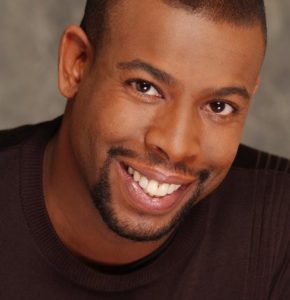
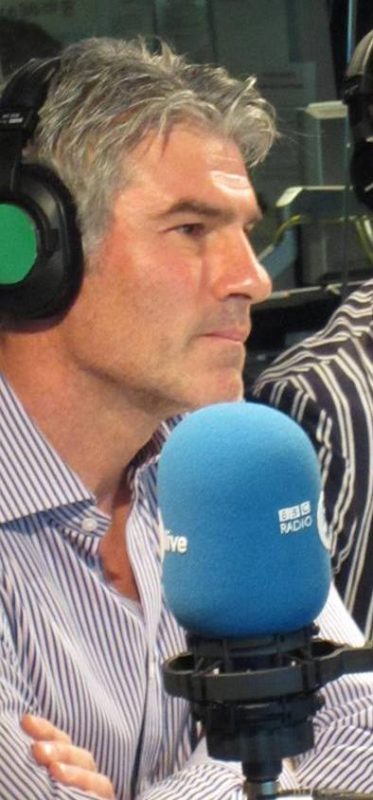
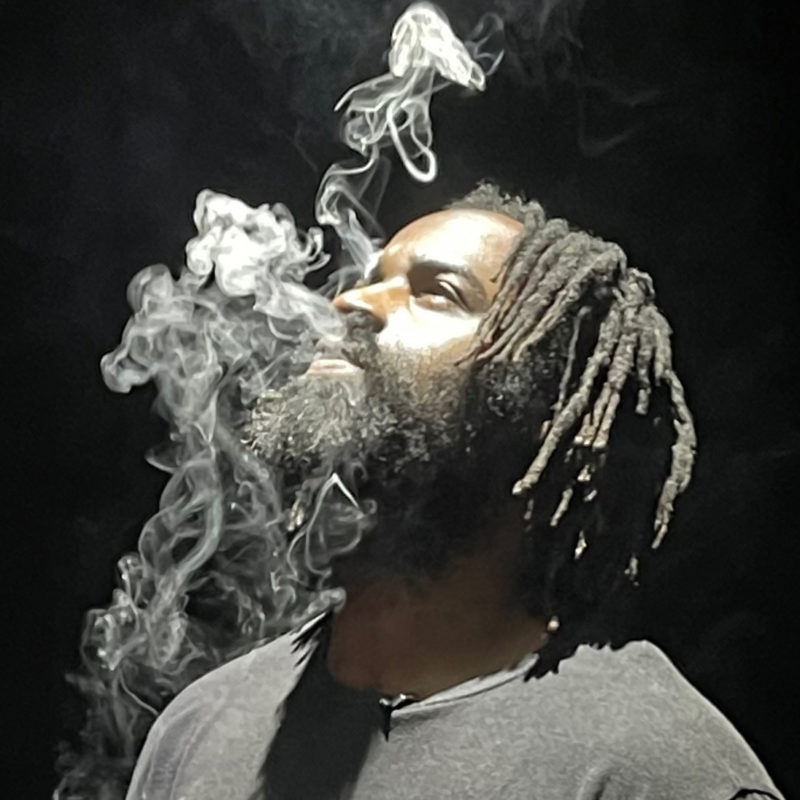
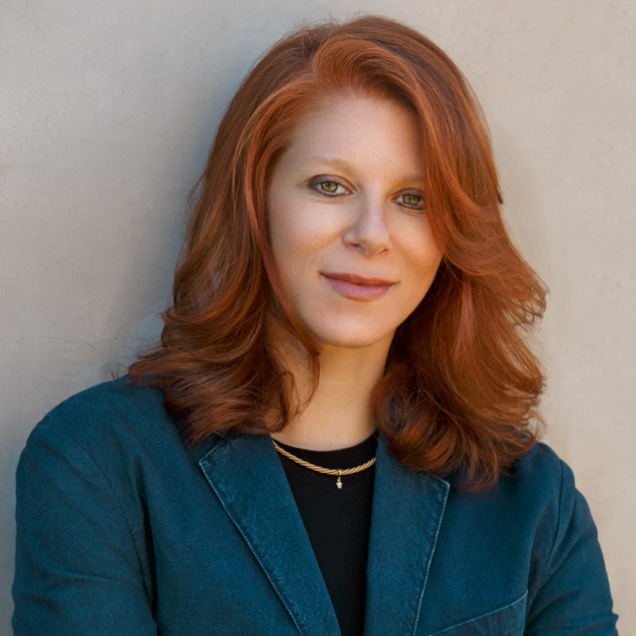
How are attitudes toward cannabis changing? On this episode, Neil deGrasse Tyson and co-hosts Chuck Nice and Gary O’Reilly discuss the future of marijuana and its effects on mental health with former football player turned cannabis professional, Ricky Williams, and Harvard Medical School and director of the MIND Program, Dr. Staci Gruber.
We explore the failed drug tests that lead to Ricky’s early departure from the NFL after winning the Heisman Trophy. Was Ricky actually ahead of his time? We learn about shifting attitudes toward marijuana and the athlete push for cannabis. We also discuss Sha’Carri Richardson and Brittney Griner, the need for more progress, and how weed’s dark history of racism needs to be examined. What is the current stance on players failing tests?
How does it help with pain management? Mental health? Learn where Ricky has taken his career, his companies Highsman and Real Wellness, and where he finds purpose. Is getting high always a negative thing? Why do so many look to the cosmos while engaging with marijuana? Discover Maxwell’s demon, blippies, and blerds.
To end, we get into the science from Staci. Is it true that cannabis makes you less motivated? Or is that just a stereotype? What’s it like in countries where weed is legal? We explore amotivational syndrome, terpenes, “couch lock,” and famous potheads. Was Carl Sagan a heavy pot user? Discover the endocannabinoid system in the body, neurotransmitters and receptors, and how cannabis hijacks them.
NOTE: StarTalk+ Patrons can watch or listen to this entire episode commercial-free.
About the prints that flank Neil in this video:
“Black Swan” & “White Swan” limited edition serigraph prints by Coast Salish artist Jane Kwatleematt Marston. For more information about this artist and her work, visit Inuit Gallery of Vancouver.
Transcript
DOWNLOAD SRTWelcome to StarTalk, your place in the universe where science and pop culture collide.
StarTalk begins right now.
This is StarTalk Sports Edition, this one titled, Taking a Hit.
More on that in a couple of minutes.
I’m Neil deGrasse Tyson, your personal astrophysicist.
Let me introduce my co-host, Chuck Nice.
Hey Neil, what’s happening?
All right.
Hanging in there, Chuck, my professional comedian co-host who loves sports, though never did it professionally.
Well, thanks for pointing that part out.
Okay, for the professional side of sports, we’ve got Gary O’Reilly, former soccer pro, current sports commentator, and we are lucky and privileged to have him for StarTalk Sports Edition.
Gary, how you feeling, man?
Oh, I’m good, my friend, and the privilege is mine.
Now, you’re always cooking up shows with clever titles and you’re digging people out of places that I didn’t even know they were hiding.
And so, what do you have in store for us today?
All right, we are going to meet someone who is not just a cannabis user, but someone who…
We’re back on marijuana, you can’t let the subject go.
Apparently not.
But someone who has now gone into the CBD business and who happens to have been a world-class athlete with a unique and fascinating story which we are going to share with our audience today.
Then, we’re going to open it up to our regular expert in these matters, the pop doc herself, Dr.
Staci Gruber.
Love me some Staci Gruber.
We don’t have a get enough of her.
Offline, Chuck was saying we should start a whole cannabis spin-off.
StarTalk Weed Edition.
It’d be Weedly, wouldn’t it?
Okay, so the backstory to our guest today.
Drafted by Major League Baseball, but never swung about in anger.
He is, however, a Heisman Trophy winner.
Now, just remember Heisman Trophy, right?
Just for a minute, put that to the back of your mind.
And he’s a former NFL running back, one of the best there was in the business.
But he pretty much took up a permanent residence on the NFL’s Naughty Step for a while.
Erick Myron is someone you’ll know formally as Ricky Williams.
He’s a man who did things his own way.
As a player, he failed multiple drug tests, was fined considerable amounts of money, retired and then returned to the NFL where he proved once again just how talented he really was.
He is a qualified yoga instructor, a subject of an ESPN 30 for 30 documentary.
Currently, if I’m not mistaken, a student at Emperor College Santa Monica on a master’s program studying traditional oriental medicine and the force behind the Heisman brand, which supplies a range of CBD products.
Heisman.
Oh, I see what he did there.
Yep.
Spelt in two different ways.
We got it.
I followed you.
There you go, my friend.
Welcome, Erick Myron.
Welcome to StarTalk.
Thanks for having me.
It’s great to be here.
Yeah.
So let me ask, when you were an active player on cannabis, were you thinking of the breadth of its medical value to you at the time?
Or you just wanted to smoke some pot?
I think it’s…
How much thinking went in at the time?
I think it’s somewhere in the middle, because we always frame our experiences based on our understanding.
And I wasn’t privy to the fact that there were conversations going on and people were talking about the medicinal benefits.
My experience and why I kept coming back to it was because I was getting some benefit from it.
But the training was that there was no benefit.
So it took me…
I had to have the experience for myself and trust that.
So you mean the prevailing wisdom of the day was that there’s no benefit, yet you have direct conflicting evidence to that in your own use?
Exactly.
Yes.
That’s pretty cool, man.
You were ahead of your time.
You’re an athlete who was way ahead of your time.
I wouldn’t say I was ahead of my time.
It just was more that I valued feeling good more than I valued money.
That’s way ahead of your time, bro.
I’m not sure if you’ve seen the state of all professional sports nowadays, but yeah, that’s way ahead of your time.
As an athlete, yes.
Eric, let’s do the obvious thing here.
You were formerly known as Ricky Williams.
You are now Erick Myron.
And if I don’t ask this question right now, Check is going to bounce up and down like a four-year-old child for the rest of this podcast.
So what was your thinking in terms of changing direction there?
Well, the simple way to put it is when a woman gets married and takes on her husband’s name, it’s normal.
But the reality is that’s just a convention.
It’s a tradition.
And so I thought about the tradition and I said, I don’t get it.
For me, I never understood, why does everyone take the male’s name, especially the kid?
Because when the kid is born, we always know who the mother is, but we don’t always know who the father is.
So it just makes sense for the feminine line to extend.
And so I got married and I said, hey, that makes sense to me.
And so I said, how do I take your name?
And the added benefit was being a famous football player.
Most people know Ricky Williams is a football player, and it’s more of like people’s idea of what a football player is supposed to be.
And sometimes that felt kind of like cramped for me.
And so I realized the side effect of changing my name is there’s just more freedom, right?
That I get to step outside of the old identity.
So I feel like I outgrew Ricky Williams and, you know, got married, had a kid and said, hey, this makes sense.
So you get high and you’re woke.
That’s the whole point to me.
That’s the whole point.
I was going to say I was not expecting such a thought-provoking progressive story behind the name change.
And I’m thoroughly disappointed.
I thought you were running from the law or something, damn.
It turns out you’re just a super conscientious dude and a deep thinker.
It’s like, okay.
If he’s running from the law, he ain’t very good at it because he’s on our show right now.
He’s front lit, right?
You retired in 2004 from the Dolphins, right?
Yes.
And if I’m wrong, correct me, please.
You went off to California to study ancient holistic medicine.
Listen, what was this itch that you were looking to scratch at this point in your journey?
Because not many people walk away from the Dolphins and retire mid-career.
Honestly, I was looking for a job that felt good to me.
As I said earlier, really, I’ve realized, you know, it took me a while, especially as a football player, to value feeling good.
As a football player, I always was in pain.
Always was in physical pain, emotional pain, worried who was judging me.
It just wasn’t me.
And so when I walked away from football, I started traveling around the world, and it was interesting.
I started meeting people who didn’t even know what American football was, and so I started to get a different reflection of who I was.
And I liked what I saw.
And I realized that I was a sensitive person who really enjoyed making other people feel better.
So, you know, another part of it was, as I came back down to reality, I realized I’ve been a football player my whole life.
I don’t really know how to do anything else.
And so the itch was I need to develop some kind of skill so I can be of use.
And then I put them together.
I like making other people feel better.
I need to develop a skill, and so I looked for some training in how to make people feel better.
It’s called stand-up comedy.
Yeah, I was going to say, you know, not for me, but for other comedians.
Otherwise, it’s stand-up disaster, right?
Were there other botanicals, Erick, that you gravitated towards other than cannabis, or was it just the cannabis that you were using to manage, balance yourself at that time?
No, it was…
What I stepped into was really an understanding of a medical system that uses herbs.
So, growing up in America, I thought medicine is you just take pills.
And the idea is something that hurts, it doesn’t work, and then you do something about it.
And this different model was really about understanding who the person is and providing qualities.
This is what I learned in Ayurveda, providing qualities that keep that person in balance.
Meaning if someone is really slow metabolism, there’s certain foods that they’re going to be able to digest and there’s certain foods that are going to give them difficulty.
And so you use herbs that are lighter.
Or if someone sweats a lot or they retain a lot of water, you use herbs that create balance.
And so as I started to learn about that at the same time, I was also learning about myself.
And so my understanding of botanicals is that certain botanicals, people or objects, foods, things, are more attractive to me at certain times.
And a big part of Ayurveda which really intrigued me was when I was traveling around the world after I retired, someone gave me a book on Ayurveda.
And I opened the book and the first chapter was about living in accordance with the seasons.
And I remember back when I was in preschool, I remember I was three years old sitting in preschool and we were learning about the seasons.
This is rudimentary information.
But becoming an adult, I forgot all about the seasons.
For me it was just football season and off season.
That’s the seasons.
But as I was, before I retired, I was really wrestling internally with how can I invest so much of everything I am into this one thing and then all of a sudden I’m starting to have other interests.
It doesn’t make sense to me.
As I was wrestling with this, someone mentioned the idea of seasons to me.
And that was the only thing that helped it make sense.
Is that one season naturally flows into the next.
And I was realizing that I was moving out of a season of being a football player into being something else.
And so when I read this book about living in accordance with the seasons, it just spoke to me.
It really spoke to me.
And just this world view of things are constantly changing and if we want to stay healthy or stay in some kind of balance, we have to be able to adapt and move with those changes.
Okay, you’re describing how sensitive you are, how much you care about others.
All of this does not fit anybody’s stereotype of a football player.
And like we said in your intro, you kind of did it your way, but that was at a cost to you.
Did you figure what kind of sort of financial cost it was for you to be yourself and thereby get suspended, get fined, whatever?
Was there a calculation you did and you’d say to yourself, I value being me more than I value getting paid to do what everybody else wants me to do?
Yeah, because when I was getting paid a whole lot, it didn’t make me happy.
If it did, trust me, I would have still been doing it.
And it was more that the thing I was doing to get the money was so against who I actually was that that was that price.
And I don’t think there’s any amount of money, where I would do something that I know is not me.
So I stopped being an assassin.
Yeah, man, I got to tell you, man, I grew a conscience and I just couldn’t do it anymore.
It was tough.
So you get it.
I love that Eric is the only guy that liked that joke.
He was like, Neil and Gary are like, who the hell?
What happened to the joke?
Eric was like, dude, that was a funny joke.
Oh, well.
All right, anyway.
Okay, Eric, what’s your feeling on the current, and we’re in 2022 right now, the current NFL stance on players failing tests?
Because they don’t get suspended anymore.
They just get a dent in the wallet.
So how do you feel from your situation here, looking back at that?
No, I feel satisfaction, you know, that there’s not going to be anyone that has to go through the experience that I went through anymore.
And I like to think that, you know, not only me taking a stand, but the way I’ve lived my life as a cannabis user.
You know, I think that’s what I find has made the biggest difference in people.
When they meet me and they have a conversation with me and any kind of ideas they have about what cannabis does to people, it starts to melt away.
So I like to think that something about my story helped move the conversation so that these changes are starting to occur.
Excellent.
Yeah, absolutely.
Okay, let’s move it to last summer and the build up to the Olympics in Tokyo.
Shikari Richardson goes through a traumatic experience, smokes a joint, gets banged.
And now bring it forward to today, we have Brittany Greiner locked up in a Russian jail for allegedly possessing marijuana vape cartridges.
How do you feel about those two incidents right now?
So I’m not trying to say that they are connected in what I’m about to say, but I am trying to say that they are connected.
So one of the things about the history of cannabis, at least in this country, is it’s been a tool used against people of color.
Absolutely.
And so because of that, there’s a stigma around it.
It’s like if you think of an African American using cannabis, you get an image.
If you think of a Caucasian using cannabis, you get another image, and they’re different.
And part of the history is part of the cracking down against cannabis was one way to oppress minority cultures.
But when the soldiers came back from Vietnam and they brought, you know, love for cannabis back with them, it kind of spread into the colleges and universities.
And you started having college kids starting to consume cannabis, and then the laws became kind of weird, right?
Because we can’t persecute the white college kids.
They’re just experimenting, right?
So it was complex.
And I think to a certain extent, we’ve outgrown a lot of that, but some of it is still hanging around, you know?
And so, again, I’m not saying it’s directly connected, but I think it’s interesting that the two people you brought up, okay, are African Americans.
So, but I think one of the things, though, that these situations has brought to the surface is people are having conversations about it.
And I’ve seen, at least with cannabis, when people that we don’t expect take a public stance about cannabis, things start moving much faster because the stigma starts to fall.
And I remember back in 2004 when I was going through everything with the NFL, no one said anything positively.
No one put their neck on the line or shared how they actually felt about cannabis because it was still too early.
But with Shakari, you saw a lot of people step forward and make a stance.
And because of that, we’re starting to see a lot of the rules change.
I don’t know anyone who runs faster after smoking a joint or can do anything with enhanced…
It’s an interesting…
And another thing that’s interesting is…
And this is just in general about especially athletes using cannabis.
It’s more about punishing them and it’s less about asking them, what are you using it for?
How is it effective?
Because the thing about Shakari is she came out and said she lost her mother.
And cannabis was helping her deal with what was going on.
That’s a mental health issue.
And one of the big…
And I’m proud of the NFL for this.
The NFL players union, they state in the negotiations in the past, using the drug testing has kind of been a carrot in the negotiation process.
And the players wanted the money more.
But the players have now said, this is non-negotiable.
For us, cannabis is a wellness issue.
It’s not a substance abuse issue.
I think we’re seeing that in the greater society as a whole, partly because of the usage of CBD oil and CBD products.
Because people are seeing a health benefit that they’re deriving from that usage.
But they’re also making the association that, oh, wait a minute, this is a derivative.
This is from, you know, it’s the same thing, but it doesn’t have a THC.
Right, right.
Well, we’re going to get closer into that subject in the next segment.
And don’t forget, in our third segment, we’re going back to the pot doc to tie a bow on all this and get a sense of what the medical research on the frontier shows us.
So we will be right back with Erick Myra on StarTalk Sports Edition.
We’re back, StarTalk Sports Edition with our special guest, Erick Myron, who is a former NFL pro, Heisman Trophy winner, turned sort of new age student.
Blippi, I’m going to call you a fellow Blippi.
Yep.
That’s a black hippie.
Yeah, that’s real.
That’s a black hippie.
He’s a fellow Blippi.
I tell people all the time that I’m a Blippi, I just don’t dress like one, and I don’t let my curls go long, but you know, I’m still a Blippi.
Because I know about Blurreds, black nerds.
I’m also a Blurred.
I’m a Blurred and a Blippi.
Guilty.
So, Erick, you went into business, and you’ve got the brand Heisman, H-I-G-H-S-M-A-N.
Heisman, really brilliant name there.
We see what you did there.
And this is to market products of different derivatives from the marijuana plant.
And so what led you to go into business doing this?
I guess to a certain extent, it is marketing the derivatives, the secondary metabolites of the cannabis sativa plant.
But really, I created this more to accentuate my platform.
So just to clarify one thing, in 2018, I launched a CBD company called Real Wellness.
And I was combining cannabinoids with traditional herbal formulas, creating medicine.
That company is still going.
Last year, last September, I launched Heisman, which is in the THC space.
And it’s specifically to talk about the…
By the way, Heisman is a way better name than Real Wellness.
I just thought I’d put it out there.
Yeah, thank you.
I’m just saying.
We’re evolving, right?
Real Wellness is like, really?
Really?
The idea behind Real Wellness, and it’s somewhat related to Heisman, is that for me, a large part of my wellness includes cannabis.
But the typical thinking, at least at the point, was that cannabis was not about wellness.
So this theme is going to keep going.
And so with Heisman, yeah, I did win the Heisman, but also getting high has become a negative thing.
I read some books written in the 60s and the 70s, and they talked about being stoned and being high as a positive thing.
Yeah.
You know?
And that resonated much more with me.
But really the conversation is when cannabis became useful to me is when I was dealing with mental health issues.
And so my definition of mental health, at least the basis of it, is when we say mental, we’re talking about what’s going on inside.
Inside.
And the health, right, it feels good, right?
We feel good.
And I wasn’t feeling good.
And a big part is because I wasn’t paying attention to what was going on on the inside.
You split your product into three groups of pre-game, half-time, post-game.
What’s going on there?
So, it’s a naming convention to help people understand the effects of cannabis.
You know, because you talked about taking a hit.
And a big part of what I want to talk about is what people do after they take the hit.
And so, pre-game is the idea of it’s what in the common nomenclature people call sativa.
It’s more mental, more stimulating, more active, okay?
And then post-game is what people tend to call it.
How about half-time?
Half-time.
Half-time is a hybrid, and really most of what we are consuming in the states is technically a hybrid.
Hybrid?
Yeah, is a hybrid, and it’s kind of a mixed effect, is a way to simplify it.
And so, the idea is giving people a way to think about the effects of cannabis.
Again, what do they do after they take a hit?
Totally a personal question, man.
How do I get into this?
How can I get into the weed biz, man?
I’m telling you right now, man.
This is going to be huge.
It’s already huge, but people have no idea.
You think the alcohol industry is big?
I mean, alcohol is deleterious all the way down the line.
It is straight, all the way down the line.
It is a degradation, okay, on your body, on your psyche, everything.
This actually has benefits.
This is the future of people being recreationally relaxed.
How do I get in, Ricky?
How do I get in?
Well, how would you like to get in?
I don’t know, man!
I’m serious when I say I don’t know, but I would like to get in.
What would you like to do in this space?
Chuck, I thought your comedy career was going great.
Man, it ain’t going…
My career ain’t going as well as Weed’s.
Weed comedy?
That’s the beautiful thing about the space.
It’s a large industry, so whatever your skill set is, there’s a place for you.
A slot.
A slot.
You got to figure out what that slot is.
I’m going to work on that.
I’m going to work on that and I’m going to reach out to you, man.
So, but you have thoughts and intellectual ambitions or dream states that include space.
And you’re getting high.
Is that correct?
Did I understand that correctly?
Yeah.
When I, when I smoke, I’m thinking about planets and stars, constellations, the cosmos, et cetera.
Yeah.
You know, to me, I feel like, I feel like this is an intuition that that life seems chaotic.
But when we look up, there’s some kind of order that could help us make sense of the chaos.
Hmm.
Ah, Neil.
Neil?
What’s, what’s, what’s, what’s?
I don’t think, though all I can say is, I look up and think about the universe without weed.
Oh my god, so now you know what we gotta do now.
Now you know what we gotta do now.
We gotta get Neil high.
Erick, we gotta smoke some weed with Neil.
Oh, I love that.
I think there’s gonna be.
I’m going to be a big audience for that, by the way.
So let me just say, so, so, Eric, there’s, I mean, we have software now.
I mean, the old days, we’d have to find an ephemeris and look up tables and times and dates and longitude and latitude on Earth in order to know where things are and where they were going, where they were going to be when you were going to be at the telescope.
And now it’s just all in apps, basically.
And so the art of finding things in the night sky is gone.
But now you can find many more things because you’re not wasting your time digging up tables and trying to calculate things.
Yeah.
But you know, it’s like using an abacus, Neil.
It’s like, you know, it’s yeah, you have a calculator and you don’t need it and you have software.
But you know, there’s something about moving those little beads across that bar that does something to you mentally that an app never could.
Yeah.
You will never invent an airplane on an abacus.
There’s some stuff that is forever out of your reach.
So Erick, tell me, because I’m an academic and I value people’s ambitions, their curiosity as it takes them into whole realms of thought and understanding.
Is the universe just one of many branches of thought that stimulate you?
I would say it’s in a sense, it’s what I use to help understand everything else.
Oh, so it’s like a primary driver in your life.
Yes.
And so my experience actually is I’m building an app.
And so the reason I was doing the calculations is because I was, and I’m just for my own personal use.
I was building an app for my own personal use.
And so that’s why I was going through the calculations of learning how to use a computer in my phone to tell me where the planets are on specific, or where they were on specific dates.
And the one thing that I took away from it that blew my mind was it was the first time I had to really think about time, you know, as a construct, because as you’re trying to find, you know, where something was at a certain time, like, different people had different definitions of how they were counting time, and you have to get clear on that first before you can answer the second question.
Yeah, by the way, in time and space are interlinked.
So something that people don’t consider, but maybe they should or could, is when you launch something from Earth to land on Mars, you are launching a moving rocket and a payload off of a moving platform, Earth, because it’s orbiting the sun, headed out into space to an empty point in space where Mars will be when you get there.
And so the orbital dynamics of this are deep.
I mean, it really is, as they say, rocket science, right?
And so, but it connects you to the universe like nothing else.
And I’ll take any excuse people give to look up and start thinking about the universe.
Man, we’re wasting this conversation.
I’ll be right back.
You know what?
Got the munchies.
So, Erick.
I just have one question here.
So if I’m getting this right, it took a tremendous amount of confidence for people to launch something to see if their hypotheses of where the planets are going to be were accurate.
Well, so confidence is not the right…
Yes, correct.
But that’s not the operative thought.
The confidence was in the calculations, though.
Yeah, exactly.
So…
The confidence is in the calculations.
We have the laws of…
That’s why they’re called laws of physics.
They apply here, there, yesterday and tomorrow.
And so now we calculate with those laws of physics.
I get somebody to double check my calculations in case I forgot to carry the two.
You know, you want to do that.
You can triple check it on a computer or vice versa.
And once you’ve done that, it’s going to go where you send it.
Unless some third other phenomenon happens, you know, and Gremlin comes in and grabs it, minus the possibility that there’s something about the universe you have yet to discover, it’s going to go exactly where you expect it to go.
That’s how and why science works.
That’s why there’s science at all.
But how do you account for that variable of something that science hasn’t found yet?
Yeah, it just messes up.
It messed up for less.
We had a Mars probe, a Mars orbital surveyor or something, and it went to Mars and just blew past Mars and didn’t go into orbit.
We said, what happened?
What happened?
And we found out that the engineers were using English units and the physicists were using metric units.
And when they calculated the thrust, they used two different units and it was too much thrust and we lost, you know, what was it?
I don’t remember what that probe cost.
Surely in the millions.
So that was embarrassing.
Why did the British get blamed?
Even if there are no gremlins is what I’m saying.
Why are the British getting blamed again?
Because you all…
So gremlins, is that like a term that you guys use?
Actually, there’s something called Maxwell’s Demons, which are these things that make things happen that we know they happen, but we don’t have an understanding of why they happen.
And so Maxwell, James Clark Maxwell in the late 19th century, they had this concept, Maxwell’s Demons, and the electron moves there because there’s a demon that makes it happen.
It doesn’t really think they’re demons, but we don’t otherwise have an explanation for it.
You need a variable, right?
You need a variable.
Exactly.
It’s just nature doing it.
So they’re called Maxwell’s Demons.
They’re funny.
You can look them up.
They’re kind of fun to think about.
I’m definitely looking at them.
That’s where I live.
Yeah, but don’t rely on them to get stuff done.
You got to, you know.
Well, you can’t rely on them, but you can use their assistance.
That would be interesting.
That would be interesting.
We see Erick walking down the street and a whole Pied Piper of Maxwell’s Demon’s following him.
Oh man, that’s not something I want to see.
So, Erick, let’s come back to Heisman.
You’ve got three products right now.
Are you looking at building this empire?
And if so, where would you see yourself taking it?
How are you calculating?
You’ve got to hire Chuck first, but yeah, go on.
After that.
Yeah, of course, that’s a given.
So, I mean, how are you calculating combinations?
Compound strengths, efficacy?
Because you know what?
All of us on this podcast are all slightly different.
Yeah.
So, education.
Education is the dose.
Yeah.
What’s the dose?
Education is huge.
And so, we’re starting with three SKUs, we’re starting with three products.
But really, the purpose of starting with these three products is to start the conversation.
And there hasn’t been enough open, honest conversations about cannabis, how people are using it and what they’re doing after they use it.
And so, part of this is creating a platform.
Because in the future, cannabis use to me is the future.
I think it’s going to replace a lot of pharmaceuticals and I think it’s going to, to a certain extent, replace alcohol.
But for me, part of using cannabis is you have to learn how to function when you’re having this more awareness of your subjective or internal state.
And especially for guys, we don’t have a lot of practice.
And so, for me, it’s really about building…
Accessing our internal emotions.
Yes.
It’s about building a community of woke potheads.
That’s really what Heisman is about.
That are doing something in the world.
You got to make that your tagline, man.
It’s like, Heisman, building a community of woke potheads.
I’m telling you, man, you can’t go wrong with that.
There’s the T-shirt, Chuck.
All right, we got to take a quick break.
Erick, delighted to have you.
Thanks for calling in on the show.
So when we come back, we’re going to bring on Dr.
Staci Gruber, the pop doc.
And this is not her first rodeo on StarTalk.
When StarTalk Sports Edition returns.
We’re back, StarTalk Sports Edition.
And taking a hit, we’ve called it, and we’ve just come off of two segments with Erick Myron, former football great, Heisman Trophy winner, and now someone who’s going into the business of selling and marketing marijuana and its derivatives to help people.
And we can’t have a show on that without going to our go-to person on this very subject, Dr.
Staci Gruber.
Oh my gosh, and let me, I have to read this because I’ll never get it straight.
Director of the Cognitive and Clinical Neuroimaging Core at McLean Hospital’s Brain Imaging Center.
Eh, eh, that’s, okay, that’s not enough apparently, Staci.
And Associate Professor of Psychiatry, Harvard Medical School.
And you direct MIND, Marijuana Investigations for Neuroscientific Discovery.
I love it.
And affectionately known as the PotDoc.
You listened in on those first two segments with Erick.
So what’s your reaction to him as a person, to him as a user, to his life’s arc?
You know, I think he’s had an extraordinary experience here.
And I think a lot of us forget what early days were like.
So many people these days talk about cannabis and cannabis-based exploration, as if it’s always been this simple.
So Gary, how old is he now?
He’ll be circa 45.
Circa 45.
So that’s old enough so that he can…
So you’re right, Staci, he’s from another era.
So I think, and yeah, people tend to forget, it was only in 1996 that we re-legalized cannabis for medical purposes in this country, in California.
And in 2004, it was a very different day from the day we are living now, right?
So it was a really, really different road.
And I think that he’s had some unbelievable experiences.
And I have no doubt that this has allowed him to sort of move along this trajectory where he’s taking his own experiences and his own desire and moving them forward as a healer.
You know, I’ve never, I can’t believe we’ve never asked this or maybe we have, and I just forgot.
But there has got to be a great deal of data from countries where cannabis is legal.
Like the Netherlands.
What are the stats on the usage, addiction, crime?
Is there anything that’s notable?
I think that in general, we don’t pay enough attention, to your point, to data that comes from other places and other spaces.
We tend to have a fairly egocentric view of these things here.
And the US history with regard to cannabis, as he touched upon, is that cannabis is a really storied past, and not for great reasons.
It’s one of the sort of darkest areas in history in terms of substance use, misuse, mislabeling perhaps, and now finally sort of a reconceptualization.
I’m not sure that we have a great sense of how those data inform us.
We’re very busy saying, but that’s their experience, not necessarily ours, although there’s lots of lessons that could be learned.
And I think in places where they have more liberal use, we certainly see different patterns.
We don’t see the same rates of certain types of crime.
We don’t see the same rates of things associated with substance misuse or the old term just be dependence, right?
It’s sort of like alcohol.
Think of countries where alcohol is introduced to individuals within the sort of family environment at young ages.
We don’t necessarily see the same rates of difficulty with alcohol when those folks get to quote legal age.
We just don’t.
So what about the stereotype that people smoke weed often are demotivated?
And he seems pretty motivated to get done what he wants.
But what of that stereotype?
What can you tell us about this?
I think questioned at this point.
A lot of things factor into these equations.
It’s not just the cannabis use.
It’s how much.
It’s how often.
It’s at what stage in your, quote, developmental process.
What else is happening?
And also, I love to remind people, what’s in your weed?
It’s not all created equal.
It’s not one thing.
And as he very appropriately alluded to, when he’s talking about his pregame, game and postgame regimens and these chemobars that he’s really referring to or strains, if you will, varieties of cannabis sativa L, the name of the plant, the reason he’s pointing these out is because different chemobars or cultivars have different constituents that give them different effects.
I think, I don’t remember if it was you, Chuck, probably, because Chuck is very astute in this particular area.
Not everybody is created equally either.
We all have different, you know, each of us on this podcast, or maybe it was Gary, we all process things differently.
Different metabolism, different genetic profile, different experience.
And that’s going to affect things too.
But, you know, it’s the constituents in cannabis.
It’s not just THC and CBD.
It’s those terpenoids.
The essential oils in cannabis that give it its characteristic scent and flavor profile are often related to things like couch lock.
Oh man, I can’t get up.
I have to sit here and just chill.
That’s, you know, very often related to some of the terpenes that are there.
So, but there are people who might react to it more along that path, like you’re saying, than along another.
Because there’s some highly productive people, among them Carl Sagan, who is sort of a famously, a famous pot user, often and a lot.
And no one ever accused him of not being productive.
That is, you know, it’s going to be my go-to example for you, given this particular realm here at StarTalk.
Carl Sagan, whose very close friend was Lester Grinspoon, who was one of the greatest cannabis researchers of all time from Harvard’s Close friends.
And Carl Sagan apparently used to say to Lester, you just don’t understand it.
And Lester made it his mission because of his friendship to understand it better.
It actually became a saving grace for his own son, who was battling cancer and who was having terrible difficulty eating after these treatments and changed his life, ultimately changed his full trajectory.
But that’s right, nobody would accuse Carl Sagan of not getting a lot of stuff.
Wow, I had no idea that Carl Sagan smoked weed.
This is the first I’m ever hearing of it.
But now it might explain maybe he wasn’t seeing billions of stars.
He was only seeing millions.
Did he exaggerate it enough?
Well, no.
Plus, I think at the time or recently his widow, Ann Drion served on the board of NORML, the National Organization for the Reform of Marijuana Laws.
Oh, wow.
So I think they, the two of them together as a creative pair, because they published several books together, co-wrote the first Cosmos together.
So I think whatever example one puts forth of either demotivation or what any other negative effects, they have to be counterbalanced with the examples that are the exact opposite.
And therefore you have to ask, where do you land on it?
I’m just repeating what you’re saying, Staci.
We have to ask, well, how does it affect you?
And maybe you need a different combination of those derivative chemicals or none at all or all of them, right?
Certainly no shortage of examples of people who get a whole lot of things done and who are wildly successful, who embrace the use of cannabis or cannabinoids.
No question.
So, Staci, with Erick’s range in Heisman, there’s the, like I say, pregame, alertness, motivation, halftime, anti-inflammatory and calming, postgame, pain relief, relaxation and sleep.
With your knowledge, research, etc.
where else is Erick likely to go in terms of developing products using the cannabinoid and the elements and compounds within?
I say let’s not go there on the air publicly.
Let’s save that information for a private conversation.
Or behind a paywall.
Yeah, and then we figure out how we get some funding to do it.
That’s right.
I think he was pretty clear, I think, on the educational aspects of this, right?
Like allowing the conversations to start and continue to figure out not only the best combinations of what I think he was alluding to, which are the individual constituents and compounds to address specific ailments or conditions that people have, but also to get people talking about it to help ultimately destigmatize.
You know, there are differences in people who are using for different reasons.
And the stigma that goes sort of across the board to everyone is rather inappropriate at this point.
When people acknowledge, I’m not looking to just, you know, get high, I’m looking to address these symptoms, which may or may not be his schtick either, that’s very different.
And so I appreciated that part.
But in terms of other areas, you know, I’m not sure what else he’s not covered.
I didn’t get an exhaustive list, but I think for sure something that’s important to him, given his own experiences, is mental health.
And we’re certainly seeing an explosion of work in this area.
Our hours and so many others, which is a long time coming.
And just to remind people, you are associate professor of psychiatry at Harvard Medical School.
So when you speak of mental health, you speak of that as a professional in the field.
And first and foremost, we are psychiatry 100% of the time.
We do lots of other things.
But one of the things that we’re very invested in is understanding the ways in which the real world experience of individuals, whether they’re patients or have some concern, where there’s concern, where there’s less concern, and how we might be able to allow people to use what we know to inform their best practices.
Just saying no doesn’t usually work.
So now we want to say something a little bit more educated that guides people.
There’s a lot to learn in this particular space.
See, Neil, in 2022, we’ve got the NFL spending a million dollars, right, as a grant for studies into the efficacy of marijuana and its component parts for pain management and concussion treatments, which goes back to our good friend Leonard Marshall.
Also, you’ve got WADA, the World Anti-Doping Agency, conducting again scientific review this year in 2022 to see if it still makes sense to continue its international ban on marijuana.
So I’ll ask Dr.
Gruber, what do you think they’re going to find and how do you think they’re going to bring those results in sinking forward?
In terms of what WADA will do?
And or with the NFL.
So I think the NFL Initiative is an incredibly important one.
And there’s been lots of interest in this particular space.
And the folks who are doing the work at UCSD are fantastic.
There’s a lot to sort of…
University of California, San Diego.
And is a million dollars a lot of money in this space?
Yeah, I was going to say, that’s kind of cheap for the NFL.
Yeah, given that some players make a million dollars before halftime.
I think there’s…
Let me put it this way.
I think there’s so much work to be done.
There would never be something that would be too much.
Let me put it that way.
There’s a lot to do.
And I think it’s a very important area to begin in, given what we know about individuals who sustain head trauma or traumatic brain injury and how that looks over time.
And what we might be able to do either with regard to prevention or treatment.
I think it’s incredibly important.
I think WADA is likely to take, I would hope, a very holistic view at this point.
There’s been an awful lot that’s happened.
And WADA has changed, as you pointed out I think previously, they’ve changed their sort of approach a couple of times.
So, let’s see what happens.
But I’m hoping that they’ll use a fair amount of data.
Remember, there are substances with similar therapeutic effects to cannabis and cannabinoids, sedatives, anxiolytics, that are not banned by WADA.
Aspirin is not banned, ibuprofen is not banned.
And so, when we think about that, that’s important to keep in mind.
For people who are using specifically for those reasons, especially as Chuck alluded to earlier, stuff that’s not necessarily comprised of a lot of THC, where you’re really looking at the non-intoxicating cannabinoids to get at some of the inflammation-related issues or pain or sleep, whatever, you have to consider this slightly differently, I think.
And I just checked Tom Brady’s salary.
He makes a million dollars by half-time.
Yeah.
So, Neil, all you’ve done is aggravate Chuck even more.
Truth.
And nothing could be truer.
Chuck the Eagles fan.
What a waste of a million dollars.
So, Dr.
Gruber, you introduced…
I’m going to try and steer this back onto the road.
You introduced us to the endocannabinoid system in the body.
That’s too many syllables for me.
And as Chuck so distinctly captioned it as, we’re designed to get high last time that we had you as a guest.
Where are we now?
Because this doesn’t sound like ancient research into this system.
This sounds like something that’s been happening recently.
So, where are we and how far along?
In terms of what we know about the endocannabinoid system.
So, I think we’ve begun to make a lot of progress.
There’s a lot of work in this area.
And while we may be wired for weed, that’s not likely the reason we have cannabinoid receptors.
We make our own, hence the term endocannabinoid.
We make our own chemicals that bind to our own…
Endo as an endocrine system.
As endo, right.
It’s endogenous.
So, we have an endogenous system of chemicals and receptors throughout the brain and body.
The endocannabinoid system, every mammal has it.
Endocrine comes from endogenous as well, I guess.
I think there’s an awful lot that we’ve learned.
There’s more still to go.
But in terms of how individual cannabinoids interact with the endocannabinoid system, that’s the interesting thing.
When we think of the plant, there are over 120 phyto-cannabinoids, things from the plant that directly interact with our own endocannabinoid system.
The ways in which those things happen is still being determined.
We’ve just really made a lot of progress in a couple of more of the major constituents.
And there’s a lot of room to grow here.
And I look forward to it.
Yes, but did you answer this or was it sort of mixed in there?
Why do we have such receptors?
We have receptors because we have these chemicals.
We have our own, these endocannabinoids.
Oh, sorry, so we have the receptors not for smoking weed, although it serves that purpose.
We feed those our own receptors.
Right, so think of it as in terms of opioid receptors.
Do we have opioid receptors because we’re supposed to be using heroin?
No, we have opioid receptors because of the ways in which our neurotransmitters, our brains and bodies function.
So in the case of cannabis or cannabinoids, really quickly, we have anandamide and 2-AG, these two chemicals, and we have these receptors to which these things bind, and we have things that break them down, break down these chemicals.
So that’s our own system.
So heroin hijacks our own system.
Heroin in terms of opioid receptors, mu and kappa opioid receptors, different systems, but yeah, again, it sort of exploits the fact we have these receptors.
It’s just not necessarily designed for that.
They just happen to be effective.
It’s making use of the receptors, but it’s not necessarily what they were designed for specifically.
Right, because I think there are people who want to believe they were designed for that, and so therefore everyone should like smoke weed when they’re born.
At the design table, I wasn’t there.
Had you been, you would have been given advice on a much better design system.
I said Alphonse X, by the way, that was a famous quote.
Had I been present at the time of creation, I would have given the good Lord advice on how to do it better.
That was it.
That’s a famous quote.
So, I attributed a quote to Erick that he said wasn’t him, but it was something that indigenous tribespeople, thousands of years ago, believed that you needed an altered state to heal.
How would you react to that, doctor, as terms of what their thinking was, and are they somewhere they shouldn’t be, or are they on the right line?
Or, and I can invert that, and we got to kind of end on this question, but I can invert that and say, what happens if you heal in a non-altered state?
What is the benefit if there is one at all?
Or is it just, you just want to have it like giving birth, you’re in a whole other mental state, and you forget that you were ever in the pain you were, as I’m told, and so there’s some physiology that promotes that fact.
You know, I think it’s a really interesting question, and it’s one that I think probably depends on what we’re talking about when we’re talking about healing from what?
Mental versus physical.
I mean, you’re all connected, right?
And so it goes without saying that perhaps in some of these times, it is very possible that in order to, quote, heal, you have to allow yourself the space, if you will, so that may be altered from your everyday, you’ve got to give yourself time and space.
Like the show, Time and Space.
You know, can you heal without being altered?
Sure.
I think the, you know, sort of the rigid answer is yes, of course.
What do they mean by that?
I like to think that maybe they mean sometimes you have to have a little bit of a shift in set to allow yourself to heal most thoroughly and comprehensively.
Does that mean stoned?
Not necessarily.
But it could also mean that once you come out of that mental state, you don’t have easy memory back into it, so that your life is not burdened by the memories of pain, because they happened in a different mental state.
You were in a different room at the time.
Or it could be that they were just getting high and then they found some benefits after they came down.
It’s like, yeah, man, I can’t believe it.
Every time I get high, my knees used to hurt, now they don’t.
People will say this a lot.
They’ll say, I had to be altered to experience XYZ 123, and now I have a complete shift in my consciousness and my everyday life.
That wouldn’t have happened without them.
That is very common when we think about things like hallucinogens, ayahuasca.
And these people, please, again, judgment-free zone.
It’s all good.
I don’t know.
That’s very possible.
Yeah, when you talk about ayahuasca, the research is going into it now, one of which is they’re finding that it’s effective at helping cure addiction.
There are people who use it, and they come off of heroin, and they don’t ever go back.
Maybe that’s the altered state that you have to be in to promote human.
Yeah, there it goes.
Well, guys, we’ve got to land the plane right there on that runway.
Staci, it has been a delight to have you.
You bring focus and perspective, and most importantly, academic expertise, expertise to what we do, and that is centered to the DNA of StarTalk, and of course, StarTalk Sports Edition.
Gary, always good to have you, man.
Pleasure, my friend.
Thank you.
Both you guys.
And this has been StarTalk Sports Edition.
And the right hit, what do we call this, Gary?
Taking a hit.
Taking a hit.
Just seem to be the only thing you could possibly call it.
That has football players and smoking marijuana in the same show.
Alright, we’ve got it.
Neil deGrasse Tyson here, your personal astrophysicist.
Keep looking up.
 Become a Patron