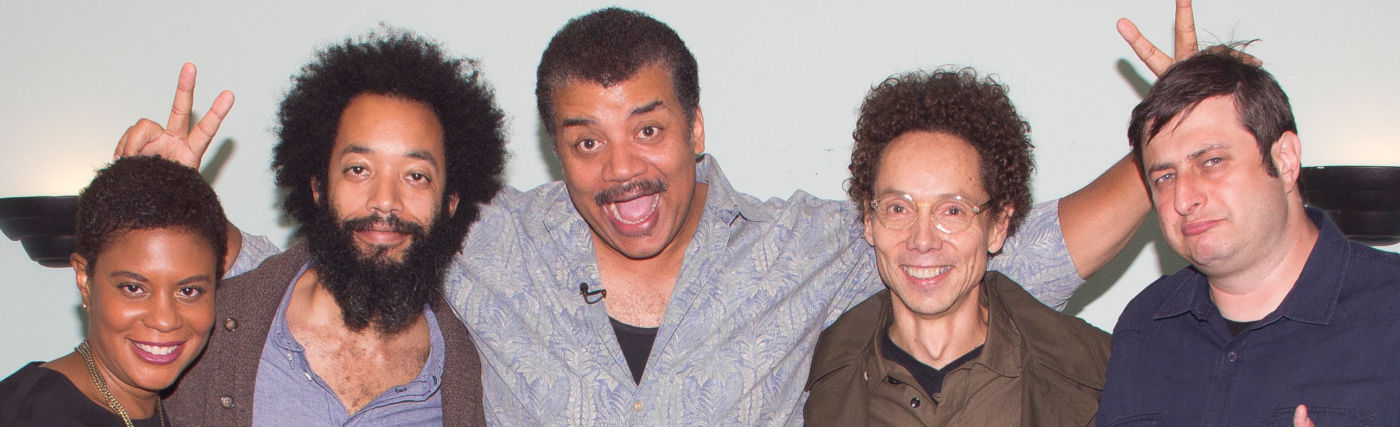
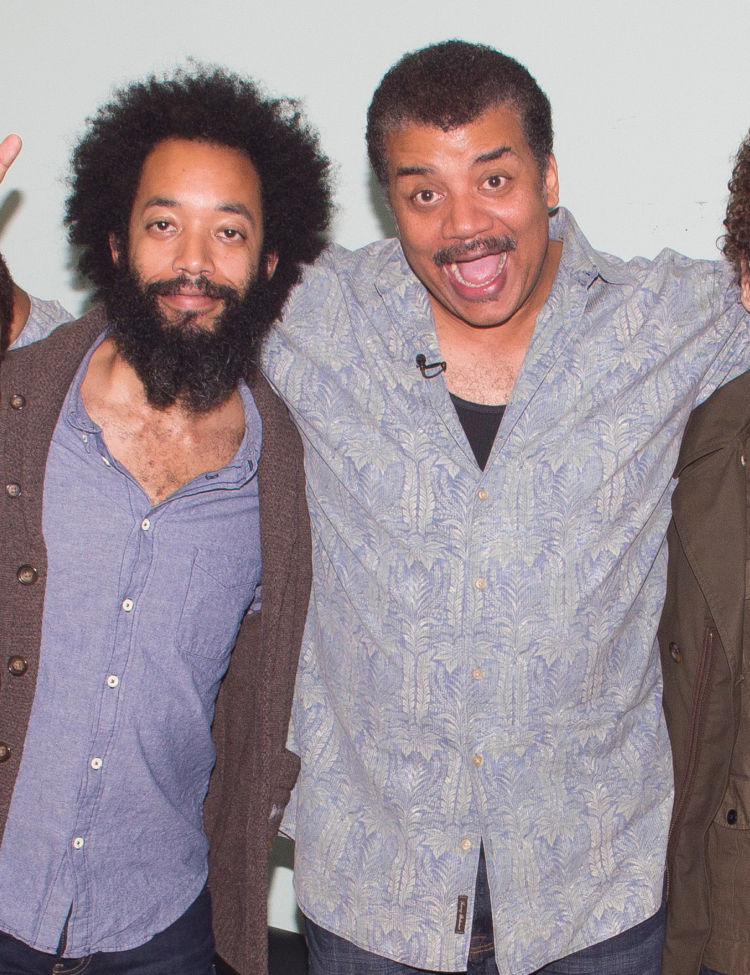
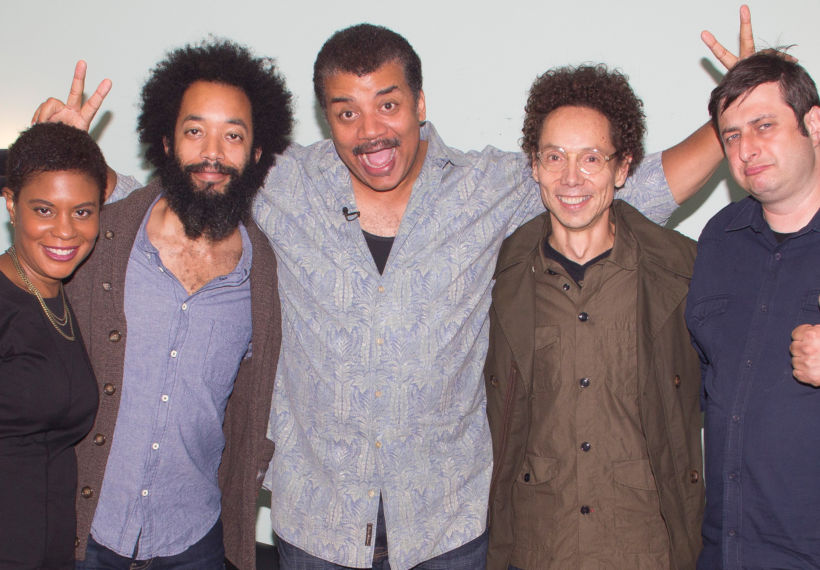
Join us at The Hammerstein Ballroom in NYC as Neil deGrasse Tyson and Eugene Mirman investigate society and the human condition with the help of bestselling author Malcolm Gladwell, sociologist Dr. Alondra Nelson and comedian Wyatt Cenac. Using Gladwell’s books Blink, Outliers, David and Goliath and The Tipping Point as background, Neil and our guests explore issues like sexism, class privilege and whether racism is an innate reflex or the result of socialization through religion, family and the media. You’ll hear how moving to blind auditions changed the gender mix in major orchestras overnight, and how your facial expressions indicate whether you’ll get divorced. Find out how the culture of NASA led to the Challenger disaster and whether institutional change is even possible. Learn why it takes 10,000 hours of work to turn talent into genius – with comparisons to Mozart and Beyoncé. Plus, Gladwell explains why the legend of David and Goliath, which plays into society’s love of underdogs, is really the story of an experienced warrior using superior firepower and technology to beat a blind man in a knife fight.
Transcript
DOWNLOAD SRT
Welcome to StarTalk, your place in the universe where science and pop culture collide. StarTalk begins right now. I'm your host, Neil deGrasse Tyson, your personal astrophysicist, and this is StarTalk. The topic is sociology. So, to anchor some of...
Welcome to StarTalk, your place in the universe where science and pop culture collide.
StarTalk begins right now.
I'm your host, Neil deGrasse Tyson, your personal astrophysicist, and this is StarTalk.
The topic is sociology.
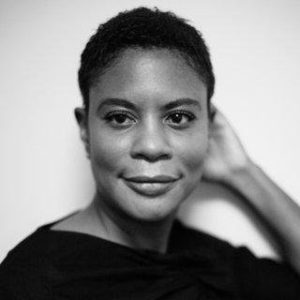
So, to anchor some of the academic foundation of this, I want to bring out the woman who is the first appointed dean of the Division of Social Sciences at Columbia University, Professor Alondra Nelson.
Come on out.
It is now my great pleasure to bring on a very funny man.
He was a correspondent on The Daily Show.
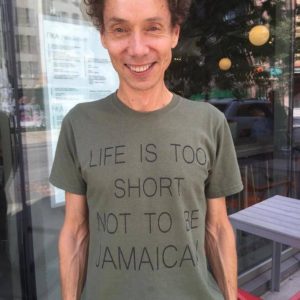
And who else but the five-time New York Times best-selling author of all manner of sociological phenomena, Malcolm Gladwell.
Malcolm, come on out.
So, Malcolm, I love your storytelling.
You highlight things that go on in our culture, in our society, you make us think, and this is always good.
So, I don't think at any point you say, that you comment on sociology.
So, since we have someone who does that academically, Alondra, could you just tell us, what is sociology?
So, sociology is the study of social life, how a culture develops, how social communities evolve.
So, not the individual.
Not the individual in sociology, although in the social sciences, there are people like social psychologists and psychologists who are very much interested in the individual.
But sociologists, the scale of life we write about is the group, the family, institutions, organizations.
So, Malcolm, one of your most talked about books was titled Blink.
It's an exploration of the effectiveness of decisions that people make on the spot, depending on what their life experience is behind it.
And there's a story in there where you talk about your hair.
Yeah.
Could you?
Because I think all we need to hear is quest love and we'll have the three biggest afros in the entire United States.
Yeah, and then together we form Cornel West.
Most people don't know that Cornel West is a Voltron made of me, Malcolm Gladwell and quest love.
So what happened with your hair?
Well, through my mid-30s, I had my hair very short and then I grew it out until it was quite florid and I discovered what, of course, many, many others have discovered all along.
When you start to appear blacker, the world changes, right?
The way the world treats you changes quite dramatically.
Are you asking me that or telling me from your own experience?
Well, I'm sure you know this already, but I've been passing very successfully for quite a long time and then all of a sudden there was some hint of doubt.
As your afro got bigger and bigger.
As it got bigger and bigger.
And then it culminated, I started getting speeding tickets and I got pulled over on 14th Street, the cop car drove up on the sidewalk, they jumped out, they surrounded me.
And there was one black female cop and two white male cops.
And they were convinced that I was this rapist that they were looking for.
I said, well, let's see the sketch.
Because I had the sketch.
I was like, I don't look like that at all.
The only thing we have in common is we have the same hair.
And the black female cop is like laughing and she's finding this quite hilarious.
The two white guys were like, no, no, no, we think it's you.
It was like this long thing and I thought that was A, weird.
But B, that it was something that got me thinking about that phenomenon, that people, we jumped to conclusions about each other all the time without realizing that we're doing it.
And that's where the book came from.
So Alondra, what do sociologists say about this?
Obviously police interaction with citizens has been much in the news lately.
But other than just getting it from the news, is there some like experiments done or research where you can help out this situation so it doesn't happen again?
So we have the implicit bias test.
That's psychologists do, right?
That's a fun test.
I've taken it.
It's online.
You've taken the test.
How racist are you?
Well, I took it eight years ago and I did it for the sexist, not the racist.
Oh, okay.
How biased are you?
How, yes, prejudiced are you?
I was like mildly, it tests your reaction time to certain stimulus.
And if you take a little longer, you're overcoming some mental block against the expectation.
So it's easy to think these are kind of innate, almost like reflexes, you know, almost like someone hitting your knee in that right spot and your leg popping up.
But these are learned behaviors.
So even that quick reflex is learned over time through processes of socialization.
So we can recognize as human beings that we look differently, but it takes process of socialization through religion, through family, through the media, to learn what we're supposed to think about that.
So we could have imagined a scenario in which someone said to Malcolm, you look familiar without having a sort of set of associations that quickly link together about what that's supposed to mean, right?
And those kinds of quick associations are what we sociologists are interested in.
So if we had policemen that were babies, they wouldn't have enough time to even develop any biases.
If they were police from very young.
No, if our police people were babies.
Okay.
They would just greet every situation as new.
That is the, I think it's-
On that, along those same lines, I have often been talking for that.
Juries should never see the person that they are judging.
You want to give people less information.
Yeah, once you learn all this stuff about implicit bias and how strongly our decisions are conditioned by just the way the person looks, it strikes me that would all be better off if the person who's on trial would be in another room, they would answer questions on email, you would have-
Text, texting.
Texting, whatever you want to do.
Snapchat, so it would just be gone the minute they-
And then anything that identified their age, gender, or race would just be expunged from the record.
Because we know, I mean, we look at the data and we see that a black defendant gets a very different treatment by the law than a white defendant accused of the exact same crime, right?
So let's take it based out of the equation.
I don't understand why there's such resistance to that notion.
So make it more like the voice.
I'm okay with that.
So the jury are in these big, over-plus chairs, and they rotate around when it's time.
And at least one of them is Blake Shelton.
So I remember, maybe 10 years ago, I saw this done with a Classical Music concert.
Is this still in place?
I read about this in Blink.
So Classical Music had a problem with, there were no women in major orchestras, and they would always say it's because they're not good at playing Classical Music.
Women are inferior musicians.
You're talking about the virtuoso lead musicians.
So this is the high-end orchestras.
And then for a completely random set of reasons, started to do blind auditions, like the voice.
You can't see the person auditioning.
They're just behind some kind of screen.
And overnight, they started hiring women.
And they realized that the reason they weren't hiring women was just because they had a set of associations about women and music that interfered with their ability to hear their music.
Why don't you say it's because men are idiots.
I mean, isn't that just the answer?
Well, people are more in the grip of their biases than they want to admit.
You know, which raises this additional question, which is why do we ever need to see the person who we are auditioning for any position or job?
You talk about in your book, in Blink, someone who claimed they could tell you within a few minutes, tell a married couple whether they would be divorced within 15 years.
Yeah.
And they can do that in like a couple of minutes.
Less than that.
Less than a couple of minutes.
Yeah.
But that's with an extraordinary amount of training.
There is a language to the muscles of the face.
Whenever we express an emotion, that emotion is represented in an incredibly subtle way.
Unless you're autistic.
Yeah, then it would be less.
Or a cat.
It's funny, because anytime in a Disney movie, when they need to represent the emotions in an animal that doesn't otherwise express emotions that we would read, they give them eyebrows and the eyebrows move up and down.
Yeah.
Yeah, and so that's intriguing.
The eyebrows apparently are a bit huge.
There's a family.
Big enough for us to hand it to animals that don't have eyebrows.
So the muscular positions your face takes are called action units.
And action unit one, which is a unconscious signal of distress, is when the inner part of our eyebrows go up.
Almost none of us can do this voluntarily.
But if you watch a baby cry, the instant before they actually vocalize their cry, their eyebrows will go, it's incredible.
And once you notice that, once you realize that, you can watch someone, and if you ever hear someone absorb bad news, you will 99 times out of 100 see their eyebrows just go, and they have no idea they're doing that.
But it makes you understand this is how-
It's a fun game, do it to people.
This is part of the arsenal that people use to tell when people are lying, right?
If you say some horrible thing and your eyebrows are sitting like this, then that's a clue that the emotion may not be felt as deeply as they're claiming.
All right, some people can read this with great precision.
So this is the work of a guy named Paul Ekman, yeah.
Okay, if that works, it seems to me we could exploit that in almost every aspect of life and of society, but there's some famous failed examples of snap judgments, aren't there?
Oh yeah, I mean, most of my book is about the failure of snap judgments.
I'm much more impressed by how they mislead us than how they help us.
All right, so in sociology, we can think of what goes on inside the person in reaction to an environment, and we can say that's not how you're supposed to behave, change, or we can say let's design the environment to be different and thereby fix it by changing the environment rather than by a re-education program.
There's an example from my community with the Challenger disaster.
As you may remember, what we learned was that there in the solid rocket boosters, each shuttle system has two of them, they're held together in three segments or four segments, and those segments connect with an O-ring.
And inside there, it's very cold.
The fuel is kept very cold before it ignites.
And so if you take something rubbery like an O-ring and you chill it down, its pliability and plasticity gets compromised.
And so it no longer would maintain a seal.
So when these rockets launched, a leak broke out from where the fuel was being ignited, and then that ignited the main engine and the whole thing exploded.
And so a tragic accident.
But then they got to the bottom of it and said, okay, forget the failure.
What was in the system that allowed the failure to come forward?
Yeah.
And what was the analysis of it?
Well, this is one of my favorite pieces of sociology.
There's a great sociologist called Charles Perra who wrote a book about what he called normal accident theory.
And the idea of normal accident theory is there are two kinds of disasters.
There's a disaster that happens because people screw up.
They make dumb or incompetent or corrupt decisions.
And there's disasters that happen even though everyone is doing their job as their job is designed to be done.
He calls those normal accidents.
And others argued, although he agreed with it, that the Challenger accident was an example of a normal accident.
In other words, there wasn't something deeply screwed up in NASA that made that happen.
That accident grew out of the culture of NASA, the way they thought about risk, the way different parts of the hundreds of different decisions that went into the Challenger rocket interacted in the moment.
So you're implicating a system in that case, not the individual.
When you think about the way we respond to a disaster, our first instinct is to blame somebody.
Blame somebody.
Point your finger.
And what Perot is saying is there's no one, there's no individual to blame.
Which is frustrating for everybody else.
Very frustrating.
Especially when you have caskets going by in a parade.
And now wait, when you say the blame goes to the system, does that mean like the system that would say, oh, okay, we should use rubber O-rings as opposed to some other type of material?
I think Yard would be at a more abstract level than that.
Which is that each component in something like a rocket booster has to meet a certain level of specifications and operates within certain risk parameters.
Use an acceptable level of risk in a certain number of redundant systems.
Just to point to that, in any system such as that, the risk is never zero.
So you have to up front say this is an acceptable level of risk and we're going to try to keep everything above that.
And if you go to zero, you have to launch them in a tank.
And you can't.
You would have to not go to space.
Yeah, you would not go into space.
You would have to trick them into thinking they're in space just as a goof.
Or invite space to come visit you.
Yeah, that's right.
Which comes with a bit of a risk.
So Alondra, what do sociologists say about bureaucracies and systems?
And the risk that some bureaucracies have to manage.
So there's the brilliant book that Malcolm and part of his reference is by Diane Vaughn, who's a sociologist at Columbia.
And part of what she's saying, to take it to one more level of abstraction, is that we create systems that are so complex that they become almost autonomous systems that we can't quite wrap our head fully around, right?
So the technological systems themselves come to have a kind of agency of their own.
They've achieved consciousness.
Not quite, but close, right?
And so looking at one aspect of it, you have to look at the bigger system or organism or institution to understand.
And that's why the blame doesn't lie with one person solely.
The culture of the people working there as well as the actual technological things happening.
Has any of that been happening?
So this goes back to your question about whether or not we can change people or we change the environment.
This is a pas de deux.
This is a dance, right?
And so you change...
It is, I was gonna say kind of a bit of a pas de deux.
So you change the environment and you create the different dynamic that we then again may not understand fully.
What sounds like what you're saying is that for those who didn't like the way Lost ended, it's an institutional problem.
You can't just blame the writer.
Wait, wait, but I pose the question to both of you here.
If there isn't an individual to point a finger at and it's institutional, isn't that way harder to rectify?
Because then there's no accountability and there's no accountability, then how does anything change?
If you've built systems that are so large, they transcend the comprehension of the people even working there.
Well, I'd say the opposite.
I would say that if you have a society which insists on pointing the finger at blame at individuals every time something goes wrong, you're gonna create behavior on the part of individuals that is risk averse, that is defensive.
It's far easier, I think, to say, look, we're not gonna shame you publicly or string you up.
We're gonna say, let's fix the problem on a broader level.
Let's make it easier for you to do your job because I think most people in the world wanna do their job well.
Alondra, have institutions been doing this?
Sure, I mean, institutions change.
I mean, there's some classic examples from the business literature about how in Japan, this would have been in the 80s, just in time production, right?
So you didn't have all of these cars and parts sitting in factories.
You were able to sort of do them as you needed them and you didn't have this back slot.
So, organizational change happens all the time.
Better for your cash flow.
You didn't have this repository of inventory.
Exactly.
What was happening in Japan with cars?
Just they got better at selling and making cars than we did in the United States because they went to a former production that changed the organizational structure.
I have a simpler example.
You know, you were talking about police behavior earlier.
There's a significant body of research which says that police officers in single man squad cars behave better than police officers in two man squad cars, which is contrary to what everyone thought before.
But what we've discovered is that if you're by yourself, you are less likely to do something risky and you slow down.
If you've got a buddy with you, you are more likely to feel invulnerable and charge in.
We don't want you to charge in.
We want you to stop, think, call for help and calm everybody down.
When you're by yourself, you're in an institutional situation.
Well, that's easier to do.
Is that why so many police are now on segways?
Just in the mall, in the mall cops.
How calm and non-threatening it feels.
You really can't go faster than eight miles an hour.
But it also perhaps accounts for why the buddy cop film is such a fertile genre, because they can each do crazy things with one another and that makes the story.
Is there a famous cop movie where the cop is driving by himself?
Well, maybe Dirty Harry.
Did he have a partner?
He probably shot him.
He probably shot him.
Because of how talented you are, you can't be good at what you do unless you're willing to put in some work, right?
So the interesting question is, what is the threshold level of work you have to put in to make the most of your talent?
And that's, I think, where this idea that I talked about in one of my books, the notion of 10,000 hours comes from.
10,000 hours.
So what they're saying is, it's not about you don't need to have talent, it is about expressing talent requires we think about this much work.
So with or without talent, if you're not putting in 10,000 hours, you're not winning any contests.
One of the foundational studies in this field was done of classical musicians.
You look at the 30 greatest classical compositions of all time and you ask the question, at the time the composer of that composition did their greatest work, how long had they been composing?
And the answer is, in almost every case, they had been composing for at least 10 years, which is roughly 10,000 hours.
Because you have to sleep and go to the bathroom.
So even Mozart, he doesn't do his truly great stuff until he's been composing for 13 or 14 years.
I think he's composing by six or seven.
Were those compositions at six or seven?
Meh, they're Dave Matthews-ish.
So at six or seven he was composing, but people like citing that about him.
But it's not good stuff until he's 22 or 23.
What we associate with Mozart's genius is stuff that he produces 14, 15 years into his life as a composer, which is a fascinating and sobering thing.
It's the same with Beyonce.
Nobody talks about the Destiny Trout song, but now they love her.
Oh, now she's the queen.
So we have the story of David and Goliath, which works on many levels.
It's metaphor, but I guess you've thought about that story more than most people have.
Well, there's just all this fascinating historical and anthropological literature on reinterpreting that story.
There's all kinds of interesting points, but the most interesting of which is there are many medical experts who suspect that Goliath had a medical condition called acromegaly, which would result in him being largely blind.
So acromegaly is...
No, wait, it primarily results in you being huge.
Yes.
And then being blind is some...
It's a tumor on your pituitary gland, which causes the pituitary gland to over-express human growth hormone.
So you're huge, but the side effect is that the tumor compresses your optical nerves so that you are profoundly nearsighted.
So Goliath lumbering down the mountain to meet David is this terrifying figure, but he can't see David.
He's a sitting duck.
It's like, where are you?
In the biblical story, he keeps saying, come to me, which everyone always thinks is, come to me.
It's not, it's like, come to me, I can't see you.
It's like, where are you, where?
Meanwhile, David's like lining him up with his sling.
And the sling, by the way, is not a sling shot.
It's a sling, which is one of the most devastating weapons of ancient times.
You whip it around and around and around, and it has the stopping power of a 38 caliber handgun, a rock thrown from a sling.
It's not just the angular speed you can get out of your arm.
There's an extra amount.
You've got a pouch on the end of a long leather string, and you swing it around and around and around, and then you let one of the strings go, and the rock goes, boom, like, I mean, it strikes you.
And you probably practice to get super good at it.
And you've been practicing forever.
I mean, this is...
10,000 hours, maybe.
He was a serial killer.
That's also left out from the budget.
That's an apocrypha.
That's where they...
David has superior technology, and he's up against a blind man.
So, you know, let's just be clear about who the underdog is in this particular situation.
You know, you go to, I guess it's in Florence, you see the famous statue of David, and there he is, rather muscled, and you say, yeah, he's ready to kick some biblical behind right there.
But you see other renderings of David by other artists, and he's shown to be frail and kind of very non-threatening.
But I was reminded that the story works, not because David is some muscled fighter, but because his advantage is not his body.
His advantage is his mind and his tools.
And his audacity.
He changes the rules and doesn't tell his opponent.
They're supposed to have a knife fight, a sword fight.
That's what the convention is.
And David's like, yeah, I don't think so.
And doesn't-
With that high-pitched voice too, yeah?
And does not disclose this to the other party in the conflict.
So he brought a sling to a knife fight.
He brought a sling to a knife fight.
Once he killed Goliath, everybody was like, oh, that's fine.
I mean, not the fight we're expecting, but I guess we'll leave.
Yeah, did they cry foul?
They cried, but they fled is what they did.
They were terrified.
Why were they terrified?
Because he was-
I mean, David's a bit of a badass.
I mean, he comes at this giant, changes the rules at the last moment, and then cuts the giant's head off.
It's pretty terrifying.
Oh, after he hits it, he cuts the head off?
Yeah, yeah.
Didn't the people on the giant's team know the giant's basically blind?
It's an interesting question.
The Philistine's theory would have been, he's so terrifyingly big, it doesn't matter that he's largely blind.
And also, I love the metaphorical thing about, the giant is so often blind, right?
I mean, that's so incredible when you understand that dimension of it, because of course, the big lumbering guy is so full of himself and his size that he discounts the fact that he can see this far.
Well, to me, what's incredible is that after he killed the dude, he was still like, I'm gonna cut his head off.
Like, that's incredibly rude and really time consuming.
That's a special kind of crazy.
I just sit there and, oh, all right.
You guys, you still wanna stick around?
So the metaphor here is the underdog, obviously.
So there's some inner support we wanna give to the underdog.
And I think some of that is what led to so much of the support that Pluto received.
Because it's the littlest thing, you know.
Way to lose them, Neil.
You can be the underdog, yet have some kind of hidden talent that expresses itself.
The team you didn't think would win, the person who you didn't think was strong enough, quick enough.
When they manifest their victory, is it because they actually had the 10,000 hours talent and didn't tell anyone?
Or because they did something really clever, like what David did?
I think what it tells us is that our definitions of what an advantage is are really narrow and incomplete.
Business is a story about how size and resources are overrated and imagination and audacity are underrated as competitive advantages.
And I think that's something that we're always making this mistake, like how many times have very large countries gone into battle with small countries and overestimated the importance of their own size and resources and underestimated imagination and audacity?
Happens every single time.
So Alondra, in society, the underdog has such value to us culturally.
We praise them, we worship them, but only after they've really succeeded.
How many underdogs remain undiscovered?
The underdogs usually get plowed over.
Right, exactly.
So the one that's not plowed over becomes more famous than the people who they trumped.
Right, because it fits into this kind of larger mythos that we have about individual efforts and innovation and being able to do great things in the world.
I think what Malcolm's book captures, what we might call standpoint theory in sociology or even thinking about WB.
Du Bois, the famous sociologist idea of double consciousness, that if you have to live in the world and you have a disadvantage, then it gives you a kind of advantage in the sense that you have a perspective or a purview that other people don't have access to.
So you're always looking for other angles and other ways to try to make do with less.
And so you see it even in the political structure.
So in political science or in sociology, when you think about social movements, whether we're talking about Ferguson or the suffragettes, is that these are people who are locked out of a kind of mainstream system of electoral politics.
In the case of the suffragettes, because they weren't allowed to vote, right?
But that you take to the streets or you lobby or use these other avenues that are available to you to get the advantage.
Okay, so you're saying that that which doesn't kill you makes you stronger.
Sometimes.
Or sometimes it plows you over.
No, it might kill most people, but if it doesn't kill you, you're stronger and you have tactics, methods to have navigated that terrain to emerge with the talent or leadership that is expressed.
But are you gonna go so far as to say that we should put people through a system of stress and try to make sure they don't die so that they come out of it as more resourceful human beings?
Is there some desirable defect or disadvantage that we should seek?
Malcolm, do you have a thought about this?
Well, there's a lovely phrase on this very point that psychologists talk about, this notion of desirable difficulties.
So that's what you're asking.
Are there certain difficulties that are desirable?
And the answer is...
So that the act of overcoming them makes you a greater.
Yeah.
The answer is yes, there are, but I don't know that desirable difficulties are always desirable for everyone.
So for example, I talk about in my book, this really fascinating fact about dyslexia.
That some portion of dyslexics are incredibly successful, not in spite of their dyslexia, but it is argued, I think very convincingly, because of their dyslexia.
That the act of overcoming dyslexia teaches them all kinds of things that are incredibly useful if you want to become an entrepreneur, for example.
But that's not true of all of them.
So you're in this weird situation where there's a group of people, probably the majority, who absolutely are worse off because of their difficulty, and another group, probably in the minority, who are better off.
So the question I ask in the book is, knowing that some portion of dyslexics are better off, but a larger portion are not, would you wish dyslexia on your child?
Would you roll the dice, in other words, that your kid was in the small group?
What's the percentage?
Is there a possibility of just like a tiny bit of dyslexia, just to give you that extra start-up in life, where you're like, ease make no sense to me, but otherwise I get it.
I remember having a discussion with a general manager of an NBA team about Tracy McGrady.
And he was saying he had every talent you can possibly have as a basketball player.
Who's Tracy McGrady?
No, I think Wyatt's the only one who knows.
Yeah, he was like six, eight.
He got drafted out of high school at 18 years old.
He could move like nobody's business, and then went to the NBA and things just fizzled out.
He had a very good career.
He had like a good four years.
And remember, the comment this guy made was, Tracy McGrady would have been better off if he'd been just a little bit less talented.
In other words, the game came so easily to him, he never had to work at it in the same way as someone who had to.
But didn't he have to kind of work pretty hard at it for those four years he was in the NBA?
Or no, not even that?
Well, that was just too easy.
He became disinterested in trying hard because there wasn't difficulty.
This is a great question, and this is the core of-
We do things because they are hard, not because they are easy.
A lot of what makes us draws us to things.
That's why I do surgery.
I'm terrible at it, but I give it my all.
But every now and then, you do pretty good.
Thank you for my LASIK.
He did it backstage with a candle and a flashlight.
I need two light sources.
All right, so they're the role of these disadvantages.
I don't know that someone who has the disadvantage, if you said, if you could live your life over, would you want to remove the disadvantage?
I'm wondering if most of them would say, yeah, don't take it away from me.
I want a normal life, quote unquote.
That's an interesting, hard sociological question, right?
Because people are what they are because they are what they are.
I'm reminded of the person who might have come over as an immigrant and struggled in the street and did some clever things, started a business, became fabulously wealthy, but they were hungry for a lot of that time.
And then they have kids, and then they say, I don't want my kids to struggle the way I did.
And so they give the kids every advantage, and then the kids end up with no motivation at all.
And then they say, where did I go wrong?
My kids had everything I didn't have.
And the answer is, that's where they went wrong.
Yeah, that's why you should always lock your kids up for most of their life.
But how about the advantages?
We live in a stratified society.
You're talking like a sociologist.
Oh, these are the vocabulary coming up?
So we live in a stratified society.
And that itself, I think, is not a problem.
The problem would be if it's stratified and you can't move among strata.
But to have strata, that's a normal feature of capitalist democracy.
Okay, so we know that Ivy League schools cost $60,000 and state schools cost $2,000 or $5,000.
Not anymore.
We know that the prices are different, but we don't know what those prices are.
I think would be the accurate way to say it.
Thank you for reducing the precision to make a more accurate statement.
That's good.
So my question for both of you, let me start with Alondra.
What do sociologists make of this fact?
Do the high privilege really make the difference that the price of it should indicate?
So what we know in the sociological literature, there's been quite a lot on elite schools coming out in the last few years is that it does make a difference.
I mean, you create networks that are rich of people who are like you and also have access to other sorts of elite networks.
And are rich.
And are rich often.
And if you're not rich, you're allowed into networks often of people who are richer than you, right?
So that helps with the mobility that you're talking about in a stratified society.
That's part of the way people go up.
But then you also learn things that are kind of intangibles, right, what the French sociologist Pierre Bourdieu calls cultural capital.
So you learn in elite institutions how to be comfortable in the world, right?
How to know how to use the right fork, have the right lines, be cosmopolitan, speak lots of different languages, right?
And that's part of it, but that's you.
And so that actually also helps to build elite status and it eases, it's a sort of social lubrication in the world.
You can move about freely.
It makes it easier for you, but plenty of people did not go to elite schools who have transformed this world, so.
Or did and haven't.
Yeah.
Yes, I think that's more likely the case.
And we know about the ones, and we celebrate the underdogs, who either didn't go to college or who didn't go to Ivy's.
It's funny, this morning I was sitting in a coffee shop and next to me, in the table next to me, there was a husband and wife, and they were arguing about their son, whether son should go to college.
They spent a good hour and a half on this subject.
Wait, you were in the coffee shop for an hour and a half?
He's a sociologist, you're a list person.
Well, no, you were in the coffee shop for an hour and a half listening to their conversation.
Studying.
It's ethnography, it's called ethnography.
Basically, they were arguing about whether their child should go to the University of Colorado, which was the worst one on their list.
And the best one on their list was the lesser ivy, it was like Dartmouth, right?
He's using their vocabulary.
Their term.
There's no difference, they're both elite, they're fine.
What I object to is this sense that people start slicing these layers so fine that they will argue passionately with their husband for an hour and a half about the distinction between Dartmouth and Colorado.
There's no distinction, everyone at those schools is smart, the teachers are all great.
The distinction is between that and something way down at the bottom.
Or between not going to college or going to college.
Those are the more blunt facts.
Yes.
We have data about income over time and these sorts of things, just by the fact of going zero to one of college no college.
I want to lead off with the physics.
If you imagine a round marble, and you have sort of the bottom of a hill, and you place a marble at the bottom of the hill, it'll stay there, obviously.
If you displace it in any direction, it will return to the bottom of the hill.
So a marble at the bottom of the hill, it's in equilibrium, and if you displace it, it returns to that state, so we call that stable equilibrium.
Whereas if you're at the top of a hill, you could balance that marble, but any displacement in any direction will send it completely away from that point.
So that's an unstable equilibrium.
And in astrophysical systems, physical systems in general, there are points where any movement in one direction sends it off to that direction basically on its own with only the forces operating, it's sufficient to take it forever away from that point.
So when we think of tipping points, there are systems, I gave a very simple example, but there are complex systems that might have tipping points, and you don't always know what knob to turn to know when it's gonna happen so that you can protect your own life and property and country against it.
So tipping points have interesting meaning and relevance in my field, but I wanna hear it more in terms of social systems and social customs.
What's a really good example of a tipping point that you can share with us?
Well, it's funny, when you were talking about unstable equilibriums, I was thinking about that.
The marble on top of a mountain is an extraordinary metaphor for the Middle East right now, isn't it?
I mean, relatively subtle changes have these completely unpredictable results.
Unpredictable and huge.
And huge results, and also there is zero chance that the Middle East will return to its previous equilibrium, right?
Whereas we are, in this country, we are blessedly in a stable equilibrium.
You can push the marble in all kinds of directions and we pretty reliably will return to, I am as amazed by the disequilibrium of the Middle East as I am continually heartened by how stable our equilibrium is.
It may be even deeper than that.
When I was younger, I played the game of risk, the board game.
And the goal of the game is total world domination.
And you have a certain set of armies and you challenge other armies across borders.
Every time you play that game, the Middle East is the most conflicted part of the board.
And there's no religion in the game, there's no death spots, it's just dice and army thingies.
And maybe wonder whether the instability of the Middle East is geographic.
That here we are humans fighting wars when we are victims of the land plates of Earth's crust.
Because here we are in America, we got an ocean on one side, an ocean on another, 12 people who live north of us in Canada, and we talk about that we're blessed with stability, we're blessed with two freaking oceans on either side.
I'm screaming out, I'm just trying to...
Are you suggesting that if the Earth were to tilt where the Middle East then had like a climate more like Seattle, things would cool out?
No, no, it's not a matter of where it is.
We don't have any neighbors.
It's not a matter of where it is in longitude and latitude, it's a matter of what is the juxtaposition of land masses near you or far away from you.
So, if we could influence continental drift in such a way...
This is how you turn into Dr.
Doom, isn't it?
I foresee a day...
If somehow...
We could do...
Not saying I'm doing it...
If I were, would you guys be cool with it?
And join my army?
I'm just saying, I foresee a day where our technology achieves a level of power and influence over the Earth so that geoengineering is just no different from building a dam or...
You're already going to see this with global warming, right?
Global warming is essentially going to do what you're talking about.
Thank God.
Radically shift...
Yeah, it's going to redraw the coastlines, definitely.
More than that, it's going to have implications for culture, economy, for everything.
It's like a do-over.
Yeah.
Canada and Maine are going to be the only two places to really hang out.
But it gets me back to the point.
If we are all fundamentally human beings, okay, as they say, one bout of lost electricity away from behaving like cavemen, then is it futile to say that we can change the behavior of warring people when they could just simply be the victim of Earth's land masses?
I think everything we know about the history of the world says that that's not true, right?
Except the Game of Risk.
Well, but here's the Game of Risk.
Don't you try it.
That wasn't just me every time and I've been intrigued by this.
I'm going to suggest that the Game of Risk example is about a self-fulfilling prophecy, which is a phrase that was created by Robert Merton, a Columbia sociologist in the mid-20th century, and suggests that you don't know if it's going to be true, but then it manifests itself as true because you expect it to be true because you change behaviors that make it true.
So if we expect that the Middle East is always going to be unstable and you sit down with your popcorn and your beer and you play Risk, then your behavior is going to be such, even if it's unconscious, that your Middle East is going to be unstable in your game, game after game after game.
I'm pretty sure I didn't know anything about world politics at the time I was playing Risk.
I was just trying to take over the world, but all the battles were...
Don't be Dr.
Doom on me again just on that.
I'm worried now.
Alright, so notes from your book.
You said a tipping point depends on three things.
Could you highlight that real quick?
On the nature of the message, the context of the message and the messenger.
So you're going to have all three to really have a good tipping point.
Which is why it's hard.
I mean, I think that a lot of things we think of as irreversible aren't.
So to go back to the Middle East, for example, 25 years ago, many of the countries in the Middle East that are now in the throes of religious fundamentalism were thought to be modernizing.
And people would have said modernization is something you can't go back.
But actually, it's very easy for people to slip back into primal racist responses to things.
It's like I would have thought we were past it, but we're not.
So I think getting those three...
Are you bumming us all out here, by the way?
My point is that once you understand how hard it is to really have a permanent change in society, I think it changes your perspective on these sorts of things.
Like when earlier we were talking about court cases were like the voice, is that why you say, like, you wish that we did have things like that where you took the messenger out of it and you just had to see it on the context?
Yeah.
And also you would do that because you would understand that the battle against any sort of prejudice isn't over.
You can't wake up one morning and say, OK, we settled that and now we can go for it.
No, actually, as long as there are human beings, you're going to have to take steps to protect us against our worst.
It's interesting you say that because in science, we are self-aware that as scientists we are human and are subject to the biases and temptation toward misrepresentation.
We know this about ourselves.
We've built in error checking mechanisms against our data.
The fact that I would have a competitor who would do another experiment to see if bias exists in my data.
If it's revealed that it is, that is not good for my career.
In that case, we're not trying to change the person.
We're recognizing that, but the system has the error checking mechanisms in it.
That's a way to not solve a problem, but to address it and minimize its impact.
So, bringing all this together, if you could change something in society to make a better society tomorrow, Eugene.
Just to reiterate, just quickly, what could be made better about society?
That's the question, yes.
If you could control it.
If I could control it?
And so we're assuming I don't.
Not offended.
Well, I guess in terms of what Malcolm said, which is not necessarily listening to snap judgments, but I don't know how it works, but taking thought.
So de-snapify people.
Yeah, but meaning I think a lot of the snap judgments, people think that they're actually, they're making the right decision and they're not.
Meaning they're actually wrong about the situation.
So you want to undo that behavior.
Yeah, I guess I would phrase it as undo the learned behavior that is inaccurate and makes them make the wrong decision.
I think I would want to equalize the educational opportunities for everybody, uh, regardless of where you are in the stratification, because it seems like just what I've seen of like social science and stuff, they say that there's so many things that would be reduced, be it crime, be it like youth pregnancy, be it violence, society, by access to quality education if everybody had that.
Cool.
Uh, and I'm saying that as somebody who barely got to college.
Okay, alright.
You don't mean like the very poor, you mean like the fairly poor.
I'm saying make the best schools worse.
I'm saying trend everything down.
Just to make it short.
It'd be too expensive for everyone to have computers.
No, take away all of the computers.
Oh, that's, that was your plan.
Okay, I don't know.
Alondra, what do you have?
He took my answer, but I would add, let's care enough about each other that we all have health care.
Health care.
Malcolm.
I'd like the rest of the world to adopt what is beautiful about science, which is when the evidence changes, it's okay to change your mind.
See the full transcript



 Unlock with Patreon

 Become a Patron