


 Unlock with Patreon
About This Episode
How certain are we about aliens? Neil deGrasse Tyson and cohosts Chuck Nice and Gary O’Reilly answer science questions from celebrities like Kevin Hart, Jack White, Nikki Glaser, and more!
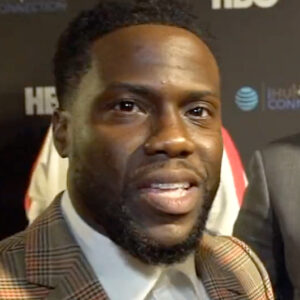
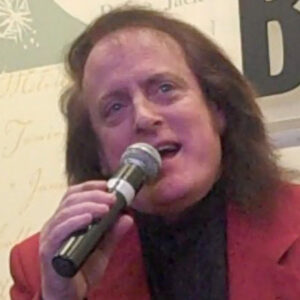
Comedian Kevin Hart asks if space can take the wrinkles out of a pair of wrinkly pants. We discuss ways you would iron clothes while still wearing them in zero gravity and whether Kevin would have a space valet. Musician Tommy James asks a question about his morning coffee and time travel.
Comedian Nikki Glaser asks about aliens and how sure we are that they exist. We break down the composition of the universe, how common the ingredients for life are, and silicon-based life. How much of space has SETI even looked at? Plus, we explore if love is real. Do other species experience love? Could aliens experience love?
Musician Jack White asks about how rare gold is in the universe and on the planet we live on. Learn about how gravity sorts elements and how much gold can be found in asteroids. Cam Johnson, of the Brooklyn Nets, asks if we can feel the different speeds of Earth’s rotation at different longitudes. Is there one part of the Earth that isn’t rotating?
Thanks to our Patrons Larry Houghton, Marc-ids Foppen, Rob Love, Dominic Hemken, Brian Begnoche, josh lemasters, Mike Yin, Petchu Daniel, Jalal Dallo, and Jesse De La Rosa for supporting us this week.
NOTE: StarTalk+ Patrons can listen to this entire episode commercial-free.
Transcript
DOWNLOAD SRTComing up on StarTalk, special edition, is gonna be celebrities ask Neil.
And I take questions from the likes of Kevin Hart, the musician Jack White.
Oh my gosh, and we explore whether gold is rare in the universe.
What is the nature of love?
And are aliens real?
Coming up on StarTalk.
Welcome to StarTalk, your place in the universe where science and pop culture collide.
StarTalk begins right now.
This is StarTalk.
Neil deGrasse Tyson, your personal astrophysicist.
This is a special edition, which means we’ve got Gary O’Reilly.
Hi Neil.
In the house.
Yes.
Chuck Nice.
Hey, hey.
Also in the house, here at my office, the Hayden Planetarium of the American Museum of Natural History.
Today we’re going to do Celebs Ask Neil.
We want to call them stars.
Stars.
Oh, look at that.
The stars are talking.
The stars are talking.
They got questions.
The stars are talking to Neil.
See, we don’t know whether it’s you talk to stars or stars talk to you.
It depends how you feel and who should go first.
No, these are stars.
These are stars.
So, at my walks through life, if I bump into somebody famous or one, I’d befriend one, I try to get them if they have a question about the universe and get their permission to put their question in the show.
Yeah.
And I don’t answer it at the time.
So, they got to like…
Now, we have forced them to listen to the show.
Yes.
Exactly.
To get the answer.
Yes.
This episode will air in approximately six weeks.
All right.
Also.
So, what questions…
Are we ready for these?
I think we should be.
Okay.
So, who’s first up?
All right.
So, we have a Hollywood actor and stand-up, who I should say really, Star has risen to the heights very much.
So, it is Kevin Hart.
Kevin Hart.
Yes.
So, you meant stand-up comedian.
You said have a stand-up.
Yes.
Stand-up comedian.
Yes.
Stand-up comedian.
I guess there aren’t many stand-up other…
There are no stand-up astrophysicists.
So, long no.
But he has an interesting question about space.
Let’s take a listen and let’s get your reaction.
Kevin Hart here.
I have a metaphysical question for you.
I know you’re probably saying to yourself, Kevin, I didn’t know you were into metaphysical stuff, but I am.
Neil, if I were to go to space and I wore dress pants, and I didn’t iron them, is space capable of taking the wrinkles out or am I going to be in space wrinkled up?
He might want to look up metaphysical.
You’re picking the man apart.
He’s brought his curiosity to the table.
He brought his honest curiosity, and you’re another comedian, and you don’t like other comedians coming into space.
I think that’s what’s happening.
Let me tell you something.
I enjoy Kevin.
I think he is funny.
I’m just saying.
Listen, I just think that when you say you have a metaphysical question…
Are you talking about ironing pants?
You might want to make it a metaphysical question.
That’s all I’m saying.
Have you noticed that you don’t have to iron clothes to get rid of the wrinkles?
They have these steam irons.
Where you hang up the clothes in the closet and you go vertically up and down.
So it’s not a traditional iron.
We have a flat iron on an ironing board.
Which is white.
It’s weight and heat.
And steam will flatten it out.
But you can take out the wrinkles if you just glide up and down with a heat source that has steam within it.
You can do that.
Okay, so now watch.
If I put your ass in space, and I put you close enough to a star, the energy from the star will heat your body.
You will sweat.
Trying to stay cool, that sweat will evaporate and steam your pants.
There you go.
With you in them.
That just sounds like someone getting cooked.
When you’re done, you’ll be like salmon.
Steamed salmon inside the foil.
That’s what you’ll be.
Remember back in the 60s, 70s, space suits would look like silver foil.
Yeah, they all had silver.
So now if you had those and that happened, you are going to get cooked.
What gets me is I would think that someone of Kevin’s stature would be able to afford dry cleaning.
In space.
Even in space.
We now went to the point where he has a butler.
Oh, he definitely has not a butler, but he has somebody that attends to that.
So he’s going to have a space butler.
That’s kind of like that.
If he’s going to space, surely he would have it.
He would have a space butler.
I’m pretty sure.
He’s got it like that.
All right.
So Kevin, if you don’t otherwise have a…
A space butler.
No, there’s a word for that person who looks after your clothing.
A valet.
A valet.
If you don’t have a space valet…
Boy, that’s the subject of a sitcom.
My space valet.
My space valet.
So if you don’t happen to have a space valet, you can steam out the wrinkles of your clothing with your own body heat.
Alright.
I’m not sure he’s going to be satisfied with that.
I’m going to say the best metaphysical answer you could have given.
It could have been metal physical, and then we could have gone with iron.
By the way, for the same reason, if you’re all sweaty inside your ironed clothes, and you go sit in a car, and you’re sweaty in the car, and you get out of the car, you have a fresh set of wrinkles that have been pressed by the heat and the steam of your body.
That’s right.
That’s why you’re wrinkled.
But the wrinkle doesn’t know that wasn’t on purpose.
It says, oh, I feel pressure, and I feel heat, and I feel moisture.
I’m going to make a crease.
It’s that the creases are all misaligned.
We don’t have air conditioned seats in space yet.
Well, yeah.
I don’t think you would need them, to be honest.
You just open the window.
Even better.
Roll down the window.
If you’re not facing a star, it’s very, very cold.
Facing a star, it can be very, very hot.
Anyway, that’s the answer, Kevin, for you.
All right.
You got more?
Oh, yes.
There’s more.
All right.
Musician and singer-songwriter Tommy James from Tommy James and the Shondells.
Tommy James.
Oh my gosh.
I met him at Sirius XM headquarters here in New York.
I’m there and he said, Hi, I’m Tommy James.
And it was like a religious moment.
Like, and the Shondells?
No, just Tommy James.
I don’t know where he left the Shondells.
But he has so many hits in that period of time.
Was it the late 60s, early mid 60s, early 70s?
And you recognize the tunes if you heard them.
I mean, Tommy James.
He’s got a question about, of all things, coffee.
Coffee?
Let’s take a listen and we’ll get your reaction on the other side.
My question to you is very simple.
If I drink eight o’clock coffee at nine o’clock, can I create a singularity?
That’s a metaphysical question.
Once again.
We didn’t pre-advertise it as a metaphysical question.
The way I would answer that is, if you drink eight o’clock coffee at nine o’clock, the coffee thinks you’re in a different time zone.
Right.
The coffee’s fine with its eight o’clock-ness.
That’s right.
It’s eight o’clock somewhere in the world.
And that’s what I was going to say, because it’s eight o’clock somewhere.
At all times, it’s eight o’clock somewhere in the world.
You know how you know that?
Because the world has 24 time zones.
Right.
Actually, some time zones go 30 minutes.
These are crazy people who do that, okay?
Maybe not crazy.
We won’t call them that.
Okay.
These are people who want to be different.
More than that.
Because we shouldn’t even have mountain time, to be honest.
Let’s be honest.
Cut them some slack.
We really should.
I know.
Like, how many people live in mountain time?
How many people?
Like, eight.
So, I think the coffee is not thinking about you.
It’s only thinking about itself.
How selfish.
And then you resonate into the time zone where it is eight o’clock in the morning at that moment.
I didn’t know coffee had times affixed to it.
I’ve never heard…
Not all brands.
Eight o’clock coffee.
Yeah, yeah.
No, that was a brand.
Oh, that was a brand of coffee.
Eight o’clock…
Oh, I get it.
I think you’re right.
I’m seeing it coming.
It came in a red bag or something, eight o’clock coffee.
Yeah.
Or am I thinking chock full of nuts?
Yeah, chock full of nuts.
That was the red tin one.
Plus, if you’re any actual working person, you ain’t awake by eight.
You ain’t getting…
Forget it.
Forget it.
You don’t deserve coffee.
Coffee is for closers, not for people who sleep past eight o’clock.
Exactly.
Or for people who have to wake up at six and get to the job early.
Yeah.
So, it should be six o’clock coffee.
Yeah.
I don’t know anybody who has to be the work that gets up at eight o’clock.
And then, so, now I gotta be awake at eight thirty for my cup of coffee.
So that’s my answer.
But some of his songs…
See, he’s a musician.
So eight a.m.
is like really, really early in the morning.
Musicians, they wake up at noon.
That’s five thirty a.m.
Everybody else.
Yeah, and mine will be four o’clock as far as he’s concerned.
He’s getting up super early.
Tommy James and the Shondells.
He sang Crimson and Clover.
Crimson and Clover.
Do you remember that?
Not by him, but yeah.
I had no idea.
People covered his songs a lot.
People covered his songs.
No, no, but it was good stuff, man.
That’s cool.
There’s another one.
I think I’m alone now.
And that’s another…
Who knew that’s him?
That was Tiffany in the early eighties.
No, no, Tommy James had that before Tiffany.
I know, but that was the cover.
So she’s covering him.
She’s covering him.
Yeah, yeah.
Wow.
Yeah, go check out his playlist.
His playlist.
It’s really…
You’ll recognize every one of the songs.
All right.
I’m Kais from Bangladesh, and I support StarTalk on Patreon.
This is StarTalk with Neil deGrasse Tyson.
All right, who’s next?
Glad for that throwback.
So, next question, we have a stand up comedian, Comedienne, because you got fussy the last time, so I’m throwing Comedienne in.
And also an actress, Nikki Glaser.
She has, so it’s a two part question, so bring your patience.
Here it comes, take a listen, and we’ll get your reaction on the other side.
It’s 100% that there’s alien life out there, no matter what, right?
Like, it’s been proven, right?
Because I got in an argument with someone recently, Bill Maher told me that that’s ridiculous.
I said, no, it’s been proven, it’s 100% true that there must be alien life somewhere.
Is that true or not?
And also, is love real?
How am I gonna answer those two questions at the same time?
Easy, easy.
If you think love is real, that’s the reason why you think it’s 100% sure that there are aliens.
Oh, it’s 100% cynical.
So you get the same answer, but okay.
Yeah, exactly, because, yeah.
All right.
If you say yes to both of those, it says what kind of person you are.
It says what kind of person you are.
Like, there’s 100%, we’re definitely sure that there’s aliens, and love is real.
There’s not 100% sure that there are aliens, even though it’s very likely.
And love is a chemical reaction that your brain has so that we can further our DNA into the future.
So, it’s all BS, okay?
No such thing as love.
Except she didn’t ask you.
Exactly, right.
So, let’s get this.
Did your answer any different?
It just sounds a little more academic.
We’ll put an academic spin on it.
All right.
So, when you look at the ingredients of life on Earth, the chemical ingredients, what’s the number one molecule in your body?
Carbon.
That’s an atom.
I said molecule, dude.
That’s another element.
Molecule is more than one element together.
More than one element put together.
I’m trying to think which element is put, oh, okay, so that’d be water.
Water, thank you.
Water.
We’re more than half water.
Yeah.
I was thinking it.
So, and water is more than half what?
It’s more than half oxygen.
H2O.
H2O, sorry.
Thinking it backwards, yes.
I’m gonna take away the degree we gave you for honorary, okay, H2O.
Two parts hydrogen, one part oxygen.
So we’re mostly water.
Water is mostly hydrogen.
So, the number one atom in our body is hydrogen.
I said that and you said me no.
I asked for the number one molecule.
Oh, we can be fussy.
And then we unpack the molecule and we get hydrogen.
The number two atom in our body is oxygen.
Right.
The number three is carbon.
Right.
Number four, nitrogen.
Number five, my favorite element of them all, other.
Okay, so.
How much are people full of shit?
Is that quantifiable or is it different?
People have other elements in them.
No, no, no, no.
Oh, here’s one I saw on a comic.
So, there’s a periodic table of elements and one of the boxes, it just has a picture.
Of a mouth agape.
Yeah, and that’s the element of surprise.
So, if you look at that ranking of elements, so it’s hydrogen, oxygen, carbon, nitrogen, other, okay?
Now let’s look at the universe.
The number one atom in the universe is hydrogen.
Number two is helium, but that’s chemically inert.
Nothing you could do with it anyway.
Next in the universe, oxygen.
Next, carbon.
Carbon.
Next, nitrogen.
Next, the other class, other, okay?
We are one for one, the same ingredients in order, in rank order, in the universe.
So, when Earth made life four and a half billion years ago, when Earth made life four billion years ago, it was being highly opportunistic.
It made life out of the base ingredients given to it by the formation of the universe and stars itself.
So, unless you wanna say that what happened on Earth with the most common ingredients in the universe was rare, at some point you’re gonna have to say, oh my gosh, this probably played out many places in the galaxy and in the universe itself.
So, it is highly likely, as Chuck alluded to with fewer words, that there’s life elsewhere in the universe.
Highly likely.
But, we do not yet have evidence of it.
So, what you’re saying is-
And even though it’s highly likely, let’s be honest, if you walk into a supermarket, there is every kind of cake in that supermarket, but it has not yet been made.
So, you got eggs, you got milk, you got flour, you got vanilla, you got everything.
That was deep.
Right?
So, just because all the ingredients are in the supermarket doesn’t mean that there’s a cake in the supermarket.
Well, there is in the bakery section.
Well.
So, using that theme…
I don’t go to such a fancy market.
So, the universe isn’t going to the fridge late on a Saturday night and finding it bare.
It has everything it needs to make…
Every nook and cranny of the universe itself.
Okay, and because hydrogen and oxygen are the two most abundant chemicals in the list that are chemically active, water, you don’t expect that to be rare.
Exactly.
Would there be an ability to create other life forms but by changing the magnitude of what was in place?
Possibly.
It’s different for different life on Earth, but we’re still carbon-based.
Carbon-based.
All right.
Some people say maybe there could be silicon-based life.
Silicon sits right below carbon on the periodic table, and all elements in a column form similar families of molecules.
So you can have CO2.
There’s silicon sitting right below it, there’s SiO2.
And there is going to be silicon-based life form.
As a matter of fact, we’re on the precipice of it right now.
Well, we call it that, the silicon chips.
That’s not what they mean with the science fiction writers.
I know, but I’m just saying, we are creating silicon-based.
We are creating silicon-based.
We are creating it, and it’s gonna replace us.
It’s gonna be our overlord.
But then you look at the synthetic biological intelligence that’s coming through with research right now, which will then sit maybe alongside the silicon intelligence.
Yeah, I mean, let’s hope that never happens.
Can I scare him anymore now?
So, now, people say, well, we’ve been looking, and we haven’t found it, so maybe there isn’t any.
Well, how much do you think we’ve looked so far?
Exactly.
All right, and so here’s an analogy we get from my friends up at SETI, the Search for Extraterrestrial Intelligence Organization up in Northern California.
They’re a ray of dishes that they listen to the world, the whole universe.
They have telescope dishes tuned in for anybody who’s going to talk to us.
All right.
As if they’re going to want to talk to us.
At all.
What a big assumption that is.
They care about us.
They want to…
Right.
Like one day we’re going to hear a message just like, hello, what?
You know, I don’t think it’s on.
Does it work?
I don’t think it’s working, Harold.
It’s always Harold.
It’s always Harold.
It’s the first alien contact.
That’s the first alien contact.
So, they gave an analogy.
You go to the ocean shore and you take a cup of water, you take an empty cup and you scoop up some ocean water and look at it, and you conclude the ocean has no whales.
Wow, that’s a great analogy, man.
That’s like us in the amount of the space we’ve looked, the number of frequencies we’ve looked over time that we’ve looked, it’s identical.
You can actually calculate that these probabilities are similar.
To do that and say the ocean has no whales, using this cup as evidence that it doesn’t.
So, we have no place to stand to declare that there’s no life in the universe, given how little of it we have searched.
All right, so that’s the answer to the first part.
But is there love?
And what’s it got to do with anything?
It matters to her.
Apparently so.
It matters to Nikki.
But, so, is there love?
Here’s how I will answer that.
Mm-hmm.
One doesn’t have to decide whether or not love exists if you can measure things that happen on the assumption that it does.
Oh, I see.
You make the measurements of it.
Okay, I’m near a cave, and there’s just snow, and I see bear footprints out front.
I don’t see a bear, so I don’t think it exists.
They’re footprints.
You walk a little further, there’s poop.
There’s berry poop, because bears like berries.
Near there, the carcass of a small child.
So you’re allowed in science to make measurements of phenomena that betray the existence of a thing that you hypothesize could be there.
And I will say that there’s enough evidence of the existence of love in the conduct of our species that we should proceed with no denial of how real it is.
You, Sara, are an eloquent romantic indeed.
I still say it’s chemical reaction.
But that does not diminish the feeling, the reality, and the consequences of love in this world.
So, Nikki, yes, there’s love.
And you’re right about the aliens, too, Nikki.
Oh, because she heard that it wasn’t.
And she got challenged on Bill Maher.
She’s saying that, yeah, it’s definitely.
And Nikki, Bill Maher should not be your source of cosmic enlightenment.
Maybe once she asks the question.
Okay, no, that’s why she came.
So, Nikki’s got Netflix specials.
She’s got Potty Mouth, though.
She’s got Potty Mouth.
She talks a lot about body parts in her comedy.
All manner of body parts.
Yeah, but she does it in a funny way, so I have no problem.
Yeah, yeah, so check her out when you can.
So, if we’re looking at love existing, does that then roll itself out into other species?
Do they experience love the way we experience love?
And if we take it off world, and there are other life forms, are they likely to experience love?
So, we went through many decades, even possibly centuries, declaring without evidence that we’re the only ones with a consciousness about our existence.
We’re the only ones that have feelings.
We’re the only ones to distance ourselves from the rest of the animal kingdom.
And the more we study animals, the more we learn.
I’ll just give an example.
There’s a video, you can find it, of a tortoise.
Whenever you see a tortoise, it’s not doing anything.
It’s sticking its head out and then back in.
Or it’s eating lettuce.
There’s a tortoise with a security cam footage, but no one else is around, and it’s playing with a ball.
There’s a ball, and it goes up to it, and it rolls it, and it sees where it goes, and it goes back and rolls it again.
This is beautiful, right?
Okay, there’s other footage of pigs having fun.
What will pigs do when you’re not fattening them for slaughter?
If you look at other animals when you’re not chasing them, and they don’t know anybody’s looking, many of them are just having fun.
If they have the capacity to have fun, should they not have the capacity to love?
To have other feelings that bring joy to them?
I will not declare that they do not have love.
I’m not going to be that guy.
Can I get a little weird on you here?
Can we stop you?
Yeah, you can.
I spent some time in Texas, and I had a roach infested apartment.
That sounds like Texas.
I wanted to study the roaches so that I can know my enemy.
So I trapped some.
Instead of killing them, I kept them in jars, and I observed their behavior.
And after three days, they had set up a pickleball court, and they were playing pickleball.
So I set it up, and I’m observing them.
And so first of all, they’re very clean in the sense that they’re always cleaning their legs and their antennas.
They bring their antenna down, and they clean it, and they’re doing this at all times.
You don’t know that because you’re chasing them ready to squash them.
They don’t have time to clean their antenna while you’re chasing them as they’re escaping death.
But when they’re not otherwise escaping death, that’s what they’re doing.
And I see two roaches come up to each other after they clean their antennas, and their antennas just kind of touch, like that.
And what am I going to say?
Oh, they’re touching their antennas, but they don’t actually feel emotion.
That’s like the porpoise is swimming in the ocean, no, in the water park.
One turning to the other, commenting on the humans who are up there and saying, well, they face each other and make noise, but there’s no evidence yet that they’re actually communicating with each other.
That’s me thinking that roaches don’t have this kind of understanding about themselves.
Maybe the touching of the antenna was love, roach love.
Next time, I’m going to suggest that you call Orkin.
But I can tell you, if it’s not roach love, what you do know is that they’re making babies.
Right, that’s true.
Roaches know how to make babies.
Right.
All right.
So I’m not going to say other animals don’t feel love.
Don’t let us.
Okay.
Next question, you got another one, let’s do it.
All right, we’re all loved out.
This time, pop icon, Jack White, and I think, if I’m not mistaken, he’s got a question about rare earth minerals and their existence throughout the universe.
Okay, this is Jack White, the guitarist, singer, performer, white stripes, Jack White.
The man that appears in every stadium around the world if there’s a sporting event, even though he’s not there, always his music that gets played.
Jack White, okay.
Let me tell you where I met him.
Okay, he’s a fan of the universe.
He was a fan of Carl Sagan’s.
I met him at a meeting of the Board of the Planetary Society when I served on the board.
And he came, because he’s just interested, he might even been a donor, I don’t remember.
Planetary Society was founded by Carl Sagan and two of his colleagues to try to up the awareness of people’s caring and sensitivity to the plight of Earth as a planet.
What a great idea.
And so right now, our friend Bill Nye is CEO of the Planetary Society.
So I’m there and I meet him for the first time, and we pose for some photos.
And just recently, I gave one of my public talks in Nashville, Tennessee, where he lives.
What a surprise.
And he sent me a, he dropped me a line, said, yeah, here you’re in town.
I’m gonna come see.
Can you?
That’s kind of cool.
Okay, can you get me some tickets?
Oh, wait a minute.
He didn’t pay for his tickets?
I was gonna say, pay for your own damn tickets.
You got enough money to pay for your own tickets, Jack White.
Calling me up to mooch tickets off of me.
Hey, Neil, it’s me, Jack White.
You know, famous guitarist from the White Stripes was wondering, can I get a free ticket to your show?
Come on, now.
No love for Jack.
So, and yes, I forwarded to, I got him some free tickets.
And then he invited me back to his place.
And so I hung out with him about a half hour.
All right.
He showed me, he collects a lot of memorabilia.
It was fun.
You know what just happened to be on TV in that moment?
What’s that?
2001, A Space Odyssey.
Oh, look at that.
Just happened to be on TV.
No, it wasn’t.
He had that set up.
He had it on DVR.
You walked in, he hit the play button.
He was like, wow, what a coincidence.
You’re here in 2001, A Space Odyssey is on.
Oh, what are the chances?
Okay, maybe that was also, I don’t know, maybe.
I’m with you.
But I pointed out some scenes where they got the physics wrong in 2001.
But anyhow, at the end, I said, let me get a question from my man here, Jack White.
So let’s see what he asked me.
Dr.
Tyson, I have a question.
Is gold actually rare in the universe?
And part two, is it rare on the planet we live in?
You noticed how that question can be played in any civilization across the galaxy.
Yes, it can.
Because he didn’t mention Earth.
He didn’t mention Earth.
And the planet we live on.
The planet we live on.
That’s what he said.
Can we play that when we’re Mars colony?
So, it’s possible for something to be rare, but common.
Explain.
Aha.
Let me give some simple examples.
In your life, birth is rare.
But in the world, birth is common.
Understand that now.
It’s a big event if you’re birthing out a baby.
It’s even bigger event if I’m birthing out a baby.
I’m just saying.
I’m just saying biologically.
So, death is rare in your life.
How many, unless you are working in a hospital or serve in the military, how many dead bodies have you actually ever seen in your life?
Most of few, at most.
Yet, it happens all the time.
So, something can be rare, but common.
So, gold is rare because most things are not gold, but gold is everywhere.
Even in them there hills?
Especially in them there hills.
That was classic frontier gibberish.
Especially in them there hills.
So, it’s just, if it’s everywhere, but not all concentrated, then it’s a challenge to gather it, right?
And so, I met a gold prospector once.
My wife is from Alaska, and there was a guy who spent his life doing this.
A lot of people in Alaska do that.
Yeah, exactly.
And so, he had a gold nugget.
Does ingot have a special definition?
An ingot is probably above us, or I don’t know.
Yeah, but yeah.
Oh no, an ingot has been melted down into a bar.
Okay, I’m trying.
Okay, so he just had a gold, natural gold nugget.
That’s a nugget, yeah.
And like the Denver Nuggets, a nugget.
He had a gold nugget on his wife’s neck.
And I said, what’s the biggest chunk of gold you ever found?
He said, it’s around my wife’s neck.
Wow.
And it wasn’t more than a centimeter across.
And he does this his whole life.
So you’re not finding much gold where you’re looking, but you can find some, and it’s a big effort, okay?
However, by the way, do you know that gold is very heavy?
Yes.
Okay, a cubic foot of gold weighs 1,800 pounds.
Yeah, that’s why they sell it by the ounce.
Gold is one of the densest metals on the periodic table.
There’s like two things denser than it.
And it’s not reactive, right?
Osmium is the densest element.
What did you say?
Osmium.
Osmium.
So if gold is so dense, why when you get a higher carat of gold, is it softer?
Oh, density and softness have nothing to do with each other.
Thank you.
In the same way, you can have something that’s hard yet fragile.
Right.
Like stemware for wine or the shell of an egg.
Or crystal.
Crystal.
It’s hard yet fragile.
Okay?
So that’s why you can be dense yet soft.
All right.
Good question though.
I like that.
Gold is very malleable.
Malleable.
So, so nature, nature has done something very cool.
Ready?
When we form planets in orbit around stars, initially it’s very hot.
And the whole planet is molten.
If you are molten, that means heavy things can go to the bottom and light things go to the top.
We did a whole explainer on this, didn’t we, Jack?
One of my favorites.
Okay, so while you are in your molten state, all the heavy stuff goes to the bottom.
The light stuff floats to the top.
What would that be?
All the metals, the heavy metals.
So iron, nickel, cobalt.
Metallica.
Death metal.
Death metal.
Pantera.
You’re gonna find metallica in the center of it.
At what level is thrash metal?
We’re gonna get into the weeds here.
The heavy metals, the bands are all there.
So they go to the middle and the light stuff floats like rocks.
Rocks are light.
In comparison.
Compared with metals.
If you have a chunk of metal and a rock and you drop them in the water, the metal’s gonna fall faster than the, right?
Because it’s gonna cut through the water faster.
All right.
So, oh, but in the air, they fall the same rate.
Right.
That’s a Galileo thing.
All right, so, what happens to these objects?
They cool and they become solid.
Then, in the early solar system, which was an especially badass shooting gallery, other planetesimals can slam into you and shatter you to smithereens.
Oh.
After you have formed.
After you’ve been pre-sifted.
What that means is the asteroids you become.
Are now pre-sifted for the ingredients.
Some of them will be rocky, others will be metallic.
We have metallic asteroids in the solar system.
If you go lasso one of those and bring it to earth, it will have, depending on the size, of course, but there are asteroids out there with more gold in them than have ever been mined in the history of the earth.
Was it a movie or a TV series that they had a mining ship out in space?
Oh, isn’t that…
That’s called The Expanse.
The Expanse.
They’re mining the asteroids for their natural ingredients.
Because you don’t have…
It’s pre-sifted.
The geologists have a word for it, it’s called differentiation.
That’s what they call it, but I call it pre-sifted.
It’s a supermarket, but all the aisles.
Yes, but yeah, if you’re picking aisle one and aisle two among the asteroids, there you have it.
So, you can find places where gold is especially concentrated, because nature already did it for you, because gold is heavy.
Right, and it’s why Earth’s core, we have an iron core.
Oh, whoa, by the way, there’s way more iron than gold.
There’s not much gold in the universe.
Let’s just start there, okay?
Not much.
Send the price of gold up.
Oh, wait, wait, wait.
So, if you bring that asteroid to Earth, which has all that gold, then what happens to the price of gold?
Well, it plummets unless you’re smart enough to leave it parked a little further out and bring it in a bit at a time.
Keep that price going.
So, yeah, so gold is plentiful but highly scattered unless you’re gonna find the pre-sifted stuff in asteroids.
Oh, by the way, there’s more gold in the ocean than have ever been mined on Earth.
That makes sense.
In the ocean or in the ocean base.
Most of the Earth is ocean.
Or surface, right, so if you can set up a gold-sifting device and you just, maybe as the tides come through, you have a passive filtering device, you can slowly accumulate the gold that’s in the ocean.
The ocean doesn’t need the gold.
Yeah, we can make much better use of it than the ocean can.
Yeah, I’m sure there’s a goldfish joke in there somewhere.
Goldfish, oh!
But I’m not gonna do it.
Oh, goldfish joke, that’s clever.
I’m not gonna do it.
You are on you.
He’s gonna sit there squirming until he says that.
Yeah, so the answer is it’s rare but common.
Rare but common.
There you go, Jack.
And who knew a musician would live in Music City, Nashville?
Oh, yeah, that’s where he lives.
Makes sense, huh?
All right, next one up.
Coming out of the entertainment business, but staying in entertainment with the sporty verse, Cam Johnson from the Brooklyn Nets, the NBA team.
Cam Johnson visited me in my office.
Oh, wow.
Cam Johnson came to my office.
He’s a rising star in the NBA, so.
Just to come in and say hi?
Yeah, just to, I got, you know.
Why you surprised?
Because I don’t think he’s coming by for basketball tips.
Ha!
Neil, I was hoping you could coach me on how to box out and, you know, having some trouble.
There could be some physics lessons in there.
Having some trouble with my crossover, man.
I was hoping.
There could be some physics.
I had Kareem Abdul-Jabbar in that chair.
I know.
We talked about the physics of the Skyhook.
The legends that is.
That’s right, that’s right, that’s right.
So Cam Johnson, all right.
You look at him from a distance, he looks like a regular guy, and then he walks up next to you, he’s like six, seven or something.
You know.
It’s just, they’re tall, these folk.
Mm-hmm.
Ha!
So I’m trying to remember, why did he come by my office?
You have magnetism.
So I think it was like a day off for them, and they’ve got people who handle them, and they find out what their interests are, and he loved science when he was in college.
That’s great.
And especially, like his astronomy class.
So he wanted to come and just get a little infusion, okay?
Let’s see what his curiosity was.
Let’s see where it took him.
Yeah, let’s see where it goes.
What’s up, Neil?
This is Cam Johnson.
Question for you.
Can we feel the change in spin speed of the Earth at the equator versus at the poles?
Obviously, at the equator, the Earth is gonna be spinning a lot faster and at the poles, it’s gonna be spinning a lot slower.
And obviously, this has a lot of effect on the planet as a whole, but can we as humans kind of feel that change?
Interesting question.
Clearly, he knows that the Earth spins faster at the equator.
Yeah, so at the equator, you are moving 1,000 miles an hour.
West to east, 1,000 miles an hour.
As you go north or south of the equator, the surface of the Earth is not moving as fast.
It’s moving as a solid object, of course, but your circumference is not as big if you are farther away from the equator than the equator is.
But you still make one turn in a day, so you’re clearly moving slower.
All right, so, if we paved over Earth, okay, and I never thought of this example, but this is the first time I’m thinking of this.
You pave over Earth, start you at the equator, and we say, run due north, and don’t stop, okay?
And you start running due north, but then they no longer tell you which way north is.
You just start headed to the Santa Claus, okay?
You start running, and you’re always going in a straight line.
You will think you’re going in a straight line, but you’re not.
Step back, and we see your path.
Your path would have curved east, and you’ll never hit the north pole.
The point where you took your last step has higher sideways motion than the point where you just landed.
So it is carrying you east without you even knowing it, even though you think you’re running in a straight line.
Another way to do this, if anyone still has them, you remember the record players, okay?
Take a little marble, start it at the end of the record player, and then roll it inwards.
You will ruin that record.
It will overtake the spindle and come in ahead of it.
So that’s kind of the only way you would know it.
By the way, clouds know all about this, all right?
That’s why they circulate into storms.
Clouds coming up from the south, they overtake their destination.
Clouds coming down from the north, fall behind.
As you do this, that creates a circulation, so all storms in the northern hemisphere rotate counterclockwise.
So weather feels it.
That’s what creates our storms.
You would feel it if Earth were paved over and you ran, but otherwise, no.
No one has any clue.
And I asked you this question before.
Is there a point on Earth, right at the axis, where it actually doesn’t rotate?
Well, the very top spot, it’s all rotating.
It’s all rotating.
Everything is rotating.
Is there like one molecule?
One atom right at the top?
Yeah.
No, because then everything would be turning around.
No, no, just why I’m asking, because it seems like there would be…
Okay, here it is, here it is.
Mathematically, there’s a point that would not be rotating.
Fine.
But physical matter is not mathematical.
There’s always going to be a molecule there that’s going to be dancing in a circle.
And the worst case is, you only have the one molecule that’s just pirouetting.
How elegant.
The lone ballerina molecule.
Yeah, oh, the ballerina molecule.
Oh, we’ve got a whole lot of trademark there.
So, thanks for those questions.
No, no, yeah, yeah.
Stars and their curiosity.
It was fun.
We’re good.
We can do this again?
Do we have other questions?
Well, it depends how buddy you are with the…
With famous folk.
Yes.
All right.
Until we can get some more Brooklyn Nets up here.
We might have the ceiling busted out, but yeah, we’ll work with it.
In fact, there’s something that went semi-viral where we picked the top ten draft picks in the universe.
So it’s a thing they do apparently.
So they said, what’s your first pick?
And I said, I’ll take the Milky Way Galaxy.
That was my first pick.
I’ll take the formation of the moon four billion years ago.
So we go down and we create our dream team of the cosmos.
All the cosmos.
That’s pretty cool.
That’s online.
You can check it out.
With Cam Johnson.
So just to take us out, if I reflect on what has just happened, we have people who made a name for themselves doing things that have nothing to do with science.
Yet deep within, they retained a kind of curious, dare I say, geek underbelly.
Something that historically was never valued, especially not by the bullies.
Oh, yeah, you’re carrying a calculator.
You did well in your math class.
Never boated well for the geeks.
But for those who are brave enough to come forth in whatever is their profession and say, I retain geek curiosity, and I’m going to take it to Neil deGrasse Tyson.
I respect you and honor you, first for your bravery and for retaining doses of curiosity well into adulthood.
Keep it going.
This has been StarTalk Special Edition.
Neil deGrasse Tyson, as always, bidding you keep looking up.





 Become a Patron