


 Unlock with Patreon
About This Episode
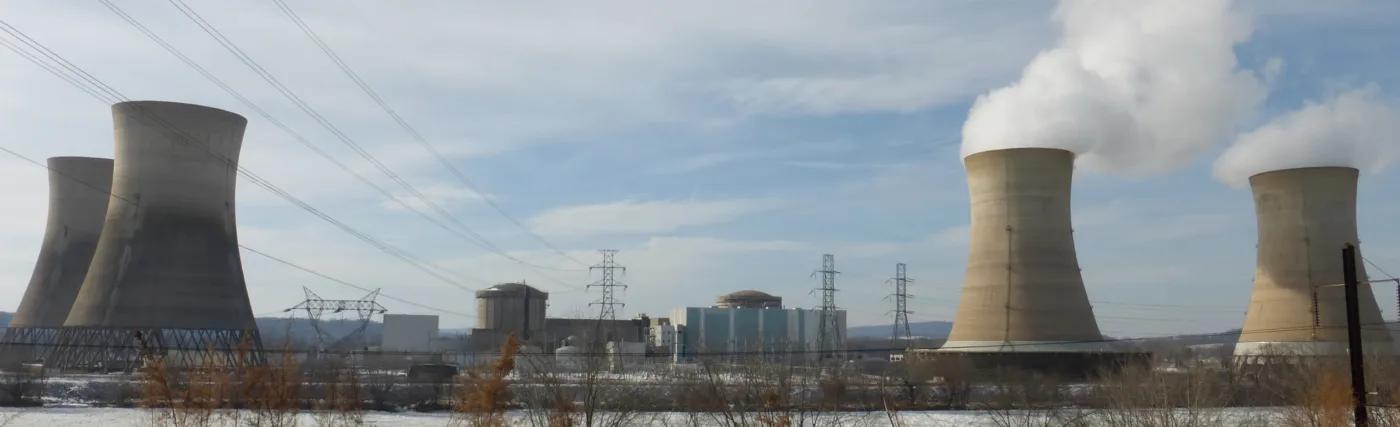
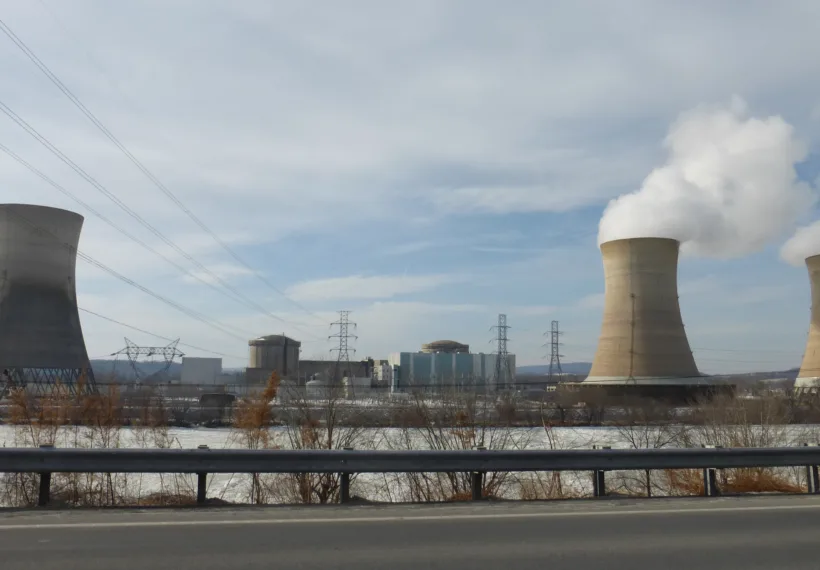
Are nuclear power plants the key to a sustainable energy future? With data centers consuming massive amounts of electricity, can we keep up? Neil deGrasse Tyson and co-hosts Gary O’Reilly and Paul Mecurio discuss the physics, safety, and future of nuclear reactors in a world of increasing power demands with nuclear engineer Kathryn Huff.
We start by breaking down the basics: fusion vs. fission. How does nuclear stack up against other energy sources? Are past accidents like Chernobyl and Three Mile Island common? Can rebranding nuclear change public perception? Kathryn walks us through the hard numbers, why its energy density makes it an attractive option, and how modern regulations have made it one of the safest power sources.
With data centers, AI, and industrial manufacturing driving massive electricity demand, can our energy production keep up? We explore the rise of Small Modular Reactors (SMRs) and why they may be the future of scalable, local power generation. From advanced coolants to molten salt reactors, we explore the next generation of fission that is pushing the boundaries of efficiency.
But what about nuclear waste? Kathryn explains how spent fuel recycling could reduce waste and even provide materials for medical imaging. We also examine the geopolitical challenges of uranium sourcing and the need for international collaboration. Plus, what would it take to power your house with its own nuclear reactor? Spoiler: It’s not as simple as plugging in a Mr. Fusion.
Finally, we take a cosmic perspective on energy: Was the future we imagined in the Atomic Age derailed by the rise of information technology? Are we on the cusp of a new energy revolution? All this, plus Neil’s take on the wildest misconceptions about nuclear power, in an electrifying episode you don’t want to miss.
Thanks to our Patrons Diokindacute, Wheeler Weise, coryb440, Tim Itoi, Curiosidad científica podcast, Deborah Wales, nahar najjar, Scott Jewell, richard ravelo, Samuel Tomka, zackery Cool, Alexis Schad, Sean Smith, KEO LYPENG, Simon Tang, Thomas Coppola, Joseph, Monchelle Hicks, Paul Nowosielcki, Andrei Sirbu, bgbng, Neil Juanillo, Neal Beaton, Vic, PENE WILSON, Brendan Gombosi, Chad Jubyna, Jacob Narr, Mike, Nick H. is AllDamgeNoCntrol, Suliman, and Christoph Hermann for supporting us this week.
NOTE: StarTalk+ Patrons can listen to this entire episode commercial-free.
Transcript
DOWNLOAD SRTGentlemen, it looks like we may need nukes to realize the future we all imagine for ourselves.
Yes.
The flying cars, you still want those?
I want flying cars, I want moving sidewalks, I want portability of nuclear reactors.
Data centers are starting to chew up their share of the energy.
And they’re gonna continue to.
AI and Bitcoin mining.
And the right color bag to put your nuclear waste in when you put it out on a Sunday.
Important.
I’m not touching it, I got a guy that does that.
We’ve got one of the world’s experts on those very subjects coming right up.
Welcome to StarTalk, your place in the universe where science and pop culture collide.
StarTalk begins right now.
This is StarTalk Special Edition.
Neil deGrasse Tyson, your personal astrophysicist.
And of a special edition, you know what that means.
We’ve got Gary O’Reilly.
Hi, Neil.
Hey, former soccer pro.
Soccer announcer.
And we’re borrowing you from your soccer people.
Yes.
Okay.
At special edition, we think all about the human condition and all that matters to make that work.
And since you have been an injured soccer player in your life, you know about the human condition.
I do, and the suffering they’re in.
Though I’m not gonna place it above or beyond anyone else’s suffering, but we get a chance on special edition just to gaze into some interesting topics.
Yes, yes, and I love it.
And I’ve got with us Paul Mecurio.
Nice to see you guys.
He’s back.
Yeah.
Yes, Paul.
Always fun.
All right, you were a former stockbroker or attorney?
Attorney, mergers and acquisitions, which is hilarious.
And you became a comedian after you were mergers and acquisitions.
Well, I’m like, how can I give my mother an instant heart attack?
I know.
Oh.
When I did say it, she said to me, I said, I’m gonna leave Wall Street to be a comedian.
She looked me right in the eye, and she said, that better be your first joke.
Oh, come on.
Clever mom.
Yeah.
I like that.
And then, yes, and then made a right turn and got into comedy.
So, Emmy and Peabody award-winning.
I mean, at Peabody, that’s coveted.
That’s highfalutin.
A highfalutin.
It’s that little chairman.
I didn’t know you were that highfalutin here.
From the cartoon character.
And you also work the Late Show with Stephen Colbert.
Work on the Late Show with Stephen.
We go back to the Daily Show together.
Stephen is the first name.
Oh, yes, sorry.
Stephen Colbert and the rest of us.
Unlike me.
He’s that guy on the TV.
I know who you are, but I don’t know your name.
So Paul, you’re so highfalutin.
Do you still even do stand up like regular comedians?
I’m so highfalutin.
You’re not supposed to look me in the eye when you talk to me.
That’s highfalutin.
I have to avert.
I heard rumor you have a Broadway show.
We were doing a…
A state show.
Yeah, called Permission to Speak, and it involves, we’re all disconnected and divisive, but if we get together and share stories, realize we have more in common than we think.
So it’s me involved in…
Yeah, it’s borne out of my stand up and liking to talk to audience members, and it’s grown into the show, and the great Frank Oz is directing it, which still blows my mind.
We love me some Frank Oz.
Yeah, I know.
He’s been a guest on our show.
I know.
He’s constantly backwards talking, though, with that Yoda thing.
It’s extremely annoying.
No, it’s been really cool, and we’re taking it around the country, and folks can go to my website to check it out, where we’re going to be, paulmecurio.com, but it’s been really cool, and sort of a break out from my stand up.
Okay, cool.
Yeah, yeah, yeah.
So, Gary, you and your producer put together this topic.
We did.
And I love me, it’s nukes.
I love me some nukes.
Not the missile kind.
Nukes predate missiles.
Okay, good, as long as you’re not.
When I say nuke, I mean the nucleus of the atom.
Yes.
And the energy contains therein.
What you do with it after, that’s your problem.
That is, okay, so.
Set up this show, what do you have?
AI data centers, well, we know what they are.
What we don’t quite know yet is how we are going to supply their rapidly increasing energy demands with reliable and clean energy.
So where do we look?
Fossil fuels are being phased out, well, maybe.
Sustainables do not suit everyone, and who needs a giant nuclear power plant in their backyard?
So what are our options?
Climate change means our energy must be clean, reliable, economically viable, and socially acceptable.
The way I see it, this requires some clarity, some science, and an expert with both.
So Neil, would you like to introduce our guests?
I would be delighted.
I love my physics peeps when they’re out there.
And we have one.
We have one.
Join me in welcoming Kathryn Huff.
Kathryn, welcome to StarTalk.
It’s great to meet you.
Great to be here.
Thanks for having me.
I got to do it in the voice.
Welcome to StarTalk.
That’s for the first time.
You got to get one of those.
You are associate professor in the department.
No, this is a mouth.
This is like a business card’s worth it.
In the department of nuclear plasma and radiological engineering.
That’s right.
Which means she glows at night.
At University of Illinois at Champaign Urbana.
Hang on.
Flip the card.
Now it goes to the back of the card.
Oh, it keeps going.
Yes.
So your PhD is in nuclear engineering.
But not only that, you’ve actually had a tour of duty serving the federal government.
You were Assistant Secretary for Nuclear Energy in the Department of Energy, 2022 to 2024.
So you did a little tour of duty there.
So you’ve seen it all.
So Kathryn, could you just remind everybody the difference between fusion and fission?
Yeah.
So in fission, which is conventional nuclear power here in the United States and around the world, you separate, you break apart, heavy atom like uranium-235 or plutonium-239, whereas fusion gains energy from the binding reaction between two light particles fusing.
And these would be isotopes of helium or hydrogen typically.
And so you’re talking about completely different ends of the periodic table that forces that hold a nucleus together, the binding energy of that nucleus.
You can achieve a net increase and that sort of output in energy by coming down the isotopic curve by splitting a big atom or by coming up it by fusing two light atoms.
And that’s because of the shape of the binding energy curve for the nucleus.
So and we know in astrophysics, the peak of that curve, well, depending if you plot the other way, the base of that curve is iron.
And stars give up the ghost when they hit iron.
Because you can’t fizz it or fuse it and get energy out of it.
It sucks energy.
And stars in the business of making energy, it hits iron.
That’s all she wrote.
It collapses and then explodes in a rebound as a supernova.
So we know all about this in astrophysics.
There’s quite the relationship between what nuclear physicists do and what we do thinking about stars in the universe.
So let’s try, let me just open this up because after Chernobyl and after Three Mile Island and after Fukushima, you know, nukes just left a bad taste in people’s mouths.
It was always that way and these then just became evidence for it.
And so there’s a lot of re-branding that’s going to have to happen going forward if nuclear energy is going to re-join the conversation.
So, what are your challenges squaring that circle from the sources of energy people typically talk about, especially in the green movement, and nuclear energy as a kind of wannabe as part of that conversation?
Yeah, absolutely.
I think a lot of it’s around numerics, right?
Talking to people about the metrics that matter.
If you’re worried about safety, the metric that matters is deaths per terawatt hour generated.
You have that, that’s a statistic you guys have?
Can I just say, I would be very concerned about that statistic, the death part?
Yes.
That’s just weird to count deaths by how much electricity has been produced.
Nuclear energy, you’ll only die once in a while.
No, but does that exist for coal?
Yeah, it’s only interesting as a metric if you’re using it to compare energy sources.
And so, a number of different data sets have been formed, a number of deaths per terawatt hour from solar, wind, coal, etc.
And nuclear is way, way, way down at the bottom.
You’re slightly below solar and wind, actually.
Even if you include Fukushima and Chernobyl, interestingly, you know, deaths at Three Mile Island.
And you have geothermal, I think, is one of the only ones that is lower than nuclear in terms of deaths per terawatt hour.
And it’s construction projects.
There’s serious issues maintaining wind turbines, like putting things on roofs and installing.
That sort of thing doesn’t happen on a nuclear construction site because of the incredible amount of regulation.
And so you really are left with, like, accidents.
And so there’s plenty of lifecycle analyses of deaths, but also, you know, carbon for per terawatt hour.
And the reality is nuclear, in terms of generation, is higher.
And so the denominator is huge.
What higher as a return, it’s higher.
There’s more power generated.
Per whatever, per anything.
So the terawatt hours are higher.
Yes.
By a long shot.
Yes.
Oh, so that’s how it wins.
I get it.
She pulled some fast denominator numerator math there.
Did you stay with that?
She pulled the right turn on you.
No, no, because if you have gerbils on a treadmill producing your energy and it kills a thousand gerbils, they didn’t make much energy to begin with, right?
So the death rate relative to the energy return, that ratio is bad for you.
Again, correct me if I’m wrong, Kathryn.
Nukes are so potent in the capacity to produce energy that however died doing whatever, there’s so much energy produced at the other end, it compensates for that.
It’s a relative number.
It’s a relative, correct.
But doesn’t it beg for more regulation and sort of renewables?
You’re right about solar.
Some guy that was working at Jiffy Lube is now selling you solar panels and putting it up half drunk.
Isn’t it, isn’t it?
Sounds like a bad experience on your behalf.
No, no, yeah.
We call him my uncle.
Way too precise an example.
My uncle Archie.
But doesn’t it beg for that on some levels, if there’s that level of death rate relative to renewables?
Interestingly, renewables like wind and solar and geothermal and nuclear, they’re all in the same category, which is just magnitudes and magnitudes lower than fossils.
Nuclear ends up winning because historically nuclear has been the largest source of carbon-free emissions-free power.
It’s those emissions from the fossils that really takes them to a completely different order of magnitude in terms of deaths per terawatt hour.
And so I would say that renewables are safe, nuclear is safe, geothermal is safe.
It’s really the fossils you need to be worried about when you’re talking about safety because they impact human health in a really demonstrable, clear way.
How many people ever have died mining coal?
It’s a great question, right?
The WHO has estimated all kinds of things for full total cost and death of the fossil industry and separates it into particulate related premature deaths and whatnot.
I don’t know the exact number for people dying mining coal, but it’s not zero.
Okay.
It’s pretty high.
By the way, when a business says not zero, it doesn’t mean it’s one or two.
It’s pretty high, right?
Like you would lose people in collapses.
Okay, we’ve got clean, high energy production in totality, perfusion and fission, but we still have some radioactive material.
That is going to make people unhappy.
More than zero.
Not in my backyard.
Don’t put it there.
You and the Nimbies, there they are.
I mean, that’s why they’re all spelt in capitals, because they want you to know that’s what it’s about.
So it doesn’t sound so clean.
But can’t you point to the fact that nuclear power has been around for years and people have accepted the fact that there’s radioactive waste sort of hanging out anyway?
Like, it’s not a completely new concept?
Well, they’re not accepting that it’s there.
They’re accepting the disposal plans that Kathryn just told us about.
And Paul’s right that, you know, it hasn’t been a huge impact on humans’ day-to-day lives because it’s an incredibly small volume of spent fuel from fission reactors.
We have 60 years of spent nuclear fuel.
You know, it has been producing close to 20% of our electric power in the United States.
And it’s produced enough material to, if you sort of ignore the packaging and focus on the uranium, fill a football field, not very tall, you know, a few meters high.
And what people seem to ignore is if you put it in the right bag on Sunday nights when you put your garbage out, it’s radioactive material, they’ll pick it up.
Oh, yeah, yeah, that’s right.
It’s going to be put it in the blue bag.
And put it on Staten Island.
You remind me not to live in your neighborhood ever.
Exactly.
There’s the glowing Paul house.
Yeah, so the thing is, this stuff gets buried so far deep into the, in the middle of nowhere.
You’re mixing two things, and I think they’re separable variables.
You’re saying nukes are dirty because fission is dirty.
Okay, but fusion isn’t so dirty.
I understand that much.
That’s true.
It just doesn’t happen yet.
So Kathryn, are you in your world of thinking about this, combining them together as a solution going forward?
Or are you totally leaning fusion, excited by the recent sort of ignition test that went on at the Livermore Labs?
I’m a fission girl.
I’m a sort of classic nuclear energy fission person.
I have great optimism for fusion, but it will take quite a long time.
And interestingly, you probably know this, that NIF test is an inertial confinement fusion experiment.
A lot of the commercial proposals that are attempting to commercialize fusion in the near term are more like the ITER device in France that is a magnetic confinement fusion.
It’s a slightly different approach, and seeing real breakthroughs in the ITER device may be quite a few years from now.
So we await some breakthroughs in things like the first wall protection, things like that.
But for me, I’m here about kind of conventional nuclear energy and advanced fission energy that’s sort of on the horizon right now.
So we are correct to fold that into the conversation.
And I’m still waiting for Mr.
Fusion, the home fusion from Back to the Future.
Yeah.
So the thing is, it seems like we don’t quite have a handle on fusion to make it operate the way we really want to.
Not yet.
But is this an extension of this plasma fusion, which has a break even issue, right?
More heat goes in to get the heat out.
And that’s an extension of traditional fusion process, right?
So there are no operating fusion reactors.
There could be someday.
Maybe if you guys tried harder, there would be.
Yeah, I’m not a fusion scientist.
I work in a nuclear plasma field.
Here we go.
You went that way.
By the way, when you were at the Department of Energy, when you left your office at night, would you turn the thermostat down?
I’m just curious.
Absolutely.
Every light switch has a little, don’t forget to turn me off, sticker.
Okay, so what are going to be the major consumers of our energy going forward?
AI data centers for sure.
Then we look at maybe quantum computing.
We’ve got bit mining, throw in the development of electric vehicles.
We may have already calculated, because I’ve joined the DOE, obviously, we may have calculated already, but have we calculated enough in terms of how exponentially this consumption is going to go?
Yeah, it’s totally data centers and things like that, but it’s also increased electrification, like for EVs, but all kinds of other things as well, and an increased sort of revival of industrial manufacturing that requires not just electricity, but heat.
We see carbon-free steel companies wanting to start up in the United States, and they don’t have enough heat.
Where do you get heat?
Usually, you burn fossil fuels.
Very few clean energy sources are available to provide that direct heat.
Nuclear is there for it.
So yeah, we have a huge amount of demand.
Are we even factoring it in the projections for how much new gigawatt worth, many tens of gigawatts worth of capacity are going to be needed to support data centers in the coming decades to support these kinds of endeavors.
They grow and grow every time you look at the news.
And so we are in a position where the existing clean energy infrastructure has to expand to support those data centers, especially data centers that need 24-7 reliable always on power.
If you own a multi-billion dollar data center, you don’t want it to be running at 2% capacity because the wind stopped blowing.
You need 100% power 24-7 regardless of weather.
And the issue there is in sort of these data centers, which are and will continue to be everywhere, and the scaling of traditional power plants, nuclear power plants, you have to get to SMRs, right, which are not fully developed yet.
Paul, could you tell the rest of us what SMR means?
Small modular reactors.
Did he get it right, Kathryn?
Yeah.
He did.
You know how exhausting it is that I have to carry this guy all the time?
But in that sense, the proximity is an issue, right?
Because if your data centers are too far away from the source, the nuclear source of energy, you’re going to have loss of data, loss of energy.
And so it becomes sort of being able to build a lot of these SMRs, which are smaller and can be closer to the data centers.
Yeah, you’re absolutely right.
Transmission, especially building new high voltage power lines to move gigawatts of power from a generator to a consumer, is expensive.
It, you know, cuts through land that usually needs permits.
Sometimes it can be very slow.
So co-locating data centers with smaller, more modular reactor builds has an advantage.
The more modularity in these builds is certainly also supposed to contribute to the speed and reliability with which we can deploy them.
The idea being that it takes a really long time to build a gigawatt-scale nuclear power plant.
But if you build a 30%, you know, sized 300 megawatt reactor, then maybe you can build a few more of them, get some lessons learned.
They maybe move a little faster.
You might be paying slightly more per kilowatt hour.
But you should be able to deploy them quicker and learn faster, thereby coming down the cost curve of those construction learnings.
That’s a whole future there that has not yet been realized.
We’ve probably had the last major nuclear power plant built 30 something years ago.
In the United States?
Yes, in the United States or around developed nations.
Now you’re saying, what are the new technologies, small modular reactors?
SMR.
SMRs to some.
Advanced reactors.
So you’ve got these micro reactors, you’ve had all these different sort of acronyms going on.
Where are we right now with the technologies and what are our options for fission and for fusion going forward?
As you know, you’ve got to have them close.
The NIMBYs are going to dance up and down and scream on Mary Hell.
We know that.
So how are we going to sort this out and with what technology?
Yeah, I think we have technologies at all sizes in the advanced reactor space.
The most recent two builds in the United States were the Vogel Unit 3 and 4.
Those are AP1000s from Westinghouse.
They’re big like conventional nuclear reactors, but they incorporate some passive safety.
So they’re kind of a generation 3-plus design at the big gigawatt scale.
They were built pretty over schedule and over budget, and so there’s a lot of trend towards shrinking that kind of design.
A light water reactor that’s just smaller.
You’ve got designs from Holtek and GE Hitachi.
Westinghouse has a shrunken version of the AP1000 called the AP300.
You’ve got New Scale is one of those small modular light water reactor designs.
But then, in addition to that, you can also build small modular advanced reactor designs.
And there are a number of companies pursuing commercialization of that.
With two deployments already happening with the support of the Department of Energy, these would involve more advanced coolants and fuels, like sodium, which is a liquid metal.
Is that the Moen salt?
Yeah.
Yeah, MSRs.
Yeah.
What does sodium do for you?
So, sodium has a couple cool features.
As a coolant, it’s highly conductive, and so it’s extremely performant to move the heat from the fuel to where you need it in the turbine through an exchange process, eventually.
But that conduction is really useful, but it’s also very helpful for the neutronics control of that criticality that I talked about earlier.
So, it absorbs neutrons?
Yeah.
So, it keeps the neutrons fast by not moderating them.
If you combine that with a metal fuel, sodium-cooled fast reactors have an opportunity to be quite passively safe using reactor physics and negative feedbacks from the expansion of the fuel and the expansion of the coolant and the sort of neutronic behavior of the coolant to drive power down if power goes high, keeping things balanced.
Regulated.
Isn’t there a practicality issue, though?
Because corrosion is a problem with that process, right?
So, critically, sodium in this case is a liquid metal when it’s combined with something else, it becomes a salt.
There are salt reactors, we can talk about that.
But yeah, sodium itself is also somewhat corrosive.
You can’t see through it because it’s liquid metal, and it is pyrophoric.
So when it gets wet, it tends to burst into flames.
Good.
That’s good to know.
Just so it gets wet.
Just spend a quick second reminding us, I don’t want to simplify it too much, but correct me if I’ve done so.
In the end, all you’re trying to create is a source of heat to raise the temperature of water that will spin a turbine that has magnetic fields and coils in it to generate electricity.
That’s the same way we’ve been making electricity since Faraday.
It’s half of its old school.
Half is old school.
Is that correct?
Yes.
It is almost exactly like a cold plant.
You’re just boiling the water in a different way.
In a different way.
Different source of heat.
I mean, is the goal to get even higher temperatures?
I mean, are we aiming for building a star on Earth here?
What are we doing?
So star on Earth would be pretty hard with fission.
We await our fusion colleagues for that matter.
But the fission reactors that are being deployed with some of these advanced coolants will get much, much hotter safely than conventional reactors.
We’re talking 800 degrees Celsius, really high temperatures, which is quite a bit more than the 300 degrees C we would usually see from conventional light water reactors.
So the higher temperature of the water, I mean, it’s under pressure, I guess, right?
Yeah, absolutely.
And if you’re going to use that heat directly, then it’s very useful for industrial applications like, you know, reducing steel, reducing iron for the steel making process.
Oh, rather than making electricity out of it through a turbine.
Right, and rather than burning natural gas or coal to make direct heat.
The first application of the X-Energy high-temperature gas reactor will be at a Dow chemical plant, where they’ll use both the direct heat and the electricity that they convert.
Some of that heat straight from the reactor won’t be converted at all into electricity.
Well, with temperatures that high, can’t you generate electricity that is more robust, for lack of a better term, and that can travel farther distances without loss?
Not exactly the way we convert heat into electricity, but it is the case that high-temperature heat is higher quality, because it is easier to convert.
You have a little bit less loss.
Yeah, very good.
Very important point.
Okay, what I hear now, Neil, is this is the next iteration of the smartphone, right?
So you’ve got these big clunky cell phones that we used to have back in the 80s.
The shoulder-mounted one that they used in…
The one that Magnum PI would have.
Or Gecko in…
Right.
Right, so now…
Shoulder-mounted cell phone.
I remember, 1987, I saw the movie in real-time.
And I’m looking, I said, gee, I wish I was rich.
So I have a phone like that.
I have a phone in a suitcase.
So now they’re getting smaller and smaller, but we’re getting higher temperatures out of them.
It sounds a lot like the smartphone scenario.
And how much they cost, and who’s paying for it?
Well, I think you confused two things there.
What’s also happening is chips are getting more efficient.
So your laptop used to burn the top of your thighs.
It doesn’t do that anymore.
Where were you putting it?
No, exactly, exactly.
And why was it on your thighs?
So, Kathryn, if we have quantum computing, which does much more computing in less time, ultimately that’s less consumption of energy, isn’t it, or not?
Yeah, one would hope, right?
And then you can use that energy for other things that will advance human prosperity, right?
We can also use it to displace the kinds of fossil energy that we still rely on and contributes to the climate crisis.
So these small modular reactors, as I said…
SMR.
Thank you for reminding me.
How much do they actually cost?
And who is writing that particular check?
It remains to be seen precisely how much each design will cost.
But we’re looking at a scenario…
I would refer you to the liftoff report that Dewey put out, but it estimates that new nuclear power, you know, is going to be in the order between $120 per megawatt hour for the first of a kind, all the way down to nth of a kind, maybe in the $60 per megawatt hour range.
That’s a big range, but it’s very similar to the kinds of ranges we’re seeing when we look at renewables plus grid-scale storage, which is the only comparable reliable 24-7 clean energy that involves renewables, right?
Alternatives would be natural gas with carbon capture.
Cheaper, certainly, maybe between $100 at the high end and $60 per megawatt hour at the low end.
Geothermal has a very, very big range, but very similar to nuclear, you know, $130 at the high end, and $157 at the low end.
Hydropower is always cheap.
I was recently in Iceland, they’re nearly 100% geothermal.
I mean, they’re sitting on top of multiple volcanic, you know.
Isn’t the issue here partly like there’s two streams of technology battling each other?
In other words, demand for energy, right?
Like in the year 2060, there’s going to be 12,230 streaming services alone, right?
Okay.
You’re going to have houseplants that self-water, self-fertilize and can talk to you, right?
I hope so.
Can we, in all seriousness, can you keep up with that, with, you know, these lazy fusion people that clearly aren’t pushing the envelope and just, you know, are phoning it in?
No, in all seriousness, so can we develop energies fast enough to keep up with these incredible demands that are, and we have to.
We have become more efficient.
Like, I would say that the total wattage of all light bulbs in my house is probably 100 watts.
I got 50 light bulbs, and they’re all LEDs, right?
So, Kathryn, I don’t even have, shut off lights before you leave the room, because I don’t need it.
But the advance is, there are guilt-inducing mirrors that are going to come out soon, where you just stand in front of them and say, really, that’s what you want to eat?
Like, so, I seem to hit a nerve with you on that one.
So, Ken.
Or are you talking about your own life?
Exactly.
Which one is it?
Exactly.
In all seriousness, can the technology that’s needed, is it there to keep up with the demands and the new demands that we haven’t even foreseen yet?
It’s a great question.
And DOE has estimated that if we want to hit net zero by 2050.
Net zero what?
Net zero carbon.
Carbon.
Thank you.
Okay.
Yeah.
We will have to build at least 550 to 770 new gigawatts of firm, clean power.
Some of that will be hydro or geothermal and things like that, battery storage.
But at least about 200 gigawatts of that will need to be nuclear.
And we’re not the only ones that made that calculation.
We have a question from our audience.
And what is the biggest problem in the world that you have to deal with?
And what is the biggest problem in the world that you have to deal with?
And what is the biggest problem in the world that you have to deal with?
And what is the biggest problem in the world that you have to deal with?
They must have spent nuclear fuel, right?
Correct, yes.
How are these all?
Are these new advanced modular, small modular reactors, our good friends, the SMRs, are any of them going to be able to recycle that spent fuel?
Some of them could.
You know, I mentioned sodium-cooled fast reactors earlier, which have metal fuel.
And while TerraPower isn’t currently planning to recycle in the United States, it is an amenable technology for the kinds of recycling that other nations do.
France, for example, recycles a great deal of their spent nuclear fuel, resulting in lower volumes, lower masses and much shorter lifetimes of long-term radioactivity by putting the longest lived and most useful isotopes back in the reactor.
We could do that, but in the United States, we don’t currently have the infrastructure to do that.
So it would take a real government effort to move forward on recycling.
But, you know, when I was at DOE, this was definitely something that we were continuing to do research on.
And there was a great deal of interest from the commercial side in seeing recycling be back on the table in terms of options.
Molten salt reactors also were mentioned earlier.
I should note in the SMR, MSR universe, molten salt reactors are also very amenable to recycling.
I like the ASMR universe.
And?
Yeah, yes.
How’s your nuclear power doing?
Yes.
Tell me about it.
Yes.
So are we still mining uranium?
There’s still plenty of uranium left in the earth’s crust for this?
Yeah, we are still mining uranium.
Some of the best uranium in the world comes from mines in Canada.
But it exists in a lot of places, including the United States, Australia, Kazakhstan.
How about mainland?
Oh, gosh, too soon.
So yeah, I think the reality is unless you do a great deal of recycling, you’re going to continue to mine uranium.
So yeah, recycling would reduce our need for new fresh uranium.
But isn’t that part of the issue is the geopolitical concerns of this, right?
The more we come up with this great technology and SMRs that feed these data centers, there’s a lot of uranium out there, but they’re not in every country.
And some of these countries are borderline sort of friendly terrorists take over.
Like, so how do you factor that in?
And should some other simultaneous technology be developed as away from nuclear energy so that we’re not so dependent on uranium and the potential explosion?
Do you have a hotline to the state department?
Well, it basically comes down to not going back to reliant on one single source of fuel.
Exactly.
Yeah, I think that’s what it comes down to.
Right.
That’s right.
If there’s a trouble in one sector, you just shift the economics.
But if you have single point failure, everything is running on oil.
If you’re trapped into fossil fuel, there’s a problem.
The biggest bottleneck for that uranium fuel cycle is that the mining of uranium, there’s lots of sources of it, but then the process and conversion and then enrichment of that fuel, where you increase the number of isotopes of uranium-235 per kilogram of total uranium, that enrichment process and the fuel fabrication process all happen at a much smaller number of facilities internationally.
So yeah, quite to your point, international collaboration has been necessary to ensure that if Russia, who dominated historically conversion and enrichment capabilities in the last 20 years or so, if they decided not to sell to the United States, we needed to have more capabilities in the US and among our allies, France, the UK, etc.
So that has been underway.
In fact, right behind me is the law where we banned Russia and uranium from Russia imports in the near term so that we could protect some of our ability to invest in new enrichment capability.
Kathryn, if you have what’s called spent uranium, and that is basically waste product from fission, uranium fission, what does it mean to recycle it?
You have to boost the isotope back or stick it in a particle accelerator again?
Because you have the uranium, how would you accomplish this?
So there’s two different ways, but basically the spent fuel that you start with is a mixture of uranium atoms and split fission products.
So the two parts that the uranium atom splits into, this might be iodine and technetium, practically half of the isotopes in the periodic table, or in the chart of the nucleotides.
That mixture needs to be separated so that those fission products are removed from the total, the already split atoms.
So I think the public is generally not familiar with the chart of the nucleotides.
We all know the periodic table of elements, because that’s that mysterious chart of boxes that sat in the front of your chemistry class.
And the table of nucleotides, those were always in the more advanced chemistry classes.
The one I didn’t go to.
Or the physics classes.
And so that lists not just the elements, but all the isotopes possible for each of the elements.
That’s a more complicated diagram, correct?
It is.
It’s quite a bit more complicated, and it’s extremely useful for nuclear engineers because we end up producing a lot of those isotopes inside reactors during the fission process.
Okay, so you can track their whereabouts.
Can you make little cocktails to find which ones work better with each other, to be able to take that forward?
That’s an interesting idea.
Some of them fall into chemistry groups that can be useful for industrial applications and things like that.
So one of the interesting possibilities for recycling, which I’ll get to how you do it in a second, but one of the interesting possibilities for recycling is that some of those products that aren’t useful in the reactor and are otherwise waste, some of those products are hard to generate otherwise, but can be useful for medical reasons, imaging, other kinds of radioactive.
You listed Technetium as one of the byproducts, and I’ve seen that used in medical imaging.
So that’s what you mean by possibly recycling some of this material.
Absolutely.
Technetium-99 Metastable is routinely used for things like thyroid imaging and whatnot.
Right.
Cool.
So it’s picking through your dumpsters.
Exactly.
That’s right.
A very specialized, high-precision radioactive dumpster.
Yeah, but how do you…
You can’t boost the uranium back into the isotope it needs to be, and then just run it.
No.
But generally speaking, what you end up doing is you take out those fission products and you still have a great deal of enriched material left, and during the fission process you have been breeding a little bit of plutonium.
Some of the uranium-238 atoms have absorbed a neutron and then another neutron, and they move their way up the chart of the nucleotides into plutonium-239, which is also fissile.
So you can put both the uranium and plutonium back into the reactor usefully, along with some of the other transuranic elements, and that’s recycling.
You can do it with aqueous chemistry or electrochemistry.
And that’s no different from recycling plastics, or they gotta carry their weight with their waste products.
That’s right, that’s right.
There’ll be a time when I can take my nuclear waste to the dump on a Sunday.
On your own.
You make the dump run.
But then you sort it out in the dump.
You sort it out, or I have a man do that for me.
You have the right little bins for the right sort of waste.
I have a guy who sorts my radiation.
You got a guy?
I pay him 50 bucks and he’s like whatever.
He’s easy to find, he’s glowing.
Can you explain to me why this is going to sound like a neophyte question, but why we haven’t gotten better at reducing the amount of radioactive waste that gets generated in these processes?
And is there an attempt or again are all you scientists just lazy?
So first of all, the volume is pretty small to start with, but yeah, there’s been a lot of work in fuel utilization, so that the amount of fuel that you put in is used to the maximum extent practical.
A lot of that has resulted in designs that will leverage a higher initial enrichment of uranium.
You’ll see this in a lot of small modular reactor designs because it allows the reactor to be smaller, and in a lot of cases, it will allow for a higher fuel efficiency or fuel utilization.
What kind of radioactive ways to get out of fast reactors?
It’s a metal, uranium, plutonium fission product object, right?
It’s never sort of, when it comes out of a reactor, it’s going to be in the same form it is.
You get a lot of Simpsons kind of images where it looks like a glowing green goo.
Spent nuclear fuel is actually a uranium oxide coming out of conventional reactors.
So it’s a type of ceramic.
It’s quite heavy and it’s in little pellets, but it’s a solid and quite dull.
In the case of a sodium-cooled fast reactor, it would be a solid metal cylinder.
In the case of a molten salt reactor where the uranium is dissolved into a liquid salt in the reactor, these don’t really exist commercially yet, but they’ve been proposed.
That would be a liquid, but that would be the only kind of reactor that has a sort of a liquid waste.
So is spent fuel then sort of turned into a ceramic and then buried deep underground?
Because that’s kind of the way it originates in Earth to begin with before we extract it.
Do we then kind of send it back in a similar state?
Yeah, so it’s a rock ore when it comes out, and then when you put it back in, it’s a solid of uranium oxide, typically, and it’s contained in a canister that’s steel and then concrete and layers upon layers of shielding.
But, Kathryn, they’re not equally as safe.
Yeah, so it’s fairly straightforward to maintain a fission reaction at a stable, steady state at this point with our development of technology, but there are feedbacks that could drive that reaction into super-criticality, and you have to spend a lot of time balancing the reaction in the reactor.
Whereas a fusion reaction, its tendency is to end this is why it’s so hard to make a fusion reactor.
It’s a very hard reaction to maintain because it’s hard to maintain, and because there’s not this sort of opportunity for easy super-criticality, then you don’t end up in this situation where you might become overpowered, create a lot of extra heat you weren’t ready for, melt things down, et cetera.
So fundamentally, since the stable state of a fusion reaction is to not be happening, it’s a little bit easier to keep them safe.
You don’t have radioactive byproducts.
So in fusion, there are activated byproducts, but not the kind of high level fission products that are very radioactive for a very long time that we’ll have to manage as a spent nuclear fuel in fission.
Gotcha.
And you have to dispose of it in some careful way.
That’s right.
And multiple nations are making real progress on that.
Finland is just about to start operating their final repository.
Canada has just selected a site for their final repository.
Sweden has gotten permission to begin constructing their final repository.
And one other quick point.
I think the fear factor here is if there is an accident, it will kill many, many more people than if there is a coal mining accident.
You can tout the deaths per terawatt hours, and nukes look very good until they don’t look good.
And if there’s some disaster, if a terrorist takes over the plant, or it becomes the target of a weapon, and there’s some kind of radioactive leakage if it’s in the fission, if in the fusion maybe, as you said, it’s not self driven, so maybe you’ll just snuff it out.
But what do you tell someone who’s concerned about how widespread the damage would be in an accident relative to any other sources of death from any other source of energy?
If I have time to bring that person to a nuclear power plant, I would and show them the containment structure.
But if I don’t, then I would show them a video of Sandia experimenting with the structures that protect us from nuclear power plant accidents.
Sandia, is it FFRDC?
Yeah, Sandia National Laboratory.
In New Mexico?
Are they in New Mexico, I think?
Yeah, that’s correct, in Albuquerque.
There’s some experiments to show that you could ram a jet engine right into the side of a containment building, a sort of standard steel and concrete structure, the dome over the reactor, and it survives just fine.
Who thought of that as an actual experiment to conduct?
That was from Mission Impossible, they were filming.
Why not?
They should throw it in there.
Tom wanted a new challenge.
If we’re talking about not in my neighborhood, how you get people to come on board, which is great, education, give people knowledge about safety.
If you want to get people on board and you have a nuclear power plant, small or large in their neighborhood, just put a Chick-fil-A in it.
If you’ve got a Chick-fil-A attached to a nuclear power plant, people are on board.
You do a little drive-through, you enjoy the…
That’s how that works.
Is this the new PR campaign for the Department of Nuclear Energy?
Exactly.
Nuclear waste and Chick-fil-A bring you…
Power plants like that do produce a lot of jobs and tax revenues that communities love.
Maybe they use them to build a Chick-fil-A.
Okay, so data centers are connected, surprisingly enough, to the people behind AI, which are the tech bros.
And as such, it’s important for their model going forward that they have clean, reliable energy.
So surely the tech bros are going to be driving this whole thing along, so as nuclear energy does become the go-to source of energy for this in the future.
We’re seeing it already.
We’ve seen requests for proposals and power purchase agreements signed to ensure that new reactors are coming online.
Amazon has invested in X-Energy, Microsoft has invested in restarting the Three Mile Island unit.
We have very clear demonstration that the money is already going towards those new deployments and restarts.
And I think it’s helpful to have those deep pockets working towards reducing the risk for nth of a kind builds.
But yeah, it’s hopefully going to result in more power even than those tech companies are going to need because that’s what we need for our country.
Do we see in our request for capitalism and to market anything that we can, that these SMRs become so small that literally they’ll be marketed as you could have your own nuclear reactor in your house, right?
Like I could see a day.
Your own power generator.
That’s a whole fusion, Mr.
Fusion.
But that’s like gives a whole new meaning to nuking leftovers, right?
Is that the limit of this?
You know, literally you have leftovers.
And here’s an example.
In 1968, the movie 2001 came out, imagining the world in 2001, which is 33 years after that.
And what they could not figure was that the future of computing would be distributed rather than centralized.
So to them, the modern computer was this one giant computer.
How?
Controlling the whole ship.
The super brain.
The super one brain.
And they weren’t thinking that it could be miniaturized, you don’t need a whole room, it could fit on your hip.
And I can watch movies, we can all watch different movies.
This is exactly, and Gary referenced it in comparison to smartphone development, it could get, these reactors could get so small.
So that’s a question back to our expert here.
Is that a future possibility?
And let me add that I’m impressed at the level that private enterprise is participating in trying to solve our energy future.
Because I don’t think it was always like that.
There was like, each city had its power plant or each county and that was it.
And it was a utility and it did the thing and the government and that was it.
But in an entrepreneurial atmosphere, it seems to me, yeah, I wanna invent that so you buy the product from me.
I wanna go to a picnic and show off and go, anybody want a smoothie?
Here we go, I’m gonna power it with my nuclear miniaturized.
That seems like overkill.
But, yeah, but it’s a road.
You can just shake.
No, it’s a damn good smoothie.
Not the way I make it with energy powder, strawberries, bananas.
That probably will be overkill for especially the regulatory and nuclear nonproliferation community.
You wanna make sure that certain nuclear material is kept extremely well controlled and observed, counted, tracked.
Because there’s a universe in which if you could put it in a suitcase, a briefcase, then there’s a potential to make a dirty bomb out of some of the spent fuel.
There’s too many bad actors around for it to be unlicensed.
I’m just saying, we are throwing that way into the future.
So far in the future.
Yeah, with Mr.
Fusion, our little nuclear home friend.
Mr.
Fusion, yes.
I mean, how far are we actually away?
These things are obviously being tested, but how far are we away from commercially being able to bring them to a situation where they go online?
Yeah, the first couple are in the very early stages of construction and we’re expecting them to be completed.
Some of them hope for a five-year construction timeline, but it’ll probably be more like 10 years.
And then if we don’t have orders on the books for more and more of them in the next year or two, then you have to wait another 10 years for the next one.
And so what we’re seeing from data centers and other kinds of companies, utilities like Dominion thinking about small modular reactors, then you see those orders.
That’s an opportunity to have those first deployments five, 10 years from now that are connected to the grid, followed by the next many.
I just want one in my basement.
I want to be able to go to a party and say, just got a nuclear reactor in my basement.
You just control.
You think anyone’s going to stay at this party?
Not exactly.
You just want to be the first one on the block with a nuclear power reactor.
The guy’s just looking at you like, what?
And then walks out.
So we got to land this plane.
So Kathryn, what are you working on right now?
So I run a research group that writes software for modeling and simulating advanced reactors and their fuel cycles.
A lot of what we’ve been talking about today, I write multi-physics software with my graduate students.
What does multi-physics mean?
What does that mean?
Yeah, it’s when you combine different physics, especially when you’re combining physics at different scales.
In my case, it’s neutronics on the very small sort of angstroms and 10 to the negative 14 seconds kind of time scales with thermohydraulics, which is more like seconds and meters.
If those two things affect each other, which they do when you’re talking about reactor feedbacks and reactor accidents.
The actual reaction is this tiny little nuclear thing that has to plug into this macroscopic facility out of which you draw energy.
So I hadn’t thought about it that way.
Multiphysics, is that the word?
That’s right.
Multiscale multiphysics if you want to sound highfalutin.
And that’s not only in size but in time scale as well for phenomena.
That’s right.
That’s right.
So I study advanced reactors like molten salt reactors and high temperature gas reactors, sodium cooled fast reactors and recycling strategies.
This is something really important.
Okay, but do you earn your keep at the university?
Do you also teach?
I do.
I absolutely do.
It’s my favorite thing to do in the whole wide world.
I’m sure you understand.
How about that?
Very cool.
Just make sure she’s an honest broker here.
Sounds a lot like she is.
You seem like you’d be great at it.
You’re very relatable.
You make it understandable for somebody that doesn’t know the world.
I could borrow a few jokes though.
I don’t think they’re laughing off.
50 bucks a joke.
You’re in.
And I want to go in your bunker when the whole place melts down from nuclear.
I know you got the best bunker.
I know you do.
Only if I get to go to the party with the reactor in the basement.
There you go.
It all comes full circle.
Well, let me offer a cosmic perspective here, if I may.
You may.
Yeah.
Those of us old enough remember back in the 50s and 60s where people were imagining futures.
And we didn’t have to wait longer than a month, maybe not even a week before one of the major magazines, Life Magazine, Look Magazine, had a cover story.
The city of tomorrow, the home of tomorrow, transportation of tomorrow, food of tomorrow.
And you’d see these artist illustrations of what tomorrow would look like.
And that tomorrow was not infinitely far away, it was like in your lifetime.
What every single one of those projections got wrong was the assumption that we’d have unlimited access to energy.
Because every one of those illustrations, they had flying cars, motorized sidewalks, everything was in motion from a power source, an energy source.
And what it got wrong was, no, we didn’t walk into a future of unlimited energy, we walked into a future of cheap computing.
So we became an information technology future, not an energy technology future.
And what I wonder now, hearing these developments on the horizon and our needs that will require it, perhaps, though it’s long overdue, we’re on the doorstep of a future where we derive our energy from any one of a dozen ways and we have as much of it as we need to do anything we want.
And that is a Cosmic Perspective.
Join me in thanking Kathryn Huff for your brilliant expositions on the state of the industry.
And dude.
Always fun.
Good to have you, man.
Absolutely.
And tell Frank Oz I said hi, because we became good friends when he was on the show.
Yeah, he’s not a fan.
Okay.
Why are you laughing?
Because he’s funny.
No!
Ha ha ha!
All right, Gary, we’ll catch up with you next time.
For StarTalk, special edition Neil deGrasse Tyson, as always, bidding you to keep looking out.



 Become a Patron