


 Unlock with Patreon
About This Episode
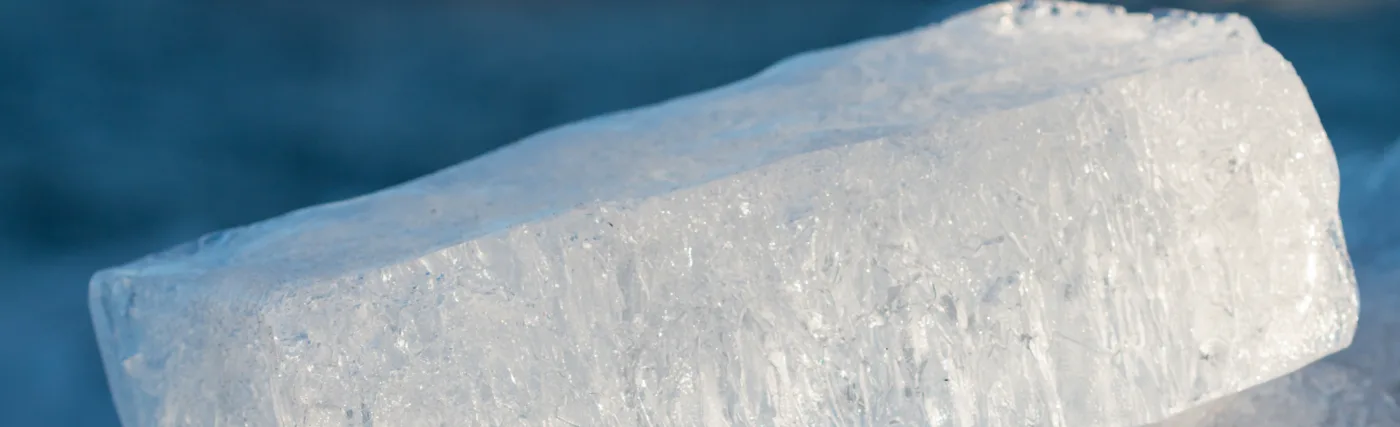
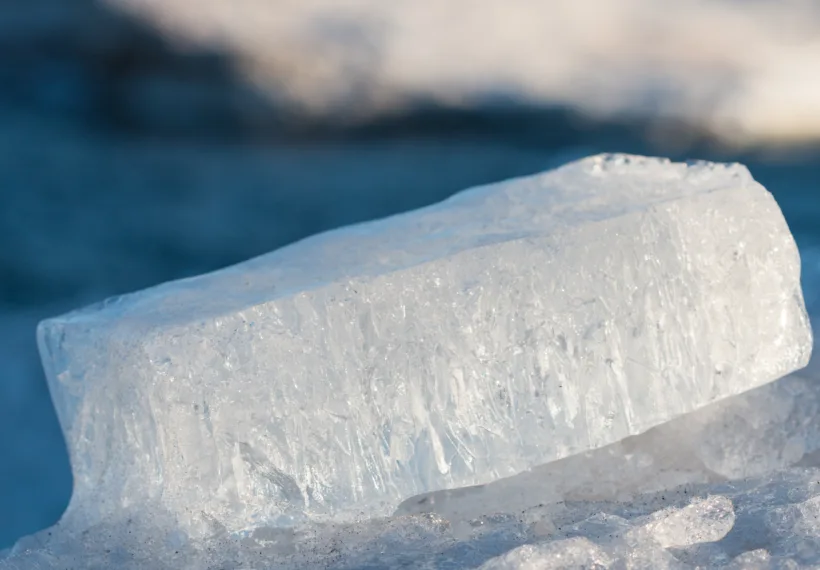
What makes ice slippery? Neil deGrasse Tyson and co-hosts Chuck Nice and Gary O’Reilly uncover the complex physics of ice and cool facts we’re still learning about it with physicist and author, Laurie Winkless.
What makes ice slippery is not as simple as you think it is. We explore the difference between pressure melting and a quasi-liquid layer in creating slippery ice. Is all ice slippery? Learn about Micheal Faraday’s theories on ice before atoms had been demonstrated. How do water molecules interact when they’re solid?
Discover nucleation as we talk about an at-home experiment you can do in your own freezer. Learn about ice meisters and the art of creating ice for sporting events. Is ice for curling different? Find out about the confusing physics in curling and why the curling stone doesn’t do what it should. Plus, what do those brooms do?
We dive into more ancient types of ice as we explore glaciology. Can ice flow? We discuss the slippery movement of glaciers, snow pack, climate change, and more. What happens when water won’t freeze when it’s cold? Finally, is there a future where we could seed glaciers?
NOTE: StarTalk+ Patrons can watch or listen to this entire episode commercial-free.
Transcript
DOWNLOAD SRTThis is StarTalk Sports Edition.
Neil deGrasse Tyson, your personal astrophysicist and host.
Today, we’re discussing the topic of ice.
Ice, every which way you would see it, think about it and find it, on earth and in the heavens.
We’re gonna talk about why ice is slippery.
I bet you never really thought about that one, huh?
Well, there’s interesting surface physics related to it.
We’re gonna talk about ice in sports.
Not all sports use ice in the same way as one another.
So that’s a whole other frontier, winter sports.
And we’re gonna talk about glaciers.
What are they, how they move and why, and what they do to earth’s surface, all on this episode of StarTalk Sports Edition.
Welcome to StarTalk.
Your place in the universe where science and pop culture collide.
StarTalk begins right now.
Jack.
I also got Gary O’Reilly, Gary.
Hey, Neil.
How you doing, man?
I’m good, I’m good.
So Gary, what show have you and your producers assembled today?
All right, so it’s been coming and going for ages, ice.
And right now, I guess everyone knows it’s packed its bags and it’s heading for the ocean.
And we’ll get to that, I’m sure later.
Humankind has learned to live with it, use it, try to understand it, and even try and have fun with it.
And I can’t think of anyone better to ride a Zamboni with than our guest.
Laurie Winkless, if you don’t remember, I’ll explain, if you do, then you’ll know you’re in for a treat.
Laurie is a physicist, an astrophysicist, an author, a science communicator and storyteller.
She’s a science journalist and lecturer, and her books include Science in the City and Sticky, The Secret Science of Surfaces.
So, Neil, Laurie Winkless is back.
And that must have been the most beautiful thing anyone has ever said to anyone.
Will you ride the Zamboni with me?
I’m so flattered.
I would do anything, Gary, to have that opportunity.
It just seemed like the best thing to, you know what?
What can we use on ice?
A Zamboni.
Can’t be in, Gary.
All right, we’ll try to make that happen.
So, the only thing more unique than riding a Zamboni is being hit by one.
Or trying to run away from one while on ice.
So, Laurie, I just wanted to lead off by asking, what makes ice slippery?
There are people say, well, because it gets wet and you slip on the wet ice, but on a ice skating rink, the ice, if it’s been skated on, it’s kind of frosty, right?
From everybody kicking up a top layer of shaved ice.
But that’s slippery too.
And no matter what I’m wearing.
So, you see people at the end of a hockey game, the coach comes out, he’s got to step lightly on the ice.
Lest he slip.
So, just wondering what’s going on there?
And does it have anything to do with the sketchy character of ice?
Perhaps.
Ice cannot be trusted.
Maybe that’s why it’s slippery.
It’s very sketchy in its character.
Yeah, exactly.
And honestly, that is true.
And that’s true scientifically too, Chuck, because ice is not always slippery.
If you get ice cold enough, the friction that it generates is really high.
So it actually becomes a very grippy surface.
So if you’re way down at like minus 100 degrees C, the friction that a skate or a shoe that would experience on that ice is extremely high.
It’s as if you’re walking on a very rough surface.
But as the temperature of ice increases and kind of heads towards its melting temperature, so I’m sorry I’m speaking in centigrade, but I’m useless.
We’ll forgive you.
But yes, thank you.
So yeah, it starts very high friction and then the friction actually gradually decreases and it reaches a minimum at about minus seven degrees C.
And that’s quite a useful temperature because that’s the type of temperature that we would quite often interact with on an ice skating rink.
And although there’ve been theories around how that happens, why friction decreases gradually over that range, it wasn’t really until about 2018 that researchers I think probably got closest to kind of nailing down the answer to why.
And it’s that there is always a presence of what they call a quasi-liquid.
There’s always this ultra thin, like just a few nanometers thin layer of quasi-liquid, which Daniel Bond, the scientist who wrote this paper in 2018 would not let me call a liquid.
A quasi-liquid that exists on ice, even at temperatures well below freezing.
So ice always has this layer on there and that contributes to its slipperiness.
Just to be clear, a nanometer is a billionth of a meter.
So we hear the word nano so often that it’s almost lost its precision.
Nano box, nano this, nano that.
But you’re using the word within its precise metric prefix way, nanometers billionths of a meter thin, just to clarify that, yeah.
Quasi-liquid, I mean, that’s rather vague and amorphous, quasi-liquid, I mean, come on, really?
Yeah, well, yeah, this is it.
I had this argument with the scientist as well, but his argument, and it’s a reasonable one, is that if it’s below freezing, it should be a solid.
So we shouldn’t be calling it a liquid, right?
But what it actually is, is that on the surface of ice, you have little ice molecules, water molecules that are bound to all the other water molecules around it.
And normally ice is bonded to four neighbors, right?
On the surface of ice, it’s bonded to three or four, because it’s on the surface, there’s air above it.
It’s no longer surrounded by more ice.
But what these guys realized, and actually I should say, they’re brothers, the two lead scientists on this paper, one’s a chemist, one’s a physicist.
Okay, that’s problematic right there.
Indeed, indeed.
Hence the quasi-liquid argument, I believe.
So what they realized is that on the surface of ice, at these temperatures, at this minus seven degrees C, it’s not just three or four bonds, it’s sometimes ice is only bonded to two neighbors.
Those doubly bonded ice molecules, they don’t just wiggle around on the surface, which is what creates this quasi-liquid layer.
They can actually roll around the surface of the ice.
They’re very, very mobile.
And it’s actually those hardly bonded to their neighbors’ molecules of ice that cause, that create this liquidy layer that creates that slipperiness.
So you know what we call that in just the regular world, this kind of semi-formed liquid that you’re talking about?
We call it gel.
So Laurie, the Bond brothers are doing their research in 2018, right?
And they have all of the technology to do it.
But back in the day, way back in the day, Michael Faraday in about 1850 was coming up with terms like regelation.
Am I right?
And although molecules, the kind of the theory back then wasn’t popular about molecular and atoms, all the rest of it, but he was already on it.
He totally was.
Yeah.
Michael Faraday had this idea that there was some sort of liquid layer on the surface of ice and that if you brought two ice cubes together, those liquid layers would interact and it would allow the ice cubes to kind of freeze together.
So that’s the process of regulation.
But because, like you said, Gary, because this theory of atoms that didn’t exist yet, it was kind of ignored.
Faraday was kind of like, yeah, okay, you’re a great scientist, et cetera, et cetera.
But that doesn’t seem to make sense to us.
And it was kind of revisited again another 100 years later by a different scientist.
And that was where we then had the theory of atoms and molecules.
So that started to really kind of open the floodgates, as it were, to this theory that there’s some sort of permanent liquidy layer on the surface of ice.
Just to be more precise here, I think we had a theory of atoms, but atoms were not yet demonstrated to exist.
Yes.
So because we had the periodic table of elements, absolutely an element, and it would be an atom in its smallest form.
So we had some suspicions that atoms mattered, but not in what way.
And quantum physics was a distant dream, not even a dream.
So, yeah, I just want to distinguish between what we thought might have been true and what would later be confirmed.
That’s all.
God, those guys were idiots back then.
Is there a difference between the ice that forms here on Earth and ice that goes and forms in deep space on comets and moons and so on?
That’s a good question.
I mean, I can only answer a tiny bit of it, but I’m sure Neil can answer way more than this.
Yeah, but wait a minute.
Before you answer that, doesn’t that change based on what the ice is?
Because when we talk ice, we’re talking water.
But in space, you got to have different kinds of ice other than water, right?
Yeah, good point.
But yeah, even water ice forms differently on different planets, as far as I understand.
Oh, delicious, delicious water ice.
Water ice.
But yeah, crystalline ice is the most common form of ice on Earth.
But my understanding is that amorphous ice, so not ice that forms these lovely crystals, but ice that’s more kind of uniform.
That is what dominates in the rest of our solar system.
But I’m sure Neil will correct me if I’m wrong.
Man, this is good stuff now.
Let’s get into this.
Neil, what’s up with the ice, bro?
You know, it’s a new rapper, Amorphous Ice, you see.
That’s when it’s got to be made.
And is Amorphous Ice slippery?
Does Amorphous Ice have character traits, like slippery?
Oh, yeah.
A new superhero.
Yeah.
But wait, so I’m just astonished here, Laurie, that here it is, we’re going to the year 2023, and you’re telling me that a research paper, five years ago, is still shedding light on our understanding of the surface of ice.
Yeah, precisely that.
And I really love that because I think when I started to research ice, I thought, we know all this, right?
We know it all.
But wait, Laurie, one of your expertise is material physics, right?
So shouldn’t you be embarrassed by this, that your field didn’t even know this until just before COVID?
There’s so many questions to answer and only so much is able to slendering.
That’s why I thought I could.
Too many surfaces, too little time.
Too little money.
All right, Gary, where did I leave off with you?
Well, it was just a case of if the ice is different in deep space as opposed to here on Earth, would it be, as Chuck said, from different molecules, not water molecules, but other properties?
Yeah, we’ve got ammonia ice, there are other things that are, there’s carbon dioxide ice, which on Earth we call, Laurie.
Dry ice?
It’s not dry ice?
Dry ice, yeah.
Don’t stick your tongue to that, by the way.
Chuck speaking from experience, it sounds like.
Whatever you do.
Whatever you do, don’t stick your tongue on dry ice.
Believe me, this thing I’m talking to you with is a prosthetic.
Not your tongue?
Exactly.
So a couple more things.
So it seems to me be interesting if you had a race, let’s say a quarter, a 400 meter race or a kilometer, where the beginning of the race, the whole race is run on ice, but at the beginning, it’s like 100 below, so you get very high friction.
And so they’re just running and running, but the track gets warmer and warmer until the finish line.
And then there’s some point where it’s no longer high friction, it’s low friction, so they have to run differently.
And then the last 50 hours, they just slide in.
I love it.
It’s a pretty cool event.
It is also the most expensive ice rink in the world.
It started here.
It does take them a long time to make ice for the Winter Olympics.
So yeah, don’t know if they could do that gradient.
Maybe, maybe they could.
So Laurie, tell me about the attachment to other molecules.
When I think of a crystal, I think you have a molecule in its place and the crystal has certain symmetry to it.
So I’d be looking different directions and I’d find neighbor molecules attached to me in crystal and form.
But you tell me, as you get to the surface, I’m missing one or more of these.
And on some level, it can actually roll around.
If I’m attached at all, how am I rolling around?
Yeah, it’s a good question.
And the answer is not that straightforward because they had to model these, they had to model these doubly bonded molecules.
So they haven’t seen them.
They haven’t actually seen what they look like.
But what they found was that as the temperature increased towards minus seven degrees C, the mobility of these molecules in their model increased.
So it was as if they were rolling around on the surface.
Now we haven’t seen that.
So we haven’t seen it experimentally.
It is a model result, but it does match very nicely with the decreasing friction that we see at the same increasing temperature.
Okay, so that’s the vocabulary they have available to them to reference it that way.
But it’s interesting.
So if a molecule only rotated a little bit, you know, moved around a little bit, and then the next one picks it up, the molecule wouldn’t have to move very far to still give the impression of a very slippery surface, it seems to me.
Yes, precisely that.
And I think it’s what was really surprising to them was just how different the mobility, this movement of these molecules, just how different it was between three bonds and two bonds.
They really were not expecting that.
It was significantly more mobile.
So Laurie, are we now consigned pressure melting to the bin, to the trash can, to the bin, whatever you want to call it.
And it’s-
Wait, wait, describe pressure melt.
Pressure melting, that was my only understanding of any of this.
Now you’re gonna put it in a trash bin?
Yeah, no, I’m asking.
I mean, yes, it’s got to be-
Meet me outside.
What’s the temperature?
So, thank you.
It’s that situation where, yes, pressure melting must still happen, but it’s not the reason when you put your foot directly onto ice that you slip.
Cause you’ve got no, there’s no pressure really happening there to melt the ice.
There’s no high pressure like on the edge of an ice.
Yes, on the edge of a blade.
So are we consigning that theory to, and it’s more this unstable group of molecules that will and will not float around the surface of ice?
Pressure melting does play some sort of a limited role and it actually plays a role in one of the winter sports like curling for example.
We’re going to get to that, we’re going to get to that.
But you got to explain pressure melting.
We’re going to save that for the second segment.
What is pressure melting?
All right, when we come back, Laurie tells us how you get pressure melting with ice on StarTalk Sports Edition when we return.
We’re back, StarTalk Sports Edition.
We’ve got our favorite ice expert in the whole world, Laurie Winkless, coming to us from…
Where are you, Laurie?
I’m in Wellington in New Zealand, where it is summer.
Okay, sorry, yeah, there’s summer and winter here.
That’s evidence that the distance of Earth from the sun is not what causes seasons, if you had ever wondered that.
It’s just how we’re tilted, either toward the sun or away.
So, Laurie, tell us what pressure melting is.
I think it’s one of the most interesting phenomenon involving water, and it’s not other materials.
I think water is almost unique in this property.
And then we want to find out how that relates to all the sports that people know and love that take place on the ice.
Yeah, pressure melting, you’re right, Neil.
Water is a very weird molecule in some ways.
So pressure melting is what happens, that when you apply pressure to solid ice, what you actually do is you push the atoms in that ice closer together.
Now you think about that as making it denser.
But because water is denser than ice, when ice is under pressure, it turns into, some of it turns into liquid water.
Even though the temperature is below freezing?
Even though the temperature is below freezing, yes.
Right, right, so you would have created water in a liquid state that is stable below the freezing temperature because you put pressure on it.
Yes, and if you remove the pressure and the temperature stays the same, usually it will freeze again, right?
So it does need the continuous supply application of pressure to keep that layer of water.
But that weird quasi liquid that we talked about, that exists regardless of whether there’s pressure on the ice or not.
So, is that why when you have a container in the freezer, and before the container bursts, it’s complete liquid, but then you twist the top and the whole thing goes and freezes up all at once.
Yeah, that’s another thing called nucleation.
And it’s what happens when the water can stay liquid below freezing, but the act of kind of hitting it or banging it in some way causes some of the water molecules, because they’re cold, to line up in a line.
And then what you see is that ice just going and it forms out into the liquid.
But don’t you need very pure water for that?
No, you can actually do it.
No, it doesn’t need to be that pure.
You can actually do it with kind of pretty decent bottled water, or if you have filtered water.
If you’re very careful and you put it into your freezer and leave it there for a few hours and very carefully take it out and then give it a smack on the countertop, you can quite often see the ice forming.
Yeah, it’s a pretty cool experiment, I recommend.
It’s very cool.
Watch ice form right in front of your eyes.
It’s very cool.
Laurie, the Bond brothers and their research in 2018 came up with that minus seven specific temperature.
Yet, you can’t tell me that for centuries, ice meisters, as they’re known, I believe, weren’t already well ahead of them.
Because we’ve been-
What’s an ice meister?
Okay, Chuck.
So, to my knowledge, and Laurie’s going to either tell me I’m talking absolute rubbish or I’m right, an ice meister is someone who lays the ice, they will construct a skating rink, a track, a curling ice, whatever it is, because they’re all different types of ice.
Figure skating ice is not the same as ice you play ice hockey on.
It has to have different qualities.
Now the ice meisters knew this, so why didn’t the Bond brothers just go and speak to an ice meister?
Well, I think they did, but I think the other thing is, there’s knowing through experimentation and then there’s understanding from a fundamental point of view.
You’re absolutely right, Gary.
Ice meisters have known about the changing behavior of ice at different temperatures for a very, very long time.
It is the basis of all winter sports, really, but it’s only really now that we start to understand the very fundamental mechanism that reflects that observation.
So, you need both, I think, but yeah, for sure, and the ice meisters I spoke to have such an incredible instinctive understanding of ice, like some of them described being able to listen to the ice to know whether it was good enough quality.
Ice whisperers.
Ice whisperers.
Oh, that’s hilarious, but Gary, this is a very common arc of discovery and understanding in science where people just, observant people notice something and then they write it down or share the information and they might even exploit it in whatever way they need.
And then science comes later typically and figures out what’s actually going on.
And then when you do that, you can usually exploit it even further.
Yeah.
Right.
So, Laurie, in the era of modern science, have they improved on what the ice meisters have been doing?
I think it seems to me they could or should.
Yeah, in terms of their understanding, yes, but the ice meisters still do what they do as they’ve always done.
What’s helped them a bit is the ability to purify water.
So for ice makers, they really do want very, very pure water because they want to know exactly how the ice will form with as few kind of dirty bits in there as possible or any other contaminants.
So that has, science has helped them hugely in that regard because you now have technologies that allow you to filter the water, but they still very much see it as a kind of an instinctive art, really, and curling ice, particularly, because it’s different from the other ice.
Like they are artists, those ice makers, they have tried different machines to create curling ice, but nothing has managed to create it as uniformly as a human walking up and down the ice with effectively a shower head.
And that’s because the machines can’t listen to the ice.
Laurie, before we get on to curling, and I do want to get on to curling because it’s a fascinating sport for physics.
And I mean, it’s how many hundreds of years old and we still…
But Chuck, you hear what Gary said there?
It’s a fascinating sport for physicists.
No, it is.
It’s a fascinating sport.
No, in terms of it’s fascinating and it’s hundreds of years old and we still don’t know all of its secrets.
But before we go there, please explain the empember effect that I believe…
Right?
Yes, thank you.
Suggests that hot water can freeze faster than cold water.
Because now I need some illumination on that because that sounds…
No, no, that’s bullshit.
I don’t believe that for a minute.
Thanks, Neil.
Laurie, here’s what I think happens there, because I’ve seen people do this experiment.
Here’s what I think happened.
They put boiling water in an ice tray and cold water in an ice tray, and they put them both into the freezer.
And then the boiling water, that ice tray, freezes faster.
What I think happened there is that it evaporated water out and there was less water to freeze by the end.
Is that not what happened there?
No, I think that’s my understanding of it as well.
Like, there’s been lots of papers and lots of observations of this over the years.
But, yeah, I’m kind of with you on that, Neil.
I think that’s what happened.
Yeah, in the end, it’s just because there’s less water to freeze, and so it freezes faster.
All right.
That makes perfect sense because otherwise it would have to be some manipulation of temperature, like where you don’t have the same rate of freezing because I don’t care what you do, you got to go from hot to cold.
Yeah.
You got to pass through the temperature that the other ice cube was.
Right.
It wasn’t in the fast lanes.
Right.
So, the way to do that experiment properly is you put boiling water in a vessel that’s sealed.
That way nobody can evaporate out and then it’s pure temperature raised.
That’s why it’s a big bullshit, I thought I’d tell you that.
I had my answer.
Okay.
So, Laurie, so I’m at a loss.
Why is the ice for curling different than for hockey, different than for figure skating?
So, figure skating ice and hockey ice and speed track skating ice, they’re all smooth ice.
Now, they’re different from each other.
They’re at different temperatures.
They have different thicknesses, et cetera, et cetera, because each of those sports want to do something different, right?
Long track speed skating is all about going as fast as you can, like 50 kilometers an hour with your legs on the ice.
So there you want really hard, really low friction ice.
So it’s at the magic temperature of minus seven degrees C, and then it gets warmer from there.
But curling ice is not smooth ice.
So curling ice, they do make a flat rink, a flat surface of ice first.
And then one of these ice meisters will walk up and down the whole length of the curling rink and they will use basically a shower head, which they’ve got a bucket of water on their back and they spray, they swing a shower head from side to side, different little little nozzle sizes on the shower head and it creates a layer of pebbles.
They call them pebbles, but ice bumps all over the surface.
So if you look at a curling ice rink, it’s quite dull.
It’s not smooth and shiny like a speed skating rink.
Why aren’t they trying to reduce the friction?
So what they’re trying to do really is if you try and curl a curling stone, so if you try and make a curling stone take that big curvy path on smooth ice, it will not do that.
Oh, you need the friction and to change direction to change direction.
So the thing, Neil, is don’t forget the origin of curling.
It’s on a frozen pond or a frozen lake and therefore mother nature just organically produces this pebbling, these ice bumps as Laurie calls it.
Right.
Nothing bumpier than a frozen lake surface.
Well, yeah, so they have kind of, if dew forms on an ice surface, you will get these bumps.
So yeah, it’s, and like Gary said, it’s been around, curling as a sport has been around for at least 500 years and started in Scotland and has kind of gone everywhere that Scottish settlers have.
So it’s, it’s kind of relatively big.
It’s not really, but it’s relatively big in New Zealand as well, where we had a lot of Scottish settlers down the bottom of the South Island.
All right.
That makes a lot of sense now.
The whole thing makes sense to me now.
Why?
There’s no curling in Africa?
Because there’s Scottish people in Africa?
Not because of the ice, just because of the Scottish people.
It’s delightful.
The teams, even like the teams, I met some teams who play here and they all have like these, these kind of woolly hats with the bobble on them, like very kind of traditional Scottish garb that they still wear and they have tartans and stuff for each of the teams.
So it’s still very much seen as a Scottish sport.
So the Scots are actually responsible for two of the world’s most boring sports, golf and curling.
I agree on golf.
I love curling though.
No, I love curling too.
So, so.
We’re back, StarTalk Sports Edition, with our number one ICE expert, Laurie Winkless.
Laurie, coming to us from New Zealand.
Thanks for coming in this far for this episode, Laurie.
So I got some leftover questions for you.
I think we saw Chuck single-handedly solve the broom gate problem.
He did?
With the curling.
And so what I wonder is, if we move this whole exercise to earth surface, all right, and we get things like snow on the sides of mountains, skiers care greatly about what the texture of the snow is.
Could you briefly just tell me what they prefer?
And do they prefer it because they have more friction or because they have less friction?
So I don’t ski, but like a good scientist, I talk to people who ski.
And they prefer natural snow, but something we saw and we are increasingly seeing in the Winter Olympics is kind of a reliance on manufactured snow because we aren’t getting enough snow in these regions to actually host the Olympic Games.
So skiers definitely prefer the softer natural snow, mostly because it is softer.
The manufactured snow is, when you look at it under a microscope, it’s kind of solid little icy balls more like than snowflakes.
And so it’s harder.
Why can’t we make snowflakes?
Yeah.
Why can’t we make snowflakes?
It’s the 21st century.
I don’t know if anyone’s tried, if I’m honest.
We did have a couple of guys, remember?
They made artificial snow, but they couldn’t scale it.
Right.
I remember that.
Yes, yes.
We have a whole episode on that.
Yes.
Right now, or after the show, everybody go to the archives and dig out.
We have a whole episode.
Gary, I forgot all about that.
Yeah.
They had perfected it.
And the question was, did they make enough of it to be useful on an entire mountainside?
Yeah.
Is what that was.
But okay, so.
And we need to check back with those guys, because if they’ve conquered that scale issue, that’s an investment opportunity.
All right.
So, Laurie, let me hand you some low-hanging fruit.
You ready?
So, what happens if it snows and the snow never goes away?
As in formation of a glacier?
Ding, ding.
It’s so funny.
All right, so.
See, this is, these are trick, see people, you just found out what a trick question is to a scientist.
You know, when you ask a question that is so simple, they’re like, what the hell is happening?
What is happening?
A small amount of panic just rising up in my chest there.
So what’s the difference between the era of, the growth of glaciers and the era of the loss of glaciers?
Like what’s going on?
Why does it happen one way at one time and the other way the other time?
Because we need snow to form glaciers, we need low temperatures.
And that sounds really simplistic, but a lot of our freshwater systems, especially in mountainous areas, they actually rely on glaciers to get freshwater.
So when they have less snow because of climate change, the glaciers are melting or not forming.
So both of those and their freshwater supplies are damaged by that.
So climate change is the answer, unfortunately.
Exactly.
And while you’re on that subject, just let me just say this, because people may be thinking, so what, glaciers don’t affect me.
However, drinking water does affect you.
So no matter where you are, most likely a lot of your places, your drinking water comes from elevation.
It comes from mountainous areas where we get what’s called a snowpack.
That snowpack slowly melts in the spring and feeds arteries that feed tributaries, and that brings you your fresh drinking water.
When we don’t have the snow because of the lower temperatures, I mean, sorry, the warmer temperatures, we don’t have the drinking water, and that actually leads to a depletion of aquifers, and it also leads to drought.
So this is one of the reasons why climate change is so terribly important, because you like drinking water, so.
This public service announcement brought to you by StarTalk Radio.
No, Chuck, Chuck’s absolutely spot on, and an add to that, Chuck, immigration for crops and for farming.
Absolutely.
Wait, wait, wait, Chuck, you missed something in that.
What did I miss?
That PSA was beautiful.
Let me just start out by that.
But it’s not whether or not it’s cold enough to snow, okay, because if it rains, that will also fill the aquifer, right?
So what the snow does is it allows the water accumulation of the winter to return to you in times when it melts.
Exactly.
And replenish the aquifer in the spring or whenever the rotation of seasons brings it.
So the problem is you don’t have the storage of water as glaciers had provided.
And that is really the key.
That is the key point too that I did kind of gloss over is that the snow itself is the storage of the water.
Which is nature’s incredible mechanism.
Because when it rains, people say, so what?
So it rains.
Rain is then runoff.
So think of it that way.
Good point.
And at the bottom of every glacier, there’s a river coming out the bottom.
Is it always a river?
Is it not that cold that it actually freezes to the bedrock?
It depends on the glacier, to be honest.
The glaciologists who I’ve interviewed over the last while have said that no two glaciers are the same.
So some parts of a glacier will stick to the bedrock, whereas you might also get these kind of streams like Neil mentioned that form underneath the glacier too.
So you have a combination of kind of sticking ice and slippery water and also the weight of the glacier.
If it’s on a hill, if it’s in a mountainous area, it’s kind of constantly moving forward because of internal deformation.
So you have all of these forces acting together to cause the movement of glaciers.
Wait, wait, explain.
So the ice I make in my freezer isn’t rolling out of the freezer, it comes on the floor.
So why would frozen water or packed ice move at all?
I mean, it’s just sitting there.
I don’t care if it’s on a hill, it’s frozen there.
Why is it going to flow?
I don’t get it.
How deep does it…
How much…
I don’t get it.
Challenge accepted.
So you have a combination of sliding at the base, like we mentioned.
So you have some ice that’s sticking on the surface and you will have this formation probably due to kind of pressure mounting type activities where you have these streams of liquid water that lubricate the movement.
But you also just have, if you think about ice, it’s not an eternally solid material, right?
It is, there’s always slight movement.
And this is true for most materials.
On a long enough time scale, a lot of things flow.
Even things that we think of as solid.
And these glaciers are massive.
They are absolutely enormous.
And that weight, the weight of the ice, combined with it being on a slope, will mean that the front part of it is moving ever so slightly more.
And internally, you have this constant kind of movement of ice molecules within the glacier.
What’s the difference between ice and compacted snow?
Because a glacier is compacted snow.
So what’s the difference?
Very, very good point.
So the way a glacier forms is you have the snow, it densifies over time, you get these ice molecules, the water molecules get tighter and tighter and tighter together.
And in that process, air gets squeezed out.
So you start to lose the kind of white fluffiness aspect of snow, which has lots and lots of air involved in it.
And it starts to turn into something that looks a lot more like ice.
So it’s much, much, much denser.
So the ice, the snowflakes effectively lose their structure and they turn into this kind of granular ice surface.
And that, at the first stage of that, I think is called fern.
So it’s a particular type of ice that has been created from snowfall.
And then after decades of this kind of cycle of snowfall, melting, compaction, all of that stuff, you will actually get types, you will get ice deep in a glacier.
And you may have seen this in images that looks blue.
It has so little air in there that it’s almost completely transparent.
And that’s one of the glaciologists I talked to.
She described glacier ice as a type of metamorphic rock because it is formed so specifically on this geological scale over long periods of time, just like other metamorphic rocks.
You still didn’t say why it’s blue.
Okay, so…
I know, because it’s sad.
It’s very, very sad.
Well, my understanding of it, which could be wrong, right?
My understanding of it is it’s the way that light is scattered through large columns of solid water.
It’s kind of similar way to the oceans looking blue to us.
It’s how light scatters.
Oh, okay.
That’s cool.
Or like the sky.
Yeah, or like the sky.
It’s how light scatters across into the sky.
So, Laurie, do we look at glaciers as kind of…
You talked about them being like metamorphic rock.
Are they not like a little bit more like plastic with the deformation and the way that they’ll crevasse?
Oh, I like that.
They’ll crevasse and then they’ll start to move.
They’ll be free.
Yeah.
Okay, yes.
That’s a great observation, Gary.
It is especially deep down in the glacier where the deformation is kind of constant.
Whereas on the surface of glaciers, you’ll sometimes see these big crevasses.
And that’s because the ice or snow at that level is a lot more brittle.
But down in the base of the glacier, it’s much more like a plastic than anything else really.
Yeah.
And you need those crevasses so we can dig out the dead cavemen.
Okay.
Look for food.
He can come back from a week.
All right.
Let’s keep going.
No, that’s true, right?
Some of our best DNA are the retreat of glaciers.
And we have prehistoric creatures, including humans.
Yeah.
Because there’s no air and, you know, it’s so condensed that it is actually quite good at preserving stuff, yeah.
That’s why they find woolly mammoths in the permafrost.
Yeah.
Laurie, let’s go back to what Neil’s point about those ice streams that are very rapid and come through on the base of glaciers.
Now, did we not have something recently where there was what they called an underwater tsunami created by one of these or a whole load of these ice streams that come through out of the ice sheet?
Yeah, that does sound familiar.
I don’t think I know enough about that in particular to mention it, but I do remember seeing something a few years ago now, and there was a particular glacier, I’m going to say Greenland, I apologize if that’s wrong, but it was moving, it was found to be moving something like 40 meters a day, which is much faster than it really should be moving.
Yeah, that’s no longer a glacial case.
No, it’s an ice tsunami, right?
But you can run away from that one.
That’s true.
Yeah.
See, the thing is everybody looks at glaciers and rising sea levels and they see the face of a glacier or the ice sheet just collapse into the ocean.
But this is now the double whammy of ice streams coming through and the collapse of an ice sheet’s face.
It’s speeding up.
I mean, particularly in the western…
Yeah, and Laurie, isn’t it true that this water lubricates the flow of the glacier?
Yeah, it really does.
It does.
And not only that, it weakens the structure beneath so that it’s collapsing.
So think of it as like when you’re making a…
If you have a little…
A tunnel, but then the water itself is the drill that made the tunnel and you have more water coming through the tunnel.
And if it’s moving, then it’s not going to freeze as well.
No.
Right.
And you need refreeze as a part of the process.
Listen, this is serious stuff.
We’re screwed, people.
I must ask you this, Laurie.
When it’s cold enough for water to freeze or a frost to occur, it doesn’t always.
And there must be some reasons as to why, if it’s minus something, there’s no frost.
What is it?
Pressure?
What is it?
It’s a combination of different things.
You do need cold temperatures.
That’s kind of obvious, I suppose, like you said.
But you also need things like nucleation points.
So something for water molecules to cling on to for long enough to form a crystal, to form an ice molecule.
You do need that as well.
Temperature wise, there’s also this thing called the dew temperature.
In most aspects of normal life, the dew temperature, the dew point, I should say, and the freezing point are pretty similar.
But you do also need that nucleation point.
So like Chuck mentioned earlier, you can have liquid water at temperatures well below freezing if you don’t have something for those water molecules to cling onto to become ice.
Thank you.
By the way, I would add to that, that there’s more than one source of thermal energy reaching the surface of a pond.
If you want to call it, let’s say we’re thinking of a puddle, right?
Well, the puddle freeze over overnight.
And so you have whatever retained temperature the ground is from having heated during the day.
So even if the air above it drops below freezing, the pond might delay against that because it’s got heat from the ground.
But also there are layers of the atmosphere that if there’s a pocket of warmth, it can radiate to the puddle.
And that’s a second source of energy that could prevent it from freezing at a freezing point.
So I’m saying there’s more thermal physics going on and only when all the rest of that gets used up, all that other heat sources get used up, then the air temperature will win for sure.
But Laurie, give us some parting thoughts here.
What should we think about going forward?
And I’m afraid to go to Chuck because he’ll give us another public service announcement, and we don’t have time for that.
What’s the future of ice research, Laurie?
What can we look forward to?
What I’m kind of hoping to see is some interesting work around, can we design surfaces so that they change how ice forms on them?
Maybe we could not that we want to seed glaciers necessarily, but if we could design surfaces that would allow ice to form very efficiently, that could be interesting for lots of reasons.
The other end of that scale is there are lots of industries who don’t want ice to form on surfaces like the aviation sector, right?
You don’t want ice forming on your plane.
So that’s kind of the other end of the same question.
So I definitely like to see more around that space and whether it’s scalable or not, I have no real sense.
I think probably not at this point.
Laurie, where do we find you on social media?
I’m on Twitter, Laurie underscore Winkless and I’m on Mastodon as well with the same handle.
Wow, Mastodon, okay.
Mastodon.
And your most recent book?
My most recent book is Sticky and there’s a whole chapter on ice in there, lots of curling controversies as well.
We’ll look for it, Sticky.
Love that title.
All right, we got to call it quits there.
Laurie, delight to have you back on StarTalk and this surely won’t be our last invitation to you.
Thank you.
The Winter Olympics is surely just around the corner and no better time to get you back on than that.
Chuck, Gary, always good to have you there, man.
Pleasure.
Always a pleasure.
All right, Neil deGrasse Tyson here, your personal astrophysicist as always.


 Become a Patron