Transcript
DOWNLOAD SRT
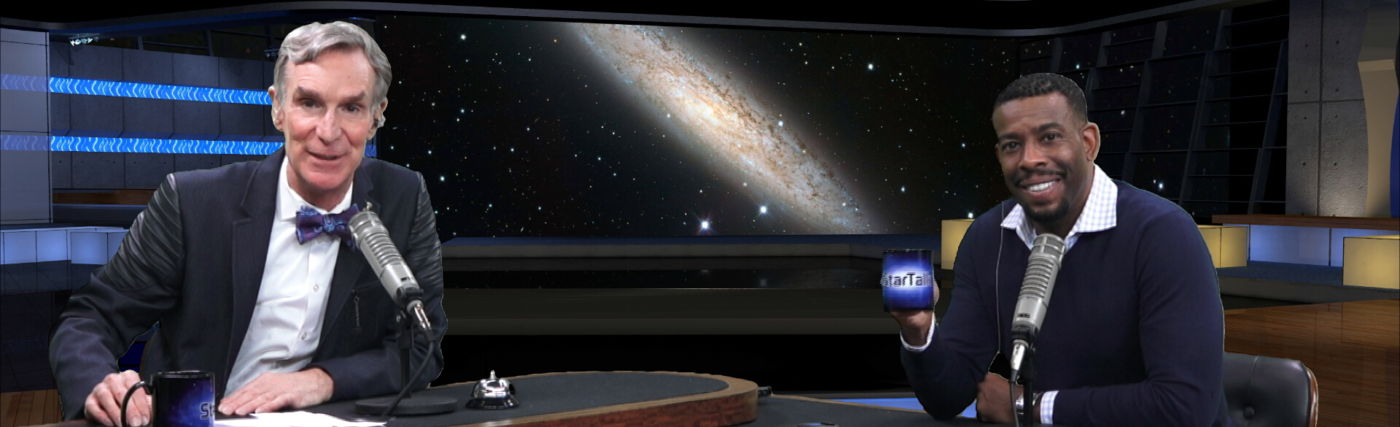
Welcome to StarTalk, your place in the universe where science and pop culture collide. StarTalk begins right now. Welcome to StarTalk All-Stars. I'm your all-star host of this evening, Bill Nye. And I'm joined once again by my comedic, brilliant,...
Welcome to StarTalk, your place in the universe where science and pop culture collide.
StarTalk begins right now.
Welcome to StarTalk All-Stars.
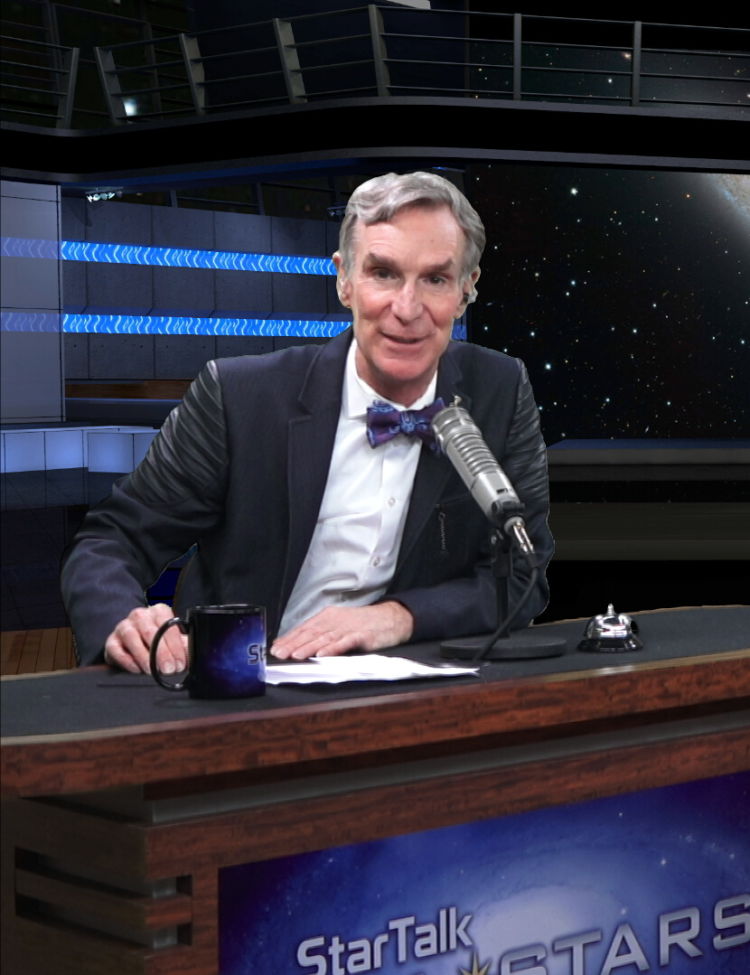
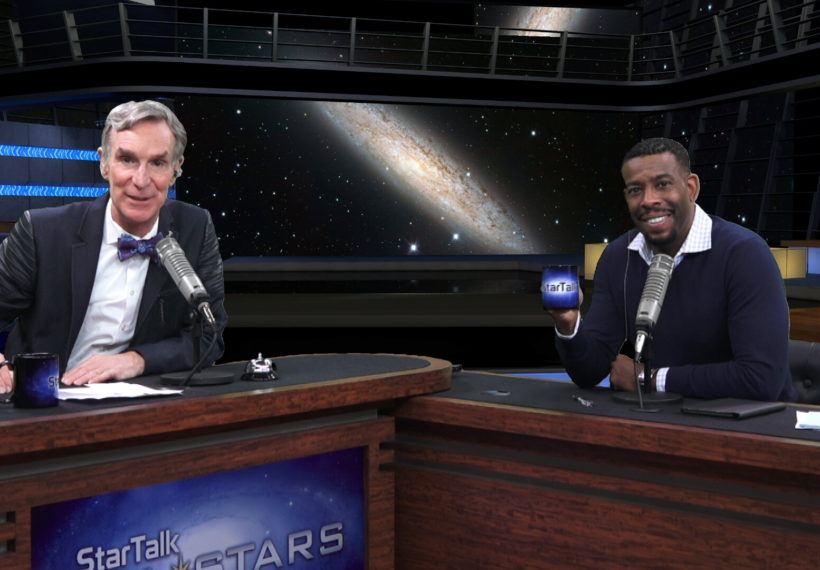
I'm your all-star host of this evening, Bill Nye.
And I'm joined once again by my comedic, brilliant, insightful co-host, the very funny as well as funny looking, Chuck Nice.
Yes.
Thanks for being here again today, Chuck.
Always a pleasure.
Now today, Chuck, it may shock you to learn that on StarTalk, we're gonna talk about science.
What?
Wait, there's more.
We're gonna talk about science literacy and the importance of seeking knowledge and understanding of science writ large and all its manifestations.
I don't understand what you're talking about.
I'm talking about we're in a world where we have alternative facts.
Apparently that's like a thing now.
And to help us out, we have Ross Andersen.
Ross is a senior editor at The Atlantic, where he oversees the science, technology and health sections.
So Ross, thank you for coming and being part of StarTalk All-Stars.
This is great.
Yeah, it's a pleasure to be here.
Big fan of the show.
Great.
Wow, that's great.
Let me ask you this.
So for me, as a human here living, a voter and taxpayer and so on, we have a real problem of people not embracing science the way we once did here in the United States.
Do you have any, like, why is that?
What's happened?
Yeah.
Well, first I'd want to ask you to push back.
When you say the way they once did, what baseline are you kind of referring to there?
When I was growing up...
When was peak science?
Well, when I was growing up, in the 1960s, there was this amazing optimism about the future and there was this, I felt, of course I was a kid, felt this general belief that the process of science would enable you to put people on the moon, to have freeways connecting everyone in the United States, to have phone calls with video, which we got 50 years later.
And these things would all be there and we'd feed everybody and we'd cause the desert to bloom by irrigating it on enormous scales with things like the California aqueduct and Hoover Dam and Ross Dam and Grand Coulee.
And we did, we did all these things.
And that optimism, it seems to me, it feels to me as though it's tied to a denial of science where you now have people who are against vaccinations, you have people who don't trust in agriculture and genetically modified foods.
And you have, the big thing that's going to affect everybody on earth is the denial of climate change.
Now, is my perception incorrect?
Am I misperceived?
Do we have statistics to back up my claim?
Yeah, I think there's something really interesting.
I think there's a lot of things going on there.
So I do think that broadly people are still quite optimistic about the role of science and technology and innovation in their lives and the ability for all those fields, if they can be called fields, to make the world better.
However, as you point out, when it comes to vaccines or when it comes to climate change, people seem to, suddenly they're not taking a real kind of objective look at the facts.
They seem to have made those positions more about identity.
They've been politicized.
And when you say identity, what do you mean?
I am a dorky white guy from the East, so therefore I feel this way?
It may be that, so when someone asks, when a pollster asks me, let's say I don't believe in climate change, when a person asks me about my beliefs about climate change, I'm not, I don't want to speak for anyone, but it might be that I'm not going immediately to some sort of objective reading about the Earth's atmosphere and instead I'm thinking I'm going to authority figures within a particular political movement that I ascribe to.
So you're an expert in your, if you are a climate denial, in this example, your expert is not a scientist or is not the scientific community, your expert is your leader, your political leader.
Well, I want to go to something that you said, when you said the 1960s that there was this optimism, I wonder if there was a point of divergence where at that point, it was more or less true that short-term business interests were broadly compatible with science.
I mean, I think there's some exceptions when it comes to kind of the early Clean Air Act stuff, for instance.
And now we're at a point, at least with the fossil fuel industry, where there's a real tension between, instead of taking a real candid look at climate science and, you know, the stock price of Exxon Mobil, for instance.
So people tie themselves to that, to the leaders, to the way of life of extracting fossil fuels rather than to the science?
Unpack that, as we say in the business.
Sure.
Yeah, I think that political leaders make that calculus.
And then there's all kinds of things that happen where, you know, political media, on the right, for instance, becomes sort of driven to seek out any scrap of information that could help you sustain a climate denial position.
And to magnify that and to not, say, report straight on the IPCC report or something like that.
It was cherry picking data as an old product.
But isn't that also due to the fact that these political leaders are, how can I put it, without, I don't want to be indelicate.
Aren't they in the pocket of a big oil?
Let's be honest.
So when you have a convention where it's a political convention, and on the floor of that political convention, people are chanting, Drill, baby, drill.
Those people don't have any inherent benefit from going from going drill, baby, drill.
It's the political leaders that are being paid off by...
If you're from Oklahoma City, Oklahoma, your economy depends on extraction, depends on oil and gas.
Yes, but your economy can also depend...
And I don't mind those people.
Don't get me wrong.
No, he's some of his best friends.
Listen, yes.
But no, I understand when you don't believe something because it hits you in the pocket.
I'm cool with that, okay, because guess what?
You're feeding your family and so you say, I don't want to hear it because I've got to put food on the table.
Perfectly understandable to me.
There are not enough of those people to drive the narrative.
That's what I'm saying.
So all the other people that join with them, they do it because of a political identity that is tied to the people who have a financial tie to the issue.
So do you agree with that, Ross?
So one supporting point, I think, for Chuck's point, is that big oil is to the left of kind of the Republican mainstream voter when it comes to climate change.
You saw that in the Rex Tillerson hearing, right?
Tell us what you mean.
Oil executives are mostly on board with climate science to the extent that they kind of admit that human-caused climate change is a real thing.
Their preferred policy objectives for dealing with it might be different.
They tend to kind of uniformly favor a carbon tax as opposed to some of the other things, you know, more radical emissions cutting.
So what's a carbon tax?
Tell us about a carbon tax.
Carbon tax is that you basically slap a tax on any carbon emission so that, you know, you're familiar with this idea of an externality.
Love the externality, yes.
Love the externality, okay.
Yes.
This is in economics when you pass the price of whatever you're producing on to somebody else.
You pollute the river and people downstream have to pay for it.
Yes, so carbon emissions right now are a free externality.
If you run a coal plant, for the most part, you can just steam carbon into the air and it's free.
So a carbon tax would tax that activity.
And oil executives favor this or Ross Toersen favors this?
Rex Toersen favors it?
You know, they say that, yeah, I mean, we should take them at their word, right?
Yes, they favor a carbon tax.
How stiff a carbon tax.
It might be quite a light carbon tax that they favor.
It might be that this is sort of the best stalling tactic they've identified.
Yeah, I think that's more likely.
But then to Chuck's point, which I think you're about to address, Ross, was people get on board with this even though they're not invested in it.
That's right.
They get on board with this point of view, rather, even though they're not invested in it.
But the more interesting thing I think is Chuck's point is that you have people for whom their bottom line actually is not affected by policy positions on climate change at all.
And it is only because they have either grown up within or come to identify with a political movement that takes climate denial as sort of one of its signature badges.
That's why they oppose climate change.
So here we are.
Let's say we're on a science-based show, a science show that claims to embrace science literacy.
How would we change the minds of these climate deniers?
And it's important because the more carbon we put in the air, the more people are going to be affected, the more sea levels are going to rise, the more weather patterns are going to change, and it's all going to happen faster than it's ever happened.
How do we change the minds of people?
Is it possible?
Well, I've got a three-point plan.
Oh, cool.
I don't know.
Well, here's my current thinking.
Here's my current thinking is the so-called cognitive dissonance, where you have a worldview that's incompatible with what you're seeing.
So, you have this troubling situation in your brain, and you come up with a rationalization.
And the more evidence that contradicts your worldview, the harder you rationalize it.
You double down on your denial.
And cognitive dissonance, the classics when I was in college was, if you see, if one group sees the movie for free, the movie's okay.
If another group pays money for the same movie, they tend to like it more because they're more invested in it.
And then there are gradients, like people who paid less for the movie than more than the movie.
And so, the more you're invested in denying climate change, the harder you deny it to keep from having this discord, this dissonance in the front of your brain, the singular...
There's a region of the brain that has conflict.
The conflict region.
I do wonder, and this is a strategy that I think has been tried to some extent, implicitly, but there are certain areas of science that do seem to be bipartisan, that people do seem to take kind of a universal pride in, say, the images generated by the Hubble Space Telescope.
Rockets.
And quite a patriotic pride, right?
Or rockets, or the Apollo missions.
Well, but the Hubble Space Telescope, perfect.
Right.
Yeah.
And so I wonder if there's a way of integrating climate science or all kinds of science.
You know, it's drilling down on the fact that the empirical scientific method is what gets you something like a Hubble Space Telescope.
That is this kind of bedrock edifice, and that's also sort of telling us this other thing over here about climate change or vaccine science or whatever it is.
It's not a very good three-point plan, but it might be a direction.
Well, so we say all the time, space exploration, because we're on StarTalk.
Space exploration brings out the best in us.
And this is where you find common ground.
You talk about partisanship.
The example I give, examples I give everybody are Adam Schiff from bleeding heart, raving blue state California, and John Culberson from red state, double down, the safest place is the state capitol building because everybody's carrying a weapon.
Culberson, those two guys agree like nobody's business on exploration of Europa of all things, the moon of Jupiter.
You got to send a huge rocket out there and invest for years to get the mission pulled off.
That's where they find common ground.
Now Culberson generally, writ large, is a climate change skeptic, extreme skeptic, what I would call a denier.
Schiff is embraced, very concerned about it.
So where do we get these two people together?
Would they both have these world views that are just incompatible?
Yeah, I wonder if it is in the science of Venus or the science of Mars, where you say, look, the science that makes these very missions possible.
You could not go to Europa unless you had a sophisticated understanding of how a planet works, right?
Well, there's more to it than that or less to it than that.
People, no, and the other guy is Lamar Smith from Texas.
These guys have, he's got a picture from Hubble on his wall, a huge, very sharp, high-resolution color picture taken by the Hubble telescope of a star field, deep space.
And yet he's a climate denier.
This is surprising to us.
So there's something, you mentioned the word identity, there's something visceral with these guys that they're not to us on my side of it or maybe Chuck, Dr.
Nice's side of it, they're not embracing the same science that we are.
Well, since there's a new sort of nationalist streak in conservative politics, one wonders if the United States were to pay a severe cost in status that was legible to someone like Lamar Smith or even just an everyday conservative voter.
Would that be an important signal because of our pulling out of Paris, for instance?
Let's say we pull out of Paris and we're sort of the laughing stock of the world and China emerges as this sort of ultra responsible new leader of the world order.
You wonder if people would sort of double down and backlash.
It's probably what would be more likely to happen, but there's one scenario where people would kind of register that and think about, wow, it's a weird thing for the US not to be at kind of the idealist bleeding edge on a scientific issue.
I got news for you.
We are already the laughing stock of the world.
So it's a little late for that.
Well, I mean, I do have, but you guys, just anecdotally, I have friends in Denmark, Australia and Britain that are just like, and Japan, and what are you guys doing?
They're asking, what's up with this?
But all those countries, with the possible exception of Japan, have their own kind of quite strident, nationalist right-wing movements on the rise.
So what we want to do is bring people together.
I believe we want to bring people together and address climate change in a big picture way.
So if you think it's their identity, they want to be part of a movement, is there a way to influence that movement?
And you had a cool idea there, Ross, where we're going to make it a national thing, a nationalist thing, that we're falling behind the rest of the world if we don't do blank.
Take it.
What do we do, Mr.
Andersen?
Well, here's an idea.
I'm really interested to see what NASA's promotional campaign for the James Webb Space Telescope looks like as we come closer to launch.
And I do wonder, you know, it's tough to see something like this happening in the next few years, but I do wonder if there is a way to integrate planetary science or just, you know, the larger NASA mission, which obviously, as both of you know, has Earth science as a very high priority, at least for the moment, into the publicity in the run-up to that march.
I have a feeling that the James Webb Space Telescope is something that people are going to be very proud of, just like they were proud of Curiosity, just like they were proud of the Hubble Space Telescope.
And New Horizons, New Horizons.
New Horizons, that's right.
I think what we should do is find a way to blame Mexicans, because that really seems to resonate with people.
I think you're being ironic, Chuck.
I think if you just say, don't let Mexico, they're stealing all of our weather.
Don't let Mexico steal our weather.
By the way, the Astronautical Congress was in Guadalajara this year, which is being, the Mexican people are very proud.
It's the Silicon Valley.
It's already happening.
It's already happening.
Maybe you'll have like Bay Area style weather in Canada before not too long, and we can kind of make America cool again.
Oh boy.
This is a big problem that I really want to figure out how do we get people to work together on this, and I guess it's just everybody doubles down, is not, is to, is not, is to, but it has something not to do with science.
It is, it's some other human nature thing.
And so, where do we, what do we do next, Chuck?
I know you're a cynical, bitter, miserable guy.
I'm a cynical, bitter, miserable guy, mostly because I'm a comic and that's, you know, really what we are.
And that's why you love the president.
That's exactly.
He's just, it's limitless material.
And let me tell you, listen, he's the joke writer in chief, and I, for one, too, appreciate that.
Well, thanks for your appreciation, Chuck.
This is Star Talk All-Star Edition, and we'll be back right after this with Ross Andersen from The Atlantic.
Welcome back to Star Talk All-Stars.
We've been talking about scientific literacy and science education and climate denial-ism with Ross Andersen from The Atlantic.
And I've been your host, Bill Nye, here, guest hosting on my favorite podcast, The Ones with Chuck Nice.
Ah, there we go.
Co-host here in the studio.
Hey.
And Ross Andersen is our guest and he is a senior editor at The Atlantic.
But before we get to, before we get to the next thing.
Which will be Cosmic Queries.
Yes.
You have a new show, Playing with Science.
Playing with Science.
It's a StarTalk branded show where...
Branded.
That's hip.
That's what we say in the 20 pluses.
That's right.
So it's a show where we take iconic sports plays and...
Iconic sports plays.
So think of like the Immaculate Reception, right?
This is 30 years ago.
A little football thing and we'll break down...
There's been a lot of football since then.
And you know what?
We're going to get to all of that too.
The Fog Bowl.
The fog where it was foggy one day.
The Fog Bowl.
Yeah.
Fog Bowl.
So you know what?
That's a good idea for a show as a matter of...
What about the kinetic energy of a modern player?
There you go.
How about that?
So all of these things.
You're really good at this.
This is all the things that we talk about on the show.
The thing that amazes me about modern football players, professional players, is how fast they are.
So that's a show that we're doing.
When I was a kid, they were fast and tough and took a lot of punishment, but they run so much faster.
The money's in it.
So we actually explore that in a show where we talk about the science of sports nutrition and strength and conditioning, as well as player tracking through artificial intelligence that they use.
So we're going to be talking to OC.
Yumanura, Santonio Holmes.
We spoke to Glenn Tobias of the New York Jets, and the Boston Red Sox who is a nutritionist, a sports nutritionist.
It's a fabulous show.
It really is.
With that said.
As a matter of fact, we'd love to have you on.
This has been a lovely digression.
Yes.
Ross Andersen, senior editor at the Atlantic is here, and it's time for Cosmic Queries.
Ross, I apologize.
I just registered that Chuck did not invite me onto the show also.
Well, show us your sports chops.
I'm going to work in sports for the rest of the show.
Why do we have inter-city rivalries?
What human nature thing is that?
It seems like a pretty obvious tribalism thing, right?
Mm-hmm.
I feel like in my life, I've most understood tribalism when watching like a Laker game winner or something like that.
It's the safest gang war you can ever have.
Everybody lines up behind their team, you got your colors and everything like that, and then they can do battle and you can be a part of it vicariously.
It's wonderful.
Imagine that if I were down on that field, I could hit that pitch, I could catch that, sure, I could outrun that major league athlete.
Sure, I could.
I could kick that field goal.
It's amazing.
Make that putt?
You think that's hard?
Listen, that's the great thing about it.
It's like you can be a fat guy on the couch and when your team wins a championship, you can go, we won.
Yes.
Yes.
Let's query.
So Ross, you're going to be on telling us about tribalism.
Yes.
Yes.
But first, a cosmic query.
Take it, Chuck.
Cosmic queries.
Let's get into it and we always start with a Patreon patron.
And so let's go with-
Because they pay to be on.
And absolutely.
So-
That's how it works here.
We can be bought.
We can be bought.
Much like your politicians, people.
Chuck, you are just a miserable man today.
I can't stop it.
Lead on.
What's wrong with me?
Okay, here we go.
Off of Biederschen.
Biederschen says, How should I engage people in civil discussion about science if they are quick to dismiss most science based on their own biases or religious background?
So, you know, we were talking about that earlier, but he's broadening it out from climate denial to just general science.
And there's a lot of general science that is rejected by people for various reasons.
Yes, Ross, why do people think that the earth is 6,000 years old?
Yeah, I think it's tough when you do see that signal in any kind of conversation where someone is really committed to having a very literal reading of the cosmology of a Bronze Age text.
That's a tough situation to be in.
One that I found some success with recently is going right at the flood story by looking at, hey, you actually don't see genetic bottlenecks when you look at the lineage of every single animal on earth to two individuals.
No, the deniers, I spent a lot of time with those guys in Kentucky.
They claim that they show calculations where all dogs became wolves, became...
there's plenty of time, 6,000 years is plenty of time in their view.
The other one that I think is really good for the flood story is just pointing to the quite natural scientific explanation for why there are flood myths dispersed across cultures all across the earth, and that's because we had the end of an ice age.
And so the seas rose, right?
And you had all these kind of coastal cities and civilizations that were swamped.
And that has a real nice hook in the climate change, doesn't it?
That's really going to win hearts.
Yeah.
There was a climate change 10,000 years ago, and that's why everybody...
Actually, it's very cool to me.
I mean, cool in an intellectual way.
Also kind of troubling as sea levels rise on our coastal cities today.
But we got to find common ground.
All right.
Let's move on to Tim Shaw, who says this.
I'm worried that our progress will be dangerously slow in a world where alternate facts are something real and not simply a joke.
Hey, way to go, Tim.
How do you go about changing someone's mind who is at a level of debating clear facts?
Is it worth it to try or better to just focus on advancements of science while ignoring them?
So, you know, Ross, how do you deal...
When alternate facts become an actual consideration, how do you talk to someone?
I mean, seriously.
Is this like Uncle Bob at Thanksgiving that we're talking about or this is like a prospective voter?
What do we think?
Well, you know, I think both.
I mean, Uncle Bob is one thing.
But then when you talk about a prospective voter, you talk about how do you get true information to somebody who can consume it and know the difference.
So, you know, that's a really that's a problem.
Well, here's what happened, you guys.
Enough people embraced a world view that we have an administration that has alternative facts now.
So we're not reaching so we, they, it is not reaching somebody.
And Ross, do you know how we reach them?
Come on, man.
You're a big time journalist.
No one's ever called me that.
I'm going to say the problem, Ross, though, is that you are a journalist and you are probably the most dishonest person in the world.
That's right.
And according to Steve Vanden, I should shut my mouth right away.
So I can't answer this question, actually.
No, I do think that it, you know, in the years to come, I'm obviously in the line of work I'm in.
I really want to stay open minded and really try to persuade people of these extraordinary achievements that science has produced.
But at a certain point, look, we've all been wrapped in those conversations, whether it's with family members or people you meet elsewhere, where you're just not, there's not a common body of evidence even, you know, that any source that you bring up, people are willing to discredit or question your motives or whatever it is.
And in that case, it might be that we sort of have to sadly kind of hunker down and lean into the culture of science where it exists.
And fortunately for us, not the culture, the scientific achievement, the levers of government cannot limit that completely.
You know, there's a ton going on in the private sector.
Obviously, Elon Musk is doing lots of exciting things.
And as you see advancements in those fields, we can all continue to celebrate those and hope that people come around.
Well, what if people don't come around?
I'm not joking, you guys.
I know you're not joking.
Suppose we end up with tariffs on our most popular trading partner and we don't have spare parts for cars or air conditioners.
I said it.
I'm going black market avocado, man.
It's going to be awesome.
Everybody knows about your brand.
That's right.
If you put the nice brand, the nice brand will slip right in.
Nobody will know.
So anyway, there's potential problems and we have to find ways to the word I want to use is reason with our fellow voters.
But it's really it's really a challenge.
All right, here we go.
This is Amy Zinda from Facebook who says this.
And, you know, before I read this and I know I'm I'm kind of joking.
I'm being a little surly.
I'm not being political.
I really believe that anybody has the right to hold whatever political beliefs you have.
So please do not write me and say, Chuck, you're anti Trump.
I'm not anti anything.
No, I am not.
I am.
Yes.
I'm just pro facts and pro critical thinking.
That's all I am.
It's all Chuck is.
That's it.
I'm not anti anything.
I'm going to co-sign that disclaimer and steal it from myself.
There you go.
So anyway, Amy Zenda says this.
Since there seems to be a growing distrust of scientific research funded by the government and several frightening steps by the new administration to quash the publishing of results and information.
What are some other sources, either online or in print, for quality scientific literature that we can rely on in the coming years?
That's a good question there, Amy.
Obviously, the Atlantic.
The Atlantic is your main source.
A magazine about what?
About oceans.
The Atlantic Ocean.
That's all we cover.
It's big.
No, I think maybe nature is one that we can point people to.
The Planetary Society, planetary.org for all your space news.
This is a great question.
Is this question of authority?
If people that discount authorities are experts in fields, then you're really lost, or you can be lost.
What I say to everybody, the thing about the modern world with the Internet and so on, is you have to learn to filter information.
Go online, look at all the stuff, and see if you think it's reasonable.
Wow.
That's funny because our next question, I don't know if this is a question or not.
It might be a rabid statement.
It might just be a rabid statement from Peter Allen Jacobs on Facebook.
Okay, I'm just going to be honest.
I'm the one who wrote all these questions.
No.
Peter Allen Jacobs says this.
He's coming to us from Queensland, Australia.
He says, the most essential invention is an internet filter, which we can reliably distinguish fact from opinion from BS.
No such thing, man.
And so that's what I want to know.
So I'm asking both of you, with the advent of fake news playing such an important role in this past election.
You're not political.
No, I'm not political.
No, I'm really not.
I'm really asking, how would you, Ross, in your industry, how do you go about distinguishing fake news?
Is there a responsibility to say like, this is not real?
Like you have the onion, right?
But we all know if you read it in the onion, it's satire.
It's not real.
So how can we have something like that for actual news?
Ross?
Yeah.
Facebook has been experimenting with an algorithm where if enough people say that something is fake or reported as fake news, a little icon pops up next to it that says this is disputed.
They actually, we wrote a piece arguing that they should buy Snopes and actually have their own kind of full-time fact-checking team inside just to kind of get the very worst of the stuff off Facebook.
They've also banned, I think, something like 180 outlets already from posting.
But yeah, they've had some success with this algorithm and the word is, and this is all very preliminary research, but that it does actually work that when people see that disputed icon, fortunately.
So maybe Facebook will be the ultimate honest broker in the end.
They do.
There's not a good chance of that.
You scared the hell out of me just then.
But crowd sourcing, crowd review has some value.
If you have enough people going on, but you at The Atlantic, you try to be a mainstream journalist, right?
You are a mainstream journalist and you have standards of research and so on.
So how many people, when you write a story of 2,000 words or so on, how much research do you guys do traditionally?
Yeah, like for instance, I have been working on a sort of 9,000 word climate change feature for our April issue for the last 6-8 months that took me to Siberia.
And it's been copious amounts of research talking to climate researchers and people in Russia and everything in between.
I can't really get into the details.
What did you see in Siberia?
I can't say, but we also have just a devoted fact checking team for whom I am eternally grateful.
It's amazing to publish a piece that has rigorous fact checking behind it the way we have in the magazine is just a wonderful feeling.
It gives you really solid ground to stand on.
How much energy do you guys put into denying the fake news people?
I guess you have letters to the editor that you filter and so on.
Sure.
But do you guys plan to discredit fake news outlets kind of thing?
Yeah, I think for us to take a swing at it, and I don't want to speak as though the Atlantic has some exalted position in the world of media, but for us to kind of deem it worth our time, it has to achieve a certain level of popular currency for us to take.
I mean, if we were, we just don't have the staff to be, for instance, sifting Facebook all day, kind of looking for specious claims about science, and it would take up all of our time because there are a lot.
There are a lot.
And speaking of take up all our time, Chuck, Ross, we'll be here.
This is StarTalk All-Stars.
I'm Bill Nye with Chuck Nice and Ross Andersen from The Atlantic.
And we'll be back right after this.
I'm your host this week, Bill Nye, along with the brilliant and insightful Chuck Nice.
And this week, nicely said, this week, our guest is Ross Andersen, who's a senior editor at The Atlantic.
We're talking about science literacy.
And I gotta tell you guys, I feel like we go over the same ground over and over, that we are scientifically literate, we are well-researched, and those other people are not, but I just don't know how we're gonna reach them, because it's important to reach them.
We're all in this together.
And this is the Cosmic Query portion of the show.
Yes.
So let's take a question, look at it from a scientifically literate, embracing the other side point of view.
Take it, Chuck.
Okay, I'm gonna give you a good challenge on that one.
Drew Huber from Facebook says this, are there still scientists that are using alternative facts to claim that climate change is not real?
Well, there's the cherry picking of data.
Ross, do you deal with this all day?
I take it.
Yeah, absolutely.
You do have people who will, for instance, point to a particularly heavy snowstorm in California or a cold day in January and say, oh, see, yeah, no, climate's not changing, just like we thought.
Senator Inhofe showed up on the Senate floor with a snowball.
We laugh, but he and his, the people that vote for him at some level think he's on the right track.
Stunning.
That is absolutely stunning.
There are fewer snowball days than there used to be.
That's something to consider.
But it's confronting people or embracing people or becoming partners with people who have doubled down on ignoring scientific, what seemed to be provable scientific facts.
Let's try another query.
All right.
John Clemens from Facebook.
Is social media making us dumber?
Is my...
StarTalk on your electric phone...
There you go...
.
device, StarTalk's enriching your life and making you that much smarter.
Right, Uncle Bill?
Ross, you deal with...
You used to be a print magazine exclusively.
But how much of...
what fraction of your business is online now?
Oh, I mean, the vast, vast, vast majority of it.
I mean, we publish maybe 10 to 15 pieces in the print magazine monthly, and we publish maybe 40 or 45 articles a day on the web.
It's a factor of 100, thereabouts.
Do you feel that there's a...
People who follow you online don't accept your reporting as accurate?
Do you have the pushback, because it's social media and it's dismissed as making us dumber?
Sometimes.
I think there's a couple things going on.
First of all, I want to say that, of course, like any human being, we make mistakes and we regret them and we try to be really transparent about correcting them as quickly as possible.
But yes, as far as social media making people dumber, I feel like any totalizing narratives around social media and making us smarter or dumber are usually themselves dumb.
It's obviously a nuanced phenomenon.
I don't know about you guys, but I've found social media making me smarter in all kinds of ways.
I feel more kind of in touch with what's happening in the world on a moment-to-moment basis.
Now, what that's doing for me is...
But I remember Gil Scott Herron with The Revolution Will Not Be Televised.
Turns out it is being...
If you have a revolution, it better be on Twitter.
It's not happening.
Absolutely.
So to that end, imagine how much more difficult it would have been, no matter how you feel about these ladies, how much more difficult it would have been to organize the Women's March without social media.
That's right.
With social media, it was...
Millions of people showed up in several cities, dozens of cities.
And how do you...
Ross, do you have any opinion about this proposed science march?
Yeah, so one of the responsibilities of my job is not to advocate for political activism of any sort.
But you're reporting on...
We'll be watching it with interest.
Yeah, okay.
All right.
Let's take another query, Chuck.
All right.
This is OI Ocha.
OI is how you spell the first name.
I don't know how to say that.
Oye.
Oye?
Okay.
Oye Ocha.
Oye Ocha.
There you go.
If people can't use facts and reasoning to make well-informed votes, and there's little hope of improving that situation...
It's a theme today.
I'm telling you, and I'm just going through pages of this.
I've got stacks of them.
I've got stacks of them.
Is there a payoff phrase there at the end?
Well, the payoff is, should we consider changing the way we vote?
Well, this is, hey Ross Andersen, you know, no matter what else happened, this is the second time in my lifetime, I guess it's the fifth time in my lifetime, that the popular vote did not determine who became president.
Do you think there is any way ever that the electoral college would be modified in any way?
It sounded like that questioner was referring more to, should we be selecting out people who are stupid, demonstrate some capacity for evaluating judgments, scientific evidence to vote?
And I would say absolutely not.
Absolutely not.
It's an ugly history to ideas like that.
But electoral college reform, I'd probably want to bring on one of my colleagues from the political section.
He's blushing.
He's blushing.
It's an interesting idea.
Well, everything's interesting.
Do you think it's possible?
No, not in the near term.
And would it be any better or would it just be...
The electoral college, as I understand it, was created to prevent New York and Pennsylvania from having too much influence.
Right.
I think Trump has a good point, too, when he says, look, I didn't campaign on that.
The campaigns would have looked totally different.
It's not the case that, oh, if we had run for a popular vote, Hillary would have easily won by three million.
He would have lived in Texas, for instance.
Yeah, but he also said that the electoral college is a disaster.
I also thought it was genius.
And then it's the best invention ever once he won.
And also, Mr.
Andersen, are you allowed to express an opinion about interference in the election?
And by that I mean, of course, the direct interference possible by Russia.
The influence of the FBI with these spurious emails or redundant emails at the last minute.
And then more importantly, the suppression of voting, where you try to create laws and gerrymandering that makes it, makes certain people's votes ineffective or not influential the way they would be otherwise.
Yeah, I think since we're on, this is a science show, I would say that it seemed to me that you moved in order of strength of evidence when you listed those.
So I think there's excellent evidence that people's, that there's been suppression of voting rights in particular places for obviously politically motivated reasons.
And I certainly have no reason to doubt the assertions of the entirety of the intelligence community that, you know, Russia seems to have interfered with this election.
But, you know, I think we have to assign a proper credence to that given that, you know, that evidence actually has not been published and hasn't been vetted by journalists.
We are sort of taking intelligence officials at their word.
See there, Chuck, you can't get that point of view without a guy from the journal, from the mainstream media.
I think it's great.
Now, let's get one more query and then pretty soon it's going to be time.
For the lightning round.
And so let's make it a really quick one.
I don't think it needs.
This is Bob Farrell from Facebook.
When did StarTalk turn all political?
What a bummer.
When did it?
This is your show.
I'm trying.
I'm a guest host.
We're trying to.
But here's the here's the scientific question about politics.
How did we get here?
It's a surprising thing where we have what would nominally be called an anti-science movement that is very popular.
And why is that?
What is what has happened with the mainstream science community that things have changed or seem to have changed?
Ross?
I think it's interesting that no one identifies as anti-science.
Hi, I'm anti-science.
This is my business card.
Oh, you're right.
So it's not an, I mean, people, for instance, much opposition to vaccines is a matter of alternate, of people saying that, you know, scientists are in fact the ones who are ignoring evidence.
So maybe that's something that we can, it's a comfort to me, albeit a small one in this, in these weeks, that people are still appealing to science as an authority.
How do you mean?
Like in the case of vaccinations, they're appealing to science?
I mean that it would be all, like it would be really distressing if people were just outright saying that actually science is worthless.
It tells us nothing of interest on these subjects.
Instead of actually the scientists that I listen to or this particular data.
If we're appealing to the same intellectual standard.
See, there you go.
Yeah, my authorities are better authorities than your authorities.
And this idea that the authorities on the other side are part of a conspiracy is remarkable.
And so we'll see how that shakes out.
Let's get another query.
Are we in the last five minutes?
I think we are.
It's lightning time.
It's lightning time.
OK, here we go.
This is Robert Lane.
If everything is made of energy, then everything that was or will be is already here.
If humans are made of energy, where is all the energy coming from to increase the population?
Oh, like, dude, that's like so out there.
The reason humans are able to live on the Earth is we have energy from a nearby star, the sun, and we grow food.
Yes, there's internal energy in the Earth that moves tectonic plates around, which has a great effect on the carbon cycle and so on.
But the primordial energy that created the sun came from the Big Bang.
And do you know why we had a Big Bang?
Nobody knows why!
So some people are very troubled by that.
And there's this huge unknown.
Other people think, wow, that's cool.
Let's learn more about that.
Let's do astronomy and agronomy and agriculture and physics and chemistry and change the world.
I digress.
Take it.
One more question.
There we go.
This is Jess Woods from Facebook.
Dear Bill, how can we effectively teach the youth and educate others about topics such as climate change evolution when we are encountering resistance at the same time?
Well, Chuck, it's easy.
You watch Bill Nye the Science Guy while you're in school.
There you go.
You watch Bill Nye Saves the World on Netflix.
You listen to Ross Andersen at the Atlantic.
And you listen to StarTalk and turn it up loud.
Bingo.
I like it.
A minute and a half, Chuck.
Let's go.
Here we go.
Let me see.
What are the odds of Neil and Bill reaching out to the administration to propose realistic goals for manned space exploration?
So what we want to do at the Planetary Society, we want to have humans orbiting Mars in 2033 without increasing the NASA budget at all.
With the people that are coming in to NASA with the Trump administration, it's very reasonable we can move that to orbits earlier.
And by orbits, I mean, orbital opportunities 2028.
Here's what we want out there, everybody.
Let's not have a reset on human spaceflight.
Let's use the existing hardware.
The Orion space capsule, CTS 100, the SpaceX's Dragon capsule.
Let's use the existing stuff and advanced space science and exploration.
In the meantime, everybody out there, let us continue the search for life with robots on Mars and Europa.
A discovery of life on another world would change this one.
planetary.org, we'll tell you all about it.
There you go.
One last question, Chuck.
This is Hugo from Facebook.
He says, can you demonstrate that the term alternative fact is just a marketing type rebranding of the term propaganda?
Take it.
Ross, 12 seconds, propaganda.
He laughs out loud.
You've been listening to StarTalk All-Star.
This week's guest has been Ross Andersen from the Atlantic.
He's the senior editor.
Chuck Nice, funny as well as funny looking.
And I've been your guest host, Bill Nye.
Listen to StarTalk.
Thank you all very much.
See the full transcript



 Unlock with Patreon

 Become a Patron