



 Unlock with Patreon
About This Episode
Are our parts replaceable? Neil deGrasse Tyson, Chuck Nice, & Gary O’Reilly sit down with bestselling author Mary Roach, who discusses her newest book, Replaceable You, and the quest to grow organs, build parts, and engineer the human body.
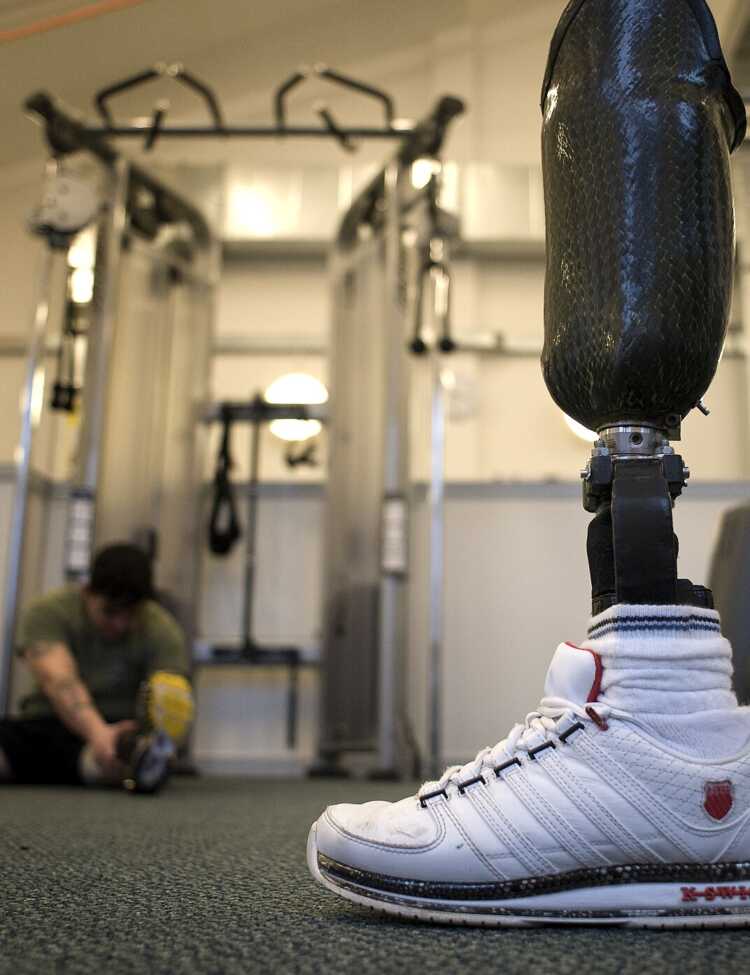
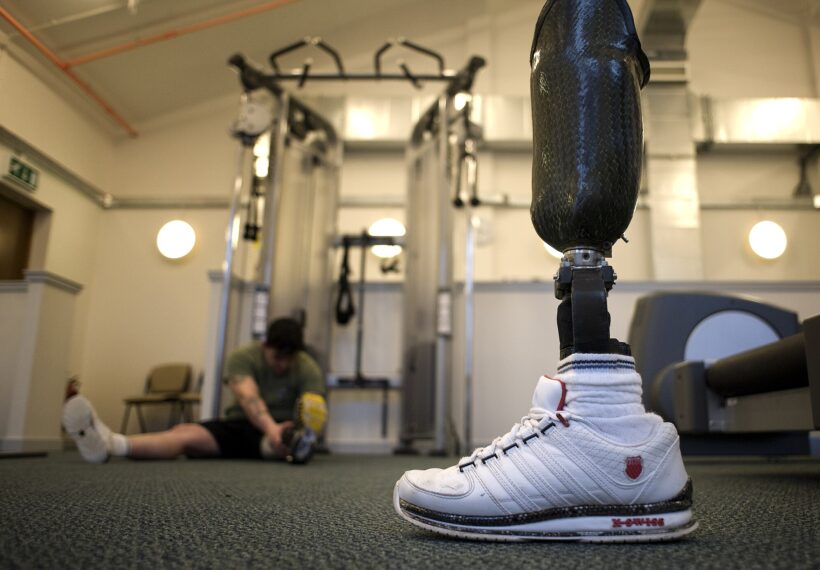
The discussion begins with an exploration of the human body as a complex machine and how far medicine has progressed in the replacement parts business, a practice dating back to 1500 BC. We look at pop culture, where shows like The Six Million Dollar Man and The Bionic Woman gave us the word bionic and the dream of being built better, stronger, faster. Mary shares anecdotes from her book, including a deep dive into Iron Lungs from the polio era and the difficulties of modern prosthetics, particularly hands.
The conversation takes a historical turn as we look at nose replacement, which has been a necessity since nasal mutilation was a popular punishment for crime. Roach shares stories of an army surgeon who designed a Groucho Marx-style nose on a pair of glasses, and earlier surgeries requiring patients to keep their heads immobilized with a flap of tissue tethered to their own arm.
Next, we turn to bionics and organ replacement. They discuss the challenges and triumphs of modern prosthetics, including osteo-integration and the issue of infection. The biggest obstacle in whole-organ transplantation is rejection. This leads to a discussion of xenotransplantation (using pig organs), the necessity of genetic editing to remove certain proteins, and chimerism: growing human organs inside pigs for personalized spare parts.
Finally, Mary Roach reveals a bizarre chapter from her research: a surgeon who used a man’s middle finger to recreate his penis after cancer, a moment that prompts Chuck Nice to question the limits of surgical innovation. They wrap up by looking at 3D-printed organs and whether it could be accelerated by AI. Is this the road to immortality, or simply better medical care?
Thanks to our Patrons Hubert Górecki, Michele and David, Antonio, Luigi, Normie, Ronald Stephens, Jessica Shawley, Michelle Harris, Angel Cueva Hernandez, S MB, Tony Pryor, Mike LaHaye, Samuel Ahn, Kendrick Frison, Lori Harting, David Aldrich, allen chen, Mark McDuff, daketchek, Nathan Boorom, Steven G., Emilio Lopez Hatt, Leslie Lantz, Ken Gelwix, Nick4547, James G Avdoulos, Astitva, Dana Lewis, T, Claire Davis, Richard S, Glen Brown, Sierra Tornabeni, Sue Peters, Stefano Ete, Shawn Sellers, Adriane Underwood, jason jones, Charles, Infuriated Jurijcorn, Que the music, Jeremy Hunter, Sampson, Bhushan Nene, Paul Kruger, Sean Wyatt, Carlos Pelayo, Joey Mack Newell, Alex lakovidis, Cookiehart, W Hollifield, Davi Martin, Hd4122, Shon Bucklin, Tony Taveras, aeonoku, Shawn Browning, ben dewrance, Black____Monday, J Hardman, Erik Krasguidotti, Thegayestmanalive, YBenali, Richard Green, Brian Charbonneau, Syronn Terry, Bruce Griffith, Amir, Tom Pritchett, Guido Vermeulen, Povvy, Sigurbjorn B. Larusson, David Paul, Kristoff De Maeseneer, Scott Strum, Roni Riabtseb, Monopolyworld, Naeem C, Jayson Cowan, and Steph Dean for supporting us this week.
NOTE: StarTalk+ Patrons can listen to this entire episode commercial-free.
Transcript
DOWNLOAD SRTGary, Chuck, are you in need of any organs?
Are we talking Hammond or Steinway?
Yeah, exactly, yeah.
All right, we’re talking about Replaceable You.
All the ways our organs and appendages might need replacement in the future.
Coming up with the one and only Mary Roach.
Welcome to StarTalk, your place in the universe where science and pop culture collide.
StarTalk begins right now.
This is StarTalk.
Neil deGrasse Tyson, your personal astrophysicist, and I see next to me Gary O’Reilly.
That must mean this is special edition.
Gary.
Hey, Neil.
How you doing, man?
Former soccer pro.
Allegedly.
Soccer announcer.
And you lend of yourself to our cause.
Yeah, with pleasure.
Thank you.
Chuck, good to have you, man.
Always a pleasure.
Okay, professional stand-up comedian.
You’re working tonight.
I am, man.
And it makes no difference to stay aware because it’ll be over by the time anybody hears this.
So today, we’re titling this, Are We Replaceable?
Are we replaceable?
I see you’ve been talking to my wife.
Are we replaceable?
So what does that even mean, Gary?
Okay, let me sort of phrase it this way.
Some see the human body, especially the human brain, as the most complex machine we know that exists today.
In the universe?
Yes, that we know about.
Normally, when you buy a complex machine, it comes with the contact details for the manufacturer.
The warranty.
Yeah, no such luck with the human body, as we all know.
So how far has medical science got when it comes to replacement parts?
Just FYI here, humans have been in the replacement parts business since about 1500 BC.
Wow.
That will all get explained.
I’m not going to steal anyone’s thunder, so Neil, if you would, please introduce our guest.
Well, we now have three or four time, five, how many times has this person, how many times she’s been on here?
I don’t know.
Reintroducing to the StarTalk fan base, Mary Roach, Mary Roach, welcome back to StarTalk.
Thank you, I think it’s like five.
Five, I’ve lost count.
New York Times Best Selling Author, we eventually had to boost your vocabulary to put more than one word in the title of your books.
Because you, I got you, listen, we got here, stiff, that was like dead people, grunt, that was like military, bonk, I think that was just sex.
It has to be.
Fuzz, well, I forgot what it was, that bad man.
Bad sex.
Gulp, and finally we added more words to your title, Packing for Mars.
Packing for Mars.
Packing for Mars.
And that’s just six out of the multiple books.
And latest offering is, I love the title because it’s so melodic, Replaceable You.
Replaceable You.
This should be a song with that title.
My Sweet Replaceable You.
Maybe there is a song.
It’s a play on Embraceable You.
Subtitled Adventures in Human Anatomy.
And that’s out at the fall of 2025.
Welcome.
Thank you.
Thank you.
And you’re in from Oakland, California.
Thanks for coming to my office here at the Hayden Planetarium.
Always a pleasure.
Excellent, excellent.
Putting us on your schedule.
So you pick these topics that no one else thinks to talk about and then you just blow it wide open.
That’s my thing.
That’s my thing.
And you approach it journalistically, but all of your source material are people who are active in these topics.
And you put it together in ways no one imagines even possible.
So this is…
It’s incredible, isn’t it?
Yeah, yeah, it is.
It’s a unique niche in the non-fiction verse.
Nice.
So that’s just, again…
No, I go and I target some unsuspecting expert researcher scientist and I use them as an unpaid tutor, basically.
Oh, there you go.
Wow.
And if they’re good and they’re educators, they’ll love to talk.
They love to talk.
They do.
Like their spouse doesn’t want to hear about it anymore.
Exactly.
And like, oh, here’s this woman.
She wants to know what I do.
Come on down.
Yeah.
So you have explored human behavior, not only physiologically, but you bring a dose of humor to it.
That’s part of our branding here.
If you can’t laugh or at least smile, you know, go home.
Yeah.
Yeah.
You just spoke to half the country right now.
All right.
So is there one or more words that you might describe yourself?
If I were to pick, I would say journalist, science communicator and writer.
Yeah.
All of those work.
I might say non-fiction author.
Sure.
Funny sometimes.
Okay.
Yeah.
We have something in common sometimes.
Journalist, science journalist sounds a little highbrow for me.
It does.
Doesn’t it?
It does.
It doesn’t sound fun.
No.
I was going to say it sounds a little stodgy and boring too.
Yeah.
That’s not me.
It does not apply to you at all.
So, Replaceable You, Embraceable You.
What started you on that journey?
At some point, you have to pivot and say, I’m done with the rest.
Let me go do something else and know what I’ve done before.
It’s always very exciting that moment where like, I am so done with filling the blank.
I’m ready to move on.
Yeah.
So, this one started, I got an email from a reader who had a book idea.
I would love to say that she was like, you should write about replaceable body parts.
I was like, hey, done, next book.
But in fact, she said, you should write a book about professional football referees, which is not the best match for me.
Yeah.
So, but we had a correspondence back and forth.
It turned out she’s an amputee, specifically elective amputee.
Like, she wanted her foot because her foot didn’t work well.
She couldn’t walk right.
She’d had spina bifida anyway.
I was like, whoa, it was really hard for her to find somebody to take off her foot.
Nobody wanted to do it.
They’re like, but this is a healthy foot.
And she’s like, I can’t really walk on it very well.
So anyway, that was one thing that got me headed in that direction.
Wow.
And the other thing was I was…
So you amputated the foot because she couldn’t find a doctor.
I did, you know, it’s not that hard.
It’s really, with the right equipment or even the wrong equipment, not even the wrong equipment, it’s pretty doable.
The duller the better.
And I didn’t charge her very much.
There you go.
She did get it cut off, but not by me.
So for many of us of a certain age, we all watched the $6 million man.
He’s the first replaceable body part.
We can rebuild him.
We can make him stronger.
Better, stronger, faster.
Yeah, yeah, yeah.
And he had the eye that…
Which would be annoying, right?
You cue up your eye and it goes…
Why does it need to do that?
Right, and so then that was followed by, was it also the $6 million woman?
Lindsay Wagoner.
She had the ear instead of the eye.
Oh, okay, so she could have…
So I thought that was inventive and creative, and it gave us the word bionic.
It did.
As a bionic man.
But none of that was part of your inspiration for this?
Well, that’s lodged in the back of my head because I grew up, I watched a lot of 70s television.
I did watch the Lee Majors as the bionic man.
Yes.
Dee dee dee dee, dee dee dee.
Wasn’t that the theme song?
Yeah, that was the theme song.
There we go.
And dare I say…
And they had to show him running in slow motion because he could run up to 60 something miles an hour.
And they speeded up to…
I have seen a white man run that fast.
So I said, I’ve got to watch this show.
Put the man on the Olympics.
So Gary, where are you going to take us first?
It’s interesting.
Having read the book, it’s 17 short plays, different cast, different themes, but it’s all based around this medical regenerative science.
How did you go about that and not rinse and repeat every single theme in 17 chapters?
I’m always going for kind of an odd take on things.
Like again, the chapter, the amputation chapter, it’s specifically about how hard it is if you want to get something, and that bias for wholeness.
So I wasn’t like, here’s the latest developments in prosthetic limb technology, because that’s, you know, you go to Wired for that or that’s not my thing.
Go anywhere else for that?
Yeah, and I try to throw myself into it.
Like there’s a chapter on mechanical breathing.
So I spent some, I found an old…
Iron lung.
Yeah, an Emerson…
You spent some time in an iron lung?
Yeah, it was an old Emerson iron lung from the polio era.
I mean, the original polio era.
Not the one that’s coming.
The one that’s coming.
Yeah, exactly.
Get ready, people.
So that, yeah, that was fascinating.
So, you know, I’m always looking for a different way in, you know…
Having done all this research, having gone around the world, it seems, do you get the feeling that medical science has failed us, that we’ve come so far in other areas, we’re not able to get ourselves into a position where we can just chop and change parts?
Yeah, no, I wouldn’t say it’s a failure, because I think the thing to keep in mind is like, medical science has had a couple hundred years, right?
And the human body’s had millions of years of evolution, so it’s like it’s, that’s a hard thing to compete with.
So I don’t feel like it’s a total failure.
Wait, wait, we had millions of years of evolution, but in 10 years we went to the moon, so I’m not buying that.
We want to do it, we can do it.
Right, yeah, but I will say that, would you say that maybe it’s about, so there’s not a lot of people here in America, around the world you might find this, but not a lot of people here who are missing limbs, appendages, whatever, which means there’s not a lot of money in it.
Or the urgency of it.
Right.
Well, the DOD spent a lot of money, you know, especially Iraq, Afghanistan, everybody stepping on IEDs.
They funded a lot of work into prosthetics.
I mean, it’s getting there, but, you know, it’s the kind of thing, the hand, there’s five fingers that are moving independently, and you’ve got to like track the signals from the brain, and that’s got to, so, you know, most people who have one arm missing or part of an arm, they just use the other arm.
Right.
Does it reach over and pick it up?
So was there no inspiration that came from Star Wars, where…
Luke lost his hand.
Yeah, Luke had his hand cut off in a saber fight.
Did he now?
And then, and you say, oh my gosh, and then the next scene, he’s just sort of…
Yeah, the next scene is him getting a new hand.
Yeah, and it’s like, okay, I just got a new hand.
Everybody thinks that’s easy, but it’s not easy.
Also, those arms, they’re heavy, they have a battery that you have to charge, they’re like $15,000, insurance doesn’t pay, so it’s just not there yet.
But, I mean, you know, but give it some time.
Yeah, I was just exploring what sources of motivation might prompt people to think this way.
And that might have been such a moment.
Right.
Right.
So if we sort of jump into Replaceable You, you start, the first chapter is about noses.
Yeah, yes.
And then you open up as to how long we’ve been in the business of replacement noses.
I mean, I don’t want to tell this story because it’s yours to tell.
At least it’s Michael Jackson.
Don’t be silly.
That’s a different nose.
I had a beautiful nose.
Bubbles took my nose.
Poor Michael.
One of the most famous astronomers had a fake nose.
Really?
Did you go bright?
I don’t know if he got into your book.
He’s in the first…
Yeah, because he read the book.
I hadn’t read the book.
Who didn’t read the book?
He read the book.
Who didn’t even read the first chapter?
Thank you.
Gary did our homework.
I love it.
So please, please expand on the nose replacement industry and whereabouts it began and why.
No, we don’t.
Leave it in.
So, yeah, well, it’s because of nasal mutilation, which was a popular punishment, you know, going back.
Yeah, because, first of all, nobody wants their nose cut off, but also it was like good deterrent, right?
Because everybody sees your face and they see it.
It’s literally the visible deterrent.
Yeah, it is.
Wait, wait, that was a punishment for a crime?
Yeah, for crimes.
What kind of crime?
You name it.
You name it.
The crime of wanting to spite your face.
I had to do it.
I had to.
Okay, don’t use that one tonight on stage.
Believe me, I’m blonde, okay?
Okay, so, and what culture was big on this?
This was in Ireland, in Egypt, in the Middle East, all over the place.
So how would they do it?
They just cut?
Just hack it off.
There was this story about Nepal.
There was this whole town, Kirtipur, supposedly, where because the whole town was disloyal to the local conquerors, invaders, whatever, they de-nosed all the male population.
My God, we are just awful as a species.
I’m just saying.
How disgusting.
You ever been to an ancient ruins, be it Roman or Greek, and seen a statue and its nose has been chipped away?
The nose is chipped away.
But is that on purpose?
Yeah, defacing their gods.
I thought it just fell off, like the old men in the mountains.
I’m guessing it was defacing their gods.
Oh, is that right?
Apparently so.
Is that right?
Wow.
So the literal meaning of the word deface would be to just…
Slap off your nose.
Yeah, pack off a nose.
That’s interesting.
So yeah, where were you when I was writing the book?
Oh, yeah, wow.
That’s so cool.
But also, and then there was a…
Have you said the old men in the mountain that’s in New Hampshire?
New Hampshire, yes.
And the nose fell off there.
Natural causes, however.
So who was the military surgeon that came up, US military surgeon came up with an idea for noses?
Frank Tettemore, yes, love him.
Frank Tettemore, okay.
1894, Frank Tettemore, army surgeon, came up with, it was a pair of glasses.
This is going to work mostly for men.
Pair of glasses, okay, and then you would hang a celluloid plastic nose off the glasses, but you need a little bit of nose left for the glasses.
And then at the bottom, to hide the line, there was a mustache, so it’s basically a medical version of that, yeah, exactly.
But what was more amazing, although it’s hard to beat the Groucho Mars glasses, was going back to like the 1500s, there was surgery where you would take a flap from the cheek or the forehead and then separate it, but leave it attached in one spot, flip it over onto the nose, leave it attached so it has a blood supply while it’s growing in on the nose, right?
And that worked pretty well, but you’d have scarring on the face.
So this guy, I love this guy, Tagliacazzi, Gaspari Tagliacazzi in the 1500s is like, we need…
Was he Italian?
No, he was from Pittsburgh.
So he came up with this thing like, let’s take the underside of the upper arm…
That you don’t normally look at.
That you don’t look at, right?
And there’s no hair there or anything.
But the problem then is that you had to have your head caught.
Like attached to your face, your arm attached to your face until the girl was in.
You like you’re checking if you have BO.
It’s that position, right?
You do like that for a couple weeks.
So he had this whole harness system set up.
Back then, everyone had BO.
Let’s be clear about this.
So that made it easier.
Am I lying?
That’s true.
There’s a statue of Gaspari Tagliacazzi in Bologna.
It’s like a niche in the wall and it’s a full figure thing and he’s stepping forward towards the viewer and he’s holding something in his hand and you like look closely.
What is it?
It’s a nose.
Wow.
That’s his thing.
That’s completely creepy.
So there was a whole industry to repair those who were defaced.
Yeah.
And then syphilis came along.
More need, more demand for fixing noses.
It’s been a thing.
Now what’s the tie to syphilis?
I mean, I’m not familiar with the…
Eventually, if you don’t treat it, I guess the bridge of the cartilage.
The cartilaginous, the deteriorates, something like that, yeah.
Let’s get into how implant surgeons, plastic surgeons, as we historically refer to them, came across the golden ratio and Fibonacci sequence when it came to breast implants and back transfer.
That just seemed to be surprising.
It was surprising to me, and that’s why I decided to go to Mexico City and see this plastic surgeon.
He applied the Fibonacci, the golden ratio, which is kind of two thirds, one third.
It’s been around a long time, and you can find examples of it in nature, those shells like that, and the design of sunflowers on a sunflower plant.
It turns up everywhere, apparently.
Anyway, so this guy wrote this paper.
There were a couple of papers.
One was on the perfect calf, and one was on the perfect buttock proportions.
And when he did a Brazilian butt lift, basically, taking fat from one place and applying it elsewhere, he would use the Fibonacci Sequence.
I imagined him with, I don’t know, a protractor and markers.
He’s like, no, I eyeball it.
By now, I can eyeball it.
But anyway, so I just was kind of interested in that whole.
I was not expecting to read about the Fibonacci Sequence.
In a butt chapter.
Yeah, I was going to say.
Yeah, yeah, yeah.
Well, I wasn’t either, and then I, you know.
So would Sir Mix-A-Lot agree with these proportions?
Oh.
He likes big butts and he cannot lie.
Oh, sorry, yes, okay.
Well, thank you.
I know the song.
So is this an evolved, yeah, it’s from the 90s, actually.
It’s a pretty old song.
It is a relatively old song, but he would not.
But it has to do with any evolving aesthetic that this involves.
So I was interested because this was one of the first, this was the first chapter that I reported.
So, you know, going back some years and the Kardashian butt was the big thing at that point.
And that is literally, that is, yes, it was the big thing.
Yes.
And that is not involved from the JLo butt.
Yes, the original, the OG butt.
You know a lot about this.
Yeah.
So I was curious, you know, now is he discarding Fibonacci for Kardashian?
Like, how does he deal with this?
Anyway, so it was an interesting conversation and an interesting afternoon, seeing this person have their fat from here, put here and back here.
Yeah, yeah.
You mentioned prosthetics just a minute ago, but we have some really advanced prosthetics that have come on with microprocessors.
They cost a lot of money.
To the point, are they worth it?
And then I asked myself.
Well, what do you need a chip in your implant for?
Because you’ve got them.
So you get a black implant with a chip?
No, not your butt.
Yay!
Yeah, use that one tonight.
No, but seriously, what do you need a chip in?
Not in your butt.
Not in your butt, no, in a prosthetic.
In a leg or an arm.
Then I started to read further through the chapter and went, they cost how much?
And they’re not even waterproof?
They’re not, and the battery needs to be charged.
Yeah, yeah, yeah.
And they’re heavy.
That’s another thing.
But for a leg, particularly if it’s an upper leg, they’re pretty great for legs.
They can help.
But how do you get stability in your central gravity when you’ve got another person that comes…
Practice.
Ah.
Yeah.
But they can kind of, like if they sense that you’re about to fall, they can kind of help prevent that.
And there’s some that kind of, that use AI to kind of learn your gait.
And I mean, so the legs have come a long way.
The legs, the legs are a lot.
I mean, I went to the National Gathering of the Amputee Coalition.
So it’s a huge, like they book the whole hotel.
That’s a thing.
And like you’re so you’re in the lobby and like everybody has a prosthetic leg.
It’s kind of great.
So or but not so many arms because the arms are, you know, because the fingers, that’s a problem.
Yeah.
Like you can sort of toggle through the grip, but it’s kind of wonky.
It’s not quite there yet.
So how much of the bionic man are we today?
How far have we come in the 50 years since the 1970s?
He’s legs and arms and eye.
Legs, arms, eye.
Oh, he had all his organs though.
Yeah, I think so.
His torso.
As far as I know.
All right.
Yeah.
It’s just legs and arms.
And he had his own brain.
Yeah.
He had his own brain.
Okay.
So we’re kind of there.
But the eye, the optic nerve is kind of part of the brain.
That is.
And that’s, well, actually they, I read an article about a prosthetic eye that is attached that will give sight, that will actually give sight.
Is there anything, is that a thing?
Not very good sight.
No, it isn’t, believe it or not.
It’s not good sight.
Rudimentary sight.
But it’s rudimentary sight.
Yeah, like, right.
Yeah, we’re not.
But the lenses for cataract surgery, that’s a lot.
That counts.
That counts, yeah.
But yeah, like, the whole, that’s pretty complicated to do an eye and an optic nerve, hook that up and everything.
But I mean, I think AI is going to speed things up quite a bit.
Going back to the prosthetics, there’s something called osseointegration.
Yeah.
Which…
Osseointegration is that bone?
Yeah.
Just think dentures versus implants for your teeth.
Yeah, so it screws directly into the bone.
And it’s great if there’s no infection.
There’s been some issues with infection, which you don’t get with the implant and the mouth.
And it’s the same guy who came up with the implants in the mouth, brain mark, Per Ingmar Brenn has an accent that I…
Per Ingmar…
somewhere up there.
Yes, Biterbiner Deer.
There you go.
Just lost all of my Williamson audience.
That’s it.
Yeah.
Yeah, exactly.
Same, yeah, he’s like, wow, this seems to be working well and doesn’t get infected, even though the mouth is full of bacteria.
Wow, let’s just screw them in everywhere.
And if you could do that, setting aside the infection issue, it’s great, because now you have sensation through the bone.
You can tell what surface you’re walking on and no…
So your bones are like two by fours inside your body that you just hang stuff on.
Well, in this case, screw it in.
It’s carpentry, right?
Yeah, you just screw it in.
And now you don’t need the socket, because the socket, it works by compression, so it can be uncomfortable.
It’s sweaty.
I remember seeing a booth for residual limb antiperspirant, because it’s, you know, on a hot day, they like, yeah, you get…
Residual limb antiperspirant.
It’s such a thing.
Did you know that was a thing?
It’s a thing.
Yeah.
Is that anything like Mondo?
These commercials where people are putting deodorant everywhere?
What is up with that?
What the hell is happening?
What the hell?
I know.
Back in the day, we used to just say something called, wash your ass.
That’s what we would say.
They’d be like, that’s what we could be like, I’m so like, if things are so weird down there, we’d be like, yeah, go wash your ass.
I know.
What a marketing coup that is.
Yeah, tell me about it.
Anyway, where were we?
What are the specifics with the infection?
Because the mouth is the dirtiest part of the body.
And when you get an implant, they screw it into the bone.
That’s why you gotta wait like two months before you get the actual tooth.
For the bone to heal.
The bone has to heal around the anchor.
And there’s like zero problems with that.
But you put it in the leg and they got infection problems.
Yeah, you know what I think it is?
Because I did a book that, well, I had a saliva chapter.
Saliva has, probably because the mouth is a cesspool of bacteria, saliva has antibacterial property.
So I, which makes sense, right?
You would, yeah.
They say that about dogs.
Yep.
But I always wonder whether, how soon after they lick their butt, is that a true fact about their saliva?
I am never going to find out.
No.
Let the dog lick your wound.
It’s got antibiotic.
Right after it sniffed someone else’s butt, licked its own butt, no, I’m not going there.
That’s how powerful saliva is.
You can lick your butt and then lick your wound.
Check it out.
Still not doing the practical.
What advances have we made now in organ replacement, in terms of having like a dialysis machine that’s big and clunky and sat next to somebody, but actually being able to replace organs?
Well, one development that’s pretty cool is you could extend the shelf life of a heart that’s been taken for transplantation.
So right now, if you take a heart from a donor body, right, you’ve got, you know, four to six hours on ice.
Or if you use, there’s some more modern like perfusion systems, like a box where you’re given an oxygen supply.
And that’ll get you like 12 hours.
But there’s a lab in University of Michigan, extracorporeal life support lab, which is where they came up with the ECMO, extracorporeal, you know, the heart lung machine.
So it’s basically oxygenating you outside the body.
So it’s taking the place of your heart and lungs.
It’s this machine.
That’s what they use during open heart surgery.
So they’re pumping the blood through and the oxygen.
And it’s basically your heart for the course of these heart lung machines.
Yeah, exactly.
But there are some folks who are now, there’s like a mobile unit that they’re talking about.
You could, so instead of somebody, if you have a heart attack, your heart’s up.
So the emergency personnel doing like CPR, they could do extra, they could hook you up, like sort of like two things through the neck and start doing that in your home.
Like if you could get the equipment downsized a bit, and you, but the problem there, you’ve got like four minutes before you’re heading into the zone of, are you saving a life or creating a vegetable?
Right, because yeah, at that point, the deprivation of oxygen is a danger of creating a brain dead person.
Yeah.
Wow.
So the biggest issue seems to be the rejection of an organ, a donated organ.
Yeah.
I mean, are we anywhere near overcoming, and if we are, how are we?
Well, it’s been tough, you know, I remember like 10 years ago, there was just tons of stuff about face transplants, hand transplants, and these are tricky because it’s called a composite tissue allotransplant.
So it’s lots of different types of tissues, there’s lots for the body to get worked up about and go like, ah, I don’t like this.
I asked, you know, because I was thinking, you know, I don’t see much about that anymore, like because I remember seeing the first bilateral leg trans, arm transplant there, somebody did a leg, I was like, why do you not hear about that anymore?
We got the face transplants when the chimps ripped off your face.
Yes, that’s right.
Yeah, but then we realized, you know what, just stay away from the chimps.
Why are we spending all this money trying to figure out how we transplant a face?
Get away from the chimps.
But yeah, but as it turned out, some of the face transplant people need a second face because they’re having rejection issues.
People are asking to have hands taken off.
Like the immune system figures out a way.
It’s just like the immune system does not want.
So it’s not like something where the insurance covers it and everybody’s having it done.
They kind of moved away from that.
So if we have rejection issues with the organs of other humans, how is it that an organ from a pig could ever work at all?
Great question, Neil.
Thank you.
So you got to genetically edit those suckers, those pigs.
So there’s something called the alpha-gal protein, and if you knock that out, now the body is a little more accepting.
So now it’s on a par with putting another human’s organ in.
So, but, you know, what are we at?
There’s one guy who’s had a kidney for about nine months.
Everybody else lasted about two months.
A pig kidney.
Pig, yeah, pig kidney, yeah.
But those first ones, those folks were really sick.
That was done like a compassionate…
And give you time to say goodbye type thing.
Well, it was like, you know, you’re going to die soon, so could we give this a whirl, and maybe it’ll work for you.
That’d be all for it.
If I’m going to die.
Put whatever organ’s in and out for science.
Yeah, and maybe I’ll help somebody else.
Yeah, right, maybe it’ll help me, but it’ll surely help the process of helping other people.
I’m curious as to why, you know, we look at transplant, transplant, and that includes the pig.
Instead of, like, if you were to take a pig’s organ and graft our cellular signature onto that organ, so when we put it back in our body, our body is fooled into thinking that it’s us.
Well, a version of that is called chimerism.
So if you were to take a pig when it’s just a few cells old and do an edit whereby that pig is not going to grow a pig kidney and now you introduce some human stem cells, pluripotent stem cells, that are going to fill that niche, that open niche, so now you’ve got a pig.
This is all, you know, in the future.
It’s very early on.
It’s a pig with a human kidney.
It’s a pig with a human kidney.
So the pig’s grown up with it, doesn’t bother the pig.
It’s part of its body, but it’s an actual human organ, so you could then take that and transplant it.
And the end point being, everybody has their own personal pig, like with a car for spare parts, and you’re just like waiting to go.
So I used to feel bad that a pig would give its life, give up its organ for you.
And then you had bacon.
Then I grew up, I went bacon and pork chops, and pork sausage I eat.
So I guess the trick is don’t ever name the pig.
Maybe that’s the trick.
And even then, I’m like, Jimmy was delicious.
So Mary, you said this is all in the future, right?
So where did you go and find a 26-story pigsty with elevators that could hold 40-ton loads and facial recognition?
I went to China.
That was pretty amazing, right?
But those were pigs for eating.
Wait, can we?
Those are for eating.
Facial recognition for pigs?
You guys got to back this whole thing up.
You got to buy the book.
I’m going to definitely buy the book.
Buy the book.
But you got to kind of…
Wait, facial recognition for pigs?
Yeah.
Yeah, they’ve got…
Yeah, it’s a 26-story pigery.
They call them pigereys.
Pigereys.
So it’s just a super high-tech, big kind of pig agriculture.
And facial recognition…
I don’t know why they need that, but they got it.
But those are not for…
In case a pig commits a crime, you’ll know who…
Yeah, right.
So if you’ve got these kind of facilities…
Yes, for pork.
Aren’t you then one step away from having poripotent cells in a very sterile situation, and that then becomes an offshoot of just not the meat, but the organs?
Well, chimerism is like…
It’s pretty early on.
Like somebody, as far as I know that it’s gotten, is somebody created, like got a pig probably, I think, to grow a mesonephros, which is apparently a very primitive kidney.
It’s not known if that would even grow into a whole kidney.
So it’s, and I don’t have any reason to believe China’s further along in these things.
No, really.
Like when I was talking to the folks who at the Super Clean Pigs Die that I was at…
And it was super clean?
Yeah, it was super, well…
How was the smell?
Because pigs, I mean, my god, they’re god awful.
Yeah, I know, but you know what?
Because it’s super clean and I’m not super clean, I couldn’t go in.
Oh.
I was watching them on a video camera.
So you stank.
So I stank.
That’s so funny, you’ve got a bunch of pigs sitting around like, oh god, these humans.
What is these humans?
Oh my god, get her out of here.
Pigs saying, jeez Louise.
But wait, can we back up just briefly here?
I remembered some years ago, when I hosted a spinoff of PBS Nova, Nova Science Now, we went to a lab where, picking up on your point, they created a scaffold in the shape of the organ that was intended.
Then they got cells of that organ and cultured those cells into that scaffold.
And then the cells knew what to do together.
They took heart cells and it built into a heart, and then you flick them, and then they all started beating together.
And I thought the cells know what they’re trying to do.
They do.
If you look at heart cells, just a sheet of them under a microscope, they’re beating and they open up a connection to one another and they all start beating in unison.
Together, together.
Even to the point where they catch air.
They’ll like come off the, yeah.
But the scaffold thing is tough, because a heart is not just a bunch of cardiomyocytes.
You have to align them properly.
I mean, I don’t know what you saw.
There’s a lot of overstatement in this particular industry.
It was probably a bladder, right?
I don’t remember, actually.
But it was very futuristic, and they didn’t claim to have a solution then.
But it made me look forward to what this could be.
And that technology, de-cell, re-cell.
So, okay, you take a heart, and using the same kind of thing an embalmer would do, or use the vasculature to pump in detergent, right?
And then that’s…
That’s right, and you wash it.
Yeah, all of the cells, the detergent opens up the fats, all the contents of the cells come out.
You can basically rinse away all the living stuff, and you’re left with the extracellular stuff, the scaffold.
And the hope was, now we can use that same capillary system to put the cells back.
But the problem, according to the bioprinting lab that I went to, is that the breakdown products, those are molecular, tiny, very tiny, and the stuff you’re trying to pump in is much bigger.
And there’s different types of cells.
How are you going to tell them where to get off the train?
You know, the different types.
And for muscle cells, you have to align them the way…
On the patterns.
Yeah, like the shoulders, like they’re in a fan shape, the heart, they’re in a helix shape, because it kind of twists as it pumps.
So you got to align when you’re printing.
So to just throw them on a scaffold doesn’t…
Maybe for like, you know, the outer ear, that I think is the one that is approved, FDA approved outer ears.
All right.
I want to get to 3D printing, but if I don’t address the finger penis, he’s going to have a tantrum like a three-year-old.
I think I have been exceedingly patient, and very mature throughout this entire show that I have not pushed the issue.
Take it over, Chuck.
All right, so here we go.
Let Chuck take it over, go.
All right, so please tell us, you went to Tbilisi to check out a finger penis.
I did.
And yeah, so one, did it come from Donald Trump?
Because I saw South Park.
And two, I’m sorry.
Anyway, forget that joke, just go with it.
Okay, all right, well, early on, when I was thinking about doing this book, I was talking to this woman, she actually worked in a stem cell lab, it had nothing to do with the conversation, but for some reason she mentioned this.
She’d seen a paper by a surgeon who had used a man’s own middle finger to recreate a penis, he’d had cancer.
How appropriate.
And I, of course, imagined.
What happened to his penis?
Cancer, cancer, so he, so yeah.
You can get cancer of the penis?
You can get penis cancer?
Okay, let me just say this, all of our research dollars should now be going to cure cancer of the penis.
I had no idea that this existed.
I get letters from the American Cancer Society on a daily basis, and I’m just like, yeah, whatever, whatever.
If this can be penis cancer of material, I’m sending money.
Anyway.
Anyway, so.
Check your mouth, Chuck.
It’s coming.
Here it comes.
So I, of course, pictured the man’s finger taken intact with the nail and everything, and just stitched in place and able to move and beckon like a finger, which is not actually the case.
I gotta say, on the one hand, it’s crazy, but on the other hand, I love to be able to stand naked in front of a bed and go, come here.
That’s what I was picturing.
And that’s why, and I on sub-level knew that was probably not the situation, but I’m like, and I wrote, I used Google Translate.
I wrote to this person in English, in Russian, and in Georgian, and I got no reply, so I did what I sometimes do is I showed up.
I just showed up.
And it’s, you know, the Caucasian smell.
You are bold.
Wait, keep going.
Okay, all right.
So then what happened?
Okay.
Well, the surgeon was on vacation, but the woman who runs the office took pity on me because I’ve come all the way from America to see this penis.
That’s a sentence.
I love that.
Why are you here in Georgia?
I haven’t since ever been honored in the history of the world.
Can you imagine my immigration officer?
All the way from America to see this penis.
So she took pity on me and she said, well, he’s gone but his office is open and I know that we can get onto his computer and there are some photographs.
And there were some photographs.
Okay, the finger was used inside for rigidity.
Okay.
And then they used some skin from, I think, the lower part of the forearm, anyway.
And then they put that around it.
It looked very penis-like.
But here’s the thing.
It didn’t move and beckon like that, but you could crook it up like a thing.
And they had a photograph and in order to show how strong it was, it hung a bucket on it.
Not far off, a ceramic water pitcher.
Oh my God.
That is impressive, I have to say.
White with kind of red and green flowers.
May I take a coat, please?
A new job as co-chair at the restaurant.
A little more iced tea, my love.
Oh, get out.
And I, you know, because I never, this guy never, I called, I tried to follow up.
He never got in touch with me, so I don’t know quite why he didn’t use, there are medical surgical products for erectile dysfunction surgery, you know, you can, that are even like that, mallulite bendable kind of deals.
Why, I don’t know why he didn’t use that, but interesting choice, but anyway.
You happy now?
Did you get out of your system?
That was fascinating, I’m sorry.
I think I speak for everyone.
We all want to know about finger penises.
You definitely speak for me.
You have to buy the book and read the chapter.
3D printing.
Yes.
Are we into 3D printing for things such as organs now?
That’s a tough one.
I asked that very question at the lab that I went to, at Carnegie Mellon, the Feinberg lab that does a lot of stuff with 3D printing.
You’ve been everywhere.
I’ve been everywhere.
I have been absolutely everywhere.
No, and I asked that same question.
I was like, how long before we’re printing an organ that you could install in a body?
And he said, we are kind of in the Wright Brothers stage.
Oh, took it that far back.
I’m going to say that’s relatively close.
Let’s be honest.
The Wright Brothers 1903.
Flying bicycle.
1903.
But that’s a flying bicycle.
Well, not really because they used a combustion engine.
So let’s be honest.
If you’re looking at 1903 and then commercial flight, commercial flight, 15 years, 20 years, 25 years later.
So you’re looking at about 35, 40 years and we could be someplace.
Oh, even missing that because we’re going to plug AI in.
Exactly.
He said like a couple of decades.
But things are speeding up more quickly now because of AI.
So there’s a lot of stuff going on that led him to think that it could happen faster than that.
But he put it at about 20 years.
And the it is what specifically?
An organ that you could print that could then be put in a body, installed, hooked up.
That’s amazing.
Is the printing process using your own cells?
Because now we can take regular cells and turn them into stem cells.
So do they take your own cells and then?
Well, at this point, they’re just taking off the shelf and trying to figure out.
Like right now, like there was a woman there who had printed a single ventricle for a mouse and installed it, and months later, it was still working.
I was like, whoa, so you actually have this thing that’s pumping and keeping a mouse alive and she said, well, it still has its own heart, okay?
And the ventricle doesn’t have valves, so the blood shoots out either end.
So we have to get the valves installed.
But they can print valves.
They can print valves right now.
They’re at the stage of throwing spaghetti at the wall.
By the way, I wonder if you could do a hybrid, especially for a heart, because we already have valves that are artificial.
And so you could print the musculature and then apply the valves and actually put that heart in a person.
You could, yeah.
And right now, you can take cow collagen, which the body, human body, accepts fine.
But what’s great about printing it, it could be custom fit.
Because cow valve, because sometimes it’s too big for people.
It doesn’t fit everybody.
Not everybody’s a candidate.
But now you could, you can, you know, and I’ve seen a 3D printed, like, tri-leaflet valve.
It’s pretty cool.
I have a little one in a jar.
I could have brought it today and showed you.
Yeah, it’s so cute.
This sounds like we are inching towards people who will see this as a road to immortality.
Oh, like what Putin and Xi said, yeah.
It’s fabulous that you’ve been able to find these experts in these fields.
But it seems a lot like a conversation we have in so many other areas, which leads us towards, is it going to be misdirected in some way for people using it for immortality, for wanting to live an extended lifetime beyond 2, 3, 4, 500 years of age?
Yeah, I don’t think that’s going to come from replacement bits.
I mean, the one, you know, there is a surgeon who repeatedly talks about a whole body transplant.
If you could hook up the spinal nerves, which is impossible now, but if you can do that, and you can certainly hook up the blood supply to the brain and the head.
I mean, that’s been 1970, Robert White did that with monkeys, successfully transplanted one head onto a different one’s body.
I mean, you could…
Freaky Monkey Friday.
Yes, exactly.
No, no, what you’ll do there, the application is clear and present, because Alzheimer’s, you have a perfectly functioning body and your brain is gone, and ALS, you have a perfectly functioning brain and your body is gone.
Right, so with ALS, if you could…
With ALS, you would take that person’s head and attach it to the body of the Alzheimer’s patient, and then you get one whole person out of that.
Oh, interesting, you took it a step further.
Yeah, yeah, do both.
Do both.
Yeah.
Yeah.
Right, right, right.
I’m thinking.
No, I’m saying that’s scary.
It makes perfect sense, but it’s very Frankensteinian.
Well, yeah, then you get back to the pluripotency of being able to edit cells down in genes.
And then where can that go?
And how could that be misdirected potentially in the future?
Well, at this point, we’re just talking about implanting clusters of cells that might help somebody with Parkinson’s or diabetes.
And that’s pretty cool.
But you’re talking about what are you talking about?
So if we took someone’s and they created their own egg, they create their own sperm, if you fertilize them in vitro, then that’s that or…
Right, right, right.
You could in theory, right, if you take someone’s blood cells and you regress them to pluripotency and then you direct them to become, say it’s a man and you direct it to become an egg, or if it’s a woman, you direct it to become sperm.
And now you could have create another human being with only your own genetic material, which I think Elon Musk is probably really excited about, because it’s just.
Because we need more Elon Musk’s in the world.
Yeah.
Is that the motivation?
Yeah, so that, but that’s an interesting potential future direction, right?
Yes.
And that there are ethics papers out there on that.
I would imagine so.
Let me ask more precisely, are there ethicists working in tandem with these efforts, or are they brought on only when it’s too late?
I think there are ethicists who are publishing papers about this with warnings and everything, but I don’t know if I don’t, I can’t answer that question, whether they’re working in tandem.
I hope so.
Yeah.
So we gotta end it there.
Yeah.
Man, we could be here for hours, talking about this.
Yeah, it’s fascinating stuff.
Yeah, Mary.
Well, let me get it.
Here we go.
Oh, right, Replaceable You.
All right, so congratulations again on another book that no one else would have even thought to write, and you did it.
I’ve done it.
Thank you.
All right.
Thank you, guys.
Chuck, always good to have you.
Always a pleasure.
Yeah, Ray.
Pleasure, Neil.
Thanks for cooking one of these up again.
Oh, yeah, well, thanks to our guest.
Yes.
And thank you for reading the book.
You’re welcome.
Enjoyed it.
So I just have a cosmic perspective on this, if I may.
Please.
Go ahead.
Should we stop you?
Just if I may.
What has happened in the history of science and technology and history of innovation is we see a problem, a challenge, and then we try to address that problem and try to fix that problem.
One of the more famous examples of this was the manure problem in Manhattan more than a century ago.
The population was growing, horses were everywhere, manure was everywhere, and someone wrote a tongue-in-cheek article about that we were headed towards a manure catastrophe, where the horses that come in to take out the manure from the other horses, they leave manure behind, and who cleans that up?
And you get a point where the entire city is buried under manure.
Consider also that flies reproduce in the manure, and we didn’t have supermarkets yet.
There were street vendors selling fish and other produce and meats.
Flies would be all over.
It was a sanitation nightmare.
So what do you do?
You research that.
You say, maybe we can change the food that the horse eats to reduce the amount of manure.
Put something in the food so that flies won’t want to reproduce in the manure.
And you start attacking the problem directly.
And the solution was the automobile.
That’s what got rid of the manure.
It came from another place.
It came from another mindset.
It was, I’m not trying to fix the horse.
I’m going to invent something that doesn’t even need the horse.
When I look around at nature, I see newts that can regenerate limbs and tails.
Lobsters regenerate claws.
They don’t need prosthetics.
They don’t need medical doctors.
They don’t need anything that we are currently exploring to replace our organs.
It is built in to their DNA.
And we like to think of ourselves as the top of some kind of evolutionary pyramid when other animals can recreate their organs and we can’t.
So, how far does that go?
The planaria.
It is a form of worm.
You can cut over its head and it will regrow a head.
Oh my gosh.
So maybe the solution to this is not one lab or another inventing a kidney or a heart or a lung or a limb.
Maybe it is going into our DNA, splicing into it that which regenerates organs and other animals.
The animal kingdom.
We have DNA in common with them.
With other vertebrates, we are vertebrate, they are vertebrates.
Let’s go in and find out what is making that work.
Maybe the future of this is you just go in and they twiddle with your DNA and another organ grows.
And at the top of that list we put military veterans who need the limbs first.
Then everybody else second in line to replace our organs and our limbs for whatever it was we were doing on our job, in defense of the country, or just being dumb ass.
To quote Chuck, perhaps that’s in our future, the future not yet visible to us.
But maybe nature has that in store.
That is a cosmic perspective.
Neil deGrasse Tyson here as always bidding you to keep looking up.
Was that too long?
No.
There’s parts that can be pulled out and collapsed, and it’ll work just as fine.
Yeah, it worked on every level.
Okay.
No, it’s good, and people are looking at those ads.
Yeah, exactly.
That’s why.
I was gonna bring it up, but we ran out of time, so that’s why you put it in the constant.
That’s why it’s so frustrating when people make fun of, why are you studying Newt?
They’re studying, you know.
I know.
They’re so short-sighted, the people who are making these cuts.
Yeah, every one of them.




 Become a Patron