



 Unlock with Patreon
About This Episode
Throwing? Jumping? Wrestling? On this episode, Neil deGrasse Tyson and co-hosts Chuck Nice and Gary O’Reilly break down the physics of some of the original Olympic events with Geek-in-Chief astrophysicist Charles Liu. Is there an ultimate technique to winning gold?
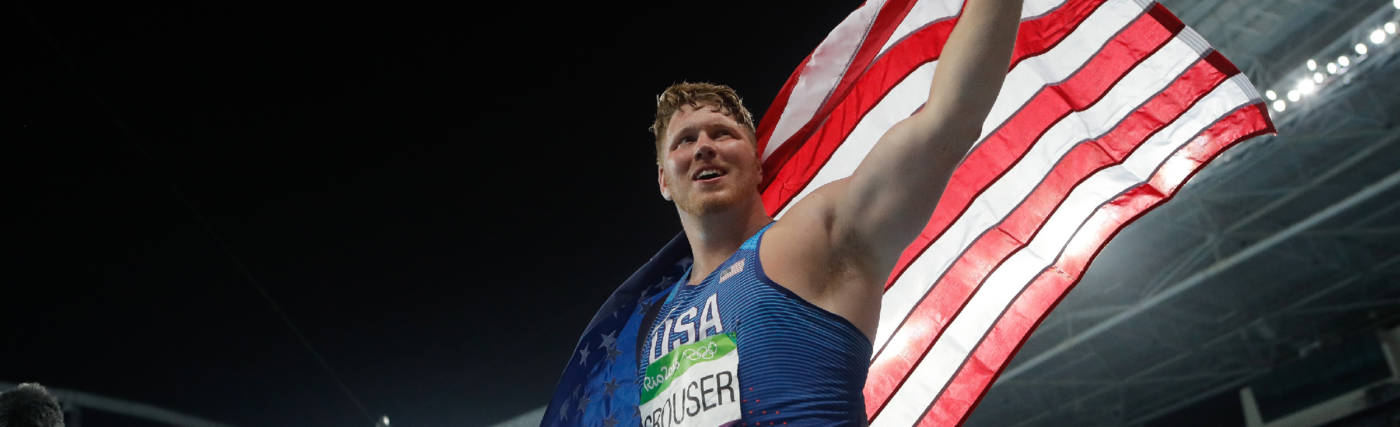
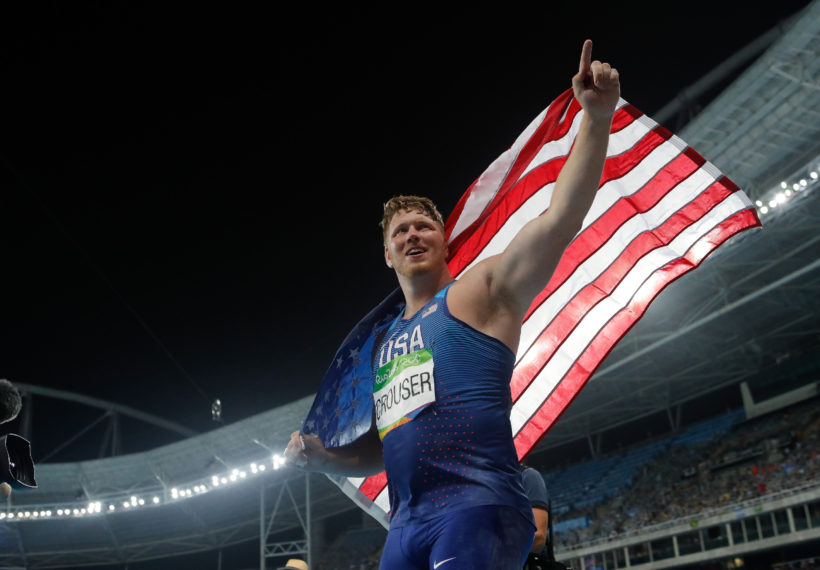
Is there one shape that’s best for throwing? We explore the origins of the Olympics and some of its oldest events. What makes the discus such an aerodynamic shape? What’s the throwing strategy behind the hammer throw? Is there an ideal angle to throw one of these objects? Find out how the javelin manages to land head down and not skid across the field. What’s the strategy behind Ryan Crouser’s record breaking throw? Discover the differences in how the ancients threw and how we throw now!
Next, we explore Olympic jumping starting with the long jump. Why did Bob Beamon’s 1968 record stand for so long? How much can your environment affect the outcome of the jump? We break down the differences in physics and technique for all the different jumping events. Neil pushes back on rules–why do we have so many? Discover just how difficult the triple jump is. Why do we even have it? Find out about the Fosbury Flop and how it revolutionized the high jump.
Neil takes us back to his high school days to explore the world of wrestling. What is Greco-Roman style wrestling? From a physics standpoint what is the ultimate wrestling move? Would fellow wrestlers agree? Find out just how much your weight matters when trying to win a match and how they make Olympic-style wrestling more action-packed. All that, plus, did Charles Liu ever get a sweet taste of victory?
Thanks to our Patrons Avneesh Joshi, Thomas Harshbarger, Tor Eystad, William Lautenberger, Sabrina Anderson, Adam Collins, Titus Orr, Christopher Robinson, Caleb Stark, and Stephen Austin for supporting us this week.
NOTE: StarTalk+ Patrons can watch or listen to this entire episode commercial-free.
About the prints that flank Neil in this video:
“Black Swan” & “White Swan” limited edition serigraph prints by Coast Salish artist Jane Kwatleematt Marston. For more information about this artist and her work, visit Inuit Gallery of Vancouver.
Transcript
DOWNLOAD SRTWelcome to StarTalk, your place in the universe where science and pop culture collide.
StarTalk begins right now.
This is StarTalk Sports Edition, and for this episode, it’s going to be all about the Olympics and the science that undergirds all sports that unfold in that great two weeks of human competition.
And I got a friend and colleague and co-author to help me out here because he thinks deeply about everything, and that’s of course StarTalk’s friend, Charles Liu.
Charles, how are you doing, man?
Hi, Neil, great to see you, real pleasure.
Good to get you back.
Let me get your pedigree straight here.
So weren’t you dean for a while at the college?
No, no, I directed honors college programs, so I was a faculty director.
Okay, I knew you were man in charge of some stuff.
The less in charge I am, the better, frankly.
Well, it’s great to have you.
You bring a level of insight and knowledge and expertise that transcends anything any of us have ever brought to the table.
And that’s why you’ve earned, I think, without question the title, geek expertise, right?
I think, Gary, were you the one who first told us that?
No, but I do like dubbing him the geek in chief.
The geek in chief.
With geek expertise.
And we got Gary, Gary.
Hey, Neil.
My co-host.
All right, always good to have you.
And Chuck Nice, Jack.
So here’s what we’re gonna do.
We’re gonna talk about throwing stuff.
All right, it’s a big part of the Olympics, at least certainly in track and field.
Then we’re gonna talk about defying gravity.
Oh my gosh, so much of what’s in the Olympics is about doing what gravity doesn’t want you to do.
Where is Adina Menzel?
And we’re gonna round it out with a discussion of wrestling.
Freestyle wrestling versus Greco-Roman.
We’ll learn all about that when we get there.
But let’s talk about throwing stuff, all right?
So, where, the Olympics, they go back at, you know, Gary, correct me if I’m wrong, 17, no.
I’m thinking of American Independence.
Yeah, we are 776 BC.
Not 1776 BC, 776 BC in Greece, I presume.
And this is a, quite the tradition that we’ve turned into in modern times.
It is the obvious test we’ve all, growing up, who’s fastest, who can throw something the furthest, who can run up that mountain and come back down quickest, who can jump over this stream the furthest.
So it’s just basically the answering of all these questions on a four-yearly basis.
I think it’s a beautiful thing.
And it’s one of the greatest collaborations of nations outside of the waging of war.
So.
Well, we have to remember that the Olympic Games were actually interrupted for more than 1500 years.
It wasn’t until 1896, when the modern Olympics began again, after it ended in the Roman Empire, because indeed the Romans didn’t want the Olympics to keep going.
Why not?
I’m not really sure why.
I’m not really sure why.
Something about nationalism and worship of the wrong gods.
Maybe that’s what it was.
We’re the Roman Empire.
We lost.
So much for a sportsmanship.
All right, so let’s get into the science of throwing stuff.
Let’s start off with the discus.
This is the most classic, I think, of all of the statues of an Olympic competitor, the discus thrower.
And there’s the twist of the torso, the arm angled backwards, holding this flying saucer shaped object.
And so, Charles, what can you tell me about the aerodynamics of a discus?
Why aren’t they just sort of throwing a rock?
What is really cool is that a disc is way, way more aerodynamic than a sphere.
In fact, it’s way more aerodynamic than an airplane.
There was a period of time, you remember the aerobie?
I don’t even know.
Yes, I do.
That’s the farthest object ever thrown by any human being, the aerobie.
Aerobies had to be banned from paper airplane contests because people who were making aerobies out of paper were winning them by such large margins it was considered an unfair advantage.
I’m sorry, can you tell me what an aerobie, what’s an aerobie?
Well, you don’t have, this is for geeks, you’re not in this conversation, Chuck.
We’re out of here, we’re spectators.
We are spectators at the aerobie games.
Imagine a frisbee, imagine a frisbee, but with a big hole in it.
So it’s like a very thin donut and then around the edge, the outer edge is a little flip, like a ridge that goes around the outside.
So it’s sloped downward to the end and then a little tiny ridge around the outside.
That turns out to be so aerodynamic that a single flip of the wrist made it farther than any frisbee, farther than any airplane of its size.
It’s an amazingly aerodynamic object.
So if you want to see something fly in the air for a long distance, what you wanna do is to throw a disc.
And that’s the most dramatic thing that you can do back in those days, right?
You wanna see things go a long way.
Throwing a Brock is fun, you know, that’s what a shot put is.
You’re basically pushing this big cannonball.
But that doesn’t go that far, right?
The disc is still can stay.
So it did Frisbees one better, basically, by opening up the middle and allowing sort of an aerodynamic lift to sustain its trajectory.
Okay, so now I read this and I haven’t tested it, but I believe it, but maybe you can highlight it for me, that you can throw a disc farther going into the wind than if the wind is behind you.
That is correct.
It has to do with aerodynamics of things.
I don’t know, Gary, you probably know this a little better than I do, but in the same way that a soccer ball, when it goes up into the air, depending on what direction the wind is coming, you can actually make it go farther.
Get a bit of lift.
If you do it just right.
And the other thing is, Neil, when you look at some of the discus, it’s got a metal rim.
So what’s happened here is they’re loading the outer rim of the discus, which Charles, you won’t be able to explain the physics behind that, but that makes it go further.
Okay, so this will help it sustain its rotational momentum better.
If you put the mass of a spinning object at the perimeter, then that’s a very stable rotating object, Charles, right?
That’s right.
You have a higher moment of inertia, it’s called.
Because the conservation of angular momentum, it is more likely to stay spinning for a longer period of time with less force or torque.
And then imagine the technique to get across the discus circle in that rotating technique that the throwers use, and then you incorporate the physics of the discus itself.
It’s really.
Right, so it seems to me, so your body does a spin, your arm also pivots at the shoulder, and your fingers flick at the wrist to get the thing spinning.
So you get the combination of this musculoskeletal launching pad, right?
Is that a fair way to think about it, Charles?
Yeah, it’s all the different hinges from which you can gain extra torque.
In the same way that when you’re kicking a soccer ball, right, you’ve got your toe, your ankle, your knee, your hip, and even your torso giving it all the different power, each one giving it a little extra.
And if you can combine those, you could be quite deadly out there with your power.
Devastating.
You start by crouching slightly, so you preload your own body to explode around.
Oh, yes, yes.
This is stacked with science.
It’s an amazing event to watch once you understand.
But I wondered that, you know, I never thought about that.
That’s right, when they begin their spin, they’re actually crouched.
How about the hammer throw?
That’s a round ball that gets tossed.
Now, in the olden days, I bet the Greeks did not put it on a metal wire, because they didn’t know how to build wire, right?
Or even metal balls, for that matter.
They probably literally threw a hammer, which is like a big long thing that they would use to whack things, right?
But they actually spin around, this would be a stick onto which attached was some heavy object at the end, and you tried to throw it and see how far you could get it.
You’re allowed to spin, but really the spinning process, you have to keep your center of weight moving in a straight line.
So it’s a very complicated dance.
It’s a ballet really, only instead of a beautiful pirouette with someone wearing a tutu, right?
It’s a brutal spin with a gigantic individual holding a 16 pound ball on a wire and spinning beautifully and accurately.
And the release point has to be exactly sort of tangent to the movement so that all the spinning force can go to the linear trajectory of the ball itself.
Of all the field sports in the Olympics, the hammer throw is the one I would least like to be a judge for in the pit.
Because you have to stand in the path of the hammer.
Well, I’ll tell you this, Marcel, I don’t want to watch it anymore because I just want to see them doing it in tutus now.
Okay, the tutu hammer throw, the tutu hammer throw, man.
Seeing as we’re reinventing, Charles, what happens if I extend the length of the wire on this 16 pound cannonball and then I start to rotate?
Well, that’s great.
You see, the longer you have the wire, the larger the moment of inertia is, moment of inertia being MR squared, the mass times the distance times the distance again.
And so to translate that rotational motion into linear motion, the more, the higher the moment of inertia, the more angular momentum you get if you’re spinning it at the same angular velocity.
Just fancy just means that if you have a certain number of rotations per second, the longer you have of the string, the farther the hammer will go when you let it go.
Because the hammer is actually moving faster, that’s all, right?
Right, it’s the same reason why you are going faster on the outer horse in a merry-go-round than you are on an inner horse even though everyone’s on the same platter.
That’s right.
That’s why everyone, yeah, if you ever you’re burning a kid to a merry-go-round, take an outside as opposed to an inside loop.
The outside person will be moving much faster and having a grander time.
Yeah, like it’s twice as fast as the ones halfway in.
Okay, so now tell me about the javelin.
My big disappointment was to learn that people were getting so good at the javelin that they had…
People in the stands were dying?
Almost.
Almost, almost.
That they had to put like an aerodynamic drag on the back of the javelin.
That ain’t right.
No, something’s wrong there.
Well, it’s a little bit different from that simply because a javelin has to come down point first into the ground, otherwise you run into problems.
If it skims along the surface and it hits the ground, it goes bounce, bounce, bounce, bounce.
Right?
Yeah, where did it land?
Right, right.
Where did it land?
And there’s controversies involved with that.
If you make sure that the javelin lands point first in the ground, you can set yourself far enough back in the stands that you don’t worry about being injured.
So they had to move the center of mass of the spear or the javelin closer toward the tip.
And what happened was at first when they did that, clever javelin designers started messing with the back end to make it act like feathers, like fletching in an arrow or something to try to let it fly longer and farther and things like that.
So that got banned after a short period of time.
But the key is nowadays the javelin is more like you throw it up in the air and it’s going to come down and it’s naturally going to jab into the ground at some location.
So what is the optimum angle that you have to release a javelin to get it to go the farthest?
Well, indoors, right, without any air, it’s 45 degrees.
The answer is always 45 degrees.
Let’s be honest Charles, you’re not going to be throwing javelins indoors very much.
No, you know what?
I’ve wondered in indoor track and field championships, are there actually javelins?
No, no, there’s not.
The only thing you’ll ever have is shot put indoors, none of the other throwing javelins are allowed.
Maybe, maybe, yeah, yeah, okay.
Oh, wow, that explains it.
Yes, the wind determines a lot.
Again, as we were talking about with the discus, with anything in the air, which direction, whether it’s an updraft or a downdraft, whether it’s a headwind or a tailwind, that makes all the difference in any projectile.
I don’t have the actual angles depending on that, but I know that compensations must be made.
Right.
And this 45-degree angle, you learned that in Physics 101, where you want it to go forward and up with the same initial velocity, and that will carry it farthest to its destination.
And that angle is 45 degrees every time.
That’s right.
They used to teach us when we were throwing javelins to pull through the javelin.
You start with a certain angle of approach where it’s basically horizontal to the ground.
Then it tilts up.
You keep it really close to your ear.
And then you pull through almost the handle, the binding through the center point.
And it flies, and then it sails, and then it comes down.
But since they were throwing, they got one German thrower whose name I cannot quite remember threw over 100 meters, which will have scared the living daylights out of anybody else at the far end of the stadium.
And then especially the runners who were thinking, I almost got this.
I’m on the back stretch.
It gets impaled.
Coming around.
And this, you know, you’ve got all these other events happening while javelins are being thrown.
So they just had to go, Oh, nope, got to make a change.
All right.
So and lastly, the shot put that’s the bluntest of all instruments here.
And this, this is like been in every single Olympics since 1896.
And I understand it dates back to like the Middle Ages.
Is that right?
When soldiers hurled cannonballs to compete?
Is this?
Do I have this right here?
Yeah, I think what we have, Neil, is in between battles, a bunch of drunken soldiers picked up cannonballs and said, which one of us drunken idiots can throw this the first?
That sounds a lot like reality to me.
So 16 pound.
Or maybe they just ran out of gunpowder.
And I will throw this at you.
Carry this cannonball over and drop it on the head and then come back for another one.
While you’re at it, everybody throw your musket pellets.
You say that, but you know what?
Just in the last couple of weeks from the time we’re recording this, in the last week, I think, Ryan Krauser, USA, broke the world record 76 feet with a 16-pound cannonball.
Man, that’s brutally strong and just unbelievable.
And he, you know, there’s that technique where you glide across the circle.
Yes, I’ve seen that.
We’ve seen all of that.
And there’s the crouch.
This is now using the discus rotation to achieve these distances.
Oh, so the coiling energy.
Yeah.
Like the discus people do.
Okay.
So it’s tactical and I guess it’s allowed, right?
They’re not going to say you can’t do that.
Not just big guys with a big old chalk mark under the chin.
But what about the power of the guttural yell?
Necessary.
I mean, the vocalization of shot putters, I think, is the most amazing that you hear of any of those athletes, just like this elephant alligator Godzilla kind of auditory utterance that simply cannot be matched by any other human being.
So Charles, last question before we got to take a quick break here.
It seems to me the shot put would be the least susceptible to aerodynamics.
And so that one you’d want to sort of throw at a 45 degree angle, I would say, probably.
At almost all times.
Yeah.
I don’t see any reason why.
I don’t see, neither do I.
Unless you’re in a hurricane or something, you know, that it’s going to make this round spherical solid metal ball.
Right.
Right.
Let’s take a short break and we’re going to say goodbye to throwing and hello to jumping and all other things we do to defy the law of gravity.
So, let’s see what that looks like on the other side.
This is StarTalk Sports Edition, the Olympics.
We’re back, StarTalk Sports Edition.
We’re talking about the Olympics.
And in this segment, we’re talking about the jumping sports in track and field.
What do we have?
We’ve got the long jump, the triple jump, and the high jump.
There you go.
And people just trying to defy gravity.
And so, Charles, let’s talk a little bit about the long jump.
What do you know about why it took so long for that record to be broken?
You mean Bob Beeman’s record?
Bob Beeman back in 1968?
1968.
Yeah, the Mexico City.
Of course, records are meant to be broken.
Usually, though, as far as distance type jumping things or height things, only a few inches at a time.
But the strange thing about the 1968 Bob Beeman record was that he broke the previous record by such a large amount.
It was more than a foot or something.
Yeah, it went from 27 feet something to 29 feet something.
And it was a whole decade before anyone even jumped 28 feet.
So people are wondering what the heck happened that time.
There are a lot of different things, but one of the possibilities is that, first of all, there was a small tailwind.
It was allowable.
It was not so fast that it was wind-aided and therefore didn’t count in the world records, but there was a little bit of a wind.
It gives them a little bit, okay, but it’s not gonna give them a foot.
But then the key, that is the key that most people think was the case, Gary.
You’re absolutely right.
No, no, no.
Because Mexico City’s altitude allowed him to go that extra distance if he was sufficiently cardiovascularly trained to produce the same amount of muscle power.
All right, so here’s my issue with that.
I got an issue, okay?
Here’s my issue, and I got to bring Chuck in this.
Chuck, this is a white man trying to take away the black man’s achievement by crediting to someone else with it.
Excuse me?
Normally Chuck is like covering me there, and now I’m the one who’s saying it.
Listen, I mean, go ahead.
It’s not because he was better than everybody else, it’s because the wind helped him, and the aliens built the pyramids, and you know, okay, so here you go, here you go.
If, no, here’s a simple if statement, and Charles Liu, you tell me if my if statement is flawed.
If the wind and the thin air helped Bob Beeman break the record by more than a foot, then everybody would have jumped more than a foot.
There you go.
And they did not.
Don’t tell me the thin air did it.
It would have done significantly better, if not just a foot.
And no one else jumped.
We would have to check the final placings in that long jump to see if other people did get a boost, or this is absolutely down to Bob Beeman just jumping out of the sandpit here.
Even if they did get a boost, did they get a foot boost?
And I’m guessing not here.
And so let us instead credit the thin air and instead of that say, this man kicked some ass at that Olympics.
Let me hear the two of you say that.
Yeah, he totally did it.
But we’re looking at are there other mitigating factors, because don’t forget, the current world record is held by Mike Powell, another USA long jumper.
And that was done a zillion years ago, too.
1991.
Not quite a zillion, but I know where you’re headed with that.
And it’s only two inches further than Bob Beeman.
I mean, he’s just so here and by the way, he’s somebody who’s chasing that.
So he’s training.
He’s training to beat that record.
He’s trained.
Whereas Beeman wasn’t.
He actually just did it.
And I say, if you’re looking for a mitigating factor, somebody yell cops.
I mean, we can look at the mitigating factors, Charles.
And in the end, we just have to look at an athlete and go, that is what the Olympics are about.
Someone turns up and says, you want to see what the best is all about?
This is what I got.
It was one amazing jump that far exceeded anybody else on that day.
It was really amazing.
I don’t think people realize.
So I’m just saying, therefore, you can’t credit the other thing.
Credit the man and not everything else.
I credit the athlete all the time, Neil.
It’s in my DNA to do that.
I’m just looking at was the altitude, was a tailwind.
If the tailwind is too high, the jump is invalid.
Simple as that.
So that was not an aspect.
The altitude, would it have made any difference?
Not a footnote.
So Charles, what do you think, because I don’t like all this stuff about rules.
Why don’t they just have you jump as far as you can from wherever is your starting point?
Why does your foot have to exactly, because if you miss it by a centimeter, that’s a centimeter less of a distance you end up jumping, because they don’t start it from the tip of your toe, they start it from the tip of the line, wherever your foot lands, related to it.
I think that’s the difference between an activity as a human physical feet and an activity as a competitive sport.
The concept of the rule is all of…
Damn, Charles, why do you always argue me out of my arguments?
I’m sorry.
No, no, no.
I thought I had a good point there.
Yeah, that’s a really good point.
But your point is exactly right, like why do we have rules, right?
Why do people then cheat and try to break the rules?
This happens, of course, unfortunately, even in the Olympics.
Tour de France, NFL football, baseball, choose whatever you want, right?
People agree to rules because they feel like the game would be more fun if everyone followed them.
But when victory becomes more significant than sport, then you wind up with everyone trying to do things that are not following the rules and getting away with it, right?
But I think you’re absolutely right on this important point, Neil.
We could have a world record measurement for how far a human being jumps, right?
And that would be a different world record than the high jump or the long jump or the triple jump world record in the Olympics or in world competition.
They’re just two different things.
Well, let’s use that as an excuse to move on to the triple jump.
So, it seems to me one jump should have been just fine.
Now we got to put three jumps in it.
And it’s got this weird body motion.
And it’s like, what the hell, what are you doing?
And why are you doing it?
Who came up with this?
That’s what I’m thinking every time I see the triple jump.
Another strange rule thing.
I think, Chuck, you know this rule really well, right?
Like your first…
The hop is the first step.
Yeah, it used to be called the hop, step, and jump, if I remember correctly, in the old days.
So the hop is you take off on one foot and land on the same foot, which gives you that janky body movement.
It’s a total janky, that’s the word, right?
And then the step is you take off on the same foot that you landed and you land on your opposite foot.
And then the jump is you take off on that foot and you land on both feet.
On two feet, okay.
So that’s your jump.
That’s just crazy, who thought that up?
Who could think of that because it is insane.
That’s insane.
But it’s cool, but it’s cool because it’s got this extra complication to it.
And the physics of the triple jump is very different from the long jump in one crucial respect.
Because you’re bouncing off the ground, right?
You have to do something completely unnatural to humans.
And that is not absorb impact.
Like land on your toes.
Oh, my knees hurt already.
I know, right?
My knees are hurting just thinking about it.
If you land on, like we are taught that when we jump somewhere, we want to land on our toes and then slowly like sink into our ankles and then let our knees bounce and our hips bounce so that we absorb as much impact as possible.
If you do that, you ruin your triple jump.
So your hop and your step, you want to land on your heel if you possibly can.
You want to bounce off instantaneously and have as little contact with the ground as possible.
Meanwhile, your upper body, right?
It doesn’t matter what your upper body does in the air.
It only matters what happens when you’re in contact with the ground.
So at the moment that you hit the ground during that very, very short contact.
Then your arms have to, you want to help, you want to swing your arms up.
Your arms swing forward.
Whoa.
Right, so you got to swing your arms forward to get your momentum forward as much as, up as much as possible.
You got to bounce up off of this locked ankle or whatever it is so that you don’t get a squish there.
And then you do it again on the other foot and then you got to swing again forward and then you can land in such a way that you don’t break the rest of your bones.
So Charles, how much force goes through the leg that hits the runway?
I mean, it must be very outrageous.
Based on the calculations that I have seen on sports medicine sort of studies, when you make that hit, you are putting somewhere between 15 and 20 times more force on your heel or on your ankle or on your knees than you normally would when you have your regular body weight landing on top of it on a regular step.
So, you are really straining those joints and those muscles and those ligaments.
It’s the combination of the forward motion from having run fast to make that first jump and you were airborne and now you come down on it and you have to spring back up to get your next jump.
So, all of that combined, that’s crazy.
Brutally hard.
I just don’t know who invented the sport.
It must be the English.
It must be the English.
The English made me.
The world record holder is Jonathan Edwards of Great Britain.
And that record has lasted for a quarter century now.
Even longer than Bob Beeman’s world record in the long term.
But he had a technique, Charles.
When he would contact, his arms would go backwards.
So that must be altering his center of mass, his center of gravity or?
Without doubt, right.
A lot of people think that one key to being a successful triple jumper is actually to land with as much of your body weight behind your landing point as possible.
Which then allows you to swing that body forward, giving yourself an additional extra bit of momentum.
It’s more swing, you get more swing for it, I see.
That’s right.
But I think if the triple jump was never invented, no one would miss it, okay?
I’m just thinking.
Wrong!
I love the triple jump, it’s the best, man.
One more event before we close out this segment, the high jump, the high jump.
I’m looking at these bars that these people are jumping over.
I say, how do they even do this?
What’s going on?
Let’s go back to the 68 Olympics.
Charles, take us there.
Dick Fosbury, following the rules, but through his own strategy, figured out that if he kept his center of mass below the bar, but was able to get the rest of his body over the bar piece by piece, then he would be able to jump higher based on the rules of the high jumping.
Piece by piece.
Yeah, you unscrew your leg, put it over.
Imagine a marionette doll, and that’s what Dick Fosbury did.
He jumped and he got his head over and then let his head go under while he got his torso over and then let his torso go under the bar while his legs went over and then he let his legs go under the bar while his feet went over and then eventually he flopped down backwards on his head and shoulders onto the mat.
What you’re saying is for every part of his body that was over the bar, all the rest of his body was under the bar.
That’s right.
Below the elevation of the bar so that his center of mass itself never actually went above the bar.
That’s right.
Not to mention that his technique allowed him to do this flowing thing which gave him the ability to kind of snake over the bar in a way that no one had ever thought to do before but was perfectly legal.
Well, then why not land, why land on your back then?
How can you land on your feet?
Because there’s a big squishy mat.
No, not on your feet.
Like it’s a mat there, why not the motion you described, why not just arc all the way over and keep going?
So you land on your face.
Yes, Chuck.
Yes, Chuck.
You know, if you could do that, I could see a roll that lands on your face, but you know, even for a soft mat, I do not want to squish my nose on one of those things.
Yeah, yeah, no.
And given how far they’re falling down, I think we recognize everyone since Fosbury does this Fosbury flop over the bar.
He changed the sport.
Absolutely.
And oh, remember it was Mexico City, 1968, maybe the altitude.
Yeah, yeah.
What are you going to do with that one, Gary?
So, all right, so the sport’s forever been changed.
And I’m impressed by that.
My father, when he ran track, they didn’t have these big foam cushions and you landed in sawdust on the other side.
So.
Well, now I know why you don’t land on your face.
And just like in the last 30 seconds, Charles, tell me about the pole vault.
Well, in principle, that could just keep getting higher and higher if people run faster and faster and have a strong enough pole.
And you got to run fast enough to get your body to be springable, right?
So there’s a little bit of a jump on your part, but mostly it’s the spring of the pole that allows you to get over.
The thing is, these days with pole vault, the pole itself becomes the most important part of the equation.
In the olden days, if you just used a stick, you were literally pushing off of the pole in order to get yourself over.
Now you need to rely on the elasticity of the pole to spring you upward before you push off the pole.
And now instead of pushing with your arm, you’re really just trying to let the go and then get the rest of your body over.
Wow, and so you want to be sort of rigid arms so that you don’t absorb that flex with your elbow as you’re going up, or at least you want to push with it.
So that you can, now I can picture the cartoon now.
Someone does it with a new technology and they just get flung across the track.
The thing is, Neil, the pole itself now is a composite construction.
So if you’ve got carbon fiber that strengthens, that is on one side and the other side is not as strong.
So you have to make sure you get the right, the pole in the right place, otherwise.
Oh, it’s not a uniform medium?
From what I can gather, that’s the case.
So you really have to be about, it’s like a kick point in a hockey stick.
So you’ve got that little bit of flexibility which is giving you an extra thing.
So this is a technical advantage for jumping in terms of vaulting rather than the pure jumping of a human being.
And here I am saying it on StarTalk.
I’ve said this before, but now on this platform, I will declare that in a high jump, the position of your body is fundamentally equivalent to what Fosbury did going over his high jump bar.
Yet the pole vaulters twist and then go feet first facing downward rather than facing upwards.
And as a result, I think if they converted their jump into a Fosbury jump, you can add another six inches on the pole vault record in an instant.
Yes.
No, let me tell you why you might not be correct.
And that is simply because the pole gives you so much more of a forward motion that if you spend your time flipping your body around, how are you gonna push off the pole and give yourself a little verticality?
If it’s backwards behind you, yeah, okay.
Right.
That might be the thing that you-
You lose the thing.
Okay, I bet there’s some thing you could do though.
Let’s bring Fosbury back and have him try to invent some new maneuver.
We gotta take a quick break on StarTalk Sports Edition, the Olympics.
When we come back, we’re gonna talk about wrestling.
Freestyle versus Greco-Roman, something I used to do.
So I might have something to say about it on StarTalk.
It’s a pleasure to give a Patreon shout-out to Avneesh Joshi, Thomas Harshbarger, and Tora Istad.
Guys, thanks so much for what you do for us.
Without you, we couldn’t make it across the cosmos and bring this show to the universe.
And for those of you interested in your own Patreon shout-out, go to patreon.com/startalkradio and support us.
We’re back to StarTalk Sports Edition.
We’re talking about the Olympics.
And I love thinking, talking about sports and the physics of sports.
And however good I am at that, Charles Liu is better.
And that’s why we’ve got Charles Liu on the show.
Charles, always good to have you.
Oh, pleasure.
Thank you so much.
Just thanks over all these years for being such a good friend of StarTalk.
Because when-
It has been my pleasure.
When the going gets tough, we call Charles.
And it is my pleasure.
And I don’t think you did any professional sports.
We have Gary, who gives us street cred here.
Street cred Gary.
And I only just learned in this episode, the man threw the javelin and the discus.
So go for Gary there.
All right.
And Chuck, so as many people know, I wrestled.
I wrestled in high school.
I was captain of the team and undefeated.
Wrestled in college, a little bit of graduate school.
But when I got to college, after an undefeated record in high school, it was like a whole other, whole nother nother.
Because I started wrestling people who would like, these were like farm boys, okay, from the Midwest.
That’s all, there you go, that’s it.
I don’t know what they’ve been carrying, logs around the cabin, you know, whatever is the stereotype of the farm boy, that’s who I was wrestling.
And so these are regions of the country where wrestling is very serious.
They fill arenas.
And so I was delighted to not be the best, because when you’re the best, what is your, how do you learn?
What do you do?
And so I had a losing record for most of my time in college, but that didn’t matter, it was my favorite sport then and it continues to be.
So, and that was intercollegiate wrestling, obviously not professional wrestling, okay.
And international rules are a little more strict than what we do just intercollegiate here in the United States.
And in the Olympics, there’s freestyle and Greco-Roman.
So that’s what we have going on there.
What is freestyle?
Well, so it’s easier to know what freestyle is once I tell you what Greco-Roman is.
So Greco-Roman wrestling is just your upper body.
So you can’t sweep the leg.
No, you can’t do that.
You can’t use your leg for anything.
It is just your upper body strength, your arms, and the rest.
So you have people who tend to be very good at body throws, all right?
You try to get a grip of their upper torso when you’re maneuvering for a position.
And ideally, you’ll execute a body throw where the throw includes getting their back to the mat.
And then it’s one smooth motion.
And so those guys tend to have spindly legs and huge torsos.
What is a passivity point in Greco-Roman?
Oh, oh, yeah.
So what happened?
And I don’t know when that came in, but what happened was, in both a freestyle and in Greco-Roman, they started putting in rules to speed up the game, okay?
And to force you to always be attacking.
And because you used to sort of jockey for position and feel the person out, and minutes would go by and nothing would happen, all right?
And so since Olympics still, they have to make money with their TV rights, I don’t know if money did it or just the fan interest or whatever, but they started costing you if you were not perceived by the referee as always trying to be an aggressor.
And if you’re always just being on the receiving end and not the delivering end, that can cost you.
On both sides, okay?
And so, I mean, sorry, both branches of the sport.
So, that sped up the game.
In fact, there’s, and I forgot the exact conditions under which this is true, but if you are tied at the end in points, because you get points on a takedown and if your back is exposed to the mat, there are various ways you earn points.
If you’re tied, they will start the next round with each of you already being granted a grip around the other person’s torso.
You already have a grip around them.
This is like that new rule in baseball where in extra innings they start the inning with a runner on second base.
Did you know about this?
This is a new rule, I’m looking at it.
It’s called the ghost runner.
It’s called the ghost runner.
And so they start off the inning.
You get a free base runner on second base.
And you know who that runner is?
It’s the person who made the last out in the previous inning.
Or the last at bat person.
So it’s an attempt to speed the game up and to put more action in the sport.
So, Neil, is there an ultimate wrestling move?
I mean, so if we’re watching the Olympics and the wrestling comes on, we’ve got to be thinking, do this.
And then we can all shout at the TV and encourage…
I would say…
Before you answer that question, I recall you telling me some years ago about a move that you did in high school, which was essentially undefeatable.
There was no defense against it.
It was like the crane technique in the Karate Kid.
So maybe you want to bring that up.
The Karate Kid crane.
I just remember you telling me this method where you were able to immobilize your opponents, against which they had no defense.
Oh, wow.
I’m trying to remember what that might have been, because I had a few moves where if I can get that grip, then that’s the end.
So the challenge is, can you execute the grip before you then complete the move?
Because the grip immobilizes your opponent in such a way, now you can do with them what you wish.
And if you’re quick enough and you get them slightly off balance, you take them to the mat and the takedown move is included.
The pin is part of the takedown move.
But I can tell you this, people are very nimble and they’re very strong and they’re very…
So you don’t tend to see that.
But here’s a move where if you see it executed, basically the match is going to be over within five seconds.
And it’s called the cradle.
I’d have to say, if I were voting, I’d be curious what fellow wrestlers, if they had a different vote on this from what I’m telling you here, the cradle is where one of my arms wraps…
You’re facing me, you’re perpendicular to me on the mat.
One of my arms is under your head like I’m just cradling you, like you’re cradling a baby.
My other arm goes under the knee of either one of your legs.
It doesn’t matter.
It won’t matter.
And so now I bring that knee up to your chin and then lock my arms.
So now I have you.
I’m sorry.
What are you going to do?
Where are you going to go?
And once I have that, if I can get that in any way, I just have to roll back.
Roll back and I will roll your shoulder blades down to the mat.
And then the referee is there watching it.
And then I love this sound where they slam the…
I’ll do it on the table here.
There it is.
They slam and that’s it.
And if you watch someone get into a cradle, generally they’re not coming out of it.
And that’s the end of the match.
So you just watch for that move.
It’s almost…
Once you have the grip, it’s kind of over.
Now you can try to kick out of it.
You can try to kick.
So you bring one other foot to scissor lock your two ankles and just try to kick out of it.
But if I’m…
No, consider, just to see how many muscles are involved in this.
My entire chest, my deltoids, my biceps, all of my upper body strength now has you enclosed in this cradle move.
So it is one of the most effective invocations of muscle strength of any move there is.
And by the way, I haven’t checked this year, but women’s wrestling is rapidly growing in popularity in the United States.
And this is such a sort of a male masculine testosterone thing that I was initially skeptical.
I say, really, is this going to work?
And then I watched some matches like, oh my gosh, bring it on, bring it on.
And so it was really, I was delighted to see it.
Very important thing about wrestling, and now that it’s, you know, it’s got, can I say this, both genders, right?
It’s got, the full gender spectrum is represented.
The, what’s true also about wrestling is that it’s, you do it in different weight categories, right?
So no matter your weight, there’s a category you can compete in.
And it’s not, well, I was never tall enough to do this, and I’m not strong enough to do that.
In wrestling, you are matched up pound for pound.
And that actually is a point that leads perfectly to the question I have for you, Neil, about that, and that is how much weight makes a difference.
In other words, the weight classes, if you’re at the bottom of a weight class compared to the top…
Oh, no, you always want the top of the weight class.
You want the top of the weight class at all times.
What is the difference?
I mean, one of these days I’ll tell you about the one time that I had glory on the wrestling mat back in high school.
But that’s a different story.
I was underweight the other guy by at least 25 pounds.
And I still wiped the floor with him.
But the question becomes…
Wait, Charles, this is the first time I’ve ever heard you use the phrase, I wiped the floor with him.
This is like the last sentence I ever thought would ever come out of your mouth.
We’re obviously a bad influence on Charles.
I didn’t taunt the dude, but it’s true.
But that’s a story for another time.
But my point is, how much does it matter?
Can an excellent technique defeat a heavier opponent?
It’s not likely.
Here’s my point.
If you weigh less, you can defeat someone heavier than you if they’re not as good a wrestler.
But if they’re just as good a wrestler as you, you will simply lose.
And so here’s my point.
Generally, as you get bigger, you get slower.
One advantage I had was I had very fast reflexes and have very long arms.
So I would use moves that would exploit those two facts.
But I was always taller than my opponent.
But we’re exactly the same weight.
Well, if we are the same weight and I’m taller and neither of us have body fat, my opponent is stronger than I am.
That is the definition of muscle strength.
The cross-sectional area of your muscle directly correlates with your strength.
So if you are shorter, your muscles are bigger than mine because we weigh the same.
I have to know that in advance to maneuver around their strong points to do things that might be quicker than they are or overreach or be able to reach farther than they can.
So that’s an important fact.
So I would claim, Charles, that the person was 25 pounds heavier than you was simply not as talented as you.
Because if he were, he’d be stronger than you in every way and have all of your moves and there’d be nothing you could do on him.
That’s all I’m saying.
And if you want someone smaller to kick someone, they’ll execute some different kind of rules that are not the rules that the heavier person is a participant in.
So if you’re good at Taekwondo and you have the weight of the other person, you go kick him in the throat.
Okay, yeah, that’s a David and Goliath scenario, right?
But I bet you if Goliath had a swing the way David had a swing, Goliath would have taken out David, okay?
So we’re not talking about lightweight talent versus heavyweight no talent here.
We’re talking about everybody with talent.
Okay, so weight is the defining difference given equal talent.
All right, guys, great to have you here, Charles Liu, always great to have you on StarTalk.
Thanks for being such a friend of the show.
We got to call it quits there.
This has been StarTalk Sports Edition, the Olympics.
I’m Neil deGrasse Tyson bidding you to keep looking up.


 Become a Patron