


 Unlock with Patreon
About This Episode
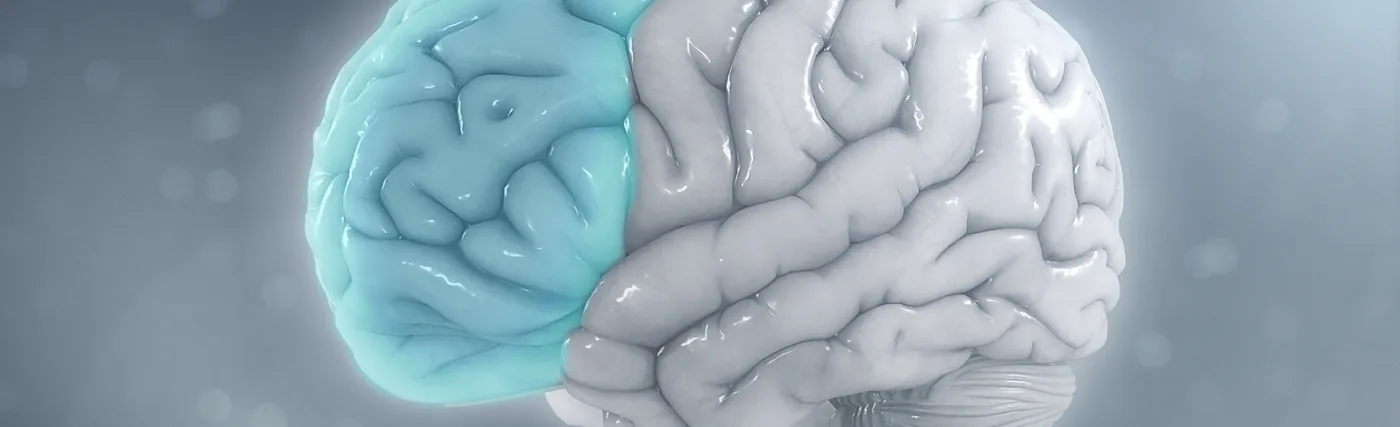
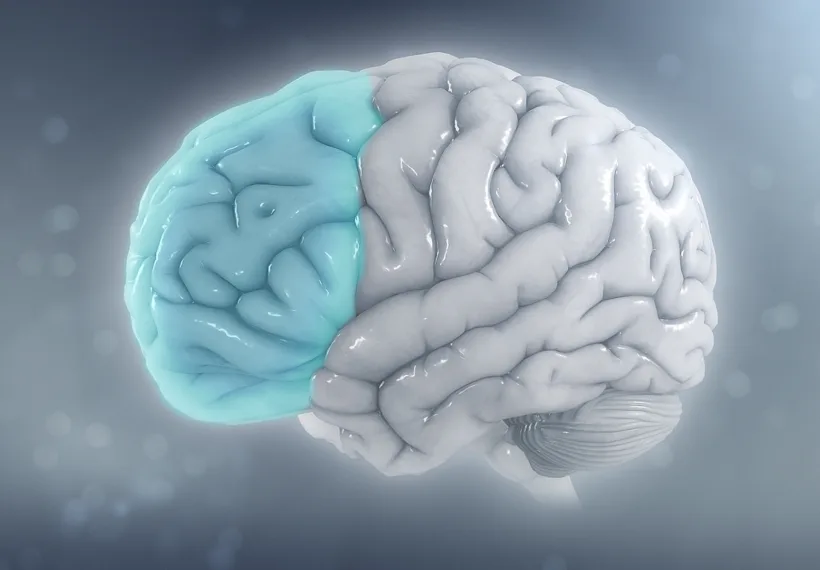
What makes some people better at focusing? Neil deGrasse Tyson and co-hosts Chuck Nice and Gary O’Reilly learn about the neuroscience behind concentration and performance with neuroscientist Heather Berlin, PhD.
WARNING: This episode contains strong language, discussions of suicide and mental health, and other adult topics.
Can you train to get better at concentration? We dive into cognitive control and the role of the frontal lobe. What causes people to “snap”? Unravel differences in people’s tolerance of stress with us and how music helps us access different parts of our brains. Why can some people tune out outside noise and why others are so distracted? Learn about ADHD and the role of the prefrontal cortex in impulse control.
What part of the brain is the ego in? We discuss if the ego is good or bad and what a vulnerable narcissist is. How do you stop the brain from getting in its own way? Is trash talking actually motivating? Neil talks about his father running track and what motivated him to run faster.
Is there such a thing as a sports IQ? Find out about pattern recognitions and neuropsych tests in athletes. How can you sharpen intuition and game intelligence? How do you become “a natural” at something? When does the subconscious take over certain tasks? All that, plus, discover what motivates cockroaches.
NOTE: StarTalk+ Patrons can watch or listen to this entire episode commercial-free.
Transcript
DOWNLOAD SRTWhat’s going on inside the head of someone that can go beyond themselves?
It’s, I think, that’s something that you can’t necessarily consciously control.
So all these other factors are coming into play.
Let’s say it’s the Olympics, and you’re running that final race, and just being in that environment, with the audience and the lights and the camera, whatever is there, is motivating your body.
I mean, we see this in cockroaches, when they…
Let me tell you something, you cockroach.
Okay, so I was not expecting that.
No one was.
Okay, sorry.
Welcome to StarTalk, your place in the universe where science and pop culture collide.
StarTalk begins right now.
This is StarTalk Sports Edition.
Neil deGrasse Tyson here, your host, and your personal astrophysicist.
And today, we’re gonna address issues that relate to your power and strength of mind, especially with regard to high-performance athletes.
But of course, advice there could probably apply to all of us at all times.
I got with me my co-host, Chuck Nice, Jack.
All right.
Oh, it didn’t work.
I was trying to use my mind to move some stuff in your room.
Oh, no, it didn’t work.
Yeah, I was trying to tap it to the force, man.
Yeah, if you could do that, you were in the wrong profession at this moment, okay.
That’s so true, right?
And I got Gary O’Reilly, Gary.
Hi, Neil.
I am practicing nothing right now, just being stationary.
Good, thank you.
Thank you, I like a stable world, please.
Thank you.
Gary is a former soccer pro in the UK and soccer announcer.
What did you have in mind for this episode?
So, we regularly look to the elite athletes to display the kind of supercharged performance and navigate under intense pressure.
We want them to have unbreakable concentration.
We want them to have off the chart cognitive skills.
But what if you’re not one of these elite athletes?
What if you’re a first responder?
What if you’re a surgeon, a police officer, a lawyer, a pilot, a single parent of three?
Are the demands on your strength of mind not as intense?
So, how do I develop this type of mindset?
How do I maintain this type of mindset?
Right, they’re the questions.
For this, we need answers.
So, who are you going to call?
The good doctor, Dr.
Heather Berlin.
Not only is Dr.
Heather Berlin, yay, a good friend to StarTalk, but a neuroscientist, clinical psychologist, associate professor of psychiatry and neuroscience at the Icahn School of Medicine at Mount Sinai, New York.
So, is eminently qualified to guide us through this particular area of science.
I love that you turned her School of Medicine into a positive affirmation.
The Icahn School of Medicine.
I do my best, I do my best.
I-C-A-H-N.
Heather, how do you pronounce that boy’s name?
I can’t.
Yes.
Tomato, tomato.
Yeah, that’s how you’d say it in the UK.
Probably I can’t.
Well, and I believe I can’t.
Oh dear, I believe I can’t.
More great pooh-poh?
All right, so, especially during any game or any contest in high level sports, but especially in playoffs and in the final games, the coaches will always tell you you need a winning state of mind, and just like in life, and that’s an interesting sort of extra thing that players are going to have to worry about beyond their physical conditioning, after they spend all those hours in the gym, running up and down stairs, whatever it is.
And so, Heather, what makes some people better at focus of mind than others?
And can you train this?
Is this something that, oh, while I’m in the gym, pumping iron or whatever I’m doing, is there something else I can do with my mind so that in the moment, when the time comes, I am ready?
Yeah, yeah.
I mean, just like muscles in your body, the mind or the brain, you can think of it like a muscle, right?
And the more you exercise certain skills, the more you can develop them.
Now there are individual differences in our abilities, say to focus our attention or to sort of ignore negative thoughts or counterproductive thoughts that you might be having that can interfere with your performance.
But there’s a level of kind of cognitive control that we need in order to maintain focus and kind of dismiss these negative thoughts that might pop into our minds.
And you can practice this skill.
And there are particular parts in the frontal lobe that you can use to gain strength, let’s say, in this cognitive capacity.
Just to be clear, it’s not just negative thoughts, it’s just distracting thoughts, right?
I mean, any thought that takes you away from where you are, it wouldn’t even have to be negative, I presume.
Yes.
And one of the practices is mindfulness and mindful meditation, where you have a thought, sort of it could be a thought that’s not relevant to the game or a negative thought, and you just let it pass like a cloud passing by.
You don’t attach to it.
You don’t let it take you down another path where you get distracted.
So we can’t stop these intrusive thoughts from coming in, but you can allow them to pass and not sort of attend to them so that you can maintain the focus on the thing you need to be paying attention to in that moment.
Is that why individual stress levels vary?
Because they’ve attached themselves to this passing cloud rather than just let it fly by.
Because you hear people say all the time, I’ve had enough.
Well, who decides that?
What is it that’s gone on in your mind that’s decided that that’s the point you can’t cross?
That that’s your threshold.
So here’s the thing.
There are two things.
One is that there are individual differences in terms of our, what we call like tolerance for distress.
So some people have a higher threshold.
They can maintain a lot of stress and not sort of break.
Others threshold is lower.
But yes, anybody who follows, let’s say one of these negative thoughts down a path, let’s say the thought is, I’m not good enough.
And then it goes to, oh, I’m not good enough.
That means I’m going to do terrible in this game and I’m going to lose and the whole team’s going to be disappointed in me and on and on and on.
Of course, anybody would start to get upset by those thoughts.
So the more you follow them and let them lead you down this negative thought path, the more likely you are going to get more stressed out.
So the idea is to have a negative thought and just let it go and keep redirecting your attention to something positive or to the task at hand.
I got to catch this ball, right?
I can’t let that thought take me away.
So does that?
I keep hearing in my head, I keep hearing in my head, don’t worry, be happy.
Yeah.
It works.
But actually music can, there are a bunch of studies that show that music can actually change your mood and help you adapt to stress.
And people are like, neurosciences are working together to create playlists that can either help increase your attention and focus or put you in a better mood.
Heather, we saw that in the Olympics where the guys coming out, the swimmers were coming out and everybody had their little headphones on.
And you wondered what are they listening to?
I want to know.
Can we just sing another song?
I can’t get that damn song out of my head now.
Oh my gosh.
All right, so, okay.
We’ve just planted a few earworms, that’s for sure.
But one thing to say, though, about music is that it does impact the subcortical, evolutionarily older parts of your brain that are below the cortex.
And that’s why people, for example, with Alzheimer’s, when they’re having dementia and sort of decreased cortex, if you play music for them, it can integrate them because it’s these more subcortical deeper…
Yeah, it’s pretty cool.
By the way.
Was it Oliver Sacks that went down that route with Musicphilia, that book?
Tony Bennett.
Tony Bennett had advanced dementia and was able to sing all of his songs.
If you started him off, all you had to do was, I left my heart.
And then he would boom right into it, you know?
Because it’s instantiating in the brain, like riding a bike.
Once you hit that, the basal ganglia, it’s like this sort of, it automatically just goes, like you flow into it.
Heather, just spend a minute about what is the basal ganglia.
Basal ganglia?
Yeah.
It’s a complex subcortical structure and it’s broken up into different parts, but it’s involved in what we call implicit memory, especially in your memory.
So when you’re first learning to ride a bike, you have to think about it, right?
You’re using your cortex.
And once it becomes, after practice it becomes automatic, then it gets moved into that basal ganglia, which means you don’t have to think about it the next time you ride a bike.
But that’s also the part of the brain that’s affected in Parkinson’s disease.
And so it’s involved in lots of different things.
But if you think about automatic behaviors that we need to not be able to think about, like walking, we can’t always have to think about how to walk.
Basal ganglia will control that.
But music sort of, it gets instead you’ve been not part of the brain.
And you know what’s cool is all this, what Heather, when you talked about underneath, it might be important to talk to the audience about the layer cake of the brain because that’s something I learned from Heather in just a offline conversation that I did not know about that your brain is built platform on top of platform on top of platform because of evolution, right?
Yes, that is how it evolved.
You explained it just better than me.
I mean, I should ask you the question.
But yeah, I mean, sometimes the subcortical structures are called the reptilian brain or the lizard brain.
This limbic system that’s like your raw sensations, like emotions, anger.
And it’s when animals, other animals have to act on reflex and respond to their environment very quickly without this thinking about the consequences.
That’s the parts of the brain that we have inherited from our other animal ancestors.
But then we start evolve this larger layer, this cortex, which allows us to feel those impulses, but then decide whether we want to act on them or not.
And that gives us more control over our behavior, but it also gives us more responsibility.
We’re more responsible for actions.
Dr.
I must ask, as in life or in sport, the ability to have unbreakable concentration is vital in certain moments.
Why is it that some people have it and some people just get distracted by anything and everything?
It really has a lot to do with that ability to have cognitive control, right?
There’s a part of the brain called the anterosingulate that has to do with like when there’s conflict, when there’s different things that you can pay attention to.
Some people are able to tune it out and remain focused, but if you don’t have a lot of cognitive control, if you haven’t exercised these parts of your brain or you just happen to be genetically born with wired differently or smaller prefrontal cortex or anterosingulate, you have a more difficult time tuning out the noise so that you can focus on the signal.
So it’s like people with ADHD, they get very easily distracted.
Hello.
And I, yeah, the people who are-
Squirrel, squirrel.
But yeah, I mean, I think that the people who are elite sports players might be the types of people that have a greater ability to do that and then they go on to sort of perfect that skill.
So if you’re just so distracted all the time, you might be really good athletically, physically, but you’re not able to keep your head in the game and you won’t make it to those elite levels.
That is absolutely true.
Why is concentrating so exhausting?
Take it, speaking as somebody who suffers off the charts, ADHD, off, I mean, literally off the charts.
You know, when I concentrate for long periods of time, I’m literally, I am physically tired when it’s over.
What is happening?
So because it’s an active process, it’s your prefrontal cortex has to be activated to decrease the activation that’s happening in those subcortical like animalistic areas.
And it’s a constant process.
And the second you let go of that, you let go of that suppression by the prefrontal cortex, it allows all the impulses to come up.
So for example, if you’re sleep deprived, if you’re hungry, if you’ve been drinking, all of those things lower the prefrontal cortex activation and allow these impulses to kind of take over, right?
But if you’re somebody who is prone to, let’s say your limbic system is louder and stronger than some other people, so it’s harder for you to control it.
It takes more cognitive energy, and therefore you’re more tired at the end of the day.
I’m a caveman.
Chuck, she just called you a reptile.
That’s what I said, I’m a dumbass caveman.
That’s what it is.
Reptilian caveman.
You’re not even a caveman, you’re a reptile.
That’s true, that’s true.
I’m a sleep stack.
But let me say one thing, let me say one caveat.
Some people who have the opposite problem when they’re over controlled, when they have too much prefrontal cortex activation of other types of problems, they ruminate a lot.
They’re over anxious, they can barely function because they keep thinking about the potential negative consequences of things and therefore they can’t be spontaneous.
So they’re inflexible.
So there can be problems on the other side of the spectrum as well.
It’s all about balance.
Is there a way that you can balance or are you just stuck with whatever you’ve got?
Interesting.
Therapy, no you…
Nice little plug for Heather’s business.
There you go.
Hi, Heather the therapist.
One eight hundred.
Are you having trouble concentrating?
But everybody, if you think of it like your genetics predict like what your boundaries are, where you’re at.
And then with therapy or practice, you can get to have a higher or lower level within your genetic bounds, right?
So Chuck, for example, if you lean more on the sort of impulsive spontaneous side, which is good because it helps with being a good comedian, but maybe for other things, it’s not that helpful.
Yeah, like marriage.
You can work on being more consciously, like cognizant of those behaviors.
And it just takes more work for you to think about it.
And then actively sort of engage your prefrontal cortex to suppress some of those impulses.
Just to be clear, Heather, did you imply that since alcohol is one of several factors that could disrupt the ability of your frontal cortex to tamp down your limbic…
Impulses.
Impulses.
That when you see bar fights break out, it’s because people’s frontal, prefrontal cortex was losing control over the reptilian urges.
And if that’s the case, does that imply that were it not for our prefrontal cortex, we would all just be bar fighting all the time?
We pretty much, yes.
Well, I mean, if you look at patients that have damage to their prefrontal cortex or brain lesions, it expresses itself in different ways.
It’s not always physical violence, but it could be that they have these verbal outbursts.
You know, they don’t have any filter on what they say or they engage other impulsive acts, like that would get them into trouble.
That if they otherwise had a prefrontal cortex, you know, they wouldn’t do it.
Just like all the stupid things you do if you’ve ever been drunk.
Right, right, right, right.
All those things are normally suppressed by the prefrontal cortex, but when you lower that inhibition, it allows all these basal basic impulses to come out.
So, whether it’s alcohol, brain damage.
Look at that.
I have brain damage and I’m drunk right now.
That means it’s time to take a break.
All right, when we return in this first interlude for StarTalk Sports Edition, we’re talking about the power of mind, not to move objects, but to focus and to concentrate and to perform.
When we return, we’re gonna find out what role your ego plays in this.
Ooh.
And more with Heather Berlin.
I wanna call her our special guest, but she’s like a regular guest.
So our beloved guest, Heather Berlin, is a neuroscientist when we return.
We’re back, StarTalk Sports Edition.
How the focus of mind can enhance or subtract from any attempt to perform at your peak, be it in everyday life or in any sports venue.
And we’ve got Heather Berlin, our resident neuroscientist as our guest today.
So, Heather, when people have egos, maybe they think exactly what they should of themselves, but often when we say someone’s got an ego, they think more highly of themselves.
Can that have a benefit to their performance?
Is this something that can manifest when it’s game time under pressure?
Does it work in reverse?
Oh yeah, yeah, if you don’t think you’re good, do you end up performing worse than you can or should have?
Just wondering.
This is a very complex question, actually, and it touches upon some Freudian things as well.
But so, when we say ego, you can think of it like it’s your sense of self, right?
And some people can have an inflated sense of self, some people can have a low sense of self and devalue themselves.
The ideal is to be somewhere in the middle.
Now, to have self-confidence is positive, right?
So I think that will help your performance, to feel I’m going to go out there and I know I can do this, I’ve done this before, and sort of like positive self-talk and self-confidence is good.
But when you get to these people with the inflated ego, there’s something called a vulnerable narcissist.
And these are people that have a lot of bluster, but it’s really to cover up their insecurity and vulnerability.
And so when somebody is too over the top about themselves, to me, that is a sign that they’re actually very insecure.
So the secure people with a very healthy ego don’t have to over advertise it.
They just have a sense of like almost peace and stability within themselves.
So Heather, are there tools of the psychologist, psychiatrist to manage a person’s ego?
Or is it, do you just talk them down from that?
And you have to talk people up if they think lowly of themselves, right?
Yeah.
What are your tactics?
Okay, so there are a couple of things.
First of all, when you get people on really high on the narcissist scale, they’re very difficult to treat.
And there’s something called narcissistic personality disorder, which basically is a lifetime disorder.
And they often don’t come for treatment because they don’t think they have a problem.
Everyone else, they have a problem, but they don’t.
So they don’t want to change.
So they’re very difficult to treat.
It’s easier to lift someone up who has low self-esteem, but one thing that we do work with people on is when they want to keep their head in the game, whether it’s playing a game or giving a talk or whatever, is to, when you’re in the moment, to become less self-aware.
So there’s a part of your brain, this dorsolateral prefrontal cortex, that has to do with your sense of self.
And if you’re trying to perform and you’re constantly thinking, how am I doing?
How am I throwing the ball?
What are people thinking?
That messes up your performance.
And so the whole idea is to try to decrease your sense of self and be really in the flow state and be in the moment, and then you perform your best.
I guess that’s why a lot of coaches will tell you, and they don’t mean it as a cliche, go have fun.
Like get out there and play the game and have fun, because in doing so, you take yourself out of that equation.
If you’re just really enjoying yourself, you’re probably gonna have a very good performance.
Plus the word flow is a big word today in everything.
Do you know the one thing, Neil?
You’ll hear an athlete say, quite often a basketball player, get out of your own head.
Oh yeah, oh yeah.
Get out of your own way.
Yeah, and your roadblocks are up here.
Because you’ve done everything you need to do to be an elite athlete, what’s going on must be between your ears.
So it’s that, oh, I missed this free shot before, oh, I didn’t make that par, we didn’t play well here last time I played it.
Everything comes in here.
And doctor, how do you deconstruct that?
How do you get that baggage out of that person’s mind?
And it could be a lawyer, like I say, a first responder.
How do you remove that baggage and successfully leave it to one side?
It’s a little counterintuitive because the moment you say to somebody, don’t think about those negative thoughts.
They’re just going to keep thinking about the negative.
It’s like someone who has insomnia and they keep thinking, I can’t sleep, I can’t sleep, why can’t I sleep?
What you have to do is think of something else besides sleep, get distracted, read a book, and then you accidentally fall asleep.
But the more you think about not doing it, the harder it gets.
And so if you can kind of distract yourself, or one strategy is, let’s say it’s a big game, so just pretend it’s a practice, okay?
This is just like I would do it, because that takes the pressure off and then it decreases all the negative thoughts.
Or for example, academically, I remember there was a couple of classes you could take pass, fail, and I always would get like an A in those classes, because I didn’t care as much.
What a waste.
It happened to me once.
I’ll never forget it.
That’s why I’m talking about it here.
This is therapy.
But the one class I decided to take for credit, Tell us about it, Heather.
I got an E-minus in the one I took for credit and an A in the pass, fail one, and I was so frustrated, but the last you-
Let’s explore that, Heather.
How did it really make you feel?
Well, I was very disappointed in myself.
Yes, yes.
Adolescent health, that was environmental health, and the other was adolescent health, and I’m not going to tell you which was what, but I was quite disappointed in myself.
So you mentioned environmental, because we’ve discussed here what goes on here, right?
By dealing with what goes on in here.
What if, and I find it now in the modern stadiums, that have been constructed, particularly for my sport, soccer, football, if you wish, player lounges that they can go and sit in before they start, before kickoff, are constructed to give psychological boosts.
It might be through subliminal paneling in the shape of a hexagon.
It might be through colorways.
It might be through lighting.
Now, is this hogwash, and it’s just the emperor’s new clothes, or actually does this provide the psychological boost everybody is hoping it will?
Is that related to feng shui, where just the feeling of a space can affect you emotionally?
Yeah, so I don’t know the specifics about those particular rules, but I know that the environment can definitely affect your mood and your behavior.
And we’ve all experienced that, you know, sometimes, like at schools now, they have some, at my kid’s school, they have something called the Zen Den.
And if a kid is feeling stressed-
Nice.
That’s a wrist-wide school right there.
You ain’t stepping into no schools in the hood where they’re like, okay, Jamal, you need to go to the Zen Den right now, Jamal.
Somebody’s making too much money in her practice.
My kids, it was a time out in the corner, so it’s become a Zen Den.
Okay, go on.
But the point is that, you know, if you go to a place, the music, the lighting, the furniture, the feeling.
The smells.
Because your brain is taking in all these sensory information.
I mean, it’s black in such a brain.
It doesn’t see or hear or feel anything.
It’s just getting these sensory signals and creating a perception, interpreting what your mood should be.
So if it’s getting a lot of loud noises and screaming and yelling, it’s going to affect your brain in a certain way.
If it’s having a soothing calm, your brain will interpret it like, oh, I am in a safe environment.
Everything is okay.
There’s no need to have to put my fight or flight system into effect, right?
And so these environments do have an impact.
Now, whether it’s, you know, is it this color or that color or whatnot, you know, I don’t know the specifics, but I do know the environment certainly has an impact on how you feel and how you behave.
That’s funny because I read an article about psychological torture.
So in America, we’re not supposed to torture anybody, like, you know, enhance interrogation, but what they found was what they could do is take the environment in which a detainee is held and make it so disconcerting that it would screw with their head and that they would begin to want to tell you anything just not to be in this place anymore.
So they would like make the walls different sizes at different places so that there was no symmetry or they would use certain color schemes.
I mean, you know, I didn’t know if that stuff was real.
Wait, Gary, did they do this to the opponent’s locker room?
Oh, they can do.
For your home games?
There was one team we played.
They’re in the Premier League right now, Leeds United.
They still have a rather old stadium.
When you went to the visiting team’s locker room, dressing room, right?
There were no toilet facilities in that area.
You had to walk out of the locker room, down a corridor, and into a more public toilet facility.
So it was all psychological to mess you up.
That’s screwing with your ego right there.
Oh yeah, that’s just, you know what?
You need to use the bathroom, whatever it is.
It was everything that was done to try and just tweak your performance and take it down.
Well, wait, so Heather, Heather, in that, okay, Heather.
So.
At what point does it take you down, and at what point does it boost you back up?
Because I tell this story, and I will say it again, here and now, a friend of my father’s, my father ran track, a friend of his, they ran for the Pioneer Club, which hosted the blacks and Jews who were not admitted to the New York Athletic Club, okay?
A friend of his, Johnny Johnson, one of his black friends who ran.
Yeah, well you didn’t have to say black with a name like Johnny Johnson.
He’s coming around the back stretch, and there’s a runner from the New York Athletic Club several paces behind him going into the straightaway.
The coach for the New York Athletic Club runs down the line, this is like in the 1950s, says to him, catch that nigger!
And my father’s friend overheard this and said, this is one nigger he ain’t going to catch.
That’s right.
And extended his lead.
And so, in terms of motivating forces, you could think you’re beating someone down when you’re just making them mad, and now they want to beat you all the more.
So can you know in advance which is which?
It really depends on the individual and what motivates them, right?
So somebody could hear that and get really defeated by it if they have maybe some low self-esteem, feeling insecure, and then they hear that, and then that just completely crushes them, and they feel that, oh, maybe I can’t do it, right?
But it sounds like your dad had a high sense of self.
His whole generation.
He would have responded the same way for sure.
Self-worth, and so that is motivating, right?
So it can hit people in different ways depending on what their underlying sort of psychological profile is.
Okay, because then it can land differently in different people.
Well, this is the whole basis of trash-talking.
Let’s also keep in mind, it was the 50s.
Nothing would make a black man run faster than hearing a white man behind him screaming the N-word.
Well, Chuck, I mean, how often do you hear stories, right?
Oh, there is.
What it is.
But this is, Dr.
this is the basis of trash-talking.
I mean, I’ve seen head-cunches before a game try and trash-talk some of my teammates.
Now, he didn’t realize just how quick and sharp they were.
And these were black players with attitude, and they tore him to pieces before the game.
And they just came in and said, that joker just tried to trash-talk us.
What an idiot.
What are we going to do about it?
No, it’s like, we are going to so destroy this team today.
And this is the way it spins itself around.
And some people, if you know the characteristic of certain individuals on the other team, you will go there.
You will go there knowing that that will destroy their performance levels enough for you to find them as a weakness and exploiter.
Well, you learn to never trash talk Michael Jordan.
Yeah.
Or Kobe.
Who was the guy that we had on?
But he tells the story of how Kobe scored 50 because before the game, this other player was talking a bunch of smack to him.
And Kobe was silent the entire time that he was talking the smack.
He was saving it up.
And then when the game started, Kobe got the opening jump ball, went down, shot all net, turned to them and went 48.
Oh, no.
No, he didn’t.
And then the next time he scored, he went 46.
No, he didn’t.
And he counted backwards from 50 and ended up scoring 50 in that game.
Oh, man.
Anger is a motivator, right?
So if somebody, you know, insults you and that gives you fire in your belly, that can motivate you, you know, kind of like a revenge or I’ll show them.
But I think the best kind of…
Well, not that I want to teach people how to psychological torture, but…
However.
However.
But if you really want to disturb your teammates instead of insulting them, which could motivate them, like we’ve just shown, is to give them very…
It’s a subtle manipulation.
It’s an uncomfortable environment, like we’re talking about.
Have it be…
They fly in the uncomfortable plane seats, and then they’re in these rooms that are small and claustrophobic, and they’re asymmetrical, and there’s loud noises and bright lights, and all these things that set off your nervous system to destabilize you.
So when you’re uncomfortable or uncertain about things, that makes people destabilize and stop their performance.
By the way, that was a major thought point in the movie Major League, where the owner didn’t want to win the championship, so she would move from Cleveland, Ohio, and she made him take busses instead of the planes, took away the hot water in the clubhouse, and started diminishing their perks, and that just got them angry at that point.
But it’s a movie.
But you see, what Chuck was relaying there about Kobe Bryant, A, it’s the motivation to turn it into, what is a negative to turn it into a positive, but you talked earlier on, Doctor, about the cortex, overriding certain decision making that was prehistoric, and for him to be able to go, I got this, and be in total control is this real smart in-game intelligence that you find some elite athletes just can dial up instantly, just like Kobe Bryant.
In our next segment, we’re going to take a break, but we’re going to talk about in-game intelligence, and intuition, and other things that look natural, and is it learned, is it just practice, is it they’re born with it, we’re going to find that out when we return with Heather Berlin talking about focus of mind in life, and especially in sports.
We’re back, StarTalk, third and final segment, with our guest, Heather Berlin, neuroscientist and friend of StarTalk.
And of course, I got Chuck and Gary.
Heather, are you active on social media?
What are you up to?
I am, I am on Twitter and Instagram, Heather underscore Berlin.
Okay, and thank you.
So Heather, we want to learn about sort of court intuition, field intuition, or intelligence, sports IQ, if you want to call it that.
And is there anything we should know or be able to think about this?
Holding aside that there’s a racist dimension to this occasionally, okay.
Do you remember Jeremy Lin, the basketball player?
Lin sanity!
Lin sanity, okay.
He was really good on the court and had some very high scoring games.
And he played for eight seasons or something, mostly with the New York Knicks.
The newscasters kept saying, oh, he has that, look at that court IQ that he has.
And he’s a smart, but everyone talk about how smart he is.
Whereas they’re black players who could easily outperform him.
And no one ever says they have high court IQ.
So this is a bias that is deep within our culture.
Look at that, Lin-
If a black athlete performs, it’s natural, whereas if a white athlete or especially Asian in this case performs, well, they’ve studied it and they’re a student of the field and they have an IQ.
So holding all of that aside, because that’s a separate show if we were going to go there, because I don’t like playing the race card like Chuck always does.
Jeremy Lin, look at him, just doing geometry, the six buckets.
Geometry, right?
Yeah, but all the other black players that are sinking the same buckets, they’re not doing geometry apparently.
Exactly.
This is natural.
So, what I want to ask you is, the people who seem to just know and anticipate and they’re all in, can you learn that?
It seems to me if you could learn it, then everyone would have it, but everyone doesn’t have it.
So maybe there’s something not.
There’s got to be something that sets those guys apart.
Right.
So, what I would say is this is actually, it can’t be learned specifically, but it can by proxy.
And by that, I mean, there’s such a complex skill set that you can’t think about it consciously.
So what the players do, what I think is happening is when you practice so much, because your unconscious can process much more information than consciousness.
Consciousness is very limited.
So, if you had to think at every moment, what angle should I hit that ball into the net at and what exactly, you couldn’t do it.
But if you had enough practice, your unconscious had enough information to be able to do all the calculations and figure out where should I be on the court?
Who should I pass it to without you having to consciously think about it?
That’s the skill set.
It’s when it’s so over rehearsed that things start to become implicit that you have a kind of intelligence, but it’s not a conscious one.
It’s unconscious.
And I just want to repeat what you said.
You said your unconscious awareness can be aware of way more that’s going on than your conscious awareness.
So the more you can hammer what might be a difficult task to learn, the more you can hammer that, tamp that into your subconscious, the more effective you’ll be in your venue.
Is that a fair…
Exactly.
So that’s the same thing with the improvisers learning an instrument.
Practice, practice, practice, learn all the skills and the intricacies, and then relegate it to your unconscious where you can make beautiful, you know, improvised music.
But the best improvisers are the ones that have practiced the actual, you know, skills the most.
Relegate it to the unconscious and let the unconscious take it away and do what it wants.
But the moment you start thinking too much about it, you actually limit yourself.
See, this I can actually relate to, not because I was an elite athlete, but…
Well, not because you don’t think, right?
But that as well.
But you see the things, if you’ve got the toolkit as a skill set and it’s got so many different things for the solutions, the problems you have in front of you, you know you’ve got that.
That’s a real confidence boost.
Going back to what we were talking about earlier on, you don’t have to have that self-doubt.
You know you’ve got this no matter what comes at you.
Then, you’re using your own sight to be able to analyze what it is that has to happen, the situation you’re in, and then you improvise that skill to deliver something, maybe a three point shot, maybe a two point shot, maybe a sneaky little pass that no one else but you has seen because you’ve seen a runner off to the side of the court and you put a little ball behind you, back between your legs and up and over there.
And it’s like everyone’s like, wow, the only person that saw that was you and we sat up here in the crowd and we couldn’t even see that ourselves.
So, all of this is going off at a rate of knots that is just ridiculous.
And the less you have to think about, the more you relate to the unconscious, the less you have to think moment and the more you could pay attention to other things, right?
Yeah.
That gives you a greater repertoire of possible things to do.
That makes a lot of sense because so Odell Beckham Jr.
at the time, I don’t know how many years ago, made a one-handed catch that was considered one of the greatest one-handed snags in all of football.
This is as he fell into the end zone.
As he fell into the end zone and he stretched backwards and he’s all…
And it’s just incredible to watch.
But since then, one-handed catches happen three or four times a game in almost every game.
And it’s because all the receivers practice one-handed catches now.
They all practice that.
It’s so funny that…
Yeah, it’s become a tool within their toolkit.
But this is…
I do think the confidence comes in.
For example, I know it from my field academically, you study years and years and years of the brain and then you go into a situation and it’s like, well, any question can be asked.
I don’t know what question.
But you trust I have enough, let’s say, practice or enough knowledge base that I’m confident that I could probably figure out an answer to something.
And it’s the same thing with going on in the court.
You’ve had enough practice and experience of different moves and shots and things that you figure anything they throw at me, I’ll be able to throw something out, you know, I’ll have an, I’ll have a response to it.
And that’s what I think the great athletes have is they just have, they don’t have to think about the response.
It just comes based on all the years of practice.
You know, the other thing that’s developed, Neil, with, with team sports, maybe basketball, definitely with NFL and in my game, my game of football is pattern recognition.
When this, this, this happens, I know I need to be here to stop this or I need to be here to facilitate a pass into me so I can set this other thing up.
And you practice and you train, but now and again, someone comes along and just breaks the mold.
But what is it, doctor, when you’ve got pattern recognition going on in the head, what makes it so sharp?
And then go back to Neil’s point, intuitive.
You’ve got that history of knowledge of research and then boom, you can execute it immediately.
Again, your brain is like a meaning maker machine and it’s always looking for patterns.
I mean, that’s what we do every day in our life, pattern recognition, so we can predict the future, right?
So if you’re doing it within a particular domain of sports, you’ve been doing it over and over and over again, you start to get attuned to that.
But what I did find, once in my career, I was doing the neuropsych testing of NFL players.
And so both baseline and then after they have a concussion to see if they’re able to go back in the game.
And the interesting thing that I found, not being a person who’s very into sports, there’s this cliche that people who play sports are like jocks and not necessarily the brightest, obviously, a stereotype.
And when I gave them these neuropsych tests, they performed so well.
They were so good at speed and accuracy of cognitive tasks.
And that was when I realized that that is part of the skill set.
But it’s not just the physical prowess.
These people are really smart and capable.
And that’s part of being a good athlete.
It’s not an academic smartness, is it, Doctor?
There’s this game intelligence.
I would say that it is an academic smartness.
It’s just applied to the game because I don’t know if anybody’s ever seen an NFL playbook, but it looks like the kind of stuff Neil and his brood write up on chalkboards.
It’s ridiculous.
Well, but let me see the difference between academic tests, which are knowledge of facts, how much he knows you know about history and whatever.
And if you haven’t had a certain type of education, you might not do well on those tasks, right?
You haven’t been exposed to that information.
That’s what I really meant, that kind of academic.
Yeah, but these kinds of tests, these neuropsych tests, are kind of like, or IQ tests, you can’t study for them.
They’re based on basic mental rotation of shapes.
But you know, those skill sets are natural abilities of the brain.
Those are the kinds of things we’re looking at.
Speed, how fast can you trace this thing, you know?
Or fluidity, mental fluidity.
And they score really high on these kinds of things.
So could, if you were able to develop and sharpen your intuition as an athlete, as a team sport, would that be of benefit to take that kind of application into other professions to enhance the performances of doctors, lawyers, surgeons, et cetera?
Yeah, ooh.
You know, I would say this.
Unfortunately, there’s no sort of quick fix.
The best way to sharpen your intuition is with experience.
And ultimately, it’s wisdom.
So in my field, if I’ve seen enough patients and enough, you know, I can read people very quickly because of years of experience and practice.
And I think then you get a sense of intuition.
Intuition is your unconscious feeding up, serving up to your consciousness information.
It’s saying, you know, I’m not consciously thinking about it.
Something will pop up and go, oh, that’s a red flag on that person, or I think they might have OCD or whatever it is.
And the same thing in sports.
It’s years of experience that help you sharpen that intuition and know what the right mood is at the right time.
Very cool.
That’s rookie mistakes, because they’ve not had enough game time to be able to know that that thing is about to happen.
Yeah, that’s why they call it rookie mistakes.
In sports, the problem is, which is different than some maybe other professions, is that as you get older and have more experience, your intuition gets better, but your physical ability can start to decrease, right?
So you might be better in certain ways, but not in others.
But in other professions, you don’t have that downside.
Yeah.
That’s why you like it when your doctor is older, you know, because you know that that doctor has a lot more experience.
So the thing is, doctor, what you just described, the athlete that’s aging, but the game experience and the intuition is rising, a great athlete remains great by adapting and surviving.
They know they no longer have foot speed or they no longer have certain aspects, so they load other areas to compensate for what is diminishing.
And you see it so often.
And I think with medical science and with the actual understanding of how to develop mental skills and strength, players like LeBron James going deep into their 30s and still being almost at the top of their 30s.
Isn’t he already 40, LeBron?
I don’t want to, he’s too big for me to get his age wrong.
I thought he was 40, maybe not, maybe not.
Heather, there’s something that we haven’t discussed, but I think it relates to all of this.
At one point in our conversation, we said that to relieve some of your stress, just go out and make believe it’s practice.
You’re just having, just go have fun.
Well, in sports where you can set a world record, there is stress in the final race, in the final contest, that pushes you beyond any limit your body mind has ever seen.
And typically that won’t happen in practice.
So something is going on in the heads of people to do something that not only has no one else done before, neither have their own body done before.
What’s going on inside the head of someone that can go beyond themselves?
It’s, I think, that’s something that you can’t necessarily consciously control.
So all these other factors are coming into play.
Let’s say it’s the Olympics and you’re running that final race.
And just being in that environment, with the audience and the lights and the camera, whatever is there, is motivating your body.
I mean, we see this in cockroaches when they…
Let me tell you something.
You cockroach.
So I was not expecting that.
No one was.
Sorry.
Sorry.
There’s something called the social facilitation effect, even in other animals, when a cockroach will run a certain speed and when it’s in the presence of other cockroaches, like observing it, it will run faster.
Now, I don’t know that it’s consciously making that decision.
And we all know this.
And somehow we perform differently when we’re alone versus if we know other people are watching us.
And you’re not consciously saying, I’m going to perform differently because…
But this input is getting into your brain and it’s telling you this is important or I want to impress these people, whatever it may be.
And it encourages you to go beyond these limits.
But there’s nothing you can tell yourself to make yourself do it.
It’s almost like you have to get all your skills and have everything ready to go and just trust your body knows what it’s doing.
And one example I’ll use is, you know, a friend had told me this once.
We were running, we were going down a mountain.
We were like going down and I was like so nervous and taking it step by step.
And you know, and he was just going really quick.
And he said, you got to just not think about it.
Just let your body go and it knows what it’s doing and you’ll get down safer that way.
And there was truth in that.
And those were the last words he ever spoke.
As I watched him tumble away, he was never seen again.
See, the other thing, doctor, it’s a competitive streak in an individual.
And then you hear other phrases and the one that sounds stupid but actually does have some credence to it is winners find a way of winning because that’s what they want to do.
That’s what’s going on in their mind.
The other ones are things like the bigger the game, the big players turn up and they bring a big performance with them.
They don’t cower in the corner and they have this ability to rise to an occasion.
I mean, the other mantra you’ll hear is if you’re playing in a big set piece game, don’t play the game, not the occasion.
So, they take away all the peripheral hype and drama and noise.
That won’t always be good based on what Heather just told us.
I know.
Your other roaches are looking at you.
I know, but then you see you’ve got these other competitive streaks.
Now, I didn’t turn up because I want to go home a loser.
I turned up because I want to win, otherwise I wouldn’t have bothered getting out of bed.
And it’s this sort of attitude that you find, I mean, maybe it’s higher, stronger within certain individuals that rise to the very top of the sports.
And in life.
Yeah, what you’re talking about is something, a concept we call mindset, right?
And there’s a lot of studies that someone named Carol Dweck has done a lot of work on this.
But when you have a particular mindset, it can affect so many things down to your basic physiology.
So this one study looked at people who were cleaners at hotels, and they would always be tired at the end of the day, and they measured all their physiologic, their body weight and BMI and the rest of it.
And then they started putting up these signs in the break room saying that cleaning is really good exercise and it’s really good for you, and it actually like burns calories and all these things.
And they changed their mindset about the work, and then their physiologic measures started to improve.
They were doing the same amount of work.
And there’s a number of studies like this, but the point is that if you go into a situation saying, I’m a winner, and you have this goal in mind and this foresight, and then your body kind of comes along to meet that expectation, if you really believe it, if you really…
And you compete with yourself.
Most of the best athletes are trying to beat their own record.
It’s not as much about the other person, about beating their own…
Kobe Bryant or whatnot was probably just trying to beat himself.
And that continues to motivate you and keep you at the top of the game, but really having a goal and trusting that somehow your brain and body will find a way to get there.
And that’s a positive mindset.
All right.
Well, we got to call it quits there.
That was a chock full episode.
My brain is still digesting all that, plus the roaches.
I got to think about that one.
And don’t forget, Neil, never take a lizard into a bar and get it drunk.
There you go.
Oh, that was the lesson of the…
That was the segment one’s lesson.
Don’t get lizards drunk.
That’s the worst thing.
Well, Heather, it’s been a delight to have you back on StarTalk.
Thanks for being such a loyal friend of the show, serving us up your expertise when and where we need it.
And Gary, Chuck, always good to have you guys there.
Pleasure.
All right.
This has been StarTalk Sports Edition, an episode on the focus of mind.
I’ve been your host, Neil deGrasse Tyson, your personal astrophysicist.



 Become a Patron