



 Unlock with Patreon
About This Episode
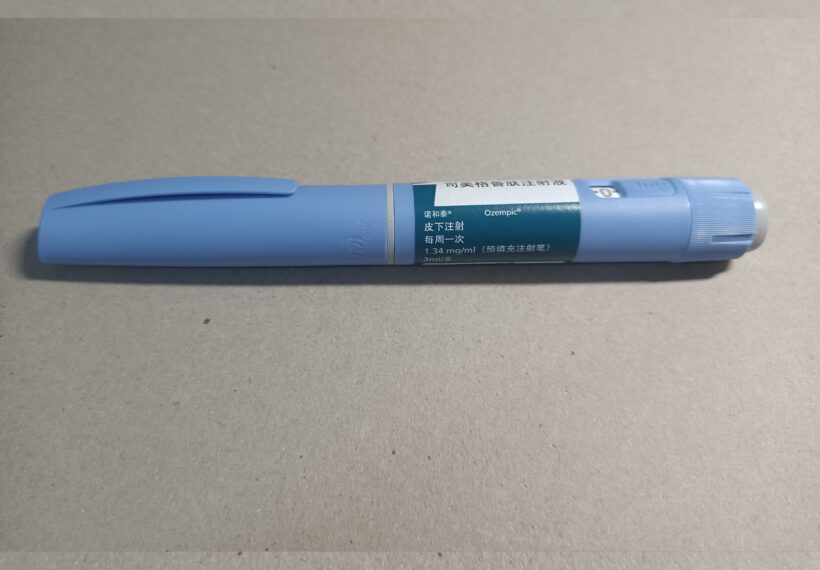
Is there such a thing as a quick fix? Neil deGrasse Tyson and co-hosts Chuck Nice and Gary O’Reilly learn about the science behind a wave of new weight loss drugs, the ethics of Ozempic use, and off-label prescriptions with exercise scientist, Dr. Nick Tiller.
Learn how Ozempic and other semaglutide injectors work in patients with diabetes. We break down what it does inside the body and how it interacts with GLP-1 receptors in the pancreas, stomach, and the brain. Can semaglutide make your brain want to eat less?
We discuss the impact of inflammation on the body and how semaglutide might help in preventing dementia. Find out how studying lizard venom led to the creation of semaglutide. We explore our skepticisms with the drug and the drawbacks it might have. What happens when someone who is not obese takes the drug? Can you ever stop taking it once you start?
Is there enough semaglutide to go around? We discuss shortages and their impact on diabetes patients. Is semaglutide better at managing blood sugar than insulin? We also discuss off label prescriptions and whether they should be further regulated. Should the FDA further regulate off label usages of drugs?
Thanks to our Patrons Christian Attwood, Tyler Loveland, Ruhan Periyacheri, Jeff Parker, Ed Thorton, and Dakota Ponder for supporting us this week.
NOTE: StarTalk+ Patrons can listen to this entire episode commercial-free.
Transcript
DOWNLOAD SRTApple Card is the perfect credit card for every purchase.
It has cash back rewards unlike others.
You earn unlimited daily cash back on every purchase.
Receive it daily and can grow it at 4.15% annual percentage yield when you open a high-yield savings account.
Apply for the Apple Card in the Wallet app on iPhone and start earning and growing your daily cash with savings today.
Apple Card is subject to credit approval.
Savings is available to Apple Card owners subject to eligibility requirements.
Savings accounts provided by Goldman Sachs Bank USA.
Member FDIC, terms apply.
How great is it to be able to communicate with somebody in their language?
Makes you both feel good.
How about job prospects and how much more plentiful they are when you can speak another language?
Well, how about you learn a new language with Rosetta Stone, the most trusted language learning program to make you a more competitive job applicant?
It’s available on desktop and as an app and teaches through immersion.
Find convenient 10-minute lessons.
It’s used by millions because it works.
Rosetta Stone’s true accent feature even provides feedback on your pronunciation.
For a very limited time, StarTalk Radio listeners can get Rosetta Stone’s lifetime membership for 40% off.
That’s $179 for unlimited access to 25 language courses for the rest of your life.
Redeem your 40% off at rosettastone.com/startalktoday.
Muchas gracias, you say.
Siempre de nada, I say.
Coming up on StarTalk, our guest is Dr.
Nick Tiller.
He’s an exercise physiologist.
And we talk about the use of off-label drug prescriptions like Ozempic and other life-changing, downstream benefits they might hold.
In that case, it’s weight loss.
But might it also curb addiction of any kind?
Is there such a thing as a quick fix?
All that and more coming up on StarTalk.
Welcome to StarTalk.
Your place in the universe where science and pop culture collide.
StarTalk begins right now.
This is StarTalk.
Neil deGrasse Tyson here, your personal astrophysicist.
And this is Special Edition, where we’re going to be talking about medical quick fixes.
I got with me my two co-hosts, Gary O’Reilly.
How are you doing, man?
I’m good, Neil.
All right, former soccer pro and sports commentator, professionally, and they lend him to us for this purpose.
Of course, we got Chuck Nice.
Chuck, how are you doing, man?
Hey, buddy.
What’s happening?
Longtime co-host and your comedian and actor.
So, Gary, you and your producers think this stuff up.
So, clue me in what today is about.
In a previous episode, we explored quick fix solutions in the health and wellness industry.
Scotch.
Yes.
Scotch fixes everything.
We’re not talking tape.
And we’re out.
Quick fix Scotch for everything in life.
Okay, that and 420.
So, this show basically was a must-do because right now, the quickest fixes in town are weight loss drugs, Ozempic, and we go V depending on your preference.
So, that’s our point of entry.
And from there, we’ll go off label on a journey that I think we’ll find pretty interesting.
And today’s guest is, it’s fair to say, a skeptic who’s been on before.
So, Neil, introduce our guest, please.
Oh, Dr.
Nick Tiller, who’s, it’s his second time on StarTalk, I think.
A returning champion.
Returning champion.
A repeat offender, you could say.
A recidivist.
And I realized you existed upon seeing the cover of your book, The Skeptic’s Guide to Sports Science.
So I know there’s so much woo-woo and pseudoscience circulating in that community.
And I said, we’ve got to get this guy on the show.
You had him at Skeptic, Nick.
The moment he saw Skeptic on the cover, he was…
What’s your Skeptic on?
I used that word very, very precisely.
I knew what I was doing when I titled it that, yeah, for sure.
You’ve got it.
So you have a PhD in respiratory functions of human physiology.
You’re a senior research fellow in exercise physiology at Harbor UCLA Medical Center.
Very cool.
Leading authority on physiology and pathophysiology.
Love that.
An extreme exercise, being an ultramarathoner and triathlon yourself.
You would call that extreme exercise for sure.
You’re a columnist also for Skeptical Inquirer magazine.
My single favorite magazine in the world.
Let the record show.
Oh, yes.
Indeed.
I wait for it to show up and I say, how are people misthinking things today?
There it is.
And they show it.
So Nick, welcome back to StarTalk.
It’s great to see you guys again.
Thanks for having me back.
So Nick, let’s just go straight out.
All right.
Every day, I find myself reciting the jingle for Ozempic.
Can you imagine?
Oh.
So could you imagine if it was Wigovi and they started with we, we, we.
It wouldn’t be as good.
It wouldn’t be as good.
It wouldn’t be as good, would it?
I have a ten-year-old daughter and for the last two years now, she walks up to me and it still gets me.
And she goes, knock, knock.
I say, who’s there?
And she goes, oh.
I say, oh, who?
And she goes, oh, oh, oh, oh.
And I’m like, really?
That’s good marketing, huh?
I’m like, damn.
You were watching too much TV, girl.
I expected better for her as the daughter of a comedian.
Just thought I’d put it out there.
Maybe I’m not that good of a comedian.
So, Nick, you’ve heard a lot about this.
I knew it had some relevance to diabetes, right?
For diabetes patients.
And then people started losing weight, losing their cravings.
And I know people.
It’s an expensive drug and I know some rich people.
And apparently this is just in their regimen, their weekly regimen.
So it feels like a wonder drug, another quick fix.
So how do we go from type 2 diabetes to a weight loss drug?
How does that happen?
Well, I guess Ozempic was FDA approved.
So any drug that comes onto the market has to be approved by the Food and Drug Administration.
So the FDA approved this in 2017 as a treatment for type 2 diabetes.
So type 2 diabetes is when people produce insulin from the pancreas but they’re insulin resistant.
So the insulin that they’re producing is not exerting its effects on the body.
And of course insulin’s function is to extract glucose from the blood to keep blood glucose levels within a very narrow homeostatic range.
And glucose is synonymous in that example with energy driving your body needs, correct?
Right, absolutely.
Glucose is just a simple carbohydrate.
So any type of carbohydrate generally will cause your blood sugar levels to rise to some extent.
So it’s one of that family of oses, right?
There’s sucrose, fructose, glucose.
So they’re all sugars, right?
They’re all sugars.
Glucose is the simplest form of sugar.
It’s a single molecule.
Fructose is another one.
It’s a single molecule.
Sucrose, what we call table sugar, is a disaccharide.
So it’s glucose and fructose bound together.
But essentially, they all get absorbed through the intestine, into the blood, and they’re going to cause a rise in blood glucose.
People with diabetes can’t control their blood sugar because of the reason that I just mentioned, that they’re either not producing enough insulin.
That would be type 1.
That’s type 1.
Type 2 diabetes, they’re producing it, but it’s not potent enough.
It’s not exerting its effect.
If your blood sugar gets too high, it can cause systemic inflammation and all sorts of other problems.
And if your blood sugar falls too low, it’s difficult to stay conscious generally.
So, your body will try to maintain…
How do I know if my glucose is too level?
You don’t know because you’re unconscious, right?
Well, yeah.
Whoever’s in the room with you will know because you’ll be lying horizontal on the floor.
So, your body will do whatever it can to maintain your blood sugar levels within this kind of narrow, normal, homeostatic range.
So, this drug that we call ozempic, it’s called a GLP-1 agonist.
And GLP-1 is glucagon-like peptide 1.
It has a very important role in the body that when we take in some food, particularly if the food contains fats and sugars, it will stimulate the release of GLP-1, which acts on the pancreas, which then releases insulin.
Is there another term for the drug?
I mean, we’re calling them GLP-1s, but they’ve got brand names.
So what is semaglutide?
So the drug itself is called semaglutide, and the brand name is Ozempic.
So that’s what’s actually branded and then FDA approved to treat type 2 diabetes.
But shortly after these drugs were being prescribed to people with type 2 diabetes, physicians and scientists found that one of the side, I mean, you can call it a side effect or an additional effect, was that people were losing weight as well, which is generally good because people with type 2 diabetes are often overweight or if you’re obese, if you’re clinically obese, it predisposes you to type 2 diabetes.
And so after a couple of years, the drug was prescribed by physicians off label, which I guess we’re going to talk about in a little while, to help people with weight loss.
And then in 2021, the FDA re-approved semaglutide under a different brand named Wegovi, specifically to help people to lose weight.
But it works via the same kind of mechanism.
So it seems to me there’s an interesting back door here that you’re describing because if FDA approves a drug for whatever reason and you find another application for that drug, it doesn’t have to be FDA approved again, is that correct?
That’s correct.
As long as your doses are within the range of the originally intended dose, it doesn’t have to be tested.
That’s why everybody loves the little blue pill.
You’re right.
And that’s an interesting why actually.
Because when that was originally discovered, I’ve written down some of the drug names here, sidenofil citrate, because I can’t remember the drug name.
But sidenofil citrate was discovered because researchers were looking at ways to lower blood pressure.
And they found that this blood pressure lowering drug had this unintended side effect that it increased blood flow to the male genitalia.
So they rebranded it as Viagra.
And the weird thing is they now prescribed Viagra off label to treat high blood pressure.
It’s gone full circle.
It’s gone full circle.
So weird.
So what is it about carrying extra weight, specifically subcutaneous belly fat, that leads to diabetes?
What is that association?
I never knew the answer to that myself.
So yeah, what is going on there?
Right.
So belly fat is more metabolically active and it’s closer to your viscera, to the internal organs.
So if you have a large amount of belly fat, it’s more likely to penetrate deep into the viscera and surround your pancreas and your liver and so forth.
So because this fat is more metabolically active, it has a much more, a much closer association with disrupted blood sugar control and signaling.
So and this is a problem for men especially because I don’t know if you’ve noticed this, but men tend to store more of their body fat around the midsection.
Yeah.
Women in general tend to store more of their body fat around their hips and bums.
Wow, they’re so lucky.
Well, and in effect they are because it’s the fat, it’s the visceral fat, the central adiposity which predisposes, as you say, to type 2 diabetes.
So that means men are more prone to type 2 diabetes than women based on this analysis.
Men who have greater waist to hip ratios, yeah.
Right, right.
So, Chuck, we need Sir Mix-A-Lot to do a song about men’s belly fat.
That’s right.
I like big guts and I cannot lie.
So Nick, when patients being treated for type 2 diabetes with the, I call it semaglutide, but semaglutide, it’s a tomato, it’s a tomato, whatever.
That’s because you’re English.
I know, sorry.
But I don’t apologize for that.
The thing is…
You just did.
I take it back.
This is not the apology you’re looking for.
So, looking at that and saying to you, is there enough clinical evidence to back up this downstream off-labeling of this drug as another use?
Or was it enough of…
You know what, doc?
I lost weight.
Fabulous.
Great.
Or is it just got to go clinically?
How do you process this for this drug to come again in another way?
Yeah.
So, the only similarities between the two approval processes is that semaglutide, semaglutide has already gone through the phase one and two trials, which are essentially about making sure that administering the thing is not going to cause toxic downstream effects.
So, the safety profile is kind of already sort of in place, but they’ll study independently for the independent effects.
And there are dozens and dozens of very, very good randomized controlled trials that have looked at this independently in terms of treating type 2 diabetes, because it helps control blood glucose, and independently using semaglutide for weight loss, because it is a slightly, I guess you could say it’s a slightly different mechanism.
So, you have GLP-1, it has a bunch of different effects on the body.
Wherever there’s a concentration of GLP-1 receptors, then GLP-1 is going to exert its effects.
So, the first place that we have receptors is obviously in the pancreas that we’ve just discussed.
So, GLP-1 helps to upregulate the secretion of insulin, and it helps the beta cells of the pancreas, which actually does the secreting of insulin to proliferate, and they increase in number.
So, it can actually help to treat type 2 diabetes in that way.
But we know that GLP-1 also acts on the stomach, and it does so in a way that suppresses the amount of gastric acid that’s being secreted into the stomach.
So, obviously, when you take in food, you swallow the food down into the stomach, it comes into contact with these different lipases and different enzymes to break down the food and hydrochloric acid, and it turns the food into a mushy sludge and empties into the small intestine.
And GLP-1 actually— Evidence is that, just look at anyone’s throw-up.
Yes.
Right, exactly.
It turns it into that stuff.
But it does so in a way that it suppresses the amount of gastric acid that’s secreted.
So, it takes longer to break down the food, and it slows the rate of gastric emptying.
So, you essentially stay fuller for longer.
Mechanically, you keep more food in your stomach.
So, it helps to suppress appetite in that way.
But there’s one other mechanism that’s really important that we have to mention.
And that GLP-1 also acts on receptors in the brain.
So, hypothalamus is the body’s kind of appetite control center.
And by stimulating GLP-1 receptors in the hypothalamus, then we can actually reduce appetite, increase feelings of satiety, and people want to eat less.
So, is it true or is this correlation rather than causation?
That it not only reduces appetite for food, it reduces the other cravings and appetites, including alcohol and, you know, like sugar cravings.
And suppressing urges.
Urges, very good, thank you.
Is that where the brain part of this comes in?
Is that true?
It’s probably not just correlation.
It probably is causation.
The reason that I say probably is because this all started because patients who are prescribed some acrylatide for one reason or another were coming back to their doctors saying, you know, it’s not just that I want to eat less food, but my cravings and my typical addictions like alcohol or even cigarette smoking have also been suppressed.
So then we started to look at this under controlled conditions.
There have been a bunch of studies now mostly in rodent models.
So in rats and mice and a couple of studies in non-human primates.
And what we think is happening, the mechanism hasn’t been fully unpacked.
But what we think is happening is that GLP-1 acts to down regulate dopamine transmission in the brain.
And dopamine, as we know, has a…
We have an entire episode on dopamine.
So people want to look into our archives.
Absolutely.
And when we eat some kind of food, particularly if it’s tasty food, it contains lots of fat and sugar, the stuff that tastes really good, right?
We get a dopamine spike in the brain that makes us…
It gives us kind of a nice sensation.
It reinforces food-related urges and reward-seeking mechanisms.
And by down regulating that pathway, then GLP-1 can, in theory, help to improve impulse control and decrease reward-seeking behavior.
And that would be for whatever stimulates dopamine.
So Nick, I have some friends who are foodies, but like high-level, high-profile foodies, seeking out the finest chefs in the finest restaurants.
Those who went on Ozempic, they noticed not only did they eat less, but they were deriving less enjoyment from the food.
This isn’t James Beard-worthy.
That was a double effect.
It’s like, not only am I not really hungry, I don’t even want it.
And so some of them were worried that it was subtracting away from them this big part of their social life, going out and enjoying fine foodie type things prepared by high-profile chefs.
You call this a miscellaned star meal?
It’s one of those repercussions.
It’s one of those repercussions that you don’t even think about.
But yeah, I guess we have to frame this in the context that there are two types of feedings.
There’s what we call homeostatic feeding.
And then there’s hedonic or hedonic feeding.
And they kind of, they’re self-explanatory, but homeostatic feeding is when we eat because we haven’t had enough calories.
You’ve got to survive, right?
You need to live, not live and to eat.
If you go out and do a hard training session or you haven’t eaten for a number of hours, then you’re going to have a negative calorie, you’re going to have a calorie deficit, so your body is going to tell you to go and eat more.
And that’s called homeostatic.
Homeostatic feeding, exactly.
Just in an effort to maintain normal dynamic equilibrium.
By the way, the way you word it, it sounds like we’re zoo animals.
It’s your feeding.
In a way.
Let’s not tug at that thread.
And so hedonic feeding is literally chasing that reward, is that reward-seeking behavior of food that makes us feel good.
And that explains how we can go and have a huge Thanksgiving meal, have a big full stomach, and still find ourselves going back to get a second helping of pumpkin pie.
Because we don’t need the calories, but we like the feeling.
So if the feeling doesn’t drive the dopamine, you’re not even going to have the thought.
Right, exactly.
And that’s how GLP-1, in theory, can back down regulating that process.
And that’s why if we only obeyed the homeostatic feeding triggers, most people would probably be normal weight.
I was like everybody in the 1970s.
And I know Gary, I know you want to get in here, but since we’re on this right here, just right here, I want to stay right here for one second.
Wouldn’t it make sense then that neurochemically, if we were to just deprive ourselves these kind of pleasure triggers, that our brain would naturally kind of go into a state where it doesn’t care.
Like we wouldn’t be seeking the rewards.
So you cut out sugar for like two weeks, right?
And just stay off of it.
Like your body will say, all right, F it, I don’t want sugar anymore.
You know?
Are you asking a question or are you just hearing one?
I’m asking.
That was my impression of my body, but I’m asking the question.
Well, I think it’s intuitive.
But if you ask anybody who’s ever followed a fad diet, they can probably cut out all kinds of junk food and confectionery and alcohol for six weeks, two months.
They can go for a long time without that.
And eventually they fall off the wagon.
This kind of characterizes most people’s experiences with dieting, which is why dieting never works.
Because as soon as you conceive the idea of a wagon, you’re going to fall off it.
So, Chuck, his answer is no.
Probably no.
There might be some kind of neurochemical mechanism that I don’t fully understand.
But experience tells me that that’s not the case.
It’s not going to be the case.
Okay, cool.
Cool.
You want to make sure your day goes smoothly, you want your voice to be smooth as well.
Throat irritations like hoarse voice, throat tickles and can really get in the way.
From making a good impression on a first date, to perfecting that presentation you’ve been practising all week, or just hitting those high notes for everyone in the car, whether they want to hear them or not.
You need something you and your voice can rely on.
Whenever a new Ricola throat balm comes in, it’s an entirely new and tasty way to do throat care.
It coats and protects against throat irritations and has a delicious duo of a liquid center with honey and smooth caramel-flavoured coating.
So whether you’re talking, presenting, singing or even podcasting, new Ricola throat balm is the drop you want to shop.
It’s the perfect drop of protection to add to your daily routine to make sure you’re at your absolute smoothest.
Try new Ricola throat balm.
Coat your throat.
Now available in the cough and throat drop aisles in stores across the US.
Nissan has a car for everyone, every driver who wants more.
Whatever your more is, more fun, more freedom, more action, more turbocharged excitement, more head-turning style.
From sports cars, sedans and EVs to pickups and crossovers.
With Nissan, there is no compromising your next adventure.
Nissan has every kind of car to fit any kind of style.
With cars that specialize in performance, agility or adventure, there’s always more than one way to take on whatever excites you about driving.
At Nissan, they don’t just say less is more, they say more is more.
More revs in their sports cars, more guts with all-wheel drive and more than enough options to fit your driving style.
Whether you like driving solo, driving with a furry friend or like cross-country road trips with your three best friends, Nissan is the key to a thrilling ride and more.
Nissan can take you anywhere you want to go.
Find your adventure and more with Nissan.
This show is sponsored by BetterHelp.
So let’s talk about a time in your life when racing thoughts were keeping you up at night, waking you up early or preventing you from being able to enjoy your own life.
Do you ever find that just as you’re trying to fall asleep, your brain suddenly won’t stop talking?
Do your thoughts start racing right before bed or at other inopportune moments?
It turns out one great way to make those racing thoughts go away is to talk them through.
Therapy gives you a place to do that so you can get out of your negative thought cycles and find some mental as well as emotional peace.
If you’re thinking of starting therapy, give Better Help a try.
It’s entirely online, designed to be convenient, flexible and suited to your schedule.
Just fill out a brief questionnaire to get matched with a licensed therapist and switch therapists at any time for no additional charge.
Get a break from your thoughts with Better Help.
Visit betterhelp.com/startalktoday to get 10% off your first month.
That’s BetterHelp, help.com/startalk.
So Nick, we’ve got a neurochemical process here, and it works on addiction and therefore dopamine.
Are trials underway for this particular drug to work on dementia?
And if so, what’s the process in play?
So most of these additional effects that we’re reading about, so supposedly this drug can reduce the risk of dementia and Alzheimer’s and polycystic ovary syndrome and all of these other things.
Most of that stuff is, this is where I turn into a grumpy old man, most of that stuff’s reported by the mainstream media, and as they tend to do, they misrepresent the mainstream science.
So probably there is an indirect relationship between use of semaclotide and the overall risk for developing dementia in this case, but it’s mediated by weight loss.
So we know, for example, that people who have type 2 diabetes have a greater risk for developing dementia and other kinds of cognitive decline because of this systemic inflammation that occurs because of uncontrolled blood sugar levels, right?
So if we help type 2 diabetics to better control their blood sugar, then they in turn reduce their risk of developing dementia and other types of cognitive dysfunction.
So there is a very indirect link there, but it doesn’t seem to be a direct mechanism.
There’s some evidence that maybe GLP-1 receptor agonists might help to improve cognition in some respects, but it’s very early stage research and it’s going to be a couple of years before we know any more.
So a lot of the time, if you can decrease somebody’s body weight, help them to better control their blood sugar, then the risk for all sorts of things-
The whole portfolio comes in.
Right, exactly.
It seems to me, it seems to me like we’re looking in the wrong area because from everything I hear about medically, inflammation is the worst thing that can happen to the body.
It’s the body’s way of saying, look, I got to get rid of some bad stuff, but the reaction to that is what is harmful.
Why are we not looking for a way to just stop inflammation?
Anti-inflammatories?
I don’t know.
I don’t know.
Well, if you think about every major-
You better answer quick before he blows a gasket.
I think every major non-communicable disease exerts its kind of, its pathophysiology is due to inflammation.
So cardiovascular disease, for example, COPD, chronic obstructive pulmonary disease, cigarette smoking is so bad for you because it exerts systemic inflammation.
It’s essentially all about managing inflammation.
And we mentioned at the start-
Even high blood pressure, inflammation is the big problem.
It seems to be inflammation.
Even ultra-endurance exercise, which is an area that I’ve become interested in, it’s probably not super good for you in some respects because it induces this systemic inflammatory state.
So yeah, trying to reduce inflammation, trying to induce stress, physiological and psychological stress seems to be a pretty important thing to do.
So I have a double-S question here.
This sort of Ozempic drug, that group of drugs gets released in, what, 2017?
A, were they designed specifically to have these downstream effects or are we just slow to realize these benefits?
Well, there was something called COVID in between there, Gary, because, you know, let’s get real here.
But, Nick, yes.
Well, to try and answer your question, I think, I don’t think we’ve been slow on the uptake to try and understand.
We’ve known about GLP-1, so this is naturally produced GLP-1 that’s produced from the intestine in response to…
It’s a hormone, isn’t it?
It’s a peptide hormone that’s produced naturally in the intestine, but, and we’ve known about the functions of GLP-1 for a long, long time, but the human-derived GLP-1 has a very, very short half-life.
It’s metabolized as a half-life of about 10 minutes.
So it’s secreted from the intestine, and then it’s very, very quickly metabolized.
Only about 15-20% of what’s produced actually makes it into the blood.
Well, just because I have to insert here, because you borrowed the term half-life from physics, so in case people don’t precisely know what half-life means, the half-life is always given with an interval of time, as Nick just did.
So if the half-life is 10 minutes, after 10 minutes, half of that chemical remains.
Another 10 minutes, half of that half remains.
Another 10 minutes, half of that half.
So it’s 2 to that power of having.
So if you do this three times, it’s 2 times 2 times 2 is 1 eighth of what’s there.
So rapidly, within an hour, I presume there’s insignificant amounts in your system, unless it continues to be produced.
Right.
And so I’m glad you did the math, because there’s no chance I would have been able to do that.
But actually, that’s a very interesting segue, because how GLP-1 agonists were first discovered, was actually discovered in the 1990s by a government funded research called John Eng, E-N-G.
And he was researching the various constituents of lizard venom.
And so, Chuck, how’s your lizard knowledge?
Let me tell you, I love lizards.
Yeah?
Oh, no, I’m sorry.
That’s Lizzo.
That’s something different altogether.
Altogether different, yeah.
Well, are you familiar with the helo monster?
Yes, I am very much.
We call them a helo monster, but yeah.
So, the helo monster has, as far as I’m aware, is North America’s only venomous lizard.
Lizard, yes.
And so…
And it was the prehistoric creature of choice in 1950s movies.
Film, close up, making you think it’s big and bigger than the people running away from it.
Because it’s got that fork tongue sticking out and it flops its legs and it’s pretty scary.
We’ve never seen one before.
And that was our, you know, before Jurassic Park and CGI dinosaurs, that was the best we could do.
Beautiful.
Well, his venom is also quite scary as well.
And this character, John Eng, was researching the various constituents that made up the lizard venom.
And he found that there was a protein in the venom that had a very, very similar molecular structure to what we knew then to be GLP-1 produced in the human intestine.
But whereas GLP-1, human GLP-1, had this very, very short half-life of 10 minutes or so, this lizard venom, this lizard venom protein, had a half-life of like five hours.
So he immediately thought, well, if we could find a way to isolate this and synthesize it, maybe we could administer this to humans and help with blood glucose control.
Fast forward a decade, over a decade, and the FDA finally approved a drug called Xenotide, which is based on this lizard venom protein.
And that was our first short-acting GLP-1 agonist.
And since then, we’ve developed GLP-1 agonists that have longer and longer half-lives, five hours, ten hours, and then semaglutide has a half-life of between five and seven days.
So it’s a long-acting GLP-1 agonist, which means it can exert its effect around the cloth.
So the dose is a once-a-week dose, if I remember correctly.
It’s a weekly dose.
Yeah.
Xenotide was twice a day.
That’s consistent with that information about the longer half-lives.
Yeah.
Yeah.
And Xenotide was twice a day.
So people would have to jab themselves twice a day because of the half-life, whatever, five to ten hours, and not only is it difficult to get people to adhere to that kind of structure, they also had to time the application around meals, much like they had to do with insulin, which is a drag for everybody.
Well, it’s not a drag if you would otherwise die, right?
Right.
It’s preferable to death, correct.
So from everything we’ve been discussing, it does sound like a miracle drug.
So where does your skepticism land in the presence of this drug relative to all the other drugs that have claimed to be miracle cures?
Well, I’ve gone back and forth on this and I’ve struggled with this quite a lot actually, because as you kind of allude to, for the last more than a decade of my life, I’ve been very much an advocate, as an exercise scientist and a skeptic, of this idea that any health and wellness outcome that is worth achieving, you have to work for it.
You have to put in some time and some effort and some commitment.
Says the man who does triathlons, yes.
Right, exactly.
It takes time.
You can’t get these things over.
Dude, I want to be in the shape that you’re in, but I don’t want to leave the couch.
I was going to say, Nick, we’re only seeing you from like a chest up, shoulders up, and we’re like, yeah, this guy does a lot of work.
Two and a half percent body fat, for sure.
It’s a padded shirt.
I got my storage of semaglutide.
That’s what you don’t realize.
We actually were ribbing you about looking good, but we didn’t let you finish telling us your convictions on Ozempic.
Yeah.
Mr.
Skeptic.
Well, as an exercise scientist, as a skeptic, and for the longest time, I’ve always been of the opinion that to achieve any meaningful health and wellness change requires time and effort, right?
And particularly, this obesity and being overweight is probably about as complex as a public health problem can be.
Everybody wants simple solutions to complex problems.
You can’t just say, run triathlons like I do, and that’ll lose your body fat.
That’s not how it works, right?
You can in some cases.
If your exercise volume is so high that you’re expending so much energy, then sometimes that will be enough to do it.
But rarely is that the case.
But here we have a drug that is seemingly safe.
No drugs are completely safe.
There are side effects, which maybe we’ll circle back to.
But it seems to be apparently safe.
One caveat to that is we don’t have studies on people that have been taking this drug for 5 or 10 years.
We don’t know what the very long term effects might be.
It’s definitely effective.
The average weight loss in a semaglutide trial is about 15% of body weight.
So that’s 30 pounds in a 200 pound individual.
I could use that.
I could do that.
It’s definitely clinically meaningful.
It will dramatically reduce somebody’s risk of comorbidities.
And you know, I hate to say it, but we’ve been banging this drum about people improving their lifestyles and eating better and this kind of thing for decades.
And the only thing that we’ve seen change is that obesity rates have gone up.
And obesity rates have been trending upwards since the 70s and now going up exponentially.
So, Nick, it’s an extraordinary phenomenon.
And it could be just that the food industry has figured out how to make tasty, salty, fatty, calorie-dense foods that don’t cost much money.
And push them all day, every day, on every media outlet you can find.
So here we go, Nick.
Let’s flip this.
If you’ve got somebody who is not clinically obese and is pretty good body weight for their size and all the rest of it, and you give them some Megalotide drug, the weight loss becomes a problem.
Doesn’t then it push other need for calories and the kind of addiction thing doesn’t work as well?
Does that happen?
No, if they weren’t overeating to begin with, they weren’t going through this dopamine cycle.
Right?
Am I right, Nick?
Well, everyone has reward-related behavior, particularly when it comes to food.
Most people do, if you don’t, or scotch or alcohol or drugs or gambling or social media.
Everyone is constantly pushing that dopamine button in one way or another.
It just so happens that people who are very overweight seem to do it more often than not with food.
But everyone, if you didn’t have any dopamine response, you’d have to be a robot, essentially.
But anybody could potentially take these drugs and lose more weight.
And Neil said at the beginning that he knows celebrities and things who have been taking Ozempic.
And if you saw the Academy Awards this year, I didn’t watch the whole thing.
But Kimmel was the presenter and in his opening monologue, he said, I look around and I see all these slim, beautiful people and I can’t help but wonder, is Ozempic for me?
And it got a good laugh, but actually cut a little bit close to the bone because a lot of people who can afford to pay $1,000, $2,000 a month are using the drug when they don’t actually necessarily need it.
I have a friend who’s on it and he swears by it and I said to him, but when you stop taking it, you’re going to be fat again.
And he was like, and so I just won’t stop taking it.
Right.
And this is the other thing.
And there’s, I mean, they’ve done some really, really good studies.
There was the STEP 4 study, which was published 2021 in JAMA, Journal of the American Medical Association.
And it was a really nicely executed study.
They got a group of like 800 obese individuals and they put them all on semaglutide.
They titrated up the dose for the first 20 weeks.
So they started very, very low dose.
Every week they increased the dosage until it was about 2.4 milligrams per week, which is the recommended dose.
And in the first 20 weeks, everybody lost weight.
And I think the average weight loss was about 10% body mass, which is pretty good for 20 weeks work.
They then split the group in half.
Half the group continued on semaglutide for the rest of the trial for an extra year.
The other group got placebo injections.
And you can probably guess what happened.
The group that continued on semaglutide continued to lose weight.
I think the average weight loss by the end of the trials between 15 and 20% body mass, the group on placebo regained pretty much all of the weight that they originally lost.
But here’s the kicker.
Everyone in that study was receiving help with their diet.
They were receiving lifestyle coaching and they were receiving monthly sessions with a psychotherapist to help them with the psychology of appetite suppression.
So even though they were getting…
Psychotherapy is…
It’s probably not working.
Something in that trial wasn’t working.
But exactly as Chuck says, if somebody starts taking this drug, we better hope that there are no long term side effects because people are going to have to take it for the rest of their lives if they want to retain their weight loss.
Hey, if you like saving, you should join Walmart Plus.
It’s a membership that saves you money on the stuff you’d expect, plus the stuff you don’t.
Like gas, plus free delivery, plus a Paramount Plus subscription, plus so much more.
I love saying plus.
So you can drive the kids to soccer practice, order snacks for movie night, and stream your favorite movies all while saving.
Start a free 30-day trial at walmartplus.com.
See Walmart Plus terms and conditions.
Paramount Plus essential plan only, separate registration required.
Hey, you’ve been searching for a hotel for that epic trip that you’ve been planning, but there’s so many options that you can’t decide which one to book.
The Choice Hotels family of brands has over 7,500 locations with a hotel for every type of stay, like Cambria hotels with offerings like rooftop bars, spa-like bathrooms and convenient downtown locations or a comfort inn for the whole family to enjoy.
Cambria hotels offer spa-like bathrooms with many that have Bluetooth mirror connectivity so you can listen to your favorite podcast and we all know that StarTalk or songs while you get ready.
Each Cambria hotel is curated with locally inspired design elements, providing guests with a sense of space and place in the city you’re visiting.
Cambria hotels offer hyper local craft beers on tap.
Okay, you had me at craft beer.
How about rooftop bars, lounges and outdoor spaces for guests to enjoy?
Comfort offerings include a free hot breakfast, great pools for the entire family and spacious rooms.
Make your travels come true today when you book direct at choicehotels.com.
That’s choicehotels.com, where travels come true.
Nick, where do we stand ethically when type 2 diabetes sufferers now being forced to wait for this drug that could be so beneficial for them?
Because it’s become the drug of choice for lots and lots of other people that don’t have.
For some people, not to take them out of morbid, obese states, but others just to fit into the clothing that they didn’t fit into a year ago.
So is there enough of this to go around and to cover the people who really needed to save their life?
The short answer is no.
So the short answer is that the supply at the moment cannot meet the demand.
And this is largely because it’s been endorsed by a number of celebrities and other types of famous people.
It’s trending on TikTok.
A lot of fitness influencers are using it to help facilitate these dramatic body transformations.
And whereas physicians are only supposed to be prescribing these things to patients, essentially, people who are clinically obese, so if they had body mass index more than 30, or people with a BMI of 27 or more, who have an additional risk factor, right?
Or somebody who’s pre-diabetic or diabetic.
These are all diagnosable conditions based on clinical criteria.
But you can’t stop a physician from prescribing it to somebody else who might ask for it.
You can’t stop people from getting it online, buying it overseas, buying it from friends.
There is a way to get hold of this stuff.
And as a result, as I said, supply cannot meet demand.
And this is kind of real implications for a diabetic who has become dependent on Ozempic.
Now, there are other options for type 2 diabetics.
And Metformin, for example, for the longest time was the go-to treatment.
And you can, of course, inject with insulin.
But GLP-1 agonists, in terms of controlling blood sugar, are just as good, if not better, than insulin.
And so, if somebody’s been used to taking Ozempic every single week, once a week, and then you ask them to switch to insulin because there isn’t enough Ozempic to go around, there’s a lot of trial—I don’t know if you know somebody who’s got type 2 diabetes or if you’ve—you know.
But there’s a lot of trial and error that goes with the administration of insulin.
You’ve got to figure out how much to use, when to inject it, to track your blood glucose concentrations.
Well, we’ve seen the ads where they have that sort of readable patch on their shoulder.
And I’m thinking, wow, you’ve got to monitor it every time before you eat, after you eat, in between meals.
What happens after you have the banana before you eat?
And so, yeah, this is clearly a major investment.
How soon before this market space becomes crowded with GLP-1 drugs, that will be for addiction, for dementia?
Do we need more Demon Monster to do this?
Yeah.
And can we use monitor lizards instead?
Good question.
We definitely need more of something.
I mean, a lot of these synthetic forms are now, they are going to flood the market.
You know, semaglutide is obviously highly sought after.
There are a bunch of other GLP-1 agonists that are in development.
There’s one actually to zepatide, which is, it’s just finished phase three clinical trials.
It will be approved by the FDA probably before the end of the year.
And this is a dual action GLP-1 GIP agonist.
So, I won’t bother going into the mechanisms of GIP just for verity, but they’re basically synergistic together and it’s even more effective than semaglutide.
So, semaglutide in the 18-month clinical trials, average weight loss 15%, zepatide average weight loss 20% or possibly even more.
So, this is just the beginning of GLP-1 receptor agonists.
I think we’re a long way off prescribing it for anything like addiction or any of these other indications.
If you know it affects the brain in the hypothalamus or the hippocampus.
You know, I was a big man on the hippocampus.
Leave the funnies to Charles.
It’s too early.
The hypothalamus, then that has nothing to do really with whether it’s food or drugs or alcohol.
It disrupts the reward system.
That seems to be fundamental to so much of what can derail someone’s life.
You’re absolutely right.
The implications of that could be huge, but at the moment, as I said, this is only being studied experimentally in mice and rats.
We don’t know the safety profile of administering those kinds of doses.
We don’t know exactly what dose would be needed to treat addiction.
I have a lab rat question.
An old mouse is three years old, right?
If they go through multiple generations, or rather, what am I trying to say?
They’re animals that don’t live as long as we do, so aren’t you allowed to scale the long-term effects into their short lifetime to get a sense of what the long-term effects might be in us, at least get a first hint at it?
You can definitely get a hint at it, but one thing that scientists and physicians warn against is giving somebody a small dose over a 10-year period, it doesn’t necessarily induce the same results as giving somebody a high dose over a very short period.
It doesn’t always scale very, very well.
So we can’t wait to get these data in real time because then we’d have to wait 5 and 10 years, and people are going to become very unwell in that time.
Everybody noticed he said these data because data are plural.
And if a singular data is a datum, just so you know.
So here, Nick, thinking about this, there is going to have to be off-label legislation and the control thereof of prescription of off-label drugs.
But who wins, the clinical innovation or the legislation?
Because if you just crush innovation within a clinical environment, what’s the incentive to go forward if you’re still waiting that period of time?
This is a very hotly tested and highly divisive issue because on the one hand, you’ve got scientists and physicians who very much feel that the FDA, for example, so the FDA are the regulatory body for all of the new drugs that come onto the market, and the FDA are the gatekeepers for which drugs can be promoted commercially by pharmaceutical companies.
And some people think that they are overly bureaucratic and that in doing so, they prevent drugs or delay drugs getting on the market that could be helping people, right?
And these people will always put forward these hundreds of examples where patients are waiting for drugs to get approval and they need these drugs, and then the drugs are finally approved, but it comes too late for these interventions.
Of course, that was the entire theme of the Dallas Buyers Club.
Oh yeah, that’s right.
There was some regulatory emergency bypass that was enabled for COVID vaccines, is that correct?
Yeah, so the actual approval process was expedited.
We should hasten to add that these mRNA vaccines, for example, have been in development for a decade or so.
But the actual approval process was expedited for that very reason because hundreds of thousands of millions of people around the world were dying already, so you can’t wait two or three years that you would do for the normal process.
Obviously, it turned out to be the right choice.
But at the other end of the extreme, you have people arguing the opposite, that the FDA, they need to be more bureaucratic, they need to be more conservative because history is littered with instances where the FDA were premature to approve a drug that then turned out to have really nasty side effects.
I hear less of that than the other, but I believe you that they’re out there, that they wanted to be even more conservative.
Fen-Fen.
Yes, Fen-Fen is a great example.
So it was, you know, the 1930s, 40s, 50s, the main drug that we used to treat obesity, the royal way of course, was amphetamine.
Because amphetamine is a very powerful stimulant, as you know, it increases metabolic rate, increases sympathetic drive, helps people burn more calories, which is great.
It was moderately successful at helping people lose weight, but it was obviously highly addictive.
Because amphetamine is addictive, and it caused all sorts of heart problems and heart complications.
Then, phentamine was approved in the late 1960s, I think.
And phentamine is a less powerful stimulant, but it still kind of exerts stimulant-like effects.
And again, it was moderately successful at helping people to lose weight by working as an appetite suppressant.
Fluoramine was approved shortly after that.
And then, some bright sparks thought to themselves, well, if we combine these two drugs together, we get an even more potent effect.
The thing was featured, they eventually did approve it as redux, which was featured on the cover of Time magazine.
There were 18 million prescriptions for the drug the following year.
100 Americans died because of heart problems.
And 20% of the people who received a prescription for fenfen or redux had to have heart surgery to correct damaged heart valves.
So, that’s an example of not only a drug that was being prescribed off label when it shouldn’t have been, but the FDA being under so much pressure to try and tackle this growing, you know, obesity epidemic or this increases in population body weight that they sort of jumped the gun on the safety profile.
So, understandably now…
How often do you hear about Americans having to go to Mexico or to France to get a drug that’s not yet approved by the FDA?
We hear that a lot.
But on the other side of that, it may even be worse in the full spectrum of public health.
So, what’s the percentage, Nick, of off label drugs in terms of doctor’s prescription?
So, just for the listeners who aren’t sure, off label means it’s a drug that has been FDA approved, but then a physician has decided to write a prescription for some other indication or in a different dose or in a population for which it hasn’t already been approved.
And it’s probably about between 20% and 30% of all prescriptions are for off label drugs.
So, it’s very common.
It is not illegal.
It’s widely practiced in the states and around the world.
But I think it probably needs some better regulation because the FDA, of course, they regulate the availability of new drugs.
They don’t regulate medical practice.
So, the FDA are very much hands off when it comes to off label.
So, either mixing can be prescribed for COVID even though it’s an anti-parasitic.
So, the general criteria or the recommendations for a physician to prescribe off label, the drug has to be supported by scientific evidence or sound scientific evidence.
The physician has to lean heavily on their medical experience.
And of course, the third thing goes without saying that the physician has to have the patient’s best interests at heart.
The problem with that is…
The first do no harm.
That’s what that is.
Right, exactly.
First do no harm.
A premium non-nacera.
But the problem with that is that what I consider to be sound scientific evidence might be very, very different to what somebody else considers to be sound scientific evidence.
And if a physician leans heavily on their medical experience, well, what if they don’t have much experience?
What if their experience pales into comparison relative to their…
What the Internet is for so they can put up a YouTube video.
We’ve seen it.
Right, exactly.
You can just go watch YouTube.
We know, for example, on the ivermectin case, I read a study that was published earlier this year that found that conservative physicians were more likely to prescribe ivermectin and hydroxychloroquine for treating COVID-19.
And the main driver for that was cable news.
Cable news.
Right.
You know, I will say this, though.
I took ivermectin when I had COVID and my intestinal worms were cured.
Cured them straight away.
COVID.
I still kept the worms.
They just didn’t have COVID.
And you still live in the stable with the other horses.
And I still live in the stable.
I can’t stop eating hay now.
Guys, we got to end it.
We got to land this plane.
Nick, this has been a delight to have you on yet a second time.
I know it’s not going to be our last time because you are a trove of information.
And you can hear how curious we are.
You know how curious our fan base would be as well.
So thanks for this second appearance on StarTalk.
Thank you.
It’s been great to see you guys again.
So thanks for having me.
All right.
Chuck and Gary.
Always a pleasure.
All right.
This has been Neil deGrasse Tyson’s special edition.
This one on Quick Fixes.
Until next time.
Wendy’s Home Style French Toast Sticks are so sweet and crispy, some are saying they’re better than mom’s breakfast.
Did you say Wendy’s French Toast Sticks are better than mine?
No, mom, some people are saying that, not me, even if I am thinking it.
Choose Wendy’s Home Style French Toast Sticks.
At participating US Wendy’s during breakfast hours.
Thank you for watching.




 Become a Patron