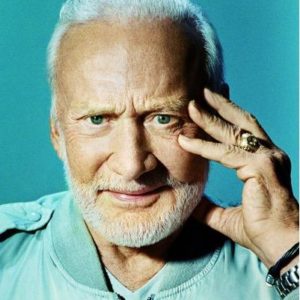
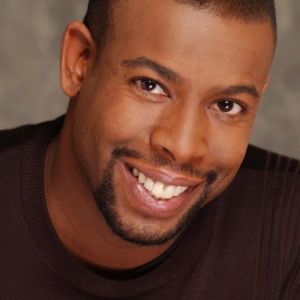
47 years ago, mankind landed on the moon. Neil deGrasse Tyson explores the legacy of that historic mission with the second man to walk on the Moon, Apollo 11 pilot Buzz Aldrin. Helping Neil out in studio are comic co-host Iliza Shlesinger and our own StarTalk All-Stars host and former NASA astronaut, Mike Massimino. You’ll hear how Buzz Aldrin went from shooting down MiG-15s in Korea, to getting a doctorate at MIT, to setting the record for the longest spacewalk at the time during Gemini 12. Mike explains how Buzz developed the protocols for underwater astronaut training, and expands on what it takes to become an astronaut. Discover why Buzz is proud of being “the first guy to pee in his pants on the moon,” the history of “hydraulic engineering” in spacesuits from early UCDs (Urine Collection Devices) to later MAGs (Maximum Absorption Garments), and what those “fireflies” were that Mercury astronauts saw outside their windows. You’ll learn how risky the Apollo 11 mission really was – Neil reads portions of the unused speech prepared for President Richard Nixon that would have eulogized the sacrifices Neil Armstrong and Buzz made in the name of our country, should they have been stranded on the lunar surface. Find out about the impact of Sputnik on the US, why the radiation belt didn’t kill Apollo astronauts, and what’s up with people who deny we ever went to the moon at all. Plus, Chuck Nice heads to the streets to see what people today think of the moon landing, and Bill Nye takes the stage at the United Nations to talk about the 1967 Outer Space Treaty and Star Trek’s prime directive.
Transcript
DOWNLOAD SRT
Welcome to StarTalk, your place in the universe where science and pop culture collide. StarTalk begins right now. Welcome to the hall of the universe. Right here in New York City, I am Neil deGrasse Tyson, your personal astrophysicist, and...
Welcome to StarTalk, your place in the universe where science and pop culture collide.
StarTalk begins right now.
Welcome to the hall of the universe.
Right here in New York City, I am Neil deGrasse Tyson, your personal astrophysicist, and tonight we are featuring my interview with the one, the only, the American legend, the hero, Buzz Aldrin!
Buzz Aldrin!
Pilot of the Apollo 11 mission to the moon.
So let's do this.
I never do this alone, and I've got my professional comedian co-host, Iliza Schlesinger.
Thank you for having me.
Welcome.
Welcome.
And I also have a person who's actually been into space, the one and only Mike Massimino, Mike.
Welcome back to StarTalk.
Great to be here.
And Mike Massimino, you're one of my favorite astronauts ever because you helped to fix the Hubble Space Telescope.
I did.
Yeah, that's not.
And you were not only just one of the many missions that fixed it, you were the last mission to fix it.
That's right.
And that's the one that was at highest risk of failure.
Right, since we were the last ones, there was no one else to clean up our mess.
We had to get it right.
After you fixed it, did you walk off like, I fixed it good?
No, wait, it was, Iliza was more like, I hope I fixed it good.
And now apparently, but Neil's saying it does work.
Yeah, it works, it works.
It's been working.
Yes, our people, I got full reports.
You did a good job.
Thank you, good to hear.
And I just learned, your book just came out.
Yes, very excited about it.
Yes, yes, and it's called Spaceman or something?
Spaceman.
How'd you come up with that title?
Um, we kind of had a lottery, and it was like, Spaceman, Fireman, Garbage Man, Jump Man.
Garbage Man's the title for my book.
Yeah, so as, only if those could have worked, I think, but Spaceman seemed to be the coolest.
What do you think?
Yeah, that sounds cool.
Yeah, yeah, that's clever.
I think it's the right one.
So, the operational definition of being in space is they say, like, 100 kilometers.
So at 100 kilometers, which converts to 62 miles when you convert out of metric, that's about where there's not enough atmosphere above you to scatter sunlight, so that in broad daylight you can see the night sky.
Yes, it's true.
So that's been the operation.
Now, I've hated that definition of space.
Oh.
Can I tell you why?
Go ahead, yeah.
I'm gonna tell you, whether you wanna, I'm gonna tell you anyway.
So, because.
Maybe someone else wants to know.
Because it means the definition of space is defined by how thick our atmosphere is.
That ain't right.
If our atmosphere were half as thick, then space would be at 31 miles up.
And if it were fourth as thick, it would be at 15 and a half miles.
If we didn't have an atmosphere, it would be just standing here on Earth and we all would have been in space.
Yeah, but it's a round number.
You know, 100 kilometers seems like it's hard to get to.
So that's probably, if it was like a couple hundred feet, right, you'd be like, oh, this isn't that big of a deal.
But you have to set it high enough so it's hard to get to.
I think that's part of it.
I'm making this up.
I have no idea.
I thought it was 50 miles.
Yeah, you know, it's not 50.
And thank God I went over 62 or else I have to turn to my A&M.
I thought it was 50 miles.
It was never 50 miles.
We high-five each other at 50 miles.
Little did we know.
Is that right?
I'm serious, yes.
Because you know when you high-five each other and you go get excited and all that kind of stuff.
Yes, and so I hope no one from NASA sees this, because they've got to update everything.
And you're high-fiving at 50 miles?
Pretty much, yes.
Is that paying attention to the controls?
There's really, at that point, you're on top of a rocket, and you know, it doesn't matter.
It's like they train.
All this training you get, you realize it doesn't matter once the thing lights.
You're on your way, and you might as well have fun.
Bring out the freeze-dried champagne.
Exactly.
So 100 kilometers up.
So that might be the future of tourism going to that altitude.
Correct.
But you went higher, because you went to the Hubble Space Telescope, and last I checked, that was like 350 miles up.
That's right.
It's the highest, it's 100 miles higher than a space station.
And it's the highest.
Not many people know that.
Yeah, it's the highest the shuttle could go to.
So we were the highest that anybody's been since the guys went to the moon.
And we put the telescope, I mean, the telescope was put to that high altitude, because we didn't want to ever have to boost it out of the resistance to the very thin layers of atmosphere at those heights.
There is some atmospheric drag even up there.
So the higher you get, the lesser that you have.
The less drag.
And so that kept the telescope out of atmospheric drag.
We did give it a little boost each mission, but eventually it's going to come down.
We put a docking port on our last mission.
That's another thing we did.
So you don't have to worry about it knocking on your door when it comes in.
Wait, wait, wait.
You put a docking port so that the next space shuttle could undock it?
We put a docking ring.
I know, that's what I'm saying.
We wouldn't have it.
That is soon we had space shuttles.
It was a docking ring.
No, it's kind of a generic one, a generic docking ring, so that a rocket motor can be attached to it and guide it back like 30 years from now.
It's a generic docking ring.
Generic.
The malt-o-meal of docking rings.
Believe it or not, it is a generic, yes.
Whatever that means, yeah.
So like, but that's...
I get one at Home Depot, a docking ring?
It's like Nike with two E's.
It is, actually it is.
It's just a round piece of metal.
And it's simple, because all you're doing is you're latching into it.
See, if you wanted to actually grab it with a certain device or dock with it, like in the space station where you have a tunnel adapter, so you can go inside of it, we didn't do any of that.
You just, a run of the mill, generic docking port, piece of metal, round piece of metal, that you can grab with latches, very simple, literally very, very simple.
Okay, so that's encouraging, because you don't want that falling on anybody.
When it plunked down in the Pacific, the great toilet bowl of space probe.
That's right, with all the other stuff that's there.
Right, the fish is so good.
I have a question.
When you go up there to fix it, because we've all seen The Martian, which is based on a true story, whenever, and gravity and all that.
Martian the movie, yeah.
Whenever they go up there, they're always so calm when they're fixing things.
Is it that calm?
Because the whole time I'd be like, I'm in space!
Like, I would not be able to have my wits about me.
Well, that's why I like these movies.
Like, even the movie Gravity, you know, we could have debates on whether or not it's real or something.
Same for The Martian, is it real?
I just like that the astronaut looks cool, right?
And hot.
Yeah, because that kind of, you know, people assume that's the case.
Don Knotts made a movie called The Reluctant Astronaut.
I remember that movie.
It's one of my favorites as a kid.
But he's a nervous guy, he's a jumpy guy like this.
It set back astronauts.
It's really cool about Don Knotts, yeah.
It set us back for centuries with that.
The sex icons that astronauts were prior to that.
Right, exactly.
Come on, cut us some bread.
It's all Don Knotts.
It's George Clooney and Matt Damon.
Are you calm up there?
What was your question?
Were you calm, because they're so calm?
Can I get back to like the Buzz Aldrin interview?
Was I calm?
Sometimes yes, sometimes no, but you're trained to be calm, actually.
It's actually, I think it's a learned trait based on your experiences.
You learn how to...
He's really very nervous now, but he's hiding.
Yeah, for this I'm watching you shake, but figure I will tell you.
Well this is nerve wracking.
It's nothing like this.
So Buzz Aldrin came through town and I just had to nab him for an interview.
He and I go way back, so it was a friendly, like old times, and he came to my office, and I wanted to know how did he become the guy to go to the moon?
Not every astronaut goes to the moon, not every person becomes an astronaut.
So, let's check it out.
I was in the same squadron with Ed White, supersonic F-100s in Germany.
Ed White, who was on Apollo 1, lost him.
That's right, and he left, he got me in the squadron, then he left and went through to test pilot school that qualified him to be testing airplanes.
So, a little later he called me up and said, in 62, now I'm at MIT, and he says NASA's looking for another group of astronauts, and I'm qualified, and I think I'll apply.
Another group after the Mercury 7.
That's right, the first ones after that segment.
And I say, Ed, I can shoot gunnery better than you can, and besides that, I'm studying for my doctor's degree here, and I've decided to join up things in space.
Docking.
No.
Not docking.
You can't dock until you rendezvous.
You gotta launch, you gotta make a couple of maneuvers, then you can rendezvous.
It's like a fighter pilot shooting down the other guy.
Two moving bodies that have to intersect, yes.
This is bringing one on what you would like to be a perfect trajectory, because you've looked at it and it's just the one.
You studied that?
I did it.
Oh, okay.
I did it before and after shooting down a couple of MIGs in Korea.
So Mike, how many MIGs did you shoot down before you became an astronaut?
So we got a little slice of the right stuff there.
Yeah, that's a little bit, that's a different, yeah.
So he was in the Korean War, shot down MIGs, and he was born in 1930, so that would have been the age in that era to do that.
And so here we are drawing from this population to represent us in space.
And back then they were all military test pilots.
And when the shuttle era came in 1978, they had a group of astronauts that were still the military test pilots, but you had the first astronauts of color, the first women who were astronauts, and you had a lot of scientists and engineers.
We still have military people, we still have test pilots, but we also have guys, men and women like me, who are academics.
Academic, you have a PhD in engineering.
Correct, a PhD in engineering, and we have medical doctors and scientists and people from all over the world.
You know, he was the first mission to land on the moon, second to walk on the moon.
He had his PhD by then.
And it seems he got a gold ring for each one of those accomplishments.
Look, the piece blinged out.
More rings than I am.
My boy is drooling, okay?
Yeah, he's big on the drool, and that was just a sample, I think.
Yeah, that was a drill of it.
Can you see his feet?
He was also the first to train underwater to simulate weightlessness.
That was his idea, actually.
He was a scuba diver, and before his space walking adventure, his mission in Gemini, they had trouble space walking on the Gemini missions.
And Gene Cernan ended up being the last person on the moon during his space walk on the Gemini missions.
He fogged over his helmet and had trouble getting back inside.
And they didn't really have a way to...
It's interesting to hear these guys talk about how to space walk then.
They just were just winging it.
And Buzz was the first guy to put some science and engineering behind it.
And he was training in the water.
He space walked for five and a half hours.
Yeah, he had things like restraints and handrails and how to use your tethers and how to train for it.
But he thought about it.
He is a smart guy.
He said, I don't know how this works, let me figure it out.
Yeah, and he came up with that idea.
Buzz did.
Smart guy.
So Buzz was the first to pee in space.
I think he was the first to pee on the moon.
Pee on the moon?
Yeah, because other guys pee in space.
I think that's how other countries know that we were there.
Amen.
I don't think they held it for, you know, for.
Yeah, you can't hold it for three days.
No, two weeks, you know, Jim Lovell was up there.
I'm sure he peed.
OK.
Not that I ever have, but I'm sure, you know.
He's the first to pee on the moon.
Oh, no, yeah, I think it was on the moon, yeah.
On the moon.
And you have a space first.
I do.
Yes, what is that?
I was the first to tweet from space.
To tweet from space?
You had a tweet from space.
What do you think of that?
Yeah, not like walking on the moon.
No.
Maybe closer to peeing on the moon.
What was the tweet?
Like, how does this work?
No, don't.
Yeah, yeah, don't ask him.
Because we'll be prone to compare it to one small step from man.
Yeah, one large tweet from mankind.
That's exactly what happened on Saturday Night Live.
They made fun of me based on that quote.
And so what happened was I tweeted, launch was awesome.
And I wanted the people of Earth to know I was OK.
So I said, I'm feeling fine.
And then I put, the adventure of a lifetime has begun.
That's what you wrote?
I was in space.
You're not impressed?
No.
You would have done something better?
You would have done better?
I would have taken a picture.
I would have uploaded a GIF.
A GIF.
This is a little before the cameras.
I didn't even know if we could do that back then.
You were in space.
Of course you could.
No, no, no.
We didn't have a, we didn't have like, we would have, it would have been too complicated because we didn't have a camera phone.
It was on the computer we were doing this.
This is how long ago it was.
But the interesting thing about it is my, for me, the joyful thing about it, amongst the other things, well, most of the other things is that you could share your experiences with people through social media.
In real time.
It was fantastic.
The New York Times mentioned it.
It was just great.
Got a million Twitter followers.
Yeah, the toughest thing, yeah, the toughest thing about being in space is that you want to explain to people how cool it is, right?
And you just don't have those avenues to do this.
So social media has been great for astronauts to share it.
But in my case, my children, you could also get email out there, and my children were both in high school.
And if you were a high school student, wouldn't you be glad that your dad was off the planet?
Because my kids were.
No, we're not having a party, but you can't see me.
Oh, it's the Hubble Telescope.
You can't see us.
They were thrilled, and I was getting an email.
Plus you're not coming home unannounced, right?
Right, exactly.
They knew where I was.
Land a rocket in the backyard?
They were just, he's gone, we're happy.
And they wouldn't send me an email.
But they made fun of me on Saturday Night Live.
What they said was that, you know, Mike Massimino, he mispronounced my name, but who cares?
I understand.
But he said, you know, the first tweet from Space, launch was awesome.
And they said, just like, Neila, you picked up on, you know, in 40 years, it was the 40th anniversary of Apollo 11, they said in 40 years we've gone from one small step for man to one giant leap to mankind, to launch is awesome.
If we ever find life on other planets, this is how this guy's going to tell us.
I have my little Twitter picture and it goes, geez dudes, look, aliens.
So they made fun of me, but my kids saw that, and they heard about it, you know, everyone, and they went to school on Monday, and everyone said, how cool, they made fun of your dad.
And then I finally got some email from my kids.
Because they made fun of me on Saturday night.
Not because you were in space.
They did not care at all about the space stuff.
So you teach a course in aeronautics at Columbia University, is that right?
Yeah, it's in space systems, yeah.
Space systems, so what's important for astronauts today, if anyone in the audience wants to become an astronaut?
A little late for all of you.
No, not necessarily.
Just the audience saying they're all too old.
There used to be a 40-year age limit.
No, no, they can't do that.
It's a government, there's no age discrimination.
Really?
There's no age discrimination.
In the day.
But you have to be able to pass the medical requirements, which get to be more difficult as you get older.
We're not going to be astronauts.
Right, so you're teaching just what it is to be in space.
Yeah, so you asked about what does it take to be an astronaut.
I think that being able to have something that you really enjoy doing, love doing academically, and that could be flying or medicine or astrophysics, or in my case engineering, something you kind of bring to the table is a good thing, but also being able to understand lots of things.
This is my second point is, yes, being a good person, like you would make a great astronaut.
Thank you.
Goodbye.
You'd be great, and Neil would as well, because you're very personable, you care about people, you're a good team player.
That's what I'm wondering.
That's the thing that is hard to measure, and that's what you get more in the interview.
We can help you with that.
So getting back to my interview with Buzz Aldrin, he's the pilot of the first mission to the moon, Apollo 11, and as we said before, he's recently written a book collecting his most profound moments in space.
So I asked him about them.
Check it out.
What's your favorite story that you tell in here that you want the public to know?
First guy to pee in his pants on the moon.
I was going to ask you about that because I have kids come up to me, how do the astronauts poop and pee?
Because I looked inside the command module of the Apollo command module, there's no restroom that you get up and go to.
You know, Alan Shepard's flight was going to be a pretty short one.
So he was supposed to go out there, get in this Mercury, first time, first American, suborbital.
And the launch countdown didn't quite go the way it was expected.
There was delay, delay, delay.
And Alan's lying at his back.
Pretty soon, it's getting pretty damp there.
And that's when they figured, we got to do something.
We got to have a little bit better hydraulic engineering into the spacesuit and the rest of it.
Is that what they call it, hydraulic engineering?
The UCD, very important, urine collection device.
And the UCD...
Somehow I thought those words would be bigger.
It's a pee collection device, that's all it is.
It gets dumped overboard and it freezes immediately.
Instantly, yeah.
And there are flakes.
But doesn't the pee...
There are flakes outside.
Wait, wait, wait, the pee is moving the same speed as your ship.
Of course it would.
Right, so if you put it outside, now the frozen pee is traveling alongside with you to the moon.
Scott Carpenter saw a lot of those fireflies.
And he was so fascinated with them that he wasn't quite lined up for retrofire.
He got the cosign of it, which is enough.
But there was a little bit of the sign of the angle that he's off.
That's why he landed not where he was supposed to go.
But the fireflies, are you telling me that was his pee?
Yeah, it was a urine dump.
The mysterious fireflies.
But there was a little hesitancy about people getting their jewel too close to what was going to go to a vacuum, like they might get sucked outside.
So, we have to ask, Mike.
Yes.
Have you ever peed in your pants in space?
Yes.
We didn't call it the UCD, we called it the MAG.
The MAG?
The Maximum Absorbency Garment.
Oh!
It was a diaper.
Diaper.
Yes, we wore a diaper on launch and entry and while spacewalking.
And then when you're inside the spacecraft, you use the toilet.
Okay, so where does the pee go if you do it in the spacecraft?
In the spacecraft, it's collected and then dumped, as he described.
And you would want to see, the urine dump was cool.
Because you would dump it and it would crystallize and the sun would shine on it and it was really fun.
It was something to ask yourself.
I can't believe I'm having a conversation about beautiful frozen pee.
In space.
A urine dump.
Hey everybody, it's a urine dump.
Hey, it's a urine dump and before you hit the switch, everyone go to the window and watch.
That's it.
So you're telling me your pee was orbiting the Earth?
Apparently, yes, I never thought of it that way but yes, for a little bit until it crystallized, you know, it kind of disappeared.
No, then it would re-enter the atmosphere.
Well.
Yes.
Yes.
Okay, yes.
I peed on everybody.
You peed on Earth.
Now, you know, the secret's out.
That's it.
More of my interview with American national Earth hero, Buzz Aldrin, when StarTalk continues.
We're here at the American Museum of Natural History in New York City, and tonight's show is all about the legacy of the Apollo program, and we are featuring my interview with the one and the only Apollo 11 pilot, Buzz Aldrin.
Let's check it out.
You're sitting on top of the Saturn V, okay?
Ready to go to the moon.
Does your mortality matter to you at that point?
That you're sitting on this 32-story controlled explosion?
Probably over pretty quick.
Or, because many of you guys were fighter pilots and test pilots, the idea that you're putting your life at risk for some piece of machinery was not a new concern of yours.
Everything that NASA did had a reliability to it, and it ended up 95% you guys are going to come back safely.
We're pretty happy with that, really.
But what was the chance before we liftoff of being everything to go all right and not have to abort and safely landing?
Nobody was going to come up with that number, but the three of us did.
60% is what we settled on.
This is you, Neil Armstrong, and we landed six out of seven times.
Michael Collins.
So, I don't mean to get morbid on you, but if you had died on the moon, were we ready for that here in America, here on Earth?
Every president, every speechwriter, the staff, and the staff writer to the president would of course prepare in the event some disaster unfolded, like Challenger accident.
And it's not surprising me at all, but one would do that.
But it kind of, not shocks, but it brings people into the reality.
So, I have some of those words that were prepared in case Buzz Aldrin and Neil Armstrong would be stranded on the moon still alive, but we would know they would ultimately die.
These words were written for President Nixon and he never had to read them, but they exist and they are in his presidential archives.
Fate has ordained that the men who went to the moon to explore in peace will stay on the moon to rest in peace.
These brave men, Neil Armstrong and Edwin Aldrin, know that there is no hope for their recovery, but they also know that there is hope for mankind in their sacrifice.
These two men are laying down their lives in mankind's most noble goal, the search for truth and understanding.
That's creepy, but beautiful.
When those guys were coming back, they had another launch to go through to get off the moon.
That's why they were talking about them staying on the moon.
That rocket did not work on the moon.
They were stuck.
Yeah.
And I think if they were not successful, I think we would have continued.
We talk about that even with the shuttle accidents.
I remember after we had Challenger, I became an astronaut after that and before the second mission.
We said, oh, if you have an accident, it's going to end the program.
And it didn't.
We had another accident and we kept going.
It's American spirit.
And in your particular case, you were on a dangerous shuttle mission.
We didn't have a backup mission to save you.
That's right.
And you did this knowing you were at risk of death.
And you did this for we, the astrophysicists, to fix our telescope.
So I have to assume the answer to this next question is yes, but I need you on record to say so.
Was it worth the risk?
Yes, absolutely.
We got it.
We got it.
Well, thank you because I don't know how many people, even among my in my astrophysics community, who would have had enough of the right stuff to even have fixed our own damn telescope.
So, thank you.
You're welcome.
It gave me something to do.
The telescope, I think, is a great example of how engineers and scientists kind of work together.
I enjoyed fixing it.
You guys look through it.
And it's a very nice relationship.
So, now you're up in orbit, low Earth orbit, 350 miles up, but Buzz is one of 12 people to have been to the moon.
And I had to ask him about that unique perspective, the perspective of setting your foot on something other than Earth.
Let's check it out.
We always hear about astronauts, human beings who have gone into space and they've come back in some other mental perspective.
Are you in another state of mind?
It's called the overview.
The overview.
You can have an overview effect just being in orbit.
Then for the nine missions that left Earth orbit to go to the Moon, you now see Earth receding in the distance.
That's got to affect you in some way.
That's home getting smaller.
We'd be in trouble if it got bigger.
That's going to happen later on.
Later on.
Oh, you want that on the back side of this?
You've got to put things over it.
So you expect it to get smaller.
It's getting smaller.
All is fine.
I hadn't thought about it that way.
So he's not known for being sentimental.
He's just very matter of fact.
In fact, there's a famous photo of him saluting the flag on the Moon.
He's quoted in his book as saying, when he saluted the flag on the Moon, he's not given to emotionalism.
But in that moment, patriotism and love of country overwhelmed him.
And this is at a time where at war with the, you know, at Cold War with the Russians and there's American flag is there.
And so did you feel nationalistic like, I mean, you know, patriotic like that?
Yes, certainly I did.
I was very proud to have an American flag on my left shoulder.
And when I was spacewalking, it is a lot of national pride.
We live in a great country.
And I think all astronauts go as representatives of lots of things.
You know, the neighborhoods they came from, the schools they went to, and certainly the countries they're from.
Was there ever a moment where you had to sort of override what would have been a natural emotion to take care of some other task?
Yeah, you kind of have to keep things in check.
And a lot, you know, for me, a lot of it was the emotional part of it really didn't come out until I got back.
And you start thinking about what you did and any emotion is allowed to escape.
So I got very emotional really the day after I got back.
I was thinking about stuff.
You kind of hold it in.
So you're completely human.
This is encouraging.
Yeah.
It probably takes you a while to process that.
Yeah, it is.
You know, I remember getting back and you start thinking about what you did and it really allowed them to release at that point.
And that's the way it affected me.
But yeah, you have to try to keep it in check.
I think the joyful emotion, that's a good thing.
But the other side of it, not panicking when things are going wrong, that's really important because you're just going to make it worse.
Cool.
Well, up next, before we get back to my clips of him, let's go to our man in the street, Chuck Nice, to see what the public thinks about the moon voyages.
Check it out.
That's right, Neil.
We're here on the streets of New York City to find out what people think about the legacy of the moon landing.
Did we even really go?
Let's find out.
Do you believe we landed on the moon or do you think it was a hoax?
I believe we landed on the moon.
Why?
Ah, there's pictures.
We landed.
I mean, I wasn't there, but...
Right, but you know that we landed.
I think so.
Do you believe in Bigfoot?
Uh, no.
Thank God.
I don't think that was a hoax.
That definitely happened.
I don't see how it could have.
What if the Earth is a hoax, but the Moon is real?
Now see that.
I like the way you think.
Moon people!
Where are my Moon people?
So Buzz Aldrin estimated that there was a 60% chance that he would get to the Moon and back safely.
Would you take those odds?
Uh, God no.
No!
I want to say yes, but when you're asking me and thinking about my own personality and I was a banker?
No.
Man has set foot upon the Moon.
Where should we go next?
Everybody wants to go to Mars.
Like Vulcan land?
Vulcan!
The planet Vulcan!
Mars is a good destination.
I have to say though, if we had developed the sensing technology that we have now, like in my cell phone and all the advanced ways to see and perceive and learn before we had developed all the rockets back in the early 60s, he might never have gone to the moon.
Really?
Because back in the day, if you wanted to learn what was happening in outer space...
Couldn't send a robot.
Couldn't, couldn't.
Had to send a human being.
Had to send a human being.
Now we could send robots.
Or tiny stuff.
Or tiny stuff.
Tiny stuff.
Right, so actually technological advancement may have precluded Buzz Aldrin from ever reaching the moon.
You're the man!
You understand!
I'm right, science!
So, so, so I'm happy to report that this set of random New Yorkers in Washington Square Park, none of them were in denial of the moon landing.
Good thing.
As so many people are.
Yeah, so I'm happy about that.
Happy to report.
My fellow New Yorkers.
We got it.
We got an educated city.
So, the, I don't know how much people remember about that.
Maybe, maybe some old timers do, but others maybe you learned about it in a book.
But we were in Cold War with the Soviet Union.
There it was.
And in that Cold War, we're building up our weapons arsenal.
And one kind of weapon, which is particularly potent, is the intercontinental ballistic missile.
So this is a missile you launch and it leaves the atmosphere of the Earth.
And it travels most of its distance suborbital, then comes out of the atmosphere and lands.
And you would load them with nuclear warheads and it can go between any two points on Earth within 45 minutes.
You could not evacuate a city in time, because suborbital gets you halfway around the Earth in 45 minutes.
And so, so here's what happens.
Just in case you don't know, October 4th, 1957, Russia launches Sputnik and you read normal accounts of it.
Oh, it's the first space satellite.
Okay, that's cool.
It starts the space race.
Why did we freak out?
Because that was in a hollowed out shell of an intercontinental ballistic missile.
If they could fly a satellite that went beep beep over our head, that was the writing on the wall.
That was they can send anything over our head.
And we went ballistic.
And so a year and a day later, I'm born.
But that's beside the point.
A year later, that week, the week I was born, NASA is founded.
And that births our participation in the space race.
So then we actually launched the race to the moon with JFK's speech because Russia beat us in almost everything else.
And he thinks maybe we could beat them in getting to the moon.
So we launched that.
So that's the story in a nutshell.
And there you have it.
But during that Apollo era, we were spending more than 4% of the federal budget on going into space.
Now it's one half of 1% of the federal budget.
So the valuation is way lower.
But we did manage to do other things.
We had Skylab and of course the space station.
Did you ever get to the space station?
I've never been to the space station.
Oh, you have to go.
Why?
What's it like?
Go in the spring.
It's amazing.
Everything's fresh.
Good service.
So coming up after the break, more of my interview with Moonwalker National Treasure, Buzz Aldrin when StarTalk continues.
Thank On StarTalk, here at the Rhodes Center for Earth and Space.
And we're talking about the historic mission to put a man on the moon.
And back then, in the age of Apollo, great risks were taken for great rewards.
And I wondered, today, is that same risk-reward ratio still in effect?
And I asked Apollo 11 pilot Buzz Aldrin all about it.
Let's check it out.
We're in a culture now where everyone is afraid to make a mistake, because something goes wrong and then somebody has to hand out blame.
And I worry that we live in a time, very different from when I grew up, when we're sending you to the moon, where we're not going to discover anything, because people are gun-shy, exploration-shy, risk.
There's an engineer who's made kind of a specialty of really analyzing how much it costs us to be so sure that something won't fail.
We spend so much money to do that.
We spend money to not fail.
Oh, a lot?
Oh, yeah.
Not realizing the value of failure in the first place.
Maybe NASA needs a Skunk Works.
Well, we got one.
We got one down in Florida.
What?
You know, they got alligators and stuff.
But this is Kennedy Space Center.
And they have a…
So if your lunch fails, you're eaten by an alligator.
There's a Swamp Works, okay, down where the alligators are swamps.
And they are getting into some…
So this is real?
Absolutely.
You know, I didn't know about the Swamp Works.
One of Buzz's favorite quotes is a variant on the one we all learned from the Apollo 13 movie.
Failure is not an option.
Failure is not an option.
And Buzz has a different take on that.
In his book, he says, nope, failure is always an option.
But one of the lessons he describes in that book, because if failure is not an option, then you're at risk of being too safe.
And in fact, Lockheed Martin and the Pentagon and others have gotten together.
So they had what was called the skunkworks, where they would design advanced aviation elements.
And out of that came things like stealth and very high speed craft, you know, high Mach number, multiple times the speed of sound.
And in that group, they had very little oversight, very little management telling them what bottom line to match.
And only then did I just learn that NASA has that.
I'm ashamed.
I didn't know this.
The swampworks.
Did you know about the swampworks?
You know, I had a student a couple of years ago that had a summer internship there.
So I learned about it through him.
Do you remember what stuff they were doing?
They were doing some really cool robotic stuff.
So my cutting edge, cool robotic stuff that this student...
Without some manager coming over, say you got to make the bottom line.
I think that was the idea.
To do some exciting stuff.
It's a think tank.
Yeah, a think tank.
But they're doing more than just thinking.
It's a build tank.
They're doing.
Yeah, thank you.
It's a build...
An explosion tank.
It's a do tank.
Yeah.
It's a do tank.
And getting back to the buzz and the risk, here's something interesting.
If you don't know what you're risking your life for, why risk it at all?
That's a good point.
Yeah, if you just don't have a defined goal...
We'll just go in space.
I don't know where.
I don't know.
And then you put your life at risk.
What's that about?
Yeah, it's not really a great idea, actually.
And part of the reason, as astronauts were willing to take that risk, you talked about Hubble, is because we knew that something great could come out of it.
So you were able to calculate the return on that risk?
Yeah.
Plus, you knew we were watching.
If you came back here and you had failed, I would have kicked you.
Well, that's the other thing.
You wouldn't have me on your show if I screwed up your telescope.
Exactly.
Busted the mirror.
Failure wasn't an option in that case.
So he goes, Neil would have been pissed.
So yeah, these astronomers would have been really angry, so we couldn't fail on that one.
Well, right now, it's time for Cosmic Queries.
In this segment, we have solicited questions from our fan base all throughout social media.
I've never seen them before.
If I don't know the answer, I'll just say, I don't know the answer, give me another one.
But I got you to help me, Mike.
So give it to us.
Let's see what you got.
From Matt Eli in San Antonio, Texas, why do so many people refuse to believe in the moon landing?
Mike, I think because it's such an amazing feat, we can't imagine that we actually did it.
And that's the only thing I can think.
But we did it.
I actually agree.
I think what a testament to how far our science and engineering has come that people within our own culture are in denial of what those achievements actually are.
That is an even greater testament to what the achievements have been.
So I'm totally with you on that.
Those are both incorrect.
I forgot she's a game show host.
Next question is for Casio Keyboard.
Are you ready?
From SirMatthew42, can you once and for all explain to the moon landing conspiracy theorists why the radiation belt didn't kill the Apollo astronauts?
Ooh.
So did you go through the radiation belt?
We were...
Wait, wait.
Have you had kids since you...
I wonder why.
Well, the radiation belt, and Neal probably can explain this better than I can, but the radiation belt also protects us from radiation.
It's when you get outside of the Van Allen belts where you're more exposed.
So they were exposed once they got away from the Earth's protection of our magnetic field, but they luckily did not get zapped with anything too harmful.
Well, yeah.
So if I add some nuance to that.
So, we have a magnetic field and charged particles come from the Sun, which would otherwise be dangerous to you.
And they get directed to the poles, collide with our atmosphere, render it a glow into the aurora borealis and the aurora australis, the Northern Lights.
So credit the Sun for that activity.
Now, if you go into orbit, go to the Moon and come back, if you're on the Moon and there's a solar flare, a mega solar flare, that's bad for you.
Right?
So future missions to the Moon, you want to time it for when the Sun is not flare active, and the Sun goes through cycles.
So you know when it's at a low period, you're safer.
The astronauts that went up back then, they were exposed to radiation, but it was not very much, and not all levels of all radiation are bad for you.
Not all radiation is bad for you.
Yes.
That is the correct answer.
What else do you have?
What do we win?
What do we get now?
The keyboard.
The keyboard.
Casio keyboard.
From Nicole Brooks in Philadelphia, how would a Soviet man moon landing have affected the course of the Cold War?
Hypotheticals.
They would have won and it would have, I think, would have given them an edge and maybe the Soviet Union might even still be around today.
We might be calling it Philadelphia now, like with an accent.
You know what I think?
I think had they done that, we would have said, no, the real race is who lands on Mars first.
Oh.
Yeah.
We would have kept.
Dang it.
That's what I think we would have done.
Oh, wow.
All right.
Next one.
Last one.
From Beautiful Dust Specs, if the funding and backing for space travel today was equal relative, she meant to say equally relative to the funding of the Apollo program, what could be accomplished and what would you prioritize as the top objective?
We're going to throw it to you, Neil.
Okay.
So now I wouldn't prioritize everything.
I say make the whole solar system our backyard.
And if we had that same funding, NASA's budget would be 10 times what it is today.
Ten times.
And at 10 times, the whole solar system is your backyard.
We'd have condos on asteroids.
Well, no, no, you wouldn't want to do that.
No, I'm just saying.
Are you vacationing to the moon, the Mars or beyond?
You want to live in space so bad.
No, but that's so how it would be, if NASA's budget were 10 times what it is.
And I wouldn't prioritize it.
Let people prioritize where they want to go with whatever rockets they choose.
It's not just one destination after another.
Let it all.
Let space be the destination.
Nice.
Nice.
I would say we would send people to Mars and I think also we would give us more opportunity to fund some of these commercial companies and give them a little more seed money because once we get them creative in ways to make money, I think it's going to be some great accomplishment.
The sky is the limit.
The sky is the limit once that happens.
You got it.
All right.
When StarTalk continues, we're going to feature our regular segment with Bill Nye the Science Guy, and we get his take on the legacy of the moon landings when StarTalk continues.
Thank We'll be back on StarTalk, featuring my interview with Apollo 11 astronaut, Buzz Aldrin.
This guy walked on the moon, and he's not done yet.
He wants us to go to Mars, and I had to ask him about it.
Check it out.
You know what I S R U?
Yes, loving it.
In situ resource utilization.
Right.
Now, I had to talk to the head of the...
This is a fancy word for it, when you go there you can't bring all your supplies.
Figure out how to live when you get there.
Now, if I were to say, what is the best, what is the most important thing that we need for the future?
Rocket fuel.
To refuel rockets heading for Mars.
If you can't do that, all of that has to be lifted up.
Oh, is it so much more expensive in time and everything else?
You want filling stations throughout the solar system.
Well, we want one, certainly, with a fair amount of fuel.
I love it because you've been trying to lead the charge.
Even the shirt you're wearing, okay?
Get your ass to Mars, that is a brilliant shirt.
I want to bring the rest of my body as well as my ass.
He wants to go to Mars so badly that any time NASA talks about going to the moon, he fights against it, even if that's like the next thing NASA wants to do, he don't care.
He wants to go to Mars.
All right, well, before we close out this show, as always, I got to catch up with my buddy Bill Nye, the Science Guy.
And I'm told he gave his thoughts on the Apollo program while at the UN.
And I said, what, I haven't seen, I haven't seen, I just heard, this is a dispatch, nine times in the city from the UN.
I got to check it out.
Thank Ladies and gentlemen, in 1967, as the race to the moon was really picking up speed, countries from all over the world came together and signed the Outer Space Treaty.
In it, humans from all over the world agreed that no country, no one, could lay claim to a celestial body like the moon and claim it for his, her or itself.
Furthermore, the treaty holds that no one or country can interfere with any life we might find out there.
This is the Prime Directive.
I'm sure you or your friends are familiar with it.
It's from Star Trek.
Can't interfere.
Brilliant.
Now, it turns out that the Prime Directive is extracted entirely from the Charter of the United Nations.
They both say, let's agree to prevent aggression, either military or biological.
But the Prime Directive is the same idea writ on a cosmic scale.
Back to you, Neil.
Bill Nye, the Science Guy.
How did he get to give a speech at the UN?
I think you sneak in when no one else is around.
There's a back door.
I think that's what...
I slipped the security guard something.
They didn't show the...
No one there.
He went on a Sunday.
So what are your parting reflections, Iliza?
I think without dreamers, we would never get to outer space.
So I think the more we can encourage people to dream, no matter how silly or stupid or insane it sounds, nobody's called crazy when they actually succeed at something.
Anyone who succeeds is never called crazy.
I like that.
So, Mike?
Yeah.
Yeah, give me something.
I think it's great.
The old man who has been in space.
Yeah, I think it's great that you had Buzz on, because he's really a national treasure.
Only 12 people got to walk on the moon.
Seven of them are still around, and it's great to have him featured like that.
What they accomplished was great, but it was a blip, right?
It happened.
It was a long time ago.
We went there and came back, and the next time we go, I think we should settle in a little more.
Settle in?
You mean create a moon colony?
Yeah.
Create a colony, settlement, a place to hang out, research laboratory, whatever you want to call it.
I think we should go and stay forever.
So when I think about all this and reflect, I think to myself, there's an outer space treaty for the peaceful use of outer space.
So the goal is when we all go into space, we will treat one another kindly.
And I don't have the confidence that others have in that.
I want to believe it.
But I say to myself, if you can treat each other kindly in space, then why not do that here on Earth?
Why do you have to be in space to not kill one another?
However, my one glimmer of hope is that so much of human conflict in the history of civilization has been derived from scarcity of resources and access to those resources.
And I look at space, asteroids, comets, stars with limitless energy, and I realize, we should all realize, that space is a limitless supply of natural resources.
Space may be the only place where peace is guaranteed because, in fact, we would have run out of all reasons for why to kill one another.
You've been watching StarTalk here at the American Museum of Natural History and I've been your host, your personal astrophysicist, Neil deGrasse Tyson.
And as always, I now bid all of you not only farewell, but I require in life that you keep looking up.
See the full transcript



 Unlock with Patreon


 Become a Patron