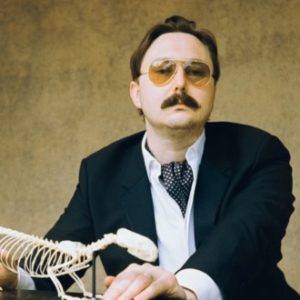
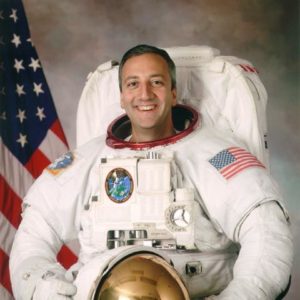
StarTalk Radio returned to the Bell House in Brooklyn, New York on December 18, 2011 for our second show in front of a live audience. Co-host Eugene Mirman was joined by fellow comedians Kristen Schaal and John Hodgman, while Neil brought along his NASA astronaut buddy, Mike Massimino.
In the second half of the show, Mike talks about the “Right Stuff” and how he became an astronaut. Neil explains how space telescopes like Hubble (which Mike repaired) and Kepler are being used to search for planets orbiting far-distant stars, including the recently discovered “Earth-like” planet Kepler 22b. The audience closes out this live session with questions about space travel, the hexagon on Saturn, and what the Hubble’s deep gaze into the cosmos reveals about the nature of the universe.
Transcript
DOWNLOAD SRT
Welcome to StarTalk, your place in the universe where science and pop culture collide. StarTalk begins right now. Welcome to StarTalk Radio. We are live at the Bell House in Brooklyn, New York, Kings County, that is. I'm your host,...
Welcome to StarTalk, your place in the universe where science and pop culture collide.
StarTalk begins right now.
Welcome to StarTalk Radio.
We are live at the Bell House in Brooklyn, New York, Kings County, that is.
I'm your host, Neil deGrasse Tyson, astrophysicist with the American Museum of Natural History, where I also serve as director of the Hayden Planetarium.
And I'm here with my special guest, two-time shuttle astronaut, Mike Massimino, and my co-host, Eugene Merman.
Hello.
You've got your two special guests.
Our two wonderful guests, Kristin Schall and John Hodgman.
We're talking about space and what it is to be up there and some of the latest discoveries, one of which is the Kepler-22b Goldilocks planet.
And so with the bartenders, we concocted a special drink for this evening called the Kepler-22b, okay?
That drink has blue curacao because that planet is in the Goldilocks zone where it can sustain liquid water.
And so perhaps it has oceans, perhaps it has land, perhaps it has life.
And alien bacteria.
So it's a mixture of blue curacao, green Midori, some vodka to make that sit up straight, and some, and some...
Dirt.
Earth, like our planet, symbolizing exactly what it literally is.
And a core of molten magma.
It's got some ginger beer, and this will not be served with ice because the Goldilocks planet is at the right distance to not have ice.
But it will be chilled, shaken, poured into a glass, and it'll be ice cold, but with no ice.
I'd like to snorkel in that.
Yeah, can I have one?
I'll use my drink ticket.
Yeah, they gave me a drink ticket too.
Yeah, I'd like to.
Maybe a round for the panel?
Sure, let's do it.
Yeah, you might not be allowed to drink in space, but you can totally drink here.
So let me ask you, Mike, this icon image of the right stuff, did you have to do all the things that we saw that the astronauts did in the movie The Right Stuff?
Did you have an enema and everything?
Yeah.
Yeah, what did you have to go through to become an astronaut?
The enema question is about when.
Earlier this evening.
I don't remember the right stuff that clearly.
Oh yeah, enemas every day.
I may be thinking of the wrong movie.
That's why the movie was so long.
So what did they make you do?
Did you have to like, did you need desert training and you have to eat salamanders?
Like what did you have to do?
No, we didn't.
Because that's the only food in space.
We don't really know what you're going to find up there, but we have a feeling it might be salamanders.
And hallucinogenic mushrooms.
So we're going to put you in a sweat lodge.
I would imagine for you to actually come to the decision, I am going to seriously pursue a career in astronauting, was a big decision.
How old were you when you made it?
The for reals, not the like.
The for real, like I want to pursue this.
I was about 21 years old.
And what was your background at that point?
You had gone to college.
I was, actually, I saw the movie, The Right Stuff.
My wife is here.
She saw it with me.
She can attest to that.
It's like, we were, yeah.
And that got me thinking again about what I wanted to do with my life, and I was a senior in college at that point.
And I decided to...
What were you studying?
Literary theory?
What?
What is this guy talking about?
What were you?
Yale words.
I didn't go to Yale.
Actually, I think this is why I became an astronaut, because the English stuff, I couldn't handle.
I don't even understand what he's saying, and I think he's speaking English.
So I like the math better than I did the English stuff.
I need a dictionary.
Mike became an astronaut in order to get as far away as possible from you nerds.
What were you studying in college, sir?
I was an industrial engineering student.
Okay, and you decided that you wanted to be an astronaut, and so you...
It's a strange career path to pursue.
It is, yeah.
And you realize that it's probably not gonna happen, because lots of people apply, and very few are lucky enough to get selected, but now you figure, let me give it a try.
Okay.
You gotta follow your dreams, right?
You gotta follow your dreams.
Just like you guys are doing, right?
Yeah.
I actually had a very similar thing, because when I saw the born identity, I really wanted to forget everything and become a substantial agent.
And now that's what I am.
I don't know why, but I'm so good at cooking.
So, were you aware at the time of the dangers you might face?
Because I think when they tell little kids, do you want to be an astronaut, they're not thinking I could get hit by an asteroid or a micro meteoroid that'll blow a hole through me, or that radiation from the sun will sterilize my gonads.
This is not in...
I never knew any of that.
Now they tell me.
As a father, I say that to my children all the time.
So, you're up there space walking.
I did a whole segment for Nova on micro meteoroids going 18,000 miles an hour.
And something this size going 18,000 miles an hour will put a hole through you like it's nobody's business.
So, were you thinking about this at the time?
No.
How likely or common is something like that?
Are you just trying to retro freak him out?
Or is that like a real thing that's like you're prepared for?
I'm glad I'm hearing about this on the ground.
But even at the Hubble Space Telescope, when we got there, the antenna dish, for example, one of the high gain antennas, Graffiti.
Has a hole in it.
What's that?
Was there a lot of graffiti on it?
Graffiti, yeah.
Alien graffiti, right?
No, that's secret.
I can't tell you about the graffiti.
But I know it had a hole in it.
It had a hole in it, John, about the size of a quarter.
So something had picked off that mirror.
And if you ever get a chance to see the Whitefield camera, I don't know where they have it, Neil.
I think it's probably in the Smithsonian somewhere, maybe in a back room.
But if you ever see anything like that, that's been in space, that's been exposed to space.
It has battle scars.
It has battle scars on it.
And it has lots of dings, like Neil described these small little rocks that hit the outside of that instrument.
Its radiator was on the outside of the telescope when we removed it.
So it was exposed and it got pegged.
The Hubble telescope has what's called a safe mode because...
Airplane mode?
No, it has to be completely off.
All your cell phones got to be completely off in space.
You don't want to take any chances.
You can't even play words with friends?
So we have the sun.
We have earth in orbit around the sun.
Or so you claim.
So I assert it is true whether or not you believe in it.
All right, Ayn Rand, keep talking.
So as Mike noted, we share space with a lot of other things.
In fact, the solar system is a shooting gallery with movements choreographed by the forces of gravity.
Now, among those objects that orbit the sun are comets.
Many of their orbits are highly elongated.
They cross the orbit of the earth.
Comets, when they're near the sun, heat evaporates their ice, and they deposit debris that had been mixed in with the ice along its entire journey.
But near the sun, it gets shaken loose.
And so there's a debris trail that is behind it and precedes the moving comet.
So even though these comets cross Earth's orbit, we don't hit them necessarily, but we'll go through the debris trail.
And every time we go through a debris trail, it is a meteor shower.
That's why certain nights of the year, and it's always the same nights of the year, like the Perseids in the summertime in August, because that's the time in our orbit where we were crossing the debris trail of a comet that had passed by.
The Hubble Telescope, when we go through debris trails, goes into what's called safe mode with the lid covers of the mirror, and we angle it down, and we expose the better side of it to the universe.
So that it won't actually hit the sensitive electronics and the mirror.
The safe mode.
And so we anticipate that in these periods of high meteoroid flux, that we gotta protect the hardware.
So when you go up, Mike, then you would go up on a calmer time, right?
Can you factor that in?
Or are you...
Whether or not they told you, they waited for like the stuff to end.
Have you been hit by debris?
Like is that a thing that they talk about or that you are aware of?
Watch out, here it comes.
This is Kingston duck!
We do a couple things.
While we're out spacewalking, we'll angle the shuttle at such an attitude that if we'd rather not get a person hit, so the shuttle will try to protect us.
But we don't like the shuttle getting hit either.
That's not a good thing.
Was that the motto of your mission?
We'd rather not get a person hit.
We'd rather get a person hit.
We also have four spacewalkers, so if you lose one, you have three others.
That was a joke.
How many people go up per trip normally?
We had seven on my cruise and four spacewalkers and three other guys.
So the space station actually has maneuvering capability when the Air Force alerts them that there's a particle that would otherwise damage it structurally.
The universe is firing a bullet at you.
Put up the astrodome.
Anything about the size of a softball, bocce ball size, we can track.
If that's in the way, you can avoid it.
We can actually track smaller than that, but it's classified.
Sorry, I didn't know that.
I just wanted to say.
Yeah, we don't tell astronauts.
But it's a really small stuff.
Apparently not.
I was less to know.
So the smaller stuff we don't know about.
The particles are really there.
Some of them are paint chips from long lost dead satellites.
Those are like from houses?
Paint chips from walls that fly around space.
What is the one thing that you think would surprise people about life in space?
Because we know about the floating.
I would imagine the boredom would be considerable.
Isn't it boring?
No, because the thing you have is you can look out that window.
And it's nonstop entertainment.
Plus you probably have trivial pursuits.
We had movies.
We had movies.
We were very busy for two weeks, but we got a couple extra days in space because the weather was bad in Florida.
We couldn't land.
We did.
How did you know that?
I know about you, Mike.
Wow.
That's amazing.
I'm impressed.
We did land in California, but those last couple days, we didn't have anything on our flight plan specifically to do except just hang around.
Go to the moon?
No, we couldn't.
Yeah, are you allowed, if you have a day off, like for me, I had a day off somewhere, I could drive to Ohio, but you, could you go to the moon?
I would have loved to.
We have two days to kill.
Can we go visit the space station?
Do they leave you enough fuel to...
No, we don't have enough fuel to get there.
What did we watch?
We watched Apollo 13, which is probably...
Which probably isn't the smartest thing, as we're like kind of stuck up there to be watching, but we did watch that movie, and we watched Star Trek.
It was actually when...
Which Star Trek?
The one that came out, kind of the new one, the one that came out two years ago.
It actually came out when we were...
It debuted in theaters when we were launching, and whoever...
I forget who it was who made the movie.
Abrams.
Yeah, the company I want to give them credit.
Bad Robot?
Paramount.
One of those people sent us the movie, and we were able to watch...
What did they send it to you on?
Did you become a little afraid of Romulans?
Yeah, it was a plasma.
I worked on a computer thing, where it was loaded onto our computers.
Do you have internet?
Do you have Wi-Fi?
Not when I was there.
Did you tweet from space?
I did.
What was your first tweet like, I am in space?
The first tweet from space, what I did tweet, it actually got mentioned on Saturday Night Live, which my kids were in there too, and they can attest that they're in there.
But they're not really so excited about this astronaut thing.
I'm just an annoying dad at home, right kids?
Yeah.
So thanks, Daniel.
But when they mentioned the Saturday Night Live thing, that got you guys excited, didn't it, kids?
When Saturday Night Live mentioned my tweet, and I said what they made fun of it because I said...
Did you say it's full of stars?
I said no, I said launch was awesome.
I said launch was awesome.
I'm feeling great.
But what they said on Saturday Night Live was, here is the first tweet from space, launch is awesome.
You know, we've gone in 40 years from one small step for man, one giant leap for mankind, the launch is awesome.
So, if this idiot ever, this would be the first one to find life on another planet.
Geez, dudes, aliens.
So, that was that first tweet.
But what really wasn't monumental is that my kids finally got excited about me being an astronaut because I got mentioned on Saturday Night Live.
There it is.
But I did tweet that we were all going to be talking here tonight, too.
Oh, yeah, like over and over again.
I'm following you now.
Really?
Oh, wow.
You are not following me.
Whoa!
So, Capital 22B just got delivered to each of us.
Thank you very much.
I would like to propose a toast to Capital 22B, the first of many planets we expect to find in the universe that could contain life, for better or for worse, just like us.
To our eventual enslavement!
May we all find a good hiding spot.
Welcome back to StarTalk Radio in the Bell House.
I got two-time shuttle astronaut Mike Massimino, a local boy from Nassau County, Long Island.
We got you.
Eugene Merman, we're in your house here, the Bell House.
Yes, at my house.
I live in a performance space.
Christine Shaw, welcome.
You told me backstage you're recently engaged.
Congratulations.
Sorry, guys.
And John Hodgman.
The one and only John Hodgman.
He's been married for years.
So we've got Mike who fixes our telescope, but the telescope has a purpose, and other telescopes have purpose.
And so we design them, we build them, we launch them, we service them, but at the end of the day, it's about discovering the universe.
In there, we also have a telescope that is specifically tuned for finding Earth-like planets orbiting Sun-like stars.
And it's named after a famous German mathematician from 400 years ago, Johannes Kepler.
He was the first guy.
You're not going to read about this.
It's there, but no one says this.
Kepler was the first person...
He's the original drummer of the Rolling Stones.
Literally, I promise you, you will not find that.
Kepler was the first human being to write down an equation that enabled you to predict phenomena in the universe.
After Kepler, and then a little later, especially after Newton, the universe became a knowable place.
Before then, everything was mysterious.
Tell that to the moon god.
And so Kepler has recently logged hundreds of planets.
Kepler the telescope, not the immortal guy.
Not the guy who's now dead, right.
So we named this telescope in honor of Kepler because he first wrote down the equation for the orbits of planets around the sun.
So here we have this telescope.
In the old days, we would look for planets by the effect that that planet had on the movement of the sun around which it orbited.
Because the planet's too dim, you can't see it.
So you'd see the star jiggle.
Okay?
Sometimes...
I don't know that I'm ready for that, Jilly.
It's a jiggle.
That jiggle don't lie, okay?
So the best kind of planet to find is the massive kind because that's tugging on the planet all the more.
That is the best planet.
Your gestures also look like you're having sex with one of those giant creatures from Avatar.
Or a butter churn.
All right, let's go.
Back to the massive planet.
The massive planets jiggle the host star.
So our first 500 planets...
Wait, so you're saying that huge, huge planets caused the star itself to move?
To move, and it's the movement of the star back and forth from our point of view.
We measure, in fact, the Doppler shift of the planet.
In not a fundamentally different way from the way police measure with their radar the speed of your car.
So the first 500 planets in the catalog are Jupiter-sized.
But we really, at the end of the day, we want to find Earths.
Kepler is designed to find Earths, so it's a different method.
So it watches solar systems, star systems that are oriented edge-on.
And when they're edge-on, planets in that system then eclipse the host star.
So you monitor the light of the host star and then it takes a dip.
And it stays dipped for a while, and then it comes back out.
And that dip, the depth of that dip, the width of that dip, gives you the size of this planet and the orbital period.
And that will tell you exactly where it is in orbit around the host star, enabling you to calculate how big it is and whether or not it is in the Goldilocks zone, the habitable zone where water in the presence of an atmosphere would remain liquid.
Too close, you vaporize.
You become steam.
Too far away, you freeze.
And life as we know it requires liquid water.
So the Holy Grail in the planet search is an Earth-like planet in the Goldilocks zone.
And three weeks ago, Kepler, the telescope, the 22nd object in its catalog, the second planet in the star system, Kepler-22b, a Goldilocks planet, the first ever.
Not too hard, not too soft, not too hot, not too cold.
Not too hot, not too cold.
Just right, the perfect temperature for a young girl to fall asleep.
So also you're saying there's no steam aliens.
Well, we don't know.
All we know is to look for life as we know it.
How far away is it?
It is 600 light years away.
Let's build a generation ship.
That's all I needed to hear.
I think we already have a captain for it.
So, the right stuff would include fertility tests in a generation ship.
Apparently.
So, I don't know if you want to do this because the fastest ships we've ever built, that didn't even have humans on it, just hardware with no intent of bringing them back, because machines don't care if you bring them back.
Are they faster than a Porsche Cayenne?
That's really the slowest of the Porsches you understand.
Yes, in fact, actually.
So, the fastest the astronauts go is like five miles per second.
We've sent hardware seven, ten, fifteen miles per second out the solar system.
At that speed, if we could put you on that in your generation ship, to go to capital 22B 600 light years away, if you do the math, comes out to be somewhere about 40 million years.
Wow, so we would have to fold space to really do this.
No, you'd have to be really fertile.
You'd have to be really fertile or fold a lot of space.
Or you'd need a stargate like the kind in Buck Rogers.
No, you need to warp space.
In the sheet of paper I have here, you want to cross a vast gap in space, you warp it so that one edge comes close to the other, and then you have to cut a hole, like a wormhole through space, then you unfold it again, and there you are, far away from where you once were, and you got there during the TV commercial.
And that's what Star Trek did.
Is that within the realm of physics as we understand it?
Yes, it is not precluded by laws of physics, and the only limits are on engineering and our capacity to wield extreme sources of energy.
So we need a nuclear space folder.
No, no.
That I'm going to build.
Here's the problem.
Right now, our energy, we're like extracting it from fossil fuels beneath our feet.
Right.
This is as primitive as it gets.
But it is American.
It is American.
Next.
We would have to send Iran itself into space.
So the next level here is, if you master the forces of energy that Earth exhibits.
So imagine tapping a volcano for the energy that it contained and using it for our purposes.
Okay, we're getting there.
That's not even enough energy.
You need to build a lava drive.
So you have lava.
Now hurricanes come and ready to level a city.
You tap the cyclonic energy of the hurricane to drive the energy needs of the city that the hurricane might have otherwise leveled.
Imagine that power over nature.
We are far from that at this moment.
So all the energy on Earth is insufficient.
The next level of energy is you find a way to capture all the energy from your star.
That's not enough energy.
What?
To tear a wormhole where the sun don't shine?
What if you blow up a sun inside a black hole?
No.
So here's what happens.
Then go shoot it with a rifle.
You need the energy of all the stars in a galaxy channeled to tear a hole through the fabric of space and time.
We do not wield that much energy, nor will we in any time in the foreseeable future.
So this wormhole concept.
Wait a minute.
You find this beautiful planet.
You name a drink after it.
You put it up there.
Like, look at this.
This great investment of our blood and treasure, the Kepler Telescope.
And now you're sitting here depressing me, saying no human can ever get there, no robot can ever get there.
Can you just shoot your ship up a little bit higher?
It's a little bit higher, and then you'll get there sooner.
Sooner than 40 million years.
So what's the energy you would need to do this?
So there's no known energy that you're aware of.
What about the energy of all the stars and all the galaxy?
That would take to fold space.
Yes, in this way, to tear a hole in space and keep it open while you travel through it.
It seems like that might hurt us.
If it collapses down on you.
Look, I'm glad to know that it's there, I guess.
There are a lot of things in my life that I cannot have.
But what do we gain by knowing that this planet exists?
Okay, so what do we gain?
The knowledge that perhaps we're not alone.
Sometimes the knowledge itself can be transformative.
Consider, for example, the first image brought back from NASA of Earthrise over the lunar landscape.
That image didn't otherwise put food on your plate.
It didn't otherwise directly affect anything, but it changed how we saw Earth.
Here was a mission to the moon, and for the first time, we saw Earth.
A change in perspective and a change in attitude can galvanize a nation in a way that, in fact, you can trace the modern conservation movement to the day that image was published.
Are you talking about the climate change conspiracy?
Or are you talking about Woodstock?
Ideas can be deeply influential on a culture.
Name one idea that's influenced.
So let's imagine life on the Goldilocks planet, capital 22b, it's two and a half times the diameter of the Earth.
And the math works out so that, in fact, if it had the same sort of density as Earth, but was two and a half times bigger, you weigh two and a half times more.
And they beat us up.
I see everything as conquering.
If they came here, not only would they be able to have all the power of all of the stars in the universe, but they'd punch us very hard.
Yeah, if they're accustomed to supporting that much weight in their moving bodies, we would be trivial to conquer, for sure.
But there are other creatures where their weight doesn't really matter, like fishes.
They're neutrally buoyant.
You know, insects, bacteria, they don't care what they weigh.
I definitely hope that on that planet, there aren't insects that could come here and beat us up.
That didn't go so well in Starship Troopers.
No, it did not.
But I don't know that we would benefit from it.
All right, when we come back, I just want to get a sense of what the future will bring, in space or not.
You've been listening to StarTalk Radio.
You can like us on Facebook, find us at StarTalk Radio, and we'll be back in just a moment.
We are live from the Bell House in Brooklyn.
Welcome back to StarTalk Radio.
I'm your host, Neil deGrasse Tyson.
We're continuing the broadcast of our second live show recorded at the Bell House in Brooklyn, New York on December 18th, 2011.
Joining me that night were my co-host, the comedian Eugene Merman, the comedians Kristen Schaal and John Hodgman, and Mike Massimino, a NASA astronaut who flew on two space shuttle missions to repair the Hubble Space Telescope.
So in this segment, I just want to talk about the future.
Mike, you've been in space, but now we don't have a vehicle to get out of low earth orbit.
Do you still dream about going into space?
Culturally, personally, what?
Yeah, I think we are a spacefaring species.
We have grown up with people going to space.
You know, when I was a little kid, to the moon.
Right now, we've ended the shuttle program, but we're hopefully gonna be getting a vehicle to launch people not only to the space station, we have some private companies that are coming very close to being able to launch people to the space station, but we're also gonna be looking to go beyond low Earth orbit as well.
So I think right now, we're flying with our friends, with our Russian colleagues, and so we still have access.
We have Americans in space right now.
If you had said in 1980 that in the year 2011, which is what this is, Americans would not be going into space unless they're hitching a ride on a Russian space vehicle, Ronald Reagan would shoot you in the head.
Wait, John, it's worse than that.
Well, thank you.
Worse than Ronald Reagan shooting you in the head?
Go on.
It's worse than that.
In the 60s and 70s, there were two spacefaring nations.
In the 2010s, there are still two spacefaring nations, but one of them is not the United States.
It's China.
It is China.
Yeah.
That is the tragedy of this history.
You hate Chinese people.
You know how we can get to Mars?
Practice, practice, practice.
I got a whole book on this coming out.
Uh-huh.
February 2012.
I was gonna say, when's it coming out, Neil?
February 2012.
It's called Space Chronicles.
But in there, all we have to do, I do this, I'll go to China, and go to the head of state, and just whisper, I say, leak a memo that says you wanna put military bases on Mars.
Just, it doesn't have to be true, just leak it.
We catch a hold of that memo, we're on Mars 14 months later.
Because that's what drives us.
We tell ourselves, we're space faring, we're discoverers, we're explorers, we went to the moon because we were at war with the Ruskies.
At war, that's what drove it.
And you know what happened?
When Bush Senior, in 1989, on July 20th, the 20th anniversary of the Apollo landing, he got on the steps of the Air and Space Museum, and tried to give a Kennedy-esque speech, and said, let us go back into space, to the moon and Mars, and beyond, it fell on deaf ears, you know why?
Not because he lacked the charisma of Kennedy.
Not because people thought, I said, it's not because of that.
It's not because it cost a lot of money.
You know, they'll say that that's why, but that's not the reason why.
You know what happened in 1989?
Peace broke out in Europe.
The wall came down.
There was no longer the motivating force.
God damn it.
That's why it didn't continue.
So we have to shed blood to get back out there.
No, so I don't want that to happen.
I'm just saying we should be honest with the original motivations.
That's, you can say, we did it because it's in our DNA, bo-oney.
Yes, it's in our DNA, but somebody's got the right to check, and it's not in their DNA.
Another driver is just simply an economic driver.
It's the one that I put forth.
If you reinvest in NASA and think big, you go to Mars, okay?
Everybody's, hey, we're going to Mars, and who's that astronaut class?
Well, they're in middle school now.
Let's track them.
Are they eating well or?
Now it's getting creepy.
Team Beat will write about them.
People want to emulate them.
Team Beat ended in 1961.
Whatever writes about Justin Bieber will write about them.
They become the astronauts who land on Mars, and the whole nation participates in that exercise.
I just wish you were right, but you're so wrong, because we can't even name the five women that won Nobel Prizes, won for economics, but we can name five supermodels who walked down Victoria's Secret in bras.
I can name neither.
Like, our whole culture isn't centered on intelligence and space fiction.
It's just not gonna happen.
There was an era when, in fact, it was.
That's why I think it can be reclaimed.
I want to resurrect it.
But obviously, the Chinese don't feel that way.
Are the Chinese gunning for space?
Yes.
Because of a practical application or because of national stature?
National stature, primarily.
Because basically what you're saying to me is, we're never gonna reach Kepler-22b.
Yes.
Mars is an arbitrary object anyway.
We're all just doing this for bragging rights.
No, no, I think, no.
I claim that if it becomes part of our culture once again, people will want to become scientists and engineers, and even those who don't will be sensitized to the ambitions of a scientific and engineeringly driven culture.
So you vote for the right people who allocate those monies.
So then you galvanize the nation, and guess what happens?
That culture fosters innovations in science and technology, even outside of space, and it births new economies in the 21st century, which are required if you want to compete internationally with your economic strength.
And war and economic drivers are the two biggest...
We need an iPad war!
War and economic drivers.
The second biggest driver of human action after war is money.
I thought you were going to say porn.
That's the third, I hope.
Actually, did you know astrophysics, the study of the universe, is the second oldest profession?
It just is.
Now I do.
Apparently you don't know about blacksmiths.
I will say this, that we do know that innovation itself is extremely expensive.
And that if you want to say something other than the touchy-feely stuff that you're talking about, there's a practical application which is that a publicly funded space program has traditionally driven innovation and particularly miniaturization of computing power, right?
Which obviously affects our life today very seriously.
So to continue that, you would actually publicly fund innovation in a way that would trickle down to use a terrible term to everyone.
And in fact, innovation is so expensive and in the private market, so not worth following that it's actually there's a real reason for public investment in these things.
So do you think the future of space exploration is going to fall in public hands or in private enterprise?
The moving frontier of space exploration can never fall in the hands of the private sector because the frontier is dangerous and has uncertain risks.
And there's nothing more fearsome to the investor than uncertain risks.
So a government takes that on, they get the patents, they take the risks, they have the failures, they create the charts and the maps, then they hand it over to the next generation of the entrepreneurs.
And they then can exploit all of the now known risks in the capital markets.
And that's how it's always been.
The Dutch East India Trading Company was not the first to get to America from Europe.
They were the first to the moon, though.
Let's face it.
But isn't it kind of what's happening, hopefully happening now with low Earth orbit, not going beyond?
No, no, because we've already been to low Earth orbit.
So you hand that over.
Here you go, Richard Branson.
No reason NASA should go, NASA been there, done that.
Let somebody else do it and they'll do it for less.
Let's then Subway, the restaurant company.
I hear you.
I hear you.
Innovation, yes, it's expensive, but you need a driver to have everyone participate.
And I'm just submitting that when your vision is big, so too are your ambitions.
And it's the synergy of that folded into the operations of our culture that will establish what our future is going to be as a nation.
Do you think we could fold space on simply your love of science?
Because I believe we maybe could.
You will single-handedly get America to reinvest in public space programs.
I'm trying.
Yes.
Guys, we got to wrap this up.
Oh, you know, actually, we're going to have a Q&A session with you guys.
Yeah.
A quick one, a quick Q&A.
A four-hour Q&A session.
Right in front row, yeah.
My question was with generational travel, wouldn't it seem if we did send, say, for example, a ship out there, that by the time it was a quarter of the way through the journey, wouldn't we be zipping past them in the ultra-upgraded ship that is now 200 times better than that?
Kind of like the horse and buggy versus, you know, the wee flying bass and like a pinto.
Yeah.
So what you're saying is if it takes 20 million years to get there and I send you on your route, then in...
Ten million years from now.
Right.
Oh, in a mere ten million years, we'll get there in a few seconds and just whiz by and see.
So would it even make sense to do any kind of generational travel at that point because we don't have the...
Here's the problem.
That argument was given about going to the moon.
They said, why go to the moon now?
It's so expensive.
Let's wait 30 years when it's really cheap.
At some point, you just got to do.
And so while you may be right, what I would imagine is ten million years, you pick them up on the way.
Honestly, I think what we know is we should definitely wait till we can fold space.
Come on, people.
What's curious to me is what we don't know is when you send a fertile community forward, that becomes an isolated human gene pool.
And so it's susceptible to all the things that could happen in isolated gene pools.
Everyone grows antlers is what he's talking about.
They're going to honestly have some pretty cool community theater, so I wouldn't worry.
So, no, they could speciate, or we could speciate differently from they, and then we would just branch, have two different branches.
Like Vulcans and Romulans, you know.
When StarTalk Radio continues, we'll have more audience questions from our live show at the Bell House in Brooklyn, New York.
Welcome back to StarTalk Radio.
I'm your host, Neil deGrasse Tyson.
Let's get right back in to some audience questions posed at the Bell House during our live show with Eugene Mermin, Kristen Schaal, John Hodgman, and NASA astronaut, Mike Massimino.
This question's for Mike.
So during your mission, you're placing some sort of panels, and there's this handle, and you had to unscrew the handle, and one of the screws stripped.
Stalker, and, no, it was this PBS special.
It was on tonight, oh, whatever, but, the engineers were trying to figure out how to fix this thing, and they said to break it, and you basically broke this handle off of the Hubble telescope, and how'd you do that?
There's a long explanation as to why that happened, but basically, in order to repair this instrument, which had panel that we had to remove, and we had to remove a circuit board and put a new one in, there was a handrail in the way.
We thought it was going to be very easy to remove.
It had big screws, which were usually easy to undo.
We spent two years practicing.
We spent two years practicing.
It wasn't a problem in practice, but we had a problem with one of the screws.
Three of them came out easily, and one couldn't budge, and we could not repair this instrument, which was going to unlock the secrets of the universe and try to find these Earth-like planets or whatever we couldn't do that until I could get this handle out of the way.
And these engineers on the ground had to act very quickly because the clock was ticking, and they just told me just to rip it off.
The way I did that, what I thought of when I grabbed my hand around that handrail was I thought of my Uncle Frank when I was a little kid was having trouble with an oil filter in his car, right?
Comes across the street, and he's all greasy, and he's looking for my dad.
My dad goes down to the basement and grabs a gigantic screwdriver and tells me, come across the street, maybe you'll learn something.
And he knocks the screwdriver through the oil filter and gets out of the way.
My Uncle Frank grabs a rag and grabs the big screwdriver and starts yanking on this thing until finally, and he was cursing, of course, until he finally could get the oil filter to budge.
And I swear to you, that's exactly what I was thinking of inside the Hubble Space Telescope.
I was like, this one's for you, Uncle Frank.
That's what I was thinking of, the oil filter and my Uncle Frank.
Let's hear it for Uncle Frank.
Next question right here, ma'am.
Hi, so I'm about to finish my PhD.
I study planetary volcanology.
And I want to be an astronaut.
So I was wondering if Mike has any advice for someone who might want to apply for the astronaut program, how to get noticed.
Well, you know, right now we are taking applications.
Does everyone know that?
This doesn't happen all the time.
It used to happen when I was applying.
It was about every two years.
We had a class in 2009.
We'll probably have another one in 2012, probably, hopefully.
Get your applications in now.
I don't know what the deadline's coming up, I think, too.
All right, well, you know, you've got till then, and then that's gonna be it.
How do I stand out?
How do I make myself look good?
The real trick is the essay question.
Remember that the people that are gonna be reading your application are probably people like me, astronauts, right?
So try to make it easy to read, okay?
If you can make it simple, what you did, they're probably gonna be someone in your field that might read it too.
Use the word vertiginous as much as possible.
Yeah, be careful with the words you use.
And remember, lots of people like me and many others are in the same position you were, okay?
So there's hope.
So try to be as positive as you can about it.
Represent yourself well and hope for the best.
And in case people didn't know, Earth does not have the most active volcanoes in the solar system.
They are found on the moons of Jupiter.
And if you're a planetary vulcanologist, which is vulcan-amazing, that you can use.
Just power to you.
There's a lot of volcanoes in the solar system waiting for your attention.
And do you also do ice volcanoes?
I'd like to.
Add them to your resume.
They are the future of volcanoes.
Because a volcano we think of as hot simply because on Earth, the gases that build up need to be heated.
There are environments where all you just need is something to evaporate and put pressure.
And there are liquids that go gaseous at deeply frozen temperatures.
Pressure builds up at 100 degrees below zero and they hurl chunks of ice.
And you have an ice volcano.
So keep those on your resume.
I will.
You got it.
Good luck.
Just a few more questions.
Lightning round.
This is a question for Neil.
I know your favorite planet is Saturn.
Indeed.
Maybe Earth, but Saturn, close second.
So I was wondering what your thoughts are maybe even a hypothesis of the hexagon located at the pole.
The hexagon on the pole of Saturn remains one of the greatest mysteries that I've ever seen in the solar system and I think it's awesome.
There's a hexagon in the structure of the gas clouds in the poles of Saturn.
Clouds don't make hexagons.
They're making it on Saturn.
There have been some people who have duplicated that in the lab with very special conditions, but this is happening naturally, just on its own.
Or is it?
Or is it?
So it's a mystery.
It's a fun mystery.
Last question of the night.
My question is about the ultra Hubble deep field image.
Yes.
With relativity and the expansion of the universe, what's happening 180 degrees away from the other angle that we took the Hubble deep field image?
Are we seeing the same universe or the same galaxies?
Are we seeing different galaxies?
Excellent.
So amazing photo that the Hubble telescope took.
Enabled by the handy repairs of this gentleman that.
He pulled the handle off a thing.
With a screwdriver.
So we look out, we find what we think is a very uninteresting patch of sky where there are no stars in our own galaxy to get in the way.
And we take the Hubble telescope, open up its shutter and just stare for hours and hours and hours.
And we accumulate that light.
Are we high at the time, or are we?
The camera stares and we accumulate the very weak light signals.
And as you stare long enough, the weak signal becomes stronger and stronger in your detector.
And so the dimmest things in the universe reveal themselves.
And it's called the Hubble Ultra Deep Field.
There was a previous image called the Hubble Deep Field.
We said, now that we know how to do it, let's go ultra.
And it is one patch of sky, one one hundredth the area of the full moon in one direction in the universe.
And you see like a gazillion galaxies in this picture, this one pack postage stamp on the night sky.
And so you can say, I'm looking at this small area and there's this many galaxies, let me multiply it by every possible one of these directions.
I get a count for how many galaxies in the universe.
You get about 50 to a hundred billion.
So you might say, well, how do I know that?
Maybe this direction is completely different.
Maybe 180 degrees is different.
Maybe this direction is the same as that direction in a looped folded universe.
We've actually done that experiment.
So there's a Hubble Deep Field North and we went 180 degrees and went a Hubble Deep Field South.
And it is statistically indistinguishable from Hubble Deep Field North, giving us the confidence that our inferences from this one direction doubled up in a completely opposite direction, gives us a representative sample of what any direction would reveal in the universe.
And we look for pattern recognition.
Is their pattern the same?
Could it be the same but flipped left, right, up, down?
It is different.
The universe does not loop back on itself.
It is a one-way expansion.
And the Hubble Deep Field is in fact probing the universe on scales never before seen that will soon be surpassed by the James Webb Space Telescope.
Guys, this has been our second Bell House live StarTalk.
And Eugene, you invite us back here to do this.
Of course.
No, this was awesome.
We had so much fun.
You always bring in some great folks here.
Yes.
Kristen, John.
It's been awesome.
And Mike Massimino.
You've been listening to StarTalk Radio, brought to you in part by a grant from the National Science Foundation.
As always, keep looking up.
See the full transcript




 Unlock with Patreon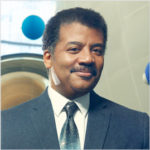


 Become a Patron