




 Unlock with Patreon
About This Episode
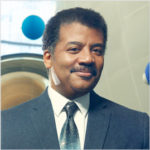
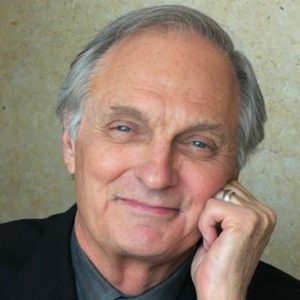
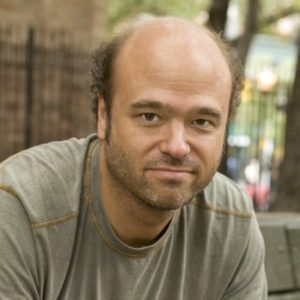
Emmy and Golden Globe-winning actor Alan Alda joins Star Talk Radio for our first live show, recorded at the Bell House in Brooklyn, New York on September 15, 2011 for the 4th annual Eugene Mirman Comedy Festival. Along with Kristen Schaal of the The Daily Show and Flight of the Conchords and Scott Adsit of 30 Rock, Neil, Eugene and Alan Alda travel through time and higher dimensions, discuss pseudoscience and the state of science literacy in the US, and take questions from the audience that explore just how weird and funny science can be.
NOTE: All-Access subscribers can listen to the entire episode ad-free here: Live at the Bell House (Part 2).
Transcript
DOWNLOAD SRTWelcome to StarTalk, your place in the universe where science and pop culture collide. StarTalk begins right now. Welcome to StarTalk Radio. I'm your host, Neil deGrasse Tyson, astrophysicist and director of New York City's Hayden Planetarium. Last week, we...
Welcome to StarTalk, your place in the universe where science and pop culture collide.
StarTalk begins right now.
Welcome to StarTalk Radio.
I'm your host, Neil deGrasse Tyson, astrophysicist and director of New York City's Hayden Planetarium.
Last week, we aired part one of our live recording from the fourth annual Eugene Mirman Comedy Festival in Brooklyn.
This week, we bring you the second half of that show.
The next day, I was to leave for Australia, and that fact showed up in our discussions about the paradoxes and limitations of time travel.
We are live at the Bell House in Brooklyn at the Eugene Mirman Comedy Festival.
Eugene, please reintroduce your guests here.
Sure, let's do this.
Ladies and gentlemen, the incredible Kristen Schaal.
She is a favorite from Flight of the Conchords and The Daily Show.
And now, ladies and gentlemen, from 30 Rock, Scott Adsit.
Well, I brought Alan Alda with me, so there.
Right, so Alan, I was reading your bio.
You have six Emmys, but you've been nominated 33 times.
Like, what's up with that?
I just keep losing.
Just checking.
You know, I don't want to, like, get in your business there, but...
I think it sounds impressive.
I keep my chin up.
I keep trying.
All right.
So, what about relativity?
So as you may know, in relativity, it is prescribed, and we know this is true.
We've done it on particles.
It's harder to do it on people because they might die in your experiment.
If you accelerate them to high speeds, their time ticks more slowly than it does for everyone who observes them.
Time slows down for you.
You can effectively go into your own future that way.
And so, in principle, however fast you go, 90% the speed of light, 99% the speed of light, you have unlimited power over how slowly you will age compared with everybody else when you return to Earth.
Now, I did the calculation.
The shuttle astronauts from STS-135, in fact, I tweeted this.
I tweeted that the astronauts, I forgot what was it, it was...
Half a second into the future?
Yeah, it was like a hundred thousandth of a second into the future they traveled on their voyage around the Earth.
And so, but people were like...
So did they come back and buy stock or something?
It's...
Did they recognize the world they returned to?
Whoa, what's this?
Who are you, honey?
Did the SEC just leave him alone?
Yeah, the one hundred thousandth of a second rule.
So, you can do this.
So if you actually want to cross the galaxy, you can do it at a sufficiently high speed, even though it's a hundred thousand light years across, get a high enough speed you can cross there in whatever time you need without dying before it happens.
However, if you want to observe someone to do it, you have to be a little more clever, and they did this on Star Trek.
Hence the warp drive.
The warp drive on Star Trek were engines that took the fabric of space, said, I'm here and I want to go there.
Let's warp the space between the two, because they cannot violate the law of traveling faster than light.
Warp the space between the two, cut a hole between there and there, unfold space, there you are, across the galaxy during the TV commercial.
You know, Neil, that didn't really happen.
That was a TV show, and those people were actors.
Especially the guy with the pointy ears.
I think for some people in the world, that show was real.
That's what I'm afraid of.
And wasn't there a movie where the aliens came and that was real to them?
Yeah, that was a great movie.
What movie?
That's one of my favorite movies.
Galaxy Quest.
Oh, the parody.
Isn't that good?
Let's talk about that for the rest of the time.
I brought scripts if we want to do a reading of it.
So, here's the thing, we live in three spatial dimensions in which we have unlimited capacity to move.
We are locked forever in the present of the fourth dimension we call time.
Just like Alan Rickman in Galaxy Quest.
I forgot he was in Galaxy Quest.
Alan Rickman was in Galaxy Quest.
He was so good in that.
Wasn't he great?
So was Tony Shalhoub.
Oh, my God.
That was gorgeous.
And wait a minute.
Let's not forget Sigourney Weaver.
How about her?
We've definitely seen the movie.
We've all seen the movie.
So does that take care of that topic?
Yeah.
Yeah.
Let's move on from...
So all I'm saying, our dimensionality, we are prisoners in the present.
If you stepped out of these four dimensions and look back, in principle, we can re-enter our timeline at any place at all because we would no longer be locked in our own present.
It'd just be a simple coordinate like any other spatial coordinate where we can go forward and backwards within it.
That means you are always dying, you're always being born, you're always doing whatever it is you were doing at any point along your world line.
Say that again, but really fast.
Didn't Stephen Hawking say on page 312 that you can't go back?
The brief history of time wasn't that long.
Yeah, you can't go backward in time, I believe.
There's a problem if you want to go backwards in time, because if you do and manage to prevent your parents from meeting, you would have never been conceived to then have lived, to then go backwards in time to prevent your parents from being...
It's called the grandfather paradox.
Or grandmother paradox.
It takes two in a...
But it's called...
But it's referred to as the grandfather paradox.
It's a sexist thing.
I'm not happy about it.
It's a sex paradox.
In fact, it doesn't have to be your grandfather.
It could be your great-great-great-great-great-grandfather.
But they have to call it something.
No, but go through all the options, Neil.
Wait, but, Neil, so you're saying right now, right now, you are in Australia, also.
No, no.
I am in Australia tomorrow.
Right, but that exists in another dimension already.
Yes, but you can't call tomorrow now, because now is now and tomorrow is tomorrow.
And I'm a prisoner of now.
You are the prisoner of the now.
But you are always in Australia, no?
I'm always in Australia tomorrow.
I came all the way to Brooklyn for this.
You could have gotten just high in 1972 and had the same conversation.
So, it turns out, there's no reason and principle why space or the universe or the cosmos at large would be limited to four dimensions.
There could be other dimensions we are not exposed to, have no access to.
Like, can I guess, like a fifth dimension?
A fifth dimension.
A fifth dimension.
Now, here's what's interesting.
If I take an ant and embed him in a sheet of paper and I draw a box around the ant, the ant cannot get out of the box because the ant is stuck in the sheet of paper.
The ant is in jail.
I have surrounded the ant on all four sides by what the ant considers to be a wall.
But we hire dimensional creatures called humans and say, ant, just step out and back down and you've escaped.
The ant has...
I can't speak English.
Yeah, without making a big deal.
Weird example, but go on.
You would have to speak ant.
I don't like how you have to prove this theory with a stupid ant.
You would have to speak...
Why don't you get a smart ant and see what happens.
No matter the brilliance of the ant, if it's embedded in a page, it cannot get out of a...
Oh, embedded in the page.
Yes, it cannot get out of a square.
Yes.
We know how to get out of the square because we are higher dimensional creatures than the embedded ant.
We just say, step out, come back in, you're fine.
Imagine a higher dimensional creature than we seeing us in a jail cell, surrounded on all of our six sides by a wall.
They'll say, just step out in the fifth dimension and then go back in and you're of escape.
Can't you see it?
I'm so humiliated by that being.
They will view us.
Is there any room at that table?
He's pounding the table here.
This is solid stuff.
You can't get out just going through the table.
Now, think about it.
Since the jail cell is actually only a jail cell in three dimensions, not four, if you had access even to our time dimension, you could just rejoin your timeline before you enter the jail cell, and you've escaped the jail cell.
We could all use the fourth dimension to get out of that jail cell if we just serve our time.
Yes!
Yes!
What if we go to stand next to some sort of giant mask and we go into the future then?
No?
Like a huge, like a huge mask?
Did you say mask?
Mask?
No, like M-A-S-S, probably.
Wait, you mean like we all become Catholic?
What do you mean?
I mean, is there a church you could go to to go into the future?
No, I mean, is it there?
I mean, if you...
I don't know.
I mean, this is obviously a thing I am explaining poorly to a scientist, but it's really fun to get a chance to do this.
Ladies and gentlemen, Eugene Mirman's time machine theory.
Go.
Well, one, if you can go around the earth, like, say, seven times a second, would you then go into the future?
That was Superman.
Yes.
I got it off Discovery Channel, but I know.
That was a movie.
He rewound the earth.
I'm not a fool.
I'm saying if you got onto a train that went around the earth seven times a second, would that be any help to anybody?
And then the other thing is, if you were next to some sort of giant mass of some sort, like the sun or maybe something colder, is there any way...
How do you go into the future is my question, and I'm coming up with bad examples.
And I apologize.
Sorry, so now we know what you meant by the word mass.
Okay, you mean a physical Newtonian mass.
Yes.
Sorry, not Newtonian.
Okay.
There are some trajectories.
There are some trajectories through the fabric of space time around extremely massive objects where you can actually go into your own past, but it is a past that does not interact with your timeline, space line, through life.
So you cannot actually interfere with anything you've done in the past.
Yeah, but you...
So you're in another past, not your own past.
Sounds fun.
It sounds like you're saying that theoretically, based on the math, time is kind of flexible.
You can go back and forth in it.
Yeah, if you have the power, yes.
But in real life, you can't do what you can do on paper with the math, am I right?
Because we don't have the power, yes.
What power?
The power of voodoo.
The power of moving through time.
What power are we talking about?
All I'm saying is that we can show on paper that there's no reason for the universe to...
That's what I'm trying to say.
You can show it on paper, but just try to walk through that wall.
Here's the concern that we...
No, not here.
You're a fraud.
No.
You're the ant.
I got a question, Neil, at the ant and its physical body.
And we're like, come on out, ant, come up here.
Would he jump up and then deteriorate or fall back and crush his little body on the paper?
Yeah, don't shy away from this.
It's not a real ant.
It's a two-dimensional.
It's a drawing of an ant.
It's not a real ant he's talking about.
Well, he can understand English, so it's some kind of ant.
It's a pretend ant.
When we come back to StarTalk Radio, we will continue with our live broadcast from the Bell House.
Thank you Welcome back to StarTalk Radio.
I'm your host, Neil deGrasse Tyson.
We're continuing with the broadcast of our first show in front of a live audience at the Eugene Mirman Comedy Festival at the Bell House in Brooklyn.
In addition to Eugene, our panel included the comedian Scott Adsit and Kristen Schaal and our very special guest, Alan Alda.
A physicist, a theorist named Dirac.
Dirac, noticed, is he your boy?
He's my first child.
Dirac, noticed the equations of quantum mechanics and noted that there were two solutions to one of the equations.
Some equations have more than one solution.
For example, what is the square root of nine?
Class, three.
However, it is also minus three.
Minus three times, minus three is nine.
So two is plus three times plus three.
Two equally legitimate solutions to the question.
So if I lose $3 three times, I really have $9.
No, you have...
Exactly.
That's fantastic.
No, it's if you...
If I don't lose $3.
If you don't not lose $3 three times.
I realize that, as I said, but I didn't want to embarrass you.
You're right, you're right, totally right.
And you're even right about time.
So here's the point.
Dirac noticed that this equation, which applied to matter itself, he said to himself, if there's an electron, and that's a solution to this equation, there ought to be another thing that is the opposite of the electron that we have...
The positron...
.
which, as Richard Feynman said, the positron is, of course, an electron going backward in time.
Exactly.
I love...
Don't you love the phrase in the middle of that, he says, of course.
The prediction was made on paper of the existence of antimatter that became an instruction booklet for the experimentalists to go look for it, and they found it.
Antimatter was discovered in the lab before science fiction ever got a hold of it.
What we find on paper, even if we cannot even imagine it at the time the equation is written, becomes a recipe for future discoveries.
Therein is the machinery, the operations, and the very nature of science itself.
Whoa.
Do you think that because theoretically, you can go back in time, in other words, the equations show that you can go back in time, that this is something that can happen to us or that only happens to particles, and it doesn't happen in a way we can experience?
We just happen to be a lot of particles together, and it's easier to accelerate particles because you stick them in a magnetic field.
We can play with particles, and PETA won't complain because particles have no lobby.
Right?
You can destroy them, smash them, no one will complain what you did to the particles.
So they are our proxy for what might happen to us if one day we build a machine that could accelerate us.
That's all.
So I'm not going to stop the equations.
I didn't say you should stop the equations.
You were acting like it.
No, I wasn't.
I wasn't.
I'm trying to find out the relationship between the equations and things that we can experience, and it sounds like you're actually saying that someday we'll be able to experience the going back in time.
Someday we may.
Not at the rate we are currently funding science, however, okay?
We are sliding backwards.
I didn't think we were breaking for a commercial yet.
Do you think it'd take, what, like another five grand?
Like what do you...
Pass the hat.
Are we five grand away from time travel?
Yeah, like what are the materials?
I'm just thinking it would be so cool if we had access to much higher dimensions.
Imagine how different the world would look to us.
Imagine how imprisoned we look to higher dimensional beings.
But the next step for the access, you can see them, you can equate them.
So what is it that you need to get there?
Like titanium?
Like are we gonna build a titanium ladder to dimension seven?
I mean, like what is it that we're missing?
We don't know.
Unobtaining.
Unobtaining, yes.
Well, I know some aliens we could kill and take it from them.
They are peaceful creatures, Eugene.
They're too tall to live.
They make love with their hair.
That's their first mistake.
That's why they have that USB hair ponytail that plugs into things, you know.
What is it?
The problem about us not knowing is that we simply can't imagine it.
Just like the ant can't imagine getting out.
That's why we have equations to go places our brain cannot imagine.
Well, maybe you need bigger imaginations to come up with new equations.
I can't tell, I think you were just dared to something.
I was just totally dissed.
Isn't there always a point where math can't go on without an extra bit of imagination?
That's where the money comes in.
Yes, imagination and math go hand in hand.
The difference is the imagination and the math don't have to actually represent reality yet.
That's the only difference.
But you need the imagination to carry the math forward.
But sometimes when you manipulate the equations following normal math rules, the equations guide you to places your imagination had not yet conceived.
Holy bifurcate.
And an example of that is Lobachevsky, the mathematician.
Among others, ask the question, we learned geometry from Euclid.
Parallel lines never intersect.
The angles of a triangle add up to 180 degrees.
He said suppose space were not that.
Suppose parallel lines had to intersect.
Suppose the angles of a triangle had to be greater than or less than 180 degrees.
What would the world look like then?
Thus was born an entire new branch of geometry called non-Euclidean geometry, where space is curved and it languished there for centuries.
The mathematicians had no clue what to do with it because they could only do it on the page until...
until...
AutoCAD!
Until Albert Einstein showed that the very fabric of the universe in which we live is curved, and all the math was ready, made, and available on the shelf to apply to his new theory of general relativity.
So we just need some new math.
Yes.
So that was everything you never wanted to know about higher dimensions, and you heard it here on StarTalk.
Wait, can I just ask, though I know it's kind of productive, what is an example of like a fifth dimension?
I know that the word fifth dimension is one example, but what's the...
But what would be an example?
Of a fifth dimension?
Yeah.
Sounds good.
Get it.
No, that's probably an example of what you're talking about, that it exists and is useful.
In fact, up to ten dimensions or maybe more useful in the math and trying to figure out the universe, but nobody can picture it or even describe it, right?
Let me blow your mind before we go to break.
You ready?
You ready for this?
Watch.
Are you seated?
Okay, except for those who are still standing and drinking at the bar.
You ready?
A point has zero dimensions.
That's why it's called a point.
A line has one dimension.
It is bounded by two points.
Each with zero dimension.
A square is bounded.
A square is two dimensions, but it's bounded by one dimensional sides.
Each of which is bounded by one dimensional points.
Zero dimensional points.
Are you making this up as you go along?
You forgot the words to your own song.
Okay, so the lesson in progress here is that the dimensionality of the shape you describe is bounded by forms of one dimension less than the one you just described.
So the square is two dimension, it's bounded by one dimensional sides.
A cube is three dimensions, bounded by two dimensional sides.
A cube is a three dimensional object.
Now tell us about a time cube.
So a line segment has two boundaries, a square has four, a cube has six sides, each of which is a square, a square has four sides, each of which is a line, a line has one side bounded by two points.
A four dimensional cube is bounded by three dimensional cubes on eight sides.
That's what I'm saying!
So its edges are three dimensional cubes.
Those are its sides.
In the same way that the sides of a three dimensional cube are squares.
Yeah, that may be, but it's no reason to almost have bitten me.
So, let's go to break.
When we come back to StarTalk Radio, we'll do a brief ditty on the rampant spread of pseudoscience in the world today and figure out if we have any solutions from this panel so we can solve the problems of the world.
And then we'll go to the audience for Q&A.
We'll be right back here on StarTalk Radio.
We are live at the Bell House in Brooklyn, New York.
Brooklyn in the house, as they say.
Briefly, in this segment, I just want to talk about how much we are a muck in pseudoscience, especially in America today.
I get at least five emails a day, somebody saying, will the world still be here in 2012?
Because the Mayans said it would end.
And so my only response there is the Mayans could not predict their own demise.
Why should we have confidence that they know about the end of the universe?
There's basic thinking that's not going on, and I'm worried about this.
Alan, you spent the second half of your career trying to bring science to the public.
Are you as pissed off as I am?
The answer to that is no.
I don't think anybody's as pissed off as you are.
But it is rough.
There's a lot of belief that goes before evidence.
There's a website you can go to where you can communicate with dead people.
They charge $5, and what they do is you write a message out, and they give it to somebody who's about to die, and he memorizes it.
And for that $5, that person finds your dead relative and tells them your message.
So who gets the $5?
The dead person?
No, the exchange rate is terrible.
Wait.
You send a message, they show it to someone who's about to die, assuming it's like they're going to France, and then they pass it on when they get to France.
And somehow they're able to find your dead.
Now, this exists in people's...
Okay, now, in all fairness, that's at least an experiment that's verifiable or falsifiable.
It ain't.
How do you know that they delivered the message?
You don't get any messages back.
I would love to be the guy on his deathbed.
Where do I sign up to be that guy?
You know, a black hole that's spinning doesn't suck in dead souls and spit them out to another place.
Maybe the particles of a dead soul are just right.
This is a really interesting question that you've raised.
Where the dead people are flung or slung straight through black holes?
The idea...
When you were talking about many dimensions and when scientists talk about string theory, it sounds to some people that anything is possible.
Are you going to hit the table again?
He's clearing the table.
He's going to have a real eruption here.
Listen to what I'm asking you.
I'm listening.
I just rolled up my sleeves because I've got to be ready for what follows.
Go.
When many laypeople hear about quantum mechanics and it's counterintuitive when they hear about Schrodinger's cat and that kind of thing, a thing can both be and not be at the same time, they think to themselves, well, anything is possible, so why couldn't you go into a black hole and come out the other end?
If you can imagine it, why can't it be true?
That's a problem it seems to me you have in explaining science to people, especially the more esoteric parts of it.
You are absolutely right.
Up until the 20th century, what we discovered about the universe had some consistency with our five senses.
You let something go with drops.
You push something, it moves.
The laws of nature seem to make sense to us.
Only when we began to probe nature in places where the sun don't shine.
When we started to notice that we had access to the atom, access to the large scale universe, we had access to physical phenomenon that transcended our life experience, we saw the universe behaving in ways that does not issue forth from our life experience.
Yet it nonetheless represented itself that way in our experiments.
And we had the cold hard reality that you can no longer invoke your senses as the measure of what is true in the universe.
That at the end of the day, what mattered is whether or not the experiment demonstrated it is true.
That's the critical moment.
That's right.
The experiment seems like the critical moment because if you can imagine things freely and think that they're probably as true as quantum mechanics, then anything is possible and we can all go around wearing pyramid hats and little crystals that ward off evil.
No, no, no, no, wait, wait, wait, wait, your crystals.
First of all, you can wear hats.
That's not being disputed.
It won't have much of an effect, mystically.
Yes, Alan, yes, you can wear a pyramid hat if you'd like.
I'm not arguing for pyramid hats.
It's the opposite.
What I'm saying is people get the idea.
Didn't it sound like he was arguing for pyramid hats?
It sounded like he had a line of pyramid hats for sale.
So the point is, if a claim is made, you want there to be evidence in support of it.
So we're living in a world where evidence is not the foundation of what people think or say, and that is the problem with American society today.
When I was in junior high, my friends and I had a theory, which we loved, which was that if the universe is truly infinite, in the real meaning of that word, there is no such thing as fiction.
And also, isn't the fact that you don't have evidence for things that you can imagine, and isn't that what's propelling science?
Are there infinite earths?
Probably.
Science is a...
there are two parallel streets.
One of them, the brilliant ideas, the imaginative people, who put up an idea, and then they're the experimentalists who test it.
And if it's wrong, you throw the idea out.
So the theory goes ahead of the experiment, the experiment gets conducted, the theory fails, you throw it out.
On the other side, you can have an experiment that has no understanding at all, yet it is a result and it is a phenomenon, and it's waiting for the theorist to catch up.
Such is the state of dark matter and dark energy in the universe.
We know it's out there, we have measured it.
Very quickly.
I just said we have no idea what it is.
But you know it's a thing that's out there, but you don't know what you're saying?
What does it taste like?
Give us that.
Is it the opposite of something?
Where can I buy some?
It's...
Tell how much of it there is.
There is five-sixths.
That's a fraction you don't hear often.
Five-sixths of all the gravity we have measured in the universe has a source of origin about which we know nothing.
It is not electrons, protons, neutrons, black holes, clouds, stars, planets, nebulae, comets.
It is nothing we know about.
Proof of God!
We call that dark matter.
But really, we don't know what it is.
We could call it Fred.
It doesn't matter, okay?
Why don't we then?
Yeah, why is it dark matter?
That's so uninviting.
Okay, then we look out in the universe, and the expansion of the universe from the Big Bang should be slowing down because of the collective gravity of all the galaxies, but it's not.
It is accelerating in its expansion.
There is a pressure in the vacuum of space causing this.
We don't know what that is either.
We call that dark energy.
If you add up dark matter and dark energy, it is 96% of everything that's driving this universe, and we don't know jack about it.
And all we do know is the 4% about which our laws of physics apply.
The hand and will of God.
Can we bring up the house lights?
We'll go straight to Q&A.
Yeah, there's mics if people want to...
Come up to the mic.
Yeah, if you say it in the mic, then it will become part of the radio.
So, sir, go ahead.
My question is, you spoke earlier about life existing in incredibly inhospitable parts of our world.
Why is it that astronomers sometimes completely eliminate certain planets as possible places for life?
Like, why are they not even checking Venus if life can adapt to extremely hot temperatures like that?
You're right.
We have a slight bias, but it's an understandable bias.
It's called, we are in search of life as we know it.
And life as we know it, it's carbon-based and the phosphorus is in there and...
And a face.
Life as we know it is Earth biology, most of which does not have face.
But it's an understandable bias because if you say, is there any example of life anywhere on Earth?
Yes, it's here.
It's life as we know it.
So you start with what you know.
If you say, well, why don't you look for what you don't know?
Well, what is that?
We don't know.
See, that's the problem.
That's the experimental problem.
You can't design an experiment to look for something about which you know nothing.
So you might as well look for something about which you know something, in fact, about which you know quite a bit.
Second, Venus is 900 degrees Fahrenheit, a runaway greenhouse effect.
By the way, a place to keep close tabs on, because the knobs that got turned there went bad.
We are flanked by planets that have gone bad.
Venus, I did the calculation.
You can take a 16-inch pepperoni pizza, put it on the windowsill, and it will cook in nine seconds.
That is Venus.
You go to Mars, once had liquid running water on its surface, today it is bone dry.
Something bad happened on Mars.
Knobs.
So, with Venus, what you find is that the molecules that carbon makes are not energetically bound tightly enough to survive those temperatures.
So, we're absolutely certain that life is only carbon-based.
No, what I'm saying is...
That's what you know, but you don't know what you don't know.
It's not worth sending a spaceship to a thing that is probably not the thing.
No, but answer his question.
It's a really good question.
Okay, so the bonds that are strong enough to sustain 900 degrees are not carbon bonds.
They're silicon bonds.
And what is silicon?
It's rock in its many forms.
So it's like the rock people in Galaxy Quest.
Exactly.
So, you're right.
Is there some kind of special life thriving on Venus that is not harmed by the 900 degrees and thinks that that's just comfortable weather?
We don't know what that would be, because as the lady said, we don't know what we don't know.
When we come back to StarTalk Radio, we will return to the Bell House in Brooklyn.
Welcome back to StarTalk Radio.
I'm your host, Neil deGrasse Tyson.
We're continuing with the broadcast of our first show in front of a live audience at the Eugene Mirman Comedy Festival at the Bell House in Brooklyn.
In addition to Eugene, our panel included the comedian Scott Adsit and Kristen Schaal, and our very special guest, Alan Alda.
Yes, ma'am.
Hi, thank you.
So a lot of the hypotheses and phenomena that you talked about tonight are based on kind of mathematical models.
And I think that this was Alan's point was that it's just because of the nature of these questions, they're not easy to test these hypotheses with experiments like things like time travel, right?
So all we're left with is the math.
And so the validity of the predictions from the math are based on how well constrained the parameters of these models are to data.
So my question is, you know, if you want to do something like predict, how Kristen is going to be torn apart to like two to the tenth times by a black hole, you have to have information about the statistics of a black hole.
And this is a naive question, but like, is there data to support that?
How well constrained are the parameters of these models?
Or is it all kind of bullshit where you're choosing from a range?
I mean, I don't know.
I'm not a physicist.
This is how we party in Brooklyn.
I paraphrase your question in case you missed it.
How are you constraining the parameters of your model?
Or is it bullshit?
Right, this is the question.
I'm sorry for the look.
OK, no, that's fine.
I have a very simple answer.
I doubt it.
But let's see.
Let's just just.
I simply doubt the hypothesis.
I'm just spitballing here to find out.
OK, we don't have to test every case.
If previous occasions we've tested it, it has followed exactly what the laws of physics told us it would do.
You gain such a level of confidence that you can just declare that what you expect to happen will happen in the future.
And so, the stuff we do know, we know really well.
And that is what gravity is doing in the vicinity of a black hole.
And so, we don't have to do the black hole experiment to predict with high precision what it's going to do.
It's the same equations that allow us to land a rover on Mars within a 10-foot radius after it's moved 100 million miles through space.
With all due respect, that stuff was practiced in zero-gravity experiments.
You didn't practice landing on Mars.
No, but you practiced the interaction.
I see your point.
And so, the answer seems to be that the parameters are well-considered.
We didn't practice going to Mars to land with that accuracy.
No.
So, that's what I'm commenting on now.
The laws of gravity are so well-known that we don't have to say, you know, this might not make it to Mars, let's just check it out.
Okay?
We knew the Apollo astronauts were going to make it to the Moon.
Now, if this craft is going to hold up, that's an engineering test that you have to do.
But not the laws of physics.
Okay?
Neil Armstrong, or was it Buzz Aldrin, on the Moon dropped a hammer and a feather in the airless environment of the Moon.
They fell at exactly the same rate as predicted by Galileo, who could not have done the experiment because a feather responds to air.
So, this is the power of science.
He's going to eat you if you don't move.
We have time for one more question.
Last question.
One more question.
You, sir.
All right, Dr.
Tyson.
That means it's got to be an awesome question.
People are going to be pissed off.
It can be shitty.
Just have fun.
The universe is expanding.
What is it expanding into?
If it's expanding, it's got to be something like it's growing, right?
Into a sandwich.
Okay, we're done.
It's not expanding.
How is there nothing that it's expanding into?
What is the universe expanding into?
I can answer that.
I have an answer for you.
I'm happy that I can answer that.
We have no idea.
Really?
Not even a hint?
Okay, there's a hint, but there's no data.
I want to separate what we have meaningful.
This question supposes that something is outside the space that we think we know.
Well, it's growing.
That's the ant imagining, I wonder what the square is expanding into.
That's right.
So the answer to that is, whatever it is, it's a higher dimension than what we currently occupy.
And latest theories of quantum physics mixed with gravitational physics tell us that our bubble that is expanding that we call our universe might not be the only bubble out there.
There might be other universes in a continuously frothing foam of a metaverse.
In fact, we have a word for it.
It's called the multiverse.
The multiverse is multiple universes being spawned, going in and out of existence.
We are just one of them.
The concept of the multiverse had strong experimental and philosophical precedent.
There was a day we thought Earth was particularly special.
No, it's just one of eight planets.
Well, the sun is really important.
No, it's one of 100 billion suns we would later learn.
Well, that's the 100 billion suns of our galaxy.
Surely our galaxy is what it is.
No, Hubble showed, Hubble the man, showed it's one of 100 billion galaxies in the universe.
And now you have us say, well, that's the one universe.
Well, why would there only be one of anything, even including the universe itself?
Thank you guys so very, very much for coming out.
Thank you to Neil Tyson, Alan Alda, Kristen Schaal, Scott Adsit.
Wait, I got to officially sign out the thing?
You've been listening to StarTalk Radio live at the Bell House in Brooklyn, New York.
Follow us on the web, we're on Facebook.
Just look for StarTalk Radio.
Our website is startalkradio.net.
I tweet the universe, mostly Cosmic Brain Troppings at Neil Tyson.
Eugene, you're a Twitter person as well, aren't you?
Sure, we all are.
Let's get your Twitter name, Gene.
Eugene Mirman, at Eugene Mirman.
At Eugene Mirman.
I'm Kristen Schaal, ed, k-r-i-s-t-e, and forget it.
Schaal, okay.
I'm bad at Twitter.
I am Scott Adsit, and I do not tweet.
Stay in the past!
StarTalk Radio is brought to you in part by a generous grant from the National Science Foundation.
As always, at the end of each StarTalk episode, we compel you to keep looking up.


 Become a Patron