


 Unlock with Patreon
About This Episode
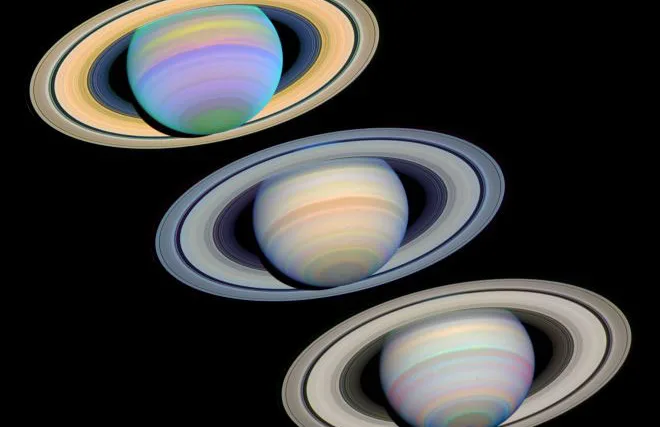
The universe is awash with radiation, from long wavelength radio waves to short wavelength gamma rays. The entire electromagnetic spectrum is not perceptible to us—the human eye can only detect visible light waves—but space telescopes and other technology act as our spy-glasses on the invisible realm. Michael Benson, Brian Abbott and Carter Emmart discuss the different ways they use data collected from the Hubble Space Telescope and our other mechanical eyes in the sky to reveal the artistic majesty of the cosmos. Neil and Lynne discuss light’s biography, from its birth in the Big Bang to the dying of the light at the end of time.
NOTE: All-Access subscribers can listen to the entire episode ad-free here: Let There Be Light.
Transcript
DOWNLOAD SRTWelcome to StarTalk, your place in the universe where science and pop culture collide. StarTalk begins right now. Welcome back to StarTalk Radio, I'm your host, Neil deGrasse Tyson. I'm an astrophysicist and director of New York City's Hayden Planetarium....
Welcome to StarTalk, your place in the universe where science and pop culture collide.
StarTalk begins right now.
Welcome back to StarTalk Radio, I'm your host, Neil deGrasse Tyson.
I'm an astrophysicist and director of New York City's Hayden Planetarium.
And today's subject, Let There Be Light.
Joining me as my co-host is Lynne Coplitz.
Lynne, welcome back to StarTalk Radio.
You're a founding co-host of mine on this program.
That's right.
And welcome back.
Thank you.
I know.
You think about light all the time.
This whole show is on light and what we would otherwise call the electromagnetic spectrum.
But it's light to most people.
But to the astrophysicist, light is not just like the colors of the rainbow.
Roy Gibb, have you ever heard of Roy Gibb?
Of course.
I don't know what you've heard of.
I'm not special needs.
Okay, can you recite them?
Red, orange, yellow, indigo, blue, violet.
What happened to green?
That's obvious.
Okay.
That's the G.
Red, orange, yellow, green, blue, indigo, violet.
That's the visible part of the electromagnetic spectrum.
I didn't know there was a pop quiz.
And then it goes in either direction.
So you go beyond the red, beneath the red, it's infrared.
Infra means less than back when they first laid this out.
You can't see infrared.
And you go beyond infrared, you get two microwaves and radio waves.
We've all heard of these.
Maybe you didn't know it was part of the family of light that we call the electromagnetic spectrum.
And you come out the other side, beyond violet, what do you find there?
Beyond violet?
Yes.
Headache?
Ultraviolet.
And it goes beyond ultraviolet, x-rays and then gamma rays.
There's the entire electromagnetic spectrum and the astrophysicist is an expert in each of these bands and the universe talks to us in each one of those bands telling us something different.
But what we should do is sort of start off with-
I know, I'm going to be patient because I don't understand half of what you just said.
Let's start out.
Let's see what Bill Nye-
Let's see if we can get Bill Nye to just sort of warm us up with just an encounter with what our telescopes do for the universe.
We're on the radio.
What better time to ponder what we cannot see?
If you start counting, you'd say you see a lot of things.
Tiny things like pistols between petals of petunias and big things like fantastically far away stars.
But now, try the eyepiece of an instrument, a telescope.
The moon's not smooth, it's a mess.
Those aren't just bright dots, they're worlds with rings and weather.
Some of the dots aren't just worlds, they're galaxies full of worlds.
And so far, we've just talked about rays of light visible to human eyes.
It turns out that even though we see thousands and millions and billions of things, we hardly see the energy of the universe at all.
Visible light waves and microwaves and X-rays and cosmic rays, even heat waves, are manifestations of both electricity and magnetism at the same time.
Electromagnetism.
It radiates all over the place, or places, all over space, the universe.
By building remarkable instruments to detect all these wavelengths of electromagnetic energy, we discovered planets, stars and galaxies.
Now, as we build better and better instruments, we found that we don't know the half of it, actually about the 94 percent of it.
We've detected a great deal of energy from vast reaches of space, but there just has to be so much we don't yet see.
Let's look into the sky and stay tuned.
For StarTalk Radio, I'm Bill Nye the Science Guy.
Bill Nye always telling it like it is.
Lynn, welcome with me, one of our guests tonight.
We have cool guests today, and they're all here.
And they're all here in studio.
First up in this segment is Michael Benson.
Michael, welcome to StarTalk Radio.
Hey, how you doing?
Thanks for having me.
Now, how do I characterize you as like a journalist, a photographer, a photojournalist, a astro nut?
Because everything you write about and everything you publish books on is about the universe.
Yeah, the answer is yes.
That's how you can characterize me.
Thank you very much.
I'm an astro-journalist.
An astro-photo-nut-journalist.
An astro-nut-photo-journalist.
I first met you many years ago.
I think you were preparing one of your earlier books called Far Out.
Was that one of them?
Or did I miss you?
No, that was the first one.
Far Out is the last one.
And that covers basically everything from just at the gates of our solar system all the way to the Big Bang.
Okay.
So this is a book where you have collected images together with narrative that where you're just bringing the universe to the public.
Yes.
And then the first book was called Beyond and that's the one you probably saw.
Beyond.
We collaborated a little to put a show up.
I don't know if you remember we put a show up at the Hayden Planetarium.
No, no, I do remember.
So Beyond was those were the space probes that then put up got images of the planets.
So I'm fortunate as an astrophysicist to have journalists who care about the universe because then you get to do some of the work that we would otherwise try to do but wouldn't necessarily succeed.
And you've been eminently successful at this beautiful books that you've published.
Thank you.
Thank you.
So what about the universe attracts you?
Is it just because the stuff looks cool?
And you're a photographer too.
So you think about light and what it does and there's a little bit of artist in you.
So you think about how light affects the viewer and images.
I like to think there's a lot of artists in me, Neil, but I'm just teasing you here.
What about the universe attracts me?
That kind of question, it's almost impossible to answer that because everything is the universe.
So anything that's attractive is the universe.
But what about the universe attracts me?
Whoa, you just blew my mind socks off.
What does that mean?
Oh my God, I think I did.
He's saying even people sitting next to him is part of the universe.
So images of him.
I don't know.
It's probably quite large.
But what attracts me to the universe?
I think that part of it to be moderately serious here is that in the last 50 years, we have seen things that everybody prior to 50 years ago could only dream of seeing, which is highly detailed images of all the planets, you know, of the solar system.
And then also after the Hubble was launched and so on, incredibly detailed pictures of the origin, you know, the beginnings of solar systems in Orion and this kind of thing.
So, my question is, how is it possible really for people not to be attracted?
When you say beginnings of solar system in Orion, the constellation Orion has one of its stars, is actually a region of the galaxy where stars are being born and that's what you meant when you said…
The Orion Nebula.
The Orion Nebula, a very famous place in the solar system, a stellar nursery, in fact.
And so, all these places excite you and so you…
but you didn't take any of these pictures, you assembled them from public sources, right?
Well, thanks for pointing that out.
No, no, I mean, look…
So what do we need you for?
Well, I'll tell you.
Why did I even invite you on the show?
I was wondering that too when I got the call, you know, but then I decided I would play along with you guys.
You know, part of it is that, you know, it's true I didn't take the individual shots.
In fact, it's impossible.
No human being has been in orbit of Jupiter, for example, or orbiting Saturn, but what I do do...
Tell him.
Tell him.
Pull the gloves off, Michael.
Take that, Neil.
Don't take that from him.
Take that, man.
He's no genius in here.
He's just a guy.
I'll hold him.
You hit him.
Oh, I don't know.
I mean, I think he's certainly got elements of genius, you know?
I mean, just the way all of us do.
Pick a side.
Pick a side.
I'm on your side, baby.
Okay, let me just say this, you know.
What I do is go into archives that have hundreds of thousands of raw images, and I look for extraordinary frames, which I can then mosaic together.
Mosaic means you tile them together and make a bigger picture than what the single image was.
Exactly.
Yes.
And I composite them to get color.
And so, you know, I feel very much, I feel almost authorial towards them, because some of them really wouldn't exist if I had...
Authorial.
Authorial.
I feel like I'm the author.
Oh, okay.
Sorry.
I just hadn't heard it.
I feel like the author of quite a number of them, even though, of course, anybody can go into the archives, and I encourage this very much to go into the archives where all data...
So the point is, anyone can do it, but they didn't.
You did.
Right.
And so you then had the privilege of being the first in, and therefore the first out, with these beautiful books that you've published.
I mean, I'll tell you a story...
It's like you make a collage almost, but you put it all together.
Yeah.
I'll tell you a story.
I mean, recently I had a show in Chelsea in my gallery, which is Hasted Crotler Gallery on West 24th Street.
And because I had the deadline of February 3rd to have an opening, I went into the archives and I started digging in Cassini material.
Cassini is the spacecraft orbiting Saturn right now, and I started looking for extraordinary images.
Tons of images are there.
And I found these amazing images of the dark side of Saturn, which was not dark.
It was not dark because there's so much indirect light bouncing off the rings and so on.
And I put together a multiple-frame mosaic, and as it emerged in color and I made it seamless and everything, I had the very real sensation that I was the first human being to see...
To see the back side of Saturn.
To be seen...
Yeah, you can put it that way.
The back side of Saturn.
I saw the rear side of Saturn in a way.
And I had this amazing sensation that I was a privileged person because I had done this.
And then, of course, for me, part of the fun of it is to get it out there and show it to people.
Let me bring in my second of three.
It is.
Let me bring in my second of three guests.
His name is Brian Abbott.
Brian, welcome to StarTalk Radio, your first appearance.
Thank you.
It's a pleasure to be here.
Brian, you have to tell this to the audience.
Tell everyone, because I know in advance, tell everyone what it says on your business card, what it is that you do.
You are what?
Well, I have a business card that reads, Manager of the Digital Universe.
Manager of the Digital Universe.
That is so cool.
Does that get you dates in the bar?
It doesn't hurt.
It's better than Staples.
Manager of Staples.
So, Brian, you come to this, you have a huge science background, you're computer literate, and you put together data sets for the Hayden Planetarium that enables people to sort of take journeys through those data.
And so, what are some of your challenges collecting them scientifically?
Because Michael Benson is mining the archives, and that's cool, but at the end of the day, they're still just photographs, still photographs, 2D photos.
Sorry, Michael, I'm sorry.
Yeah, it is art, it is art, but Brian, you take another dimension here, so where do you take it?
But that's just another dimension.
That's a hard dimension, you know, astrophysicists have a hard time getting distances.
Distances is everything.
Taking pictures of something in the night sky, seeing the sort of 2D sky, if you will, from Earth is great.
2D, but getting distance to that object is very challenging.
And once you get the distance, then you can create a journey through it, right?
That's right.
Okay, so now it's not just visible light data that you've got, because we've got telescopes in every band of light of the electromagnetic spectrum.
We have ultraviolet telescopes and infrared, we got a telescope in every band that we cannot see.
So what do you do with those data?
We show them.
How do you show them if we can't see them?
Well, that's the challenge.
Actually, I know the answer to that question, but I want you to say it, because you've got the title manager of the digital universe.
How do you reconcile showing something that we should be seeing with our eyes visible, like the stars in the sky, with something that is invisible to our eyes?
That's what I'm asking.
Like?
We ask, thank you, Lynn.
What's invisible?
Like microwave radiation or infrared or ultraviolet.
How do we see that?
How do you make it visible to us?
We, the scientists and we take our third...
You're the manager.
I want to see the manager on this.
I want to see the manager, I want to see your manager, manager.
Take me to your leader.
We essentially decide how it looks.
You get a sense of how it looks from the instrument and then you decide how you want that to look.
And that relates to how we see things as humans.
So it's always a judgment call.
So you're converting invisible light into light that we can see, but then you have to be honest and say you actually can't see this.
This is what it would look like if you could see in those bands of light, correct?
Exactly.
Like when they tell you this is how a dog sees things.
You don't really know that.
I guess not.
But you can study...
But somebody has to decide what would it look like on the scientific data that they have.
Somebody's got to make that judgment.
Then you need to make a dog hearing simulator or a dog seeing simulator.
Right.
Which is essentially...
That's essentially what you've done, Brian.
You made a simulator that allows us to see in bands of light we cannot.
And so what's your favorite data set in a band we can't see?
Well, I love the W map.
The W map.
So this is of the microwave.
This is the microwave for radiation.
Of the entire universe.
The baby picture of the universe.
Of the universe, born, the light cast forth.
13.4 billion years ago.
So you're just digging it.
So the big bang picture, like when there was one god said let there be light, you're like what it looks like when it turned it on?
Well, it's as far back as we can see.
I know, I'm in a room full of scientists.
Oh God, what does that mean?
We've got to take a quick break.
More on the science of light when we come back.
We're back, let me reintroduce my guests.
Michael Benson, journalist, photographer, space geek, all the way.
And a month goes by where I don't read one of your op-eds or editorials criticizing NASA and the nation's priorities.
Maybe we'll get back to that a little later.
Wow, there is some weird tension with you guys.
Brian Abbott, manager of the Digital Universe at the Hayden Planetarium.
Thanks for being on StarTalk.
And of course, my inaugural co-host, Ian Coplitz.
There's weird tension between you two.
The light of your life.
Yes.
The second light.
So we are here talking about Let There Be Light, the light of the universe and how it's created, what it's all about.
Let me just sort of reset some of the physics of what's going on here.
Sure, sure.
So light is energy.
It's a form of energy.
There are a lot of kinds of energy, this kinetic energy of motion, this potential energy.
You get that in where you are in the universe.
Or you can have chemical potential energy.
That's the energy that shows up when a bomb explodes.
But in the universe, light is a form of energy.
And we call it electromagnetic energy.
And...
That's from the Big Bang?
Yeah, so at the Big Bang, you have all of this energy in a very small volume and it is so hot, it is so energetic, that matter is forming out of the energy, according to equals MC squared.
And the matter that's forming...
According to the Bible, God just says let there be light and then the light turned on.
Yes, I'm saying something different from that.
I am indeed saying something different from what you read in Genesis.
Yes, so what we have here is this soup.
It's a matter, antimatter energy soup.
And then as it expanded and cooled, all the matter and antimatter particles collided with each other and annihilated and created light, except some matter was left over out of this.
One out of 100 million particles was left over and that is the matter that you and I are made of.
And all the other matter, antimatter collisions created the light of the universe, now visible as microwaves.
At the distant, most distant regions of the universe, we call it the famous microwave background, the baby picture, the big bang.
And so this is light.
It all travels at, of course, the speed of light, which in miles per second, 186,282 miles per second.
And if you want to get really geeky at home, one nanosecond, that's a billionth of a second, light travels one foot.
So if you're standing a foot away from someone, you can say, I see you, not as you are, but as you once were a billionth of a second ago.
So if you were gonna time travel, would that be the speed of light like in Back to the Future?
Well, it will be exactly, yeah.
I like my really serious question.
Look at all of our science, all of our really smart people in the room are like, who is this hooker and why is she here?
No, so telescopes are kind of like time travelers because as you see far out in space, you see far back in time.
I see you as you once were, like I said, two billionths of a second ago.
You're two feet away from me.
Am I younger?
You are younger as I see you than you are at that moment that I see you.
Can't believe you just said that.
The moon is like a little more than a second, light second away, the sun 500 light seconds away.
We have galaxies, here's a cool one.
We have galaxies that are 65 million light years away, which means if they had a powerful telescope, they could look to earth and they can see the dinosaurs going extinct as it's happening, as it's unfolding.
They would need super duper telescopes for that.
Can we go back to something simple for a second?
Well, what's that?
Because let's break it all down for me.
First of all, like you said, light and energy.
Is that why we can see lightning?
Well, light, well, so yeah.
So lightning is a lot of energy in a small spot, which rapidly expands the air and it creates basically a shock wave.
So you hear the thunder and it's very, yeah, it rapidly expands the air and that creates, it's a shock wave.
And so that's why you hear it.
And of course you hear it later than you see it, but it is very high temperature.
And when you bring anything to high temperature, it glows.
You see the sun because it is at a high temperature, it glows.
You heat anything to high enough temperature, it will glow, period.
Whether or not it's a gas, solid, it'll glow.
That's correct.
How interesting.
And there's a guy from the 19th century who put together all our current understanding of the behavior of light.
And he's called Maxwell, James Clerk Maxwell.
And they're called Maxwell's equations, one of the most beautiful set of equations there are in all of physics.
Have you ever heard of Maxwell?
You know, the only Maxwell I know is the coffee guy.
I'm just checking.
And in fact, I don't know if it's the same guy.
Probably not, though.
Who discovered x-rays?
Who discovered x-rays?
Wilhelm Röntgen.
In fact, in Germany, they're not called x-rays.
They're called Röntgen rays.
Yeah, so they still...
Röntgen rays?
I don't know if I'm pronouncing any Germans out there.
Is that how I get the thing for my mammogram?
Yeah, basically.
Wilhelm Röntgen.
And it was actually discovered quite by accident.
He was working with sort of high energy emissions from tubes.
And his hand happened to be in the way of a photographic plate.
And he developed the plate and saw his bones on that photographic...
It's completely creepy.
I would have freaked out if that had happened.
And so...
And then he did it again.
Not knowing that this is the kind of thing you...
Things you die from, you know, too much exposure to x-ray.
You've been in the x-ray room.
And what does the x-ray technician do right before they flip this?
They all leave.
They leave, close the door, shut the door.
That's what they do.
The CAT scan's the worst.
They go like down the hall and talk to you through a thing.
They're like, are you okay?
No, I'm not okay.
I'm alone in obviously what's a really frightening room.
So these are just bands of light that actually are in our everyday lives.
So your cell phone uses microwaves.
Why are those?
Now I've got all of you here in this little light summit meeting.
I want to know when, like I travel all the time when I'm on the road and I'm going to be doing it this week.
Wednesday, I'll be at the Orlando Improv.
But anyway, my question is this.
And for those who are listening on Time Delay iTunes podcast, which Wednesday was that?
Yeah, that Wednesday is like a month in the past by then.
Somewhere in June.
Whatever, just go online and look for it.
But the Orlando Improv.
But here's my question, are they making me now at the airport walk through those body scan things?
Yeah, that's where someone else sees you naked and the person that sends you through doesn't see it.
They try to split the person who knows who you are from the person who sees your body parts.
I don't care about people seeing me naked.
That is enough of that.
If someone wants to see, by all means they can take a look.
But, I'm more concerned, like, can it kill me?
Like, how, why does this light hurt us?
I haven't formally studied that scanning process and...
So you don't know?
That means DK and genius speak.
What they, what they don't know, so they claim that it's not any more dangerous than a plane flight that you might be taking.
The exposure to radiation on that.
Brian?
This is exactly what I've heard, that when you fly in a plane, you're actually exposed to more radiation than you would be on Earth.
Right, on Earth's surface, because the atmosphere protects you from, it shields you from a lot of radiation that's coming from space.
Exactly.
And notice that the doors of it are open.
By the way, in your microwave oven, which also uses microwaves, by the way, I should have let off by saying, what's the difference from one band of light to the other?
The length of the wave itself.
Microwaves are about a half an inch, a third of an inch long, in a little wave shape.
So if you want to block microwaves, just put a screen where the mesh is smaller than that size and the microwaves can't get out.
So take a look at the door of your microwave oven.
It's a screen that's got holes.
Why doesn't the microwave come through the holes?
Because the wavelength is bigger than the holes themselves.
And are you old enough to remember how people used to receive TV signals?
Rabbit ear antennas?
Exactly.
Why are the antennas that long?
They're about a meter long, about a yard long.
That's the length of a radio wave.
Radio waves are longer than microwaves.
And you want to capture radio waves, you get a...
The antenna has to be about that length.
So walkie-talkies, which use microwaves, how big is their antenna?
It's much stubbier.
It's like, you know, it's like an inch.
Wait, if they use microwaves, then can't that be bad for you to talk into them?
Well, if you create a cavity and zap you with much greater power than what goes on in a walkie-talkie, then it would boil your blood and that would be bad, right?
That's not what happens otherwise.
Microwaves cook things from the inside out, right?
So, microwaves, what happens is the water molecule really likes microwaves.
They have a deep, cozy relationship with each other, which is one of the reasons why when we try to observe the universe in microwaves, you want to get above the cloud-forming layer of Earth's atmosphere because clouds wreak havoc on microwaves.
Your cell phone signal is worst during thunderstorms and all microwave signals are corrupted in the presence of water and we exploited that with microwave ovens because most food that you will ever consume has water in it and the water absorbs the microwaves.
It vibrates them real fast and it's friction that cooks your food and nothing else.
So people who think of microwave ovens as nuking the food, not.
It's just the vibration of the water molecules all next to each other vibrating ferociously, creating heat.
And it's microwaves in our life and in our culture.
And microwave Brian, you've got microwave data sets telling us what's going on in the early universe.
That's right.
What kind of light is it when you use night vision goggles?
It depends, so the kind that you flick the switch on your camcorder, that one is like infrared.
No, but that's night mode.
I'm talking about the kind Buffalo Bill Warren, I'm silent to the lambs.
Oh, okay.
So that would be like an image intensifier.
So that takes a very low, those are developed in wartime, by the way, so you can like shoot people in the dark of night.
Like what the seals use.
A lot of this is military technology.
And so very, very low light situations, you can greatly magnify it electronically.
So you have, it looks like it's broad daylight to you and someone else is groping in the dark.
Do you mean that literally?
Mean what literally?
Groping?
The groping.
Yeah, yeah.
Just trying to make an intervention here.
Mike is getting a feel for the show.
Feel for the show.
So, so Mike, on any of your photos, do you, do you, do you have a relationship with other bands of light?
Or are you primarily visible?
What kind of relationship do you need?
No, no, I'm, I'm going, I'm trying to stay with, with these visible spectrum.
So you're a visible guy.
I'm a visible light guy.
That's okay.
But, but, but you realize the human eye sees in one octave of light and we have detectors that see in 64.
So what you're telling me now is that all of your books basically are demonstrations that were actually mostly blind in the universe.
Oh, but we're mostly blind in the universe anyway.
I mean, you know, 99.9% of the universe is made out of stuff we don't even understand.
That's a whole other.
I can't believe I have to tell you that.
Point of ignorance going on there.
Speaking of ignorance, I have another question.
Oh, you have another question?
We might have to save it for the search.
Get it in real quick.
Go.
No, I want to ask about photosynthesis.
Oh, cool.
Yes, we can so go there.
We've got to take a quick break, but more StarTalk when we return.
This is StarTalk Radio, welcome back.
Today's subject, Let There Be Light.
I've got Michael Benson, author and journalist.
I've got Brian Abbott, manager of the Digital Universe at the Hayden Planetarium.
And of course, the light of StarTalk, Lynn Coplitz herself.
Lynn, you had a question just before the break, what was that?
I did, but I have to tell our guests that Neil tells me there are no stupid questions, although sometimes I feel uncomfortable because I do feel like there are things I should have listened to in science class.
Let me just say, you asked the best stupid questions there ever were.
Okay, thank you.
If that's how you have to feel about it.
Having preempted that, I will say.
I've now, I never used to be able to let plants live in my care, and I've just started raising some little plants and I've given them all names, which is kind of weird, but I'm 43 and single.
You've named your plants, okay.
Anyway, so I've put them on the fire escape and they're doing quite well, but I've noticed, because I've been home, I haven't been on the road for a month or so, and I've been able to watch them, you know, I know that photosynthesis is what it is.
Yeah, they like light, yes, they need light.
But some of them, like Steve, he's foliage, he leans toward the light.
Steve leans.
But what I thought it was just sunlight.
Steve is the name of one of your plants.
Yes, but I thought it was just, Steve is, he's very cute.
But Steve leans towards the light, but I thought it was just sunlight, but I bring him in at night.
Any light that, so to actually...
So any light, and the pansies open up at night when I turn the little light on at night.
So you're messing with their biorhythms.
Well, that's my question.
Am I screwing them up?
Your complete pansies are the name of a plant or is that the type of plant?
No, their name's panzaal, Michael.
Oh, okay, well I shouldn't have known.
They are pansies.
You like me calling you man man.
Most people think that plants like light, but in fact, it's the light that's inhibiting the growth of the plant on the side of the plant that faces the light, allowing the far side of the plant to outgrow the side of the plant that's nearest the light.
And so we then say, oh, it's leaning towards the light.
In fact, the light is inhibiting the growth of the plant on that side.
Oh, no, I'm stunting their growth.
This is why I can't have children.
Because I don't know how to take care of it.
I don't see that connection.
I'm sorry.
Because I could stunt their growth.
Yeah, because you have to do more than just water the children.
Yes.
But here's my, well, you have to do more than just water a plant.
Here's my question.
So when it's leaning, then why does it say to plant things in direct sunlight?
There's some plants that prefer direct sunlight rather than diffuse sunlight or indirect sunlight.
So it just depends on how the plant evolves.
So if I don't have sunlight, can I just put them in a pot and put a regular light on them?
If you want a light that's close to the spectrum of the sun and you can buy sun lamps.
Oh yeah.
Yeah, yeah, but you can completely, you don't even need the outdoor sun.
Just go for it.
Interesting.
Yeah, just put in a light that, you don't want a regular incandescent bulb.
It's not blue enough for what the plant would thrive on.
What happens to people if they never have any sunlight?
What's the vitamin you're supposed to take in the winter?
Vitamin D, yeah.
Yeah, so you don't get vitamin D.
You don't produce vitamin D.
Yeah, if you have light skin, yes, that's a rule.
So what happens to you?
Well, can you die from not getting any light?
You get scurvy.
Yeah, well, no, scurvy is vitamin C.
Okay, but I'm improvising.
Are you like powder?
So yeah, the sun helps the body produce vitamin D.
That's correct.
But what happens if you don't have vitamin D?
What happens to you?
Your bones weaken.
Really?
Yeah, and if you get depressed and you drink.
And if you're developing, then you get rickets.
I think I have that.
And you look like the cowboy with the bowed legs.
But let's get back to the universe if we may.
Just let's understand how this works.
So we have objects in the universe that emit light.
And the visible part, that's easier to understand because our eyes see visible light.
Many really cool things in the universe don't know anything about visible light and they're trying to talk to us in bands of light we cannot see.
And it's a triumph of 20th century astrophysics that we've been able to build specialized telescopes with detectors that can reveal the universe in all these bands of light, ultraviolet, x-rays, gamma rays, radio waves, all these bands of the electromagnetic spectrum that tell us what the universe is actually doing because we are practically blind.
Who came up with black light?
Black light, that's just ultraviolet light.
And the part of the ultraviolet light you, the part of the black light you see is just violet.
But it's really doing its job in the part of the spectrum you can't see, the ultraviolet.
And bug zappers?
Oh, that's right, because of ultraviolet.
That's right, because black light, you can see all the lint and all the dust.
Yeah, well, so yeah, so that's the ultraviolet sort of rendering that aglow.
So, So what do you use to find DNA on things like the crime scene people use?
The crime scene people will use ultraviolet light to see different things that might be left on your sheets.
Yes.
Interesting.
And a quick thing about bug zappers.
Did you know that bug zappers are violet basically, because bugs just love violet light.
They come out in the early evening where the sky has a higher fraction of the total light represented in ultraviolet.
And so you simulate the twilight sky with a bug zapper and the bug says, I'm flying to the light.
And it just gets zapped.
And it's great.
It's evidence that we're smarter than bugs.
That we can exploit the fact that they are sensitive to ultraviolet light, even though we're not.
I got to bring in our third guest here.
This guy, there's no one like him in the universe.
Last I checked, Carter Emart.
Carter, you are director of astro visualization of the Rose Center for Earth and Space.
Welcome to StarTalk Radio.
And you just gave a presentation at the World Science Festival last night, bringing the universe to the public as never before.
You were born an artist with deep interest in the cosmos.
You became a computer literate and you transitioned what used to be canvas and paint for planetarium shows into the 21st century.
So welcome to StarTalk Radio.
And tell us what you did last night.
Thanks a lot, Neil.
Yeah, actually at the Hayden, we had a program that was looking at, started off with a 60s era light show from the Joshua Light Show.
And then we went in.
60s era had lasers and stuff, right?
Well, no, it was pre laser.
Pre laser light show, okay.
This is, and the Joshua Light Show actually backed up Jimi Hendrix and other bands.
So were people getting high in the dome?
Well, 10 minutes of that.
And then basically, I took us a piece where we leave, we go from the earth on out to the cosmic microwave background.
So you zoom, a zoom.
A powers of 10 kind of zoom.
Yes, we do.
And then we actually travel all the way back to earth and through the atmosphere and down to the town of Norrshipping, Sweden, where I actually directed this film last year.
And we fly all the way down to quarks in a carbon nucleus.
So these are Swedish quarks, apparently.
Yes, in that case, it's a strand of DNA.
So as you zoom out, there'll be some familiar things.
We'll see earth from a distance, like the Apollo images.
But rapidly, those images would become unfamiliar because you're zooming through a three-dimensional space that telescopes can't provide.
Yes, but it's a data map, thanks to my work with Brian.
Brian, taking data sets, academic data sets, catalogs of various objects that we see, we observe with light, and their signature from the light gives us distance information.
We're able to plot that.
In three dimensions.
In three dimensions.
A revolution in planetariums really occurred from that of showing the sky to now showing space three-dimensionally.
And so, yeah, Lynn?
I just have a question, because we're talking about the universe.
It's just so humongous.
The idea of you creating a show, a light show, that represents certain parts, how do you decide exactly what you want the show to be?
Like it's hard enough, like when you're putting together a musical or something, how do you decide what parts of the universe are interesting and how you're going to use them?
Well, another way to say that, how do you know what to not include?
Exactly, that's what I'm trying to ask.
The idea of the digital universe is to include everything.
And-
That's a cop-out.
I mean, it's the right answer, but you choose a pathway to take the visitor on it.
Yes.
And you're invoking an artistic eye to this.
We were also, yes, and design and movement is a big part of it.
And that goes to the heart of what our space shows are and how we create them and how to display the data.
But also-
A pure scientist wouldn't necessarily know the best way to look at their own data, right?
And you have an artistic eye for this.
Well, and also it's a matter of putting the pieces together.
If you look at any one data set, say stars, that'll be very interesting to the people that study the stars.
But to put that in coordination to our solar system or the galaxy at large that those stars are part of is our job.
So now you get the whole sweep of the universe.
That's right.
So land is the whole freaking universe.
So also I should say that the program last night, after bringing us back down in light, essentially from the most ancient light we can see, which is the Cosmic Microwave background.
In microwaves, yes.
Because as we look farther out, we're looking farther back into the past, that as we come down, we then handed over to Joy Hirsch, who's the director of the Columbia Brain Lab.
And she talked about really the difference between photons and essentially the light in our mind in the sense of understanding.
And so that mind, so we're really trying to address this issue of the universe around us and the universe that we know in our brains.
So you went from the outer universe to the universe of our inner mind.
Correct.
You know, that reminds me of when I used to, when I was in college, I took a lot of drawing.
I was like an art minor.
And I remember one of our teachers telling us to squint our eyes because what we thought we were seeing and what we were seeing were different things.
And he said, if you squint your eyes and you just draw the shadows and draw the shadows and the light, and then it was so weird because you look up and all of a sudden you have a whole image.
And it's what you were really seeing.
Yeah, so Brian, how do we know, how do you distinct, I mean, both of you, Brian and Carter, so there's what is and there's what our perception is.
And how do you make the two work to get the most effective show?
You know, when we look up and we see stars, we can sort of have a sense that they're different distances.
But to really see the layout and the distances or say where the planets fall in this because look up in the night sky tonight and you'll see one of those bright stars, so to speak, is Saturn.
It's Saturn in the evening sky.
Beautiful sight tonight.
We were showing that with the World Science Festival just on Friday night, which was wonderful.
Right under the Brooklyn Bridge.
That was a beautiful setting.
If people don't know, this time of year, every year in New York City, there's the World Science Festival and some of the greatest scientists in the nation and in the world descend on New York and bring science to the public in many different venues, one of which was the Hayden Planetarium last night.
We've got to take a quick break, but more StarTalk when we return.
This is StarTalk Radio, welcome back.
Brian Abbott, manager of the Digital Universe, you had some comment just before the break about the difference between how a scientist views data and how you guys make it alive.
What struck me when I started working on this project is that scientists see their data not only as a 2D graph, but also, they only see their data.
They don't see it in the bigger picture, the bigger context of where that fits in the universe.
So they're visually direct.
This is 2D.
Sorry, it's not 2D, 2D fruity.
2D, yes, two dimensions, yes.
So it's a really boring way to look at the data and you might miss the bigger picture.
And so, Carter, you make the big picture is what you do.
The scientists understand the bigger picture and that's their job.
And it's our job to, again, create that continuous experience from Earth all the way out.
One of the most moving moments in this journey is when we pass by the radio bubble.
Tell us real quick about that.
Yeah, if you actually look out into the stars, you can say, okay, how many different distances?
But if you stand away from the Earth, let's stand away from the Earth about a hundred light years, you would look back and you'd see a sphere, about 70 light years in radius.
That's if you had radio sensitive eyes, you'd see a sphere.
No, you'd have to actually be detecting it and be at the sphere.
At the sphere, okay.
What we do is we draw a graphic of a sphere and that indicates how far radio signals have traveled since the earth became radio bright.
You had Tesla and Marconi and early radio that bounced around inside the ionosphere.
It's not when earth became radio bright, it's when human beings on earth became radio emitters.
Yeah, that's right.
With their apparatus.
Yes, with radars and television carrier waves.
And so you can see that moving out.
So if you parked next to Arcturus tonight, which is up in our sky, you would be-
We wouldn't plan to do that, yeah.
You would be hearing radio broadcasts or TV from 40 years ago.
Yeah, see, I have that question.
If there's all this stuff that we can't see, all these waves and light waves and things-
Penetrating your body right now.
Then don't they all bump into each other?
When is there too much and what happens?
Yeah, no, the interesting thing about radars, they can interfere, but they only interfere if they're sort of coherent.
So you can make lasers interfere and you get what's called fringe patterns.
Oh, before we leave, I have to know, are there lightsabers in real life?
Oh, you mean like in Star Wars?
Yeah.
No.
Okay, so now.
Oh.
He told me to wait and ask on the air.
No, no, here's the thing.
No, you can make a beam of light that would be visible, such as lightsaber.
Oh, like your light beam thing that you use to point at?
How ever, and I even tweeted this a few weeks ago, lightsabers would not hit each other.
They would just pass right through one another and they wouldn't have these sword fights the way they would show it.
They would just pass through one another.
What kind of light is laser made out of?
It's visible light.
You can make other kinds of laser light, but the ones we're most familiar with are visible.
The radiosphere sort of sets us up in a sense that if you go away from the earth far enough, you're going far enough back in time.
Everything we see, a star twice a distance away is twice as far in the past, essentially.
So if you look far enough, you're actually seeing the cooling off of the universe or the transition between when it was a plasma and opaque to where it became clear space.
And that's the microwave background that we see.
So you not only show us the radio bubble that we created, that's now about 100 light years out, and all of our civilization, as we've communicated it through each other, has leaked into space and is contained within this bubble.
So you show it like if God were to look at it.
Yeah, but those are waves moving out, our radiosphere.
But the stuff that's coming to us is essentially, you can imagine a sphere, very large, that's a microwave background, and everything that we can observe is contained within it.
And it's centered on us, but that's just because it's us observing it.
If you moved anywhere else, you'd also see a sphere around you.
They all feel like you're in the center of that.
So now we're in a...
So Carter creates like accurate art.
Yes, yes.
And that is the hallmark of the 21st century.
Pictures from data.
And like he gave the analogy a moment ago with the dioramas, something that the American Museum of Natural History pioneered a hundred years ago, where you create, it's not just an animal stuffed on a pedestal, you put it in an environment that transports you to that local, to that location.
So now we're in an expanding universe, and this microwave light, and all the light in the universe is getting diluted in space, and it's energy is dropping.
And so the universe, I don't know if you knew this, is approaching, the universe will not end in fire, it will end in ice.
Not with a bang, but with a whimper.
And all of-
You, well yeah, well it's a poem, it's a TS Eliot poem as well.
So they call it a heat death, but it's really a cold death.
How do you equate that with global warming, Neil?
Yeah, so-
I mean, I don't know.
Does that mean that you don't believe in global warming?
Earth is insignificantly small compared to the scale of the universe on which I'm referring.
And so the temperature of the universe of this cosmic microwave background, you can actually stick a thermometer in it and get a reading.
It's about three degrees absolute temperature.
Three degrees above absolute zero.
So, and we're about 14 billion years old.
When we're 28 billion years old, we'll be one and a half degrees.
And it'll scale right on down until we asymptotically approach zero.
And the day will come.
Well, as we approach it without ever actually hitting it.
As you get closer and closer without.
Everyone just looked at you like they knew what you were talking about.
I'm like, as a baka baka?
Asymptotic, you learn that in Algebra II and trigonometry in high school.
Yeah, so.
So, all I'm saying is that so the temperature of the universe will continue to thin out and get cooler and cooler and cooler.
Well, yeah, I think so.
Yeah.
Sounds bad.
Stars will eventually run out of their fuel.
They will die.
Even the clouds, they'll make whatever stars they can and then they'll die out.
And then all matter will be left, will be left in the remnants, the dead cold remnants of stars that once were.
The universe sounds feminine.
You have to work really hard and then the earth is just messing around.
Well, once the energy sources run out, the stars will turn off one by one, the galaxies will shut off and the universe will turn dark for the remainder of eternity.
Brian, how can you say anything after what I just said?
Well, it's fascinating that future astrophysicists will not know anything about cosmology because they will not see any of the galaxies out past our local globe.
Oh, because we will expand so fast that our galaxies will expand beyond the horizon.
But that's not true, because if you look far enough away, you will see some of that radiation coming toward you.
Well, it's, well, yeah, we, well, it's another show.
By then, we're gonna have faster than light travel and we'll have sources, we'll be able to make our own stars and we'll be able to zap around.
And Michael Benson's been reading tons of science fiction.
I mean, come on.
That's all the time we have.
This has been StarTalk Radio.
I wanna thank my guests and as always, I bid you to keep looking up.



 Become a Patron