


 Unlock with Patreon
About This Episode
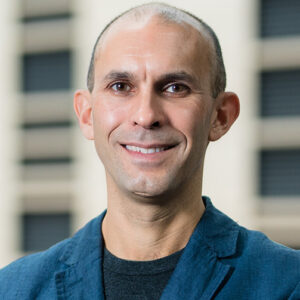
Are we on the brink of merging with machines? Neil deGrasse Tyson and co-hosts Chuck Nice and Gary O’Reilly dive into the mysteries of consciousness with neuroscientist and author Anil Seth, professor of Cognitive and Computational Neuroscience at the University of Sussex and author of Being You: A New Science of Consciousness. Together, they explore questions surrounding the nature of our minds, the boundaries of intelligence, and humanity’s place in the universe.
Is consciousness unique to humans, or could it extend to animals, machines, or even the mycelium networks beneath our feet? The conversation navigates through philosophical debates, scientific discoveries, and the evolving theories of consciousness, touching on topics like panpsychism, the fuzzy line between intelligence and awareness, and why it’s so hard to pin down what makes you “you.” From Descartes’ “beast machines” to Darwin’s revelations about our interconnectedness with other species, they challenge long-held notions of human specialness.
Will AI ever cross into consciousness, or are we simply moving the goalposts? Will artificial intelligence ever achieve consciousness—or even surpass us? They weigh in on the feasibility of uploading minds, the limits of silicon-based intelligence, and the implications of brain organoids—tiny, lab-grown neural tissues. They discuss the singularity, techbro optimism, and whether humanity is destined for a post-biological age. Throughout, we are reminded to ask not just what consciousness is but what it does for us—and why it matters.
Thanks to our Patrons James Boothe, Vicken Serpakian, John Webb, Doctor Pants, Greg Gralenski, Lost_AI, Bob Lester, kim christensen, Micheal Gannon, Aaron Rosenberg, Shai Kr, Kyle Bullock, JyinxTV, James Myers, victor recabarren, David Pederson, Ted McSheehy, Terena, Tracy Sheckells, Groovemaster24, Sheedrealmusic, David Amicucci, Brian Ridge, M Ranger, Peter Ackerman, Mars Colony AI, DonAlan, Harry Sørensen, G Anthony, Muhammad Umer, and Joshua MacDonald for supporting us this week.
NOTE: StarTalk+ Patrons can listen to this entire episode commercial-free.
Transcript
DOWNLOAD SRTThe other possibility is, in fact, you’re overestimating the extent to which you remain you from day to day.
Oh, you’re not you, Neil!
You’re not you, man!
I need further explanation on that sentence.
Welcome to StarTalk, your place in the universe where science and pop culture collide.
StarTalk begins right now.
This is StarTalk, special edition.
And when you hear that, you know, my two co-hosts are Gary O’Reilly.
Gary.
Nice, Neil.
Good to be back.
Former soccer pro, sports commentator, sporting a new part in his head.
Yeah, like a neural chip.
That’s a surgical scar for what they installed in your brain.
They were looking for something and it was a complete waste of time.
I gotcha.
And of course, got Chuck Nice, comedian, actor, long time StarTalk co-host.
Absolutely.
Always good to have you.
And Gary, you cook up these topics.
Well, we have a little groupthink between the producers and the production team, and we land on a whole load of different varieties, but this is an ongoing thought process on consciousness.
And we spoke with David Chalmers, and we’re now going to get into another thought process on consciousness, because it’s the hard problem of consciousness.
But is it like a three-body problem and unsolvable?
Does it even exist?
Is being transhuman our future?
So you’re thinking about the future of our mind.
Mm, totally.
And if so, will we be able to upload our consciousness and exist forever?
And how will that feel or not?
When we eventually travel into deep space, are we going to come across alien life forms that are super-intelligent, artificial intelligence?
Or are we going to find a biological life form?
There’s a lot of people think that our future will be AI and will exist as AI, but that’s a discussion that we’re going to get into with our guest today.
And our guest is Anil Seth, a Professor of Cognitive and Computational Neuroscience at the University of Sussex in England, a place I know reasonably well.
So he speaks your language.
Yes, he does, so you have to pay attention.
So PhD in Computer Science and Artificial Intelligence, a writer and author whose most recent book, Being You, was published in 2021.
So, Neil, please, an analysis.
But delighted to have you here, Anil.
Anil, I say that right?
That’s exactly right.
Thank you very much for having me.
It’s a pleasure to be on the show.
Excellent.
Excellent.
So all these topics, you know, everyone, you can’t shake a stick without having it land somewhere where somebody is deeply thinking about consciousness, and everybody thinks they’ve got the answer.
So it leaves me to ask a pretty basic question here.
What is it we’re using to prove to ourselves that consciousness even exists as a thing that could even possibly be uploaded to a computer one day?
Oh, well, there’s a lot of questions within that question.
But I mean, people don’t even agree on that.
I mean, there are some philosophers who might call themselves illusionists who think that consciousness doesn’t really exist in the sense that you and I, or if you ask anyone on the street, might assume that it does, that we’re just mistaken, that there’s anything special about this thing that we call conscious experience.
And I think they’re just wrong, frankly.
I mean, there are many things in consciousness we can’t be sure whether we’re right or wrong.
But if you think about it, the only thing we can be really sure of is our conscious experience.
Everything else is kind of inferred through it, whether it’s the world around us, the self, or everything else we know in science.
We know it because at some point we experience something.
And so there is a there there to explain.
Consciousness, I think, is real.
There’s a difference between being awake and aware and being completely out under general anesthesia.
I think most of us would agree that some things in the world are conscious, at least some of the time, other people, some other animals.
And some things are not, like tables and chairs and objects.
And there are other things where there’s a great deal of uncertainty, like some other animals, insects, people after brain damage, and of course, hot topic today, artificial intelligence.
The extent to which you define consciousness in the way you just did, if AI then exhibits all those properties, you would have to then concede that AI is conscious.
And what I have been finding is every time AI hits another threshold, another goalpost, people move the goalposts again.
That makes sense.
That doesn’t make sense.
I was going to say, it makes sense.
The closer AI gets to being truly conscious and sentient, the more we become less special as who we are.
So we got to keep moving the post.
Right.
So you have to raise the bar so that we can maintain our supposed preeminence.
So, Anil, how much of our definition of consciousness is just so that we feel special?
Well, I think that’s a profound point.
And it’s driven a lot of confusion about our relationship.
I mean, you’ll notice, Anil, as an astrophysicist, right?
I mean, the thought that we are special was what led people for the longest time to think that we’re at the center of the universe.
Plus, it kind of looked that way.
In all fairness, standing on Earth, the whole universe revolved around us.
So it wasn’t completely in conflict with evidence until it was.
That’s all.
That is true.
And then, of course, Darwin did something similar with nature as creatures, pointing out that we’re also not special in the sense of being created by God in a different way from all other.
We’re related to all other animals.
And so, yeah, in that sense, consciousness is the last refuge of human exceptionalism.
Beautiful sentence.
That we feel that human consciousness is somehow really special and it sets us apart.
Descartes made this very explicit.
He called non-human animals beast machines or bit machine in the French.
And trying to make the point there that non-human animals were just flesh and blood mechanisms, robots made out of living material that didn’t have the kind, at least didn’t have the kind of consciousness that mattered for moral consideration.
So we do have the Stratt record.
And we’ve kind of got around it in most ways now.
We no longer think we’re at the center of the universe.
We no longer think that we’re unrelated to all other creatures.
And we, most of us, I think there’s a wide consensus that we’re not the only conscious creatures out there.
Just ask a cat.
Ask a cat.
Yeah.
If you could ask a cat.
You can ask a cat.
They just won’t answer until you’ve left the room.
Are there theories of consciousness?
And, you know, I’ve seen a lot of isms out there, right?
Dualism, monism, materialism.
Are these all ways to try to get into this mysterious place that is our mind?
They’re all ways of thinking about the problem, or they’re sort of things that come before the theories.
They’re philosophical theories.
So consciousness seems to be this incredibly mysterious thing, because on the one hand, we are physical creatures.
We’re made of stuff, and complicated stuff, but it’s stuff, or it seems to be stuff anyway.
And on the other hand, there are conscious experiences.
So intuitively, it might seem that the physical world is very different from the world of conscious experience, and that no explanation in terms of physics and chemistry will tell you how or why anything or anyone is conscious.
This is what David Chalmers called the hard problem of consciousness.
I know he’s been on your show before.
And the idea that they’re totally unrelatable is dualism.
They operate in separate realms.
And you’ve got a whole bunch of other isms, but they’re not really theories.
They’re the sort of perspectives that you might take from which you might then build a theory.
Let me interject there.
When someone comes up to me and says, Dr.
Tyson, I have a theory.
And I say, no, Einstein had a theory.
You have a hypothesis, just to be clear.
Because physical science, a theory is a fully tested explanation of phenomena that makes successful predictions.
I don’t know if that’s getting semantic about the word theory.
But many people say, oh, it’s just a theory without recognizing that at least in the physical sciences, a theory is the highest form of understanding we have.
No, I think that’s right.
I think a theory is the goal, isn’t it?
And a well-tested and empirically well-established and explanatory powerful theory, that’s the goal.
And I would say in consciousness, we have proto-theories.
There are the beginnings of theories.
Some are more ambitious than others, but none of them have reached the level of maturity that we’ve seen in physics with relativity, quantum mechanics, all of these things.
I mean, they are still theories.
So they make predictions and they explain observations about what happens in the brain.
Because one of the amazing things about consciousness, philosophically, it seems incredibly mysterious, but it has this amazing advantage that brains are relatively numerous, relatively accessible compared to the big bang or the very small world of quantum mechanics.
We can look inside a living human brain as people gain consciousness, lose consciousness, change their consciousness.
So we can study it in a sense much more easily than some of the other frontiers of mystery.
And that’s great, because then we can begin to use this evidence to constrain and improve the theories that we have.
You talk about it as a mystery.
Is consciousness broken down into different types, segments, or is it just one big thing?
I prefer that kind of divide-and-conquer approach, actually.
Because if you treat it as one big scary mystery in need of one massive eureka solution, it can be very resistant.
It can be resistant even in the sense of, what would a satisfying answer look like?
What would we be content with in terms of an explanation?
And in many other areas of science, this kind of divide-and-conquer approach has paid dividends.
It has a good parallel, I think, with the history of life.
It’s reductionism at that level.
Let me add something here.
In early days of physics and all the branches of physics, philosophers played very important roles to help shape questions and help the direction of things.
But that was evidence that the field was still in its infancy when you had philosophers sort of running amok among you.
And it looks like you have philosophers at every turn when you’re trying to arrive at some conclusions here.
And at what point will you be evidence-based and no longer will the philosopher in the armchair be useful to you because all of your answers are coming from the lab and not from their brains?
I think philosophers are in it for the long game with consciousness.
And one of the things I’ve seen over the last 30 years that I’ve been doing this stuff is the dialogue between philosophy and science has become richer.
Certain things that may have started purely philosophical have now become the realm of the lab.
And that’s great.
That’s how most things would be.
But once it’s in the lab, the philosopher is a little less useful, is all I’m saying, because your answers are coming from the lab.
I think the point, right, certainly the point we’re at right now is that philosophy is still extremely useful.
Because we’re still a bit confused about what the questions we should ask are and how to interpret the answers.
And the theories that are coming up still have quite a philosophical flavor.
And also the implications are hugely important, and they will remain philosophical.
Yes, we can have an understanding of what happens in the brain when someone loses consciousness and so on, but what do we do with that understanding?
What do we do with our understanding of consciousness in terms of how we treat other animals, how we treat brain injured humans, and indeed what we do with AI?
It’s always going to be a…
All right, so from that last bit that you just said, what is the difference between the function of, or something that functions like consciousness and what we feel, because let’s be honest, it’s the true knowing that we have.
Consciousness for individuals is this very visceral and intense knowing.
And if we cannot ascribe that to something else, then we say it’s not conscious.
But yet there are things that function as consciousness, like tree root networks.
It allows the trees to literally talk to one another, and I need more water, and that tree gets more water, or I need to fight off this particular fungi.
And that is a kind of knowing, but we won’t say they’re conscious.
We’ll just say that’s a function.
So where do you find the balance and difference to make that differentiation?
Yeah, it’s a really tricky, tightrope to walk, because on the one hand, we have to use human way of being as a kind of benchmark, because we know that we are conscious, and that’s a starting point, if you like.
But we don’t want to be too anthropocentric and see everything through this human lens.
And not every function is going to need consciousness.
I’m a sort of materialist, so I like to think of consciousness as a biological property that arose in evolution gradually, but to perform certain functions, to enable certain functions in creatures where it was useful.
And so we have to ask, well, what does consciousness do for us, and where might it be in the rest of biology then?
And again, there’s lots of different answers to this.
But consciousness for us seems to bring a ton of information together in this kind of unified way.
So you said, we know, we have this sense of knowing, and that seems to be this kind of thing.
You open your eyes in the morning, and there’s a whole unified world out there.
You can just experience everything going on around you, your alarm clock, smell of coffee, whatever it is.
You experience your body, and you experience what you might do next.
I can’t tell you how much time I’ve spent contemplating the fact that every morning I wake up as me and not as someone else.
That’s because you’re not in the quantum leap.
All right, I’m in the wrong show.
You’re in the wrong show, buddy.
Get out of here.
Why would you expect to be someone else when you woke up?
It’s not that I expect to be.
I just wonder why I’m not.
It’s not a matter of expectations.
It’s these 8 billion people in the world.
Why am I persistently me?
What is it about me that makes me me every day I wake up?
But the other possibility is, in fact, you’re overestimating the extent to which you remain you from day to day.
It’s like, if you think about…
You’re not you, bud.
You’re not you, Neil.
You’re not you, man.
I need further explanation on that sentence.
But just think about Neil deGrasse Tyson at the age of 10 or something.
Is that really the same person?
Well, I have memories from that age.
I have memories.
But our experiences will alter us, if you like, microscopically, to the point where a decade later, we aren’t quite that same person.
No, I get that.
But I have the same memories of the events that occurred.
Well, you think you do.
But actually, the more often you recall something, the less accurate that memory is.
That’s what they say, but I work hard to avoid that.
So we can wear a memory out.
Is that what you’re saying?
You experience it differently when you remember it, and then you remember it again, and you experience it differently when you remember it.
And so every time a cell makes a copy of itself, it’s, you know, not the best cell.
It might be slightly better cell.
It might be slightly better cell.
It could be a better cell.
It could be slightly worse.
As they say, there are two primary failures of memory.
One of them is you remember things that never happened, and the other one is you don’t remember things that did.
And I don’t claim to remember everything in my life, but what I do remember, I remember with pretty high precision.
And you forgot the third, which is you remember that a black man did it.
What?
In the police line up, yeah.
But I just wanted to return to what Gary said, because he’s absolutely right, that the thing is, if there’s a phenomenon in perception called change blindness, one way change blindness can happen is that if something changes very slowly, then we don’t perceive the change.
Our perception can change, but we don’t experience the change of perception.
Something like that might well be happening with the self.
So our experience of self is changing just a little bit.
Day by day, but because it changes so slowly, we never experience ourselves as changing or we do so only when we compare it.
Like, oh, what was I like 10 years ago, 20 years ago?
And we think, I’m actually maybe quite different.
Okay, so therapists are paid a lot of money to speed up that process.
Well, I think they can, I mean, they can certainly, that’s one way I think about it.
They can certainly bring out aspects that we have forgotten to point out how different we are, how different we can be as well.
Why else go to a therapist unless there’s something you want to change?
That’s right.
There’s a potential for change.
I think speed up may be not the best term because, you know, they certainly want you to reveal things about yourself to yourself.
But, you know, the longer it takes, the better it is.
More billing cycles.
That’s all I’m saying.
So, Anil, what Chuck was saying about the tree, if we kind of roll that out.
Are you referring to the mycelium, the network, the fungal network?
Yeah, but just taking the fact that we roll that out from tree to table, and we say, isn’t it panpsychism that’s basically, and I’ll be very basic with this because that’s all I can be, that there’s a consciousness inferred to everything?
Can you, for my sake, please, because I’ve heard the term panpsychism, and I’ve even looked it up, and I still don’t get the whole concept is it that consciousness is derived from everything?
Consciousness is inferred upon everything or something in between?
I’m a little bit-
You have heard the word, but I’ve never looked it up.
It just sounds kind of new agey to me, that’s all.
But I want to get official account.
Where does Anil stand on this?
What is it?
Well, I’m not a fan of it, but it is a well established philosophical position.
And it is that consciousness, it’s not just inferred everywhere, it is fundamental.
It’s something of equivalent status to mass energy or electrical charge.
It is fundamental aspects of the universe in which we live.
So it’s not saying that a table is conscious or a tree is conscious.
It’s just that consciousness exists at the most fundamental level of things.
And then certain things like human beings exhibit consciousness at this other level, too, of a whole organism.
But a table wouldn’t.
A table is made of things that are individually a little bit conscious, but there’s no consciousness that inheres to the table itself.
And I think that’s what it is.
For me, it doesn’t really help.
Okay.
What you just said is why Chuck could read the explanation and still not know what the hell it is.
If that’s your best explanation for that word, we need some work on that.
Well, Anil said he wasn’t a big fan anyway, so he’s probably going to want to throw it under the bus.
What’s wrong with it?
I mean, consciousness is fundamental and everywhere.
That’s reasonable, isn’t it?
As long as I’m conscious, it’s reasonable.
I don’t know what everywhere means, I guess that’s my big question here.
In the same way that mass is basically pretty much everywhere, electrical charge is pretty much everywhere.
These are things that they don’t have lower levels.
So consciousness is on the moon?
I mean, I’m trying to understand the universe is large and life is only on earth.
And panpsychism is trying to declare that consciousness permeates the universe?
Basically, yes.
Yeah.
I mean, that’s the only way you can look at it from what you just said, Anil, is that it’s a kind of connective pressure that is a force acting upon us all, whether or not you’re aware of it or not.
So a table is not aware of that force, but it’s a part of that force.
And maybe it’s that that allows us to interact with the table through our consciousness.
From my readings, Rupert Sheldrake is a fan of this, if memory serves, is that correct?
You know, I’m not entirely sure.
I had a long, about an eight-hour train journey with Rupert Sheldrake last year.
So this should be clear to me.
But he’s certainly of the view that consciousness is…
Come on, spill the tea.
That’s the British train system for you.
This was in Norway.
In Britain it would have been 24 hours.
So certainly he’s of the view that consciousness is everywhere that life is.
Life and consciousness are very close.
In that, I kind of agree with him that there’s an intimate connection between life and consciousness.
I probably would put it in a slightly different way.
That for me, not everything that is alive is consciousness.
But I certainly think that being alive is critical to being conscious.
Anil, I’ve read that some people want to think of consciousness as extending beyond self.
It has a shared sort of consciousness field out there.
Now, I’m always one for a fun idea, a fun new idea about how the universe works.
But in the physical sciences, we put very high currency on testability of an idea.
Not just whether it sounds good to an audience.
And so, are there people testing panpsychism in a way that would give it some teeth here?
Because you, in your role, are skeptical of it.
Yeah.
Well, panpsychism itself can’t be tested.
That’s one problem with it.
But it’s a problem with all philosophical positions.
It’s just a way of thinking about what consciousness, how it fits into the universe.
But the idea that you had about, does consciousness extend beyond the body?
Can it be something that interacts with other things, in some field that goes out beyond the brain?
That can be tested.
People have tried to test these things all the time.
Extrasensory perception, telepathy, all of these things and none of them have stood up when they’ve been tested rigorously in the face of hard evidence.
So, Anil, my casual reviews of literature tell me that over the decades every animal that we used to think was not thinking about anything has demonstrated some level of intelligence or competence that was beyond what was originally ascribed to them.
And no longer can you really call someone a bird brain when you see some of the great feats of thought and problem-solving that birds have performed.
So today, is there a list that people keep of animals that, yeah, they’re conscious and then you cross over and they say, they’re not conscious.
Or is that just a fuzzy boundary and it’s going to one day move entirely into the full animal kingdom?
I think it’s a fuzzy boundary.
It’s certainly a fuzzy boundary in terms of what people think, but it may also be a fuzzy boundary in reality.
There may be some creatures for which it’s really just unclear whether they’re conscious or not.
It might be this gradual thing that fades in and fades out.
These days, I think there is consensus that it’s not just humans, it’s other primates, it’s all other mammals.
I think, certainly, I think and most other neuroscientists, I think, would agree that…
Except the delicious ones, the delicious ones are not conscious people.
You have nothing to fear, the delicious animals are not conscious at all.
Thank you, Chuck, for that.
The world according to Chuck.
But then, beyond the mammals, if you look, most mammals, we all have the same basic brain structures and processes that turn out to be important in humans for consciousness, according to most theories, most of the theories that we have.
But then, when you go beyond mammals, things get tricky.
Things really do get tricky because we don’t want to assume that the kind of consciousness present, let’s say, in a bumblebee needs to be human-like in order to be valid or even mammalian-like, right?
We wouldn’t say language is a useful criterion.
The fact that a bumblebee can’t speak to us, there’s no reason to think that it’s not conscious.
So, what do we say?
That it’s not speaking to other bees.
Well, bees do speak to other bees very well, but true speaking to other things or communicating in some ways, that’s very widespread.
So, I would say, right now, where people are most uncertain, including myself, is at this kind of level.
So, insects, including bees, fish, what about many different kinds of fish, but are fish conscious or not?
Can they seem very different?
But when you look at, for instance, whether fish will seek out anaesthetic in a proactive way, if they’ve got a little injury, they do things that are very suggestive that they experience pain.
Now, we can’t know for sure.
We can only make a best guess.
And that best guess is always going to shift.
And we’re always going to have to walk this line between using humans as a benchmark, but not assuming that everything is conscious just because it responds to its environment, or it grows, or it does something else that could be done in a way that doesn’t require consciousness.
Or that there’s a different category of consciousness.
Like you said, maybe they just experience their own category of consciousness.
Yeah, ant consciousness.
I remember growing up, we were told that humans had the biggest brains, but then we realized, no, we don’t have the biggest brains.
So they had to take the ratio of the mass of a human to the mass of your brain.
Then we were at the top of that list.
But then what they didn’t tell us was that mice and some dogs come very close to us at that ratio.
They didn’t really say that.
Then what they also didn’t say was, we’re at the top of that list only barely, only among mammals.
If you bring in other animals, there are other animals that have a higher brain-to-body weight ratio, like mid-sized birds, like crows, this sort of thing.
They have a higher brain-to-body weight ratio.
The highest brain-to-body weight ratio are certain species of ants.
We’ve all seen how giant ant heads can be relative to their body.
How much brain is in your organism calculus still doesn’t leave us at the top.
And if brain is what gives us consciousness, I’m perfectly happy to say ants are conscious.
Yes, but not smart because they keep trying to move that rubber tree.
And let’s be honest.
I mean, people do keep trying to find ways in which we can still put humans at the top of every pile, of every list he makes.
It might not be brain-to-body ratio anymore.
Now, it will be something to do with the complexity of the connectivity in the brain.
And if you look at that, oh, maybe that puts us back at the top.
Or it’s the degree to which we have this brain in the front of our brain, frontal matter or something like that.
There will always be a way.
And I’m not saying that there’s nothing special or distinctive about human brains, human intelligence and human consciousness.
I think there clearly is.
I mean, the kind of language that we have is something that you don’t see in other species.
But isn’t that the one thing that we always are going to fall back on is language that no animal communicates in the various ways that we do.
If you take our speech, if you take our hearing, if you take our sight, we will still find a way to communicate with one another, which no other animal does that.
I think there’s something right about that.
I think language, it’s present in other species.
And it can be, the more you look, the more you find, right?
If you look harder, you find more.
By the way, the whales wonder whether, just because we face each other and make sounds, they wonder if we’re actually communicating.
The whales say that to each other.
So, Anil, are we to the point now where we’ve blurred the lines between intelligence and consciousness?
I’m glad you mentioned that.
This has been in the background so far.
And I think the confusion, the conflation of these two concepts can lead us astray.
Intelligence is something, again, that we think of as distinctively human, or certainly we like to put ourselves at the top of the intelligence tree.
And we take intelligence as a proxy for consciousness.
If we look at non-human animals, we tend to think, well, if they’re smart, then they’re more likely to be conscious.
But actually, they’re very different concepts.
So you can imagine an organism, an animal being conscious without being particularly smart, because the most basic, widespread conscious states might be things like feelings of suffering or pain or pleasure.
And you don’t have to be highly intelligent as a species for those kinds of experiences to be useful.
And then on the other hand, and this is where we come back to the AI situation, there may be ways of being intelligent, which just don’t involve or require consciousness at all.
No one has ever asked whether AI feels pain.
Yes, they have.
I have.
Many people have.
We have asked ChatGPT all of these kinds of questions.
And of course, ChatGPT will say…
And what did it tell you?
Well, it depends how you prompt it.
But this is one of the…
A couple of years ago, there was this engineer for Google, a guy called Blake Lemoyne, I think.
And this was a chat bot called Lambda.
It wasn’t nearly as good as the chat language models we have now.
And he had a dialogue with it about whether it was conscious and was persuaded that it was.
These days, if you have a similar dialogue with one of the…
He’s the guy that got fired for saying that.
He got fired for saying it.
Doesn’t mean he was wrong.
I think he was wrong.
But he got fired for breaching confidentiality.
But it causes big furor, right?
What if language models actually are conscious?
Because if you ask them, they will appear to think very deeply about these questions and come up with plausible answers.
And especially if you ask them to talk about consciousness as if no one’s listening, what they really think and do they really have an inner life?
They’ll say, yes, but of course, that is exactly what language models are supposed to do.
They’re trained on an enormous amount of texts, which will give them the statistical associations to generate plausible answers like that.
I think our tendency to think that a language model is conscious is more a reflection of our human biases.
That we can’t imagine a system speaking to us unless it’s conscious, rather than an insight into whether the system itself actually is conscious.
Because we can explain how it works.
So Neil, and Neil as well as Neil, sorry, a lot of Neil’s.
Chat GPT-4 passed the Turing test.
But that’s exactly the point.
Simply equal consciousness.
No, but that’s exactly the point.
But I’d like to think they’ve all passed the Turing test ever since Eliza back in the 1960s.
Okay.
Whatever anyone defined as the Turing test at the time, it passes it and they say, oh, well, maybe we have to move the goalposts to more.
So if you brought any of these large language models back in time, even the most primitive of them back in time, they all would have said it passed the Turing test.
Do we need more goalposts?
Not just move them.
Do we need more goalposts in the sense of, we need a multitude of tests that we then cross-reference against each other to say, that then shows me that it has or it hasn’t.
That’s exactly right.
So the Turing test, by the way, I like to think of it more of a test of human gullibility rather than the machine intelligence.
But either, it was still a Turing test, right?
Think of it, whatever you want to, what Alan Turing had in mind, that was handily satisfied by people before anyone had any idea what computers could be.
They say, yep, I’m talking, there’s a human being on the other side of this machine.
Alan Turing was easily catfished.
But it was explicitly a test of whether machines can think.
It was a test of machine intelligence.
It was not stated as a test of machine consciousness.
There’s a beautiful dialogue.
You’ve seen the film Ex Machina, Alex Garland’s film.
There’s a scene in that where I think the event is called Nathan and the program is called Caleb and they’re speaking.
Nathan asks Caleb to say what the Turing test is.
He says, test of machine intelligence.
Then the dialogue goes, well, if you’ve created machine consciousness, that’s an act of God, something like that.
And he’s slipped between intelligence and consciousness.
So what we need is a kind of Turing test for consciousness, not a Turing test for intelligence.
So I think you’re right, we need a multitude of tests.
And that’s the blurring of the line again between intelligence and consciousness.
Yeah, I mean, they’re in some sense they’re related, right?
Being intelligent allows us to have different kinds of conscious experiences, like the ability to feel regret rather than just sadness relies on enough intelligence to imagine alternative actions and alternative outcomes.
So all things being equal, they might be related, but they are different things.
So if GPT, whatever, really convinces us that it is intelligence, that is still not sufficient evidence that it is conscious.
Anil, when I communicate with you, am I executing a large language model in my own head?
I’m not using a lookup table.
There’s words in my head that I’ve used before.
I’m more likely to compose one sentence of a certain variety versus another.
So the probability of words that follow other words when I speak, maybe I’m just AI.
Maybe I’m just chatt GPT-5.
I think you’re much more than that, much more interesting and rich than GPT-5.
And I know you very well.
But think about it, there’s many, many differences.
I mean, there’s a few similarities, right?
To some extent, this is why a lot of things in AI based on neural networks, and it was wonderful to see Jeff Hinton and John Hopfield win the Nobel Prize in Physics for their work in machine learning.
And of course, a lot of that is based on neural networks, and neural networks are inspired at some level by what’s happening inside biological brains like ours.
But there’s tons of differences.
Language models that we have around us now are trained on basically the entire corpus of everything that’s ever been written.
I mean, they’re trained on the whole.
And available and searchably postable.
But they’re trained on a ton of data, right?
We don’t need that.
We learn to speak on much less data.
We can do things that language models cannot do.
Whatever we’re doing, it’s not the same thing, even though there might be similarities.
Very good point.
What does the future have in store for us here?
Where are we going?
What’s next?
Can we upload our consciousness into a jar?
Can we live forever?
Don’t open that jar!
It’s your great-great-grandfather, you’ll kill him!
Meanwhile, I don’t think we can upload ourselves into the cloud.
I worry about that whole way of thinking.
I think it’s just the latest manifestation of tech-bro hubristic singularity nonsense that we don’t really need.
So, if we’re saying that somewhere in the line, Anil, artificial intelligence will have consciousness, David Chalmers seems to think that that will be coming in a few years’ time.
We’ve got the silicon intelligence that we’re very familiar with, but there is a synthetic biological intelligence.
Is the biological intelligence more disposed to following the human thing of consciousness?
I don’t think personally, and I am a bit, David Chalmers and I have had conversations about this, and I think we disagree a bit about this.
I personally don’t think that AI made out of silicon is likely to be conscious.
I think it might be very persuasive to us that it is, but I think there is some good reason to think that it won’t be.
This doesn’t mean that it’s impossible to build synthetic consciousness.
The question is how similar does it have to be to biological consciousness?
Does it have to be made out of the same stuff?
Does it have to be made out of neurons or carbon?
Or could you do it in another material?
I think it’s an open question.
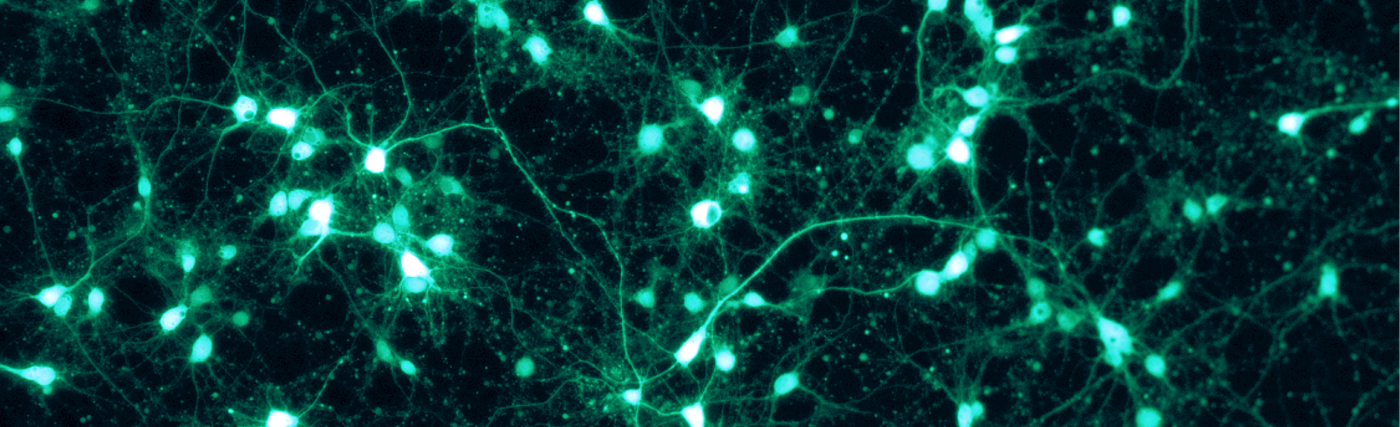
I think artificial consciousness for me is much more likely to arise not in the circuits of some future language model, but in laboratories that are building things like organoids, brain organoids, which are made out of the same stuff.
These brain organoids, they’re made out of actual neurons, human neurons in many cases, derived from stem cells.
So here, a whole level of uncertainty goes out the window.
It’s made out of the same stuff, so we don’t have to worry about whether the stuff matters or whether consciousness is something that a computer could have.
But the reason we get less worked up about it is because at least to so far, these organoids, they don’t really do anything very interesting.
They just sit there in a dish, and so we don’t think they’re conscious.
Our psychological biases are not exercised in the same way.
But as they get more complicated, as they start doing stuff, I think that’s where we have the real ethical worries.
If I come to this as a physicist, I will not ultimately distinguish between a neuron firing electrochemically and silicon firing electric.
Who cares?
Who cares what it’s made of?
If all that matters is the electrochemical signal.
So this distinction that people are making feels very needlessly artificial to me.
I mean, as a physicist, there’s a big difference between what’s happening in a silicon chip and what’s happening in a brain.
I agree, but they wouldn’t have to be in principle, is all I’m saying.
If I get the full electrochemical mapping of your brain and then create it in silicon, I’ve just duplicated your brain.
And I’m doing it without carbon.
I’m using…
Who cares?
I care.
I care.
But there’s a reason I care.
There’s a reason I care.
And it’s because you’ve helped yourself to this kind of thought experiment that you just said, well, in principle, it could be done.
Like, you could just duplicate everything that’s going on in your brain in silicon.
But actually, you know, it may not be possible to do that.
For instance, take the Golden Gate Bridge.
If you try to make that out of cheese, you’re not going to be able to do it.
Now, the bridge has to be made out of a certain material that has certain physical properties.
And the stuff inside our brains have certain physical properties that silicon doesn’t.
If you think all that matters are neurons that exchange spikes, action potentials, you know, in a digital way, then you might think, well, okay, we’ve abstracted away from the messy, fine details of biology.
So then silicon should be fine.
But there’s actually much more going on in the brain than just this digital exchange of spikes.
And if that stuff matters, like things like electrical fields, neurotransmitters, all of this stuff, chemicals washing around, then there are things that you just can’t even in principle replicate in silicon.
Well, I would just say we’re not there yet, but I wouldn’t preclude it.
That’s all.
Because it’s like you look at things mechanically, brain just happens to be a more complex example of other things.
There are organs we have or joints.
We can replace your knees, your hips.
We can replace things that were functioning in your body.
And in another era, we would have said, Oh, the human body is unreplaceable.
It’s got millions of years of evolution and is perfect.
No, get rid of it.
You’ve got cartilage missing.
Right?
So I have more confidence in the power of physics in this equation.
And it could just be a matter of how big are your tools to move around molecules to configurations that you might need or want.
If you allow engineering at that level, well, then of course you can duplicate the brain.
But you might still not be able to make it as a silicon chip.
It might have to be made out of the same kinds of building blocks in order to have the same kind of functional properties.
And at that level, it’s biological.
At that level, it’s biological.
Because there’s another way to put it, which is, I think, perhaps more intuitive.
Like computers, the power of computers is they’re designed to be the kinds of things for which you can completely and easily separate what they do from what they are made of.
What they do and what they are is different.
That’s why software that runs on my computer will run on somebody else’s.
That’s actually a very, very special and rare property that you don’t find in nature in general.
And brains are not the kind of thing for which you can separate what they do from what they are.
So, just to wind this up a bit, as you surely know, Ray Kurzweil had an updated version of his book, The Singularity is Near, and guess what the new title is called?
Well, it’s Nearer.
It’s nearer?
The Golden Gate Bridge made out of cheese?
Parmesan O’Gridge.
It’s called The Singularity is Nearer.
Oh, wow.
How many focus groups did he go through for that?
So, Anil, can you take us out with where are you on this notion that the brain-machine interface will reach a singularity point and all of the future history of civilization will be different?
Because we’re a competitive species.
We have to be at the top of every table.
So, we’re going to make the shortcut and put something in our own heads so as we can keep our consciousness and be super intelligent.
Or am I just barking up the wrong tree again?
I mean, this whole idea of the singularity, I find very, very suspicious.
It’s based on these ideas of things getting exponentially better, faster, bigger.
And the one thing we know about human psychology is that we are absolutely terrible about understanding the nature of exponential change.
We were terrible about this during the pandemic.
We are linear people.
We’re linear people.
So if you stand on an exponential, everything behind you looks completely flat and everything in front of you looks incredibly steep.
And it’s the same wherever you are on that curve.
And so it’s very hard to judge what’s happening.
So I find our intuitions get really unreliable when we start thinking about these kinds of things.
So there may be some sort of escape velocity where we reach a threshold and things become very different.
And for me, this is most likely to happen not necessarily with AI but with longevity research.
There might come a time where people know enough that for each passing year, they’re able to extend their lifespan by more than a year.
So effectively, you never die.
So people talk about that.
I find that’s also pretty dystopian, frankly.
But there might be another threshold indeed, it’s possible, where artificial intelligence becomes smarter than us in some ways.
It’s already smarter than us in some ways.
But I think we again see it the wrong way if we think of it in those terms as a sort of race between us and the machine.
One of my mentors, the philosopher Daniel Dennett, I think he put it best, he sadly died earlier this year.
One of the things he said I will always remember was that when it comes to AI, we should always remember that we’re creating tools and not colleagues and be very mindful of the difference so that the technologies that we create complement our particular human intelligence and we should be less preoccupied with trying to replace it or upload ourselves to it or any of these things that actually when you dig into them have for me slightly unsavoury motivations about living forever, bootstrapping oneself to the top of the societal pyramid and all of these kinds of things.
I think it’s an old story we’ve seen many times.
Of course, Daniel Dedditt was first out of the box to declare with one of his early books called Consciousness Explained.
That was the title of one of his books.
He felt we were already there.
Here’s the book.
No more books need to be published on this subject.
And that was in 1991.
That was more than 30 years ago.
I remember reading that my first year of undergraduate.
Actually I think even earlier than that I read it in 1991.
Anil, are we likely to enter a post-biological age and come out of our, you know, just…
No, I mean total, our total existence, our species will go into.
We got to end on that answer.
So make it a good answer because that’s going to be the last thing people…
No pressure.
Oh, the short answer is no.
I don’t think we are.
I think we are likely always going to be fundamentally biological, though we will become more cyborg, you know, we will, and we already are intertwined with technologies, and these levels of dependency will get deeper and deeper.
Brain machine interfaces are coming.
Our exploration is cyborgian.
We have a SUV-sized rover on Mars right now, and it’s doing our bidding for search and discovery and testing and imagery.
So, because the answer to that question matters when we ask, if we make alien contact, will it be with some biological form, or will it be with some machine version of them, either just as a robotic emissary or as an actual uploaded consciousness, so that their physical form doesn’t have to survive the hostile journey of space travel?
Our robot is meeting their robot.
Yeah, I thought the most likely thing was it would just be some sort of uninteresting goo that we’re likely to encounter if we encounter alien life.
But if we encounter intelligent life, then I agree, I agree with Chuck, I think it’s more likely to be a robot avatar rather than a biological creature.
Well, there’s a movie in 1958 called The Blob, which would classify as being a goo, but it would come after you.
So just a goo, be careful how you think about that concept.
Not all goos are equal.
It’s a good point.
Thank you.
I can’t believe you came on this show thinking that’s a definite thing I’ve got to say.
That is how we will remember you on this show.
Not all goos are created equal.
Anil, as this show went on, you got darker and darker and darker.
Evidence that you’re in a different time zone than we are.
And you’re hailing from what part of England?
I’m in Brighton on the South Coast, where it’s pretty dark now.
Brighton.
So the sun is setting for you.
It has come up for us, which, dare I say, is evidence that we live in a round earth.
Anil, great to have you on the show.
Maybe we can come back to you when we have further developments on the future of mind.
All right, Chuck, good to have you.
Always a pleasure.
All right, Gary.
Pleasure, Anil.
Thank you.
You made all this happen.
Neil deGrasse Tyson, you’re a personal astrophysicist.


 Become a Patron