


 Unlock with Patreon
About This Episode
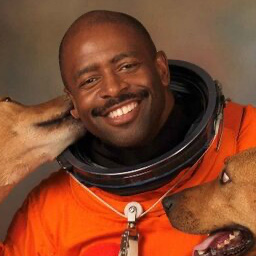
Are human bodies good for space? On this episode, Neil deGrasse Tyson and co-hosts Chuck Nice and Gary O’Reilly discover the effects of space on the human body and if we are ready for long-haul missions with astronaut and former NFL player Leland Melvin and space doc, Dr. Sheyna Gifford.
First, we talk to Leland about what it is like to prepare for space. How do you combat the effects of microgravity before going up? We draw parallels between his astronaut days and his time in the NFL. Was Sunita Williams’ marathon in space cheating or actually harder? Is there such a thing as rocket lag? Learn about the exercise regiments of astronauts. What’s harder: Preparing for space or recovering from space? Find out why so many astronauts need glasses after their trips.
Sheyna tells us about her year on virtual Mars. What do you do on fake Mars? Why run these types of simulations? She gives us the doctor’s perspective on the astronaut regimen and what more we can do to mitigate osteoporosis and other ailments in space. What is a parastronaut? Learn about the AstroAccess mission and how Earth-disabled people react to microgravity. Is the standard body shape not the best for space?
We learn about reacclimation and some things you might not know about astronauts getting used to Earth again. How would we overcome the physiological effects of long trips like the one to Mars? How does your immune system suffer in space? Does the ISS need a thorough cleaning? If we don’t solve these problems are humans never going to be able to endure long term space travel? All that and find out why and where space needs you.
Thanks to our Patrons John Moehrke, Scott Williams, Mike Trujillo, Josue Diaz, Walter Flaat, Semyon Torfason, Craig Smart, Elissa DiPierro, OnlineBookClub.org, and Nic Stock for supporting us this week.
NOTE: StarTalk+ Patrons can watch or listen to this entire episode commercial-free.
Transcript
DOWNLOAD SRTWelcome to StarTalk, your place in the universe where science and pop culture collide.
StarTalk begins right now.
This is StarTalk Sports Edition.
The title of this episode is The Space Cowboy.
Ooh, if I know more about that in a moment, let me first introduce my co-host, Gary O’Reilly.
Gary, former soccer pro, always good to have you here.
Great to be here again.
All right, and you’re also a former sports commentator.
I’m still commentating, yes, but it’s still out there.
The game’s gone into extra time.
I’m still commentating.
Exactly, well, you used to commentate soccer and now you come stateside and you’re with us on StarTalk.
Delighted to have you as a former pro athlete.
And of course, Chuck Nice, who’s not a former pro anything.
This is true.
Okay, longtime StarTalk co-host, comedian and actor, we add to your resume.
Yeah, yeah, I’m often acting like a comedian.
All right, Gary, give me the show overview and who do you got for us this time?
You see, Neil, we all want to go to space.
Seems like fun, we can get to float around up there in microgravity.
As long as there’s enough money to bring me back, I’ll go to space.
Always get a return ticket.
But the whole thing is what if you had to spend weeks, months, years in space, you know, what if it was your job?
How do you prepare a human body to spend an elongated period of time in microgravity?
A living body.
What impact does microgravity have on the body?
How do you adapt to life in space?
And when you come back, how does it react to full gravity?
So all of the answers to those questions are going to help us understand how better to travel into space and not have detrimental effects to our being.
I mean, it’s going to influence so much of space travel in the future.
If we’re going to be a spacefaring species, yeah, you got to do it.
I mean, otherwise, we’re trapped here on this little blue marble, and that may not be the best idea as things go forward.
So for these answers to these questions, we need some serious, serious expertise.
We have, later on in the show, the space doc, Dr.
Sheyna Gifford.
Her expertise is rehabilitation, and in particularly for astronauts.
But what if, imagine you had an NFL athlete and put that athlete into space?
It seems like, you know, the rarest of beings, but that’s exactly what we have as our first guest.
Leland Melvin is a former NFL wide receiver with the Detroit Lions and the Dallas Cowboys.
He has been on two space missions on the shuttle Atlantis.
I mean, he’s logged over 500 hours in space.
He’s also an author, Chasing Space, a book a lot of our listeners may well be very familiar with.
He’s been a NASA administrator and communicator for the Office of Education.
And if you want to talk about what it’s like to prepare, exist and then rehabilitate from being in microgravity, you know, I couldn’t imagine a better guest.
You’re talking about Leland Melvin, my man.
Yeah.
How are you feeling, man?
So good to be here.
You know, sports and space is something that we all should gravitate towards.
I mean, we’re all space.
I saw what you did there.
We see what you did there.
Gravitate.
Saw it.
Caught it, Leland.
I caught it.
I’m trying to be Chuck Nice.
Sorry.
So you’re a retired NASA astronaut.
You’re a former NFL wide receiver with the DeJoyt Lions and the Dallas Cowboys.
For a minute.
For a minute.
Yeah.
So what you’re saying is only for a minute you were with the Cowboys.
Both.
I pulled a hamstring in both training camp with the Cowboys and the Lions.
And I thank actually Danny White for helping me get the space.
I’ll talk to you about that later.
Wow.
You pulled a hammy.
But you were on the team.
Wide receivers and hammies, you know, they kind of go, you need that, right?
But I tell you what, Leland, there’ll be a journey to get that far that will make you an elite athlete by a long stretch.
Yeah.
You made the team.
That’s all that counts.
Like, yeah.
Right, right, right.
There you go.
And also you were a science communicator with NASA because after you did your astronaut thing, you headed up the education office at NASA.
The Office of Education, I think, is the official title for it.
But before then, you had two missions on the space shuttle Atlantis, logged more than 500 hours in space.
So you’re the band.
You’re the show.
Hey, just try to inspire those that next generation, Neil, you know, that’s what it’s all about.
Well, Leland, you failed.
Have you seen the next generation, man?
Have you met them, man?
No, wait, Chuck’s got it backwards.
Chuck, the next generation is fine.
So, Leland, you’ve been paying too much attention to the young folk.
They’re fine.
But it’s the old folk that are messing up the world.
It’s true.
Yeah.
That’s what I’m saying.
That’s what I’m saying.
So, let me ask.
So, I’ll start this off, because we have 100,000 questions we want to ask you.
What did you weigh when you were recruited by the Detroit Lions or the Cowboys?
What did you weigh?
I was 220.
Wow.
220, not too bad.
That’s great for a wide receiver.
Yeah, that’s right.
That’s right.
That’s solid.
That’s right.
And so then…
When a 4540 is 220 pounds.
I didn’t ask all the rest.
I didn’t ask all that.
I didn’t ask all that.
I don’t blame you.
I don’t blame you.
That’s like somebody saying, what did you get in chemistry?
And you’re like, oh, yeah, I got a 98 in chemistry, but I also got a 96 in physics.
I got an 87 in…
I don’t blame you, man.
I don’t blame you.
Sorry.
So, you were 220.
Now, astronauts, at least from the old days, are famously little, all right?
Because you have to fit inside of a capsule.
But in the shuttle era, it’s basically a living room with a couch compared to the old days of the capsule.
But at how tall are you also, by the way?
Six foot.
Six foot.
So, weren’t you a little chunky for that journey?
So, wait a minute.
Wait, wait, wait.
And are you eating the food that other astronauts wanted to eat?
Leland.
You’re taking up seat space?
I’m starving.
Let me just say this for a second.
Only Neil could term it in those, phrase it in those terms.
You are six feet, 220, mostly muscle.
He’s like, it’s not Hollywood, man.
You’re like, aren’t you a little chunky for this role?
Actually, Chuck, he is right.
He is right.
Because when you’re on the flight deck with someone else sitting beside you, I’m a mission specialist and another one sitting beside me, and the shoulders and the breath, it pushes into his space.
So maybe not chunky, but voluminous, maybe.
So, did you have to lose bulk to go on a space mission?
No, no, I didn’t.
No, he just took up both armrests.
Mine.
The person you don’t want in the middle seat of the airplane can take up both of your armrests.
All right, I just have to lead off with that question just to figure that out.
Oh, no.
Okay, so here they come, Leland.
So, batter up.
Chunky.
That’s my name.
My name is now Chunky.
I mean, how do you, as an astronaut, combat effects of microgravity before you go up into space?
So, what sort of protocols are you going to go through to get there?
Pregame.
Yeah.
I mean, the main thing is, you know, cardiovascular shape.
You want to be, you know, you want to run, you want to do cycling, different things.
Swimming is great.
But the other thing is really is the free weights, you know, and as a football player, free weights have been always part of my regimen for, you know, strength and endurance and all of that.
We find that if you lift free weights, whether it’s on the ground or actually the equivalent of free weights in space, it keeps your bones from getting osteoporotic.
When you go to space, the morphology of your bone structure changes because there is no gravity while we’re in free fall around the planet.
There was actually gravity, nine what?
Nine tenths of a G in 240 miles up.
But your bones start to change.
And when you come home, if you haven’t done resistive exercise, your bones may be embrittled.
You will come back to get stress fractures.
And so it’s really important that you precondition with, you know, lifting free weights, especially squats and deadlifts to work the big bones in your body, your hip bone.
Just to be clear, because some people listening to this may be from the deep geek spectrum of never done sports.
When you say free weights, these aren’t weights that cost no money.
These are weights.
These are the heavy weights.
These are weights that live in each hand and you move them in whatever way you choose rather than to constrain them.
Vinge press, individual press, those kind of things.
Gotcha.
So you’re not taking those into space because Neil has told us it’s $10,000 a pound to get it up there.
Wait a minute.
Wait a minute.
$10,000 a pound.
Leland, you were chunky.
You were damn real fat.
This is what I was talking about, Chuck.
You are expensive.
This was an expensive boy to put up in space.
Tell me about it.
They were having meetings.
They were having meetings about you.
You need to lose weight for this.
Let’s give Leland a little bit of love before we take him down.
So when you get up into the space station, you’re there for a certain period of time.
Your exercise regime still has to be in place.
So A, what are you doing?
And I can’t imagine there’s already a gym waiting for you there.
So you’re going to have this equipment to set up, exercise and then dismantle.
So how much of your whole day does it take to go from beginning to packing it away in the box where it is lit?
Just to be clear, Leland was on the space shuttle, which doesn’t spend months in space.
So we might ask, what preparation do you need for just the days or weeks on a shuttle relative to the months on a space station?
So that would be two different questions there.
Yeah, Leland, go for it.
A short duration space flight, a week or two weeks at a time, we had a cycle ergometer.
We could set up this bicycle in the mid deck of the space shuttle.
So you would go down, you would strap in, you strap your body in so you don’t start pedaling and float away, and your feet are in straps until you’re cycling.
And then we had these rubber bands that we would stretch to do resistive exercise.
That’s what you need is that resistive exercise.
But on the space station, when people are living there for six months or a year, we have a machine called the Resistive Exercise Device that has these bands that allow you to do the equivalent of what we just talked about with the free weights.
So you can do bench press, deadlift, overhead press, curls.
We have a cycle ergometer up there and we have a treadmill.
And on that treadmill, so that you can get the cardiovascular shape, you need two hours of exercise a day for long duration space flight.
So, the lifting and the running or the cycling.
And we had actually Sunny Williams, Neil, you know Sunny.
Yeah, I do know Sunny.
I love her.
Yeah, it’s great.
I mean, Williams was one of my classmates.
She’s a marathoner.
She’s just an incredible athlete.
She ran the Boston Marathon in space while Karen Nyberg ran the actual Boston Marathon.
And they were comparing times as they were running.
Yeah, but one of them didn’t have gravity.
No, Chuck, what you said was…
Chuck.
Oh, she cheated?
Are you saying she cheated?
Yes, I am.
I’m saying she cheated.
I didn’t want to say it, but now that you brought it up…
I’m going to let you tell that to Sunny, okay?
Wait, wait, just to be clear, just to be clear, she has devices that weigh her down onto the treadmill.
I got it.
That’s the whole thing.
It’s probably harder up there, Chuck, than it is on the ground.
She’s got this elastic band around her waist with straps that go down to the base of the treadmill.
So she’s running and trying not to levitate up, but those bands are keeping her down on the treadmill.
And that’s going to affect her actual technique.
She’s going to have to learn a new technique to run with all of that equipment attached to her.
All right, I take it back, I take it back.
So no cheating.
She was actually at a disadvantage.
Did you take a pigskin up into the shuttle and start losing that thing around?
The NFL Hall of Fame gave me a football to take to space.
And we also took, Gary, the NFL Super Bowl coin for the 2010 Super Bowl.
Then we flipped the coin in space.
And it never came down.
And it never came down.
It’s a Jupiter now.
Everybody’s still waiting for the game to start.
They’re just sitting around.
We did rocks, paper, scissors to decide who was going to get the toss.
That’s cool.
Very good.
Okay.
So you prepare to go to space.
You do your thing while you’re up there.
And once you return, there’s these effects and consequences.
But how did you feel about the return and is it the same for everybody?
Or do we have a personal variation in the way things present?
Interesting.
Gary, as a professional athlete yourself, do you really understand how your body works in 3D space?
And, you know, jumping up to take a soccer ball or walking or running or whatever.
And when I came back, you know, it took me probably about a week to get back to some semblance of normalcy.
Because your vestibular system, your inner ear in space, it’s the data that it’s giving.
Because if there’s a little rocks in your inner ears are floating, all that data is wrong.
So when you start, you know, moving and turning and trying to figure out what orientation you’re in, that’s when you sometimes get sick.
Because your eyes see one thing and your ears are telling you something else.
And your brain is confused.
And so your brain shuts all that down and then just looks at your eyes for orientation.
But when you come home, it’s trying to reintegrate the inner ear data.
And now there’s this conflict.
And so if you’re walking in a straight line and this just started to turn, you could just fall over because your brain is really screwed up trying to figure it out.
So every astronaut will fail a sobriety test.
Exactly.
Officer, I am not drunk.
Yeah, and then he’ll go, yeah, right.
OK, so how do you do things?
I mean, I’ve just got off a plane yesterday and had a transatlantic flight.
So I’ve got some jet lag.
Do you do you then experience a similar thing from returning from space?
And how how do you work with time because you don’t have the same sort of reference points unless, of course, everything’s tethered to a certain time zone back on Earth?
Right.
Well, you say we have jet lag.
You wonder if there is something called space lag.
Rocket lag.
And aren’t you on the time zone of Houston because the other one’s yapping at you all the time?
Well, we always have multiple watches on with different time zones.
So you might have your home time zone.
You have GMT.
You know, you have also you have mission control.
So you have all different time zones.
But, Gary, when you come home, you’re fine.
Why do you care what time it is in Greenwich, England when you’re in space?
Because the space station is kind of slave to that.
Because you have people all over the world working.
That’s the agreed upon time.
Plus they have a marketing deal with the watchmakers.
But it is a national space station.
And they all listen to the BBC.
So, yes.
Why wouldn’t you?
You’re all over this.
When I got home, because you’ve been floating and doing this floating, I went to bed and I got up to go use the bathroom like most people do in the middle of the night.
And I started pushing off on my back like I was going to float to the toilet.
Just to be clear, older men get up in the middle of the night to go to the bathroom.
Yes.
Thanks for introducing that.
You confess the state of your prostate in that sentence.
If you drink a lot of water before you go to bed, too.
We’re just properly hydrated.
We’re properly hydrated, that’s all.
But your brain is still thinking that you’re in space and you’re trying to navigate now the one G, the one gravitational pull world.
And so you think you can do things that you were doing in space.
Like if you’re eating a meal, you might have a plate, you put some on a plate, and then you just let go of it and turn around, and the plate gets to ground.
Because in space, everything just floats.
That’s amazing, I love it.
What is it harder to do?
Prepare for a space mission or recover from a space mission.
And as we’ve discussed, a professional athlete, a former professional athlete like yourself, is so conscious of their body because they’ve used it to do their business.
So I’d be interested to hear how you feel about either side of a space mission.
Again, back to, as Neil said, the short duration space shuttle versus the long duration ISS living, very different.
I basically had a vestibular system issue for about a week, trying to navigate turning and moving in 3D space, and just not being cardiovascularly in shape like I was before I left because I was running, I was doing all this stuff.
But people that go on duration, they come back and they have all kinds of things happen.
There’s something called the intraocular pressure in your head that pushes on your eyeballs and causes you to have to wear glasses if you haven’t had to wear glasses before.
And that is not necessarily reversible when you come home.
So they’re still trying to do the research to figure that part out.
Your muscle atrophy, your bone density, those things do diminish a little bit.
But if you do the two hours of exercise, cardio and the weight lifting equivalent, you can kind of mitigate some of those parts.
Whoa, did you say two hours?
That’s every day?
Every day they have to work out two hours a day.
They have got a space gym.
It’s pretty cool.
Every astronaut has to do the same thing.
Imagine you’re having to stagger your rotor, right, if you’ve got jobs and tasks that you need to fulfill, but you still need to fulfill the two hours per day.
There’s so much more involved.
They schedule that into your day, though.
I mean, you have planners on the ground that put that in for you, because that’s a countermeasure that we use to stay healthy.
And when do they schedule the couch and potato chip time?
That’s on your time.
Leland, a last question before we let you go.
Can you imagine a future where we find a planet that has slightly more gravity than Earth, and you bring an entire athletic team there to work out under these heavier gravity conditions, and then bring them back to Earth and have them kick ass in whatever sport they’re in?
That’s called cheating.
Just so I haven’t had my own damn rocket.
Is it cheating?
Is it cheating?
We take athletes to altitude train, warm weather, and we extra oxygenate their blood, and everybody does it.
But Gary, does everyone have that access to it, right?
Access, opportunity, right?
Level playing field.
Inclusion.
That’s what the Russians argue all the time.
They’re like everyone has access to steroids.
So.
Cool.
All right, Leland, we gotta say goodbye to you, but StarTalk will continue with Dr.
Sheyna Gifford, who’s otherwise known as the Space Doc.
Let’s find out why when StarTalk returns.
And Leland, really good to see you.
We’ll catch up with you again.
We’ll be back.
Next, StarTalk Sports Edition, Space Cowboy.
Gary, who’d you bring in for the second segment?
Well, we’ve spoken to the Space Cowboy, and that’s obviously a reference to Leland Melvin’s time as a Dallas Cowboy.
Couldn’t resist the title.
What I, from speaking with Leland, all the questions start to tumble as to how you prepare, how you recover, what you do while you’re there, but then throw that forward even further into, with the answers we get to those questions, how does that enlighten what we do in terms of space travel in the future?
How does it educate and direct us?
So for that, we need someone in the medical profession who has an experience of dealing with these sort of cases.
The perfect person is Dr.
Sheyna Gifford.
Now this, as we remember at the beginning of the show, is self-titled the space doc.
The reason being, she was from the 2015, 2016 High Seas 4 one-year mission to virtual Mars.
So to go through that whole discipline, that whole knowledge set exists in one person.
So for me, this is our perfect follow-up guest.
Okay, Sheyna Gifford, welcome to StarTalk.
And so tell us about High Seas.
What was that about?
All right, the Hawaii space exploration analog and simulation.
Isn’t it always an acronym, though?
It always is.
In space, it’s always an acronym.
In fact, maybe my name is an acronym.
So what does it mean, a one-year virtual mission to Mars?
Does that make you a virtual doctor?
Well, if I’m taking care of you over the internet, it does.
Good one, good one.
So yeah, no, I mean, virtual missions, I’m an analog astronaut.
I have participated in space simulations.
My first was for NASA at Johnson Space Center, locked in a big air hangar in a spacecraft, and they locked us in, they shut the doors, and all we saw on the screens was space for about a week until they told us to get in our rocket ship and explore an asteroid, and then they flew us home.
We had mission control, the whole setup.
It was very real.
And very scary at times.
And then we did so well on that, that two of us got sent up to simulated Mars for a year.
And we spent a year living on the side of a baron, although not totally unactive volcano.
The volcano occasionally woke up and reminded us we were on a volcano.
But, hey.
You spent a year?
366 days.
Did I hear you correctly?
A year?
Neil, you know I did.
I made you a movie for me.
And there’s no, I know, but I still don’t believe, it’s still crazy.
And there was no venting machine for Twinkies.
Oh, I didn’t say that.
You had to.
Yeah, what else would you take to Mars?
Twinkies never spoil it.
Let’s see, the Pringles, PB&J, an entire hospital full of equipment, nurses, phlebotomists.
Yeah, that would be great.
Unfortunately, I literally had a doctor bag, like the doctors of old.
Really?
Yes, that’s what I had for a whole year.
Like a little black doctor’s bag, like a Norman Rockwell doctor bag?
Indeed.
Yeah, yeah.
And it unbuckles and opens.
It has a brass latch and everything.
Wow, I would think they would at least like plate it off and gave you one of those little tricorder readers from Star Trek.
Oh, and they did.
And it had a little laser function, everything made great fun sounds, but it didn’t actually do anything, unfortunately.
It was very disappointing.
So, let’s get this into an interesting subject.
One question before you go, Gary.
I gotta, because you know I gotta do this, because you’re the space doc.
Did you ever even just mess with somebody, turn to anyone and go, he’s dead, Jim.
Or say, I’m a doctor, not a butcher, damn it, or something like that.
Yeah, you know, but when a colleague’s spacesuit almost caught on fire, and he had to come out of the airlock so that it didn’t catch on fire, I thought to myself, am I a doctor?
I’m a doctor, not a fireman, right?
Yes, right.
Okay, your spacesuit can’t catch on fire.
That’s right out.
That’s kind of cool.
But you gotta say it.
Yeah, you gotta say it.
I’m a doctor, not a fireman, damn it!
Not a fireman, damn it.
That’s right.
That sounds like a practical joke that went wrong.
Everything goes wrong in space.
This is why we practice.
This is why we do space simulations, because everything that can go wrong in space will go wrong fantastically in space.
You mentioned, I mean, all right, we got onto Twinkies and everything else, and then you realize you’re not up there with a fully functional kitchen, but you must be doing something up there to get some fresh produce.
Are you growing?
Are you culturing what’s happening in that environment?
Or is it all like, you know, what stick a dollar in the machine and out comes whatever it is you need?
And just to be clear, it’s not up there, it’s in there, right?
Where was this?
In our dome, dome on the range, dome on the volcano, we did actually have a fully functional kitchen because it started as a food study.
In fact, we had a gourmet kitchen.
But on the ISS, they don’t exactly have a gourmet kitchen.
And in the experiment at NASA, we were the rehydrators in chief.
We literally had a bag of warm water and we injected it into our meals, shook it vigorously and enjoyed.
This worked well except for the cereal.
When you rehydrate cereal, which had milk powder on it, it does not go well.
Those Cheerios, those Cheerios do not hold up.
I’m just saying.
But no, we grow, to answer your question, Gary.
We grow, we culture, we cultivate, but in small volume.
Space is at a premium in space.
So you can get some micronutrients and some macronutrients.
I like that line, space is at a premium in space.
So really, we could grow as much as we needed to live.
So we were discussing with Leland about your bones and the density.
Is there anything you as a doctor can do to mitigate those circumstances?
Or have we already done it by adjusting the gravity within the environment you’re in?
Yeah, because Chuck would just rather take a pill and go back to his couch.
We’ve tried that, Chuck.
I would like to take a pill and do anything.
I could see you doing that, just about anything.
Next time we meet, I’m going to give you some pills and ask you to do some things.
So hold on to that thought.
Yeah, we’ve tried everything.
We have tried pills called bisphosphonates, which we give to people with osteoporosis on Earth who don’t have enough bone.
It turns out that the risks outweigh the benefits.
We weren’t getting a lot out of it.
So we stopped doing that.
We do supplement though calcium and phosphorus and other things you need just like on Earth to build both.
So in my patients who are in wheelchairs who don’t load their skeletons by walking, in space you don’t load your skeleton by walking, we heavily supplement vitamin D, calcium.
Those things you need to scaffold and build bone.
So the astronauts get their vitamins and minerals.
And then like Leland was saying, two hours a day of exercise where we load people on the T2 treadmill by putting a waistband on them and literally bungee cording them to the treadmill so that they do some advancing and they do some strikes.
It’s the foot strikes.
Right.
It’s the foot pad.
It’s the pounding, right?
I read a study years ago that talked about how runners actually have better bone density because of the pounding, which is also something that wears their bones.
So it was this weird kind of, you got to find this equilibrium.
Yeah, it’s a rejuvenated thing.
So what was funny is during COVID, I take care.
I mean, if it doesn’t break your bones and give you shin splints, it’ll make you better.
Yeah, or for my Boston Marathoners, if it doesn’t make you pass out after mile 20, right?
But I used to take care of marathoners, sportsmen, sportswomen.
And during COVID, they stopped running for a while.
They told everyone to stay indoors.
And immediately all these people developed knee pain, hip pain, back pain.
And they came into my office and they said, Doc, I’ve been running 20, 30, 40 miles a week for years.
Why am I hurting now?
And I said, because you stopped.
Right.
You stopped.
I feel that way about drinking.
You’ve been treating your existential pain with alcohol.
But Chuckie, you haven’t stopped drinking.
So how do you know?
Oh my God, that was so well played.
I’m at a loss.
That was so well played and there’s no.
I will now be goose to your maverick.
You can be maverick now.
I gotta be goose.
Chuck, I’m feeling the need for speed.
I think our director would like us to move on there.
That was great.
All right, sorry, go ahead.
All right, so Sheyna, you talked about some of your patients being wheelchair propelled.
All right, there was a mission astro access experiment that you were involved in.
I mean, these, am I right here, the para-astronauts?
Correct, yeah.
And then if you look at that in a microgravity, were these people actually able to propel themselves upright rather than not have to be wheelchair propelled?
And how is this developing in terms of astronauts?
That’s a great question.
So, mission astro access, we put myself, two flight surgeons put, and a whole team, an amazing team, put 12 people who I say are adapted.
Visually, some of them had no sight.
Auditorially or vestibularly, some of them had no hearing.
And then mobility wise, some of them propelled by wheelchairs on Earth.
But you put them in space.
With their own arms.
With their arms, with their own arms.
Or in the case of Dana Bowles, who works for NASA and was one of our wonderful ambassadors, she was born without arms or legs.
So she propels by electric wheelchair beautifully and has worked for NASA for many years.
In microgravity or lunar gravity or Martian gravity, we had all kinds of gravity during this mission.
Many of them could stand, could extend into full extension.
And the look on their face when you haven’t stood in 12 years or 10 years, when you haven’t extended without many people helping you or without having to hold onto a bar, when of your own free will, you just stood.
It was incredible.
And one of our ambassadors, who has a very rare genetic condition, stood on his own for the first time in his life in lunar gravity.
It was remarkable.
It was remarkable.
Eric, you are amazing.
So let me ask this follow-up question.
Are para-astronauts teaching scientists now of maybe how being adaptive in a microgravity will help future space endeavors?
I think para-astronauts and para-athletes, people who are adapted to life on earth and have to function differently here all the time.
You know, you put high functioning people like Leland, who are literally rock stars, superstars, star athletes, you put them in space and suddenly they’re disabled.
They have to learn how to function in that environment.
You take people on earth who are labeled as disabled, but they function beautifully.
You put them in a new environment and they just flip on a dime.
They know what it means to adapt.
They know what it means to change, to have to do things differently, to not be suited to the environment you’re in.
They are so much better and faster at this than any of us ever will be, that I think they have a lot to teach us.
I really do.
I can’t wait till we get one of them up there.
That was the premise of the movie.
What’s the movie?
We’re the blue people on the planet Pandora, but the main character-
Thank you, Avatar.
But the main par-
He was a paraplegic and because he couldn’t use his legs, he immediately acclimated to the Avatar.
He was completely used to just changing his mental environment.
Right.
Really how we function in the world is about our mental model of the world and what we’re supposed to be able to do and how we function.
When your mental model is, I’m gonna make it happen no matter what, you cannot stop me, which is the mental model of every single adapted, every single disabled person in the world.
Then you put them in a new environment, they’re just gonna adapt.
It doesn’t take them a minute.
So are we looking at this, I’ll call it the standard body shape.
Maybe not being the best solution in a microgravity environment.
It goes to being one of many possible solutions.
One of many possible ways to be, not the best way, just a way.
And now Sawyer, for example, Sawyer works for NASA as well down in Florida at Kennedy Space Center.
You know, he’s been ambulating, propelling with a wheelchair for many years.
You put Sawyer at the International Space Station, he’s gonna move around as well as anyone else, and he’s not going to try to use his feet.
It wouldn’t occur to him to do that.
Everything is gonna be arm-powered, and he’s gonna be fast, much faster than people who are used to walking are gonna be the second you put Sawyer up there.
And Sawyer, we’re gonna get you up there, my friend.
You just wait.
So it sounds like it’s not only, from what we learned from Leland, what you do with your body to get in shape, but your mind as well, the adaptability of your mind and how it then thinks about your body.
It seems to be at least half the effort up there in space.
I’d say it’s closer to 80%.
The other 20% is following the procedure, the checklist that says do this, don’t do that, do this, don’t do that.
And by the way, Chuck, there is a point in the checklist where you get to it and you’re like, time to panic.
Oh, oh good.
Yes, exactly.
I’m gonna take a break and we’re gonna come back to that in the third segment of StarTalk Sports Edition, Space Cowboy and Space Cowboy Doctor.
Space Doc on StarTalk.
We’re back, StarTalk Sports Edition.
We’re talking about being a space cowboy and being a space doc, relevant to that.
We’ve got Dr.
Sheyna Gifford here.
Sheyna, your expertise is rehabilitation, is that right?
So, we got to hear Leland Melvin talk about, he didn’t use the word rehabilitate, but readjust to 1G after being in 0G.
And he gave us some details about his auditory canal and his brain and his, so, what role do you play in this, where they just have to shake it off over a week of Earth gravity?
Can you help this?
Can you, what’s your role in getting astronauts to get back to 1G?
So, we can shake it off and we call it reacclimate.
Kind of like you reacclimate to coming down from an altitude or to traveling to another time zone.
There’s things you can do.
One of them is sleep.
While they’ve been on the ISS, we give them, I can do that.
We give them, I believe you.
We give them eight hours a night to sleep, but they usually don’t.
They usually get closer to six for a lot of reasons that are complicated.
So, we get back to Earth, we say, sleep, please sleep.
And then we say, remember, when you put down the water bottle, it won’t float.
You need to put it down with your hand on a surface.
And then they say, okay, and they drop it.
We say, that’s okay.
Try again.
Try again.
They get it after a few times.
So all of that clicks into gear very quickly.
They stop dropping things.
They start remembering that you can’t just put stuff down.
It’s not going to be there when you reach forward again.
But then when it comes to the walking, that takes a while, a little while to come back.
So, which is why every picture you see of every astronaut, they’re being flanked by someone on either side as they’re walking away typically, or they’re standing still.
But when they go to walk down a straight quarter, there’ll often be one person on either side because they may start to drift.
And they may start to drift because the fluid in your inner ear, it’s continued to swish around in space, but the sensors that pick up that swishing have shut themselves down after the first few days to a week in space.
They just said, we don’t need you.
And they literally turn off in most people.
So, the ability to sense, where am I in space relative to my body and the walls and other things in space, that’s off for a little while.
And it takes a little while to come back.
And we can do some vestibular retraining.
We do that with them.
People who’s had strokes, people who’ve had injuries.
We can do some vestibular retraining to try and get that to come back more quickly.
So, are you talking about, sorry, Chuck, are you talking about here that anyone who’s had an extended period of time in microgravity basically becoming allergic to gravity?
You know, it’s almost like you’ve been redesigned.
You were designed to function well in this gravity well, 1G, and your body now says, oh, all that stuff I needed for that, I don’t need that anymore.
Your body is amazingly good at forgetting.
It’s also good at remembering, but it’s great at forgetting.
It’ll forget that dripping faucet.
It’s called habituation.
It’s gonna turn that off.
We don’t need that.
It’ll forget those traumatic experiences, maybe.
We don’t need that.
It’ll forget that I need to use my legs to walk.
You’ll forget that.
You’ll even forget that on earth if you’re lying in a hospital bed for too long, which is why even my patients have had a surgery.
I say get up.
They walk in and say, Doc, I can’t.
You won’t be able to if you don’t start now.
You need to get up.
I know, I’m sorry.
And just sit up for me.
Dangle your legs.
Put your feet on them.
So it’s not just atrophy, muscle atrophy.
That’s not just what happens with the brain connection.
You remember and you forget.
So your muscles and your bones start atrophying right away.
First thing.
Like anyone who’s had a long illness can tell you it only takes days and then your body starts to forget.
If the muscles forget, the bones forget, and your actual, the actual circuitry starts to say, do I need to be here?
I’m not being used.
I don’t know.
Not sure.
And so part of rehab is reminding everything.
The bones, the muscles and the brain, this is how it’s supposed to work.
Now we need to work together.
So if you have three astronauts that return to full gravity, wherever that might be, like I say, a moon base Mars back here on earth, will they all present with the same symptoms?
Or does it vary from individual to individual?
Like everything else, there’ll be shades of difference, but everyone will still be in the same color scheme, if that makes sense.
So you’re all gonna come back feeling a little blue, but it may be light blue, navy blue, midnight blue.
Some people are gonna come back and they’re just kind of step right back into it.
Mark and Scott Kelly like to say that after a few days, they were feeling pretty good.
And then some people, and different things come back differently.
In case no one else is on a first name basis with them, we’re talking about twins, one stayed on earth and one went up into space.
And then the one in space got the overview effect.
So no, but they were up for a very long time and became sort of the model medical experiment for the effects of space versus earth living.
And so-
You know, the two of them have both been up.
And then one stayed home to care for his wife, Gabby Giffords, after she was injured.
And that’s the one who’s currently a rep, I believe.
And then Scott was the one who was up for a year.
And he was good enough to call me during my mission and wish us luck.
And he was so kind.
But they’ve both been.
And, you know, according to Endurance, which I believe is the title of Scott’s book, he acclimated in many ways very quickly.
He was sitting at the table with his family, eating dinner a few days after he got back.
But then he woke up in the middle of the night with incredibly swollen legs.
Because his body, his veins, forgot how to pump the fluid back up against gravity.
They had just given up doing that for so long.
They didn’t need to.
Why did they need to?
So he woke up with these very swollen legs.
That was his shade.
Other people come back and they have different shades.
They stumble more.
Or it takes them much longer to get back to running.
So we put them in special treadmills that are filled with water.
And they literally run in a water treadmill until they get their groove back to running on earth and full earth gravity.
So everyone is back, they’re back in their color.
They’re like, I’m feeling a little blue, but maybe it’s a different shade.
Everyone has their thing.
Do you get sort of like pressure sores from if you’ve been in microgravity a long time from just sitting because you’re not used to the contact?
Yeah, thankfully skin shearing, skin like the health of the skin and pressure sores.
Pressure sores happen when people don’t have the sensation and don’t know to move away from the pain.
Right.
So as long as you sense your nerves are intact, usually you won’t get a pressure, and you can move.
Usually you don’t get a pressure sore.
What they will get though, is the bottoms of their feet have lost all their calluses.
What?
The calluses.
Their calluses.
So it’s like go into space and get a pedicure.
Well, look at that.
It’s the best pedicure I’ve ever had.
It’s so soft and smooth.
It’s so smooth.
So they get calluses on the tops of their feet because they’re always hooking into the box of the Lord’s denation.
Oh, they’re hooking on.
Yeah.
And the bottoms of their feet literally shed and it is super gross.
Okay.
All of them have pictures of it and it’s gross.
Well, that’s a bad trade off.
They come back to earth and they have to redevelop their calluses on them.
Yeah, yeah.
Nobody’s looking at the bottom of my feet when I’m wearing some flip flops.
Is anyone ever looking at the bottom of your feet, Sheyna?
That’s true.
Very good point, Sheyna.
So what you’re saying is that the bottoms of the feet look like they’re molting or something.
Is that correct?
Yes, they are shedding.
They’re shedding skin.
It’s quite a thing.
Let’s, I mean, with all of this experience and knowledge that we’ve gained, how do we need to overcome the physiological issues to say, take us from Earth to the moon, maybe to Mars or further, and not find ourselves having to deal with all of these problems once you return to a full gravity?
We haven’t.
Right.
Well, wouldn’t it be, wouldn’t a solution be to create gravity in space?
So, 2001 Space Odyssey.
Artificial and artificial gravity.
If you get a 2001 Space Odyssey type solution where part of the station rotates, that will give you some relief.
It will.
It should give you 100% relief.
Why not?
Why not?
So, because when you lock somebody in a box away from…
Oh, that’s different.
Okay.
The isolation piece is still there.
The radiation piece is still there.
Even if you’ve given someone gravity back.
And the homicidal computer, you know…
Please don’t give them that.
Please skip on the HAL.
Let’s not stop for 200.
Let’s pass right past HAL.
They will still have immune system issues.
They may still have psychological issues.
And they still have to worry about radiation.
Unless we’ve come up with that.
Do we have a magic wand for that too?
I would really like that.
You know what’s funny?
It just dawned on me that what you said, we are seeing the effects of from just the pandemic.
And we weren’t even locked in a box.
We were just locked in our homes.
I mean, unfortunately, with our families.
But still, that was…
Well, now we know how Chuck feels about his family.
Apparently.
I make no bones about it.
Sheyna.
Honey, I love you.
Thank you.
Say the nicest things.
That was for you, Gary.
I can understand the calcium bone situation, but how does our immune system begin to suffer in space?
Because you’re in an environment that is pristine.
Or is it?
Am I wrong there?
Wouldn’t that be the problem?
I would not call the ISS pristine.
I don’t think Leland or anyone who’s been up would call our space environments pristine.
It’s a vehicle one yard shy of a football stadium.
It’s an enormous, enormous place that people have been…
The space station is.
The space station is.
The station is, yes.
So 109 meters long.
And we’ve been inhabiting it for 20 years.
And we’ve never sent up a full-blown cleaning service.
So I wouldn’t call it pristine, but I would say…
An astronaut’s exercising two hours a day.
Two hours a day, every day for the last 20 years.
And do they recycle the water from people’s sweat and pee?
Everything.
No, they just open a window and let it out.
Yeah, I got to go with Gary.
You can just roll down a window for a few minutes.
So what happens?
So NASA’s Brian Kruschen, who’s the expert in this, will tell you that a couple of things happen.
When anyone here box, do you have a box?
And you got to get your elbows down or your guard up and you get in your stance.
So our immune system is like a boxer.
It’s looking out for the bad guy.
It’s looking, it’s ready.
And then in space, one immune cell called a cytokine, which is kind of like a referee.
It tells our immune system where to aim.
It gets really confused.
It’s like, where am I looking again?
Because normally you get a score off against the person in front of you.
But suddenly, you know, and people sometimes, their immune systems react in strange ways.
Childhood diseases reactivate.
They get strange rashes.
But again, it varies.
Everyone’s different.
But the immune system…
Damn, Sheyna, I don’t want to go into space anymore.
I’m telling you.
I mean, seriously, it kind of sounds worse than being at one of those one-hour motels.
What’s happening to you in those motels?
Never been, Chuck.
I was very sleepy.
I needed a nap.
Yeah, for an hour.
You took the pill, didn’t you?
So the thing is, what you’ve described sounds horrible.
What you’ve just described, Sheyna, sounds horrible.
So why would we want to put ourselves through all of that?
Well, this also happens to people on submarines, Gary.
Yeah.
And this happens to people on aircraft carriers.
And in Antarctica, every single year.
And every great mission and every great endeavor involves a change.
In Antarctica, there’s a research station, and no one is frolicking on the ice sheets.
They’re basically inside with each other in an enclosed environment.
They do frolick a little in the snowmobiles, but it’s been there for 50 years, and people overwinter every single year, and they’re kind of locked up on the base a little bit during that time.
I have to tell you, though, you really didn’t answer Gary’s question.
Why?
He said, this sounds awful.
Why would people want to do this?
And then you said, well, they also want to be in submarines in Antarctica.
And all those things also sounded awful.
Josh, you’re just saying it was not a unique problem.
Navy is now writing you a love letter, Chuck.
Chuck has always known he was the wrong stuff, right, for the military?
You know what?
Listen, Neil, I know you’re kind of joking, but I think you…
I’m going to put that on my tombstone.
Chuck Nice is the right stuff for a nice cushy seat in Mission Control.
That’s what Chuck meant.
So as I like to say, space needs everybody, but it doesn’t need you all in the same place at the same time.
It needs some of you in Mission Control, that nice cushy seat, the warm coffee.
It needs some of you building the rocket.
It needs some of you launching the rocket.
It needs some of you repairing it.
It needs some of you in the rocket in space.
It needs everybody to be where you need to be.
And some people love this.
I love this.
Mark and Scott Kelly love this.
Leland loves this.
And maybe you love your coffee and your air on share in Mission Control, Chuck.
There’s a place for us all in space.
It’s just not maybe in space.
Let me just say this.
Failure is not an option.
If we cannot travel in space without this discomfort, these problems, are we stuck on our little blue marble?
Absolutely not.
And by the way, we’re going to get over that discomfort.
I think some very rich and very people very used to comforts have been in space now and they’ve done just fine.
In fact, they came back crying, if I recall William Shatner.
You know, he’s not a hard player.
He’s not passing the pigskin as Leland is.
The man lives a comfortable life, but he came back from his seven minute exposure to microgravity in tears, barely able to speak, so profoundly moved.
And he’s not a sentimental man.
And so I’m going to say it’s, I think it’s…
And he’s hardly ever a man for no words.
The man can talk.
He’s well-nigh verbose, kind of like Chuck.
So I would say it’s a place for us all to go for some period of time, maybe just a brief glimpse, or maybe for the rest of our lives.
It’s what do you need out of it?
What’s going to be your best trip to space?
Make that trip.
Space needs me, apparently.
In whichever role I can find.
In whatever capacity.
And right now, for the little price of $110,000, you can go.
No, the first airline tickets were that much.
The first civilians who went flying after World War II paid a lot of money.
You’re right, you’re right.
It was kind of a luxury curiosity more than it was a mode of transportation.
You know, if you go to T-minus 60 years later, save up a little bit on your summer job and you’re off.
In fact, there’s a line in a Cole Porter song, the one, I get no kicks from champagne.
One of the lines is, I get no kicks in a plane.
So that was a, the plane was a reference point for people who would take thrill rides in that song when that song was written.
So I’m just showing off my Broadway knowledge there.
Yeah, so Shayna, I think we’re going to have to call it quits there.
Oh, no.
I’ve got to end on that note where you said there’s a little bit of, there’s a little bit of space experience for us all that could possibly change us for the better forever.
There’s something out there.
Get out there.
Find it.
There’s something out there for us all.
All right.
Gary, did you have any last questions you had to put on the team?
No, I’m good.
I mean, I’m going to go away and unpack what we’ve learned from the show.
It’s pretty amazing to understand what astronauts like Leland Melvin have gone through and then how scientists and physicians like Sheyna Gifford here are able to assess, redirect, comfort, rehabilitate, and just allow us to then maybe improve these situations going forward.
It’s fantastic.
Yeah, I delighted learning about the para-astronauts.
I didn’t even know that was a thing.
They’re remarkable to me.
Dana, Mina, all of my para-astronauts, all 12 mission astro access ambassadors.
Excellent, excellent, excellent.
Shout out to them all.
All right, this has been StarTalk Sports Edition, Space Cowboy and Space Docs.
I want to thank Leland Melvin and Sheyna Gifford for giving us their time to take us where no one has gone before.
No, where hundreds have gone before.
600, too boldly go where 600 have gone before.
All right, this has been StarTalk Sports Edition.
Neil deGrasse Tyson here.
Come on.



 Become a Patron