


 Unlock with Patreon
About This Episode
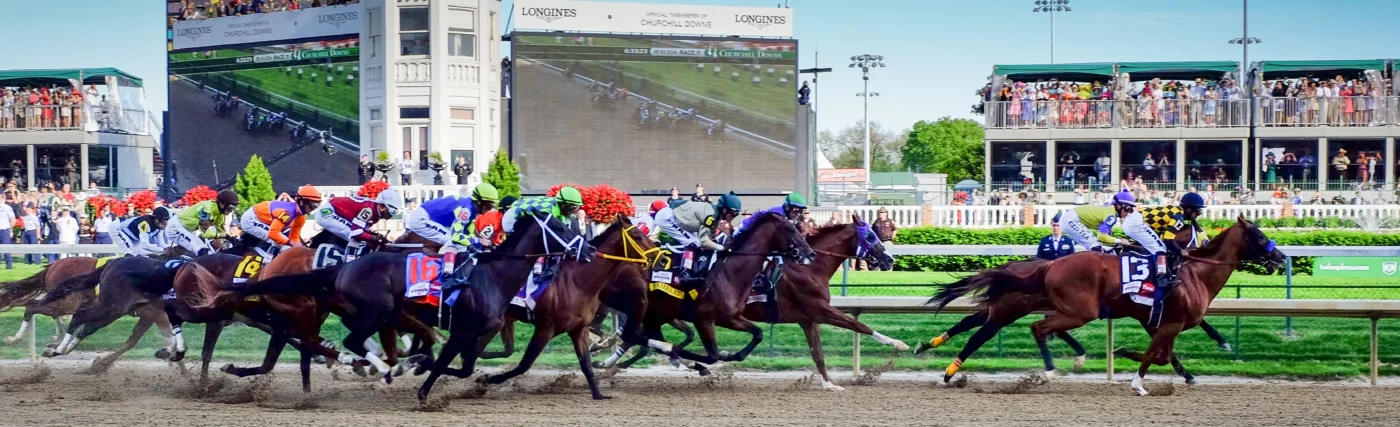
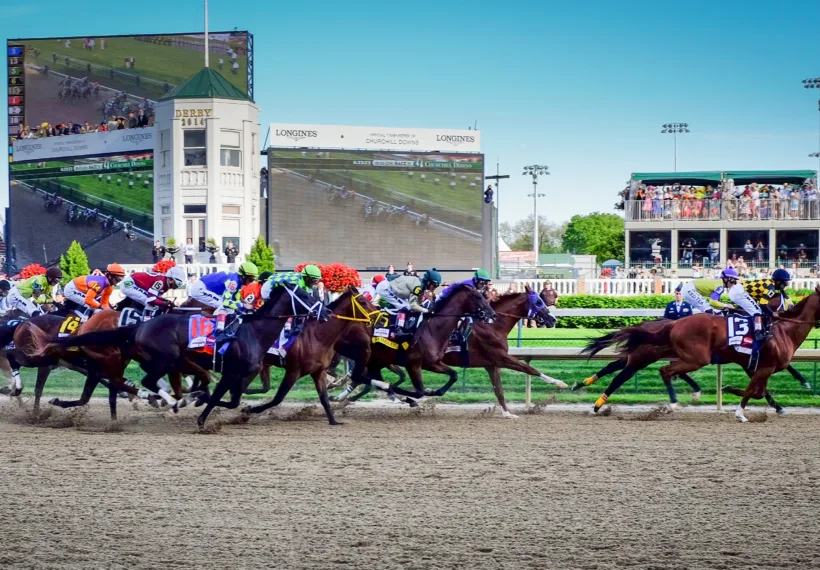
Say it with us: mitochondria are the powerhouse of the cell. On this episode, Neil deGrasse Tyson and co-hosts Chuck Nice and Gary O’Reilly discover the original horse power, equine physiology, and the science behind the Kentucky Derby.
How do you get a horse to run fast? We break down how humans built society on the backs of horses and the different organelles inside of cells. What sort of research is happening on horses’ metabolism? We talk about the VO2 max and splenic contractions of equine athletes. Find out how horses blood dope themselves. Can horses altitude train? Learn about respiratory coupling and other horse-facts that’ll have you going Neighhh!
Can you carbo load a horse? How do you even get the horse to race? You can lead a horse to water, but can you get them to strength train? Learn about glycogen storage and the different ways people try to optimize their horses and the ethics behind it. How do you dope a horse? Sarah runs us through the dangerous ways that people try to enhance their horses and Chuck tells us about sewing testicles on a goat for some reason…
Learn about some of the research going into equine physiology and grow your understanding of how horses run so effectively. Sarah trots us through the sport of dressage, also known as horse dancing. How do you know if you have a dancing horse or a running horse? We explore how the horse’s back and tendons coil and how it compares to other runners in the animal world. Chuck gives us his pitch for a new TV competition “Dancing with the Mares” and his donkey dressage movie.
Thanks to our Patrons Cosmic Scapegoat, Tom Kearns, Valeri Williams, Zeki Majed, Ethan Fink, Mariano Quiroga, John Marc Roberson, Fredrik Östervald, Crimson, and Colt for supporting us this week.
NOTE: StarTalk+ Patrons can watch or listen to this entire episode commercial-free.
Transcript
DOWNLOAD SRTWelcome to StarTalk, your place in the universe where science and pop culture collide.
StarTalk begins right now.
This is StarTalk Sports Edition.
We’re calling this one Horsepower.
We’re going to find out why in just a moment.
Let me introduce my co-host, Gary O’Reilly.
Gary, all right, dude, a former soccer pro and an announcer in the UK, and then you came stateside, and you did some announcing here too, is that right?
Yes, that’s right.
And once again, a loss of American jobs.
That was Chuck Nice, Chuck.
Good to have you.
Love you too, man.
I’m just saying.
So, Gary, what’s going on today?
We got horsepower on the docket.
Yeah, we do.
And it’s…
I wanted to look at horsepower in a variety of different ways, not just the output of an engine or a motor.
I mean, the Kentucky Derby is nearly upon us, and it made me think.
The original horsepower.
What’s going on and how it’s going on.
I mean, we can express the term horsepower in so many different ways.
I mean, I think of a species that has helped advance the human civilization more than a horse, and I come up with nothing.
It’s the horse has been so important, so pivotal.
And then I think, what is it?
The physiological breakdown of the horse’s internal combustion system.
How does that operate?
What’s going on from there?
And then what kind of fuels do you have to bring in?
It can’t just eat hay and then run over 50 miles an hour.
So I wanted to find out how this was going on.
What is taking place?
Right, so if eating hay was all that mattered, then cows would run 55 miles an hour.
That might not be so good.
To see a cow do 150.
We’d all go hungry.
Yeah, come back here, Elsie.
You ain’t catching my ass.
So we need an expert in equine physiology.
And we think we’ve come up with just that person.
Our guest today is Dr.
Sarah White-Springer.
Now, the good doctor is from Texas A&M in the Department of Animal Science.
And she’s an assistant professor in equine physiology.
She’s a specialist in equine nutrition and exercise physiology.
Her research has involved things that performance, and I love this term, performance improvement in equine athletes.
How fantastic is that?
You’re seeing those athletes focusing on mitochondrial adaptions to diet and exercise and skeletal muscle bioenergetics.
How about that one?
And if that wasn’t enough, Dr.
White-Springer is quite talented in the equestrian sport of dressage, or as you might want to call it, horse dancing.
So let’s meet, I guess, shall we, after that?
All right, all right.
All right, welcome to StarTalk.
Sarah.
Thank you, and thank you for that introduction.
That was, you’re right, I do make up half of those words.
They sound good, don’t they?
They really do.
Put that on a business card.
So I’m just delighted that someone like you exists, because otherwise I’m looking at horses and I’m saying, who’s managing this?
Who’s, is anyone on top of the situation here?
And as an academic, I want to know that there’s some academic brains behind whatever else I see going on in this world.
It gives me hope for the future of civilization.
So did Gary exaggerate or I think he’s right when he says we built civilization on the backs of horses.
Oh yeah.
Yeah, I mean, you go back right to the very beginning and the whole reason horses were domesticated was to help people move from one place to the next and to move their things.
And we’ve just kind of taken that to an extreme when we think about our equine athletes.
And we label them as such because they require the same intricate management and dietary intervention and training protocols that human athletes do.
And so it’s really kind of an interesting way to look at the horse.
So you’re saying that a horse with a, what is a poor horse diet?
Like I’ve never seen a horse sitting around eating cheeseburgers and potato chips.
I have seen a horse eat something similar, but not quite a cheeseburger.
Yeah, so it depends on the horse.
So each horse has its own nutritional requirements.
And if those requirements aren’t being met, then that’s a poor diet.
And when you think about the athlete, his requirements are gonna be much higher than a horse that we call them pasture ornaments, ones that sit out in the pasture and don’t really do much for a living.
And so if we’re not feeding that horse correctly to meet his requirements, primarily protein, vitamins, minerals and energy, then he won’t be able to perform at his maximal capacity.
Wait, wait, Sarah, isn’t that just a known diet?
Why is that still an active area of research?
I want the horse to run fast, here’s food, put it in the horse, the horse runs fast.
Yeah, it’s fun, isn’t it?
It’s very Tom Brady, very Tom Brady.
Yes, we needed Tom Brady in ours.
So, well, that’s a loaded question.
So the first part of your question is, don’t we already know this?
Part of it we do.
Part of it, as far as the macronutrients, so energy, protein, those kinds of things we kind of have a good grasp on.
We don’t have a grasp on vitamin and mineral requirements.
We know what will prevent a deficiency, but we don’t know what will actually optimize performance.
And a lot of that goes into how these vitamins and minerals are used in the body.
So my interest in skeletal muscle health, we’re learning more about certain minerals that might actually help the muscle either prevent it from being damaged during exercise or help it to recover more quickly after some sort of exercise event, because exercise is a damaging stressor.
And so if you consider a horse in training, the exercise is probably six days a week, then we really need to make sure we’re feeding to optimal potential.
And of course, the fast return from injury.
I mean, that’s true for any sport, people.
Any sport where money is involved.
Days matter, time is money.
Yes, and especially in horses because they’re super duper expensive to train.
And one thing, just before you go on, Gary, let me just, since we were on the same page, could you remind us who maybe long forgot the whole role of the mitochondrial cells in energy production?
Yes, mitochondria, for those of you that took biology and are going to have PTSD or the powerhouse of the cell, so they are the organelles responsible for producing energy during times of increased need.
So exercise is the kind of number one thing we think about, but mitochondria are active all the time and they are constantly producing energy for all of the things that our body needs for different cellular processes.
So you want food for mitochondria that’ll get straight to where the horse needs it, right?
Or where anybody would need it.
To produce energy, they have to move electrons through the electron transport chain.
You’ve probably heard of that before.
And we have learned that different horses move electrons differently.
And based on which complexes they’re using, they can actually produce more or less damaging byproducts during exercise.
And so we’re trying to find ways to manipulate that.
Right, so the stuff goes in, but all the stuff comes out too.
You gotta deal with that.
I hadn’t thought about that.
Are there different types of mitochondria?
Those that perform certain tasks and then those that perform slightly different tasks?
So we don’t know as much in the horse as we do in humans.
In humans, we know there’s two populations of mitochondria.
There’s one population called the subsarcolemels.
Those live just under-
Come on, Sarah.
Just back it up, all right?
Yeah, you gotta say it slower.
No, give the professor a chance.
I need to spell it out on the thing.
Yeah, exactly.
Say it again, though.
You said it very quickly.
Sub sarcolemel.
Okay, sub sarcolemel.
So the muscle fiber is surrounded by a membrane called the sarcolemel.
And so the mitochondria, the sub sarcolemel mitochondria reside just below the sarcolemel.
Which is exactly what she just said.
Yeah, I just didn’t hear it.
It sounded like she said subway sandwich or something like that.
That also can fuel your mitochondria.
Okay, and then the other population is the intermyofibrillar.
So within the muscle fiber are myofibrils and then the intermyofibrillers then live kind of within the myofibrils.
So between the myofibrils.
Okay, so the name by their location, basically.
Yep.
Right.
Yeah, and we know in humans that they operate differently, but we don’t know what that means, what the implications of that are.
In the horse, we really don’t know much of anything.
So we’re trying to learn more about that.
Unfortunately, this is all based on research dollars, and research dollars are quite hard to come by in equine athletes.
So we’re limited.
So you should teach them how to throw a football, and you get all the money you need.
Hey, we’re working on it.
I may have one intellectual patent going, just to make sure I can retire.
Okay, doctor, a horse has something like 55 liters of lung capacity, as opposed to a human that might have about six.
Now that…
Yeah, but what is that ratio of comparative to the horse’s size?
Because like 55 liters means nothing if it’s a giant horse.
I mean, because you would have to make it relative to what is the size of the average human.
The needs of the muscle.
Right, the needs, right, exactly.
So how do you think about how much oxygen is going in and out of a horse with each breath?
So it’s just like in a human where we call it VO2, volume of oxygen consumed.
And they have a VO2 max that is exponentially higher than a human.
Part of that is lung capacity and ability to exchange oxygen through the lung to the blood.
The other part of that is what we call spleen at contraction.
So the horse is really stinking cool.
He blood dopes himself every time he starts exercising.
They have a large spleen.
How is he blood, how is the horse blood doping?
Come on, let’s let us in on the secret.
That is, first of all, let me just say, that is totally dope and I’m not even, yeah.
So they have a really big spleen that holds red blood cells.
And as soon as they start exercising, that spleen contracts and just dumps those red blood cells into the bloodstream.
That’s called blood doping, that’s for sure.
It’s blood doping, they just do it all on their own.
That’s so cool, that’s cool.
Wow, now let me tell you, okay professor, what you need to be doing is forget all this research on the horse.
What you need to do is figure out human beings can do that for themselves.
Yeah, forget the horse.
And you will be the richest woman in sports.
That’s funny, so we just need to grow human spleens larger.
What if you took a horse and made it train at altitude and then brought it down to sea level, like they do with track and field athletes, does that have a similar effect on the spleen?
So they’ve tried that and the answer is no.
It doesn’t, because their spleen and contraction is so efficient, you can’t really help it.
It already works at a really high level.
It’s working at peak efficiency.
And this comes from the horse being a fight or flight animal, right?
He needs to be able to run fast and for a while to outrun the lion.
And so-
Yeah, because a horse is like other four-legged, horsey looking things like zebras and things, they’re food for predators, right?
Basically.
Herds, they run in herds.
And that’s why horses are so jittery, because you could be a lion coming up behind it, right?
Yeah, that’s why they’re always on the lookout.
And you’ll actually find, it’s quite interesting, in the wild, stallions will have very small ears, and then mares will have very large ears.
And the reason for that is that the mares kind of keep an eye out on everything.
And so their larger ears help them to hear any predators coming.
They keep an ear out for everything.
That’s right, dad jokes on dad jokes.
Yeah, dad jokes.
I’m a dad, so I’m allowed.
There you go, you’re allowed to do it.
I get one dad joke a day.
Do you?
You sure?
You sure you wouldn’t lie to us?
I came across this term, Dr.
Wait, why didn’t we finish hearing about the, keep describing them.
So stallions.
The stallions.
Oh no, that was just a fun fact as far as being herd animals, and stallions are just there to protect things.
They have small ears, so they don’t need to hear anything.
They just come when the trouble is already there.
It’s just an interesting thing that you don’t think about, I guess, if you’re not a weird horse person like me.
But yeah, I just think it’s a really cool, there’s little fun facts that I like to throw out in my class, so you guys get some of them too.
Thank you.
There’s something else I heard from my sister, who’s a horse person, that the horse with those big old horse eyeballs, which are on the side of its head, that when it is down grazing, it has much better view behind it, like 340 degrees or 320 degrees out of 360, than when the horse’s head is up.
So that when it’s grazing, it has more latitude and coverage.
Field of view.
Yeah, and it’s actually quite interesting, that’s the reason the horse’s head is designed as it is, because he’s a grazing animal, so his eyes are really high up on his head.
That way, if the grass is high, he can still see around while he’s grazing.
So he won’t get bitten in the ass.
Well, there’s that.
But they also-
Good luck with those shittin ponies, Ben.
That’s the most delicious part.
But interestingly about their eyesight, because their eyes are on the side, they can’t see directly in front of them.
So most people, when they approach a horse, they want to come at the front.
Once you get about a couple feet away, he can’t see you anymore.
So that’s actually a really, it’s a threatening way to approach a horse.
Yeah, it really is.
I found that out the hard way.
There was a term that popped up, and respiratory coupling, which it’s mainly in mammals that run.
So how is that a thing and what is that thing?
So yeah, it’s really interesting.
It’s called respiratory locomotory coupling.
And so what it means-
Chuck, did you hear that one?
Yeah.
Yeah, well that was easy.
I mean, everybody knows the locomotion.
We all gotta slow down for Chuck.
So their breathing is coupled to their movement.
And that’s only once they reach a gallop.
So the fastest speed that they run at.
So what a racehorse would do.
And all it means is that every time they pick up their front legs, they inhale.
And every time their front legs hit the ground, they exhale.
And they can’t change that.
The only way they can change their breathing is to change their stride frequency.
So if they want to breathe faster, then they have to increase their stride frequency.
And if they don’t need to breathe as quickly, then they can slow their stride frequency.
But they cannot hyperventilate intentionally like we can.
That’s pretty well.
Now, is that something that they call up or is that just tied to all of their movements?
Yeah, the whole physiological.
An involuntary.
A system.
An involuntary.
Well, it’s involuntary.
Yep, and part of it, the reason for it is it actually makes breathing more efficient.
So whenever they inhale, so when they pick those four legs up, if you actually look at the horse’s body, it almost turns kind of, we think about it like a bow and an arrow or a bow and string.
And so the bow would be the top, his back, and then the string would be his belly.
And if you think about when the horse picks his front legs up, that bow comes up, the back raises, and then that leaves more space in the abdomen to actually pull the diaphragm back with negative pressure, helping to pull air into the lungs.
There it is.
Okay, so the whole thing works in symphony.
Yep.
And then when he puts his front feet down, the abdomen comes up, helps push that ox for the actual air out through the lungs.
And so it takes less energy for him to breathe because he’s using that natural movement.
We gotta take a quick break, but stay with us with Dr.
Sarah White-Springer.
And we’re gonna ask her, what is precision management for horses?
And what does that mean?
The answer is on the other side of this break.
StarTalk Sports Edition.
We’re back to StarTalk Sports Edition Horsepower with Dr.
Sarah White-Springer, who’s in…
Sarah, your department is just Animal Science Department, but you’re specializing in horses within that department, is that correct?
Okay, very cool.
And you’re an assistant professor there, is your title?
Yeah, for a couple more months.
Oh, getting tenure on the tenure doorstep?
Yep, that’s Word on the Street.
Word on the Street.
Well, we fully expect that to happen, all right?
And good luck anyway, because sometimes you need a little bit of that.
Thanks.
So, Sarah, let me just start off by saying, how do you make your horse go faster?
Is it the muscle?
Is it the skeleton?
Is it the diet?
Is it how hard they get whipped on the ass by the jockey?
What is it?
If I had that answer, I’d be retired.
So it’s a combination.
So they have to be bred right.
They have to have the right genetics.
They have to be built right.
They have to be fed right.
They have to be managed right.
And they all are individuals.
And that’s what makes it the most difficult.
We talk a lot about how do we quantify performance in horses because the easiest way to quantify would be a race horse, one would think.
They run faster, they don’t.
However, some horses like dirt, some horses like turf, some horses like when it rains, some of them don’t.
Some of them are just really competitive.
And I actually have a picture.
But this is not a Dr.
Seuss story.
It is a Dr.
Seuss story.
This is how I make my living, through Dr.
Seuss horse research.
Some like it in a boat, in a train, on a plane.
You’re right.
I will not run in the mud.
Running under those conditions, that’s what you mean.
With track and field athletes, and have no horsey background whatsoever, but you might carb load in the lead up to an event, a tournament for humans.
Infusing your bloodstream with very accessible carbohydrate energy.
So have horses been carb loaded successfully?
Is it something that can be useful for them and their performance?
And is that why I see them eating crap loads of spaghetti dinner the night before?
They love spaghetti.
That has nothing to do with carb loading everything because horses love spaghetti.
They like spaghetti.
Cool.
Kidding.
So.
No.
Yes, it’s been tried.
No, it doesn’t work.
So horses have a really high glycogen content in their muscle.
Glycogen is the storage form of sugar and it’s the most readily accessible form of energy, right, for immediate needs.
So unfortunately, there’s not a whole lot we can do to change that.
We’ve tried in horses, just like in humans, where they give a large sugar meal or a large carbohydrate meal and it doesn’t change the glycogen depletion rate in the horse.
So most of the time.
But in humans, we use up that glycogen and then our body goes and finds stored reserves, converts it into sugar so that we can continue to have fuel.
So does that process still happen in horses or is it just like they got all the glycogen they need?
So the process happens, but it’s the replenishment of that glycogen that takes longer.
So they, with humans, part of the reason we carb load is to make sure that all of that sugar is stored and ready and to make sure that blood sugar is high enough, right?
Cause we’re gonna use blood sugar first and then stores of sugar like glycogen in the muscle.
So in the horse, you can’t do anything to really change those ratios.
So you can give a large grain meal and it’s really not gonna change a whole lot.
Part of the problem there too is you don’t wanna have a ton of gut fill right before you exercise, especially at a high speed or a high intensity.
Cause you can imagine if you’ve tried to eat a large meal and then go for a quick run, it’s not the most comfortable in the world.
It also, if you feed a large meal before exercise, all of that blood flow is diverted to the gut to help process that meal.
And so now it’s not going to be diverted to the working muscle or for thermoregulation to the skin.
That’s why we throw up.
Do they throw up?
Lord says can’t throw up.
Oh man, so they just stopped.
It’s just like, look, I can’t do no more.
Look, I already unbuckled my third belt.
Oh man, this saddle is killing me.
And I have a mirror that would have that exact response.
So doctor, you said earlier on in the show about some of your research work was focusing on how you get certain minerals to activate mitochondria in a higher performance way.
What are they?
Are you just giving them, you go into CVS or any other pharmacy, get them some Multivit and just put them in their feed?
It’s funny you say that because we don’t go to CVS, but there’s kind of a similar concept in creating different feed ingredients.
That’s the problem.
There’s so much we don’t know.
So there’s my favorite mineral of choice is selenium.
There’s quite a bit of research showing that just a slightly elevated level of selenium enhances mitochondrial biogenesis.
So we get more of them.
So you give them walnuts.
And it enhances mitochondrial capacity.
You give them walnuts?
No, we don’t give them walnuts.
Because they’re high in selenium.
Yeah, I don’t think that they would eat walnuts.
I don’t have a horse that’s eating a walnut.
But there’s different forms of selenium.
So there’s selenium yeast, there’s selenium methionine, there’s selenium selenite inorganic.
I just have to interject because I’m a big fan of the periodic table of elements.
That selenium is named after the moon.
It was named after moonlight and it was discovered in paired with, in a pair of elements with this other element that they named after the earth.
So there’s selarium and selenium, which were discovered together and named together after the earth and the moon.
That’s interesting, I didn’t know that.
It’s commercial brought to you by the periodic table of elements.
And now a star goes over to Neil and says, hey, the more you know.
Okay, so Sarah, please continue.
So selenium is good, all right, and so what else?
So here’s the problem, selenium is also highly toxic.
And so if they get too much of it, I don’t know if you remember back to 2009 in South Florida, 21 polo ponies collapsed on the field and either died or had to be euthanized.
Oh my God.
It was due to an-
I thought that was just a protest.
Well, may have been, by someone other than the owner.
But yeah, they found out, those horses they used to inject with an antioxidant cocktail immediately before performance trying to enhance performance by decreasing oxidative stress.
Well, the selenium dose got off by 1.1, so one decimal place, and it killed 21 horses.
Wow.
Man, and those horses cost a lot of money.
Like, they are super expensive.
Yep.
Chuck, let’s be a capitalist of you.
A horse died and you’re talking about how much they cost?
Look, listen, have a moment for the dead horse, please.
If my grandmother died, I’d be like, I wonder how much this is going to cost.
You don’t want to know.
All right, so, you work with-
Let me remind our audience, Chuck is a comedian.
Okay, yes.
All right.
So we’re into the sort of mitochondrial aspect of things to see how this whole energy chain happens.
But invariably, to run faster, bigger muscles.
And it’s not if you put a multi-gym in a stable and just say to the horses, there you go.
How do you develop muscle strength in a horse?
So that’s the question, Sarah, is we know how to increase muscle duration, stamina, strength by isolating them with these suite of instruments.
What do horses have to do the same thing or is that not what happens?
And is it the same process?
I mean, our muscles build because we literally tear them down and it’s the healing process that makes the muscle.
So is it same for horses?
So the process is the same.
The problem is in humans, we can very easily separate the strength from the endurance training, right?
If we want to endurance train, we do some sort of cardio.
So we run, row, whatever.
If we want to strength train, we isolate that muscle group.
So bicep curls, whatever you want to do.
I don’t do any of those things.
But in the horse, I used to.
You’re my new hero.
Wow, there you go.
Okay, you’re both binging Netflix on a couch, right?
No, my left arm is really strong because he’s only 10 months old and he weighs 25 pounds.
So I carry him only because I’m less coordinated with my right arm.
Oh, your son you’re talking about?
Yes, yes.
Oh, that’s a Texas corn-fed baby right there.
Oh my goodness, that’s a fullback.
You down in where football is a religion.
They’re already buying that kid pads and a helmet.
I’m so ready.
Anyway, I don’t even know where I was going with that.
So horses, we can’t separate those two types of exercise.
If they’re doing some sort of strength training to engage those muscle groups, they also have to be running, right?
They have to be moving somewhere where they’re using the cardiovascular system.
So it’s hard.
And how we do that is just in a racehorse, essentially we just make them do more sprints because more sprints are going to engage that hindquarter a lot more than a slower pace would.
In some horses, we can start to integrate different exercises.
If someone’s in a spot where there’s like hills, that’s actually going up a hill engages a lot of the hindquarter as well.
So that is kind of a strength or a muscle hypertrophy type stimulus.
So, doctor, we’ve seen horses being doped and we’ve seen their winners have that wind taken away from them and trainers and all sorts of people get in trouble.
What are they doping with and for what kind of results are they looking for?
What are they not doping with?
Yeah, that’s a good question.
So, most, they’re always, everybody wants an edge and so they’re always trying something.
We’ve heard beta-2 agonists, which are used in meat production, they increase muscle mass and so people have tried that in horses that are primarily bred for sprint because we want bigger muscles in those guys.
So, bisphosphonates are used in human medicine to help with osteoporosis because it prevents bone breakdown and there’s concern that people were using it off label in horses and young horses to make their bones appear stronger on x-ray.
Problem is when young horses, their bone doesn’t break down, it can’t remodel and so when you don’t get remodeling with growth, now you actually have a more brittle bone by the time you go to exercise.
And is that kind of like sewing, you know, testicles on a goat?
Is that the idea behind…
Why is anything in the universe related to that sentence?
How does this connect to anything that has ever happened in the history of the universe?
Okay, so what I was really asking is, is that a means of defrauding a buyer into thinking that you have a superior horse, but sewing the testicles on the goat is…
In certain island cultures, male goats are worth a hell of a lot more than the female goats.
And so when you wanted to defraud somebody, you would sew testicles on the female goat.
And you were trusting that we, on this call, and everyone in the audible range of this knew about this island practice.
I’m in the island.
Do you feel smarter for being here today?
Yeah.
Anyway.
Is that a means of defrauding people, like if they’re buying a horse?
Yes or no.
You know, just because they’re doing it as a precaution.
So all thoroughbreds have to have x-rays at sale to make sure that they do have good legs.
And so, I think it’s just…
It was something they thought, well, this will make sure that they have good legs, right?
And again, none of this stuff is proven.
So we don’t know how common it is or it’s all, who knows.
But there’s a whole slew of things.
Anything that people here can maybe enhance performance, enhance muscle health, enhance bone strength, they’ll try it because they want the up.
They want the advantage.
So, yeah, it’s the big thing is you can’t, you don’t get to find out what a lot of those things are because it’s all so hush hush.
Right, right.
So before we take our second and last break, just we realize how much money there is in horse racing and show jumping.
It’s an elite thing, yet you don’t have all the money you could use to do the research you need to do.
So why doesn’t somebody just tax all of that and have it go into equine research at land grant universities?
Wouldn’t that be a cool source of money?
I’d be good with that.
I think it’s not everyone’s involved, right?
It’s a huge industry.
I mean, the economic impact is incredible, but I think it’s looked at as an elitist sport.
And so it’s looked at as something that not everyone can partake in, even though that’s not actually true, because there’s different levels.
But I think that there’s just not enough support, you know, something like that would have to be voted on, right?
And I don’t know how we would convince the general public that this is important enough to support.
And it would make sense for the owners to actually put together like a consortium, because they would be the beneficiary of all the information.
Of course, of course.
I think I know how much money is made.
Millions.
You’ve been sat on that for how long?
You’ve been wanting to do that for how long?
Millions of dollars are made in racing horses.
All right.
Well, we come back more with our good professor from Texas A&M, who’s telling us all about horses, stuff we never even knew was something to know.
Maybe we’ll talk a little bit about her dressage work and what that’s all about on StarTalk Sports Edition.
We’re back, third and final segment of StarTalk Sports Edition.
Horsepower, Dr.
Sarah White-Springer, soon to be, word on the street, associate professor of equine science in the animal, animal department?
Animal science department.
So your funding comes primarily from where?
So we, there’s a couple agencies that actually work a lot with the thoroughbreds, and they do offer some competitive grants.
So the Grayson Jockey Club, they’re based there in Lexington, Kentucky.
And I know some of the farms like Windstar have specific grants that they, or specific calls that they can offer money towards to help with these different research grants.
And so that one is really a good one for the thoroughbreds.
Also the American Quarter Horse Foundation has their own specific call of research grants.
And so those ones are available.
They’re not the largest grants in the world, but they’re at least options that we have and are supported by the industry.
So we’re able to get some dollars that way.
Okay, cool.
Very good.
Very good.
So Gary, where else were you going to take Sarah on?
Well, we can’t have the good doctor on and not address dressage.
Or as Snoop Dogg said recently, crip walking for horses.
Which I must admit made me laugh, but that’s another story.
Exactly.
So, Doctor, when you’ve got a horse and you can make it run fast, I understand the sort of thing that’s going on there.
But with dressage, this is a different kind of horse power.
This is all about control.
This is all about how you get this horse to be in harmony with the rider.
So how does this development happen?
How does this relationship go?
And what sort of work do you have to do to get the power in the horse so as it can perform these amazing feats?
So it’s funny since we were just talking about strength training.
Dressage is one of the disciplines that we can really identify some strength exercises.
So if you watch the Olympics, one of the moves they do is called a P-off and it’s where they trot in place.
So you’ll see they’ll be trotting and then they’ll stop and they’ll continue to do it.
And so they have to-
And Sarah, while they’re trotting, this is showing off.
Well, that too.
It’s very clear.
It’s mainly that rider is showing off.
They’re totally showing off when they trot in place.
I don’t know, I have no other explanation.
The most vain horses always win.
Yes, a little bit of that is not far from true, which is a little sad.
But yeah, so they’re lifting themselves and their rider, and that’s a lot of weight, right?
I mean, that could be close to 1800 pounds.
And so, depending on the horse.
And so you have a very different type of training.
So we’re not just going fast and going forward.
We have to learn to teach the horse to be supple.
So he needs to be able to bend through his rib cage to really, you’ll notice when they do that movement, the Piaf, they sit, they almost look like they’re sitting in the hind end because they have to carry so much of that weight on the hind quarter in order to maintain that type of movement.
And so it’s-
It’s to be so light-footed on their front legs, right?
Yeah, and naturally a horse carries 60% of his body weight on his front legs and 40% on his rear.
And so you really have to teach him how to move that back.
And that’s a really difficult thing to do.
That’s core strength.
Yes.
I mean, you can’t sit that horse down and say, go and do some abs or do a plank.
I had thought about that because the horse’s huge neck and head sticks forward of the front legs.
And the only thing that sticks rearward of the rear legs is the tail.
So clearly then the front legs have most of the weight.
I hadn’t thought about that.
Very good.
Yeah, and when you see injuries, they actually tend to happen in the front leg too because they’re carrying that extra weight.
And how do you get a horse to do something like that?
You know, it’s not like they’re going on dancing with the mayors and they get to just get together and they have a little dance teacher.
It’s how do you get a horse to trot in place, pulling itself up or any of those things?
Any of those things.
Yeah.
Don’t be so picky.
And you’re right, because some of those moves are straight up dance moves.
Yes.
Like, yeah.
Yeah, a lot of years.
And my favorite one is when they sort of do a sachet sideways.
Half passes, yep.
Yeah.
Yeah, and so…
Because how many animals other than crabs ever move sideways?
Yeah.
Like, none of them, right?
Yeah, and it’s very difficult because that’s more muscles you have to develop, right?
Those adductors and adductors to help move those legs sideways.
Chuck, does she say those slow enough adductors?
I mean, you guys have those too, just to turn it.
So, what happens, Doctor, if your horse, you’re just about to go into an event, your horse looks at you and says, you know what, I just do not fancy it today.
You can do one.
What?
How do you do it?
Because horses have their own characters.
So, what happens?
You just pray and hope that you can make it, hold it together for the next four minutes or so.
I’ve definitely been there.
Very cool.
By the time you get to that point of competition, you’re hoping you always train harder at home than you have to compete.
That’s just to make sure that the horse is strong enough to meet that competition level.
And so your hope is that even if your horse decides that he doesn’t feel like playing today, you’re good enough that you can keep it together and make a good enough picture for the next couple of minutes.
See, that mantra, Chuck, that mantra, you train harder than you play, that’s the sign of a champion.
That’s the amount of sport where I am.
Yeah, that’s the sign of every champion.
The game is a lighter lift than practice.
Correct.
Yeah, so the game should just be just another outlet for you.
Your performance, and we had this with the triathlete, Mark Allen, remember him?
The triathlete, Chuck?
That runs forever, yeah.
Anything that he did in a race was inside his comfort zone.
Right.
And he rarely had to leave to get a performance to win because he trained so much harder.
And that’s what you’ll find, especially in preparing dressage horses, that there’s different levels of dressage.
At the Olympics, you’ll see the Grand Prix level, that’s the highest we go, but it starts at training level.
And so there’s different levels and there’s different skills that the horse should know at each of those levels.
And typically what you’ll find is those horses that are competing, they’re schooling a level higher than they’re competing at.
So they can do all of the movements at the next level, but only at home.
And so when they compete, they’re actually competing a level down, because they want that to be easy.
They don’t want their hardest movements to be at the competition.
How long does it take?
If I walked in and you said, this horse looks like the real deal, but it doesn’t have a clue.
It has three left feet.
How long does it take on average to get that relationship to be successful?
I would say to get to a trend, so to start competing, maybe six months you could get there.
To get up to that high level, probably eight years or so.
That’s serious.
Wait, wait, Sarah.
So how about like the cutter horses?
So are these horses with these talents?
Are they bred that way or are they trained to be that way?
Both.
They have to be bred to be built a certain way.
So you can’t, confirmation you can’t change.
However, they come out, however they’re built, it’s pretty much what you get.
Then you can just change musculature from there.
Oh, man.
You just gave me a great idea for a Disney film.
It’s a donkey that wants to do dressage.
Oh, the dressage donkey.
Okay, you need Eddie Murphy as the voice.
Have you seen a cow that jumps?
I think that’s in England, England maybe?
A cow that jumps?
Yeah, there’s a girl that rides a cow and it jumps.
Okay, but I don’t think they made it over the moon just yet.
They had to work on that one.
Oh, that’s my second dad joke, sorry.
I knew you had more in you.
So in the cutter horse, they make eye contact with like one of the sheep or something.
They cut it from the herd.
It’s an amazing thing to watch.
And so you’re saying some of that is breeding and some of that is training.
Yep, and some too.
So we talked about horse personalities.
So we call horses that really have a want to do that.
We call them cowy.
How cowy are they?
How much do they really like to get in there and move the animals?
And you’ll find that that differs just based on the individual, because you talked about precision management earlier.
We have to remember that horses are individuals and they’re going to require.
Horses are people too.
Horses are people too.
Horse power.
They have to be fed and managed and trained differently based on their personality.
So I got to start ending this segment because we spent so much time in the first two segments.
We squeezed this one down.
So I want to ask just sort of a final question here.
When I look at the fastest running animals, you look at the cheetah, you look at the greyhound dog, you look at some other cats, when they run, their spine coils and then springs and coils back and then springs.
And one thing is true about horses, their back does not coil.
It basically stays flat relative to what you see a greyhound do or a cheetah do.
Should we instead be breeding flexy back horses if we want them to run as fast as they possibly could?
They actually do coil, just not as much as you can see on the outside.
I’m talking, we’re coiling more.
It would be difficult for a jockey to be on a horse that coils.
Oh, you couldn’t hold a jockey.
When are you going to make a slinky horse?
Hey, you give me enough money, but something that is really interesting that we didn’t talk about, so the tendons down the back of the leg are really interesting as well.
If you actually watch when the front feet hit their, well, both front and back hit the ground, you’ll see that the Fetlock, which is the joint just above the hoof, it almost goes down to touch the ground.
That tendon that’s behind that joint stores energy, right?
So, as soon as that foot comes off the ground, now that tendon’s like an elastic rubber band springs back and helps to pick that leg up so that it can come down again.
And so, it’s another kind of efficient way that the horse uses that he doesn’t have to use extra energy to move those limbs because it’s being stored in those tendons.
I still think they should have flexi-backs, a new breed of horse.
Maybe you’ll get to retire before I will.
And then you got to build a special thing for the jockey to sit on because they can’t stay on a flexi-back.
I mentioned a jockey on the back of a cheetah, that just wouldn’t work.
Right.
For multiple reasons.
Just saying.
Guys, we got to call it quits there.
Sarah, it has been a delight to have you.
And we know you’re going to make that transition from assistant professor to full professor.
If not, have him call us, okay?
And we’ll tell him.
I know where my recommendation letters are coming from, from here on out.
Well, we’ll let them know.
You’re about to make a slinky horse and everybody’s going to be rich.
Slinky horse.
Perfect.
All right, Chuck, always good to have you.
It was a pleasure.
Pleasure.
Good to have you.
And Dr.
White-Springer, we’re going to have to do this again because we’re not done figuring out how horses work.
Thank you.
Excellent.
Neil deGrasse Tyson here, your personal astrophysicist.
As always, keep looking up.



 Become a Patron