


 Unlock with Patreon
About This Episode
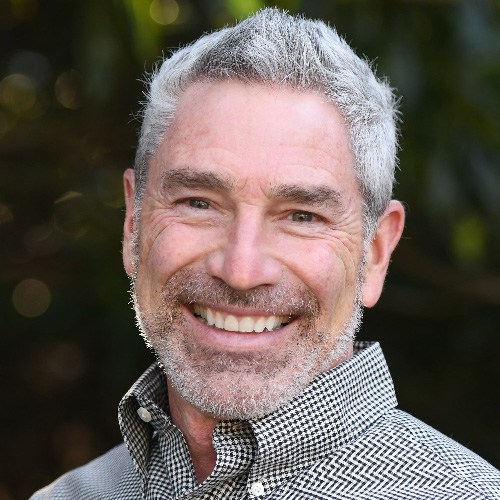
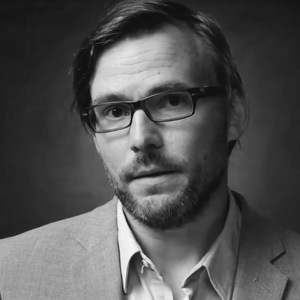
How do you prevent a heat stroke? On this episode, Neil deGrasse Tyson and co-hosts Chuck Nice and Gary O’Reilly learn about stopping heat illness deaths and the challenges of increasing heat waves with kinesiologist, Bud Cooper, and climate scientist, Radley Horton.
What is heat illness? Learn about the body’s thermoregulation and what happens when it loses balance. How do you spot someone who is having a heat stroke? How do you intervene? What is the wet bulb globe temperature? We discuss the impacts that surfaces have on heat and why heat illness can be tricky to diagnose. Is heat stroke anything like a traditional stroke?
How can we regulate athletic events to make them safer? Bud tells us about his policy suggestions and his three-year epidemiological study on heat illness in high school football in Georgia. How will heat illness change as different regions experience heat waves? Is heat going to be an issue for the The FIFA World Cup in Qatar this year?
Next, we speak with Radley about extreme heat and why climate change results in extreme weather patterns. What is tail risk? Are our climate models able to predict unlikely but catastrophic disasters? We discuss water and other factors affecting the heat. What is an atmospheric river? How do higher global temperatures lead to more storms? All that, plus, how we can get our policy and infrastructure prepared for the heat.
Thanks to our Patrons Zammo Taylor, Bill wessale, Korey B Helms, Kevin Browning, and Justin for supporting us this week.
NOTE: StarTalk+ Patrons can watch or listen to this entire episode commercial-free.
Transcript
DOWNLOAD SRTWelcome to StarTalk, your place in the universe where science and pop culture collide.
StarTalk begins right now.
This is StarTalk Sports Edition.
Today we’re going to talk about Heat Stroke, why that’s bad and sometimes lethal, what causes it and how to avoid it.
Of course, I’ve got with me my two co-hosts, Gary O’Reilly, Gary.
Former soccer pro and active sports commentator and we borrow him from the rest of his life to participate on StarTalk Sports Edition.
And of course, Chuck Nice.
Chuck.
That’s right.
All right.
My longtime co-host, professional comedian and actor.
Yes.
Acting like a comedian.
Acting like a comedian.
So, Gary, what have you cooked up today about Heat Stroke?
Well, the whole world has basically been sweltering and suffering through heatwaves recently.
But what if you were an athlete and you had to do your thing outside in the summer months?
Now, this fact is going to leave you a little bit cold.
Between 1980 and 2009, there were sadly, tragically, 58 football players dying of hyperthermia in America.
So, not hypnothermia, which we all heard about when you freeze to death.
Yep.
Hyperthermia.
Correct.
So, these were all American football players in the US.
Sadly, mostly in high school.
Yes, clearly something needed to be done, and some months thankfully stepped up.
Now, on the back of that, what is climate going to be like in places like Atlanta in 10, maybe 20 years’ time?
What precautions are going to be necessary for us, not just athletes at that time?
Will sports themselves have to change?
For those answers, we will need a climatologist and help us see into the future, and that will be coming up later on in the show.
But firstly, let me introduce you to a lifesaver.
Professor Bud Cooper, clinical professor in the Department of Kinesiology at the University of Georgia, helped instigate the heat rules for Georgia high schools, in particular for high school football.
He sits on the Medical and Science Advisory Committee Board for the Corey Stringer Institute in Connecticut.
Now, if that name is familiar, just think Minnesota Vikings player and the death of that man was tragic.
Also, Bud Cooper is a person who used science to save lives.
So, Neil, the hero.
We’re all in.
Thank you, Professor Cooper, for being part of the show.
Can I call you Bud?
Absolutely, absolutely.
And my pleasure to be with you guys today.
This is an opportunity.
Excellent, excellent.
So, could you just tell us, by the way, kinesiology, I read a book, an entire book on kinesiology when I was in high school, and I said, damn, if I didn’t love astrophysics so much, I’d be a kinesiologist.
It was like, it was physics applied to the human body in ways that I was just so fascinated.
And so I just want you to know that I might have been like your classmate or down the hall from you in your department.
And we would have had a lot of fun, I’ll tell you that right now.
What goes on in heat-related illnesses?
I know that we’re warm-blooded, so we have to maintain our body temperature to function.
That’s part of the lot that we were dealt at being human beings.
So you’re saying at some point we can’t maintain it and the temperature goes up and there’s nothing our body can do about it?
Well, your body has a thermoregulatory system that’s built in, that’s wonderful.
And when we start to get hot, what do we do?
We start to sweat.
So as we are engaged in activities and the outside temperatures begin to rise, our thermoregulatory system has to adapt to that.
And as long as we can keep that metabolic balance going on, we’re in good shape.
It’s when that balance is not met that we have to look at alternative means with which we can implement policies or practices that will prevent the catastrophic events such as heat exhaustion and heat stroke.
But if you’re sweating, of course, presumably your body needs the sweat to evaporate, otherwise it’s not, you just get wet and funky.
So when you talk about heat, I presume it’s not just the heat.
There’s a humidity factor as well, right?
Actually, there’s two factors that play into that.
Humidity is by far the largest influential factor.
Down here in Georgia, we call it the hot corner of the United States because it is not only hot, but it’s also humid.
But the other component that goes into all of this is what’s called the radiant heating effect.
This is what everybody experiences.
You go outside, it’s been a hot day.
You lean against a building that’s brick, and you go, oh, that wall’s hot.
Or if you stand in a parking lot and you go, oh, man, that asphalt is cooking.
Yes.
Basically, the cooking the egg on the surface of something that’s been sitting in the sun.
That whole deal.
And we’re running into more and more of that because, yes, we’re seeing hotter days, days that are hotter longer.
So we’re getting hotter earlier in the day and lasting a longer period of time.
But we’re also seeing that for whatever reason it may be, we’re seeing that institutions, colleges, universities, high schools, all putting in artificial surfaces now because it’s easier to maintain.
We don’t have to worry about the grass getting chewed up.
We don’t have to water it.
We don’t have to do any of those kind of things.
However, all of those artificial surfaces are now contributing to that solar heating effect because of the manner in which those surfaces are manufactured.
So it’s beginning a big problem.
The most common underlaying surface of those artificial surfaces is ground up automobile tires.
And if you watch any…
I’ve done that.
I laid flat on one of those fields and parted the quote grass and it was just jet black underneath, little particulate particles.
And I said, whoa.
You watch any of the college or NFL games over the weekends or whatever, you’ll see the athletes turn and cut and get tackled and you see that black cloud come up.
Black cloud come up.
Which in a way, if you’re a fan, it’s kind of cool because it’s what they use to show if a guy’s foot was inbounds.
You see the little shards of tires up in the air.
He was clearly in!
Yep, yep, absolutely.
So Dr.
Cooper, do you just look at someone and say, you need to go sit in the shade?
Or is there a clinical process for you to decide that this person is about to enter a heat stroke?
So there are a number of different things that we are looking at.
Not just the amount of sweating that’s occurring.
In fact, in some cases, somebody’s sweating mechanism could actually have shut down and they stopped sweating.
It’s in one way or the other.
It’s not just one.
It could be either too much sweating or profuse sweating.
It could be not sweating very much at all.
They could appear very red faced or they could be very pale.
They oftentimes will start to lose a little bit of their cognitive abilities.
They’ll look very lethargic.
Disorientation.
So there are a number of different components that we look at.
I was the athletic trainer that was in charge of sports medicine for the Peachtree Road Race.
Gary probably don’t know that one, but it’s the largest 10K in the United States.
55,000 runners on July 4th.
And so, you know, we would obviously want to be very keen on preventing heat stroke and we would have medical personnel along that entire 10K Road Race course looking for individuals who exhibited those types of symptoms.
And when we saw them, we would pull them out of the race, transport them to the finish line, and there we would treat them.
And I’m happy to say in the 10 years that I oversaw that, we never lost a participant because we did the right things.
Yeah, but they punched you in the face for taking them out of the race.
They didn’t like that.
They did not like that.
We told them they would get their T-shirts.
There’s something we should have said at the beginning that we didn’t.
And correct me if I’m wrong.
The reason why we sweat is on the expectation that the sweat will evaporate and the evaporation cools our body.
It does.
But if it’s humid, the sweat is less likely to evaporate and therefore less likely to cool your body.
Absolutely.
That’s the foundation of what’s going on here.
And isn’t that why they have what’s it called, the wet bulb temperature, which is different for somebody being able to withstand the heat?
It’s a comprehensive assessment of the environment.
It looks at humidity.
It looks at air temperature.
And it also takes into account that radiant heat issue.
So it looks at all three of those variables, albeit humidity is the most heavily weighted variable.
But you’re right, as the humidity gets higher and higher and higher, and it’s not uncommon in the Southeast for us to have humidity days where the humidity level is 80-85%.
But if you would go to Phoenix or Albuquerque or whatever, their humidity levels are down 20-25%.
So it’s very different.
It’s 150 degrees, but it’s a dry heat.
It’s a dry heat.
You’ll love it.
So as that humidity level gets higher, it makes it more difficult for the body to evaporate the sweat off of your skin.
I just want to establish that up front because it plays into so much of what we’re talking about.
It does.
So if we’re finding ourselves unable to cool down through sweating, that must be affecting our core temperature.
And there must be a point where that is an indicator of, oh, heat stroke or you’re about to go, let’s do something to prevent that, or it’s too late, you’re already there.
So how are we, we being you and your medical staff, identifying that as a fact?
So looking at it as a variable, can we predict it?
It’s very difficult.
Because the best way to assess your core temperature is doing it rectally.
And that’s how we get the most accurate assessment of what your core temperature is.
But when your core temperature hits 104, that’s the critical breaking point.
Anything above that are really at risk of succumbing to a heat stroke and that could be a catastrophic event.
So that is what we do.
So when we see someone that is exhibiting those signs and symptoms that I mentioned earlier, we immediately bring them into an environment that is not stressful.
So more shade, remove their clothing as best we can, and we do a rectal temperature probe to see what their core temperature is.
And if it’s at that level, we immediately immerse them in a cold water tub.
Got to get their temperature down.
I got to say, getting your temperature taken rectally will certainly make that a memorable practice.
Well, and if you’re at that level 103, 104, I promise you, you’re not going to fight me on that because you’re probably not going to be conscious.
You’re going to be knocked out anyway.
So the thing is, Dr.
if your medical team or a medical team is not around and someone is starting to hit those numbers, what then collapses within the body to end up with fatality?
And, I want to add to that, but how is it that our body can be so sensitive to just a couple of degrees up around there?
What is the most sensitive organ to just a few degrees change?
Well, again, your core organs are going to fluctuate on that, but your hypothalamus is the control center of telling whether or not we need to do different things.
So, that’s going to be the control center for that going on, but you’re really, as an individual, and you’re succumbing to those kinds of things, you’re not going to know that that’s what’s going on.
So, you’re at the mercy of having medical professionals there.
There was a case report of an individual who had gone, I think it was in Phoenix, Arizona, to participate in a mountain biking event, and he was coming from the east, not hot, not dry, like that area, got started on the race, he was about a mile or two into the race, got off course, and nobody knew where he was, and they finally found him about an hour later lying unconscious.
They thought that he had fallen and had a head injury and was unconscious due to that, and they treated him as such.
They never looked at his core temperature or anything like that.
When they finally got him to the hospital, it was then that they deduced that it was actually a heat stroke, and unfortunately the individual didn’t survive the event, and that was because he was not diagnosed correctly.
And again, it was just a tragic, tragic chain of events there.
So, now, when you call it a stroke, does it mimic any of the characteristics of an actual stroke?
A traditional stroke, yeah.
A traditional brain stroke, and are any of the resulting injuries lasting injuries, do they mimic a traditional stroke?
So, if you were to look at the true definition of stroke, he had a stroke.
We’re talking about the cutting off of blood flow to the brain.
That’s usually brought about by a clot or an aneurysm, something along those lines.
When we look at heat stroke, it’s a little bit different.
And that is that the body, because it is getting to be so hot that the internal organs are shutting down as a result of that, they’re not shunting blood in the direction of your brain.
So yes, it would be catastrophic from that perspective.
But it’s not to be construed as the same thing as what we see from a cardiovascular death that’s brought about by a stroke from that true definition.
So Bud, we’ve got what goes on, the physiology of suffering, heat distress and heat stroke.
What are your heat rules?
And is it as simple as go and stand in the shade?
Which, by the way, my mom used to tell us when we would play football in the back of the house where there were no trees at 2 o’clock in the afternoon in July, and she would say, what the hell are you doing?
Get in the shade.
You’re going to have a heat stroke.
She would say that.
That’s an informed person.
By the way, just to reiterate what Bud said earlier, it’s not just the temperature of the air outside, it’s the radiant energy coming to you from any source, be it the walls, the ground, or of course the sun.
So if you step out of the sun into the shade, that takes away one of the forces driving your heat exposure.
So when we come back, Bud is going to tell us exactly what Bud’s rules are.
And what is it about them that helps them save people’s lives, other than just telling them, get the hell out of this.
And other than Chuck’s mom’s rules.
Chuck’s mom’s rules.
She didn’t get famous with those rules.
Let’s find out why Chuck’s mom is not who’s being interviewed here and Bud Cooper is when StarTalk Sports Edition continues.
StarTalk Sports Edition, we’re back.
We’re talking about Heat Stroke, and we’ve got Dr.
Bud Cooper from the Kinesiology Department at the University of Georgia, whose heat rules have saved the lives of athletes, especially those in high school who get run into the ground by their athletic coaches.
And Bud, just what are these rules?
And why should they be different from anything anyone came up with before?
So the rules that have been in place for years were brought out by the American College of Sports Medicine.
They had a position statement on how you can prevent exertional heat stroke.
It was a consensus position statement by a bunch of people who are really, really knowledgeable in the area, but it was opinions.
They sat around, talked about it.
Okay, so you’re talking about BC times before Cooper.
Before Cooper.
Right, right.
So to address the problem, I wanted to look exactly at what was going on.
So I did a three-year epidemiological study where I just tracked everything.
We had high schools involved in the study representing five areas across the whole state of Georgia.
And we had certified athletic trainers at each of those high schools.
And I collected data for three years.
I needed to see where the trends were.
We looked at everything from length of practice to a wet bulb local temperature numbers, to time in the season.
We looked at all of that.
And at the end of the three years, I was able to aggregate all that information and then come up with policy suggestions that addressed all that.
And what we saw was that-
What you’re saying is that everyone before you just pulled it out of their ass, basically.
Well, yeah.
Rather, let me be more polite.
They did not treat it as a study.
They just thought, this makes sense to me.
Let me just put that in the pot.
Absolutely.
That’s what that sounds like.
Right.
That would be like asking you and Gary and Chuck as to what’s the best way to cook a steak.
You would all have your opinion.
Everybody’s got a different way.
And everybody’s got a different way.
And my answer is, let someone else cook it.
That’s the best steak you’ve ever had in your life.
Absolutely.
So we looked at that data and we came up with, well, what we saw was that in the month of August, which was the first four weeks of football practice, that was the most critical time.
And we could see that whenever temperatures got higher, when practices got longer, that’s when risk went up.
So-
And people are in their worst shape because they’ve had the previous months of summer where they weren’t doing a damn thing.
Absolutely.
And a lot of the research that had been done earlier show that in order to do justice to preventing heat stroke, we had to make sure that the individuals were acclimatized to the environment in which they were practicing in.
So one of the rules that we put into place was that they had to have five days of heat acclimatization.
No equipment, all I could have along was just their helmet.
Practice was limited to two hours and they would get acclimatized to the hot weather that they’re gonna be participating in.
Once we got through those five days, then we gradually lengthen practice, we gradually introduced equipment.
But the key component was that we set up parameters that said that as the environment got hotter, because we knew that that was the most important influential factor.
When the WBGT got to higher and higher levels, we had to change things.
We would shorten practice, we would take equipment off, we would increase rest breaks, we would increase hydration breaks in order to allow the athletes to continue practicing.
We didn’t want to take that away, but we had to do things that mitigate that risk because we saw that from the three years of study of just looking at what the trends were.
So we were able to look at that.
I presented that to their rules committee.
I said, this is what I really think we need to do.
All knowing that the rules committee, which was made up of football coaches that have been coaching 35, 40 years, you know, we’ve been praying football this way forever.
And you know, we’ve been doing fine kind of thing.
Presented that information.
Honestly, Gary, they, and Neil and Chuck, all three of you, they probably discussed it for 20 minutes, came back and said, you know what, Bud?
We’re going to put every single thing that you have suggested into policy because there’s no way we can say it doesn’t work because you have the facts, you have the data.
So-
There’s also a little, also a little something called-
It’s called science.
No, that’s litigation.
It’s like, well, you know, this guy came to you a few months ago with all this information and nothing.
Yep.
Plus science, that’s one of the objectives of science is to remove people’s opinions.
What’s going on?
And so, you know-
Vice the facts.
The great thing about what we did was it was the first study that looked at the facts.
We developed a policy based on those facts.
And to date, there hasn’t been another state that has done the same thing that we’ve done, so-
Well, I don’t get that.
So clearly your research is out there.
You took an-
Oh, I know what it is.
They’re only Georgia rules.
You see, that’s the thing.
They’re eating peaches in between plays.
So other states, tell me about other states.
Yes, exactly.
So the state of South Carolina has taken a lot of what we’ve done and they have applied many of our rules to their state association.
Florida and North Carolina-
A similar climate in South Carolina.
Similar climate.
Florida and North Carolina take bits and pieces of what we’ve done and applied it to theirs.
But by and large, the rest of the states across the continental and Hawaii and Alaska have not done anything like that at all.
I’m in the north.
Why do I need you?
Well-
That’s a great-
I mean, that’s kind of funny sounding, but that’s a really good attitude question because-
You hear about heat deaths up here as well.
Only recently, right.
Well, you see more of them in the south.
It does happen everywhere.
And we’re seeing that, I think, mainly because we’re getting hotter and we’re seeing areas in the north that are experiencing heat waves.
Again, the Corey Stringer Institute was founded on the death of Corey Stringer.
That happened in Mankato, Minnesota.
You can’t get any further north than that area in Minnesota.
And that was because they had a heat wave up there.
So, there was a young man that was, clearly he had a heat stroke, here in New Jersey.
I forget if it was last summer, or the summer, I forget.
And they put him in the, they took all the ice in the Gatorade things and they literally submerged him in that.
Is that part of your protocol?
It is, it is.
Our protocol is to immerse an individual into a cold tub, ice immersion bath, where the temperature of the water is 50, 45 degrees, it is the fastest way to get the core temperature down.
We need to get it down below about 102 before we would allow them to be transported by an ambulance or an EMT service or anything like that.
And the problem is, is that ambulances don’t have cooling mechanisms on board, and most hospitals are not set up to do that either.
They have ice blankets they can put people on, but we’re getting them submerged up to their neck in ice water.
And it is the best way.
Any good locker room is going to have unlimited supply of ice, right, for ice baths.
Put some ice on that.
Put some ice on that.
One of the rules that we have here in Georgia is that whenever the WBGT gets to 86, it’s mandatory that that ice tub is on site and ready to go.
What is WGBT?
What is that?
Wet Bulb Globe Temperature.
Wet Bulb Globe Temperature.
I’m on an abbreviation basis with it.
Wet Bulb Globe Temperature.
Globe of WBGT.
So, Bud, if you’ve not been able to bring organizations towards your thinking as blocks, as states, particularly the northern states, have you found coaches in northern states come to you individually and dip into your program because they realize they’ve joined the dots and they’ve found out it’s not a smiley face?
It is.
I’ve done talks in Illinois and other northern states, and they’re very, very interested in that.
They want to know what do we need to do to ensure that that doesn’t happen?
And I think that there is becoming more and more fear because there have been some cases recently where a student athlete has died from heat stroke, and the parents have taken it to a criminal court case, and the coaches have been charged with manslaughter.
I mean, this is not taken lightly.
So I got a call from a reporter in Billings, Montana, and I’m somewhat familiar with Montana.
I go skiing there every year, but they are experiencing a heat wave currently right now with their temperatures in the upper 90s, not common at all for Montana.
And his question was, the coaches really don’t know what to do.
And so he sent me their policy that’s in place, and the policy is looking at smoke because they have problems with wildfire up there.
So what do you do when it gets really smoky?
There are also policies in there on what you to do with hydration.
So what should we do about hydration breaks?
But it’s during competition, not during practice.
And what we know is that about 90 to 92% of all heat strokes in sports occur during practice, not during competition.
So while they’re saying we need to increase the hydration breaks during competition, they’re not doing anything to address the times with which the risk is the greatest.
And that’s in practice.
And of course, it’s not a problem until it’s a problem.
And so now they get 90 degree days with no precedent.
They don’t even know what to do.
Exactly.
And coaches are not the best people in the world to make compassionate decisions.
Let’s just be honest.
It’s like, you know, I think I’m having a heat stroke.
Really?
Well drop it, give me 20.
Like, you know, my finger is dislocated.
Pop it back in and get back out there.
Exactly.
Bud, okay, so we’ve got people in Billings, Montana, who are acting like the British with 3 inches of snow and panic because they don’t know what to do because it doesn’t do that there.
Now, this is going to replicate, I’m sure, as we go forward, 10, 20 years’ time.
Where do your rules advance with the climate as it changes?
So, glad you brought that up.
I did a study with another friend of mine, he’s a climatologist, and we actually looked at the United States as a whole and looked at average WBGT temperatures over the entire United States.
And what we did was by averaging those, we were able to break the United States down into three geographical regions.
Region one, region two, and region three.
Region three would be the areas that have the highest values.
That would be across the southeast and the south and into the southwest area.
And then the region two would be in the center, more the Midwest Atlantic Coast regions, and then region one would be up there with your Oregon’s and your Minnesota’s and your Maine’s and New York’s and things of that nature.
I think the next step is to then look at those three geographical regions and try to come up with better recommendations for those schools and those areas, knowing full well that in the event that somebody in Minnesota gets a day when it’s 95 and 60% humidity and they’re wearing full gear for a football game, something has to change.
And, you know, the question was brought up earlier.
Was there pushback from coaches?
And there was a little bit, but you know what?
We are giving them an out by saying, we have things that you can do.
We’re not trying to cancel football.
We’re not trying to eliminate it.
We’re just trying to mitigate your risk.
We can do things, take some equipment off, shorten your practice.
Why can’t there be a standardization of what you’ve studied so that it just becomes basically the rules across everywhere when we reach a certain temperature, you know, put these protocols into place.
I mean, that would make everything really simple.
It certainly would.
It’s called the Bud Protocol.
Yeah, the Bud Protocol, right.
Gentlemen, I think we’re going to have to go to the Bud Protocol.
There you go.
But no, I get better.
The Cooper Criterion.
Oh, I like that.
I believe this calls for the Bud Protocol.
No, sir.
I think it calls for the Cooper Criterion.
Don’t try to show me up.
They’re the same damn thing.
Wait, Gary, isn’t the World Cup someplace hot?
Yeah, so we couldn’t get it on the Sun, so we took it to Qatar.
I didn’t know the Sun put in a bid for the FIFA World Cup.
Yeah, they did, but they didn’t win.
The Sun lost that one, okay.
So the thing is, it goes to Qatar.
As long as there’s not a heat wave, you’re going to be facing 80s and 70s of average temperatures, humidities in the 60s and 70%.
So what protocols do you think we should be looking for the organizers, FIFA, putting in place, like hydration breaks in middle of halves?
Or what do you envisage the teams being able to do to mitigate heat?
And if it does get a heat wave, which is not unusual apparently, what could they do?
You know, having scheduled hydration breaks is going to be a very critical.
And we don’t want to ruin the spirit of the game by having a break in the middle of the first half at 20 minutes or whatever it might be, you know, to try to change the continuity of the game kind of thing.
But really, Gary, the bigger aspect, and we actually see this, is that we need to ensure that the athletes that are going to be participating in that World Cup are acclimatized to those conditions.
That’s the key.
So I’ll give you an example.
In 2015, I was in Scotland on a study abroad trip.
I had taken a group of grad students over there, but I met with the Olympic coaches for Team Scotland.
They were extremely concerned about their distance runners being able to compete in the Rio de Janeiro Games because it is hot and it’s humid in Brazil, and it’s not that way in Scotland.
They were like, what do we need to do?
Scotland is not known for its rainforests.
No.
Not to be slight on them, but it was like, should we make them go out and train with heavy coats on so they can really get their core temperature up?
And my answer was no, because that’s not…
Make them drink scotch.
I like that.
From the whole race drinking scotch, that’ll do it to you.
So the recommendation that I gave to the folks in Scotland was you’ve got to get your athletes down to Brazil or to an environment that is similar in climate so that their athletes can train.
And it’s going to take them about 14 days for that to happen, so you’re going to have to pack them up and move them somewhere where it’s hot and humid for about two weeks prior to the Olympic Games so that their athletes are acclimatized.
And I think that is going to be key to any country that is participating in the World Cup.
Okay, Bud, I have a new business idea.
We create a biodome where we have complete control over the temperature, the radiant heat, and the humidity.
And we dial in the averages for the location that people need to train, and they do it right there in the biodome.
I like it.
What do you think of that?
I like it.
We actually do some research in an environmental chamber.
We put either a stationary bike or a treadmill where we can control the heat and humidity, and we do a lot of studies that way.
But again, that doesn’t mimic what an athlete does on the soccer field or a football field because they’re doing very, very different things.
In that dome, it has to be fields and tracks and things.
Something tells me airfare might be a little cheaper.
That’s my point.
Yeah.
So if there’s one in Europe, one in North America, South America, you can train there before, and then you don’t have to fly the whole team until you’re actually ready to compete.
And maybe you can dial it up a notch, make it even a little harder.
That’s an expensive project, Neil, if you’re trying to replicate something the size of a soccer field or a football field.
It’s not more expensive than the money people have to spend on sports.
I have come to judge.
Guys, we got to call it quits here.
I know.
Sorry.
I know.
It’s good stuff.
I’m telling you, kinesiology is the thing.
These folks have the physics literacy that makes the world go round.
Hey, Bud, let me tell you something, and he’s not blowing smoke.
Over the years, I’ve heard Neil say this several times about how much he loves kinesiology.
And I’m like, Jesus, is there any level where you are not a nerd?
So, we think we should call it the Cooper Criterion, and you heard it here first, except Bud Cooper came up with it.
But it definitely sounds good, the Cooper Criterion.
But we’d love to have you on the show.
This is a work in progress, clearly, because we’re going to see what other aspects of your kinesiological expertise can serve the world of sports, because they’re looking for every way they can.
The things that we brought up, obviously, we need a lot more research done to address some of the other areas of need as well.
Excellent.
Excellent.
In the meantime, put some mice on it.
We’re going to let you go in this segment, but when we come back, we are going to look into the future of climate with a climate expert from Columbia University, Dr.
Radley Horton, and StarTalk Sports Edition return.
We’re back, StarTalk, we’re talking about heat.
And we came out of the dungeon of heat strokes, and the harm it’s done athletes, especially those in high school, training in August, especially in football, and outdoor training, of course.
And we thought we would sort of extend that into just a general understanding of the trends of heat waves.
And so what do we need for that?
We need a climatologist.
And we didn’t have to look far because Columbia University, right up the street from us, has experts.
And we’ve got a Lamont research professor, Columbia University, Dr.
Radley Horton.
Radley, welcome to StarTalk.
Great to be here again.
Nice to see you.
You’re not just any ordinary climate scientist, you specialize in climate extremes.
To the extreme of the X Games of Climate.
The climate octagon.
Which storm will win this year and what is?
And your expertise says, and your writings have gotten you on various national and international task forces and committees to advise municipalities and nations on what they should do.
So, let’s dovetail my first question to you with what we just saw in the first two segments.
We heard that in Atlanta, Georgia, they implemented these new rules, Bud’s Rules, the Cooper Criterion, for keeping athletes alive, basically, not suffering from Heat Stroke.
Is this a fact that will start surfacing in places where it never surfaced before, so everyone is going to have to start paying attention to Bud’s Rules?
Absolutely.
I’m talking more and more about the two waves of climate change, in a sense.
I think we’re approaching the point where most, but not all, people are realizing that the statistics of these extreme weather events, like heat waves, are already shifting quickly.
We’re getting more heat waves, longer lasting, and just more extreme than we thought we knew that would happen.
But what’s also happening, I think, is this realization that it’s actually happening much faster than we thought it would.
We’re not just getting that predicted 50% increase in the frequency of heat waves.
We’re getting unprecedented heat waves, three, four degrees warmer than anything that’s ever been experienced in a place, or arriving three or four decades earlier than we thought it would.
So I think, circling back to your question…
You mean the once a century extreme event is not happening once a decade?
Exactly.
It’s exactly right.
It’s funny.
I had a conversation where somebody was talking about climate models, and I said, yeah, the only thing wrong with climate models is that they were all right, and that they didn’t predict how fast it would happen.
And that’s it.
That’s it.
And I think it’s frankly a challenging point for some climate scientists because we’re used, over the last 10 or 20 years, to hear our models attacked, climate change isn’t real, that sort of thing.
And now, of course, it’s clearer than ever, climate change is happening, we’re the primary drivers of it, but we also need to simultaneously reflect on the fact that our models are lacking, but in that other direction, they’re missing what we call these kind of tail risks, right?
They actually don’t do a real good job at predicting those lower probability, high consequence events.
And unfortunately, when you say tail risks, there’s a lot in that phrase, you don’t mean biological tails off of animals.
You mean, in a distribution of any events, there’s the tails of what happens that are much more extreme than what’s in the middle.
So it’s a mathematical tail of a curve, that’s what you’re referring to.
That’s right.
So Radley, the ironic point for me, looking at it as a former athlete and someone who’s going to be suffering heat waves, the key solution to heat stroke is hydration.
Meanwhile, we have extreme temperature rises, we are entering more and more heat waves and droughts.
So the simple question is, where is our water going to come from then in the future if hydration is the solution to the problem?
Yeah, I mean, there’s a lot of aspects to that.
Fortunately, you know, human consumption of water is a tiny amount of all the water we use.
It’s mostly things like mining, inefficient approaches to agriculture.
But the broader point, also fracking uses a huge amount of water.
Yeah, absolutely.
But the broader point I think is really important that we need to simultaneously be thinking about not just the higher temperatures, but how are these other climate variables changing at the same time?
Are our crops, for example, going to be suffering from these more extreme temperatures that make it possible for more air to basically get sucked out of the atmosphere due to those high temperatures, precisely at times when there’s not as much rainfall or a snowpack is melting earlier so we don’t have that water supply?
I think your point is absolutely right about shared risks across temperature and other changes in climate variables.
Which, by the way, just in case anybody’s wondering, everything that Radley just said is already happening right now.
Yes.
Now, snowpacks are melting quicker and then we’re seeing shorter snow accumulation seasons and then we’re seeing more rain that creates runoff where it should be snow melting very slowly and what that does is it leads to an exacerbation of drought.
So all of these things are working hand in hand to exacerbate the situation, but that’s happening right now.
Chuck, that’s why we have an expert to tell us.
I think he’s…
I think he’s…
Chuck’s The Meteorologist Show.
Thank you.
Put it out there.
He’s making the points and he’s doing so eloquently.
So let’s go with it.
Before we get to Gary’s questions, because he’s got a ton of them, I just want to slip in there.
This notion that we have these models, could you explain what goes on when they show hurricane paths and they say we have the, you know, our models and the Europeans have models and they predict something different?
I don’t know that the public is ready to hear two entire continents of experts predict two things differently.
I don’t know that they know how to wrap their head around that.
Could you just give us a few moments insight into what’s going on and how it is that an entire continent of scientists could have a different model from another continent?
Yeah, yeah, totally.
How do we all think about uncertainty?
The idea that we can have some things we understand really well, but there’s always going to be some uncertainty in these non-linearities where over time an initial error in not knowing exactly where steering winds are going to be for the jet stream can percolate over time leading to two divergent solutions.
So basically, it’s coming down to uncertainties about initial conditions to some extent.
That’s not knowing enough about the details of what’s happening, say, over the ocean right now, but then also how the models…
Like the butterfly effect as they…
Right.
I’ve read an article, I put this in there, there’s this journal, I don’t know if you guys know about it, Radley surely knows about it, but Gary and Chuck, there’s a journal called the Journal of Irreproducible Results, and it’s where hyperactive scientists who have crazy, fun, sciency ideas that are just completely inane, if they write it up, you can get it published in the Journal of Irreproducible Results.
So one article was, was it Hurricane Andrew or one of the really bad hurricanes?
The scientists wrote, they found the butterfly that caused the hurricane.
And they studied the butterfly in this article, it was hilarious.
This whole notion of the butterfly effect, they could send the future results of a model in completely divergent directions.
Right, right.
And most of the time, you know, there’s that cloud of uncertainty, but it’s narrow enough that it can be very useful for planning, right?
We can have a sense that there’s a 20% chance that a stretch of the coastline would experience a hurricane.
That’s enough, usually, from a risk management perspective.
But why are European scientists different from American scientists?
I don’t get that.
Because European models always stop at the less advantaged countries and try to colonize them first.
Oh, is that what that is?
So let me ask you, Radley, and just sort of spin it back into Bud’s home turf, as it were.
What do we think the southern states, the US, are going to be experiencing weather-wise, climate-wise in the next 10, 20 years?
Because I can’t see it staying where it is.
I can only see it getting worse.
Why are you focusing on the southern states there, Gary?
Because it’s Bud’s home turf, Georgia.
So I mean, I think one place to start is that’s a part of the country where we also have these extremes of heat and humidity persisting into the evening hours, into the early morning.
So we need to be thinking not just about that worst moment of the day for heat and humidity, but the fact that for nudging up temperatures just a little bit and humidity up just a little bit, that means it’s going to be harder to find time during the day to be able to exercise outdoors.
It means it’s going to be harder for people to recover at night to sleep well.
So, in these places that are hot and humid to begin with, just shifting up those baselines will have a very profound effect.
It could mean 20 or 30 more days per year experiencing these extreme conditions.
But I think it’s also important to sort of consistent with some of the other things we’ve been talking about, look at some of the places where people might not think of those risks as being quite as severe.
It might surprise people to know that roughly the highest combination of heat and humidity ever experienced up in Wisconsin.
So it doesn’t happen as frequently.
But from this risk management perspective, if you’re worried about that worst event per year, low probability, but catastrophic consequences, especially for people who aren’t used to it, it’s definitely not just the Southeast.
And even some places like the Southwest, very hot and dry in terms of their climatology, but under the right, if you will, conditions.
The Gulf of California, that water between the Sea of Cortez, essentially southern Mexico, that’s some northern Mexico, that’s some of the hottest waters in the world, by late August, early September, on the right, in the right conditions, plumes of moisture can actually make their way into those desert regions.
It’s not the typical day per year, but if we’re not prepared, even at the LA region can be vulnerable to this.
So what we need to find out is not just how these average changes in climate affect us, but what about these wild cards?
How hot are those bodies of water, like the Gulf of California, going to get in the Gulf?
How is irrigation going to lead to more moisture in the atmosphere, crop practice?
I think it’s important for you to tell just because when you talk about hot bodies of water, warming water temperatures during this time of year, whether it’s in the Atlantic, what is that doing and why is that important?
Because I think when people hear about warming waters, they don’t get this correlation between these big storms.
Yeah, absolutely.
So, they’re only thinking about warming air, right?
That’s the only thing they care about, right?
Exactly.
Yeah.
So, I mean, issue number one certainly is the hurricanes and tropical cyclones.
As water temperatures get above a threshold around 80 Fahrenheit or so, it’s much easier to get that energy pump going whereby winds from a storm causing evaporation of that very warm water, leading to a lot of evaporation.
You basically can start a cycle where the sort of engine roars and you get a hurricane.
Warmer the waters are, the more potential for a really powerful and devastating hurricane and landfall.
But here, you know, another issue is the minimum temperatures in a lot of our coastal regions, even places like the Northeast US are very closely coupled to those water bodies nearby.
And in a world where our coastal waters in August, September, the sort of warmest times of year, the Northern Hemisphere start to creep up a few degrees higher, maybe in ways that our climate models haven’t predicted well, we increase the risk of more extremes of heat and humidity and maybe also really heavy rain events, not just through hurricanes, but things like these atmospheric rivers, because the surface of the ocean is communicating with the atmosphere directly above, warm those waters.
Not only does the air get warmer directly above, but there’s the potential for a lot more of that moisture to evaporate into the air, where it can cause catastrophe, right?
Either through heavy rains or…
If the air is warmer, and we know that warmer air can accommodate higher quantities of water vapor or moisture, if it can accommodate it, why should that fall out?
Why does it just stay there?
Why does it go up and then all drop out?
Yeah, I mean, that’s a great point.
I think the issue there is that it can be true that in…
So we’re getting evaporation really sort of all over the world’s oceans, right?
And over the lakes.
But it has the tendency to fall out as precipitation in very specific times, right?
And very specific places.
So the evaporation is happening everywhere, but trying to figure out exactly where it’s going to rain out and how intense that is going to be is something that really can change with climate change.
And the balance of evidence suggests that it’s those really heavy rain events that are going to become that much worse, right?
So we have our sewer systems designed to accommodate an inch or two of rainfall, you know, maybe in an hour tops.
With climate change, if we start getting these four inch an hour rainfall events, like we seem to be seeing more and more, it has a nonlinear impact, right?
It’s not like flooding increases just a little bit.
You can go from no flooding to really extreme flooding if our drain pipes aren’t designed for that.
But towards your question, I think, Neil, just to sort of step back a little more, I think this is at the cutting edge of a number of central climate impacts questions.
A warmer atmosphere, which we’re getting, can hold more moisture, but it won’t always, right?
So certain areas that are prone to being hot and humid, the southeast US for example, coastal areas, we can expect those areas not just to warm, but also to get more humid.
It’s less clear what’s going to happen in parts of the West, for example, right?
Those areas maybe get higher.
They don’t necessarily get more moisture, more rainfall or more moisture in the air.
But because they’re hotter, they’re going to suck moisture from crops, from forests.
This is actually a recipe for these catastrophic wildfires and potential crop losses.
And I talked earlier about the limitations of climate models for those tail risks.
Now we have these communities trying to do impact assessment, right?
What’s going to happen to crop yields, forests, you know, the composition of trees.
But it’s not just the person dying in their attic, right?
It’s like the food chain and everything, right?
And we’re missing the tails there too, right?
Because our models inherently are too simplistic.
They don’t understand, and they don’t understand the interactions between all these systems.
What happens when the heat wave happens at the same time that air quality is suffering?
Because you’re getting more wildfires.
What does that do to human health?
Radley, if you know your models are simplistic, then make them more complicated.
Or, I think that’s right.
And while you’re at it, how come you haven’t solved quantum computing?
What is your problem?
What is your problem, Radley?
Can we throw that one back at Neil, maybe?
Just to be clear, what I said was a joke.
The problem is, and Radley, correct me if I’m wrong, you could add more complexity, but the range of complexities you could add, you don’t have constraints on what is the right complexity to add and what isn’t.
And you could end up getting wildly off results.
If you’re not judicious about it.
That’s right.
I think one way to think about it is we need to invest more in individual models, get to higher spatial resolution, add new processes that let us, for example, simulate how changes in ecosystems as we get these higher temperatures and rainfall, then feed back on the climate, right?
Do you need more probes in the ocean or in the air or in the forest?
That’s an important piece too.
That would help with the point you raised earlier about the less initialization, what we call, what we know at the beginning errors, that if we have mistakes at the beginning, they can percolate, become bigger errors later in a hurricane track.
But I think we also need to, as we’re improving models, step back in a qualitative way.
There’s this motion towards what are called storylines, just sort of stepping back and trying to understand all the ways that these systems interact, including the solutions, right?
So sit down with people who are health professionals, managing athletes, and say, what are the things that concern you the most?
What keeps you up at night?
And then we think about how all these systems fit together in a qualitative way.
And with advice to do something about it.
Gary, a few more minutes, but you had some questions loaded up.
What do you have?
I have, thank you.
Radley, are we going to see things like hurricane seasons being extended and maybe moving further north to begin with?
And our evolution as a species has been adapt and survive.
What adaptions can we start to implement now while all of your data is getting harvested?
Yeah, so we got to get going with adaptation right away.
At the time of thinking, oh, we just reduce our emissions and we won’t need to adapt, that’s a false argument, right?
Partly because we have so many vulnerable communities right now, right?
Let’s think about all our people with the pre-existing health conditions, heart disease, renal failure, respiratory issues.
These people need help right now, even before you think about heat waves.
So what can we do?
Everything in urban areas, from more cooling centers, more advisories, getting the word out to communities where maybe English isn’t first language about the dangers of these heat waves as they approach, steps to increase shade, we talked about the radiant heating earlier.
Those are some of the kind of things we can do.
And I think also accommodating, as much as we can, changes in the practice schedules or time of day for things like sports.
But also, what about all the farmers out there who are having to work during these times of extreme heat?
Well, wait, Radley, what you’re suggesting is to use to…
What you’re suggesting is to use an acid rain proof umbrella as the solution to the acid rain.
Are you saying we’re f***ed and we just have to…
This is suffering under it, trying to mitigate losses.
That’s not adapting to it.
And I’m glad you made that point because all these adaptations, they’re not cost free, right?
If it was easy to do these things, people would have done them.
And as we come up with these adaptations, we got to make sure they don’t lead to the vulnerable suffering even more.
Who’s adapting first?
Is it the wealthy?
Is it venture capitalists who are getting access to information about what’s going to flood first?
Or the countries that have the most access to fresh water, for example.
Is that the new oil of the future?
Yeah, and who often…
Yeah, but everything you’re saying is what we call resilience, which people talk in this term resilience because it sounds good, nobody knows what the hell it is, but that’s what it is.
Everything you just said is what it’s about because we are kind of screwed.
Nobody wants to say it, but we are kind of screwed and we have to do both.
We have to have mitigation and we also have to have adaptation at the same time.
For sure, we got to make sure we’re doing them in a sensible way.
We’re there operating sort of against each other.
How do we do it in a way where the decisions we make for adaptation, mitigation work together, planting more trees, for example, in a lot of places.
But yeah, I mean, basically, it’s a negative narrative in a lot of ways, right?
Climate change faster than we thought, these impacts on systems faster than we thought it.
The key question is, is there evidence out there that maybe there are some non-linearities working in our favor on the solution space, right?
See, go back now and figure those out, okay?
And then come back to StarTalk and say, here’s a way that we can have a runaway process that’s in our favor rather than one that will render us extinct or get rid of all of our coastal cities.
Young people who are going to pick their colleges, pick their jobs based on whether those entities are reducing their emissions, thinking about resilience of vulnerable communities.
Cultural shift and priorities, yes, yes.
Investors, people procuring, all those sorts of things, yeah.
All right, so we got to land this plane.
Radley, can you say something positive before we go?
I think it’s that.
I mean, my cliche would be the course I teach at Columbia, just seeing over the last 10 years how students nowadays really do pick their colleges and their first jobs and where they’re going to invest their money on whether entities care about racial justice, whether they’re focused on reducing emissions, whether it’s thinking about their supply chains and their workers and their vulnerabilities.
We’re getting there, right?
That’s just the ivory tower, but for seeing that across society, I think we’re a social species and we can see change quickly.
And what we heard about in the first segment is a critical example that we need what Bud was describing, the criterion to go viral is the wrong phrase for it, but spread out.
That’s beautiful.
That’s beautiful, Radley.
I’m glad you’re capable of saying beautiful things like that.
It’s not just all doom and…
Thank you.
And then you top it off with, and by the way, we’re all going to die.
But, Radley, thanks for sharing some of your time with StarTalk and your neighbor.
So we might attack you again for some other ways you can contribute to our intensely interested audience in this topic.
That’d be fantastic.
By the way, do you have a social media presence?
I do.
Thank you.
I’m on Twitter at Radley Horton.
At Radley Horton, okay.
We’ll see what gems you can share with us.
But hopefully there’s advice on how to mitigate all of this so that there’s a world that our descendants can inherit and not be ashamed of who left it for them.
Right.
So Gary, Chuck, good to have you, man.
Always a pleasure.
And Radley, like I said, we’ll find you again.
That’d be great.
Thank you.
Neil deGrasse Tyson here for StarTalk Sports Edition.
As always, I bid you keep looking up.

 Become a Patron