


 Unlock with Patreon
About This Episode
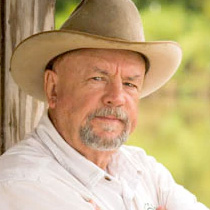
Is industrial farming bad for us? Neil deGrasse Tyson and co-hosts Chuck Nice and Gary O’Reilly learn about the future of food production, regenerative agriculture, and greenwashing with herdsman, land steward, and author Will Harris.
Why move away from industrial farming? Learn about pesticides and the toll that linear and monoculture farming take on the land. We discuss desertification and the importance of organic matter in the soil. We discuss animal welfare in the cattle industry. What is the difference between grass-fed and corn-fed cattle?
We break down linear farming, its impact on communities, and why we started doing it. Should food be more expensive? We explore the connection between retail eating and industrial farming. Is it a sustainable model? Find out about different farming models’ impact on the environment and how farming practices can sequester carbon.
Learn about Will’s path to restoring his land and what motivated him to make the change. When you cut out pesticides what do you replace it with? How do small regenerative farms size up against multinational corporations? Plus, learn how consumers can help make regenerative farming mainstream.
Thanks to our Patrons Tomasz Paź, Heath Kehoe, Brittni Phillips, Roy Carter, Andrea Cousins, Ben Sellers, Yanko Kaneti, and Noah Jellenik for supporting us this week.
NOTE: StarTalk+ Patrons can listen to this entire episode commercial-free.
Transcript
DOWNLOAD SRTReboot your credit card with Apple Card.
It gives you unlimited daily cash back that can earn 4.35% annual percentage yield when you open a savings account, a high yield, low effort way to grow your money with no fees.
Apply for Apple Card now in the Wallet app on iPhone to start earning and growing your daily cash with savings today.
Apple Card, subject to credit approval.
Savings is available to Apple Card owners subject to eligibility.
Savings accounts by Goldman Sachs Bank USA member FDIC.
Terms apply.
Learn a new language through immersive lessons from the most trusted app, Rosetta Stone.
You keep saying, I’m gonna learn a new language.
Well, now is the time to do it.
The true accent feature even gives feedback on your pronunciation.
So not only are you learning a new language, but you’re speaking it like a native.
Find lessons as short as 10 minutes so you can learn at your own pace and in your own time.
Don’t put off learning that language.
There’s no better time than right now to get started.
New year, new language.
For a very limited time, StarTalk listeners can get Rosetta Stone’s lifetime membership for 50% off.
That’s 50% off unlimited access to 25 language courses for the rest of your life.
Redeem your 50% off at rosettastone.com/startalk and do it today.
Coming up on StarTalk, we’re gonna look at regenerative farming, where our food comes from, and what its impact will be on climate, as well as our health, and more on StarTalk.
Welcome to StarTalk, your place in the universe where science and pop culture collide.
StarTalk begins right now.
This is StarTalk’s special edition.
Neil deGrasse Tyson here, your personal astrophysicist.
And with special edition, we explore the human condition as it is bolstered or interfered with by emergent technology, and who and what we are as a species and our relationship to machines.
Man, you made this show sound important.
Man, I didn’t even know we were doing all of that.
That’s Chuck Nice.
Stand up comedian, actor, still acting like a comedian.
Still acting like a comedian.
Yeah, all right.
And Gary, ex-pro footballer and broadcaster, okay, we’ve got an interesting show today.
Gary, you put together a show I didn’t even know was possible in our repertoire.
Tell us about it.
We found someone who we are going to orbit around who has made this possible.
Because about 25 years ago, a farmer, yes, a farmer, decided that he no longer wanted to be part of industrialized farming.
So he threw away the pesticides, threw away the hormones, and started to listen to Mother Nature.
He is a soil scientist, a hydrologist, a biologist, a chemist, a nutritionist, a weather expert, and a community leader.
Something very, very important.
He now operates one of the largest pasture-raised livestock operations in the USA, and was the first outfit to sell a pound of grass-fed beef to Whole Foods.
What?
He calls himself radically traditional while his daughters call him an iconic icon.
We’re just going to be calling him Will Harris.
Wait, his daughters call him an iconic icon?
Organic.
Organic icon.
Yeah.
That’s great.
Yeah, that’s doubling down on the icon status, but no, organic icon.
Yeah.
We have In the Flesh from Georgia coming in.
And one of our old time farmers, Will Harris, Will, welcome to StarTalk.
Thank you very much.
I appreciate you having me.
It’s an honor.
Oh my gosh.
You are a fourth generation farmer.
Will, I can honestly say, I can probably count on one hand how many farmers I’ve ever met in my life.
And you’ve been a farmer for four generations.
And how old is your farm that you’re working on?
My great-grandfather came with this farm in 1866.
And we’ve been farming it ever since.
Oh, okay.
And the name of your farm, White Oak Pastures, we might have seen that on some food.
I shop at Whole Foods.
Look at you, Mr.
Fancy.
Maybe I gave you some of my money.
That was then, but he thrown me out now.
We got to find out about that.
We’re going to get into that, find out what happened.
There.
You’re the author of Bold Return to Giving a Damn, and that just came out in the fall of 2023.
That explores the link between and among food, health, and climate change.
Oh my gosh.
So let me start off by asking you, Will, why would you move away from industrial farming?
I presume industrial farming made everybody make much more money faster, and it allows us to grow more food on less land with fewer people than ever before.
So why would you ever walk away from that?
Well, the short answer is unintended consequences.
Everything that you say is true.
More food, less land, probably more profit.
But there are unintended consequences, and the unintended consequences are falling on the backs of the animals, the land, the environment, and the rural economy.
So these unintended consequences, normally when people say that, that’s a bad thing.
I mean, because unintended consequences just means something happened that you didn’t foresee.
That can be something good.
So what is the bad?
I mean, the former, not the latter, is a bad thing.
The bad things would be the impact on the environment, you know, to operate a modern farm.
There are a lot of products you use, the end of the name is CIDE, C-I-D-E, and that’s Latin for kill.
Yeah.
Like, homicide, suicide, that’s what you mean, pesticide.
Homicide, insecticide, pesticide, herbicide.
My father took over the farm in 1946 and turned it into a modern industrial linear farming operation.
I followed him and never wanted to do anything except what he did.
At the University of Georgia, when I came of age, I graduated in 1976 with a degree in animal science and learned a lot about how to kill pests.
I came home and implemented those teachings successfully, financially.
So these would be insects, but also, I guess, weeds, too?
These are both of those you don’t want on your farm.
Anything you don’t want.
That could be pathogens, it could be insects, it could be weeds, it could be so many things.
Whatever you don’t want is a product out there to…
So you want a don’t want to side.
All purpose thing for everything you don’t want.
That’s what you want.
You want to side it.
Yeah, but that’s not the way it works.
But yes, you’re right.
I got to tell you, Neil, if Dow Chemical comes out with don’t want to side, I’ll know that they’re listening to this show.
So, Will, how long did it take once you made the changes?
Once you decided, you know what, that’s it.
Taking the chemicals out, I’m going to let this Mother Nature project take.
How long does it take for a reset for you to now make something positive happen out of this action?
When you make the decision to cease to use all those technologies, you take a production hit immediately, and it takes a period of time to overcome it, I would say five years, but I don’t know.
That’s exactly right.
It’s gradual.
The things that you can do to accelerate it.
And to be honest, you never get back up to the level of maximum production you had when you were using all the technologies.
You don’t create the unintended consequences.
You don’t kill the flora and fauna in the Gulf of Mexico.
There’s a lot of favorable things that you don’t do.
But no one is ever playing, to my knowledge, that you maximize production on the land by giving up the technologies.
You don’t.
But what you do is you restart the cycles of nature.
The cycles of nature yield an abundance.
The cycles of nature would be, for instance, the energy cycle, the water cycle, the mineral cycle, on and on.
When those cycles are operating optimally, as they do in nature, they produce an abundance.
All that oil and coal and gas in the ground is the abundance of nature when it was operating optimally.
And we’ve been using that up since.
So what we did is cease to use the sides that end lives and work to generate the abundance that comes from all the cycles operating as optimally as we can make them.
But that makes you the weird farmer among farmers, right?
Why even go there?
What motivated you?
Did you watch some documentary one night and said, oh my gosh, I’ve been wrong?
Because it sounds like you were working against your own interests by making this decision.
Right, exactly.
And did you have like a come to Jesus moment on this one and you say, I got to change?
You know, the sad truth is I probably came to see the damage I was creating because I was a bit of an abuser.
I was a very heavy-headed farmer.
And if the labor instructions said to use a pint, I might use a quart.
If it said to use two cc’s, I might use three cc’s.
So when you overuse the tools, you see the damage the tools cause.
And when I started moving away from it, I was not moving necessarily to this model that we embrace today.
I was just moving away from that one.
Interesting.
And I’m very pleased that it did.
When you say about the health of soil and things like that, had you got to the point where you were kind of getting the desertification of the soil, where it just is just dirt and barren?
That’s a good question.
I think that most of the land that’s industrially farmed today is desertifying or has been desertified.
And the example I’ll give you is organic matter, the carbon percentage of the soil.
My land had gotten down to one half of one percent organic matter.
After 20 years of farming it in accordance with nature, it’s five percent organic matter.
That’s 10x.
And let me tell you what that means.
One percent of organic matter will absorb a one inch rain event.
That’s 27, 000 gallons of water per acre.
So my land, at five percent, will absorb a five inch rain event.
And we get them in Georgia.
When it was a half a percent organic matter, it was only going to absorb a half an inch of rain.
I don’t care how much it fell.
And organic matter is not the only thing that’s important.
The microbial component, a lot of things are important, but that’s just the easiest one to state the case for.
What about animal welfare?
Because you raise cattle.
You know, you’ve got a field to fork process that we’ll get into, I’m sure.
So how long did it take for you to see the benefits in the animals themselves?
That was much easier.
So animal welfare, as an industrial cattleman, had come to mean you keep them well-fed, you keep them well-watered, you keep them at a comfortable temperature range, you don’t intentionally inflict pain or suffering.
And that’s good animal welfare.
That is the accepted standard.
And I did that and I thought I was really good at that.
I thought my animal welfare was above approach.
I came to realize that in addition to those things, good animal welfare also means you give the animal the opportunity to express instinctive behavior.
Cattle were meant to roam and graze, dogs were meant to root and wallow, chickens were meant to scratch and peck.
And the industrial model, the way we do it today industrially, does not allow those instinctive behavior.
So you go up against nature.
Yes sir, you go up against nature and you could go up against nature raising your children.
You could lock them in a closet.
I do it all the time.
And nobody will abduct them, they won’t fall off the bike, they won’t get tackled on the end of the road.
It’s a good safe place to raise them.
It’s probably not the best rearing your children can have.
And that’s what industrial animal production is, is multicultural confinement production.
So let me ask you a question.
This is slightly off of where we are right now, but since you brought it up about animal welfare and grazing, I was on a shoot in Dallas, not Dallas, it was outside of Dallas, but it was a cattle farm.
And the cattle were grazing, they had two parts of this farm.
And the gentleman who was my liaison, I was like, oh, look at that.
So that’s your grass fed.
And he was like, yeah.
And I was like, I like that.
I like grass fed.
And he went, you know, I’m not a grass fed person because I feel as though it doesn’t give you the same type of fat content that a corn fed cow would have.
And so you end up with a different taste of the beef.
I’m a corn fed person.
Does it really come down to that?
Does it make that much of a difference that you’re going to get a different product at the very end if something?
And the way he put it, they’re worlds apart.
Now, I wouldn’t know, but.
What that gentleman told you was absolutely true and accurate.
It’s exactly the way it is.
But I’ll put a little different slang on it for you.
OK.
A grain fed animal that’s butchered typically will be about, well, probably less than two years of age.
It’ll probably weigh 13 or 1400 pounds.
It’d probably have at least a half an inch of back fat.
And it would be an unnaturally obese creature that would never survive in nature.
And if it were left in that environment, it may be so obese, it would not live a normal lifespan.
In fact, it probably wouldn’t live, I’m just going to guess, a half a natural lifespan.
Now, is the beef from that cow tender and juicy?
Yes.
Is the weight put on at a very competitive cost?
Yes.
But out of the opinion that eating a creature that is unnaturally obese and dying from the conditions of sedentary lifestyle and obesity probably ain’t good for you.
You know, when you put it that way, it makes sense.
I mean, basically you’re eating the cow that sits on the couch watches TV and eats potato chips.
That’s what you’re doing.
My cattle are athletes.
They simply are athletes.
And the life expectancy of a cow, I think, is 24 years of age.
I think that’s what I saw is the normal life expectancy.
We don’t let them live that long, but I think that’s what it is.
And I have every reason to believe that my animals would live to be 20, 24 years old if I just left them out there where they are right now.
But I’m sure they wouldn’t live to be 24 years old in that.
At Consumer Cellular, you get the same exact coverage as the largest carriers, but for up to half the cost.
Same thing, up to half the cost.
Up to half the cost for the same thing.
50% the money for 100% the same thing.
I hope I’m making myself clear.
Consumer Cellular, when Freedom calls, we’re here to answer.
Call us at 1-888-FREEDOM.
Half the cost savings based on cost of Consumer Cellular single line 5GB data plan with unlimited talk and text compared to lowest cost single line postpaid unlimited talk, text and data plan offered by T-Mobile and Verizon May, 2023.
Diets and workouts.
Hey, you’ve done the work.
So why can’t you get to your goal weight?
That’s because up to 70% of your weight is predetermined by your genetics.
So while you’ve been told that it’s all about your willpower, you’re actually fighting your biology.
Don’t do it alone.
Found’s doctor design program uses medication as part of a treatment plan that targets your body’s unique biological needs so that your body works with you and not against you.
Take the quiz at joinfound.com to see if Found’s weight loss program is right for you.
Selling your car to Carvana is as easy as…
As easy as pie?
Sure.
All you have to do is enter your license plate or bin.
As easy as a stroll in the park.
Then just answer a few questions and you’ll get a real offer in seconds.
As easy as singing.
Why not?
Schedule a pickup or drop off and Carvana will pay you that amount right on the spot.
As easy as playing guitar.
Actually, I find that kind of difficult, but selling your car to Carvana is as easy as-
Can be.
Visit carvana.com or download the app to get an instant offer today.
Hi, I’m Ernie Carducci from Columbus, Ohio.
I’m here with my son Ernie because we listen to StarTalk every night and support StarTalk on Patreon.
This is StarTalk with Neil deGrasse Tyson.
You mentioned the term earlier, linear.
Linear farming, the industrialized farming.
And we’ve discussed soil well-being, water content quality, animal welfare.
But you’re based in one of the poorest rural counties in the USA.
What impact was linear industrialized farming having on the people, not just the soil and the ecosystems?
Well, moving to the linear model is what has impoverished rural America.
We move…
Rural America has continued to be where we produce the raw material that most food is made from today.
We do not add the value here anymore.
We produce the cattle or pigs or beets or cotton or corn or whatever, and it has moved in a very linear manner to another production zone, to another, to another, where the value is added.
And that has impoverished rural America.
Because all the value is not earned where the farm is.
Correct.
Almost, in fact, very small.
I think that the last number I saw is that something like 15 cents of the food dollar goes to the farmer.
So the rest of it goes to someone else.
Now, I’m not saying those people are getting money without deserving it.
No, of course not.
They add value, but it’s impoverishing rural America.
So why then, in your opinion, is the food that is produced by big agriculture, big food, if you want to call it and tag it that, why is the food that we’re consuming so messed up if there’s a way to make it happen differently?
Why doesn’t everyone do what Will does?
Yeah, more or less.
That’s what you’re asking.
It’s a great question, and it’s because the consumer has wanted cheaper and cheaper food, aggressively demanded cheaper and cheaper food, at least since World War II.
And we provided it.
We being the farmer and being all the way up the chain, we provided cheap food.
In fact, I would say we provided obscenely cheap food that has become just wastefully abundant.
Right, right.
And how much is that is related to the explosion of retail eating in this country?
So, you know, you’re McDonald’s, you’re Burger King’s, you’re this and that.
All these restaurants, I mean, when you look at it, the mainstay of all these restaurants is beef.
So, I mean, how much does that have to do with it?
Well, I think that the retail food business that you referenced was one more step of taking cost out of production, taking cost out of food provision.
The fact is McDonald’s can buy beef and cook it and serve it cheaper than you.
You can buy beef and cook it in your apartment or house.
It’s just as simple as that.
That tips the scales and there’s no going back from that.
There may be no going back.
I hope we can, to some extent, go back.
I think that there is a segment of our population that has figured out that cheap food really isn’t that cheap.
I won’t talk too much about the impact on health.
I believe there is one, but I’m a farmer, not a doctor, not a dietician, and I don’t want to get in that bait.
But when it comes to the impact on the land, I know that industrially produced food is really, really bad.
When it comes to the impact on the animals, I know that industrially produced food is really, really bad.
When it comes to the impact on local rural economies, I know that that industrial food is really, really bad.
And I don’t know of any reason to do it other than it’s cheap.
It is really, really cheap.
Is it sustainable as a model to continue industrialized farming and just keep making cheap food and piling it high, and whether you eat it or it goes to waste, is it a sustainable model?
I’m convinced that it’s not.
That is a source of great debate among the people like me versus big food, big tech, big ag.
But I don’t believe that it is.
So, you don’t believe that mega farming is sustainable?
I do not.
I do not believe that.
I believe that we are exhausting, irreplaceable resources and that it will end poorly.
But suppose, I mean, I’m a fan of science and technology, and every time something turns wrong on it, some innovative, clever person comes up with a solution to it.
So, if you went down the list of everything that was wrong with big farmer and somehow you magically could correct it, then big farmer might be okay, right?
If it were magic, I don’t think they would.
You’ve tagged your way of farming as field to fork, right?
And I think we can all visualize exactly how that works.
But what does that entail?
Because this has to all now be connected, as opposed to these individual silos that industrial farming has where someone takes hold of this and someone takes hold of that and someone takes hold of the other.
So how does that entail field to fork for you?
And that’s where it becomes most difficult.
When we, my dad’s generation and later mine, turned food production into something very linear, they set it up for scale, to have huge plants and factories producing food, taking raw materials in at a very minimum quality standard and further processing it so that it became a marketable product.
That simply does not work well in this model that we have.
It is not linear, therefore, it doesn’t blow up as well, escalating in terms of numbers, but it does replicate in terms of numbers.
We believe that there should be food production in every county, every agricultural county in the country.
And a benefit we haven’t talked about that is, during the pandemic, when the food was gone off the food shelves, and the big meat plants.
Not only that, the underwear and the water, I mean, the toilet paper and the water went off the shelves just as fast.
Bicycles, you couldn’t get a bicycle.
If you’re raiding those, the food is pretty close to the top with the toilet paper.
Yeah, very closely related.
But during that time, meat plants ceased to operate.
And of course, I lived in fear that mine would too.
We never missed a day.
We never missed a day operating our red meat plant and our poultry plant here on this farm.
That’s because our model is not merely as scalable, but it is far more replicatable and durable.
Okay, you’ve been in the farming business for quite some time.
You’ve established that.
You’re historic, traditional.
All right.
Climate change.
Does it affect you and how you farm?
Or is it what their cattle, their lead grass, they can wander around, be happy?
Or are you actually changing?
It works both ways.
Does heat affect your climate change?
And does climate change affect you, man?
Both.
I think that what we do impacts climate change.
I think that when I was farming industrially and buying thousands of tons of chemical nitrogen per year and releasing it and oxidizing God knows how much carbon in the soil, I was contributing to climate change.
I know that what I’m doing now is a benefit to mitigate against climate change.
I mentioned the fact that the organic matter in my soil.
So I think it works both ways.
Not to mention, in addition to climate change, from an environmental standpoint, big agro farming, just the runoff alone because of the chemicals that are used, is extremely deleterious to surrounding communities, leads to health problems, damages waterways, the contaminates, groundwater in some instances.
As Carl Sagan has said, air molecules and water molecules don’t carry passports.
That’s right.
They pass right across borders.
That’s right.
My farm, where I’m sitting right now, is about 80 miles north of the Gulf of Mexico.
And there is a dead zone in the Gulf of Mexico, it’s about the same size as Massachusetts.
And when I was a kid, the oystermen literally brought oysters, Lake Lich Orchard, 10 miles that way, once a week, we had fresh oysters.
They banned oyster in the Gulf of Mexico now except for some culture stuff they do.
So the impact on the, the impact that industrial agriculture has had on the environment is not arguable.
It’s not arguable.
You know, there is a study on my website, whiteoakpastures.com, called an LCA, Life Cycle Assessment.
It was an 80 something thousand, 80 something thousand dollars study that a customer paid to have done on my farm by a third party environmental engineering firm from Chicago, I think.
And they came here to see what we were doing, and the expectation was that we were contributing to carbon depletion in the soil and all those other things.
But what they found is that our cattle operation actually sequesters three and a half pounds, listen to me, three and a half pounds of carbon every pound of beef we produce.
And that’s not magic.
No, it’s not magic.
It’s nature.
It’s nature.
I could argue that nature is a little bit magic, but it’s nature.
Major phone carriers make you sign contracts with rigid data plans to trap you into a kind of forced phonogamy.
Sounds pretty insecure if you ask me.
At Consumer Cellular, we believe in a more consensual and healthy form of phonogamy, free of contracts and more flexible to your data needs.
This way, you stick around not because we force you to with contracts and fees, but because you love our phone plans.
Like ardently love our phone plans, phonogamously.
Consumer Cellular, when freedom calls, we’re here to answer.
Call us at 1-888-FREEDOM.
Diets and workouts.
Hey, you’ve done the work.
So why can’t you get to your goal weight?
That’s because up to 70 percent of your weight is predetermined by your genetics.
So while you’ve been told that it’s all about your willpower, you’re actually fighting your biology.
Don’t do it alone.
Found’s doctor design program uses medication as part of a treatment plan that targets your body’s unique biological needs, so that your body works with you and not against you.
Take the quiz at joinfound.com to see if Found’s weight loss program is right for you.
Introducing Carvana Value Tracker, where you can track your car’s value over time and learn what’s driving it.
It might make you excited.
Whoa, didn’t know my car was valued this high.
It might make you nervous.
Oh, market’s flooded.
My car’s value just dipped 2.3 percent.
It might make you optimistic.
Our low mileage is paying off, our value’s up.
It might make you realistic.
Car prices haven’t gone up in a couple of weeks.
Maybe it’s time to sell.
But it will definitely make you an expert on your car’s value.
Carvana Value Tracker.
Visit carvana.com to start tracking your car’s value today.
We talk about nature, and I said earlier on in the show that you started to listen to Mother Nature.
And if I remember rightly, you say that Mother Nature will provide everything you need to be successful in farming.
Now, that’s easy to say, but how do you get to a conclusion like that?
Plus nature, there’s a lot of poisonous stuff that’ll kill you outright in nature, right?
So nature doesn’t always equal good, and non-nature doesn’t always equal bad.
So do you tread that line?
I’m not sure that nature doesn’t always equal good.
It doesn’t always equal life.
Yes, there’s stuff out there that will kill you.
There’s stuff out there that will make you strong.
You should eat what makes you strong.
You should not eat what will kill you.
One way or the other, you’ll figure it out.
Or no, I was going to say, hopefully somebody will figure it out for you.
That’s the smart thing.
The tester, yeah.
When the guy beside you eats that green thing and falls over, you don’t need to eat that green thing.
There you go.
So Will, tell me about this book you just released, A Bold Return to Giving a Damn.
And it’s, the future matters to us all.
In so many ways, and everyone thinks they have the answer, and people are fighting over who has the best answer or who’s moving fast enough or not fast at all.
Where does your book land in this?
Where are you taking the reader in your attempt to show the world through the lens that you have so hard earned in your life?
So the book is about my 25 years of returning this farm from a very industrial, monocultural, cattle production operation to a very, what I believe is a very perpetual sort of farming operation that feeds us and does so.
You know, one a mile of that is humane to the animals and improves, not degrades the landscape.
So agriculture 2.0 is what you’re talking about here.
There’s a new mindset.
Or maybe 3.0, because 1.0 was farmers before there was technology.
Then there was technology, and now you’re kind of going back to roots here.
I think it’s 3.0.
Yeah, okay.
And we, you know, my family has been on this farm for 160 or whatever years.
We farmed the way that, in a model that’s similar to what I farmed today, but we forgot, let me show you this.
I am not anti-technology.
You know, we’ve got, I’m on my fourth drone.
Would you lose them?
Wait a minute, wait a minute.
Wait a minute, Will, are you telling me that you’re bombing other farmers?
A drone is just a flying thing that has cameras and other stuff.
It doesn’t have to be dangerous.
Yeah, we’ve got a lot of technology here and I embrace it and I use it and I’m glad we got it.
So you’re not anti-science and technology, you just got questions over the application.
I’m trying to use it in a manner that does not detract from the natural flow of things.
Because if you, if nature has a natural flow and then you try to go against it, what are the consequences?
I mean, you got to be more specific, but we’re doing it right now.
Well, no, okay.
Almost everything we call civilization has been a pushback against nature, right?
We build a city on the water’s edge and then yeah, storm comes in every now and then, there’s a flood, nature’s fighting back.
But no, we won that fight.
We build the dam to create electricity and fresh water.
That’s a fight we win against.
We’ve fought a lot of battles against nature and won in the service of civilization.
But there’s always the consequences of that battle that you’re talking about.
In that dam, you often end up killing the wildlife that uses that waterway or you have to make some type of concession.
For instance, I’m thinking salmon, particularly.
You have to make a concession for that particular water wildlife.
When it comes to storms, if you don’t have marshland surrounding that city, that city will flood and the storms will destroy the city.
So the fight has to have concessions that allow you-
Or it has to be intelligently done.
Intelligently, right.
These are unintended consequences and the unintended consequences can be devastating.
And I don’t know, I’m not the guy that’s smarter to know which ones of these ideas are good ideas and which ones are bad ideas.
But I do know, because first hand, I witnessed on this farm of the degradation that came from using these technologies to kill something.
Again, we get back to that Neil White side.
When I was an industrial catwoman, monocultural industrial catwoman, every single day I went to my pasture and root aggressively for something to kill, a pathogen, a weed species, an insect.
So let me ask you this, because this is fascinating.
I can’t believe we didn’t get to this earlier.
What did you replace that with?
If you’re using something with a side on it, just to stop using it, you still can have invasive, whether it’s a pathogen, whether it’s a pest itself, or whether it just is another species of plant that you don’t want coming in to your crops.
What did you replace that with?
You’re exactly right.
There will be another pest that results from the use of that side.
There’s a side for it, too.
Aha.
It’s the endless, constant use of killing something.
My goal when I was an industrial monoculture accountant, every day was to kill what displeased me.
Now, my goal is to make these things live because every single species out there has a role in that natural environment.
How do you get rid of the weeds, then?
How do you get rid of the parasites that are eating the food you’re trying to grow and sell?
How do you do that without the magic of modern chemicals?
It’s the same way that it happened for thousands of years.
I ceased to have the monoculture of cattle because the weeds were eating me up, and I’ve got sheep and goats and hogs and poultry, and they hound it.
Now, my pastures are not pristine.
When I was farming industrially and monoculturally with cattle, it was like my pastures were a monoculture of Tifton 85 Bermuda grass.
That was bred by the University of Georgia, and it will assimilate incredible amounts of chemical nitrogen and turn it into forage for cattle.
It’s incredible.
But the use of that level of nitrate fertilizer literally destroyed the organic model and oxidized the organic model in my soil.
And I had the other species would appear and I would spray it, Grazon PNB herbicide.
And the army worms would eat it up, so I would spray that.
The list just goes on and on and on.
No, yeah, okay, okay.
So if you’re successful in the context of your mission statement, has this caught on to other farming communities, other counties, other, I mean, ideally that’s what you’d want.
It is what I wanted.
And sadly, it has not caught on.
I don’t mean I’m the only one doing it, I don’t mean that, but it has not caught on because, primarily because of competition from big multinational corporations.
Yeah, but consumers are not without power here.
So if people wanted to get, you know, they read your book and they say, we are all in on this, what do we do as consumers?
Let’s just be very picky about what we buy as an endpoint in the production cycle.
You’re right.
The consumer will determine how this all goes down, how this proceeds forward.
And if they decide to find farmers like me and support them, there will be more farmers like me for them to support and it can grow.
Because that’s how that goes.
So we, as a consumer, we need to adopt a local farmer.
Is this what we’re thinking?
In the sense of not to give them a home, but to support them by buying their produce.
You’re exactly right.
And I got to say that because we, when the process started very early, I’m selling as much product as I want to sell.
I’m fine.
I’m not trying to grow this business, but I’m selling it in 48 states.
And that was not my plan.
I can’t sell as much product as I need to sell in Bluffton, Georgia with a population of 120 people.
But the multinational food companies have seen the acceptance of some of this messaging that people like me are putting out.
And so they green wash their product.
And green wash product is the nemesis of this kind of farming.
How are they green washing?
Well, I mentioned earlier, you can bring grass-fed beefing in from 30 countries and label it as a product of the USA, legally.
The animal is grown, slaughtered, processed, packaged in Uruguay, New Zealand, Australia, 20-something other countries.
But then it’s, it legally, and that got changed in 2015, you couldn’t do that.
But you can label it product of the USA because value was added in this country.
And it was again.
Oh, that’s how that works.
That’s how it works.
It was a game changer and it was wrong and it was done because multinational corporations have so much power.
So, I mean, the way around that, direct to consumer sales, is that something that needs to really be…
And education.
I think education is a big thing.
Where it is catching on, and we’ve all seen this, especially here in the New York area, is farm-to-table restaurants, where the restaurant owners are making the decision to source products from local farms so that they can have a better product on their restaurant table.
Farm-to-table, farm-to-table.
So, you know, it is catching on in some respects.
If the needle is moved on the way we produce food in this country, it’s going to have to be done by the consumer.
It’s not going to happen through the land-grant universities or through politicians or through Big Gag, Big Food.
I can give you a long list of people or entities it will not include.
If it happens, it’s going to be called because it’s called consumers drive it.
And sadly, it’s got to be the consumers that can afford it.
Now, let me say this to be clear on this.
My food is not as cheap as commodity food.
It’s not.
We don’t expect it to be, of course.
All those costs that are thrown out of the commodity model absorbed in my model.
I can’t grow food the way I grow it instead of in the commodity market.
It’s got to go to a consumer that can afford it and will choose to afford it.
Now, still, I worry about the people that can’t afford it.
I worry about that, but I can’t solve that problem at the same time.
You went to university, studied animal science.
Are universities, are colleges teaching this your kind of farming model, or is it, you know, industrial are nothing else?
That’s a good question.
That’s a great question.
So the answer for the most part is it’s strongly influenced by the big food companies, big tech companies that donate money to them very strongly, but there are a few.
Michigan State University is a savory hub.
That’s kind of a long story we didn’t get into, but there’s a holistic land management system, savory, no, like savory foods, guy’s name, Alan Savory.
That’s what I was wondering.
Look out, look out at.
And all I know is that you don’t want to be an unsavory hub.
That’s a different.
Good point.
Alan Savory is a guy from South Africa that I took my holistic training under him in South Africa.
All right.
Before you go, Will…
is this quote attributed to you?
Mother Nature Knows Everything, Forgets Nothing and Bats Last.
Yeah, it absolutely is.
It’s the truest nail playing I’ve ever seen it.
That’s a great, great quote.
That’s a wonderful quote.
When nature knows everything, forgets nothing and bats last, that’s, that’s, that’s badass right there.
That’s some serious wisdom going on there.
If you can look at the world that you operate in, in that way, there’s a connection.
It’s a serious connection.
Yeah, mission statement and wisdom rolled into one.
Yeah.
So guys, we gotta call it quits there, but oh my gosh, I’m delighted to learn from you, Will.
Yeah, Will, thank you for providing us with authentic food.
We appreciate it.
And that you exist in this world.
This is an important cog in a wheel that is being built and slowly being turned, and maybe one day we’ll look back on this show and say, oh, he was a pioneer, now everybody does it.
You know, that’s kind of what maybe is.
That would be nice.
The arc of progress.
I’m very grateful to you all for having me on as your guest.
Thank you very much.
You are welcome.
All right.
Well, you can check out Will’s book, A Bold Return to Giving a Damn from an Authentic Farmer.
So, Gary, Chuck, thanks for being my co-host.
It’s always a pleasure.
All right.
This has been StarTalk Special Edition.
All about the future of farming and how to make it sustainable in this world, in this universe.
Neil deGrasse Tyson here, as always, bidding you.
You can live out your master chef dreams when you find a professional on Angie to tackle your dream kitchen remodel.
Connect with skilled professionals to get all your home projects done well.
Visit angi.com.
You can do this when you Angie that.
Introducing Carvana Value Tracker, where you can track your car’s value over time and learn what’s driving it.
It might make you excited.
Whoa, didn’t know my car was valued this high.
It might make you nervous.
Uh oh, market’s flooded.
My car’s value just dipped 2.3%.
It might make you optimistic.
Our low mileage is paying off.
Our value’s up.
And it might make you realistic.
Car prices haven’t gone up in a couple weeks.
Maybe it’s time to sell.
But it will definitely make you an expert on your car’s value.
Carvana Value Tracker.
Visit carvana.com to start tracking your car’s value today.

 Become a Patron