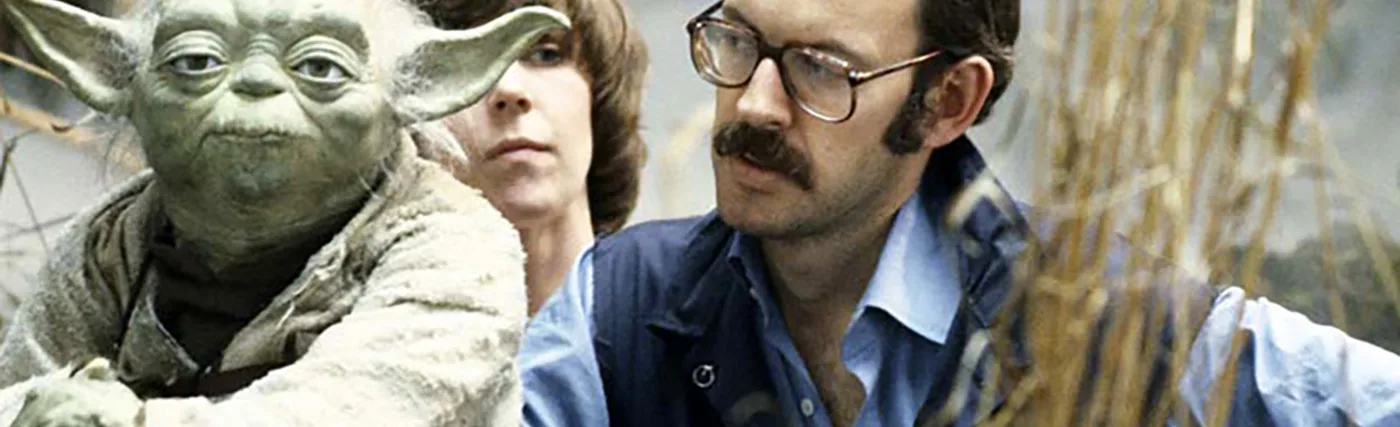
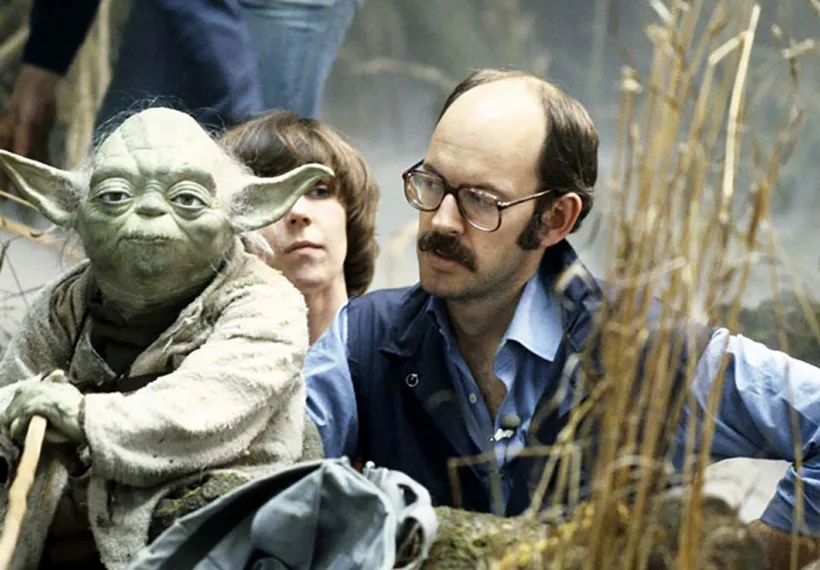
Yoda, Miss Piggy, Cookie Monster, King Kong, Caesar, Gollum – these are some of the most iconic characters in pop culture history, and on this episode of StarTalk Radio, we’re sitting down with the men who brought them to life. Neil deGrasse Tyson is joined by Frank Oz, legendary puppeteer, actor and director, and Andy Serkis, undisputed king of performance and motion capture, to investigate the ins and outs of their craft. In-studio, Neil is joined by comic co-host Adam Conover and astrophysicist Charles Liu.
Next, Andy Serkis takes us behind-the-scenes of performance capture. You’ll learn more about the evolution of Andy’s character “Caesar” in the recent Planet of the Apes films. You’ll also find out how Andy prepares for a role that’s primarily motion or performance capture and he tells us how he captured Cate Blanchett’s performance as “Kaa the Python” in Mowgli. You’ll hear why audiences are drawn to imperfections in performance. Frank tells us why it’s important for every director to step in front of the camera. Bill Nye checks in from the Jim Henson exhibit at the Museum of the Moving Image to give us a history lesson on how we’ve been using puppets for thousands of years to tell human stories. All that, plus, Neil gives us the cosmic perspective as it relates to the realm of puppeteering.
Transcript
DOWNLOAD SRT
Welcome to StarTalk, your place in the universe where science and pop culture collide. StarTalk begins right now. Welcome to the hall of the universe. I'm your host, Neil deGrasse Tyson, your personal astrophysicist. And tonight, we're featuring my interview...
Welcome to StarTalk, your place in the universe where science and pop culture collide.
StarTalk begins right now.
Welcome to the hall of the universe.
I'm your host, Neil deGrasse Tyson, your personal astrophysicist.
And tonight, we're featuring my interview with filmmaker and puppeteer, Frank Oz.
Now, if you don't know who he is, he's the man behind some of pop culture's most iconic characters, like Miss Piggy, Cookie Monster, Yoda.
And joining us in studio just a little later is actor and motion capture pioneer, Andy Serkis.
So, let's do this.
So, my co-host tonight, comedian Adam Conover.
Adam.
You are creator and host of the TV show Adam Ruins Everything.
Exactly.
And you're just proud of that.
Yeah, yeah.
Yeah, yeah.
Well, we try to, you know, break down common misconceptions, tell people the hidden truth about, you know, everything that they thought they loved.
It's just temporal.
It ruins it for a second, but then hopefully, we hope that by learning more, you know, you enjoy that at the end of the day.
So you're the geek that people don't want to bring to something that they're trying to enjoy.
I'm the jerk at the cocktail party who just read an article about that.
And also joining me, friend and colleague, astrophysicist Charles Liu.
The City University of New York, Staten Island.
You are our resident geek-spert.
Geeks, did we just invent that word?
I love it.
You are a fountain of knowledge of all things pop culture.
And that's why we have you on this show.
So we're featuring my interview tonight with puppeteer Frank Oz.
Many people probably know the characters he's created better than they know him, if they know him at all.
So I just had to ask him about this sort of semi-anonymity that he might either enjoy or resent.
Let's find out.
So Frank, how many people know who you are?
Because when I looked at your resume, it was like, this guy's everything I ever cared about in life, from childhood up through adulthood.
You know, that's a real joy for me, because I'm a private person, and I'm not looking for stuff.
And so I can walk down the street.
So you just said you're a private person in front of three cameras and national television, in case you weren't thinking this through.
In past tense, I was a private person.
Thank you.
But I love the fact that I have friends, celebrity friends who can't go outside.
I love going outside on my bike in the city and I love just buying my beans and doing my laundry.
All the mundane things in life I like to do.
The people that buy yachts and stuff like that, I hate that stuff.
I love the normal stuff and I love the fact that nobody recognized me.
Well, I think being a normal guy manifests in your work because your stuff touches normal people in fundamental ways.
Actually, okay, I'll get serious for a second, but that's one of the reasons why I do it.
Also, to stay part of the human race.
But the other reason is if you get into limousines, if you get too many assistants to help you, then you totally lose touch of the people you want to touch.
So Charles, you knew who Frank Oz was?
Knew who Frank Oz was, I did.
She was also Burt of Burt and Ernie on Sesame Street, as well as Grover and Cookie Monster.
And he performed Miss Piggy for nearly 30 years on The Muppets.
So when did you first know who he was?
I mean, I would just hear his name and connection with these characters.
You'd hear the name.
Yeah, I saw his name at the end of two movies.
And I realized that in each of those movies, he played exactly the same character, essentially the same character.
He was in Trading Places and in the Blues Brothers movie.
Wait, who was, I don't know, who was he in those movies?
He was at the boundary between people who were free and people who were in jail or in prison.
So when the Blue Dwarfs got out of prison, he's there giving them back their supplies, including, I think, a used condom was one of the, that's what they were arrested with.
And in Trading Places, he was there, he told Winthrop to take off his clothes and give up his stuff.
So it was like the same role, and it's like Frank Oz at the end.
A small role, but it was like, that's the same guy who's all these voices.
That's when it hit me.
It's so funny, the name is so funny because he really is the guy pulling the strings.
It works too well.
It's almost too on the nose.
If someone pitched that in a writer's room, how about the guy who's pulling the strings is literally named Oz?
It's crazy.
Well, so you might know that the legendary puppeteer, Jim Henson, who goes back to 1955, creating the Muppets, that Frank Oz was like early in that universe, right?
And out of that, you get eventually Kermit the Frog and Miss Piggy and Beaker.
That was one.
There was a scientist.
Yeah, yeah.
And Fozzie Bear, I think is that, did I say that right, Charles?
I think Fozzie must be a F-Oz-E.
Do you think Fozzie was named after Frank himself as Fozzie?
That's a really good theory.
I find that very believable.
Yeah, yeah, I call it hypothesis.
There's a theory of evolution and then Charles' hypothesis.
Hypothesis, yes, hypothesis.
Just keep it.
Yes, yes.
In the Museum of Natural History, it's a hypothesis.
Yeah, right.
So I had to ask Frank just how he got involved early on in this pop culture phenomenon.
So let's check it out.
Your history with the Muppets, I mean, it's, you go back basically to the beginning, right?
Is that right?
Where?
Jim and Jane started it in Washington, DC.
Jim, Jim, Jim, Jim Henson, not all of us.
Jim Henson, yes.
Why, I worked with, my friend.
Geez, you're tough.
I know, you're just.
I'm scared to say his name now.
Jim, I'll say it for you.
Jim Henson.
Jim Henson and Jane started in Washington, DC in a local show for eight years.
They moved to New York in 1963 and I was 19 years old and that's when I joined them.
So when were the Muppets picked up by Sesame Street?
About 1969, 68 something.
And you were there before or after that?
Yeah, before.
Before that?
And after.
Yeah.
So this is puppeteering but a different kind of puppet than we think of, you know, the Marinette or.
Yeah, you know, I started.
Somebody had to, was that Jim?
That was totally Jim, totally Jim.
Cause who would have thought that would have worked with like a stick hand.
Well here's the thing, you know, before Jim, there was a proscenium with puppets.
And the TV.
With a curtain and you sit in front of it.
And the TV shot that.
Well he took away the proscenium and made the TV screen the proscenium, okay?
That's one thing he did.
Then he worked with a tight shot.
When you work with a tight shot, that forces you to do it pretty succinct.
You know, and all that.
Usually most puppets just kind of do that stuff.
So, and he also had characters that were not traditional.
Like, you know, there's the usual dragon and there's a princess and all that stuff.
He just made characters, period.
So he just blew everything apart.
He was amazing.
So we lost Jim Henson in 1990, but of course he left behind his legacy that Frank Oz kept going.
So Charles, puppeteering, what do you know about it?
Puppeteering has been going on for at least 4,000 years.
Ancient Egyptians did it.
Herodotus spoke of it in the 5th century BC for ancient Greece.
So this is puppets?
Yeah, puppets specifically.
Finger puppets, hand puppets, glove puppets.
And other around the world?
Yeah, marionettes, little dolls that could move, then followed by all the kinds of developments up to today, including the very complicated handspring puppets you can see, where there's a person standing next to them and they show very lifelike behaviors of animals and other creatures.
Such as the kind of thing employed in the Lion King, I guess.
Yes, right.
Right, there are many different sort of parts that capture an exact, or at least the spirit of the animal that they are trying to show.
That's right.
Even though you know it's not the real animal, the movement evokes it.
It is so good that you are able to appreciate that puppet for its own life and existence without having to think about the puppeteer.
Well, he's had decades to hone it from the Muppets and Sesame Street and it leads me to wonder whether is there any place else it can go next?
Well, I don't know, we thought maybe, here look, we put together.
Oh, I like that.
Wow.
How do you do this?
What do I do?
I think you put your hand in here.
This is pretty close to what my hair looks like.
Ah, ah.
Ah, oh yeah, oh, good, yeah.
Oh, very good, very good, very good, very good, Neil.
Very good, very good.
So how much of an impact on the landscape of education do you think Sesame Street had?
Well, I, when I was a child, watched Sesame Street and I was like, what?
Eventually though, I realized that the puppets themselves were being controlled by people.
And that was actually quite a realization for me in education.
Cool.
How are you so good at that?
Have you been practicing?
I was just baffled.
What, what?
How are you so good at that?
Wait, wait, so you're younger than I think both, you're younger than I think both me and Charles.
I certainly hope so.
So did you learn how to count with the count on Sesame Street?
Oh, absolutely, absolutely I did.
Yes, absolutely, I mean, as a kid you're, it's interesting how much children relate to puppets because so much of kids television is puppets, puppets, puppets, puppets everywhere.
Okay, so, so how about, I'll help you there.
Oh, thank you, thank you, thank you, Neil.
Okay, so it's not just the math, it's not just the math, but there's also life lessons from Big Bird and it was a happy character.
And it was bilingual as well.
Eventually, they threw in some Spanish.
Right, right, but there's also Oscar the Grouch.
And I kept thinking, as a kid I'm happier than this character.
This character has like issues, so.
Well he doesn't live in the best situation.
No, he does not.
It teaches you to have empathy for folks who have it rougher than you, I think.
So Adam, who's your favorite character?
Oh, on Sesame Street?
Yes.
Overall, oh my, I have to think about that.
You have to think about things.
I mean, I was like, I was like the telly monster.
You got any telly fans?
Telly fans?
Because he really, because he had, he had, he went through some real problems, man.
He had, he was anxious.
That's more relatable to me.
Charles, how about you?
Um, hang on a sec.
Um, OK.
I would have to say Grover.
Yes, Grover.
Grover.
Well, I asked Frank Oz if he had a favorite character that he performed on Sesame Street.
So, check it out.
You know, one has to love one's characters or else you'll never do a good job.
So I love every character I do for some unknown reason.
Even Piggy, who is neurotic and animal-able characters and Cookie Monster and everything.
You invested in their personality profile.
Absolutely.
But you never do it alone.
One doesn't work in a vacuum.
I did it with the writers, with the fellow performers, and with Jim, you know.
Just because I'm sitting here, it should also be a writer here, Jim here, and the other performers here.
Because one doesn't work that alone.
You have to create a character with other people.
But I guess to answer would be the character that is easiest for me is more organic is Grover.
Most like me.
And you did Miss Piggy.
I did.
And so did anyone have concern for you psychologically, given how many different personalities manifested in these fictional monsters?
It's not just me, but it's also the other performers who do so many other characters.
But we're lucky.
We work our problems out and you have to see it.
So we're the victims of these personality disorders.
We get paid for therapy.
You don't get paid to watch it at all, no.
Coming up, I asked puppeteer Frank Oz about his most iconic character of them all, the Jedi Master Yoda.
Welcome back to StarTalk from the American Museum of Natural History.
We're featuring my interview with puppeteer Frank Oz, and he is, we think, best known as the voice of Yoda from Star Wars.
Check it out.
I remembered seeing Star Wars in real time.
I mean, first we're on real time, and there's this Yoda there.
That's a weird kind of character, right?
I kept thinking, no one will ever remember that character.
Yoda, it's just weird and kind of hairy, and you don't want to pet it, you know?
I mean, if you can have a character that doesn't exist, make it something you might want to cuddle with.
So I was sure nothing would come of Yoda.
And here's Yoda the Wise.
Who's to say?
So who gave you that call?
Actually, George.
George, George.
George Lucas, through his producer, asked Jim, we were doing the Muppet movie, in Los Angeles.
Jim was obviously too busy and knew he couldn't quite do that.
He has incredible talents, but this one he couldn't quite handle as much as I could, he felt.
And that's how it happened, it was through support of Jim.
And then I started doing it.
So, you invented the voice.
Yeah.
Did anyone tell you, speak this way?
In fact, how could anyone possibly tell you to speak that way?
Because no one ever spoke that way before.
Right, you know why he says that?
Why he talks that way?
I have no idea.
There's always a reason for something.
I come to learn that as a scientist, yeah.
My view of it is, first of all, it was Larry and Georgia wrote it.
And I said, hey, you know, this is nice, can I, it was only, they use it halfway.
And I said, can I do it all the time?
They said, yeah.
My, the way I view it is Yoda is...
This is where like adjectives and nouns are switched in places.
I'm not smart enough to know what an adjective or an noun is.
Yeah, the sentence is fully understandable, but clearly from another syntax, yeah.
It's because that's the way the original Jedi spoke.
It was a very formal and elegant language.
He is now 700, 800 years old at that time.
And not unlike the Native Americans trying to keep their language alive, he also is trying to keep the formal Jedi language alive while these Serf kids are talking their language.
And so he feels a tremendous responsibility to talk that way, even though nobody else talks that way.
Even though he could probably speak the way everyone else speaks.
Right.
But he has the integrity and he feels the responsibility.
Cultural imperative.
Yeah.
That's what I believe.
Well, you don't have to believe it because you did it, so therefore it is.
Yeah.
It is.
It gives him dignity and an integrity that's important to his gravitas.
I think first of all, the performance that Frank gives is incredible.
And it's got, because he's right there actually puppeting the character.
There's a real humanity to the performance.
You really connect with it.
And then he starts out as this small little creature living in the bog, and he turns out to be this wise, incredibly powerful teacher.
That contrast is so interesting and funny and stays with you.
Charles, where do you come at?
I think we all want to be Yoda.
We all somehow feel we're inadequate, perhaps a little ugly, a little short.
But within us, we have the power to move mountains with just our mind.
Or we want a Yoda in our lives.
Someone where you're at your...
Luke's at his worst period.
He's crash landed into this planet.
He's weak.
He can't do anything.
And then there's this guy who says to him, like, no, you contain the seeds of power and greatness and let me help you bring it out.
So, Charles, give me some of the backstory on Yoda.
Okay.
Well, George Lucas made sure that the backstory stayed very mysterious overall, but we do know that he spent his last years of his life in exile on Dagobah, which was the swampy planet, probably his planet of origin.
We also know that-
What species is he?
We don't know.
It's something weird in between-
They've never specified.
No.
The idea is that he might be the last of his kind.
George Lucas once joked that he's the illegitimate child of Kermit the Frog and Miss Piggy.
Yeah, that kind of adds up, actually, if you picture it, it does kind of add up.
So Charles, Yoda is like the master of the force.
Yes.
A physicist's force is a push or a pull, and it's calculable by using mass times acceleration.
The force that was described in the Star Wars movies is more like some sort of vague thing that knits the universe together and flows all around us.
It's more like an energy rather than a force, but it is tappable by certain people with enough training to allow you to manipulate space and time as if you had an unlimited force generator inside your pocket.
So that would be what an actual force would actually do.
Right.
Okay, so there's some overlap between the two.
Right.
All right, there's one more thing about Yoda that I had to get off my chest with the voice of Yoda himself, Frank Oz.
Let's check it out.
Okay, now can I give you my biggest gripe about Yoda, man?
Sure.
Like, unforgivable.
Sure.
Okay, there's Yoda, old and wise, walking around with a cane.
Then which episode was it where he pulls out the lightsaber and does triple kung fu flips through the air?
The dude was walking around with a cane for the whole, all the, he's old, tired, in a cane.
You can't take this so personally.
You don't walk around with a cane.
Okay, settle down.
No, no, I got to get this, I got to release this.
He's in a cane and then it's time to fight.
He's flipping, doing matrix-like moves off the walls.
Right, right.
You okay?
Then he's done and then he goes back to the cane.
You finished?
I don't know.
So I don't know if I have room for that.
Okay, fair enough.
Well, that was, what happened was George had a story to tell and I was doing a puppet and in the story he had a fight.
So he had a choice.
Do I stay at the puppet and not tell the story he wants to tell or do I change the puppet and make it the CGI and to jump around?
Now one could explain it by saying not unlike a mother can lift a car of a child, he in this extreme case uses that adrenaline to fight and then he gets back because it can't be an old man.
One can use that.
I'm not saying I'm using it.
I'm saying that's the only explanation I can think of.
I'm not saying it is right.
I'm just saying that's an explanation.
Okay.
All right.
Let's just give you a pass on that one.
Charles, are you buying that explanation?
No.
Superhuman adrenaline strength?
No, no, no.
Hysterical strength?
Although it is true that adrenaline running can increase your strength by several times, it's not going to turn someone who can't walk into someone who can do that with a lightsaber.
Okay, it is much more likely that the cane was just an affectation, something that he used to show how old he was and keep all his people off guard.
There was also the idea where, say, Donald Blake, who became Thor, he walked with a limp until he smacked the cane on the ground and then he became Thor and he could fly around and call it down Thunderbolts, right?
Jane Foster, who played Thor more recently in the more recent comic books, has cancer and actually is physically decrepit and in deep trouble until she strikes the mallet down and then becomes Thor.
Adam, you got a better explanation for me.
I like the affectation explanation, but I have an alternative explanation.
I am not an astrophysicist, unlike the two of you, but perhaps because Yoda is so tiny, all of the, he is more dense with force power that explodes out of him.
Does that, does that track for you guys?
Do you guys, I don't like his expression.
I don't like his expression.
I think he's nice, I don't know about you.
Dense with force power.
Neil, I have a bachelor's degree, so I think I know what I'm talking about.
He's dense with force power.
He's a force power, there's a sentence for it.
He should go on the TV show, so you think you can force.
Well, you have a long history of ruining movies like this for people, don't you?
No, I just offer, no, no, every time a movie comes out, man, no, I'm just helping people, appreciate.
I just, so one time I just, you know, put up some tweets about Star Wars, and I thought I was helping people, but no, they didn't think I was helping them, and like Time Magazine came out, do we have that headline?
Yeah, look at that.
They tried to completely ruin Star Wars, then no.
Well, we're kindred spirits then, that's what I, I ruin things, you ruin things.
Oh, okay, oh, that is a thing.
Yeah, absolutely.
Oh, we would think with the noble goal of getting people closer to what is real.
Yeah, except that, we have a specific tweet up, don't we have an image of it?
Will you read this aloud in the original?
In Star Wars, The Force Awakens, BB-8, a smooth, rolling, metal, spherical ball would have skidded uncontrollably on sand.
Now, Neil, that is for sure.
Let me ask you, that-
I'm just trying to keep it 100.
That is your problem with Star Wars, is that the ball is slippery.
That's the only critique you have.
No, I had other issues.
I put up with this about a dozen of them.
Oh, okay, okay.
Okay, I didn't just stop there.
But that was a practical effect, though.
BB-8 was a real, one of my favorite things about the movie-
The thing couldn't have done anything.
But they literally built the prop.
BB-8 was a real prop that they had rolling around.
It was a physical object.
Yes, it was.
So it really did it, unless that particular scene was-
Part of that sand is gonna be concrete, half an inch below it.
Okay, you can do that.
I see, I see.
Yeah.
Try driving on sand with treaded tires.
Just try it, okay?
Well, maybe he's got magnets.
Well, coming up, actor and Hollywood motion capture pioneer, Andy Serkis joins us when StarTalk returns.
We're featuring my interview with puppeteer and filmmaker Frank Oz.
And I asked him his opinion about the transition from puppets like his original Yoda to the computer animated characters we see in movies today.
Check it out.
CG, it all depends on the use of it, right?
If it enhances the story invisibly, it's great.
If it shows off, then all we know, it's all just money and time.
So it depends on the manner in which it's used, you know?
I mean, I...
So you don't lament the puppeteering trade aspect of it?
I don't lament anything.
The craft.
No, I'm not a big puppet craft guy.
Okay, that's really what I was asking.
I'm a performer, basically.
And now I've been a director.
I mean, when I directed Little Shop of Horrors, everything in that movie was real, except there were two CG shots at that time.
They didn't call them CG.
And those shots were just a subway going by and something else.
The plant itself was all live with about up to 30 people working it.
These days, you couldn't afford that.
You have no choice but to go CG on something.
Nobody could possibly shoot that now.
So therefore, in that situation, CG may be appropriate if you have to have a talking plant that weighs a ton, right?
And it's the manner in which you do it.
If it's invisible, I'm all for it and supports the story.
It's clear that some movies today didn't get the invisible memo.
No, I get so tired, I mean, I personally get tired of swirling fire and things like that that are CG.
I just, you know, if it helps me to be compelled and touched by the story and it's invisible, I'm all for it.
Well, joining me now to discuss computer technology in film is actor and performance capture pioneer Andy Serkis.
Andy, welcome to StarTalk.
Tell me, what does performance capture acting?
It's this incredible 21st century tool for enabling an actor to transport or transform into any avatar.
So, you know, another way of putting it for the lay person would be instead of putting on a costume and makeup and going on set and being directed by the director and working with other actors, you are going on set working with the director and other actors and then having digital makeup applied to your performance.
Now, you are the undisputed king of this art form.
In part because, in fact, you were King Kong in the 2005 remake, right?
Absolutely, yeah.
People didn't draw that on top of you.
You were King Kong.
Yeah, I mean, I think that's the thing that people misunderstand.
You know, and the difference between animation is, for instance, an actor would go into a voice booth and do two hours of recording and then a whole team of animators would spend, you know, months and months and months each individually working on a shot and they become the actors.
This is why your body still matters.
So the difference between that and performance capture is that you are the author of the role from page one to 120 of the script.
You're on set every day working with the director in exactly the same way as you would in a live-action performance.
And you were also Caesar, the lead chimpanzee in the revival of the Planet of the Apes franchise.
And I thought maybe, okay, he's only going to be doing apes.
That's his...
Let me typecast him as an ape.
He's the ape guy.
But no, you end up playing, like, Creepy Gollum in Lord of the Rings.
And you were, like, the supreme leader Snoke in the latest Star Wars films.
So we will not typecast you as an ape.
Thank you.
Just as an evil villain of the Overlord of the Force.
But those ape roles are incredible, especially because you were talking about voice actors.
So much of the time when people are working digitally, it's just the voice.
The first half of the first ape movie you don't even speak.
And you convey so much emotion.
It's one of my favorite performances I've ever seen.
Thank you.
Thank you.
Yeah, I mean, that's the great thing.
Look, here's a case in point.
Over the course of three movies, I get to play a character which from birth all the way through his entire life.
Not only that, it's not a human being, it's an ape.
Not only that, he's evolving.
So you get to see a trans...
This is what the technology can do.
It allows you to...
You see the evolution of Caesar into this ape that is a chimpanzee at the beginning but is almost human-like towards the end.
I can see a future category in the Academy Awards.
Best leading ape.
Because that's what you are.
So how do you prepare to be an ape?
I mean, humans are a branch of apes, but it's not the kind of ape you're portraying.
So do you go around dragging your knuckles for a few weeks?
Well, look...
To get in the part?
How do you do this?
Yeah, I mean, the great thing is, it's all acting.
It's about acting.
And when you're creating a character, you are building the psychology of the role, the emotional drive of the role, the physicality.
It's all, you know, a backstory.
You imagine who this character is.
And you got to connect with people.
Absolutely, but so you start off by, of course, if you're playing an ape, then you observe apes.
And I spent a lot of time observing apes, both for King Kong and for, you know, I went to Rwanda and studied mountain gorillas.
I looked at gorillas in captivity, observed the difference between the two.
But one thing with Caesar was he is not just an ape.
This is an ape that has a drug that's coursing through his veins, which enables him to rapidly evolve.
And so it's like, it's about character, ultimately.
So the learning how to be an ape is like 1% of the journey of building the character.
It's who is this guy?
And the way I chose to play Caesar was that he was an outsider, that he is almost like, I approached him like he was a human in an ape's skin until there's a certain part in the story.
He's brought up with human beings, so he reflects human behavior.
It's then when he's thrown into an ape sanctuary at his teenage years that he begins to see himself for what he is and becomes a revolutionary leader and leads his apes to freedom.
So it's not a stretch to imagine a human playing an ape, because they're our closest relatives, but if I'm imagining the future of this craft, this art, how might one go about playing animals that don't have four limbs, like insects or something, or a lizard, it's got four limbs, but the limbs are not proportioned the way apes are?
Sure, well that happens using a process called retargeting.
So for instance, I'm working on a production of, not Animal Farm, that's to come, actually, but Jungle Book, and we have great actors playing all the characters, all the animals of the jungle.
We've got Christian Bale playing Bagheera, we've got Cate Blanchett playing a snake, we have Benedict Cumberbatch playing Shia Khan, the tiger.
We think he can play anything he wants, Benedict Cumberbatch, yeah, yeah.
And, you know.
One day they'll say, could you please play yourself?
And we'll say, I have no idea what that is.
But there are various different ways of retargeting the actor's performance, so that they are literally driving the character.
So for instance, Cate Blanchett, we designed the snake and digitally attached the snake to the back of her head, so by moving her head like this, the ripples went through the entire body of the snake, and that's how it's puppeteered.
So it's a digital form of puppeteering.
So there are really interesting ways.
And of course, you're capturing all the facial expressions using it.
Well, we've got a picture of you playing Caesar, and we get to compare one right next to another.
Look at that.
So are the dots on your face?
That's me on the right-hand side.
So tell me about the dots on your face.
So the dots are assigned to muscles in your face picked up by this boom that's in front is a head-mounted camera, which picks up all very subtle information of every single expression you're making.
And it also tracks your eye movements and so on.
So the animators then take that information.
The information goes through a computer, but it's then taken by the animators, and they have to retarget it onto the face of the person.
Right, because there's 100 computer engineers between the left picture and the right picture.
Yeah, well, there are CG artists and also animators too.
So it's the skill of honoring the actor's performance is what they do.
So they are duty bound to take all of the emotion that is performed by the actor on the day on set and translate it by texture, by fur, by literally retargeting that performance.
And a shot like that will take maybe 120 iterations before it actually nails the performance.
Does what it's gotta do.
Yeah, being performed by the actor.
So Adam, is there a role for CGI in comedy?
Oh yeah, absolutely.
I mean, CGI, TV comedy has much lower budgets than movies, but it's starting to get so available and accessible, we are able to use CGI.
Yeah, I didn't wanna say cheap, but it's cheap.
Inexpensive.
True TV is inexpensive, it's not cheap.
We are able to use it on our show to punch jokes or to make moments work better.
Or now if I flub a line or if I don't sell a joke, we can make it work on the show with VFX and make it work in post.
Like watch, we can just add an explosion right here.
Like watch, let's add an explosion.
See, that didn't work for anyone at home, but on TV it's gonna be hilarious.
Yeah, this is still, there's nothing here right now.
Yeah, for you folks that was nothing, but they'll love it at home.
Okay, so Charles, can you think of roles of CGI in education?
Absolutely.
Right now NASA is already working on opportunities to use CGI to show people going into the International Space Station, walking around, seeing things happening, as if you were there.
Now I'm just hoping that...
But can you also like turn knobs and things?
So you are what it makes you think you are in situ?
That's right.
And I'm waiting for astronauts to put on this capture technology so that they can look like apes in space.
You don't have to send real chimps up anymore.
You can just send astronauts with emotion caps.
There you go.
All right, so Andy, Frank Oz noted that the CGI needs to enhance the storytelling and not become the storytelling.
I assume you agree with that.
I mean, honestly, they should be invisible.
They should be totally invisible.
I mean, that's the great thing.
I mean, most people think when they watch the apes movies that it's like they're not quite sure because it's so believable.
They're not entirely sure how it's done, but they are totally transported into that world.
I remember in the first three minutes, I'm saying, Joe, I wonder how they did this.
And then in the next three minutes, it was like, I'm totally in this and I don't care.
Right, exactly.
Yeah, yeah.
We're going to take a quick break.
And when we come back, more on the art and science of character creation when StarTalk returns.
Welcome back to StarTalk from the American Museum of Natural History.
We're featuring my interview with puppeteer Frank Oz.
And I asked him how he creates characters, both as a performer and as a director.
Let's check it out.
We would always play around.
It was always about play, just like you.
It's about play.
And that's how to get the best work is just to play.
And then we will say, okay, let's play around with this, like improv this, because the script doesn't quite work there.
And then they'll say, you know what?
That script works.
You should do that word for word.
But how about this over here?
And we would just play until it cooked.
Even though we all liked polished finished product, what I think we like even more is behind the scenes.
Particularly of a product we love.
You want to know as much as you can about the creative process.
I also think it has to do with imperfection.
I think we like imperfection and not perfection.
I think the problem with the technology, in my opinion sometimes, is it's used for perfection.
And we're not perfect and so we can't relate to it.
So we like to relate to imperfection and that's backstage too.
That's where you get the fits and starts.
That's where you get the humanity.
We're all flawed.
And every director should be on camera and they'll have real empathy for an actor and they won't treat the actors badly.
Or take them for granted for what they're trying to invest.
Absolutely.
And they're precious, vulnerable people.
And when you're on, well you're on camera all the time, you know, I mean you give yourself, you're naked.
You're bare-assed.
Yeah, exactly.
So Andy, do you feel bare-assed when you're acting?
Just all vulnerable?
I always feel bare-assed in a lycra suit.
So to a point that Frank was mentioning, how important is sort of play in acting?
How?
Well look, it's all about imagination.
I mean that's the thing.
Whether we're on stage and we're acting in front of, creating a fourth wall, whether we're pretending to be apes in motion capture suits, whether we are pretending to be kings or queens dressed with a crown and a robe, it is play.
It's all about imagination.
But the thing is, it has to be grounded in emotional truth.
And so what you're doing as an actor is you're always finding a relationship between you and the character, regardless of how extreme it might be.
You know, playing King Kong, playing Gollum.
These are fantasy creatures.
But they don't just exist out there.
Because you're embodying them, you're using a huge part of your you as a person.
How many people get to say, playing King Kong and Gollum?
That sentence isn't utterable by anyone else who ever lived.
I just want to bask in that sentence just for a moment.
So you've been in front of the camera, behind the camera.
You're an actor, director.
And you're a pioneer in this medium.
Can you think of what the future of this medium will bring?
The great thing about performance capture is it's now used in big budget movies.
But it's also used in television.
It's used in video games.
It's going to be used more in virtual reality and in augmented reality.
Your augmented reality.
So I think we all want a shared experience.
We all crave the shared experience.
Even though we all binge watch on our iPhones and our computers.
I still think that human nature desires the shared experience.
So what's going to lead?
Is it you're an actor and you say, I want to portray this in the future.
Engineers help me do this.
Or will the engineers invent something new?
And then you'll say, oh, I know how I can now use that in my future project.
It's a combination of things.
It is a marriage, but it's got to be creatively led.
I mean, projects never happen.
I mean, films never come about.
Toy Story would never have happened had it not been for a script and a story and great characters.
And then it's like, how do we make this happen?
Do you agree with Frank that the behind the scenes can help someone appreciate what the product will be?
I think that's a really good question, actually.
Well, certainly it's helped explain the process, the acting process of performance capture to the world.
Otherwise, it really would be a mystery to a lot of people.
But Charles, do you think if you see how something is done, does that subtract from the magic of it?
If you see it after, then it doesn't.
Oh, after.
If you see it before, it might subtract.
But this is something that's very true, the imperfection of performance.
Some studies have been done to try to figure out why some songs cause you to cry, like tear-jerking songs and why some don't.
And the answer lies in the imperfection.
If you hear a person's voice break or go a little bit off because it seems more emotional, you are more likely to cry.
To pick up on the imperfection thing, just if I may, I think the thing about performance capture is because you're seeing actor decisions, because you see maybe someone, the physicality is so, the capture is so, the fidelity of it is so truthful.
If you see an actor trip or stumble or do something that they're feeling in the moment, like an animator would never think to do that.
So Andy, before we let you go, what should we look for?
Where are you gonna take us?
Well, I really do hope that we are on the verge of creating really engaging storytelling.
And again, it's all about immersion and emotional connection.
Well, Andy, thank you for joining us tonight on StarTalk.
Andy Serkis!
Coming up next, my good buddy Bill Nye, the Science Guy, will share his thoughts on the art and science of character creation when StarTalk returns.
Welcome back to StarTalk, from the Rose Center for Earth and Space, right here in New York City.
And we've been talking about the art and science of character creation.
And right now, I've got a dispatch on this topic from my friend, good buddy, Bill Nye the Science Guy.
Check it out.
Hey Neil, I'm at the Jim Henson exhibition at the Museum of the Moving Image in Queens, saying hi to some of my old friends, like Kermit the Frog.
Hi Kermit.
Hello Bill.
Since ancient times, people have used dolls and puppets to tell human stories.
The appeal of these pint-sized personas runs deep.
I mean, how many of you have played with doll houses?
How many of you talked to the miniature figures on your toy train layout?
We love these little creatures telling human stories.
It's how we learn.
Frank Oz's fabulous fictional characters taught many of us the alphabet and how to be nice to each other and that fear is the path to the dark side.
But for the performers behind the curtain or below the frame, it's how we inform, inspire or make you laugh.
That's art.
But the appeal of the miniature worlds that these characters inhabit runs deep to our ancestral past and that's science.
Back to you, Neil.
So Charles Adam, in what ways have puppets touched your life just growing up?
I really enjoyed puppets when I was a kid.
We played with them, but really I enjoy even more watching true quality puppeteers make amazing things happen with these simple constructions, it's really quite amazing.
But up to what level?
At some point you just gotta say no, we're grown ups now.
No, any level, any level.
I use it in graduate classes.
No.
Yes.
Black holes, you know, that kind of thing.
Yeah.
It works really well with kids, but even graduate students appreciate it too.
You, you, in graduate classes.
Oh yeah, especially magneto hydrodynamics.
Oh yeah, no puppets, any kind of three dimensional manipulative activity is fundamentally something that adds to the educational experience.
I totally use them whenever I get the chance and I'm always happy to promote the use of puppets and other kinds of manipulative things in education.
Whatever it takes.
When you give people that visual, that helps them, that helps them remember.
And the three dimensionality of it.
Three dimensionality and a voice character, why not?
That's right.
Since ancient times, puppetry has been a way where people have used science and technology to convey stories and bring us beyond what is just real.
And that's just extended forward to the Muppets of Frank Oz, to Yoda, and now CGI.
It's just another tool that science and technology can bring to the table when transporting us somewhere beyond our regular daily lives.
Oh, that's beautiful.
Because in this final clip with Frank, I asked him about a related, very curious phenomenon in his craft.
I asked him, check it out.
You must know this, but I have to share it to you just as a firsthand experience.
I've had a couple of experiences in one-on-one conversations with Muppets.
And even though I see the Muppeteer just standing there, either just behind a barrier, or maybe not behind a barrier at all, they're just standing there, I'm talking to the Muppet.
And the human being just dissolves away.
And I'm saying that as an adult.
What is that?
Why do we all just play along with that and can smile and joke and we will say, I met Miss Piggy today.
We're not gonna say I met the puppeteer of Miss Piggy.
We full-grown, mature adults and especially kids will say we met the monster, the character.
What is that?
It's gotta be something psychological going on in there.
Yeah, I mean, using the Yoda or any characters, if somebody said to me, geez, you did a great job with that, I lost, immediately I lost.
My job is not to do a good job.
My job is not to do a great job.
My job is to have it transcend, it should be transcendent.
So that which I'm working, transcends that which it is.
So you don't want someone to say, you did a good job at what you did.
That would be the worst thing in the world.
You want someone to say.
No, I don't want somebody to say, I want someone to believe.
I thought deeply about that last clip, and I realized there's something in my life that resonates with that.
He doesn't want you to know that he's even in that equation.
He just wants you to believe what he has created.
And that should be your takeaway from what he has created for you.
And I, as an educator, when I try to bring the universe down to earth for whoever will listen, I don't ever want the result of that to be you in some other situation saying, this is true because Tyson said so.
If that is your answer to someone's comment, I have failed as an educator.
My task is to empower you to think for yourself.
So that you will walk away, and I am not in the equation at all, you don't even remember that I share that information with you because that information became a part of you.
And once you walk away from that conversation, you're in charge of your information.
And it doesn't reference anything else in the world.
And that is the power of knowledge, the power of insight and ultimately the source of all wisdom.
And that is a Cosmic Perspective.
I've been your host, Neil deGrasse Tyson.
You've been watching StarTalk.
Thank you.
Until next time, as always, I bid you to keep looking up.
See the full transcript



 Unlock with Patreon



 Become a Patron