




 Unlock with Patreon
About This Episode
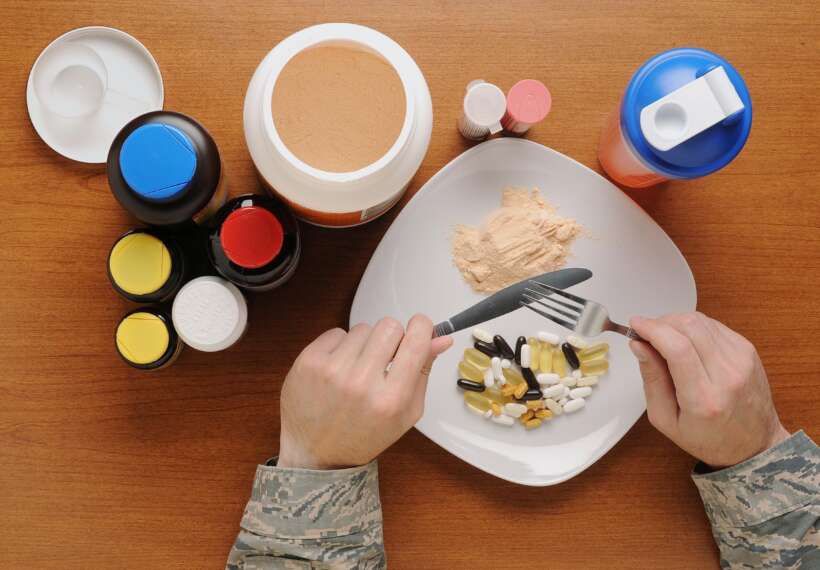
What are the top myths in the health and fitness industry? Neil deGrasse Tyson and co-hosts Chuck Nice and Gary O’Reilly explore pseudoscience, “quick fix” fads like Ozempic, and how to navigate wellness with exercise scientist, Dr. Nick Tiller.
Are all fitness trends bogus? Do some have some benefits that just get exaggerated? We parse through plausible claims versus implausible ones. Is there any harm to the placebo effect? We talk about pseudoscience, whatstheharm.net, and whether we are equipped to handle modern marketing tactics. We discuss the interplay between intuition and intellect: how do we determine if a claim is real or fake?
We dive into common health and wellness industry myths. Can there be simple solutions to complex problems? We explore our human need for efficiency and whether that is the same as laziness. What type of exercise is best? Do any dietary supplements work? Learn how the FDA treats dietary supplements and why you should be wary of quick fixes.
We talk about the health impacts of fad dieting and how to handle fitness and lifestyle trends in the media. Does someone having a large audience equal expertise? We discuss the impact professional athletes have on the health and wellness industry and claims made in chiropractic. All that, plus, how can we skeptically approach fitness and maintain our health?
Thanks to our Patrons David Butler, Aliaksandra Basalayeva, Savage162, Nicholas Pompelia, Fred Lombardo, and Kris Brown for supporting us this week.
NOTE: StarTalk+ Patrons can watch or listen to this entire episode commercial-free.
Transcript
DOWNLOAD SRTReboot your credit card with Apple Card, the credit card created by Apple.
It gives you unlimited daily cash back that you can now choose to grow in a high-yield savings account at 4.15% annual percentage yield.
That’s more than 10 times higher than the national average savings rate.
Apply for Apple Card now in the Wallet app on iPhone and start growing your daily cash with savings today.
Apple Card subject to credit approval savings is available to Apple Card owners subject to eligibility requirements.
Savings accounts provided by Goldman Sachs Bank USA, member FDIC, national average savings rate is from FDIC website, terms apply.
When it comes to auto, home and life insurance, you want a company that’s on your side, like Amica.
They take the time to understand what you need and tailor a policy to meet your needs.
When you need Amica, their representatives put you first and let you know what you can expect from them.
They’ll tell you exactly what you need to do and walk you through it.
By choosing Amica, you know you’ll have someone in your corner when you need it most.
Amica, empathy is our best policy.
Welcome to StarTalk, your place in the universe where science and pop culture collide.
StarTalk begins right now.
This is StarTalk Sports Edition.
I’m Neil deGrasse Tyson, your personal astrophysicist, and I’m joined by my two co-hosts, Gary O’Reilly.
Gary?
Hi, Neil.
All right.
And of course, Chuck Nice, Chuck and baby.
Hey, what’s happening, Neil?
So today we’re going to talk about skepticism, something so deep to my heart in everything in this world.
And when are you appropriately skeptic and when are you just wrong and doubting everything and therefore believing nothing when there’s stuff out there where there’s sufficient evidence to support it?
These are big questions that apply to so many walks of life.
And it especially applies to the health and fitness and nutrition industry.
Oh.
And it was time we went there.
And so Gary did some homework on this.
So, Gary, tell me what you put together for today.
We’re going to start off.
We’re going to engage the critical thinking and the skeptical mind.
And then drop some numbers on you quickly.
The health and fitness industry is valued at around $4 trillion.
Oh, that’s nothing.
That’s light.
That’s worldwide.
Is that worldwide?
$90 billion a year is spent on health club membership.
So if you like a spa day or you want to…
So that we can drive by the place and go, I belong there.
That’s it.
I should have gone this morning.
Nobody sees the inside of their gym.
They just point at it on the way by to some place else.
Now add in $100 billion a year on dietary supplements.
Ask yourself, how many of those products are underpinned by strong peer-reviewed evidence?
And then ask yourself…
How many of them are made of sawdust?
We’ll get there.
Ask yourself, are our critical faculties still analogue while we operate in a digital world with fake news, bad science, and really crap in social media?
And then ask yourself…
You just described Twitter, bro.
Did I?
Sorry.
And then ask yourself, why do we default to quick fix solutions, not just in workouts, exercise, but diets and other things?
So, for all of this, we need an expert.
Dr.
Nick Tiller, Senior Research Fellow in Exercise Physiology at Harbour UCLA Medical Center, a leading authority on physiology and pathophysiology of extreme exercise, an elite level marathon runner, an ultra marathon runner and an Ironman competitor.
He’s also the author of The Skeptic’s Guide to Sports Science, considered to be, and not by me, but by people who know these things, one of the best sports science books of all time.
I’m skeptical of that statement.
Okay, stop.
You should be.
Welcome Nick Tiller to StarTalk.
It’s great to be here.
Thanks for having me, guys.
Excellent, excellent.
We need you.
The world needs you.
And let’s see if we can milk from you as much as we possibly can for our audience, because this is very important content.
And so, let me just start off by asking, what was some of your, like how did you land in this field?
So I come from a sports science background.
In the US, it’s much more broadly kinesiology.
In UK and Europe, it’s sport and exercise science.
In my first two degrees, my undergraduate and my master’s in exercise physiology, sports nutrition.
And at the time, like most other people in my position, I desperately wanted to work in high performance sport.
If you do a poll among all undergraduate students, 95% of them put their hands up.
They all want to work in sport.
And after I graduated with my master’s, this was back in about 2006, 2007, I started to work with athletes and coaches and become more involved in the health and fitness industry.
It became immediately obvious to me that all of the values that we hold so dear in terms of the scientific process, the scientific methods, scientific skepticism, you know, being humble, showing humility, evidence-based practice, prioritizing the process of inquiry above the conclusions, mitigating your bias.
These are in stark contrast to what we see in health and fitness, where marketing is king, where the science really is subordinate to the marketing.
So you described principles of engagement that should apply to all branches of human inquiry.
Right.
And so, and now you’re saying there’s a gap there in your field.
That’s too bad.
You can’t sell snake oil with the scientific method.
Thank you for rationalizing that out.
If you’re going to pull the wool over people’s eyes, you can’t do real science.
And that’s the point, isn’t it?
Is that the health and wellness thing we just said is worth over $4 trillion.
You don’t get this kind of valuation by following mainstream science and by tempering your conclusions.
It’s all about sensationalism and trying to get the biggest bang for your buck.
So I’ve been trying to bring these two worlds of critical thinking and their health and fitness a little bit closer together.
So before we get, I don’t want to get, I have a tendency to get ahead of the show, but I don’t want to.
So I’m going to ask this in the most general way possible.
Of the amount of products on the market, knowing that many of them are bogus, is it that some of them have a very small benefit that is exaggerated, or is it that the majority of them are just straight up bunk?
Wait, but by the way, you can be bunk and still believe it works and then have it work.
That’s the placebo effect, right?
Oh, what a great, yeah, that’s right.
The placebo effect.
Right, right.
So can you disentangle that for us?
OK, so you’re describing, I guess, the difference between misinformation and disinformation.
You know, somebody who inadvertently propagates some erroneous advice against somebody who deliberately propagates erroneous advice in order to line their pockets.
So to answer your question, there’s a broad spectrum.
So at one end of the spectrum, you have products that are just completely bogus.
So for example, chiropractic.
In terms of the disparity between the claims made for chiropractic and the evidence in support of those claims, the disparity is as huge there as I’ve ever seen for any intervention.
So this thing is not based on any scientific evidence at all.
I’m probably going to get emails now, but you know.
I was about to say, please send all your correspondents.
We can untangle that later.
Let the man get his point out.
I point my nose in the direction of the science as we all do, right?
But then at the other end of the spectrum, you have products where the plausible claims are intertwined with the implausible.
So for example, I’m doing a talk this weekend about pseudoscience in distance running at the London Marathon Conference.
And one of the products that are often sold to runners are massage guns.
These things you can hold and you push them into the muscle and it helps to release muscle pain and this kind of thing.
And on the one hand, they say that it can reduce muscle soreness and reduce scar tissue and help with pain in the muscle and this kind of thing.
But these same vendors say that it can cure diabetes, that it can reduce inflammation.
The claim that I love the best is that it can help with high blood pressure and low blood pressure.
How can it be both?
So you got to pick one.
So things like yoga.
Yoga is really effective and it’s a brilliant exercise to do for all sorts of different things, but the plausible claims are often intertwined with implausible claims like healing and improving energy flow and this kind of thing which don’t conform to what we know about how the world works.
So there’s a broad spectrum of things.
Okay.
Wait, wait, wait.
Tell me about the placebo then.
So let it be sugar pills, but I think it works and then in some cases it works.
So, how does, where does the placebo land in your skeptic’s portfolio?
And this is a huge gray area because I get asked this a lot.
It comes down to the essence of what’s the harm, right?
And particularly in high performance sport, if an athlete tries an intervention that we know only works in the context of placebo, so that’s expectation and belief, then placebo has very powerful psychobiological effects.
If an athlete believes that they’re feeling a little bit less pain or that their inflammation has been reduced or that they can run a bit faster, jump a little bit higher, this is very important for the athlete, especially when you consider marginal gains where every 1%, every 0.1% counts.
The difference between gold and silver is infinitesimally small, so every kind of advantage that the athlete can get is worthwhile.
The problem that we have is that it’s impossible to restrict placebo products to just sports performance and health and fitness and wellness.
If somebody really believes in the pain relieving or healing properties of this placebo, it’s only going to be a matter of time before they try and use it to treat something that requires an actual medical intervention.
If you have a bacterial infection, there’s a good chance you’re going to need antibiotics.
Treating it with some kind of naturopathic remedy isn’t going to do.
The scientific literature and the media as well are littered with very tragic examples of people trying to treat real medical ailments with placebo medicine.
That’s when it bleeds into mainstream clinical practice and it can have adverse effects.
What you’re saying is the placebo, whatever power of mind you have over body, there’s a limit where the placebo effect just goes away.
If I break a bone, I can’t take a placebo and have the bone repair itself, for example.
So clearly there’s a crossover point from one to the other.
Gary, we haven’t let you talk yet.
I’m sorry, Gary.
I just want to very quickly say to the end of your point there, Neil, but your bones are not healed by cast.
Your body heals your bones.
Good point.
And so, and same with the placebo, sometimes just left to your own devices.
In certain cases, your body will heal itself.
I have a friend who had COVID, went into the hospital and demanded hydroxychloroquine.
I’m not sure if they gave him that or not.
I’m not sure if they gave him that or not.
But he is under the impression that they did and he got better.
But he was going to get better.
Yeah.
Period.
Wait, did he go to a horse doctor or did he go to a vet?
Was this Mr.
Ed?
What were you talking about here?
I forgot to say, he also ran in the Kentucky Dermatology shortly after.
So, Doctor, in the intro I said that our critical faculties are kind of set on analog while we exist in this 21st century digital age.
Why are our critical faculties kind of ill-equipped to handle this modern marketing?
What is going on that we just can’t flip a switch and see the emperor’s new clothes aren’t really there?
And it really comes down to when you think about the way that human logic and reason has evolved over time to make decisions in terms of the decision-making process.
So we evolve logic and reason for navigating hyper-social groups, for predicting patterns in the environment.
So whether it’s predicting the weather patterns or the migrating patterns of animals, because these things served us an evolutionary survival advantage.
So evolutionary pressure has made sure that these traits have been passed on.
Human genes and human lives are now incongruent.
When you look at the dramatic change in our environment, just in the last 50 years since the advent of the internet, particularly social media, we have not evolved logic and reason and critical faculties to deal with bad science, commercialism, social media, fake news, all of these things, and rampant capitalism and commercialism, which is really the whole point of this is to exploit our pre-existing biases, right, to get us to make purchases that we don’t necessarily need.
So that’s what I mean.
So the herd, we can track herds, but there aren’t any herds left to track.
Exactly.
Exactly.
So we’ve evolved these skills which once served a survival advantage, but the world has changed a lot, and our genes haven’t changed dramatically.
And you could say that our ability to update our underlying genetics is kind of lagging behind the rapidity, the speed with which the environment is changing.
But I’m going to say that we’ve never been good at it, to be honest.
I’m just going to go a step further, that our brains, although adept at recognizing patterns, have never been good at really recognizing the true underpinnings or underlying reasons for those patterns.
What we’ve been able to do is identify them.
And science actually gets to the reason behind things.
And that’s where the disconnect is.
Chuck, the problem is, in the simplest case I know of, and Nick can back me up on this if I get it right, that if you’re in the plains of Africa and you think you see a lion in the bushes and then you run away, you live to see another day.
If you investigate.
Well, no, that’s what kills curiosity.
That’s why people aren’t curious.
Because, well, I wonder if that’s a lion.
Let me go find out.
Right?
Okay.
That’s why there were no white people in Africa.
We had to wait until we came out of Africa.
What’s that?
No, because they were just like, hey, what’s that?
No, my point is, if it is a lion, you live to see another day.
If it’s not a lion and you walk away, you live another day.
If you don’t think it’s a lion and it is a lion, you’re done for.
So, Nick, there’s some sense of pattern recognition that I think is completely understandable for our survival, right?
Yeah, absolutely.
And that pattern recognition, like you say, is the kind of thing that has kept us alive.
And our distant ancestors that were good at spotting these patterns, they lived a little bit longer, they were able to have offspring, propagate their genes and so forth.
But the type of patterns that we need to recognize in today’s society have changed.
You know, we’ve evolved with these heuristics, these mental shortcuts, which give us vague approximations of the true.
But these vague approximations can also be inaccurate.
It can lead us to inaccurate conclusions.
And they can be hijacked.
Exactly.
They can be hijacked.
Exactly.
Right.
So, okay, so the modern version of being able to identify a lion and therefore altering our critical faculties would be improved personal science literacy.
Yeah, but that only works, Gary, if for not having done so, you die and don’t have any offspring.
Well, no, we’re not.
I mean, I don’t think people are dying from dietary supplements or a fad diet or…
Right.
So, I don’t know that there’s evolutionary force to change it.
Nick, what do you think?
Well, on a macro scale, probably not.
But it comes at its core.
We’re talking about Bertrand Russell’s point about how intuition is really important.
Intuition must be tempered by intellect.
Intuition versus intellect.
And now, in the modern age, we have the tools and the technologies and the intellect to be able to determine the difference between science and pseudoscience, between information and misinformation.
Like the record show, this is the first time in StarTalk’s 13-year history that Bertrand Russell was mentioned.
That can’t be short.
It is totally the case.
Bertrand Russell, a philosopher, mathematician, a brilliant guy.
I have most of his books.
And at the turn of the century, into the 20th century.
So he’s a good guy, very thoughtful, very deep thinker.
And his book on mysticism and logic, I mean, it’s an essay, but he describes this battle between intuition and intellect.
And the point is, we now have these skills, we now have the intellectual skills to be able to apply the scientific method and determine if things are real or fake.
And we’re not using it as well as we could be using it.
That’s pretty frustrating.
Well, it doesn’t feel good.
So where do you see it, Doctor?
If we leave pseudoscience unchecked, which rabbit hole does it drag us down?
How harmful or harmless is it?
Well, as I said, it’s impossible to…
If an athlete…
Okay, we bring it back to the sports metaphor.
And if an athlete uses a supplement or they use cupping therapy, okay, we use Michael Phelps.
I always come back to Michael Phelps and cupping because it’s shooting fish in a barrel.
But Michael Phelps, the most successful athlete, not just the most successful swimmer, but the most successful Olympic athlete of all time, given all his medals.
And he came out of the Rio 2016 Games with big circular bruises all over his back and shoulders.
I thought those were hickeys.
Oh my god.
He wishes.
He probably had those as well.
But we didn’t see them.
So and this is the result of an ancient Chinese therapy known as cupping.
And it’s widely considered to be a pseudoscience.
There’s no real, you know, any mechanism for it.
And it’s widely discredited by scientists.
And he uses it to mitigate muscle soreness, as a lot of athletes, a lot of swimmers now use it, surprisingly.
And this propagated into the mainstream culture.
If you look at the number of Wikipedia searches for cupping therapy, they reached an all time high at about a couple of hundred thousand hits a day immediately after the Rio 2016 Games when Phelps appeared on live TV at the swimming finals.
So he uses it to treat muscle soreness.
But there are some societies that say that cupping therapy can be used to treat asthma and asthmatic symptoms, right?
We’re getting a little bit on thin ice here.
And I strongly recommend that you don’t use cupping therapy to treat your asthmatic symptoms.
So this is the real harm that can be done.
And I’m sure you guys are familiar with whatstheharm.net, which has documented nearly 400,000 cases of people who have sadly lost their lives because they tried to use alternative therapies to treat something that needed a real intervention.
Did not know about that website.
whatstheharm.net?
whatstheharm.net?
Yeah, they’ve done all the heavy lifting and you can search by different alternative therapies.
And this would be harm that the medicine that the purported medicine did to you or the harm that was not cured by the medicine and then it was left unchecked leading to the death of the patient.
It’s actually both.
Yeah.
So it’s specifically alternative medicine which has a, it does have a specific definition which is not conforming to what we know as mainstream science or mainstream medicine.
And athletes need to understand that they have, they already know they have huge influence upon mainstream society.
And they are pioneering population trends in the use of CAM, unsurprisingly.
CAM being?
Complementary and alternative medicine.
So, things like CAM, acupuncture, Reiki, whatever happens to be.
So, guys, you got to take a quick break.
But when we come back, Dr.
Nick Tiller, he’s going to give us the top six myths in the health and fitness industry.
You want to be there for that, all right?
On StarTalk Sports Edition.
You know FedEx as the brand that delivers millions of packages a day.
But what you may not know is that they’re also working to deliver a more sustainable future.
The initiative is called Priority Earth, and the goal is to achieve carbon neutral operations by 2040.
So how will they get there?
FedEx is working to reduce their emissions and waste by modernizing its parcel pickup and delivery fleet by adding electric vehicles and more efficient aircraft, empowering customers to make more sustainable shipping choices like recyclable packaging, investing in more efficient facilities, renewable energy and other energy management programs allows FedEx to use its resources more efficiently and responsibly.
Priority Earth is the most important delivery FedEx is making to date because it’s to an address we all share.
Earth.
FedEx.
Where now meets next.
To learn more, visit fedex.com/sustainability.
Don’t you just love good communication?
Isn’t it wonderful to be able to talk to somebody in their very own language?
It makes you feel good.
Do you want to learn a new language this year?
Well, Rosetta Stone makes it easy to get started and they’ll create a learning plan for you that keeps you on track.
Rosetta Stone has been the expert in language learning for 30 years, helping millions of people build fluency and confidence to speak new languages.
Rosetta Stone offers 25 languages from Spanish to Chinese to Polish, and with the Rosetta Stone app, you can learn anytime, anywhere at home while traveling on your commute.
I said anytime, anywhere.
Rosetta Stone focuses on speaking practice for real life scenarios using a unique immersive method that helps you learn intuitively.
Plus, Rosetta Stone’s true accent feature helps you perfect your pronunciation.
You’ll get feedback on how well you said specific words compared to native speakers.
That’s a nice ego stroke.
For a limited time, StarTalk Radio and StarTalk Sports Edition listeners can get Rosetta Stone’s Lifetime Unlimited subscription, which gives you access to all 25 of their languages forever.
All for 40% off.
Visit rosettastone.com/startalktoday.
That’s rosettastone.com/startalk.
Rosettastone, how language is learned.
We’re back to StarTalk Sports Edition.
We’re with Dr.
Nick Tiller, the UCLA Medical Center for this segment.
Apparently, Nick, you’ve got a list of six, six bits of fiction, inaccuracies, falsehoods.
So I’ve got the list here.
Let’s start with number one, the fact that people think that there’s a simple solution to complex problems and challenges in our lives.
So what’s up with that, Nick?
The health and wellness industry, health and fitness industry is based on this idea that there are simple solutions to complex problems.
So whatever your health and wellness, health and fitness goal happens to be, there is a product, a supplement, a fad diet, an exercise program, a garment that you can buy that will expedite you to your health and wellness goals.
Because, and people love this idea for the reasons that we spoke about in the last segment, you know, that we’ve evolved for the quick fix, we’ve evolved to take these shortcuts.
People love the idea that you can expedite these things that otherwise would take a lot of time and effort to accomplish.
But the reality is…
What’s not just physiology, I remember, I even tweeted this once because it reached that level, where you dine at someone’s house and the food is amazing.
The food is amazing.
And so you ask the person who prepared the meal, what’s your secret in this dish?
Well, the secret is six years of culinary study and a master’s degree in World Herbs or something.
That’s the secret.
They don’t want to hear that.
They want to know there’s just one thing you did that turned something ordinary into something amazing.
Yeah, so it seems like-
What’s your secret?
Cumin.
It’s cumin.
Put it on everything.
Sorry, I interrupted, Nick, go on.
No, I said it’s a really important point because I often, I talk about this stuff and particularly health and wellness, but health and wellness is just the medium to discuss these broader implications of critical thinking, but anything meaningful that you would like to attain, whether it’s losing weight, getting in shape, learning a new instrument, you learn to speak a foreign language, becoming an amazing cook, becoming an astrophysicist, these things take time and effort to accomplish.
It’s not going to happen overnight, but in health and wellness, we assume that there must be some kind of quick fix, but anything meaningful takes time and effort to accomplish.
Are we just being lazy, or are we trying our best to be efficient?
And is that how we’ve kind of evolved through the process?
Lazy is efficient.
Seriously.
If you’re sufficiently efficient, you have the luxury to be lazy.
That’s how I look at it.
But also, I mean, if you look at the way we evolved, I mean, we didn’t evolve getting up and going to get coffee.
And we evolved hunter gathering, you know, dramatic.
Like we had to walk long distances.
We set up camp every night.
You had to gather your food in the morning.
You had to go on long distances to kill something and drag it back to the people.
And so conservation of energy is very important to us as a species.
And we know you really wanted to narrate a nature documentary.
I didn’t know that you really wanted to.
This is important.
But I’m serious.
This is the balance between calorific expenditure and calorific gain from whatever you put back in.
I didn’t know I was saying that.
I didn’t realize I was saying that.
Why didn’t you call it Gary?
Okay, so it’s the balance between the calories you expend going hunting and gathering and the calories you gain to bring back to eat.
So how many calories does it take you to obtain the calorie that you consumed?
And if it’s more than you consume, you go extinct.
Nick, one of the studies done with chimpanzees where they place certain food stuffs in certain different locations and then the chimpanzees worked out strategies to be more efficient.
Am I right with that?
I feel very good.
I had that in my mind.
I was just going to mention that anyway.
So you’re the ones that had me.
I love it.
Yeah, so they’ve done studies where they got groups of chimpanzees and they showed them that they packaged almonds up in different quantities and some were packaged a little bit more efficiently than others.
And then they buried them in different parts of this open field.
They showed the chimpanzees where they were and then they just let them loose.
And the chimpanzees went and sort them out in the order that would give them the greatest payoffs.
So basically to save as much energy as possible.
So there’s a very clear evolutionary advantage to saving energy, to saving calories, particularly because we were never assured of our next meal, particularly during the winter, you know, when the berries and the vegetation, you know, died away.
You were never sure when you were going to get your next bonus of calories.
So that kind of economy is really, we’re hardwired for that economy.
Okay, before we go to the fiction number two, quickly, which area of health and fitness is, do you find that people are most seeking the quick fixed?
Probably nutrition, particularly supplementation.
People love the idea that there is a pill.
I mean, this is if you boil it down to the simplest, the easiest way to expedite health and wellness, there’s a pill that you can take that’s going to give you six pack abs.
Chuck’s buying.
Chuck’s buying.
We want that pill.
Tell me the pill.
He’s on the Amazon website already.
Well yeah, the irony is that if you had a pill that could reduce your, you know, a single pill that could reduce your body fat percentage and could increase your glucose control and your insulin sensitivity and could reduce your risk for cardiovascular disease, reduce your risk of type 2 diabetes, it could make you fitter and make your muscles stronger.
Beautiful and more handsome, yes.
Exactly.
Gives you more energy, reduce your, you know, improve your mental health.
The inventor of that pill would win a Nobel Prize.
The reality is that exercise does all of those things.
If you can just do regular exercise, it gives you all of those advantages, but doing exercise takes time and it takes effort.
And you get sweaty.
Well, that takes us to fiction number two that everyone presumes that weight management depends on your exercise level, but that can’t be true because we know this Ozempic, this diabetes medicine that rich people are taking where it just curbs their appetite and they’re dropping a pound a week.
So Nick, tell me about weight loss.
This one is frustrating for me as an exercise scientist and people still think that I’m a PE teacher.
That’s another one would be a PE teacher, but I’m not one.
But they’re constantly asking me for training advice and this kind of thing.
But this one’s frustrating because people are often very well-intentioned.
They want to lose weight and get in shape.
And so they start exercising regularly.
Maybe they start going to the gym.
But if you’re previously sedentary, so you’re pretty much sitting around all day, you’ve got a sedentary job and then you start being physically active.
Let’s say you go to the gym three times a week.
Most people would agree that that’s a reasonable place to start.
That shows reasonable commitment.
But if we actually look at, if we do some basic math and have an estimate how many calories people are burning when they go to the gym.
By the time they’ve warmed up, they do a bit of cardio.
They lift some weights.
They’re checking their phone in between their resistance sessions.
If we’re being generous, they might burn 500 calories in a given gym session.
And it’s going to depend on the body mass.
Yeah, exactly.
And you get three times a week, 1500 calories.
You reward yourself by going out for a pizza, 3000 calories.
I want a milkshake.
I worked hard today.
And there’s this well-known phenomenon called the compensation effect, where people think, well, I’ve been good.
I’ve been to the gym.
I’ve been working out, so I can have that extra slice of pizza.
I can have that extra dessert.
And then they undo all of the good that they’ve been working towards the whole week.
So the point is, we have to get our eating figured out.
If people want to get in shape, particularly losing body fat, just going out and exercising is not enough.
It’s good for your cardiovascular health and for muscle strength.
But 80% comes down to eating.
I really like what you said with the, if you had a pill that could do all these things, you get a Nobel Prize.
Or you could just exercise and do it diligently in a way that works for you.
So if we are basing this as a balanced process, what sort of exercise regime does a person need to go through?
You know, are we looking, you’ve got to burn 2000 calories while you’re in the gym.
Is it 3000 calories so as you can enjoy a meal that you actually will enjoy rather than just sitting there looking at stuff and thinking, I hate this and I hate myself for doing this.
Unless you’re a professional athlete, which you of course, you were Gary.
Last tense.
Unless you’re training for ultra endurance exercise, the number of calories that you burn during training is, we always say you can’t outrun a bad diet.
So it doesn’t matter how many training sessions you’re doing.
You can’t outrun a bad diet.
You can’t outrun a cheeseburger.
You can’t outrun the cheeseburger.
It doesn’t matter how many times a week you train for most normal people.
So what we have to do is just eat well 95% of the time, which it can be done.
It doesn’t mean you can’t ever eat your dessert.
It doesn’t mean you can’t ever eat your pizza.
But if you’re going to Five Guys on a Tuesday lunchtime, that’s not the way to go.
And the local Five Guys for me has lines of people out there every single lunchtime.
So we’ve got to try and eat well most of the time so that we can enjoy it when we don’t.
And we’ve got to get our activity levels up.
Put some numbers on this.
What’s an average calorie needs of a human being?
I mean, a very approximate guess would be for a male, 2,500 calories a day, for a female, about 2,000 calories.
Okay, so 2,000 plus a day.
And how many calories are in a McDonald’s Quarter Pounder for a human being?
5,000.
Probably the meal, I would guess about 2,000, but I haven’t looked it up, but it’s not.
Okay, so the cheeseburger, the big cheeseburger or the double cheeseburger with the french fries and a soft drink and all of that, that’s almost all of the calorie needs that you’d have in a day.
Okay.
Well, there you have it.
So, you know, on McDonald’s days, that’s all you get.
That’s all you get.
Well, they enjoy it, right?
And to go one step further, people often will train really hard and they’ll eat really well and they’ll have one day a week, which is they’ll have a cheat meal, which I don’t like the terminology because it implies that you’re doing something wrong and I don’t like that at all.
But their cheat meal will last six hours and they’ll consume about 8,000 calories.
So, you know, that’s not the way to do it either.
Thanksgiving dinner can’t be a cheat meal, right?
All right.
So I fiction number three, that dietary supplements, which are all very highly priced, are something that is essential to your health.
So what’s up with that?
I’m often asked, Nick, what are the dietary supplements that don’t work, you know?
And I always ask, you know, I should be reframing that.
What are the supplements that work?
Because there are probably five or six that have a good evidence base and the other, you know, tens of thousands really don’t work in the way that it’s claimed.
And the international…
But Nick, they’re natural.
Right.
Exactly.
Come on now.
They’re always better, right?
They’re natural.
Anything that’s natural must be better.
So the International Society of Sports Nutrition published a couple of years ago a really big review article where they very articulately stated the evidence for the supplements that work and there were five of them.
And there are something like 20,000 or more dietary supplements on sale just in the United States.
So the vast majority of them don’t work.
And even the ones that do work might provide you with a small benefit, maybe, you know, up to 3% performance enhancement, but the rest of them really don’t work in the way that it’s claimed.
And what do they, those that work, what are they doing to you?
Is it just extra vitamins?
Is it thrown a dose of caffeine to pump you up?
Like, what are they doing if they work at all?
It varies.
So caffeine is one of the supplements that works.
We know that it’s a potent stimulant.
It increases your concentration, your attention, your reaction time.
It also works at the level of the muscle to increase the strength of muscle contraction.
So caffeine is one of them, creatine, for example, is another one that can improve the rate at which you would cover from high intensity efforts.
There’s decades of research showing that that’s very beneficial.
Others like protein, as an example, if we take protein, we don’t need protein supplements, but if we are struggling to meet our protein demands because we have a very active lifestyle, then taking a protein supplement to make sure that you’re breaking even can be beneficial to help with muscle recovery.
Or if you’re an under-informed vegetarian and don’t otherwise know where to get your protein.
Right, exactly.
Nothing wrong with being a vegetarian, but you’ve got to be a little bit more considerate with where you’re getting your calories and how you’re meeting your protein requirements.
So if most don’t work, who’s regulating the market?
Who’s looking over at their shoulders?
That’s the beauty of it, man, nobody.
There is no FDA requirement for supplements, which means we can make money.
So I say…
Wait, wait, no, it’s got to be…
Nick, so they are being ingested.
So were they tested in some other context and found to be safe?
And therefore, they just get all the safe stuff, put it together and make claims for it so that the claims are not FDA tested, even if the substance is?
Yeah, so you’re both 50% right.
So the FDA is supposed to be doing a better job of this, but they’re inundated with claims and they can’t keep up.
And they’re overly stringent with some things and far too liberal with others.
So that’s part of the problem.
The other thing is that the Dietary Health Act of 2012 essentially gave power back to the supplement companies.
So as long as they are producing supplements that have already gone through some kind of basic screening process, they don’t need to get pre-approval from the FDA.
So a supplement can go on sale and as long as it has within it a list of pre-existing ingredients that are pre-approved.
For whatever other reason.
There doesn’t have to be any evidence of efficacy and they will only take you off the market if there is proven evidence of safety problems, if there’s proven evidence of harm.
So which is kind of backwards, right?
They should have to prove that it’s safe before they put it on the market, but we’re all effectively the guinea pigs.
They’ll only take it off the market if we can show that it’s harmful.
If most of the supplements are garbage, then we eat healthy.
But not everybody is in a socio-economic situation where they can constantly afford to bankroll a fresh and healthy diet.
Where are we looking for our solution to that issue?
Soil and green.
Let me reword Gary’s question in that high calorie, tasty, salty, fatty, sugary snacks are widely available and inexpensive.
And so at some level, you can ask, is there some wealth threshold above which a person can stay healthy against the forces of the food industry that would otherwise have you eat their junk food?
And let’s take a break.
And when we come back, Nick is going to answer that question.
I think Nick, are you?
I’ll do my best.
You’ll do your best.
All right.
Stay with us.
We still have three more of the top six fictions that people think is actually going on with their health and physiology on StarTalk Sports Edition.
PayPal has played a starring role in many successful businesses.
No matter where you are in your entrepreneurial quest, PayPal has trusted solutions to help you grow your business.
Solutions that enable you to sell in more places and reach customers whether they’re online, in store or on the go.
PayPal is so much more than a button customers use to pay on your website.
It helps businesses of all shapes and sizes reach more customers, accept more forms of payment and grow their bottom line.
With PayPal, businesses can accept credit cards, debit cards, buy now, pay later options, Venmo and more.
When your customers have more ways to pay, you don’t miss a sale.
PayPal lets you streamline and simplify everyday tasks from accounting software and e-commerce platforms to marketing and social media tools.
PayPal is a name that your customers trust with hundreds of millions of users worldwide simply offering PayPal as a payment option at checkout gives your business instant credibility.
We all know and love PayPal.
Rethink what’s possible for your business with PayPal.
Visit paypal.com/us/startalk.
Remember house calls when the doc came by and took your temp and tucked you in when he was all done?
No, you don’t remember that.
Those days are long gone.
But one company is giving new meaning to the term house call.
Teladoc Health.
Their primary 360 program lets you choose a board certified doctor that’s right for you and get primary care from the comfort of your own home.
You can connect via phone or online with a board certified doctor who will get to know you and provide whole person care including offering advice, prescriptions, even mental health support and referrals.
They can also help with chronic conditions like hypertension and diabetes as well as weight management.
I have used Teladoc.
Here’s what I love.
When you’re sick, you don’t feel like getting up and going to the doctor.
Why not let the doctor come to you?
That’s right.
Download the app to get started today or go online to register or schedule a visit at teladochealth.com/startalk.
That’s T-E-L-A-D-O-C health.com/startalk.
Thank We’re back, StarTalk Sports Edition, with Dr.
Nick Tiller, one of the world’s leading authorities in the physiology and pathophysiology of extreme exercise, which is great.
We didn’t talk about that yet, but we will, while also being an ultra marathon runner himself.
He happens to also be the author of The Skeptic’s Guide to Sports Science, and just he’s an all-around critical thinker, which the world doesn’t have enough of.
So we left off with dietary supplements, and I left you with a question, Nick.
I was just sort of fleshing out Gary’s question regarding a person’s economic standing, where we are bombarded with very tasty, high-fat, high-sugar processed junk food, fast food, and it’s so there and it’s so accessible.
And you have to like, you need higher income to live in a place where people will sell you healthy food.
Is that, have you studied the economics of this?
I haven’t specifically studied the socioeconomics of this, but if we look at the associations of socioeconomic class with the rates of underlying health problems or the rates of obesity, there’s always a very close association.
And you hit the nail on the head there, that junk food is very cheap and you can buy a lot of it relatively inexpensively, whereas a nice fresh salad.
And it has high calorie density too.
It’s high calorie density.
That sort of by the by, that sort of has the unintended or the unwanted side effect of making people overweight, but people buy it because it’s cheap.
And so people who are below the poverty line are much more likely to buy the inexpensive food that happens to be very unhealthy than pick out fresh vegetables and fresh fruit and salads and things that are gonna cost them a lot more money.
And particularly, I lived in California for three years, and it’s an exceptionally expensive place to live, particularly Los Angeles.
And you can go and buy your groceries weeks a week, and you can go and prepare your meals for yourself, but you’re basically paying about the same amount of money because groceries are so expensive.
You’ll pay about the same amount of money to go and get a takeout.
And so most people prefer to get a takeout, and the availability, the accessibility is so much higher there as well.
So, Gary, did that address?
Because I fleshed out your question, but I didn’t want to step on it.
Thank you.
The fact is, Neil, people are getting more obese.
I think the numbers and the doctor will back me up.
I think it’s how long before we get to a one in two will be clinically obese.
In the next 10 years.
Thank you.
So if people aren’t losing weight, and all these weight loss supplements and products are on the market, who’s losing weight?
The only weight being lost is out of a wallet or a purse.
And that’s just it.
So it’s got to be a trend that has to be addressed, really.
If you look at the profits from the diet and weight loss industry, that’s like $70 billion a year, something like that.
And those profits are now at an all time high.
The rates of obesity have been trending upwards for the last couple of decades since the 70s really.
And the rates of obesity are also at an all time high.
So, there’s a disconnect here between the amount of money that we’re spending on weight loss and obesity rates in the overall population.
So, how can we…
No, Nick, you got it wrong.
It would be much worse without that.
Maybe that’s why you should be thinking about it.
Well, perhaps.
Well, you say that, but I guess part of the problem is that people are investing in strategies that don’t work, like fad diets and supplements.
So, particularly with fad diets, I think it’s important to touch on this very briefly.
Fiction number four is the idea that if you don’t use your muscles, they turn to fat, or if you work out, your fat turns to muscles.
That seems patently obvious that that’s not true, but that seems to relate to where you’re going right now.
Yeah, I think the two things are connected, because if you aren’t exercising and instead you just follow a fad diet, you’re going to lose weight acutely, and you’re going to lose weight very quickly because you’re not getting in very many calories.
But fad diets don’t teach people how to eat healthily in a long-term sustainable way.
So we see what’s called yo-yo dieting.
Somebody will lose a bit of weight, they’ll eventually fall off the wagon, they’ll regain.
If you do one or two-year follow-up studies, people regain all of the weight that they’ve lost.
A third of people regain more weight than they originally lost.
And then they’ll go on to another fad diet and we get this weight cycling, and it’s the yo-yoing effect that causes the greatest risk to cardiovascular health and the greatest risk of psychopathology.
So it’s not just gaining weight and trying to lose weight, but it’s the yo-yoing that seems to have the negative effect.
So it seems like the focus should be on a healthy diet as a lifestyle, not getting to a certain weight or any other goal, except the lifestyle itself should be the goal.
Right.
But if you say to somebody, just eat well every day, I don’t know, that’s a big ask.
If you say to somebody, just follow this diet for six weeks and you’ll lose the weight, that’s much more appealing.
It has to be packaged.
Now, in this modern society, the intervention has to be packaged and it has to be sold and it has to be commercialized.
Otherwise, people don’t buy into it.
That’s the sort of paradox that we’re facing, whereas really what we need to be doing exactly as you say, Chuck, we just need to be following good eating habits on a day-to-day basis and being physically active.
That’s the only secret.
The secret is there is no secret.
So what about fiction number five where the people who are most successful on social media must really know what they’re talking about if they’re giving you fitness advice?
And what intrigues me most, and I only came to this realization recently, like weeks ago, months ago, it was if you’re channel surfing on YouTube and you come across someone that says everyone else thinks this is true, but it’s not, I’m going to give you the real truth.
You want to listen to that person, right?
Everyone has you do that, but they’re all wrong.
Here’s the truth.
Tell us about what role social media is playing in this.
I’m sort of more and more of the opinion.
The more I learn about how these social media platforms work and the algorithms generate content, the more convinced I am that they probably cause more harm than good in modern society.
That’s a big mistake.
Yeah.
I don’t want to feel that way, but I do just the way you are.
And it’s not just in health and wellness.
Any time that society can be harmed by misinformation and disinformation, which we see across the spectrum, not just in health and wellness, but in politics, public health policy and so forth.
So this is a big problem.
And social media is pervasive.
Young people get most of their news and entertainment from social media.
We’ve been moving away from that.
Nick, it seems to me if I have a weight loss gimmick, fad, whatever, and I have the most followers and you can read the comment thread and say this really works and you look at the statistics on that, why wouldn’t those with the highest followers, why isn’t that alone sort of a crowdsourced vote of confidence that it works?
Yeah, that’s a really good point actually.
And the type of people that are giving this advice, I guess it’s important to look at the motives that they have.
People with the most followers tend to have a lot more sponsorship, for example.
So they might be selling a particular supplement or a product because they’re being paid to do so.
And a lot of the time, you know, on Instagram, for example, you’re supposed to say, you’re supposed to tag something as a sponsored post.
And a lot of the time, these posts are sponsored, but they’re not labeling it appropriately, so they can kind of bypass the rules and regulations there.
And a lot of the time, these things are working in the context.
Sometimes they may really work, you know, we can’t discount everything.
We can’t just be cynical.
But a lot of the time, these things are working in the context of placebo and we’re not able to determine the things that are really working and the things that are working just in our minds.
So that’s why the advice should always be judged on merit and merit alone.
But aren’t we into a peer pressure situation?
I mean, our society now judges individuals on their number of social media followers.
So you can’t be anybody unless you’ve got an absolute gazillion billion load.
And we’ve kind of sleptwalked into this.
I mean, an individual cannot and surely must not be judged alone on the number of media followers.
And I always say that social media followers are not credentials because it’s sort of an appeal to authority, right?
And that’s why it’s important to, as I said, judge the advice on merit.
And if we bring it back to health and wellness or sport and exercise, we look at the people that have the most influence on social media.
They’re usually high profile athletes.
And it’s sad to say that somebody like Cristiano Ronaldo, who Gary will be very familiar with, but he’s a very famous Portuguese soccer player, has something like 400 million followers across various platforms.
And the number of products and supplements and things that he is constantly being sponsored to promote, I mean, he’s endless.
And so if people were just investing in all of the products that this guy is getting paid to promote, we do nothing but follow pseudoscience.
So we’ve got to be mindful that the people that have the greatest influence are not necessarily the ones giving the good advice.
Nick, you used a term I want to make sure are on the same page.
You said appeal to authority.
Just tell everybody what that means.
So the appeal to authority essentially is assuming that the advice that’s being given by somebody who is seemingly in some kind of authority, authoritative position, that the advice is necessarily better or correct or true in and of itself because it’s being promoted by this individual.
This happens in the UFO world a lot where they say this person is a three-star general and you listen to his testimony about the UFO, and that would be an appeal to authority, right?
Right, because if anyone’s going to know if they’ve seen an alien spacecraft, it’s going to be a three-star general in the RAF or whatever.
What was it Carl Sagan’s quote?
What is that?
That extreme claims require extreme evidence?
Extraordinary claims require extraordinary evidence.
Yeah, I mean, he sort of paraphrased it from Laplace.
But yeah, essentially, it’s extraordinary claims require extraordinary evidence.
And in health and wellness, we get extraordinary claims all the time, but the evidence is far from extraordinary.
It’s very ordinary, in fact.
Now, let’s go to our last bit of fiction, and you hinted at the beginning, but I want to tease it out a little more.
Let me hear why a skeptic looks at chiropractic as, are you crazy?
Okay, so what’s going on there?
Well, a good scientist, a good skeptic will always point their nose in the direction of the research, right, in the direction of the evidence.
And there are lots of commercial claims for chiropractic.
It’s based on this idea of spinal manipulation and subluxations of the spine, although some chiropractors have tried to move away from that premise of treatment.
It’s used widely in professional sport, especially in the NFL.
Something like 60 to 70% of NFL teams either have a chiropractor on their payroll or regularly refer athletes to chiropractors.
So how could they be wrong?
Right, exactly.
Why am I going to listen to you, your snot-nosed academic, who happened to write a little book for the NFL and 60% of them?
Why should I listen to you at all?
You elitist egghead who hates chiropractors.
So that’s an important point.
And of course, when it comes to matters of evidence-based practice, my job is to partly interpret evidence.
So you could say I’m an expert in interpreting it, in reading and interpreting and summarizing evidence.
So there’s nothing wrong with elitism in certain circumstances when if you need a surgery, you want to go to an elite surgeon.
I don’t think I’m the first person to say this.
If you’re getting on a plane, you want an elite pilot to take you from A to B.
So when it comes to matters of public health policy, all of a sudden everyone’s an expert and we don’t have any time for the elites.
And it’s exactly the same with respect to health and wellness.
When it comes to chiropractic, if you look at the evidence, we just mentioned Laplace and Sagan, extraordinary claims require extraordinary evidence.
If you look at the evidence and you interpret it very clearly, there is no signal for chiropractic really doing anything.
And chiropractic is very pervasive in mainstream culture.
Lots of physiotherapies try this.
You can get a Ph.D.
or doctorate in chiropractic.
But the evidence suggests that it doesn’t actually do anything.
Okay, so here’s my mild pushback.
Ready?
Okay.
So, very mild.
It’s…
You know, I’ve read the founding documents of chiropractic.
And it is…
What the…
Are you crazy?
You know, the idea that practically every ailment that your body experiences can be cured by the manipulation of your spine.
All right?
Just read some of the early documents.
And it’s like, how did this ever become an entire branch of medicine?
And so, now I say, suppose the foundational ideas are all wrong, but the manipulation of the spine still has benefit, even if the founding principles are flawed.
And so, take for example, let’s say we have…
I’m an indigenous population, and there’s this tree that is worshiped for generations.
And you eat of the bark of the tree, and it relieves ailments, but only if you pray to the tree and the gods.
All right.
Well, what’s going on here?
Well, there’s aspirin, the active ingredient of aspirin, in the bark.
So, as a scientist, I can be reductionist and say, just extract the ingredients and just take that and leave out the praying and the tree and everything else.
But if you don’t know that or you don’t care, it still has this benefit, even if the whole framework of it has no foundation in what is objectively true.
So, can we say that the manipulation of the spine can have some benefit, whether or not it’s a chiropractor doing it or somebody who likes popping your muscles or whatever, cracking your back in a therapeutic way, which I used to do for my sister all the time.
So, I’m just pushing back on, that doesn’t mean it still can’t be beneficial.
Does it?
I thought you were saying, don’t see a chiropractor, just have some aspirin.
But interestingly, you’re not too far away from the truth because if chiropractic works for anything at all, it might be in relieving some instances of lower back pain.
It’s no more effective than taking an aspirin, taking a Tylenol or going for a walk or having some bed rest, right?
But maybe we just like people’s hands touching our bodies.
And there’s nothing wrong with that.
And homeopathy is very popular, not because the drugs that they are prescribing actually do anything, but because they get an average of eight minutes with your normal primary care provider, you get 20 minutes with a homeopath, with a homeopathic doctor.
So you’re actually getting more time, you’re actually getting the one-to-one.
And it’s that kind of pastoral care that you’re actually benefiting from.
Which is the role nurses have played forever, right?
That little extra care that you get.
It makes sense.
It’s like going for massage therapy.
Like when you go for massage therapy, a lot of it is the experience.
It isn’t just the massage.
It’s the soothing music that they’re playing, the little fountain that’s in the corner of the massage room.
The trickling of water.
The little bonsai tree that you’re looking at as you’re getting rubbed down.
And you walk away, you’re like, oh my God, that was so good.
It’s so therapeutic.
But the truth is, if you walked into the same room, the lights were super bright, right?
They had hospital lights, they had metal music playing, and they had a guy with a cigar in his mouth like, hey, how you doing?
Come on.
Lay down here.
Let me get to work.
You wouldn’t come out of that experience feeling the same way.
Even though the muscles were received the same pressure in the same way.
Right.
Alright.
Chuck, sounds like he’s done some experiments there.
The real question is, if you had some kind of, if you had a broken leg or you had some kind of, you know, a real medical problem.
Trauma, trauma injury especially.
Yeah, a real, you know, some kind of traumatic injury, would you prefer to go to the massage therapist who’s going to give you a nice relaxing treatment but isn’t really going to be able to help you with your broken leg?
Or would you prefer to, I mean, it’s a bit of a false dichotomy, but would you prefer to go to the heavy metal music, bright light clinical room with the guys smoking the cigar who’s actually going to be able to fix your leg and help the problem?
Right, yeah.
I mean, yeah, without a doubt.
I see what you’re saying.
It really comes down to evidence-based results is kind of everything that you’re dealing with.
What is the evidence-based result of what is measurable and what we can, you know, confirm?
And, yeah.
This is what the man does.
It doesn’t exist.
And also, these things are not benign either.
All medical treatments come with risks.
Physicians will balance the benefits of the thing with the risks of the thing, and then they’ll make a risk-to-benefit analysis.
Gotcha.
There are people who have been harmed by chiropractors that have bunched together.
And when the benefits hinge on placebo, the risks can’t be justified.
And then you see chiropractors doing neonate chiropractic, where they’re manipulating the spines of babies.
Yeah.
A newborn baby got its neck broken not too long ago.
Oh.
Chiropractic was…
I blame the parents.
I’m sorry.
I don’t blame the chiropractor.
I blame the parents.
Nobody should be taking their baby to a…
What baby is so stressed out or is lifting…
They ain’t even got……so heavy that it needs a chiropractic session.
They barely have bones yet.
They’re all cartilage still.
I’ve never seen a baby that was inflexible.
Well, the baby said, I got lower back pain.
Oh, my back is killing me.
My rheumatism.
My rheumatism.
Toddler’s got crazy.
You’ve only got to see one of these videos pop up on your social media feed.
And then you realize this thing’s nuts.
This shouldn’t be allowed to go ahead.
I just have to scroll past it.
I can’t watch those things.
Oh, well, Nick, this has been a delight.
I mean, an upsetting delight, but a delight to have you on.
What a sour note to finish on.
Give me a fast, positive thought to finish on here.
Is the future bright?
Well, let’s put it this way.
We’re all in control of our own destiny to a certain extent.
And whatever your health and wellness goals, it’s a sad truth.
You have to accept it.
It’s going to take time and it’s going to take some effort.
As soon as you would digest that fact and get that into your head, regardless of what it is in health and wellness or outside of health and wellness, you can achieve those things.
It’s a little bit corny, a little bit cliché, just takes time and effort.
Just put in the time and effort and you can do it, you can achieve it.
And if we taught, maybe put it out there, if we taught healthy scientific skepticism as a branch of learning in school, then we would nip this in the bud and it would never reach this state to begin with.
Look at that.
And doing skepticism and critical thinking is doing the heavy lifting, right?
Yes, yes, yes.
All right, guys, we got to call it quits there.
Nick has been great to have you.
How do we find you on social media?
Primarily, I’m on Twitter at nbtiller and you can find out more about my work on my website nbtiller.com.
NB, letter N, letter B, Tiller, T-I-L-L-O-V-R.
Okay, we’ll look for you.
Thanks for being on the show.
And your book?
Tell me the title again, the full title.
The Skeptics Guide to Sports Science Confronting Myths of the Health and Fitness Industry.
Yeah, there it is.
That’s the whole, that’s a great title.
All right.
Thanks, dude, for being on the program.
Neil deGrasse Tyson here, your personal astrophysicist.
Another episode of StarTalk Sports Edition.


 Become a Patron