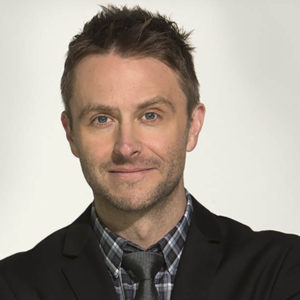
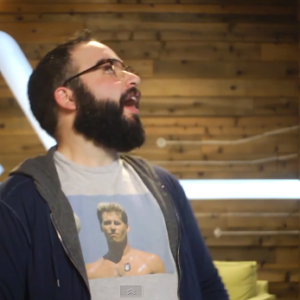
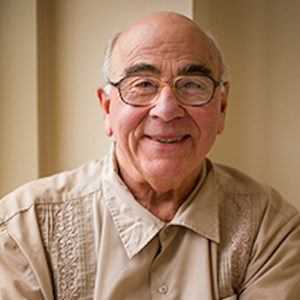
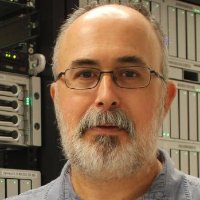
Take a trip back in time to our classic Season 2 episode when Neil deGrasse Tyson welcomed co-hosts Chris Hardwick of The Nerdist and his trusty sidekick Matt Mira for a mind-bending journey into the science of time. You’ll hear about time-telling oysters and discover why Pope Gregory replaced the Julian calendar with his own. Chris and Matt drop a few Dr. Who references, along with some timely humor about clocks, calendars, and leaps in time. Anthony Aveni, professor of astronomy and anthropology at Colgate University, reveals whether the Mayan calendar was actually predicting the end of the world in 2012, and provides insight into how early clocks and calendars were based not only on the Moon and Sun, but also on Earth’s biology. Frank Reed, instructor of celestial navigation at Mystic Seaport, and Robert Seaman, computer programmer for the National Optical Astronomy Observatories, talk about why leap seconds are added to our fast-paced modern lives, and contemplate the future of time synchronization. From keeping Universal Time, to neutrinos that may travel faster than light, to geo-engineering the Earth into a global clock, take some time to consider how science sets the tempo of our past, present and future.
Transcript
DOWNLOAD SRT
Welcome to StarTalk, your place in the universe where science and pop culture collide. StarTalk begins right now. Welcome to StarTalk Radio. I'm your host, Neil deGrasse Tyson, astrophysicist and director of New York City's Hayden Planetarium. Joining me this...
Welcome to StarTalk, your place in the universe where science and pop culture collide.
StarTalk begins right now.
Welcome to StarTalk Radio.
I'm your host, Neil deGrasse Tyson, astrophysicist and director of New York City's Hayden Planetarium.
Joining me this week, I have two guest hosts.
I've got Chris Hardwick.
Chris, welcome to StarTalk Radio.
Thank you for having me on StarTalk Radio.
It's an honor.
You have a huge following because you, like the host of Nerdist.
Yes, sir.
Not nudist, nerdist.
Nerdist, yes.
Nerdist.
Different demographic.
And I caught you on the East Coast.
You're here in New York City.
Well, one half of your other nerdist team.
Yes.
Please introduce him.
This is Matthew Myra.
Hello.
One of my two co-hosts and NASA fanatic, Neil deGrasse Tyson enthusiast.
As I learned earlier, he was reciting my biography chapter and verse.
Is he a fan or is he a stalker?
Which is it?
He's a stalker fan.
So he'll hug you to death.
I am a fan of yours.
With a pillow over the face, right?
Matt, well, he wants to own your skin, but I really appreciate what you do.
And your podcast, The Nerdits, is one of the top 10 comedy podcasts on the list.
Yeah, we do pretty well.
It's fun.
It's a lot of fun.
Congratulations for that.
And your TV show, filmed in LA, is carried on BBC America.
Yes, yes, we did it.
We shot a TV version of the podcast, and that's been a lot of fun, too.
Excellent.
Well, I'm happy to have you on here.
You know what we're going to talk about?
We're talking about time.
Time in all its concepts.
And you're like a Doctor Who fan.
Time is, if it's about anything, it's about time.
It is.
It is a Doctor Who, so let's see how you plug in to the flow of this program.
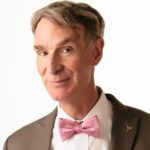
Before we begin, Bill Nye is a big fan of StarTalk Radio, and he had the urge to want to give us his famous Nye Minute.
Fantastic.
So let's check it out.
Bill Nye for StarTalk Radio.
During the day to day or even during this broadcast, take some time, a few seconds, say, and notice how often we use the word time.
It's time to go to school.
It's time to turn our clocks back.
It's time for the show.
We refer to time so often because time is so important.
Clocks have affected our day to day lives more than the invention or discovery of wheels and rolling round things.
See, timekeeping starts with astronomy.
It started based on the Earth's one year long orbit of the sun.
We can watch the shadow of the tip of a stick or gnomon.
And sundials are all over the world.
We've even got sundials on Mars with a third one landing there in August 2012.
In ancient times, humans, or proto-humans, accounted large lengths of time, seasons, and years.
Nowadays, I mean, at this time, we've almost stopped thinking about orbits.
We divide the old year 31,556,926 ways into seconds, and now fractions of seconds, reckoning tinier and tinier packets of time.
That way we can tell who won a ski race, or the transit time of a navigation satellite on the spinning Earth.
For us Northern hemispherians, it's not only a good time of year to turn our clocks back to standard time.
For me, it's a good time to ponder this fourth dimension.
Oh look, it's time to fly.
For StarTalk Radio, I'm Bill Nye the Science Guy.
Gotta love me some Bill Nye.
I mean, this actually makes a lot of sense with the Bill Nye sundial that I'm constructing in my backyard.
Oh, you have a Bill Nye commemorative sundial, is that right?
Yes, a Bill dial.
I'm imagining he was wearing a bow tie the whole time he was talking.
He has to be wearing a bow tie.
Is this how you think of him in your dreams?
Constantly.
I fixed his computer once, actually, at the app store.
That is that.
Were you a genius?
I was, yeah.
Oh my gosh.
Maybe he remembers you.
You didn't take any stuff off the hard drive, though.
All of it.
Oh, good.
I have my own copies.
He'd make a great doctor, Bill Nye.
So, in this show, there's a lot to talk about here.
You know, time, Einstein defined time as that which is required to make motion look simple, which I thought that was a good.
That man is into time.
Typically, though, we think about time as one event follows another and you measure the interval between the two.
So it's a distance, a measure of the between two events?
It's a distance.
It's kind of a time distance, if you will.
You measure distance on an x-axis or y-axis, measure distance between two points in time.
We just have a different unit and we call it time.
And calendars have been around ever since there's been recorded history.
And the easiest way to keep track of time, people just counted moons.
You know, I mean, even the Native Americans, how many moons ago was it?
Why not?
It's cycled.
It was many.
Just a couple moons.
Why not many moons, really?
Maybe a moon.
About a moon ago.
Moon ago.
No, it was a moon and a half.
Moon and a half, I'm sorry.
Actually, the concept of a half took a while to even develop later on.
So calendars have been around for a while.
I think the most familiar, the one that preceded the one we now use internationally, the Gregorian calendar was preceded by the Julian calendar put in by Julius Caesar back in 45 BC.
That one, in fact, had a leap day.
Okay.
And that was the first leap day and they based it on the sun because people realized that you really didn't care about the moon.
You cared about when it was spring and when it was fall.
And the moon didn't care when either of those are, but the sun does.
And so once you attach it to the sun, then your culture gets linked to the seasons.
That's how it ought to be.
And it turns out that that leap day in the Julian calendar was not enough to completely match the time you reckon on earth with what the earth was actually doing around the sun.
And it turns out it over-corrected, it over-corrected.
And so spring started shifting in the calendar, it becoming earlier and earlier in March.
And one day it showed up on March 10th, and Pope Gregory in the 1500s said, we got to do something about this.
He was like that.
Greg, I mean, he was very serious, but at a party.
At a party, he was totally rocking it.
Watch me turn this to wine.
Like, you're like, I get it, I get it.
Later on, we would build mechanical clocks that would ultimately be more accurate than earth-based clocks.
So, it's a fun history, and I was not going to rely on just the two of you to support this.
A wise move.
I just, I don't mean offense here.
No, I would have suggested it if you had not.
I had to call up my man up in Colgate University, Tony Aveni.
Tony, thanks for being on StarTalk Radio.
Delighted to be with you.
You are professor of astronomy and anthropology at Colgate University, upstate New York, and that means you care not only about how we keep time, but how cultures have kept time throughout history.
That's correct.
I started out at Kitt Peak and here I am in the ancient past.
So Kitt Peak, the observatory, Kitt Peak in Arizona, that's a great place to get a little closer to the cosmos.
But I noticed that you had a book out for a while, but it's becoming more and more relevant.
What's the exact title of that book?
It's The End of Time, The Maya Mystery of 2.0.1.2.
And yeah, the time is getting ripe because we're just a little over a year from the turning over of the biggest cycle of Maya time, started back in 3114 BC, and it's going to run out in just a year.
So, apparently a lot of people are concerned about this, but you're not, I presume.
Well, I think that whatever the Maya message is, I'm not sure it was really intended for us, and I think there's a lot of romancing of the Maya going on now, just as there was of the Egyptians back in the 1920s.
Why do people always think that civilizations centuries and millennia ago were somehow smarter or more technologically able than we are today?
I don't get it.
You study cultures.
A little bit of an inferiority complex going on there, huh?
Oh, because maybe because they built the pyramids and you don't know how to do that.
I just hope that it doesn't run out because I don't know what to do with my 2013 Mayan kitten calendars that I had printed, and if time ends...
Well, you know, I think the problem is technology, and I love all you guys for being techno freaks, but we get so used to technology that we think, after a while, that to keep time, to build a pyramid, to do anything, requires a super technology, and with the Maya and all these other people, it didn't.
In fact, if they can take something that's longer than your lifetime to build, they didn't care.
Right?
For us...
I mean, we're able to do it.
For us, a slow project takes maybe a decade.
Does anyone propose the theory that maybe they just got bored and were like, we'll finish the calendar later?
Oh, man, our civilization's over.
I better go back and finish this calendar.
Heart attack.
Well, they did put things off, didn't they?
But people get excited about it.
I think one reason is that Americans now would particularly, the world being the way it is, are in a state of stress and they're looking for solutions to problems from far away and not just as far away as the Maya, even to the aliens to give us direction and give us guidance.
So that's why the Maya are so popular.
You start adding aliens with the Mayans in 2012.
There's a movie in there somewhere, I think.
Doctor Who.
You're a Whovian, that's right, I forgot all about that.
The Doctor Who plays with time.
We'll get back to that in just a minute.
So with Maya, you're going to put everyone's concerns at ease, you're saying.
The Mayans didn't know anything about the future, certainly nothing about 2012.
And so in your book, you detail this.
But it's a scholarly book, right?
It's got footnotes and things.
Well, yeah, I mean, I'm trying to show that the Maya, if you look at the evidence, you look at the carved monuments, what's written on them, you look at the books, the manuscripts, these people are concerned about reflecting on their roots in deep time.
The dynasty wants to show that its history is embedded in deep time.
So in other words, they're really backward looking.
They're not forward looking.
They don't really say very much at all about what's going to happen thousands of years in the future.
But we pick up on these little cherry pick, these little bits and pieces, and that's why you've got so many popular books about it and a scare about it.
I dedicated my book to a high school student from Canada who told me he and his friends were concerned about the world coming to an end.
What should they do?
It's a lot of scare stuff, I think.
Well, plus, it scares that people, I have found that humans are only happy when they think the world is going to come to an end.
I don't understand it.
It sells movies.
We like finality.
We're fear-driven species.
I guess so.
It lights a fire under us.
It lights a fire towards action, I guess.
Well, you know, to be honest, I think it comes from religion.
I think American religion is very, very much oriented toward the idea of the second coming, cataclysm, apocalypse.
It really goes back to the Puritans, you know, who came here because they were a cult of people who were pretty far out on the fringe.
They were looking for an immediate second coming.
Even Columbus, when he came here, talks about coming here because this will be the place in the world where Christ will descend.
So there's a long history of American religion being involved with apocalypse.
And where did religion come from?
If I perform these rituals, we won't get hurt.
If I perform these rituals, everything is fine.
There you have it.
So I'm curious about something.
Mayans, people think they could predict a future, but if they could, you think they would have predicted the end of their own civilization.
And to that, they failed.
So that gives me very little confidence.
Well, there's a different guy working on that.
That was a different guy.
You know, I was at a conference in Philadelphia just recently, and there's no other way to call them.
It was the Time Lords assembled.
These are people who are keepers of calendars and clocks, and they decide when their leap seconds and when they're not, and they decide.
Which cat's going to be February?
Which which?
And the calendar.
Oh, yes.
They keep all time.
I don't know if they had cat calendars.
I'm not sure.
One of them is a gentleman named Frank Reed, and I just chatted about how far we've come and what affects the rotation of the earth and what we now know controls our reckoning of time.
Let's see what he had to say.
Things that change the motion of the earth, primarily it's the gravitational pull, the tidal effect from the moon.
So moon is number one, the tidal sloshing on the continents.
The earth's atmosphere itself.
The jet stream in particular, as the jet stream snakes around and moves about, the total amount of angular momentum that's in the atmosphere changes and it has to go or come from somewhere.
So if the angular momentum of the atmosphere goes up, the angular momentum of the earth goes down, so it would slow down a touch.
So who would have thought that moving air has any effect on the rotation of the earth at all?
Because we don't think of air as being something significant.
It's a big deal and it turns out just in the past 10 to 15 years that the people who study this have gotten to the point where they can really predict the rotation of the earth, how it's going to change over the course of a week or two based on modeling the weather.
So this effect doesn't accumulate, it just fluctuates it up and down seasonally.
Yes.
That's cool.
And how about ice flows?
What's going on there?
The earth's crust has been rebounding since the last ice age.
So that means the earth is getting rounder, more spherical, it's changing shape.
And as it changes shape, it necessarily changes rotation, just a conservation of angular momentum.
It's changing from the lost weight of glaciers is what you're saying.
Yeah, it's been squished.
It's like one part has been pushed down where the glaciers used to be, other parts have been pushed up, and it's now going back to a rounder shape.
So for example, the area around Hudson Bay and the area around the Baltic Sea, there are still rebounding, which means that land is coming up from beneath the water.
And you can see this on a time scale of a decade or two.
You know, there are more rocks in the sea off Sweden than there were 10 years ago.
More rocks off of Sweden?
That is, on the coastline, you have more rocks sticking up out of the water because the sea level is going down up there.
Relative to the land coming up.
Exactly.
Okay, I didn't know that.
And so now you're changing the shape of the earth, and necessarily the earth has to spin at a different rate in correspondence with that new shape.
Okay, so what you're saying is earth sucks as a timekeeping device.
It does, but you know, it was so good for such a long time, it had a good long run.
We're coming up on our first break.
This is StarTalk Radio on your host, Neil deGrasse Tyson.
I've got Chris Hardwick here and Matt Myra.
Matt Myra.
There's a star named after that.
And we've got Anthony Aveni, Tony Aveni in the studio.
We'll come back in just a few minutes.
Joining me this week as a special co-host is Chris Hardwick.
Host of The Nerdist, one of the greatest comedy podcasts there ever were, I'm told.
Let's say that.
Sure, let's go with that.
And you've got one of your favorite co-hosts from that show.
Your favorite.
My favorite.
I can't pick favorites.
Matt Meyers is a favorite.
Okay, Matt Meyers.
You guys on the East Coast, visiting here from LA and I thought I'd nab you for an episode of StarTalk.
Thank you.
Thanks for coming in.
And thanks for doing The Nerdist as well.
There you go.
Just before this, I was a guest on The Nerdist.
I'm happy to have been there.
So we've also got Tony Avani.
Tony, you're an expert on time, on cultures, on calendars.
How have people reckoned time from one culture to another?
There's differences out there, right?
Well, you know, Neil, listening to the conversation about the moon perturbing the earth reminds me that in ancient Babylon, you would figure out when to pay your rent by whether or not you saw the first crescent moon.
And you'd figure out when to go to work in medieval times by whether you could tell heads from tails on a coin.
So we're really talking about systems of time that are very, very low tech.
And I think once we stuck that stick in the ground to make the sundial, then we started with the techno revolution and moved on from there.
But you're telling me a stick in the ground was the beginning of tech timekeeping?
Sure.
Bill Nye would say so.
He loves sundials.
Bill Nye would say so for sure.
Okay, so now we got a sundial.
So, but that now connects time to the sun, correct?
That's right.
And that was that presumably was transformative to culture.
But not just the sun.
I mean, time is connected to the human body in the Maya world, for example, the 260-day calendar comes from the gestation period of the human female.
And they married together two exquisite cycles to get to that, 20, which is the number of fingers and toes on the human body, and 13, which is the number of layers of heaven.
13 times 20 equals 260.
So time is what I call ecogenic.
I mean, it really comes from nature, which of course, astronomy is part of nature.
Ecogenic.
I love that word.
Are we, I'm curious, are we on the, do we have the most efficient calendar we should have in modern days?
I think so.
Tony, isn't the Gregorian calendar the most accurate calendar there ever was?
Yeah, the Gregorian calendar is about as accurate as the perturbations in the Earth's orbit that caused the changing of the time.
We nailed it.
It's definitely accurate.
It's the most accurate in the world.
Yeah, but the problem is, of course, it's still based on the rotation of the Earth and Earth's time around the sun, but over the years, in particular, the second half of the 20th century, technology advanced really far from the stick in the ground, and when you start keeping atomic time, that's where you discover that Earth is not as good a timekeeper as you might have wanted.
In fact, right, back in this conference I attended of the Time Lords, who are the keepers of leap seconds and things, I caught up with a guy named Rob Seaman.
He's one of these people who worries about whether there are leap seconds or not in the calendar and how they get reckoned.
And we'll talk about leap seconds more later.
Let's check out what Rob Seaman had to say.
If you look at a sundial, the sundial keeps the apparent solar time, where the sun is in the actual sky.
Through the course of the year, it varies by about 20 minutes one way or the other.
So in other words, what your watch would say was high noon, your sundial would disagree with that by about up to 20 minutes.
That's right.
The actual length of each day is much closer together because this accumulates during the course of the year.
The days through the course of the year only differ by about half a minute or a minute.
But those add up each day.
They do add up each day, but every day is very close to this mean solar day.
Mean meaning average solar day.
Exactly.
So, we're at a conference in Pennsylvania to discuss the future of timekeeping and whether it should be linked to the earth or not.
What I want to understand is if you do not link it to earth, what are the consequences of that?
What happens?
Midnight ends up at sunrise and noon ends up at sunset?
Well, that's literally true.
If you cease issuing leap seconds and do nothing else, then eventually noon will turn into sunset and people will eventually notice.
So what you're saying is that the 24-hour clock ends up migrating through the solar day.
That's exactly right.
By analogy, that's similar to the Gregorian calendar.
The one we all use now, yeah.
Exactly.
It was fixed such that it didn't migrate through the course of the year, such that harvest time remained at harvest time.
On the calendar, right.
Because at that time, by 1584, the spring equinox, which typically happens around March 21st, was happening about March 10th.
And so they just fixed that, right?
They took out 10 days, put in corrective devices so that will never happen again.
Well, it caused quite a hubbub and shenanigans at the time.
But back then, the hubbub was over days, whereas now the hubbub is over seconds.
That's exactly right.
For some purposes, this is a much more minor effect.
For other purposes, it is larger because we live in this technological world precisely where seconds matter.
Your cell phones, your computers, every device we use.
Telecommunications, I guess, that matters to them?
That does.
It does, and the telecommunications folks are in favor of ceasing leap seconds.
I think some of us have the point of view that that's a bit short-sighted.
There are serious consequences for astronomy and related fields, and there are potentially subtle consequences for a wide range of situations that are of interest to everybody, such as flying.
Yes, flying.
Will the plane stay in the air?
Exactly, and will they run into each other in the sky?
Right, because where they are is a measurement, right?
So you could have two different planes on two different timekeeping systems.
If they have two different times, then the planes won't know where they are relative to each other on Earth.
That's exactly right.
It's very much about the way the network works, how multiple devices, multiple systems, multiple people talk to each other.
So yeah, yeah.
So these guys, they're…
Is that how you arrived in New York?
Yeah, but from ten years ago.
From Whovian fans, yes.
Okay, that's the sound of the TARDIS arriving with its brakes on.
Time and relative dimensions in space.
So just in case you didn't know what a leap second is, you may not have known that Earth's rotation rate is not constant and it's being influenced by so many factors, primarily the moon, with the moon affecting the tides of the oceans, sloshing back and forth on the continental shelves.
This is actually slowing down the rotation of the Earth.
The moon giveth and the moon taketh away.
Mostly taketh away.
Also, thanks for the werewolves moon.
And so what you have here is, if you want to make sure your 24-hour day of your clock matches the rotation rate of the Earth, you've got to compensate for this.
See, I deal with this because my watch is automatic, but it loses like five to ten seconds a month.
Oh, so those are, those are matte seconds.
Yes, yes, yes.
You want leap seconds.
I was just wondering whether any of you guys think that what an archaeologist from another world would make of a digital watch, say that he excavates in 10 million AD on the surface of the Earth, would that archaeologist ever connect that watch with the Sun and with the Earth and with the movement in nature?
If it's solar powered.
If it's solar powered, he'd probably say, look at this primitive device I just pulled out of the Earth, you know, what is this?
So what happened?
Maybe the Hour Hand might give a clue if it weren't a digital watch, but would the alien ever figure that out?
Well, plus, and it's in base 60 too, what's that about, you know, what's going on there?
Some wise guy timed 360 days for the revolution of the Earth around the Sun and figured it was convenient to make a sexagesimal system, which of course has nothing to do with sex.
Sexagesimal, that's in the know, that's base 60's sexagesimal.
Sexy time.
I base everything on sexy time.
So you know, since 1972, there have been 23 abrupt leap seconds added to the calendar.
And no moon landing since 1972.
Oh, you know, I hadn't connected those two.
They correlated, cause and effect.
I've got another clip from this conference, Frank Reed, getting back to him.
He teaches celestial navigation at Mystic Seaport in Connecticut, actually.
And I just asked him about the impact of leap seconds on modern technology.
Let's see what he tells us.
There are some big issues.
And the primary one is that an enormous amount of software has been written that limits the difference between the time by the sun and the time by the stars and the cosmos to a limit of one second.
And all that software will have to be changed.
And it's a really big deal.
The entire GPS system, which now drives 500 million smartphones, is dependent on all of this.
And if we change the definition of leap seconds, or if we eliminate leap seconds, and that gets bigger than one second, it's a huge amount of work to fix it.
Okay, so how much should we care about the workload of programmers?
We're talking about a huge definition now that will affect the entire planet.
And do we care about whether a few programmers have to work overtime?
No.
And I'd rather pay them now, put them on contract to do this, than wait for something to go wrong.
So it's like Y2K, where we knew it was coming, so everybody worked overtime.
All the programmers were called in late at night to fix that one.
That's right, because the bug that hasn't happened yet is the one that's really going to bite us.
The global economy now depends on time synchronization, and it's nothing to sneeze at.
Synchronization is something else.
You know, before anyone talked to each other, who cared that anything was synchronized?
Well, again, it started with religion.
I got to tell you, this is back in the sixth century AD, when clock bells were first invented.
I mean, the first clock was just a mechanical series of bells that would tell people when to pray during the middle of the night.
All at the same time.
During the daytime hours.
If we don't pray together, God's not going to hear us.
So all at the same time.
So the first need for synchronicity there.
Yeah, that's the synchronicity started.
You remember Frère Jacques?
Dormez-vous, dormez-vous.
I'm not going to sing.
I've got a terrible voice.
This is the guy who was the first person.
It's like, Brother John, Brother John, are you sleeping?
Are you sleeping?
Yeah, brother, are you sleeping?
And he was answering his matin, his clock bell that was ringing.
So, he's the first person to be beguiled by the tyranny of the clock, if you will.
Oh, I didn't bring my prayer bells.
And they put a face on it and it became the clock.
But we have a weird perception of time even with technology.
It's the idea that when you're downloading a file and it says like a minute, 20 seconds, an hour, like we don't even perceive time the same way anymore.
Right, it's just whatever the download time says, whether or not it's real.
Right.
It's a Western obsession though, clearly.
All the other cultures of the world are not, at least in the past, we're not concerned about this.
And I recall an anthropologist telling me once about this tribe in Southern Ethiopia and he said they don't seem to be concerned or harassed by time.
And then he says they're so fortunate, they're so fortunate.
When we come back from our break, we're going to take time to another dimension and bring in relativity to find out what that has to say about it.
We'll see you in a moment.
This is StarTalk Radio.
Welcome back to StarTalk Radio.
And I have two special guest co-hosts with me, Chris Hardwick of The Nerdist.
Hello.
The Nerdist, popular podcast and TV show, airing on BBC America.
Yeah, can I plug my book?
I wrote a book.
Oh my gosh.
Plug my book, that's it.
And I bet it isn't called The Nerdist.
It's called The Nerdist Way.
We don't have to linger on it.
It's a productivity book for nerds.
I had it blanked in the last page, so please put there.
That's Matt Myra, one of my co-hosts on the Nerdist Radio.
Matt Myra, who they were visiting the East Coast, and I snatched them for this program.
Thanks for joining us on StarTalk Radio.
Do you really think nerds need help being productive?
Yes, they need help focusing.
They need time management as well.
Time management.
Speaking about time.
Because the computer games distract them.
I know you're talking about like an absolute idea of time, but I think perception of time is also very important.
And I feel like what I've heard a lot of people say in the last two years is, where did the last year go?
It's flying by.
And I feel like our attention is so focused on...
If the person who says that is the only person who thinks that way, we have a different word for what happens.
Psychologists have words.
If you're the only one experiencing that time phenomenon, that's a different problem.
Then you're special?
You're special.
The point of science is to find out what is going apart from what is true beyond just your perception.
But isn't perception important with time?
Because it does affect how we...
Yeah, on a different show.
This is time time.
Oh, damn.
This is real time.
That just slapped me with a comment.
Tony, Professor Colgate, this is your expertise.
Calendars, clocks, time.
But you have a deep anthropological dimension to your studies.
Do you ever get to care much about emergent timekeeping ways and what its effect is on modern culture?
Oh, absolutely.
And I devoted a section of my earlier book, Empires of Time, to that discussion.
And I'm just quite taken with this obsession that Western culture has with time.
You started out by talking about the Roman calendar, and of course before that, and that was precise enough, but before that, did you know that the year was based on the gestation period of cattle in the pre-Roman Empire?
307-day year.
It all goes back to this ecogenic thing that I'm going around preaching here.
Ecogenic.
That's a cool word.
So, we've been like worshiping cows for quite some time.
Oh, they're delicious.
Well, if you hang with cows, you know, you've got the meat and the milk and the blood.
It's a machine for keeping humans alive.
Cow calendar.
A cow is a machine for keeping humans alive.
So, basically, our calendar is built around a burger.
A burger.
That's really...
What I like about cows is you just put grass in on one end and then your T-bone comes out.
It's perfect.
Perfectly cooked.
Well, so what we have is, time is not only a perception.
We've got the Einstein.
There's relativity.
Time is relative.
It's the rate of time that's relative.
That's what that means.
If you go fast, many listeners already know this, if you're any kind of fan of physics, that if you go fast, your time will tick slower for you compared with others in observance of you.
And so, if you want to go to another planet, another galaxy, and travel fast enough, you can travel arbitrarily fast and you'll age arbitrarily slowly.
The problem is, when you come back, thousands of years have gone by and everyone would have forgotten about you.
Ah, the twin paradox, you get twilight zoned, you get zoned, I like that, you get twilight zoned.
So, but it's important to note there that that's not a perception of time, that's the actual flow of time.
Particles know this, your biology, as a consequence of being composed of particles, knows it, your brain is all part of this conspiracy to have your time tick more slowly.
So how do they get around this in Star Trek when they're traveling faster than light?
Oh, yeah, so they got the warp drive that bends space and then they cheat and they cut a hole between the two corners that are now close to each other.
They're enveloped in a static warp shell, everyone.
Is that how you call it?
But even the winner of the Indianapolis race aged less by 10 to the minus 27 seconds than his audience.
So they're competing for more than a trophy.
He looks great.
You just nerded us out there.
You just out-nerded all three of us.
So the winner of the Indy 500, by virtue of their speed 200 miles an hour or so, for that long, ends up how much younger when they come back?
Well it's by virtue of the acceleration, actually.
Oh, okay.
Something like 10 to the minus 27.
Whenever you accelerate relative to the rest of the universe, your aging is different from the rest of the universe.
So we all go around accelerating.
It's not just speed.
It's the acceleration.
So in effect, you control your own age, don't you?
I mean, we're all controlling our own age by accelerating.
So 7 billion people are aging slightly differently.
Well, people on the equator are moving faster, being brought around in the full circumference of the earth than Santa Claus is.
So Tony, you're saying that the Equatorians are...
That's why Santa lived forever.
The Equatorians are there aging a little more slowly than Santa Claus.
That's why I have an apartment in Quito.
Give me that time again that the Indianapolis 500 winter has aged less.
I have to go back and calculate it.
I did assign it as a physics problem once.
I think it's something like 10 to the minus 27, but you better work the calculations again.
It's pretty simple to work out.
10 to the minus 27 seconds.
Seconds, yeah.
That would be a...
That would be per race.
A billion, billion, billionth of a second.
Down under the femtoes.
Every billion, billion, billionth of a second counts.
Seriously.
That's what we've learned.
It's kind of a good commercial for jogging, isn't it?
And so, you know, so there's the...
People talk about the biological perception of time.
Chris, you were mentioning this earlier.
What does it feel like?
And, yeah, if you're in a hot room, it can feel like time is moving more slowly.
So, surely, they're perceptions of time.
But science at its best, it's best to remove your perceptions from your attempt to understand the natural world.
Of course, it matters to psychologists.
I'm not saying it shouldn't matter.
But it's just because you think an hour passed, but actually six hours passed, I can't help you there.
They're drugs for that.
I'm having fun on StarTalk, so it's flying by.
I think that's because we perceive nature as being something apart from our lives and ourselves, whereas the other cultures didn't.
I mean, in most other cultures of the world, time is the activity itself, which is why you have Harvest Moon, Hunter's Moon, or you point your hand at the place in the sky.
So I think that's definitely a factor that makes us different.
Yeah, and so it's interesting because in a day when we would connect ourselves to nature, now nobody's connected to nature.
Exactly.
That's an excellent point.
We're connected to technology.
The technology is our god.
It's like this techno-nature that we live in, this cybernetic organism that is becoming the earth.
And that, in effect, is what takes you back to this end-of-the-world stuff, you know, because we're so dependent on the technology that we can't imagine doing anything without it.
When I teach astronomy, I have my students measuring the positions of the stars using their hands and their arms and their legs.
Look, just pull out your iPad, and there's the app for that.
Yeah, Pocket Universe.
Tony, there's an app for that, okay?
Get with the century.
Although I like Tony.
I kind of want Tony as a teacher now.
You want me on your show.
I know.
You've got to plug my book.
So you know, if technology is guiding our time, we can't go without mention of the misbehaved neutrinos that the CERN supercollider found coming out of their machine.
Using neutrinos, they passed from Switzerland to Italy.
They timed it.
They got the GPS timings perfectly.
And they found out that neutrinos were going faster than the speed of light, 10% faster.
I got my nickel bet on Einstein.
I'm sorry.
I'm not ready for that.
Yeah.
My bet is on that.
It's just a blunder.
And I bet I can bet more than a nickel, too.
I'm totally.
Yeah, it's probably a blunder because I'm going to bet they'll retract it within a couple of months, like like a lot of things.
The consequences are extraordinary, I think.
And that would be fun if it were that.
But I remain unconvinced, actually.
You guys just aren't ready for the future.
Change is good.
So is there a, you know, when you look at cycles, why, Tony, why are we so connected to cycles?
Why do we even care?
Well, day follows night, winter follows summer.
I mean, I think, again, nature intrudes itself upon us and suggests that everything is cyclic.
And so we just cop the beat of nature.
We cop the rhythm of nature.
We start carving it in stone.
We start making artifacts and so on out of it.
And calendars is one of them.
So we take the cue from nature.
And it would all be different if we were on a different planet, of course.
Well, yeah, that's right.
And there's circadian rhythms.
There's the female gestation.
I take melatonin when I travel to level out the amount of melatonin in my system for the circadian rhythm.
Does it work?
It doesn't work for me.
Yeah, it works for me.
It works for me.
It's in your head, Chris.
If that's all that matters to me, if it works in my head, then it still works.
But Tony, I'm worried about something.
I remember studies that show that if you took people into a basement and didn't show them any daylight or nighttime.
What else do you do to them?
In the basement.
And let them take on their own cycle of sleep and awake, that they naturally migrate to a longer day than the 24-hour day.
They do.
And I think maybe that's why we're so tired at night.
We'd like to have a longer day.
There is a change.
So forget the sun.
But still, I think it's interesting you can control, I know a biologist who can control the gestation period of women and the period, the interval between menstrual cycles by putting them in a dark room.
And I'm not telling you his name because he'll get arrested.
It's not his fault.
It's the women who agreed to do that experiment.
Oh yeah, they agreed.
It's a psychological test that they did.
I think you're talking about Buffalo Bill.
That was a silencer.
What happened?
He's controlling the buffalo.
Okay, Matt is still concerned about being in the basement.
So our day is longer than the 24 hours.
So that means our natural biology is fighting solar rhythms.
That's what that tells us.
So you're saying that I could have a cycle that may last 36 hours or something.
I think typically the average has been up around 28, 29, 30 hours.
Yeah, I think it's in the upper 20s, 25, 28, something like that.
I sleep longer than you guys.
It's certainly not 24.
So what that means is as the moon continues to slow down the rotation of the earth, there will come a day when a day on earth actually matches the cycle that is natural for the human body.
Someday.
Someday.
That will probably be in like a billion years.
I just need a plan.
Then of course there is the story of the oysters who were taken out of New Haven Harbor.
I love that story.
Tell it.
You know that?
No, tell it.
I love it.
Tell it.
Well, it's interesting because they could time the opening and closing of the valves of the oysters according to the tide in New Haven Harbor.
When they moved them to Northwestern, the Midwest, the oysters lo and behold migrated their opening and closing of valves to a cycle that matched what would be high and low tide somewhere near Chicago.
Oh, wow.
That's pretty astounding and nobody's ever explained why that's true.
Oysters maybe have a memory of their own.
Oysters are happening.
That's what that is.
We just eat them.
But they're doing the same thing we did.
I mean, they're just copying nature's rhythm.
What if I put an oyster in a basement?
You have a basement fixation.
I'm not going into your basement.
Is there Tabasco in the basement?
They have movies about people with stuff in basements.
When we come back to StarTalk Radio, more on this special edition, That's All About Time, I'm Neil deGrasse Tyson.
Welcome back to StarTalk Radio.
I'm your host, Neil deGrasse Tyson.
You can find us on the web, startalkradio.net.
Also, StarTalk Radio tweets.
Guess what the Twitter handle is?
StarTalk Radio.
I, too, tweet at Neil Tyson.
If you want not to know where I am or what I'm eating that day, but just you want some brain droppings of the cosmos.
That's what comes out of me daily.
My two, I have two special co-hosts.
They're actually co-hosts of their own show, The Nerdist.
Chris Hardwick, welcome to StarTalk Radio.
Thank you very much.
And Matt, Matthew Myra, welcome to StarTalk Radio.
Matthew's very formal, but I'll take it.
Yeah, yeah.
And Tony Aveni, Professor of Astronomy and Anthropology, Colgate University from upstate New York, and author of the book, The End of Time, The Mayans.
Thanks for being here.
Yeah, thanks.
Thanks for coming.
The Mayans in 2012.
So, we'll make sure we put that on our shelves.
Guys, the Mayans are, don't worry about that.
They were clueless.
They invented sideways basketball.
Completely clueless.
Don't you dish my Maya.
I like that.
Let's put that on a bumper sticker.
Don't you dish my Maya.
We're going to sell exactly one and it's to Tony.
So, you know, I want to just spend a couple of seconds on time zones.
We've got, in principle, the sun is in a different place for every longitude on Earth at all times.
So everybody has a different local noon.
And just to be convenient, we said, let's just bunch everybody up into one hour increments.
And so we allowed ourselves to be binned this way.
And so technically the Earth would then have 24 time zones.
But of course, politics gets in the way.
Some countries like being different.
Arizona doesn't even have daylight saving time.
Don't even talk to me about the central time zone and hour programming earlier every night.
Yeah, it's a complete.
And so what it says is an hour is just slop in our timekeeping.
That's what it really says.
And I like these some places or countries that they're on the half hour.
I think they're just trying to be different.
Yeah, that sounds Euro to me.
You got to blame it all on high speed travel, don't you?
Not Einstein kind of high speed, but the railroads traveling in longitude.
You change time.
So the time inside the train is different from the time outside the train.
And that's where we got the zones from.
So it's not only time zones, but we also have this funky thing called daylight saving time.
And I always liked the apocryphal story about the farmer who didn't want to switch because his crops needed the sunlight in the morning rather than at the end of the day.
So he said daylight saving time wasn't for him.
I've always been enchanted by that story.
Now why do people get wonky when you cross several time zones?
Like why don't they just feel like, oh, this is the normal, I'm six hours later here.
That's what I do.
I don't try to adapt to what everybody else is doing.
Well, it's because they don't take melatonin.
Yes, Tony, you're right, I am in agreement with you 110%.
It's all about the drugs.
So we have these time zones, but maybe you can imagine an Earth where everyone just keeps the same time.
I don't like that Earth.
You don't like that Earth?
I mean, universal time, of course, is the time all astronomers keep, but that's a minority.
That's why the astronomers are like a tight group because we all know what time to tell each other.
Do you guys hate Greenwich Mean Time or do you love it?
I like Greenwich Mean Time.
That's the time through Greenwich, England, where they are the keepers of the...
That's the East-West boundary.
You know, going back to my little workshop that I attended in Pennsylvania on time, on the Time Lords of the world...
How did you get invited and why didn't I get an invitation?
I'm not divulging that.
I have secret ways.
I have access to the Time Lords.
Bob Seaman talks about 500 years ago and 500 years from now and just how time reckoning mattered then versus how it might matter in the future, particularly if you accumulate these leap seconds we were talking about until they themselves accumulated an hour.
Let's find out.
At the rate we've been accumulating leap seconds, how many years into the future would you project that we would have accumulated an hour's worth of leap seconds?
Perhaps 500 years.
Only 500 years?
Only 500 years.
That is the right...
That's not that far.
That's not that far.
I agree.
To an astronomer, that seems like tomorrow.
Okay, now 500 years ago, they were still trying to map the Earth.
So is it audacious of us to think that our software that we're writing today is going to matter 500 years from now?
Well, some sort of software will matter 500 years from now.
Of course, 500 years ago, clocks didn't exist as we know them.
So this has happened entirely in this frame of time.
Yeah, so 500 years from now, they're saying, our oceglop didn't exist back in the 21st century.
You'll have to define that term for me.
It's just some thing that they invent, where it solves everything.
And they'll look at how quaint our debates were about leap seconds.
I think it's a little bit hubristic to imagine that 500 years from now, they will be running systems that use code that you're writing today.
Well, what they will be using in 500 years is the Earth.
The Earth will still be rotating, one certainly hopes, in this quirky fashion.
If we have geoengineering, we will just change the rotation of the Earth so that we wouldn't have to mess with our atomic time.
That's actually been suggested and you can...
Whoa, you guys actually talked about this?
Well, you know, over a beer.
In addition to, you know, George Jetson ideas of putting rocket engines on the equator, you can see the signature of the ice caps melting, you can see the signature of water being impounded behind dams.
What you're saying is, as mass redistributes on Earth's surface, as glaciers melt into the ocean, that sort of weight used to be on land, now it's flowing in the waters, right?
And you used to have a river, now you dam it, and you accumulate extra weight behind the dam.
So this changes where the mass is on Earth's surface, and we learn in physics that will change the rotation rate of the Earth.
That's exactly right, and not necessarily in ways that are obvious, because the ice caps are at altitude, so you bring the water closer down, the water tends to flow towards the equator because of centrifugal force, and personally I couldn't tell you whether it would speed it up or slow it down.
Okay, so like the ice skater, that's an obvious one, where the ice skater brings in the arms and they spin faster.
It's a much more complex version of that problem.
Yes, plus if the ice caps melt, the ice skater won't have anything to skate on.
There you go.
So that was Rob Siemens.
Geoengineering.
Geoengineering is really cool.
I like the concept, because it means you're in control of your planet, you're not running from earthquakes and hurricanes.
But in the long run, though, the earth is slowing down, the rotation is slowing down, and there's nothing that's going to stop it.
Rockets on the equator.
Tony, Tony, please, rockets on the equator.
Or we can arrange for there to be an earthquake to redistribute the mass so that it speeds up again.
This sounds like the Drask Conspiracy to get out of having a longer show.
Face it, your show is going to be longer if the day is long.
Oh, there you go.
We can double up the time.
You're listening to StarTalk.
Stay tuned for another segment.
We're back on StarTalk Radio, and this is the Cosmic Crib section.
I'm Neil deGrasse Tyson.
I'm here with Steven Soter, friend and colleague, and the one, the only, inevitable, Bill Nye, the science guy.
Good to be here.
Thanks to the crib.
The crib part of StarTalk, we're just chilling.
That's all we're doing.
Chilling in the crib, which is a very nice crib.
Yeah, the crib is my office, basically.
It's cozy and candescently lit.
These are mercury vapor fluorescent.
Oh, sorry.
Engineers get no credit in this place.
This is all we can do.
Steve, you taught a class on climate change at New York University.
You've become quite informed on this topic.
You were even thinking of writing a textbook on it.
Well, not a textbook now.
I think it's going to be more a popular book.
A popular book.
Okay, and so tell me, what's going on?
The earth is getting warmer.
Okay, thank you.
We're done with climate change.
The correlation is somewhat, by many reckonings, a little stronger than the correlation between cigarettes and cancer.
Stronger, so that's good.
The correlation between carbon dioxide emissions and warming.
And humans caused carbon dioxide.
Well, most of the warming is actually going into the ocean.
It turns out only a few percent is warming the atmosphere.
The atmosphere is kind of the tail wagging the dog, so it fluctuates from time to time.
But the oceans are showing a steady increase of that heat, and that's eventually going to show up in the warming of the...
Why isn't it showing up now?
Well, some of it is.
Okay, why isn't all of it showing up now?
Because the oceans have a huge capacity to hold heat, and the atmosphere doesn't.
Oh, so...
If there's a photon coming from the sun...
A photon of light.
Yeah.
Yes, it's a good chance you'll end up in the ocean.
Yeah.
So the ocean is a repository of this heat, and drives a lot of what goes on in the weather.
Right.
And also, the warming of the oceans is accelerating the warming of the ice caps.
And so oceans can also store carbon dioxide, can't they?
Yes.
So is it doing...
About a third of the carbon dioxide we're putting into the atmosphere goes into the ocean.
So the ocean is not only storing our excess carbon dioxide, it's also storing the heat.
Yes.
Yes.
So the ocean is like ready to blow.
Well, there's also a lot of trouble with it.
You just don't realize how many organisms we depend on that live in the ocean when you change the ocean temperature.
Well, it's not just changing the temperature.
The added carbon dioxide in the ocean is also increasing the acidity of seawater.
Making carbonic acid, which is what you get in your Coke bubbles, Coca-Cola bubbles.
That tends to dissolve shells, and so coral organisms and other shell-making organisms are going to be having increasing difficulty.
Well, Bill, you tell me if I put a seashell inside my Coke bottle and I come back tomorrow, it's gone.
Or come back after the weekend.
Oh, not tomorrow, the weekend.
You have never done that?
Put a piece of chalk?
I don't do this with my Coke bottles, no.
No, you put a piece of chalk in a soft drink.
That's limestone.
Chalk is limestone.
You put it in a soft drink and what happened?
And come back in a couple of days, it's not there.
That's what an antacid is, you know, tums and those, you know, the petro-bismol, you put those in the acid and they dissolve, and they neutralize the acidity.
But this carbonic acid is a mild acid, but it's an acid, and Steve, I'd love for you to comment on this, for me, as an interested student and then as a science educator, this stuff goes back to the original models of atmospheric trouble, which Carl Sagan pushed real hard with nuclear winter.
The computer models are...
Let me ask that in another way.
At what point did we start thinking of a global climate rather than local weather?
At some point, we would have had the power to calculate, and was that a lot of that triggered by the global warming but by the nuclear winter episode?
No, it goes back long before that.
It was the discovery of the ice ages in the 19th century, it became clear that the climate had been much different in the past, that there were vast ice sheets that were covering much of Europe and even where we are now in Manhattan, there were glaciers.
Yeah, there's remnants in Central Park where the outcrop has whole striations right through it.
Yeah, yeah.
So people said, what's going on?
The climate hasn't always been the same, it's been changing.
And one of the earliest hypotheses in the 1890s, beginning in the 1890s, was that it could be increasing carbon dioxide in the atmosphere.
What about the sun?
We got the sun goes through cycles, solar flares, it heats up, it cools down a little bit.
And people looked at that too.
And in fact, probably variations in the sun have caused climate changes in the past, but it's not responsible for the one we're seeing now, because we're watching the sun very closely from satellites above the atmosphere.
And we can watch that sun better than ever before.
And it's not doing anything that would account for the warming that we're seeing.
But the sun is not misbehaving, we are.
No, we are, exactly.
We know how much carbon dioxide we're adding to the atmosphere, we can calculate how much warming that should be making of the oceans and the atmosphere.
We observe the warming of the oceans and the atmosphere, and it tallies.
What about the mini ice age that happened in Europe in the 1400s or 1400s?
Yeah, there was a cooling period around that.
What they call the mini ice age?
The little ice age.
The little ice age.
It may have been...
By the way, was it that way all around the world or just Europe?
Europe is very Eurocentric.
I think the best data are from the northern hemisphere, but it seems to have been having some global impact.
And it turns out that one of the things that was happening then was a slowdown in the solar activity.
So the what?
The sun was...
The sun may have been partly responsible for that.
There were also an increasing number of large volcanic eruptions during that time, and they put sulfuric acid into the stratosphere where it makes a haze that can reflect more sunlight.
So these kinds of effects and acting together might have been responsible for the Little Ice Age.
But here's the thing of it.
The thing of it is what?
About it.
This analysis is wonderful, and we need to keep it up, using space assets, especially satellites, buoys that record ocean temperature and so on.
And height, too.
And depth.
Oh, depth, yeah.
But humans are making the world heat up, and we've got to get to work on solving this problem as fast as we can.
That's the top, middle, and bottom lines.
And so this...
There's been natural climate change, but it's usually been slow, like, over hundreds or thousands of years.
It's the speed, it's the rate and the magnitude of the forcing.
That's what climatologists say, that we're exerting on the atmosphere now.
Okay, so a change of climate is not in and of itself bad.
It's just that we created civilization under a certain kind of climate.
Yes.
And now we are responsible for changing that climate.
Well, for the last 10,000 years, the climate has been unusually stable, if you look at the entire record.
But if you had to pick a climate, would you prefer global warming or ice age?
Well, our civilization is adapted to the present climate, so we don't want to mess with that.
You don't want either.
Right.
I mean, the ice age would be bad news, too, but it would come on very, very slowly.
It takes a long time to accumulate giant ice caps winter after winter.
So the thing is that we're going to displace enormous populations.
Now, in the developed world, we have high levels.
The ones that are along the coastline.
Yes.
Where most people live.
And in the developed world, we can do that, albeit expensively.
But in the developing world, it's just nothing but trouble.
So human evolution.
Yes.
All right.
How much has that been influenced by any shifts in climate throughout history?
Well...
And are we in the middle of one right now?
Yeah.
We evolved our ancestors in East Africa in the last couple million years.
And it was in a time when the climate was there, was slowly getting cooler and drier.
And it was destroying or cutting into the forests and replacing them with grasslands.
So our ape-like ancestors were forced to come down from the trees and to an environment where they were then more vulnerable to predators like cats.
And so this was something that probably favored the evolution, an evolutionary selection pressure for legs that could run and for intelligence that could make weapons.
And so some people think that this climate change did play a role in the origin.
So what you're saying is climate change in Africa several million years ago enabled us to become human, without which we might still be swinging in the trees in Africa.
Yes, that is one prevailing view today.
That is an astonishing fact.
It's hard to prove a thing like that.
Not a fact, but it's an astonishing hypothesis.
It's an astonishing hypothesis that may turn out to be right.
Man, and plus if you walk bipedally, then you can see a much greater distance.
And your hands are freed up to make tools.
That's the beauty of it.
You can buff some feline heads.
You can also look up and begin to understand then what the stars are doing with the seasons.
You can invent astronomy.
Yes.
No, but the ability to free up your hands, it's just, no, really, it changed a lot of things.
Yeah, think about it.
Nobody else has got hands to do that.
Well, people, they're people.
Organisms have hands and claws and sickers.
We can bust your head while we're running.
That's right.
Right.
And apparently the deal, by the way, if this, I hope this doesn't come, this push come to shove with the chimpanzee, but apparently they're very strong and they'll pull your arm out of your socket.
What are you thinking of the movie?
Planet of the Apes?
Well, sure.
That was push come to shove if there ever was one.
But you can outrun them, apparently.
Humans are, what humans bring to the party is ability to run.
And that's apparently, contributor to our losing the hair on our body, and here we are.
Between the two of you, what would you say is the single most dangerous, single most dangerous consequence of global warming to us?
It's going to involve water.
Yeah.
It's going to be droughts and floods, that is too much or too little water, and it's going to be sea level rise.
Bill?
That's exactly right.
And the main thing is the speed at which it is happening.
That's what we're not ready for.
Talking about decades of time scales, not millennia.
Not centuries or millennia.
And people just are not going to be able to get it done fast enough.
Get it done.
It's going to be a mess.
Do you move the city inland?
I mean, what do you do?
Well, we'll start, I believe, in the developed world, we'll start out like Holland with dikes and levees and so on and flood control.
But what I always say about climate change, really the thing to do is everything all at once, everything that we could do to alleviate or mitigate or address or get ready for changing climate will help.
Is it too late, Steve, if the ocean already has a store of carbon dioxide and heat?
And even if we stop now, the world will still get hotter for how long?
Probably for at least 100 years.
Really?
So if we stop all this now, we will not benefit from our frugality.
No, it will benefit three to four generations now.
Even more so, yeah.
It's really important, everybody, to address this as quickly as possible.
The idea that you can put it off is what's gotten us in so much trouble already.
Can I have a happy note or something we can leave?
Well, you have to be optimistic.
Optimistic.
I am optimistic.
You have to believe you can change things or you won't.
So let's get her done.
It will be fun.
And Bill Nye's mantra in this world?
Change the world.
Change the world.
Thanks for joining us in the Cosmic Crib.
This is Neil deGrasse Tyson, signing off for StarTalk.
See the full transcript



 Unlock with Patreon

 Become a Patron