Scientifically speaking, table salt is simply sodium + chloride. But historically, salt has had a major impact on human culture and society. Neil interviews Mark Kurlansky, author of Salt: A World History, to find out how the marriage of these two elements on the periodic table has periodically seasoned the flow of human events. Find out why salt was critical for the entire food trade in preindustrial society, and why you couldn’t have an international economy without it. Also joining us is Peter Whiteley, curator of anthropology at the American Museum of Natural History in New York City, to discuss the importance of salt to the Native American tribes of the desert southwest, from the earliest records of salt trading 3-4,000 years ago to the Hopi salt pilgrimage to the Zuni salt lake that continues to this day. Explore the symbolic value of salt – including how it was even used for curing zombies in Haiti. You’ll also hear about the role of salt in the American Civil War and Queen Elizabeth I’s warning about French sea salt. Discover the differences between sea salt and rock salt and how they’re made, and the role of salt domes in the development of geology and the oil industry. Co-host Eugene Mirman adds some salty commentary to our show that examines the explosive properties of what has proven to be one of the most important minerals on our planet.
Transcript
DOWNLOAD SRT
Welcome to StarTalk, your place in the universe where science and pop culture collide. StarTalk begins right now. Welcome to StarTalk Radio. I'm your host, Neil deGrasse Tyson. I'm an astrophysicist at the American Museum of Natural History, where I...
Welcome to StarTalk, your place in the universe where science and pop culture collide.
StarTalk begins right now.
Welcome to StarTalk Radio.
I'm your host, Neil deGrasse Tyson.
I'm an astrophysicist at the American Museum of Natural History, where I also serve as the director of the Hayden Planetarium.
My co-host this week is Eugene Mirman.
Hello.
Eugene, I love having you here.
I love being here, Neil.
Thank you.
Sometimes I go into your place where you have your Eugene Mirman comedy festival.
And sometimes you come in studio with us.
I do, sometimes I will travel uptown.
All right, good to get you out of your digs down there.
You know, this week's show topic is all about salt.
I know.
Oh, cause you read the notes.
Oh yeah, the listeners don't know.
I was informed beforehand.
So yeah, we're talking about salt.
That's the white stuff that we all take for granted.
And, you know.
I don't take it for granted.
I think it's amazing.
It's changed lives.
It was a currency at one point probably.
Yeah, well, we're gonna get into that.
This whole show will orbit the subject of salt.
Great.
And of course it's really cheap now.
I remember when I was a kid going to the store, salt was like the cheapest thing on all shelves.
You can get a box, actually how old I am, you can get a little box of salt for 10 cents.
And I thought, it can't be.
You know, 10 cents, what?
And it's still cheap, even though it's more than that today.
Romans would be furious to hear this.
I am like, that seems reasonable.
And you know, in the past, yeah, it was rare and valuable commodity, a strategic commodity even.
You could use it as a weapon.
Maybe not.
That might be the one thing.
Is that one of the 14,000 uses?
No, well, one of them was that you can pour on the wounds of, who's the guy in the movie?
Of someone who, I don't know.
I mean, I know that if you-
Chuck Norris.
Chuck Norris.
If you put it on Chuck Norris, it was put on to help him or to hurt him?
Because doesn't it sort of clean?
Does it have like a cleaning power?
Yeah, well, it's an antibiotic.
I mean, it prevents the growth of microbes.
But we'll learn all about them.
I don't wanna ruin the whole thing.
Just so that we're on the same page, the salt that we normally think of and chat about is, table salt is sodium chloride.
Sodium is an element on the periodic table.
You remember that mysterious chart of boxes in your chemistry class.
Chlorine is also there.
You put them together, you get sodium chloride.
By the way, sodium is highly explosive and reactive in the presence of water.
And chlorine, each of these will kill you separately.
And together, it's some of the most-
Delicious.
If you put sodium in water, it would-
And essentially, you want to get out of the room when you did that.
Because it creates-
It reacts violently with the water, right.
I hope that no one listening is off doing that.
It's hard to get a slab of sodium from the cruciate.
Do you have to break in somewhere?
Does McDonald's have it?
I've never looked, I don't know.
And chlorine is stuff that keeps your swimming pools clean and it's quite the disinfectant.
You put it together, it's table salt.
And it's a testament to the extraordinary diversity of what the elements on the periodic table do for us when brought together as molecules.
I mean, molecular chemistry is a whole different thing from atomic chemistry.
It's a whole other world.
And-
I doubt it.
You're probably right.
No, it's the same world, but different rules.
Different rules.
And I happen to know as an astrophysicist, you make every one of these elements in stars.
They're forged in the centers of high mass stars that later explode, spreading their enriched guts across the galaxy, out of which you then make planets and people and salt, just in case you were wondering.
I was gonna say, is this table salt from an exploding star?
And yes, it is.
It's good to know.
The ingredients of table salt come from exploding stars.
I'm glad recipes don't say one quarter spoon exploding star.
So what we got here, you know, salt, what's funny about salt is that it's, you know, you go to farms, I don't know if you've been on a farm if you're a city person, but like, there's salt licks.
And when I was a kid, I said, eww, who'd want to do that?
You know?
And so these huge herbivores that we sustain on farms, they need salt, they gotta lick salt as part of their daily diet.
And, you know, I said, you know, this topic's too big for just me.
And what I decided to do was bring in an expert, I invited to my office, Mark Kurlansky.
He's the author of the book called Salt, A World History.
That's what-
Not to be confused with that movie, with Angelina Jolie, where she is not salty.
Well, let's check out that clip, my first clip of my interview with him, just to find out what role salt has played in human history.
Sure.
It's hard for anyone today to imagine that salt was so highly valued as it once was.
What happened?
We throw away salt today.
Salt is 25 cents in the store.
Well, to begin with, salt didn't have a great deal of value because most civilizations started off being hunter-gatherers and not agricultural.
And hunter-gatherers don't really need salt.
So the basis of the importance of salt is that we all need sodium and chloride for our bodies to function.
But if you're on a mostly red meat diet, you will get all of the salt you need without having any additional salt.
But then what happened is that civilizations moved to agriculture.
Now there's a whole bunch of problems.
Salt is needed for caring for the properties in the soil.
It's needed to raise livestock because other mammals just like us need sodium and chloride.
And before the age of refrigeration and freezing, you really couldn't have a food trade without salt.
You know, if you were a dairy farmer and you produce milk and butter and things like that, you could sell them to the immediate area.
Not too good even there in the summertime.
But if you made cheese, which is preserved with salt, you could throw it on the wagon and ship it all over the world.
The same was true of meat and fish and vegetables.
And basically the entire food trade depended on salt.
And in pre-industrial society, that was a very large part of trade.
So it's not an exaggeration to say that without salt, you couldn't have an international economy.
What you're saying is back then, any food you ate from afar was salty.
Yeah, any foreign food or anything that shipped any kind of distance was salty.
People used to eat a lot more salted food than they do now.
And it was much saltier.
Bacon, for example, the bacon we eat now is sort of salted in a token sort of way because it's kept in the refrigerator.
But if you're going to salt bacon so that it can survive without being chilled, it has to be much saltier than that.
So salt was a preservative.
Salt was the leading way to preserve food.
There were some other things such as smoking.
Smoking doesn't work that well unless you use a little salt also.
And there was burying in the ground which also needs a little salt.
So most anything you try to do to preserve food involves salt.
Eugene, do you bury your food in the ground?
I do, I do with salt.
That guy sounds like a saltist.
Like I believe him that it's important but it's like, it's a little suspicious.
And there are other salts.
It's not just sodium chloride.
There's like saltpeter.
It's a major ingredient in gunpowder and other explosives.
Baking soda.
Good, I was hoping that salt could be a weapon.
Sodium bicarbonate.
I mean, it goes on and on and on but we gotta end this first segment and we're coming back.
And when we come back, I have a special guest.
He can speak to the role of salt in ancient cultures.
This is StarCock Radio.
Welcome back to StarCock.
I'm your host, IndieGraph Tyson.
Yeah, it's at eugenemirman.com.
Oh, Eugene Mirman.
I might have been beaten by just, it would be just at Eugene.
Oh yes, that's too bad.
Sorry about that.
Oddly by Sting.
Okay, so just our topic today is salt.
Who would have thought that salt could be so important in the history of the world?
And I could not do this alone.
And not that I don't love you, Eugene, but I had to bring in some more ammo here.
And so-
Really, because I am a salt expert.
We comb the halls of the American Museum of Natural History where we have an entire department of anthropology.
And guess who I found there?
I found Peter Whiteley.
Peter, welcome to Star Talk Radio.
Thanks very much.
Great to be here.
You're an anthropologist specializing in North American natives.
Native North Americans, yes.
Especially the Hopi and Zuni and other Pueblos in the Southwest.
Because I brought you on, because salt is not just something you put in your diets.
Salt is a strategic commodity for people who can't just go to the grocery store and pick it up.
Absolutely.
Well, in the Southwestern Pueblos, it was very much of a commodity that people traded back and forth, and that goes back three or 4,000 years.
So in the particular places where they find it, like at Zuni Salt Lake or the Manzano Salines, east of the Sandia Mountains, they found examples of that salt 300 or 400 miles away in the archeological record.
Hundreds of miles.
So they would go get it.
Absolutely.
And for example, Hopis still have a salt pilgrimage that they go on to the bottom.
Still as in 2,000-
Still to this day.
Which one of us will tell them about Costco?
And very recently, they used to go to the bottom of the Grand Canyon and they still go to Zuni Salt Lake to get salt.
Oh, so that's right.
Because those of you who are up in your geology know, you might ask, well, where does salt come from?
Where's a good place?
Well, one way is salt water, right?
You get a salt water, either a huge lake that had become salty over the years or ocean.
And all you need is to corral off a piece of it.
And let the sun sort of...
Corral a piece of the ocean.
Oh, sorry.
I see what you're saying.
You let a tide bring in some water and it comes out, but you trap some of the water as it comes in.
And some lakes are large enough that they became salty over the years.
Salt lake for one, just to figure it easy.
Just a big, just a low hanging fruit there, yeah?
Yeah, the Baltic Sea, a big lake.
So there are ways to actually make it.
And in my interview with Mark Kolanski, that we're slotting into this show, he tells us some stories about how you find salt and how you make it and where you get it from.
So let's check it out.
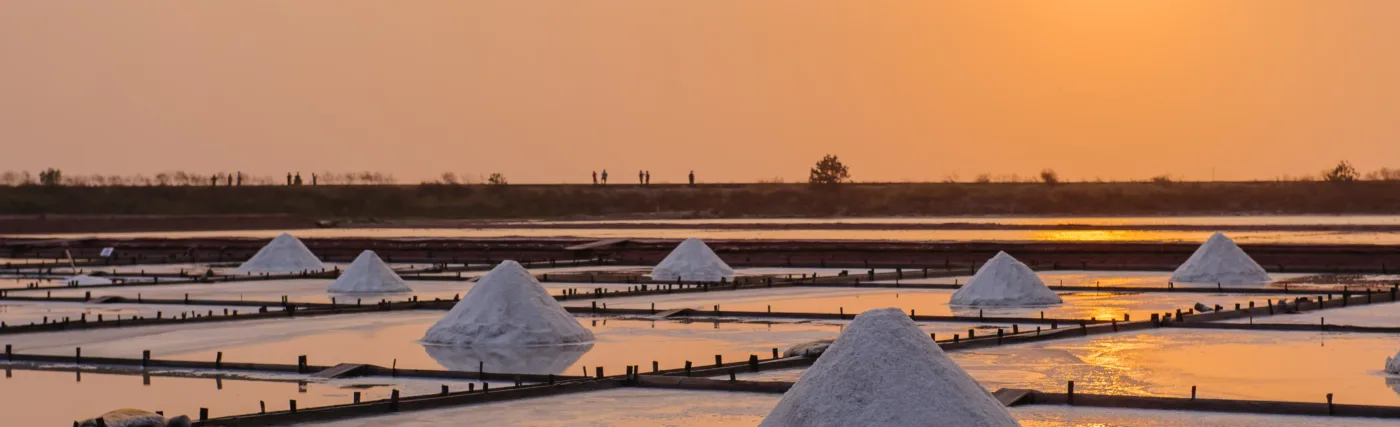
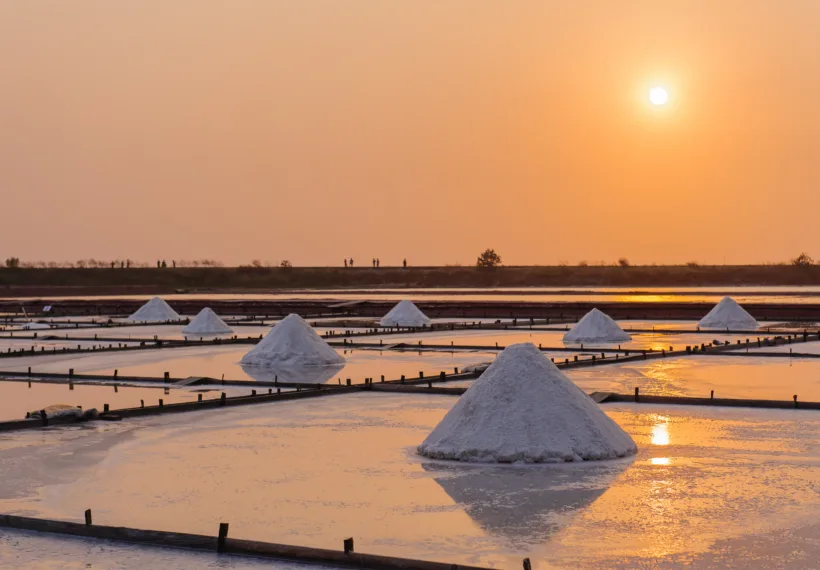
The cheapest, most efficient way to make salt, if you live in a sunny climate, is to just take seawater and dam it off into pounds and let it sit there in the sun and eventually all the water will evaporate.
It may take a year, but you have a lot of different holding tanks which you rotate, so there's always one that's at crystallization.
This is a very efficient, very old way of making salt that hasn't changed in thousands of years and requires very little investment and attracts beautiful birds.
Does that mean all salt is sea salt?
No, although the majority of table salt is sea salt, which is something Americans don't understand because in America it's not.
Americans eat mostly rock salt.
There's only a few places left that produce sea salt in the US.
That wasn't always true, but for one reason or another, most of the sea salt places have gone out of business.
I don't know the difference between rock salt and sea salt.
How do you just make rock salt?
Don't you need seawater to make rock salt?
No, you need a place underground that has salt and a shovel.
So you mined the salt.
Yes, yes.
Well, there's two ways of doing it.
The salt deposits that are under the earth, you can either go down there and mine it like you would any other mineral, or you can flood it and pump the water out, which will come out as brine, and then evaporate the brine like you would sea salt.
So what you're saying geologically is that the minable salt was once salty water deposit, where the water evaporated and left the salt behind.
Yeah, most likely these are all places that were ocean at one time.
And there's huge deposits in North America and in Europe and in Asia.
There's salt under most of the Great Lakes area going, you know, all the way from the plains to upstate New York.
Remind me, are the Great Lakes salty or not?
At what point are you big enough to become salty?
Well, bigger than the Great Lakes.
I think at the point at which you're an ocean.
You know, this is something that hasn't ever been completely worked out about why seas are salty.
It's a little bit mysterious.
But the Great Lakes, although there are salt beds under the earth all around the Great Lakes, the Great Lakes are freshwater.
So Peter Whiteley, I got you in this show from the American Museum of Natural History.
Your Hopi Indians would, so they wouldn't create salt by drying up salt water.
You're telling me they actually found salt in the mountains?
Well, yeah, the bottom of the Grand Canyon and then of the Salt Lake that's not too far away from Zuni Pueblo, about 50 miles away.
So the Great Salt Lake in Utah?
No, not that one.
That's even further away.
Salt Lake 2?
This is a junior version of that.
Was it also called Salt Lake?
It's called Zuni Salt Lake.
Okay, well, as long as they add in.
I have an embarrassing urban story to tell you.
I was flying to California and we were flying over Utah, but I wasn't thinking that at the time.
I was just looking out the window.
And so this huge white area, and I said to myself, wow, that looks like a salt residue, like from a lake that might have been there.
That looks like, of course, we're flying over Salt Lake City.
I mean, I deduced from first principles of science that that was the great salt lake.
But it was obviously that.
I mean, once I thought about it, but there I was pumping my geological knowledge into...
Is that how you fly over the Grand Canyon?
You're like, this is a very, very big canyon.
It feels almost grand in its canyon-esk-ness.
So other great deposits.
So we have obviously great salt lake in Utah, and you have your Salt Lake 2 version, yes.
And of course, the Dead Sea in Israel.
Yeah, where you can sit up in.
Yes.
You can sit in it.
It's so salty, you can sit in it.
Have you tried walking on it, though?
I'm oddly weird.
It's weird I can walk on it, but I didn't want to spook people when I was there.
You don't want to fool people into thinking you're someone other than Eugene.
I can walk on it, but it's purely scientific.
You chose not to.
So what gets me is that, of course, it's called the Dead Sea because there were no fishes in it, but that's more a measure of the fact that they didn't have a microscope, because there are microbes everywhere, wherever you have liquid water in the world.
So it's a scientific limitation that it got called the Dead Sea.
And also, of course, there's near Detroit.
400 million years ago, Michigan at the time was warm, and there was a shallow sea, and when the water dried up, it left one of the world's largest salt deposits.
And so mining continues to this day in those mines.
In Detroit?
In near Detroit?
Near Detroit, yes.
And the shafts go down more than 1000 feet below the surface just to get the salt.
I mean, this is extraordinary.
The extent that people go to to recover this stuff.
So you're a Hopi tribe.
So they would get the salt.
They knew they needed the salt.
Yeah, exactly.
And they went off on long expeditions, which were really ritual pilgrimages.
Some of them, especially to those two places I've mentioned, they have to go through all sorts of ritual preparations and it's associated with an initiation and so on.
So it's a very arduous trek down to the bottom of the Grand Canyon.
But somebody had to go that far to begin with and find it.
Right.
And then they pass the information along.
Are you saying it's basically like a salt bar mitzvah?
And if you like to think of it that way, yeah.
I would like that.
And I'm going to, and I'm gonna tell people that's what you said.
And that's your next gift at the bar mitzvah.
Yeah, exactly.
Not the $18, but packets of salt.
Exactly.
But the information that you were referring to was widely known and shared among prehistoric peoples in the greater Southwest.
So they all knew where those places were.
And they, you know, sacralized it too.
There are salt deities associated with those places, the goddesses and gods.
To sacralize is to make it a deity.
I like that word.
That's my first time I've heard that word.
It's the first time I've heard it.
Sacralize.
But it's not gonna be the last.
Maybe I just invented it.
I'm gonna hear it later when I tell people about it.
Well, he just said he might've just invented it.
That's fine.
So, I mean, my list here is long about all these cultures going back thousands of years.
You know, the Chinese in 6,000 BC would harvest dry beds along the salty, how do you pronounce this?
Lake Yuchen, Yuchen.
I like that you're asking me.
No, Neil, close, though.
That sounds fine.
Sounds fine to me.
And the Egyptians, the Phoenicians, the Romans, the Celts, were mining rock salt in the Austrian Alps as far back as 700 BC.
I mean, this goes on and on.
Peter.
Yeah, it's global.
So what gets me is how people know that they need the salt.
Why did they know they need the salt?
But the people who were getting scurvy for not having vitamin C didn't know they needed vitamin C.
They eventually found out.
I mean, it's trial and error.
Everyone's dying and then it's like, oh, we should get some salt.
Actually, we gotta wind down this segment, but when we come back, let's learn more about where salt comes from and what its effect is on the history of cultures in the world.
Its geopolitical influence knows no bounds.
I'm here with Eugene Mirman, my favorite standup comedian, one of my favorites.
No, too late.
And Peter Whiteley, anthropologist, American Museum and naturalist.
You'll be right back.
Welcome back to StarTalk Radio.
You know, you can find StarTalk on the web at startalkradio.net.
Not only that, you can download us as a iTunes podcast.
And we are in the Twitterverse.
What other handle, but of course, at StarTalk Radio.
Co-host this week, Eugene Mirman.
Eugene, good to have you back in studio.
And you know, we're orbiting the show on the subject of salt.
And an interview that I conducted with Mark Kurlansky, author of Salt, A World History.
And we got into discussing, that's a book about everything about salt, stuff you never thought existed or was true.
About salt.
About salt.
The Secrets of Salt.
The Secrets of Salt.
The working title of that book, No One But Me Knows That.
So, he and I discussed some surprising cultural beliefs involving salt.
Let's check it out.
I have spent a lot of time working in Haiti, so I already knew that salt was used to cure zombies.
Which might be-
To cure zombies or kill zombies?
No, to cure zombies.
Yeah, because salt takes away evil.
Okay, so in a ritualistic way, salt has-
You can tell if somebody has been zombified, you can bring them back to normal with salt.
And how do you apply the salt?
You sprinkle it on them with a salt shaker?
I'm not sure, I have to say I haven't done it.
But there is this association with salt preventing evil and curing evil because it stops rotting.
So in Japanese theater, the stage is sprinkled with salt to chase away bad spirits.
And there are lots of examples of salt used for that.
Salt in many cultures is brought to a new home for good luck.
What's with the salt over the shoulder?
The problem with spilling salt is a Middle Eastern thing comes up a lot in Judaism and in Islam.
And that is related to the ability of salt to preserve things.
So it seals a bargain.
So for instance, in Judaism, salt is a symbol of sealing what's called the covenant, the agreement between God and Jews.
So if you spill salt, it's like the covenant has been broken.
And so you have to do something about that.
So you get rid of it, chuck it over your shoulder.
If you look closely in the painting of the Last Supper, you will see that there is a spilled salt cellar on the table by Judas.
I never knew that.
That table's got all sorts of interesting details in it.
Eugene, did you know there was salt on the table of the Last Supper?
I didn't know that you could cure zombies with salt.
And I wonder how it's ever been tried practically.
Well, plus, I mean, but it's good to know because of all the apocalypses, the asteroid, you know, we can deflect an asteroid.
Virus, we can find a cure, but the zombie apocalypse, that was gonna be an unbeatable one.
But salt is it.
I was, when he was gonna say, I'd use this for salt, I was really hoping that somebody would think that salt could get you pregnant.
You can't have everything.
We have in studio one of our special guests, Peter Whiteley.
He's a curator of Ethnology, I think, is the official title there at the American Museum of Natural History.
He's a cross-department colleague of mine, actually.
And thanks for coming in.
He's an expert on the culture of the Hopi tribes and other sort of Southwest Native American cultures.
And apparently, salt was a big deal to them.
Absolutely, yes.
But since they have to go so far to get it, it achieved a great deal of importance in their culture.
So more than just the nutritional value of the stuff.
Exactly, so it became symbolically valued.
And there are deities who are named after salt.
There are salt goddesses and salt gods and so forth.
So there's the Epsom salt deity, I guess.
I don't think I heard about that one.
How far would they walk?
Did you say 50 miles or more?
50 miles and more.
The distance to Grand Canyon from the Hopi Mesa is about 100 miles.
So why not just move there?
I mean, the Native Americans were known to be nomadic in other ways.
Well, that's right.
There are some...
I would move to where the salt was.
Excuse me, that's what I would do.
That's a good plan.
There are, of course, Native peoples who live at the bottom of the Grand Canyon, like they have a supi.
And in the past...
You said that like that was just so obvious that what an idiot we didn't know.
But there's not room for everybody, so some people like to walk.
Plus it's like if you move there, then you get rid of the spiritual meaningfulness.
That's why we don't live at Disney World.
We walk to it, or it would have no meaning to it.
I guess.
The pilgrimage gives it meaning.
Exactly.
There you go.
Well, this goes way back.
I mean, it was a commodity for a while.
Was it also a commodity among the Native American tribe?
Absolutely.
So even today, you'll find Zunis who bring Zuni salt to Hopi, and they will exchange it for the same measure of ground blue cornmeal.
That goes back a long, long way.
Again...
And that's a symbolic thing that they're doing.
Well, it's a nutritional thing, too, but it represents the contributions that each have to each other's culture.
They haven't found Costco.
You were right.
Well, no, what I'm asking is this is more of like a spiritual, like a recognition of each other's value more than it is like, we need blue cornmeal.
This is the only way we can do it.
Well, that's right.
And there's a special celebration of this particular kind of salt that Hopis call it by a particular term, ba'unga, which means literally water salt.
And that's something that they value more highly than what you get from Costco.
You know, it's weird, you look back at Costco.
You look back, Chinese emperors had a salt monopoly and the Venetian government controlled the price and export of salt through its ports, through the lagoon.
And the Erie Canal was called the ditch that salt built because it was financed by a tax on salt.
I mean, it's amazing.
Just you go down this list and do you know, Romans salted their vegetables and hence the word salad, salad for salt.
And the salary comes from the word salt.
You now have reached where it sounds like it's like an Illuminati conspiracy about salt.
Where like, did you know everywhere in history, salt was there making decisions?
It was there.
Voting for the president, salt.
When we come back more of my interview with Mark Kurlansky, the author of Salt, and my in the studio guest, Peter Whiteley.
Welcome back to StarTalk Radio, I'm Neil deGrasse Tyson.
I'm here with my co-host, Eugene Mirman, and a special in-studio guest, Peter Whiteley.
He's a curator of ethnology at the American Museum of Natural History, and today's topic is salt.
Salt as a cultural geopolitical force.
And I've slotted in here an interview that I had in my office with Mark Kurlansky, and he wrote the book Salt, A World History, and he told me how salt contributed to the science of geology, which I hadn't thought about, but in retrospect, clearly that would be the case.
If you care where your salt is, you're gonna learn about what earth did to get it there, and what you're gonna have to do to get it from the earth, and also what role geology played in devaluing salt itself.
So let's check another clip out from that interview with Mark Kurlansky.
The whole science of geology grew up on salt.
Geology was basically the science of finding salt.
Just a sec, how does the need for geologists to help you find salt compare with the need for geologists to help people find iron, or any other valuable ore?
Well, it's very much the same thing.
It was a very valuable ore, and that's why this science grew up looking for it, until the beginning of the 20th century, and then a discovery was made that there was a relationship between salt and oil.
The reason for this relationship is that very solid deposits of salt, which are called salt domes, are impenetrable.
So organic material that pushes up against salt won't go any further, and it will be trapped there, and that's how oil is made.
When this was discovered originally in Pennsylvania and then in Texas, the science of geology became about looking for salt so that you could find oil, and went back to all of these places in the Middle East where salt domes had been discovered and found oil, and today geology is very much focused on finding oil.
But that only values the oil, it doesn't devalue the salt.
Well, it did devalue the salt because it stepped up the search for salt, and it was discovered that there was just much, much more salt in the earth than anybody had ever imagined.
Just these huge, huge deposits.
I mean, from Ireland, across Northern England, into Scandinavia, from Eastern France, across Germany and Austria into Poland, you know, from Detroit to Syracuse, just huge.
So that, for one thing, lessened the value of salt.
But at the same time, refrigeration and freezing were being developed, which is actually my next book.
I'm working on a book, a biography of Clarence Birdseye.
Clarence Birdseye ruined the salt industry by developing commercial freezing.
So, Peter, these Native American tribes today, part of the salt was nutritional, but also to preserve food over the winter months.
But there are other ways to preserve today.
And you studied the relatively recent history of these tribes.
Why are they still doing it the old-fashioned way?
Just put them in a condo and give them a refrigerator.
Well, they like the way it tastes.
They like that particular kind of salt that I was talking about.
But of course, they have many other methods of preserving meat and fish and so forth in the past, as well as in the present.
So you get deer meat and smoke it or dry it or clams and salmon and halibut on the Northwest Coast.
They spent many hours drying these in smoke houses and so forth, especially for that purpose.
I have in-laws from the Pacific Northwest.
And yeah, there's a whole culture of the dried meat.
And it tastes great.
And it's very high calorie, actually.
And so you don't need much of it to keep you going through the day.
So what I find interesting is just how salt had all these secondary effects on the rest of the conduct of cultures.
I mean, that's extraordinary.
And what I wonder, though, is has salt been devalued in the Native American community because of its full access?
Are those deities still operating in the cultures, the deities you spoke of in an earlier segment?
Because of all the salt domes in Europe.
It was like, they're all over France and Ireland.
Yeah, that was like the military map of Napoleon.
Yeah, yeah, and all the salt.
And then also in Detroit.
I'm glad they have something, even if it's salt.
Napoleon's last stand in Detroit.
I think traditionally oriented people still pay attention to those things.
And again, they do value the Native salt more than the commercial salt, very much so into the present.
Is it actually a better quality salt?
I think it tastes better, and Hopi's talk about it as pascuangua, much more flavorful, much sweeter than the commercial salt.
It sounds like you speak Hopi.
We'll have to get back to that after this segment.
It's a little bit.
And you speak Klingon, don't you?
I speak Russian.
We'll get back.
When we come back on StarTalk Radio, more on the topic of salt.
Welcome back to StarTalk Radio.
I'm here in studio with Eugene Mirman and a special guest and curator of ethnography.
Did I get that right?
Yes.
Peter Whiteley at the American Museum of Natural History, specializing in Southwest, Native Americans of the Southwest, the relatively recent history that they've enjoyed.
And this topic is salt and what role it's played in cultures and how they've treated each other and how they've developed.
And we also have clips from an interview.
We have the last of several clips of my interview with Mark Kurlansky, the author of Salt, A World History.
Why don't we start off with that clip where he talks about salt, not simply as being important for your survival, but it was so important for survival that in fact, it became-
Some people married it.
It became a strategic commodity.
Let's check it out.
Tell me, the history of war and salt, is that a book unto itself?
In many ways actually, because salt was also used to cauterize wounds, though an army that didn't have salt was in trouble, but you get examples like the Union Army in the Civil War.
The Union Army had a strategy of preventing the South from getting salt.
They couldn't get Northern salt because there was an embargo, and wherever they found a salt work, they destroyed them.
Sometimes they went back repeatedly and destroyed them, so that the South was in desperate shortage of salt during the entire Civil War, which created a food shortage in wintertime.
Wow, so the control of salt became a major military tactic.
Yes, and salt has often been regarded as strategic.
In British government policy, it tells you something about the British government.
They were always more concerned with salt as a strategic commodity than they were with it as a commercial commodity.
Queen Elizabeth I warned the English people of their dangerous dependency, exact quote, dangerous dependency on French sea salt.
So salt of yesterday is oil of today.
That's right.
You know, when you look at salt and oil, there's a great lesson there.
It's actually one of the secret reasons why I wrote the book.
What you think is valuable and what you're willing to fight and die for, is it really valuable?
Value is an illusion and it shifts all of the time.
And I am absolutely certain that someday oil will be worth about what salt is worth today.
Some wishful thinking there.
It's certainly possible, but it doesn't mean at the time you shouldn't go to tons of wars over oil and salt.
I'd forgotten that yes, you can use salt to quarterize wounds.
And of course Rambo did that.
I still do it.
If I get into a knife fight, I go right to some salt.
No, was it Rambo?
No, no, no, he actually took the gunpowder out of a bullet and ignited it in the wound in his side to quarterize the wound.
So that was the manly thing that he did.
Yeah, I wouldn't do that.
I would just put salt on it.
I'm not a lunatic.
So this goes way back for the military.
The Roman army was sometimes paid in salt.
And the origin of the word salary, salary.
Salary, salad.
And salads.
All of it, all of it.
Yeah, yeah, and of course-
Sally was a very salty lady.
And of course, the expression is he worth his weight in salt.
And what's odd, because when I first learned of salt, I had heard that it gave you high blood pressure and killed you.
So someone said he's the salt of the earth.
It's like, ooh, you must not like the person.
I came way out of sync with when all of this was, all this vocabulary was established.
And of course, one of the major causes, there's several, of course, but one of the major causes of the French Revolution was the salt tax.
We never talk about that because we can't even picture it.
We can't even think about it.
At the time-
I think we can picture it.
Did you know that the French prisons were full of people convicted of salt smuggling?
Salt smuggling?
Oh, trying to avoid being, salt taxes.
Yeah, yeah, yeah.
That's why we do that today.
There was also, tea was also very important.
I mean, I guess I think it's perfectly reasonable that salt was so important.
One of the first things they did at the end of the Revolution was to spend the salt tax.
And of course, famously portrayed in the film Gandhi, but what Gandhi actually did was one of his steps to fight for India's independence from Great Britain was, he was concerned about his policies concerning salt.
And then the, what was that, that march to the sea where he made salt without the oversight of the British.
And that was viewed as almost a strong act of defiance.
And here we look at it and say, what's he doing?
He's making salt.
What do you care?
British, it's like chill out.
Let him have some salt.
Whoever controls the salt controls the world.
A movie I'm going to be working on.
So Peter, we're running short on time.
Any concluding comments you have about this whole business?
Well, I think that concept of salt being a strategic resource is very widely present.
I'm thinking, for example, of some societies in Papua New Guinea, where there are specialized salt producers and salt makers.
They'll have a high role in the local hierarchy and they get to be responsible for trading salt in a very controlled fashion among different groups of neighboring tribes.
So it's still going on.
It's still there.
Absolutely.
Yep.
Still there.
And like I said, it would be interesting if oil one day became the salt of the past.
Yes.
And I can't wait for a new thing to replace it that we go to war over.
I just hope I get to control it.
Well, we gotta wrap up this first hour of StarTalk.
There's a lot more to discover in part two of our show about the science of salt.
And in that second hour, that's when we get into the health considerations of salt and what it means to us physiologically.
You've been listening to StarTalk Radio.
Eugene, thanks for being in this first hour.
And Peter Whiteley, thanks for joining us in this first hour of StarTalk Radio.
StarTalk is brought to you in part by a grant from the National Science Foundation.
As always, I'm compelled to tell you that until next time, keep looking up, Neil deGrasse Tyson signing off.
When we come back, I'll be in the Cosmic Crib to talk more about evolution with Bill Nye the Science Guy, who just wrote a best-selling book on the subject called Undeniable.
Stay tuned.
Bill, thanks for coming into the Cosmic Crib.
It's so good to be in the crib.
The Cosmic Crib of StarTalk is just my office.
It's code for my office at the Hayden Planetarium.
I'm here with Bill Nye, a recent expatriate from Los Angeles, now live in downtown Manhattan.
Yes, sir.
Yes, welcome to New York.
It's great to be here.
And I was just browsing the New York Times, and your name showed up on the bestseller list.
Check me out.
Is this your first time, I think, on the bestseller list?
Yes, it's my first time, yes.
I hope, maybe there'll be more times.
Well, congratulations, making the bestseller list.
Thank you.
And the title of the book is Undeniable.
And I was happy to read a galley of the book and offer a blurb for the book.
It's a very nice book, excellent book.
May I read my blurb?
Do you have a copy of the book?
I have a copy.
I want to read my blurb, just to set the stage here.
I love velcro.
I came here by bicycle, riding through Manhattan.
Because you are that green.
Well, not only that, the bicycle is faster.
I can be, here we go.
And I like the challenge.
It's like a video game, the stakes are really high.
Yeah, a video game where you could end up dead, not anyone else.
That's right, absolutely.
Here's my blurb for Undeniable.
The subtitle of it is Evolution in the Science of Creation, my blurb.
And I'm honored that it was the top blurb.
And it is the shortest one, which I know is the source of crime.
I never want to be the longest blurb on a book jacket.
Heck no.
With his charming, breezy narrative style, Bill empowers the reader to see the natural world as it is, not as some would wish it to be.
He does it right, and as I expected, he does it best.
Bill!
I love you, man!
Bill!
That's really nice.
I put my heart and soul into this thing.
No, that's good.
So, what I liked about the book was that, unlike many other books that try to be expository in some scientific topic or another, you didn't even go there.
You were just sitting down with you on the couch, and you're telling, Uncle Bill is telling stories.
Well, this is the thing about first-person stories.
First of all, this is how humans find patterns and remember things based on stories.
You did this Cosmo series, I think.
I've heard of it, yeah.
Yeah, full of stories.
Full of stories, yeah.
Storytelling was a big part of that.
It's very important.
And then the other just feature of this, if I say in the book, I remember when I met the gorilla named Ivan, the reader can't say, no, you don't.
Yeah, yes, I do remember when I met Ivan, yeah.
And so that gives it a property that has a property.
That's a great sentence, too, by the way.
Well, yeah, unlike many readers of this book, Ivan was a mountain gorilla, I don't know how many.
I would say most readers of the book.
Yeah, well, it's not clear how many mountain gorillas have enjoyed my book, but Ivan was an influential guy for me because you could tell that he was unhappy in the, or he was bored, I think is the word, in the Tacoma enclosure, in Tacoma, Washington, but he had it kind of going on, feeling pretty good when he was in Atlanta.
He had girl gorillas digging his gorillaness and you could tell in his posture, in his manner.
But this is a gorilla that you observed in two different zoos.
Two different zoos.
One of them wasn't really a zoo.
It was from the bad old days.
The kind of facility where planet of the apes derive.
Yeah, right.
Where they break out and take over, okay.
So my claim in this one passage, which is a bit of a digression here, is that your posture, your gait, your manner is deep within us no matter.
It's common to our species.
Did you feel that you had a special capacity to observe this being a primate yourself?
Well, that's the other thing.
Then we changed the subject to VIP.
Now, VIP is a gorilla at the Woodland Park as we record.
I didn't know you had all these primate relationships.
Well, we'll go with that's two.
Then my old boss.
I'm not sure where he would fit in on that tree.
We thought about an old boss joke in every chapter, but we held back from that.
Wisely, I would say.
Editors and I.
But the VIP looks at you.
He sits next to the glass.
He's got an acre, pick a number.
He's got a heck there.
Out there we could wander around and be gorilla and eat gorilla things and do stuff.
But he sits right by the glass and he stares at you.
He stares at you.
What's the deal, man?
What's the deal?
My people are behind the glass.
And look, and we're big and strong.
Look at you.
You're skinny.
I want to break you over my knee.
And I'm a vegetarian.
But he's just thinking.
This is the thought bubble of the gorilla's head.
Yeah, you can see it in his eyes.
And so I met an actress who plays the orangutan in the Planet of the Apes movies, the wise old orangutan.
And she apparently goes to, by all accounts, goes to the Woodland Park Zoo, sits there with the orangutan.
And where's Woodland Park?
In Seattle, sorry, the Seattle Zoo.
They take a meeting and they look at each other.
They paint together.
They do things.
And I asked her, is Vip still there?
And she said, oh, oh, he's mean.
So that's just in a independently confirmed account.
But neither here nor there.
The book I consider a primer, a primmer, on evolution.
It's very important for everybody to realize that living things make more copies of themselves than can succeed.
We reproduce more than are going to live.
Well, humans don't really do that.
Well, there's 7.2 billion of us right now on our natural proclivities.
And so there was a time, actually, when you'd have 7 kids and 3 were to die.
There is a technical and important point.
Many, many, many more eggs are fertilized, human eggs are fertilized, than become people.
And this is an important point when you're going to start passing laws and prosecuting people based on their eggs not attaching.
And so it's an important thing to understand.
And by the way, the religions who make certain claims about their understanding and conception wouldn't have anything to say if it weren't for science and microscopes.
Then another thing about evolution that's really important for people to understand is sexual selection.
That is to say...
We know it's sexual selection.
Well, but people...
Of all the things you have to define on this show, I think that would not be...
No, but I mean, it's selection within a species.
And why do you do it?
What's the point?
If you're a dandelion or a sea jelly or a barnacle, why do you bother with it?
Why don't you just pop yourself off like any self-respecting bacterium?
I've never been a barnacle.
Yeah, it would have been a big change for you.
And so, these are just important things to understand.
And then I go on about...
What's the value of sexual selection is?
Well, apparently, the best theory right now is your enemy out there, if you're a meta-organism, multicellular organism, your enemy is not lions and tigers and bears, which can, of course, can be troublesome.
Your enemy is germs and parasites.
That's what will kill you.
And to show you how deep this fear is within us, look at Ebola, how people, quite reasonably, terrified.
And so, along this line, understanding the process of evolution allows us to craft medicines and medical procedures that allow our species to succeed.
It allows our species to succeed specifically to us and to our crops and farm animals and everything else that we depend on.
Evolution is the main idea in all of biology.
And, but your title is very confrontational.
Well, it's not, oh, here's an account of evolution, it's undeniable.
Well, we had a-
Yeah, go on, meet me outside.
That's exactly right.
You're ready to, like, have a fight.
Yes, but not-
By the way, the book does not read that way, but the title does.
Thank you, I think.
The book is very breezy and informative at the same time, and those two words are hardly ever in the same sentence.
I love you, man.
So we did have, I did step inside for a fight with the guy in Kentucky, and I took him on-
Ken Ham.
Lectern to lectern.
The head of-
The answers in Genesis-
Creation Science Museum now?
Yeah.
And the word museum I'm always, I always have difficulty with.
There are no artifacts there.
It's just animatronic robots and some dioramas.
Theme parky.
It's complete theme parky.
And they, I think, are unabashed about that.
And where they, where they may have crossed a line is now you have to testify to your Christian faith, even though, by the way, the debate was about what I, my understanding of the Bible is about the Old Testament, the Jesus guy never got involved.
And then-
Jesus.
Yeah, Jesus, right.
When spoken in Western English language.
And then, and then the other thing is you can't be gay, you can't be homosexual to work there.
And you can do that apparently, if you have a private, or they're trying to make it so you can do that.
But you can't take tax dollars and do that.
So we'll see what happens to them.
So your book, you're happy with how it's come out?
Oh man, I'm just very pleased with it.
And-
Yeah, every chapter is a story of some kind or another.
Yeah, that's right.
That's how we-
I feel like I got to know you better by having read it and-
And you're still talking to me.
No, I've worked really hard on it, everybody.
And you're opening sentences, what?
Oh yeah, yeah, and this is true.
I do remember very well watching bumblebees.
And just thinking, I mean, a bumblebee is a small thing by human standards, but just compare the size of their wings to how small they are.
How in the world is this possible?
Furthermore, in Ripley's Believe It or Not, they stated categorically that bumblebees should be unable to fly.
They are aerodynamic misfits.
And I remember even as a kid thinking, dude, Mr.
Ripley, they're flying.
The problem has got to be with the theory, not the bee.
And it's interesting, it wasn't even till, pick a number, 15, 20 years ago, that people really understood how bees fly.
It's quite an extraordinary motion.
And bee wings are very different structurally from bird wings, very different structurally from bat wings, yet they have converged on solving the problem of flight.
And this is another evolutionary principle which I cover in the book.
So all the big evolutionary elements are there, but told through this storytelling style.
So people would acquire a comfort level, I think, with the topic.
Well, I'm hoping.
And maybe go on to more advanced books, would you imagine?
Yes, sure.
Or just have a deep understanding and especially an appreciation for the process that was discovered by Russell Wallace and Charles Darwin.
They didn't make it up.
They found it in nature.
And that is a worthy thing.
And it fills me with reverence to know that we are part of this extraordinary process that goes back four and a half billion years.
And speaking of four and a half billion, I am very proud of the timeline.
I think I have a good way to try to get your head around deep time.
Deep time, time deeper than anything the human experience has recorded.
Yes.
And speaking of time.
We are done here.
Bill, thanks for being in the Cosmic Crib.
Thank you.
As always.
And like I say, I bring greetings from the entire StarTalk community.
So welcome to New York.
Thank you.
It is great to be here.
I'm Neil deGrasse Tyson.
See the full transcript



 Unlock with Patreon


 Become a Patron