
Extended Classic MythBusters (Part 2)

  • Free Audio
  • Ad-Free Audio

About This Episode

Now extended with 10 extra minutes of Neil and Chuck answering your Cosmic Queries!

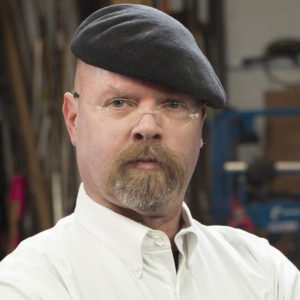
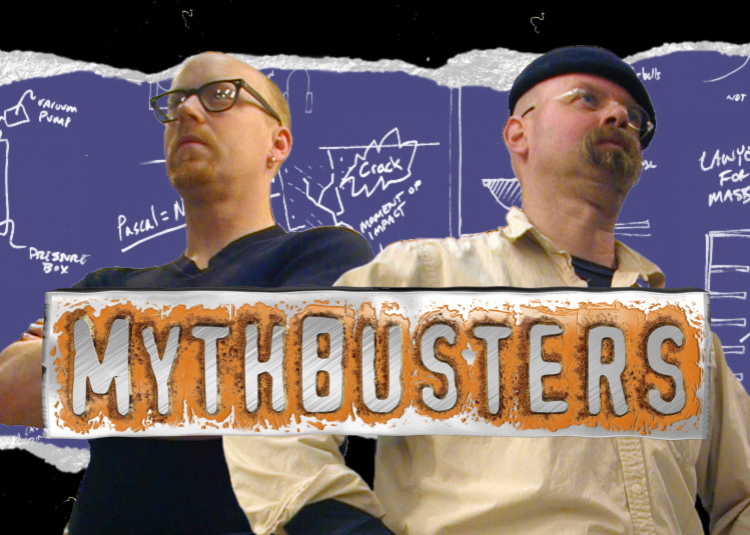
Since they didn’t blow up Neil’s office in Part 1, the MythBusters Adam Savage and Jamie Hyneman are back again to finish the job. They’ll discuss testing the myth that Archimedes set fire to an invading fleet of ships using mirrors, as well as why the team never tries to prove negatives, like that the Loch Ness Monster, Bigfoot, the Chupacabra and the Jackalope don’t exist. You’ll hear how a truck driver, two police officers and other real people have escaped from a sinking car using tips from the show. And you’ll discover why the MythBusters never shot Jamie off the back of a moving train using a slingshot or tested how well teeth whiteners work. The duo also describes the scars they’ve gotten over 15 seasons, and Adam talks about the time he blasted Jamie’s beret with a shotgun. Plus, Neil and co-host Chuck Nice find out what the show uses powdered animal birthing lubricant for, how you can actually “polish a turd” and what was the weirdest urban legend that turned out to be true.

NOTE: All-Access subscribers can listen to this entire episode commercial-free here: Extended Classic MythBusters (Part 2).
 

Transcript

DOWNLOAD SRT
Welcome to StarTalk, your place in the universe where science and pop culture collide. StarTalk begins right now. This is StarTalk Radio. I'm your host, Neil deGrasse Tyson. I'm an astrophysicist and the director of New York City's Hayden Planetarium...
Welcome to StarTalk, your place in the universe where science and pop culture collide. StarTalk begins right now. This is StarTalk Radio. I'm your host, Neil deGrasse Tyson. I'm an astrophysicist and the director of New York City's Hayden Planetarium right here in New York City. Today, I've got co-host Chuck Nice. Hey, Neil. Is Chuck Nice nice? No. Short answer, no. Short answer, all right. But you tweet at ChuckNiceComic. That's correct. You do, thanks for doing this. We love having you on. We're at part two of the StarTalk MythBusters interview. Yeah. The MythBusters, you gotta love you some MythBusters. Yeah, man, what a great show. Been on Discovery Channel for 10 years, and the MythBusters are Adam Savage and Jamie Hyneman. If you don't know who is who, Jamie Hyneman, he's bald with a hat. Okay. You got that? He's the one that looks like a walrus. I did not tell him that. Do you think of Chumlee or something? Chumlee, that's what we remember? Okay, I remember Chumlee. Come along, Chumlee. If you're 50 or older, you'll know who Chumlee is. It's been one of the most popular shows on all of the Discovery Channel stable of programming. And as you may know, they use elements of the scientific method to test the validity of like myths and rumors and urban legends and stuff they show in movies and all these crazy internet YouTube videos of people doing weird stunts. Did they fake it or is it real? Super cool show. Yeah, and so they visited me in my office in New York City and I whipped out the microphone and we just chilled for an hour. Yeah, so one thing I couldn't help but talk about was, did Archimedes really set fire to the invading ships using mirrors? Let's find out. Mirrors can start fires. You can focus enough of the sun's rays on a point to burn and melt all sorts of very, very high melting point things. The question is, can you use it as a military weapon against an actual boat? Yeah, from quite a distance and using a number of different mirrors that are handheld. And the devil's in the details in this particular case because it's dramatically different to be right next to something with a perfectly focused small mirror and potentially hundreds of feet away with these things moving around. You need that pinpoint to be able to come into focus. You can't just light up the broad side of the ship. You can't light up the broad side. And we found even with as few as 10 people, getting all 10 of them to aim a mirror to 10 feet away to the same spot is actually just that is really difficult. And the farther away it is, the tiniest movement of your hand sways it. And what's your aiming reticule? How do you know where your mirror beam is hitting when it's off? You're naming reticule. Not to mention the movement of the boat, which it would be moving. The rocking of the boat and water sloshing of it. You gotta evaporate the water before you evaporate. Well, this was about a boat that was in process of attacking the shore. And so it's gonna be underway. So you've got to be able to track it. And the sun's moving as well. There's just no practical reasonable way that you'd be able to get a pinpoint thing by. If I remember the guys at MIT, they painted the side of the boat matte black or something. They did, and they used mirrors on stationary stands. This is Dr. David Wallace at MIT, and he was a big fan of MythBusters. He used it as a- Until then. No, no, no. So we had done it once and busted it. And then he brought his students out at our invitation, and we set up 500 mirrors, just like his experiment. But this time we were aiming it at a boat, and we couldn't get it to go. And the only thing we hadn't done in that story was get 500 actual soldiers, quote unquote, on the shore with mirrors trying to actively point. And that's when the Obama administration called and asked if we could somehow work with them on a myth that would help promote the STEM initiative. And we suggested this one as a perfect one because our soldiers could be high school students. And Jamie's wife is a science teacher. Wait, wait, so you now have legions of high school students trying to ignite things with reflected mirrors. Absolutely, absolutely. Large ones that we supply. Large focusing mirrors. Their interest level was high. It was excellent. They were a terrific army. So this all started because there was a legend that Archimedes, we know, love me some Archimedes, right? Give me some more Archimedes, right? That he destroyed enemy ships with fire caused by these reflective mirrors. And they were called burning glasses. Burning glasses. Burning glasses. Second century, AD second century author Lucien wrote that during the seas of Syracuse, 214 to 212 BC, Archimedes destroyed the enemy ships this way. And the cool thing about it is, if you're at war, it's good to have smart people on your side. That's so true. You know, he knew you could focus light, the light would make something hotter. And so this has been sort of a legend and people never really knew if they could pull this off. And the Mythbusters, you know, went ahead and tried it. It turns out you can do it if the side of the ship is painted matte black, matte black, and it's parked there, all right? And everybody's there aiming at the exact same spot. But if you're at a ship that's swaying in the ocean and it's wet, you can't ignite something that's wet. That's why, did you know, that's why you can boil water in a paper cup? Have you ever tried? The paper cup is wet. Yes, it's wet because it has water in it. See how that works. See how I got right in on that one? The cup cannot get hotter than 212 degrees, and it has to be hotter than 212 degrees to burn. So this kept going. We also wanted, can you prove a negative, right? Like how about, you know, Loch Ness. Well, that's a loch, but Nessie. Nessie. Is it there? Can you show that it's not, let's find out. Most urban legends are about the existence of something or a claim of something that is true. How about claims of something that are not true? Oh, like that. Then you have to prove a negative. Chubacabra, Loch Ness Monster. Exactly. The Jackalope. The Jackalope, yes. I saw a cartoon with a Jackalope in it, so I'm pretty sure it's real. A moderate politician. So how do you deal with having to prove negatives? Other than the logical impossibility, I mean, there's a practical element that one should ought to be able to demonstrate the unlikelihood of something. Well, if you're doing something like looking for a ghost or whatever where you can't use a control to compare against, all you're going to be able to do is prove that you weren't able to find that. As evidenced by all the ghost hunting shows that never find a ghost, and all the Bigfoot shows that never find Bigfoot. Yeah, it's not proof that they don't exist. It's just proof that you couldn't find it. And that's one of the things where, you know, science and its methodology has a way of dealing with actually being able to test things, and that's providing controls and things that you can compare against. And so we just stay away from those things. We can't physically test it and come up with any kind of conclusion other than... It didn't happen on your watch. It didn't happen on our watch, which is not proper science. Right. There's a famous philosopher, Bertrand Russell. He hypothesized the teapot experiment. You say there's a teapot orbiting the sun. Okay. I know there is. How? Well, so now you have to prove that there isn't. Now you gotta prove that there's not a teapot. Right, and then I just go back to the Bahamas while you're up there trying to prove, right? So he's trying to distinguish people making claims that the burden of proof should not be on the person who doubts you. It should be on the person who's making the claim. And so it would be really cool if astronauts went up and actually found a teapot. Nothing would make me happier. Well, when we come back, more of StarTalk's interview with the MythBusters. TheBusters. StarTalk, Tyson here, Chuck Nice there. That was very Starship Captain. It was, it was. Warp Factor Five already. We've got the Mythbusters, they came to visit me in New York, and they didn't come to visit me, they were in New York, and I snared their schedule. They haven't come by my office. You know, there's some myths that Discovery Channel will not let them test. Really? Danger? Let's find out. Okay. Well, the one that I've been wanting to do, it actually involves canceling velocities, and it was based on a video where some baseball pitcher hangs his arm out the window with baseball, and he throws it backwards in the opposite direction that the train is traveling at exactly the same speed. And so to somebody on the side, the ball just drops out of midair and stops. We did that, Cary Grant and Tory did that on the show, and I was a little ticked off because I wanted to do that, but I wanted to take it a step further where I would get to beat the baseball. And you would get thrown off the train. Well, cancel velocity. So presumably he'd just be standing there. You have to be thrown off the moving train backwards at the speed of the train. Right. Yeah. I would rig a backwards facing slingshot. What could possibly go wrong? Well, it actually goes on from there where if you rig something like this on a bus, you know, the bus wouldn't even have to stop at the bus stop. You'd just get into this little pod and then bang, you're right on the bus stop. You're standing, right? You're standing stock still. The buses would never have to stop. Yeah. Trains would not have to stop. Planes would never, you just have continuously running. You just shoot people into it. Well, there's going to be a limit, you know, you're not going to get up to speed on an airplane that's traveling 500 miles an hour. Because you have to get on the airplane in the first place. Ignoring that complication, this is a brilliant idea. Well, yeah, I mean, the G loads, if you accelerate from zero to 500 miles an hour in what, 50 feet. Okay, you're a pile of goo, fine, but it's otherwise a brilliant idea. Well, and so, they had issues with safety, and I went immediately to one of the tricks that we often do when we're testing things is to get into it incrementally. Obviously, they wouldn't have any safety issues if I did it at five miles an hour, and I could do that running off of a low trailer that's being towed by a truck. Yeah, up to your own body speed. Yeah, you could do five, 10 miles an hour, for sure. Okay, so you're easing them into this idea that you're going to have a high speed. You know, presumably, at some point, it might be 50 miles an hour. Who knows, the G loads that you would have to subject yourself to over, say, a 50-foot long bus or trailer would be excessive. You have to accelerate from zero to that speed very quickly. Yeah, but there would be a safe way, if you do it incrementally, to increase the speed and find out what you could do. A theoretically safe way. Yeah, this speaks towards a lot of what we do on the show where some of these things are silly. We've polished turds and we've made balloons out of lead. You know, inherently ridiculous. They're of no major importance. Yeah. They're curiosities. Yeah, we actually got a reflectometer to make sure. To see how shiny your turds were. Genuinely making it shiny. And Jamie did lion poo, I did ostrich poo. Yeah, I got mine within a couple of percent similar to Ball Bearing's shininess. This is hardened poo, obviously. Do you know the process of Dorodongo, the Japanese process of making shiny mud balls? No. It's actually really cool. You can make a nearly perfect shiny sphere out of mud using this process and just using mud and your hands. So you just put the poo in for the mud and you're done. Yeah, so we went to the zoo and we actually collected about a dozen different kinds of poo. And the zookeeper let you take the poo. Well, they collected it for us. We have shots of Jamie ferreting through a warthog enclosure. Yeah, that's true. But I digress, sorry. I was distracted by shiny poo, but go on. So these things are not in and of themselves that useful to know. But the process of getting there is interesting. And in the case of this canceling velocities thing, I started to think carefully since I was especially meeting so much resistance from the insurance company that I might be maimed or killed in the process of testing this, that I started to parse out what exactly it was that would be of concern. And it wasn't the drop to the ground because this affair could be arranged to be fairly low on a low trailer. So maybe you drop a foot or something like that, no big deal. The problem therefore is if you would happen to mismatch those velocities, you make a mistake and it doesn't work exactly as planned. And what happens there? Well, you interact with the ground at something other than zero velocity. And what's the problem with that? Well, it's friction. And so if you have friction, if the velocity is significant enough, then you're going to start to interact with that ground and tumble. And tumbling means broken bones and things like that. And that's where you run into problems. So your euphemism for breaking your neck is interacting with the ground. Yes. Under parameters that are unacceptable. And my solution to that would be to remove the friction, which couldn't be either lubrication, which would be funny and make for good television, I think. You're on the bus and you step into this little slingshot affair and it sprays you with some kind of lubricant. Animal birthing lubricant. So you're on time even if you're a little greasy. Yeah. Animal birthing lubricant. I actually buy ours in a powder form. Yeah, in large quantities. You just add water. And that's interesting and it actually feeds right back to conventional things that we all know about, like what do motorcycle racers wear? They wear leather gear. It's not an exoskeleton, it's an exoskin. Yeah, it allows them to slide. It removes the friction. Maybe they'd be better if they were coated in lubricant. It's possible, as long as there aren't any obstacles on the course. And in our testing, we could make sure, you know, we go out on a runway so there's nothing that we would hit. But the process of getting there, where I come up with this premise, what if we did this, what would happen? It's a what if situation. And I start to think very carefully about what is the actual problem? And you could, as far as I'm concerned, quite safely, manage to jump out of a car going at full speed. If you were on something like a shallow ski kind of affair that would just slide, there's no impact that's gonna be happening as long as you are doing this in a controlled situation, which we would. Crazy people. They are insane. However, I was impressed with the fact that you used the term exoskin. Because as a person who rides motorcycles. I didn't know you were a biker. Well, no longer, because I got kids now, my wife won't allow me to do it. Right, she doesn't want you to die. Right, yeah, which, you know, the moment she says, here's the bike, I know our marriage is over. But. The best organ donors are motorcycles. That's right. However, there's a saying that we have in the biking community, better the cow's skin than my own. And that's for guys who wear leather when they bike. It's not a fashion statement. It's actually for your own safety. So what do they have against cows? So this experiment with falling off the truck, they actually did something similar to that, but not with Jamie, that's the point. So they used a soccer ball, and they launched it off the back of a 60 mile an hour truck, and they launched it at 60 miles an hour, and the ball just fell straight down. Straight down. Yeah, but Galileo could have known this. I mean, this was, so it's just fun watching them make this happen, but it was gonna happen that way. Galileo figured that out. Figured it out a pretty long time ago. A pretty long time ago. Also, there are issues with whether advertisers will get in the way between whether they have an idea that they should perform or not. Now we're talking TV. Now we're talking TV, let's find out. So early on we thought, well, what about teeth whiteners? How well do over the counter teeth whiteners work as opposed to the medical grade? So now you're testing brands on that level. And we thought, oh, this is no end to stuff we could test here. And Discovery was, oh, no, no, no, we have advertisers who sell toothpaste. And I don't begrudge them their business model. I understand that. But really, it shouldn't be your job to tell people what product to buy, really. It shouldn't. I'm a little sad about it because I love the British version of Top Gear because I love it when they get behind the wheel of a car they don't like and they say, this is a piece of crap. That is something you will almost never hear on American television. Because we're all about the money. But the fact is you wouldn't have a show unless some sponsor sponsored it. Exactly. So let's be grown up about it and understand that and find some other topic. I guess one of the early times I talked about this was at a hacker conference and they were expecting some sort of like, yeah, screw the man. And I said, look, that's their business model. And it's one that's allowed me to do all sorts of wonderful stuff that you've enjoyed watching. So let's not begrudge them their own model. But it does mean that we won't test something that we've always wanted to test, which was the cleanliness of bottled water versus tap water. I'm a New Yorker all the way, and I go to other cities, I'm like, what the hell are you guys drinking there? I'm like, ew, what is that? Well, San Francisco, ours is almost as good as New York tap water. So why don't you do, you know, cities would let you contest cities. Oh, you're totally right. We should totally do that. And then the city pride. You know, New York City's tap water is so good because of how thriving the estuary of the Hudson River Valley is. And in San Francisco, we've got a pretty good one. You're a New Yorker by heritage. And I'm not, but New York water, I tell you, even I know that. Oh, it's amazing. It's not as good as San Francisco, but San Francisco's water is fine. I'll take you up on that. It'll be fun. And then- We'll do the Pepsi challenge. Yeah, it's a Pepsi challenge. And then what you do is you serve the San Francisco people New York water or vice versa. Right, right, right. Plus you can get Icelandic water. They talk a lot about their water. Local pride. Yeah, is it well water? Is it a reservoir water? Is it glacial runoff? Then that way you can stay out of the- Absolutely. Okay, I think we've got a whole episode there. Cool. And we can imply something about bottled water. So do you know there's an annual tap water test? Did not. Conducted by the American Water Works Association. And the best tasting tap water in 2013 was Oklahoma City. Get out of here. Now I think I've been to Oklahoma City and I went to a restaurant and they're putting like lemon wedges in the water. Exactly. I don't know. Was this test done with lemon wedges in the water? Could that be why Oklahoma City has the best tasting water? Because it's lemonade without sugar. Chuck, gotta take a break. When we come back more of part two of the MythBusters interviews. We're back on StarTalk, Neil deGrasse Tyson here. Chuck Nice with me. Yes. In studio. Yes. In New York. Speaking of New York. What? You said Oklahoma City won the best tasting water for 2013. I didn't, it was the American Water Works Association, Oklahoma City, but I'm thinking, I thought New York had some awesome water. Yeah. Then I looked at their list. Right. Okay, so the year before, it was Fremont, Nebraska. Before that, Greenville, South Carolina. Stevens Point, Wisconsin, 2010. Macon, Georgia, 2009. Louisville, Kentucky, 2008. I'm saying, what's going on here? If you have good water, you ought to be winning every year. Exactly. So what's up with that? What is up with that? Every year, a different place has the best water? They say New York has the best pizza because we have the best water going into the dough. That makes the dough better. Yeah, yeah, yeah, perhaps. I think it's just our general awesomeness. I'm just gonna say. Awesomosity. Yeah, so part two of our MythBusters interview with Adam Savage and Jamie Hyneman. Jamie Hyneman is the bald one with the hat, in case you get him confused. You know, they're famous for their experiments of blowing stuff up. I had to ask him, what happens if you get injured? Let's find out. Show me your scars. I think I've got about 100 scars on my hands. I've got one on my forehead. Got about 50, 60 stitches in my hands. I broke my finger about two months ago. Are these from explosions or power tools gone awry? Actually, the most common injury on our set is from moving safety equipment. Those blast panels that we carry around it, they're way close. OSHA would be proud, right? They weigh close to a couple hundred pounds and we have to use a bunch of them. So you get your fingers in between them there. So yeah, I got my finger in between and broke my left metacarpal. That's happened three times and those are the most serious. Four times, I was the fourth. Oh, was it? Yeah, that's the most trips to the hospital from that type of injury. So have other people been injured, like producers? Other crew members have broken fingers and gotten a couple of stitches here and there, but by and large, that's it. It's all relatively minor outpatient procedures. Any members of your production crew that you want to make sure they get injured? No, not anymore. So no matter what you say at the beginning of a show, as you blow stuff up, somebody's going to imitate what you're doing. Is there some liability to that as well? We've been very lucky. One thing is we always play out how much our safety procedures are. You know, Discover Channel viewers, they're a notch above others. I think so. We've been blessed that no one seems to have tried anything super dangerous and gotten hurt doing stuff. Yeah, and we're pretty prominent about don't try this at home and that kind of thing. And when you think about it, I mean, there's so much violent, just out of control, crazy stuff on the television, even in the news that you see all the time, we shouldn't be really held accountable for it. Right, of all the violence you're exposed to on TV, why turn to you guys, right? Yeah, you're gonna call us the scapegoats. We have had people try stuff we've done in order to save their lives. And been successful at doing that. And been successful at doing that. We did a couple of episodes on escaping from an underwater car. And one of the things we learned during our episode is that as a car is sinking and it still has air within the car, you actually won't be able to open the door because of the pressure differential. Pressure difference, yeah. Until it actually settles on the bottom. So even after the car is full of water, if it's moving through the water, there's still a pressure differential. And even so, it has to fill with water once it's there. And that's kind of the cool part as far as the drama in us experimenting with this is that you have to wait until it's almost too late. You have to sit there and watch every last bit of the air disappear. And then you open the car door. Amazingly, we had this truck driver in San Diego who had a seizure and drove off the end of a pier. He came to in the cab of his truck in blackness and realized he was in the water. And he thought, right, okay, what did the MythBusters say to do in this case? Oh, you've got to let the cab fill up with water. So he opened a vent. This is some big cojones on this guy. He opened a vent and let his cab fill up with water, held his breath and opened the door and swam to safety and emailed us to thank us. Yeah, that's happened about six times across the world. Yeah, a couple of police officers in the Midwest in the winter also went in the drink and credited us with getting them out in time. But so far, thankfully, no kids have improvised explosives. And after 10 years, it won't happen. No, and like I said, we really big up all of the safety procedures. We're standing in full safety gear, eye protection, ear protection, helmets, blast panels. You know, the FBI taught us a really great method. It's you don't know what's gonna happen with an explosion. Put something big between you and it, like a building. Well, and I can tell you also that we've run across things that we could put out there and say, don't try this at home and all that kind of stuff. But there are episodes that we've canceled because we're not in the business of like, this is dangerous. Now, here's how to do it. So, you know, it's not just don't try this at home, it's don't try this ever at any time, anywhere. Absolutely, yes. And even about home. And not even about home. Please don't try it at home, especially my home. That's what I'm saying. So this thing about the door is an important fact. Do you ever notice airplane doors? They seal from the inside out. Right, the door is on the inside and presses against the outside fuselage. That's because when you're flying, the air pressure is higher inside the plane than it is outside, and that air pressure helps to keep the door shut. Nice. Yeah, so that way the locks and other things, you're not fighting what nature's trying to make happen anyway. Right. And I just re-saw the Bourne trilogy, and in the second one when he drives off the bridge, he knew, because Bourne is a smart dude, and plus you can kick your butt. That's so true. The car goes off, the jeep goes off, he waits for it to fill up, then he opens the door. Then he goes out, then he, right. Got that all figured out. So, I mean, here's the thing. Just don't drive your car off into a body of water. How about you just practice some traffic safety? I can tell you, as an astronomer, we gotta be the safest job in the world. Because the black hole is really far away. No chance of getting sucked in. Yeah, we're good with that. Chuck, we gotta take a break. When we come back, more of StarTalk Radio's interview with the Mythbusters. What did I just say? Welcome back, StarTalk Radio. Tyson here, Chuck Nice there. That's right. Hi, Chuck, how you doing? I'm doing good. You know, we're on the internet, startalkradio.net, and you can find archival shows there, and there's even a list of the music that we play. That's very cool. For all the ins and outs of these segments. And they all have to do with whatever we're talking about. Yeah, whatever the thing. Which is a very cool way to tie it in. I don't even choose the music, we got top people working on this in our factory. And also, the StarTalk has a Twitter handle at StarTalk Radio, so find us there. Check out what's going on. So, this is part two of the Mythbusters interview. Yeah. Occasionally, sometimes they find things in their work that surprises even me. Let's find out. What is the weirdest urban legend that turned out to be true? Elephants afraid of mice. No, don't say that. We were in South Africa filming with sharks and bad weather kept us off the water. Everyone for Discovery Channel has to do sharks at some point. Yeah, we've done Shark Week twice. Three times. This is rites of passage. Oh yeah, but bad weather kept us off the water, which was a disaster from a production standpoint. So we went in inland and thought, well, let's just produce five minutes of filler. Let's do elephants are afraid of mice. So we found someone with some mice. We found a nature preserve with some sad elephants and we set up a procedure. We got a big ball of dung. Elephant herds are like basketballs and we hollowed out a space in the bottom of the turd. Big enough for a very unhappy mouse. Yeah, one very unhappy mouse in there. Tied monofilament on to it and hid behind a bush. And the people at the game reserve opened the fence. They knew that the elephants walk on paths that are predictable. Yeah, and we thought this was a fluff piece. The elephant's not going to be able to see with the little mouse. We thought our biggest problem was going to be, what do we do when the elephant steps on the mouse? Do we film it? Show it? The Bambi meets Godzilla. Yeah, so the elephant comes out on cue and darned if it didn't come screeching to a stop once the mouse came out. Yeah, and it very carefully almost tiptoed around the- No! Totally, totally, totally. No! Like Disney style tiptoeing around a mouse. So then we're thinking, well, maybe the elephant's never seen its own dung roll by its own accord. Maybe it's afraid of its dung. So we removed the mouse, we had another elephant come through, we moved the dung, elephant didn't do a darn thing. Yeah, and then we repeated the- This is the control that you're trying to put into the thing. We posited that that must be a control, then we added another mouse and did it with a different elephant. And the same thing. Got the same thing. So it wasn't just a neurotic- No, not a neurotic elephant. We did have, and this is another thing that I love, we were doing an appearance at a college a few years ago and this eight-year-old girl raised her hand. She was like, I wanted to know why you used a white mouse in the experiment, elephants are afraid of mice because they're not very natural. Why didn't you use a more natural colored mouse? And I said, you're absolutely right. It's because we weren't thinking far enough ahead. We thought we were doing a fluff piece and we were just wanting something that was bright on camera. She was all over that story. She was totally all over it, more power to her. A future scientist. We failed. Yeah. Unbelievable. First of all, here's two things I'm thinking here. All right, one, elephants have very large brains. Maybe they're not afraid of mice. Maybe they're extremely compassionate. They just didn't want to step on something so small and helpless. Confusing fear from protection. That's number one. Number two, the little girl had a point. Maybe elephants are racist. Okay, something to consider. They don't like the white mouse. Right. Exactly. Give me some black mice. Right, you know what I mean? That's like any of a half dozen Disney films where the black animal is the crows. Is the villain, the crows. The crows, wasn't that in Dumbo, actually? That's correct. That the crows are the- The crows were the black people. They were, they're just like, now you know better than that. You know no elephant can fly. Boy, you better put that feather out your trunk. Okay, so it's interesting, they didn't test all the controls. They didn't test all the controls. They could have, but this goes way back. It's not just an urban legend, which is what we say these modern things are. Right. It goes way back. There's a book published in AD 78. That's way back. Pliny the Elder. Okay, I'm not familiar. I don't think they had first and last names back then. It was like, oh, you don't know Pliny? Pliny the Elder, not Pliny the Baker. Yeah, get yourself some Pliny. I actually own this book. It's a book called Natural History. And I have the first English translation of it, which is from 1600s. And it is the repository of all knowledge of the day. All natural knowledge of the day. So it's like the first encyclopedia. Essentially the first encyclopedia. And for those younger listeners, it's like Wikipedia, but in print, okay? So. I didn't realize that you do date yourself when you say encyclopedia. Yeah, they don't know what the hell you're talking about. What does encyclopedia mean? Where's the wiki? Where's the wiki? So here's the quote, it's a great quote. Of all other living creatures, elephants cannot abide a mouse or a rat. Oh, so even back then. He knew that. Oh yeah, that's hot. That's, he knew it. Fascinating. So it's not, we don't know why elephants would react that way. And some people have challenged their results other than the eight-year-old girl, that this is a general result. But it's still fun to know that an elephant can, on some conditions, tiptoe around a mouse. When we come back more of StarTalk Radio's interview with the Mythbusters. We're back for the last segment. Yes, I'm a little crestfallen that this is the last. Crestfallen, I thought you were from the hood. And every now and then, this whole SAT word comes out of Chuck's mouth. Yes, this is true. This is why I got beat up a lot, in the hood. And there's your Ivy League education, just busting out, you can't hold it in. So the Mythbusters interview with Adam Savage and Jamie Hyneman, this is the last segment. And in this next clip, we hear how they want to Mythbusters to be different from other science TV shows. And they hypothesize why they think it's become so popular, check it out. In the end, we really wanted to make sure we weren't just doing like a science demo show. Not that that would be bad. No, no, no, no, no. But most science programming up until us, where it was practical stuff, is what we'd call demonstration programming. Little stuff Bill Nye does. Here is the concept of this, and here's a model that shows it. It's a liquid nitrogen and here's the, yeah. But we have- The bed of nails. Jamie's got a degree in Russian language and I've got a high school diploma. We have no idea what the results of any demonstration we're about to do will be. Our ignorance is the audience ignorance. We're a genuine experimentation show. You said you have a high school diploma means you don't have a college diploma. That's correct. Okay, I'm just trying to get the euphemisms right. Well, and that approach points out a fundamental thing to MythBusters, this thing about experimentation as opposed to demonstration and the fact that we're not educated formally as scientists. It points out that, you know, science isn't just for guys in lab coats. We kind of came into this by accident and we were presented with these urban legends to debunk or whatever. We just want to do a good job. So we applied our minds to it and we figured, well, like we do with anything in our normal work, which was special effects before this, we're methodical about it. You know, you have a beginning point, an end point, you have a body of work in the middle, you march through it carefully to make sure that you cover all the bases and you're doing a good job. Well, that just happens to be pretty darn close to science. So we never set up to actually illustrate the scientific method. It just turns out that when you're telling a narrative about trying to figure something out, it comes out and that's what it is. That's exactly what it is. And science is messy and it's a deeply creative process, trying to come up with hypotheses and trying to figure out ways to remove variables and figure out your own bias. One of the strongest points of your show, at least from my point of view, is you get to see how you think about the problem. Yeah. And how often do you get to see a scientist think about a problem? Never. You just see the result. It's in the journalist's public account of what you did. And so we're a participant with you as you do this. Well, and you use a word like a hypothesis and a lot of times people's eyes glaze over it. You don't even have to call it science, just call it being curious about how to find out how things work. It's posing a question and then methodically going about getting an answer. So that's what we do and that's one of the reasons the show has had such appeal with people of all ages and all types of backgrounds. See, I would have thought it was your beret. I thought that's why people watch the show. The beret is at least 50%. It's got to be, at least. The other 50% is explosives. That's the recipe. Beret blows stuff up. It goes a decade of TV. So is the beret now surgically attached to your skull? He's wearing a new one, which I'm one of the few people that can tell immediately. His previous one, we were doing a story about shooting grenades out of the air. Just like a Michael Jackson story where his beret lit up on fire? No, Jamie was throwing grenades for me to shoot at, and he said, I'll give you one chance to shoot my hat, and I hit it. He tossed his hat and I hit it with a shotgun round. It has hundreds of holes in it. So that means you're pretty handy with a shotgun. We both turned out to be pretty good at trap shooting. Well, of course, shotguns, it's a spray. It's a bit of a spray. You just have to sort of point it rather than... We also tried doing it with just a pistol in it's a whole different world. Yeah. Yeah. These guys are out of control. They are out of control. Plus, when he first said, oh, he shot my hat, I'm thinking it's who's the dude with the bow and arrow and the apple. Exactly, William Tell. William Tell, right. And it, yeah. What's on your head is the question. The question. He shot my hat, was it still on your head? So I like to think of Mythbusters as not something that simply debunks or explores urban legends, but it is a demonstration of how science works. Right. That's what it is. And I'm impressed that it has attracted that much interest. That tells me that there's an underbelly out there. There's a hidden geek in us all. In everyone. In everyone. There really is. And the show airs in every region that carries Discovery Channel. So it's Eastern and Central Europe, Denmark, I got a list here, Finland, South Africa, Norway, Sweden, Australia, Greece, Spain, Brazil. And so it has an appeal worldwide that is extraordinary. And so I'm wondering if this is the beginning and the saga will continue, but I wonder if it's some of the seeds planted that will render science as a mainstream activity. You know, I think in one way it could, but here's what you get most people that's, when you say science. Science is hard. Yeah, I know, but so. Science is hard. But it can be fun. It can be hard and fun. Right. Right? Plus, what did John Kennedy say? We go to the moon, not because it's easy. Oh, you want to imitate it? No, no, no. But you know how, we go to the moon? I just love that. Do you know more of what he said? Let me see. Because we can. No, that was Obama. No, that was Obama. Oh, I'm Obama Kennedy. We go to the moon because we can. Yes, we can. Okay. Obama Kennedy, that's a really Irish sounding name. That's gonna be my name. Obama Kennedy. If I have another kid, I'm gonna name it Obama Kennedy. So we choose to go not because it's easy, but because it's hard. Because it's hard. And in school, I used to wrestle. I wrestled not because it was easy, but because it was hard. Right. Sometimes you wanna do something hard, because then at the end of the day, you are in a new place, a place that others aren't there because it was hard. Nice. I'm inspired. Jack. We gotta take a break, and when we come back, it'll be Q&A time. Yes, it is. Cosmic Q&A. We're reaching out to the peeps. That's right, and they're reaching out to us. There you have it, we'll be right back. So, Chuck, we're back. Yes, we are. StarTalk Radio. And we've got... The Q&A Grab Bag. The Q&A Cosmic Query section. That's right. Segment of this show. So, it's the Grab Bag. No theme. No theme, just a bunch of questions from our listeners right here in this Grab Bag. You don't know what they are. I don't know what they are. You have not been briefed. If I don't know the answer, I'll just confess, I'll just fess up. That's right. You know, that never happens, though. No. We always say that there's a possibility that it might happen, but it's never happened. Maybe it's because I have something to say about everything, whether or not it's the answer. Is that the key? Everything I say is correct. It's just not relevant to the question. There you go. My God, you could run for office. That's what they do. That is fantastic. All right, let's jump right into this because we have James Isaac Dagenhart. Mm-hmm, that's a... The third. Where's the Roman numeral? Thank you. Okay. I had read about something called modified Newtonian dynamics that was introduced as being a possible model that doesn't presume the existence of dark matter. Does this have any credibility or is this pseudo-science sensationalism? I'm reading on Time Science section. I love that he goes, oh, by the way, it was Time Magazine that we are questioning here. He says, is it pseudo-science? Because I read it on Time. I read it on Time, basically. Yes, an indictment of Time Magazine is what we have there. It's a backhanded indictment. So he's referring to modified Newtonian gravity. And we call it in my field, modified Newtonian dynamics, and we call it in our field MOND, is the acronym. MOND. And it's an attempt to not be a prisoner of the mysterious extra gravity that we call dark matter. Dark matter is, what we call dark matter, really, I think, should be called dark gravity, because 85% of all the gravity in the universe has no known origin. Exactly. So dark gravity, why would you call it dark matter? You don't even know if it's matter, so shut the hell up. But we know it's dark gravity. It's definitely dark. It's definitely dark, and that's because we know that the expansion is accelerating? Is that the reason? No, that's different, that's dark energy. That's dark energy. Right, right, right. No, but just stay with the gravity for the moment, okay? So there are things keeping galaxies and galaxy clusters together. There's an extra force of gravity operating that we cannot account for by anything that we see, and even anything that we don't see that we know is made of real matter, like black holes or dark clouds or dark asteroids. You can add all those up. We have a way to account for those. And we are, in some places, a factor of 10, in other places, a factor of 100 off in accounting for what's making the gravity. Okay, so there's a group that explored the possibility that maybe Newton's laws of gravity need an extra term in it. We know Newton's laws of gravity work in certain situations, but the situation's where it fails. Maybe you have an extra term there, a term and an equation allows it to calculate other kinds of situations. So they just put in a term and said, here's this term, will it work? And surprisingly, they got explaining some things that had otherwise been explained by dark matter. And there's certain galaxies that orbit one another in small clusters. And so it's an intriguing alternative hypothesis. And it's had some legs, but every now and then, somebody will discover a system that is not explainable by Monde, and that sort of sends them back a few steps. Throws a monkey wrench into the plants. Throws a monkey wrench, but then they come back. The point is, right now, we have no idea what dark matter is. So you cannot completely shut down that operation, because it's trying to explain things without anything exotic, such as what dark matter would be. And so I don't have a problem with that exercise. These are respectable scientists doing respectable work with postdocs and graduate students and things. But there are some cases that it cannot explain. So you can't say, well, throw the whole thing out the window, because nobody else can explain them either. So who am I to say, get out the room, when I don't have a better explanation? So that's how that, so yes, it's on the edge of science. It's on the edge, but something's got to be there. It's not really pseudoscience, but it's frontier science. Thank you. It's frontier science that has a lot of people who doubt it. Right. But not on a level where we're gonna not listen to it. Not gonna discount it, we're just gonna doubt it. We're just gonna doubt it. And you know what we call that? Science. Science. There you go, next question. All right, let's check out what Jared has to ask. And Jared. Jared, what's his last name again? Jared just goes with Jared, man. He's like Cher. And Madonna. And Madonna. Right, you know, it's just Jared, okay? Jared says. I guess both Madonnas had only one name, I guess. Now that I think about it. Exactly. Which one is more famous, by the way? That's a good question. So here's what Jared says. Hey, Neil, quick question. I love his conversational tone. Hey, Neil, quick question. As I am sure you get tons of- Do I have a quick answer? See, that's what it really comes down to in the end, but go on. I'm sure you get tons of questions, but with the recent claim that the Higgs had been discovered over 99%, not quite 100%, a thought occurred to me. If the Higgs gives mass to objects and the universe is normally symmetrical, i.e. matter, anti-matter, is there an anti-Higgs? If yes, could a theoretical anti-Higgs generator reduce mass enough to allow faster than light travel? Oh man, this dude thinks he is the chief engineer on the Starship Enterprise. I'm thinking, and depending on his age, he's one of these kinds that I wonder what he's building in his basement. Oh, I know what he's smoking in his basement. I don't know what he's building in his basement, but I know what he smoked before he tried to build it. All right, so basically, let's talk about this anti-Higgs, anti-matter. Could this happen? Yeah, so the Higgs particle is what's called a boson, and there are some particle physics classes that I never took, and so some of what I know there, I learned osmotically from particle physics colleagues of mine, the rest I've learned formally, so I may be stepping across that edge right now, but Higgs being a boson, a boson is a class of particle that does not itself have an anti-particle. Like a photon, light is a boson, there's no anti-photon. Right. All right, so the premise here would be that same boson would be granting mass to an anti-particle just as it would be granting mass to a particle. Got you. So that's my answer, and if I'm wrong, one of my physics colleagues will write it. He'll tell you, yeah, there it is. Yeah, yeah, but that's because of the class of particle that it is. Right. So whatever's going on in his basement, he has to modify his plans. Yes, and please stop it, whatever you're doing in your basement. Please, okay? We don't want to, you know. Okay. Which is the other question, the follow-up to this is, since we're talking about the Higgs boson, and this is the classic question that everybody has, is could you actually create a black hole on Earth? You wouldn't want to. But you could, yeah. Oh, you could? Oh, yeah. Yeah, yeah, and in a lab, I mean, in principle, you can create a region of matter so dense and small that it would classify as a black hole. What happens is small black holes evaporate, according to Hawking radiation. The small ones evaporate way faster than big ones. So if you make a tiny mini microscopic black hole, it might evaporate before it has a chance to eat the earth. Gotcha. But we don't want to find that. My favorite line, I'm told it was from a, I don't remember this line, but people tell me from a Kurt Vonnegut novel, he hypothesized what the very last sentence ever spoken by humanity was. And what was that? It was, let's try it this way. It's two scientists having a conversation. Let's try it this way. Oh, I love it, I love it. Okay, well, hey, thanks, Jared. Please stop doing whatever you're doing in your basement, and we appreciate you. All right. We have time for, I think, one more question. One more, here we go. This is Ryan. First, quick comment. I absolutely love the show and can't get enough of it. Please keep it up. All right, thank you. And now for a question. Is it my understanding that a black hole will just vanish and disappear at the end of its life? Now, you just touched on this, and if that's so, and here's this question, that's why I'm reading it. And E equals MC squared two, or MC squared. What happens to the energy and all the particles so in a vanishing black hole? So since we just learned, you just said this, that some of them vanish. Okay, all black holes evaporate. Every understanding we have of quantum physics and relativity, as advanced to us by the brain work of Stephen Hawking. In fact, it's called Hawking radiation. The fact that a black hole will evaporate. Its evaporation is, its energy field is so intense that matter spontaneously spawns in that energy field. And in so doing, the black hole loses mass. And so the act of its losing mass is because it's sending matter and energy out. Out. Beyond its event horizon. So it's evaporating not into thin air, it's evaporating into thin space, but that energy is recovered in the volume of space into which it has evaporated. So there's no loss of, equals MC squared, it's still intact. It's still intact, because there is no loss of energy. What's even more amazing is every atom that went in, if I drop you into a black hole, there's an accounting of that, a mysterious quantum accounting of every particle of you that went in so that you look at the particles that evaporate out from the energy field, that tally will come out equaling the tally of atoms that went in in the first place. The black hole remembered what it ate. Oh my god, it's like a cosmic nightclub. Two people in, two people out. You got it. This has been StarTalk Radio. Chuck, thanks for being on as always. I'm Neil deGrasse Tyson bidding you to keep looking up.
See the full transcript

In This Episode

Get the most out of StarTalk!

Ad-Free Audio Downloads
Priority Cosmic Queries
Patreon Exclusive AMAs
Signed Books from Neil
Live Streams with Neil
Learn the Meaning of Life
...and much more

Related Episodes

Episode Topics