


 Unlock with Patreon
About This Episode
Now extended with 12 extra minutes of new Cosmic Queries with Neil, Chuck and Bill Nye!
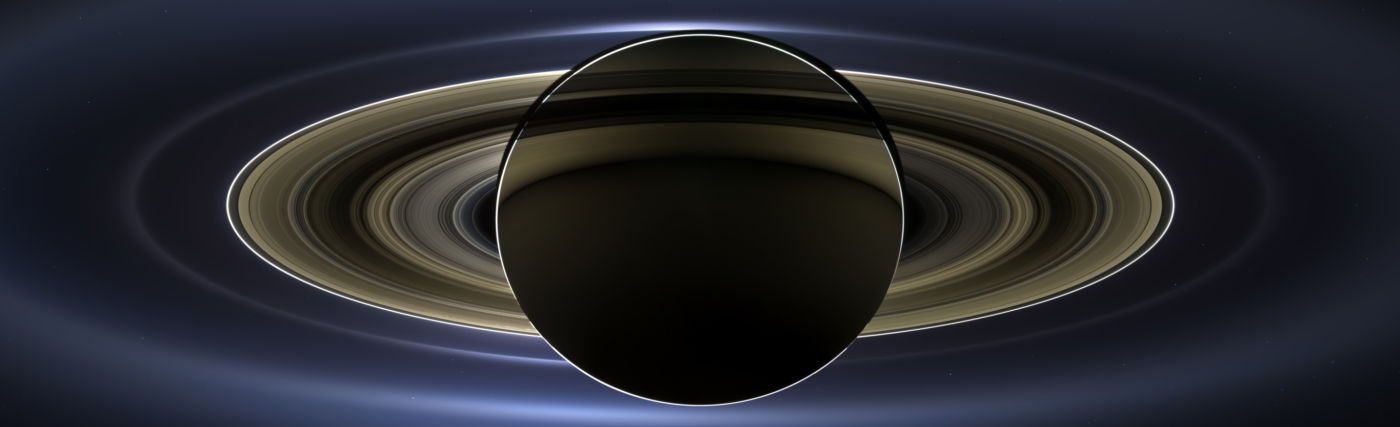
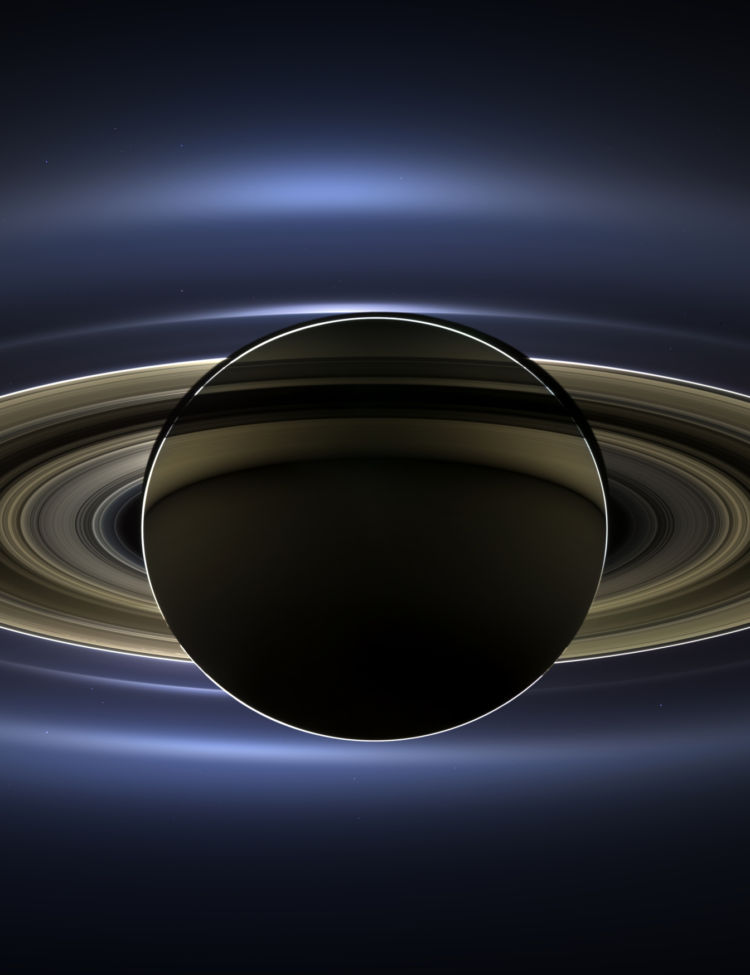
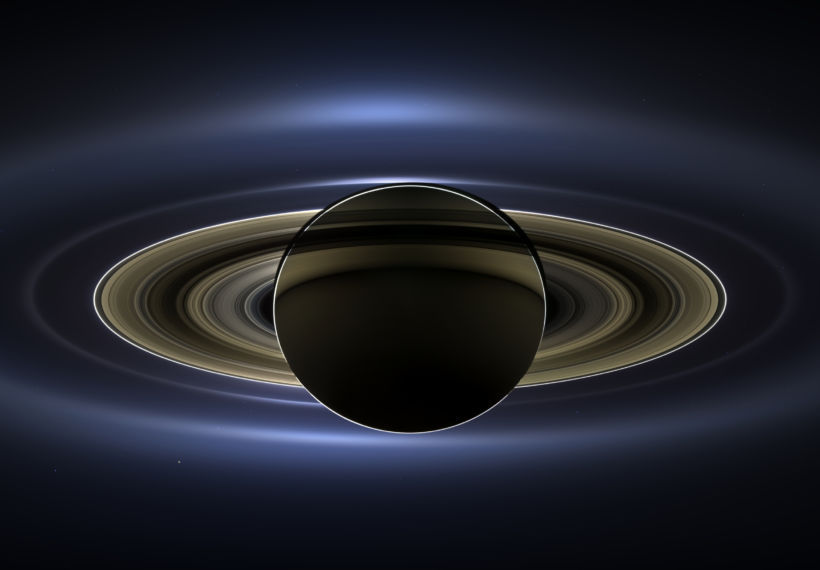
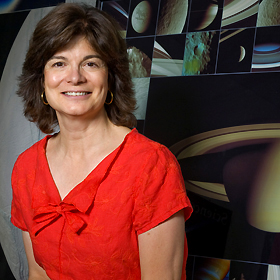
Join us for the conclusion of Neil deGrasse Tyson’s interview with planetary scientist Carolyn Porco, leader of the Cassini Imaging Science team. You’ll hear how she and Carl Sagan joined forces to convince NASA to overrule JPL and let Voyager 1 take the famous Pale Blue Dot photo. You’ll also find out how much work went into setting up the inspirational The Day the Earth Smiled image showing Saturn and Earth taken by the Cassini spacecraft. Carolyn tells the story of meeting JJ Abrams after her famous TED Talk, and how it resulted in the iconic scene in the 2009 reboot of Star Trek where the Enterprise rises out of Titan’s atmosphere. She also tells Neil about her involvement in the production of Contact, including her influence on Jodi Foster’s character, Ellie Arroway. Finally, Carolyn makes a case for the possibility of life on Enceladus, while Neil tells co-host Chuck Nice why Jupiter’s moon Europa might also harbor life in its giant subsurface ocean.
NOTE: All-Access subscribers can listen to this entire episode commercial-free here: Extended Classic: Madame Saturn – A Conversation with Carolyn Porco (Part 2).
Transcript
DOWNLOAD SRTWelcome to StarTalk, your place in the universe where science and pop culture collide.
StarTalk begins right now.
This is StarTalk.
Am I getting better, Chuck?
Yeah, man.
That was extremely James L.
Jones.
I’m proud, I’m working it, working it.
You’re listening to StarTalk Radio.
I’m Neil deGrasse Tyson.
You’re a personal astrophysicist.
I do that at the American Museum of Natural History right here in New York City, where I also serve as director of the Hayden Planetarium.
And in studio with me is Chuck Nice.
The one, the only.
This is true.
As far as you know.
And you know what, and nobody else wants another one.
Let’s be honest.
You got that one, you got that one covered.
I say I’m the one and only.
The response is, thank God.
This is part two of my interview with planetary scientist, friend and colleague, Carolyn Porco.
I call her Madam Saturn.
She’s head of the imaging team for NASA’s Cassini mission to Saturn and many of its intriguing moons.
In the previous segments, we learned about her education, her work on Cassini and her life.
And now we’re gonna find out about her role in creating the famous photo of the Pale Blue Dot.
Let’s check it out.
Immediately after graduating from Caltech, I was made a member of the Voyager Imaging Team, invited by the team leader, Brad Smith.
So I went to the University of Arizona to work with him.
And only a month or two or three after becoming a team member, I proposed to the Voyager Project to look back at the planets, the planets that we could see in the direction of the sun at that time, because I was thinking, wouldn’t it be cool to show what the solar system looked like from an alien arriving from the outer solar system?
What would that being see, right?
So you would need Voyager to be far enough away to get that distant vista.
By the time I joined the team, we were already on our way to Uranus.
There really is an interesting backstory to this.
In order to look in the direction of the sun, you have to shield the sun because the sun…
Which will blow out the picture.
Blow out the instruments.
The instruments were designed for very faint light levels, right?
You can’t look at the sun.
So that action would have entailed taking that Voyager antenna off Earth line.
During the whole Voyager mission, the antenna was constantly pointing to Earth line.
So it was a radical suggestion.
Take the antenna off Earth line.
Use it to shield the sun.
So you maneuver to put the sun behind the edge of the antenna and there you’re gonna see the Earth, Mercury, Mars, Venus and all the other planets.
Okay, well the Voyager project didn’t want anything to do with this.
They said there’s no science in it.
So there’s no justifications for doing something as radical as this.
Try to find something else that would be scientifically fruitful.
And I went away and devised this other experiment of imaging the asteroid bands that had just been discovered by the infrared astronomical satellite that year.
Several years later, I find out that Carl Sagan had proposed the same series of images to the Voyager project two years before I did.
Carl Sagan was given the same response.
We’re not gonna do this.
So if they said no to him, you had no chance.
Of course, I was just a measly little post-doc that weren’t gonna pay any attention to me.
So Carl and I ended up joining forces in about 1989, and he went all the way to the NASA administrator to get…
The head of NASA in Washington, DC.
Right.
And the administrator overruled the people on the Voyager project at JPL and demanded that this picture be taken.
And I worked on it with Carl, with other people in executing it.
So was born the famous Pale Blue Dot.
In 1990, this picture gets taken.
Valentine’s Day, 1990.
And by then, you’re beyond Neptune.
By then, the Voyager mission is over.
The Voyager tour of the planets is over.
Yes, the Voyager tour of the planets.
So wait a minute, so this image of Earth got dubbed the Pale Blue Dot.
Carl Sagan writes an entire book with that title.
Yeah, I’m thinking it’s like the first cosmic meme, Pale Blue Dot.
It has become synonymous with planetary brotherhood and protection of the environment.
Well, as did the original 1968 photo from Apollo 8.
No one gave that a name that’s stuck in people’s minds.
Yeah, yeah, yeah.
It was a very recognizable photo, but didn’t have a catchy name.
And no one romanced it the way Carl romanced the Pale Blue Dot.
I mean, that was Carl’s skill, right?
So a first pass at a Pale Blue Dot, but then you said, I want to do it again.
That’s audacious, because that was an important icon.
Well, I wanted to do it again to make it better, because as a picture, to be honest, it sucked.
Can I say that on?
First of all, Carl, in his proposal, had said that we should take a picture of the Earth, awash in a sea of stars.
Well, there’s not a star to be seen in that picture.
And then the dot that is Earth fell on a beam of scattered light.
So it wasn’t exactly a good picture, but it didn’t really matter, did it?
Because what Carl had to say about it.
What he said mattered more than what the thing looked like.
And it resonated.
People really responded to the whole concept of the Pale Blue Dot.
But I get made the team leader for the Cassini Mission of Saturn.
And I’m thinking, I’m going to concentrate on making beautiful images.
I also told my team, any time variable phenomenon that we can, let’s make it a time series.
We could turn it into a movie.
Time variable, you mean anything that changes over time.
Don’t just take photographs of it.
Take so many photographs, you can turn it into a movie.
That’s right.
And I wanted to do the Pale Blue Dot over again.
I wanted to make it right.
And so I finally got a chance to do it right.
Just recently, I looked into the trajectory that we had planned for Cassini.
I think I started about three or four years ago.
I found those opportunities when Saturn was eclipsing the sun.
We, of course, did that by design because it’s a very good geometry to be in, to see fine particles that diffract light.
What you’re saying is if you’re in the backside of Saturn with the sun eclipsed, the sun is still illuminating fine particles that are orbiting the planet, and they get rendered visible to you from that vista.
Yeah, in the same way that if you’re the dirty windshield, you’re driving along in your car, and in the late afternoon, you drive towards the west, suddenly you can’t see out your windshield and you think, gotta get my car washed, right?
And it’s the only time of day you’d feel that way.
Or you could see it early in the morning driving eastward.
You’re driving in the direction of the sun.
It’s a geometry that brings about the process called diffraction.
And we see things lit up by diffraction when there’s tiny dust particles.
That’s why the E ring looks the way it does, by the way, in that picture.
But anyway, I’m just saying, I found an opportunity in the timeline when we were in the right geometry and I knew there wasn’t a whole lot of scientific observations in there.
So I didn’t have to arm wrestle my colleagues to get time just to do a beautiful picture.
And Earth has to be visible and not blocked by one of your rings.
That’s right.
So there were a lot of criteria and July 19th, 2013 is the time that met all those criteria.
So that scene has 141 images in it that had to be stitched together, combined.
We had to have continuous color from one to the other, continuous brightness from one to the other.
In other words, you didn’t have a single field of view that was the picture you published.
That’s a mosaic set of images.
Each one required the full hammer of image processing.
So it blends together with all the rest.
Yes, and then consider this.
During the four hours that that mosaics made, the geometry is changing.
So each image had to be reprojected.
It was a lot of work.
When we come back, more of my interview with Carolyn Porco, Madame Saturn.
Consider again that dot.
That’s here.
That’s home.
That’s us.
On it, everyone you love, everyone you know, everyone you ever heard of, every human being who ever was lived out their lives.
The aggregate of our joy and suffering.
Thousands of confident religions, ideologies and economic doctrines.
Every hunter and forager.
Every hero and coward.
Every creator and destroyer of civilization.
Every king and peasant.
Every young couple in love.
Every mother and father.
Hopeful child.
Inventor and explorer.
Every teacher of morals, every corrupt politician, every superstar, every supreme leader, every saint and sinner in the history of our species.
Live there, on the mode of dust, suspended in a sunbeam.
Welcome back to StarTalk Radio, I’m Neil deGrasse Tyson.
Chuck Nice.
Yes, sir.
Co-host.
Do a good job, I’m a co-host here.
Well, thank you, sir.
I appreciate that.
Just want to say.
I respond well.
Well, tell me I don’t say nice things to you.
That’s all, you respond well.
I got a feeling that that just met your quota for the rest of the year.
For the month.
Don’t ever say I didn’t say anything nice, and now I’m good.
We’re picking up with my interview with Madam Saturn, planetary scientist, friend, colleague, Carolyn Porco.
And in this next clip, she discusses how the Pale Blue Dot image that Cassini reprised turned into something she called The Day the Earth Smiled.
What’s this about you trying to get everybody to smile?
What’s that about?
That was probably the greatest thing I’ve ever done.
I think-
We’ll be the judge of that.
Well, let me back up.
There have been other Pale Blue Dot pictures taken by other missions, right?
Mars missions probably took many pictures of the Earth from Mars orbit.
Yeah, because Earth shows up in the Martian sky.
And people, of course, they got moved by the first Pale Blue Dot.
They wanted to do it over again, too.
So I’m thinking, not only would ours be even more gorgeous because we’re going to see Saturn in the field with Earth.
Saturn is unimpeachably beautiful in any shot.
Right.
But I thought, wouldn’t it be fabulous if in-
Well, let me back up.
In all those previous instances-
But this is the second time you’ve backed us up.
I don’t know where I am now.
In all those previous Pale Blue Dot images, the picture was taken and then afterwards, people were told, look, here was the Earth taken three weeks ago.
And I’m thinking, well, why don’t we tell people in advance, your picture is going to be taken from the outer solar system from a billion miles away.
And I wanted to use this as an opportunity for people having a communal feeling with the universe.
This is the spiritual side of you showing up.
It is, I’m sorry.
You’re going up.
And I thought it would be just fantastic.
People could feel a sense of unity with the cosmos.
They could feel a sense of unity with their fellow human.
And they could also appreciate at that moment their pictures being taken from a billion miles away.
How better to let them know how far humans have come in the exploration of the solar system.
It becomes something personal to them.
So you’re telling me you actually got people to go outside and look up at Saturn in the sky and smile at it?
Well, I, no, no, here, even the people on the other side of the planet smiled because the idea was to smile in celebration, to get this communal feeling out of people, this kind of cosmic love.
I was after cosmic love.
Where were you in the 60s?
We needed you there.
What do you mean?
I was about 16 years old, smoking dope.
What were you doing?
I can say that now because it’s legal in my state.
Colorado, yeah, you’re from Colorado.
So anyway, I was after cosmic love and it worked and I was so proud.
There was quite the social media attention given to it in blogs and in the Twitter streams.
It ended up not being announced as early as I would have liked.
We should have done it a year ahead for various reasons.
I won’t go into it.
It didn’t get announced until a month ahead.
So there wasn’t really as big a campaign and as big an announcement as I would have liked.
But nonetheless, we got comments from people that were just beautiful.
People saying, my God, I’ve never felt a feeling like this.
For once, I felt so united with everybody around the globe.
And one person wrote, darn it, we may be floating around on a dust moat.
We may be transient.
But for 15 minutes, we were there, we were aware and we smiled.
And that’s exactly the kind of feeling I wanted people to have.
That’s beautiful.
Oh, thank you, Neil.
And I have to say this, for me, it was the same thing.
I mean, I’m the one who started this whole thing, but the 15 minutes that it was happening, and I’m looking where Saturn is, and I’m thinking, wow, there’s a camera there taking our picture.
And knowing that people all over the world were doing the same thing, it was fabulous.
It was so fabulous.
So I’m pretty pleased with the way it turned out.
By the way, I called the whole event The Day the Earth Smiled, because that’s what it was.
And that photo made page one of the New York Times.
Oh man, was that cool.
Back on November 13th, 2013.
November 13th?
13-11-13.
That was the very day that I got the phone call from NASA headquarters that I was made the imaging team leader.
Is that cosmic or what?
But the day of the year, not, I mean, in what year?
1990.
1990, okay.
So there is cosmic alignment.
Cosmic love and alignment, Neil.
Right here on your show.
That’s a holdout from the 60s if there ever was one.
Yeah.
She’s a bit of a cosmic hippie, I like it.
It’s a hippie in the 21st century.
Yeah.
When the moon is in the seventh hour, was she back up for the fifth dimension on that song?
You know, she was also invited to give a Ted Talk about the Cassini mission.
And as we are about to hear in the next clip, it not only inspired someone to recreate her talk with a Lego version of herself with Lego audience, but it also led to her involvement in the 2009 Star Trek movie by JJ.
Abrams.
I don’t know, let’s check it out.
This person, her name is Maya Weinstock.
She took my whole entire Ted Talk and frame for frame, word for word, exactly the way the Ted Talk is with the Ted backdrop, she recreated the whole entire thing in Legos with my soundtrack over it.
It’s amazing.
And you’re a little Lego person.
My little Lego person.
Is moving around on the stage.
Just with the same gestures, at least as much as she could have.
It was incredible.
And I’m very proud of that talk because even though I don’t think it was one of my best, the people loved it at that conference.
Ted draws all the captains of industry and so on.
You’re the only one who’s gonna afford the ticket to attend.
Oh, it’s like ridiculous.
And not only that, it’s by invitation only.
But anyway, JJ Abrams was in the audience and I didn’t even know who he was.
He gave a talk to, afterwards we exchanged emails.
I put him on my distribution list, you’re on it.
My dear friends and colleagues, every time there’s a new discovery or image.
A new Saturn development.
Yes, and nine months later, I get a call and someone on the other end says, I’ve got JJ Abrams on the phone to speak to you.
And I said, JJ who?
You know, I don’t watch Lost, I don’t watch television.
I only knew him from Ted, but then I forgot about him.
I’m sorry, JJ, but that’s the truth.
So we get on the phone and he says, I’ve been getting your emails about Saturn and I just felt like I had to reach out and involve you in this movie.
In the Star Trek movie.
In the Star Trek movie.
And he says that there has never been a science fiction movie better than 2001.
That is absolutely the pinnacle.
And I feel exactly the same way.
And I’m thinking to myself, okay, I’m in because this guy thinks like me.
So I’m thinking there’s gonna be lots of sessions where we’re throwing ideas around, brainstorming about what the movie should be like in all the areas that I might be asked to comment, like on the planetary scenes.
That’s where I thought I’d come in and maybe some science issues.
And that wasn’t really happening.
I had asked him, though, I would really love to see a scene being filmed.
I’d never seen a scene being filmed.
And I was hoping to get on the bridge.
I wanted to see what they were gonna do with the bridge.
But the day that I was in LA and invited to go see a scene being filmed, I saw the fight scene.
So I saw James T.
Kirk as a young man, get the crap kicked out of him.
I saw Chris Pine get punched in the face, up against the wall, ricocheted off the wall, fall on the ground, get picked up, punched again, fall on the table, That was in the bar.
26 times.
I really thought, man, I’m glad I don’t have this job.
So we break for lunch.
We’re at a very unglamorous lunch for everybody who thinks movies are all glamorous.
We’re sitting at cafeteria tables.
I sit with JJ and the guy who was the head of special effects at ILM.
And JJ says, I’ve got a problem.
He says, the Enterprise and the crew are coming back into the solar system to save the earth and I got to know where to hide them.
That’s why they hid it behind Saturn?
You put the Enterprise behind Saturn?
Excuse me, I put it in Titan’s atmosphere.
I told him, have it come out of warp drive in Titan’s atmosphere.
Which is thick and opaque.
And have it rise out submarine style out of the clouds with Saturn in the rings in the background.
It’ll be a knockout scene.
And JJ says, oh my God, that’s brilliant.
And he decided to use it.
That was all I ever got asked to do.
The next thing I know, they send me some shots from the scene that they rendered.
They’d gone to our website, got some pictures.
You know, they did a reasonably good job.
And I write back and said, well, you know, you got this wrong.
Titan’s not on an inclined orbit.
You gotta fix that, blah, blah, blah.
And they didn’t wanna fix any of it.
The guy says, look, if anyone complains about this, just blame it on me.
So that’s all I ever got to do.
But I’m very proud.
Well, that’s an awesome scene.
That scene is one of the best scenes in the movie.
It made the cover of The Rag in Hollywood about visual effects called sin effects.
And JJ used that same thing again in the second movie.
There’s a scene where the enterprise comes out of an atmosphere.
But you know, they never asked me, okay, well, we’re hiding it visually.
What about the electromagnetic signals?
Of course, any respectable Romulan ship is gonna be able to pick up the signals, right?
So there’s this dumb explanation in the movie about how the magnetic field of the rings hides.
The electrical signals from the ship.
Well, you know, the rings don’t have a magnetic field and they never asked me that.
But they met you halfway, right?
And that’s more than meeting you no way.
Oh, look, I got a whole scene in a major movie that I basically created.
I’m proud of that.
So you’re in the credits?
I’m about two thirds of the way down, immediately following the Vulcan and Klingon language consultant.
More of my interview with Carolyn Porco when StarTalk Radio returns.
Welcome back to StarTalk Radio, Neil Tyson here, Chuck Nice there.
That’s right.
There is a cross from me.
We’re listening to my interview with Carolyn Porco.
She came to visit me at the Hayden Planetarium, quickly got a StarTalk interview out of that visit, and you’re listening to it now.
And let’s find out about her role in the creation of one of my favorite movies, Contact.
Ooh, I know, let’s check it out.
Reasonably certain, I, with maybe four other women, maybe more, maybe even some males who were scientists, who surrounded Carl, were people that he drew from to create that character.
Well, that was Carl’s first novel, and they say that your first novel is always strongly drawn from your personal life experience.
In the film, if you haven’t seen it, she wants to listen for radio signals from intelligent aliens at a time when that’s not an entirely embraced thing for a scientist to do.
Right.
And also she has this developing relationship, believe it or not, with a religious cleric, who is the other side of the argument.
So to listen to the conversations between Ellie Arroway and Palmer Joss, who was a romantic interest and also a cleric, was very much to read Carl Sagan and what he had to say about the juncture between science and religion.
But anyway, I digress.
When came time to do the movie, Carl called me up and said out of all the female scientists he knew, I came closest to being like the character he wanted to portray on the screen, which I immediately thought, well, of course, it’s because I’m just so tactless and in your face and in the book, that’s the way the character is.
So you’re admitting that you’re tactless.
Why would I try to hide it?
Everybody knows this, so there’s no point in hiding it.
So I had a fantastic day with Carl, his wife, Andrea, and they were both producers.
There was the executive producer, Linda Obst.
There was the then director, George Miller.
He got swapped out for Robert Zemeckis.
Bob Zemeckis.
Yeah, later on.
And then there was-
Known for the Back to the Future trilogy.
Known for Forrest Gump.
We spent a day sitting around a table in Santa Monica, putting together the character of Ellie.
And it was for me very educational to see-
The creative process of this.
This process.
Remember, Carl wrote a book and there were five people who go on this journey.
Okay, and they had to basically condense five people into one.
For the film.
So that’s kind of what was going on.
But they would ask me, you know, what kind of experiences have you had?
Why do you feel you’ve done well and feel dominated with men?
I said, well, I grew up with four brothers, for God’s sakes.
I’ve been fighting and spitting and kicking ever since I was a kid.
And then, you know, at that point, Carl said, well, why don’t we maybe in the movie have Ellie have a lot of brothers?
You know, they would do things like that.
Ellie is spunky in the film.
She’s very feisty.
In the movie, they didn’t give her brothers in the end.
And I have to say, the first script I saw, I tore apart.
I couldn’t stand it.
And I was very critical of it.
And so since Carl is a scientist himself, he didn’t need you as a science consultant.
He needed you as a character consultant.
I was brought on to lend authenticity to Ellie’s experiences in the movie.
And I was supposed to spend time with Jodie Foster.
I mean, the way that they do it these days, the actress or actor playing the character.
Yeah, but it was amazing.
It took a year of going back and forth with Warner Brothers.
They call up and say, quick, give us your schedule for the next three months.
We’re gonna try to find a time when you and Jodie can spend time together.
And then nothing would happen.
And then after three months, quick, give us your schedule for the next three months.
And this went on for about a year, and I never got to meet her.
But you know, I was told that she used Karl himself as her role model for how to behave.
So I thought, given that it wasn’t Karl’s book exactly, they did a very good job with it.
And I thought she did a brilliant job.
And I love that movie.
Yeah, it’s one of my favorites.
Don’t you think it really depicts science accurately?
Yeah, yeah, well, not only in science, but everything I understand about human reaction to a scientific discovery was touched upon in that film.
All the crazy ways people behave in the face of the knowledge that maybe there’s a civilization out there more intelligent than we are.
Yeah, and if that ever happens, we’ll probably see things like that.
I think exactly.
That’s going to be our playbook for what’s going to happen.
Well, so if part of you inspired elements of the main character, does that mean you had a clerical love interest as well sometime in your life?
Oh, no, no, you didn’t get that from me.
You know, when I say borrowed, I mean just what you might call ancillary things, like, you know, I went to Caltech, Ellie goes to Caltech for graduate school, and I think the way she in general looks was more like me than anybody else, and her personality, for years, I thought he must have drawn her personality from me.
But he might have gotten Ellie’s personality from his first wife, who was Lynne Margulis, who was a top-notch biologist.
I mean, talk about feisty in your face, man.
She was a very, very feisty and brilliant woman.
So anyway, my main message is Ellie Arroway in the book, in the movie, is a composite character.
And some have said maybe Jill Tarter might have been represented there.
Jill Tarter is of the SETI Institute.
Jill does SETI, although actually that I think is kind of irrelevant because Carl was gonna make a character who does SETI regardless.
Yeah, that’s his thing.
The voice of the whole character is Carl.
But Jill has said her father died when she was young.
The character’s father died when she was young in the book.
You know, Ellie is described in the book as always wearing skirts.
Well, there was another woman on Voyager.
Her name was Candy Hansen.
Always wore skirts.
And Carl was interacting with Candy like he was interacting with me.
And then, of course, there’s bits of the character’s life in the book drawn from Carl’s third wife, Andrean.
So this is why lots of us look at Ellie in the record.
Yeah, everyone can feel for her.
We see bits of us in her because bits of us are in her.
Mm-hmm.
More of my interview with Carolyn Porco when StarTalk Radio returns.
Neil Tyson here, Chuck Nice across from you.
Yes.
Chuck, we’re here live.
Yes, we are.
There’s no other way we could be here, actually.
I was gonna say.
And again, we could be holograms.
Not that that would work for a podcast or radio.
Holograms, is that the same as candy grams or any other kind of grams?
Well, at Coachella it is.
So we’ve got my interview with my astrophysicist, planetary scientist, Carolyn Porco, and she just, she’s been part of our pop culture in ways that maybe people didn’t know.
Having advised JJ.
Abrams on the Star Trek film, creating one of the most awesome scenes.
Yes, and then.
The Enterprise rising up out of the clouds.
So cool.
Hiding from the, on its way back into the solar system so it can’t be seen.
Detected?
I mean, she’s totally into it.
I mean, that’s great.
We need more and more folks like this in all the other fields.
Who knew that JJ.
Abrams completely mucked it up scientifically?
Like, just ruined it.
Oh yeah, you know, it’s the magnetic field of the rings of Saturn that made that possible.
And then she tells us there are no magnetic fields of the rings of Saturn.
Rings ain’t got jack other than beauty, beautiful patterns to look at.
That’s it.
That’s all that is.
Well, one of my favorite stories about Carolyn, I had to get it out of her for this interview, was that something came up some years back when she was profiled in the New York Times.
Yeah, yeah, let’s, I had to make sure she told me this story again.
Because it’s even hard to believe that it happened.
All right, let’s check it out.
This woman, her name was Carolyn Neathammer, wrote, I thought, a very good article about me.
It was the Scientist at Work series in the New York Times.
And what year is this now?
1999.
Well, that’s not that long ago.
It’s not like in the 80s or the 70s.
No, it was done to be coincidental with Cassini’s flyby of Earth, which happened in 1999.
And then, you know, there was a lot of hoopla about whether or not the radioactive material on Cassini was going to destroy the Earth.
So it flew by Earth to gain some extra orbital energy to get out to Saturn.
That’s exactly right.
Because you didn’t have enough fuel to get it there on its own.
No, so we…
You had to, like, borrow orbital energy.
Oh, we borrowed a lot.
We’re in debt after all these years.
Yeah, so what planets did you take orbital energy from?
We took it from Venus twice, would you believe?
Twice?
Oh, poor Venus.
Poor Venus.
It’s still there, though.
Oh, it’s still there.
And one from Earth, and then we slipped closely by Jupiter.
That really helped a lot.
Yeah, of course.
Yeah.
And that got you to Saturn.
Sorry.
But we digress.
So August 1999, this article is being written, and the woman says truthful things, good things and bad things or whatever, and she submits it to her editors, and they come back and say, find out why Porco is not married.
And I said to her, you see, I told you so.
I knew this kind of thing was going to happen because I knew they would be very sexist.
Was not only not married, but never married.
That’s the real issue.
There are plenty of not married people who have been.
Yeah.
How old was I then?
I was 40 something.
In your 40s.
So I gave her two responses to use because I was kind of pissed.
The first answer was something like, well, just tell them, I have a different man every night, and I like it that way.
You know?
And then the other answer was, there are no high-maintenance items in my house of any kind, pets, plants, or husbands.
And Carolyn Neathammer, in her discretion, used that one.
Used the second one rather than the first one.
And actually, I got a lot of fan mail from that.
People write to me, oh, my 17-year-old daughter thought that was the greatest thing she ever heard.
My advanced age, there are still no high-maintenance items in my house of any kind, pets, plants or husbands.
Very cool.
Carolyn Porco.
She is a fireball, man.
What a feisty woman this Carolyn is.
I like her.
I just imagine in 1999, they’d ask her why she was never married.
I know.
That is really a sexist question.
You know they would have asked that of a man.
That wouldn’t even come up.
Exactly.
Right.
We just assume you were gay.
That’s all.
People do to me, they go, actually they do it the opposite, they go, why are you married?
How did you possibly get married?
Who would have thought that has an opposite?
Exactly.
Who the hell would marry you?
Who the hell would marry you?
So I’d forgotten the Cassini actually being launched from Earth when in these loops they came back to Earth to get some more orbital energy.
Because it’s all about the energy more than it is about the distance.
So if you fly by Earth with energy to reach Jupiter, you’re going, you’re doing well.
So the big concern is Cassini would go so far away from the sun that it wouldn’t be able to use solar panels for its energy.
So it’s loaded with radioactive energy, plutonium.
People worried if you’re going to steal orbital energy from Earth and come nearby to do so, suppose you enter our atmosphere and then disintegrate.
Then it scatters plutonium around the world, killing everyone.
So there was some protests at the time, that’s all.
And it didn’t happen?
No, it didn’t happen because we know Newton’s laws of motion and we got this one.
See, it’s funny how science can even quell a protest.
That’s how, at its best, that should be doing that all the time.
But we come back, our final segment with Carolyn Porco on StarTalk.
We’re back on StarTalk.
I’m Neil, that’s Chuck.
Am I getting lazy?
I have too many syllables in my name.
No, you’re just being more efficient.
Thank you, thank you.
We’ve been interviewing my friend and colleague and planetary scientist, astrophysicist Carolyn Porco.
Yes, firecracker.
Firecracker, and the fun part, because we generally don’t interview scientists on StarTalk.
It’s not about that.
It’s about interviewing people hewn from pop culture and finding out how science influences their livelihood.
But here’s a case of a scientist who’s influenced by pop culture.
Yeah.
Yeah, so we turn the tables on that and I’m loving it.
In our last clip that we’re gonna go to, she wants to leave us all with some thoughts inspired by her Cassini image, the Pale Blue Dot reprise that she, where Saturn is eclipsing the sun and there’s this little dot of light in the background there.
And it’s us.
And it’s us, it’s us.
And so she wants to sort of have us think about that in interesting ways.
And Saturn, by the way, has many moons.
And then we think about life, not only on the planet, but maybe on moon.
I mean, there’s a lot of ways to slice this.
Let’s see how she does it.
Can I leave people with a interesting thought in their head?
Okay, so as we end our StarTalk interview, Carolyn, what wisdom, what insight, what sense of our place in this universe can you share with us?
I wasn’t going there.
What parting words do you have?
Just that beautiful blue E-ring.
We call it the E-ring.
It’s the glowy thing on the outermost perimeter of the rings.
Right, that ring is created by 100 geysers erupting from the south polar terrain of a tiny moon called Enceladus, which is no bigger across than Great Britain.
And those geysers, we are virtually certain, erupt from a reservoir of salty liquid water laced with organic materials and bathed in excess heat.
And that is exactly the kind of environment that we have long thought could be inhabited by living organisms.
Okay, it’s watery.
The salt in it tells us that the water’s in contact with rocks, so there’s available chemical energy for organisms to live if they can’t live off sunlight.
And there’s organic materials.
So to me, it is the most accessible habitable zone in our solar system because here this body of water is gushing its materials out to space.
And that material, a small fraction of it, by about 4% goes into orbit and makes that beautiful blue ring.
So it’s spraying its organic matter into orbit around Saturn.
That’s what it’s doing.
And here is a crazy thought.
It’s not out of the question that if there are organisms and microbes in that liquid environment under the south polar terrain, they could be in orbit around Saturn in that ring.
Now, is that not the coolest thing you could possibly imagine?
Look at that picture.
Know that the only place in our solar system we are certain there is life is that little dot to the right and below Saturn.
That dot we call Earth.
And then that blue ring also might have organisms in it.
So there’s a lot in that picture.
There’s more in that picture than meets the eye.
It’s beautiful.
You’re tearing up.
I can’t help it.
There it is.
That is actually very cool.
The universe offering up its glory.
Now, you gotta go there to know it.
That’s the thing.
You need a fricking space program to get there.
You can wax poetic all you want, but all you’re gonna draw is a Hollywood alien, right?
You gotta go there and embrace those vistas.
And then poetry just rolls out of your mouth when that happens.
So here we need to take some articulate people and send them into space.
They’ll come back speaking poetry of Yeats and Milton.
It’s true.
Maybe we can get a little funding for this then.
I was gonna say Yeats, his name is Yeats.
Yeats.
Yeah, thank you, yeah.
Is it Yeats or Yeats?
I’ve heard it both ways.
Is it Yeats, Yeats?
I’ve heard Yeats.
Okay, ignore them both.
The poetry of Shakespeare’s sonnet.
Okay, screw you, Yeats, Yeats.
Yeats.
No, so the universe has the power to do this to you.
And I think there’s not enough of the public who understands or is exposed to how often that happens to astronomers.
That’s why we do what we do.
Yeah, I don’t even think there’s enough of the public that actually just looks up, period.
Just actually look up in the night and just see what.
Chuck, what are my ending words of every StarTalk podcast?
I bid you to keep looking up.
Oh, you can sub for me on that one.
You do that today.
You never heard my Neil deGrasse Tyson?
What happened?
That’s good, we’ll, yeah, okay.
You can do my whole stick next time.
That’s fine.
Gotta teach you some astrophysics first.
Yeah, I was gonna say, there’s a small problem with me substituting for you.
That would be the whole astrophysicist, Dr.
Neil Tyson thing.
Hey, Chuck Nice here, you’re listening to StarTalk.
And when we come back, Neil and I return for our final segment to answer your cosmic queries about the universe.
So let’s just jump right in to it.
This is Eric Schneider, who’s coming to us from Twitter.
Eric has a very simple question that you guys should be able to bang out with no problem.
What’s that?
42.
What caused the Big Bang?
Oh, I can answer that immediately.
Really?
Yeah, we have no idea.
Next question.
We really don’t know.
We don’t know.
We really don’t know.
This is the charm.
Some people are very troubled by that.
Other people, like us, find it fascinating and wonderful and try to pursue an answer.
I can tell you that if you put that much energy into that smaller volume, there’s not much choice but to expand rapidly.
The word expand is a polite, yes, explosion.
In fact, in Cosmos, the only time I donned sunglasses was at the moment of the Big Bang.
And that’s all you need, a pair of sunglasses.
I was good.
I was good after that.
Well, you know, that’s the beauty of science.
Sometimes the answer is we don’t know and that’s why we do what we do.
No loose, don’t leave a scarf loose either.
Don’t leave.
But we got top people working on that very question.
Top people working on this.
All right, here we go.
Jason Rand wants to know this.
It has taken Voyager 1 36 years to reach interstellar space.
How long would it take a space probe launched with today’s technology to reach interstellar space?
It never will because we’re not doing that anymore.
But it’s about the same amount.
Oh God, that was so depressing.
No, no, the thing is technology’s about the same.
It’s chemical rockets and you get news from…
No, Bill, Bill.
Oh, it’s about the budget.
Bill, I just met with Alan Stern at breakfast with him a few days ago.
He’s the PI, the principal investigator of the Pluto mission.
New Horizons.
The New Horizons.
That spacecraft passed the orbit of the moon in like…
Nine hours.
Nine hours.
I thought it was six hours, but it’s nine hours.
All right, it took the astronauts three days.
So that thing is booking.
It is the fastest spacecraft ever launched.
Relatively lightweight payload on a relatively big rocket.
However, Voyager 1, which was not launched as fast, had a final gravity assist to cast it out of the solar system so that nothing we’ve ever launched has ever, or will foreseeably ever reach that speed.
Yeah.
The technology is about the same.
Nothing’s changed.
You launch it, and then you sneak it.
It’s not the technology, it’s using a slingshot, basically.
Yeah, and by the way, New Horizons got a slingshot from Jupiter.
Which is good, but not only did Voyager get a slingshot from Jupiter, it got one from Neptune.
Neptune and?
Yes, Uranus.
Yeah, it was a three-cushion full shot.
Yeah, and so by the way, the planets were aligned in the same way during the Adams administration in the 1820s and they didn’t do anything about it.
Didn’t do anything about it.
The Adams administration, that does not flow off the tongue.
Right, right, right.
Well, we’re not contemporaries.
Okay, this is coming from Facebook and this is Arnaud, Le Sir Arnaud.
And he says, I am coming, I am from France.
With an accent.
You know, I kind of put that in there.
So what is his inquiry?
I am from France and this is what he says, I am 43 and I expect to live another 40 or 50 years.
Okay, so I was wondering with the best equipment.
Let’s have cars.
But with the best equipment we can conceive for the next 40 to 50 years, what could we use to find out about exoplanets?
Could we take a decent picture of one?
Could we know whether or not there’s an atmosphere?
It’s composition.
Could we see signs of intelligence life?
What could we do?
And by the way, thumbs up from across the Atlantic.
Nice.
Four letters, JWST.
JWST.
Okay, well here’s, that would be the Next Generation Space Telescope, which got named after James Webb.
James Webb Space Telescope.
Who was the first administrator of NASA?
Was he the first?
Isn’t he?
I don’t know.
You’re the guy born that.
I know, he was the administrator during the meat of the Apollo area.
He might have been the first.
Now I’m troubled.
I don’t remember.
So, here you go.
Here you go.
You discover a planet.
The first way we discover it is not by direct imaging.
We just see its gravitational effect on the host star.
Don’t be ridiculous, Chuck.
Don’t be ridiculous.
And you see the host star doing a little jig out there and you say some unseen planet is tugging on it.
So now most of the planets in our catalog are that kind of planet.
So now you say, well, how do we know it’s really there?
Well, because we know how gravity works.
So we got that.
But now you want to know if there’s life.
So here’s what you do.
You wait for that planet to pass in front of the host star.
Then light from the host star passes through the atmosphere of that planet.
If there is an atmosphere, it’ll pass through the atmosphere and the atmosphere will grab away some of that light, depending on the chemical properties.
Now notice everybody, to get this to work in Dr.
Tyson’s scenario, the planet has to orbit the star in a plane that is visible from here.
Imagine drawing a circle around a star as a dot.
You would not, that’s a much more difficult detection because although the star may be wobbling, you do not get this transit, this moving across.
But there’s so many millions of these stars and we have cataloged thousands of potential exoplanets that may have life that sooner or later, it seems reasonable with an extraordinary instrument will be able to have a sniff.
So then you look at what’s called biomarkers.
This is atmospheric, the presence of atmospheric chemistry that manifests the existence of life on its surface.
That’s the life that we would consider life.
I’ll give you an example.
Yeah, life as we know it.
So on Earth, there’s oxygen.
Right.
It took a while for us to figure out and really get under our skin that this Earth was not a planet with oxygen that life then said, oh, this is cool, let me now use this oxygen.
All the way around.
It’s the other way around.
Life created the oxygen.
So it’s like in Star Trek, before they had figured this out, it’s, oh, Captain, this planet can sustain life because it has oxygen.
Class M.
No, no, it’s like life made the oxygen.
Life can also make methane and otherwise unstable molecules because they’re constantly created by something that is completely out of equilibrium called life.
And by the way, the Indian Space Research Organization, ISRO, has a fabulous spacecraft orbiting Mars right now.
Fabulous, fabulous.
Fabulous, fabulous.
That’s what I hear.
And it’s looking for methane.
It’s detected methane.
So what you want to do is, and then recently, for lack of a better noun, a bubble of methane swept over the Curiosity Rover.
So you cannot help but wonder, are there Martian microbes, Mars microbes, making methane there and once in a while, you get a sniff of a whiff.
Gotcha.
Well, I’ll tell you this, Mike.
I am going to remember those poetic words the next time I’m with my kids.
And a bubble of methane.
It is something to think about.
That’s where it comes from.
Methane is the byproduct of microbes doing their thing in an anaerobic environment, such as the conditions that exist in your lower intestine.
There are more bacteria in you than there are people.
Easily.
Well, I gotta tell you something, Bill.
There are no people in me.
Yeah, but how many people are in bacteria?
All right, let’s move on, let’s move on, let’s move on.
We’re coming in three minute red zone.
Oh my God, so we’re gonna go into the lightning round?
Three minute lightning round, let’s do it, here we go.
Soundlight answers, go.
Wren L wants to know, how many more years do you predict that the sun will crumble and become a supernova?
The sun will never become a supernova, but it will die and that day will occur.
I have it on my smartphone.
It’s in five billion years on October 12th.
Next.
Awesome, Dan from Twitter wants to know, will you do a low earth orbit trip once available to the public?
Yeah, I would do it.
Now you say low earth orbit, I think he just means up and down.
Yeah, will you go to space?
Black sky, see the stars.
Safety’s gonna have to be a little higher and the price a little lower, but yeah, I’m interested, bring it on.
Nice.
I will only do it when the person who invented the spacecraft puts his own kids on there.
After that, I’ll do it.
All right, also from Twitter, John Sterling would like to know when the earth and the moon become tidally locked, which side of the earth will get the view?
Nice question.
First of all, the moon is already tidally locked to earth.
And moon is working that same magic on us.
All right.
All right, so the moon is slowing us down.
And we have to compensate for this with leap seconds.
As earth continues to slow its rotation, one day, the day will come when an earth day equals a lunar month.
And then we are double tidally locked.
And it is-
It’s an eigenvalue.
Yeah, it’s basically, it’s a toss-up, what side of the earth will be-
So that’s the answer, it’s a toss-up.
Well, because it’s to predict thousands of orbits in the future, which side of earth is going to be, have eternal, be eternally facing the, it’s a toss-up.
It’s probably derivable from out of chaos.
Okay, well, the other thing, the ocean’s a big thing in the, or the continents drift around, so it affects the flow of the ocean.
Take a chance, please.
Actually, no, no, I think it is discoverable because it’d be the side of the earth that has the heavier part.
No, we can figure this out.
It’s probably-
Lightning round.
Okay, I’m guessing that-
Just say left side.
The left side.
It’s real simple, man.
I’m thinking it’s the side with all the land masses, not the Pacific Ocean.
And if it turns out to be the right side, both of you are upside down.
No, it’s the side without the Pacific Ocean, I think that’ll be facing the moon.
All right.
Yes, okay.
All right, bang.
All right, Lisa Van Streaten wants to know this.
How do CMEs impact the ISS?
Oh, coronal mass injections affect the International Space Station.
They’re not good.
Inside the space station, they’re shielded, pretty much, but yeah, I mean, there are cavities in there that they can go, but these are radiative pulses.
But not only that, the space station’s not orbiting so high up that there isn’t some shielding already going on from them.
There’s still some atmosphere.
Yeah, there’s still some atmosphere.
Plus, half the time, you’re on the other side of the Earth.
Yeah.
Oh, nice, yeah, good one.
I think that’s it.
That’s all we get for the lightning round on my own.
Thanks for listening to StarTalk Radio.
I hope you enjoyed this episode.
Many thanks to our comedian, our guest, our experts, and I’ve been your host, Neil deGrasse Tyson.
Until next time, I bid you to keep looking up.

 Become a Patron