You’re invited to Neil deGrasse Tyson’s holiday house party celebrating the cosmic significance of the season, with not one co-host but two: Leighann Lord and Chuck Nice. In this classic episode of StarTalk Radio, Neil talks about the winter night sky, especially the constellation Orion and the stars Betelgeuse, Rigel and Sirius. Brother Guy Consolmagno, an astronomer at the Vatican Observatory (who has since been appointed the Observatory’s Director), calls in to discuss St. Nicholas and share his favorite theory about the Star of Bethlehem. Neil’s friend Seth MacFarlane calls in to discuss Stewie, Carl Sagan and the importance of scientific literacy. You’ll learn about Sear’s holiday retailing mistake that led to NORAD’s tracking of Santa’s sleigh, and hear Neil use physics to explain why Santa can’t possibly visit every chimney on Christmas Eve without doing serious damage to everyone’s favorite reindeer, Rudoph.
Transcript
DOWNLOAD SRT
Welcome to StarTalk, your place in the universe where science and pop culture collide. StarTalk begins right now. Welcome to StarTalk. I'm your host, Neil deGrasse Tyson, your personal astrophysicist. And I'm also the director of New York City's Hayden...
Welcome to StarTalk, your place in the universe where science and pop culture collide.
StarTalk begins right now.
Welcome to StarTalk.
I'm your host, Neil deGrasse Tyson, your personal astrophysicist.
And I'm also the director of New York City's Hayden Planetarium at the American Museum of Natural History.
I have two guest hosts with me today.
Comedian Leighann Lord.
Leighann, thanks for coming back.
To StarTalk Radio.
Thank you for having me.
You were in our first season.
I was.
So we couldn't resist bringing you back.
And for the first time.
Yes.
In his debut appearance, Chuck Nice.
Hey, man.
Chuck.
The newbie.
The newbie.
Good to have you.
It's good to be had.
This is.
A lot went on off the air.
You have no idea how I got this job.
So this is going to be like sort of Neil deGrasse Tyson's house party.
It's a house party.
It's a house party.
It's a house party.
It's a house party.
It's a holiday party, and I'm just going to sort of be Professor Tyson and just talk about everything I know about the cosmic significance of the holiday season.
This is going to be a week long show.
You're down with that.
Settle in, cats and kittens.
Delivery.
And I am my Curse of Iman, her capital.
So let me start out by saying in the wintertime, we always associate certain constellations and stars of the winter sky.
And, by the way, stars are up all year round.
It's just whether they're up before you go to sleep.
And so when we talk about winter constellations, we're talking about constellations and stars that are up after your dinner and before you go to sleep.
Sweet.
Yeah.
And so the most famous of those is Orion.
But we're going to get back to Orion towards the end of the show because I have a lot to tell you about.
It's the most recognizable constellation out there.
Right.
But what I want to lead with even before that is the solstice.
Yes.
A lot written about the solstice.
First, it's Latin.
Sol meaning sun.
Stis meaning stationary.
Remember armistice?
Yeah.
Remember?
Remember armistice?
If you're 100 years old.
Yeah.
Armistice.
It's stationary arms.
No one is fighting anymore.
Armistice Day became Veterans Day.
Solstice is where the sun stays still.
Now, not in any biblical sense where it just stops in the sky.
No.
What actually happens at the solstice, I don't know if you pay attention between summer and winter, but what goes on is every day that you get closer to the winter, the sun's arc in the sky gets lower and lower.
And that makes the days shorter and shorter.
In fact, the shortest day of the year is the solstice, December 21st.
And that's typically, we call that the first day of winter, which means every day of winter gets longer.
Days get longer.
When the winter is not shorter.
Which takes us to my favorite day of the year, culminating after that, which would be...
The equinox.
No, equinox.
The vernal equinox, right?
Isn't that the longest day of the year?
No, no, no, no, no.
Wait, wait.
You have to come back for that one.
Equinox, vernal equinox is March.
That's three months from now.
No.
What's the longest day of the year?
That would be the summer solstice.
The summer solstice, not the vernal equinox.
The longest day of the year, technically, gentlemen, is April 15th, which is tax day.
Oh, okay.
For the accountants only there.
So the summer solstice.
So here's what's going on.
In the solstice, on December 21st, ancient peoples saw the sun get lower and lower in the sky every day, and this worried them, because when you're agriculturally driven, if the sun goes away, you die, your crops die, you're scared.
So a few days later, you figure out the sun is no longer dropping in the horizon on its arc across the sky.
It stops and then reverses, and it's on its way back.
It takes a few days to figure this out by about December 25th.
Right.
That's an interesting date for this to happen.
Exactly.
And so what went on was Christianity, when it wanted to take a foothold among pagan celebrants of the return of the sun after the solstice, they said, well, let's take this uncertain day called the birth of Jesus and put it on a day that everyone else already cares about.
And that way, that would increase the likelihood of getting converts to the new religion of Christianity.
And so they put the birth of Jesus right on a day where everyone was already celebrating December 25th.
Because nothing sells a religion like a party.
And that's what I'm talking about.
You know, You know something, we've got, I have a special link to the Vatican.
Do you know that?
No, we didn't.
I got peeps in the Vatican.
Sweet.
You got a hotline to the Pope?
I got a hotline, well, not to the Pope, but somebody who has audience with the Pope.
Well, that's good.
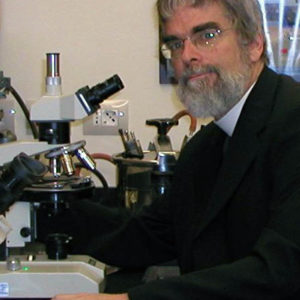
There's a colleague of mine, brother Guy Consolmagno.
He's an astrophysicist.
And I think I think he's a Jesuit brother.
Yeah, they got him there.
I was gonna say, I'm gonna bring him on in the Vatican, in the Vatican, in the Vatican, we're calling the Vatican right now.
Guy, are you on the line?
I am indeed listening to you guys.
Guy, and you're in the Vatican, it's like midnight there right now, correct?
That's correct.
So well, thanks for calling in.
And just to field our questions, just a few questions.
I don't know if I'm the only one that has them.
But do they let you believe in Santa Claus at the Vatican?
Anybody who knows the history of religion knows about St.
Nicholas and how could you not believe in St.
Nicholas, which is of course what Santa Claus really is.
Now maybe all the stories you've heard about St.
Nicholas aren't exactly what you, you know, what the truth is.
But then that could also be said about all the stories you've heard about Neil deGrasse Tyson.
And another thing, there's all this talk about what the star of Bethlehem might have been astronomically.
And you can look at the records and you find out there are a couple of conjunctions of planets and we'll talk about those later in the program.
But while I have you on the line, I just want to know, do you and like fellow astrophysicists at the Vatican Commissary argue over stuff like this over the Christmas holidays?
Well, actually we do because every year some crazy reporter calls us up and wants to know what the official Vatican word is.
There isn't an official Vatican word.
We don't know any more than anybody else does.
Yeah, but you have access-
It's great fun to speculate about it.
But you have access to programs that tell you what the planet stars and moons were doing, right?
And so, what would you say was the best guess or were you just going to say it was divine and get on with the next question?
You know, for all we know it could be a divine miracle, for all we know it could be a pious story, my favorite is a theory that Michael Molnar came up with a few years ago saying that it was actually the heliacal rise of a conjunction of planets.
Okay, and heliacal is where a group of planets are together in the sky and they rise just before the appearance of the sun in the morning sky.
And that would explain why no one except the astrologers knew what was going on.
Oh, because they're the only ones who paid attention to that sort of thing.
Exactly.
I see.
And so, but I'm wondering, conjunctions where you have Jupiter in the sky or Saturn with it or Venus, even the crescent moon can join them, those are not actually rare.
People like to think they are, but they're not.
No.
And so, if you want to try to pin a not rare, but nonetheless beautiful event on something that you want to be signified a change in all of religion in the world, you think you'd come up with a better cosmic phenomenon than just a conjunction.
Right.
And that's what Molnar has done.
He's come up with a whole bunch of these guys, all in Heliocles Rives, at the same time, about four or five different things, and all in the same constellation that signified the country of Judea.
Which constellation was that?
It could be Aries.
Aries, I see.
So they got this all figured out.
Well, in fact, he's got it all figured out.
He hasn't convinced anybody else.
Yeah, that's kind of what it is to publish your research.
You believe it, and no one else does.
Well, Guy, thanks for calling in.
It's been great to have you.
It's been a while since I've seen you back here in New York.
But make sure to give me a holler next time you're stateside.
And I was checking on your wiki page, and you have a book on what it is to be a scientist at the Vatican, right?
What's that called?
Well, we've got a couple of ones.
The most recent one came out for the Year of Astronomy.
It was called The Heaven's Proclaim, and it's the history of all the different astronomy that the Vatican supported over the years.
I got you.
And the International Year of Astronomy was 2009.
That was the 400th anniversary of Galileo turning his telescope to the night sky.
And for all you've heard, you remember Galileo was a good Italian and a good Catholic.
Oh, is that right?
Yeah.
He's not often credited with being a religious guy, but of course he was.
He just had some disagreements with the Pope.
Well, he wouldn't have been the first Catholic.
Well, plus, I actually think he was, you know, are you smart or stupid to disagree with the people who have power over you?
I don't know.
That's something that historians always grapple with.
Again, he wouldn't be the first one.
So, Guy, thanks for calling in, Guy Consolmagno, and you're a brother in the Jesuit order, correct?
That's right.
And the Jesuits are the one who persecuted Galileo?
Not.
So basically, he's doing penance.
Thanks to them that the Vatican actually pays a bunch of us astrophysicists to just do good science for the world.
Excellent.
Okay.
So there's hope in the world.
Absolutely.
Thanks for calling in on StarTalk Radio.
And have a great Christmas, all you guys.
Will do.
Thank you.
Bye-bye.
Wow, that was cool.
I got cool people out there.
I got to give it to you.
And if you want to find links to his book and more on a biography of Guy Consolmagno, you can join StarTalk Radio's Facebook page, where we'll give information about him.
And on our website, we have links to him.
I learned a new word, heliacal, which is like the heliacal rise.
That rise was heliacal.
Sounds like it was funny, you know?
Dude, you are heliacal.
That could be another use of the word, heliacal.
Put it on a t-shirt.
That was a heliacal moment.
Exactly.
So, heli-h-e-l would be the sun, helios, and if something rose just before the sun, it was a sign that there was something magical about to happen.
Later on, we will talk about Sirius, the star Sirius, rising before the sun.
That's a heliacal dog.
You know what?
I got to say, I love when he said that the Vatican, we don't know any more than anyone else does.
I'm like, wow, really?
You are saving that one.
So a couple other things.
If you want to believe that there was some kind of star that the three wise men saw, and religious people have turned to astrophysicists from the beginning to ask us, is there anything that we know of that occurred back then?
And so we go through the list, you say, about when was he born?
It turns out it was not year zero, you know?
Right.
I wonder if Jesus knew that he wasn't born in the year zero.
Typically three, four, five BC is bandied about for when he would have been born.
When he would have been born.
Yeah.
So we comb the records of the sky, which we can do because we have laws of physics that tell us how gravity operates on the movement of bodies in the sky for thousands of years in the future and thousands of years into the past.
So it's actually quite an empowerment of the ability to calculate.
In fact, scientists are the only breed in the world that can predict with accuracy what's gonna happen in the future.
Yeah.
So scientists are women, is what you're saying?
Touch the subject, touch the subject.
I thought you meant scientists were Ms.
Cleo, you know.
Call me now.
I said with accuracy.
You put a caveat on it.
See, that's a lie.
I understand.
So wait a minute.
So now since scientists can look backwards in time.
We do.
And see events that have transpired in the heavens, are there any events coinciding with the time that we're talking about that may point to a very bright star being in the sky above Bethlehem?
Okay, here's a bright, a bright star in the sky would be above everybody in the world if it was true.
If it's a bright star in the sky, everybody's going to catch it.
Wouldn't have to be just above Bethlehem.
Okay.
So my sort of best guess.
Thanks for making me feel stupid.
That's why we're here, man.
That's the point of the show.
That's you, Neil.
No, serious.
So one of my best, if I, as I comb through the list of candidates, the Chinese kept excellent records of what was going on in the night sky.
Back then, the astrologers who were sort of the court appointed advisors to the those who were in charge, they were tasked with trying to understand what forces of the universe might operate on culture.
And so they kept really accurate records there.
So Chinese astrologers commented on a new star that appeared in the constellation Capricorn in five BC.
Now that's right around what we're talking about.
That's right around when we're talking about five BC.
So that's around the right year.
And it turns out that new stars got the name Nova.
Nova is Latin for new.
Okay.
Turns out later on, we would learn basically in the 20th century, we would learn that stars that appear out of nowhere, we call them Novas because they're new to you, but they've been there forever and they're dying.
So they're exploding.
They're exploding their guts into interstellar space.
So what we're seeing is the explosion, the death of a star.
And so they caught a new star, a Nova, in Capricorn.
And we can see the remnants of this with telescopes today.
And so that looks to me, there are others where Jupiter and Saturn got together in the sky.
And as Brother Guy, I like calling him Brother Guy.
Brother Guy.
Bro.
What's up, Brother Guy?
What's up, Brother Guy?
As he correctly reminded us, conjunctions in the sky are not rare.
They are common enough.
You probably wouldn't pin the birth of your religion on it.
Right.
We've got to take a quick break, but more StarTalk when we return.
I'm with my two guest hosts for this holiday episode.
I've got Leighann Lord.
Comedienne, how you doing, Leighann?
I am excellent.
Excellent, and Chuck Nice.
Hey.
You're with me, man.
Yes, I am.
Comedienne Chuck Nice.
Correct.
You might have seen him on NBC, The Today Show and MSNBC.
They always bring him on to talk about what's going down.
This is true.
And like I would know, that's what kills me.
But I show up, I don't care.
So, this is sort of me hanging out, just reflecting on the science of the season.
And one other point I wanted to finish out with, but after that first segment, if you take Halley's Comet, which comes around about every 76 years, and extrapolate it back, and factor in Jupiter messing with its orbit and things, you find out that Halley's Comet was around in 12 BC.
And the Chinese made a note of a new comet in the sky at that time as well.
They didn't call it Halley's Comet, of course.
But I'm sure it was like Confucius' Comet.
Right, the CC.
Yeah, that's right.
C squared.
So, with that, that would have been too early for what other guesses are for the year that Jesus was born.
So, they wouldn't, while it was there and something to talk about, they wouldn't.
It didn't jive.
So, I wanna make this segment about Santa Claus.
A little more about Santa Claus.
Right on.
And I don't know if you know, but NORAD tracks Santa.
Did you know this?
Of course.
Oh, you know.
Well, no, cause they have it on the news.
Okay, well, we will get to NORAD in a minute, but guess who I have on the phone?
Actually, I'm not sure who I have on the phone, either.
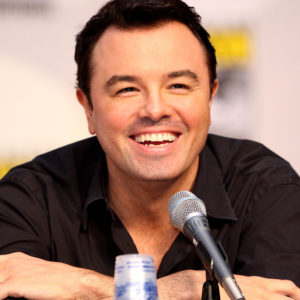
Seth MacFarlane or Stewie.
I don't know.
I'm a little exhausted.
Seth MacFarlane.
I'm being lazy today.
How are you?
How you doing, man?
Thanks for calling in to StarTalk Radio.
Anytime, anytime.
Oh my gosh.
You know what I want for Christmas?
I want Stewie's plans for his time machine.
Is it really?
Yes.
You could probably do that yourself.
That's so true.
I don't know, but his was pretty cool.
It was working.
It was like, and my favorite part of that was he didn't have a timer.
He didn't have a date stamp on where they ended up.
And Brian complained, the dog, said, what, you don't have a timer on your time machine?
And Tewis said, oh, does your time machine have a timer?
That indeed is a classic line.
I've got a way better time machine than me.
One would hope that your time machine would not have all the big funny, like, plastic vacuum cleaner looking tubes that ours seems to have.
Well, no, but if it's a time machine that no one's ever built before, it's got to be made out of stuff you had in your garage, I think.
Yeah, it is a little bit of an A-Team cobbled together look to it.
Yeah, and so, Seth, on so many of the Family Guy episodes, I detect a deep representation of science literacy in there.
And I know it's coming out of some part of you.
What in your life led you to have that as a sort of shared mission statement with making people laugh?
Well, you know, it's something that has always been important to me and something that certainly my parents, when I was growing up, stressed the importance of rational thought and questioning everything, asking why things work the way they do, instead of just accepting things that face value.
You know, like yourself, I was a big great admirer of Carl Sagan and kind of devoured his writings over the course of my childhood and even up to this day.
And it's something that we are losing touch with very much in this country, and I think even in the context of a comedy show, if you can wave the flag of science a little bit and remind people that it's arguably the most important discipline on the planet, then I think that can only be a good thing.
Yeah, it's important because our security and our future and our economic health is all wrapped into it.
That's pretty much everything.
That's everything.
And we're done.
Life, the universe and everything.
Yeah, so your Christmas special, I think everybody sees your Christmas special, but I have a gripe about your Christmas special.
Stewie goes to the North Pole to have an encounter with Santa Claus.
The North Pole has mountains and trees there, but we know there's just a polar bear on that one ice floe.
That's all that's left.
I thought you knew that.
I knew I was going to take it from you.
I think a lot of people just in general don't know that the North Pole has no land.
It's just the Arctic Ocean.
But it doesn't bother you that there's elves and man-eating reindeer.
I was cool with that.
Well, Seth, we look forward to many, many more years of family guy and Stewie just telling it like it is while occasionally sucking his thumb.
Yes.
May I do something, Neil?
Chuck.
Yeah.
Seth, this is something I've just always wanted to say to you forever.
And that is, wouldn't it be marvelous if I turned out to be a homosexual?
There you go.
No, seriously, man, I'm asking you.
Wouldn't it be marvelous?
This is the tension that he puts into the ambiguity there.
Ambiguity?
All righty, then I must not understand the word.
Well, Seth, thanks for calling in, taking time out of your day in LA to be part of our sort of holiday show here.
Anytime, Neil, anytime.
And Seth, we'll catch more of you another time.
All right, sounds good.
Thanks.
Seth MacFarlane.
That was pretty damn cool.
He's my man.
He's my man over here in LA.
Very cool.
So, let me tell you about Santa Claus and NORAD.
Yes.
Do you know what NORAD was invented for, okay?
Now, that I don't.
It was the North American Air Defense at a time when we believed that any invasion, any attacks to us would happen through airplanes flying through the air.
And we felt our coasts were covered, Pacific and Atlantic, we were worried that Russia would come to us over the poles.
Right.
And if they come over the poles, they'd have to fly over Canada.
So, we said, let's band together with Canada, create a defense system that protect us from anything coming over the poles.
Then we learned that, hey, with intercontinental ballistic missiles, these are missiles that don't fly through the air, they leave the atmosphere, fly in the vacuum of space, then reenter.
So, they said, hey, we need a more grand name for it.
So, now it's the North American Aerospace Defense.
Not to be confused with Aerosmith, not at all, or Aeroface.
And so, what's funny here is that it was initially to track what was coming back over the poles.
And so, one thing they do in December is they track Santa Claus.
But wait, can we step back a minute?
Is that why we left out Mexico?
She's on her own?
We don't care if the attack's coming in that way.
If somebody's going to get bombed, they're going to bomb somebody long before it reaches Mexico.
And so, what we have here is Santa, who takes off on New Year's Eve, and NORAD, if you go to their website, NORAD Santa, it tracks Santa through the air.
Now, we should be glad that it tracks it rather than just taking it out of the sky.
That would make a bad headline the next day.
That's pretty cool.
NORAD shoots down Santa by accident.
You have some issues here, though, because you have to think about what Santa has to accomplish in order to make this happen.
He has a big job.
He's got a big job.
Because you think, how many Christians are in the world?
There might be a billion, billion and a half.
How many Christian households might be anywhere between three and four hundred million?
You also got to count the agnostics, who are hedging their bets.
They make the Santa list.
Okay, add them in.
And not to mention the Christmas Jews.
The Christmas Jews.
There are a lot of Christmas Jews.
That's why they're Jewish.
Is that what we're saying?
That's kind of being Jewish.
That's kind of.
Kind of being a Jew, you're Jewish.
So those who have Christmas trees, I would suppose, would be the target of Santa's visit.
And so this is a lot of people to visit.
He has to travel very fast.
Very fast, we're looking at about 2000 miles per second, which is about 1% the speed of light.
That's quick.
So you're talking about some awesome reindeer here.
And so maybe Santa finds a portal through the space time continuum.
It would have to.
Or actually they did in the movie.
What's the movie where they go through the door?
Monsters, Inc.
Each door in a child's room was actually a portal through the space time continuum.
Connecting the factory to the home.
So maybe this is what he's got to do.
I don't know.
But if you calculate all of this, it's a huge task for Santa to do.
And NORAD tracks the progress of Santa.
Wait a minute.
How can they track something going at 2000 miles per second?
I'm not authorized to say.
Just understand your tax dollars are being well spent.
That's all you need to know.
A quick history of that, it started in 1955.
Where a regional in Colorado, where NORAD is, it's in Cheyenne Mountain.
Yay, Cheyenne Mountain.
That's that hole in the mountain where they got the big door.
Yes.
That's where Stargate is.
That's where Stargate is.
We'll talk more about that after the break.
But I want to, so in there with NORAD, what they did was, local Sears in Colorado posted a phone number to call Santa.
And they accidentally gave the wrong phone number and it was NORAD's phone number.
NORAD's phone number.
Wow, somebody got fired.
Accidental air quotes.
And so, from that point on, they decided, well, why not actually turn this into something real?
And we have all these tracking mechanisms, these tracking capacities.
Let's do it for Santa, do it for the country, do it for the world.
And oddly enough, you can buy all of that tracking equipment at Sears and Robot.
And so, if you want to just learn more about all of what we're talking about, you can join us on Facebook, easy to find us, StarTalk Radio, on Facebook, and you can actually follow us in the Twitterverse.
Our Twitter handle is StarTalk Radio.
So when we come back, we have another phone call with one of my favorite people in the world, Bill Nye will be with us.
We're back on StarTalk.
I've got with me Leighann Lord and Chuck Nice.
And Leighann, you were joking with me recently about the computer voice that's about to tell you the world is gonna end, but the voice never acts frightened or anything.
Is that, is this concerns you?
What are you doing, Hal?
Launch Colonial Viper One.
So, I think that computer is a little too sexy.
I was about to launch something else.
That was nice, Chuck Nice, that was nice, Chuck Nice, right there.
So, anyhow, so with NORAD, so that's what they do.
They're responsible for the defense of North America and they're deep in the mountain that protects themselves from nuclear holocaust where the rest of us die and they'll protect whatever's left and themselves.
How do you get that job?
And also, also Stargate.
Stargate.
Stargate.
SG-1, yes.
They went through the door.
They lived in the mountain.
They lived in the mountain.
That's right.
And I actually had a cameo in Stargate Atlantis.
No way.
So I had a cameo with Bill Nye.
The two of us were like, we saw, we're on that.
And my acting talents suck, I just want you to know.
But you were fabulous in the big band.
I was gonna say, you were the only person there who actually knew what the hell you were talking about.
I know what this button does.
But I was on Stargate Atlantis with Bill Nye, who's a friend and colleague, and I think we have Bill Nye on the line.
Bill Nye, Bill, are you there?
Neil, greetings.
Bill, you're calling us from LA.
Thanks for taking time out of your day to be on StarTalk Radio.
Are you kidding, for you?
Bill, this is-
This is our holiday show, and so I wanna know, Bill, because you're kind of an unusual character out there.
In many ways, I'm not gonna list them, you know what they are.
Among them, we wanna know, what did you ever want as a kid for Christmas?
Was it something weird?
For Newton's birthday, you mean?
Newton, say what I tell you guys.
When was Newton born?
I didn't know it.
But one year Santa brought me a bicycle big enough for an adult to ride.
And I had reached this point in my life, I had made this transition to adult leg length.
And man, I could crank that thing, gosh, it was fun.
And so as you may know, I'm down now, I'm okay, I could quit if I wanted, I have five bicycles.
Five, so you have bicycles on the brain and then the body right now.
Plus I happen to know separately that you're a big bike enthusiast and you're buddies with who's the famous bike guy?
Neil Armstrong?
Neil Armstrong.
Yeah, how about Lance then?
Lance, yeah, buddies with.
So you're a big bicycle fanatic and so you did get a bike for your birthday.
But you also said.
No, it was for Newton's birthday.
Newton, so Newton was born on Christmas.
Yeah, but I checked the the I looked at the records and he was born on Christmas in England who had not yet adopted the Gregorian calendar put forth into the rest of the Catholic world in 1584.
So what are you saying?
He was born on Christmas.
He's really born like January 5th or something.
Fourth, I think.
Fourth, okay.
I always claimed that Isaac Newton's mother pretty much was thinking it was Christmas day.
That's my claim.
Okay, so whatever the mom says, that's what it is.
Or either Newton is the Protestant baby Jesus.
The Protestant baby Jesus.
Well, he made a contribution.
He just made some remarkable discoveries.
There you go.
But he was a significant guy.
Newton was my man.
He discovered the laws of optics and the laws of gravity and the laws of motion.
And he makes a great computer.
I'm talking fluid mechanics.
He was all over it.
He was an investigator.
An investigator.
And fluid mechanics and viscosity is all about riding a bike fast and all about Santa trying to deliver presents on Christmas Day fast.
But the thing is Santa has something else that I don't think Isaac Newton had.
What's that?
He's magic.
Thank you.
That is a huge time saver when you're gonna go worldwide.
Bill, I don't come to you to explain the natural world by saying it's magic.
The natural world, I think you're talking about Santa Claus.
It's a product, I'll claim, and I don't think this is extraordinary.
It's a product of humans.
Yeah.
Okay, and that's not a bad thing.
Okay, but I just calculate how fast he'd have to go.
He'd have to go 2,000 miles per second and traverse 200 million miles to deliver presents to all the Christian and agnostic and-
And Jewish.
And do like estimations of house to house.
Yes, exactly, house to house and be scattered them all around the world.
There's another thing, Dr.
Tyson.
What's that?
The guy used to come to my house, he would eat the cookies I left and drink the hot cocoa.
Okay, that's-
Are you telling me he did that at every house?
That's why he is so large.
So the calorie content of the cookies he eats is greater than the calories he burns getting from house to house.
There it is.
That's how that works.
Well, who knew?
So Bill, I have to tell everyone, you are executive director of the Planetary Society.
Do I still get to call you the science guy in that business?
Oh, so do so.
So the Planetary Society, we promote space exploration.
There it is.
And by the way, I'm not alone to know this.
You're not only the science guy, you're the engineering dude too.
I am, yes.
And those are your roots, and we feel great to have you out there just carrying the torch.
Very, very technical titles, I have to say.
Our engineers use science to solve problems and what else?
Make things.
Everything in your world, somebody thought of it, came out of somebody's head.
How about that microphone?
How about these radio signals?
Somebody made that up.
It's cool, it's exciting.
And I disagree with you there, Mr.
Science Guy.
Uh-oh.
I believe radio signals existed before we did.
I don't think so.
I think the-
How do we receive them from space then?
I don't want to get all geeked.
They're our magic machines.
But I don't think anybody was selecting radio channels and making them into amplitude or frequency modulated signals.
Oh, you mean that kind.
Oh, it's that kind of.
I say bring it on.
Chuck Nice just got owned.
But if you have to get owned by somebody, let it be Bill Nye, the Science Guy.
They're going out into the cosmos.
Maybe somebody out there is enjoying the Dick Van Dyke show.
Or the Bill Nye, the Science Guy show.
I'm just shooting from the hip, way out there.
Picking a random show.
They can't quite tell what it is, but they wonder.
Well, I would rather they got the Bill Nye show than Howdy Doody or I Love Lucy as the emissaries of our culture.
I think it's too late.
But there might be a physical phenomenon that we don't understand.
Maybe the Science Guy got there ahead of it.
Maybe there's some crazy interstellar in that 4% of the dark matter, the dark energy that reverses things.
And science things end up in front of the storytelling.
That's still a bit fantasy, I think.
Yeah, well, I'm jamming.
Yeah, so what you're trying to say is that which we don't know about the universe works in favor of putting the Science Guy signal ahead of I Love Lucy.
I'm saying, we can't move it out.
On behalf of regular people, might I say, huh?
So, Sir William, as I call you affectionately, Bill Nye, the Science Guy, thanks for calling in and being a friend of StarTalk Radio.
No, and those of you who are regular listeners know that Bill Nye puts in a minute every now and then to just cause he's got a rant and get it off something off his chest.
And we'll be hearing from him later in the season.
So Bill, thanks for taking time out of your day.
I gotta fly, Bill Nye, the planetary guy.
That's my Bill.
Too many titles.
I love him.
So you like Science Guy and Engineering Dude.
That was what you...
I love those titles.
Science Guy, Engineering Dude.
And those are two separate business cards, completely.
You know, there's another movie that showed NORAD and it was Independence Day.
No.
Yeah, guess what happened in that?
Is that where the aliens...
Yeah, they totally took it out.
Sweet.
Those bastards.
I have a movie question.
Wasn't it in Terminator 3?
Isn't that where they went at the end?
Was that...
It looked like it was a Cheyenne type place.
It was a Cheyenne type place, but I don't think they had...
No, I think that was in New Mexico.
I don't know where it was, though.
I'm mixing my geek references.
Yeah, you know, we just tried to get that, get that.
So, when we come back from our break, we have another break, when we come back, I'm gonna tell you about what parts of the night sky are always there in the holiday season and have you learn much more about it than just to call it a constellation.
Okay.
In fact, we'll be targeting Orion, Orion the Hunter.
Do you know about Orion?
I know about his belt.
I saw men in black.
The universe is in Orion's belt.
It was, yeah, it was the galaxy.
Oh, that's right, sorry, the galaxy is in Orion's belt.
On Orion's belt.
I dated a dude named Orion, but I don't think that's who you're talking about.
I met someone named Orion.
Yes, in a restaurant.
He was a server.
Was your guy a server?
That is too far of a magnanimous name to hello, I'll be, I'm Orion, I'll be your server.
I just said.
No, let me sit down and serve you.
My name is Caesar.
I'll be bringing you your Caesar.
Your salad, I'll be bringing your salad.
What I didn't know is, I mean, I learned later his name was Orion.
I showed me his business card.
He convinced me, he's Orion, is the guy's name.
He said his mother, he said he was of the age where he might have been named Moon Unit or something less, yeah, so he got named Orion.
So I said, take Orion any day.
You're listening to our annual holiday episode.
When we come back, we'll be talking about the night sky.
We're back, I'm Neil deGrasse Tyson, your personal astrophysicist.
This is the holiday show.
Yes.
And I'm just sort of waxing on about all the cosmic significance of the season, if I may.
Please do.
May I?
So for example, constellations, people think of winter constellations or summer constellations.
You can catch practically any constellation at some time of the night, any day of the year.
So what we mean when we say it's a winter constellation is that it's up high in the sky between dinner and when you go to sleep.
In the winter, okay?
Typically, but you can find a winter constellation in the summer, it's just up at like four in the morning when you're not awake, so that's all.
You mean when you're not awake.
Comedians have a slightly different schedule.
Excuse me, you work the nights.
Yeah, yes.
we call that lunch.
Wait a minute, that didn't come out right well.
I work the night?
Wait a minute, I'm a comedian mom, really?
So one of everyone's favorite constellations, perhaps it's the most recognizable dude in the winter sky is Orion, Orion the Hunter.
The Hunter.
And Chuck, you said you know Orion's belt, but then you made a movie reference.
Yes, Men in Black.
Okay.
That's the only way I know Orion's belt.
And here's why, the only way I know Orion's belt is Men in Black, because when I look up in the sky, I can't see any of those pictures that say that this is the constellation.
How, who came up with these?
Like, that's a hunter, that's a bull, that's a pair of scales, there's a lady in a dress.
Where the hell did that come from?
Because I can't see any of it.
Thank you, I thought I was the only one.
I could not see it.
Thank you.
It came from opium.
I just want you to know.
Because I think you're right, to me Orion actually does look like a woman wearing an A-line skirt holding a credit card.
That's not a sword, that is not a sword.
All depends on, yeah, what you're-
This is a matter of perspective.
This is the Rorschach test for all of us.
So Orion is a hunter, sometimes drawn facing forward, sometimes drawn facing away.
So you get different views of his anatomy when this happens.
Interesting.
Well one of them, for example, is Orion's belt is the three bright stars that form a line.
It's a distinct pattern in the sky.
And the right has a sword hanging from the belt, dangling between his legs.
Which for me, if I were a hunter, that's not where I would carry my sword.
I just wanna make this point.
Not since the dogs are right there.
It depends on who you're hunting with.
I'm just saying that's what that is.
And so Orion is protecting himself from Taurus the Bull, which is over to his side.
And Orion astrophysically is a remarkable part of the sky because it has a lot of cool astrophysical stuff going on in it.
For example, Orion's shoulder is called Rigel.
And no, no, sorry, sorry, how can I, excuse me.
How about the sword?
Orion's shoulder is Betelgeuse.
We have a movie called Betelgeuse.
Betelgeuse, really?
Betelgeuse, and that's how you pronounce it, Betelgeuse.
Betelgeuse.
And that is Arabic for armpit of the great one, in case you were wondering.
Which honestly does not sound so great.
And it's my nickname for my husband, so there we go.
So Betelgeuse is one of the largest stars known.
So large that if you put it where the sun is right now, it would be larger than the entire orbit of the Earth.
We would be the cinder orbiting deep within its surface.
Sweet.
Very sweet.
That is cool.
It is so sweet.
That is a huge star.
I feel so small.
Bigger than our entire orbit.
That's what I'm saying.
Yeah, yeah, yeah.
And so then you go to his knee.
Right.
And one of the stars forms his kneecap and that's the star Rigel, which is a blue super giant star.
Both of those stars will one day explode, become a supernova and be the brightest thing in the night sky and would even be visible in the day.
So you mean we will be on earth and we will look up in the sky and we will see this star in the midday sun?
Yes, yes.
Technically we will not be here.
Thank you, yes.
I'm just saying, that's a little bit far in the future.
Get your we straight.
And where Orion's sword is, that's dangling between his legs, is a region that is a nebula, a cloudy region where stars are being born.
It's a stellar nursery.
It's called the Orion Nebula.
Right beneath the sword because he will kill them the moment they are born.
So this is Orion in the sky, viewable everywhere on Earth over the holiday season.
Now, the brightest star in the night sky is just off of the side of Orion.
It's called Sirius.
Right.
Sirius.
Sirius.
Now, there are many things named Sirius.
Sirius Radio.
Sirius Satellite Radio, yes.
We're actually not on Sirius Radio.
No, we're not.
That's their lost hero.
Do you know the icon for Sirius?
But they have been calling.
Well, yeah, the icon for Sirius is the little dog.
It's a little dog because Sirius is the eye of Canis Major, the big dog.
The dog star.
It's the dog star.
Sweet.
It is the dog star and in fact, the dog days of August are so called because Sirius rises just before the sun during the month of August, the heliacal rising of the moon.
That's a call back, y'all!
The dog days.
The dog days of August.
That is cool.
And Sirius is popular in many cultures.
It's the brightest star in the night sky.
So if a culture is gonna have it, they're gonna, you know, if a culture is gonna have any star in the sky, that's a likely one.
And the Egyptians worship the star.
In fact, back when it was heliacally rose before the sun for them, thousands of years ago, signaled the rise, the flooding of the Nile.
So in fact, their agricultural calendar begins with the heliacal rising of Sirius.
I gotta tell you, that's fascinating, I'm sorry, but I find it fascinating.
Oh, yeah.
And it sounds serious.
It's...
Okay, is that what that is?
Sirius, Sirius the dog star.
So, these are stuff, those are things you'll see in the nighttime sky.
And of course, the moon goes through.
The full moon in December crosses the sky higher than any other moon of the year.
So, that's what creates this wonderful glow on the snow-laden landscapes.
And fewer crazy people?
And lunatics?
The lunatics have all phases of the moon, so I have come to learn.
So, I think we've come to the end of our house party.
We are at the end of our helical ride.
In my last minute.
Where's the after party?
I have to give my Tweet of the Week.
Oh, yay.
Because I've been thinking hard about this with Santa and all of this.
And I'm wondering if Santa is moving 2,000 miles per second to visit the more than 22 million households to deliver gifts.
Right.
Sorry, 22 million miles of the half a billion households that he's got to visit.
This is, I did the quick back of the envelope calculation, aerodynamics.
Right.
And Santa ain't gonna make it.
You mean he can't make it every house or?
For my Tweet of the Week, here it goes.
For Santa to deliver gifts to all the world's Christians in one night requires hypersonic speeds, vaporizing his reindeer and sleigh.
Oh, man.
You killed Rudolph right before Chris Ari.
This has been our holiday show and I want to thank my guests.
And as always, I bid you to keep looking up.
That's it for this segment of StarTalk, but when we come back, special guests Bill Nye the Science Guy and co-writer of Cosmos Steven Soter drop by the Cosmic Crib.
Stay tuned.
StarTalk Radio, the Cosmic Crib, I'm Neil deGrasse Tyson.
In this segment, we just sit back and tube the fat on whatever subject is of the moment.
I got Bill Nye here, thanks for coming to my office.
It's so good to be here.
And Steve Soter, friend and colleague, and he co-wrote Cosmos with Andrean.
Oh, Neil.
And so, I just want to talk about asteroids.
I love me some asteroids.
There's a big concern of mine at the Planetary Society.
Why?
Because if we got hit with one, it would be game over.
If we got hit with a big enough one.
Yeah.
There's a lot of little ones that hit.
In fact, shooting stars every night.
Yeah, how many tons a day?
Couple hundred tons of star stuff.
A couple hundred tons of meteors Earth plows through every day.
So, most of it just burns up, and you say, oh, a pretty shooting star.
There you have it.
But the bigger ones can make it through, right?
Yeah, this is a deep concern.
When I was in astronomy class, when Steve Soter was one of our teaching assistants, Carl Sagan talked extensively about-
He's name dropping now.
Come on now.
Well, but isn't that the idea?
He talked extensively about what at that time was called the Tunguska event.
Nowadays, I like to refer to it as the Tunguska air burst.
And then, sure enough, a year and a half ago-
So, this is in 1908.
There was an asteroid-
In the modern calendar.
There was an air explosion over the town of Tunguska.
A little one.
It wasn't a town.
It was the middle of nowhere.
The wastes of Siberia.
Okay, and so how big was that impactor?
Well, it was equivalent to the Hiroshima bomb in terms of the energy.
So, the size of a small house then.
I think I've seen some numbers on this.
Well, the asteroid itself, yeah, but it leveled thousands of square miles of forest.
Yeah, it knocked trees down in every direction.
And then...
Okay, just to be clear, thousands of square miles of forest, that's like 50 miles on a side.
That's correct.
Right, just to get...
The trees were all pointed away from the center.
Away from the center, like if something bad happened in one spot.
Yeah, but it was high in the atmosphere, but it blew up.
So, it was an air blast.
And of course, in Hiroshima, it was an air blast.
That's correct.
Like a kilometer up.
Okay, so...
So...
But to...
You're proud of me I said kilometer.
I like it.
That shut you up for at least a minute.
We're looking forward to you embracing...
I can't use feet and inches without you jumping all over me.
Well, you're supposed to be an astronomer.
I just want credit when I say kilometer.
Just say, Neil, you did good.
Neil, you did well if I may use the adverb.
I want to do gooder next time.
Okay, go.
With that said, we at the Planetary Society, in collaboration with the...
You are CEO of the Planetary Society.
I am.
Collaboration with the B612 Foundation.
They've changed.
They're now called Sentinel.
Sentinel is the name of the spacecraft.
Oh.
So, we are gonna celebrate Asteroid Day on the 30th of June.
Next year.
Next year, when we hope henceforth.
And why is that day plucked from the 365?
It was the day reckoned in the modern calendar when Tunguska Air Burst occurred.
Now, my Russian's not very good.
Tunguska, or something.
Air Burst occurred.
And it is a worthy thing to consider if that were to happen over Paris or Tokyo or New York, that would be the end of any of these places.
In fact, I read, Steve, is this right, that Tunguska was at the same latitude as Berlin, so that if Earth had rotated an extra six hours.
Something like that.
Some number of calculable hours that it would have then killed a million people.
The air blasts.
The worst case.
Yeah, yeah.
So, okay, so some asteroids are harmless.
We call them meteoroids and they make shooting stars.
Others can create severe local damage.
Still others can disrupt civilization.
But the ones we really care about are the ones that could render us extinct, right?
Well, that's 100 billion year time scale, that size.
The ones that could do it.
You're not worried about the ones that will make us extinct?
Not as much because 100 million years is an awful long time.
No, but you guys.
But the ones that could wipe out civilization are like one every million years.
I just gotta remind you that just because.
But just to clarify, what is wiping out civilization?
You mean disrupting the.
Collapse all of agriculture.
Agriculture.
For a couple years.
Transportation.
Food supply, water supply, okay.
I just gotta get, remind you all, as a, not as an expert on statistics, but just to remind you, a low probability event does not the same as a low consequence event.
If it happens once, we're done, as it.
And it could be any moment.
And I have held in my little hand a meteorite that killed a dog.
Really?
In Huntsville, Alabama.
Yeah, the guy let me hold it.
Talk about an unlucky dog.
You're walking down the street.
Trotting down the street, wham, and then you're done.
You're a dead dog.
What's little appreciated, though, is that mega volcanic eruptions that could destroy civilization happen at about the same frequency as asteroids that could do it, maybe even more frequently.
As I continually say, Earth wants to kill us.
No.
Earth and the universe want to kill us.
It's very infrequent.
I mean, in any given century, it's a very low probability.
Plus, you'll hear them coming.
Well, the volcanoes, make a volcanic eruption, you'll have warning, but there's not much.
Mega means what?
Means like a thousand times bigger than the biggest eruption.
Has any of those happened during civilization?
One came close, it was Toba.
No, no, no, not during civilization, no.
But during human tenure on the planet, there was one 74,000 years ago that might have cut down the population of our hunter-gatherer ancestors.
And what's the super volcano they're talking about in Yosemite?
Oh, not Yosemite.
Yellowstone.
Oh, Yellowstone.
That's happened every few million years, that one blows.
That would qualify.
We're talking about asteroids, but I just want to remind everybody, if for some reason you have not been to Ashe Falls State Park, Nebraska, I encourage you to go by there.
Ashe Falls State Falls.
Ashe Falls State Park.
State Park, Nebraska.
Near Orchard, Nebraska.
As they say, there aren't too many brothers hanging out there.
No.
No.
That aside, there are dead rhinoceroses and camels and three-toed horses.
Not camels, three-toed horses and rhinoceroses that were buried by ash from a super volcano in what is now Yellowstone National Park.
How far away is that?
1,500 kilometers.
Yeah, okay.
Good.
1,000 miles.
Or maybe less, only 800.
So, you can be buried by ash 1,000 miles away from a super volcano.
Really fast when it's big enough, yeah.
But a really big one will have global climate impact.
So, we should be more worried about the volcano or equally worried about the volcano?
No, I'm sorry.
Equally worried.
No, asteroids are a lot more serious.
Except that.
It's a lot more sexy.
Wait, wait, wait.
Wait, wait.
We have on paper ways we can think of deflecting an asteroid even though there is no funded project in the world to do so.
Right now, we have no power to influence the fate of a volcano.
I don't, but they don't just show up.
Yes, that's correct.
They don't just show up.
Volcanoes don't just happen.
So, they're there and we can pray to them and hope they don't.
I will have some warning, but there's nothing we can do about it.
But we could deflect an asteroid.
What would be the warning?
You hear the rum tummy?
No, you'll have seismic activity.
Yeah, you hear the rum tumble of the tummy.
Yeah, for a really big one, you might have a considerable warning.
Like decades.
Well, years maybe, but you couldn't do anything to stop it.
But you can deflect an asteroid.
So that's what I'm saying, Bill.
That's what I'm talking about.
So while we're ending the world, let's set aside the volcanoes and worry about the asteroids, to your point.
So what we'd want to do is maybe build a spacecraft so massive, just its mutual gravity with this object or this group of objects would dug it off course.
But we at the Planetary Society, the trouble with that idea is you need a tremendous amount of fuel, huge amount of fuel hauled up in space, more fuel than anybody's ever.
So is the Planetary Society actively planning such a mission to deflect an asteroid?
Actively planning a different mission where we would, yes, actually planning to deflect an asteroid with the laser bees.
So we would build spacecraft that have solar panels that make electricity to create lasers powerful enough to ablate or evaporate or if I may zap.
Zap is a good word.
The surface of the asteroid and the ejected material has momentum.
So it recoils from this ejected material.
Now suppose the asteroid is a rubble pile.
Well that's it.
That's the great advantage.
You can deflect its center of gravity and if they still have enough gravity to hold together then the whole thing will get deflected.
But you could possibly break it apart by doing this.
Then we would have to evacuate two coasts, Bill.
So this is why you generally don't want to send explosives or Bruce Willis.
Or Bruce Willis or both.
There's a possibility of creating a shower of these objects.
This is one more reason that we need to continue to explore asteroids and understand them.
Rubble piles, marshmallow-y things, puffy ash, giant solid rock, piece of stainless steel, piece of ice.
These are questions we need answers to to prevent the only preventable natural disaster.
Steve, let me just get some basic facts about asteroids.
When was the first one discovered?
1800.
1800.
So we've known about them for 200 years.
All right.
And initially they thought they were planets, right?
That's right.
In fact, the first one was discovered in a big gap between the orbits of Mars and Jupiter where it was expected there would be a planet.
And so it was assumed to be the missing planet.
So all forces said this is a planet.
Right.
The next year another asteroid was discovered in a very similar orbit and then others and more and more.
And they said something else was going on.
Right.
These are asteroids.
But did ancient peoples have a sense of asteroids?
No.
Shooting stars, ancient Greeks?
We had no idea what they were.
They're called meteors, which is literally in Greek, it means something in the air.
They were thought to be very close.
Comets even were thought to be in the atmosphere.
Do you know the etymology of the word boll-eyed?
I don't.
I love me some boll-eyes.
So the meteor that comes in, boll-eyed is no bigger than a golf ball.
That's big enough to come through the atmosphere.
You see a streak and it explodes at the end of its path.
That's what people call the police when they see it.
That's what happened with Chelyabinsk.
Well, we need another word other than boll-eyed for what happened in Chelyabinsk back in February.
Oh, you don't like, how about airburst?
No, no, it was way bigger than a boll-eyed.
I mean, we need the vocabulary we currently have.
We don't see those often enough to have vocabulary for it.
I guess that's my point.
Anyway, just to refresh your memories, this thing blew up in the sky.
There's so much insurance fraud in this part of the world that there are dozens of dash, maybe hundreds of dashboard camera images of this thing.
Yeah.
And everybody goes to the window to look at it.
And then the sonic boom takes almost three minutes to get to the ground, blows the windows and everybody's faces and they go to the hospital.
The big band aid.
Nobody was killed.
Nobody was killed.
By that much.
Yeah, 1,600 people went to the hospital and nobody was shot across our bow.
That's what I'm saying.
It's a cosmic shooting gallery.
Let's get to work, people.
Let's deflect an asteroid.
Let's identify asteroids so we can deflect one.
So we can live a little longer than other species that didn't.
Species lifetime, mammals have a typical lifetime of a few million years.
We should aim at that.
At least go to match the records of other mammals that we might have, all right.
That's not the only reason.
Guys, we got to call it quits.
This has been The Cosmic Crib.
Thanks for joining us.
See the full transcript



 Unlock with Patreon

 Become a Patron