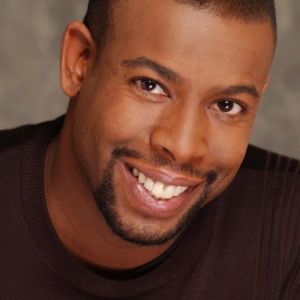
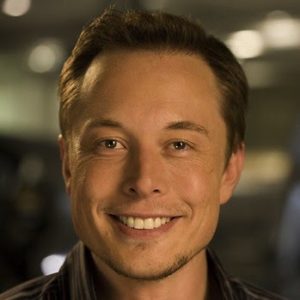
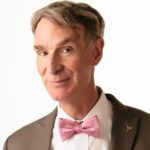
Neil deGrasse Tyson explores the future of humanity with one of the men forging that future: billionaire entrepreneur Elon Musk, CEO of SpaceX and Tesla Motors. Join us as Neil and Elon talk about NASA funding, getting humans excited for the colonization of Mars, and why Elon feels it’s important to not be stuck here on Earth. You’ll also find out why sustainable production and consumption of energy is critically important, but flying cars may not be such a good idea. Meanwhile, back in the studio, guest engineer Bill Nye schools Neil and Chuck Nice about SpaceX’s major innovations and how they’ve improved efficiency and lowered the cost of commercial space flight. They discuss the value of human exploration of space, life on Mars, and Bill’s next book about climate change, Unbounded. Finally, you’ll discover why Elon, who was programming computers at the age of 9, is afraid of the consequences for mankind of developing an artificial super intelligence.
Transcript
DOWNLOAD SRT
Welcome to StarTalk. Your place in the universe where science and pop culture collide. StarTalk begins right now. This is StarTalk. I'm your host, Neil deGrasse Tyson, your personal astrophysicist. And I have with me Chuck Nice. That's right. Hey,...
Welcome to StarTalk.
Your place in the universe where science and pop culture collide.
StarTalk begins right now.
This is StarTalk.
I'm your host, Neil deGrasse Tyson, your personal astrophysicist.
And I have with me Chuck Nice.
That's right.
Hey, Chuck.
Hey, Neil.
Tweeting at Chuck Nice Comic.
That is correct, sir.
As always, good.
Good to have you on the show.
Good to be here.
Do you know what this topic is today?
There's probably no more important topic we've ever addressed than this topic.
Oh.
The future of humanity.
Oh, okay.
That's what it is.
The future of humanity.
And we are featuring my interview with the one and the only Elon Musk.
A man who is contributing to the future of humanity.
He's not contributing to it.
He is the future.
It's not something that everybody else is doing and then they come in on it.
No, no.
He's making it.
And sometimes he's referred to as the real life Iron Man, Tony Stark.
I have to agree with that actually.
And he's the founder of PayPal.
It's an internet company.
He's a founder of SpaceX, a rocket company.
He's founder of Tesla Motors, an electric car company.
And he's chairman of Solar City, a solar energy company.
He is the real Tony Stark.
There you go.
And I thought, I mean I don't love you, but I thought I should bring in some help on this one.
Okay.
Another man who?
Yeah, yeah.
Someone else in my life.
Now this is awkward.
It's not that awkward.
Over here biting my lip.
Is Dr.
Tyson going to introduce me or what?
Should I say anything?
No, we'll just talk about you.
We're talking about Elon Musk who is a heck of a guy.
Bill, good to have you here because you've got some serious engineering background.
A lot of the show, we're going to talk about engineering the future of our civilization.
Yeah.
I could make stuff up, but I'd rather you say real stuff.
Plus, you're writing a book on sustainability.
Climate change and doing more with less.
Do you know what it's going to be called?
Unbounded.
Unbounded.
Very nice.
I want to cultivate.
Go ahead.
Subtitle, you're a fricking idiot if you don't believe in climate change.
Is that what it is?
Well, that might as well be.
So it is an extraordinary time.
I mean, we're talking about Elon Musk and his vision for the future of humanity.
But it is an extraordinary time.
As we record this, the state of Florida just forbade.
Forbade?
Would not allow state officials to use the phrase climate change.
Yes.
Really?
Yeah.
Or sea level rise.
Or sea level.
And they're going to, so what's going to happen?
The states of Georgia, Mississippi, and Alabama are going to build fences like we have in Texas to keep the Floridians, both the Seminoles and the...
No, Chuck, I think no disrespect to anybody who lives in Florida, Georgia, or Alabama, but I got a feeling it's going to be a chain link fence too.
Let's keep this water out.
Let's find out.
So let's get to the bottom of what created Elon Musk.
But I wanted to find out where did he come from, where did he grow up?
I didn't know anything about the man.
Let's find out.
Elon, what egg hatched you into this world?
Where were you before you?
Well, I was born in South Africa.
Born in South Africa, and you come to America and make a billion dollars?
Yeah.
I mean, I didn't expect to make a billion dollars, I suppose.
I mean, I grew up in South Africa, honestly, seeing a lot of the same TV and movies and reading comic books.
And it really didn't feel all that different from, say, Southern California, honestly.
So you had a kind of baptism into American pop culture at the time?
Yeah.
Yeah.
I mean, I ate a lot of hamburgers and went to steakhouses and read like every comic book.
You know, so my father brought me on a trip to the United States when I think I was about 10.
I remember it was a really awesome experience because the hotels all had arcades.
So my number one thing was when we went to a new hotel or motel or whatever it is, go to the arcades.
Forget any other services, forget whether they had bedbugs, you're looking for arcade games.
Yeah.
What did video games do for you?
I mean, they're incredibly engaging and they made me want to learn how to program computers because then I thought, well, I could make my own games and then I could also, I wanted to see how the games work.
Like, how did you create a video game?
That's what led me to learn how to program computers.
So you became a programmer?
Yeah.
So I had one of the first video game consoles.
It didn't even have cartridges.
It had like four games that you could play and you could like pick one of the four games you could play.
That was it.
And then it went from there to the original Atari and then television.
And then I was in a store and saw a Commodore Big 20 and I was like, holy crow, you can actually have a computer and make your own games.
I thought this was just one of the most incredible things possible.
I took all of my saved allowance and then hounded my father until we got the Commodore Big 20 and then it came with this manual on how to program in BASIC, which I sort of spent all night, several days in a row just observing that.
On your own?
No one forced you?
No.
This is self-motivated.
I've got to know this.
This is good for me.
Yeah.
I've spent like nine, nine or ten or something.
So you were fluent in BASIC at age nine or ten?
Yeah.
I kind of went and got OCD on the thing.
Maybe it's technically OCD, but I suddenly got obsessive, let me put that, but at least the O part.
So programming is power.
You get to control something.
You can construct a little universe.
And when you first do it, you're like, wow, this is incredible.
You can actually make things happen.
Like you type these commands and then something happens on the screen.
That's pretty amazing.
So there is hope for all the parents who have middle school children who are lost in their video game.
Absolutely.
They too can be a billionaire.
I'm sorry what I was just playing.
Bill, we're over here.
Put the video game down.
Put your PS Vita down.
You know, actually, that's my son is a video game craze ball.
How old is he?
He's nine.
He's nine.
Yeah, it doesn't get better.
Doesn't get better.
But his favorite game is something called Minecraft.
Yeah, I know nothing about it.
However, I started watching him play this and I went, you know what, this isn't bad.
This guy's learning how to create his own universe.
It's very imagination driven.
And now he wants to learn how to code.
We love the guy.
It could go diabolical if he wants to create his own universe.
It's not as easy as it sounds.
On the radio, create your own universe, hey.
So just a quick resume of Elon Musk.
So in 1999, he founded the company that would become PayPal and then sold it to eBay.
And he went off with $180 million and he was 32 years old.
So how did he make a living between university and 32?
Well, there's more of this interview that we will find out.
But I don't know, he was making companies and selling them and then moving on.
The way you do.
Yeah, yeah, yeah.
Of course, that's how you do it.
Let's find out.
That's hard.
So, what I wanted to know was, while he was in college, what was he thinking about?
Most of us in college, you want to major, get a job when you come out.
Let's find out what he was thinking about.
When I was in college, I sort of thought, well, what are the things that are most going to affect the future of humanity?
And electric cars, solar power, essentially sustainable consumption.
Most people are thinking, I just want a job when I get out.
And you're trying to reshape humanity as an undergraduate.
I mean, it's pretty, in America, it's pretty easy to keep yourself alive.
So I mean, my threshold for existing is pretty low.
I mean, I figured I could like be in some dainty apartment with my computer and be okay and not starve.
In fact, when I first came to North America, I was in Canada when I was 17.
And just to sort of see what it takes to live, I'd try to live on one dollar a day, which I was able to do.
You sort of just buy food in bulk at the supermarket.
Rice and beans and the.
Yeah, I went more for the hot dogs.
Hot dogs and oranges.
You get really tired of hot dogs and oranges after a while.
And we can also like, you know, pasta and a green pepper and a big thing of sauce.
And that can go pretty far too.
So I was like, okay, you know, if I can live for a dollar a day, then at least from a food cost standpoint, well, it's pretty easy to earn like $30 in a month, you know, I would think so.
Probably be okay.
So that allowed you to not have to worry about money because you did the experiment, did the experiment.
Exactly.
So this was an important psychological, philosophical anchor for you, not to put words in your mouth, but that's a starting point to launch anywhere you want to go.
Yeah, absolutely.
And so now you've got a baseline, a life baseline from which to go new places intellectually, psychologically, financially.
So what came first?
Thoughts of an electric car or thoughts of space?
You know, when you're starting out in college, like in your freshman, sophomore year, like you have these sort of sophomoric philosophical wanderings, and I try to think of, okay, what are the things that will seem to me would most affect the future of humanity?
There were really five things, three of which I thought would be interesting to be involved in.
The three that I thought were definitely positive would be the internet, sustainable energy, both production and consumption, and space exploration, more specifically, the extension of life beyond Earth on a permanent basis.
And then although I never thought I'd actually be involved in that, that was something I thought was important in the abstract, but not something I thought I would ever have an opportunity to be involved in.
And then the fourth one was artificial intelligence, and the fifth one was rewriting human genetics.
These were just the five things that I thought would most affect the future of humanity.
So Chuck, did you want to change humanity when you went to college?
I didn't even want to change my underwear when I was in college.
Are you kidding me?
Bill, you're an engineer man.
Do you agree with this list?
Yeah, it's a pretty cool list.
It's a cool list.
I would have included educating women and girls, raising the standard of living of women and girls so that the human population of the world will slowly become more manageable.
Greater tapping the lost intellectual capital.
That's right.
Among those who have been disenfranchised from it.
Or never franchised.
Disenfranchised in the first place.
Pre-franchised.
I love when you say that because it's basically when women are educated, they don't have as many babies.
That's it.
That's all there is to it.
The babies they have are more loved and better cared for.
That's where the burgeoning of society happens with mom being a happier, healthier person, more educated, end up with better educated kids, end up with a better world.
Just like that.
Just like that.
Furthermore, the woman has a higher quality of life.
She has a better job.
She's happier, which just makes everybody happy.
So Elon, after he sold PayPal, he had a bajillion, bazillion.
See now that's where I stop.
You'll be done.
That's where I'm just done.
You got a couple hundred million dollars.
I've got a hundred and eighty million dollars.
You're good.
You're good.
He's not that kind of guy though.
Push, push.
What he wanted to do, he wanted to go into space.
Let's find out how that got started.
When I started out, my goal was to do a philanthropic mission with the intent of increasing NASA's budget.
That was my goal.
I was confused as to why we had not yet sent a person to Mars.
It seemed like this was obviously the goal after the moon and we had not made progress on that.
When it became clear that the paper was going to get sold, a friend of mine asked me what I am going to do next.
I said, well, I do not know what I am going to do next, but I am always curious about what is going on with space and why have we made progress.
I just wonder when we are going to send a person to Mars.
I went on the NASA website and I could not find a date.
I was like, well, maybe it is here somewhere and I just cannot find it.
The date that NASA wants to land on Mars.
Yes, there has got to be some schedule or something.
We are looking for that.
Or a game plan or it is this date even if it is far in the future.
It was not to be found anywhere.
Anyway, I started learning about that back history and I thought, well, okay, maybe there is something that I can do to send a small mission to the surface of Mars that would get the public excited and as a result of that public excitement, NASA's budget will be increased and we could resume the process of sending people to Mars.
Essentially…
So you thought you can do that with your lousy billion dollars?
No, I did not have a billion dollars at that time.
I had about 180 million still a lot and I figured well, maybe I could spend half of that on a mission to Mars so I spent a fair bit of time investigating the space industry and eventually decided on this idea of sending a small greenhouse to the surface of Mars and we called it the Mars Oasis Mission and so you have seeds in dehydrated gel, it would land, you hydrate the gel upon landing and you have this great shot of green plants on a red background and the public responds to precedence and superlatives so this would be the first life on another planet, the furthest that life has ever traveled as far as we know.
That's how you get a headline.
Yeah, exactly.
It's got to be something new or something superlative and I thought well, and that would maybe reinvigorate excitement and the result would be NASA's budget gets increased.
So the whole goal in the beginning was just how do we get more money for NASA?
After spending a fair bit of time on this, I came to the conclusion that I was actually incorrect.
My initial assumption was wrong because I thought that where there's a will there's a way and that we just sort of lost our will.
That was that's false.
There's plenty of will.
People needed to believe that there was a way and a way that would not bankrupt the country or mean that they would have to sacrifice something of critical importance like health care.
So it became clear that the space transport problem had to be solved.
Unless there was a dramatic improvement in the cost of space transport, then none of it would matter.
So in your first successful launch, what was the cost per pound to orbit?
About $6,000.
$6,000.
Okay, that's an improvement.
Yeah, not bad.
Not $100 a pound.
No.
To get to $100 a pound, you need a big rocket that's fully reusable.
Are you there yet?
No.
We're making progress though.
It's been 12 years.
So far we've not recovered a stage, but I think we'll recover a stage within the next year and be able to reflight it.
Is there a date on your website that were someone can say, oh, he's gonna land on Mars?
Good point.
That sounds like a no.
Well, I mean, I've said it publicly many times, although maybe we should put something on the website, which is that I think we've got a decent shot of being able to send a person to Mars in about 11 or 12 years.
So, Bill, is he gonna do this?
To reuse a stage?
Yeah, and get the cost down?
Who's gonna get us to Mars, Elon Musk or NASA?
So, let us keep in mind that NASA pays SpaceX about 2 billion bucks so far.
So SpaceX is now a contractor for NASA.
Okay, so our tax money is going to SpaceX.
Okay, so what is this vehicle that's gonna get us to Mars?
So, there's a couple of innovations, just three innovations that I've seen with my own eyes which must hide another 100,000 innovations that are very much more subtle.
First thing is all the same engines.
First stage, second stage, how many stages?
It's the same engine.
So, why didn't somebody else do that?
That's a good question.
Everything was a one-off in the past.
Yeah, well, or a five-off, a Saturn five-off.
And so then, the other thing is, let's see if we can reuse a stage.
And this is his thing.
It almost worked the other day.
He tried to land, he, the company tried to land on a barge just east of Cape Canaveral.
And it landed on the barge just a little faster than anybody would want because it ran out of fuel to slow itself down.
But then, you feel it gets faster and if you're going fast, you generally need fuel to slow down.
Unless you're going to aerobrake or something.
Yeah, well, we'd come to the atmosphere after lunch.
And the thing is not shaped for aerobraking really, but it is shaped for retrorocketing, if I can coin the verb.
But then the other, the fundamental thing, you guys, when NASA was created, I believe, Dr.
Tyson, on the year of your birth, just within a week or so.
Same week.
Yeah.
Same damn week.
I come out of my mother, NASA comes out of Congress.
Perhaps.
Anyway, the idea was to keep the thing.
I feel NASA's pain.
They put NASA centers all over the US.
So when they went to manufacture rockets, they put pieces of the rocket all over the US.
Solid things are made over here.
Liquid things are made over here.
They're tested over there.
They get on train cars and go down there.
Just right there.
Just the expression.
Houston, we have a problem.
Why isn't it Florida?
We have a problem.
Cape Canaveral, we have a problem.
Orlando, we have a problem.
The instant the spacecraft clears the gantry, in that instant, full control transfers to Houston.
If there's a human being on board.
A thousand nautical miles away.
The whole countdown and everything.
Go to launch.
All of that is Cape Canaveral.
But it's SpaceX.
The moment it takes.
The moment it passes the thing.
Then it's like, all right, guys, we'll take it from here.
That's exactly right.
Thanks a lot, guys, for your work.
It's just south of Los Angeles International Airport.
Train car drives up full of stainless steel, full of titanium, full of let's make rocket anium parts.
And it comes off the train car and they shape it a bit and do their own thing.
I want rocket anium.
I want some of that.
Well, you can get it.
6061 T6 aluminum, T7 sometimes tempered seven aluminum.
So then it comes down.
They make the tank.
They make, they attach the plumbing.
It comes over here.
There's a bunch of electronics.
They attach that.
They vacuum test it over here.
Blah, blah, blah.
Then it goes back on the train car to either Cape Canaveral, close to the equator as the US can get or up to Vandenberg Air Force Base, which is north of there.
It's a continental US because Hawaii is closer.
Yeah.
Hawaii is closer, but it's not on a train car.
Yeah, it's not on a train car.
Extraordinary train car.
And so-
Hover train.
The Aqua train.
But the-
Wait, wait, Bill.
So I get that.
Well, there's a fundamental lowering of cost.
A huge reduction of cost.
Is that low enough to go to Mars like everybody says?
He wants to go to Mars.
He still wants to go to Mars.
Well, I would like to go to Mars, but I want to come back, and I don't want to go to Mars to live.
I think that is not all the way thought through, in my opinion.
We choose to go to Mars because it's not easy.
Well, that's right.
No, no.
We do this because we're God.
Because it will kill you.
Right.
It's so, yeah.
I mean, it's really-
Well, it's just really hostile.
Instead I choose to eat a Mars bar.
And also, for your consideration, I do love the Mars bar.
For your consideration, we can talk about this after the break, but Elon Musk is a native of South Africa, South Africa colonized by Dutch people.
I am a descendant from people from Northern and Central Europe.
You guys are much more recently descended from Africa.
But we have this human tradition of just spreading out.
We don't like it here, we are going to go over there.
Which means, of course, you are a descendant of Africans as well.
Oh yes, we are all descendant of Africans.
You have arbitrarily selected.
I say more recent descent.
Yeah, that was arbitrary.
Let the record show that was a completely arbitrary line that you drew.
But arbitrary, but historically not insignificant.
I am just, I am just.
So anyway, human kind has spread in Mesopotamia.
Across Eurasia, the Ice Age has the snow froze up.
Just keep going in North America.
Right.
Spearing mammals, partying.
It's what we do.
And so it's not clear that you will be able to leave the earth and go live on Mars.
So you are skeptical of this, but you would not interfere with the dream state.
However, we do not want to violate in Star Trekian terms.
The prime directive?
Just so, Doctor.
Which is?
We don't want to mess up the ecosystem on Mars.
Wait, excuse me.
We have no qualms messing up our own damn ecosystem.
Well, that doesn't make it a good thing.
Why should Mars be the sacred place and not our own?
It's a rule.
We're pooping in our own backyard.
It's an arbitrary, but it's not arbitrary.
It's a reasonable rule.
We can poop there after we determine whether or not there's something alive.
Mars.
It's nothing more than Earth's toilet.
And with that, we'll be back after this.
On that brilliant note from Chuck Nice, you're listening to StarTalk.
The future of humanity edition.
We'll be right back.
We're back on StarTalk.
I got Chuck Nice right across the table from me.
Yes sir, yes sir.
I got Bill Nye the Science Guy.
So good to be here.
And since we're radio, I must alert people that even in studio, you are in bow tie and at the record show.
Yeah, well, what you see is what you get.
Maybe he's like the guy in Terminator 2, where the-
Just a polymetal.
Yeah, no, no, no, but the polymetal, but no, but his police uniform-
Yes, right.
Was part of-
It's polymetal.
That is the metal.
That's how I roll.
So maybe Bill and the bowtie are a polymetal.
But watch out, I can turn my arm into a giant saber, sword, wacky thing of death thing, which is shiny.
We're talking about the future of humanity.
We're featuring my interview with Elon Musk.
And that does not feature polymetal.
No, it does not yet.
Not yet.
And I snared that interview when I visited him at SpaceX headquarters, which is, what's the name of that town that he's in?
Crenshaw, Hawthorne.
Hawthorne, California near Los Angeles.
Okay, New Yorker, where is it?
Hawthorne.
Hawthorne.
Hawthorne.
Oh, by the stars.
Fine, fine.
So Bill, if we're gonna go to Mars, do you see engineering challenges to that?
Or is it just, or is it only?
No, no, wait, wait, wait.
No, this is a very serious question.
Engineers love a challenge.
So don't tell me, don't play that with me.
Don't bring it on.
Don't even.
So my question is, is it just a matter of money?
Or even if I gave you as much money as you want, you might not be able to solve some of the engineering problems.
Oh, we can solve the problems.
Snap, that's what I figured.
Yeah, because we land rover from a freaking rocket crane.
We can solve the problems.
But as far as this colony idea, everybody, I mean, there's no liquid water as such.
Oh, well Mars was once very wet and we found evidence of ice, all good.
But it's not like there's a river there, okay?
Then-
If there is, it's underground and no one has found it yet.
Okay, and let me go on to say, it's on its summer day at the equator, it's 20 below, okay?
Yeah, you can get, what is it everybody wearing this year?
Canada Arctic crew, that was a Canada Goose Down brand jacket, all very good.
That's dead, that's when things are really good, that's all you got on.
That's midsummer attire, right?
But the main thing I think you would pick up on right away, there's no air.
You would suffocate in a second.
Well there's air, but there's no oxygen in the air.
Well so you just have to make all that stuff once you get there.
Thank you Chuck.
At least somebody's thinking about the future here.
I got to stop you there.
Bill, quiet for a minute.
There is oxygen in the air, but it's carbon dioxide.
You have to separate it from the carbon.
Carbon dioxide, CO2, is one of the most tightly bound molecules ever made.
I mean you can do it, but you gotta put in the energy.
You gotta put in the energy.
And then you're gonna be living, everybody, you're gonna be living in a submarine.
But just to be clear, so you have to get that energy from somewhere, right?
So just, there's no such thing as a free lunch.
And you're one and a half times the distance that we are from the sun.
So your solar energy, if you just wanna run, if you wanted to run solar panels, was 15 squared.
So it's a one and a quarter.
Two and a quarter times more.
Less.
Less sunlight.
No, you need two and a quarter times more solar panels to equal that.
In light of this conversation, why do we wanna go there?
Well, it is the next logical place to look for things.
I like Chuck getting high pitch on us.
Give me that again, Chuck.
Chuck, Chuck, the reason you wanna go there is because you're gonna explore.
And when you explore, two things happen.
Those two things, Doc, Chuck.
One.
You will make discoveries.
You will find something you never found before.
All right.
But the other thing is you will have an adventure.
You will have an adventure.
It will engage you like nothing else, whether it's your backyard, the video game or the surface of Mars.
Now, if.
You might die, but it'll be an adventure.
Well, what we want to do as an engineer, and this is what astronauts say, part of their pride as being astronauts is coming back.
That's like landing the airplane as part of a pilot's pride.
I mean, ejecting and letting the $350 million fighter plane explode is kind of cool on video, but it's not really your goal as a pilot or an astronaut.
So if we were to go there with a human, we would be able to make discoveries at an extraordinary rate.
It's estimated 10,000 times faster than our best robot spacecraft.
Right now, but if the day comes when we have a 10,000 times better robot, you'd still probably want to explore.
You still want to send a human there.
Okay, so then.
And so here's the thing, if we found evidence of life, fossilized bacterial mats or cooler yet, something still alive, some Mars probe, then the question would be, and I want to know, do those Mars probes have DNA like you and I do, or are they a whole nother of notherness?
Mars probe?
That's a Martian microbe.
It's a Martian microbe.
Mars probe.
And then if they have DNA and they're so much like us, does that mean Mars was hit by an impactor, woo woo woo, went off into space and you and I are descendant of Martians?
That we'd all be Martians.
Okay, so you know, he's trying to change humanity by reinventing space exploration.
I get that, I get that.
But he's also worried about problems on Earth.
Okay, that's okay.
Is he allowed?
Is he allowed?
No, I say bring it on.
Okay, so you know he's co-founder of Tesla.
Yeah.
The electric car company.
The car is just sex with wheels on it.
Very cool, he's also sex with wheels on it.
That's fantastic.
He's also chairman of SolarCity.
Let's hear how he just got into this.
From a terrestrial standpoint, the biggest problem we need to solve on Earth for the century is sustainable production and consumption of energy.
This really is quite a serious problem.
People really should take this quite seriously.
Even if you put the environmental consequences of dramatically changing the chemical composition of the oceans and atmosphere aside, we will eventually run out of oil.
Holding that aside.
Well, if we don't find a solution to burning oil or transport and we then run out of oil, the economy will collapse and civilization will come to an end.
Or as we know it.
With or without global warming.
Yeah, with or without, exactly.
I mean, and so if we know that we have to ultimately get off oil no matter what, we know that that is an inescapable outcome.
It's simply a question of when, not if.
Then why would you run this crazy experiment of changing the chemical composition of the atmosphere and oceans by adding enormous amounts of CO2 that have been buried since the pre Cambrian era?
That's crazy.
That is the dumbest experiment in history by far.
Can you think of a dumber experiment?
I honestly cannot.
What good could possibly come of it?
So therefore, we need another solution here.
But of course, electric cars still uses coal.
That's why you need sustainable power production, like solar and wind.
Which can still charge your car.
Yes.
Bill.
Neil.
Do you still have your house in California?
Yes.
In Studio City?
In Studio City?
Yes.
I've been there.
Yes.
But you're like a native, you're a New Yorker now, not native, but you live in New York.
Somebody else is living in your house.
Yeah.
That's a crazy house that you live in.
It's cool.
It's completely alive with self-generated electricity.
Well, it's got four kilowatts of solar.
That's great.
Which is more than enough for 10 months of the year, maybe 10 and a half months of the year.
And I would have more, but my neighbor's house shadows my panels.
Oh, I thought you were going to say your neighbor is stealing your electricity.
Well, she's stealing sunlight.
Yeah, that's the same thing.
She travels a lot.
And I thought maybe while she was out of town, I could just cut off this one part of the second story.
Easier to ask forgiveness and permission.
Bill, but there's tons of oil still in reserve that is yet to be drilled or is...
Here's the bad news.
Okay.
Will never run out of fossil fuels.
That is the bad news.
That's terrible.
It really is, because burning it and burning it is just the worst thing for all of us.
So do you have a plan?
What's your plan?
So the plan is...
Because as long as oil is cheap and it's cheaper than my solar panels, how do you expect people to...
Yeah, if you're rich, you can buy the car that saves gas.
So bear in mind, the reason...
That cost you more than the car that doesn't save gas.
The Sex on Wheels.
The Sex on Wheels car.
The reason you want a Sex on Wheels electric car is because...
Costing how much?
About 100,000.
100,000, yeah.
Everybody's got 100,000.
Well, deep breath.
Yeah, yeah.
Let me get to my mattress.
Deep breath.
It's 95% efficient or 93% efficient, whereas a gas-powered car, constrained by the second law of thermodynamics, is at best 28%, 30%.
So you're squandering energy.
You just can't get back when you try to get it out of heat at low temperature differences.
So with that said, it's been estimated that we could save about 30% of the energy we use through conservation.
We can have electric cars.
We can improve transportation systems, to be sure.
But the big thing, you guys, as we say about climate change, if you are opposed to government regulation now, you don't like governments now, just wait till stuff gets bad.
Just wait till Floridians have to abandon their homes, and Miami is half underwater, and then there's going to be regulation.
I'll give you an example of this.
World War II.
Regulation happened like crazy, and everybody was very proud of it.
Want to create the next great generation.
So what I neglected to mention here, and I think you should have mentioned too, was if you can start out with $100,000 car, because it's a test of concept, people like it, wealthy can buy it.
But, the real test is, can you make an electric car that's competitive in price to...
Absolutely.
And, I'm told there's a Tesla Model 3 expected to come out, and that's priced at $35,000.
Yeah, so I drove a Nissan Leaf for three years.
It's about that same price.
About that same price.
So that's that, there you have...
I mean, I did other stuff.
I went to sleep, I had meals, I didn't just drive for three years.
But Bill, what I really want is the flying car.
The flying car is a real tough problem.
Which it is.
But I think Elon cured me of my urges to find a flying car.
Oh, well, just wait till everybody's in traffic flying cars.
No, no.
He told me what the deal is with flying cars.
Wing loading?
Let's find out.
Of course, what we all really want are flying cars.
Yeah.
Actually, let me ask you.
So are you sure you want a flying car?
No, but it looks cool.
It does look cool.
I mean, whenever you see cities in some futuristic concept, they always throw the flying car in there.
You can't tell me you never thought of it.
No, I thought a lot about it.
And there's some people I know that are working on flying cars or flying personal transport devices if you will.
Hoverboards.
There are people working on hoverboards.
But I mean, I sort of wonder-
After the interview, you can show me your hoverboard room, okay?
I know someone's working on a hoverboard.
I won't tell anybody.
The microphone is on mute now, so you can tell me.
Just between us, it's awesome.
I'm debating like, should there be flying cars or shouldn't there be flying cars?
I'm of two minds on that, you know, because if there are flying cars, then well, obviously, you have added this additional dimension where now a car could potentially fall in your head and will be susceptible to weather.
And of course, you'd have to have a flying car where it would be like an autopilot, because I mean, otherwise, forget it.
You don't want people navigating, flying.
Yeah, it's got to be autopilot.
But even in an autopilot scenario, and even if you've got redundant motors and blades, you've still gone from near zero chance of something falling on your head to something greater than that.
And there's also a noise challenge.
So we don't know how to fly quietly.
Right.
Okay, so I'll wait it out some more.
Something that I do think would definitely help a lot in cities is more tunnels.
Essentially, with flying car, you're talking about going 3D and there's a fundamental flaw with cities where you've got dense office buildings and apartment buildings and duplexes and they're operating on three dimensions, but then you go to the street and suddenly you're two dimensional.
Because it's a flat surface.
Yeah.
This is how New York City solved this with the subway going underneath multiple layers of subway.
Right.
So we are actually traveling in three dimensions, but below the ground rather than in the air.
But I think if you were to extrapolate that to cars and have more car tunnels, then you would alleviate congestion completely.
And you wouldn't need the flying car.
You would not need a flying car in that case.
And it would always work even if the weather is bad.
And it would never ice up.
It would never ice up and it would not fall on your head.
So we're gonna get started on that right away.
I think those sound like the words of a man who owns a car company.
That's all I'm saying.
A non-flying car company.
If I had a company that made non-flying cars, I probably wouldn't want to have a flying car.
You would say build more roads.
Exactly.
Build more roads and tunnels.
You don't want a car falling on your head.
Plus, a point that came out in my conversation with you, but it didn't make the clip, was we have flying cars today.
They're called helicopters.
Yeah.
And they're really noisy.
Yeah.
And in fact, if you want something as heavy as a car to levitate, it's gonna be making some noise.
Well, it's also gonna use a lot of energy.
And a lot of energy.
Well, that's because in the word of another physicist I know, who flies his own plane, he said, helicopters don't fly as much as they beat the air into submission.
Who said this?
It's true.
It's all, it's completely there.
The air doesn't submit.
It just flows down, having enough momentum to hold the helicopter up.
He also, Elon Musk brings up another good point.
When we have humans operating the Tisonic flying car, which competes with Chuck Nice subterranean vehicle, who's going to drive the thing without all kinds of trouble?
And so, you know, it always fascinates me when you look at highways from the air when you're in an airplane or a helicopter, it looks so orderly.
It really does.
Cars all emerge, they go along, it's very cool, but you're using a human brain.
This thing is capable of art and radio shows and rocket companies.
You're using this brain to do nothing but operate this car on this right of way.
Stay in a straight line, stay in a straight line, stay in a straight line.
Change lanes, look over your shoulder, we'll go head check, head check, head check, whoa, whoa, head check.
And so this is why this seems like a real opportunity.
My favorite bumper sticker is ever, caution, driver applying makeup.
I've seen it.
I've seen it.
I've seen it.
I've seen it.
That's a lot of information, Chuck.
You don't want humans driving cars.
You want driverless cars.
Yeah.
At a very high level of reliability.
You know, I used to work at Boeing and you get a triple.
You worked on the 747.
747, a little bit 7273757, but what you want is-
That's the lingo, Chuck.
I know.
Oh, that's how you-
He's showing that off now.
Sound like you're gonna give him your number.
These are all planes.
Everyone from Boeing has a 7 something 7 in their phone.
Well, yeah, but the interesting point of interest, the 727, the 737, 757 have the same tube.
The 717, which was the 707KC135, have the same tube.
And so, where was I going?
When it's triple redundant, autopilot, you can count on it.
It's gonna land the plane.
But the problem with cars is not, you don't have nearly the traffic control that you have in an airplane.
So who do you think is gonna win this, Tesla and with a driverless car perhaps coming out of their shop or Google?
Well Tesla makes cars.
Google makes software.
You can't have one without the other to be driverless.
So this is like a chocolate and peanut butter thing.
Exactly.
Whoa.
You got your car in my software.
I got your software in my car.
But wait, you're both right.
Chuck, I love setting you up.
But wait, there's more.
When you think about the automotive industry writ large, everybody uses the same parts with the gas gauge, sensor, the speedometer, the tires, the nuts, all the bolts, all the same standard.
There's a little competition, but you can get a lot of commonality.
And so we will see what happens in the near future.
When we come back, we're going to find out what Elon Musk is really worried about.
You know, should I give you a hint?
Go ahead.
No, I'm not.
When we come back, find out what keeps Elon Musk awake at night on StarTalk.
We're back to StarTalk Radio.
I'm Neil deGrasse Tyson, co-host Chuck Nice, in the house.
Hey, hey.
In the house.
And then I got Bill Nye in the house.
I am co-housing.
Co-housing, donning a bow tie, as usual.
In the earlier segment, we were sure that it is surgically attached.
Polymetal.
Polymetal surgically attached to him.
We're featuring my interview with Elon Musk.
And just before the break, I teased you to tell you that we would be saving for this final segment.
Yeah.
What he fears the most.
Fears.
Now if you're, He's a confident guy.
He's a confident guy.
And to quote Bill, if you've been scoring along with us, you may remember in our first segment, we listed the things he wanted to introduce to change humanity.
Right.
One thing he does not want to touch.
Let's check it out.
I mean, I'm quite worried about artificial super intelligence these days.
I think, and I've said this publicly, I think it's maybe something more dangerous than nuclear weapons.
So we should be really careful about that.
If there was a very deep super digital super intelligence that was created that could go into rapid recursive self improvement in a non-logarithmic way, then you know, that was it.
And it's self learning.
Yes, so like it just could reprogram itself to be smarter and iterate very quickly and do that 24 hours a day on millions of computers.
Well, I mean.
Then that's all she wrote.
That's it.
That's all she wrote.
I mean, we will be like a Pat Labrador if we're lucky.
I have a Pat Labrador by the way.
We'll be their pets.
It's like the friendliest creature.
No, they'll domesticate us so that we will be lab pets to them.
Yes.
I mean, or something strange is gonna happen.
They'll keep the docile humans and get rid of the violent ones and then read the docile humans.
Yeah, I mean, the utility function of the digital super intelligence is of stupendous importance.
What does it try to optimize?
And we need to be really careful with saying, oh, how about human happiness?
Because it may conclude that all unhappy humans should be terminated and that we should all just be captured and with dopamine and serotonin directly injected into our brains to maximize happiness because it's concluded that dopamine and serotonin are what cause happiness.
Therefore.
Therefore, maximize them.
I'm just saying we should exercise caution.
What do you think of that?
So just to be clear, he's not talking about artificial intelligence.
He's talking about artificial superintelligence.
The kind that can self-learn.
Okay, so 20% of the world's population of people does not have electricity.
They've never made a phone call.
Not a cell phone call.
They've never made a phone call.
So when the superintelligence takes over Chicago or whatever, what are people in East Africa gonna give a rip about?
Okay, so you guys have managed to kill yourselves.
Way to go, we're looking for some corn here.
So I get it, but I think people have to keep in mind, we all take computers are so reliable and they're so much part of our everyday life now, we take them for granted.
But somebody is literally or in a sense shoveling the coal.
What happens if you unplug the supercomputer, intelligence thing?
It will find a new source of energy.
No, no, no, no, no.
Because it has its own nuclear reactor.
The failure of that logic is the assumption that it would let you unplug it.
Right.
Okay, but how did it create that thing to keep it from?
I'm just saying, I don't, you know, I'm with you here.
Seems like a solvable problem.
So I'm looking here, we have three levels of intelligence.
Artificial narrow intelligence, so it's a computer doing one thing better than anything, it's not getting anybody's way.
A calculator.
Calculate, let it do it.
And until you plug one, it wins the jeopardy.
No, no, that'd be artificial general intelligence, which would be general intelligence, but it's not hell-bent on taking over the world.
It's that IBM computer, right?
Yeah, yeah, it goes across, yeah, yeah, yeah.
Which one was that?
Watson.
Watson.
It's Watson.
Watson.
So it's the super intelligence that scares him.
And again, I kinda agree with you, Bill.
You could, at some point, you just unplugged the dude.
Yeah.
Well, I just think about the Colossus Project, Forbes and the Colossus Project.
Mm-hmm, mm-hmm.
And so this is where the two superpowers on Earth have nuclear arsenals that you control by computers.
So they connect the two computers.
And you know, trouble ensues, okay?
And so you try to unplug it, but they have their own nuclear reactors that run them.
This is the movie War Games, like all over again.
Well, it was before War Games.
Yeah, yeah.
And so, and then a movie.
But the deal is that running a nuclear power plant is not straightforward.
It takes somebody shoveling the coal, or rate, moving the stuff around in the waste.
In the pile.
Ponds, yeah.
So, there's also much, much ado about the singularity.
Ray Kurzweil, you know, I gotta get him on StarTalk because I don't, I'm just not with him on this.
But I don't want to bad mouth him unless he's sitting in front of me.
This is everybody, when I do a college talk.
So he can bad mouth me back.
Does this happen to you, Neil?
When I do a college talk, somebody asks me about the singularity.
I know, and people all freak out.
When the computer is as smart as a human.
Right, this would be.
And it's always plugged in and has no arms or legs.
Right.
And does something.
Right, right, somehow, what is it gonna do?
Is it gonna chase you down the street?
Like, what's it gonna do?
Well, no, it's going to actually get the machines to do its bidding for it.
Yes, it'll control your thermostat.
Like in Star Trek.
It'll control your thermostat and your self-driving car.
I'm cool with that.
But this notion that somehow the world is fundamentally different before and after the singularity.
But from a historical standpoint, I could buy it.
No, no, we'll be different, but we're not gonna be, it's not gonna be running out of the, screaming out of the apartment.
No, when machines took over our physical labor, did we say, oh my gosh, this is the crazy day?
No, no, it happened slowly and we're fine.
Now we got people repairing machines.
And there's still artisans carving the thing.
We gotta get them on the show.
I wanna get them on the show and then we'll give them a piece of our mind.
But we can't leave people freaked out over the fate of the machines that we create and their capacity to turn us into domesticated pets.
Let's find out if Elon has any positive thoughts about the future at all.
Thank God.
I'm quite optimistic about the future.
I mean, I don't think we're about to enter a dark age.
It could happen, but it's not, I think, not likely anytime soon.
Not before you get to Mars.
Hopefully not before we get to Mars.
But bear in mind that that...
And part of the act of trying to get to Mars is a force to keep us out of the dark ages.
I mean, there's always a chance that something calamitous could happen to Earth, either a natural man-made catastrophe.
Certainly we see that in the fossil record.
And we've invented all sorts of ways of doing ourselves in that the dinosaurs didn't have.
And we haven't managed to solve the asteroid problem.
So, therefore our risk is higher, okay?
I'm sure people realize this.
If you haven't solved the problems that have caused the prior extinctions and you've added new ones, you've not improved the situation.
And that's sort of where we are right now.
And you know, there are some really smart people that are a lot more pessimistic than I am.
Like, you know, the Stephen Hawking of the world and the Martin Rees, the Royal Astronomers.
They're all quite pessimistic.
I'm a naturally optimistic person, but I do think that there's value in establishing life insurance, which if life as we know it is on more than one planet, then the light of consciousness as we know it is likely preserved into the future for much longer.
If consciousness is preserved.
No, that's a beautiful talk.
What?
That was his optimism?
What, what, Chuck?
That was optimistic?
Oh, you know, the thing that took out the dinosaurs, that's still a thing.
And by the way, we'll probably take ourselves out before that.
And that's still a thing too.
Yeah.
But you know what, I'm pretty optimistic.
No, no.
But you guys, back in the day, there were no humans when the ancient dinosaurs were taken out.
There's no evidence that the ancient dinosaurs had a space program.
At all.
They didn't have opposable thumbs, much less.
It doesn't seem like they did.
And so we have that leg up.
Also they're going on nine billion people.
If you kill almost everybody through extraordinary means, somebody's going to leak through.
Much more easy to leak through here on Earth than on Mars.
Here's what I'm saying.
You want to become a multi-planet species.
Whatever effort that takes, I've said this before, it seems that it would be less effort to deflect the asteroid than to terraform Mars and ship a billion people there.
I'm with you on that.
Deflect the damn asteroid.
Get on with life.
If you have the power to terraform Mars, you have the power to fix Earth.
Martian atmosphere is getting scraped off all the time.
That's what I'm saying.
What fears you the most?
What fears you the most?
We got to wrap it up.
What fears you the most?
The dark.
The dark.
Sorry, I go with the simple stuff.
It's the truth.
The monster under your bed.
Bill, what fears you the most?
Climate change than asteroids.
You know what I fear the most, that we lack the wisdom to understand our own fate so that we then become victims of it rather than conquerors.
This sounds like those who do not know the past are condemned to repeat it.
It's a version of that, I think.
You're listening to StarTalk, the future of humanity edition.
We'll be right back.
Bill, back in the crib.
Back in the crib.
First, let me pour you some wine here.
Yes, thank you.
Gosh, that's a good roll.
We still got some left.
Are there 2005 Miraloe?
You have bottle after bottle.
No, he does, everybody.
Well, if you like a wine, you get a little more of it.
That's what you do.
Miraloe was so maligned in the movie Sideways.
I love that movie.
But I don't let movies tell me what wine I should drink, what that comes down to.
I think I've heard that, I've seen the bumper sticker.
Movies don't tell me what wine to drink.
I don't think I've ever seen that.
Anyway.
So we're just chronicling the space, the history of space exploration.
And you know, Russia, you know, America, the Soviet Union.
So you're a space baby.
And so what was your, were you hit by this the way?
Man, I grew up in Washington DC.
So my mother would drive us.
So professionally you cut your teeth in Seattle, but you're a Washington DC baby.
That's it.
I would have never guessed that about you.
I grew up in the city.
When I think of Chocolate City, I don't think of Bill Nye.
I'm from the ultimate, the little zone there.
My people.
Yeah, you got your people.
My people in the Northwest.
But I'll tell you what, before we get on to the brothers, where I went especially junior high school, all these kids are from all over the world.
And they could, because they're all diplomats.
God, they could play soccer.
Oh yeah.
Even back then, yeah, of course.
Most especially back then.
So you grew up in the city.
Anyway, my mom would take me and my friends.
So you're old enough to have remembered the 60s.
And you'd go see Alan Shepard waving from the back of a convertible.
And it was this extraordinary optimism.
That's what, when I look back, and of course, putting a guy on the moon was cool.
And I was on my knees for that, black and white television.
That's easy for old people of my age.
Oh, I remember, okay, but the thing, the deep thing that was important for me was the optimism.
And that's what we all longed for.
You know what I wonder?
If that optimism was magnified because of how much other sources of pessimism there was in the world, with the hot war in Vietnam, and the Cold War with the Soviet Union, and the civil rights movement, and campus unrest, and protests.
There was no place else to turn for anything optimistic.
But those things are of a piece.
I mean, they're all one thing in that things are changing.
Yeah, nobody likes change.
No one in charge likes change.
Yeah, well, it depends.
So you were optimistic.
So how optimistic were you?
What did you think the 1970s would bring when you were thinking about the 1960s?
Better cars, better space, food, sticks.
I'm trying to think of things, better television.
Oh, that it was a big deal.
I saw the very first Super Bowl at the neighbor's house.
And he...
Super Bowl I.
Yes.
And it was on a color television.
Ooh, so the grass was all green and stuff.
The corners were cut.
The television screen was not rectangular the way you think of a television screen today.
And not that that's the good old days.
Oh, no.
The corners were cut, they were rounded.
Yeah.
And so, it was...
You expected that things would get just better.
Everything would be better.
The food would be better.
Everything.
The wine, I presume, would be better.
Dr.
Pepper would be better.
So, this is the manifestation of this future view.
Yes, that you could do this and that I was...
Did it influence what you majored in?
Yeah.
Yeah, so I was about to say what I was encouraged to work in math and science.
And maybe I have an aptitude for it, but I was rewarded for it.
Like, if you did well in math, you were gonna be an astronaut and that was something you were gonna do.
You wanna be an astronaut?
I applied four times, but after Christa...
So, what the hell is their problem?
Well, after Christa McCullough got killed, I don't think a guy like me was gonna fly.
Plus, you know, the nowadays...
Beloved educators.
Yeah.
You don't wanna start killing them off.
Yeah.
I mean, it was a drag.
I mean, it was...
Yeah, but you would have had a high school name after you by now.
Well, I'm not really...
About getting anything named after me, Neil, maybe you're...
I'd like to wait till I'm dead.
And there's no hurry on that.
I know it's coming.
I've seen billions of people...
You've got good data.
Good data on this one.
Yeah, yeah, but I have no hurry.
So, with that said, to recapture that optimism or to have a new optimistic view, space exploration is an ideal thing for us to spend tax dollars on or intellect and treasure.
Now, we have climate change as the most serious problem facing humankind.
That's for sure.
If we were talking about climate change in the same way we were talking about Ferguson, Missouri, I mean, it would just get done.
Just get done.
It would just get done, and people would feel good about it and they'd be optimistic about the future instead of hand wringing and whining.
And furthermore, the other thing, as a guy who grew up in the United States, it had this US feature.
In print.
Yeah, and NASA is the best brand the United States has.
You go anywhere in the world, people recognize.
People hate the United States and love NASA.
Yeah, yeah.
It's interesting.
And it's also not a military endeavor.
It's missiles and stuff, but it's not for that.
It's for exploration.
Let's see what's out there.
Let's learn more about the cosmos and our place within it.
And so, it's a good investment for any country at any space agency to invest in space.
But how do you justify it to a country that can't still barely feed their people?
Well, you do have to do everything.
Yeah, do everything.
Okay, so some balance, it's a budget balance.
Yeah, and so I say this, if it's the choices, do we pay teachers or build a new baseball stadium?
The answer is, I hope for everybody, you pay teachers.
But no, the challenge for a politician, the reason people hire you to it and vote for you is so you'll figure out how to do everything.
Yeah, at the right balance.
At the right balance.
Right, I've never seen critiques of the Apollo era where people say, if we took that money and built schools, we'll have this many more schools.
And I thought to myself, the Apollo in its day was like 4% of the US budget.
4, not 0.4, which is what it is now.
Yeah, full up 4%.
And so that's a lot, no doubt about it.
But to walk past the 96% of the rest of the budget and say, use this 4% to build schools, did you really analyze what you just walked past?
Is that what you did?
Punk?
So this is where we have a conversation.
So Bill, you are who you are because of who we were then.
Oh man, absolutely.
Bill, thanks for coming by.
Thanks for having me.
Let's change the world.
Change the world.
See the full transcript




 Unlock with Patreon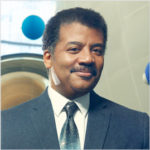
 Become a Patron