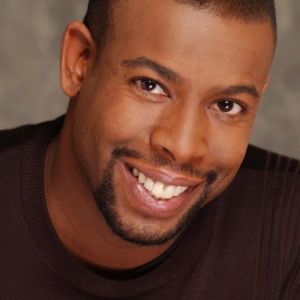
Get into the spirit (or should we say science?) of the season when Neil deGrasse Tyson and comic co-host Chuck Nice answer fan questions about the holidays and winter. Is it true that no two snowflakes are alike? Why is it cold during the winter? Could Santa be exploiting the multiverse to hide his workshop and deliver his toys on Christmas Eve? Could Santa’s sleigh travel at the speed of light? Neil and Chuck discuss the importance of ritual in people’s lives when Neil answers the question, “Should parents let their children believe in Santa?” and Neil shares what he told his daughter about the Tooth Fairy and Santa. As an extra present for our fans, you’ll get to hear Neil’s recommendations for what to do in NYC during the holidays and his favorite holiday drinks, including how he makes his own homemade eggnog.
Transcript
DOWNLOAD SRT
Welcome to StarTalk, your place in the universe where science and pop culture collide. StarTalk begins right now. This is StarTalk Radio, the Cosmic Queries part. I'm Neil deGrasse Tyson, you're a host, and I've got with me in studio...
Welcome to StarTalk, your place in the universe where science and pop culture collide.
StarTalk begins right now.
This is StarTalk Radio, the Cosmic Queries part.
I'm Neil deGrasse Tyson, you're a host, and I've got with me in studio Chuck Nice.
Hey, Neil.
Remind me, Twitter, you're Chuck Nice Nice?
At Chuck Nice Comic.
At Chuck Nice Comic.
Yes.
All right, finally catching up with how to find you.
How to find me on Twitter.
There you go.
Chuck, I brought you in because this is, as you know, this is the Cosmic Queries part of StarTalk.
Yes.
I sit here, I haven't seen any of these questions, they've all filed in from Facebook and Twitter and Google Plus and all of our media presence.
And this is the holiday edition.
So thanks for agreeing to do this.
Ah, it's always my pleasure to be here.
I guess the point is not to stump me, although I could get stumped.
The point is just if I have knowledge to share through the filter of people's inquiries.
That's correct.
There we have it.
It's what inquiring minds want to know.
And you got their names.
I have their names.
Let's go for it.
Let's kick this thing off.
And this is, oddly enough, you would think that I would have phonetically found out how to pronounce these names, but I did not.
So this is Mikezu, Mikezu from Facebook.
And very simply, why is it cold during the winter?
Because it's not cold everywhere.
So why is it cold during the winter?
Ooh, that's a beautiful question.
That means he's not taking anything for granted.
And making an observation about the world around him and then asking.
So it turns out after June 21st, we're talking about Northern Hemisphere now.
We just like add six months and we can have this conversation in the Southern Hemisphere.
After June 21st, the arc of the sun across the sky from sunrise to sunset gets lower and lower and lower.
And so the heating of the ground becomes less and less and less.
The sun doesn't heat the air.
The sun heats the ground.
And after a short time delay, the ground heats the air.
That's why it's not hottest at 12 noon.
It's always hottest a little later.
A little later, like two o'clock.
Like two o'clock.
Anywhere between one and three and sometimes four o'clock in some parts.
So there's a time delay.
So there's not only a time delay during the day, there's a time delay during the year.
So the sun gets lower and lower and lower and lower in the sky and you enter December and the sun rises very far south of east.
It only rises due east two days a year.
People say, oh, the sun rises in the east and sets in the west.
No, only on two days a year.
The rest is rising someplace else.
And as we approach winter, it rises very far south.
It goes up a little bit in the sky and then sinks back down again.
In New York City, the highest the sun gets in the sky on December 21st is like 25, 26 degrees up above the horizon.
That's hardly anything.
Barely gets above the buildings.
So the reason it's cold in winter is because the sun is lazy.
Lazy, lazy sun.
It does not want to do, it does not want to climb to the heights it should.
It cannot do that.
And so on the 22nd, oh, by the way, and by the way, it sort of slows down, sort of stops its downward passage through the sky and then it starts its way back up a few days later.
So around December 24th, December 25th, you know we're not gonna lose the sun entirely below the horizon.
It's on its way to higher and higher arcs.
And the ancients knew this, or at least here, the Christians knew this.
They wanted to put a Christian holiday on a day that the pagans already were celebrating.
Right, Saturnalia.
Yeah, so they put the birth of Jesus on the same day that, because no one knew when the day of the year Jesus was born, so they put Jesus' birth on the day that people were already celebrating the return of the sun to higher climbs in the sky.
And so, that's why you have it.
Now, what is the coldest month?
It's not December.
It's like January, February.
Again, remember, this is time delay.
Time delay.
Yeah, yeah, so there you have it.
So even though the shortest time the sun stays in the sky is in December, the coldest time is a couple, few weeks later.
Right, because there's a time delay for Earth to react to that fact.
Yes.
All right, well, look at that.
And by the way, so, and it has nothing to do with our distance to the sun.
In fact, in December, Earth is closer to the sun.
We're closest January 3rd.
We're closest to the sun in right smack in winter there.
Look at that.
Yeah.
Interesting stuff.
Yeah.
All right, let's move on.
Next question is from, well, actually, you know what?
I'm gonna skip down to Brad Porter's question and kind of connect it to what we just said.
So how cold is winter in a deep polar crater on Mercury?
How specific is that?
What does he plan on taking a visit?
Apparently, Brad has a great travel agent.
So here's the problem, here's the reality.
On Earth, if the air is cold, we have air circulation that'll bring cold air from one place to another.
This is that Canadian air mass moving across the-
Jet stream.
Yeah, all these air movement takes a molecule that's either been warmed or cooled and moves it to another place on Earth.
Okay.
All right, if you don't have air, if you don't have an atmosphere, then there's nothing to mix the temperatures.
Mercury has no atmosphere.
So now there are craters, we discovered, near the poles.
If you're near the poles, the sun never gets very high in the sky ever.
Right.
It's possible to have a crater with a high enough rim that the sun never goes above the rim.
Right.
And so therefore the bottom of the crater is forever in darkness.
Wow.
The craters on the moon and on Mercury, where there's no atmosphere, near the pole, they are where the sun don't shine.
Ha ha ha ha.
So that's where you can stick a lot of stuff, if you want.
You gotta stick it, where the sun don't shine, the moon and Mercury's got such places.
And so if Mercury or the moon has ever been hit by a comet, comets are made mostly of water, the water lands, the comet breaks apart and water lands all over the surface.
If it lands where the sun shines, the sun evaporates it and we lose the water.
If it lands where the sun don't shine, there is no source of heat to warm it.
And the water molecules stay and they accumulate for billions of years.
So if you go into the depths of a crater where the sun don't shine, it is hundreds of degrees below zero, even for a planet as close as Mercury is to the sun.
Exactly.
Look at that.
All right.
So listen, I think we got time for one more.
We'll make it quick before our break, yeah?
Yes.
So here's, I found a question.
I want to stay on the, oh, the winter one.
Yeah, plus if he goes to Mercury, like you said, we'll find out who his travel agent is and make sure he's got a return trip.
Absolutely.
Okay, so let's stay with the cold thing.
Do you know of any other substance besides water that could crystallize in a similar fashion to make snowflakes?
And also, is the whole thing about no two snowflakes ever being replicated true?
That's from Anastasia.
I love that question and let's get back to that after the break.
You're listening to StarTalk Radio.
We're in the Cosmic Queries section.
Holiday edition.
I'm Neil deGrasse Tyson with Chuck Nice.
And just briefly, Chuck, you've got a TV show now.
Yes, Home Strange Home on HGTV.
You walk into people's home and talk about it.
Yes, I do.
And I try to be as nice as possible.
All right, we'll get more of that when we come back to StarTalk Radio.
This is StarTalk Radio, Cosmic Queries Holiday Edition.
I'm Neil deGrasse Tyson, your host.
I'm an astrophysicist with the American Museum of Natural History, and I've got with me in studio Chuck Nice.
Yes.
Chuck, love having you.
I just love being here, man.
And you got a TV show where you just bust into people's homes and talk about them.
Yeah, it's a home invasion show called HGTV.
That's a category of show.
It's a new home invasion show on HGTV called Home Strange Home, and I invade the homes of people they take me around and show me their weird, wacky little houses.
If I see you knocking at my door, you ain't coming in.
I want to have you on the show too, man.
So this is like, in the old days, 60 Minutes was where the people you didn't want to have come in your home.
So now you're going to show up with cameras.
Yes, and that's what we do.
I show up with cameras and I've.
Weird people with weird collections and stuff.
Weird collections, weird homes, and some of them are architecturally weird.
Some of them is the people themselves are weird.
A lot of them are artists and architects.
That's what we mostly.
Because they have control over their space.
They think about their space more.
Absolutely.
They don't just go to Ikea and put stuff in.
And you know, that's the beauty of the show, is that I'm hoping that it inspires people to kind of do that in their own lives.
Just to get a little more interesting.
Just to be a little more interesting and let your life be reflected in your home.
Nice, nice, nice.
So you got a boatload of questions there, culled from our internet presence.
Yes.
And so come at me.
What do you got?
Before the break, we had a question from Anastasia, or Anastasia, it depends.
And she says, do you know of any other substance besides water that could crystallize in a similar fashion as snowflakes?
Also, is the old adage about no two snowflakes being alike true?
Okay, I'll tell you what I know about it.
First of all, we all heard that no two snowflakes are alike.
And I was skeptical.
So I was gonna do the calculation to just justify for myself.
Because I don't believe everything I read or hear, but that factoid existed before the internet.
So you can't blame-
Can't blame the internet on this one.
Can't blame the internet on this one.
But I haven't actually completed the calculation, but what it involves is, if you look at a snowflake under a magnifying glass, I mean, under a microscope, you don't need very high power because they're small, but they're not microscopic.
And you look at it, as you know, they have six spindles to them.
And each spindle has detail in them.
There's like little parts that stick out and it's all symmetric.
And then there's so many ways each one of these spindles can take on detail that you can ask yourself, how many ways can that happen per spindle?
And if you start getting numbers in the quadrillions and the sextillions and the octillions, and then you do a quick back of the envelope calculation.
That's a calculation you do without a computer, like you get a writing implement and a piece of paper.
And you use your basic laws of physics and you say, well, how much water is in the world?
How many snowflakes will represent a cup of water?
And you would turn a cup of water into snow.
How much snow is that?
How many snowflakes?
In any given season, how much does it snow all over the world?
How many seasons have there been in the history of the world, include the ice age, include all the glaciers?
You do all this, you can come up with a back of the envelope number.
And I haven't done that calculation yet.
But I'm a little skeptical, but I'll report back to you on this, but it is possible just so they can appreciate the little spindly details on each one of the legs, if you will, the six branches of a snowflake can have extraordinary structure.
And the tiniest little change from one snowflake to another counts as a different pattern.
So the number of ways you can change something can go up exponentially.
I'll give you an example.
If you have a chess board and I can say, well, the pawn moves this way and the knight moves this way and there's a limited number of ways the pieces can move, but how many possible chess games can you play?
That number is huge because every little variation is a new-
That's a new game and a new set of outcomes too for each move.
Exactly.
And so when you look at these little spindles on a snowflake, every little change is a new snowflake.
So I'm gonna do that.
I've been meaning to do that calculation and Anastasia has now told me to get back to work on that.
Now, almost all things, all liquids, if you cool them slowly, will crystallize.
Did you do in high school chemistry, did you make carbon, was it copper sulfate crystals?
Do you ever do that?
Yes, yes, in the beaker.
In the beaker, right.
Yeah, and has the blue, I think copper sulfate is now cancerous or something.
Great.
So that's where that tumor came from.
Back in our day, we played with mercury, we licked lead.
And the monkey bars in the park were over cement.
That's so true.
Right, we were like, they don't make them that way anymore.
So yes, crystallization is a very common thing in nature.
And it's just that water happens to be in the air when it crystallizes and it gets to fall on the ground and so you get to see it and interact with it every day.
But other kinds of crystals, we make salt crystals and sugar crystals.
I mean, so crystallization is a very natural chemical phenomenon that goes on when there's a very slow transition from one phase to another.
If you do it quickly, it won't crystallize.
It won't crystallize.
Okay, so in that slow cooling.
Oh, in fact, so for example, if the rain is coming from the cloud and it falls quickly through the cold layers that are up in the sky, then you just get frozen rain.
That's right.
And you're absolutely right.
And that's what they call it, freezing rain or sleet.
Sleet, we got words for it.
It's not snow because it froze too quickly to crystallize.
Right, and then there's hail, which.
Hail's like.
Yeah, that's the flash freezing of rain and also an insurance nightmare.
That's right.
That's when God says you better have a really decent policy.
Exactly.
Okay, so let's move on to, and this is Nathan apparently.
I'm not sure if he's asking this of you.
Again, these are holiday related.
These are holiday seasonal questions.
And Nathan on Facebook, I'm not sure if he's asking of you personally or if he's relating this to himself.
As an agnostic and scientist, what do you teach your kids about the holidays and how do you celebrate them?
So I'm not sure if he's saying you personally or he's an agnostic and a scientist, what should he do?
Or you as an agnostic and scientist, what do you do personally?
Yeah, I'm a big fan of rituals.
I think rituals organize human culture in important and fundamental ways that bring a bit of sort of humanity to us all.
Rituals even as simple as let's just have dinner together.
Or let's have candlelight dinner or let's open the bottle of wine during dinner.
Or let's, I mean, Jews are famous for the number of rituals that are still conducted even among those who are not, quote, practicing Jews, right?
They're still, they'll still have the Seder.
They still adhere to the rituals.
The rituals, because rituals are, I think, they're excuses to come together.
And so I don't deny that element of life, no matter the source, be it a religious source or a secular source.
I mean, Thanksgiving is another ritual.
I see that no different.
And Christmas is, you give presents to people.
You know, that's, I'm not gonna get in the way of that.
I mean, this is, now how much of the religious backdrop you incorporate, that's your own personal thing.
We live in a country, we have freedom to express that religion, but it also means you have freedom to pick and choose, to pick a version of it that you're comfortable with.
But to excise it all from life, I think that's too draconic and unnecessary.
Okay, cool.
So there you have it, go ahead and celebrate your Hana-Kwana.
Well, not because I said Hana-Kwana.
Hana-Kwana-Kwismas.
Hana-Kwana-Kwismas.
Your Kwanzaa, your Hana-Kwana-Kwanzaa.
Okay, cool.
All right, let us move on to.
But you tell me, not because I told them to, but just I gave it perspective.
No, that's your perspective.
I think it's a great perspective, honestly.
I mean, because I know, I have Jewish friends who put up a Christmas tree, you know?
Because they want the Christmas presents, not the Hanukkah presents, that's what that one is.
But we got that one figured out.
That's very funny.
All right, we got time for a quick one, and I'll put this because.
Before we go to our break.
Before we go to our break.
So this is Chris O'Donnell and a dendrel to that question from a different person.
Do you think children should believe in Santa while they're young or know the truth from an early age?
Now, as a scientist, I'm interested to hear what you say on this one.
Well, I did this with the Tooth Fairy, okay?
So with my daughter.
I train my kids to be scientifically literate, and I've certified them scientifically literate.
I'm not worried about their future ever more because they are.
I'm working on what kind of stamp to put on their forehead or something to make this happen.
But at the age where you lose your teeth and then you have the Tooth Fairy, you're particularly gullible to storytelling of a fantasy nature.
And so what I did with my daughter at that time, you know we're running low on time.
Okay, then let's make this a cliffhanger.
Why?
Because this is awesome.
Because I'm really on the edge of my seat.
I'm like, what does Neil do with his kids?
I thought this through.
All right, well listen, let's save it.
Totally?
Yeah, because I think this is awesome.
I totally thought this through.
So after the break, you will learn what I did with my kids with regard to these fantasy seasonal things, the Santa Claus, the Tooth Fairy.
I really want to know because my son just lost his first tooth.
Oh, I'll hook you up after the break.
You're listening to StarTalk Radio, the Cosmic Queries part.
And it's the holiday edition.
When we come back, more questions deliver to me from Chuck Nice.
StarTalk Radio Cosmic Queries, I'm Neil deGrasse Tyson.
In studio with Chuck Nice.
Hey, hey.
Chuck, Chuck Nice Comic on Twitter.
That's right.
I love your stuff, because you just, you know, you come out of the blue and, hey, I agree with that.
You have some sort of humorous observation of the cultural mores.
Yeah, you know, that's my whole thing.
Some people don't get it.
Like, you know, most of what I write on Twitter is a joke.
Right.
And they don't understand that.
I mean, some people get back to, you know.
Let me ask you, do you lose something by having to write it as opposed to deliver it in person?
No, I like it that way.
Because really, it takes, you have to set the tone in those 140 characters.
So that's what I dig about it, you know.
I wrote the other day, just remember when you buy that $15 sweater from that big box store, you're helping a foreign, you're helping foreign child labor learn the value of a dollar one day at a time.
I thought that was hilarious.
It was hilarious and I had some people get really pissed at me.
Yeah, some people, yeah.
Some people, get them off Twitter, right?
So you got questions here.
Called from the internet.
You got, you got, it's a holiday question.
Holiday questions.
Right, go for it.
And so here's the deal, right before we left, you were about to tell Chris about believing in Santa and he wrote, let me just give his question again.
Do you think children should believe in Santa when they're young or should they know the truth from an early age?
And then you were talking about the Tooth Fairy and what you did with your daughter, which I am hugely interested in because my son just lost his first tooth.
His first tooth.
So at that age, they're particularly susceptible to fantasy stories.
They don't really have a deep sense of what is possible given the laws of physics of the universe and what is not.
And so the Tooth Fairy becomes very believable at that age.
So here's what I did.
I said, well, I'm not gonna lie to my kids.
I'm just not.
Nor do I think being completely fantasy prone is a good thing going into adulthood because some adults don't outgrow this.
So here's what I said.
I said, I'm told that if you put your tooth under your pillow, that a Tooth Fairy will come and exchange it for money.
I'm told.
I'm told this.
I'm told.
And so she said, really?
Okay, I'll do that.
So she does it and money shows up.
All right.
So several teeth happen.
I'm told.
And so now she had a dream catcher because we visited a Native American reservation, bought a dream catcher.
So she thought maybe she could catch the Tooth Fairy in the dream catcher.
So then she set up the dream catcher, didn't catch it, still left the thing.
So then she took aluminum foil and put it near her bed to see if the fairy would step on the aluminum foil because then she would hear that.
It didn't still happen.
So what she decided to do a couple of years later with friends of hers, there was the suspicion that maybe the parents were the Tooth Fairy.
So they said, so they, so she organized a group of people whose tooth fell out while they were at school.
That way the parents don't know it.
So now you take that tooth, put that under your pillow without telling anyone.
And if it's still there in the morning, because surely the Tooth Fairy would know.
Right.
And if the tooth is still there and money isn't, then it's the parents.
And this is precisely the experiment they did.
And they figured out that it was the parents.
That there was no Tooth Fairy.
That's correct.
Man, you know, see, you're, that is really your daughter.
Well, no.
That is truly your kid.
Let us devise an experiment.
Well, I trained them to think about testing statements that get made.
That's awesome.
And so I didn't want to say there is no Tooth, because that's giving her the answer.
But without her having the joy of thinking about what experiment would verify or falsify that prediction.
See, your daughter is very smart.
I just started ripping teeth out of my head because this was a great way to make a buck.
Oh, you didn't have a paper roof.
All your head were teeth.
All I had was teeth.
Looked like I had a meth problem when I was five.
No, the thing about Santa Claus, what we did about Santa was, we knew the kids figured out that there wasn't a Santa.
But the Santa Claus gift was always the biggest, most expensive gift under the tree.
So if they ever admitted that there wasn't a Santa, they wouldn't get that gift.
That's pretty smart.
We had them believe in it longer than they would have otherwise.
That makes sense.
All right, so let's get a quick one in.
We've got time for a quick one, yeah.
Let's get a quick one from John Yates.
And he says, I like this.
What is your favorite holiday drink?
Because I want to drink whatever you're drinking.
Oh, nice, well thank you.
Way to go, John.
Thank you.
I like foofy drinks.
I go to a bar, guys are ordering whiskey, and I order something with a pineapple wedge and an umbrella in it.
Really?
Oh yeah, oh yeah.
I love it.
So you're a tropical drink man.
I am comfortable enough with my masculinity, or rather I am in touch with my feminine side enough so that I have no issues.
So you don't mind drinking a Cosmo?
An umbrella drink in a bar with guys.
Appletini?
You're cool with an Appletini?
But I also lean towards the creamier drinks.
So.
Like a mudslide or a.
Bahama Mama.
Bahama Mama.
So that means over the holidays, I'm an eggnog guy from way back.
Oh really?
With spiked eggnog.
Give it the dark rum, just to kick it up a notch.
Yeah, totally.
When I'm ambitious, my wife and I will make it ourselves.
Eggnog?
Oh yeah, yeah.
You gotta like separate the egg whites and beat those and put them in and mix the, it's effort, but it's worth it.
Wow.
Homemade eggnog.
Well, wait, then you gotta like take it over the top and then you buy eggnog ice cream and put a scoop of, so it's eggnog float with the eggnog ice cream on top.
Then it rocks.
When we come back, more Cosmic Queries on StarTalk Radio.
Bye Cosmic Queries on StarTalk Radio, the holiday edition on Will deGrasse Tyson with Chuck Nice's comic.
Chuck, do you like doing TV better than stand up, or both?
You're cool with both?
To be honest, I love stand up the most because it's live, it's immediate, you can't get it back, and you know, it happens in the moment.
But I love TV more because I like to eat.
So.
So the green room keeps you fed, right?
Oh no, the food, the money, the salary.
Yeah, I enjoy the salary of television much more.
Gotcha.
You know.
All right, what do you got?
You got questions for me.
All right, so here's the thing.
Because you're a New Yorker.
All your life, born and bred.
By the way, I was recently featured in the Superman comic, and so now I get to say I'm from Metropolis.
Oh, sweet.
You didn't know that?
I did not know that.
Me and Superman are buds.
Yo, that's hot.
Oh my gosh, you didn't know that?
We'll have to do a show on that.
Oh, you're not lying, I'm so jealous.
Oh yeah.
Because you know I'm a total comic dweeb.
I love that stuff.
Apparently not enough of a dweeb to have known this.
Right, so, just chill on that one.
All right, go.
Oh God, that was funny.
All right, okay, here we go.
Jared Stevens wants to know, what you think is the best thing to do in New York City during the holiday season, since you've been here pretty much your whole life.
What do you think?
Oh, so, you know what you need to do?
Visit all of the cosmic iconography that is throughout the city.
Like?
Okay, again, sorry for the rest of the world who would be listening to this, but maybe you'll take a visit to New York.
On Avenue the Americas, Sixth Avenue, in front of the Time Life building, there's a huge sculptural triangle.
Sitting right there.
It's visible if you stand in Rockefeller Plaza and look across the street.
It's a huge triangle.
Most people are eating hamburgers under that triangle.
It's huge.
It's like six stories tall.
Huge.
And they just say it's just some artists trying to be geometric.
Right.
No, no, it's a sun triangle.
At 12 noon on the equinoxes, along one of the legs of that triangle, the sun aligns with that edge.
On the two solstices, the summer solstice, the winter solstice, at 12 noon on those days, from that plaza, the sun aligns with the other two legs of that triangle.
It is a sun triangle.
It is trying to talk to the cosmos.
That's pretty cool.
I agree.
Also, you go into Grand Central Terminal and look up.
There is the night sky, as imagined by people at the time who put the sky on the dome.
Except the stars are backwards.
Don't get me started, okay?
They're backwards.
And Orion, the hunter, is facing forwards in this field of backwards stars.
But in the holiday season, if you're drinking in the city, you just tour the cosmic offerings that it has that people have long forgotten about.
Nice, nice.
And I know that's a problem for you.
Otherwise, I'm staying warm at home.
I know you hate the Grand Central thing because you actually told Jon Stewart that the Earth rotates in the wrong direction on his show, Open.
In the opening credits, yes.
And he got a little upset about it.
I haven't been invited back since, by the way.
Just as a point of information, all right.
So, speaking of solstices, all right, since, let's move on to Laura Moore's question and Laura on Facebook sent us this question.
Do you think the New Year should start on the actual winter solstice?
Did the Romans have the date wrong or has there been that much wobble in the tilt of the Earth's axis?
Ooh.
Look at her getting a little deep with the solstice question.
Ooh.
Well, the calendar has a fascinating torturous history.
And so you can't...
So I think the solstice is a better day to begin the New Year.
I so do.
Keep in mind, though, that there was a time where the calendar was 10 days off, but that got corrected in 1584 in the introduction of the Gregorian calendar where they realized that the calendar fell out of sync with Earth's orbit around the sun and the seasons.
So for example, the first day of spring was falling on March 10th instead of March 21st, and this was messing with people.
And so they actually excised the Pope by decree, which he could do back then because that's when the Pope had power over Christendom, or at least the Catholic side of Christendom, decreed that 10 days would be taken out of the calendar.
So October 15th followed October 4th, and that reestablished the calendar that we now all use today internationally, the Gregorian calendar.
So the calendar has been messed with many times before.
I think there's nothing special about January 1st.
What I do is send around January 3rd announcements that Earth has reached perihelion.
I send around perihelion cards.
Perihelion cards.
Perihelion cards.
Perihelion, as helios, the sun, right?
Nearest to the sun.
And that is January 3rd.
That's the January 3rd, yeah.
And depending on where you are in the leap day cycle, it could be the 4th.
But that's when I celebrate perihelion.
January 1st is a stupid, nothing happens January 1st.
What is this?
We got one segment left to come on StarTalk Radio where Chuck Nice is bringing questions culled from the internet and putting them on my lap, requiring that I answer them.
We'll see you in a moment.
And welcome back to StarTalk, The Cosm Aquarius.
I'm Neil deGrasse Tyson with Chuck Nice.
Chuck, you're culling these questions from the internet, from our entire internet presence, on Facebook, on Twitter, on Google+, so what do you got for me?
This is the holiday edition.
This is the holiday edition.
All holiday questions and dealing with the season itself.
So here's one from Chris Smith, and Chris wants to know, could Santa be exploiting the multiverse concept where physics could be different to hide his North Pole workshops and travel by flying reindeer's sleigh?
Ultimately, Santa could really be real.
So-
Yeah, he's still clinging to that.
I think his real question is-
But didn't I tell you earlier in the show that there's some adults that still haven't shaken?
Let go, right, exactly.
He hasn't let go.
They stay in that fantasy.
But I think a more interesting question, you know, at the multiverse concept, does physics change?
Let's say there is a multiverse.
Do physics and the laws of physics remain constant through every facet of the multiverse?
No.
Really?
Yes.
Oh my God, that's shocking.
Yeah, so what we understand is the conditions that spawn the next universe, they're slightly different.
In the same way your children are different from you, but you're still genetically related, the next universe would have many features similar, but would be different in certain ways that might not even make life possible, for example.
They're not just different because you're you, but you turn left on the corner instead of right.
They're different because the charge on the electron might be different, or the other fundamental forces, the speed of light might be different.
And so yeah, yeah, but you would need a whole other kind of universe that's similar to ours, but gives Santa an out to enable him to do what he wants to do.
And I'd rather invent the world here where he could pull that off.
So for example, if his sleigh could travel the speed of light.
Right.
Okay, so there's a problem there first that moving through the atmosphere he would vaporize.
I was gonna say, wouldn't he burn up?
Yeah, yeah, just vaporize.
So he would need atmospheric separators the way the Flash has atmospheric separators.
Had you been listening to our Physics of Superheroes Star Trek episode, you would know the Flash had separators.
Nice.
So that's what he'd have to do, and he doesn't have to deliver to all children in the world, only to Christian children and the few Jews who happen to put up a Christmas tree.
So once you start cutting this down, plus he doesn't have to do them all at once because there's the one hour by hour time zone.
Correct.
All the kids, no, no, no, not all kids go to bed at the same time.
Because the sun is always shining on half the earth.
So he gets to spread out the load.
Now, the one problem we might not ever be able to solve is, the North Pole, you know, he needs like a houseboat now for the North Pole.
Right.
There's no ice left on the North Pole.
Exactly.
He needs a houseboat, all right?
I hear Superman's lair is actually flooded right now.
So there are these North Pole issues that have to be resolved before he could sort of do this.
But it turns out it would be very hard, especially the fitting down the chimney part.
So he would need a way to gain access to everybody's residence.
That would be a higher dimension where you just enter through the closet.
Like in the film Monsters, Inc.
Oh yeah, yeah, he's just going through the closet.
It's a dimensional portal.
It's a dimensional portal.
And no reason why you can't have one of those.
So I can imagine a Superman of the future who's totally tricked out.
Listen, I know I can help him with that unlawful entry part.
I know some people.
You got people.
The fourth dimension.
Yeah, so these are burglars in the fourth dimension.
Right.
All right, so here is, this is, I believe, Kai U is the name.
How many horsepower would each individual reindeer need if Santa has nine of them?
I suppose to make the sled fly.
Yeah, I have to do that calculation, but it really simply depends on how fat Santa is.
Right.
I don't mean to make a joke about it, but the horsepower is a, it tells you what you need to pull a load that you're carrying.
Right.
And of course, if he has all the presents for everyone in the world, this is huge.
And so each reindeer, I have to do the math.
And I, right now, I have time to vote.
To actually make the calculation.
We may have to revisit that or I could possibly post it online.
But you need horsepower, certainly something rivaling the Saturn V rocket or more to do what Santa pulls off.
Right.
To get them to fly.
By the way, by the way, planes fly, right?
So it's not like we don't know how to fly.
Right.
All right?
And so the reindeer would just need sort of to take some physics classes on how to exploit Bernoulli's principle of lift through the atmosphere.
Exactly.
Exactly.
Your point, exactly.
Chuck, I think we gotta wrap this up.
Yeah, but you know what?
Before we do, I can't get this out of my head because early in the show, you were talking about home-made eggnog.
Yeah, yeah, yeah.
Oh, you got a problem with that?
No.
It's a big effort.
You gotta whip the egg whites so they can become perky and then you fold that into the cream and you gotta, I hand-shave nutmeg.
Oh yeah, no, it works great.
Put in a dash of rum, it's smoking.
Okay, I gotta have that.
I must have it.
Well, it is wintertime, maybe after hours.
We will go check it out.
I'm all about it.
Oh, by the way, early you mentioned the Cosmos drink.
Nothing cosmic about a Cosmos drink.
We gotta reinvent that.
Really?
It might just do that.
Okay, that works for me too.
Overdue for that.
See, what I'm saying, Neil, is we gotta go have a drink.
You're listening to StarTalk Radio.
Stay tuned.
More up next.
We're back, and this is a part of StarTalk, where, I like to call it How Tweet It Is, where we pluck a tweet of mine that I posted and just chat about what...
The significance.
The significance of it.
And you tweet too.
I'm a co-tweetist.
You're co-tweetist at Bill Nye?
Yes.
Totally.
What tweet would you like to review?
February 17th, 2015 was really cold in New York, and people started saying, well, there's no global warming.
So I thought, let me find the 10 coldest ever recorded temperatures in New York.
It was back more than a century, but less than two centuries.
Less than two centuries.
See, that's the record, the database, and all 10 coldest temperatures occurred before 1944, as an example.
So I posted them all in Fahrenheit, and then people say, what, Fahrenheit?
It's surprising, you're using astronomy.
Plus, then I realized I have a lot of followers around the world, and no one else uses Fahrenheit, so then I resubmitted them in Celsius, okay?
Yeah.
But then I said-
They're still colder.
Then I said, while I'm doing it, let me keep going, and then I gave them all in Kelvins.
Kelvins, yes.
So I said the 10 coldest temperatures ever recorded in New York City, 252, 252, 252, 252, 252, 251, 251, 251, 248.
Let me have three minutes.
247 Kelvins, all before 1944.
And it turns out people were more enchanted with that tweet than the Fahrenheit tweet, or even the Celsius tweet.
Well you built a following of temperature monitors.
And notice everybody, you don't say degrees Kelvin.
The Kelvin is its own unit.
Exactly, it's Kelvins.
So I said, okay, if you're a Kelvin weenie, then perhaps your favorite cold temperature, because someone asked me what's my favorite temperature.
Your favorite cold temperature is clearly zero.
Well, maybe it's, or three, three Kelvin.
Background, what's background temperature?
Three degrees Kelvin, yeah, yeah, yeah, 2.73.
Three Kelvins.
Kelvins, yeah, and so.
My work is never done people.
Where, and of course the zero degrees Kelvin intersects the Rankine scale.
The Rankine.
Tell us what the Rankine is.
Rankine is.
Mr.
Engineer.
Yeah, Rankine is a Scottish engineer who established an absolute temperature scale with Fahrenheit degrees.
As opposed to Kelvin.
Kelvin, which is an absolute temperature scale with Celsius or Centigrade, old nomenclature degrees.
And you have to have it.
You cannot do air conditioning problems.
We would not be able to have this conversation.
You would not have fuel injection in cars.
Heck, we wouldn't have had steam engines to get the whole industrial age started.
If.
We didn't understand absolute temperatures.
Nice, nice.
And so the Rankine scale and Kelvin scale equal at zero, but after that they go off their merry ways.
Yeah, sure.
And my favorite temperature.
It's 460.
Rankine is very close to 460.
Below zero.
Below zero Fahrenheit.
Fahrenheit.
And so my favorite temperature on Fahrenheit and Celsius is what, of course?
Zero?
No, no, no.
Yeah, 40 below.
That's where they cross.
That's where they cross, exactly.
If you have two ladders, at some point the rungs would be at exactly the same height.
The two ladders have rungs different distance apart, different height apart, but at some place the two rungs on the two ladders line up and that's minus 40 Celsius or minus 40 Fahrenheit.
Back to you, Neil.
You got it.
That, we confused everybody there.
Oh man, they will never recover from that.
So here we analyze tweets I've posted and look at the behind the scenes and people's reactions and there's one, Bill, it is the most retweeted tweet I've ever posted.
The most retweeted tweet?
People went bananas.
Tweet crazy.
Ape bananas, okay.
Christmas Day, here is my tweet.
Christmas Day, oh the 25th of December.
25th of December.
On this day long ago, a child was born who by age 30 would transform the world.
Happy birthday, Isaac Newton.
Love that.
Born December 25th, 1642.
As reckoned in Britain.
I thought people might wanna know.
I thought people.
As reckoned in Britain, yeah.
In England, he's born on December 25th.
As you told me over the years, you're born on the day that your mother thinks you were born on.
Well, that's one way of looking at it.
Right.
The Catholic Church is crazy to tell everybody.
They just love telling everybody.
It was the 4th of January.
Well, yeah, because England had not yet, England's not a big fan of the Church, the Catholic Church.
Well, the Catholic Church.
The Catholic Church.
They had their own deal.
Yeah, they stayed with the Julian calendar a little longer than others did.
A little longer, 150 years longer.
Exactly.
Imagine, everybody, what it's like if you're trying to do commerce and you don't agree on the calendars.
Imagine, everybody, a guy so powerful, the Pope, Gregory XIII, was so powerful, he declared October 5th shall be followed by October 15th in, was it 1572?
No, 1582.
1582.
Yeah, yeah.
Excuse me, 1582.
And so, you're a landlord.
This is great.
Hey, you owe me another month's rent.
I know how to amortize.
Yeah, I know how to do the math on that one.
But I gotta think that Newton's mom thought it was Christmas Day.
Yeah, so we got that.
And then, hence, I posted this tweet.
But people reacted.
There was some newspaper headline, it said, Tyson Trolls Christians on Christmas Day.
And I'm thinking, don't people wanna know that there's this guy who was actually born that day?
We don't really know when Jesus was born.
Apparently, he was born four years before.
They lied about his age even back then.
Four BC is probably the better date frame.
And there were some comets.
You had some comets in the summertime.
Well, there's some alignment of planets.
People are trying to find what the wise men were looking at.
My point is, I thought people would be enchanted by learning about Isaac Newton and his significance in shaping modern culture, being basically the founder of the knowable universe.
They had somebody else in mind, I think.
An historic figure.
I had other tweets that day, too.
Can I tell you my favorite one from that day?
It's about Santa.
I said, Santa knows physics.
Red light penetrates fog better than any other color.
Yeah.
Yeah.
And so, Benny.
It doesn't matter whether the dress is black and blue or white and gold.
And so, Benny, the blue-nosed reindeer didn't get the gig.
Did not get, no.
I worked hard on that one.
It was good.
Yeah.
And people say, well, how do you know Santa is, how can you see Santa at this store and at that shopping mall?
Because he's magic.
That's the answer.
Okay, so then there's like, you can do that.
Oh, by the way, the people who said I was trolling Christians, they must have missed two days before where I photographed the Christmas windows at Macy's Herald Square.
Which were cool.
Well, they're cool.
You tweeted a couple of them?
They're great, as little Alex is on a sleigh, interplanetary sleigh.
Yes, he's intercosmotic.
He's visiting the planet.
Intra-cosmotic.
He's good, he's good.
Okay, another one?
This one is good for you.
This one's good for you.
Okay, ready?
But I know you've thought about this, so here it is.
Proud to be homo sapiens, a curious species with DNA compelling us to explore, even if doing so puts your own life at risk.
Apparently.
Why?
You just wrote about evolution.
What's your book?
Undeniable.
Evolution of the Science of Creation.
So if you got people who are ready to kill themselves.
You can pick it up on Amazon or Barnes and Noble.
Anyway, so.
If people are ready to kill themselves.
Well, the word kill themselves, they're willing to take risks, because taking risks.
Well, when you take a risk, there's a chance you'll succeed, at least when I take risks.
It's interesting, because that's not how I think of risk.
I think when you take a risk, there's a chance of you dying.
Yeah, well, but there's a less than zero.
That's a fascinating other way to think about risk.
Because it is a one-some game.
That which does not kill you, you presume would leave you alive, and the risk is taken with the chance of enriching yourself.
And let me just put it this way, everybody.
You could, you're a woman, you're a female.
You could go with the accountant there in the cave, in ancient cave days, Og and Oggett back there.
Or you could take a chance on the guy who's a little wild, who goes over the hill, and maybe will invent Pay Pal and just get crazy rich.
And so if you put your cards in with that guy, put your lot in with that guy, there's a chance that you will also succeed.
What are you saying about accountants?
I'm saying the accountant's a steady guy, but he may not strike it rich.
So there's some value in the striking rich scenario.
Okay, but if that were the case, there'd be no accountants.
Oh no, because everybody's got to pass his gene.
The guy who goes over the hill may get killed.
There's lions and tigers and bears and parasites.
That'd be three different continents, actually.
All that aside, I was trying to cover them all.
There are penguins.
You just added a continent, right?
There's some New World monkeys that are trouble.
No, the point is.
Plus in Australia, everything's venomous.
Okay, so if the guy that goes over the hill attracts the female, then the male that stays in the cave doesn't reproduce, is that right?
No, it depends on what choice certain females make.
I'm saying there's value in the guy taking risk.
Not that accountants don't take risk, but comedy is based on stereotypes and so are expectations which are based on stereotypes.
So my feeling is that the ancient cave accountants were more conservative than the ancient cave over the hill, let's go forward explorers.
Okay, and so the over the hill, let's go forward explorers who never came back, the accountant had all the women.
Okay, that's how, the male accountant had all the women.
Yes, that's why I became an engineer.
It's a compromise.
Thanks for listening to StarTalk Radio.
I hope you enjoyed this episode.
Many thanks to our comedian, our guest, our experts.
And I've been your host, Neil deGrasse Tyson.
Until next time, I bid you to keep looking up.
See the full transcript



 Unlock with Patreon

 Become a Patron