





 Unlock with Patreon
About This Episode
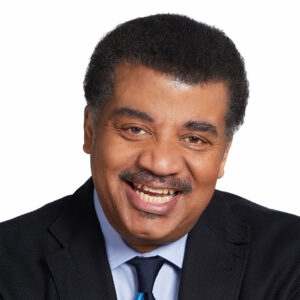
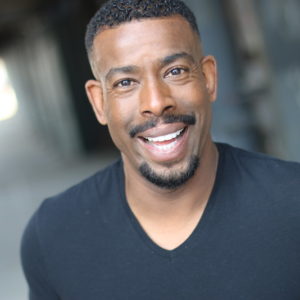
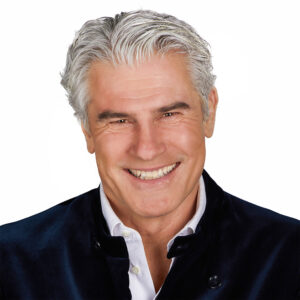
Why do we die? Do we have to? Neil deGrasse Tyson, Chuck Nice, and Gary O’Reilly explore the paradox of death, the science of aging, and the search for immortality with Nobel Prize-winning structural biologist Venki Ramakrishnan, author of the new book Why We Die: The New Science of Aging and the Quest for Immortality.
What do we mean by death? We discuss the paradox within death: that an organism’s cells can be alive, but the organism itself could be dead. Is death a lack of brainwaves, a stopped heart, or the irreversible loss of biological coherence? You’ll learn how cells die to keep you alive, how the boundaries between life and death are fuzzier than you think, and why aging might be more like a slow unraveling than a clear biological switch.
We then dive into the cellular machinery of how proteins deteriorate, how DNA and mitochondria accumulate errors, and how senescent cells, meant to prevent cancer, can fuel inflammation and disease. Could reprogramming these cells help us reverse aging? You’ll hear about the latest in anti-aging research, from fasting and caloric restriction to rapamycin and regenerative medicine. Why don’t humans live as long as Greenland sharks, which live 500 years? We look at species that live far longer than humans, and ask: are we biologically programmed to die, or is it just a side effect of evolution focusing on reproduction over repair? Does evolution care if we die?
As we close, we explore the social consequences of longer lives. Would a world with little generational turnover be more stable or more stagnant? Can we separate what’s good for the individual from what’s good for society? And finally, from a cosmic perspective: does knowing we die give life its meaning?
Thanks to our Patrons Erick Schnell, Joey T, Nick Fortin, Karen Harbert, Jacob Kirkpatrick, Gunther Hammel, Frankie Blooding, Cynthia Maloy, Davlat Sirojitdinov, Abram Pousada, Adam Wyler, Greg Anderson, Soleful, Vlad lucha, Arvind Sridhar, thomas maigler, Morgan Wireman, Robey Neeley, Isaiah Fox, Volodymyr, BB, Eric Hilgendorf, Gabe B., Josh Emery, Devon Hen, Tiffany Alisa Boggs, Carmine Ciccone, Armstrong Manhães, Chris Sedunary, Chihiro, Roberto Medeiros, Sanaz Mitchell, Greg Wilson, Robert, Matthew Synco Sr., Meiby Yeras, Juraj Belanji, Katherine Yarbrough, Pedro, Sarah Lippert, Conor Doherty, Evgeny Semiletov, Ranjana Ranjana, Umar Cheema, ashwin patti, Grant Norman, Starry-eyed mama, Bob Rueter, Andrew, Peter Rhomberg, Brent Linford, and Dominic Consiglio for supporting us this week.
NOTE: StarTalk+ Patrons can listen to this entire episode commercial-free.
Transcript
DOWNLOAD SRTWhy are you bumming us out with a topic on why we die?
Because we have a Nobel Prize winner as our guest.
Dude, we have a comedian?
It’s a happy show.
It is a happy show because we’re not talking about me dying on stage for once.
Coming up on StarTalk, How and Why We Die.
Welcome to StarTalk, your place in the universe where science and pop culture collide.
StarTalk begins right now.
This is StarTalk.
Neil deGrasse Tyson, you’re a personal astrophysicist.
This is Special Edition, which means we’ve got Gary O’Reilly.
Gary.
Hi Neil.
Hey.
And we got Chuck Nice.
Hey, hey, hey.
Okay.
What’s happening?
As Special Edition specializes in all science that matters to the human condition.
Yes.
And today’s topic is no exception.
No.
And may I give the title of it?
Please do.
Why We Die.
Dun, dun, dun.
Why We Die.
Well, I have no expertise in that other than simply being alive.
Right.
But I fear death because I’m born knowing only life.
Wow.
Look at that.
Yeah.
I got that from a movie.
Oh, okay.
That’s okay.
So, Lynne and I are co-producers on this.
Lynne, answer us.
Our LA producer for StarTalk.
We have long wanted to investigate this subject matter.
You want to investigate it, but not firsthand.
No.
You want first-hand data.
More an observation.
More an observation.
So, if you put it this way, Humankind has for millennia asked, why do we die?
Followed by, well, why can’t we live forever then?
And then…
It’s kind of the same question.
Yeah, but there aren’t different people.
So, has evolution programmed us to expire on a certain date?
Could we extend the game?
Cheap death, play God, if you wish.
Millions, if not billions, are spent annually on anti-aging, be it research or products.
Billions of dollars.
Yes.
And so, how close are we to unlocking the mystery of death?
So, no surprise that the research into proteins is proving to be the key to this mystery.
So, the building blocks of life may hold the key to death?
How about that?
Oh, good sentence there.
Very good, Chuck.
So, we have the world’s expert on this very subject.
And this is Venki Ramakrishnan.
Venki, welcome to StarTalk.
Thank you.
Excellent.
And you are now based in Cambridge?
Yes.
England.
Say it.
I knew you had to fix that.
It wasn’t really necessary.
It’s always Basher Britt Day here.
Yeah, it is.
It is.
But we do it lovably.
We do, yeah.
So, you run a small group, but it used to be bigger, because you’re winding down in your career.
A program leader at the MRC?
That stands for Medical Research Council.
Lab at Cambridge.
Yes.
And it specializes in bio…
Molecular biology.
Molecular biology.
That’s the MRC Lab of Molecular Biology.
Okay, okay.
Our name is what we do.
But that’s like the least of your resume here.
So, in 2009, you were awarded the Chemistry Nobel Prize.
Wow.
Why?
Are you wearing it under your shirt right now?
No.
Because that’s serious blank, you know?
Honestly, I would be like the Flavor Flav of Nobel Prize winners.
I would never take it off.
So, former president of the Royal Society, very important organization that basically the first, we think the first in the world, to organize the ideas and publications of scientists to make it a clearinghouse of peer review.
First peer review papers.
Also, it advocated evidence-based science in the 17th century, at a time when authority mattered a lot.
And they said, authority doesn’t matter, beauty doesn’t matter, it’s evidence that matters.
Very enlightened and important posture.
And then you got knighted in 2012, that’s three years later.
And do they knight with an actual sword?
Yes, but I think it’s blunt.
Well, let’s just hope.
You want it to slip up, if there’s a little sort of jiggle in the wrist.
We wanted to make him a knight, it turned into an execution.
Who was on the other end of the sword?
Yes.
It was Princess Anne.
Oh, cool.
Cool.
We love Princess Anne.
That’ll work.
Yeah, yeah.
Also, you have a book.
It’s your second book, first one in a few years back, The Gene Machine, but what we’re especially interested in now is Why We Die.
And give me the subtitle of that book, Why We Die.
It’s called The New Science of Aging and the Quest for Immortality.
Well, let’s dive right in, because you are our world’s expert in this.
And before we can define death, I guess we should kind of define life and then learn what it is that ceases in life, that then brings death upon it.
Well, defining life is very hard.
You could almost say, quote Justice Potter Stewart, as I can’t define it, but I know it when I see it.
Spoken of, maybe you don’t know.
Pornography.
Because it’s America.
He said that of pornography.
But the fact is, life, most biologists would define it as a system that can self-replicate and evolve.
And at least in our world, it’s carbon based.
But when we talk about death, it’s a little complicated because there are many different kinds of death.
You can have societies dying, cities dying, nations dying.
You can have companies dying.
But what we’re talking about is the death of the individual, which has the organism of an individual animal or organism.
And there’s a peculiar paradox there because while you’re alive, I mean, right now, millions of cells and you’re dying, you don’t even notice that.
Okay.
That’s cell death.
Why you got to tell me that right now?
No, they need to die in order to keep you alive.
Oh, that’s how he got out of that.
Thank you, dead cells.
To make room for the new cells.
To make room for new cells, actually during development, cells will die at precise points during development.
They’ve done their bit and then they have to get out of the way.
When you say development, you mean embryonic.
Embryonic development, correct.
At the same time, when you die, when you say a person has died, at the point of death, most of you is still alive.
That’s why you can donate organs.
Right.
Okay?
So there’s the other side of the paradox.
Interesting.
So, what do we mean by death?
Okay.
You’re going to have, by the way, since you’re an astrophysicist, you’re going to have death of the universe as well.
And there’s a book coming out on that or has come out.
So the question is, what do we mean when an individual dies?
What we mean is the irreversible loss of that individual’s ability to function as a coherent whole.
So that means that person can no longer exist as a unit.
And that’s what we mean by death.
And are you talking physiologically this person cannot function as a unit because there are people who experience brain death or to an extent and they keep them on a respirator because a family member says, I don’t want them to die.
So there are two examples coming out of Chuck’s point.
You can be brain dead but sustained on a respirator.
So all your organs are working.
Or you can be body dead, I suppose, and in the limit it’s like your brain in a jar.
Whatever.
No, that’s more like a point of pre-sync.
What you said can’t happen because if your body’s dead, then it can’t feed nutrients to the brain to keep it alive.
The brain is the biggest consumer of resources.
So coming back to your point, though, about brain death, that’s interesting because it used to be that if your heart stopped beating, that was the moment people said you’re dead.
Then they found out that actually, even if your heart stops beating, they can resuscitate you.
But then they decided, OK, when you no longer have brain waves and your brain has irreversibly stopped, that’s brain death.
And that’s an interesting case.
States in the US used to have different definitions of death.
And there was a case where somebody died in California, but her relatives wouldn’t accept it.
And by New Jersey laws, she was not dead.
So they moved the body to New Jersey.
And she was maintained, as you say, on some sort of artificial device.
And then eventually she died.
But this is slightly getting semantic because most people will agree that there’s a point when the body cannot reverse itself and get back to being alive.
Yeah, but that’s a statement of the limits of medicine in the dead.
Today.
Right.
So I remember, I mean, I read this, that one of the definitions of death is if you do not fog a mirror held up to your mouth.
Yeah.
And I’m thinking…
That’s respiratory death.
That was a long time.
I’m thinking, you know, I’m glad that’s not when I’m alive.
I mean, I’m just thinking, thank you for…
Right.
Thanks for not being alive back then.
Because I’m a light sleeper.
Okay.
So that tells me that however real our current definitions feel about when someone dies could be modified in the near or distant future.
Absolutely.
And neither birth nor death are very clearly defined.
And I’ve pointed this out that they’re both somewhat fuzzy.
I mean, when is it that you actually are you at birth?
And that’s the whole argument about abortion and all of that is just about that.
And similarly, the point of death is also a little fuzzy.
You.
Yeah.
That’s wild.
Yeah.
So the bit in between is aging.
The bit in between is aging.
And unfortunately for us…
The little bit in between.
Your whole life.
I may have downplagued that bit.
And in fact, you start aging even in utero.
Interesting.
From the time you’re conceived, you know, you’re fertilized eggs starts to proliferate.
Is that why all children are born looking like old men?
Like Winston Churchill.
So that’s even earlier than a loaf of bread.
Cause you know when a loaf of bread starts aging?
No.
Right when you take it out of the oven.
Yes.
Exactly.
Okay.
In that moment, it starts getting old.
Right.
Right.
But here.
This is in the oven.
In the oven, you’re getting old.
Look at that.
Forgive me, as an astrophysicist, I hear talk of cells, but then I also hear talk of proteins.
So could you distinguish the two of them for me with regard to the role of aging?
So aging is, you can think of aging as an accumulation of damage and changes to our molecules, our cells, our tissue, and entire organs and the body.
And this aging occurs at every one of those levels.
So if you think of the molecule that holds all the information necessary to make all of the other molecules in the cell, that’s our genes, our DNA.
So DNA can be damaged.
It can also change, which is not exactly damaged, but it can be modified as we age, typically by adding chemical groups to it, often methyl groups.
What is gene editing?
It’s epigenetics.
It’s not editing as such.
It’s not changing the bases.
It’s not changing the letters of the DNA.
That would be gene editing.
That would be gene editing.
This is epigenetics, which means sort of on top of genetics.
Like the epicenter of an earthquake is the point on our surface above where the…
Right, and so you can modify DNA, and that changes the way in which the program is expressed.
So which genes are translated into protein.
So this is the playing god part, because now you are changing the…
No, we’re not doing anything.
This is happening.
This is happening even in utero.
Experiential circumstances can change our epigenetics.
So it’s part of…
It’s just part of life.
And it evolved for probably a very good reason.
Mainly, it may have been a cancer prevention mechanism early in life.
We can get into why we have death from an evolutionary point of view.
But nevertheless, the DNA program itself ages.
You know, damage and modifications change the nature of the genes that you’re expressing.
Then, that results in the proteins, which are encoded by DNA.
These are the workhorses of the cell.
They carry out all the function.
They give the cell its structure.
Almost everything you think of as a property of life, like vision or touch or antibodies, they’re all proteins.
And they’re all encoded by DNA.
But as we get older, the quality of the proteins deteriorates.
They’re not made at the right time and the right amount.
They start aggregating.
Alzheimer’s is a case where proteins clump up together and form tangles.
Yeah, in the brain.
So that also is a consequence of age.
And as a result, things in the cell, larger entities, like compartments in the cell, also start to age.
One of them are mitochondria, which are…
Mitochondria were actually bacteria that were swallowed up by a larger cell two billion years ago, and then lived in symbiosis.
And now, today, mitochondria are specialized as the centers for energy metabolism.
It’s where oxygen is used to burn sugar effectively and get energy out of it.
So it’s that kind of chemistry going that far back that accounts for our genetic similarity to life forms that are nothing like us.
Like the, you know, we’re something like 25% identical genes to a banana.
Yes, yes.
All eukaryotes came out of that.
Yes.
Out of that symbiosis.
Okay.
And so you can think of this as an ancient organelle that’s now specialized.
And because it’s a center for oxygen usage, it can create what are called free radicals or reactive oxygen species, because these are partially reduced oxygen atoms, which are chemically very reactive.
So you can have a lot of damage.
If it’s fully reduced, that means all the oxygen is where it becomes water.
And then you can’t, there’s nothing else that can happen.
Carbon dioxide and water is what you get.
Yes, it’s fully reduced.
Partially, it’s basically activated.
It’s activated.
Correct.
And it can do things.
And it does damage.
Yeah, and so it can cause damage.
And mitochondria have preserved a little bit of their own genome.
They used to have a much larger genome when they were bacteria.
But now that genome has shrunk.
In humans, they only encode 13 protein genes.
But they’re essential for the function of mitochondria.
And the mechanism to replicate that DNA, to copy that DNA as mitochondria divide, it’s not as accurate as the mechanism for our own DNA replication.
The more errors creep in.
And so mitochondrial aging is a big problem with our aging.
Is that a single point of failure in terms of the aging?
It’s not a single point.
I think aging…
He’s blaming it on the mitochondria.
Yeah.
Like, aging is like a cascade failure.
But I do like to say that the reason my grandson has a lot more energy than I do is because he has much better mitochondria than I do.
Something’s going on with the mitochondria for your skin because your skin’s perfect.
I don’t know how old you are, but, you know, clearly I look at your hair and I’m like, okay, this guy’s old.
But I look at your skin, I’m like, but he stole his skin off of a teenager.
Black don’t crack.
That’s true.
Black don’t crack.
And that includes the subcontinent.
I think you’re absolutely right.
Yeah, it does make a difference.
It’s the dark skin.
It’s the dark skin.
Yeah, it’s just melanin.
Yeah, it’s just melanin.
At the end of the day.
Okay.
So this reduced chemistry that makes it chemically active that could not have been useful before Earth’s atmosphere became oxygen rich.
That’s right.
So we had, so that-
And that happened because of the cyano what?
Yeah.
So cyano bacteria basically turned a carbon dioxide atmosphere into one that had a presence of oxygen.
And then anything that needs oxygen can-
Can thrive.
Can now thrive.
But it couldn’t before then.
So that helps age date or time date, I should say.
It’s about two billion years.
That helps time date these activities.
Yeah.
That’s the watershed moment for-
Ooh, very good.
Yeah, look at you.
The watershed.
I like that.
That was good.
So there’s something called senescent cells, where they age and they secrete these sort of inflammatory compounds.
So senescent cells are another, I mean, I said you can have aging at every level.
And aging at a cellular level is often due to senescence.
And senescence is interesting.
It may have evolved originally as a anti-cancer mechanism or as a mechanism to get rid of defective cells.
So what happens is, if a cell gets DNA damage, it has a number of enzymes to repair the damage, to sense and repair the damage.
But if the damage is too extensive, then it triggers pathways to either kill the cell, commit suicide, or to send it into the state called senescence.
That can also happen due to other kinds of stresses.
And what senescence cells do is, they no longer function normally, and they no longer divide, but they secrete inflammatory compounds.
And the purpose is to signal to the immune system that there’s something wrong here, come and repair the damage around the site.
Maybe it’s a wound or an infection or something.
They call it the cavalry.
And exactly, call it the cavalry.
So it has utility.
It has utility early in life.
Until it doesn’t.
But later in life, you get too many of these events.
Buildup of senescent cells, systemic inflammation, which causes organ damage, more senescence.
And so it’s a big problem in aging.
Wow.
Yeah.
And that’s why you see so many medical reports now that talk about the dangers of inflammation.
Absolutely.
Totally.
Like it doesn’t make a difference what kind of inflammation.
The idea is to eliminate inflammation as much as you can, no matter what.
Sure.
And actually, people know, for example, in the COVID pandemic, the cause of death is often triggered by inflammation, not by necessarily directly by the virus itself.
So it’s the cytokine storm that was created as a reaction to the virus itself.
Cytokine?
Cytokine.
Please explain.
Cytokines are, if I’m not mistaken…
Or we can get him to answer.
Oh, can you answer that?
Yeah, because I’m not an expert.
I’m not an immunologist.
But yeah, so the cytokines was released when we respond to what our body thinks is an attack on us.
And sometimes it goes in overdrive.
It goes in overdrive.
Yeah.
Are we anywhere close to being, or is this the epigenetics thing where we can deal with these senescent cells?
No, but there is a new field emerging, which is cellular reprogramming.
Oh, yeah.
That sounds sexy.
So to explain that, if you start from a single fertilized egg, it divides into many cells, becomes something called a blastula, and then, or a blastocyst, and then it divides further and further, and then forms specialized stem cells, and each of those specialized stem cells give rise to certain kinds of tissues.
Right.
Okay.
So some stem cells will only generate cells of the blood system, including white blood cells, red blood cells, and so on.
That used to be thought of as unidirectional.
You go, you can’t go backwards.
You can’t go back from a skin cell back to a fertilized egg or an early embryo.
But that turned out not to be true.
Okay, and actually, it was done in a natural way when Dolly the Sheep was cloned.
But actually, even earlier, when John Gurdon cloned the skin cell of a frog and cloned an entirely new animal from it.
Wow.
And that meant that somehow these marks on the DNA had been erased or changed.
Just historically, that completely changed the public dialogue about our source of stem cells.
Right.
Because we only were getting them from aborted fetuses.
Blood, yeah.
From fetuses.
From fetuses.
And so that was a complicated ethical issue for many people.
Right.
And then once this, that blew open that whole field.
Right, well, that wasn’t Gurdon and Dolly the Sheep and others, but it was actually Shinya Yamanaka, a Japanese scientist, who showed that if you were to introduce just four factors, these are genes for proteins that regulate other genes.
Got you.
If you were able to introduce those four factors, you could take a fully differentiated cell, like a skin cell or a liver cell or a heart cell, and you could make it go backwards in development all the way back to what’s called a pluripotent stem cell.
Pluripotent means it can make any tissue.
And so that eliminated the need for what you said.
Did he not win a Nobel for that as well?
He better had.
He and John Gurdon shared a Nobel Prize.
And here’s an interesting thing.
John Gurdon’s paper for which he won the Nobel Prize was published the year Shinya Yamanaka was born.
No.
Wow.
That’s how far apart they are in age.
And all that time, all that work, and then he just comes along and takes credit for it.
Look at that, would ya, look at that.
We’ve had sort of variations of this with David Sinclair, who had a guest as a guest, took mice that were blind.
Correct.
It sounds like a nursery rhyme.
Three of them.
Three of them.
You did it, didn’t you?
Somebody had to go there.
You did.
Go, go.
And turned them into sight, cured their blindness.
Yeah.
So, I mean, if that’s the case, how far are we from?
I would say it’s early days.
Yeah.
Okay.
I can tell you that I’m aware that this has happened, and then my question is just the distance between this and doing other things on a grander scale.
Mine’s the one thing larger primates.
Yeah, and curing blindness.
It’s a little further down the line, is what you’re saying.
But the idea is we do have, would you say we now have a, not a blueprint, but maybe a template that we know we can take these programming cells and use them to maybe change our makeup?
I think the biggest use of that is in something called regenerative medicine, where if you want to replace tissue that normally can’t be replaced, for example, damaged heart muscle and heart attack, or pancreatic tissue, which has been destroyed and you have diabetes, or cartilage, for example, for osteoarthritis.
And maybe one day I’m hoping even hair.
So, if you can…
It looks good on you, though.
Very few people can pull this off, okay?
Anyway, so if you can do that, regenerative medicine is a huge area of research, and they’re making good progress in some things.
Just to be clear, I’ve always been disappointed in humans for not being able to regenerate limbs the way newts do.
Exactly.
That’s because newts have stem cells all over their body.
All over their body?
Just their whole makeup, I’m saying.
Yeah, it’s spread out throughout, and so they can, or starfish, for example.
We’re old enough to remember, reading biology books, humans are the top of the evolution, back when we spoke that way.
Unless you lose an arm.
Unless you lose an arm.
I went through the list of all the other animals that do things way better than we do, and I quickly re-read.
It’s not a short list.
It’s humbling to know that we have about the same number of genes as a worm or a weed.
Right, so.
Yeah, there you go.
You put us in our place.
Anyway, but going back to stem cells, the thing with aging is, can you take a fully grown or an aged-in visual, apply these kinds of factors, and get their tissues or their stem cells to be regenerated?
Because one problem with aging is that our stem cells also age.
They decline in number and in quality.
So if you were able to take, use a method that would somehow either rejuvenate tissue or actually regenerate stem cells, that would be a big thing.
And people have done experiments to do this kind of thing in mice.
And they say that the mice, I mean, the papers report that the mice look healthier.
They seem younger by many criteria and so on.
But how to do this safely?
And the bald mice, did they get hair back?
No, but their fur looked better.
Oh, okay, that’s not bad.
So the question is, how can you do this in humans in a way that’s safe, that doesn’t cause cancer, that is at the right dose and so on?
And that’s a big challenge.
So I think it’s promising, but like many of these things, the aging field, I should say, is full of hype.
And it’s very promising, but there’s a lot of work to be done before it’s ready for prime time.
Are we at this sort of Frankenstein moment?
I mean, you’ve done a Frankenstein show before with, let me get his name right, David Andrasevich.
You know, the cells will, you’ve said there can be death to the organism, but cells will remain alive.
And now we’ve got the Yamanaka factors.
Are we getting to that thing when we can create, or are we just fantasy talking here?
You mean create a new individual or the same individual?
Well, the same individual.
You could certainly clone yourself.
That’s theoretically and practically possible.
They’ve cloned all kinds of mammals.
There’s no reason why they can’t clone a human being, except that all countries have decided that’s a bad thing to do.
But that’s not the same as rejuvenating the same individual.
Right, right.
Which, by the way, for selfish purposes, rejuvenation is a hell of a lot better than cloning.
Because that clone is not me.
Exactly.
People forget that.
Yeah, and there’s all this fantasies in the multiverse where you have an infinite number of possible molecular outcomes of all organisms.
They’re imagining themselves in another universe in a way being reincarnated and living forever.
Right.
No, that’s a different person.
No, that’s just a different person in a different timeline.
And by the way, these transhumanists, people who think that they’re going to dump their brain into a computer and then maintain their consciousness, a simple question to ask is, what if you make two copies of it?
Which one’s the real you?
And they immediately have a paradox.
Absolutely.
The copies that you make will be of you of that moment, but you’ve in the timeline of still proceeding, they would be stuck with you.
You still get to go to the beach and have friends and your brain in a jar does not, right?
Oh gosh.
Or your brain in the silicon chip, right?
It’s you from whenever you created it.
So I heard long ago and I checked it out and I think it’s true that all mammals live for about the same number of heartbeats except for humans who live two or three times that.
Except if you go back far enough in time when we were just living in caves, we were right with all the rest of the mammals.
So first, is that true?
Second, there are animals not mammals that live much longer than we do.
I’m thinking of the Galapagos tortoise, for example.
So do you guys study other animals to get insight?
So there is a whole field devoted to looking at lifespan of different species.
And you are right that at least among mammals, Jeffrey West, who’s written a book called Scale, shows that the number of heartbeats is roughly the same.
That has to do with the fact that smaller animals have a higher metabolic rate.
They have a faster metabolism.
And they almost need to because their surface to volume ratio is larger.
They dissipate heat more.
We did a whole explainer on surface to volume ratios.
And so they need to maintain a higher metabolic rate.
That’s one of the reasons.
Well, that’s only one of the reasons why they have a higher heart rate.
That’s not a reason why they should die sooner.
Ah, the way we should die sooner has an evolutionary explanation.
And that is evolution doesn’t care how long you live.
It only cares about fitness.
Fitness in the biological sense is the likelihood that you’re going to be able to successfully pass on your genes.
And people always misinterpret that as being physically fit, or stronger, or whatever.
Survival of the fittest, as in, I’m in great shape.
Yeah, George should have found a different word for that.
He should, yeah.
So, evolution cares about fitness.
Now, at the same time, for most of our history, and certainly the history of all other species, resources are limiting.
And so, you have to select, do you put more of your resources into maintenance and repair of the individual animal, or do you put it into growth and reproduction?
There’s always a balance if you have limited energy.
So, in the case of a mouse, which lives about two years in the wild, there’s no sense in having a mouse live for 40 years, because long before that, it’s going to be eaten.
Yep.
Exactly.
You beat me there.
Or it will die of starvation or a drought or something.
And so, in the case of a mouse, evolution has favored selection of a species that grows very quickly and reproduces prolifically.
That’s a mouse.
If you get to a large animal like a bowhead whale, let’s take an even bigger than an elephant, they can live for two, three hundred years, and they have a very relatively slow metabolism.
An even slower metabolism is not a mammal, but it’s still a vertebrate called the Greenland shark, 700 years.
A vertebrate living for 700 years, very slow metabolism.
Wait, wait, wait, wait, wait.
How do you know that?
We didn’t even have marine biology 700 years ago.
They can do things like carbon dating and look at the tissues.
They cut one open, it was 700 rings.
It’s so, I mean, you’ve got on the same…
Okay, I’m just weird.
So, you’ve got the mayfly lives a day.
Mayfly lives a day, exactly.
And in between that, you’ve gone from there to a Greenland shark.
And your Galapagos…
And there are actually other animals that are thought not to even age biologically.
What’s the immortal jellyfish?
Like the hydra and the immortal jellyfish.
These things have…
Wait, there’s an actual animal called the hydra?
Yes, that’s right.
Awesome.
Not just in…
Not just in GI Joe?
No, in…
Oh, no, Marvel.
No, no, in Greek legends.
Oh, you mean the real hydra.
Yes.
This is a freshwater, a small animal.
And they’re full of stem cells, so they’re constantly regenerating themselves.
But if you followed an individual, it would also age only very slowly.
It’s just in the wild, it dies for other reasons before actually aging.
So, there’s a whole range.
So, humans might be the only species that dies of natural causes in the world.
I mean, if you want to think about it that way.
Possibly, you know.
We’re apex predator.
Yeah, I think that may be true.
In fact, there’s a book written by Stephen Ostad called Methuselah’s Zoo, which is where he talks about all these animals.
And he talks about it.
Methuselah’s Zoo.
Love it.
It’s a great book.
So that reminds me, because Methuselah’s the oldest person in the Bible.
Right.
In the Old Testament Bible.
The oldest star we know of in our galaxy is called Methuselah.
It’s called Methuselah.
Yeah, right.
So Methuselah had a lot of influence.
Yeah, and that star, too, is lying about its age.
Who knew that?
Anyway, in this book, he points out…
Methuselah Zoo.
In Methuselah Zoo, he points out how all these species have such different lifespans.
And it’s because of this evolutionary selection, but it’s actually worse than that.
The fact is, evolution will select for things that help you early in life, even if they cause a problem later in life.
So many of the things that cause aging are related to growth, for example, or to cancer prevention, prevention of our senescent cell creation.
These things all help us early in life, and they’re a problem later in life.
But evolution doesn’t care what happens to you when late in life.
When you’re not making babies.
Exactly.
Because that’s the whole deal.
So what helps us survive in infancy and then go on to reproduction is the key component of our decline and demise.
Not always.
Not everything.
But there are things that happen to us early in life that are selected for early in life that cause aging.
So the real deal is just keep having babies your entire life and then you’ll never age.
However, you will eventually kill yourself because of these kids.
So we’re an outlier.
We’re an outlier.
We live about twice as long as we would based on our size.
But only post caveman life, right?
Yeah, 40,000 years.
Exactly.
So only, I mean, half of everyone died by 30.
And so we’re not 2X other mammals at our size.
Yeah.
And one last thing is there’s a group of animals, mammals, the bats, they live much longer.
They’re about the same size as a mouse in terms of mass.
A flea or a mouse?
They live about 10 or 20 times as long as a mouse.
And the reason is they can fly around.
So that means two things.
They can escape predators more easily.
Right.
And they can also forage over a much wider area for food.
And when they roost, they’re roost in ceilings of caves, so they’re not as accessible to predators.
They’ve been designed to survive longer.
And so there it’s worth it for evolution to make them live longer, because they’ll keep producing more babies.
Yeah, so you got to be grandpa Munster.
It’s basically the deal.
Grandpa from the Munsters.
The grandpa from the Munsters if you want to live long.
Sleep hanging upside down away from predators.
So if we’re looking at aging, we all do it, can’t help it, more or less, what have been the attempts to reverse the aging?
I’m not talking potions and lotions here.
So let’s go through the laundry list.
The sort of young blood transfusion.
How successful has that been?
It’s not incredibly successful, but the science underlying it is solid.
If you connect an old rat with a young rat, by that I mean you connect them so that their blood systems are joined.
They’re in the same circulation system.
Exactly.
Then it turns out that the old animal benefits from the blood of the young animal.
But even more so, the young animal suffers from the blood of the old animal.
Wow.
And so, this means there are factors in blood that change as we age.
Such a thing as old blood.
Exactly, or young blood.
I call it vampire blood.
Yeah.
So, that’s the signs.
And the research is now about finding out what these factors are, what they do.
And once you know that, you might be able to figure out whether you can use them to our benefit.
But people have not waited for that.
What’s happened is, the very first time these people from Stanford, Rando and others, published this, they got creepy phone calls from rich people asking you.
Like Keith Richards.
And companies started sprouting up, getting blood from young donors and extracting the plasma and selling them up at $8,000 a pint or something to rich old people.
And one of them, the FDA, wanted to shut it down, and then they sprouted up under a different name.
And so the whole thing was like the Wild West.
But there’s real science under it, and that’s an on-going area.
Okay, stem cells we’ve kind of addressed as to how you can, through the Yamanaka Factors, dial up dial down.
And that’s, I would consider that-
Yamanaka.
What is the Yamanaka Factor?
The Oscar-winning, where he sort of can dial back-
Oscar-winning?
Yes, Oscar-winning.
He was a bloody good actor.
He was an unbelievably good actor.
A Nobel Prize winner.
Okay, that guy, thank you, okay.
The Nobel Prize winner.
You get the prizes straight here.
Okay.
The calorific restriction or caloric restriction.
Yeah, so-
Which is basically fasting.
It is.
It is.
So lots of experiments starting in mice, but now also in flies, worms, even in single-celled animals like yeast.
If you reduce the amount of calories, it turns out that you can-
the animals live longer, but more importantly, older animals start resembling younger animals in terms of their physiology and their biomarkers.
And so the question is, can you mimic caloric restriction?
And it turns out that there are many important biochemical pathways that are affected by caloric restriction.
One of them is the IGF-1 insulin growth hormone factor.
Just to be clear what you’re saying, you wouldn’t have to imitate calorie reduction.
You could just consume fewer calories.
So what you’re trying to do is, we can still eat our cheeseburgers and the blueberry pie dessert, and then you hijack what would be the starvation mechanism biochemically.
Exactly.
That’s intermittent fasting.
Yeah.
But I don’t have to fast.
Is this the GOP wild-droid?
Oh yeah, the whole point is not to fast, just to restrict you.
No, no, no, no.
Did you get what I just said?
No.
What he’s saying, that’s why I paused on it.
Have your cake and eat it.
Say you have your cake and eat it too.
Eat it too.
Yes, but explain your point again, because I missed it.
Okay, so the point is, what he said, he just slipped it in, but I caught him.
Okay?
He’s saying fasting will prolong your life.
Absolutely.
So can we find a way to mimic the biochemistry of that in your body?
We can.
And the word mimic in that sentence means still eat the cheeseburger, but do what the fasting would have done to your biochemistry.
I see what you’re saying.
Have your cake and eat it.
But you’re doing it artificially, is what you’re saying.
In my book, I call it eating your blueberry pie and ice cream and getting the benefits of it.
Nice.
And still getting the benefits.
Wait, so have we done this?
No, well, there are some drugs.
Okay.
No, no, I’m not working on it.
He’s like, I’m out this game.
I should say.
He was like, did you see?
Venki, the way he just went like this.
No, no, no, not me.
Venki, try to keep me working.
I’m telling you right now, I’m out.
But if you do know how to do it, tell Chuck, because he’ll set up a company.
There are lots of companies.
That’s a problem.
So anyway, one of the drugs that does this is called rapamycin.
It’s the darling of the anti-aging research community.
This is the Easter Island find, isn’t it?
Easter Island is where it was found.
Yeah, rapamycin.
Okay, let’s do it.
So rapamycin was found in the soil of Easter Island from bacteria in the soil of Easter Island that produces compound, which turns out to be an anti-fungal compound.
And then they found out that it may have some properties against cancer.
And then eventually they found out that it actually is an immunosuppressor.
And that’s what made it get FDA approval as an immunosuppressive drug.
Then, much later, it was found in a completely different place.
It was found that it shuts down a major pathway in the cell.
And that pathway is related to the, it’s a pathway that senses nutrients.
So it’s related to caloric restriction.
People then said, okay, let’s see what happens if you give rapamycin to mice and mice lived a bit longer or seemed a bit healthier.
However, rapamycin is an immunosuppressive drug.
So it’s going to make you more prone to infections.
Like steroids.
And it has other side effects as well.
So the question they have is, can you adjust the dosage so you get the benefits against aging without the problems of immunosuppression and so on?
And that’s still, the jury is still out on that.
Yeah.
Okay, now there’s also relativity, where you can slow down time for yourself.
Oh, well that’s going into space though.
Yeah, well, right.
That’s one way to defeat aging, right?
However, you are still aging.
Right.
In your own body, one second per second.
Right.
The difference is, all your friends are aging faster than you.
Much faster.
Right, right.
So you’re not going to live older than you would have as an organism.
Right.
You’ll just live longer than everybody else.
Exactly.
Isn’t that the case?
When you were turned, all your friends would have been dead.
They’d be dead.
The Kelly twins, they did the experiment once.
Oh, yes, yes.
We had one of them on this program.
Yes.
Scott Kelly, astronaut who went up.
That’s right.
And his brother stayed here.
Brother stayed here.
They’re identical twins.
And you can calculate how much younger one would have been, like a fraction of a second.
That’s what he gained?
He gained half a second, huh?
Does it show?
So basically, yeah.
So excellent.
I don’t remember the fraction, but they were not going so fast that the speed of light, time dilation.
That is the definition of sibling rivalry.
The most expensive anti-aging regimen ever.
So, as you surely know, in physics, we speak of this thing called entropy, where left to itself, a system will always degrade to lowest energy, highest disorder.
The key is left to itself.
Yes, yes.
So we can create any manner of complexity on Earth because we’re not a closed system.
We’re open to the sun.
So the sun is gaining entropy by helping us out.
Eventually, it’s going to die and nothing is going to help it.
Right.
Right.
So, do you guys in molecular biology think of entropy?
There’s no question that entropic forces exist.
But of course, living systems all use external energy to keep it alive.
And part of the energy is used to do this maintenance and repair of the damage.
But it never, it’s not perfect.
And so eventually, even if you keep repairing DNA damage, repairing cells, getting rid of defective cells, all of that stuff which takes energy, it’s not perfect.
And eventually, the system gradually decays.
But it means it decays at different rates for different species.
Interesting.
Or different parts, different systems even within your own body.
Oh, that’s something that you, very interesting.
So, if you were to, people were to analyze your different organs, they’d find that they all had different ages.
Yes.
To say someone’s biological age is a number.
Different ages mean different time distance from its birth to its death.
Correct.
Because obviously, it’s all physically the same age.
Physically, chronologically, it’s the same age.
But physiologically, they’re different ages.
But it doesn’t make a difference, because if I got an old heart and a young pancreas, I’m still going to die.
With a heart issue.
With a heart issue.
So that was always what I suspected, that people who live very long, all of their organs somehow are aging at the same rate, physiologically.
Well, I don’t know if that’s true, but maybe they’re still aging differently, but the lead organ, the organ that’s aging fastest, is still slower than other people.
Right.
Right.
If they die, it’s not going to be from that.
So given what you just said, I didn’t put two and two together here until just now.
In the second law of thermodynamics, one of its stipulations is, if you have sort of usable energy over here, and you convert it into another kind of energy over here, there’s always energy losses.
Always.
That’s why you cannot make a perpetual motion machine.
All right, and so the body is all about converting energy of one kind into another.
You have chemical energy in food, and you turn it into-
ATP.
Yeah, exactly.
Remind us about that.
We all learned it in biology class.
The ATP cycle, is that right?
There’s ATP is adenosine triphosphate.
It’s a molecule with high-energy bonds.
So you can think of it as a universal currency, just like in our world, electricity is a universal currency.
So you use everything converted to electricity, then you can use that for everything.
And so the body uses it, so you can think of it as a kind of storable form of energy that it can use.
Right, but it’s taking energy from one thing.
Right, typically in our case, we’re getting it from carbohydrates, and by burning carbohydrates, it’s chemical energy.
It’s chemical energy.
So that energy is used to make ATP.
Got it, and anything else we make in our body to maintain our body temperature because we’re warm-blooded, to move, so it goes to thermal energy, kinetic energy, and the like.
And most of those things involve ATP.
And electrical energy.
Right, for your brain and your heart, and signaling and all that.
So I’m just saying every time you convert from one form of energy to another, you’re getting less energy than you started with.
So there is a decay in there, eventually.
Interesting, yeah.
So you describe this sort of implicit value of death to a species because it doesn’t need you after a certain point of your fertility.
We’re beyond that now, and we’re what we call civilized.
And so there are people who want to do anything they can.
To stay alive for as long as they can.
To stay alive for as long as they can.
And you’re in that business, scientifically, what is the ethics of that?
I should say, my own lab has never worked on aging.
I went from zero to expert in one book.
Oh, okay.
My lab works on protein synthesis, which is a central component of aging.
I don’t actually do aging research myself.
Okay, but surely you’ve thought about the ethics of it, wouldn’t you?
Oh, definitely, yeah.
And I also have no skin in the game, so that’s a…
Okay.
That means we can get a very truly objective…
Other than beautifully soft skin.
Right.
I missed that one.
Yeah, Chuck, I don’t want to be ahead of you on any of this.
That was a good callback.
I like it.
Chemical laws, biological laws, any in the way to stop us going from where we are now to potential immortality.
Right, so there are two issues.
One is, is aging programmed?
I mean, are we all programmed to die?
No, because evolution doesn’t care about us dying.
So, there are genes that affect aging, but those genes don’t exist in order to make us age.
They were selected for some other reason, but they happen to cause us to age.
So, now that we understand some of the biology of aging, we ask, can we extend that?
And there are no physical or chemical laws that say that we have to die at 120.
I mean, 120 is about the record for humans.
Very few reach that.
And by the way, whenever you see a 120 year old, they’re like, I am ready to go.
Oh, I’m not sure.
Not all of them.
Not all of them, but yeah.
There’s a woman, Jean Calmont, who’s the record holder at 122.
Oh, she was the smoker and drinker.
She used to smoke and drink into her hundreds.
And reporters after a while used to gather at her house every birthday.
And one of the reporters said, well, see you next year, I hope.
And you know what she said?
What?
She said, sure, why not?
You look pretty good to me.
So, but there’s no physical or chemical law that says, you know, at 120.
You gotta go.
You gotta go.
There are species, as I said, that live 700 years, vertebrates.
Of course, the question is, can we change our biology to make us live much longer and still keep us humans?
You don’t want to be a very slow metabolic animal like a Greenland shark.
You still want to be human and you want to live much longer.
Now, there are people, I would say, at the one end of the anti-aging research community, including perhaps somebody you’ve had on your show, who think that it is possible.
You can just keep extending life and that’ll buy you enough time to do more research and you’ll extend more life.
Eventually, there’s a generation that would reach the escape velocity.
Exactly.
Where the prolonging of your life is one year per year, and then you live forever.
Yeah.
Now, I’m highly skeptical, as are most scientists in this field, because aging is a multi-factorial process, and to be able to do this in a way that’s safe, that’s efficacious, that actually works, I think it’s going to be very, very hard.
Certainly, not impossible.
The Google software that uses AI for folding proteins, which won a Nobel Prize if memory serves, won’t that solve all your protein folding problems?
No, this is different from…
I think AI will have a big influence on biology, and maybe one day it will help with things like aging.
One day, 18 months from now, some time in the distant future of AI.
What time is it?
Okay.
Let’s say I’m highly skeptical, but there is no physical law.
But I’d say there’s also no physical or chemical law that says you can’t colonize other galaxies or even Mars.
And so, you know, whatever Elon may say, it’s not going to happen tomorrow.
So, I think…
And I think we should get down here, kind of worked out first.
I’m sorry, but again, why don’t we make this place habitable?
All right, so what happens the day we as chiefs escape velocity?
What happens to civilization?
I think before that, a number of things will happen.
For example, more people may live to be 100, or well into their 90s or early 100s.
That itself will cause a huge shift in society.
For example, fertility rates everywhere are dropping.
Dropping.
And so, what you’re going to have is a society…
It’s an aging of the population.
Yeah, a society where there’s very little turnover.
Same people are living longer and longer, very, very slow turnover.
To me, that means a less dynamic and less vibrant society.
If you look at the history of science or any fields, even literature, people have done their most creative work when they’re young.
And it’s not just about physiological age.
When you’re young, you’re looking at things fresh.
You’re not as opinionated.
You’re not dogmatic.
And that allows you to think out of the box.
You have to convince the old people that they’re less useful to society.
How do you do that?
Well, one of the reasons I’m retiring is because, you know, I decided four or five years ago to close down my lab.
It’s going to happen late this year.
It’s partly because I do believe that when you’ve had your time, you should step aside and let younger people carry on.
When Einstein was given the option to be operated on, basically on his deathbed, he said, no, my work is done.
My work is done.
Yeah, I would have said, what kind of doctors are you?
Save me.
What you were talking about is inverting the population pyramid.
So it goes from a small peak of aging population to a rather large one and less young people.
We are basically diving down a drain here.
But it would be more stable the whole time.
More stable.
So a stable thing would be good.
But if the turnover is very slow and people just live for very long, I mean, as people get older, they accumulate power, they accumulate wealth, they accumulate influence.
And of course, the three go together.
And that then means that it’s harder for younger people to gain entrance, to make it and so on.
To make it that way.
And that’s a real problem.
It’s a real cultural fact.
Yes.
And that’s a real problem.
We’re seeing that right now in a certain party in America where they’re like, yo, everybody who is in charge is 80 years old, get out of the way because we have a different way to do things and we want to get to it.
Interesting.
And so I think societies would be more stagnant and less dynamic and less creative.
People will always throw exceptions at me.
Oh, so-and-so was so brilliant, and don’t be late in life.
But those are exceptions.
That’s not what you plan a society around.
But here’s the problem.
If somebody gave you a pill and said, this is going to give you 10 extra years of healthy life.
Nobody wants to be sick for 10 years.
10 years of extra healthy life.
Would you take it?
I know I would, okay?
Almost all of us would.
And this is the conflict between what we as individuals want and what’s good for society.
Because at the end of those 10 years, if you’re given the option again, you’ll probably say yes again.
Exactly.
Absolutely.
Especially if it’s healthy life.
So that thought experiment takes the larger question down to its individual parts, and you realize people really do want to live forever.
They do, well, because yeah.
They do, because this is, as you say, the only life we know.
It’s our existence.
We fear the loss of existence.
And that’s the problem.
I’m about to get philosophical.
The great thing about death is that when you look at it full on and embrace it for what it is, it allows you to wake up and treat each day as something special because you know this thing is going to be over.
If you take that away, you know, I don’t give a damn.
People have said that, that having a finite life gives you the drive, the incentive to accomplish things.
Otherwise, there’s always tomorrow.
There’s always tomorrow.
Okay, so that is true.
But at the same time, there’s an old joke.
Who would want to live to be 100?
And the answer is always someone who’s 99.
Exactly.
That’s good.
So you may be philosophical about death and the abstract, but you don’t want to die next year.
Well, no, yeah, you’re absolutely right.
I don’t want to die, period, you know, because my life is pretty damn good.
So, you know, as long as-
And we’re not talking about people who are so mortally injured or ill that death feels like an escape.
We’re talking about someone who’s fully-
Who’s vibrant.
Vibrant, yes.
There’s also one aspect of aging research.
If you ask most of them, they’ll say, except for some of these outliers, they’ll say, oh, we’re not about extending lifespan.
We’re about increasing health in your life.
And the idea is that you stay healthy all your life and then suddenly, you know, crash and die.
And there’s a poem called The One Horse Open Shave.
I just learned about that poem.
It’s the horse that-
The carriage was perfectly designed so that it wore out it.
All its parts wore out equally.
Exactly at the same time.
And one minute the farmer was riding along, the next minute he was on the ground surrounded by a bunch of debris because his whole carriage has collapsed.
Now, that’s what people are asking when you say we’re going to compress the period of morbidity in old age and we’re just going to suddenly decline and die.
Nobody’s shown that that can actually happen.
Apple is working on it, believe me.
Nobody’s shown that.
So if they increase our health span, it’s equally possible that they may extend.
Good phrase.
Not lifespan, health span.
Yeah, but if they do that, if they keep us healthy in old age, it’s equally possible that they extend our lives too.
And that eventually we still have that slow decline.
You still have the-
You just reached a point where now I’m 108 and it’s all falling apart, but I’m not gonna die tomorrow.
It’s still gonna be a slow, hard, at least, death five years from now.
Yeah, yeah.
Of course, if we live forever, we need to find another planet because the population will continue to rise and we will outstrip the resources of Earth and possibly Mars, Venus and any place else we search for.
That isn’t quite true.
For example-
What?
Okay, if birthrate went to zero, then it’s not a problem.
Exactly.
But who wants that?
Well, first of all, you’re not going to have complete immortality.
You’re going to have extended lifespan.
So the birthrate simply has to fall in accordance with how much you’ve increased your lifespan.
There you go.
And in fact, if you look at Korea, South Korea, Japan, it’s happening.
People are living longer and yet the population is going down.
So Venki, this conversation has been delightful and illuminating and enlightening.
I can’t wait to die.
But you’re gonna have to.
And after we’re done with this episode, he’s gonna whisper to us that he’s 150.
On this topic of why we die, we covered so many nuances of it.
I’m left with very little to offer as a cosmic perspective.
What I will say is that, speaking for myself, I, at this stage in my life, value the knowledge that I will die because that gives meaning to every day that I’m alive, knowing that there’s one fewer days left in my future to love, to have new ideas, to make discoveries, to embrace all that it is to be alive in this world.
If you look at it mathematically, if the knowledge of death is what brings meaning to being alive, then to live forever is to live a life with no meaning at all.
If you can just put off to tomorrow what you could have done today.
Well, I think this on my deathbed.
If I’m offered a pill that can make me live another 10 years when I’m on my deathbed, would I take that pill?
I don’t know.
It’s kind of easy to talk about death when I’m pretty sure I’m not near it in this moment.
But I will say, I reserve the right to revisit the option of living a little longer when I’m on my deathbed.
But for now, knowing I’m going to die is what’s keeping me going.
That is a Cosmic Perspective.
Chuck, good to have you, man.
Always a pleasure.
Gary.
Pleasure, my friend.
All there.
This has been StarTalk Special Edition, topic, Why We Die.
Until next time, Neil deGrasse Tyson, your personal astrophysicist, keep looking up.

 Become a Patron