


 Unlock with Patreon
About This Episode
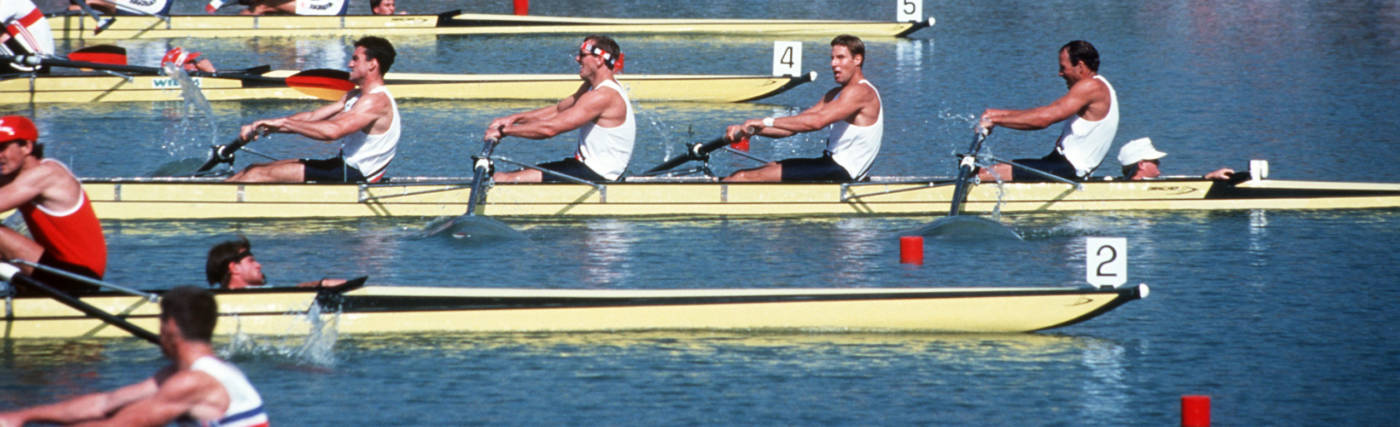
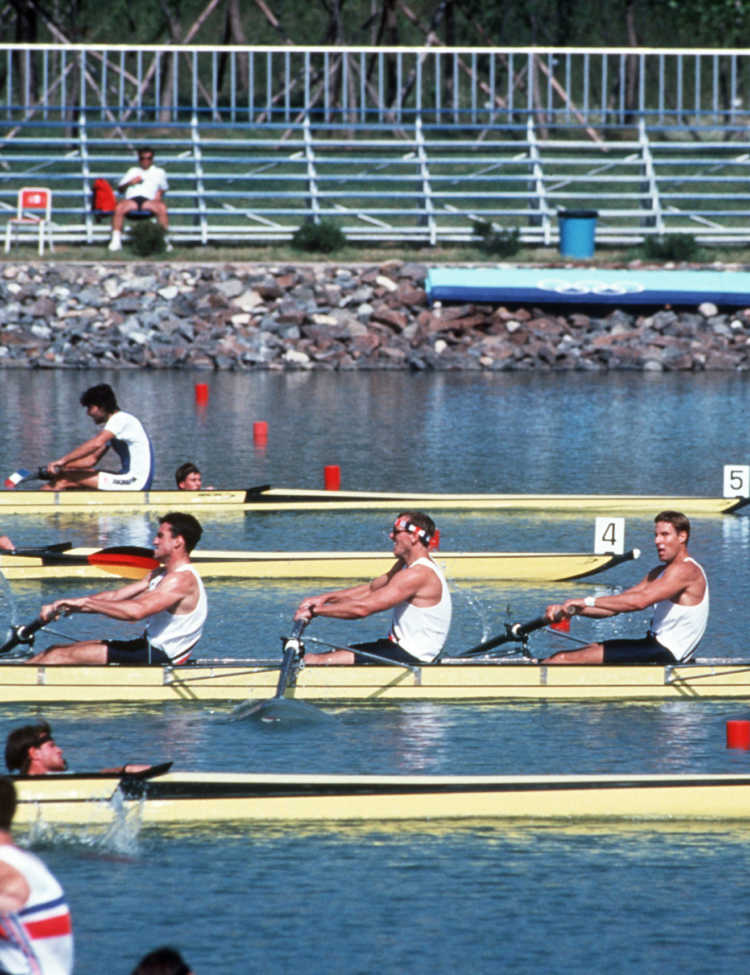
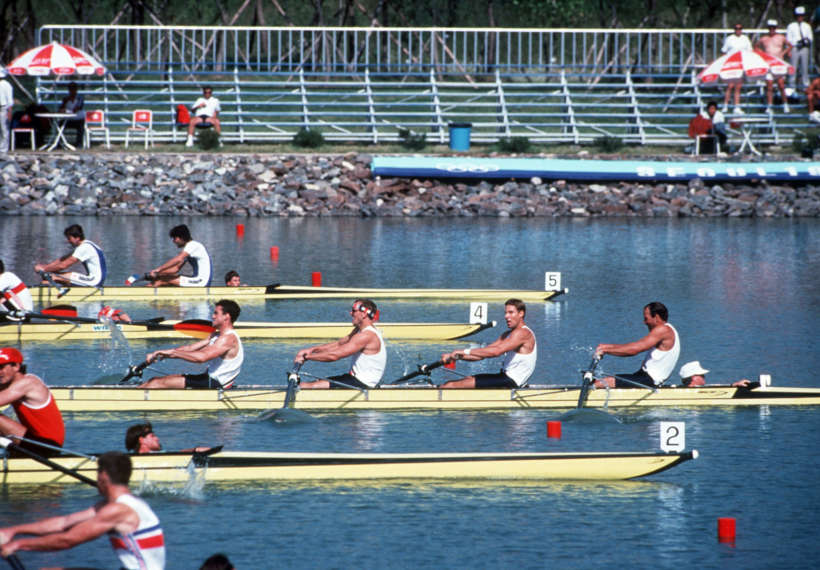
Neil deGrasse Tyson rowed crew?! On this episode, Neil deGrasse Tyson and co-hosts Gary O’Reilly and Chuck Nice take a trip down memory lane as they explore the physics, physiology, and lessons of rowing, featuring Dr. Kevin Stone and Arshay Cooper, author of A Most Beautiful Thing.
What are the physics of rowing? Why do rowers move backwards? Is there an ideal build for a rower? Neil takes us through some of his experiences rowing and what it takes to go fast. Discover the many ways the sport works to decrease drag. How does wind impact speed? What the heck is catching a crab? Sounds gross.
Next, we talk to Dr. Kevin Stone to break down what rowing does within the human body. Is rowing contagious? We break down just how torturous the sport of rowing is on the human body and what it goes through minute by minute during a race. Why do people even do this to themselves? Find out what injuries occur and how rowing benefits from technology.
To finish things off, we sit down with Arshay Cooper to discuss accessibility in rowing. What’s it like to coach the first all black high school team? We explore Arshay’s journey to become a rower and later a coach in the West side of Chicago. What lessons can be learned from rowing crew? Is it the ultimate team sport? How do you navigate an overwhelmingly white sport? Also discover Arshay’s philosophy on life and what lessons we can take into our lives off the water.
Thanks to our Patrons Alex Redner, Arlindo Anderson, Miranda Toth, Andrew Collins, Michael Collazo, Leona Shimoru, zezous1989, Charles D. Teague, Martin Skans, and Thomas_Mulryan for supporting us this week.
NOTE: StarTalk+ Patrons can watch or listen to this entire episode commercial-free.
Transcript
DOWNLOAD SRTWelcome to StarTalk, your place in the universe where science and pop culture collide.
StarTalk begins right now.
This is StarTalk, Neil deGrasse Tyson here, your personal astrophysicist, and it’s Sports Edition, StarTalk Sports Edition.
And today’s topic is rowing.
And it was cleverly titled, different strokes.
I love it.
Primarily because each of our three segments, we’re going to three very different places.
First, we’re going to do the physics of rowing.
Second, the physiology and biomechanics of rowing.
And third, we’re going to find out how exclusive a sport rowing is and is the time overdue for other kinds of folks to take up rowing, not just the prep school crowd.
All of that in this show Sports Edition.
So, we had to…
Gary, you there?
I’m there, man.
All right, good.
Former soccer pro, former commentator.
No, your current commentator with us.
Former soccer commentator.
I’m out there polluting the airwaves.
And Chuck, always good to have you.
Always a pleasure, man.
Yeah, and…
I thought this show was going to be called Different Strokes because we were going to have top bridges on.
I’m very disappointed.
Oh, you mean from that show?
Yeah, well, that’s what…
the show from like 1982.
I would ask if there’s anybody under 40.
That’s exactly right.
Somebody under 40 might know who Mr.
Drummond is.
So anyhow, humans have been rowing boats for thousands of years.
And actually for seven of those years, so did I.
I actually rowed.
We’ll get to that in a minute.
So today we want to just take a look at the sport and the art of rowing.
For example, like why do we row backwards?
Why aren’t we facing forward when we row?
And how much physics is in it?
And the Tokyo Olympics is right around the corner.
And so this is the time to do it.
And for this show, we searched far and wide for a physics expert to talk about rowing.
And the producer said, Neil, you’re the cheapest invite we can bring to the show for that purpose.
So I am the guest for this first segment to talk about the physics of rowing.
So Gary, Chuck, I’m all yours.
All right, let’s jump straight in.
What are the physics of rowing?
And why the hell do they row backwards?
Yeah, so what you want to do is exploit the muscle setup that human beings have to extract as much energy as you can in order to move the oar through the water.
Well, for many people, their bicep is stronger than their tricep for many people, but that’s not what’s important here.
What’s important, so now I’m using all of my back muscles to pull.
But wait, there’s more.
Because if I coil myself in a sliding seat, then I can explode with all of my leg energy.
And some of your biggest muscles in your body are your quads and your glutes.
Totally.
And those get engaged on a reverse stroke.
So there’s no doubt about it.
The reverse stroke is taking full advantage of your biggest muscles and the muscles that have the longest stretch.
You can just pull so that your hands are completely into your chest so that your legs formerly cocked are now straight.
All of that is just to say that the rowing stroke, as it has developed over all those millennia, that they did the right thing.
Well, let me just say, I might as well take this time to announce that my left stroke just went viral and my right stroke put a baby in a spiral.
So I’m just saying, just saying.
Okay.
That’s another reference.
That’s a reference that maybe some young people might get, Neil.
I missed that one.
I mean, that’s way over my head.
That’s in the clouds.
Anyway, before we do more of this, let me just say, I had multiple sports in my sort of sports portfolio.
The one I loved most was wrestling, but I also fully enjoyed rowing for the fact that you have seven, not like I rode in an eight person shell, they call it.
So you have teammates that have to do exactly what you’re doing.
And I just wanted to say, we have someone who is spanking brand new out of college, which is a couple of years ago, who’s one of our producers, who’s producing this show, but she rode in college.
Lane, please join us here for just for a brief second.
Hi, Lane, everyone.
Everybody, welcome, Lane.
You graduated college 2019?
Yeah, fresh out.
So here’s a question for both of you.
Do you intuitively pick up the physics as you learn the art of rowing?
No, I’ll get to that.
How long are we here?
Well, because I was sort of wondering if Neil being a physics person, if he, you know, had utilized it.
Yeah, if he utilized it, because I was an English major.
There wasn’t a lot of English happening on the water, a lot of nonverbal communication.
Elaine, I don’t want this to go unrecognized.
What was the average height of the women in your boat?
In my boat, probably, we’ll say, we’ll give them 5’11.
I’ll let the shorter ones go up a little bit.
All right, so this is obviously not including the coxswain.
Yes, of course.
That would bring down the average greatly.
And what’s your height?
I’m 6’3.
6’3.
No one over Zoom knows that.
I don’t know about Neil, Neil, you’re on the taller end.
Were you a five seat or something?
I was six seat, yes.
Six seat.
I was usually five.
Yeah, so that’s otherwise called the, you’re in the engine room, the middle four seats of an eight person boat is the engine room.
Where basically you’re getting most of the power of the boat from those four folks.
And so, and the fact that I was six, I rode port and it means Lane rode starboard in a normally outfitted boat.
Is that correct?
Yes.
Yeah, so you rode starboard.
And you’re both hands on one oar.
And we’ll get to the physics of that in just a moment.
But I just wanted everyone to see you Lane and introduce you to our fans.
And so thanks for jumping in for these few moments.
Thanks for pulling for us all these.
Yeah, making us look better than we deserve to in your editing of our products.
So Chuck, Gary, give me some more questions.
What do you have?
If we got rowers like Lane, who’s six foot three, this is leverage, this is wingspan.
So how are we taking people this tall and making unbelievable things happen in a boat?
Yeah, so here’s the thing.
The oar is not propelling the boat when it’s not in the water.
So you want it in the water.
It’s not unfortunate, Chuck, it’s physics.
It’s simple, okay, it’s unfortunate physics.
How about that?
Yes, it’s unfortunate physics.
Okay, so you want the oar to be in the water as long as possible with a force being applied to it.
All right, so now if you have long arms as generally tall people do, and if you have long legs as tall people do, then as you’re pushing yourself away from the base of the, because at the beginning of a stroke, you are coiled up.
Almost crouched.
Almost crouched, and your knees are practically up in your chest, and your arms are extended forward as far, practically as far as they can reach.
And that puts the oar way behind you in the water.
And so you drop the oar in the water, and then you have this huge sweep, a huge sweep.
And so if you have long arms and long legs, you can sustain a very long and powerful stroke.
So rowers tend to be taller than average.
And what is the average height of women in the United States is five, four, something like that, at most five, five.
And Lane is pulling around a boat that’s damn near six feet.
So these are some women kicking serious rowing ass on the lakes.
And so, yes, that matters.
And by the way, something that I’m surprised people still don’t know.
All right, everyone is practically the same height in their torso.
And evidence of this is when people sit around a conference table, you don’t have to seriously adjust the chair heights.
Everybody’s head is approximately the same level.
It’s when you stand up, you realize that tall people generally have much longer legs than short people, even though the torsos are basically the same.
So tall people have long legs and long arms, and that’s what is powering a boat.
Well, you need a specific kind of tall person, though, because a lot of tall people tend to be lanky and less muscular.
Oh.
But it sounds to me like you guys need to be kind of jacked in order to get this thing done right.
OK, so this Gary pumping his biceps, the thing about rowers, because it’s not a, you know, there’s a difference between endurance and pure power, right?
Which is why marathon runners don’t get unlimitedly large legs, thighs.
OK, so there’s a distinction there that you can make between what kind of body would then be best served in the sport.
I remember when I tried out for rowing, there was a guy in college, there was a heavily muscle guy there.
And it’s like, yeah, I’m strong, I can pull this, I can do this, I got this.
And they put him on the ERG, which is a simulated rowing machine that can monitor your power output.
I had wrestled in high school.
This guy lifted weights, and weightlifters think very highly of their bodies, all right, but I, as a wrestler, my body needed to do stuff, my body needed stamina, all right?
My body needed all the things that the rowing sport needed.
And so I went on this ERGometer, that’s what it’s called, and I got one of the highest ERGometer scores ever.
And this guy was like, he basically fell off the chair halfway through, because his muscles, I don’t understand why this is happening.
I don’t get it.
There’s not even any weights on this.
So he’s thinking because you’re strong that you have stamina.
And no, they’re not the same thing.
And for your muscle to have stamina, it can’t just keep getting bigger and bigger.
So that’s sad.
So let me ask you this then.
You said to Lane that the four people in the middle are called the engine room.
Why the four people in the middle is where you get the most power?
Well, why not put the last four people?
I mean, out of six, make it the last four.
Out of eight, make it the last.
Why not do that?
Okay, so maybe two and two and then the four.
Two and two and then little in the middle.
Why that combination?
Okay, I don’t have a good answer for that, but I have an answer.
Okay, the boat is widest in the middle and it gets narrower as you get to the bow and the stern.
But you tend to put the smaller of your rowers where the boat gets narrower.
Okay, and the boat is more stable in the middle.
So if I’m bigger than you and I’m slightly off center, that has a less damaging effect on the stability of the boat than if I’m on one of the extreme edges.
So everybody’s got to be exactly coordinated because this boat is…
There’s nothing to it.
There’s nothing to it.
You are the stabilizers for the boat, which means if you go unstable, you destabilize the boat.
So why is it when they say the more oars in the water at the same time, the better?
Or is that addressing the situation you were discussing?
It’s the ballet of the rowing stroke.
And my point is, when I first rowed, I didn’t have the technique.
I had to be taught that by the coaches.
It’s when do you engage your arms?
It is a slightly different way and type that you engage your lower back than when you engage your legs.
So there’s like first your back and then you start pulling and then your legs kick in, don’t kick, but they extend.
And this harmonizing of your muscles executes the perfect rowing stroke.
Not only that, the oar can twist in the oar lock.
So this allows when the again, there’s more physics and this is aerodynamics.
So while you’re dragging the oar through the water and then you lift it out of the water, you want to do that quickly because once you’re at the end of your stroke, you don’t want to leave it there because now you’re stopping the movement of the boat.
So at the instant at the end of the stroke, you lift it out.
Now you got to bring it back to start again.
You don’t want to bring it back fully open because now you’re waiving it again.
Yeah, drag.
It’s drag.
So what’s called feathering the oar and you bring it back flat and then right at the instant where you get to that, you go pop and it drops in the instant you turn it over.
And these are all the techniques.
And if you have eight people doing that simultaneously, oh my gosh, it is poetry in motion.
And you get the…
If you follow the sport, the coxswain who steers the boat, because we don’t know where the hell we’re going.
The coxswain.
Oh, and by the way, each one of us has only one oar.
If let’s say Lane and I were in the same boat and let’s say she was pulling stronger than I was, then you don’t want to steer against that.
What you do is you match up your rowers, port and starboard so that you have an equal sort of force on each side of the boat.
Otherwise, the boat will always drift.
It’s going to drift.
Yeah, you’re not sure if that’s not the right word.
Always.
No, you’re wrong.
In a pool.
In a pool.
Exactly.
Like a car with a bad wheel.
With a bad wheel.
Precisely.
Oh, beautiful reference.
And so, at the back here is called the catch and you drop it in and then there it goes.
Now watch.
If you don’t catch that catch perfectly, what can happen is the water swooshing by the boat can grab your oar and rip it out of your hands.
It’s called catching a crab.
And it drags the oar down and everybody knows when somebody caught a crab.
You lose a race if somebody catches a crab.
So watch for that in the Olympics.
So this is from your just this brief description.
I’m going to say this is the ultimate team sport.
Yes, I have to agree there is no greater synchronicity that you can find in any other sport.
Maybe synchronized swimming.
But is that a sport?
I was going to say no, I’m going to say including synchronized swimming and diving.
You know, synchronized diving.
Those are good.
That’s pretty good.
But yeah, but it’s not eight of them.
That’s correct.
They’re not connected.
They only have to be timed.
They don’t have to be connected.
You guys have to be timed and connected.
And if I screw up my dive, my partner comes up and goes, man, what’s wrong with you?
Oh, yeah, you get slapped.
You get slapped.
If you screw up in the shell, you actually mess up the other people that are connected.
Correct.
Correct.
Correct.
And a couple more things.
By the way, if you have a tailwind during the race, if you happen to have a tailwind, then you don’t feather the oar.
Leave them up.
Do you want, you want a puss?
Yeah.
How about a crosswind?
How about when you get a crosswind?
The oar becomes a tiny little sand.
Crosswinds, it’s like the, it becomes a circus in a crosswind.
Because you have to steer against the crosswind.
Boats can end up colliding with each other.
Crosswind is really nasty on the water.
But anyway, maybe we could do a whole other show where all three segments are on physics, but that’s sort of the basic physics of what’s going on here.
So you are constantly going from aerodynamics to hydrodynamics to aerodynamics to hydrodynamics?
That’s, yes, correct.
And in each stroke, you see the boat.
If you look at like the boat, it pulsates forward.
That’s when everyone is doing the stroke and you come out, then it drops down and then the stroke picks it up again.
Because the boat looks like it’s lurching.
Yes, and it’s lurching every time everybody does the stroke.
So, not only that, last thing before we take a quick break.
I read about this, but I haven’t seen footage that before we had the good material science for a sliding track for your seat, what they had was just a flat surface and they put grease on it and you’d wear grease-resistant pants and you just slide on the grease.
People have grease butts, so this technology has touched the sport as well and maybe we can do a whole other one on the technology of rowing and add some more physics in it.
But we’re running long here, take a break and when we come back, Dr.
Kevin Stone, who’s a physiologist and former rower and his wife rowed and his two kids row and he’s thought a lot about rowing and the human musculoskeletal form.
We’re back, StarTalk Sports Edition.
We’re talking about different strokes.
There’s an entire show just on rowing.
And for this segment, we’re gonna talk about the physiology, the biomechanics of rowing.
We talked about the physics of it as a sport.
Now it’s time to talk about the human beings that are doing it.
And we’ve got, who is now, I count them as an old friend of StarTalk, Dr.
Kevin Stone.
Kevin, welcome back to StarTalk.
A world-renowned orthopedic surgeon.
And I don’t know if I joked with you last time that I’ve heard many people call you carpenters.
Is this, is this what, is that an insult or a compliment?
It’s only one part of what we are because you have to remember there’s the art and science to it as well.
Okay, so there’s the part with the hacksaws and then the part.
That’s spoken like the true founder of the Stone Clinic and the Stone Research Foundation.
What a coincidence.
It has your name on it and you’re founder of it.
So tell us what goes on there.
So we’re an orthopedic surgery clinic in San Francisco with a public nonprofit research foundation attached.
So I don’t believe that any doctor should put something in or do something to a patient that they either don’t know the outcome or aren’t trying to study and figure out how to make it better.
Oh.
Very good.
And it also allows you to make discoveries that could help others.
What we do.
It’s very notable.
It’s what we do.
It’s how we roll.
You know how it is, right?
That’s…
And just in case we didn’t fully embrace your expertise, we can just look on the wall above your left shoulder.
And one of those, one or more of those tells us you’ve got the expertise, at least for this segment.
And so let me ask you, you used to row, is that correct?
Yeah, more importantly for this segment.
So I rowed in high school and college.
I married a high school and college rower.
And both of our daughters rowed in high school and college.
It’s a disease that’s transmissible.
No, didn’t know that.
A contagion.
Nice.
So how would you rank rowing among sports, not only for just enjoyment, but also for injuries?
Yeah.
Because you would see no injuries, not only for rowing, but for any other sports.
How torturous is it compared to the other sports?
It’s actually the most torturous.
Oh my God.
And I’ll give you the data around why we can say that.
So a rowing race is about six minutes at the top level.
In the first 100 meters, the start of the race, the athlete is putting out maximal energy and using up all of their oxygen.
Well, just to be clear, it’s a 10,000 meter race.
2,000 meter race.
Oh, sorry, 2,000 meter race.
So the first couple of hundred meters, okay.
The first 100 meters or so at the start, the stroke rate is as high as possible.
The athlete is using up all of their oxygen.
By a minute 20, they’ve used up all of their reserves, their sugar reserves in their muscles and their body starts producing lactic acid, that compound that makes all athletes muscles sore.
By the second minute, they’re at maximum lactate production in what we call the endurance capacity of the athlete.
And they have to carry that maximum lactate production now for another four minutes.
And that’s why rowing produces the largest left ventricles in the hearts of athletes, produces the largest muscle fibers and it is considered really the most difficult of all endurance sports at the time.
Okay, so now here’s the second question, okay?
And I think I speak for many people listening to this program right now.
Why the hell would you do this?
What is your problem?
Why?
Just a simple question, why?
It’s a really great question because number one, there are no spectators.
Number two, there’s almost-
And why would you do this to your children too?
There’s almost no glory except for yourself and your team.
There’s no money involved.
There are no prizes other than the medal at the end of the race.
So there’s something about rowing that combines the phenomenal athleticism with this skill and art and balance that it takes to make that boat stay steady in the water and what’s called setup in the water.
Doctor, when you’re, as I would call it, finding yourself in the boat, going through that level of exertion, what happens now you’ve got the rest of this race?
How do you, do you damage, do you recover?
And can you kind of develop on the back of that?
Exactly.
So you are not only performing at your peak outlook, output, you need to perform with seven other people at their peak output.
And so that is the beauty of rowing, that not only are you at maximum exertion, you’re at maximum exertion in concert with seven other people in an eight-ord shell.
And that beauty of working together, of pulling that hard, of gliding on the water is a magical sensation.
And it produces something in athletes that every business wants.
And so every business recruits rowers, every top college recruits rowers, because there’s something in that ability to suffer at that level, but to also produce in concert with others, that makes people very attractive.
But wait, so as you’re getting tired, so we burn out the sugar reserves, now you’re on fumes at this point.
But yet everyone has to stay in perfect harmony.
And often the first thing to go is your composure, or your capacity to stay in form.
Yet everyone in the best of the boats, everyone stays in perfect form throughout their loss of energy, the whole arc of their loss of energy.
So, what’s going on there?
There’s something that’s going on there called the very little person.
And that very little person is called the Cox, Cox, Cox.
And that Cox is sitting traditionally in an eight at the stern of the boat, cheering you on, yelling at you, keeping the rhythm of the boat, watching for any little errors.
And that Cox’s voice rings in your head for a lifetime.
You can never get rid of it.
And it is what keeps everybody together, trying to follow the stroke of the first person in the boat, sitting in what’s called the eight seat, the stroke seat.
And that Cox’s is keeping you in order.
Now, in the movie Ben Hur, when he had been taken into forced labor, and he was put in the belly of a ship and forced to row, instead of a Cox’s, they used a drum.
And the beat of the drum corresponded with the stroke of the slaves that were rowing.
Why not just use a timekeeper?
Because the coxswain has to also steer the boat, make sure you don’t hit the bridge or hit the wall, as we saw in the movie, and also has to tell the boat when is it time to put out, not just maximal effort, but supermaximal effort, called a power 20, meaning you’re rowing at your max effort down the course.
The other boat, your competitor may be starting to catch up or they may be just a little bit ahead of you, and the coxswain drills you to just give that little bit more that you didn’t think you had.
Did you just tell me that in rowing you turn it up to 11?
Yeah.
Yeah, that’s exactly what he said, and I have to concur, because we’d be up there, and here’s how you can get to 11 if you’re wondering.
We’re all at peak power output, and in that peak power output, we’re inching up on another boat that’s ahead of us, and the coxswain is saying, we got the sixth seat, give me another seat.
And they’re like telling you, oh my gosh.
And you can find energy that you didn’t know you had as you inch your way to come abreast of the other boat and then pull ahead.
Or if your lead is being threatened by yet another boat.
So you can find 11 out of 10 practically every time.
Are you with me on that?
Neil, that’s exactly why people admire oarsmen and admire rowing because it teaches you to find 11.
You said it brilliantly.
So how much do you evolve yourself with the psychology of this?
I know you’re a physiologist but psychologically this matters too.
So rowing is a metaphor for life.
So if you’re coming in with an injured knee and coming to surgery, if you’re coming to whatever challenge you have ahead of you, coaching the rowers is the same as coaching a patient coming to surgery.
It’s the same as coaching anyone facing a challenge in life.
You can do it especially if you prepare for it, if you train for it, and you can do even more than you might imagine if you have a team together and a coach, a cox, a spirit, a goal.
There’s more in you if you know how to find it.
So is there an optimum physiology that makes the greatest rower, or is it really about all of you guys getting together?
Yes, it’s a great question.
So height matters, and that’s because in rowing, you’re on a sliding seat with a long oar.
You’re driving the force with your legs predominantly.
And there’s something unique in that when you’re rowing and your two legs are pushing together, they actually create more force than just the sum of each leg individually.
And so in rowing, when you coach that athlete to the best of their ability, they’re driving all that force with their legs.
And the longer the legs and the more powerful they are, the longer that lever arm and the better they’re going to do.
So you want somebody tall, but you also want them to be strong.
You want more like Chris Hemsworth, not Manute Bull.
So, Dr.
from the point of view of bad technique.
Wait, wait, wait, just on the height thing.
Hang on a sec, hang on a sec.
Isn’t there a height above which they can’t fit in the boat because everyone has to fit between two other rowers?
There is, but those guys get grabbed by the basketball and volleyball courts.
They never make it to the boathouse.
So the basketball coaches, they’re at the front entrance.
They don’t even get in the hall by then.
Alright, Gary, go ahead.
My take on this is bad technique generally ends up seeing someone like you.
So does knowing the science of what you just discussed enable better technique and therefore put you out of a job?
Yeah, because the most common injuries we see, especially in the young rowers that we see here from the top rowing club here in Marin, are back injuries.
And so if they leave very improperly, if their body position in the boat is improper, if they’re reaching too hard and not driving with their legs first but driving with their back, then we’ll see them with back strains.
Fortunately in rowing it’s not like skiing where the injuries don’t usually require surgery, although occasionally an overuse of a shoulder could.
Most of the time these are just overuse muscle injuries and conditioning injuries.
Because rowing is not a contact sport, right?
And so you’re not going to get trauma injuries.
It’s not supposed to be unless you hit the bridge or hit the end of a boat.
It’s not supposed to be.
I like that.
How did you get a concussion rowing?
So do you think rowing is ripe for the addition of modern technology that’s so influencing other sports?
So it’s benefited from the technology predominantly in lightness, meaning carbon fiber has made the boat so much lighter, made the oars so much stiffer, made the seats roll better.
So all of the advantages of lightweight sporting materials have been built into rowing shells today.
So the question is, what’s the future?
Where is it going to?
Can you make them even lighter and stronger and faster?
I’ll tell you that almost every other sport that is on the water today and involves a boat is foiling, meaning they’re putting, just like in the America’s Cup, they’re putting foils underneath the boats to get lift and send them over the water.
That, of course, has not entered rowing yet, but just the idea that a foil or a change like that can so dramatically change a sport, we can look ahead to rowing and there’s some idea out there that hasn’t been done yet, but it may change it.
And just to be clear, when you say a foil, you mean something, when I think of an airfoil, which is a shape that influences the flow of the air or water above it and below it, is that correct?
Yeah, and these days the foils beneath the water lift the boats out of the water, so they’re virtually sailing above the water itself.
A water wing.
Water wing, there you go.
So there could be shape changes in shells that cause it to have less water resistance as we go forward.
Interesting.
Interesting.
Cool.
Cool.
Well, we got to kind of end it there.
That’s sad.
But I just want to thank you for coming back and telling us about your rowing.
Very excellent.
Okay, well, thanks for joining us, StarTalk.
When we come back, we will introduce you to someone named Arshay Cooper, who is a coach, a motivational speaker, author of the book Sugar Water, and which is now a movie called A Most Beautiful Thing, celebrating what happens when you bring rowing to communities that don’t traditionally row.
You know what time it is, it’s time to shout out our Patreon patrons, Alex Redner, Arlindo Anderson, and Miranda Toth.
Guys, without you, we couldn’t do this show, and we appreciate your support.
And for anyone else listening who would like their very own Patreon shout out, please go to patreon.com/startalkradio and support us.
Thanks.
Thanks We’re back, StarTalk Sports Edition.
Different strokes.
We’re talking about the sport of rowing.
And fulfilling the concept of different strokes, we can ask the question, is rowing the exclusive purview of prep schools and New Englanders?
Or is the time overdue to broaden that base?
It’s all about the base.
Welcome, my guest for this segment, Arshay Cooper.
Welcome to StarTalk Sports Edition.
Thanks.
Excited to be here.
Arshay, before we begin, do you have a social media handle that you want to share with everybody?
Yes, Arshay Cooper on Instagram and on Twitter.
That’s him.
It is Arshay, A-R-S-H-A-Y.
Did I spell that right?
Absolutely.
You spelled it right.
All right.
Excellent.
So you’re a rowing coach and you won the Benjamin Franklin Award for your writing.
Was it for a book called Sugar Water?
Did I say that right?
Yeah.
It was a book called Sugar Water, but changed the name to A Most Beautiful Thing.
Oh, wow.
I kind of like Sugar Water.
I kind of like Sugar.
Sugar.
S-U-G-A.
Watermelon sugar, hi.
So you’re also a motivational speaker and an activist and you’re the force behind, is it a movie, documentary?
A Most Beautiful Thing?
And it’s the true story of the first all-black high school rowing team.
What?
Now, what were you thinking?
How’s that even happen?
Is that like the Jamaican bobsled team?
What were you thinking?
I know, I got a lot of messages of people saying, cool rowings.
By the way, guys, by the way, stay tuned for RSA’s next documentary, the first downhill slalom, all black high school ski team.
I’m just saying, you know, maybe some sports, God never intended.
Yeah, exactly.
Yeah, especially after a certain period in history, it’s just like, look, black guys to get in this boat and start rowing.
Someone will be yelling commands at you while you do it.
No, we fell for that once, man.
So tell me about this story.
It’s so even unbelievable that it’s amazing for how unbelievable it is.
So go for it.
Yeah, you know, I went to Manly High School on the west side of Chicago.
At the time, it was the second most violent high school in the city of Chicago.
And I remember walking into the lunchroom one day and I seen this boat.
The boat was beautiful.
And I stopped and stared at it.
And this little white lady came up to me and she said, hey, you want to be a part of the crew team?
I’m like, crew?
You know, you’re taught.
You know, if someone tell you to join a crew, turn around and run the other way as fast as you can.
I’m confused, you know, but I’m also confused that there’s a rowing shell in the lunchroom.
That’s a little weird to me.
But go on.
I’m actually stuck on that right now, but keep going.
That’s why I stopped and stared.
Okay.
And so behind the boat was the TV monitor and they were showing the Olympic Games.
And it said this sport would give you an opportunity to travel.
And although at that time it seemed like an opportunity, no one in those images reflect the world I was used to.
And I walked away.
Like nobody signed up.
And so I showed up the next day.
This time it says if you sign up, you get free pizza.
So there’s a long line.
You know what I mean?
Who eats pizza as a commodity?
Oh my gosh.
I know.
We’re doing the same thing with vaccinations now.
It’s great.
It’s great.
I want pepperoni.
That’s the other line.
And so I go up to the info session after school and all these young people were sitting on the floor and I saw a black coach.
And so I was like, wow, there’s a black coach in this sport.
That showed me right away that maybe I’ll be protected in this space that’s different from me.
And they gave this amazing speech about the power of rowing and the opportunity to travel.
What I remember saying to myself, wait a minute, there are no cheerleaders, there’s no bus load of fans, there are no million-dollar contracts after college.
I don’t know if I want to do this.
Did they tell you about the getting out in the water at five o’clock in the morning part?
Did they tell you about that part?
Oh, okay.
They didn’t tell me that.
But I tell you, but the moment, so we joined the team, we started to learn how to swim a little bit.
And fast forward, we get on the water.
First time we get on the water, no one moved.
I’m talking about these were guys who probably carried a knife before.
They were crying in the boat.
And I talk about it in my book and the coach told us, pull them back in.
We did not move.
And so we go back in, I saw a disappointment on the coach’s face.
The next day we go back, we show up, we push out to open water in the middle of Chicago.
And it was so crazy because the same, the survival mode that kicked in, that the same survival mode that usually tell us, if you hear a gunshot run, told us, if you want to get back to the dock safely, you have to pull for each other.
And in order to pull for each other, you have to shut up and listen.
And there’s only one person talking and they’re saying, sit tall, breathe.
You belong here, right?
And that’s when we begin to feel the magic in the boat as we rowed by pairs.
You had to grab a dimension of what that sport was, encapsulate it and then bring it not only to yourself, but to others who had the same skepticism you did when you first encountered that sport.
Absolutely.
Absolutely.
So, for both of you, Neil, too, because Neil Cruz and or did, you know, and how much of this is mental in terms of when you are in that kind of meditative state, this rhythmic, because it’s such a rhythmic sport.
It’s so about timing, like as a comedian, it’s one of the sports that you look at and you really appreciate, because it really is about timing.
And everything from the stroke to the turning of the oar to everything, to the placement in the water, to, you know, the synchronicity with your teammates.
So where does that, what’s going on in your brain when all that stuff is having to happen?
There’s only one answer.
90% of the sport is half mental.
That’s my mathematics right there.
See, that’s the kind of mathematics I can understand.
I mean, Asher, you talk about, when I’ve read the things and listened to the things you said about looking backwards while you’re moving forwards and what that kind of meant to you as a rower, as a coach, as now an influencer in a youth community.
Yeah.
So I wrote in my book that in, you know, in crew, I learned that it’s okay to look back as long as you keep moving forward because that’s what the sport is all about.
And I think that, you know, for me, we had a hard time really letting go the life we live and while we navigated through this white sport.
And so it was really, the sport really kind of honestly taught my whole team that like, hey, there’s, we’ve been through a lot, but the important lesson here is that we keep pushing forward and that we can’t do the work of eight, but we need eight people to do the work and we’ll get them much faster.
And that’s what we learned in the sport of rowing.
And that’s the lessons that we bring to many communities as we start rowing programs all over the country.
Wow.
So tell me about your movie.
It’s a documentary, The Most Beautiful Thing?
Yeah, it’s The Most Beautiful Thing.
It’s narrated by Common, produced by Dwayne Way, Mary Mazio and Ninth Wander.
I guess the request for me to narrate it, that was maybe I didn’t get it yet.
I’ll give you that.
Okay, so, so is it out?
Where can we find it?
Yes, so you can find it on Amazon Prime.
You can find it on Peacock and it’s honestly, it’s our story from beginning to end, not just our story, but the story of our moms and in the work that we’re doing now in the city of Chicago through the support of Rowan.
So what you’ve done is you make a comeback.
Sorry, Neil, didn’t in the movie you make a comeback.
You and the team dust off those oars and come back.
20 years later.
Because our kids never seen us row and apparently.
No, no, no, that’s not the reason.
It’s because someone invented Advil over that period of time.
It was painful.
It was painful, but we did it for the moms.
They never got a chance to see us race because they work in doubles or they wasn’t around.
And this story really reached the world in a different way.
And so we wanted to put on a show for them and all the other Chicago folks.
Did it have an effect on the kids?
Did it actually change their perception of you and the sport?
Absolutely.
Absolutely.
Absolutely.
I mean, they needed to see someone like them that’s out there pulling hard and overcoming.
We overcame the fear of water.
We traveled so many states as young people and it was growing in an entrepreneurship team.
So, 90% of my teammates are entrepreneurs and started companies on the west side and south side of the street.
Soundhat, did you guys ever do Dag Vale when you were competing?
Because now I’m from Philly and a lot of people don’t know that Philly is a huge, huge rowing town.
Very quietly kept.
If you’re from Philly, you know this sport because every year one of the biggest competitions takes place on the Skoolkill River and the city…
In fact, the opening scene to Trading Places is rowers on that river in Philadelphia.
Oh, wow.
The opening scene.
Oh, good movie, Noli.
And a large part of our film was going to Philly and rowing and rowing.
That was our first out of town trip was going to Philly.
We spent a week there on the school and we rowed out of the Penbo house.
Sweet, man.
That’s very, very cool.
Very cool.
So, what you’ve done is you have turned rowing into a philosophy for life.
Philosophy for life.
You have the lessons of working together, pulling together, leaving the boat house better than you found, leaving the day better than you found, leaving the stroke better than you find it.
And I think the biggest lessons that philosophy is like, you can be like Shaq, he will work on free throws for years and never got better.
The one thing about rowing, you sit on a machine and you get stronger every time, right?
You just get better.
And so all those lessons that we learned from the sport of rowing, we use it today.
And honestly, we’re launching nine new programs, rowing programs this year.
We have a lot of young kids of color who went through the collegial, who’s going to college this year to row.
And we believe that the sport changed lives and to give you an opportunity to really find peace in the water, you know, for all.
So I’d like to your initial comment where rowing is non, it’s competitive but non combative.
This is a very important distinction.
And there is some trash talking and rowing.
But the problem is, you don’t really have extra breath to do much talking.
So Arshay, we got to land this plane or dock this boat.
Give me some takeaway thoughts.
You’re a motivational speaker.
Motivate us and our listeners just in whatever way comes organically out of you, given your life experience.
Yeah, I will say this.
For me, the best lesson I learned in the sport was outside of the water, and that was to leave the boat house better than you found it, even if you didn’t make the mess, right?
Because it leaves it easier for the next group that’s coming in.
And our coach will say it every day.
And so my life has been, how do I leave the classroom?
How do I leave this podcast?
How do I leave my community better than I found it, even if I didn’t make the mess?
And that’s what it’s all about.
And we go into schools, and we leave them better than we found it.
And we can control that.
And that’s what I leave you with.
If you extend that up to all of civilization, let the world be a little better for you having lived in it.
But can I just add a caveat to that, Arshay?
No, you can’t.
He just concluded the beautiful words, and now you’re going to do what?
I got to add a caveat to that, because I think it’s such a beautiful sentiment.
Leave it better than you found it, even if you didn’t make the mess.
But go find that dude that made that mess.
And let that mother something know.
I love it.
I love it.
I love it.
I love it.
I love it.
I love it.
Rowing’s noncombative.
All right.
We got to end it there.
Arshay, great to have you on this segment of StarTalk Sports Edition, Different Strokes.
I’m Neil deGrasse Tyson.
Chuck, always good to have you.
And Gary, always good to have you.
Arshay, keep it going, dude.
Appreciate it.
Others saw the documentary.
I’m going to see it tonight.
And I’m going to be all over it.
And maybe we’ll get you back on.
We’ll talk some more rowing.
Because this is our first ever rowing show.
And there’s so much more to get into.
But anyhow, as it is, I am Neil deGrasse Tyson, your personal astrophysicist.
As always, keep looking up.
Thank you.




 Become a Patron