


 Unlock with Patreon
About This Episode
What’s ice skating like on Titan? On this episode, Neil deGrasse Tyson and co-hosts Chuck Nice and Gary O’Reilly answer fan questions about the physics involved in the Winter Olympics with Charles Liu.
Does the ice temperature differ for different events? What is slow ice versus fast ice? We break down the physics of how pressure melting works and the different properties of water that make ice so special. What is ice like on other planets?
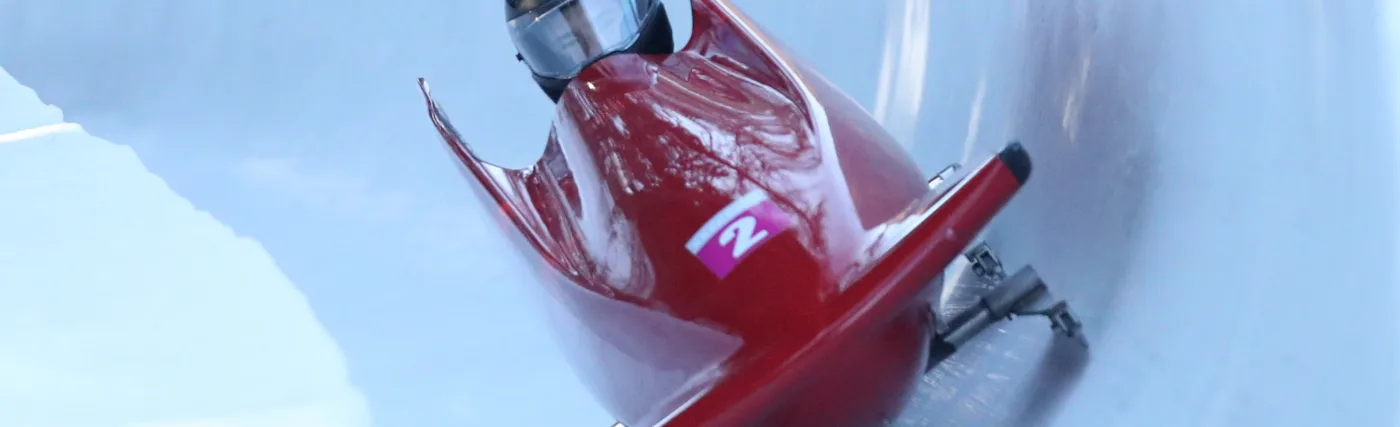
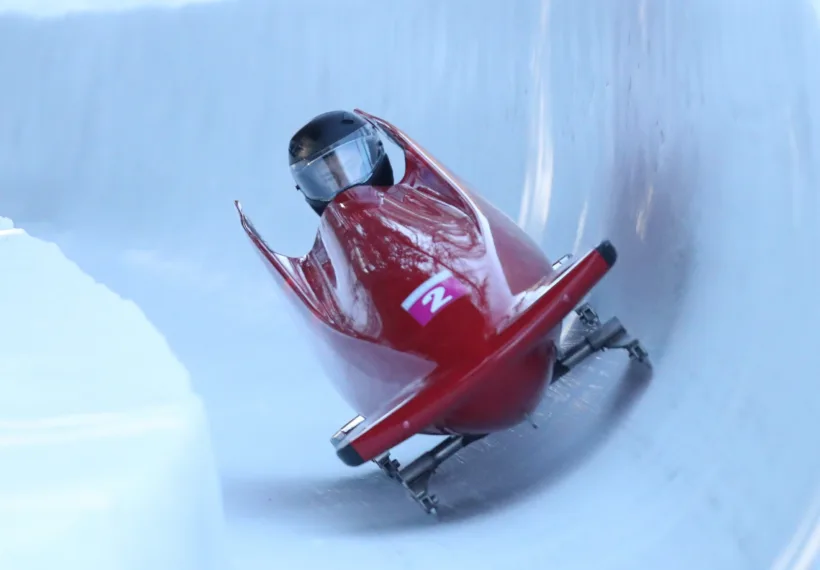
How do Newton’s three laws apply to curling? Are there other laws of physics involved? Find out the intricacy of curling and its history. Do we know everything there is to know about ice? We discuss the amount of Gs a bobsledder experiences.
How insane is luge and skeleton? We slide in with a few more takes on the sled-based sports. What are the craziest sports to be in the winter olympics? Charles runs us through his favorite one from the Olympics’ past. How will climate change impact winter sports? All that, plus, we dive into adaptive sports and para-athletes and the advantages they might have in space.
Thanks to our Patrons Boris Maganic, Joshua Morgan, ymc98, Josh Wittlieff, Rick Carlson, Vaibhav Kumar, Orry B, Walt Miller, Krzysztof Nadolski, and chris for supporting us this week.
NOTE: StarTalk+ Patrons can watch or listen to this entire episode commercial-free.
Transcript
DOWNLOAD SRTWelcome to StarTalk.
Your place in the universe where science and pop culture collide.
StarTalk begins right now.
This is StarTalk Sports Edition, a Cosmic Queries version.
We’re gonna talk about the Winter Olympics.
Ooh yeah, we got Gary O’Reilly.
Gary.
Hey Neil.
Yeah, do they play soccer in the snow?
Do they play soccer in the snow?
Yeah, we will do.
It depends if it’s too bad, no, because the ball doesn’t roll, but yeah, we’ll play frozen and in the snow.
I gotcha, gotcha.
And Chuck, you avoid cold weather at all cost.
Yes, it’s an homage to my ancestors.
Yes, for all that came out of the Serengeti, I’m representing.
So, this is a very broad topic, because we want to talk about the Olympics in general, the Winter Olympics, the events, the fact that it’s in Beijing.
And anytime we have a broad subject like this, there’s only one go-to person, and that’s our geek-in-chief, the one and only, my friend and colleague, Charles Liu.
Charles, welcome back to StarTalk for the 100th and zillionth time.
Thank you, Neil, it’s my pleasure, thank you.
Hello, Gary, hello, Chuck, or should I say Lord Nice.
Oh my God.
You were on that episode.
Yes, does everybody know that it was Major General Deanna Burtt that anointed Chuck Nice with this title?
With the Lordship, she certainly did.
And it comes in, it comes in, and I always forget, and people remind me.
So, Charles, you are a professor of astronomy and physics at the City University of New York, at Staten Island, and you’ve recently been, become chair of the department, is that correct?
Yes, yes, and it’s been fun.
I have some great colleagues, some wonderful students, and if anybody watches The Chair, the TV show that’s become popular lately, that’s like 5% of maybe my regular life, but it’s a lot of fun.
I have a good time with it.
Okay, so I smell a reality show in the making here, where Charles really shows what this is about.
We’ll call it The Lounge Chair.
Why not?
Good one.
The satire.
Chuck, and Charles, hearing from The Grapevine, you’ve got a podcast in the making.
So we all look forward to seeing that post.
Thank you, thank you.
And you told me offline that it’s called the, it’s called the, it’s called the Looniverse.
Yes.
Well, you know.
I didn’t come up with it, you know.
Family members around the tiny room table, they were like, why don’t you call it the Looniverse?
I said, really?
They said, yeah, sure, why not?
It should be fun.
We’re really looking forward to it.
It should be a lot of fun with talking with fun folks.
We’ll have a good time.
Thank you.
Excellent, excellent.
Right now, it’s the Cosmic Queries Grab Bag on the 2022 Olympics taking place in Beijing.
So the questions are open for anybody and anything.
And Gary, Chuck, who between you has the questions for us?
Chuck and I can share them between ourselves.
Let us kick it off.
Welcome to Charles, obviously.
Great to have you back.
Right, Michaela Negus.
These are all questions from our Patreon listeners.
What you call me?
All right, just working on my pronunciation here.
I couldn’t trip up on that one too quickly, could I?
You’re all familiar with the Grand Negus, right, from Star Trek Deep Space Nine?
I am, as a matter of fact, yes.
I am not, I’m sorry.
I know, Charles can’t resist, Chuck rather can’t resist just tweaking my funny bone every now and again.
So why does the temperature of Olympic ice need to be different for figure skating, speed skating and hockey?
Could an ingredient be added to the ice to make it more ideal for the athletes, for example, making it smoother, harder, softer, et cetera?
Wow, I didn’t even know that.
Charles, did you know that?
Ice changes all the time.
Of course you know it.
Are all three of those ice’s pure water or have they added anything to it?
Usually things have been added.
They are often pure water, but if they are pure water, even then there’s changes because they change the temperature.
They freeze it at different temperatures, hot or cold.
Just because something’s freezing doesn’t mean that it stays at that same sort of texture and temperature the whole time.
This is actually used on purpose in a lot of different places.
There’s a famous example in ice hockey, in college hockey.
Depending on where you go to play your hockey, the ice is either really fast or really slow.
It depends on their team.
Is this like a deflate gate with Tom Brady, where you can change this?
Well, no, it happens naturally, Neil.
So for instance, the Canadians have, Charles back me up on this if I’m right or wrong, the Canadians have just historically hard ice.
But if you go and play hockey in LA and someone’s left the arena doors open for a while, and that hot air comes in, it affects the quality of the ice.
And the refrigeration underneath the ice, of course, can be strongly adjusted to any situation if you have an indoor rink, right?
So what happens with indoor activity is, for example…
Charles, I just got to establish here.
I just have to establish here, because I think some people might not know this.
I think you were hinting at it, but let me just drive it home.
Water freezes at zero degrees Celsius, 32 degrees Fahrenheit.
And we call that ice, but you can have ice at any temperature below that.
And the properties are different depending on what temperature the ice is.
So ice is not ice.
Correct.
It depends on how cold the ice is.
Yes.
That is exactly true.
And at what temperature does it get down to gangster rap, like ice tea and ice cube?
Well, nice that you should mention that.
On Titan, the moon of Saturn, the temperature of the ice is hundreds of degrees below zero Fahrenheit.
And so the water ice is as hard there as granite is here on this earth.
So they build mountains with it.
You can see all kinds of geological features that’s built with water ice that you could not do here because the moment you try to do that, it will collapse.
Wait, what do you mean, they built the ice?
I was going to let that one go.
That’s an excellent point.
Who is they?
They built the mountains on Titan.
But the answer, bottom line, Gary, you’re not allowed to divulge anything more than that.
Yes, Gary, the temperature varies and each rink does its own thing.
And each sport has its own regulations as to what you are allowed to do in terms of temperature, in terms of additives, in terms of those sorts of things.
Right.
Yeah, the hockey players don’t like soft ice.
Some hockey players love soft ice.
As sweetly, yeah.
Think of the very large, bulky folks who, like the Wayne Gretzky’s of the world, would zip right by, right?
The slow guys.
The slow guys like the softer ice.
And there are famous or infamous examples of really good hockey teams with fast skaters going into a visiting rink where the players are slow and suddenly it’s like they’re on molasses.
And you see like water spraying off the ice.
That’s Tom Brady letting the air out of the ball.
That’s Tom Brady letting the air out of the ball.
Very kind of like that, yeah.
So is it possible to get ice so hard that like a speed skater’s blade wouldn’t even allow it to turn?
Like you would literally skid across the ice instead of skate across it?
On Earth’s surface, probably not, but elsewhere in the universe, for sure and absolutely.
Oh, inter-scale skating.
Okay, so it’s all about what kind of speed they want.
So figure skating versus hockey versus speed skating, then it’s pretty clear.
You can put that on a chart.
You kind of can, yeah.
And remember what the skates look like, right?
A hockey state is straight.
The blade is straight.
A figure skate’s got a little divity thing right at the tip, so you can dig into the ice and jump up and do your spins and things like that.
And if your ice is too hard, then it can’t dig effectively, right?
But if it’s too soft, then you also can’t dig very much because you’ve got this sort of layer of soft stuff.
So yeah, people have to adjust very, very carefully.
So Charles, one other thing.
Why are speed skates longer in their blade than hockey skates?
Well, I presume that has something to do with the ability for you to push off and get higher velocities going in a straight direction, right?
I mean, Gary, you’re probably more expert about in terms of the relationship between how long you can push, say, off the ground or something, and thus how much stride you can get and how much speed you can pick up, the kind of acceleration or explosiveness you can have.
Is there a relationship to the amount of time the skate stays on the ice and you’re able to impart energy through that, so therefore a longer skate allows you that fraction more contact with the ice and therefore pushing energy in to push to get there?
Yeah, I bet you that’s true.
And if you want to stop, too, a longer blade gives you more, when you’re at a 45 or a 90 degree angle, you’re able to brake faster, right?
Because you have more of a surface with which to push friction against the ice.
Mm-hmm.
Mm-hmm.
All right.
All right.
Temperature of the ice.
Okay, I get more questions.
Of course.
We have a very curious audience, Neil.
Dylan or DeLeon, if Chuck prefers me to pronounce it like that.
Hello, Dr.
Tyson, Dr.
Liu and our great comedic co-host.
Yes, of course.
I love to ski and have always wondered something.
This is from Dylan.
Of course, snow and ice aren’t exactly the same things, and we know ice has a thin layer of water, less than the width of a bacteria, he believes.
Which makes ice sports possible such as skating?
Does skiing also have to do with pressure melting, or is there something else going on with snow?
Wow.
The answer is both are true.
The snow is an even more…
Wait, wait.
First explain pressure melting.
Yeah.
Well, there is a relationship where if you have more pressure on water, or ice, it is more likely to melt.
This is untrue for most substances, but the more you push on something, the more you push on ice, the more likely it is to be able to liquefy.
This is a particular property of ice which is rare amongst substances here on Earth, and that allows us to be able to do these things like skate across ice with that tiny film of water, that bacteria-with-fill water that we talk about.
But it is a very complicated system.
What is the molecular transaction that is happening where pushing pressure causes melting?
Because that is how they make the big ice balls for muskotch.
That is how they do it.
How you make a snowball.
You take the snow, you smoosh it, whoa, there is your ice ball right there.
I never question it because I am about to drink some skotch.
But what is the molecular transaction that the pushing makes the melting?
Well, we shouldn’t get too deeply into the specific chemistry right now.
Because it takes a long time to sort of make the descriptions.
But basically, a water molecule is a V shape.
It has got the oxygen in the middle and it has got two hydrogens off to the side, making kind of a V.
It’s a polar molecule like this.
And when ice freezes, it has a tendency just to touch on the hydrogen bonds.
It doesn’t want to just squish in, but it wants to form a hydrogen bond lattice or a crystal.
And as a result, it winds up with extra space between the molecules, space that would not have existed in its ordinary liquid form.
And so that basically allows all kinds of strange things to happen.
And so snow is ice-y water, right?
It’s solid water, but it’s in small crystals as opposed to one big slab of solid material.
So when you pack a whole lot of little things together and you create a surface, it’s a different surface altogether from if you have a single slab of the same object, everything stuck together.
The difference between, say, a sandstone walkway and a sandy beach.
So snow gives you even more variation on, say, going across its surface than the sliding across a slab of ice.
So the answer to the question here is indeed that snow variations, changes, temperature, pressure, weather, wind, will make all the difference in the world when it comes to a snow sport.
But in fact, if you ski a lot on a fluffy snow slope, it eventually becomes sort of…
You’ve melted many of the surface layers of crystals, of snowflakes, and eventually it just becomes icy.
It is no longer fun to ski on.
You will start packing it down more and more.
Or pack it too much.
But then again, if you’re in competition, Neil, you want to go faster.
So icy quicker, fluffy powder snow slower.
But there’s a very delicate equilibrium that you have to find because if it’s too icy, you can’t turn.
So in the giant slalom, you want a kind of nice balance between that powdery and that icy, so you can grip with the edges of your ski, but yet at the same time you can achieve the turning.
So you have the fast and the turning at the same time.
But…
Chuck, you know the deal.
If it’s too icy, you find the music.
But wait, Chuck, we established in a previous episode that we’re not taking skiing advice from you.
We’re not taking skiing advice from Chuck.
No skiing advice from the dude who’s sitting by the fire in the lodge.
I’m sitting by the fire with some brandy just like, you do realize the reason you weren’t able to turn was because…
Before we take a break, I want to add something to what Charles said.
So because water expands when it freezes, it can only exist in that expanded state as ice.
If you successfully squeeze it, it cannot be squozen as ice.
The only way you can squeeze it is for it to change state and then become smaller in its volume.
So that’s why.
So you’re skating on the ice.
The pressure forces it to turn back into water even at the lower temperature.
That is exactly right.
And then if you’re going down a ski slope or a toboggan slope, like a bobsled or something, remember a lot of that stuff is outdoors.
So what if it starts to snow?
Then you have even more stuff on there.
It gets even more complicated.
The weather makes all the difference in the world.
I remember 1984, I think it was Sarajevo Winter Olympics.
Billy Johnson, the American, was the first person down the mountain.
And then the weather got worse and worse and worse.
And all the rest of the competitors could not keep up with that first time because that first time was the ideal condition, regardless of what anything else happened with the surface, because the atmospheric conditions had changed.
All right, we’re going to take a quick break.
When we come back, more Cosmic Queries Grab Bag on the Winter Olympics with our geek in chief, Charles Liu.
We’re back, StarTalk, sports edition, Cosmic Queries grab bag, got Charles Liu, who’s our go-to person.
Anytime, we’re all just confused.
It’s always a pleasure to be here, Neil.
Always fun to chat with everybody.
So, we’re just pulling questions out of this grab bag, and Chuck or Gary, who’s got the next one?
Okay, I’ll jump in.
Right, Eric Varga says, hello, Dr.
Tyson, Dr.
Liu, but he’s downgraded you, Chuck.
You’re now Sir Chuck.
You’ve lost your Lordship.
He doesn’t know that.
Oh, God, yes.
Yeah, he does now.
All right.
Can you explain how Newton’s three laws apply to the sport of curling?
Are there any other laws of physics involved that play a vital role in advanced physics?
Did the word sport and the word curling show up in the same phrase?
Don’t be such a snob.
Curling is a distinguished sport.
Go, go, go.
Oh, it’s the best.
Neal, curling is one of the oldest team sports.
Look, this show is going to come with a history lesson whether you like it or not.
So okay, first invented in Scotland and the first documented match was between a monk and an abbot in Paisley Abbey in Scotland in 1541.
So the moral of this history is when you lock people up in a monastery for a long time during winter, they come up with curling.
Curling.
The sport of sexual frustration.
So about Newton’s three laws of physics and anything else you can throw at curling.
Newton’s three laws, as most of us know, is that first law, right, an object in motion tends to stay in motion in a straight line unless acted upon by an outside force.
So the guy pushing the stone forward, it’s just going to keep going and going and going.
And that’s why you notice that it keeps going and going and going unless acted upon by an outside force.
Okay.
Now, the second law of motion forces mass times acceleration.
You are front running me on that point, Neil.
You’re absolutely right.
No, no, no.
It’s good.
It’s good.
See, because you’re doing exactly what scientists should be doing, right, which is jumping in and saying, ah, but, right, and the but is Newton’s second law, which as you know is forces mass times acceleration.
It’s also Sir Misalot’s first law.
I like being, okay, never mind.
What is creating the mass times acceleration, right?
That’s the second thing.
That’s what Neil is bringing up.
And friction, as it turns out, will cause mass times acceleration to be exerted on the stone that’s moving forward.
And so the second law requires that you wind up making sure that the friction is just right.
So the amount of force and acceleration that you get, the change in direction and then the change in speed is what you want.
So those guys in the broom up front, they are quickly changing the coefficient of friction of the ice on the whole time.
The brushing, I’ve never known if exactly before every run, the curling people put like a whole bunch of snow or shaved ice on the track ahead of time.
Yeah, what are they brushing?
What are they changing?
Yeah, that’s my question.
Charles, okay, do you know, so curling ice, right, back in the 16th century when curling was invented, it was taking place on frozen locks and frozen ponds.
So what you have now with indoor curling ice is pebbly.
It’s not a smooth silk finish, it’s pebbly.
So what the guys with the brooms are doing, they are taking away those pebbles as much as they can in a certain way.
And the big clue about what this sport is all about is in the title, curling, because a stone will curl maybe three times on its way to the target or it might curl ten.
But the deviation is there.
And therein lies the third law, Newton’s third law of motion.
When it reaches its destination in the curled direction it wants, it hits other stones.
And for every action there is an equal and opposite reaction.
That’s Newton’s third law.
So the stone hits the other stones that are in the scoring area, either knocks them out or pushes them a little bit.
So Newton’s laws of motion are involved in all stages of this exciting, thrilling, super fast, high-energy sport called curling.
Hey, let me just say this, as a former janitor, curling is the best sport ever.
Wait, so Charles, something I never thought about.
So as they’re brimming material into the path of the, I keep thinking of curling iron, curling stone, they can slow it down, but they can’t speed it up because it only has this is the speed it has at that moment, but they can also change its direction.
Yeah, absolutely.
They’re putting more friction on one side of it than the other.
Right.
Right.
So the physics of the brooming people is extremely significant.
The push, once the pusher pushes the stone off, his work is done and all the rest of the team has to figure out where to push it forward based on the pebbliness or the shaviness of the ice.
So, here’s something to add to this conversation.
As I think you’ll understand, I don’t get a chance to do this very often, but the curling stone is not flat on the base.
It’s actually concave.
So it has a rim around it.
So when it’s traveling forward, the likelihood, and please disprove me, is that there’s a little tilt on the front edge which causes a little bit more friction and then you’ve got an added rotation to the stone.
So is that making sense to you, Charles?
It does in an important generalized way.
We talk very glibly about ice melting and pushing and things like that, but actually the surface physics, the connections between surfaces of ice and curling or skis or anything like that is still rather poorly understood.
A lot of it is still under experimentation today at the highest levels.
What happens when one surface touches another?
That physics right at the edge there remains mysterious in a lot of different ways.
Many hypotheses have to be put forward and then they’re either confirmed or debunked depending on the circumstances of the time, but it’s a very complex question.
What you bring up is definitely an area for future study and research.
I would add that if you’ve ever gotten your brakes changed on your car, generally the front brakes wear out sooner than the rear brakes because when you stop the car, the momentum of the car is carried more in the front wheels than in the back wheels.
So Gary, that’s my conduit to what you said, where if it’s going forward and there’s any friction slowing it down at all, that front edge is going to respond to it more significantly than the rear edge.
Then again, you’ll have to go from front-engined vehicles to mid-engined vehicles where there’s weight distribution.
But that’s another conversation for another time, but I think Charles, you’re giving us an idea.
In a rear-wheel car, isn’t it still the front brakes that get most of the wear?
It varies a lot.
Again, if you’re driving a flat…
It might change if you move the engine to the back.
Well, it depends if you’re moving on a flat surface or whether you’re climbing hills.
Are you stopping a lot while you’re going upward or downward?
You are pushing more of your mass and force forward to the front because a car, even though it feels like a rigid body, actually has a great deal of give to it, right?
A lot of springs, a lot of flexible parts to it.
So it’s not a dead set thing.
With our typical driving in suburbia, for example, I think, Neil, you’re right on.
But the complexity of driving gives us all plenty of fodder or area to be right or wrong on these kind of systems.
And what about the Flintstone car?
Well, you should check out Fred’s Heats.
Now, those brake pads are some serious calluses, got to tell you.
All right, let’s jump to another question.
And all these questions are from our Patreon listeners, so we’re grateful for that.
An artist formerly known as James Smith hallows doctors and lords.
Chuck, congrats on your land in Scotland.
So there you go.
Quick question.
Bobsledding is an awesome sport to watch.
How many Gs are the bobsledders experiencing at top speed?
And also, are there Zambonis for their ice-like skating?
Yes.
Good question.
The answer is, let’s see.
The Zamboni question first.
There actually is a lot of grooming of bobsled runs.
I do not know exactly whether they drive a vehicle down, like a little crawler.
I do not know if that’s the answer.
But they pour water down them, they sculpt them, there are things that are made and changed, the channels are changed, the temperature is controlled.
So there is a lot going on that’s Zamboni-like on a bobsled run.
That’s 100% true.
And during the competition, there are track grooves that are created by the former runs.
Right.
And you have to actually compensate for the track grooves that are already there, the person who is actually pulling the two cords to steer the driver.
The levers, yeah.
Chuck at the fireplace sipping scotch.
Once again, I’m down to the lads, you do realize that you didn’t account for the track grooves.
This is your problem, sir.
I want to add one thing before we take a quick break.
The g-forces you feel have nothing to do with how fast you’re moving.
They have to do with how fast your velocity is changing.
So, their biggest g-forces, Charles, are going to be like when they bank the turn.
Right.
A g is the acceleration rate of 9.8 meters per second squared.
The amount of acceleration you feel when you’re in free fall near the surface of the earth.
I did a quick calculation just now in the past 30 seconds in my head.
So, I’m not sure if it’s exactly right.
You can’t quote me on this.
But, based on what I think, how fast they’re going down the hill, the angles of the turns and the velocities and the banks and so forth, you’re probably hitting at least three and sometimes four times of gravity.
So, 30 to 40 meters per second squared of acceleration.
So, three or four g’s is my top of the head answer.
I’d have to go back and do more calculation to make sure that’s appropriate.
Cool.
All right, let’s take a quick break.
When we come back more with Charles Liu, our geek and chief, we start our returns.
We’re back, StarTalk Cosmic Queries, Sports Edition, the Winter Olympics, all kinds of questions, we’re good here.
So, who’s got the latest one?
All right, here we go, next up, Kevin the Sommelier.
Hello Chuck, Cubed, and Gary.
This is, you’re gonna love the ending on this one, Neil.
This is not so much a science question, but a Seinfeldian observation.
Does the luge and the skeleton, well, we’ll see.
Does the luge and the skeleton events just seem like a drunk friend’s dare, keep drinking up?
Yeah, yeah, I told you you’d like that.
I’m certain the luge is for crazy people.
Oh, you can imagine someone up the top of a mountain, sat next to Chuck with an empty bottle of scotch, says, that tray over there, I can feed you to the bottom of the mountain.
How many of you, wait, wait, wait.
Have you all?
Wait a minute, which one is head first?
Skeleton is head first.
Skeleton.
Luge is head first.
I feel like Luge is like safer, right?
But how many of you, have you all gone down a hill in sletting?
How many of you?
Have you, three of you gone sledding before?
I mean, we have all been children, Charles.
Yes.
But we’ve not done it on an ice track.
As an adult, you know?
Or the closest I came to that one was on an icy hill.
It was maybe 40 feet tall.
It was fantastic!
Wait, Charles, I gotta interrupt.
Do you know how awesome it feels to go down a zillion miles an hour on the ice?
Charles, I learned from Chuck yesterday that there’s common sense and there’s black people sense.
Black sense.
There’s common sense and there’s black sense.
Black sense.
And so, as an adult, if you’re gonna say, sit on this tray and go down this icy tube at 199 miles an hour, we’re gonna just say no.
My answer is, if you tell me to go down a tube head first at 100 plus miles an hour, my answer is, why don’t you just shoot me?
I’m here.
Why am I gonna do the work for you?
Why am I doing the work for you?
You wanna kill me?
Go ahead, do it.
I’m right here.
I’ve only got one good arm.
Look, I don’t have the sense, I’m sorry, but I’m really glad in that instance I didn’t because going down that hill, basically ice on basically a sheet of plastic at a gazillion miles an hour was one of the most fun and exhilarating and awesome things going on.
And there are other people, many of them kids, but also some adults going by me, some of them faster, some of them slower, were kind of some of them piled up at the end of the hill.
It was so much fun.
Charles, you know who gets to say that?
The people who didn’t die.
There is a survivor bias, I admit, I admit.
Survivor bias.
Charles, just to tap the brakes, just to tap the brakes, pun intended on this, for Luge and the skeleton, they don’t have any.
There’s no brakes on the Luge or the skeleton, so there’s the chance of an impact, which is not my best thought.
We shouldn’t understate the danger.
Every year, professional Lugers are killed.
Professional skeletoners and bobsledders are, you know, they die from the sport.
You know what’s funny?
Wait, I’m so glad you said that, Charles, because it’s the only sport where they don’t show you when it goes wrong.
NASCAR, Formula One, things go wrong, you see the car disintegrate, break apart, and then you see the guy crawl out of the cage.
Even for years, ABC Wide World of Sports had a guy coming off of a ski jump and they called him the agony of defeat.
You will never see anybody, like, promote what happens when the Luge goes wrong.
Yeah, because it would be ugly.
Yeah, because the guy shoots out of the tube.
Very, very ugly.
Yeah.
They don’t even follow it with the camera.
The guy shoots out of the tube and then the cameraman goes, oh, well.
There are some things.
There are some things.
It wouldn’t be the same.
Yeah.
Okay.
This wouldn’t be the same with a sports edition grab bag if we didn’t have Violetta and Mum Izzy asking the question.
Hi, Violetta and Mum Izzy!
Good to see you.
She has now dubbed herself as Astrophysicist.
Isn’t she like 18 by now?
Hasn’t she been asking questions for like 20 years?
13 and one half.
13 and a half.
Okay, fine.
I hope we’re not being captive.
One day we find out that Violetta is like a 43-year-old dude.
All right, what do you got?
What are some of the craziest sports, past or present, ever to be included in the Winter Olympics?
I can’t imagine there was throwing the axe while skating on ice, but that sounds like it should have been back in the day.
I will enter one in, one sport in here, the 90-meter ski jump.
I am going up a really, really high tower.
I am icing down a ski slope and jumping and trying to fly.
Now, if that isn’t crazy, then…
Isn’t she talking about events that are no longer there, or are we picking crazy events that they’ve got now?
Past or present.
So Charles, are there defunct sports in the Winter Olympics, as there are in the Summer Olympics?
They don’t have the tug of war anymore, or the rope climb.
Right.
After, you know, we did this kind of question for the Summer Olympics in a previous episode.
After that, I went and took a look at the previous sports because I just found it so fascinating.
And here is the one that I found for Winter Olympics, which I think is the wildest and most interesting one.
It’s called Mountain Military Patrol.
In the 1924 Winter Olympic Games, there was a sport called Military Patrol where four military officers, one officer, one non-commissioned and two privates, carrying backpacks totaling at least 50 pounds and carrying rifles, except for the officer who carried a pistol.
The officer carries a pistol.
And no backpack.
Right.
He’s got a snowmobile, but other than that…
The four of them together had to climb at least 3,000 feet in elevation on cross-country skis going at least 15 miles.
And then once they got there, shoot, and do target practice.
OK, that sounds to me just like a way that America found to invade another country.
But this is French.
This is Swiss.
This is European.
Yeah, this is the Winter Olympics.
Oh, so this would have involved the officers sitting at a table while the privates practiced their shooting, and he drank cognac and while he took a break.
I couldn’t tell you, but apparently this was a sport.
Was that a one-time appearance?
It showed up again as a demonstration sport several times later.
But it has been discontinued since about, if I remember, 1948 was the last time it was a demonstration.
But imagine that.
A sport where you have a team of military officers skiing and then climbing and then shooting at various times, we’re all carrying heavy backpacks.
That is a sport.
So that became the cross-country pentathlon, I guess.
What’s the one where they…
Or biathlon today.
That’s involved to a biathlon where you ski, shoot, ski, shoot, ski, shoot.
But nowadays, those rifles are very light caliber.
They’re heavy, yes, but much less heavy than a true machine gun or a weapon that actually a military person used to use.
And now it’s really a streamlined sport that combines the skill of shooting, target shooting, not actually military shooting.
Charles, you sound like the grandpa on the porch.
Back in my day, the rifles were heavier, and we had to climb uphill both ways and then shoot.
Yeah, maybe.
Well, I’ll say this.
And we shot at each other.
You should see how many bullet holes I have right now from the Olympics.
I have been very fortunate in my life, never have to fire any kind of weapon in anger.
And so I cannot speak for what is easier or more difficult.
But I can give you the notes.
All right, what a qualifier, Charles.
What a qualifier in anger.
In anger.
I shot the guy after I calmed down.
No.
Don’t dredge up that memory.
I don’t even want to probe that qualifier, Chuck.
Let that one go.
All right, do we have time for another one?
Charles Mako.
Hello, Dr.
Tyson and Liu.
What impact, Chuck and I, we’re not here.
What impacts will climate change have on winter Olympics throughout the rest of the century?
Of course, some sports are already played indoors like skating and curling, but might we see an end to sports that require outdoor cold temperatures?
You’ll see an end to them in different parts of the world where they traditionally existed.
Remember, with global warming, like 100 million atomic bombs worth of extra energy floating around in the atmosphere at any given time for every degree change in Celsius, there’s going to be a lot of motion.
So some parts that were traditionally cold will get warm, and some parts that are traditionally warm will get colder.
So in Switzerland, for example, or in parts of France, the famous ski areas, Chamonix, places like that, they’re already having real trouble getting enough snow to have a decent recreational ski season.
So their sports seasons have been severely curtailed already, and that’s true.
Other places where currently nobody goes to, though, maybe certain areas of mountaintops, certain places where polar vortices coming out from different parts of the Arctic will create new flows of cold, those areas might get much more snow and much more ice than they do today.
But no one has put a ski slope there yet, so this would change the business landscape.
The entire landscape will change.
A decade from now, two decades from now, people will be skiing in parts of the world where there never were any slopes, and places where they used to be skiing all the time are going to be struggling, making snow all the time, hoping for a good season, and maybe even changing their economic systems completely.
So the idea is that you’re going to have a world where the sports will still continue, but they’ll be in completely different places.
Places where there are no ski slopes or winter resorts today, they will be there, and in other places where there were for decades, maybe even centuries, those places will struggle.
That’s what’s going to happen.
Welcome to the 2050 Olympics of Winter here in Fiji.
It’s going to be weird.
It’s going to be strange.
We all have to adapt.
All right, Gary, give me another one.
By the time the show goes out, we’ll have done our Ice and Snow show, and we have a great guest, Dr.
Peter Veals, who makes artificial snow.
So maybe he is the vanguard of a boom industry making powder snow.
We shall see.
Right, one more question.
All right, Anna C.
Hickman.
Hello, all.
I have a question about Paralympic athletes and a future time somewhere when I am probably already dead.
As a wheelchair user, I am an avid follower and participant in adaptive sports, and I know sometimes there is chatter about how an adaptive athlete has some advantage because they use specialized equipment when compared to regular athletes.
If we as a human race got to the point where we had outposts in space and there was interplanetary Olympics, would an athlete who already knows how to navigate in a compromised body when compared to able-bodied athletes have an advantage in competition?
Would the roles potentially be reversed and the power athlete be the one with the perceived advantage?
I would totally see that as a real possibility.
Yeah.
It’s according to some norm that someone establishes, but you can imagine constructing sports where whoever was previously advantaged now becomes disadvantaged.
I mean, you can come up.
I mean, look at how random sports are anyway.
Take this ball and put it in a hole or in a hoop or jump or crawl or this curling.
So I welcome your follow up on this, Charles, but it seems to me that we’ve created a world where para athletes are trying to do what non para athletes, what has been invented and styled for para athletes.
Imagine a whole set of competitions designed specifically for para athletes.
And then they have the advantage, right?
So a new world, like you say, if you go into space, you go into zero G or low G, all the dynamics changes about who’s good and who’s not good at some sport.
So that’s a fascinating new world.
I think it’s underexplored in people’s creative ways.
I have very little to add to that, Neil.
I think you’re 100% right.
And just our understanding of what is able-bodied and what is a compromised body varies with every environment that we go into.
New sports are invented all the time.
A lot of times we forget, right?
We were just talking about military patrol, which is no longer being done anymore.
But that was a real sport in the 1920s, right?
Or an advertisement for officer’s training school.
You don’t have to carry the rifle, right?
We should always be adapting to new places and always looking at human beings as whole individuals.
And when we see what an environment provides for sport and recreation, we should leap on it and find it and use it and make it our own, regardless of who’s out there and turn into fun.
That’s what the Olympics should be in the end, right?
Fun.
And the only difference is, going back to what Neil said about the fact that para-athletes have to do what able-bodied athletes do.
If it were the other way around, take the able-bodied athlete and make them compete in the same para-Olympics, they lose every event.
Like the gentleman that we had on that shoots…
Archery.
The archer who does it with his feet.
Let any archer try to do that.
And they lose.
Matt Stutzman was the guy.
That’s it, Matt Stutzman.
Alright, Charles Liu, fellow astrophysicist, geek in chief.
Wherever I am on the geek spectrum, he is beyond that.
You are too kind, sir.
Only on this show is that a compliment.
Not only.
Alright, Gary.
This has been StarTalk Sports Today.
And Cosmic Queries Grab Bag all about winter sports.
Neil deGrasse Tyson here.
Keep Looking Up.



 Become a Patron