


 Unlock with Patreon
About This Episode
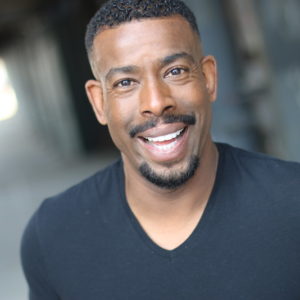
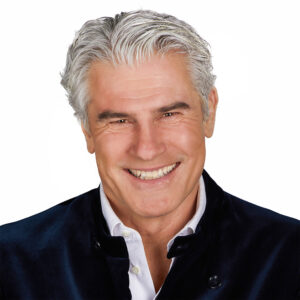
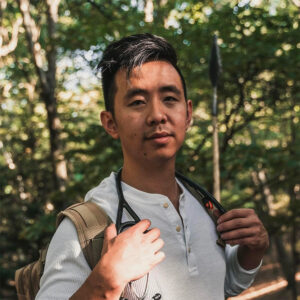
Can science help you survive in the Arctic? Neil deGrasse Tyson and co-hosts Chuck Nice and Gary O’Reilly learn about what happens to the body during starvation and harsh conditions from someone who’s been there with survival doctor, veteran, and contestant on Season 9 of Alone, Dr. Teimojin Tan.
We discover Arctic warfare and what it takes to survive in the wild. What will kill you first in a survival scenario? We rank the things you need to survive and explore the importance of companionship. Teimojin tells us about his experience living alone in the Arctic for 63 days and what methods he used to avoid drop shock. What is the hardest mental aspect of surviving alone?
Learn the stages of what the body goes through during starvation. What is it like to be a doctor and knowing exactly what’s happening inside your body as it’s happening? We discuss ketosis, the body’s metabolic rate in the Arctic, and what happens when your fat stores deplete. How do you prevent sickness in the wild? How would we deal with isolation and intense environments in space travel?
What are best practices for designing a shelter for extreme cold? We discuss fluid dynamics and how best to retain heat. Can humans survive on drinking their own urine? Learn why that’s not such a good idea in a survival situation. We explore the law of the end of the world, the realities of self-amputation, primitive methods for staving off infection, and even more…
Thanks to our Patrons Steve Duke, Jon Siegfreid, Pau Vogel, Luis, Eric Weaver, and David H. Carroll for supporting us this week.
NOTE: StarTalk+ Patrons can watch or listen to this entire episode commercial-free.
Transcript
DOWNLOAD SRTIt’s time to unmosquito your life with Thermocell Zone Mosquito Repellent.
By the way, I use this, and it works.
Thermocell uses heat to diffuse repellent into the air, creating an invisible barrier around you that keeps mosquitoes away with a 20-foot zone of protection per device.
It’s people and pet friendly, no more having to use those itchy sprays on your skin.
Plus, it starts working quickly and is 100% satisfaction guaranteed.
You will be satisfied.
I’ve already done the testing for you.
Find Thermocell’s own mosquito repellent at retailers nationwide, including Amazon, Walmart, Home Depot and Target.
And my house too, but you know, you can’t shop there.
Nationwide Mutual Insurance Company and Affiliates, Columbus, Ohio.
Among what we will learn is what are the stages of starvation right on up to the point where your body starts eating itself.
We also want to know what toll does this take on your mental state, being away from other human beings for that long.
And we’ll also learn the best way to defend yourself against a polar bear.
All that and more on this episode of Star Talk.
Welcome to Star Talk, your place in the universe where science and pop culture collide.
Star Talk begins right now.
This is Star Talk.
I’m Neil deGrasse Tyson here, your personal astrophysicist.
And today we have a hybrid episode.
We’ve got a special guest who’s an expert in survival.
We’re going to find out all about that.
And then we’re going to pivot to Cosmic Queries on that subject because we know people think about that.
My co-host, Gary O’Reilly.
Gary, always good to have you, man.
Hey, Neil.
All right, former soccer pro, soccer announcer.
And we got him.
We share him with the rest of the soccer universe.
And Chuck Nice.
Chuck, good to have you, man.
Former survivalist.
Let me just set the record straight here, OK?
I am a black man of a certain age.
Oh, a different kind of survivalist.
In America, I’m a survivor.
I’m still standing.
I’m still standing.
I’m a survivalist.
OK, that’s a different kind of survivalist.
But let’s find out.
So Gary, set us up here and tell us who our guest is.
All right.
A little while ago, we had a question in one of our cosmic queries about how would an understanding of science in a wilderness survival situation be good?
And we’re not talking survivor.
We’re talking kind of alone, the one that airs on the History Channel.
Who can tough it out for about 100 days in the middle of somewhere nowhere with nothing but some serious survival skills?
From memory, our answer wasn’t the best.
We needed a proper expert, a real survival expert.
And so our guest today is Dr.
Teimojin Tan, founder and owner of Survival Doctors, practicing medical doctor in Owensound, Ontario.
That’ll be in Canada.
Served in the Canadian Armed Forces, specializing in Arctic warfare.
What?
That’s a thing?
Yeah, he’s a nice warrior.
It is, yeah.
You know, that’s gotta be a thing when you’re from Canada.
I mean, also, the skill set here involves survival medicine, disaster medicine and disaster response.
He was in Series 9 of the Alone series, survival series that airs on the History Channel.
Yeah, first of all, Teimojin Tan, MD.
What’s Arctic warfare all about, please?
Thank you, guys.
So, cold weather warfare or Arctic warfare is the practice of any warfare in cold environments.
So, that may be in the Arctic, sub-Arctic, or just in your backyard if there’s an invasion and there’s a cold weather.
So, you have to battle the elements logistically, move your troops between, and know how to do assaults, win wars in cold environments.
So, now, you know, the biathlon came out of Arctic warfare.
And do you guys train that way, too?
Are you on skis and shooting and all that kind of stuff?
Everything that you would do in regular combat, you’re doing it also, like, for snow sports?
I wish we had skis that would make us move a lot faster, but that’s snowshoes.
Big old, goopy snowshoes with about 100 pounds on us, carrying 200 pounds on a sled.
Wow.
So, I think about this, the history of our species before agriculture was primarily during the Ice Age.
And so, when I think of survival, they survived because we’re here today.
So, did you learn anything from whatever the books tell us about caveman survival versus what you might pick up in a modern 21st century understanding of survival?
I mean, a lot of the physiology in our bodies are the same.
People go through severe hypothermia at around three hours of too hot or too cold, so too cold in this situation.
And the layering systems and waterproofing and shelters, those concepts don’t really change.
Maybe the climate, the landscape, the predators do change and the tools that we had.
So, I would say that the average person who survives multiple winters way back when was a much stronger and more formidable person than someone today with all these technologies.
Chuck, he just said that the winters killed off everybody else.
Didn’t he just say that?
Exactly.
That’s basically it.
Exactly.
So, here’s the deal though.
When you’re survival, there are certain things that we need to survive.
Number one being water and the second, like you just mentioned, is hypothermia in either way.
So, hypo or hypothermia.
So, how do you get fire?
If everything is frozen, how do you get your water?
All these things are just almost impossible just because everything is frozen.
And if you drop most of us butt naked into the Arctic, we’re dead a few hours later.
Well, I’m dead before you drop me because I killed myself on the way.
Just to start off, you mentioned water, you mentioned cold.
One thing that people often forget is oxygen.
Without oxygen, you’re done in three minutes.
Oftentimes, that’s overlooked because we take that for granted.
But if we think about medical emergencies…
Is there an absence of oxygen up in Canada?
So, if we think about it, oxygen is environmental, right?
We can be at altitude, we can be in a cave.
But more realistically, in our day to day, if it’s a medical issue, if you have a heart attack, if you’re bleeding out, these are things that are a priority over your survival priorities because that medical condition will kill you in minutes instead of hours.
I want to add some emphasis to what Dr.
Tan just told us.
You can rank in sequence what you will die from if it is withheld from you.
And so I got to be all in with you on this, Teimojin, that without oxygen, you’re dead in however many minutes.
Without blood, you’re dead.
So they learned in Vietnam, most of the servicemen who died didn’t die from getting shot.
They died from the loss of blood in the wound for having been shot.
And so the first thing you do is stop the bleeding.
That’s the first thing.
Forget everything else.
Stop the bleeding because you will die from that faster than anything else.
So I’d like to hear more about this sequence, this death sequence that you want to protect yourself against.
Absolutely.
So the death sequence, that sounds so ominous.
It sounds so Neil, that’s what it sounds.
It sounds so Neil deGrasse Tyson.
So the death sequence, it starts with three minutes without oxygen, three hours without normal thermia, too hot or too cold, then it’s three days without water, three weeks without food, and then after weeks, and people often forget this and neglect this, and it happens from moment one to multiple months, is three months without companionships, connections or relationships.
So psychologically, that could be a huge effect.
Now, do people go mad or do they actually die?
Because the other things you said result in death.
I mean, for me, three months without being around anybody, because I have three kids, I call that a vacation.
That’s a beautiful thing.
That’s wonderful.
Season 11 of Alone.
I used to think that, too.
And I remember I grew up with heavy doses of the Twilight Zone, which predated our time in space, but it knew it was imminent.
And many of the episodes studied loneliness in space.
It assumed somehow we would send one astronaut to Mars, right?
Or whatever, which never happened, of course.
Plus NASA is always yapping at you on the channels.
But they all went crazy, and I thought, wow.
And then as I got older, I got to echo what Chuck said here.
Not only do I greatly relish time alone, I know people who don’t ever want to talk to anybody ever.
You give them books or their music and they’re fine.
So who is it really true that three months without human contact is, for some people, is bad?
I don’t see that.
It really depends on the person.
Like you said, some people need to be alone, want to be alone.
And for those people, maybe that could be an option for them.
I would say for the majority of people, especially if we just look at the pandemic as an example and then look at the incidents across the US for the rising mental illness, we see that disconnect from people can cause disturbances.
It didn’t happen to you because you were on that Alone show.
Except how alone could you be if there’s a camera on your ass all the time?
Solo cams.
Solo cams, so that’s the big thing.
All of Alone is self-filmed.
The B-roll that’s done at different sites, but it’s all self-filmed.
It’s you and your three buddy cameras, and you can name them if you want to, but that’s your relationship.
That means it’s getting really bad if you start naming your cameras.
Yeah, when your cameras play the role of Wilson, you know you’ve been out there too long.
Well, it does make sense because there is a great deal of research now, some of which I found very intriguing about solitary confinement being considered torture.
And by the way, what they don’t say in solitary confinement is you’re not only in solitary confinement, you’re in a tiny volume.
So, there’s a size area thing.
But you’re out in the wilderness, so you don’t have the volume problem, the area volume problem.
We have the range.
You got the range.
But did you feel this emotionally though?
Yeah.
I’ll give you what I did as a trick because I worked with my patients in a family medicine setting.
I also been to therapy myself.
And a lot of the people that I work with in the medical field are psychiatrists, therapists, cognitive behavioral therapists.
So, I threw the kitchen sink at this whole experience and did all the coping mechanisms I’ve ever been taught.
Just tried to be as good as I can with that aspect.
And one of the things that I really emphasize is finding ways to build relationships with what I got.
So, that may have been making my cameras, that may have been making friends with animals.
So, do me a favor because I am so…
This is probably…
This is so fascinating.
The fact that you spent…
First of all, how long was it that you were alone?
And then second question, follow up.
What were your top three coping mechanisms?
Because you said, you know, you did everything from family therapy to your psychiatrist or psychologist.
So, what are the top three and how long were you alone?
So, I was alone for 63 days.
And…
Yeah, yeah, it was quite some time over there.
I saw the seasons change.
But one of the categories of coping mechanisms that I used should be differential between drop shock and initial stuff or acute kind of reactions and what I did on the long term.
For a lot of the initial things, I did breathing exercises, same thing I did in the military for shooting actually, to elevate that parasympathetic nerve response.
So, bearing down, box breathing, I get really chill so I can have a clear head.
And then I did a lot of meditation on the acute setting.
On the long term setting, it was for me, how do I make a connection?
How do I build a relationship on the land that I am, on especially if it’s indigenous land, how do I build that relationship with no one there?
And one of the things that I practice a lot was gratitude and asking for help, openly asking for help.
And one of the most…
To the cameras?
To whatever was out there.
Okay, I got you.
Go for it.
I think a powerful feeling is that when you ask for something, whether that’s your ancestors, the spirits of the woods or God, and you receive that, that’s an incredibly empowering feeling that you know that someone has your back.
And when you do it once, you do it twice, you do it three times and you do it almost every day, and you receive and you receive and you receive.
So it’s a manifestation.
And some people would call that prayer and they’re thinking that’s a higher power that’s actually granting it.
Some people call it manifesting, which is why it’s just speaking things into existence.
You’re not literally speaking them into existence, but the fact that you verbalize it, that you hear it, allows you to then manifest it.
You’re actually doing it, but you wouldn’t be able to do it unless you spoke it.
Some people, as you said, you’re ancestors.
So, I mean, throughout history, there’s been so many things associated with that, but that is fascinating that you actually put that into practice.
So, Teimojin, how quickly do you get to suffer mentally?
In isolation, compound that, because this can’t be good news, really.
Isn’t there another way you could ask that?
You are hardcore, Gary.
Tell us if this dude’s suffering.
Nick, he’s not got a little wicker basket out there for sandwiches.
Get to the good stuff.
Tell us when you started breaking down.
So, okay, you know, you’re in isolation.
Probably not the best thing, as we’ve just discussed.
But you’ve compounded that with calorific deprivation.
Surely, you really are putting yourself on a fast track to having some disturbance there.
Absolutely.
And let me tell you, starvation is no joke.
You know, one of the worst pains that you can kind of feel, especially when you transition between starvation and actually craving, because your stomach shrinks, you’re not as hungry, a little bit of food satisfies you.
But when you start craving things and you can’t get it, I was craving things that I would never eat.
The yellow-orange cheese at the corner shop that you dip your nachos in.
And that’s not even real cheese.
I was craving that.
And it’s not even real cheese.
It’s not even real cheese.
So you get into that craving zone.
It’s like an obsession and a pain that you can’t really touch.
And I would say that’s another form of torture.
But when you think about when my suffering first started, was after I didn’t have a plan.
You go in, you have 10 items.
You think you know what you’re going to do with your shelter, with your food sources.
You go there and you get whatever resources that the land offers.
I caught a few fish the first few days.
That’s amazing.
Every cast I threw, there were bites.
Day four, nothing.
Day five, nothing.
Two weeks passed, nothing.
You did everything.
I don’t think so.
There was only four fish that I caught in the first few days.
But it was nothing for me.
You over fished the land with only four fish.
The producer put the four fish in at the beginning.
When you’re in this isolation, this mental aspect of survival and isolation is fascinating.
I think we’d all agree with that.
Does your brain now engage with kind of upgrading your senses?
Now, are you that much more aware?
Does this survival instinct really, really kick in?
100%.
So there is an instinct that is innate to, I think, all humans that are open to that type of experience.
If you don’t break down and you are in it to live another day, whether that’s another day or to win half a million dollars, if you are invested in it, your attention does shift.
And it is quite a beautiful thing because it’s almost like a constant grounding meditative experience where you’re sensing with your nose, your feelings, your sound, your taste, like every little sense and every little sound in the woods, whether that’s a squirrel sound or a bird that you’ve never heard before, you get to know every little thing.
And it became like almost a research project for me because I was associating different sounds to different behaviors of different animals at different times of the day.
And as I got more data, I was able to hunt more effectively.
So after two weeks of not getting any animal protein, after some observations and taking some mental notes, I only took shots that I knew I could get at 100 percent or close to it.
And I was hunting for the first time because prior to this experience, I had never hunted.
I’ve shot a recurve bow for seven years, but I never hunted before.
So animal protein, that’s code for dead meat, right?
Meat.
Meat, baby.
I need meat.
You start craving it.
So this craving concept, there was a scene, forgive my cinematic reference here, but in, what’s that movie where the Central Park animals go to Madagascar?
Madagascar, okay.
It’s called Madagascar.
There you go.
In Madagascar, all these animals are coexisting in the Central Park Zoo and all being fed daily.
So they’re just friends.
Then they end up in Madagascar, and the lion is hungry.
And all of a sudden, the zebra, who I think was played by Chris Rock, is that right?
Yeah.
The zebra, who was his friend, started looking like a pork chop or some kind of slab of meat.
And he’s like, why are you looking at me like that?
So it wouldn’t be a pork chop, it would be a zebra chop.
But that was a hint at the psychological shift of what previously you would never consider eating now looks delectable.
So did insects start looking good to you and other things that you just would never consider eating?
Oh, insects.
I wish I had insects because I would have eaten it, but it was so cold by week two that there were not insects up to like three feet deep because I was digging for things.
But there are parts of animals that I never thought I would eat that I ended up enjoying and craving.
Brains, spinal cords, eyeballs, you name it.
I was trying to eat like up to 90% of most animals that I would take out there because you were that hungry.
And you cook them though, right?
Oh yeah.
I don’t know anything about, listen man, you are speaking an alien language to me right now because if it does not come from Whole Foods, I feel like I am hunting.
I’m going to be eating somebody’s eyeball.
I’m going to have to cook them first.
Season it a little bit.
So Gary, we cut you off.
What else?
We got a couple of minutes before the segment ends.
Okay.
So if we stay on this mental thing, do we now get to hallucination?
Do we now get to…
Especially in the hunger state.
Yes.
You get now, you talked about indigenous land.
Do you then kind of absorb some of this spirituality and then reconnect with ancestral?
Does it come on like that or am I beginning to trip?
I think it’s a little different for everyone.
I can only speak to my experience out there.
And since I was actively trying to connect with those spirits of the lands, those ancestors of the lands and asking for help because I’m no hunter.
I was asking, hey, where do I find food?
How do I get food?
What would be the best shelter?
And there was subtle signs of presence there.
So there have been the way trees are bent there to make cooking benches and stuff like that.
So to see that and to feel that and then to gain from the land, it did feel like I was surrounded by that type of presence.
And that was incredibly comforting to me.
So it’s a very powerful mental force operating on you.
Because, you know, we in modern science, of course, we poo poo all of that.
But if you’re out alone and you need to survive, the fact that you had those thoughts at all and the fact that those thoughts are especially prevalent among native peoples of land prehistoric times, then you are tapping into something that must go very deep within our species.
It makes sense.
And Teimojin, are you in any way, as far as your ancestry, connected to indigenous people for this part of the world?
Not this part of the world, but I would say that I’m named after Gagans Khan, so I’m probably, in some way, related to a bunch of different people genetically.
How are you named after Genghis Khan?
Hey, man, we’re all related to Genghis Khan.
My boy had some children coming out of him.
Are you kidding me?
How is Teimojin Tan named after Genghis Khan?
Genghis Khan is a title, king of kings.
He was given that name.
His name was Teimojin, which meant of iron.
So, typically given to family members who were destined to be blacksmith.
He was kidnapped, he was enslaved.
So, he became a child slave who rose up against his oppressors and just took over a big portion of the world.
Never stopped.
Yep, never stopped.
Everything I know about Genghis Khan is from Bill and Ted’s Excellent Adventure.
Just thought I’d put that out there.
I’m being honest with you.
I know you are.
You are.
I’m not going to be honest with you anymore.
You’re not going to take your ball and go home.
Alright, we’ve got to take a quick break.
When we come back, we’re going to return to our conversation with Teimojin Tan and we’re going to learn more about what he did.
Was it a bit of instinct or was it a bit of science that he brought to his survival?
When StarTalk Sports Edition Cosmic Queries Hybrid continues.
PayPal has played a starring role in many successful businesses.
No matter where you are in your entrepreneurial quest, PayPal has trusted solutions to help you grow your business.
Solutions that enable you to sell in more places and reach customers, whether they’re online, in store or on the go.
PayPal is so much more than a button customers use to pay on your website.
It helps businesses of all shapes and sizes reach more customers, accept more forms of payment and grow their bottom line.
With PayPal, businesses can accept credit cards, debit cards, buy now, pay later options, Venmo and more.
When your customers have more ways to pay, you don’t miss a sale.
PayPal lets you streamline and simplify everyday tasks, from accounting software and e-commerce platforms to marketing and social media tools.
PayPal is a name that your customers trust with hundreds of millions of users worldwide simply offering PayPal as a payment option at checkout gives your business instant credibility.
We all know and love PayPal.
Rethink what’s possible for your business with PayPal.
Visit paypal.com/us/startalk.
Remember house calls when the doc came by and took your temp and tucked you in when he was all done?
No, you don’t remember that.
Those days are long gone, but one company is giving new meaning to the term house call, Teladoc Health.
Their primary 360 program lets you choose a board certified doctor that’s right for you and get primary care from the comfort of your own home.
You can connect via phone or online with a board certified doctor who will get to know you and provide whole person care, including offering advice, prescriptions, even mental health support and referrals.
They can also help with chronic conditions like hypertension and diabetes, as well as weight management.
I have used Teladoc.
Here’s what I love.
When you’re sick, you don’t feel like getting up and going to the doctor.
Why not let the doctor come to you?
That’s right.
Download the app to get started today or go online to register or schedule a visit at teladochealth.com/startalk.
That’s T-E-L-A-D-O-C health.com/startalk.
We’re back, StarTalk.
This episode is on Stayin Alive!
I worked so hard on my head.
I worked so hard on my head, look at what you do.
Don’t think you got there, Neil.
Oh dear.
This went down real fast.
The American culture we’re talking about here.
The songs by the Bee Gees, they’re British.
Oh, that’s true, but it’s American film.
American film.
We got Teimojin Tan.
Did I pronounce it, your full name correctly?
Teimojin Tan.
Just tan like a sun tan.
Tan, tan, Teimojin Tan.
Thank you for correcting me there.
So, you were alone for two months surviving and you have a knowledge of physiology, being a medical doctor.
You also have knowledge of science related to that, science of an environment.
So, could you walk us through the steps of starvation, which did you experience some of that?
Did you not?
I think everyone on the history of Alone has experienced starvation to one extent or the other.
And it is a very precise and predictable sequence of events.
Take us through it.
It starts with denial, and then it goes to anger.
And acceptance, right?
And then acceptance.
Absolutely.
So, you have glucose in your blood, right?
So, your body bears that, your brain bears that.
One of the many sugars, one of the simple sugars, yes.
Mm-hmm, exactly.
So, that becomes depleted within the first day or so.
Then your body kicks in to a glycogen breakdown.
So, your liver and your muscles start breaking down the storage package so that you have more glucose.
Within three or four days, depending on your body habitus and your baseline makeup, that’s gone.
So, four days, you need another source of fuel.
And your body starts to break down both proteins and fat.
And then soon after that, preferentially focusing on fat, that’s kind of what ketosis is mainly about.
So, the breakdown of fat and the breakdown products of fat or energy.
Just to be clear, when someone says they’re on a keto diet, they’re on a diet that puts their body into that state.
Is that correct?
Yeah, good, good.
Absolutely.
A few things happen to you.
You feel like you’re run down, low energy, your breath and your mouth may feel different.
So, I felt like my mouth was really dry and just tasted different.
Some people say that their breath smells a little more sweet, but I didn’t smell anything different.
But after that stage, you can pretty much cruise.
So, you feel really crummy for a few days, a few weeks even, and then your body starts getting used to that energy source.
And even though you may be getting some carbs from berries, from little things that you’re foraging, it’s not enough to pull you out of ketosis unless you find a jackpot of a bunch of things.
Like a stack of pancakes around the back of a tree.
Stack of pancakes.
You find a supermarket.
Did you call it cruising?
You cruise this keto state.
Yeah, so I imagine that’s when people who do ketosis for fun or for health queries, they typically feel bad at the beginning, but then learn to work with it, they learn how to exercise with it, and then they’re able to function.
And that’s true in a starvation state as well.
So after I felt like I couldn’t walk more than a few steps at a time before feeling a little winded or lightheaded, then I was hunting like multiple hours a day, no problem.
But the scary thing is once your fat reserves go down, because I packed about 30 pounds on my frame, and once that was all gone, it starts to take from your organ fat.
And once that’s all gone, your body senses the amount of fatty acids in your blood.
And there’s a critical level that it reaches until your engine that’s saying what fuel you need to take switches very drastically to protein.
And you’ll notice a very aggressive take of protein off your frame.
And we’re talking about noticing function loss, gradual and substantial function loss within a span of days.
That’s when your body is eating itself.
Eating itself.
It’s eating itself literally.
Your muscles are atrophying, not from lack of use, but from your body stripping them of…
As a source of energy.
You know, as a source of strip mining.
Your body is strip mining itself.
You know, you’ve put on the lumber, 30 pounds before you go out.
So, and how long does it take for you to hit that strip mining phase?
Or is it individual?
It gives you a little bit of time.
So depending on what you’re doing, in Alone, you’re building your shelter.
You’re not sleeping in a tent or anything like that.
So the first few weeks is pretty energy intense.
I would expect you would lose about anywhere from a half a pound if you weren’t doing a whole lot to a pound and a half a day for the first few weeks.
And then afterwards, it kind of evens out when you get into your groove where you’re just like sitting, fishing, checking traps, expect a pound to half a pound a day of loss, no matter what you do.
So if you’re just laying around in your sleeping bag, you might be losing half a pound a day.
That’s crazy.
Well, your metabolic rates, you’re trying to maintain your body temperature, especially against low temperatures, that takes more energy than it otherwise would.
So you’re not just, you’re never not burning nothing.
Are you?
I just forgot about the fact that we’re in the cold when we’re doing this, which exacerbates everything.
So I said, you’re never not burning nothing.
Is that, do I have too many negatives in there?
No, that’s a triple negative.
You went there, you came back, and then you came back again.
I came back out safely out of that.
Yeah, you came back out safely.
You’re never not burning nothing.
You’re never not burning nothing yet.
So are you in that position of luxury to store things?
Like could you store any food stuff?
Could you store water?
Or is it, you know what, I’ll take it, and I’ve got no way of-
I mean, in a pantry.
Yeah, did you have a pantry in your story there?
Not a pantry.
Actually, I did have a little pantry, and I use reindeer moss.
So it’s a lichen, and it’s a lichen that has fiber.
It’s a lichen that has some simple amino acids and a low amount of carbs and sugars.
You use reindeer what?
So I have a moss.
Reindeer moss.
What is that?
So it’s a very, it kind of looks like a little fluffy thing.
Not a moss, not a mushroom, something in between.
So a lichen.
And reindeer eat a bunch of it.
So I had about 15 pounds of that in my shelter, and I made a big old basket to keep it in and to dry it.
So you basically took tree slime and put it in a basket.
I think this is old words, Chuck.
And said, oh, I got a pantry.
When I looked at some of the contestants that were involved in the Alone series, and there’s been a number of series, they’re not all just being airlifted out because they’re lonely.
Some of them being airlifted out because they’ve got something tainted, be it water, be it food stuff.
So how are you going about?
I mean, plus plus here, you’re a medical doctor, but how are you coping if you’re not able to get potable water, if you’re not able to do anything but drink stuff that’s got the wrong kind of amoebas in it?
Yeah, because one bad encounter with the wrong bacteria and goodbye, it’s over.
Absolutely, and if you look at season nine of Alone, about 40% of the contestants got some kind of gastric bug, namely Giardia, I think was the biggest culprit because they were hunting beavers, and it only takes two cysts, so two cysts under a microscope to get infected.
So hygiene, if you have a good idea of how to keep your camp clean and practice good hygiene, that goes a long way.
So don’t eat beavers is what you’re saying.
Don’t eat beavers.
Well, you can eat beaver, just make sure that you’re not using a beaver tail as your plate, which I think someone did and got really sick.
This is crazy, this is just-
Let me just say this and I’m sorry to say this.
They deserved that.
Let me just put it that, they got what they deserved.
So Teimojin, I get all this, it’s man against nature, man against the elements, but how about man against polar bear?
You’re in the Arctic.
How do you, it’s not clear to me how you would ever win against a polar bear without a 30-odd-6.
Well, if you’re hungry enough-
30-odd-6 would be great.
But if you see a polar bear, it’s not because you stumbled upon him by happenstance, he’s been tracking you.
That guy has a huge sniffer.
So that amount of muscle and pure feral ferocity, you don’t really stand a chance without kind of modern weapons.
You can try to shoot an arrow at him, but that thing, if he charges you and hits you one time, you’re pretty much done.
So, I read this thing where, and I can’t speak to the veracity, but male polar bears can smell female polar bears from miles and miles away.
Maybe that’s part of to help with the mating process, I’m not sure.
But if they have that strongest sense of smell, I’m sure that food…
They’re going to smell your ass.
Food is right up there.
You have food, sex and shelter.
Two, three things, you know, you got to have.
Okay, so you’re saying you’re admitting you need modern weapons.
You’re admitting that.
I would say so, unless you have a tribe.
But most survivalist booklets and things are more sort of…
Who’s that guy that did a whole TV show with him?
Dave Canterbury is one of them.
No, no, no, I’m talking about Bear Grylls.
Bear Grylls.
Okay, maybe I was thinking of who’s the guy who did everything with duct tape and…
MacGyver.
Oh, MacGyver.
Yeah, yeah, yeah.
Yes.
So, MacGyver doesn’t have fancy weapons.
He’s resourceful with what’s around him.
But you’re saying in your situation, there are occasions where being resourceful would never improve your survival.
You would have to be pretty darn resourceful to make a bomb or something like that a huge trap for a polar bear.
Okay.
Yeah.
Hitting them with a snowball is not going to happen.
No, not going to happen.
All right.
So, let’s get to our cosmic queries.
Let’s maybe slip one in before our second break.
Okay.
Who’s got the first one?
All right.
I’ll jump in.
This one from our Patreon listeners.
And thank you.
There’s some fantastic questions.
Aaron Rosenberg.
Dr.
Tan, with this and your experiences in mind, what was a survival situation that surprised you the most in terms of digging deep and confronting yourself?
And then this flips.
And how might these lessons we’ve learned from survival in extreme conditions here on earth be applied to long-term space travel of future extra-terrestrial colonies?
Really good question.
Aaron, showing off.
I know.
What I get from this is how or when, in what circumstance, would we change ourselves to overcome an incredible adversity?
Perhaps that adversity is being alone specifically in space.
I think the flip for me is after I got some more food, after my shelter was cozy, I was hanging out by the fire.
The next question was why am I still there?
What was my purpose?
What was my mission at that point?
I remember at day 40.
Exactly.
I think a lot of people get that when they’re alone and they don’t really have a clear reason to be there or to push forward.
For me, I actively was searching for that reason.
On day 40, I remember just watching the river and having a memory pop up.
It was a memory of something that my mom had told me when I was a kid.
That got me thinking about how my mom has been through the past year and how far away I have been from her, from medical school, from traveling and so forth.
She told me that whatever I did, as long as I loved doing it and as long as I tried to be the best at it, that she would be proud of me.
She was the type of woman that would fight for any of her kids no matter what.
She went through a bunch of health issues, relationship issues, financial issues through the days and years and just became a person who was not that person I knew when I was five years old and to potentially have a purpose out there to say hey, maybe I can remind her to show her the type of person she raised, the values that she bestowed upon me.
Maybe that would make something click so that she can go back to that person or even think that she deserves to be that person.
That’s what pushed me.
A spiritual pep talk, right?
It’s spiritual in nature, but it is also so inexorably tethered to what is corporeal that it is kind of a mind.
You just put those three words inexorably tethered to the corporeal?
Did those three words just come out of your mouth in a row?
Yes they did.
Fine.
Is that bad?
I guess not.
Sorry.
That’s my vocabulary.
I’m not ready for that.
Okay.
Go on.
What I’m saying is it’s kind of a…
It’s a mind F in a way.
You know what I’m saying?
But that’s how deep it is.
That’s not something you would have thought of taking a bubble bath is what I’m saying.
Let me address the space side of that question.
I mean we’re in a position, the space voyage, just trick it out with whatever you want.
Get the Netflix account, you know, the music.
So I don’t see that as a problem traveling to a destination.
But when you get there, then all of what you’re saying would matter if you’re sort of a, if you’re a pilgrim, you know, or not even a pilgrim, what do you call the first ones?
If you’re the first ones coming in, pioneers, settlers, pioneers, yeah, you’ll need some of that.
But on the voyage, just trick out the spaceship in whatever way you need it to be.
One other thing before we take a break, you commented earlier about that you started naming things and having conversations with things.
That’s a recurring theme in at least four films that portray the last person on earth.
So in The Omega Man and I Am Legend, and then there’s another film, which is lesser known, The World, the Flesh and the Devil, which actually had Harry Belafonte in it.
And there was an Aussie film, actually a New Zealand film, called Quiet Earth.
All of those is a person who thinks they’re the last one on earth, but they’re in cities.
And so they go into shopping stores, department stores, and they make friends with the mannequins.
The mannequins all have names.
How are you doing today?
They dress them differently each time.
What’s up, Woody?
So this is exactly what you’re describing.
And I’m thinking, man, this is getting deep inside what the human brain wants to do.
Maybe civilization is squashing that in some fundamental way.
We need to let more of that out.
Maybe life would be more interesting and more fun.
We got to take a break.
When we come back, more Cosmic Queries on Staying Alive.
Hey, you’ve been searching for a hotel for that epic trip that you’ve been planning, but there’s so many options that you can’t decide which one to book.
The Choice Hotels family of brands has over 7,500 locations with a hotel for every type of stay, like Cambria Hotels with offerings like rooftop bars, spa-like bathrooms and convenient downtown locations, or a comfort inn for the whole family to enjoy.
Cambria Hotels offer spa-like bathrooms with many that have Bluetooth mirror connectivity so you can listen to your favorite podcast, and we all know that’s StarTalk, or songs while you get ready.
Each Cambria Hotel is curated with locally inspired design elements, providing guests with a sense of space and place in the city you’re visiting.
Cambria Hotels offer hyper local craft beers on tap.
Okay, you had me at craft beer.
How about rooftop bars, lounges, and outdoor spaces for guests to enjoy?
Comfort offerings include a free hot breakfast, great pools for the entire family and spacious rooms.
Make your travels come true today when you book direct at choicehotels.com.
That’s choicehotels.com, where travels come true.
Hey, if you like saving, you should join Walmart Plus.
It’s a membership that saves you money on the stuff you’d expect, plus the stuff you don’t.
Like gas, plus free delivery, plus a Paramount Plus subscription, plus so much more.
I love saying plus.
So you can drive the kids to soccer practice, order snacks for movie night and stream your favorite movies all while saving.
Start a free 30 day trial at walmartplus.com.
See Walmart Plus terms and conditions.
Paramount Plus essential plan only, separate registration required.
We’re back, Star Talks, Cosmic Queries.
We’re talking about how to survive in the wilderness.
Man, man, it’s…
This is so much deeper than I thought it would ever be.
There you go.
Teimojin Tan, who’s a survivalist, also a medical doctor, and he appeared and was a contestant in Series 9 of Alone on the History Channel, where you carry your own cameras, if you’re not followed by a camera person, then you wouldn’t be alone, right?
You plus a camera person.
You’re alone.
You got your own cameras.
So every bit of this is fascinating, and it is something I will clearly never do in my life.
So, Gary, Chuck, you got some questions from our Patreon fan base.
Before we do it, can I just give $5 right now so I can ask a question?
Five dollars a month.
I got serious access.
Can I get five?
That’s all it is.
I’ll take five dollars, because here’s what I want to know.
One Star Talk Coffee.
Are we going to put this in the bin?
All right, go, Chuck.
We’ll put it in, okay.
Everything that we’ve talked about so far has been so intense mentally.
How did they screen you?
How did they know that, hey, I’m not going to screw this guy up for the rest of his life by letting him go and try this?
Sure.
So the screening process is, I think, standard for a lot of TV things.
You get a medical check from a doctor, and that’s pretty much it.
If you don’t have a history of it, any kind of mental illness, then that’s up to you to describe.
But if you do, then you chose to do this.
You signed a disclosure.
In other words, you signed a release.
That’s the answer.
Okay, there you go.
Let’s get another question.
Gary, you got one?
Yeah, for sure.
Ronnie Wayne Gortz from Brooklyn in New York.
He says, Drs.
Tyson and Tan and Mr.
Nice, what are the best practices to optimize the design of shelters, closing and equipment for individuals facing a wide range of extreme conditions?
And, would having a knowledge in fluid dynamics or material science give you the edge in survival?
Yeah, more broadly, science in general.
Because the cavemen didn’t have science, but they managed to birth all of us, right, eventually.
So, how much does science matter?
So, science, when you look at, you talk about fluid dynamics, I’ll talk about fluid dynamics in the body, and also concepts of insulation.
How do we retain heat?
So, we know that heat is lost by multiple different means.
So, if you kind of halt those multiple different means by insulating, having vapor barriers to prevent evaporation and convection, that’s super helpful.
And wicking away from your body so the water is not retained close to your body, so you’re not changing the water temperature and transferring that energy from your body’s heat to elevate that temperature in that water.
So, that, from a science standpoint, is there, but very succinctly and simply, insulate yourself, have a vapor barrier, if possible, have a layer that reflects heat as well, and also have a way to do that in all parts of your body.
Make sure, as much as possible, cover up.
So, in Arctic temperatures, all you’re seeing is like two little holes for your nostrils, and that’s it.
Everything else is covered up in at least three different layers.
And when you’re looking at your shelter, you want an insulating and waterproof layer that’s at least a foot thick.
My shelter on Alone was about two and a half feet thick of moss, dirt and ice.
So, warm and dry is what you want.
Insulated, warm and dry, basically.
That’s the rule of thumb.
Okay, so then what of an igloo?
Igloos are awesome because, again, they’re insulated and they’re thick.
So, most igloos are at least a foot and a half to two feet thick, and you’re just trapping a lot of your own body heat.
So, if you’re not starving and you have a lot of calories that you’re just burning off at heat, a lot of that heat is retained in that structure.
So, that’s, yeah.
So, you can heat up an igloo for like a 10 foot by 10 foot with like two candles and have enough to not need a jacket.
Damn, wow, okay.
Very efficient.
Barbecue weather.
Mm-hmm.
All right, Chuck, you got a question.
This is SteelFinger7, SteelFinger7 says, hello Neil, Dr.
Tan, hello Gary, how long can a human survive without water?
And how long can a human survive drinking only their own urine?
I’m asking for a friend.
That’s funny.
Yeah, because you said three days, but I was remembering more like a week.
So, three days is typically your marker, but let’s say if you’re in a desert or if you are lost and you’re already dehydrated, that timeline gets pushed a little shorter.
So, three days without water is typical.
Your guidelines that work around.
If you’re conserving a lot and not doing much, you can extend it a little bit, but that’s what you have to work with.
What about eating your own, drinking your own pee, which we hear tell?
They say people do that.
That is not advisable because that will make you a little more dehydrated and help accumulate a lot of the toxins that is the waste product in your body.
So, not advisable.
If you can distill it, just like how we do on space stations, that would be an excellent choice.
And with some simple tools, a few buckets, things that you can carve, you can make an improvised distillation setup in the woods too.
Interesting.
I was going to say that’s the idea of the drink and the pee.
It’s like, what are those suits in DOOM that they wear?
They recycle your sweat.
All of your body fluids.
Yeah, exactly.
Yeah, it’s kind of cool.
There you go.
Keep going.
Who’s got the next one?
I’ll jump in.
This is…
You guys never share the questions with me.
Take it easy.
Put your feet up.
This is from Nick Smith, another one of our Patreon listeners.
During the tail end of a few climbs in the mountains where my partner and I have been moving for over 24 hours, both of us have experienced hallucinations.
I’ve always assumed they’re from some combination of exhaustion and running on a calorie deficit.
I’m curious, however, if there’s a medical or psychological explanation for them.
He’s also wondering if Dr.
Tan, you know, if anyone has experienced similar events.
Plus, they’re hiking in the mountains, there’s also less oxygen.
So you have oxygen deprivation and the rest of these combined.
So what are the thresholds for hallucination?
I would imagine many people have different thresholds because when we think about people who are in the mountains at high altitude for the majority of their life, they don’t experience the same things you and I do who come basically from sea level.
But you talked about dehydration, you talked about oxygen deprivation, you talked about calorie deficits.
All those things can make you a little loopy.
But the concerning thing is, especially if you’re hiking at high altitude, is brain swelling, cerebral edema.
So high altitude cerebral edema, which would be a severe effect of being at that altitude.
So that can cause some mental changes as well.
So hopefully that was not the case and it was just a little dehydrated and calorie deficit because when we think about how many calories we need, it’s on the scale of over 6000 kilocalories a day.
So with altitude sickness, feeling nauseated, not having a good appetite, it’s very hard to get over 6000 kilocalories a day in food, unless you’re eating straight butter.
Right, right, right.
And just to be clear, a food calorie, that would be 6000 calories, but a physics calorie, it’s 6000 kilocalories, right?
Because the capital C is 1000 little C’s.
Big C’s.
Yeah.
Yeah, just want to clarify that.
So there’s a section of the Bible where Jesus goes out into the wilderness and-
40 days and 40 nights.
I don’t remember how long, it might have been that long, but he’s-
Yeah, it’s 40 days.
Is that right?
And he begins to hallucinate while he’s fasting.
And so the fasting would be a trigger.
Well, he doesn’t call it hallucinating.
He’s like talking to God, right?
But you would expect some neurological shift in him.
He didn’t say, let me go to the Oasis and eat banquet food and then talk.
It’s like, let us stress the physiology of my body.
Then I’m susceptible to these kinds of visions.
And that’s what happened there.
And you hit it right on because when you’re stepping away from homeostasis in your body, whether that’s dehydration, calories, or temperature, so I’m not sure if Jesus was having some heat stroke out there, that can all change your mental status.
And we see that all the time in the elderly.
So they come in, you don’t really know what’s going on, and it’s just these small shifts that make them have delirium.
And that wouldn’t be surprising in those situations.
Let’s keep it going.
Chuck, let me jump in on this one.
This is the apocalyptic scenario, so prepare yourselves.
Emily Kaneko Reynolds, I hope I pronounced that correctly.
She’s from Kyoto in Japan.
How would you prepare for a scenario where all the electricity goes down for the foreseeable future or all our satellites completely power off?
What would be the top three relatively easy things to have in place for survival?
Now, you’re a survival doc.
One is an AR-15.
Make sure you got enough ammunition.
That’s the first thing you want to do is go count your bullets.
Count your bullets, Chuck.
Chuck, you’re not wrong.
Don’t encourage Chuck like that.
If you have all the fancy things, all the things you need, and your buddy does just have an AR, then that stuff is his or hers.
Unfortunately, that’s the law of the end of the world.
Whoever has that power.
The law of the end of the world.
Power control is a huge one.
We can talk about sustainable energy.
We can talk about food supply for the last years.
But if there’s an overpowering force, it’s not yours anymore.
The law of the end of the world.
Why do you even have that as a phrase?
Now you’re spooking me a little.
The law of the end of the world.
I’ve got it up on my wall.
Do you have enough ammo?
Yeah, count some bullets.
Here’s an interesting one.
This is Kenneth Bond smells more.
Very funny, Kenneth.
Indeed, sir.
He says, greetings from Atlanta, Georgia.
Modern medicine and technology are amazing and clearly have improved our overall health and longevity.
We may not have access to this in the wild.
What primitive methods are just as effective as modern medicine?
Are there any that are arguably better?
I’m reminded of things like using ants to suture a cut or maggots to clean a wound.
I’ve heard of maggots.
I haven’t heard of suturing ants before.
But I would say things very simply that you can use in a survival situation or a starvation situation is natural fibers.
So one of the biggest complaint is severe constipation.
So much so that we have bowel obstructions and that can turn to explosions of your intestines.
Increasing fiber intake is a very simple way to do that.
There are some plant mixtures that can be used as tinctures for antimicrobials, but again, there’s no head-to-head study, so we can’t really say that that’s super effective.
But what is super effective is removing as much bacterial load as possible.
So having a way to pressure wash with semi-clean water so it might be boiled and cooled with a 60 ml syringe typically removes enough bacterial load if it’s not soaked in feces to let your body heal itself.
So the majority of the cuts that I personally get in the field, the ones that I got on Alone, I just wash it really well with a pressure wash and let my body heal.
So I wouldn’t say it’s as effective as antibiotics, but it gives your body a fighting chance.
Yeah.
And believe it or not, that was a big problem in medicine before we started practicing it the way we do called modern medicine.
It’s just things were not clean.
It’s just the fact that things were not clean made people die mostly of infection.
Not really what was making them sick or what the injury was.
It was the infection that killed them.
So cleanliness is half the problem.
My grandparents said never go to the hospital because that’s where you go to die.
That’s what my grandpa says too.
It makes sense.
So only in modern times is let me go to the hospital so I can get better.
So that had to shift over time.
Exactly.
Dude, that’s fast.
Give me more.
On the same theme here, this is Evan Fenwick, or that might be pronounced Fenwick.
This is from Ontario, Canada, so in your neighborhood.
My question is what is the most effective method to stave off infections in the wild?
And should you get an infection, what is the most effective way to treat or manage?
I think the last bit we’ve kind of addressed.
Personal hygiene, making sure that you’re washing all of your things that you’re processing.
So my setup for eating was 100 meters away from where I was processing the meats, and I had a few different bins that I would use to wash my hands.
You can make a mild soap because we use a reaction between a base and some fats, so whether that’s fat from animals or just the grease in your hair, you can make a very mild soap by just adding white ash, which is a base, and then water, and then that grease to make mild soap with that.
You say that like everybody knows that.
You say that like, yeah, of course.
Let me get some grease out of my hair.
I spent all this time on my hair now.
Look at what you did.
My hair was great out there.
I made my own little shampoo.
That’s great.
I don’t know if we have any time left.
One more question.
Captain James Riley.
Last one, but it’s got to be fast.
It’s got to be fast.
Can you really cut off your own limb?
Wouldn’t you just pass out half way through and wake up with half a cut off limb?
There you go.
Because we know there are cases like that.
The dude wrote a book between a rock and a hard place.
We didn’t have to cut off his arm.
So is that your medically trained survivalist?
Is that possible?
So it is possible, but if you pass out, the main thing to do is to set up a tourniquet.
If it is an extremity, to set up a tourniquet ahead of time.
So if you pass out from the pain, you’ll pass out, but then wake up and then see what you’re doing.
And then if you can, muscle through it and cut it through.
Because after a certain amount of time, that stop in blood flow will affect your nerves and then that nerves may make that area feel numb.
Another way you can do it is you dunk it in the cold, so you dunk that extremity in the cold, put a tourniquet on it and then kind of saw that off.
You have just given me my new worst nightmare.
And he ends it, I just saw it off.
Now you’re ready to just saw it off.
I do, well thank you for sharing your expertise.
Not only a book learned, but street learned and wilderness learned, all combined.
And this is like, like it or not, this is what a whole lot of people think the future needs.
What do you call it?
End of, what would you say?
End of world rules.
End of world rules.
Yeah, I, you know, I’ll just, I, you know, I’ll be gone well before then.
So you’re just, I’m just, but you might want to keep me alive because I can tell you where on earth you are.
All right, I have that ability.
Well, we’ll go and live with Teimojin.
Yeah, that’s what we’ll do.
You’re on our list now, okay?
I’ll put you in a cryo state.
There you go, there you go.
All right, Dr.
Tan, a delight to have you on Star Talk.
Thanks for your enthusiasm, your candor and sharing your life experience with us.
Thank you.
Thanks for having me, guys.
All right, Chuck, Gary, always good to have you guys.
This is another Star Talk.
Staying alive.
Edition of Cosmic Queries.
Neil deGrasse Tyson here.
I can’t keep this in anymore.
I can’t even believe I’m saying this, to be honest.
You know you can tell me anything.
I’m capital VFD42, capital Z, lowercase M, underscore, lowercase P, capital L, reverse, slash, apostrophe, lowercase RS.
I know how you feel.
Just between us, I’m underscore, comma, dash, underscore, dollar, sign, capital G, lowercase W, comma, forward, slash, dash, dash, reverse, slash.
No way, I am so glad we had this conversation.
I know, me too.
Turn on total privacy with end-to-end encryption, WhatsApp, message privately.
Capella University is rethinking higher education.
With their game-changing FlexPath format, you can earn your degree on your schedule, so you can fit education seamlessly into your life.
Imagine your future differently at capella.edu.

 Become a Patron