


 Unlock with Patreon
About This Episode
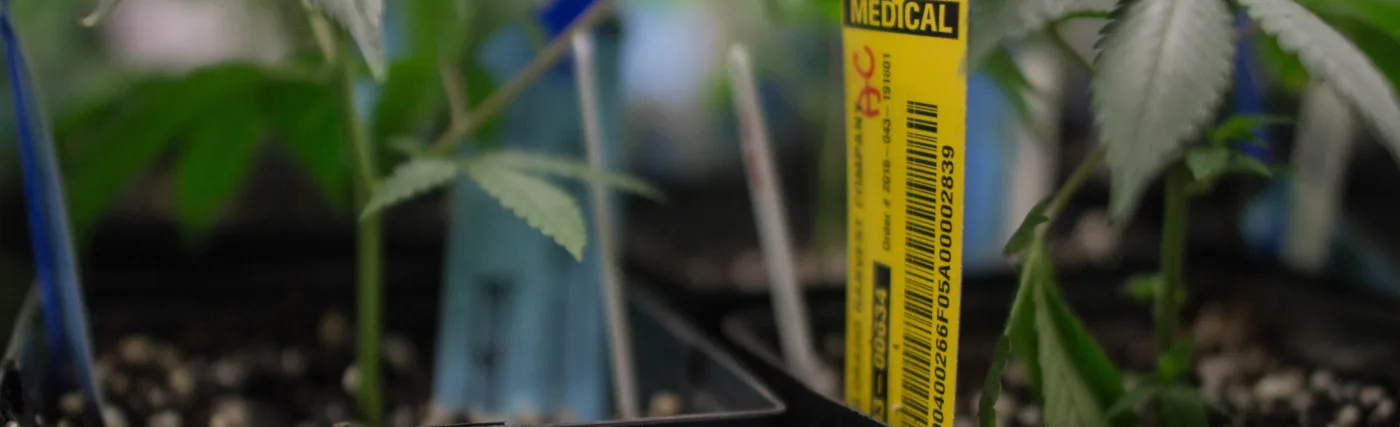
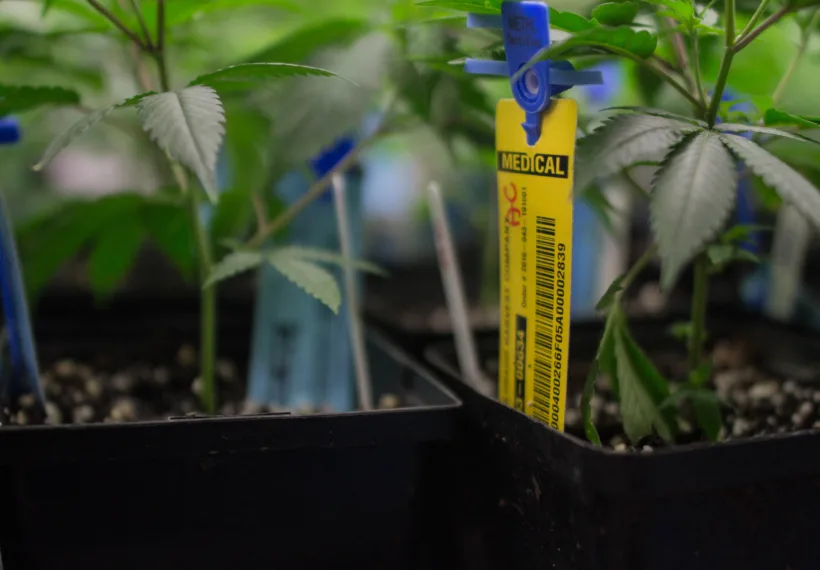
Are we “wired for weed”? On this episode, Neil deGrasse Tyson and co-hosts Chuck Nice and Gary O’Reilly weed out the myth from the science behind marijuana with neuroscientist at Harvard Medical School and director of the MIND Program, Dr. Staci Gruber.
How is cannabis used for medical purposes? Learn about the latest research in the neuroscience of cannabis, how to formulate a longitudinal study, and how the different compounds interact with the brain. Find out the story behind the strain “Charlotte’s Web,” and no, it’s not that it makes you see words in spiderwebs. We explore our endocannabinoid receptors and where THC and CBD bind. Were we designed to get high? How is CBD used to assist people recovering from COVID?
We contrast the electrochemistry of the brain versus physical damage. Could CBD help CTE patients? How do you run a human trial on brain trauma? Find out about genetic profiling and how your DNA impacts the effects of THC on the body. Does THC cause psychosis? Is it true you should avoid THC if your family has a history of schizophrenia? Does weed help or hinder muscle recovery?
What are common myths about marijuana? We discover whether “reefer madness” is real and if marijuana really is a gateway drug. Are marijuana dependencies getting worse? What would a hippie from the 60s think of today’s weed? Is there a difference between a biochemical dependence and simply liking something a lot? What’s the difference between Indica and Sativa? How does cannabis impact the developing mind? All that, plus, how many other plants remain underutilized?
Thanks to our Patrons Zero Chill, Matthew Rozak, Matej Michňák, and Gino Colauto for supporting us this week.
NOTE: StarTalk+ Patrons can watch or listen to this entire episode commercial-free.
Transcript
DOWNLOAD SRTWelcome to StarTalk.
Your place in the universe where science and pop culture collide.
StarTalk begins right now.
This is StarTalk Sports Edition.
I got my reliable co-host, Chuck Nice.
Chuck.
What’s happening, Neil?
All right, Chuck is a professional stand-up comedian and actor and a sports enthusiast, though he’s never actually done sports.
He’s never done sports in his life.
Hence the enthusiasm.
Okay, rather than participants.
Yes, but of course, my other co-host has been a professional athlete and still announces soccer professionally.
Did I get that correct, Gary O’Reilly?
Yes, you did, sir.
And who did you play for in the UK?
Okay, Tottenham Hotspur, if you’re familiar with them, Crystal Palace, and Brighton and Hove Albion, which is a bit more of a mouthful.
So you couldn’t hold down a job with one team?
No, I was so good, they got rid of me at least three times.
So either they all wanted you or they all didn’t want you.
You can leave that one a mystery.
I had 14 years of being sacked by my employees.
Very good.
Well, Gary, last year we did a show on sort of marijuana and some controversies with it related to sports.
And it looks like there’s more to go on that subject.
So what did you concoct for today?
Well, last year when we got in a discussion with Dr.
Staci Gruber, our audience really loved it.
So, pun intended here, it’s high time we revisited the subject with the pot doc.
And then once we’ve done that, we’ll open it up to our audience’s questions.
So we’ve been out there and sort of harvested their cosmic curiosity and brought it to the show.
So it’s a partial cosmic queries.
Yes, so it’s mainly driven by our audience.
So everyone keep their eyes on the road.
The last time we decided that world peace depended on all of its leaders getting high with Chuck, which I thought was splendid.
In my classic British understatement, splendid idea.
It’s such a simple way to…
The answers are out there is all I’m saying, people.
We learned that marijuana legislation is way behind scientific understanding and data.
And so sort of pulling those things together, let’s find out at this particular point in time where we are with Dr.
Gruber’s cannabinoid research and what other research in medical science is taking place with CBD.
And then once we’ve tapped into that, we’ll throw ourselves into our audiences, like I said, cosmic curiosity.
Alright, alright.
So that means we’ve got Staci Gruber once again.
Staci, welcome back to StarTalk.
So nice to be back, actually.
And I got your whole CV here.
Director of the Cognitive and Clinical Neuroimaging Core at McLean Hospital’s Brain Imaging Center.
But that’s not enough.
You’re also Associate Professor of Psychiatry at Harvard Medical School.
And my favorite acronym ever, you direct MIND.
Marijuana Investigations for Neuroscientific Discovery.
That’s a clean acronym.
You know, most of them, they’re tortured.
That one just flows.
I tried, you know, technically, we could have used…
Somebody was high when they came up with it.
You want a good acronym, just, you know, a couple of hits.
Man, what should we call this, man?
MIND.
Right, right.
If only that were true.
But, you know, I wish that we had the word cannabis in the title instead of marijuana, because marijuana has such a negative connotation to it, right?
It’s really all about cannabis.
But then if you try to go back, then it’s like, McKind, McMunt, like, doesn’t work, so forget it.
Plus, states have medical marijuana laws, so I figured we’re safe.
And by the way, marijuana is only negative if you’re like, old.
You know, no, seriously, there’s nobody under the age of 50 who hears marijuana and goes, oh dear, my goodness, I believe they’re talking about drugs.
Good Lord, it’s a drug, isn’t it?
Actually, it’s literally a weed, right?
So, Staci, who started calling you the Pot Doc?
You know, I think that came from something I did on CNN many years ago, the very first weed documentary called Weed on CNN that started sort of a whole cycle or series of these things.
I was referred to as Pot Doc.
I think Sanjay said, is it true your patients call you Pot Doc?
And I actually told him, you know, they call me lots of things.
That is one of them.
That is one of them.
You heard that, Chuck.
She’s on first name Sanjay, of course.
We all know Sanjay.
We all know Sanjay.
Yeah, she calls him San.
Yeah, exactly.
In fact, I do not, but yeah.
Sanjay Gupta, if we precise.
Sanjay is sort of the nation’s doctor, right?
People think of him as our health care provider for the country.
And the truth is, he really did raise the nation’s consciousness about cannabis.
And, well, I think the CNN documentary Weed was the very first one to really take an in-depth look.
And it was supposed to be when they talked to our hospital.
They really were coming in to look at what we had been spending, you know, at that point, more than two decades on, looking at some of the potential negative impact of cannabis on the developing brain and what happens if you’re exposed early and in high amounts.
And it very quickly evolved into a different story about the potential medical or therapeutic applications of cannabis, which we were also getting involved with.
So it was really a very different story.
And it was the very first time the world, well, I shouldn’t say the world, this country was introduced to the idea of some of the non-intoxicating compounds from the plant being used as therapy in children, like Charlotte Figge, for whom Charlotte’s Web is named.
The sort of famous, very high CBD product that allowed a little girl with an intractable seizure disorder to live seizure-free, which was rather amazing.
So, I think you guys pulled the wrestling reverse.
Is that what they call it in wrestling?
The reverse?
Yeah, yeah.
So, reverse is someone has you in a hold.
Right.
And if you just escape, that’s a one-point escape.
But in one maneuver, you can flip the situation and then you’re on top in control.
That’s actually worth two points.
That’s more valuable than just escaping.
Yeah.
So, you guys pulled the weed reverse.
You did a weed reverse on them because they came after you to try to, you know, a disparage marijuana.
And then you guys turned it around and was like, look at all this good stuff it does.
Wait, Charlotte from Charlotte’s Web?
This is the story that has talking rats and talking spiders?
No.
Oh, very, you know, so interesting.
So, once again, a bunch of young people would not necessarily get that, right?
So, EB.
White, the famous book.
Right.
No, no, no.
So, Charlotte’s Web is a strain of canvas that is noted for its high CBD or cannabidiol content, which is non-intoxicating.
And actually, the way this goes is…
And it makes you see talking spiders.
This is what you’re going to land on here.
No, no.
But as Chuck very appropriately pointed out, the very first time we met, and I knew I liked it, he said, this explains the talking snake in the Garden of Eden, right?
There may not have been a fig leaf covering their most private parts.
Charlotte Figgie was a little girl with an intractable seizure disorder.
This child was having more than 200 seizures a week.
Her parents, she’s one of twins.
She was one of twins.
And her parents were sort of at their end.
And they had, I think, just signed a DNR, which must be heartbreaking for a five-
or six-year-old child.
Do not resuscitate if something happens.
Not resuscitate, exactly.
This was, imagine being one of twins.
So now you have a normally developing child, and you have this poor child with Dravet syndrome, which is an intractable pediatric onset seizure disorder, which is devastating.
And they were identical twins.
Identical twins.
So there’s some risk to the other twin, I guess.
But apparently she was okay.
And so, as I understand, and they are lovely people, and Charlotte was a force, they introduced this very high CBD-containing oil.
The Stanley Brothers from Colorado.
They turned the original Kimavar, the plant, that this was derived from, hippies’ disappointment, very high CBD-containing combo.
Not going to get you high.
They made it an oil.
And they gave it to Charlotte.
And what happened was, this little girl went from having several hundreds of seizures a week to being almost seizure-free, and then ultimately seizure-free for a very big chunk of program.
Unfortunately, she died as a result of COVID-related illness.
What?
2020 is very heartbreaking.
But this kid went from she couldn’t walk, she couldn’t talk, to having a normal childhood.
Okay, so this is a modern story.
This is not some old story.
Okay, sorry to take it down this path of talking spiders and rats.
But they call the plant Charlotte’s Web for Charlotte Figge, which I think is really lovely.
Really beautiful.
Really beautiful.
And listen, she will live forever.
Her life shines very brightly.
But the truth is, this was the first time the nation’s sort of consciousness was raised.
Hey, wait a minute, maybe there’s something to this.
And of course, many people said, wait a minute, you’re going to give cannabis to kids?
Very, very high CBD, very, very low.
And sometimes in certain cases, no THC.
Right, so if people continue to remember you, that’s true.
You, in fact, never die.
It’s a form of immortality to be remembered by loved ones.
As we have just proven, Neil.
Yeah, yeah, exactly.
So what’s your latest research now?
Because you have a PhD in neuroscience, so that means you’re at it.
You’re busy.
You’re busy B.
So whose brains are you working on now?
We try to keep busy.
So, you know, we spent a lot of time trying to come up with novel approaches to different conditions or disease states that plague people, as well as thinking about health and wellness.
And, you know, for what it’s worth, the MIND Program hosts a lot of different studies.
So we have the very first ever longitudinal observational study of people using cannabis for medical purposes.
And we look at the way people use real products in real-world situations.
And we look at what the products are, how they use, when they use, and how they look over time.
Not just a week or two, or three months, six months, twelve, two years, three years, which is amazing.
First data of its kind.
And we do neuroimaging.
Okay, just to be clear, you just described what longitudinal means in a study, right?
Because their longitude lines go vertically on Earth’s surface.
That is true.
And so when you adopt that word for one of these epidemiological studies or direct study, you’re looking for its effect sort of over time.
Rather than a latitudinal.
Is that a word in your world?
Where you’re looking at everybody all at once.
Or cross-sectional study.
Cross-sectional study, okay.
I look good at this.
Just to make sure everybody’s speaking the same language.
Longitudinal to me is sort of like having a video.
Cross-sectional is sort of like a snapshot.
One moment in time if you will.
And they each have their value to the researcher, right?
Depending on what questions are getting asked.
Absolutely.
And look, acute administration studies where you give people cannabis of varying strengths or different modes of administration have utility.
I’m very interested in the long-term effects.
What do people look like in the real world using real things for real conditions?
Not what I come up with in the lab, but to that point, we have longitudinal observational studies, we have a bunch of cross-sectional studies, and we have clinical trials, where I make products designed or optimized to treat different symptoms based on the constituent that is the sort of quote ingredient profile of the cannabinoids.
All right.
So speaking of that, Staci, when you’re talking about these ingredient profiles, which…
But Chuck has just said he wasn’t in any of your studies.
No, no, no.
You don’t know it, but you’re in my studies.
So, but what I’d like to know is, so every drug has a very particular interaction with the brain chemically.
And the resulting interaction causes certain parts of the brain to light up and do things.
Since we have cannabinoid receptors…
Just to be clear, to light up on her sensors.
Right.
Thank you.
It just lights up.
I’m not pro-drug.
However, if it made my brain just light up, that’d be a different story.
But what does THC do?
What’s it actually doing?
And what do these cannabinoid receptors…
How do they play a part?
Because you hear people say, that proves we should be smoking weed.
It proves it.
Because we got these receptors.
So we should be doing this.
They say we’re wired for weed, right?
Wired for weed?
Come on, man.
I’m wired for it if I got these receptors.
So here’s how it goes.
So every mammal has what we call an endo cannabinoid system.
Endo meaning it’s within us, right?
It’s our own system.
A system…
Just think of it this way.
Chemicals and receptors throughout the brain and body designed for not outside or exogenous cannabinoids necessarily, but the things we make.
We make our own cannabinoids.
Anandamide and…
The two most common that we talk about are anandamide and 2-HG.
Let’s just leave it there for a minute.
But to your point about what happens when you use cannabis.
So cannabis is comprised of over 400 compounds, over 100 of which are phyto cannabinoids.
That is, they interact from the plant, they interact with our own endo cannabinoid system.
THC is the most common, I think people know the most, and it’s the primary psychoactive or intoxicating constituent from the plant.
THC has a very strong affinity, that is it binds pretty readily to CB1 and CB1 receptors throughout the brain.
We have primarily two receptor types, CB1 and CB2.
THC and CB receptors are very friendly.
It binds pretty well.
CB1 receptors throughout the brain, CB2 primarily in the periphery and the gut.
But that’s what THC does.
The interesting thing that we’re just starting to find out now is that things like cannabidiol, a primary but non-intoxicating constituent from the plant touted for its therapeutic potential, doesn’t bind to CB1 or CB2 receptors.
It appears to modulate its effects through different receptor types, 5-HT1A like serotonin or TRIP or vanilloid receptors.
Really interesting.
So, you can very quickly begin to understand, if you start looking at these things, why people postulate that if you have more than one of these cannabinoids at play at once, you might get a bigger bang for the buck.
The so-called entourage effect.
These things work together synergistically to create, you know, one plus one equals three, if you will.
The whole is greater than the sum of its parts.
But isn’t Chuck really saying that because of our brain chemistry and because of what this plant can deliver to it, that God wanted us to get high from the beginning?
Chuck, isn’t that really what you’re saying?
First of all, how do you think we got here?
God was high.
Hey, doctor, I must ask you, because I think we’re going to hit up on a break shortly.
The sort of rather 600-pound gorilla in the medical room in the last couple of years has been COVID.
There must have been some CBD research as to the potential treatment for COVID and long COVID.
Now, is that something you ever got involved in in terms of or aware of?
Yeah, absolutely.
So the idea that CBD and other, quote, minor cannabinoids that in my mind have a very major role could help because CBD has been touted as a tremendously effective anti-inflammatory.
Remember, every day, all of us are dying of what?
Oxidative stress and inflammation.
That’s basically what we have every single day.
Long-haul syndrome or COVID, you know, long COVID syndrome is characterized by sort of a cytokine storm.
You know, this pro-inflammatory thing.
Is there anything we can do to sort of help dial that down?
And there has been some really interesting, very compelling work.
But just to be clear, the body continues to overreact.
That’s what’s going on here.
Is that a fair way to put it?
I would say so.
And again, that’s not my area of expertise, but it appears so.
And it makes sense if you think about it.
Unfortunately, you may feel better, but you may not really be all better.
And some of the lingering effects that I hear from people have nothing to do with some of the things that they suffered with.
And they actually have to do with cognitive fogginess or muscle pain and achiness in places and spaces they never had issues before.
But you’re right about the inflammation.
And this is anecdotal and personal, but I got COVID, had a very bad bout with it, and for months afterwards had just what would be presented as puritis or pruritis, which is just itching all over your body.
No reason at all.
Which is an inflammatory response is what you’re talking about.
Yes.
And so if there’s something we can do to dial that down, again, I think of these things as not switches, but dials, right?
We want to dial it down, just lower it a little bit.
CBD is a really effective anti-inflammatory.
There are some other ones, but I think there’s some really compelling work that was preclinical or basic work, not in humans, demonstrating that you can actually modulate inflammation that way.
So whether that translates or doesn’t.
Personally, we have a project that we’re about to submit for review that looks at something, let’s just say, very similar to that.
Exactly that way that hasn’t been done before because it harnesses not only certain cannabinoids, but other quasi-cannabinoids, G-coupled proteins that might be harnessed to help.
Again, these things work better in the presence of their friends, if you know what I mean.
You know, Staci, I could have said that.
Because when Chuck says, I had you think, and Staci says, well, let me see, the pot doc says, let me see what we can do for your condition.
Yes.
There’s only one solution there.
Like, let’s get high and see what happens.
Actually, we’ve got to take a quick break.
When we come back more with the pot doc, Dr.
Staci Gruber, and of course, I’m with Chuck Nice and Gary O’Reilly, we’re going to finish out some of what you’ve been up to, and then go straight over to our Cosmic Queries.
Because this is a hybrid edition of StarTalk.
Hybrid.
Sports edition.
There you go.
Don’t have to scratch the surface for this, do you?
When I breathe, he said I breathe.
When we return.
We’re back, StarTalk Sports Edition.
This is a hybrid Cosmic Queries, and we’ve got back on the show Staci Gruber, the pop doc she’s affectionately known as.
And Gary was just getting the latest from her on what her recent research has been into this.
And you’re going to tie it back to a recent episode we had, Gary, of the New York Giants football player who had Chronic Traumatic Encephalopathy.
It takes a few goes before anyone gets it right.
CTE, it doesn’t roll off my tongue yet.
So Gary, pick it up from there.
With pleasure.
So, Dr.
Traumatic Brain Injuries, TBIs or CTE, and you as a neuroscientist, have you explored the use of CBD as a treatment for this sort of brain injury?
Because we had Leonard Marshall on the Formulute Giant and he’s an advocate for CBD.
He’s personal use.
And then we can sort of link it back to the genetic profiling of individuals to see predisposed to having that being effective or not so effective.
And before you hit that Staci, let me just ask, as I understand it, CTE are physical injuries to the brain.
Whereas everything you do is chemical.
So I guess we’re not expecting the chemistry to fix the brain, to fix the physical damage, but can it possibly help rewire it or lessen some of the symptoms, particularly the suicidal symptoms that we know have arisen under those conditions?
So just spend a moment just contrasting the electrochemistry of the brain versus physical damage.
So I tend to think of them as highly associated, obviously.
So when we have an injury or something happens to us, we have a cascade of events that happen, right?
At the cellular level, again, they become structural changes over time.
And one of the greatest things about brain imaging is that we can actually look at that.
We can look at it if we’re really fortunate in people before they ever have an injury and then later.
And even better, look at it before they die.
In the living patient.
If you’re really lucky, that’s right.
And political studies have actually demonstrated some unbelievably promising outcome with things like CBD.
So if you have a rodent population and unfortunately you give them head trauma, this is how these studies go, and you administer CBD before they ever had the injury sustained.
The ones who had the CBD on board before the injury recover faster and have a quote, lesser degree of severity.
So we think of this as sort of the greatest prophylactic that we could think of.
Hey, maybe this is a preventative that we want to utilize for our kids.
Staci wants to get the entire NFL high.
I’m on your side of this.
Let’s be very clear.
Hold on.
I’m out.
I get it.
I see what you did there.
CBD won’t get you high.
I want to make one thing super, super clear.
So CBD, again, as a prophylactic or sort of protective agent for individuals who are about to, let’s say, play sports.
Great thing is an antioxidant.
It’s anti-inflammatory.
Let me say this.
These preclinical studies are very promising.
We need more human subject data.
We’re trying very hard to get this quickly.
It’s very expensive to do.
I just want to make one thing absolutely clear.
Purified CBD all on its own is one thing.
Most people take products that are either hemp-derived or cannabis-derived that are high in CBD, but that contain other cannabinoids.
That said, you can have THC and other cannabinoids.
We talked about this last time.
People can unknowingly and unwittingly be positive on a drug screen, never being high, never being intoxicated or impaired.
But there’s trace amounts of THC in the product, so they pop positive on a urine screen.
That said, CBD can limit the severity and extent of the injury.
It would appear from these basic or preclinical studies.
Early studies.
Those studies need to get across the line, Doc, because this isn’t just an NFL thing.
This is across so many different sports and you’re dealing with young people who could face a terrible, terrible future.
So, yeah, godspeed with that.
I mean, Gary among them, right?
Yes, totally.
When we have a scenario where we know there’s a group that’s vulnerable to X or is already experiencing Y, why wouldn’t you try to introduce something that we know will hurt but could very significantly help?
So let me ask you this, and I’m sorry if I’m derailing this, but I’m just sparked.
What is the control and the variable groups that, because what you’re kind of doing is, or do you just give it to everybody and then study who’s injured?
Chuck, she’s a scientist.
They have control sample.
No, but no, but…
Why didn’t we ask her that?
No, my point is this.
You have to get somebody hurt in order to know how this works.
So the difference is…
That’s why God invented rats, okay?
I thought this was clear.
No, I’m going straight to the human trials.
I’m going straight to human trials.
That’s a great question.
And if you’re not going to sort of look at it in a preclinical model where you can do these things, although not the greatest in animals, what do you do?
So you either pre-treat everybody and you test everybody and then you see how those who are on something like CBD just sort of as health and wellness do versus those who weren’t.
That’s one model.
There are a number of different models that people are using.
But to your point, again, the pre-post control is important here.
We have, I just got approval from the FDA for two new clinical trials.
One is in patients with glioblastoma.
So the most devastating and fatal type of brain cancer is glioblastoma.
And these people suffer terribly with terrible anxiety and pain.
What do you do as a control group?
What do you do?
You use standard of care.
So people who are undergoing their normal treatment versus those who are adding, let’s say, my product.
So that’s the other thing that you would do in this case.
So you have, let’s say, people who are athletes.
Typical standard of care, they have their regular regimen and everybody adds it.
But everybody’s assessed.
And then those who sustain an injury, you look at those people over time.
You can do that.
That’s one way.
We can say that with patients with psychiatric conditions, because otherwise, how do you know?
But it’s a really valid question, for sure.
Gary, you got one more before we go to our audience?
Basically, are we sort of linking back the genetic profiling?
Because some people will be predisposed.
And I think you’re doing some research in this area.
And some people not so much to the value and efficacy of CBD.
Are we any further ahead?
Oh, probably.
We phrased that.
Are you any further ahead in that research?
Because I haven’t joined the team.
I’m on the sideline.
Now we’re all family.
The collective we, the human species, I’d like to think of us as one.
It’s been the Queen’s Jubilee.
We’re all we.
That’s right.
I think we collectively are further ahead in terms of our understanding with regard to the genetic liability for some people to respond negatively to cannabis.
Because remember, it’s comprised of many different compounds.
CBD is one constituent, one compound.
There are some people for whom even small amounts of THC are absolutely contraindicated, absolutely not.
And it’s not just your genetic liability with regard to, let’s say, a family history, for example, of psychosis, where we would not necessarily want to introduce a lot of THC.
We also have our genetic profile in terms of how well or how effectively and efficiently we metabolize these things.
If you’re in a very rapid metabolizer of THC versus a very slow metabolizer of THC, that’s going to make a difference.
So what we know about CBD, THC and genetic profiles is just now starting to sort of blossom.
We’re getting there.
But I will tell you this, very, very important.
Many do not necessarily know or appreciate the fact that cannabinoids, especially CBD, and to a slightly lesser extent, but still to a significant degree, THC, interact with the cytochrome P450 enzyme system, our liver’s way of processing drugs.
The reason that’s important.
We’ve all heard people say, I can’t take this because I can’t have grapefruit juice because I’m taking this drug.
Well, that’s because grapefruit juice affects the way you metabolize that drug.
It’s the same for CBD and THC.
So even if there’s no other quote contraindications what people are taking, what else people are taking is incredibly important.
It is not necessarily benign.
CBD can be incredibly helpful and potentially harmful depending on what other substances you may be using.
I just want to make that clear.
I didn’t know people who ate grapefruits had that accent.
That’s an interesting question.
Even people have.
I believe I got some grapefruit in my eye.
Very often.
Let’s get some questions for all of you.
Builder group, right?
All right.
So we got our Patreon members who in our new model, they’re the only ones who get to ask questions for just to give people a little incentive to join the community.
I don’t want to call it a club because that sounds so exclusive, but the community of people.
Okay, Neil, I’ll get to some citrus-free questions, right?
This is from…
Wait, Chuck, are all clubs have British accents?
So very good of you to come by and be a part of our Patreon little cabal.
So hence the term stiff up a lip because it doesn’t…
Patreon cabal?
Is that what it is?
Our little Patreon cabal.
All right, here we go.
Piotr Torinski, I hope I pronounced it correctly, is from Poland and he’s thinking is this, I’ve often heard about people with a history of schizophrenia in their family should never try cannabis as it can trigger this disorder.
But could long term use trigger any mental disorders in healthy individuals without such predispositions?
And secondly, has cannabis been successfully used in any medical treatment for reasons other than pain relief and increasing appetite?
So a few things to cover there, doctor.
A few things to cover is right.
So first and foremost, great question, and we were just talking about this.
So when we talk about cannabis, we tend to use this one word, but THC, the main or primary psychoactive constituent in the plant, can exacerbate psychosis and has been postulated to perhaps create a greater likelihood of having psychotic type behaviors in healthy individuals.
It doesn’t mean it causes psychosis.
It may create a situation where you’re more likely to have these behaviors, especially if you have a history or family history.
That’s very, very important.
So the question was people with a history of schizophrenia in their family.
So that is what I call a genetic liability or genetic predisposition.
And so for those people, we always say, be mindful of THC.
But interestingly and very importantly, cannabidiol, sort of the country cousin to THC that is non-intoxicating, has been shown potentially to help with things like psychosis.
There have been a number of studies that have demonstrated CBD is an effective anti-psychotic agent.
So what is one to do?
You have to treat these constituents as individual constituents.
Individuals, yeah.
Not as one thing, right?
I just say this, but every time you say cannabidiol, it sounds like you just made up that word on the spot.
Cannabidiol.
Cannabidiol.
Cannabidiol.
Well, that’s what Fritz Linso was really saying, I think.
I’ll buy that.
He and Barney spent a lot of time in the…
Clearly.
Clearly.
But to the other question about successful treatment of other medical conditions.
2017, the National Academies of Science, Engineering, and Medicine put out a report, the Health Effects of Cannabis and Cannabinoids.
They reviewed, I think, 10,000 studies and found evidence for what I called the big three plus one.
Chronic pain, nausea and vomiting is a function of chemotherapy, and muscle spasticity is a function of MS.
The plus one…
MS, multiple sclerosis?
Multiple sclerosis, yes.
Sorry.
The plus one was intractable pediatric onset seizure disorder.
So seizure disorders that occur in childhood, things like Lennox-Gastaut syndrome or Dravet syndrome, like something Charlotte Figge suffered from.
CBD has been effective in treating that.
In fact, we have an FDA approved medication, Epidiolex, that is cannabidiol based.
There are other indications for cannabis and cannabinoids that are certainly promising, but there’s not, quote, conclusive empirically sound data just yet.
Anxiety, I would say, is racing sort of to the finish line with regard to a potential impact of CBD.
It certainly seems to help with anxiety.
And we actually probably have time for just one more question before we take our second break.
So, Gary, what else you got?
Okay, we have Woody.
Woody’s down in Adelaide.
I’m guessing that’s Australia.
It says, does weed help or hinder recovery and muscle growth?
Would the additional nutrition from being able to consume five times as much even be used?
So, don’t worry.
I’m not sure about the second part of the question.
No, I’m going to leave that to you to answer or not, as it were.
But does cannabis help or hinder recovery and muscle growth?
So, again, some of the constituents, including cannabidiol, have been shown to be tremendous anti-inflammatory agents.
And there’s a huge amount of neuroprotective and potential analgesic effects of some of the lesser known cannabinoids, including CBD.
So, more broadly then, not to put words in your mouth, but I think what you’re saying is, so often inflammation in the body delays or inhibits your recovery from whatever is going on.
So, if you have something that suppresses your inflammatory immune system, while it doesn’t explicitly rebuild the muscle tissue that you may be necessary, it helps your body to get there faster.
Is that a fair characterization?
I would say that’s very fair.
And what I was actually just about to add to that point is that CBD, CBC, some of these other constituents are clearly being used by athletes for exactly this reason.
Because no one’s going to get in an ice bath anymore.
I’m not sitting in there for 15 minutes.
Give me something that works quickly.
Give me some chemistry, right.
But an answer that definitely is applicable here is it can’t hurt, okay?
But also, this is non-steroidal anti-inflammatory.
So, to the extent that steroids are taboo, we’ve got another path around that.
Let’s take a quick break when we come back more with the Pop Doc, Dr.
Staci Gruber in StarTalk Sports Edition.
Bye In fact, StarTalk Sports Edition, all about the latest on cannabis.
And we touched on what roles it has played in the recovery from injury in sports or just in life, and in how to suppress seizures in the right dose for the right genetic profile.
So this is all really good stuff, Staci.
It’s great to catch up with you again on your work and the work of your field.
And this is also hybridized as a cosmic queries.
So let’s see how many we can squeeze into this last third and final segment, Gary.
So go for it.
Let’s see how tightly we can roll this segment.
Let’s do our best, huh?
All righty, Alejandro Renosso says-
No, no, no, Chuck has to say his name.
Chuck has to say his name.
Wait, oh, it’s our friend, hold on, hold on.
Alejandro Renosso.
From where?
From Monterrey, Mexico.
I didn’t ask you, Gary.
This is Chuck’s moment.
From where, Chuck?
From Monterrey, Mexico.
Gary, your turn.
I’ve got to follow that now.
My sad British accent.
Anyway, hola, hola, Alejandro.
What are the most common myths on marijuana and what the actual science says about it?
I think we’ve exploded the last bit.
So what are the common myths, Doctor?
Wait, just the…
I want not just a regular myth.
Give me the biggest…
Yeah.
The biggest falsehood.
That is just outright false.
That probably we’ve heard recounted in Congress and people who are otherwise under and foreign.
The top three of those.
It makes you like jazz music.
Oh, that crazy music.
So, actually, picking up on that, and like my posters behind me, I think the first myth is that everybody who uses cannabis will basically become some kind of a drug-induced…
will enter some drug-induced fugue and never be themselves again.
The so-called reefer madness sort of response, right?
And in fact, not only do we not see that…
To be clear, that was the basically public service short film.
Was it from the 1930s?
When was that made?
1937, that’s right.
1937.
1937, yeah.
And it was quite potent at the time, right?
Just freaking everybody out.
Okay, so go on.
It was.
So I think that’s probably one of, if not the greatest myth, right?
How about that it’s a gateway drug?
I was going to say that is number two.
And it turns out that kids who are using cannabis are statistically more likely to go on to use other drugs, but that’s not because of the impact of cannabis per se.
It’s the same factors that drive cannabis use perhaps, drives them to look for other things, but it’s not that marijuana, quote, paves the way from a neural perspective, right?
All these things are rewarding.
We have reward circuitry in the brain, but that doesn’t mean, there’s been no conclusive evidence that cannabis itself, the drug effects of cannabis, are causally linked to the subsequent misuse or abuse of other drugs.
And what about addiction?
So addiction or misuse or dependence, it’s certainly possible to develop a problem.
In the old days, people said, you know, somewhere around 9% of people who use cannabis are likely to develop dependence.
That number has jumped to about 30% in more recent years.
My problem with those numbers is that they’re generally based on retrospective survey data and not face-to-face clinical interviews, which of course are the gold standard.
So that also still pales in comparison to other substances typically.
So if he uses cannabis, it’s going to become dependent.
Actually, it’s a relatively small percentage, although we want to be mindful.
Cannabis today is more potent.
Potency, we typically use, we define as amount of THC.
Higher THC, higher potency, higher potency, may lead to a greater difficulty with the substance.
So that’s just something.
Okay, so if you transported someone from the 1960s into the 21st century, hey man, I got four joints, let’s smoke them.
This is the wrong decision because they had that weak cannabis in the 1960s relative to today.
Yeah, somewhere lower than five or six percent THC and now the national average THC is about 18%.
That’s in flour, that’s in flour.
Holy smoke.
Yes, I knew what I was saying.
Just real quick, so that’s flour product.
When we get to concentrates, they start like at 35, 40% THC.
They go north of 90%.
So for most people, that’s a lot of THC.
That’s the difference between like a glass of wine and grain alcohol.
Everclear.
And just one, another quick thing, because it’s highly informative, Staci.
Can you distinguish for me a dependence that’s sort of biochemical, such as what we’ve known happened with opioids, and just you enjoy it so much, you just want to keep doing it.
Sure.
Because you like it.
Yeah.
And is there a distinction between those two, or are they functionally the same?
I think for many people, they wind up being the same.
So again, we have neural circuitry, the reward circuitry that is triggered when something feels good.
And by the way, your brain doesn’t care whether it’s an opioid, cannabis, or sugar.
Doesn’t care.
It feels good.
Same quote areas light up, if you will.
Give me some, give me some more.
Give me some, that’s right.
Your brain on sugar is a whole lot like your brain on cocaine.
Right, if you’re a cocaine person.
In terms of cannabis, many people argue that, you know, you can’t die from a cannabis overdose.
There are no cannabinoid receptors, for example, in the brain stem.
You don’t just stop breathing like you would perhaps with opioids, right, or benzodiazepines.
These are very important distinctions.
And one last one, I just want to hear from the expert.
No one has ever gotten a ticket speeding while they were high on marijuana.
Is that correct?
That’s not correct.
That’s not correct.
So, what you’re referring to is people generally, when they drink and they think they’re okay, they hit the gas and they move left on the highway.
When they’re, quote, using cannabis and they’re aware that they’re a little altered, they hit the brake and they move to the right.
But what they really do is demonstrate a fair amount of lane movement.
Very often acute intoxication.
Interestingly, when they’re not acutely intoxicated, our medical patients tend to look better after using for a period of time than before they started using, whereas our recreational or adult folks don’t look better.
It’s kind of interesting.
Wow, okay, interesting.
Okay, Gary, give me some more.
See how many we can squeeze into this thing.
Okay, Colton Judd.
Question is about the way cannabis is grown.
So here a little zigzag on the direction here.
What determines whether it’s a sativa indica or a hybrid?
Does it need special grow lights or maybe environment to give the different types of highs?
Thanks for the great work.
Keep it up.
You’re welcome, Colton.
This dude is trying to get you to put him in business, growing weed in his closet.
So, Staci, I had never heard this before.
Is there a distinction between the subspecies of the plant and how it’s actually grown?
And how you grow it make a difference there?
So really, really interesting question.
And in the old days, we talked about species of cannabis, things that are closely related but have different physical and chemical characteristics.
So-called indica, these kind of short, fat little plants that are sort of a body high, I feel sedate, I feel chill, I just want to eat, versus a sativa, a tall, lankier plant.
It’s sort of a head high, invigorating, energizing, euphorogenic, really creative, I want to make, I want to, you know, that kind of thing.
So these days, we don’t say strains, we say chemoval.
We say chemovar, a chemical variety.
And, in fact, the thing that distinguishes the two species is the fact that they’re different.
It’s not how you grow them, they do grow differently.
For example, indica grows more quickly than a sativa.
But the thing that distinguishes them is the fact that they are different species.
Most plants these days, most people who are experts at growing will tell you, almost 100%, there’s no such thing as a pure sativa or pure indica anymore.
They are all hybrids.
They are sativa heavy or indica heavy, but really hard to find a pure example of either.
Again…
What’s their favorite color light to grow in?
So they have special spectrum lights to optimize the flowering from the vegetative state, right?
So they’re mimicking the sun, I guess, right?
They mimic the sun, but then they actually have these ridiculous schedules.
So the more light they’re exposed to, the longer they’re in the vegetative state, so they’ll grow taller and not flower.
When they flower is when you harvest.
The flower is the cool bounty.
That’s the thing.
Okay, so they don’t necessarily live 24-hour days.
Right.
I think that, again, this is, again, I don’t, I’m not a grower.
And let’s be give people ideas about what to do and how to do it.
I think when you want them to flower, you change the cycles.
It’s like a 12-12 or an 18-6, but yeah, it’s not 24.
There you go.
Dr.
Gruber is a knower, not a grower.
Gary, give me some more, keep it coming.
From the artist formerly known as James Smith, says, is there one drug that will put you and keep you in an altered state?
And obviously, if you answer that question, that’s going to make the artist formerly known as James Smith particularly happy because they’re probably going to go out and grab some.
I see, right.
I don’t know of anything that will keep you, that has put you and keep you as an indeterminate baritone in a state.
I think some people have had tremendously long trips with lots of hallucinogens, which are experiencing resurgence of popularity right now.
And that’s certainly one different from cannabis for sure.
For sure.
That’s a great question.
But I would say if it creates a permanent state, then you will no longer know what it is to be high.
Right.
Right.
Because you need the contrast between the high state and the non-high state.
That’s right.
It’s like you can’t have a one-sided coin.
Is the good without an understanding of evil?
That’s right.
That’s also normally called an addictive state because you are doing the drug to be normal.
So if it puts you in a…
You know what I mean?
If the drug normalizes you, what’s next?
You’re just an addict now.
Right, right, okay.
But didn’t he say that puts you and keeps you in an altered state?
To your point, that’s a great question because where is the contrast?
If you’re in an altered state, you’re no longer altered.
It’s just your state.
Correct.
Very philosophical point there.
And guess how he thought of that question.
Let me come back to you on that.
Right.
Gary, some more.
Dylan, I have many teenage friends who use such drugs as pot and weed.
I thought they’d be the same.
And I would like to know more about the effects on the teenage mind after many uses and are the dangers we hear and see true or false.
I always try to stop them with the idea that it’s bad, but I need more to back up my claims.
Thank you all for the science you provide to the public and the comedy.
So Chuck, big up to you.
Yeah.
But you know what?
Instead of Teenage Mind, Dr.
Gruber, let’s go with the developing brain.
Because that’s really what it’s about.
Right.
The Teenage Mind is really not all wired yet.
So true.
So what can you tell us?
So I would say that during adolescence, when we’re little, the brain is vulnerable.
We’re under construction, like I like to say, we’re half-baked.
The brain develops from the back to the front and the bottom to the top, and we are not fully developed until at least most likely our mid-20s.
So it’s important to know that, by the way, the brain is vulnerable, not just to cannabis, but to any substance, alcohol, illness, injury, anything.
The brain is under construction.
It’s a vulnerable substrate.
So in general, it’s vulnerable.
But what we know about cannabis is that early exposure.
So our studies look at folks before they’re 16 versus those beyond the age of 16 with regular use.
That is four days, five days a week.
What we know is that early, frequent, and heavy exposure to cannabis results in somebody looking slightly different from those who don’t use it all, for sure.
In fact, most differences that we see in recreational or adult users come down to the idea that there was early, heavy use versus not so much.
Are they not as smart?
Are they not as social?
What is the symptom?
You know, interestingly, we look at…
Remember I said the brain develops back to the front bunch top, last part of the brain to become developed is the frontal cortex.
The frontal cortex is critical for what we call executive functions, the ability to inhibit inappropriate responses like, man, where’s this girl going to stop talking?
Like, you don’t say that, you’re thinking it, but you don’t say it.
Or, you know, what not to say in an elevator.
It’s also the first to go.
Think of the comparison between very little kids and old people.
Sorry, Dr.
Gruber, the answer to that question is, excuse me, that was me.
I know.
I like the idea that we evolved to know how to behave in an elevator, which is a 20th century invention.
Right, I love that.
But that frontal cortex, again, being the last to come online, evolutionarily older parts of the brain, like your limbic system, things that are responsible for fight or flight, making sure you’re fed and protected, things that keep…
What they call the reptilian brain, I guess, right?
We heard that phrase.
And they call it that because, evolutionarily speaking, it’s the oldest.
We’ve had it forever.
It keeps us alive.
The frontal cortex is the part that we go, you know, I know this is a bad part of town and he looks sketchy and I think I see a knife, but I’m going to stay here anyway.
No.
That’s…
We talk ourselves…
I’m open-minded.
Listen, I always say, trust your gut.
But the deal is that part of the brain is the last to become fully developed.
And when you expose an emerging adult and adolescent to high amounts or high potency or high frequency use of cannabis, there’s a greater likelihood of having difficulty with those types of tasks that wind up being very important in day-to-day living.
That’s the thing.
Gary, we’re running really short on time here.
Pick a good one.
So, Amanda Leininger has asked this question.
Is there any real proof of how much pot can help someone with chronic pain?
I mean, it goes on to say, my mom had lived with chronic pain in about the last 20 years of life, of multiple surgeries, and I hear through different news stories about the possible ways it helped control the pain better than the prescription pain meds.
So, do we have sort of empirical research to back this up, or are we still finding our way forward?
So, again, that first report, that NASIM report, chronic pain was one of the big three.
And that was primarily THC, which is an effective analgesic.
But remember, there’s different kinds of pain.
There’s musculoskeletal pain, there’s neuropathic pain, different kinds of pain.
I would also say that CBD, because of its anti-inflammatory effects, has also been shown perhaps to be helpful with pain.
That’s a really important thing.
Plus, we do see studies demonstrating reductions in the use of conventional medications like opioids, like benzodiazepines, in people who are using medical cannabis.
We see this in our study.
We see it in states with legalized medical cannabis programs, fewer opioid prescriptions written.
Very, very important.
So it’s very likely that for some, maybe a significant majority of people, if they find the right product or combination of constituents, they do get some relief using…
Are there enough doctors who know to do that?
Or they just say, I’d rather operate on you and give you opioids?
So that’s a great point.
And you know, I hate to say this.
I’m not even sure it’s…
I’m not sure even if they know if they’d be willing to do it.
That’s the thing.
I think there’s so much misinformation about cannabis.
Because again, back to the common myth, if it’s cannabis or cannabinoids, you must be getting high.
And I would say, no, no, no.
No, not at all.
And this would be true even in professional medical circles.
There’s misunderstandings that you’ve devoted your life to try to undo.
I certainly have doubled down on the efforts because the better that our primary care and our specialty physicians understand cannabis and cannabinoids, what they do, what they don’t do, what they couldn’t do, the better they understand their patients.
Because remember, if our patients are using it, we have a responsibility to understand the whys and the whats and the best how tos.
That’s my job.
So I’m going to land this plane, but let me leave you with a thought, Staci, that if you get in this much sort of career trajectory out of some chemicals in a weed, how many plants out there remain undiscovered simply because we don’t have enough people sitting down, hey, let’s smoke that, let’s smoke this, let’s smoke that.
Could there be an entire, I mean, there’s got to be, right?
Can’t wait to try hydrangea.
I think there’s huge potential in botanicals, and I think that we see that with some other things.
Primarily these days we hear about it in the hallucinogenic space, like ayahuasca or, I mean, these are the other sort of natural things, mushrooms, and there’s tremendous interests in terms of therapeutic application.
You know, for what it’s worth, document videos of cannabis as medicine goes back at least 2,700 BC.
I was about to say, all you have to do is go back in time.
People have been getting high since people have been people.
Well, it’s just the Garden of Eden.
All you got to do is just go back in time and figure out what they were doing.
And man, can we do that?
I mean, it’s not legal if nobody’s ever done it.
I mean, it’s not illegal.
I mean, sorry, if it’s not illegal if it’s not on the books.
So why can’t we just go back and get those drugs?
Because they’re written about throughout antiquity.
And I think we are.
I think we’re seeing that.
Cannabis was part of our pharmacopoeia in 1850.
You didn’t need a recommendation or certification to use it.
Doctors wrote prescriptions for it for variants and sundry things.
It became sort of outlawed much later as part of the Marijuana Tax Act.
And then, of course, it was placed in the most restrictive class, the Controlled Substance Act.
But the truth is, we’ve been using it for thousands of years.
And I maintain a lot of people use it and they didn’t get high.
The Queen used it.
People used it for lots of different things.
We got to quit.
We got to quit there.
Dr.
Staci Gruber, it’s been a delight to have you.
Now your third time.
That’s a hat trick on StarTalk.
And one of your earliest appearances is when we were on Nat Geo.
So that’s great to have you back here.
Staci, how can we find you on social media?
I’m at Dr.
Staci Gruber on Twitter.
Staci with an I.
My mother had to be difficult.
That’s right.
She had to mix up.
At Dr.
Staci Gruber on Instagram and Twitter.
And we have a website, I think just drstacigruber.com.
Excellent.
And Chuck, you’re Chuck Nice Comic.
And Gary O’Reilly, My Three Left Feet, tweeting on social media.
We’re all good here.
So it’s been a delight to revisit this subject.
Thanks, Gary, for making that happen.
This has been Star Talk.
Thank our audience for that question.
Great questions.
Very good to our Patreon supporters there.
This has been Star Talk Sports Edition, a follow-up on an earlier show on cannabis and its infusion, overdue infusion, into the health and well-being of civilization itself.
Neil deGrasse Tyson here, as always, bidding you to keep looking out.


 Become a Patron