



 Unlock with Patreon
About This Episode
Do athletes use artificial intelligence? Is freestyle really freestyle? On this episode, Neil deGrasse Tyson and co-hosts Gary O’Reilly and Chuck Nice answer patron questions and get into a nerd fight about the Olympics with physics professor and martial artist John Eric Goff.
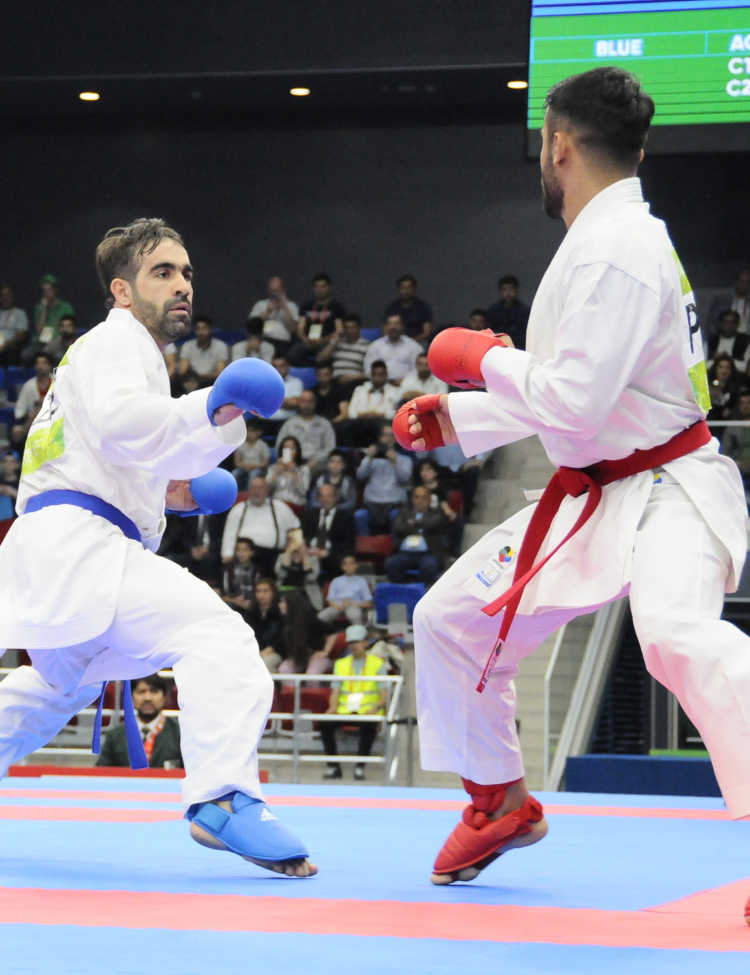
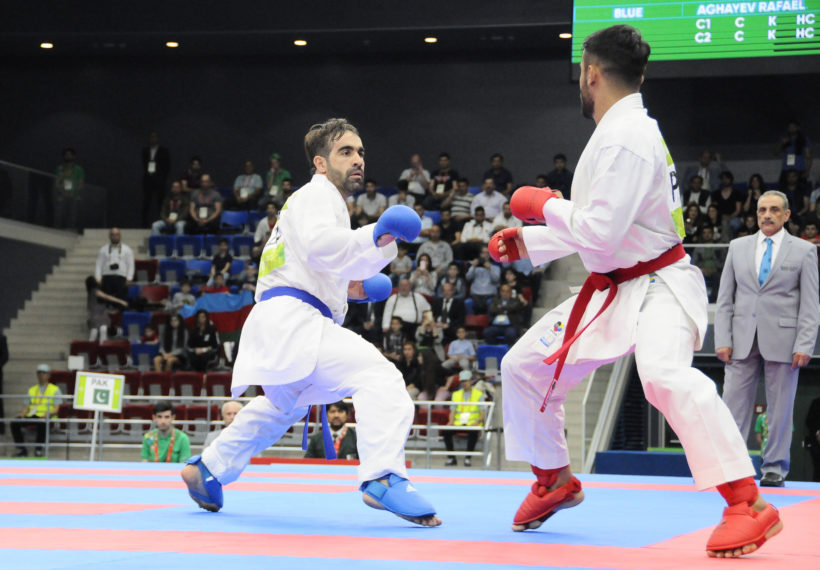
What can we expect from the incorporation of Karate in the Olympics? Why did it take so long? What put other martial arts first? We discuss Eric’s book, The Physics of Krav Maga, and the different fighting styles present in each martial art. Is there one karate move that is particularly devastating? We break down Ronald McNair’s stroboscopic physics of a karate punch. When is a punch at its maximum velocity?
Next, we get into our patreon queries where we explore why freestyle is the fastest style of swimming. What does freestyle even mean? Find out why there are limits on how long you can dolphin kick. In a freestyle event, should swimmers be able to do anything? We discuss what the most physically demanding sport is and why, and you’ll learn some anecdotes from Neil’s wrestling days. If a sport doesn’t produce sweat, should it be in the Olympics?
Are there unique ways that athletes can train their minds to not choke? Do some sports need more mental focus than others? How the heck is golf in the Olympics? We debate whether the horse should get the medal in equestrian events and the differences between golf and baseball. Are there athletes taking advantage of artificial intelligence? What new tech is being used at the Olympics. Should there be rules? What’s an unfair advantage? Discover the top speed of a human being and the different running strategies of Usain Bolt and Sha’Carri Richardson. All that, plus, does weed make you faster?
Thanks to our Patrons Dave Armstrong, Jamie Ferns, Sam Arnold, Jesse Pinette, evan stegall, Sam Couch, and Payton Hawk for supporting us this week.
NOTE: StarTalk+ Patrons can watch or listen to this entire episode commercial-free.
Transcript
DOWNLOAD SRTWelcome to StarTalk, your place in the universe where science and pop culture collide.
StarTalk begins right now.
This is StarTalk Sports Edition.
Neil deGrasse Tyson here, your personal astrophysicist.
I got with me Gary O’Reilly.
Gary.
Hey, Neil.
All right.
He’s the one and only former professional athlete among us.
So you give authenticity to this program.
I just have to remind people every now and then of that fact.
And I got Chuck, of course.
How are you doing, man?
Hey, buddy.
Always good to have you here.
Clearly not a professional anything.
He’s a professional comedian.
No, I just get paid to do that.
I am not professional at all.
I didn’t know you could distinguish those two cases.
Today we’re continuing our Olympic spirit, and it’s going to be Cosmic Queries about Olympic sports.
And our studio guest is Professor Eric Goff, not a stranger to StarTalk.
Eric, welcome back to StarTalk.
Glad to be with you all.
Very glad to be back.
So, you’re a professor of physics, the University of Lynchburg, Virginia.
But what I wonder is your particular expertise of many, just in the general sports world, being a physicist, there’s physics in everything.
But in particular, and why we have you on this program, is your expertise in the martial arts.
And in particular, a black belt in karate.
And I’m thinking, man, how did you originally become chair of the department?
Was it a threat?
Wow, look at that.
Was it a karate threat?
What?
You know, I mean, I think folks in the…
There is no fear in this dojo.
And I will also be the chair of this department.
Well, we’ll get to that in a minute.
Just your author of the book, Gold Medal Physics.
I love it.
But it’s just bringing science to where people want it and need it in high performance competition.
It’s just great to have you here.
And this is Cosmic Queries.
We’ll get to the questions in a minute, but I just want to just sort of get some foundational information out there.
How many other physics black belt karate people do you know?
The only one I ever knew of was Rodney McNair, who was on the 86th challenger, unfortunately.
I’m not that familiar with too many other people who’ve studied physics and martial arts.
My second book is the physics of Krav Maga, which I’ve really gotten into recently.
I really like Krav Maga.
That’s a fun thing to do.
Well, because you get to beat C.Karate, you don’t beat people up.
Krav Maga is the whole point.
That’s why the whole point is to beat people up.
We’re not going to see Krav Maga in the Olympics for a while, I’m afraid.
Can you imagine the destruction if Krav Maga would be in the Olympics?
So what’s going on in Tokyo?
Are we getting, there have been combat sports in the Olympics forever.
Starting out with wrestling, we’ve got boxing, we’ve had judo, so karate, you’re telling me, has never been in the Olympics before Tokyo?
So karate, I guess, is in there the first time this year and I don’t think it’s permanent.
I believe this is a trial.
They’re going to see what it’s like.
It’s an exhibition kind of thing.
So there’s been a lot of qualifying going on and I’ve had a chance to watch some of that and it’s pretty impressive to see all the various movements in karate now getting into the Olympics.
It’s going to be fun to watch.
So is karate when you’re competing, is it full contact like game of death with Bruce Lee and Kareem Abdul-Jabbar?
Do you leave a big footprint on somebody’s chest and that lets you know that you won?
When you’re training, you might have that.
I don’t know that you’re going to see that much in the Olympics.
In fact, I think the American audience might find karate to be the more tame of the three martial arts when they’re looking at judo and taekwondo.
They’re going to see some of the sparring and karate.
They’ll have the hand pads and the foot pads, but they won’t have head gear on like you’re going to see in taekwondo.
They’re not going to have the chest protectors like in taekwondo.
So there you’re really going after points.
It’s not going to look like a Bruce Lee movie or anything like that.
Wait, so you’re saying taekwondo is in the Olympics?
Yeah.
Yeah.
Okay, so why is karate the Johnny come lately here?
What was it about it that made it not a candidate as early as these other martial arts have been?
That part of the competition will be katas.
I mean, these are very nice, elegant choreographed sequence of movements with a lot of…
Almost like a dance.
It will look like a dance in some respects.
Yeah.
There’s a lot of power, speed, agility, knowing the right breathing techniques.
It’s really going to be interesting to watch these things, but they’re not fighting.
They’re practicing all the moves that they need whenever they would be fighting, but they’re doing this in a sequence of moves that kind of get them used to…
If I throw one punch, I need to follow it with another, that type of thing that they use in sparring.
Because your kata is like a discipline, right?
I mean, it’s the same all the way through each time, and you have to kind of get that down before you…
before there’s any combat, right?
Yeah, and then there are about 102 of these that the athletes at the Olympics are going to be choosing from, and they’re going to be performing two of them.
So they’re going to be judged on the quality of the technical points, the athletic points that they’re going to be earning.
I mean, that’s a big part of it.
Do you have an unfair advantage as a physics professor being a black belt karate?
Um, a nerd fighting?
Um, you know, I don’t know.
No, no, no, no, no.
You know exactly what fetishes are in play.
Nerd fight!
There you go.
I know, I, yeah, yeah, when I’m being pinned to the ground, I know exactly how much force is on my neck and what angle my arm’s being held back and what torque is being exert on my shoulder and all that kind of stuff.
What rotation rate when I get hip tossed.
I mean, all these things are really fun to know when the instructor’s explaining something.
Because then I have in my mind, you know, oh, okay, of course I’m going to do this with my arms because that’s going to benefit my angular momentum and these types of things that we think about in physics.
Does it help me do them better?
I don’t know.
You know, I’m still working on getting the middle-aged body a little bit more rest-felt.
These hundred moves that you said, do they include wax on, wax off?
Well, they will have some that will look like that.
I mean, you will see some movements that are going to look like they are doing these types of things.
They’re going to have some very rhythmic punches.
They’ll be doing some jumps and some attacks down to the ground.
They’re going to be doing a lot of kicks and stuff.
But of course, they’re not fighting anyone and they’re being judged for this.
So there will be a subjective element to the scoring there.
Can you get away with intuitive moves?
So you talk about there’s this choreographed routine for each fighter.
Can all of a sudden you see something and intuitively, I know exactly how to undo this set of moves and to your advantage?
Sure.
I mean, one of the qualifying matches I saw between these two very talented ladies that were sparring, you know, one gets in close and she’s got an enormous amount of flexibility and all of a sudden does almost a split with the leg coming straight up, hitting her opponent in the head.
And I think that surprised her opponent that that in close that she could, you know, almost do a vertical split and score a head shot, you know, the the the three points for the scoring a hit like that.
By the way, if you ever get a chance to go on YouTube and check out the karate, just practice moves, that one of the things they do is that split straight up in the air, just like Eric described.
But then they kick the air multiple times just up.
It is unbelievable.
They pull the knee down and go straight back up into that full split position.
And they pull the knee down and do that while maintaining a straight leg in the split all the way through.
It is unbelievable strength.
Look at the planted foot.
You’re going to see it pivoted back.
I mean, they know exactly how to maintain the balance.
There’s no center mass going over the heel or anything like that.
It’s perfect technique.
So, Eric, suppose in one moment there’s a move I could do on an opponent that is not from the karate portfolio.
Is it counted as illegal?
So, you can be penalized.
And one thing that has been taking place during the qualifying rounds is they have video replays.
And the coach can actually challenge a move.
And if they look at the replay and the people who are judging the replay have a lot of martial arts experience.
If they see that you’ve done something untoward, you could be penalized for that.
They can take a point away.
Given the physics of the situation, is there a karate move that you find to be particularly devastating because of how thoroughly it exploits the laws of physics?
Yes, moving.
If you simply get out of the way, I mean, one of the things you notice in judo is there’s a lot of grappling and they want maximum efficiency for a minimum amount of effort.
And the whole philosophy there is you don’t try to, you know, wrestle.
You don’t you don’t try to grapple with a much powerful opponent.
You evade and then you use the opponent’s momentum.
You try to get them off balance.
Simply evading is a very powerful technique in martial arts.
Getting out of the way.
That means you need reflexes.
Yes.
You need fast switching muscles, yes.
A little thing called reflexes there.
So you need to be able to read a situation.
So if there’s a movement, a slight movement of a shoulder or a knee, you know that equals a certain move.
That’s right.
So you’ve got to be absolutely intuitive with body language and understanding what that means coming to you.
And when you’re watching the karate, the sparring, watch the lead hand and watch how they’re wiggling and they’re trying to get their opponent to move in or out at a given…
They’re feigning the movement and then all of a sudden watch the front hand come up or the back leg or something’s going to happen very quickly.
And they’re going to call a point and you’re not even going to have seen it that quickly.
A kick’s going to be landing on the chest or something and you’re just not going to see it.
And then they’ll do a replay or something where you can see it a little better.
Eric, that reminds me.
I used to in my years, I wrestled two different blind opponents.
And there’s a slightly different rule where when you begin, you begin connected to each other rather than separate.
And so that’s fine, you know, because you land there anyway when you’re when you sort of lock up.
But I noticed that I could not move any of my muscles without my opponent again, who was blind, responding to what I might do next for having sensed what my muscle tension and relaxing was doing in any given moment.
So, yeah, but I mean, if you take away your major information gatherer, your eyes, I mean, imagine how much more, you know, cutie you’re going to have in your hearing and your touch and other.
What you rely on at that point, we almost have to take a break.
But I want to just go into this transition.
I remember Ronald McNair, as you had said at the beginning of this segment, as one of, of course, he was one of the challenger astronauts.
He he was at MIT, if I remember correctly.
He he published an article for the American Journal of Physics of Karate.
The physics of karate and what I remembered reading that and it was just so simple and brilliant.
So what he did was he took stroboscopic frames of a karate punch.
OK, so when you begin a karate punch, your fist has zero velocity.
When you end your karate punch, your fist has zero velocity.
Otherwise, your fist keeps flying off your arm.
So somewhere in there, your fist has maximum velocity.
And you can look at the strobe to determine that.
And he simply said, make contact with your opponent in that spot, OK, where you want maximum fist speed.
And unlike that, you know, the bar room brawl where you punch it and you hit the person at the extent of your arm, that’s not when your hand is going the fastest.
And so, Eric, how many people know this?
Is it intuitive to them?
Because you know the physics of it and that kind of helps.
Getting back to Gary’s point.
I mean, if you read the physics of Kramagai, I do that very same thing in there.
I talk about the exact same thing where there’s a misconception that when your arm is completely straight, that’s like your punching distance.
So that’s, you know, when you’re gauging your opponent, and it’s not, you know, it’s in that halfway point where you, you know, your velocity’s, you know, reached its maximum magnitude before it comes down again as your arm is stretching out.
You know, that’s where your high kinetic energy is for making a punch.
And I, you know, whenever you watch a lot of movies, you’ll often see, you know, in the choreographed stage fighting, you know, some of these punches are landed with a long arm and stuff instead of being more in close.
So that’s where it starts to look a little fake.
Well, to you, everyone else, yeah, that’s legit, you know, if they don’t know the physics of it.
Yeah, so you want to hit at a person or make contact somewhere between the beginning and the end where speed is maximum, and you maximize your momentum and your kinetic energy, bada bing, bada bing.
When we come back in the next segment, we’re going to pick up questions from our fan base, from our Patreon fan base, directed right at Eric Goff.
We’re back, StarTalk Sports Edition.
All right, Chuck Nice.
And we’ve got an old friend of the show, Eric Goff, who’s written, he’s a physics professor talking about sports.
That is StarTalk made in heaven right there.
And we are Cosmic Queries, and we’re about to go to our bank of questions with people asking about the physics of all kinds of sports, especially since we’ve got the Olympics upon us.
So, who’s got the first question there?
All right, I’ll jump straight in.
Do it.
Right, Marie Elsa, hopefully I’m pronouncing that right.
A question from my nine-year-old swimmer.
Can you explain in simple terms why freestyle, or if you prefer front crawl, is the fastest style of swimming according to the laws of physics?
Is that right?
I didn’t know that.
I kept thinking, is there some other swimming stroke that no one has invented yet that is faster than freestyle?
And that ought to be allowed if in fact it’s called freestyle.
So Eric, did you actually calculate that this is the fastest thing we can do in the water?
Well, the simplest way to think about it is it’s just a matter of drag.
You stick your hand out the window, you feel a lot of air drag on your hand, now you go into water.
Well, out the window of a moving car.
Of a moving car, yep.
Okay, I can open the window of my bedroom and I don’t feel a drag.
Unless it’s a windy day.
Yes.
So you go into water, you’re like 800 times denser than air.
I mean, you’re looking at something that you’re pushing against as you’re trying to move through the water.
So the front crawl, it’s faster than the backstroke, the butterfly, the breaststroke, it’s faster than any of these strokes.
Mainly, you’re orienting your body in such a way as to turn it each time you’re making a stroke.
Whenever you’re doing the butterfly or the breaststroke, you’ve got the front part of your body hitting into the water with each stroke.
And this front crawl, the freestyle, you’re constantly pulling on the water.
I mean, every time you’re moving your arm back, you’re pulling on the water.
You’re doing this a little bit with the backstroke, but the thing with the backstroke is when you’re laying on the back of the water, you can’t get your arm back close to your body like you can on the front stroke.
So you get a little bit more drag with the backstroke.
That’s the only other of the four strokes that you can get this, the long axis of your body really pulling from the water.
Oddly enough, oddly enough, the backstroke, when you’re watching it, it looks like they’re going faster because their shoulders are square and they’re creating, they’re moving the water.
So that little like, like little wake that they’re making, it makes it look like they’re actually moving faster.
You can see the movement in the water, but the freestyle, they’re-
There’s more splashing.
They’re slicing through the water and they’re splashing.
So the backstroke actually looks like they’re going faster.
It looks smoother, it looks smoother.
Smoother, yes.
Basically, it’s less surface area in contact with the water as they push through with each rotation.
Whenever you’re doing these, you’re twisting a little bit, too.
And of course, the main thing your legs are doing is keeping your body parallel to the surface of the water.
That’s the main thing that your legs are doing in addition to a little bit of propulsion.
But you’ve got-
Gary, I don’t think it’s just your surface area.
It’s the surface area that is plowing through the water that matters here for the drag.
Because obviously, your whole body is touching the water.
Yeah, so if your legs don’t-
If you’re not keeping them parallel to the surface of the water and they drop down, then you’ve got more drag.
Oh, yeah.
The point you made is more articulated better than I did.
So, let me ask this then, based on Gary’s point just there.
There was something called the Birkoff blast off years ago.
And he was dolphin kicking underwater with his hands in front of him Superman style.
And he stayed under water and was dusting, well, I can’t say dusting because we’re in the water.
But he was just blowing up.
I left you in my molecules, my water molecules.
Right, exactly.
I left you in my water.
And there was no wake.
So, yeah, I left you in my molecules.
Not in my wake, not in my dust.
Not in my wake.
I didn’t dust you, but I left you in my water molecules.
And so, why is that such an effective means of propulsion?
And why did they stop that from happening?
Yeah, and I want to add to that, just to add, just because while we’re attacking you, Eric, because we like that, we’re friendly.
In a freestyle event, who the hell cares what stroke you’re doing?
Why would they outlaw a stroke that gives you an advantage in a freestyle event?
I agree.
And I mean, now we’re getting into the topic of, well, what kind of suit can you wear?
And, you know, are there other kinds of advantages you can get from technology and stuff?
But as far as just the actual stroke, I think you should be able to do whatever you want if it’s actually a freestyle.
Otherwise, they’ll just call it the crawl, the crawl race, the Australian crawl, whatever.
And everybody picks this crawl because that is the fastest strokes.
But you agree with Chuck that this little dolphin kick is faster than the crawl.
I mean, if you can stay under water, I mean, now you’re not getting the energy loss from the slapping of the water.
You’re not getting the drag of your hand through the air.
I mean, if you can do something to propel in the water, but I mean, obviously you can’t hold your breath for very long.
I mean, you’re gonna have to come up for air at some point, but yeah, but just come up and then go back down and continue it.
So what?
Yeah, I mean, I’m all for it if you can, I mean, if you can walk on the bottom of the pool and that’s by all means do it, whatever you can do.
Run on the bottom of the pool.
Whatever you can do.
That’s gonna be a heck of a lot of drag, but you know, it’s not gonna win you any races, but I mean, as long as it’s freestyle, if you’re just whatever it is you’re doing in the water, I think that should be fine.
By the way, if you’re walking on the bottom of the pool, that’s called the hippo.
Oh, yeah.
Right, but if you’re walking on the top of the pool, that’s called the Jesus, right?
Ah, that’s great.
Let’s go to the next question.
Who’s got it?
Gary, you got this one?
All right, Sam Couch.
Here we go, Sam.
My question for this topic, what is the most physically demanding Olympic sport and what is the most mentally demanding sport in your opinion?
I have so much respect for all of these athletes and their incredible athletic abilities, but I have always wondered what sport takes the biggest physiological toll on the human body?
They’re both the same sport, both the same sport, and it’s ribbon dancing.
Any particular color ribbon?
Yes.
I like fuchsia.
Eric, this question is for you, not for Chuck.
Well, I mean, an easy answer might be the decathlon.
I mean, you’ve got 10 events, you’ve got to do the 100 meter, the 400 meter, the 1500 meters, you’re almost having to do a mile.
And then you’ve got high hurdles, you’ve got to throw a javelin, you’ve got to get the discus, you’ve got a shot, but let’s see, there’s a pole vault, high jump, and what’s the last one, long jump.
I mean, all these different things are going to have to be, you know, requiring different athletic abilities.
And mentally, I mean, you know, you’ve got to go from, okay, now I’m going to have to sprint 100 meters to now I’ve got to pace myself over 1,500 meters.
If I could imagine doing some of those, I can’t imagine running the marathon right now.
You know, marathon’s over 42 kilometers, what is that, a little bit more than 26 miles.
You do a lap on the track, it’s 400 meters.
So imagine, you know, you’re running a lap on the track.
Now you got to do 104 more.
I mean, it’s the type of thing that requires a lot of training.
Wait a minute, the marathon is the marathon in the decathlon?
No, no, no, no, no.
It’s another standalone event.
He’s listing sports that…
Alright, cool.
I mean, there’s a number of sort of thoughts in my mind.
The triathlon would be one, to throw in there, the swim, the ride, the run.
Is that in the Olympics, is the triathlon in the Olympics?
Oh, yeah, they like their athletes to suffer.
But is it the Ironman triathlon?
Yeah, you can run all different kinds of tries, but the Ironman is…
The Ironman is the big deal.
Is the Ironman in the Olympics?
That’s what I’m asking.
I don’t know if it’s a marathon that they run.
I don’t think it’s a marathon.
But they run a triathlon.
Straight from back to back.
Yeah, but if it ain’t the Ironman, I’m not impressed.
And wait a minute, this is coming from a guy who’s never even run for a bus.
That’s what I’m saying.
There’s a guy who eats potato chips on the couch, saying, I’m not impressed.
You always cite wrestling as a physically demanding sport.
And we did a show recently, and we had Dr.
Kevin Stone on, who went through the physiology of a 2000 meter rowing race.
And how your body is destroyed physically.
It’s like every muscle, every stroke.
And what happens to get you from a point in the race where you’ve got nothing to the finish line is all about you.
And it’s all about what you have in your head, in your soul.
What you can summon.
Yes, absolutely.
So something like that for me, I mean, I don’t know that we’re going to have the definitive answer, but there’s events like that that just have you sat in order.
I’ll give you one that you’re not going to see as much when you’re watching on television.
That’s water polo.
Imagine you’ve got four eight-minute quarters and you cannot touch the bottom of the pool.
Eric, I think I was like 25 before I learned what?
They’re not just walking on the bottom of the pool.
They’re not just walking.
I’m a city kid and I don’t have much pool experience.
You’re talking about, I thought you said macko polo.
No, that’s when they get out at the end of the quarter.
They’re doing the egg beater kick the whole time.
They have to stay with their arms up.
They’re constantly aging their core, constantly kicking, catching, throwing.
You don’t see it as much because you’re not really watching all that.
You just see the head moving along the surface of the water.
Sometimes they come up, when they make their moves, they come up like race level.
That’s crazy.
Like Poseidon style, right?
Poseidon rises up for the shot.
Very good.
My only point, Gary, was when I wrestled, I’ve never been more tired in anything I’ve ever done than after I’ve wrestled.
On a point where after one match I could not hold my pee, and there’s no other sport I’ve ever done for which that happened.
Tell us there’s no tape of this in Russia somewhere.
Now that I’m well known, that’s St.
Matt.
It says, here, Neil P.
What this question has done is give us all, I think, an unbelievable respect for sports that maybe we hadn’t considered.
Of why, for me, the Olympics is the greatest show on Earth.
Why it brings the best of the best and it challenges you just not on a physical level, just not on a natural skill level, but your stuff, your inner real stuff.
And, Eric, we’ve debated among us many times, are there any sports that would be the top of our list of removing from the Olympics for them not being sort of categorized the way other sports are?
And one of my first criteria was, would the Greeks have ever drawn it on the side of one of their urns?
And so the e-sports, I can’t picture them putting someone crouched over a computer terminal as one of the things on the thing.
But another important one was, if the sport does not produce sweat, should it be in the Olympics?
And all of the sports you mentioned, of course, are sweat inducing up and down.
And there’s always been controversy about judged sports, you know, how much sensitivity.
I mean, you know, you run 100 meters, it’s who got from point A to point B the fastest.
I mean, the other ones that, you know, I mean, these karate events are going to have the katas that are going to be judged.
So, I mean, they’re going to be, you know, quite a bit of subjective determination in the medals.
And they’re going to figure that out.
I mean, it’s a new sport.
But the judges are martial arts experts.
These are not just people off the street.
I mean, they’re going to know what to look for and stuff.
And they’re going to say, sweep the leg.
We got to take a quick break.
When we come back, our third and final segment, we’ll get some more questions from our Patreon members because they want to know about the physics of sports right now in the Olympic season.
We’re back, StarTalk Sports Edition, a Cosmic Queries on the Physics of Olympic Sports.
And we’ve got the one and only Eric Goff, author of Gold Metal Physics.
Did I get the title of that correct, Derek?
Gold Metal Physics.
You know, you need some brains in the middle of what you’re doing with your brawn and your speed or whatever else, and he’s got it.
Plus he’s got a black belt and karate that put that on your resume, on your business card, okay?
PhD, physics, black belt and karate.
That’s all you have to put and you’re good to go.
Your students don’t give you any problems.
I have no problem at all.
So Eric, can we find you on social media?
John Eric Goff is my public Facebook page.
I’m still a little bit of a dinosaur on the social media front, but it’s coming along.
Okay, all right.
And the more fans you get on it, the more they’ll egg you on in that direction.
So John Eric Goff, Facebook, excellent.
And Chuck, you’re still going at Chuck Nice Comic?
Thank you, yes, I am.
And I did confirm that yes, I do follow you.
For a while there, I was wondering, do I follow this man?
Let me guess, you started this morning.
Just so you could say that right now.
And Mr.
My Three Left Feet on Twitter.
My Three Left Feet, that’s it.
You got it, you got it.
So let’s get back to our Patreon questions.
And who’s up next, who’s got it?
All right, okay, let’s go with the next Patreon question.
Alex.
But just before you do that, it occurred to me, in my background here, the audio, there is a ticker tape parade moving up Broadway.
Oh, for the essential workers.
Yeah, there’s essential workers, first responder workers.
First responders.
In celebration of coming out of COVID, because the city is basically open now.
And so it’s a ticker tape parade, which is reserved for heroes.
Heroes and in the old days, politicians, but nowadays, politicians, no one thinks of them as heroes.
But the people who put their lives at risk in the service of others are still respected.
And if you win the World Series.
Same thing, right?
Same my life, the Yankees won, it’s the same.
It’s the same thing.
So if you hear that in the background, that’s why.
The Canyon of Heroes.
The Canyon of Heroes, lower Broadway.
Essential workers well deserved.
Yes, yes, you got it.
Okay, what do you have for us, Gary?
All right, my question is, are there unique ways that athletes, especially Olympic athletes, train their minds not to choke when literally the whole world is watching them?
Ooh, tell us about that choke factor, Eric.
Do you get into that as well?
What’s the physics of choking?
Well, I mean, focus is obviously what you have to do.
I mean, you have to be able to tune out the crowd noise, the other events that might be taking place.
The best example I ever saw this was Michael Phelps and the death stare, you know, getting up to the pool and just this, I’m gonna kill you look on his face before he jumped into that pool.
And of course, whenever you’ve got to do some kind of pre-competition routine, you know, you’re going through a checklist in your mind of what you’re about to do or you’re thinking of other things, all kinds of relaxation techniques are gonna be available to athletes in modern training.
So, you know, they’re gonna have to find what works best for them whenever they get out onto the field there.
So it’s have a death steer that works when you’re a good swimmer.
It sure does.
I’m telling you, water.
If they’re best in the world, it works every time.
And water, you’re going down.
But wait, so are there some sports, would you say need your mental focus more than others?
For example, well, if I was Simone Biles and I was about to hop up on a balance beam, I’d want to make sure that, you know, I’m very focused on where I’m walking.
You think?
I mean, there’s certain sports, Neil, where there’s pun intended here, choke points.
So golf is part of the Olympics, tennis.
Those, you’re serving for the match.
You’re golf a part of, how is golf a part of the Olympics?
First of all, I did not know that.
Secondly, I am pissed off like you can’t believe.
Okay, a sport where you get in a car and drive to the next thing you gotta do?
And a dude, some other dude, carries your badge for you?
Ladies and gentlemen, Chuck Nice just blew a gasket.
I can’t believe this.
Maybe the caddies should be the ones being awarded the medals.
There you go.
Yes, and no sport where you actually, where the people who play the sport, okay, aside from softball, no sport where there is a significant portion of the population that plays the game so they can drink.
That’s ridiculous.
Okay, Chuck.
All right.
I’m going to press the button.
What do you want in the equestrian section of the Olympics?
Do you want the horse to get a medal as well?
Absolutely.
I mean, listen, the riders should get a medal, but the horse, when they win the Kentucky Derby, they put a laurel leaf of roses around the horse.
It’s just like, thanks a lot, guy.
One day you’ll be glue.
But right now, we love them.
And don’t forget, when ESPN did their top 50 athletes of the 20th century, Secretariat was 35 on the list.
Nice.
So, you know, little chest…
Go back to the original question from our…
I forgot the original question, because Chuck knew what he was asking.
And then we got Chuck relaxing there for a minute.
Remember we had Dr.
Leah Lagos on, and she had this heart rate variability, biofeedback, controlling breathing, and then people could dial up or dial down their own inner self.
And they could, if they got the technique really quickly, they could control it within about one single breath.
I can imagine that.
And remember, some anxiety is good.
I mean, you want to be on the edge of stress, and you want to be able to feel that anxiety whenever you’re going out to perform at that high level.
As a matter of fact, what you just said is one of the things that she pointed out to us is that for some athletes, they don’t want to dial down the excitability of their brain.
For others, they do, but it also depends on the task at hand.
You want some anxiety and stress and that feeling of, oh my God, you want that to work to feed you in certain situations.
So Chuck, I always imagine a conversation between a baseball player and a golfer, right?
And they don’t know anything about each other’s sports.
And so the baseball player asked the golfer, how fast is the ball moving when you hit it?
Not at all.
Where is it?
It’s on the ground between my feet.
Are people screaming at you?
No, no, no, it’s total silence.
So when you swing, is the ball moving then?
No, it’s still there the whole time.
So just to compare, and well, how about you?
When you hit the ball, how fast is the ball going?
90 miles an hour?
The person who throws it, do they want you to hit it?
No, they do everything they can so that I can’t hit it.
Are people silent?
No, they’re making as much noise as they can.
So I have to agree with you, Chuck.
Golf, I can’t embrace it.
And in your analogy, the one thing is like, sometimes that guy throwing the ball, sometimes he just throws it at my head.
Can’t you hear?
All right, back to the question.
So Gary, what else do you have for us?
Apologies if I mispronounce your name.
This is interesting.
This is an interesting way to approach this.
How are modern day athletes taking advantage of latest breakthroughs in AI and machine learning to analyze their opponents as well as in taking informed decisions about their own bodies?
Does the Olympic governing body have some rules regarding using such an AI to prevent athletes to gain unfair advantage?
Ooh, I wonder if the Olympic committee, the IOC have got ahead of this and have built in anything regarding the use of AI.
And let me add to that.
Is it possible that AI would discover a physics loophole that you had not considered in evaluating how someone can perform in a sport?
I would count the Fosbury flop as a loophole.
And AI might have been in a position to have discovered that before humans did.
Yeah, I mean, I haven’t heard about the IOC doing anything to ban yet.
But certainly one of the things we’re going to see at this Olympics, I know Intel and the Alibaba cloud and all that, they’ve got these 3D athletic training that’s going to be able to help with viewership.
Whenever you’re watching this stuff, you’re going to see real time data, speed, who’s in the lead, the distance traveled.
They’re going to have these cameras set up around the various events.
They’re creating these little 3D meshes and stuff.
These are geek monitors.
I love it.
Exactly.
They’re going to have outlines of the athletes, and you’re going to have biometric data in real time.
This is being used in training.
You can actually acquire this data in training.
You can know where are you outputting the most power in a given event?
Where does your power weigh in?
Where do you need to pick it up a little bit?
Athletes have talked about in various different events, how they can move a slightly different way, a slightly different lean angle and all this, provided by all of this data that’s been acquired, and they can shave a couple of tenths of a second off of a 100 meter sprint, or do a little bit better on a dive.
To Gary’s point, Eric, is that unfair if someone doesn’t have access to it?
And if it is deemed unfair, is it any more unfair than wealthy countries with modern, I mean, historically, wealthy countries had clean, modern training facilities?
By the way, this was contrasted with in Rocky IV, right?
There was Drago with all the scientists around him performing experiments.
And there’s Rocky.
Yeah, exactly.
We saw that.
That’s right.
And there’s Rocky, you know, hauling logs up a snowbank.
So is there some, does the Olympics think about parity in training?
I mean, personally, I think whatever you can use to train and whatever science can help you provide ought to be legal.
Now, I’m not talking about, you know, maybe that…
Nothing performance enhances, right?
Maybe the Speedo, LZR, the racer suit that was the big thing in 2008 Beijing where, you know, NASA starts working with Speedo and all of a sudden you’ve got like a way to trap bubbles in there and help your buoyancy.
I mean, if you’re talking about equipment advantages, that’s different.
But I mean, if we’re just talking about, you know, I mean, people have nutritionists, you know, they know what diet to have.
They know the best way to get their carbs up to a certain point, like when they’re running the marathon.
I mean, all of this is just attacking science in different ways, from nutrition to strength and endurance, to flexibility, to watching your balance, your form, where you’re outputting more energy in a given event.
And I see no problem at all with technology being able to help people do it.
They’re always going to be advantage.
I mean, you know, money is always sponsorship and all this.
They’re always going to be able to help some athletes and then not others.
So why not if everybody gets the suit that has the bubbles in it, that keeps you buoyancy?
Why not let everybody get the suit?
That’s kind of how I look at it.
If everybody is allowed to use the same suit, that’s different.
But I mean, you know, if you’re creating advantages with equipment, that’s used in a given event that other countries don’t have, I mean, that’s a little different, I think.
This is the same thing with the marathon running shoe with the carbon fiber plates in it.
They have not allowed it into competition because it is not readily available for every athlete.
Now, if we go back to AI, and it can’t obviously help you in the competition of your event, but it can help you in preparation, but is it available to every athlete?
No, it’s not.
Because if it isn’t, then you either decide that it is going to be available to every athlete or you scrap it.
Yeah, but you can’t tell people how to train.
And AI would be more of a training construct than it would be a competition.
Yeah, well, no.
I mean, listen, the United States wins the Olympics for the most part, medal count, every single Olympics, because why?
We’re a very rich nation and we allow people to, we give people the freedom of choice to pursue their passion.
So it’s not like the government is saying, oh, you’re going to be a track star.
No, it’s somebody who has come up from the time that they’re a kid dreaming about being a track star.
But then some corporation steps in and says, I’m going to dump a bunch of money on you so that you can realize that dream.
But to Eric’s point.
Because I mean, look at 1992 with the dream team.
Their first match was Angola.
Angola had like two gyms in the whole country where they played basketball.
And of course they get demolished.
But look where international basketball has come since we started, you know, the NBA was funneling money into other parts of the world and stuff.
I mean, sure, the rich countries are always going to be first and they’re always going to have all the advantages with training.
But eventually, I think it helps pull up the other countries too, eventually.
Yeah, and also, Gary, the, I mean, if I train at high altitude because I live at high altitude, you can’t say, no, you have to train at sea level because everyone else is.
This is the discussion.
I’m not saying one or the other.
Yes, you were.
Yes, you were.
Don’t pretend like you didn’t vote on that.
We got time for like a couple more.
Give me a couple more questions here.
Woody, I think we’ve kind of touched on your question about, you know, the advantages with Richer Nations and training and nutrition and how we get it.
I have a producer bonus question, which I think…
Uh-oh.
Here we go.
A producer, one of our producers asked this.
Yeah, and that would be me.
OK.
If we were to watch one event in the Olympics, it’s always who’s the fastest human on the planet?
It’s the hundred meters.
So if somebody, Eric…
Just to be clear, just to be clear, the 200 meters is run in faster time than twice the world record of the hundred meters.
So technically, the winner of the 200 is the fastest human, just to put it out there.
But we all watch the hundred meters.
Yeah, we all watch the hundred meters.
Whether it’s better marketing, whether they got a better advertising team, I don’t know, but it’s the hundred meters.
Plus it’s on a straightaway, so it’s one camera shot all the way down.
OK, go.
And so what speed is an athlete going to need to break Usain Bolt’s 9.58 seconds?
Well, when he was in the 2012 Olympics, I think the Olympic record he set was 963, but he hit almost 28 miles an hour in the latter part of that run.
So you’re talking about getting up to 28, 29 miles an hour.
When Flo Joe set the record, she was a few miles an hour slower.
Florence Joyner.
Yeah, Florence Joyner, back in 88.
So this was a couple miles an hour slower.
So we’re talking about 25, 26 miles an hour.
But I mean, you’re definitely speeding in a school zone here.
I mean, you’re definitely past 25 miles an hour here.
Don’t run past the schools.
You get a ticket in every state.
Yes.
Wouldn’t it just be great if they’re on the track?
And it’s like, woo!
The police officer at the end of the track with a right.
Right, hitting you with a gun.
So is there a speed that human beings, I’m not talking about cheetah, you know, like 70 miles an hour, but is there a speed with our physiology that is our absolute top speed?
Yeah.
Oh, right now it’s about 28 miles an hour.
I mean, in other words, we’re already there.
But also keep in mind when Bolt set this record, he’s six foot five.
And if you do a little biomechanical scaling, your speed is going to scale with your height.
Short things, little short critters, they have great acceleration.
The bigger animals, they have larger speeds, top speeds.
It took him 41 steps to set that Olympic record.
The person who got the silver was Johan Blake.
He was 5’11, took five more steps to cross that finish line.
So he had fewer steps that he had to take, Bolt did when he made that 100 meter run and set that record.
So you talk about advantages.
Hey, the guy’s six foot five.
I mean, that’s already an advantage when you’re running a 100 meter sprint.
How tall do we go?
Do we get to a seven foot athlete to get that leg length, that leverage?
Or is that just now gone too far?
Now the problem is, he’s like a pendulum.
Now you’re swinging a lot of mass in a given direction and you’ve got a lot more air drag too with the taller you are.
So I think Bolt almost hit kind of an optimum.
He hit the right size and then the right strength profile.
So we have notes that Shaqari Richardson is 5’1.
Is that correct?
Is she the one, the sprinter?
Yes, she’s the sprinter.
And unfortunately for this Olympics, it’s been announced that she will not be able to.
Oh, this is from the marijuana in her blood.
Which is total BS.
Marijuana is pretty much legal everywhere now.
But that’s not even it.
It’s that marijuana never made anyone run faster.
It makes you run faster to get the chips or something maybe.
Faster to get the munchies.
But Trevron Bromwell is about 5’8, I think.
And he’s a candidate for the 100 meter.
So when you watch the 100 meter, watch the shorter athletes come out of the block faster.
They’re going to have the acceleration advantage.
Watch the taller athletes pick up the speed at the end.
And then it’s a race to see which one had the advantage there.
And when you watch that bolt in 2012 when he set the record, one thing about that, he was the fastest coming off the block.
So he got them both ways then.
So there you go.
That’s indefensible.
I got the acceleration and I got the top speed.
Bromwell’s the fastest at the 100 meters in 2021 right now, correct?
Who is, Professor?
Bromwell.
Oh yeah, Bromwell I think has the top.
Was it 977 I think for 100 meters?
Yeah, yeah.
Would you care that it’s the fastest this year?
We’re talking about Usain Bolt for goodness sake.
No, I know, but this year we’re going into the Olympics and there’s no bolt.
Yeah.
No bolt.
And that 977, that’s only the seventh fastest speed ever.
So I mean, you know, that’s pretty good.
Yeah.
But Eric, I don’t want you to be the person who in 50 years people look back on and say, ha, he thought we hit the maximum and now we’re running into nine flat.
Right?
This is what they said about the four minute mile and the two hour marathon.
27 feet.
So do you want to be, you want to retract anything you’ve said in this?
I don’t think we’ve hit the peak of anything.
I mean, we’re always going to be making these millimetric, you know, progressions toward new records and microsecond changes and technology is helping us get there.
I mean, technology is definitely helping the training of the athletes.
And, you know, humans are getting a little taller.
So, I mean, we’ll see what a hundred years from now looks like, or at least we won’t, but other people will.
Well, we got to bring this to a close.
Let me, I mentioned this before, but this was another occasion to say it again.
Forgive me, I don’t remember which airport I was in, but I look at airport mosaics that are on the floor and I photograph them.
A lot of them have cosmic relevance, a compass rose or a constellation.
A lot of them do, interestingly.
So one of them was a plaque that said on such and such a date, maybe 2012, Usain Bolt landed at this airport, and then it said, and his plane landed 10 minutes later.
You don’t expect that because it’s mosaic in a floor.
Was that in Heathrow?
You said 2012, so there would have been a London elevator.
I don’t remember.
It was a domestic airport, so I have to look at my notes.
I took a photo of it, but it’s very cute, very cute.
Good sense of humor.
So guys, so Eric, thanks for being back on StarTalk.
Great to be back.
You know this is not the last time we’re going to get you on this.
So Gary, always good to have you there, dude.
It’s been a pleasure, my friend.
All right, Chuck.
Always a pleasure.
This has been StarTalk Sports Edition Cosmic Queries.
Special guest Eric Goff talking about the physics of sports in this, the Olympic season.
I’m Neil deGrasse Tyson, as always.



 Become a Patron