In honor of Sir Isaac Newton’s birthday (on either December 25 or January 4, whichever date you prefer), Bill Nye and Chuck Nice answer fan-submitted Cosmic Queries about inventions, innovations and scientific discovery. First, find out why there is even a discrepancy in the date of Newton’s birthday, or Newtonmas as Bill calls it, thanks to Pope Gregory XIII, the Vatican Observatory, leap years, and the traditional British sense of autonomy.
Next, you’ll learn why Bill is excited about artificial intelligence and self-driving cars. Explore CRISPR, the gene-splicing technology which Bill thinks is the most significant invention this decade. Find out why radiation might not be the barrier to exploring the solar system that some people fear, and why we already have all the technology we need for a human mission to Mars. You’ll also hear why Bill thinks we also have all the technology we need to convert the entire planet’s energy needs to renewable sources, although a better battery would still make its inventor rich.
Discover why sewers may be the most important invention in human history. Explore the value of patents – and the problem posed by patent trolls. Plus, Bill and Chuck talk about inventions like GMOs and nuclear weapons; the impact of discovering life on other worlds; Bill’s Netflix show, Bill Nye Saves the World; and the time Bill got to fly in an FA-18 Hornet.
Thanks to this week’s Patrons for supporting us: Brett Larue, Aimee Kukowski, Scarlet Wolf, Lionel Gollan, Michael Kosakavich, Michelle Danic.
NOTE: StarTalk+ Patrons and All-Access subscribers can watch or listen to this entire episode commercial-free.
Transcript
DOWNLOAD SRT
From the American Museum of Natural History in New York City, and beaming out across all of space and time. Welcome, welcome to StarTalk Radio. I'm Bill Nye, guest hosting. This is a special edition, Chuck. We're honoring Sir Isaac...
From the American Museum of Natural History in New York City, and beaming out across all of space and time.
Welcome, welcome to StarTalk Radio.
I'm Bill Nye, guest hosting.
This is a special edition, Chuck.
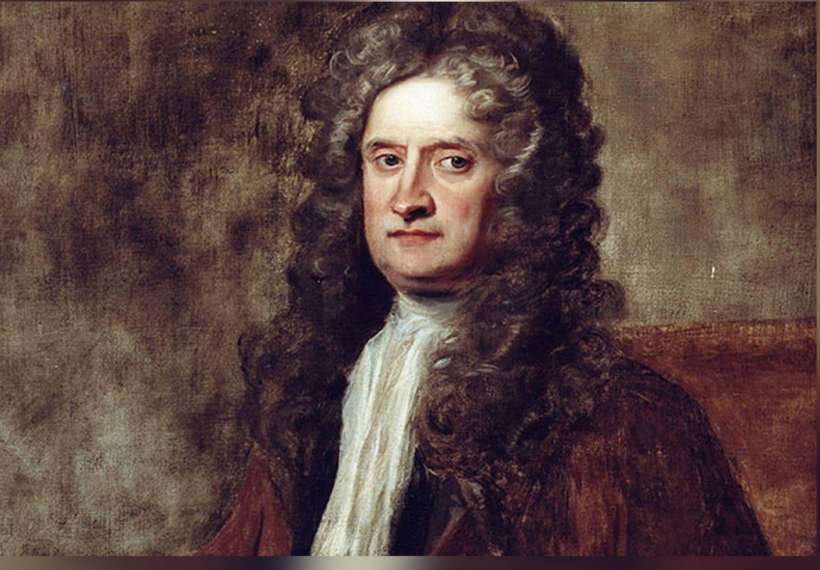
We're honoring Sir Isaac Newton, whose birthday quickly approaches.
He was born on December 25th, 1642, as reckoned in Britain.
So we took your questions about inventions, inventors, inventrices, and scientific discoveries.
Isaac Newton, I'm here, by the way, with Chuck Nice.
Thank you.
The charming and enchanting.
Now, Chuck, you know, it was Christmas Day, as reckoned in Britain.
In Britain.
But it was the 4th of January in Italy.
Yes.
And, you know, that's because it's like, you know, it's a time zone thing, right?
You know, it's a little complicated.
Right now it may be, what time is it here?
Currently 1.30, and so, you know, it's not that central time.
Right, so what happened is the, say what you will, about the Vatican, the Catholic Church, they had some outstanding astronomers.
Right.
And they realized that if you add a leap day every four years, indefinitely, you're adding too much time.
Right.
And you may recall that so out of hand did it get that Pope Gregory XIII declared the 5th of October to be followed by the 15th of October.
I remember that well.
It was a while ago.
It was a little while ago, but I remember that just like it was, you know.
1572.
Right.
Just like it was that.
So the thing is, just imagine how this went down.
So you're a tenant.
And the landlord says, you owe me rent today.
No, I don't.
I don't owe you a rent for a week and a half.
No, no.
It says right here.
Pope said it's today.
Think of the conflict.
That's some serious conflict.
But if you are, on the other hand, if you're a farmer, an agriculturalist, and you start doing everything a week and a half late, because you're just looking at the calendar, then things are messed up.
Oh, you're in big trouble.
If you don't harvest when it's harvest time.
They got a lot of rotten corn out there.
Yes, or you planted too late.
It's even worse.
Yeah, it is.
So, the Pope was so powerful.
How powerful was he?
He threw out 10 days.
And then they had this brilliant thing that they just thought deep thoughts about.
We were talking about this before the show.
And if those of you who aren't hip to this hipness, it's amazing.
The year 2016, this year was a leap year.
Yes.
As was 2012.
Okay.
2008, 2004, 2000, a leap year.
But 1900, not a leap year.
Not a leap year.
1800, not a leap year.
1700, not a leap year.
They agreed.
On the century, not a leap year.
Which is wacky.
But their scheme is that if you are not divisible by the number 400 evenly, you're a century, then you don't get to be a leap year.
So they're-
So, because they were adding a little too much time, about 11 minutes too much time every four years.
That's a lot of time.
Well, it starts to add up.
So the next adjustment, my understanding, is it'll be around 3080.
Someone's gonna have to take a meeting.
And what would be the solution then in 3080?
Think they'll have an extra day.
They will have a New Year's Day day.
A New Year's Day day.
Not part of January, not part of December.
Just a day day.
Oh, that's actually, that's kind of cool.
It'll be very cool.
But getting, I know you have kids, but getting either of us, even your children, to the year 3080 is a challenge.
You know, the way things are going now, I think getting any of us to the year 3080 may be a challenge.
Maybe to get us even to 2020 will be a bit of a uphill thing.
You know what you're saying.
Yeah, exactly.
So Chuck, as is traditional.
So anyway, say what you will.
Pope Gregory XIII had this really good astronomers, a very good astronomical staff, and he made a decision, he stuck with it, and we're all with it.
But in Britain, because of their, they just had their own Brexit.
Brexit, rather.
So this was the pre-Brexit Brexit.
Well, they've never gotten along.
So it was their astrological Brexit.
It's seven, astronomical.
Astronomical, I'm sorry.
It's 17 nautical miles from Britain to the mainland, but they still think of themselves as this other thing, even now.
So it wasn't until 1756 that the British guys and gals agreed to go along with the Gregorian calendar.
Just think 100 years of not having the same calendar.
How are you gonna do business?
What's, I mean, like, who's gonna write checks?
I'll meet you next Tuesday.
What happened to you?
That's right.
What happened?
I waited all day.
This check isn't good for two weeks.
No, no, it's the day.
What I always tell everybody, I believe that Isaac Newton's mother believed that Isaac Newton was being born on Christmas Day.
Right.
I mean, so I like to call it Newtonmas.
Isaac Newton's birthday is Newtonmas.
And it's very happy.
We don't have, there's no dispute about deities and their offspring and what continent it started on and his or her ancestry.
No, it's just Newtonmas.
For unto us this day, or not, a child is born.
There's a lot of childs borns.
Right.
Now, but we have, this is Cosmic Queries.
Yes, it is.
So we're here in the cosmos.
We're here in the cosmos.
And we're gonna take queries.
We have the queries.
And you are the queriest.
I am the queriest of the queer.
Wait, that didn't go the way I wanted.
The queerest of the queer.
You are the guy who asked the questions.
I am the queriest of the queer with the queries.
And what we do is-
Happily married, three children.
Yeah, well, you know.
How long have you been married?
Half of that is right.
How long have you been married?
I'll let everybody else be the judge.
I've been married for 18 years.
It'll be 19 soon.
Congratulations.
I think.
So then the old joke-
It was congratulations to me.
Yeah, to your wife, a little stressed.
Condolences, maybe.
Yeah, so the old joke, which I'm still charmed by, 19 years.
I've been married 19 years.
Some of them happy.
Some of them.
Well, you know what?
That's all marriage.
I think that is the definition.
It's a negotiation.
All right, so lead on.
So here we go.
We have queries as they have been gleaned from all over the internet, no matter what it is.
Twitter, Facebook, and our various incarnations.
Those electric media, the kids.
The kids.
With their-
With their-
Internet.
Their webs.
That's right, so-
Lead on.
Nice shirt, by the way.
Well, thanks.
The first thing that we always do when we have a Cosmic Query is read a query from one of our Patreon patrons, and yes-
Patreon.
Patreon.
One of the social outlets.
That is the social outlet where you can support us directly, and by doing so, we give you priority during our Cosmic Queries.
Yes, we can be bought.
Worth every penny.
That's right.
And if you want to support us directly as well, make sure you check out StarTalk, allaccess.com, where you can get-
Access.
Exclusive.
Everything.
Everything.
That's your absolutely right.
Hence the term.
Hence the term, access.
God, that is why you are Bill Nye, the Science Guy.
All right, let's move on to our first one, which means let's start.
Nick Safranski.
Safranski.
Safranski says this, Dear Dr.
Nye, what is your opinion on the advancement of AI technologies?
Is it hopeful or worrying?
And why?
Nick from Idaho.
Where do you come down on the whole augmented intelligence?
I'm all for it.
Everybody, what do you do?
Let's say, I don't know what you do out there, but if you travel at all, you might go to an airport.
And you go from check-in to the terminal on a train.
That's right.
The train has no driver.
It has no driver.
Oh my God.
And it determines how much torque to give to the electric motors, depending on how many people are on board, how much they weigh, how much their luggage weighs, right?
I did not know that.
Sure, and then it slows down appropriately soon enough, Lee, so that no matter how many people or how few people are on board, it works.
I set my coffee maker to come on by itself.
Right.
And that's all good.
Yeah.
But what the future is, the coffee, then I have, then thirdly, I have a thermostat.
Right.
That keeps track of how I set it.
I set it this way Monday through Friday.
I set it that way on Saturdays and Sundays.
Right, because you may or may not be home as much.
And I might get up later.
Right.
On Sundays, I have a little routine where I get up later.
I listen to a certain radio broadcast.
Oh yeah?
And I press on.
And so it keeps track of all.
Coffee, do we do coffee when we get up?
Okay.
And so what it does is it keeps track of all that and it anticipates what I'm gonna do the next weekend and the weekend after that.
So what artificial intelligence is, it's making decisions for you in the future based on what has happened in the past.
And I think we're all gonna be more and more willing to let go of setting the thermostat kind of things every day.
Okay, so now with that in mind and kind of as an addendum to Nick's question, how do you feel about augmented intelligence with respect to decision-making when it comes to perhaps endeavors that involve human life?
For instance.
For example.
AI driving a car.
I'm all for it.
Really?
Now.
Who is worse at driving cars than people?
Than human beings.
I mean, you guys, like all of you, like all of you listening, I'm an above average driver.
Yes, I know we all are.
Right, everybody can drive, right?
Give me a break.
But give me a break, B-R-A-K-E.
The thing is humans are not that good at it.
Did you see what he just did there?
Did you see that?
Okay.
Come on.
So humans are just not that good at it.
I think we'll be very happy to let go of it, which we're already doing multitaskically.
This is to say people are texting like crazy while they're driving.
Wouldn't it be better if they were just driving?
If they were just texting and the machine were doing the driving and the machine were keeping track of the other vehicles and agreeing on who goes first through the intersection and who gets to cut in front of whom.
You know, and you know, it's funny, but I just read an article that said the pinnacle of that will be when every single car has it because all the cars will actually communicate with one another.
So it's not like termites.
Right, like termites.
Yeah, absolutely.
I never even thought of that.
That's a great example.
Termites apparently have rudimentary algorithms built into their termitical brains.
And they function.
They're able to go back and forth through their passages, their galleries, build the big mounds, do their termite things, destroy your house and everything, all without top-down management.
That's right.
Everybody carries out their task as directed by their place in that little colony.
In the borg.
So this should be doable.
And people, we have mobile phones which hand our calls from cell to cell as we mobilize.
Right.
So what the heck?
We can get cars to do the same thing.
Safety systems have to be built in, yes.
Right.
Start going highway speeds.
Things could go horribly wrong very quickly.
Then you're always going to have one person who's just like not going to tell me how to drive.
I'm going to override this system.
Well, I think that'll go away.
In the same way, here in the big city of New York, New York, the town's so nice, they named it twice.
Once in a while, there's a subway passenger who just wants to push his way to the front of the line.
This is true.
But what happens is all the people around him just sort of don't let him.
Okay.
So I think what'll happen is automatic driving systems will take into account the crazy person.
And then there'll be requirement.
There'll be recreational driving.
You know what?
That makes sense.
It's like there's recreational horseback riding.
Yeah, yeah.
That was the chief means of transportation and now it's a recreational, but you're right.
Recreational driving, it makes sense.
If all the cars are in communication, the one a-hole that says not going to tell me how to drive and disables his AI driving, all the other cars will go, hey, we got an a-hole out here, got an a-hole on the road.
Box them in.
Box them in, let's do this, guys.
They probably do it instantly on a night.
That's awesome.
But it just seems very reasonable.
You asked about this one thing.
Yeah, that's great.
There's so much brain energy and concentration to operate a motor vehicle, we can design systems that will do it for us, that we have created.
They don't come from the automated driving sky thing by entity.
What a great answer, Bill.
Thank you.
Furthermore, while you're out there, this is StarTalk, and I very much encourage you, of course, to watch Star Trek, enjoy Star Trek, turn it up loud, StarTalk, gee whiz, StarTalk.
I want to watch them both.
Turn it up loud.
But on the new Bill Nye Saves the World show, we have a show about artificial intelligence, which I think will change your life.
Please, before we go any further, since we have done with our first question, please tell us about Bill Nye Saves the World.
Well, it's going to be on Netflix in the spring.
That's the only number they'll give us for a date, is the spring.
And there's 13 of them, and they're all pretty great.
I mean, I put my heart and soul into them, we have excellent writing staff, amazing crew.
So as the saying goes, it's got a chance.
Fantastic, man.
Bill Nye Saves the World's got a chance.
I have to tell you, there's already a buzz about it.
People are asking about it all the time.
It should be, I'm glad they're buzzing.
Yeah, man.
Fantastic.
All right, let's go to our next question.
This is Chris Ryu, who says.
Hey Bill, what would you say is the most significant invention or discovery or technique?
And I got to think hard about the CRISPRs in acronym.
I know the P is palindromic, but it's where we're able to replace individual genes.
So a guy like you has some kooky heart condition.
You got to take some kooky heart pills.
Yes, I do.
What we would do, your offspring may have inherited this gene, right?
This is true.
Those who have sprung from you off.
So we could then in the future, when your grandkids go to be conceived.
We can turn that off?
We could perhaps turn that off.
And then the question is, can you make super people?
Could you have super Chucks that could do super basketball things?
That's a scary thought.
Actually, the super Chuck that was good at basketball was my dad.
Yeah, he skipped me.
And by the way, did it ever skip me?
I believe it.
Are those genes in there?
Super Chuck genes, are they in there?
Could you activate them?
And then would we suddenly have a surfeit of an extra whole bunch of very skilled left-handed relief pitchers?
Would they like just show up?
Because parents want left-handed relief pitcher kids so they'll make millions of dollars or euros and they won't have to work anymore.
Maybe that's what happened to the Manning family.
So Archie the father.
Oh yes, I didn't remember the last name.
I had to think.
Yes, so maybe you got a little gene manipulation going on there.
So anyway, the acronym is CRISPR.
And if I were more prepared, I would be able to rattle it off.
No, now you guys have an assignment.
But it's a genetic modification that we all imagine.
So then you could have the term, which is imperfect, but has caught on as designer babies, where you'd have kids that you have given certain attributes.
And especially you've enabled them or disabled whatever genetic defect or perceived defect they would have.
That would be amazing.
I actually know some people with designer babies because I know quite a few girls with a child named Chanel.
So that's just-
I get it, I get it.
That's just-
It's a cultural thing.
We got a minute and a half.
This is gonna be brilliant.
All right, here-
Chanel's dad.
It's Chanel.
I have to tell you, okay, in a minute you can do this.
Carl Dean Twohl says this, for deep space travel protection and route to Mars, can a miniature magnetosphere be created to protect the occupants in the spacecraft?
So our world is protected by magnetic sphere, right?
So can we do the same with a spaceship?
Maybe, but you need a lot of electricity.
Oh, okay.
The Earth's magnetic field is huge because it has a huge amount of iron.
Huge!
It's spinning.
It's spinning.
But maybe cheaper and easier would be to have a layer of water around the ship.
Furthermore, it's been speculated that the risk isn't really that high.
It increases your chance of getting cancer 3%.
It doesn't guarantee that you'd get cancer 97 times more likely than everybody else.
I'd live with those odds to go to space.
Especially the astronaut people.
They're pretty motivated.
Let's run four or five marathons a week kind of people.
And so people speculate that the risk isn't that high.
It's an interesting thing that people love to talk about.
And people on both sides, we can never go to Mars because of radiation.
We have to go to Mars because radiation is not a problem.
And we'll be back after this on StarTalk as Cosmic Weary's with Chuck Nice and Bill Nye.
Talk to you in a moment.
This is StarTalk.
Welcome back, welcome back.
Bill Nye here with Chuck Nice on StarTalk.
And I'm the guest host.
Mistakes are made.
I'm the guest host with Chuck Nice, and the Cosmic Queries are where we take your inquiries from anywhere in the cosmos.
That's right, anywhere in the cosmos.
It can be anywhere in the cosmos.
If you can get on the Earth's internet and send it in in enough English characters or Roman characters arranged in English language, we will do our best for you.
That's right, because in the end, it's all zeros and ones anyway.
It is.
It's troubling but empowering.
Hey, here's Shane Henson from Facebook who says this, Hey Bill, my question is, what invention from outside of science has made a large impact within science?
Has an invention built to serve a different purpose other than science been used to advance science in new avenues of thought or discussion?
Shane Henson from Lethbridge, Alberta, Canada.
PS.
Bill Nye the Science Guy is what made science fun for me growing up.
I still get excited whenever I see an episode.
Thank you so much.
Wow, very sweet.
It was very and heartfelt, right?
Hearty, yes.
Yeah, I mean, this-
I'm palpitating.
So what is outside-
I think there's a pill for that.
I think I take it from my heart.
What is outside of science?
So I guess what he's saying is, has there been kind of something that wasn't a scientific endeavor that led to a great scientific discovery?
Well, I mean, nuclear weapons.
Wow.
God, that's not the answer I wanted.
Even though you're right, that makes sense.
I'm trying to understand the inside of atoms.
Right.
Let's call it nuclear power.
Nuclear power, thank you, thank you, yes.
Some of the energy right here, I think it's 19% of the energy in New York has made nuclear early.
Yes.
As a matter of fact, that we've just found out that the power plant, which is not very far from where we are, is not adequately protected.
I'm shocked.
No, everybody, I'm not changing the subject.
I'm not gonna change the subject.
Nuclear industry just hasn't been that great at safety.
What is that about?
I mean, seriously.
Well, they got in a hurry.
Plus, it's just seemed like such a great idea.
Dig this stuff up, fish in it, make electricity, put it back in the ground.
What could go wrong?
Exactly.
Stuff goes wrong.
Anyway, that aside, what invention came from outside of, I mean, it depends what you want to exclude.
What do you call an invention?
Yeah, and what do you want to exclude?
But to me, the greatest invention, go ahead.
Has there been like some, I don't know, crazy cooking discovery that led to something in the medical world?
You know what I mean?
Like we found that by cooking the bark of a certain tree cures this particular ailment.
Then we were able to distill that essence and take and make a pill out of it.
Something like that.
Willow bark became aspirin.
Get out!
You're absolutely, they're right.
Yeah, but is that-
I forgot about that.
Were the Willow bark investigators and investigatrices, were they not doing science?
You know, I-
At some level.
I would assume they were.
Have lab coats and business cards that said science person on it.
That was a long time ago, too.
And it worked.
And the other, when people say, what's the greatest invention?
I almost always reply, sewers.
You know, we've had this conversation, but, and we'll get into that, cause I have a couple-
Let's not get all the way into that.
We won't get all the way in, cause I have somebody, I don't want to steal it from them, but the last time we had a conversation, you told me sewers, and I was flabbergasting.
I'm still flabbergasting.
I'm still flabbergasting a flab.
I'm still gasping a flab.
And I got to tell you, when I heard your explanation, I was like, holy crap, that makes, I'm sorry.
And he did it again, people.
Comedy is natural for him.
See that?
It doesn't even, it just happens.
It just happens like that.
Enough with the verbs.
Yeah, so anyway, what's from outside of science?
Is willow bark from outside of science?
Is fire making from outside of science?
I don't know.
Second law of thermodynamics, I'd say, is inside of science.
Timekeeping, we talked about earlier.
Yeah, timekeeping is science.
Coffee making, is that chefing or sciencing?
So true.
Now I want a cup of coffee.
There's no, I really recommend, if you guys out there are gonna start a radio show or podcast, I really recommend you have a coffee pot.
This is not extraordinary, this is not an extraordinary idea.
It's a simple thing, right?
It's very common.
Very common.
Lead on.
All right, here we go.
Well, Shane, good question.
We didn't really get to an answer, but yeah.
Well, it's a tough one.
I don't know what's outside of science.
Yeah, what's outside of science.
Everything is science when you think about it, so.
That's what we're saying.
That's really what we're saying.
Everything is science, okay?
All right, here we go.
Grant Roach says this.
Hi, Mr.
Nye.
What three key inventions do we need for a manned mission to Mars?
Which could be a human mission.
Doesn't have to be guys.
I mean, if I'm going out into space for 400 days, you're a great looking guy, Chuck, but I wouldn't mind having some ladies.
You can, there's no need to feel down.
Pick yourself off the ground.
That's right.
You can get yourself clean, baby.
Have a good meal.
You can have a good meal.
You can do whatever you feel.
At the YMCA.
There you have it.
So with that in mind, I don't know why this person chose three key inventions.
You know, this is what they, I just read them, Bill, but he says, what three key inventions do we need to send some Mars, some astronauts to Mars?
So at the Planetary Society, as you may know, we did an analysis last spring.
We don't really need any new technologies, new inventions.
We just need to improve or literally expand the technologies we already have.
And the expansion hilarious reference I was making was to the inflatable habitat.
Aha.
So you have existing rockets, you go to orbit, then you fly some more rockets up to get enough fuel.
And you fly to Mars in a big inflatable habitat.
And you orbit Mars.
And all this could be done with existing technologies if it was just decided to be done.
So the analysis we did at the Planetary Society was 2033.
All right.
Now, if you're of a certain age, Chuck, as I am, you remember the Apollo program and astronauts orbited the moon first.
Yes.
Apollo 8, 1968, orbited the moon.
And that was the precursor.
That's where we figured out trajectories, made sure the retro rockets retroed and rocked and took the famous picture of the Earthrise on the eve of Isaac Newton's birthday, 1968, astronaut Bill Anders.
And they call that what?
A moon orbit insertion.
What is that?
That's lunar orbit insertion, right?
Space people dig that.
Yeah.
So we could do the same thing at Mars in 2033 without increasing the United States National Astronautics and Space Administration NASA budget.
If you got international partners, if you got motivated, MacDonald Douglas, I mean, Lockheed Martin thinks they could do it in 2028, which would be two Martian orbits sooner.
And we're all for it, let's go.
But the things you need is a place for people to live for this journey, need great big rockets, and you need to decide to do it.
And the biggest problems are political.
Yeah, I mean, I think the argument will come back.
How are you gonna send somebody to Mars when you don't have NASA, period.
Talking about when all the federal budgets is slashed to zero.
So what you all are, I know many of you are, half of everybody you meet voted the other way from how you did, from the way you did, but it's very reasonable that with the president-elect, when taxes are cut, the federal government will have less money and programs will be cut.
And one of the things that's gonna be cut first will be earth science, and then how far is it from earth science to deep space exploration, and then how far is it from, and then in general, there'll be short-term gains where infrastructure gets invested in, but then there'll be inflation, and the inflation then will put further pressure on the space program.
There you go.
So it's a-
But there are some people who actually-
Spoon-shop economics.
Some people feel like that is actually necessary because the idea behind smaller government is starve the government, and by starving the government, you cause a proliferation of private sector activity.
And so where NASA will not be able to do what they're supposed to do, you'll have private sector entities that will step into that vacuum and find a way to make money sending a spacecraft to Mars.
We'll see.
No, I mean, you may be right.
That was the best answer to that.
You may be right.
No, no, we're not right.
Cause is there any real profit instead of something to Mars?
Now you're talking.
See, there is no, almost certainly, there is no business case for going to Mars.
You're not going to make money going to Mars.
You could sell tickets, but you're off by a factor of 10 million.
Something like that.
In other words, the cost of it compared to what people would pay.
So we'll see.
Clearly, governments are the only entities that have any reason to do stuff like this.
Well, the Lunar X Prize is a way to do it, but you're going back to a place people have already been.
And I remind us, in the example of Columbus, or Magellan, or Francis Drake, or Henry Hudson, these people, these explorers, went around on the government dime, or before they had Euro, the government peso, the government pound, RACMA.
They did their thing.
Lewis and Clark were government employees.
And after they did the mapping, then you build a continental railroad, a transcontinental railroad.
They don't just go, let's start building a railroad and start cutting through the forest without knowing where the rivers are going to be.
It's not how it is.
And so this gets back to something that my parents mentioned countless times as I was growing up.
Common sense is not that common.
You can't count on it.
So we'll see what happens out there.
There you go.
There you go.
So let's move on to our next question.
You're supposed to have a cough button.
I just got to thinking about the future of the economic world and I got choked up.
Yep, here we go.
All right, so in recent history, wait, who sent me this?
That's not somebody's name.
In recent history, that's an unusual name.
Yeah, it is.
In recent history.
Lead on.
This is Burt Wardwell.
I like your name, Burt.
Burt Wardwell from Facebook says this.
In recent history, the last 100 years or so, what has been the most important invention or breakthrough that has not had a direct military national security application?
Thank you.
Maybe genetically modified crops.
Ooh.
But don't we feed the military with food?
Well, we do.
So, I mean, that's not such a good one.
But we feed everybody else with food too.
So they're just lumped into that group, the military.
Lumped in.
Unlike the, like my mashed potatoes.
But I think it has a cynical quality to it, that query, doesn't it?
Yes, because what he's saying is basically, unless we're making something to destroy one another, we really don't tend to have advancements.
Here's an example from my own experience.
I don't know if this will really do it for you, Bert.
But I lived in the Pacific Northwest for a long time.
We're very proud that it's the hypothermia capital of the world.
Because the air is so moist.
Any time of year, there's so much moisture in the air.
It just sucks the heat out of you.
The moist air conducts heat, or water conducts heat 25 times more strongly than air.
That's why wicking technology is so important.
We had this state-of-the-art technology at first was Filson, which had this tin cloth, they call it, this waxed cotton cloth.
And moisture will pass through it.
I have a Filson hat from the 1800s, same technology.
Now we have Gore-Tex and the derivative products.
All right, so when I went to do the Science Guy show in a Navy airplane, it was cool.
We did the Navy training.
I swam around the pool with boots on.
I wore a flight suit, you know, it was just so cool.
But then the Navy had this very primitive keep warm technology.
When you have to parachute out of your fighter plane over the middle of the ocean, get in a rubber raft and hope somebody finds you.
It was all this very heavy wool.
Now the Navy has Gore-Tex.
Right.
So which came first?
Which came first, Bert?
I say the moisture wicking technology came first.
That's what I say.
Well, there you have it.
Wow, that's pretty cool, man.
I'm jamming there.
I'm working hard because that same Teflon stuff is used to insulate wires in aircraft because when it burns, it doesn't make very much poisonous smoke.
If it isn't one thing, it's something else.
The world's a dangerous place.
That's what we're learning here, people.
The world's pretty great.
It's much safer than it used to be.
That is for sure.
When you live in the developed world anyway.
If you live in a war zone, it's a bit of a drag.
Wow, yeah, this is true.
You know what?
Since you brought up the show, I just want to ask you.
Which show the show?
This is the show.
Well, this is one show, but you know, the science guy.
Bill Nye saves the world?
Well, Bill Nye saves the world.
And the fact that you get to do all this cool stuff, what's the coolest thing you got to do?
Well, you're never going to say your favorite thing because then you're going to think I didn't enjoy the other things.
But flying around in the phantom, I mean, not with the phantom, the FA-18 Hornet, fighter attack Hornet airplane was pretty freaking cool.
That's really cool.
It's the Blue Angels.
Yeah, that, yeah.
They fly upside down, they fly this way.
And the Blue Angels recently had a difficulty, but in those days, it was fantastic.
You fly, really you guys, less than a meter, less than three feet from the other plane at 400 knots.
It's crazy.
It's insane.
And as I always say, when they-
Wait a minute, are those guys actually just flying that way or is it like computers?
No, no, no, they take great pride.
It's hard dudes.
They're just, they don't even wear G-suits.
They don't have suits that inflate to keep them awake.
Right.
They lift weights and stay so fit that they can hold the blood in their brains.
With that, Chuck Nice and I will be right back.
Hey, we'd like to give a Patreon shout-out to the following Patreon patrons, Michael Kasachovic and Michelle Danic.
Guys, thank you so much for supporting us on Patreon and helping us make our way across the cosmos.
And if you would like your very own Patreon shout-out, go to patreon.com/startalkradio and support us.
Bringing space and science down to Earth.
You're listening to StarTalk.
Welcome back, I'm Bill Nye, guest hosting on StarTalk Cosmic Queries.
And I'm here, of course, with the remarkable and exciting Dr.
Chuck Nice.
Oh, thank you, Bill.
And here we take your inquiries from anywhere in the cosmos.
You could be in orbit around Saturn.
If you can get your query onto the electric internet machine, roughly in English, we will take your question and do our, but you could be on Proxima Centauri someplace.
And we're around Proxima Centauri.
And we're here for you, man.
There you go.
There you go.
Entity person.
Proxima be cool.
Sure it is.
So give us one, Chuck.
Here we go.
Here we go.
This is Sheldon Novak and Sheldon.
We actually touched upon this earlier in the show.
I already know the answer to it, but I'm going to give it to you.
Oh, he already knows.
I already know the answer because you and I have actually talked about this before.
Sheldon says, Bill, in your opinion, what has been the most important invention ever?
Well, Chuck, give it to us.
And it is sewers, as Bill says.
That's my opinion, which is correct.
And please, I love this conversation because I have to tell you, first time I ever heard you say that, I'm like, really?
Well, just you wouldn't have cities.
And without cities, you wouldn't have this show.
And by that, I mean people have to collaborate to make these extraordinary advances in science and technology.
Once in a while, there's a lone inventor out in Utah or Idaho who invents television, Fy'Ot Farnsworth in this example.
But even he benefited from cities and factories near cities where people went to work and worked together to do extraordinary things.
And so if you're going to have people in cities, you got to have waste management.
Absolutely.
And that's why I mentioned sewers.
Yep.
And they're subtle.
They seem straightforward, but you got to plan for them.
You can't just build a city and then say, let's go back and put in some sewers.
Let's go back and put in some sewers.
You got to start with the sewer and work your way up.
As we know, if you've ever been to India, you'll find out exactly how important what Bill just said really is.
It's really hard for us from the developed world.
Oh man, it's tough.
So no, I love that answer.
And sewage is something that you take for granted until you don't have it.
Yeah, and plumbing you take for granted until the holidays and the sink stopped up and so on.
And so this stuff is straightforward.
And the ancient Romans had it, sewers and water management technology, but you got to plan for it.
You got to take it into account.
It's got to be an important thing to you and your society.
There you go.
So there you have it, Sheldon.
It's sewers, baby.
So keep your mind out of them and remember to appreciate them.
Okay, Mike Jividen.
Poem by Dr.
Chuck Nice.
All right, Mike, Mike, he's got a question.
Mike Jividen says, Mr.
Nye, on the topic of climate change, what problems do we face that could possibly be solved by new inventions or refining old technology?
This is the so-called softball question.
Thank you, Mike.
Yes, yes.
So here's what we want to do.
We want to provide renewable electricity to everyone in the world, reliable renewable electricity.
We want clean water for everyone in the world and we want access to the internet or whatever the future of electronic information sharing.
So now why is that important?
Because I understand the other two, but why access to the internet?
Because then every-
Because that seems like a luxury.
No, it will democratize everything.
So what we want to do, we have, when I was a kid, there were three billion people in the world.
Now there's seven and a half billion people in the world.
By 2050, there'll be nine, or maybe even 10 billion people in the world.
Where are we going?
Half of those people are going to be girls and women.
Yes.
So if we want to provide a quality of life for girls and women, we need to provide education.
And the way to get education to everywhere in the world is through the internet.
So true.
All right, so that's what we want to do.
So here's the thing of it.
Here's the claim from me in the engineering community.
We have the technology today.
We have the wind and the sun and geothermal and a little bit of tidal energy to run the whole place renewably if we just decided to do it.
And this is not StarTalk.
This is a different website.
Check out thesolutionsproject.org and there, civil engineers have done an analysis showing how this would be done in each state and over 130 countries around the world.
The energy's there.
We have to capture it and distribute it in a new way.
And it's not that radically new, just better way.
And that is instead of having few concentrated power plants, we would have hundreds of thousands of distributed, maybe millions of distributed energy sources.
So for example, my beloved state of Iowa, where 99% of the world's popcorn is produced.
That is worth, that right there is worthy of respect.
They get a quarter of their energy, electricity from the wind, 25% of the electricity from the wind.
And that's right now, competing against subsidized fossil fuels.
It's right now.
Texas gets 10% of its energy from the wind, electricity from the wind.
So let's go people.
We can do this.
We can do it.
So we want to advance existing technologies.
And if you want to get rich, and I hope you do, invent the better battery.
Oh.
It doesn't have to be radically new, catastrophically different from existing batteries.
Just has to be better.
Has to not overheat, has to store more energy, has to be lighter weight.
And it'd be great if you can make it out of inexpensive materials, carbon, antimony, magnesium.
These things get out there, do that and get rich.
There you go.
So now, let's piggyback on that thought right there.
Dalton Howard wants to know this.
Bill, may I please have your take on the new diamond batteries?
Well, if they work, I'm in.
That's the carbon.
Okay.
I'm in.
I mean, I don't know.
Does it work or not?
Diamond, in general, not that cheap.
But if they're made artificially for certain applications, imagine, you know how many hearing aid batteries there are out there?
There's a zillion.
What'd you say?
Yeah, yeah, yeah.
And the remote control of your television, all this stuff.
If they were tiny or more efficient to our batteries made of carbon, that would be a fabulous thing.
Haven't we seen quite a bit of advancement in battery technology?
I mean, when you look at Tesla, when you look at battery operated cars.
So here's my claim.
It doesn't have to be radically new, extravagantly, totally different, just better.
It's better.
Let's go.
Just to your point.
Right, there you go.
Advancing your point, agreeing with you, Chuck.
There you go.
Saying Chuck, Chuck, Chuck.
Ha ha ha ha, awesome.
Hey, let's hear from Alastair Gray.
Alastair says, Bill, parent patents are often used by governments and other bodies to show how innovative or how well they are doing as an economic metric.
Sure.
But due to nefarious groups, you run the risk of your idea being copied or having litigious trolls suing you just for creating the patent in the first place.
Are patents still relevant in today's world of inventors and innovators?
Are you kidding me?
What's his name?
His name is Alastair.
Alastair, Alastair, dude.
Alastair.
Dude, patents are vital.
Whenever you, suppose you write a song and it becomes a bazillion seller, do you want it, you're just giving it to the world?
Right.
How are you gonna make your living?
No, patents, intellectual property is very, very important.
Patent trolls are a problem.
The difficulty of getting a patent is a problem in a way.
But if you're out there and you have a great idea and you want to patent it, and I do not get any royalty from this organization, but start with legalzoom.com.
Really?
There's routine paperwork.
To help you find?
Throw it out, then you have two years to get it done for real.
So, but everybody, if you have that great an idea, another thing to have is a business plan.
Don't just patent it and expect the world to come to your door with cash.
You got to figure it out, how you're going to take advantage of it, how somebody else isn't going to take advantage of you.
It's business, it's what we do.
We're humans, this is our thing here.
Kids today, hey, I'm checking the clock.
Yes.
And I'm thinking about sparks.
Sparks.
Thunderstorms.
Thunderstorms.
And tremendous amounts of energy and rising columns of air.
A tempest it seems like.
And static electricity discharging itself to the ground.
Sounds a lot like a maelstrom with lightning.
Yes.
Oh, yes.
Lightning round, Chuck.
Lightning round.
Hit me the lightning round.
Here we go, Bill.
Let's start with our first lightning round question from Aaron Seth Graham who says, hey Bill, do you have an idea for NASA's recent space poop challenge?
No.
Okay, good.
And we're moving on.
Somebody does.
You want to recover the water and isolate the bacteria.
That's what you want to do.
Get on.
Okay, there you go.
And since he called the space poop challenge, I got to use this other lightning round.
This is Edwina.
Edwina.
Lightning round notification.
Very thoughtful.
She's the rubber chicken.
Rubber chicken people.
With electronics.
Exactly, it's amazing.
All right, let's move on.
Is it electronic or is it pneumatic?
No, it's just air passing through a diaphragm.
Pneumatic.
Pneumatic, is that what that's called?
Pneumatic means having to do with breath.
Just breath.
All right, because like when you have pneumonia.
Or you have pulmonary pulmonations.
Right, there you go.
Another noun for you.
James Peters wants to know this.
Who are the top scientists credited for, non-scientists?
Credited for scientific discoveries.
Are there any top scientific discoveries that did not come from a scientist?
There must be, but I don't know who they are.
All right, there you go.
Who's the coffee maker?
Melita.
She wasn't strictly a scientist.
There you go.
That's pretty great.
There's your answer, James.
Here's another lightning realm from, oh God.
Cronava.
Psh, okay.
Cronava?
Cronava, okay.
Okay, here we go.
Is there a common trait with inventors?
Do you think the world would be better or worse if inventing were inherent human traits across the entire species?
IE if everyone were asked to come up with a cure for cancer, do you think we'd have a better chance of coming up with a cure?
No.
No, in that one example, everybody is an inventor.
Everybody solves little problems all day, but solving cancer, I think you have to know a lot about medicine and stuff.
That takes a few minutes in medical school.
There you go.
All right, Julian G.
Garcia says, I am curious, Bill, we seem to know where we are in our galaxy and where the center of our galaxy is, but do we know where the center of our universe is?
Yes.
Yes, there you go.
It's off that way.
Over there.
No, it's in the plane of the Milky Way off a long way off.
No, people love that.
That's a great one.
Where's Neil?
We're actually-
Neil will give you an earful on that.
There you go.
Yeah, we'll revisit that with Neil.
Alan Palasco says this, Mr.
Nye, in the last 50 years or so, technological advances have been crazy.
Is this due to reverse engineering of, oh God, alien technology?
Yes.
He totally got me.
In technology, humans have never had a single idea of their own.
It all came from outer space.
All right, Alan.
Humans are so stupid, they can't think of anything, and let alone make a right angle to make a pyramid.
A human could never do that unless he found three, four, and five things.
Unless some alien landed and instructed him, right?
Okay, James Coltis says this, hey Bill, what invention would you like to see in the future?
Are there any scientific discoveries that keep you up at night?
Yes, I want to find life on another world.
Now, that's an invention, but I would like to enable that.
There are probably going to be some inventions involved in creating a robotic rover, can go to Mars, go up to the recurring slope lineae, the stream, RSLs, and sniff around, because everywhere there's moisture on Earth, we find something alive.
Is there moisture, I mean, there is moisture on Mars.
Is there something alive there?
Whoa.
All right, and-
Now, near the end here, Chuck.
Yeah, we are, we are.
30 seconds, let's hit it, let's hit it.
Okay, so in 30 seconds, let me put my own personal addendum on that last question.
Do you think the discovery of extraterrestrial life will cause us to descend into chaos or bring us all together?
Bring us all together.
Really?
Yes.
Like to discover, any other discovery in medicine.
When we realize that we are not alone in the cosmos, it will bring us together.
We will realize that our world is that much more special and astonishing.
And if we find, if we can show that there is absolutely nothing else alive anywhere, that would be even more profound.
Carry on.
This has been StarTalk.
I'm Bill Nye, your host, and I'm here with citizen of the world, Chuck Nice.
Let's change the world.
Change the world, keep looking up.
It's art, it's art people.
See the full transcript




 Unlock with Patreon
 Become a Patron