


 Unlock with Patreon
About This Episode
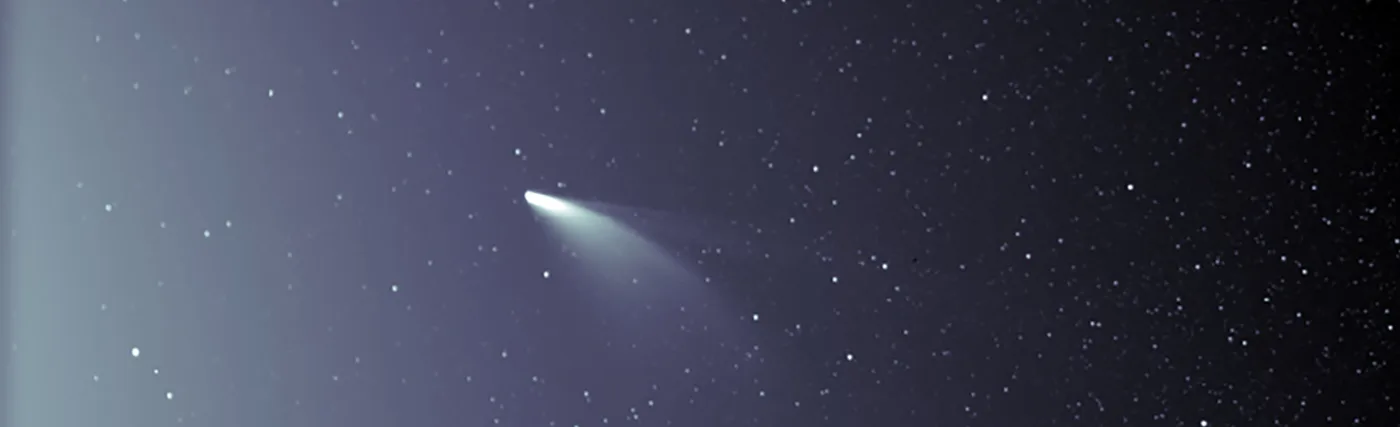
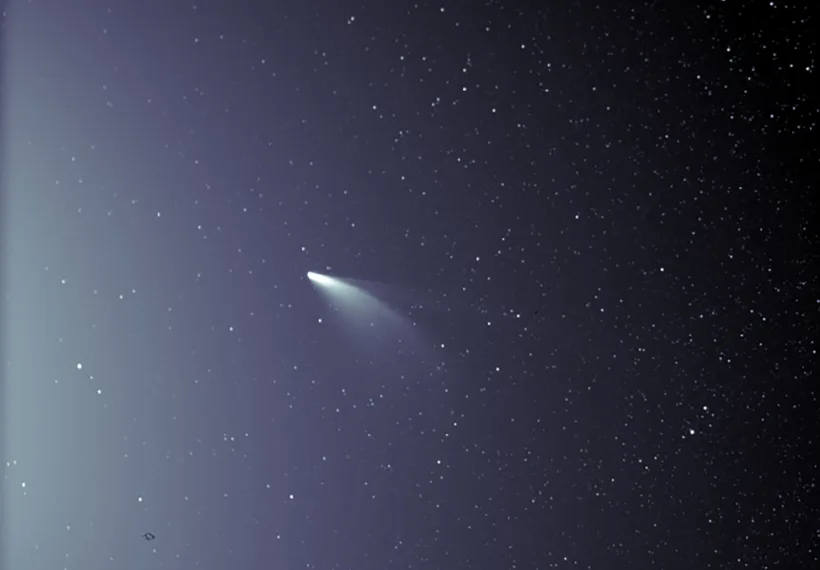
If you were lucky enough this past July, you might have caught a glimpse of Comet NEOWISE before it left Earth’s view. If not, don’t worry, we’ve got you covered. On this episode of StarTalk Radio, Neil deGrasse Tyson and comic co-host Negin Farsad are answering fan-submitted Cosmic Queries about Comet NEOWISE and more with cosmochemist and author Natalie Starkey, PhD.
First discovered in March this year, you’ll learn a little background about NEOWISE. Where did it come from? Can we be sure that it came from our solar system? Natalie tells us why speed can be a strong signifier of where a comet is coming from. You’ll learn what it means to be a “long-period” comet. You’ll also learn why comets have elongated orbits instead of circular orbits.
Next, Neil gives us some history on the Oort Cloud. We take a look at how NEOWISE got its name and the naming process of scientific objects. Neil also shares some interesting information about Halley’s Comet that you might not know.
Natalie tells us what unanswered question about comets she most wants to see answered. We ponder whether comets and/or asteroids could have delivered the building blocks of life to Earth. Explore amino acids on comets and in space. Would we find amino acids on NEOWISE? Examine the possibilities of Earth having “interstellar water.” And, you’ll also investigate if we can harvest water from comets to solve water crisis and famine here on Earth.
We discuss how different chemical compositions change the color of comets. You’ll hear why a comet’s “tail” can be a misnomer. Lastly, find out what it means for a comet to be “dead.” All that, plus, Natalie takes us through the scene of two comets colliding with each other and we debate if a probe could hitch a ride on a comet to a world beyond.
Thanks to our Patrons Matias Mancini, Sondra Ballegeer, Justin Yi-Riley, Kevin Carr, Jocelyn Germinal, Andrei M Burke, Brian Lin, and Adolph Guenthner for supporting us this week.
NOTE: StarTalk+ Patrons and All-Access subscribers can watch or listen to this entire episode commercial-free.
About the prints that flank Neil in this video:
“Black Swan” & “White Swan” limited edition serigraph prints by Coast Salish artist Jane Kwatleematt Marston. For more information about this artist and her work, visit Inuit Gallery of Vancouver.
Transcript
DOWNLOAD SRTWelcome to StarTalk, your place in the universe where science and pop culture collide.
StarTalk begins right now.
This is StarTalk.
I’m Neil deGrasse Tyson, your personal astrophysicist and your host.
This is a Cosmic Queries edition, and we have been long overdue to get a Cosmic Queries on the Comet that has been in the sky.
And so I had to bring in some expertise for that.
But before we get to that, let’s introduce my cohost for this episode, Negin Farsad.
Negin, welcome back.
Oh, hi, Neil.
How are you?
After your first visit to us, you didn’t run away and not come back?
You came back.
I felt my head getting like larger with facts and knowledge, and I thought, let’s do this again.
Okay, one day your head will not fit on the screen, and then we’ll know we’re doing the right thing.
I’m taking measurements.
Negin Farsad is a stand-up comedian, and if I remember correctly, you wrote a book called How to Make White People Laugh.
Indeed.
That’s a crazy title.
I would like a comet to be named after my book.
And also you host a podcast, Fake the Nation.
That’s right.
Yeah, these are very, very, these are terms you just got to, you got to just pick up that book and listen to that podcast because you want to know what the hell, where are you coming from on this?
You’ll enjoy them.
They’re fun, but they have like, you know, just a lot less science, but you’ll still love them.
And you write this not as a white person.
You write this as a sort of Middle Eastern heritage person.
That’s right.
I’m an Iranian-American Muslim.
You could probably tell from my voice.
Yes, I was going to pick it out.
So easy to tell on podcasts.
So delighted to have you back.
And we have a friend of StarTalk, Natalie Starkey.
Natalie, welcome back.
Yeah, you’re our Comet expert.
And you’re dialing in or zooming in from Cambridgeshire, the UK.
All the way in England.
Very cool.
Well, welcome.
And many people don’t know that you wrote our most recent space show at the Hayden Planetarium, which features planets as objects and planets as astronomical targets of interest.
So just thanks.
Thanks for coming in to do that.
Of course, we went to visit a comet as well, because how could I resist if we’re going to go into things in the solar system?
I’m like, we’re going to get a comet in there.
Exactly.
Exactly.
So when the planetarium opens back up, maybe you come back and visit.
Can I give listeners a little bit of insight about the two of you?
The green room chit chat before we started recording was about helium.
Ladies and gentlemen.
This is exciting stuff.
That is what I mean.
So if you think they’re talking about Kanye West or something before we start recording, no.
They’re talking about helium before we start recording.
So everyone’s clear.
These people are talking about it all day long.
Not just for this hour.
Natalie Starkey is a colleague and who’s a professor at the…
Is it the Open University?
I’m actually a public engagement officer now.
A public engagement officer?
Yeah, I’m at the Open University.
So I do a lot of physics public engagement because I discovered doing a lot of research.
I actually just love talking about science all the time.
Okay, well, excellent.
Very excellent.
And you’ve got a book and you’ve got videos.
And so you’re out there.
You’re trying to do what we’re trying to do.
Yeah, I’m trying to copy you, but I just…
I’ll go to the Bahamas, you take my place.
All right, so your expertise, I’m intrigued because your expertise in the solar system grew up out of your expertise thinking about Earth as a planet, as a geological object.
So that gives you a different kind of angle into what comets are than an astronomer would have.
So I’m intrigued by that.
I’ve always been fascinated by volcanoes.
That was what got me into science.
And then what I discovered from that is I loved doing chemistry on rocks.
And then it just sort of grew from there.
And my PhD was looking at understanding the Earth as a planet, how it formed four and a half billion years ago, how it evolved since then.
And so it was caught up in natural steps when I saw the post-op, which is the research position I had after my PhD.
It was looking at comet and asteroid samples and doing the same kind of chemistry on them.
But it was just looking at space rocks instead.
And I thought, oh my goodness, that’s so cool.
I don’t know anything about space rocks, but I’m going to jump in and give it a go.
And I’ve just not looked back since then.
I don’t mean to be biased, but space is cooler than geology.
I don’t know if you need geologists in space.
Neil, you got to be careful because I hear geologists can be very violent.
So you might get some attacks after this.
Like actual rocks that they can touch.
You can’t touch your rocks, Neil.
We use hammers a lot to break these rocks.
I’ve actually hit my own shin with my own rock hammer before when I actually missed the rock.
It was so painful.
Negin, if she can do that to herself.
Imagine what she can do to others.
I noticed a hint of violence in you.
So Natalie, you still have your eyebrows.
So whatever love of volcanoes you had, you didn’t lean too far in to have them seen.
I’ve never seen an actual eruption, but I’ve been on an active volcano many times.
A volcano in the Caribbean that I worked on, you can literally hear the thing roaring as you’re standing next to it.
All the gases escaping from it is absolutely amazing.
I never knew that before I actually went to one and actually sort of had to understand its temperature and look at it in detail and measure its gases.
But they’re just fascinating.
I love volcanoes.
And so we’ve got volcanoes in the solar system that are places other than Earth.
So it’s cool to have you helping us think about those problems.
Because actually my book coming out next year is all about space volcanoes.
So I’ve written, yeah, my second book is just finished.
So it’s going to be a while till it comes out.
But it’s about all the volcanoes in the solar system made of ice or made of rock.
Right, ice volcanoes.
That’s right.
Those spewing chunks of ice.
We think of volcanoes as hot objects.
But it’s really just objects where there’s a lot of pressure.
Is that a fair way to say it?
Yeah, it’s basically the effort a body makes to cool itself down.
But if that thing is already cold, it just has to be a little bit warmer inside and a bit colder outside that it wants to lose that heat.
By the way, can I say that space volcano is how I described an ex-boyfriend who was both a pothead and had a temper.
So I didn’t actually realize it was a real thing.
So I’m learning a lot right now.
I didn’t know potheads have tempers.
That was what was weird about him, you know?
So, Negin, did you collect questions for us for this cosmic query?
I did.
There are so many great questions.
Well, let’s head right in.
Let’s head right in with Philip Lyons from Patreon.
He asks…
Oh, wait, you’re doing Patreons first because they paid.
Patreons go first because they really support.
I understand that Comet NEOWISE was recently discovered in March, given how long its orbital period is around the sun.
How can we be sure that it originated in our solar system?
Good one.
That is…
Yeah.
I’m kind of always nervous during cosmic queries because it feels like an exam.
Like, I know this is an exam.
What are they going to ask?
I know it.
Right.
So the thing about comments is that…
Wait, wait.
So Natalie, if I see you peeking at your palm with your hands, with your nose.
All right, Natalie, you have about 30 seconds to answer this question and go.
Right.
So comments are really small.
Let’s just get that out there first.
So they’re really hard to see in the solar system.
So when they’re coming in towards the inner solar system, that’s the only time we can really see them in any detail.
Wait, quantify how small.
How small?
Well, the NEOWISE is about five kilometers across.
So it’s about like three miles if you’re in old money.
So that’s not huge.
If we’re looking at that from the Earth and it’s really far away, we’re not going to see it very easily.
Now, most of the time comets live really, really far away.
They live in the far out of each of the solar system, past the orbits of all the planets.
They live in somewhere called the Quaper Belt, and then even further out, this kind of theoretical region called the Oort Cloud.
So there’s lots of them out there, possibly billions of them.
And sometimes they get diverted into the inner solar system to bring them a bit closer to the sun, which is what happened with NEOWISE.
Now, it comes in and actually it was on a different orbital period to start with, but its interaction with the sun changed its orbital period, so it got longer.
So I think it’s gone from around 4,000 years to around 6,000 years to get around the sun and all the way back again.
So it’s a long period comet is what we say.
And this tells us that it came from very far away, because if it had come from closer to us, it wouldn’t take so long to go around the sun.
So we worked out its orbital period and we know it’s not coming back for quite some time.
Now, what was the end of that question?
Have I answered that correctly?
Wait, wait.
So how do we know it’s from this solar system and not from someone else?
Okay.
So the reason we know it’s from this solar system is mostly related to its speed.
Now, if something was coming from another solar system, another star system way out, then it would be traveling extremely fast to have exited its solar system and to be traveling through the galaxy.
Now, we’ve had that happen before.
There was an object that was called a Muamua, which was this strange object that we saw very last minute.
And we didn’t know if it was a comet or an asteroid.
We’re still not 100% sure.
We think it was probably a dead comet.
But it came from some other star system.
And it traveled through our solar system so quickly that it didn’t even get captured into orbit around our sun.
It couldn’t have cared less that we were here.
It just went straight through, zooming straight past.
So the fact that we can kind of measure the speed or the velocity of this comet in space in NEOWISE, we can figure out it’s come from within our solar system.
And we can roughly work out from where it came and then where it’s going back to.
All right, so in other words, if you calculate it in orbit and it turned out to be infinity, then it’s never coming back.
And it was an interloper, right?
But you calculate the orbit and there’s an actual number that comes out of that equation, what, 6,000 or 7,000 years, right?
Yeah.
Wait, it is just hanging out in this spot?
What, NEOWISE?
It’s always on this orbit.
So some of them stay out in the outer solar system, but then occasionally comets get kind of bumped into the inner solar system because they might have interacted with a big planet that kind of orbited past and kind of threw them off their happy orbit and then threw them towards the sun, essentially, because the sun is really, really big.
And so it’s got tons and tons of gravity.
So it pulls out towards the sun.
Gossip on the street says the sun’s real big.
It’s actually 99.9% of the mass of the solar system, right?
I was just going to say that, but thank you for saying that.
I could see you thinking it.
So it pulls everything towards it.
So that’s what happens with this comet.
If it gets knocked out of its orbit, it then kind of comes hurtling towards the sun.
They don’t always go very close to the sun.
They’re still some distance away.
But if they get too close, they can get heated up so much that they just disintegrate completely, which has happened quite a lot of times.
But this one was safe.
It didn’t go too close, and it managed to kind of skirt around the sun, and it’s going back out now.
It’s on its way back out to the outer solar system.
All right.
All right.
Well, question numero dos comes from also from Patreon.
Ari Mowdy says, Why is it comets don’t orbit in a circular orbit like the planets do, but instead have a very elongated orbit, even though they all orbit the sun?
Shouldn’t a comet orbit like the planets, though way out in the Oort Cloud?
You mentioned the Oort Cloud just now.
By the way, who names these clouds and stuff?
Because why isn’t it named like Brad or Larry or something?
Like, why do they all have these science nerd names?
I think the Oort Cloud was named after Jan Oort, is that correct, Neil?
So it’s named after usually the person that discovers them.
So if you discover something awesome, then you get to put your name to it quite often, which is really nice.
That’s cool.
Or, just I can add, if out of respect for you, if you make the discovery, then other people talking about your research paper will then coin that term.
So Jan Oort did not say, I’ve discovered the Oort Cloud.
He didn’t say that in his paper.
He just did a calculation and showed, there are all these comets that come in from very long orbits, and they don’t spend much time here.
But if you look at the gravity of the situation, when you’re far away from the sun, you’re moving slowly.
So then he did some math on this and figured there must be a place out there that has billions of comets in all directions around the sun.
And then that paper gets published and everyone said, hey, there’s this cloud of comets that Yon Oort hypothesizes.
And said it became the Oort Cloud at that point.
So how come they’re not circular orbits, Natalie?
What’s up with that?
So, OK, so most of the Oort Cloud comets are just sat out there and they’re basically forming this shell around the solar system.
So if you imagine all of the planets and the asteroids, they all sit in a plane.
And that’s where we all kind of circle around the sun.
They’re all in the same plane, pretty much anyway.
And then the Coipabout comets are all also in that plane.
But then the Oort Cloud comets, because they’re so far away, they’re not kind of bound to the solar system by the gravity in the same way that all the planets are.
So they just form this shell.
And that’s pretty much how we know they’re there.
We’ve never been there.
We’ve never directly observed them in the Oort Cloud.
But sometimes when they come into the solar system, they get diverted in, they end up on this very kind of elliptical orbit that brings them into the, around the sun, much closer, and that’s how they end up on these.
And that’s how we know they’re there, because they kind of come and visit us, and then they disappear again out to their home in this shell around the solar system.
Are you suggesting that if all comets, in fact, did have circular orbits, we would never know they were there?
Because they would never come closer to the sun, rendered visible by the heat of the sun.
Yeah, I mean, definitely the Oort Cloud ones.
Of course, with the Cove about, we’ve now been there, because we’ve had the Voyage Emissions have gone through the Kuiper Belt now, and then we’ve had the New Horizons NASA mission that went to visit Pluto, which is actually a Kuiper Belt object.
It’s not a comet, but it’s this big dwarf planet sitting out in the Kuiper Belt.
Negin, those are fighting words.
Pluto, yeah, it’s a Kuiper Belt object, that’s all.
It’s in the Kuiper Belt.
We’ve all been put on notice.
That just slipped out of her mouth.
The great thing about New Horizons is it went to look at another object in the Kuiper Belt.
So we got to see this icy object that’s sitting out there.
So we are actually now getting out there and visiting these things and seeing them in their home.
We don’t have to wait for them to come to us.
But those missions are really tricky because by the time you get out there, you’re going to be traveling really fast away from the sun.
And so you don’t get a very long time to look at these objects.
We just literally zoomed past Pluto and took a million images whilst we were there.
And they’re still being processed.
We don’t get long to look at these.
It’s really hard to enter into orbit around one of these things that’s so far away.
But we are going there now.
Well, wait, but so would you say then that most of the objects in the Kuiper Belt are on roughly circular orbits?
And so we’ll never see them unless they get jostled and set loose and plunge down back towards the sun.
Yeah, I think that’s fair to say because there’s so many millions of them out there.
And there are, we do get what we call Near Earth Comets, which are the ones that are diverted towards the sun and come and visit us.
But they’re not that frequent.
We have quite a few of them, but it doesn’t happen that often that, you know, we’re going to need to worry about it too much.
So, Negin, the Near Earth Comet, that’s code for a comet that could one day render us extinct.
Just want to clarify that.
It’s funny because it seems like such an innocent term.
And yet, it’s so deadly and horrifying.
It was a Near Earth object that took out the dinosaurs.
It came really near the Earth.
But I was half expecting you to say that the reason comets go in sometimes these oval shapes or whatever is because of Russian trolls.
You know what I mean?
Russian trolls can be attributed with a lot right now.
And this might be one of them.
I’m just throwing that out there.
I want you to look into it.
We’ll get top people working on that right now.
We have time for one more before we take our first break.
And let’s go to…
Oh, I love this question from Julia Casey, also from Patreon.
She writes, What unanswered questions about comets do you most want to see answered in your lifetime?
So I think one of the really hot topics at the moment is trying to figure out whether…
What was the role that comets played in life on Earth?
Because we don’t know where we came from.
We don’t understand how life got here and we don’t understand how it started on Earth.
We also don’t understand where all our water came from.
And these two things are really linked.
We think we need water to make life and we think we need water to sustain life on a planet or anywhere.
But we don’t understand where all these things came from.
And it could be that comets and or asteroids delivered the building blocks for life and also water to our planet in the past.
We know they collided with us about four and a half billion years ago.
There were a lot of collisions of comets and asteroids into our planet.
They bought all their goodies with them and some of those goodies were organic material and a lot of water.
So it might be that they delivered the building blocks for life and then we need to understand how then we got life because it’s not good enough to say, oh, there’s organic matter, we have life because it’s not that simple.
We don’t understand that next step in science of how we produce organisms like us.
So Natalie, you have unique expertise coming from a volcano, a volcano background, where we know they put water into the atmosphere and now you’re thinking about comets.
So you could have the package of how to make all the water we’ve ever had.
Well, yeah, maybe, okay, so volcanoes release a lot of water, they release a lot of gases into the atmosphere, some of them good, some of them bad, but they don’t actually have a bad negative effect on the climate as such.
But the problem is we don’t know where that water came from within the Earth, so volcanoes erupt out material from inside the planet.
And so the material that’s inside the planet has to have been there either from the start when the Earth formed or it was delivered later on and incorporated into the inside of the planet so that it could then be erupted out.
Now, we may have started with all our water.
When our sun formed and we formed all the planets and all the comets and asteroids around the sun, it might be that we had all our water from the beginning, that we’re actually, we’ve got interstellar water.
So our water might actually not be basically from our sun.
It might have come from interstellar space, which would be really, really awesome to think we’re drinking water that’s older than our sun.
But we just don’t know because the Earth was really inhospitable when it first formed.
It was boiling, it was just a molten ball of magma.
So it’s hard to understand how we might have maintained water within that really hot blob of magma because it probably would have all boiled off.
So this is why scientists sometimes say, okay, maybe we bought that water in later on.
Maybe it came from these asteroids that have a bit of ice on them.
Maybe it came from these comets, which are very icy.
But we just don’t know.
So that’s one of the major questions we’re trying to answer at the moment, where it all came from.
And can Brita filter water that’s older than the sun?
Is another question.
But I would love for you to figure that out, the explanation of life on Earth, which is just a small answer to that question.
Because then it explains everything, like sloths, why are they such a weird animal?
And cargo pants, why?
It literally then explains everything.
So you can be holding the key.
Everything, the key explainer.
We got to take a quick break, and when we come back, we will return to my cohost, Negin Farsad, and my special guest, Natalie Starkey, Comet expert.
We’re back, StarTalk Cosmic Queries.
My co-host, Negin Farsad.
Negin, do you have a Twitter handle, Negin?
Yes, it’s Negin Farsad, N-E-G-I-N-F-A-R-S-A-D.
Okay, it’s just your name.
It’s just my name.
I thought when I said you have a Twitter channel, yes, I do, here it is.
It’s Negin Farsad.
So unexpected, so unexpected.
It’s my name.
I was ready for some other thing.
I really set you up for like, it’s Vizzle Vee Doo 43.
You know, no, it’s just my name.
Well, the real Negin Farsad, because so many others have stolen it.
Natalie, Natalie, are you also on Twitter?
I am, yes, yeah, at Starkey Stardust.
So yeah, my name is Starkey.
See, Negin, that’s how you do that.
Negin, that’s how you do that, okay?
Taking notes.
Starkey Stardust.
Okay, so we’re in Cosmic Queries mode and we’re talking about comets, of course inspired by the recent appearance of Comet NEOWISE in the sky.
So what’s up next do you have there?
Up next, we have a question from Twitter at Saltsy83 asks, would you expect to find amino acids on NEOWISE and could the NEOWISES of the universe be the life distributors?
Which you kind of mentioned a little bit about that before.
Yeah, yeah, we touched on this in the last question, but actually, yeah, we’re getting a bit more detail now.
So yes, we know that we’ve got amino acids on comets.
So I would very much expect Comet NEOWISE to contain amino acids.
So we’ve now discovered them on two comets, which is pretty much the only comets we’ve studied in detail in space.
The first one was Comet Vilt 2, which was visited by NASA Stardust and they collected samples to bring back to Earth and they found the amino acid glycine in it.
Now, glycine is the most simple, the most simplest amino acid, but it’s there, so that’s very exciting.
Now, we corroborated that finding with the Rosetta mission, which is a European space agency mission, and it went to Comet 67P.
When it was on the surface of the comet, it actually put a lander down onto the surface and it analyzed all sorts of things, bits of dust and gas that were coming off the comet and it also found amino acids on the comet, again, glycine.
So we know we have them, we know comets collide with the planet and so they would have bought that inventory of amino acids, possibly other amino acids as well.
We haven’t found them yet, but they might be there.
They brought them to our planet in the past.
So there’s every chance that they did deliver life here, what we would call life in inverted commas, but obviously to go from amino acids to complex organisms is a really big step that we don’t currently understand.
So Natalie, what you’re saying is we were two for two in the comets that we could have known whether they had amino acids.
So we’re saying we’re good with that.
Yeah, I think it’s safe, and we’ve found amino acids in asteroids a lot.
So meteorite samples that are rocks that come from asteroids and land on our planet, or they can come from other planets as well.
But the asteroid or meteorites also have tons of amino acids.
In fact, in one particular asteroid sample, we found more amino acids than we have on our planet.
So there’s more variation in space than we need to account for the life we have here.
You mean more kinds of amino acids?
Yeah.
Whoa.
Yeah.
So life elsewhere could just have, could be more interesting than we are.
It might just rely on different, you know, bundles of amino acids to make life.
We have no idea.
We absolutely have no idea.
But they’re there.
So that’s the great thing.
We have it, we’ve got the evidence that they’re all over the solar system.
But now we just got to understand that next step of how we get life.
So Negin, that’s the name of your next book, How to Make Aliens Laugh.
Wait, so amino acids, I have a multivitamin that contains amino acids.
Is it that same amino acids that you’re talking about?
I’ve never really looked at the multivitamin, what is in it, but yeah.
I mean, because it gives me good, you know, nails and hair.
So yeah, so comets have great updo’s is basically what’s going on.
Yeah, so Natalie, what’s going to happen is Negin’s going to visit the meteorite hall of the museum.
She’s in court licking the meteorites.
No need to buy these supplements anymore.
Just go lick the meteorite.
That’s an excellent point, Neil.
Negin, step away from the meteorite.
Okay, and just before the next question, Natalie, could you tell me how NEOWISE got its name?
Oh, yeah, that’s actually a really interesting topic.
I mean, I could talk about this for hours, but I won’t.
I’ll try and do the short version.
So, maybe the 30-second version.
Comets are generally named after the people that find them or in the case of NEOWISE, the telescope that found it.
And it’s called NEOWISE.
It’s in space.
It’s a space telescope.
So, it’s probably a group of people working on it.
So, we couldn’t just give it one name, but previously, it would have just been one person looking through a telescope and they found a comet and they got to name it after themselves.
So, that’s why they tend to have, you know, like Halley’s Comet and all this, or Edmund Halley.
But they also have a really boring designation.
So, it’s also called C slash 2020 F3, which tells you a little bit more about the type of comet.
So, the C means it’s non-periodic.
So, it doesn’t come around the sun very often.
It’s more than 200 years.
It takes to go around the sun.
The 2020 tells you the year it was found or discovered.
And then the F3 tells you a little bit more about the exact month that it was discovered.
So, it tells you it’s the end of March that it was discovered.
And it was the third comet at the end of March to be discovered.
So, it tells you tons of information, but we tend to just call it NEOWISE because it’s much friendlier.
I think you’re underselling it a little bit because C slash 2020 slash F3 I think is going to be a very popular baby name coming up.
Just wait, it’ll trend.
Born or conceived under the comet.
So, Natalie, actually, Edmund Halley didn’t discover Halley’s comet.
Really?
No, he did not.
I’m learning.
Honestly, I always learn from you, Neil, because you are the brain here.
Yeah, what he did was he took Newton’s new equations of gravity and applied it to a comet that was in the sky and noticed that it was the same comet that had come around in previous records because now we can understand orbits.
You can now think of comets not as singular objects but as recurring visitors to the inner solar system.
So, using that, he made a prediction of when it would come again and so everyone just waited with bated breath.
And there it was.
It came right when he said, right where he said it would come.
And from then on, it was named after him.
He was long dead by then, though.
That’s what had happened.
So, that’s a little cool fact.
It’s due back in like 2060, I guess.
So, I hope I’m still around to see that.
Yeah, 2060.
Yeah, I think that is because it was 1986, it was every 75 years or so, right.
Right, right.
Cool.
So, Negin, you got another question.
We have another question.
It comes from Instagram.
Is it possible to measure the rate at which a comet loses its mass as it travels across the solar system?
Yeah.
And let me add to that, Natalie.
If you do that calculation, can you tell us when it will disappear completely?
Okay, so the answer to both of these questions is no.
Well, there’s no simple way to do this, but we’ve done it sort of once, really.
We’ve done it with the Rosetta mission, that European Space Agency mission.
And the only way we could do it with that mission is because the orbiter and the lander were with the comet the whole time.
So they kind of approached it when it was around the orbit of Mars, Jupiter kind of place.
They then stayed with that comet the whole way past the sun and then came out the other side.
So what they were able to do was look at the processes that were happening as this comet was heated up and its icers were sublimating into space and it was experiencing that very hot environment near the sun and as it came out the other side and they could measure how much material was coming off it.
And what they estimated is that about a metre of the surface of the comet was lost during that orbit around the sun.
That comet is about three by five kilometres, so it’s similar kind of size to Comet NEOWISE, but there’s so many factors that will control how much it loses.
It will depend on how much volatile material it has within it, the stuff that streams off into space.
It will depend on what exactly is its composition, how much ice it has compared to dust.
It will depend on how close it goes to the sun.
There’s so many factors that will affect that, that we couldn’t simply apply that one metre rule to every comet that goes near the sun because they’ll all be different.
But it gives us a good idea for that particular comet that they do lose a lot of material and that’s a huge amount.
So every time they go via the sun, that happens.
And so eventually they die.
We kind of say that they die.
They don’t have any volatile material left up, the ice is all gone.
So they’ve got no more material to lose as they go via the sun.
And then they just, they don’t have a tail anymore, they’re no longer a comet really.
So, but it’s hard to say how long that’s going to take and how many orbits that takes to happen.
My takeaway from this is that comets are always dieting and that basically body shaming is happening in the solar system in a way that I had no idea and I am not on board with it.
Yeah, losing a meter, that’s, that’s, that’s a, so literally the comet is being flayed by the sun.
That’s, that’s, that’s sad.
I know, I know, but then we wouldn’t see them otherwise because unless that process happened as comets kind of reached it all the way around Jupiter, that’s when they start to get heated up and that’s when they’ll start to produce what we call this coma, which is the kind of the atmosphere that surrounds that rocky nucleus that makes up the comet.
So they start to get heated up and the ice within them, there’s lots of different types of ice in a comet.
It could be water ice, carbon monoxide, carbon dioxide, methane, ammonia, lots of different types of ice.
Like the big cubes they use and bars.
Is that in there too?
There is so common, yeah, we’ve got dry ice because that would be the carbon dioxide stuff.
So basically they all get sublimated, which means they turn from solid to gas at different stages as they’re going towards the sun.
The first one to come off is generally carbon monoxide and that kind of glows blue.
So if you often see images of Comet NEOWISE, they’ve got this kind of blue halo around the comet nucleus and that starts to then stream off into the tail of that material.
So that’s actually just the comet losing its mass and that all that material is just streaming out behind it, along with dust particles that are coming off at the same time.
So it’s kind of can be quite a violent environment on the surface of the comet as different portions of it get heated up differently and then jets of gases can shoot off and it can be quite crazy.
So Natalie, everything I know about that, I learned from the movie Armageddon.
When they landed on the surface of the comet and it rotates into the sunlight and then geysers start popping out and yeah, I don’t want to say that was the only accurate part about that movie.
I don’t even think it was that accurate, but hey, yeah, I’m glad you have a mental image at least.
I do.
I do.
So, Negin, what else you have for us?
And we also have from Twitter, hello from Cape Verde, which is such an exotic location to be sending a message from.
I think they’re volcanic islands, aren’t they?
Yeah, I think so, too.
I’d take my dream to go visit.
My dear friends, theoretically, can we harvest water from asteroids and comets to solve water crises and famines here on Earth?
And if so, wouldn’t that seem more important slash practical than starting a colony on Mars?
And before you get to that, Natalie, let me just say we had an entire live, StarTalk live program on water, not only on Earth, but in the solar system.
And I had not fully appreciated how much rarer potable fresh water is becoming on Earth.
Yeah.
You know, water, water all around and not a drop to drink.
So what is the nature of the water on comets?
And why can’t we just last sue one and bring it in, make a lake of it and dip in our straws?
Well, yeah, the thing is, first of all, obviously, we’re going to be much better placed looking after our own water supplies, making fresh, clean water for ourselves and not polluting the rest of our planet and having a lot of salt water is a problem, because obviously we don’t want to drink salt water.
Now, when we go into space, there are other moons and stuff that have water on them, but it tends to be salty water.
That’s good for life and that life can survive in there, but it’s not stuff that we want to drink.
So sure enough, if we were to travel out into space and we wanted to go and live on Mars, not sure that’s going to be a good idea.
But anyway, if we did, we would need water and there’s no water on Mars.
So we don’t think there’s much anyway.
There might be some in the subsurface, but we don’t know.
So we could kind of travel by a comet on the way and get some water.
We could just melt some of that comet, separate out the water, ice from, you know, all these other types of icers that it contained.
And sure enough, we could use that in space.
And we do think that that is one of the ways we might be able to explore further into the solar system.
But it has its problems.
It’s not going to be very easy to do, just kind of fly by a comet and grab some water.
It’s not that simple.
But it’s definitely not something we’ll be doing to bring back to Earth.
It’s not going to be practical to transport water back to our planet.
And even though there’s a lot of in space, we’re better off looking after our own water here.
So there’s an interesting corollary to that, because it still costs NASA about $10,000 a pound to put payload into space.
So, if I launch you and you want to drink 16 ounces of water, if I set up a mining colony that mines frozen water from asteroids and comets, melts it, then I sell it to NASA, but for on space activities, and I’ll sell it to NASA for $7,000.
I can do that.
And then if it gets cheaper, I’ll sell it for $5,000, whatever.
But I can imagine a future, however distant, where the water that we do harvest from comets goes to other activities in space, rather than, I agree, it’d be impractical just to bring it back to Earth.
Yeah.
And at the moment, anybody that goes up and grabs an object in space, like an asteroid or a comet, can own, I think, pretty much, American citizens anyway, can own whatever they find in space.
I have a feeling the rest of the world is catching up with those laws.
So yeah, you could do that.
If you could go and mine a comet or an asteroid, you can, for sure, then sell it, whatever materials you get from it to whoever wants them.
That’s been an American rule ever since the beginning.
We find it and then it’s ours.
How the country was built.
The really cool thing about water is that you can also use it as propulsion for rocket fuel.
So if you can split the hydrogen and the oxygen out of the water, water being H2O molecule, and the hydrogen and the oxygen, then you can use that as propulsion as well.
So it’s not just for humans living, but it’s also to get further into space because, as you said, launching anything off our planet is incredibly expensive because we have a lot of gravity.
So if we can get our fuel in space without having to take it with us from the earth, that’s a real bonus as well.
All right.
And.
We’ve got a question from Instagram, from at Gabriel Wachim.
How do different chemical compositions change the color of the comet?
Nice question, because I’ve seen pictures of the comet and there’s all these beautiful colors in it.
I want to know where that comes from, except we have to take a break when we come back.
We will all learn from Natalie Starkey how comets get their colors on StarTalk.
We’d like to give a Patreon shout out to the following Patreon patrons, Mathias Mancini and Sandra Bolliger.
Thanks so much for being our bright shining star.
Without you, we couldn’t do this show.
And if anyone else listening would like their very own Patreon shout out, please go to patreon.com/startalkradio and support us.
Thank you.
We’re back, StarTalk, Cosmic Berries, Comets.
I’ve got Negin Farsad, my co-host, and Natalie Starkey, who’s our resident comet expert, except she’s in the UK right now.
She’s a resident of somewhere.
Yeah, so, Negin, someone had just asked about comet colors.
Is that right?
That’s right.
They asked, how do different chemical compositions change the color of the comet?
So how does the leper get its spots, and how do comets get their colors?
You see, this should be in the same book.
Yeah, that’s a great question, because it’s one of the ways we can figure out what comets are made of, because we can look at their colors as they come into the inner solar system, and it tells us what is literally coming off their surface, which ice is sublimating and turning from solid to gas as they get hotter.
So I mentioned earlier that the first gas that tends to come off is carbon monoxide, and that glows blue.
Neil can probably explain the physics reason behind all the ions interacting and why that glows blue.
Do you want to?
No.
But it glows blue, let’s just say, there’s no interaction with the physics.
No, no, I can tell you.
I can tell you.
So these molecules have certain sort of energy states that they exist in.
And if they’re fed another energy source, you can kick electrons off of them, or you can bump them up into a higher energy state, and then they release that energy back to you, but in a very specific part of the spectrum.
And different compounds, different molecules, different atoms have different colors corresponding to what their energy levels are.
So it’s not deeper than that, and that’s going on all the time.
So yeah, so go on.
By the way, do you remember the glow-in-the-dark frisbees?
You know, you’d put it under a light, and then you’d throw it.
Does anyone play frisbee anymore?
It glows this kind of pale green.
Well, when you put it under regular light, and it bumps up the energy levels, and then when you take it away from the light, the electrons descend and emit this green light, corresponding to the material that’s in the frisbee itself.
And it doesn’t do that forever, right?
You only get to play with it for 10 or 15 minutes before you don’t see that signature at all.
But the comet is constantly getting stoked by the sun.
So you get these colors sustained.
You can sometimes get a green color, which I think is related to elemental carbon, because we know there’s a lot of carbon in comets.
The dust particles tend to be made up of carbon, hydrogen, oxygen and nitrogen particles.
So all the stuff for life, it’s brilliant.
You can also sometimes get a red tail, which is, with comets, you tend to have two main tails.
The first one is made of dust, and that can be quite diffuse.
It tends to be sort of either white, gray, kind of yellow colored.
You get the second tail, which is the ion tail, which is these gases that will come off, and that tends to be blue or greeny colored.
And then sometimes there’s this sodium tail, which is red.
And I think actually it was seen with Comet NEOWISE.
There were three different tails coming off this comet.
So you’ve got the comet traveling towards the sun, and these tails all face away from the sun, basically.
Right, so tail is a misnomer on its way out of the solar system, out of the inner solar system, right?
If it goes out tail first.
We think of tail as something that trails.
Yeah, exactly.
But it’s only trailing on its way in.
Yeah, the tail ends up ahead of the comet, or the tails.
But they’re not all in line with each other, because obviously the dust and the ion gases, they get distributed differently, and they react differently to the gravity of the sun and the solar wind and everything.
So they end up being separate.
And that’s how you can see them.
And some of the images that people have got of this comet have been absolutely amazing.
Aren’t they beautiful?
And everybody’s got a great camera, and you don’t need full telescopes to do this anymore.
Just a camera with a good lens.
Not like the old days.
I sound like an old man.
My day!
So Negin, can we go into lightning round?
Lightning round!
Actually, it’s not up to you, it’s up to Natalie to answer questions.
Pretend you’re on the evening news and they just want sound bites.
So this is your sound bite quiz.
So Negin, what do you have?
Alright, Rob Kirsten from the Netherlands writes on Instagram.
Let’s say…
By the way, Jan Oort was from the Netherlands.
Oh, there it is.
The Dutch have had a long, in the 20th century, a very long and proud history of participating in cosmic discovery.
Just thought I’d give a toss out to the Dutch.
But go on, okay.
Does Comet Halley always have the same tail colour every time it comes around the sun?
The chemical composition burns, but can a comet gain other chemical compositions on its way to us?
Yeah, so it’ll, I think it should theoretically always glow the same colour because it will have the same icers within it.
But as they get depleted, I guess it could change colour with each orbit of the sun.
But it definitely isn’t going to gain any material as it goes by the sun.
It will only be losing stuff.
Good short answer.
Let me ask, could there be a layer below that’s different from the layers above that then gets revealed as a new chemical signature?
Completely.
We have no idea because we haven’t studied enough comets up close and we haven’t studied enough over the course of an orbit.
So, yeah, we don’t know.
They could be completely different as they go, as you delve down into them.
It’s great.
We have no idea.
Lots to find out still.
It’s like a seven-layer nacho dip.
More to discover.
We have from Oxford, comma, 20 on Twitter.
How many…
Oxford, comma, 20.
How many encounters with the inner solar system do comets from the Kuiper Belt and Oort Cloud get before they’re totally steam-cleaned and become plain old asteroids?
Oh, I like that.
So we had a similar question earlier, and actually, it’s again, we don’t know.
We don’t really know for any individual comet how long it’s going to take for it to just die and lose up all its icers.
So we just have to study each one in detail, and then once we see what it does on its first orbit, that we look at it, we’ve got to wait till it comes back and see how it reacts again.
We really have no idea, but we have observed comets that are then dead, so we know that that can happen, but how long it takes for that to happen, we really don’t know at the moment.
So when you say dead, you don’t mean destroyed, you mean there’s nothing to evaporate to render it visible.
Exactly, so they just end up as a hunk of rock in the end.
What I’m gathering from all of this is that comets are a really fickle lover.
You just don’t know what they’re going to do, how they feel, you just don’t know.
Exactly.
So Negin, keep going.
All right.
We’ve got two more, we’ve got like one minute left.
And Natalie’s on a roll.
She’s knocking these out.
From real tired hours on Instagram.
I want to know if comets orbit all the same direction in the same way planets do.
And if not, what would it look like if two comets collided while visible from Earth with the naked eye?
Yeah, that would be so cool.
Okay, so we’ve seen comets disintegrate when they go near the sun.
I mentioned this earlier when, you know, these things are very volatile.
They are very fragile because they’re made, basically, a snowball with a bit of dirt in.
So if they go too close to the sun, they can explode.
And we have sort of seen that with a telescope before.
But if two would collide in space, well, it’s unlikely to happen.
But if it were to happen, we would basically see these things sort of collide and disintegrate.
It might not be as exciting as you might think, because, like, if you had two rocks colliding, because they’d probably just sort of melt into each other a little bit.
But if they would collide in the outer solar system, they’re going pretty kind of, it’s kind of quite far apart out there, and they’re not kind of going to hit each other with very much force.
So if they were to collide way out in the outer solar system, we wouldn’t really see much, or we wouldn’t be able to see it happen anyway.
But I don’t think it would be very exciting.
Natalie, you’re bumming us out.
This was a great question.
Now you turned it into, like, nah, it’s not going to be exciting.
Yeah, like, I was like, I was geared up for, like, the Macy’s fireworks display.
And instead you’re like, oh, no, this is like the sad, like, Larry outside of Sheboygan doing fireworks off his roof.
You know?
They’re so fragile.
They think nothing.
Like, if they come into, they can collide with our planet, and they have done in the past.
But actually, the only time we’ve ever kind of observed this happening, they kind of explode as they come through the atmosphere because they just can’t maintain their shape because they’re just not consolidated enough.
They’re not held together very well.
And they tend to explode in the atmosphere before they even reach the surface of the planet.
So, yeah, I don’t think it would be very exciting.
All right.
Here’s your last question.
Last question.
Go.
Last question is from Dude’s Priya on Facebook.
Is it possible for a probe to hitch a ride on a comet?
Maybe an extra solar comet that will leave the solar system?
Oh, lovely question.
So, yeah, of course, we’ve done this with the European Space Agency mission.
The Rosetta mission, which I’ve mentioned a few times because it was just one of these groundbreaking missions to a comet.
It landed, a little lander on the side of the comet.
And as I said, it followed that comet then as it went via the sun and came out the other side.
And it’s still there.
So this comet is now heading out into the outer solar system again.
And that little lander is still with it.
And they even had an orbiter with that comet, which they basically crash landed onto the comet because they were like, we can’t do any science now.
There’s no sun.
We need sun to have our solar panels.
What are we going to do with this spacecraft?
We’ll just crash land it or decelerate it into the comet.
So they’re now with it.
Now, if you did that with a comet like a Muamua and it was going out of the solar system at great speed, then sure, you could then hitch a ride.
You’d have trouble with power and it’s very cold as you get away from the sun.
So spacecraft don’t really like that, but it is possible.
Let me add that it’s not so much that you’re hitching a ride because if you matched speeds to the interstellar object, a Muamua, then once you match speeds, you don’t have to attach to it because you will have the exact trajectory that a Muamua would have.
So it’s an interesting fact.
It’s not like you just hook it and then it pulls you along.
You’ve matched speeds.
You’re there.
You are with the comet, whether you’re touching it or not.
That’s amazing.
That’s just the physics of it.
But Natalie, I think it’s funny to think that we’ve got our hardware sitting on a comet with the Rosetta mission, so the next time it comes around, if it’s jostled loose, it’s like a spacecraft getting jettison off the back of a comet.
And that’s what they were worried about when the comet went via the sun.
The lander may have just been thrown off into space if a big jet of gasses had shot off the comet when it got heated up.
So, yeah, it was a real…
We had no idea what was going to happen because we’d never done it before.
So, yeah.
I am super prone to motion sickness, so the idea of hitching a ride on a comet just sounds horrifying to me.
Just sounds like a vomit bag, a constant use of a vomit bag.
You should be more worried about a jet spewing forth under you and then casting you back out into space rather than just being on the comet and worry that you might need some Dramamine.
So, we got to end it there.
Negin, it’s always great to have you.
Always.
It’s the second time.
Hope to see more of you as my co-host.
So fun.
I learned so much.
And your book, How to Make White People Laugh, crazy title and even crazier podcast title.
What is it again?
Fake the Nation.
Good luck with those and we hope to see you again.
And Natalie, always good to see you.
Keep it going.
We’ll look for you when you come back to New York.
Yep.
And maybe we can arrange for another comet for you to talk about.
We’ve got loads of missions coming up at the moment going to asteroids.
So there’s so much to talk about.
We want to learn about those.
There’s definitely, definitely.
So thank you.
And the title of your next book you’re working on?
It’s called Fire and Ice, Space Volcanoes.
Fire and Ice.
Very nice.
Very nice.
This has been StarTalk Cosmic Queries.
Neil deGrasse Tyson, your personal astrophysicist.
As always, I bid you to keep looking out for us.



 Become a Patron