


 Unlock with Patreon
About This Episode
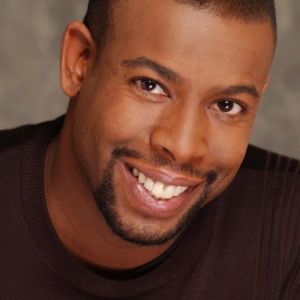
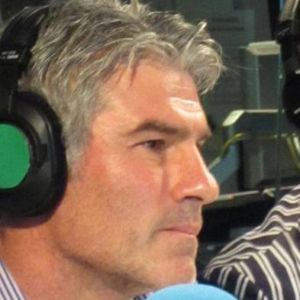
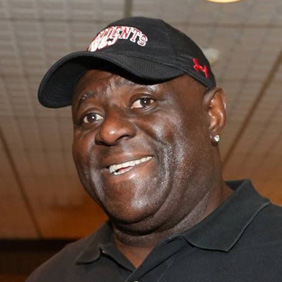
What is CTE? On this episode, Neil deGrasse Tyson and co-hosts Chuck Nice and Gary O’Reilly discuss concussions and emerging information on chronic traumatic encephalopathy with former NFL lineman Leonard Marshall and neuroscientist Heather Berlin, PhD.
What is it like to sue the NFL? We break down Leonard’s journey with brain injury, his book When The Cheering Stops, and some of the inequities within the league. Why are football careers notoriously short? We know how many tackles Leonard had, but how many times was he tackled? Should that be a stat? Neil makes a calculation of how much energy it would’ve been to be hit by Leonard in his prime.
What does it feel like to get diagnosed with a disease normally identified during autopsy? Leonard details his journey to diagnosis, his thinking about the future, and what eventually led to his advocacy. How is CTE different from a concussion? What cultural changes need to be made to help current and future players? Do football pads actually make the game more dangerous?
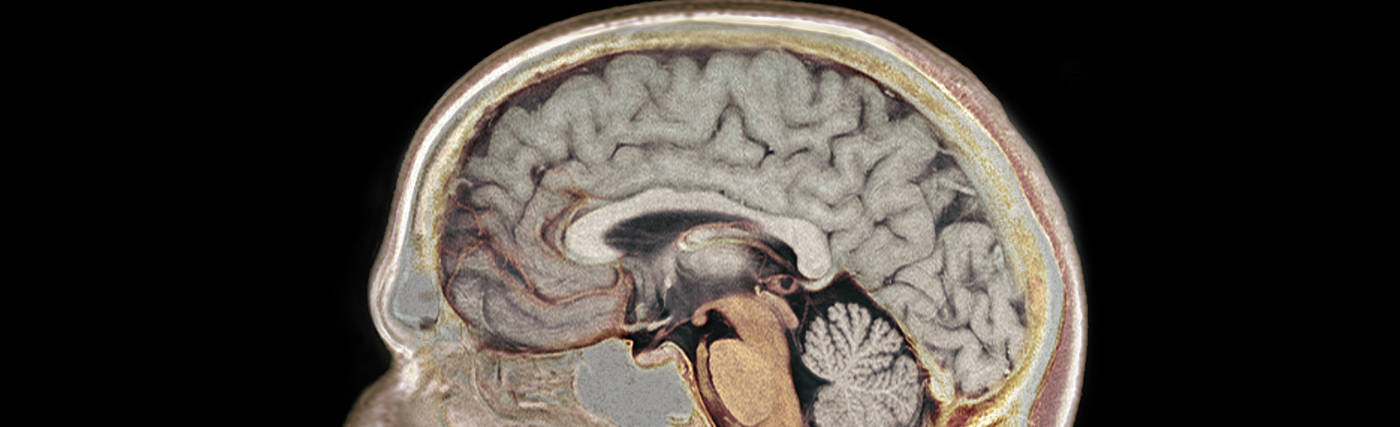
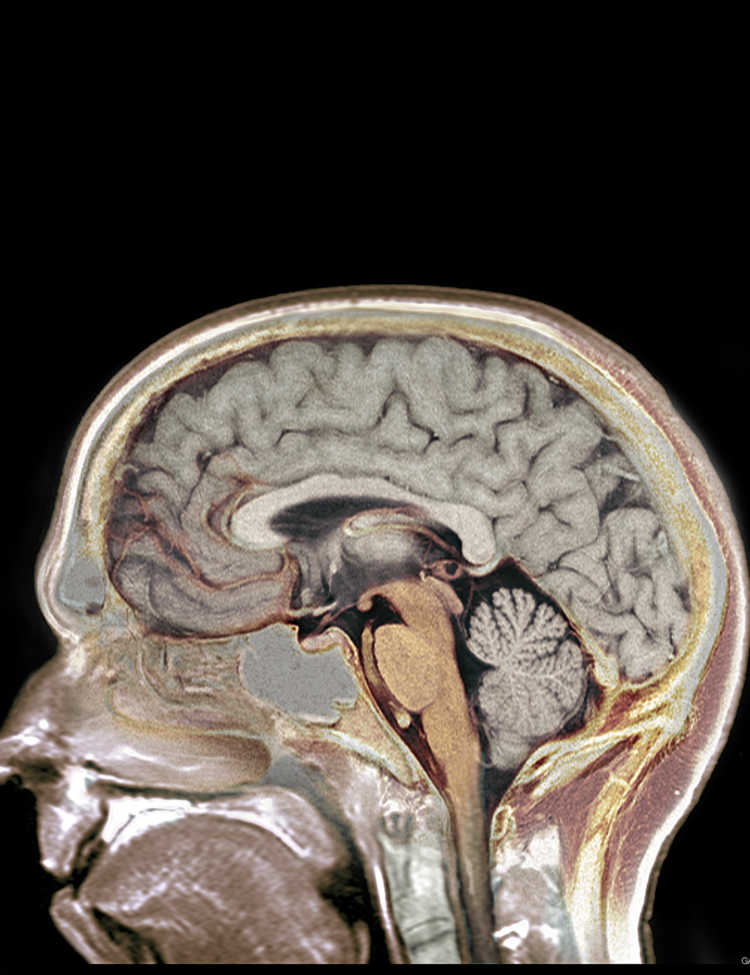
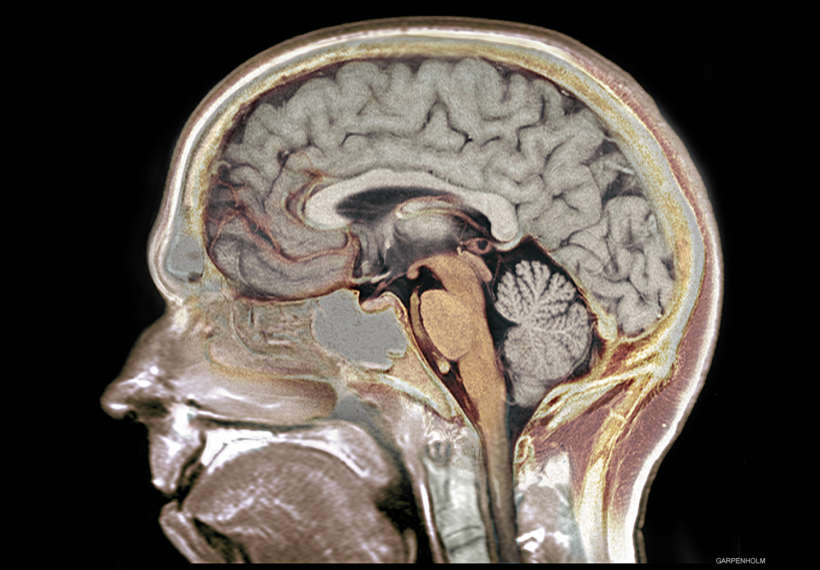
Next, Heather helps us understand the neuroscience behind CTE. How do tau proteins in the brain contribute to neuronal death? Learn about the difference between white matter and gray matter. What does repeated head trauma do that a single concussion doesn’t? Can the brain feel pain when it’s injured? We explore brain mapping, developing experiments for neuroscience research, and why the brain can’t rewire in cases of CTE. Finally, will we be seeing our heads treated differently in sports going forward?
Thanks to our Patrons Walter Johnson, Ali AlWaheedy, Armen Gevorgyan, Jenny K Leasure, WIGwigWIG, Denny, MaKayla A Holloway, Anna Dupre-Whiting, Allain Brideau, and David for supporting us this week.
NOTE: StarTalk+ Patrons can watch or listen to this entire episode commercial-free.
Transcript
DOWNLOAD SRTWelcome to StarTalk, your place in the universe where science and pop culture collide.
StarTalk begins right now.
This is StarTalk Sports Edition.
And today, we’re going to talk about concussion.
Yeah, we have to do it.
Somebody’s got to do it.
We’re going there today.
And of course, I’ve got Chuck Nice, one of my co-hosts, Chuck.
What’s up, Neil?
All right, all right.
Every time I’m here, I have to list you as comedian and actor.
And I haven’t seen you act in anything, just between you and me.
Well, see, that’s how great of an actor I am.
I don’t even know it’s you.
You don’t even know it’s me.
You’re like, I thought that was Michael B.
Jordan.
What?
That was Chuck Nice?
Okay, all right, maybe that’s it.
And of course, Gary O’Reilly, Gary, former soccer pro.
So Gary, you felt compelled.
We could not keep doing StarTalk Sports Edition without hitting this topic.
So why don’t you give us the full intro that this needs and requires.
So what’s going on today?
Thank you.
Right, CTE or chronic traumatic encephalopathy is a degenerative brain disease caused mainly by repeated traumas to the head.
Now, concussions are the most dramatic of those, but it could be from years of heading a football.
It could be from smaller contacts.
It could be from contact sports like boxing or maybe American football.
But when you said heading a football, you mean heading a soccer ball?
Because this America Jack.
Round football.
Our footballs aren’t round.
We don’t have round footballs here.
Yes, they are.
And if a ball hits a football player in the head, there’s something wrong happened in that play.
If I say soccer, I get pushback.
If I say football, I get pushback.
That’s true.
It’s a square ball.
Look, the thing is, CTE is not particularly well understood.
And up until recently, diagnosis took place, sadly, through autopsies.
Oh.
Imagine.
Symptoms, right?
Symptoms can appear years or even decades after the last head trauma occurred and can present, and this is spooky, really, memory loss, severe headaches, erratic behavior, and tragically, suicidal tendencies.
Now, Neil, this literally hits home for me.
I had 14 years as a pro.
I didn’t just head a soccer ball.
I practiced heading soccer.
Oh, you did it even when you, oh, oh, yes.
Because there’s a technique, there’s a way to do certain things in a certain way.
So this is interesting deeply for me.
Now, our clinical expertise will come from our good friend and neuroscientist, Dr.
Heather Berlin, who will join us later in the show.
But let’s meet somebody.
Nine years ago, this person was diagnosed with CTE.
And I want us to listen to their story and hopefully walk away from this podcast having learned something and having become enlightened on a subject that is only in the last few years receiving the attention it deserves.
So I would like to introduce our guest, Leonard Marshall.
Now, if that name sounds familiar, this is a two-time Super Bowl champion.
This is a two-time pro bowler, two-time NFL defensive lineman of the year.
That’s not where it ends.
He’s also been a professor of sports management at Seton Hall-Steelman School of Business.
He’s an advocate for athletes who are suffering from CTE, and he went toe-to-toe with the NFL to win a class action case to get money for other players who aren’t as affluent, but are suffering all the same.
He’s also an entrepreneur.
He’s also a philanthropist, as well as a CBD advocate.
Neil.
Oh, my gosh.
Go and have a chat with Leonard.
Leonard, welcome to StarTalk.
Hey, thank you very much for having me.
Gary, what a great introduction.
And I sincerely appreciate that.
And some of the touching points that you eloquently talked about.
If it wasn’t true, I wouldn’t say.
Nope, that’s true.
I would.
So, Leonard, you got here a book title, When the Cheering Stops.
Yeah.
And oh, my gosh.
I mean, that’s a what a title of a book that is.
I mean, you know, it’s almost as though whatever are my worst thoughts, that’s what’s going to be in that book.
And so what at what point we are motivated to say more people have to know about what has happened to me.
2007, 2009, Neil, I began having issues.
I felt with traumatic brain injury.
I started receiving phone calls from friends of mine around the league, guys that I had played with and against.
And several of those guys were they were kind of stuck.
They felt like they didn’t have an outlet.
They were having some real problems at home.
They weren’t able to articulate what was going on because they really didn’t know what was going on.
All they knew is, you know, when they played the game and they were concussed in the game, they were told just what every other tough guy is told, rub a little dirt on it, you know, rest a little bit and go on back in there and do what you do.
Well, that just doesn’t work well with 310, 20 pound linemen in the National Football League when men are playing for months.
It just doesn’t work that way.
So I didn’t find out until, I’m going to say a cool 10, 12, 14 years after the game was over for me because my career ended in 1996 and I became a dad in 1995.
The entire time that I’m going through this process, I’m 100% concerned about what’s going to happen to my little girl if I’m unable to be her father.
What is my wife going to do when she has to take care of not only my child but me too?
And then what is the league going to do to make sure that the quality of my life does not diminish because the one thing you don’t get when you leave pro football is health insurance benefits.
You get 18 months of COBRA and if you don’t go into private business or you’re not smart enough to connect yourself with a company to gainfully become employed, you will have the biggest problem in the world in trying to find an insurance carrier that will underwrite you after a career in the National Football League because you’re bringing baggage.
Is it still that way?
Is it?
I mean, it’s still that way.
I remember some time ago during a player negotiation with the owners that that was on the table, some form of health care.
So and they they quashed it like the owners, they just quashed it right away.
This is something that they really are adamantly against.
Yeah, you’re not you’re not getting Chuck, you’re not getting that that that 40 acres in a mule when you retire and you walk away.
You just it’s not going to happen.
You know, and I don’t know why I don’t know why that the predecessors that continue to be involved in professional football, they haven’t taken a stronger stance on that, especially for the guys that built the game like myself, like the household names of guys that you knew and know are in doing your genre of work and everything else.
So it just it just doesn’t make any sense.
By the way, you were you were a household name in my house because you played for the Giants and I’m an Eagles fan.
So we just hated you.
Yeah, and you know why?
Because he ate quarterbacks, you know what I mean?
Leonard was like third time in the Giants history or something like that.
A third of all time and most of those sacks were against the Philadelphia Eagles.
So thanks a lot.
So the thing the thing here, Neil, is what Leonard said reminds me of a wonderful phrase, and I can’t remember who is the author of this, but standing on the shoulders of Giants.
Of course, that’s Isaac Newton.
That’s Isaac Newton said that.
Right, okay.
Thank you.
There you go.
If I can see if I can see farther than others, it’s because I’ve stood on the shoulders of Giants who have come before me.
Right.
And Giants like Leonard, and he’s respectful of those that came before him.
And it’s a heritage and a lineage that should be carried forward.
And people need to learn to look backwards sometimes and not just…
But also, I just want to add, correct me if I’m wrong, Leonard.
Football careers relative to tennis, soccer, baseball are notoriously short, because you can’t do that late into your life, as in 30s and early 40s, the way many baseball players do.
So the many football players, again, correct me if I’m wrong, this is just my understanding, are not the marquee players that make the zillion dollars that are household names.
Most of them are service players filling out the team.
And so they don’t then have these huge financial reserves to then carry them out for the rest of their lives.
Is that an accurate characterization?
Accurate characterization, when I played the game from 1983 to 96, because keep in mind, I went through two strikes in the NHL.
I went to the strike in 87.
I went through the strike in 92, which granted us free agency.
So, I’m one of the pillars of what you see now in terms of compensation players are being paid.
Let’s just put it like this.
For the Giants to put my team on the field that won the Super Bowl in 1986, they would have to borrow money from the Jets.
Because there’s no way you’re going to have two defensive players side by side, like Chuck talked about, Lawrence Taylor and Leonard Marshall, with over 200 quarterback sacks between them, and a middle linebacker in Harry Carson, who’s also a Hall of Fame linebacker on the same defense, along with George Martin and Carl Banks and Jim Burke.
Those seven guys, they will never beat seven players on the field at the same time, on a team like that ever again.
They just don’t have the money to do it.
They don’t have the competition.
Leonard, let me ask you a question.
Because you had 714 tackles during your NFL career.
Correct.
How many times did you get tackled?
How many times did you get hit?
And should that actually go down now as a stat that people recognize?
Well, I can tell you this.
If you want to talk about getting dinged in a football game, I can tell you how many times I got dinged.
Now, ding to me is when you get hit or you have a head-to-head collision and you get up and you don’t know where you’re at.
Wait, wait, wait, Leonard, Leonard, and you call on that just a ding?
There’s got to be a worse word for that.
Come on, Leonard.
It’s called life-changing event in my life.
It got banged upside the head.
Come on, Leonard.
Give me a word for that.
Yeah, these are proud, tough guys who were playing a game for money and the thing is if you show softness, guys will come after you.
They say get in your bell rung.
You got your bell rung.
And I’m like, what is it, the Liberty Bell?
Because God…
Yes.
See, the thing is if you show the weakness, not only are you lit up for your opponents, but your coach is looking and all the coaches around him is looking.
And you don’t get to play in the next game.
I had a nut job of a coach by the name of Lamar Leachman from Carnesville, Georgia.
Let me tell you something.
This guy, he looked like Herky Rock from the first game.
He had a curly afro.
He talked like he was black.
He was a 5’8, 5’9, white guy from Carnesville, Georgia.
That was…
It just looked like Herky Rock, man.
He had these big old arms, little bitty legs.
It was knock knee.
And it was just the funniest…
I don’t want to swear on you, but it was the funniest thing you had to see, man.
And he’d walk around and he’d tease guys.
He’d go, oh, what happened to you there, pretty?
You were too sad on that place.
Oh, man, there it is.
And knock the living…
I don’t know what out of him.
There it is.
You know, you had guys like that.
I can quantify this, because I did a calculation.
All right?
So you were 6’4.
How fast did you run a 40?
4.7 seconds.
Okay.
And you came in at what…
Meep, meep.
I came in here to follow a weight of 290 pounds.
I slimmed down.
I was at 18% body fat.
I went down to almost 9% body fat, 282 pounds, and I could bench press 500 pounds and squat almost 800 pounds.
And I’m telling you, when my coach had a motto, when hit, the body will bend or break.
His deal was he wanted to see if somebody could knock a player, hit a player so hard that he could knock him into the middle of neck.
Next Tuesday.
All right, so here’s the thing.
I did a calculation, all right?
So there’s the energy of a bullet fired from a rifle.
So the AK-47, which is a high muzzle velocity rifle, we’ve all heard of it, used for most of the rest of the world.
And you can ask how much energy is in that bullet.
And it turns out you, running into a quarterback, okay, at 15 miles an hour, not even as fast as you can run, just as fast as might be common, and you hit a quarterback, it is the same amount of kinetic energy as a bullet fired from an AK-47 weapon.
The difference is, of course, all the energy of the bullet is entering just a single hole that it puts in your body, and it rips out your organs, and it can kill you.
Your energy is now spread, it’s the same energy, but it’s spread over the entire body of the person.
So just to think about this, that energy would normally kill someone in one spot, but now it’s spread over, so the whole body is participating in absorbing the energy, and that can’t be good, is what I’m saying.
You just touched on the reason why I could hate mail from San Francisco to Dayton.
Oh, because of Joe.
Joe Montana.
What Joe should realize is, it’s a good thing that Leonard is as big as he is.
Oh, you see what little energy be dead is.
I see what you did.
I know, don’t worry.
I’ll spin them.
How do we get somebody very little to hit Tom Brady?
I got to take a…
My boy hates Tom Brady.
Just because everybody is whipping the Phillies’ ass all the time.
I mean, Dr.
Phillies.
We beat the Eagles.
I just will never forgive him.
He took our first Super Bowl in my life.
All right, yeah, yeah.
Took it from you.
We got to take a break.
Leonard, when we come back more on this subject, and we’re going to set up the whole table so that when Heather comes in, our neuroscientist in the third segment, she’ll put a bow on all of this.
And I just want to tell everyone that Heather brought you to us.
You already know Heather.
And just spend it like 30 seconds how you found her and how you know each other.
I get introduced to Heather by an organization called Caring Kind, which is in New York City, which I’m being honored for my work in ALS and traumatic brain injury.
And a young lady by the name of Courtney Dawson, that would be good for me to talk to Heather because of my life, the traumatic brain injury I’m dealing with and the fact that CTE dominates my life now.
And I combat it and fight it with marijuana and CBD.
And, you know, that’s…
Okay, by the way, that’s the same reason I combat my problems.
Well, that’s why you’re marijuana.
That’s what I tell everybody.
I’m like, I’m fighting, man.
I’m fighting problems.
You got your own things.
All right.
I’m just trying to help Leonard Marshall out.
Okay, I need you.
All right, when we come back more with our super-bowl, NFL-grade Leonard Marshall, we’re talking about concussions on StarTalk Sports Edition.
We’re back, StarTalk Sports Edition.
We’re talking about concussions.
And in particular, concussions in the NFL.
And we’ve got somebody who is an NFL great by any metric who had sustained and persistent dings, as he called them.
This is a head hit in the NFL where you don’t quite know where you are when you get up.
And our man is here with us today.
And it’s Leonard Marshall, again, for a second segment here.
Leonard, thanks for giving us this piece of your life and telling us what happened to you and how and why.
And by the way, Leonard, just to let you know, the insurance companies actually used to allow you to determine how bad an accident was.
They would say, describe, and anybody who caused the accident would be like, oh, it’s a ding.
It’s just a ding, right?
And the person who received the accident was like, no, my car is totaled.
And now they say, do the airbags deploy?
That’s how they determined it.
There it is, there it is.
So Leonard, you finished your career, at what year was that?
1996?
1994 was my last active season.
My child was born in 1995.
In 96, I decided to hang it out.
There it is.
And so years later, five, six years later, you went to UCLA for a diagnosis of your condition that would normally be identified via autopsy.
This is freaky, that’s a freaky fact.
Was it some new way to make the measurement or did you just sort of force it in on people and say, look, something’s going on, invent some new test because otherwise I don’t want you to do this after I’m dead?
This is great how this happened.
So I got a phone call from my little brother who happened to be teammates with Rodney Hampton and Otis Anderson.
And those two guys were like very close to me.
One was with me at Super Bowl 80 and 21 and then one was with me at Super Bowl 25 and then the other was just with me at Super Bowl 25.
So one I played two championships, one I played one championship.
They told me about a program that was going on in an attorney out of Pittsburgh that I needed to speak to.
My name is Jason Lukacevic from a law firm Goldberg, Perskin, and White.
He said there’s a program that’s being implemented by Dr.
Bennett Amalu.
Dr.
Amalu happened to be a neuropathologist from Allegheny County in Pennsylvania and working alongside of Jason Lukacevic’s brother in that department studying brains and autopsies of brains.
Long story short, Jason said, hey Leonard, ESPN is partnering with Tomark to do this brain scan at UCLA at the Nancy Riga Center.
Are you interested?
I said, well, who else was involved?
He said, well, Joe DeLamalore, Hall of Famer, Mark Duper, potential Hall of Famer, and Tony Dorsett, Hall of Famer.
Would you be interested in going?
I said, count me in.
We take the trip to LA.
We go through the Tomark process.
The process was put in place to determine CTE in the living.
Everyone kept saying there’s no way you could do and perform CTE in the living or obtain the information to collectively convey CTE in the living without having these scans and without having an autopsy of the brain.
These guys proved it wrong, had to be wrong.
And this group was based in Chicago, Illinois.
So, I took the trip, I kicked the tires, ESPN recorded the whole process.
And at the end of the day, I came back, I had CTE.
So, Dr.
Imalo is the centrum of the film.
I was going to say, yeah, that sounded…
Right, that’s why you know the name.
Right, Leonard, please describe to us what the doctors were looking for and how they went about testing.
You said about an MRI brain scan, but what else did they…
Right, because otherwise, in an autopsy, they open your skull, pull out your brain and put it through a meat slicer.
They get a nice thin slice and they look at it under the microscope and they say, yep, he had…
So, I’m just glad they had another way, Leonard.
You, me too, Neil.
I mean, here’s what was funny, Neil.
They had a PET scan.
They had a CAT scan.
They injected me with dye.
I also did a neuropsych examination, an apatite test.
And from that…
That’s what I saw.
Yeah, to determine that, you know, his skill set is not where it should be, given his age, the number of years he played football and what he’s going through now.
So I said, well, fellas, what do we do with this?
We came back in 2011, Jason said, Leonard, I just got through talking to Vernon Maxwell.
Vernon Maxwell is down to file this lawsuit regarding a concussion claim.
Are you interested in doing it?
I said, I’m interested in doing it under one synopsis, that we do it on my daughter’s birthday, so that if I forget, because of the debilitation of my brain, due to tall protein on my brain and the tall protein dominating my brain, that my daughter can remember it, I want it on her birthday, that she’ll know every year what her father stood for.
That’s what I did.
Leonard, let me just say, on behalf of your daughter, it’s a hell of a lot of pressure to put on me, man.
I said like this, Chuck.
You know, daddy doesn’t make it for another seven, eight, nine, 10 years.
Baby, at least you know there’ll be something there for you at least.
No, no, I’m 100%.
I think it’s a great thing.
It makes your daughter a part of your legacy, which is exactly what you were doing.
And I think that’s fantastic.
Yeah, I mean, yeah, I lost Reggie Roby.
I lost Reggie Roby to this.
I lost your ego, my brother, Andre Warner to this.
Yes.
Okay, you know, there’s a couple other guys, I won’t mention names because they’re dealing with it now.
But I can tell you that my friend, who you know very well, your middle linebacker, Mr.
Seth Joyner, was one of the guys that made me step out to Andre.
Because I had a conversation with him and I told him, I said, Seth, I’m in New York.
My voice will carry some, it’ll carry some weight, man.
If I get behind this with my teammate, Harry Carson, we’ll make enough noise that they’ll listen.
I said, you’re in a little bit of a smaller market down in Philly, you know, it might not take it as serious, but go ahead, man, make noise, that’s your teammate.
That’s your teammate, so.
Neil, can I ask Leonard this question?
Just a quick second, Gary, and I’m going to hand you a torch there.
Sure, of course.
Leonard, Gary’s busting with a whole bunch of questions.
I just want to make sure we’re back on the same page in this second segment.
When we think of a concussion, typically, we think of a brain injury and the person doesn’t know where they are and you got to put them under observation for 12 hours.
We’re actually talking about something different here where it is the accumulation of smaller brain trauma.
Correct.
And what makes it particularly pernicious is you just pop back from that not thinking you really should have sat out the rest of the game.
And so, and you just keep going and this accumulates and then you get this condition.
Am I on, we’re on the same page here.
You’re on the same page.
I mean, think of it this way, Neil.
Now Chuck, you’re a big football fan and I’m quite sure everybody else on here is.
My teammate Lawrence Taylor was known for using his head and his head here as a weapon.
Leading with your head.
Leading with your head.
So if you lead as a defensive player with your head, you make contact.
That’s why if you look at football today, they teach you not to lead with your head.
That’s because the word and the word concussion has been taken out of football.
We want CTE to be the word associated with football.
Because we want people to go to accumulation of hits, cause problems down the road.
Right, right.
It’s one thing to get concussed.
It’s something else to have, you know, have the shakes and treaders and everything else associated with head trying.
All right, so Gary, you’re busting at the seams here.
Go for it.
Yeah, firstly, did putting a name to your condition help and secondly, when you spoke about the buildup of the TAR protein in your brain, how did the doctors bring that forward for you to explain exactly what the process was, how it goes from you being hit to this development?
Because it seems funny that this can take so long to present.
Well, when it was examin and I left two people out of this that needed to be in this, Dr.
Paul Nussbaum, my friend in Pittsburgh and the team doctor for the Pittsburgh Steelers, who was my classmate at LSU, Dr.
Julian Bales, okay?
And Julian Bales was in the film.
He’s portrayed by Alec Baldwin in the film Concussions.
And the relationship that he had with Cyril Weck, who was portrayed by, God, I can’t think of his name off the top of my head.
But, you know, Cyril Weck and Julian Bales determined that this is what destroyed Mike Webster, okay?
It destroyed a number of Pittsburgh Steelers.
You got to remember, that was a team that was known for bruising people, putting people in the hospital, leading with their head gear.
They were taught and trained, and they played the game at a high level like that.
They were football, and they were the godfathers of football.
And if you were going to be a dominant football team, you had to play their style of football in order to be respected.
And that’s who we were as the New York Giants.
That’s who we were during the era of my career.
The game was a lot different, Dr.
Neil, than it is today.
Today, I hear guys tell me they should call it something else ball, it’s too soft of a game now.
It’s not like, it’s not men playing a game for money now.
It’s little boys playing a game with quarterbacks with skirts on them and such and such.
Oh, interesting.
Wow, yeah.
Just to be clear, because I like getting the long view on these things.
What would the leatherheads have said about the modern football where you have all of this equipment?
Before football even had leather helmets, right?
You go back 120 years, whenever that was.
So, the arc of the game has been to protect your life, right?
So, so…
However, I’m going to push back on that just a little bit.
Yeah.
The number of injuries in the leatherhead era of football was actually less because the pads and the helmets actually became a weapon.
So, it gave players the ability to run faster, hit harder and make higher impacts.
But also, because of the equipment they were wearing, to also do more damage.
Okay, but also they weighed 170 pounds, you know.
Well, that too.
You had a bunch of Chuck Nicers running around the field.
Okay, Gary, keep going, because I know you got more.
All right, so how many players currently with us, NFL players, have been diagnosed with CTE?
And I’ll go back to two moments in history.
2011, David Doersen, 2012, Junior South.
Both, tragically, took their own lives.
Both friends of mine.
I’m sorry.
Did that resonate for you?
And were those two points in time something that brought the football community to a better understanding?
Or did it just say, oh, well, that’s sad and move on?
I’ll tell you why.
Well, what I think, OK?
David and I were, David Durasan and I were really close because he was a former Bayer player.
He joined my team in 1990.
We won the Super Bowl with him as a backup safety player.
And he played a pivotal role in the progression of our team the whole entire season.
His wife was from Baton Rouge.
I knew his family because of that.
He pledged Omega Psi Phi in my fraternity.
I wrote an intake letter for him.
I became a real brother to him.
And I introduced him into the fraternity through Chicago.
Had a bunch of friends in Chicago.
David had a great business.
He had a great mind.
He was on the board in order, Dave.
He was the number two supplier of breakfast meat to McDonald’s and Burger King worldwide.
He had a real strong head for business.
And just a really good guy.
The same applied for Junior Seau.
And what was striking for me was when we introduced the movie Concussions out in LA to the world, I got a chance to sit with Junior Seau’s family and his daughter at the premiere of the film.
And just listen to his daughter talk about her dad and talk about what it meant growing up with him in the household and everything else.
And it was just sad how she talked that, you know, I will never have those moments in time again with him.
I will never understand who my father really was outside of football.
It will always reflect on me that his life was football.
He played in the league, what, 17, 18 years.
It just, it really hit home for me, man.
That’s why I say what I say, you know.
I have a daughter and someday she’s going to reflect upon what my body of work was.
And I just wanted to have, to find these memories of that, you know, my father stood for something, he was a principal kind of dude, and he didn’t let his brothers down.
You know, I keep thinking, I keep thinking, why is any of this even a lawsuit?
It should just be, yeah, okay, this is, you know, NFL is not short of money.
And of course, this affliction is in many people, but it’s not everyone in the NFL, right?
It’s probably not happening to the place kickers, right?
So, it would be a sad indictment of the NFL if the only resolution to come of this is only after they are sued.
I mean, that just looks bad.
It means they’re reluctant, resistant.
I’ll do it if court makes us do it, but otherwise no.
I mean, what industry are we all supporting out here?
Look at this way, Dr.
Clayson.
70% of the National Football League is black.
The players are African-American.
Okay, we sue, okay?
There was an award of a settlement.
90% of the players that retire from the NFL are going to end up with CTE.
That’s a fact.
That came from Dr.
Ann McKee at Boston University.
And also Dr.
Robert Breckin.
So these are things that we know.
Now there’s racial norming in this case, where the neuropsychs have taken race and used race against the 70% black players to say, well, you had a learning disability to begin with, so you’re probably dumb now because you had that issue when you were a kid.
And it’s just an articulation of you growing your life, but yet you’re not getting any smarter.
For what people don’t realize, what Leonard’s talking about is, if we go back to the aptitude test that he talked about that he had to take, so what happens is all the players have to take these neuropsych aptitude tests where they have to answer a certain amount of questions to see how proficient they are mentally.
And so the NFL is saying basically, you guys are at a lower rate coming in because you’re not that smart coming in.
So you didn’t lose any real brain function because your brain function was already low.
And as a result, these players are now not the funds to protect these players after they played are no longer available to these players that do not do as well on the test.
Right, right.
So that’s the Wonderlic test, isn’t it?
The Wonderlic is not used when you come into the game.
But in the 16-PF used to be in the performance.
Those three other pictures used to be used when you were coming into the league.
Those declared whether you were going to be a first, second, or third round draft pick.
Or if you’re going to be selected at all.
Because you can’t read that playbook and learn it.
There’s one thing to read it.
There’s another thing to comprehend it.
So you have players that are like that.
I mean, you know, I’ve seen some guys.
Their talent outweighs their smarts on the field.
And that’s the kind of play you just kind of let them go and do what he’s got to do.
But got the other situation that’s going on with the racial norming that, you know, that they’re saying that, well, you weren’t that smart to begin with.
You badly had a C average in college.
And now we’re giving you this test.
You’re testing at a D grade level.
So we don’t think that you were injured or anything happened to your brain.
We just think you’re dumb.
That’s not too cool.
That’s not too cool.
All right, Leonard, you mentioned two doctors, Dr.
McKee, Dr.
Anne McKee and Dr.
Robert Cantu.
They’re part of the Concussion Legacy Foundation.
That’s correct.
Right.
So someone out there is fighting the good fight.
No doubt.
How far are they getting with this?
Are they progressing at all?
Is there some kind of way that they are making progress?
Well, I’m on the board of CLF.
And CLF is doing everything they can.
Chris Lewinsky does a fantastic job fighting for players and their families and their kids’ kids.
So I can’t say enough good things about CLF.
Dr.
McKee and Dr.
Cantu have always been the brain trust behind what’s going on with the science of the brain and how it affects former players in both the NHL, the NFL, and some that have been injured in the NBA and Major League Baseball.
So, you know, the work that they do is consequential to a high level of transparency to players in that family.
And we respect and appreciate that.
I think that some people don’t, like Dr.
Tyson was talking about, they don’t respect the science, and the science doesn’t lie.
The science is the science.
Bottom line, the science is the science.
You’re in the right place for that.
You are definitely in the right place.
So we got to bring this segment to a close.
Just before we do, you’ve been very active just as a proponent and as a supporter of all these causes related to just people’s health after, just as the title of your book all over again, When the Cheering Stops.
Are you up for an award coming up?
Why don’t you bring it up, Dr.
Tyson?
I’m up for an award from Caring Kind.
The dinner is at the Pierre Hotel in New York, St.
Pierre Hotel in New York.
It happens on June the 6th, 2022.
And it’s the ALS Society that’s honored me for my work.
That’s great.
The fact that I’ve been a real proponent and advocate.
Good.
Congratulations.
If we gave awards, we’d give you an award right now.
But it wouldn’t be at the Pierre Hotel.
That place is expensive.
Fifth Avenue, baby.
That’s Fuck Avenue East, baby.
He’s right.
Well, listen, Leonard, it’s been a delight to have you.
A kind of sad delight.
I mean, I’m glad somebody’s paying attention to this.
And it sounds like all forces are aligned to resolve this in some way to redress the problems that have happened before and to prevent them from ever happening again.
And we got to shed a little bit of that testosterone macho on the field.
It’s still an entertaining game, you know?
It’s still drawing the crowds.
And, you know, to be tackled doesn’t mean you have to not get up after it.
OK?
You can’t take contact out of the sport.
Because if you do, this is no longer NFL.
I get it.
There are ways to make contact where you’re not a bullet passing through somebody.
Totally.
Yeah.
The only way to take it out is to take the head out.
And you can’t take the head out of football.
That would be weird if you just had bodies running up and down.
Headless bodies.
And do it.
All right, Leonard, it’s been a delight.
Thank you for being on StarTalk.
Thank you.
We’re going to pivot now to Heather Berlin in our third segment.
And we’ll tell her you said hi, Leonard.
And we’re delighted that she brought you to us.
Godspeed.
Stay healthy.
And give us a holler again if you got more to tell on this about this story.
When we come back, our third segment will be with our neuroscientist at large, Heather Berlin, who will sort of figure out what’s going on here and why and where it’s going to head in the future of the sport.
This is StarTalk.
See you in a moment.
We’re talking about the sports edition, we’re talking about concussions, and many concussions, actually.
The kind that accumulate and turn into something really bad later in life.
Something that, of course, football players suffer from.
Many didn’t even know that this was going on.
And in particular, we went through two segments with our special guest, Leonard Marshall, former football player with the New York Giants, a two-time Super Bowler.
And Chuck, was he an offensive tackle?
Is that what his title, what his position?
No, he was a defensive tackle.
Defensive tackle, protecting the, so.
He’s coming after guys.
So he’s coming after the other team’s quarterback.
He’s a hit man, that’s what he is.
Right, yes, yes, yes.
He was more than very good at it.
Him and Lawrence Taylor together, they were, I hate them so much, they were so awful.
So against your team, yes.
Yes, exactly, they made it so hard for me.
For you and your Eagles.
So they plucked the Eagles bald.
Ooh, that was a good one.
So we don’t have particular expertise in the neurology of this, but of course, we have a friend of StarTalk, our go-to person, our neuroscientist at large, Heather Berlin.
Heather, welcome back to StarTalk.
Always a pleasure.
Thanks for having me.
Yeah, so he mentioned that he had a battery of tests that in recent years enabled medical professionals to diagnose this accumulation of small bits of brain damage known as CTE, and I always forget what that stands for.
It’s chronic traumatic encephalopathy.
Hence the abbreviation.
And so apparently-
My head hurts just saying.
Yeah, I know, right?
Right, so what we had learned was in the day, you would never know this until the patient was dead.
And then you do your normal brain slicing on the autopsy.
But apparently there’s some progress where you can do this in the living patient.
But how definitive can that be relative to just say, look dude, give me your brain, I’ll slice it open and then I’ll let you know.
I mean, still the gold standard, if you want to know with a hundred percent definitive is to look postpartum.
It’s the same thing with Alzheimer’s as well.
You really have to see these particular pattern of these plaques, these tau proteins, these tangles.
But if you kind of piece together a bunch of different tests, some MRI and there’s particular patterns looking at PET and tau buildup in particular parts of the brain along with these clinical tests like neurocognitive testing, you can start to get a full picture where you can give a pretty accurate diagnosis of CTE but it’s still not at 100% so you actually see the neuropathology in the brain itself.
I know Chuck and Gary are busting with questions.
Gary, what do you have for her right now?
The tau protein, it just changes and develops in a certain way, doctor.
So how is it changing?
Why is it changing from an impact but it doesn’t change?
Normally, if you have impact on the body, a bruise appears.
But this protein change…
And the bruise heals, right?
Yeah, and then the change happens maybe decades later.
So what is the process that’s going on in there?
So, okay, part of it is right when you get the impact, you have this kind of neurochemical cascade that occurs.
You have the release of certain…
You have basically what’s called neural depolarization, which releases these excitatory neurotransmitters.
And it kind of shifts the balance in the brain.
It changes the glucose metabolism and the blood flow.
And then that in turn can impair the axonal function.
So basically, a lot of these tau proteins are in the white matter.
They’re in the sort of microtubules of the brain.
And when you have this complex neurochemical cascade that occurs when there’s been a traumatic injury, it sets off this process, which has a distinct, in the course of a couple of days, you can see it, a distinct sort of process.
But then it can take years for the sort of full damage, for the death of the neurons to occur, because there’s sort of a buildup.
If you think of it like in the arteries, when you’re having a kind of a buildup of plaque over time, but it takes a while to actually have a heart attack, right?
So if you think of, in the most simplest terms, like a buildup of sort of gunk that was set off by this initial neurochemical process, and over time it can lead to neuronal death.
And I think that’s the easiest way to explain it without getting too technical.
And the neuronal death that, when you’re talking about the death of these neurons, so basically that’s the transmission of information in the brain.
That’s how the brain talks to the brain.
Right.
So when you have…
So what you’re having is…
Well, I mean, it’s mostly, it’s the white matter.
So think about this.
You have the brain, this very soft piece of matter inside, a very rough bony skull that has all these little ridges.
And when you get this acceleration deceleration event, the brain kind of shakes within this piece of stuff.
A polite way to say you got hit in the head.
Right.
You get banged in the head.
You get banged, the acceleration deceleration, you get banged in the head.
Exactly.
And sometimes they technically, we call it a coup counter coup event, but this rocking sort of back and forth.
Now there’s different density between the gray matter and the white matter in the brain.
So they kind of stretch and they move at different rates.
So that causes a stretching or tearing or shearing in the white matter.
When you have the kind of shaking of the brain within the skull.
This tearing causes this neurochemical cascade that I spoke about, but that’s how they communicate.
The white matter where this shearing effect occurs, this tearing, this pulling, it affects the communication between different brain areas.
And ultimately, so that’s one aspect that can cause some of the symptoms.
And then the other is that you have eventually this neurodegeneration where you start to have brain death, which is akin to kind of what happens in an Alzheimer’s process or other neurodegenerative disorders.
On a personal level, Heather, I headed a football, or a soccer ball if you prefer, for many years, and quite some time ago.
And I would have last played a competitive game in the mid-90s.
So the question is, how long will it be before Gary can no longer have this conversation?
There you go.
Well, so it kind of, there’s a couple of things.
It could set off a process if you already have a kind of vulnerability toward a neurodegenerative disorder.
It could make you more vulnerable.
So there’s something we call cognitive reserve, which is basically kind of what is your baseline?
If you have a lot of different connections in the brain, that you can afford to lose a little bit of cognitive function, or a little bit of structural stability or integrity, and still kind of be okay and get by, right?
So, Heather, we have no idea how smart Gary was before the show.
We only know him in his current state.
You think?
We only know him in his current state.
But Gary, you said it’s not only did you use your head during the game, you practiced hitting stuff.
And you will learn a technique to head a football in the most efficient way.
Which is how?
Your forehead?
You meet it on the forehead, yeah.
Right on the forehead.
And you develop muscular density here to strengthen so you don’t get the whiplash if the ball hits you in the head when you connect with it.
So you develop things like you would with muscles for running.
So you protected your neck vertebrae, but your brain is mush.
Right, that’s what you’re saying.
Well, I think you’re like, listen, it’s not a good thing to be bunting balls in your head.
But the thing is not everybody develops CTE, right?
It’s a percentage.
Keep cheering me up, doctor.
So maybe, you know, maybe 30%, I think is some of the statistic of the people who are, let’s say, playing in sports that are bunting their head or taking a lot of hits.
And so, you know, I think we still don’t fully understand why certain people develop it and others don’t.
Certain people have multiple concussions over time.
It could have to do with certain vulnerabilities.
It could have to do with the age at which you started having these small head injuries.
And it’s kind of like COVID right now.
You know, some people get it and it’s devastating and horrible and others are, you know, asymptomatic and perfectly fine.
And I think that there is an underlying mechanism.
It could be related to genetics.
We don’t know yet.
But so there’s some hope for you.
Gary, were you wearing a mask while you were hitting the ball?
That’s the most important thing.
Yeah, you socially distanced.
So Heather, I’ve read that there are no pain neurons in the brain.
So you would have no idea that you were undergoing this slow damage.
Whereas a tiny little pinprick anywhere on your skin, you would know, even in the most obscure places.
Especially in the most obscure places.
That is one of the most fascinating things about the brain.
I’m fortunate enough to be involved in some neurosurgery when we’re doing brain mapping.
So for example, we want to map out a person’s skin, a lesion removed, and we want to make sure we don’t take out their language area.
So while they’re in surgery, we can wake them up, we can be inside their brain.
That’s nice of you.
That’s nice of you to just not want to take out.
You sound like a military operation.
Let’s take out their language.
So how are you feeling?
It’s like young Frankenstein.
Piece by piece, we use electrical stimulation to stimulate each piece and have a person talk.
And eventually we hit an area where they literally just can’t talk anymore and we know not to take out that area.
But the point is that we’re not supposed to remove the area in a very delicate way.
But the point is…
Oh my God.
So you’re telling me that something as sophisticated as neurosurgery…
Y’all just poking around.
It’s really right.
Literally.
So you’re telling me electricians, electricians are better at finding the electrical connection that you…
No electrician would start poking your walls to figure out where the wires are.
Pretty much where we’re at.
But the amazing thing is that the person is awake, their skull is open, we’re literally inside their brain and they don’t feel any of it.
The thing that creates all of our pain sensations doesn’t feel anything itself when it’s being touched or stimulated or cut into.
That’s deep.
Right?
And it can bleed and be cut into, but you don’t feel it.
But it’s the seed of pain itself.
So the thing about it with CTE and other symptoms from traumatic brain injury is that it’s a silence.
People are suffering with it in silence because you can’t see it, right?
You can see it a little bit with these hyperintensities, we call it on MRI.
The little white spots that show up over time.
But really it’s subjective.
The person is saying, I have a brain fog, I can’t concentrate, I can’t read, or they start acting impulsively.
But you don’t feel pain itself.
Other than headaches, often people complain of having a headache.
But that’s really the meninges.
Like a headache is not the brain itself hurting.
It’s actually like a migraine is the surrounding membrane that does have pain sensors in it.
And that’s where you actually feel the headache.
Heather.
Like when you get a hangover.
That’s my migraine.
Heather, does the brain not have a capacity for regeneration in certain places or in all of it?
It does.
I mean, it’s amazingly, I mean, it’s very susceptible to damage, but it is amazingly able to kind of heal to an extent.
So a lot of it is compensatory, right?
You can, as long as certain structures are in place, if you have damage, you can maybe build alternative routes.
Rewire.
Rewire.
Your brain rewires.
Rewire.
But when you start to have these neurodegenerative processes, so much of the brain is affected across the board.
It starts to atrophy.
You’re losing gray matter.
So like I said, first you get these white matter tears, but eventually that leads to death of the cell body, the gray matter.
And then you don’t have the actual structure to support the brain function, the cognitive function anymore.
So you can compensate to an extent.
So if you have one area of a brain lesion that doesn’t spread, it’s not a neurodegenerative disorder, you can create these alternative pathways to sort of circumvent that damaged area.
But when you start having globally damage, there’s only so much the brain can do to compensate.
So Heather, I just want to establish a baseline here.
Of all sciences, yours is the most constricted by what kind of experiments you can do.
I mean, a chemist can just re-mix the Petri dish or the biologist and do it at a different temperature, under a different acidity, a different lighting condition, whatever.
You can’t just walk up to people in the street, can I play with your brain?
You can’t do that.
So how far behind are you?
Rather than boast how far we’ve come, how much more remains to be discovered?
So give me an honest appraisal of your field right now.
Okay, so, I mean, look, there’s a lot of work we can do.
I don’t do this research, but there are people in the fields who are doing animal research, right?
And there you can do much more controlled experiments in animals that you can’t do in humans.
Part of what I have always done is I try to create experiments that would be in humans that are analogous to what we’re able to do in animals, but we have to wait for the right subjects to emerge.
Let me give you an example.
One is, for example, part of my PhD work was I looked at what is the part of the brain, the orbital prefrontal cortex, what does it do?
In animal models, in mice and monkeys, you can lesion that part of the brain specifically and then do experiments.
You can’t go in and lesion a human.
What I had to do is sort through, this was in London, at King’s College London, the neurosurgery department, through patient files of patients who have come in, who are still alive, who have had the particular type of brain surgery because it was a removal of a tumor or because they had damage to that part of the brain because of a stroke or an aneurysm, where I would find those specific patients that happened to have damage to that part of the brain and then bring them in for a study.
But that takes longer.
So the thing is we can do these studies, but the length of time it takes to gather the patients who have naturally gotten damage to these parts of the brain, let’s say, can increase the length of time it takes us to make these discoveries.
So if I was to give you a number, I mean, like, it’s very hard to say how much longer, you know, it’s taking us because we don’t have control in human studies.
But we are developing techniques where we can do non-invasive stimulation to brain parts, which in effect knock them out temporarily.
And that’s helping us make some advances.
So we’re getting more creative with the kinds of experiments we do in humans.
So Heather, we got to bring this to a close.
But before we do, could you tell us how you came to know about Leonard Marshall’s case?
Because you brought him to us for us to create this show.
Yeah, yeah.
I do a lot of work with Alzheimer’s patients and people with neurodegenerative disorders as well as with CTE.
And I was connected with him basically to talk to him about his cognitive functioning problems that he’s having and to see if there’s any treatments and also to help spread the word about this because it’s a major problem that I think needs to…
That in some ways is not getting the kind of coverage that I think it needs.
There’s a lot of people suffering with this and they’re doing it behind the scenes.
And I think we learned offline.
What was it?
Was it offline, Chuck?
We were talking about helmet brain or something, or head brain?
What’s that with sled?
Sled head.
Sled head.
Yeah, sled head.
Bob Sledder is where they’re…
You know, you see the camera.
Because they’re just constantly…
They’re just constantly vibrating on the ice.
So this sounds like a broader issue with regard to sports where your head gets dinged, right?
I mean, obviously it’s not just football.
I think, you know, 100 years from now, we’re going to look back on the way we’ve played sports and how little we, you know, how much we disregarded the damage that was happening to the brain.
We’re going to think, you know, just the way we look back to the 1950s and everybody was smoking, including doctors, and, you know, saying it was good for you.
Like, I think we’re going to look back on this and look at it with similar disdain.
There’s a lot of money involved in sports, and a lot of people say, well, they get paid millions of dollars, so I guess they’re sacrificing their, you know, brain as a consequence.
Right, right, right.
By that time, all sports will be played by robots.
And all the kids playing video games now will be the real athletes who are controlling those robots.
And, you know, and then there will be a big movement of people who are like saying, well, you know, we have to care about the robots and their brains, you know, because their central processing units are getting damaged in this sport, and why should they give their lives?
Chuck’s sci-fi apocalyptic thriller.
Yeah, man, yes.
I do think that the way that, you know, we care very much about athletes’ physical bodies and they have trainers and they take care of them and they get massages, whatever, we should think about also taking care of the brain as well and brain health in the process.
That’s a place where we haven’t arrived at yet, but it is completely where we should be headed.
Yeah.
Neil, in the future, we probably will have way less more contact in our sports.
Mm-hmm.
And the sort of extreme sports, and you might then push what we consider mainline sports like sledding and push them into the extreme category and then reduce that because of the damage that’s potentially taking place.
Or maybe just take heading out of soccer as well, right?
That’s on its way.
I can tell you maybe in 30 years’ time, there will not be heading of a football.
And maybe in 30 years’ time in soccer, they’ll just use their hands, because what the hell, man?
That’s what you got them for!
They’re dangling there doing nothing.
I mean, what?
Two perfectly good utensils with opposable thumbs.
And you’re like, no, we can’t use those.
What would we ever use those for?
Okay, Chuck just blew a gasket, which means it’s time to close this out.
Gary, Chuck, good to have you.
And Heather, it is a delight always to have you enlighten us in all of your neurological ways.
All right, this has been StarTalk Sports Edition.
As always, I bid you to keep looking up.

 Become a Patron