


 Unlock with Patreon
About This Episode
Are plants more aware than we think? Do they have feelings? Neil deGrasse Tyson, Gary O’Reilly, and Harrison Greenbaum explore the intelligence of plants with astrobotanist Simon Gilroy. From venus flytraps to space farming, we dig deep into the secret world of plants.
We start by looking at plant awareness—do plants know they’re being eaten? Can they predict where the sun is going to be in the morning? How do plants communicate internally without a central nervous system or a brain? Simon explains how plants communicate through chemistry, using glutamate signals, and how psychoactive molecules help defend the plant from predators.
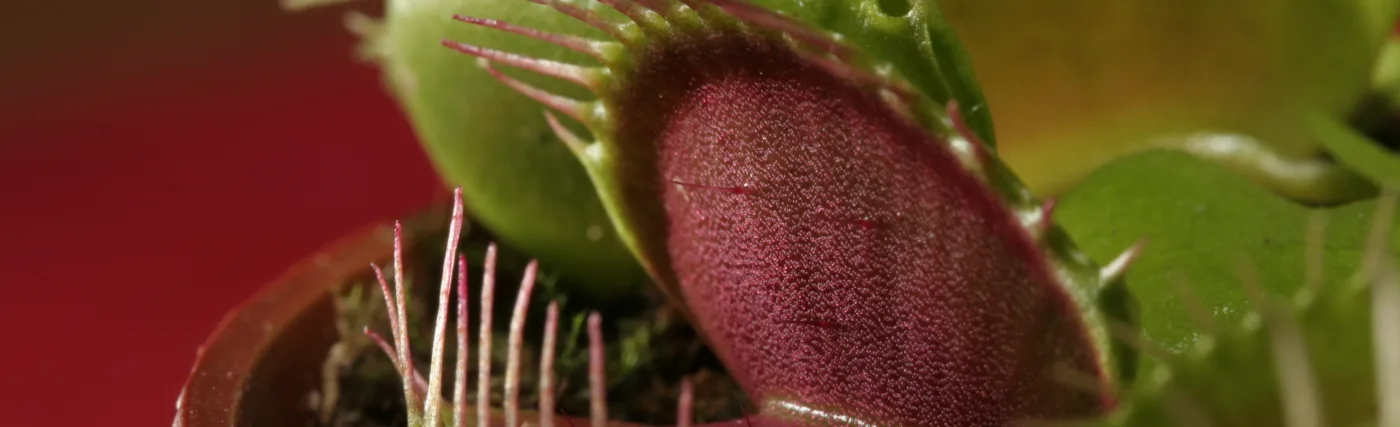
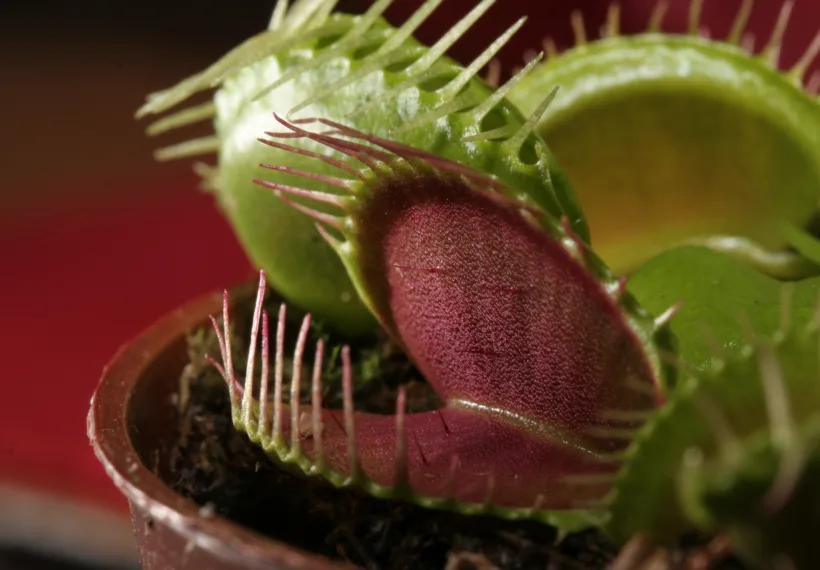
We explore one of nature’s weirdest plants: the Venus flytrap. Can it count? How does it actually move? And can plants form memories? We explore how plants “learn” from past experiences as well as the dark side to the smell of freshly mowed grass. If a plant survives a harsh winter, how does it know when it’s safe to grow again? Plus, we ask: do plants know when they’re in space?
How do plants react in microgravity? Can they tell which way is up without gravity to guide them? What happens when you try to grow plants in lunar soil—can they survive without the nutrients they depend on here on Earth? And if Martian soil is toxic, could astronauts really fertilize their crops using composted waste? How close are we to turning science fiction into reality?
Finally, could we engineer tastier space food? Would tomatoes grown in orbit taste the same as those on Earth? What about spicy peppers—does space change their flavor? We discuss what foods should be targeted for space farming and what farming on another planet would look like. What if the light around another star is in a different spectrum? Join us as we explore the fascinating frontier of astrobotany and the hidden intelligence of the plants around us!
Thanks to our Patrons Charlie Delavida, Muhammad Sarfraz, Nirmal, Joseph Longoz, TerrasMom, Skyman’s Follies, Que Raetid, Dustin A Brinkman, Kevan P, Adam Randell, Deo, Roman Marakhoskyi, Ron, Raveneffect32, Robin Campbell, Corey Burke, Johnny G, Carl, Julia Linde, malik_m, Jim Mauck, Helen Johnson, Dawn Keebals, Nathan Campbell, Raunak Sethiya, Adam Holland, AT, Mary Zoellner, Jason Sykes, Dan The Man, Christopher Thompson, Brett Gillingham, Neil Moore, Jim Myhrberg, Jordan Blackler, strigiformes, John Rondo, shane eagles, Berbnote, B231, Easly_Bash, $H!Ft3Y, shannon hintze, Tre Ski, Andrew Nisker, Shree Sharma, Adam Z, Joseph Cutler, Charles Jarboe, and Dmitriy Sinyakin for supporting us this week.
NOTE: StarTalk+ Patrons can listen to this entire episode commercial-free.
Transcript
DOWNLOAD SRTI was sceptical, but now I’m all in on plants as people.
Plants that have feelings, and they know their environment, and they have sensors, and they want to live too, and they don’t want to die, and they have reaction functions to preserve that.
There’s a lot more going on in plants than we realized.
All this technology and research, and we’re still going to be stuck with kale and muckers.
Coming up on StarTalk Special Edition.
Welcome to StarTalk, your place in the universe where science and pop culture collide.
StarTalk begins right now.
This is StarTalk Special Edition.
Neil deGrasse Tyson here, your personal astrophysicist.
And if it’s Special Edition, it means we’ve got Gary O’Reilly.
Hi Neil.
Hey Gary, former soccer pro.
Yes.
And I still can’t get out of my head the Google search on you that delivered your wiki page where you got sexy legs on the field, on the pitch.
I’ll have that deleted.
How about that?
Today, this is a topic you and fellow producers have picked.
Yeah, it’s something we’ve been wanting to do for quite some time and it’s finding the right guest and the right time to bring it forward.
So we feel this is about, just about right.
This is the right time.
And then we combed the streets and we found this guy.
Harrison Greenbaum, not your first rodeo with us.
No, no, we love you, Harrison.
And you just finished a production.
Yeah, my off Broadway magic show, What Just Happened.
What Just Happened, are you going to take it on tour?
Take it on the road, yeah.
harrisongreenbaum.com.
harrisongreenbaum.com, yeah.
And you’re a magic guy.
Magic guy, I went to space camp.
You went to space camp?
Oh, okay.
You’re in the right place.
There’s a street credentials for this show, all right.
All right, so Gary, what is the setup for today?
In previous shows, we have looked at many forms of intelligence, both artificial or otherwise.
But where does intelligence start?
For that answer, we look to the tree of life more, specifically trees and plants.
The literal trees?
Yes.
Not just the figurative tree of life?
Not the metaphoric kind, no.
We know plants are aware of their surroundings, but how deep does it go?
Can they communicate?
Can they count?
Can they feel pain?
Can they learn?
Do they have memory?
What happens if we send them into space?
Do plants know they are in space?
And how does this impact future food production for spaceflight?
This means expert time.
And I must warn you, he’s a fellow Brit, has a flowing white mane, and a penchant for Hawaiian shirts.
So Neil, if you will introduce our guest.
Simon Gilroy, welcome to StarTalk.
Oh, thank you for having me.
Yeah, I’ve got you down here.
You’re Professor Botany at the University of Wisconsin.
So there’s still botanist out there.
You’re head of the Gilroy Science Lab.
What a coincidence.
What are the chances of that?
I know.
What we like here is, your research includes plant nutrition.
Also, why we have you on this show is you think about the surface of planets and the moon and what interaction a plant might have with those surfaces because we don’t even call the surface of the moon soil.
No.
No.
It’s like pulverized rock.
So we call it regolith.
Regolith.
And your whole space-leaning interest interests us.
And that, in a way, you are not only an astrobiologist, you’re an astrobotanist.
See, I didn’t know astrobotanists existed until now.
I don’t want to brag here, but when I did go to space camp, we went on a fake mission to the moon and I was the astrobotanist on the space shuttle.
So I took care of a fake plastic plant and I measured the effects of fake gravity on this fake plastic plant for a full half hour.
And it was fake that you rode a space shuttle to the moon because space shuttles can’t reach the moon.
That’s right.
None of it was real, but I did have to take measurements of a plant.
They did not change because we were not in space and it was made of plastic.
But I was an astrobotanist for about a half an hour.
All right, so Simon, let’s lay the foundation here.
We know plants are alive, but how aware are they?
And do we have to loosen our definition of the word aware to enclose everything it is that they do so that we can speak of their properties in the same sentences as we speak of our own awareness?
All of biology is aware.
If we use awareness as monitors the environment around it and deals with it, whatever the appropriate dealing with is.
Because if you couldn’t do that, you can’t stay alive.
The environment’s changing, the lion is chasing you, the insect is chewing on you, it’s rained, it’s dry.
You have to monitor all the facts.
So all that’s an intrinsic part of being alive.
You just described the world’s worst honeymoon.
Insects chewing on you.
Yeah, lion chasing me.
This safari has gone awry.
I didn’t say the world was necessarily a benign place.
In fact, it isn’t.
That’s why you have to be aware of what’s going on.
You’ve got to roll with the good times and deal with the bad times.
Obvious things are they have to track the sun, they know when the sun is up and down, and the seasons.
These are obvious ones.
Are there other ones that are less clear and present to a casual viewer?
Yeah.
One way to think about it is that we, as animals, we have the luxury of movement.
If stuff happens around us, you don’t have to precisely know what’s going on.
You just have to know it’s bad.
Then inevitably what we do is we vacate the area where the bad stuff is happening.
If you’re a plant, you’re rooted to the spot, absolutely literally rooted to the spot.
Your array of senses has to be broader than our array of senses because you not only have to deal with it, you have to know exactly what’s going on.
Direction of the sun, but what’s the time of day?
You have to know that because plants do a lot of predictive biology.
If the sun comes up, there’s an absolutely fantastic video of a sunflower doing a thing called solar tracking.
Sunflowers put their leaves and point them flat towards the direction of the sun.
You could go, well, that feels almost like a machine.
It’s just monitoring the sun’s direction and pointing for the optimal amount of photosynthesis.
But if you watch it, there’s great movies online of this solar tracking during the whole day.
The plant actually, at the end of the day, it goes like, and the leaves flopped out.
But then, it predicts where the sun’s going to come up and the time of dawn, and it pops its leaves up predictably to point to where the sun is going to come up.
So it’s got an internal clock.
It knows what the time of day is.
There’s a lot of environmental factors that I think, if you’re a gardener, you would just guess they have to know this.
They have to know how much water there is.
They have to know what the nutrients are around.
It’s important if you’re a plant to know if you’re being eaten.
That’s a big one.
What the temperature is, the time of year.
You can go through a litany of environmental factors.
You can imagine that it would impact on a plant’s success.
There’s going to be a sensor for it because otherwise plants wouldn’t be around.
You’re describing reaction to an environment that are all positive for it.
But if there is an assault on the environment, what kind of defenses might a plant have against it?
Imagine you’re routed to the spot.
What kind of defenses that you’re going to have, they’re not going to be avoiding.
There are a couple of plants that can actually do incredibly rapid leaf movements.
There’s a thing called mimosa, the sensitive plant.
If you touch it, in real time, it looks like an animal.
The leaves collapse down.
We think that that is to flick off a caterpillar or make yourself just less obvious.
That’s a response to touch, which is a movement-related one.
But that’s kind of one of the weird ones.
The general things, what plants are really, really good at doing is making stuff.
Photosynthesis is an incredibly powerful and productive way of doing biology.
And so plants build things to deal with the world.
So defenses can be pre-existing built things, things that we would all interact with, you know, things like spines and prickles, and just like the barbed wire approach to defending yourself.
Oh, okay, of course.
But then one, what they are real masters of is chemistry, and just making nasty stuff.
And there are an enormous number of poisonous plants, all those psychoactive drugs which are extracted from plants.
They are not there for us.
They are there as defenses.
And those defenses can either be pre-existing, you know, they can just make the chemical and just go, I’m defended.
Or what is a much sort of clever way to do it is to go, I’m being attacked.
I’m gonna make my defense of chemical now because these defenses cost me something.
So I’m just gonna switch them on when I need them.
And so there’s a lot of inducible chemical defenses.
As soon as an insect or a herbivore starts chewing on a plant, it knows it’s being chewed on and it switches on just a ton of stuff to defend itself.
So none of that happened with your plastic plants?
Yes, exactly.
It stayed very still.
Actually, space had very little effect on it.
Turns out plants are great in space.
There was zero change and the plant stayed vertical the whole time.
How about that?
I am nervous that plants are aware because I’ve killed many houseplants.
So does that mean they know that I’m like the Jeffrey Dahmer of houseplants?
Do I have a reputation with plants?
We work a lot on those century events and what they trigger.
So one of the things is imagine you’re eating a salad.
You didn’t cook the salad.
Everything in the salad is alive.
So if there is that classic silent scream, that silent scream is going on inside your mouth as you’re chewing on it because everything is alive.
Does that make me not eat salad?
Absolutely not.
Salad is healthy for you.
But it is so easy to just sort of forget that plants are alive and that all biology, again, there’s this linguistic minefield that we’re going to walk into and there’s no way to get around it, we should be stepping on those landmines of how we describe things.
Because I don’t think there’s a better way to do it.
We’re going to use the language of human experience and human consciousness and how we work because that’s really the only relatable thing we have.
When we start talking about the plants know they’re being eaten, that comes with a lot of baggage.
That comes with you thinking you’re being eaten and you can’t get away from that.
That’s just built into the power and the problems of language.
So plants are sensing what’s going on around them and responding.
Does that mean they know anything?
Yeah, they’re not in harmony with herbivores.
I thought that’s part of the circle of life.
What are you saying?
They’re pissed off.
Yeah, they’re screaming for their life.
I didn’t realize when I was eating a salad in front of a plant, it was like eating sushi in front of a fish.
The thing is, Simon, we know plants don’t have what we would classically interpret as a brain.
So what systems are engaged for their communication for their behavior?
We’ve now stepped to the edge of our knowledge.
Okay, that’s the end of the show.
Okay, we’re done here.
Remember, science is stepping to the edge of knowledge and then hypothesizing what the next step should be.
So I think we literally have stepped to kind of, we’re getting to the point where there’s active research and debate about what’s going on.
So we know a lot of the molecular machinery.
I want to pose Gary’s question more precisely.
So we attribute our sensory world to neurochemical synaptic phenomena in a very complex nervous system that we call our brain.
Given that, if we look at plants where we know there’s no corresponding gathering of neurons, then in order to port our emotional state and our sensory vocabulary on to a plant, and to do that botanically in a way that makes botanical sense, are you going to have to point where that is sensing it and by what electrochemical means its reaction, its reacting?
So we know some of the nuts and bolts, the machinery.
So I can tell you how the plant sense life.
I can tell you the proteins it uses.
Just like biomedical researcher could tell you how your eye works.
At that level, the nuts and bolts are photons coming in, flipping chemical bonds, generating signals.
We also know that there’s long-distance signaling with implants.
So again, my favorite example is so easy to think about, but so complicated.
A caterpillar chewing on a leaf.
That’s a very local event.
So if you imagine it’s you, imagine like a lion chewing on your fingers.
It’s a very local piece of stimulation, but it spreads throughout your entire body because you have a nervous system that transmits information.
So we know plants don’t have nerves, they don’t have a brain, but they have that long-distance signaling system because they have the same problem that if you’ve got a local piece of information, it’s important that the entire organism knows what’s going on.
The long-distance component of it is absolutely not nerves.
We know what nerves are and they just simply don’t exist in a plant.
We know what a brain is.
There is no brain in a plant at the anatomical level, but there is a long-distance signaling system.
For that wounding system, we know what it is and it turns out it’s the plumbing system inside the plant with liquid flowing in it.
That liquid carries chemical signals.
This is where you go, really?
One of the chemical signals for damage is an amino acid glutamate.
That’s like the MSG that you put on your food to make it taste yummy.
That’s a basic building block of plants, but when you damage a plant cell, it leaks it out.
MSG but without the MS?
Yes.
Okay.
So just G.
Just G.
Glutamate.
Okay.
The G.
So that glutamate is flowing through the plant and it triggers long-distance responses.
So you can go, to do a big analogy, that feels almost like nerve conduction, right?
It’s a very different thing, but it feels like the long-distance conduction.
Glutamate is a neurotransmitter.
You have it firing off in your synapses at the moment, transmitting information between nerves, and there’s a protein that has to be the receptor.
In our nervous system, that is a thing called, strangely enough, a glutamate receptor.
The glutamate receptors have a chemical binding site, the amino acid, and it switches on their activity.
Plants have almost identical proteins that bind glutamate, and the glutamate triggers their activity, and glutamate is part of this long-distance signaling system.
There’s lots of parallels about how things work, but there’s a fundamental difference, which is no nerves and no neurons.
If you think that what your brain is doing is building a model of the world, somehow encoded inside you is a model of the world that you can interrogate and get an idea about what’s going on, somehow that must be true inside plants, it must be true inside bacteria, that somehow they must have some kind of, but now it gets very philosophical, some model that they use in order to work out how the world is working around them to respond to it.
But it’s got to be, it’s not resident in a brain.
So the most aggressive plants we’ve all learned from childhood is, I guess, the Venus flytrap?
Is this?
Oh yeah, but that’s got, we see it visually and we’re fascinated by it.
Fascinated.
But I think Simon’s gonna tell us something that we don’t readily understand about the Venus flytrap.
Really?
Yeah, bust my bubble here, but can the Venus flytrap actually count?
Absolutely.
Don’t say that like everybody knows that.
What?
Everybody in his lab knows that.
The way he said it, he’s like, stupid, you didn’t know that?
He was talking to me, not you.
Is that a mouth?
Does it go, one, two?
So, but again, like again, it absolutely accounts.
What does it mean to count?
Yeah.
And so that Venus flytrap, the trap thing is actually some modified leaves.
Evolution has turned them into this amazing trap.
It’s crazy.
It’s awesome.
You know, it shuts at our time scale, which is why it’s fascinating to us, because it moves sort of plant responses into something that feels almost animal like.
How does it close like that at that speed then?
It closed.
So one of the things that blows your mind, it grows shut.
What?
Which just go like, that can’t be true.
It uses the machinery that elsewhere in the plant is used to make cells get bigger and to grow.
And at the base of the trap are some very specialized cells, which are just pumped up to incredibly high pressures of water.
And we’re talking about pressures that are in the realms of, you know, like 10 times the air pressure in your car tire, just amazingly pumped up, ready to go cells.
And the machinery just kind of loosens up the walls around the cells so that they can expand incredibly quickly.
And so that lever in shut is cells getting bigger, which is irreversible change in size, which in the botanical world we call growth.
But the cool thing about it is you imagine you’ve got the Venus fly trap and the trap’s open.
And it’s windy or something like that, and a leaf falls into the trap.
That would be crazy for the plant to trap a leaf.
But the trap responds to touch.
It responds to a fly touching it.
So what’s happened is that there are little sensory hairs on the inner surface of the trap.
And when a fly touches them once, the plant triggers a response, but it doesn’t trigger the shutting of the trap.
It triggers a chemical signal.
If the fly touches the hair again within a time frame, about 30 seconds, that then triggers a second reinforcing signal, and that triggers the shutting of the trap.
So in order to get the trap to shut, the plant has to count to two.
I mean, it’s the minimal counting you can imagine.
I think the minimal counting is one.
So, yeah, there’s a chemical signal memory that’s built up.
When you get down to the machinery of it, it doesn’t sound quite so magic, right?
You trigger something, you get almost to a threshold, and then you trigger it again, and you pass the threshold, but it is counting.
It’s accumulating two pieces of information.
So Simon, do plants then begin to learn, and can they retain in a form of what we would call a memory?
Can they go from two to calculus?
I know.
Not quite that.
Can we teach them algebra?
Yeah, algebra.
They’re not into complex differential equations.
They’re like most teenagers.
We will now firmly walk into the minefield of linguistic issues, because we’re going to talk about learning and memory, and eventually, you can’t help but process it.
Well, I know what memory is.
I remember things, and I know what learning is.
I learn things.
We’ll keep that in the background.
I’m just going to use those words, because what else?
These are your disclaimers.
We get that.
So we don’t think you’re a crazy new age person off a farm somewhere.
No, I am.
No, the long hair mustache and Hawaiian shirt are doing that.
You look like if Weird Al saw a ghost, and I love it.
My disclaimer is just so that you have that filter in there.
So when we talk about, well, what does memory mean?
Does memory mean an event has occurred, encoding it in your biology and then using that information later?
If I define that as what memory is, which may not be the memory that you’re thinking about, you’re thinking about the memory of emotions and stuff like that and past experiences.
But if it was, something happens, it’s encoded within the biology and there is a response to it later on, or it changes other responses later on, that’s what biology does.
That’s how you survive as an organism, is you adapt to what’s going on around you, the world’s constantly changing, we’ve already established, it’s not always a nice place.
And so being able to change what you do with a history of what’s gone on, that’s just part of being alive.
So plants do that, bacteria do that.
The answer is yes.
But then when you start talking about memory, you begin to layer on all of these other things, which gets a little bit complicated.
But if we just limit ourselves to that, plants have memory.
Whether it’s cold, will determine what happens next many months down the road.
So if you imagine, there are a bunch of seeds in the soil at the moment.
Some of them have a very clever way of working out when they germinate.
They want to produce a little seedling in the spring, when it’s nice and warm.
And so you could go, oh, that seed’s just going to sit in the soil and it’s going to wait for it to be nice and warm.
But, nice and warm increasingly is happening in the middle of winter and it gets cold again.
So if all you did was not have any kind of concept of anything which is going on around you, other than, oh, today it’s nice and warm, I’m gonna germinate, you’d make a tiny little seedling and then that seedling would freeze.
So a lot of plants, the seeds go into the soil and they have to accumulate a long freezing cold period.
And you can go, well, what they’re doing is they’re sensing that the temperature has got cold and they’re remembering that it’s got cold for a long period of time.
And once that memory is established, then when it gets warm again, now we’re probably in the spring and we’re not in that weird, you know, like it’s got warm for three days and now it’s minus 20 degrees again.
So there’s very clear that biology has memory at that level.
Learning again, that’s a complicated one because generally in the world of learning, the learning that we immediately think about again, it’s sort of built into how we talk about it is experiential learning, which is what we do, where we experience something, we take that information in, we process it and then that helps us do something in the future.
There’s much less evidence for that sort of process in plants.
But again, we’re talking about this experiential component of it, which is a very, very sort of animally human concept.
So, we’re discussing here the internal systems of plants.
But if we throw that out into the communal aspect of it, do they and how do they, I’m guessing it’s again biochemical, communicate between them or do they have other strategies that they employ?
Yeah, yeah, there’s no question that they talk to each other.
Again, you’re right, the chemistry is going to be the way they do it.
That’s also how I communicate.
With chemistry?
With chemistry.
You know, if you mow a lawn, there’s that classic smell of new mow lawns.
Yeah.
What you’re interacting then is with the volatiles that have come from damaged plants.
We know chemically what those are.
One of those is a group of chemicals based around hexadal.
If you smelt those chemicals just in a chemistry lab, and you pulled out the hexanal thing and smelt it, it would totally smell of new mow grass.
If you take that pure chemical and you treat a completely intact undamaged plant with it, it will switch on a bunch of damage related responses as if it was being attacked.
Lawns really didn’t evolve to be mowed.
When you cut them, they think they’re being eaten.
And so they switch on the damage related stuff of being eaten.
So the smell is just a bunch of silent screaming.
Yeah, exactly.
So take that chemical, treat another plant with it, it will switch on preemptive defenses.
They have an internal stress hormone, a defense hormone called jasmonic acid, which is, you know what it smells like.
It’s a lot of purpose.
And what is that chemical?
Jasmonic acid?
Oh, yes.
So a large proportion will get switched on.
I only remember that because that’s my drag name.
Jasmonic acid.
Very good.
All right.
So chemical given off by a damaged plant switches on responses in other plants.
Is that plant, the original plant, communicating in the ham-ravy way?
Yeah.
But I think we would class it in a group of communication called eavesdropping, which is that there’s no…
It’s very difficult to talk about it without making it sound human.
There’s no intent to parse information between those two plants.
It’s just like, go back to the lion chewing on your hand again.
If the lion’s chewing on your hand and you scream, you aren’t using the scream to inform everyone else around you that the lion is chewing on you.
But everyone else around you can use that information to understand what’s going on.
So that chemical sort of communication at that level, I think we would think that is this eavesdropping phenomenon, which is the information is useful and plants have evolved to use it.
More plant to plant communication, well, we know that, for instance, there are fungal bridges between plants that work underground, these things called mycorrhizal fungi.
They help the plant.
They’re in an interaction with plant roots where the plant feeds the fungus, the fungus helps the plant.
Is this the same thing as the mycelium?
The mycelium we read about?
Yeah, exactly the same thing.
Yeah.
But you called it something else.
What did you call it?
Mycorrhizal fungus.
Mycorrhizal fungus, okay.
It’s probably like Latin or Swahili or something for fungus week.
Okay.
But it’s a very, very close association.
It’s one of the oldest associations, symbiosis that we know of plants.
It probably happened as soon as plants came onto the land.
So information will flow from plant to plant through that intermediary, through that fungus.
But again, if we talk about communication, there is this sort of language component to it, where we’re putting intent in there, and that may not be the right sort of framework but in what is happening there.
It might just be, again, be eavesdropping.
What about plants versus plants?
So plants know that other plants are near them, and they have other things other than the chemistry to do that, and one of them is light.
So if you imagine the closer plants get to each other, the more one plant is absorbing light relative to the other, it actually changes the spectrum of light that each plant is seeing because some of the spectrum is being absorbed, some of it is being transmitted.
So the quality of light changes depending on how close you are to another plant.
And one of the big agricultural success stories, which is going to sound a little late, is that all it is?
But it’s actually amazing.
The reason that corn crops have gone up, one of them, is that we can plant the corn closer to each other.
And one of the things that’s helped us do that is an understanding of this sort of proximity sensing that plants have around them, and working out how to get around that so that we can basically shove the corn plants really, really close to each other.
I just scored so many points with my Nebraska in-laws that we went to corn.
This is fantastic.
They’re going to be so excited.
They really love corn there.
They love it so much.
So, Simon, we’ve discussed about plant smarts, intelligence, et cetera, but your lab, the famously named Gilroy Lab, does a lot of work with plants in space.
And the very first day question is, do plants know they’re in space if you do actually take them out there?
And just to be clear, generally when we think of space, because we’re trained to think this way, we think of a weightless environment.
But if you’re either in a rotating space station, or your rockets are firing, you could do that at 1G.
And so the space environment can be thought of as 0G and, or regular G, but then other phenomena, like you have to control the sunlight, because you’re not on a rotating earth.
So.
You’re whipping around it.
Yeah, so how did you get interested in space?
Did you go to space camp with?
With Harrison?
I was that plastic bag.
Yeah.
I took very good care of you for at least 30 minutes.
As everyone will appreciate who’s listening to this podcast, space is an awesome place.
Everything is funner in space.
Everything.
Yeah.
You can do awesome experiments you could never do on the surface of the earth.
And for a biologist, it moves into a realm where there is no history for biology to draw on about how to deal with it.
It’s a very, very weird mental space to get to.
There is a movie called Little Shop of Horrors.
And that space plant was very dangerous.
So, I mean, what are we confronted with as now I’m a plant, I’ve joined the group.
One of us, one of us.
Not grown here.
So, radiation, you’ve got zero G.
There’s no up, there’s no down.
Right.
How are we working with our light intake?
Do we need water to grow plants once we’re off world?
Go on, what are our challenges?
So, everything that you know, if you’re a gardener, everything that you know is important in space.
So, what do plants need?
They need light, water, nutrients, they need something to grow into, all of that is going to be important, but we’re going to move into a realm.
The one that we’re concentrating a lot on at the moment is that microgravity, the zero G weightless environment.
Then we’re beginning to now transition to thinking about things like the surface of the moon.
If you think about the weightless environment, that’s a very weird environment, very annoying.
A lot of times, physics gets in the way of a good idea.
Deal with it.
Physics is the ultimate judge, jury and executioner of your ideas.
I just want you to know.
And the executioner bit is the one that we’re worried about.
So a lot of things you take for granted on Earth are going to be different in a weightless environment and the one that just seems so trivial but actually turns out to be a really, really big deal is water.
Because on Earth, if I say, think of flowing water, almost inevitably the picture in your mind is going to be something that’s driven by gravity or be a river flowing or the ocean and tides and waves.
And we’re going to remove that.
And so the characteristics of water in space is the molecular forces within water take over things like hydrogen bonding and stuff like that.
But the great way to think about it is that in space, water is creepy and sticky.
So it wants to stick to surfaces and it wants to creep over surfaces.
So imagine, I just do a thought experiment.
If you’ve got your plant in a pot and you’re going to water it and you’ve got your watering can, well, first of all, you turn the watering can aside, nothing comes out.
You can’t pull the water out with gravity.
So I’ll give you a syringe and you can squirt the water into the soil and that will totally work.
But now, rather than just sort of sitting in the soil and being drawn down as it does on Earth, the water is going to stick to the soil particles and then capillary forces are going to take it over the surface of the soil.
Then it’s going to hit the root, it’s going to stick to the root and then creep over the surface of the root.
And if you add too much water, and let’s be honest, everyone overwaters their houseplants.
I feel like you’re looking directly into my soul when you say that.
Like on behalf of all the plants, stop.
And you know what happens if you overwater your plants?
They’re very unhappy.
And so sticky water encases the plant.
So when you say sticky, this is surface tension and capillary action.
Absolutely.
Yeah.
Okay.
Okay.
Yeah.
Like you say, physics is getting in the way of a good idea.
I just want to water my plant.
And now I’ve got surface tension and capillarity, which have become the dominant forces.
So can you grow plants without water then?
If water is such a pain in the butt, yes, there’s another word.
Can you grow plants without using water?
So if there is one fundamental feature of biology, and it dominates how biology works on the earth, and it is one of the guiding principles of when we send probes out to find life, liquid water is part and parcel of the biology that we understand.
And we don’t know how to do biology without water.
So unfortunately, we’re stuck with water.
Sticky and creepy.
Yeah.
Hi, there’s so many jokes I want to make.
Well, don’t hold back.
Go for it.
Really, I mean, if you just think about getting off of earth and going into a low earth orbit, going into space, we are going to have to find lunar water.
We’re going to have to find other solutions off of this planet.
Otherwise, you’re just dealing with a payload because you can’t be bringing dirt, tons of dirt, to grow things on any sort of industrial scale.
Not a chance.
Yeah, I think at the moment, it’s feasible because we’re very, very much in the sort of exploratory world of like, how are we ever going to do this?
What happens to biology when it’s in space?
And we can deal with, you know, the plant growth facilities that we have on the space station are awesome, but they are two feet by two feet by two feet.
And feeding the crew may not be the eventual goal.
Like, self-sustaining, completely self-sustaining with plants.
But getting to the fresh fruit and vegetables thing, where it supplements a lot of the freeze-dried food, that may be in our, like, at least in the near future.
But psychologically as well, growing plants turns out to be quite a big deal.
Being in a spacecraft, if you’re an astronaut, astronauts are absolutely the most awesome job in the world.
But you’re in a built environment, you’re in a very small and closed space for many, many months, and you’re with, let’s say, five of your closest friends.
And at the end of that journey, you might only have zero close friends left.
It’s just such a hard, hard environment.
At a psychological level, and it’s very built, and on the space station you can see the Earth, but you can’t get back.
And so growing plants at a psychological level, that may be the only justification that you need.
In order to take plants with you on a long journey, is that they are very, very calming.
And nurturing something and growing it, and then eating it, I mean that, that would be a pretty awesome goal for an astronaut.
Okay, so naively, coming to this as a physicist, you just put a seed in the soil and it grows, right?
So in zero G, how does it know what direction to send a root versus what direction to send the leaf?
A, B, when you get to the moon, that’s not soil.
And earth soil is full of nutrients and microbes and there’s a whole relationship that the plant has with what’s going on already in the soil.
Not so much on earth or Mars.
So what’s your plan to feed astronauts on the space, not only on the space station, but on world?
What did you say?
Off world.
Biology is awesome.
Biology is incredibly robust.
Plants grow okay in space, in that microgravity world.
And the shoots grow in the direction of the light.
So that’s an easy one.
And we build growth chambers into space that are like growth chambers on the earth with lights at one end.
We’ll call that the top.
Wait, wait, wait.
If it’s in the soil, how does it know which way the light is?
If it’s buried in the soil.
The roots have a random distribution.
So as the roots go through the soil, that directionality is completely lost.
How are you sensing light if you are covered in dirt?
How deep do you plant?
You’re planting, you’re burying.
Light penetrates soil quite deeply, especially red light.
So there’s a gradient.
There’s your answer.
Okay.
There’s my answer.
Okay.
So, okay, so we’re talking about earth soil and I think having decided we’re now lunar-based or using regolith, lunar regolith.
How are the challenges when you’re saying, well, there are zero microbes or there are lunar microbes and there’s no what we would classically define as dirt.
There’s just this rubble.
So how is that experiment coming along?
So, growing in lunar regolith is, life in plants is challenging at, partly at a nutrient level.
So, you know, there’s a lot of the nutrients the plants would need, but it’s locked up in chemical forms which are not immediately accessible.
So, you could imagine you might chemically process that lunar regolith or you might use microbes and, you know, seed some regolith with the microbes that then turn over the rock and then make it available to the plants.
One of the biggies, which is a limit to a lot of plant growth on Earth, is nitrogen.
So, biologically available nitrogen, form of like nitrates or ammonia.
That’s what plants want to take up.
And there is zero biologically available nitrogen in regolith on the moon.
There is nitrogen there.
It’s been deposited, but it’s just not in that nitrate, ammonia-y sort of chemical form that plants could take up.
Okay, so on Mars, which also has equally hostile surface chemistry, we learned from Mark Watney in the movie The Martian that you just slap some poop in there and put a little seed in it.
It took us how long to get here?
I was on a countdown as soon as he mentioned nitrogen.
I was like, the poop is coming.
The poop is coming.
So you want fertilizer, he made poop potatoes.
And he was a botanist.
He was an authentic botanist, he was an actor playing a botanist.
He was a botanist.
So how authentic was that solution to his food problem?
If only that had been a documentary, it would have been awesome.
There’s a lot of good stuff there in the science behind it.
Take human waste, you can compost it and process it, and you can turn it into fantastic nitrogen-rich fertilizer.
That’s all done by microbes, but you know, human waste has a lot of microbes in it.
You have to process it.
You can’t use raw human waste at many, many levels.
One of them is the, you know, the reason we don’t use raw human waste is there’s a tremendous possibility of getting parasites and things like that in it.
And, you know, they’re, by definition, they’re going to be bad for humans.
So that’s one reason.
And the other is that it’s an incredibly concentrated form of all of those bioavailable nutrients and you need to process it.
So imagine that there was composted, that would work.
But you know, composting is going to take some time.
The other aspect of it is, I seem to remember he shoveled Martian regolith into the habitat and then just planted in that.
And there are some issues with Martian regolith, which are more than just, it doesn’t have all of the nutrients.
It’s very salty, which is generally bad for plants, but it also is very high in a group of chemical called perchlorates and perchlorates are toxic.
They’re toxic to people.
So you can totally go down the poop road.
It’s not far-fetched.
It requires some work.
Down the poop road is the name of my next comedy special.
Yeah, that’s just, that’s the key word on Disney Plus.
Yeah, that’s a keeper.
So what you’re saying is, and I grant sort of whole passes to movies in this way all the time.
What you’re saying is he meant well in this intent.
So you give it to him because you had to think about fertilizer.
You had to know that the Martian soil was not was hostile to plant life.
And so all the rest of those details, you give him a pass on that because he he went there at all in the story line.
Is that fair?
That is absolutely fair.
And also he gets a lifetime pass because he made Botany cool.
Yeah.
And that is a feat.
He said the attractiveness for Astrobotanists very high.
No, it’s an interesting point because I take for granted that any space movie is going to have physicists and astrophysicists in it.
So we’re in all the movies.
But you got a botanist, like, where did they come from?
Who ordered that?
Well, see, look, I mean, the question now becomes, do we need, in our future generations, to become space farmers?
And therefore we would need astrobotanists.
Then we’re going to need these guys.
Now, you work with NASA’s Gene Lab, correct, with some of your experimentation?
Yep.
So, are we looking at our own experimentation with plants here on Earth?
So, for things that are drought-resistant, fire-resistant, work in extreme conditions.
Has that empowered the sort of experimentation you’re thinking about bringing to space?
Because we have a lot of variation of conditions here on Earth.
We have plants, plus, why is it that all it takes to grow a perfectly healthy plant is a crack in the pavement?
That’s a fair point.
Answer me that.
If a plant can survive in New York, it can survive on Mars.
It’s thriving in the crack in the pavement.
I’m saying, take that, transplant that into the space, and then you get something good there.
We’re in the era of big data, and so NASA has…
What GeneLab is, is basically a data repository where a lot of datasets just are being brought together from around the world.
A lot of things like we have technology which will allow us to ask in an organism which genes get switched on and which genes get switched off in space across every single gene that that organism has.
So one answer to that question of how are we sort of navigating this world towards a space crop is we’re still in the discovery phase of trying to work out what happens to biology in space.
So we’re getting all of this sort of characterization that’s coming back and we’re using that to go, well, what do we think happened to these plants while they’re in space?
Did they feel like they were under drought conditions?
Did they feel like the light was high or low?
And we’re getting that sort of landscape.
And then we can go to plants that exist on Earth and go, well, do we have plants that deal with that?
And is this a characteristic that we can sort of take and then build into a space crop eat world?
And then the other aspect of it is that it doesn’t matter how great the plant is.
If the goal is for an astronaut to eat it, there’s a food science component of it.
They won’t have to want to eat it.
You know, being in space is tough.
Astronauts tend to have suppressed appetites.
You know, and having something which is like just the absolutely the freshest, best thing that they want to eat is another component of it.
And so we have to bring in all of these, these various aspects of what a successful space crop is going to be.
Do we know if like a space tomato, those taste like a Earth tomato?
Like do they taste the same if we grow them in space?
They taste like space.
So, I think we know that chilies grown in space, they’ve been grown through an entire crop to harvest the chilies.
Those chilies pretty much taste like chilies.
The tomatoes, I don’t think, there have been tomatoes that have been grown in space.
I don’t think we know what they taste like.
They taste like tomatoes, not tomatoes.
Sorry, sorry, tomato.
Their box was made of aluminum.
Thank you, see what you did.
So, you get polymorphism in animals, Simon.
Polymorphism, that was also my drag name.
Polymorphism.
You’ve reinvented yourself so many times.
I forgot, what is polymorphism?
So, when you get a species and all of a sudden, you’ll look at, say, three birds next to each other, they’ll be the same bird, but they’ll be different colorations.
So, do you get that in plants?
And is that any benefit to the research?
So, all of a sudden, it reinvents itself, and one of those three could become something that has a benefit to conditions that you’ll experience.
So, these are the forces of natural selection?
Correct.
In this case.
So, at an individual level, plants show a form of sort of growth and development that we call plastic.
We have very rigid growth.
Your parents knew exactly what you were gonna look like when you grew up.
Did they?
Did your parents know you were gonna look like Weird Al if he saw a ghost?
Weird Al.
They knew I had one head, two arms, two legs.
There it is.
There it is.
But for plants, you can’t necessarily predict how many branches.
And, you know, their growth has sort of been trained to the environment, right?
So, we call that plastic.
They sort of, they’re malleable in how they’re gonna grow.
Right.
You’re not gonna grow a third arm just because you needed one.
I mean, that would be incredible.
Exactly.
So, the other thought now we’re talking about the polymorphism is, if you’ve got, you know, an exoplanet, you want to grow stuff, plants that have been green, do they, because of an atmospheric change, a soil change, they’re no longer green, they go red or they change to a different color.
Is that a plausible development in these areas, in these environments?
I think how photosynthesis works, we have a pretty good idea of the molecular underpinnings of that, it’s an amazing machine, like mind-blowing machine.
I would guess it’s difficult to think that those fundamentals will change, like moving our earth biology onto Mars, for instance.
This would be kind of the way I would imagine it.
I think photosynthesis is going to be photosynthesis.
Let me come at it from a slightly different angle.
I agree, photosynthesis is going to be photosynthesis.
It’s a highly successful way to convert light into all of your energy needs.
Got it.
But as we go forward, as we have greater and greater command over the genomes of life, what is to prevent you and your brethren from just creating a life form by gene editing, gene stitching, gene assemblies, and to create a life form that can eat the regolith, that can eat the, that can thrive without, you know, in UV?
What’s to prevent that from being the future rendering all these experiments obsolete because you’re just creating the life form you need?
So, that might sound sci-fi-y, but the idea of being able to engineer traits, that’s real modern palm biology.
That’s real.
That’s going on now.
That’s not sci-fi at all.
So, you could imagine that we might be able to take the basic machinery of photosynthesis and hook some different pigments into it in order to power it with a different part of the spectrum of light.
That is engineering built around a piece of biology that already exists, and that’s totally doable.
Say it.
It’s called GMO.
Say it.
You’re genetically modifying organisms.
Okay?
You don’t want to say it, I’ll say it.
No, it is genetically modifying.
English is now my second one.
Genetically modifying organisms.
So if we’re genetically modifying, are we then ultra reliant upon the development of microbes to be equally as beneficial in these environments?
Oh, because it needs the whole rest of the ecosystem.
There you go.
Oh, yes.
So you can grow plants under sterile conditions, and they’ll survive.
But the really stable biology is ecosystems where there’s, forget the animals, do you really need them?
Like microbes and plants working together, that’s how a lot of the stability is built into ecosystems on it.
I mean, the animals are important as well.
I think everybody wants a space dog.
This is part of the challenge with bringing back the mammoth.
You can bring back the mammoth, but how about what the plants the mammoth ate, which are all extinct today, and other things in the mammoth environment?
You can plunk them into today’s world.
That would be a very lonely, confused mammoth.
Feeding Twinkies, you know, whatever.
So I’d like the idea of photosynthesis using other wavelengths of light.
That’s brilliant.
That would be one interesting…
But we have plants on Earth that do that anyway, do they not?
Yeah, yeah.
We have plants that make different pigments that feed into that basic machinery.
So the blueprint, pun intended, is basically there to be developed if that’s what’s required.
Is that right?
Yeah.
These are the ideas.
These aren’t sci-fi ideas.
These are ideas which are being played out as we’re talking now.
All right.
So just to bring some closure to this, it’s not good enough if you’re going to serve the needs of astronauts to make a plant that we can all admire.
You want to make a plant that they can eat.
So we’re talking tomatoes.
We’re talking watermelon.
Tomatoes.
Tomatoes.
Thank you.
We’re talking watermelons, mangoes.
Is that a pipe dream or are you going to make some kind of plant that has all the proper nutrients but tastes nasty?
Like we shouldn’t have space kale.
Nobody wants to go to space just to eat kale.
That would be, what’s the point of going to Mars and that’s all that’s there?
I’m staying on Earth.
Yeah, I’m staying on Earth.
This is going to be very disappointing for you, Harrison.
Oh no.
Kale is a target crop.
Oh, why?
Hilarious.
Someone has a sense of humor, perfect.
Okay.
You’re supposed to space garlic or something to change the taste.
I ain’t going to space.
Yeah, no thank you.
Well, how about mushrooms?
How about mushrooms?
Yeah, mushrooms, but tomatoes are a tomato, sorry.
They’re a target crop as well.
Thank you.
Biology is an immensely powerful force, and it has shaped organisms to be really, really good.
We’re moving them into this weird environment of space, but throwing away millions and millions of years of evolution, of making organisms affected, is a crazy strategy, I think.
We should capitalize on what we’ve got so that the crops which are going to be manipulated are going to be the crops that we’re used to.
And also, why would you want to engineer crazy crop that is not like, almost like the comforting crops are home?
If we’re thinking of people on Mars, they’re for multiple years.
There is that element of the psychology of being there, which is fantastically important.
And I just think that, you know, there are some things that you would like to take with you, and maybe parts of your cuisine are going to be part of that.
Kale is not one of them.
There’s nothing comforting about it.
So now I’m like, space chicken, space cattle, space lamb.
I will take whatever weird GMO plant over kale.
And just to verify, you can grow mushrooms, right?
I mean, I would go for portobello mushrooms.
Ooh, that I’m into.
Grilled portobello, I’m good.
Absolutely.
Yeah.
I mean, the steak that goes with it might be problematic.
So, Professor Gilroy, we learned a bunch.
Yeah.
And as a minimum, I learned that there’s such a thing as an astrobotanist.
Yes.
We love that.
And it gives us hope for what may be the spacefaring future of civilization, not just the chosen few who get to visit that domain.
Because what has always been true and will continue to be true, Earth’s surface is the shoreline of the Cosmic Ocean.
Ooh.
And kale is at Sea Week.
Sea Week.
Let go of the kale.
There’s too much of it and it doesn’t taste good.
All right, this has been a delight.
And Harrison, we’ll find you on the road.
Yeah, harrisongreenbaum.com.
I got tour dates, I’m running around.
Taking the show on the road.
Yeah, absolutely.
All right.
Gary, always good to have you, man.
Pleasure, my friend.
All right, this has been StarTalk’s special edition, the Poop Potato version.
I would take that over, Kao.
Until next time, I am Neil deGrasse Tyson, your personal astrophysicist.
Keep looking up.




 Become a Patron