


 Unlock with Patreon
About This Episode
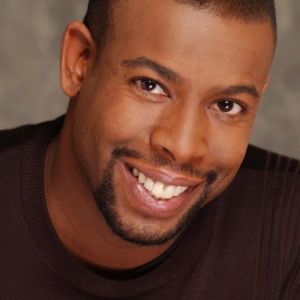
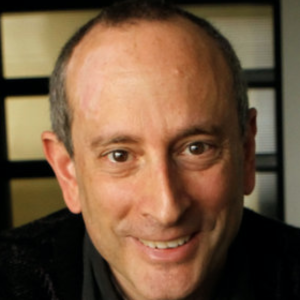
Can AI have a poker face? On this episode, Neil deGrasse Tyson and co-hosts Gary O’Reilly and Chuck Nice discuss poker and playing against…the machines. Joining them are former poker player and science communicator Liv Boeree and artificial intelligence expert Matt Ginsberg.
Is there a strategy behind a poker face? We break down strategy, game theory, and probability in poker. What is state space complexity? What does it have to do with AI? Learn about Nash Equilibrium and how it is used in games such as poker. How long would it take to become a perfect poker player? How have styles of game play changed over the years? Is playing online poker different than in person? How about playing against a computer? Find out about statistics, artificial intelligence, and Liv’s work in effective altruism.
Continuing with Matt, we go over his champion crossword-solving AI, Dr. Fill, and break down how it plays. We continue with the Nash Equilibrium and ask: can a computer bluff? Is using AI considered cheating? How do you enforce the use of computers in a game with breaks? Should competitions even allow computers to play? Do casinos have AI programs to tell if you are cheating?
Discover the future of AI in competition. What prevents people from using AI to win? Could it be used by casinos to catch cheaters? We philosophize on whether people care if humans win these competitions and what it would be like to have a chip in your brain. Does AI have the capacity to guess? All that, plus, find out what term fooled Dr. Fill’s vocabulary!
Thanks to our PatronsRicardo Torres, Mason Dickson, Alireza Sefat, Henk Van der Merwe, Derek Eilertson, Erdem Memisyazici, Sriram Govindan, Christian Murmann, Derrick Thurman, and Cayman Freeman for supporting us this week.
NOTE: StarTalk+ Patrons can watch or listen to this entire episode commercial-free.
About the prints that flank Neil in this video:
“Black Swan” & “White Swan” limited edition serigraph prints by Coast Salish artist Jane Kwatleematt Marston. For more information about this artist and her work, visit Inuit Gallery of Vancouver.
Transcript
DOWNLOAD SRTWelcome to StarTalk, your place in the universe where science and pop culture collide.
StarTalk begins right now.
This is StarTalk Sports Edition, and today we’re titling this one, The House of Cards.
I got with me, of course, Chuck Nice, Jett.
Yeah, yeah, so though you are a stand-up comedian, you have tremendous sports fluency, so that’s a good thing.
Just want to put it out there, give you some props for that.
Too much information.
Or because you’re still working on that comedy thing, right?
And I got Gary O’Reilly, Gary, former soccer pro from the UK.
Always good to have you here.
Yeah, and I’m your host, Neil deGrasse Tyson, your personal astrophysicist.
And let me just give a brief overview of where we’re going to go on this show.
I’d like to say the stakes are high because the theme is poker.
Poker.
Who’s the famous poker?
I guess James Bond would like his chips stirred.
No, he played bakra.
Shake them not stirred.
That’s right.
He played bakra.
That’s right.
And of course craps and maybe sometimes the roulette.
Less on the poker table, I think.
And so we’ll also find out what state space complexity is.
I don’t know what that is.
We’re going to find out.
And whether Nash’s theory of equilibrium, this is the famous mathematician from Princeton for which he got a Nobel Prize, whether it’s a key component in a winning hand.
And we’ll also wonder whether probabilities and thinking about them can be an asset in life.
Or are they just confusing and you should ignore them?
And so all this is going to happen in this program.
And we’ve got several experts.
One of them in particular is Liv Boeree.
Liv, welcome to StarTalk.
Yeah, yeah, you’re our first guest today.
And you’re a TV presenter.
I get your resume here.
Writer, science communicator.
Love science communicators.
We need more of them.
Let’s get more of them.
And then I could go to the Bahamas, okay?
And leave y’all.
That’s what I want here.
You’re a former championship professional poker player and an advocate of effective altruism.
That’s good.
That’s good.
And also, of course, when you have that much stuff going for you, they get you on Ted, on Ted Talk here.
So you had a first class honors degree in physics and astrophysics.
Love it.
There it is.
My people, my people going out to the world, the University of Manchester.
And what else?
A World Series of Poker and European Poker Tour Champion.
Have I seen you playing poker on TV?
I must have.
You might have done.
I don’t know.
If you watched a bit of it, then you might have seen me, yeah.
I have to see if you have shifty eyes here just so I’ll know.
Definitely.
Do you have a poker face, Liv?
Is there an actual poker face that you don while you’re at the table?
I mean, you’re looking at it.
Everyone always thinks that a poker face is about being completely stoic and robotic, which to be fair, like that, if you’re starting out, that’s a good way to conduct yourself at the table because it’s just easier to maintain.
But really what a good poker face is, is just being relaxed and natural and showing that you’re comfortable even when you’re not.
Why can’t a poker face be the opposite of what kind of hands you’ve got?
If you’ve got a two, four, six and seven, all different suits, you look at it and then you’re like, that will just freak everybody out, right?
You just look around the table and be like, you’re going to lose, you’re going to lose.
I mean, sure, you could do that, but the thing is that then, I’ll very quickly catch on, it will be quite obvious to your opponents that you’re doing that when you have bad hands and you’re doing a scared face when you have good hands, so we’ll just adapt accordingly.
You just have a portfolio of faces you draw from at any time.
If you can randomize well between, okay, in this situation, I’m going to be 50-50 or 70% of the time doing my scared face and 30% of the time doing my happy face, and you can perfectly randomize that, then, yes, you’re being unpredictable.
But in reality, it’s very hard for humans to be random.
What will happen is you’ll get baseball coaches, given the probabilities of what you’re doing per hand, and then they’ll talk about, you know, because they have people who shift places on the field.
If you always pull the ball, they’re all on the left side of the field, right?
And so I keep thinking, why don’t just punch it the other way, and you get a base hit every time, but then they would learn that and then compensate.
So there you have it.
There’s probably an asset going to be in for that.
Yeah, we’ll get to that in a minute, but tell me first, what is state space complexity?
I don’t know what it is.
State space complexity is one of many different measures of the complexity of a situation.
Specifically, it’s used to describe the complexity of games.
It’s one measure of that.
So what it technically means is the number of possible states that a game can legally be in from start to finish.
So you’re playing tic tac toe.
It’s a grid of three by three.
That corresponds to, I think, the sum of around 700 or so possible moves.
So that’s its state space complexity is 700.
And then a game like chess, whether it’s an eight by eight board, that has a state space complexity of about 10 to the 40.
So as you can imagine, because of combinatorics, the numbers scale up really fast, depending on the number of possible positions and the different types of pieces and so on.
So that’s why four-year-olds can play tic-tac-toe and not chess.
Right.
Yeah, it generally corresponds to sort of, and not always to the difficulty of the game, but certainly for the difficulty of the game when it comes to building an AI to play it.
And if you sort of look at the history of AI over time, where it’s been pitted against humans in different types of games, the more simple the game, the earlier it was either solved or sort of, you know, the best humans were defeated.
So like Tic Tac Toe was technically solved by a computer back in 1952, I think.
Connect Four was somewhere in the 90s, and then Chess Deep Blue beat Garry Kasparov in like 97.
And then there was a big gap, and then you might have seen the AlphaGo documentary.
But that one was a big deal because Go, its state-state complexity is 10 to the 170.
All right, so now what would poker do?
Wait, I have to put in, wait, wait, wait.
The name Google, when spelled correctly, is the number, you know, 10 to the hundredth power.
Yes.
So if anybody’s going to solve something that’s got at least 10 to the hundredth things going on in it, it’s going to be the company Google.
Google G-O-O-G-O-L.
I was going to say, but don’t they spell it wrong?
They can’t even spell it.
That was early when they didn’t know how to spell it.
Now that is how you spell it.
Oh my God, that is so true.
That’s how you do that.
That is how you spell it now.
Oh my God, that’s hilarious.
So tell me about the Nash theory of equilibrium.
When I was at Princeton, spent some years there.
So I just see him walking, not talking to anybody, just kind of with his head down, sort of bobbing in contemplation.
Solving the mysteries of the universe.
Yeah, yeah, yeah.
So tell me, how does Nash theory of equilibrium…
Nash equilibrium…
Because, all right, it’s one thing to know the state complexity of a game, but so what?
Okay, AI needs to know about it, fine.
But now you want to strategize, given that fact.
So tell us about the Nash theory of equilibrium.
Yeah, so a Nash equilibrium is basically the way you would describe…
Say you and I are playing poker against one another just in a one-on-one game.
In theory, there’s…
I would lose, clearly I would lose.
Maybe over the long term, but you could win in the short term.
Because there’s a bit of luck in there, which we’ll discuss later.
So if we’re playing, technically there’s a strategy, a strategy that I could employ where it’s so perfect that your only option is to adopt a similar strategy against me.
And when we’re both doing that, we are basically breaking even against one another over the long run.
And the reason why it’s in equilibrium is because there is no other strategy that either one of us could try and do in order to improve our situation.
So it’s basically a sort of stalemate, effectively.
And what it means is basically we’re unable to exploit one another any further, and we’re going to be breaking even.
Does Nash equilibrium apply only to people interacting in games and other sort of people-based systems?
Because then just call it the Nash stalemate, right?
But equilibrium has a lot of use.
That word means a lot in physics.
And so to hear that physics term get used at a poker table, I find a little disturbing.
Well, it doesn’t have to be between people.
It can be between, technically it’s between agents.
So an agent could be an AI.
It’s anything that is…
It can be two computers playing one another.
And if they’re programmed the same way, then they’ve reached that stalemate position, right?
Right, exactly.
And so what it is, it’s just basically a mathematical solution.
I don’t know if it’s…
It’s technically like a local minima, I guess, and possibly a maxima.
But the point is that all it means is that neither one of us could try and do something differently to what we’re doing and expect to make more money.
In fact, if we did that, the other one would now be able to start exploiting us because they’re technically playing this perfect strategy.
I’ve been hogging you this whole time.
Chuck and Gary, take it over.
No, I was just intrigued by that conversation you guys were having because with respect to poker, there is always an X factor.
So, every hand has a built-in probability because there’s only a certain number of cards, right?
So, let’s look at the equilibrium.
You and I are exactly matched.
The X factor is how I’m able to manipulate you psychologically.
How do you account for that?
Wait, Chuck, did you just invent the X factor here in this conversation or is this unknown?
No, I’m just inventing it.
He’s just making it up.
I’m making this up right now.
The X factor, okay, Chuck.
By definition, it’s already encompassing any possible X factor you could think of.
Otherwise, if I hadn’t encompassed it, if there was something that you could do, some X factor you could suddenly pull out to exploit me, then I’m not playing what’s called game theory optimal.
I forgot to mention that before.
So, it’s called a game theory optimal strategy where you’re unexploited by your opponent, and the only thing you can do…
So, this works in a laboratory, because in real life, I could never know you so well as a human being that I could account for every single thing that you might do.
However, for the most part, you can get really, really close, but are you saying that human beings, just like machines, can be predictable right down to the thought that you are going to have?
Well, it’s not so much about…
It’s not…
If you’re playing Game Theory Optimal, or an AI is playing Game Theory Optimal Poker, it’s not saying that it can perfectly predict what their opponent is going to do.
It’s not making a statement about that.
All it’s saying is that it’s playing a strategy without getting too much into the weeds.
It’s perfectly randomized between bluffing and not bluffing, depending on each little minutiae decision point, whereby the opponent cannot take advantage of that.
It’s not that it’s perfectly…
And it works.
It’s actually independent of the type of player you’re playing against.
But the interesting thing is, just because you’re playing Game Theory Optimal, so therefore your opponents aren’t able to exploit you, what it also means is that you could be missing out on certain things that they are doing.
Say we’re playing rock, paper, scissors, and you don’t know anything about me, your best option is to just perfectly randomize between the three, because that way you’re not…
I can’t predict anything that you’re going to do.
You just use a random number generator and 33% each different thing.
But if we’re doing that for a while, and then you notice that actually I throw rock every time, well, now you’d be stupid to carry on randomizing, because you’re missing out on this opportunity to throw paper every time and exploit my dumb play.
So that’s sort of this difference, and that’s a situation where you’d want to deviate from your past game theory optimal strategy in order to capture all this value that I’m losing by being an idiot.
But it refers to two perfect players then.
I mean, that’s the thing.
That’s what I was saying.
To be in a pure equilibrium, then yes, that’s what you need.
So that’s the framework of your strategy.
The real world is on the clock.
So how long does it take you to put this into effect successfully?
Well, I mean, for me, I’m retired now.
So I am far, if I were to sit down at a poker table, I’d be far behind the curve of the latest, the people who are getting the closest to playing a game theory optimal strategy.
But even interestingly, no human can actually perfectly play it.
In fact, no computer can even perfectly play it.
You can only sort of asymptotically approach it, kind of like the speed of light.
And so in terms of like how long would it take me to get to the level these days of a world, a true world class player who’s still sort of playing and studying all the game theory optimal solutions.
I mean, I don’t even know if I could, to be honest, these days.
I’ve been out the game too long.
But I mean, it would take probably a few years of intense studying.
And I think the interesting thing about poker is that since we discovered that there are these game theory optimal solutions, these sort of mathematical solutions, the whole sort of style of the game has very much changed.
And when I got into it back in 2005, it was still very much sort of a black box.
No one really understood what the mechanics of the game really were.
And it was just very much more a sort of people reading intuitive game where people with sort of the most sort of street smarts and human experience were often the best just because they could pick up on weird quirks of human behavior better than their opponents.
But then since the lid has been lifted and we’ve seen the mathematical workings of the game, largely due to sort of improvements in computation and software, now the best players are the ones who just mimic computers basically and play in this very mathematical semi-robotic style.
And there is less of this intuitive people reading, although there is still some.
That’s a weird fact that I think requires a pause and even perhaps a moment of silence.
We play poker, we invent a computer that’s better at poker than we are, and then we imitate the computer.
Just let us give a moment of silence for the human mind there.
Because we are no longer the best thinkers on this.
What we invented as a thinker is the best thinker.
And what Neil is really saying is, let us have a moment of silence for the death of the human race.
Because it’s over for you.
That’s the beginning of the overlord.
There you go.
We’re moving into the Nova scene.
So if you play, everybody seems to play poker online.
So therefore you don’t need a poker face, right?
Because you’re not looking at people, or are you?
And then basically you’ve got no chance of physical tails.
There’s no, oh, I have a twitch.
They scratch their nose, whatever.
Is that why it’s all disappearing?
Because poker’s played online so much now.
Oh, good one.
Yeah, great question.
To an extent, yes.
As you correctly said, you can’t physically see your opponent, so there is none of that type of information.
And so that forces you to rely on the more mechanical information, such as like the amount that they bet, the types of cards that they bet on.
The only sort of read you can make in terms of sort of something physical is how long they take to click the button.
You know, you can see how long they think, and that can be information like, oh, they really thought for a long time on this one, whereas they normally act really quickly.
That can be informative to an extent.
Could you give us…
We’re about to bring in an AI expert on in-game theory.
What has been your experience with AI before we make that transition to our next guest?
My experience with AI is just one of silent obsession.
I’ve just been fascinated with the concept of particularly super intelligence, sort of for the last 10 years, really.
I was introduced to it through the effective altruism community.
Tell me about that.
How does that relate to you?
This is a not-for-profit that you started?
Is that correct?
Do I understand that correctly?
Yes.
A few poker players and I started a not-for-profit that operates under the effective altruism principles.
Those principles basically are…
There’s limited resources, both time and money, that both any individual or any society or group could ever donate to philanthropic causes.
Because these resources are limited, it’s crucially important that we take a step back and take stock to figure out what are not only the biggest problems, but the most urgent and the most neglected, the most comparatively neglected, to ensure that the money is donated to actually the best place where there’s either the strongest evidence or the highest probability of having the optimum impact.
Because unfortunately, by far, the majority of philanthropy has at least historically been very emotion driven and reactionary.
And a little bit vanity driven, right?
It’s a person’s pet project and they want to solve it.
And they’re not thinking about math when they do this.
It deeply needed a scientific approach.
And fortunately, in the last 10 years, a combination of scientists and business people, actually a couple of hedge fund managers really who got it going.
Because they got the money.
Well, sure, but they’ve got the money, but they’ve also got their statisticians at heart.
And they care about data and they care about evidence.
And no one bats an eyelid at a business trying to ensure that it gets the biggest bang for its buck.
So why do people find it strange to think that charities should also try and get the biggest impact for buck?
Particularly when we give to one place, that means we’re not giving to somewhere else.
And if that other place you would have given to was actually going to save 10 times as many lives for the same donation, it’s kind of a tragedy if you ask me if we don’t give to the right place.
So based on this sort of general concept, there are a number of charities that have been identified as being by far the most cost effective in terms of like, they will say, you know, your money will just go so much further if your goal is to improve people’s lives.
This makes so much sense.
I mean, it’s embarrassing.
We all should be embarrassed that it wasn’t around long before this.
Everyone out there, study your math, okay?
Don’t ever say, I’ll never need this again.
Well, maybe you will, not that you’ll need it, but you’ll want it to do something innovative like Liv Boeree has done.
And the other thing you could do, Liv, is just figure out a way to Robin Hood Jeff Bezos.
Just steal from him on an annual basis an amount of money that he will not realize is missing and give it to people who need it.
A few billion.
But specifically, if he, with his philanthropy, not only, you know, it’s one thing for him to do more, but even more crucially is for him to make sure that it goes to the most cost-effective places.
That is the most, right.
And that’s the key thing.
And a lot of times, because, you know, so much pressure is put on, like, no, do something now, give away this now.
And it’s like, well, it would surely be better for someone to take a year to figure out, okay, where do I get 100x improvements as opposed to give it all now just because of, like, social pressure.
So, you know, it’s not as simple as give it all away now, Mr.
Bezos.
Okay, so Chuck, this is how I’d rather use the X factor.
She said 100x improvement.
That’s an X factor.
You can rename it the X factor is mysterious.
Quantified X factors, yes.
Quantified X factors.
There you go.
Guys, we’ve got to take a short break, and so we have to say goodbye.
Okay, stay with us because AI expert and friend of StarTalk, Matt Ginsberg, will join us on the other side.
And we’ll be talking about competitive AI when StarTalk Sports Edition continues.
Thanks We’re back, StarTalk Sports Edition, House of Cards is the title, with Chuck Nice and Gary O’Reilly, guys.
Hey.
Chuck, you’re tweeting at ChuckNiceCon.
Thank you, yes, that is correct, sir.
Yes, yes.
And Gary, My Three Left Feet, we’re still sticking with that, no matter what.
We are, no matter what.
All right, in this segment, we’re picking up AI and trying to see what role that plays in gaming, in probability, in making decisions.
And we’re gonna juxtapose that with all that we learned from Liv Boeree’s commentary about playing poker.
And I wonder if she and Matt Ginsberg are like the nemesis of each other, right?
Cause they both come at the same problems, but they could be competitors because gaming is a big part of this.
Well, it’s bringing Matt Ginsberg, man.
Welcome back to StarTalk.
Hey, Neil, great to be back.
Yeah, and you’ve got this resume where you got a young PhD at Oxford.
That’s kind of cool.
Although I think we have an over fascination with young precocious kids.
No one, when you’re older, no one says, boy, that was amazing.
You did that before you were 40.
I mean, why we have such a fascination, I’ll never know, but it’s there.
And we had it with you at age 24, getting a PhD from Oxford in mathematics.
Very cool.
And you studied computer science at Oxford.
It’s a course in the UK, and you’re a scientist.
I studied, I was a mathematician and a physicist.
Mathematical physicist.
I am so old that when I was a student, you couldn’t study computer science.
It was not yet a discipline.
Man, that’s old.
That is really old.
Older than dirt, as my kids tell me.
Man, so the abacus, you would grease the abacus.
So you had to invent computer science so other people could study it.
The first computer and I date to about the same.
Really?
Yeah, the first commercial.
That commercial, I mean, your birth.
I’m just too old, yeah.
Actually, my wife’s PhD is in mathematical physics, so.
Cool.
I get my dose of that when she wants to think about the world with that as a lens.
That works real good.
So you’ve provided statistical support for sports teams, something we covered in an earlier visit that you’ve granted us.
And we loved your name of your crossword puzzle algorithm.
Please tell us the name.
Dr.
Phil.
That is the best name ever, ever, F-I-L-L.
That was my second choice.
And my first choice, I asked a bunch of crossword constructors what I should call this program.
And my first choice was actually deep clue.
Good, so what happened to that?
IBM wouldn’t let me do it.
Because of deep blue?
Because of deep blue.
No, but that would create resonance, like idiots there.
Anyway, so Dr.
Phil was a very close second, and that’s what we wound up calling him.
All right, so you’re a specialist in AI?
And general solver of hard problems, and you’re now gamefully employed at Google.
So tell me about how you think about the Nash equilibrium when you either program AI to do what you need to do, or when you’re thinking about gaming in general.
For me, even Nash equilibrium stuff, that’s just a tool.
So when you look at the work I do on statistical support for selecting a play in the NFL, you’re really solving a fairly simple game with a relatively simple payoff matrix.
If I do a passing play and they call a blitz, what do I expect will happen?
So you have this little payoff matrix, and you’re just, and you know.
Wow, so it’s much simpler than games.
It’s much simpler than full-up games that have, you know, 10 to the 100 possible states of existence, right?
I think it’s fair to say that if you’re trying to invert a matrix, 10 to the 100 on a side, you’re done.
So you have to, whatever problem you’re solving, you have to reduce it to something that’s computationally tractable.
Alright, so when we think of poker, there’s a, you know, bluffing is a fundamental part of it.
So if AI plays poker, does AI bluff?
Absolutely.
Or does it have to?
Of course it has to.
If you don’t bluff a poker, you suck.
Yeah, but part of how I bluff is I try to read my opponent.
I’m not playing the cards, I’m playing my opponent.
Can AI do that?
Or is it just calculating things?
Potentially it can.
I mean, there’s been a lot of work on poker and AI.
A lot of the foundational work involved translating the poker problem into this linear optimization problem with, I believe, billions of variables, and then just solving it because you can.
It’s not ten to the hundredth, ten to the nine is big enough.
So you solve this giant optimization problem and it says, okay, if you’re in this situation in terms of betting and you hold these cards, this is how you should bet.
And it doesn’t know that it’s a bluff, but it’ll say, even though you’ve got unsuited to four, you should still bet a lot with this fraction of the time.
So there’s your bluff.
And it’s coming out of the fact that you’re looking for an optimal strategy, according to the Nash definition.
So an optimal strategy could include a bluff is the point.
It has to.
Right?
If you never bluff, then your opponent, who I mean, one of the nice things about the Nash optimum is that if you tell your opponent, I am playing by the Nash optimum, he can’t exploit you.
So he can play against you for days and see, oh, he’s just playing the Nash optimal.
I can’t exploit that.
But if you’re not playing the optimal strategy, he will play against you.
And wow, it’s like this guy never bluffs.
And that’s the end.
There’s the point of exploitation.
Right?
Correct.
Interesting.
Interesting.
That is interesting.
I don’t want to hog Matt’s questions.
Chuck, Gary, what do you have for him?
OK, so we build an AI program to play poker.
Simple enough.
Are we cheating?
Wait, wait.
So we’re asking here if you were assisted by AI in a poker competition, does that count as cheating?
And more broadly, how does AI play out in the rules of games about whether people will declare someone’s cheating or not?
Interesting.
What’s the arc of that line of thinking?
So, if you’re using an AI to help you, and you don’t disclose it, yes, you’re cheating.
Because you’re not supposed to, it’s like, you know, going into a high jump with rockets on your shoes.
You can’t do that.
I think the interesting question is whether the organizers should allow it.
So you go in and you do have a computer assistant, you say, hey, I’m being assisted, or conceivably, I just am a computer.
What should the organizers do?
Should they let you play or should they not let you play?
Yeah, but put one interlocutor in there and you have coaches attached to computers on the sideline giving instructions to active players who themselves are not using the AI, but the coaches are.
Well, we do that in football.
Isn’t that the same thing?
We do it in football and basketball.
That’s my point.
Isn’t that the same thing as you’re describing that?
That’s using the computer and not telling anybody.
Just because you have some guy in the middle, I mean, it’s like there’s this scene in Galaxy Quest where Sigourney Weaver, her job is to, when the computer says something, she repeats it to the crew.
And she says, it’s a stupid job.
And if you’re doing, you’re still, they’re still using the computer.
And the fact that Sigourney Weaver is in the middle doesn’t, that doesn’t matter.
So if you have a computer that’s telling you something and you’ve got a guy with a walkie talkie passing the information in, you’re still using a computer.
Yeah, but that’s allowed apparently.
I don’t think anyone’s prevented that from the beginning.
I suppose they could have.
No computer help.
No one ever said that.
And by the way, even without the computer, they’d have somebody doing analytics.
Baseball is rich with that as a history.
So what if a computer now does it?
And yeah, it’s AI, but so what?
Well, there’s a difference between doing something offline and doing something in the game.
So in a chess game, for example, you adjourn a chess game and now everybody’s going to run to their computer and do it.
Is that allowed?
Is that allowed?
Yeah, it’s allowed.
But what you can’t do is you can’t have an earbud and somebody’s telling you what a computer thinks you should do.
That’s not allowed.
This seems like an artificial rule boundary on this.
If I can, on a break, I say, I had to go pee and I go, no, that would be cheating.
But if there’s an official break, and because I saw this in the Queen’s Gambit, right?
They all went and analyzed the games.
That’s before computers, but you get other experts there.
And that’s the same thing.
That’s the same thing.
And what happens?
The boxer between rings sits down and the coach tells him, hit him here, not there.
And so it’s an AI, just not a fundamentally different thing.
It’s just a matter of degree.
I think the answer is sort of.
But I think the distinction between as the game is going on and during a break, I think is an important one, because the bottom line is you can’t police the breaks.
You can’t tell somebody, we’re going to adjourn this chess game, come back tomorrow and don’t use a computer.
How do you enforce that?
How do you know?
Whereas it’s relatively easy to say, we don’t want you using your computer while you are playing.
That’s much easier to then you can say, you know, now take that thing out of your ear.
We don’t like it.
But you can’t say, you know, don’t go to bed tonight.
Don’t go home.
We’ll just have a camera on you.
It’s too much.
So I think that’s a rational way to do it.
I’m just thinking, do the casinos have their own AI programs?
So if I played poker online with AI, that they can work out, I’m cheating.
Actually, Gary, I love that.
But I want to pick that up in the next segment because we just ran out of time.
So when we come back, we’re going to talk about whether the house can use AI so that you don’t, people like Matt don’t walk in there and exploit their ignorance because of his smarts when StarTalk continues.
Time now for a Patreon shoutout to the following Patreon patrons.
Ricardo Torres, Mason Dixon, and Alireza Safat.
Without you, what would we do?
Well, we probably wouldn’t make as good a show.
So thank you.
And for those of you listening who would like your very own Patreon shoutout, please go to patreon.com/startalkradio and support us.
Thank you.
We’re back, StarTalk.
Matt Ginsberg is our resident, well, he’s not in residence, but he’s in arm’s reach of StarTalk.
He’s our AI expert with his new gig at Google.
But we’ve got him on here to just sort of unpack gaming and what role AI might play in the present and future of gaming.
And Gary, I cut off one of your questions.
Why don’t you put that back on the map?
So, do the big casinos when you play online have their own AI program to patrol, to make sure guys like me don’t use my own AI program to win?
So, it’s the AI police for the AI.
What’s to prevent them from using AI, right?
To make sure you never win.
And how long before we’re in the weeds?
So, let me tell you what I know, and I don’t know the answer here.
I do know that they worry about this.
So, there was a guy who was just mopping up on one of the online poker sites, making money at a phenomenal clip, and they went crazy trying to figure out what he was doing.
And there was an assumption that he might be a computer or using a computer.
And it turned out it was just a guy who was really good at poker and he won for a while and then didn’t go so well.
But they’re very concerned about that.
On the chess sites, it is a substantial problem where somebody comes along and they’re using a computer and you can’t tell, they just have a computer running in the background and they’re playing chess online and they’re creaming everybody.
And there is a lot of interest in protecting the other players from that.
So computers have a particular style of play and you look for that.
One of the things computers do in chess, for example, is they almost never play really fast.
Even if they have just one move, they somehow for some reason the software is arranged so it’s gonna take them a little while to get out of check the only way they can.
And if you see somebody who just never plays fast, that’s sort of a tip-off that he may be using a computer.
So people try and figure out, I mean, they’re aware it’s a problem and they try and figure out what they can do about it.
It’s a problem in computer bridge, in online bridge.
There you’re not looking at computers, you’re looking at people just cheating by calling each other up.
Hey, I have the queen of spades.
Please.
And you gotta figure out if that makes sense.
So in all of these cases, whether you’re using an AI and not exposing it, whether you’re talking to your partner, you’re cheating.
And finding cheaters has always been hard and I think always will be, but people want to know.
So one, let me push back a little bit with you on the chess setups, because as I understand it, when you play a game, you are presumably honest about what your chess rating is, and then you play other people that have approximately that rating.
And if you wipe the floor with everyone because you’re assisted by a computer, your rating goes up, you can no longer play those people.
And it keeps going up until they will force you into a place where other people will have an equal chance of beating you because you’re playing people with an equal rating, because the rating tracks your success.
So isn’t that a self-limiting fact that prevents AI from running rampant in chess sites?
Well, computers are way better than we are at chess.
So if I wanted to do this, I would go to chess.com and I’d start an account and it would rate me at 1300.
And let’s say I can’t play chess at all.
And I would, on the side, I’d have a computer.
And I’d say to the computer, hey, play at 1500.
And then I would do what the computer says and my rating would go up to 1500.
And then I’d tell the computer, hey, play at 1700.
And I would always be a little bit better than my opponents.
And there you are eating lunch while all this is happening.
Yeah.
As you ascend.
And I would just march up the ranks.
Okay, so Matt, you thought way too much about cheating.
I’m a little worried about you.
I worry.
We’ll come visit you in prison, okay?
That would be great, because I’m going to be bored.
He was like, and by prison, I hope you mean Fiji, because that’s where I’ll be.
Kind of like an AI version of Andy Dufresne.
He said maybe just plotting and doing the governor’s books.
Andy Dufresne from Shush and Redemption, the novel written by Stephen King and the movie which most people saw.
And I just want to be equally clear that I have no desire to be in a prison somewhere where the warden is a horrible sadist and all I can do is think about artificial intelligence while I wait for the guard to beat me up.
That is not the future that I really look forward to.
But one way the guard doesn’t beat you up, that one will be okay.
It’s better.
That was a list of seven offenses there.
All right, so Gary, did we come through for you?
Yeah, absolutely.
I mean, if AI will be better at poker than humans, I mean, I kind of think we understand that now.
So, when we watch poker tournaments, are people going to care if AI is playing?
So the World Chess Championship remains incredibly popular.
People care how good Magnus Carlsen is.
Because they’re not giving a ticker tape parade to an AI algorithm.
But I will tell you, I don’t get it.
So my son just started playing chess and he’s having a great time playing chess and he’s playing chess all the time online.
And I’m like, but computers are so much better and he says, Dad, I don’t want to be the best.
I just like playing chess.
It’s fun.
And I like watching other people play chess.
I think, you know, watching Usain Bolt run was amazing.
And it was just amazing.
And there are things that move faster than Usain Bolt.
But watching him was just, it was like almost a privilege just to watch.
You know, Matt, I got to, I have to deeply agree with you there, and not that this is the first time I have agreed with you.
Because when you think about the vicarious participation in something, you want another human being to do the act because you’re a human.
And my analogy here is the space program, right?
It matters that a human being takes a step on the moon.
Did you know that we had landers on the moon before that?
But did anyone celebrate that?
We knew it in the science community and the space community, but we were watching for the humans because they can come back and tell a story.
You could touch them and you could, like I said, you could put them in a parade.
So I got to go with you on that, that there’s real value to knowing it’s one of your own, your own species in a high performance act.
But what about the fact that now we have computers that can experience and describe and tell that same story in a very human fashion the same way we.
I think the thing to realize is how different computers are than we are.
So when a computer plays chess, it’s not playing like we do.
When a computer plays poker, solves a crossword, plays bridge, they’re just not solving things like we do.
And I think Neil is right, that makes it harder for us to relate to them because they’re aliens.
And I think there’s also a wider message, which I think is much more important, and that is there are things we are good at, and there are things machines are good at, and they’re going to be different things.
And we’re going to be able to solve problems working together that we can’t solve by ourselves.
I think that’s incredibly important going forward.
Games are interesting.
We are the world, we are the children.
Let’s solve the problem together.
That’s very interesting.
Well, I’m sorry to sound like that, but I think that’s how it is.
You totally sound like that.
Well, what do you think about this then?
I agree, but I think that’s how it is.
So what do you think about this then in light of what you just said?
The grafting of that same technology into human beings so that our intuition, our method of thinking, is enhanced and augmented by the sheer computational power of an artificial intelligence.
And we’ll just make our mistakes that much faster.
That is horrifying.
Oh, that’s scary.
Oh my God.
That is so scary what you just said.
So this is sort of interesting, and I think it’s certainly worth trying.
But if somebody said to me, I have a horse, and it has all these amazing properties, and I have a dolphin, and it has all these other amazing properties.
So let’s make a horse dolphin.
That might not be the right thing to do.
For the horse stuff, you want to use a horse, and for the dolphin stuff, you want to use a dolphin.
Well, they did that with the camel, the camel.
That’s a hybrid.
It’s an idea hybrid, right?
Sometimes, yes, but sometimes, you really want to, you know, we’re good at what we’re good at.
And I have no idea.
You know, Elon Musk wants to put microprocessors in our heads.
And I think I’m going to be very interested to see what happens when you put a microprocessor in someone else’s head.
But I don’t want to be early here.
You’re not a perfect doctor.
No, I’m not down for that.
Okay, Matt, your program, Dr.
Phil, crossword, solver, but language is organic.
It’s always developing, right?
So how do you program something to develop with something that incorporates slang and just goes in random different directions?
Just to be clear, not everywhere does language develop.
I mean, France has an official board of language that restricts the entry of some words and protects the presence of others.
So you’re talking about a place where communication channels are free to utter any syllables you want to mean whatever anyone else thinks it means, right?
So AI would not do this at all.
So there, that’s why we’re better than AI, because we can make stuff up, trying to find out how we can still hold on to our dignity here.
Well, just think, Neil, words that were slang words, street words, from the 50s, 60s, weren’t in the lexicon maybe a few years afterwards.
But now it’s almost like a common part of a sentence.
So our language evolves from street slang and it becomes incorporated into the language.
I see what you’re saying.
Right, it elevates its way up.
Yeah.
So in a crossword puzzle, if I write a puzzle and I have a clever word that’s recently invented, but not yet in all the formal dictionaries, but everyone conversationally knows what I’m talking about, your Dr.
Phil is going to miss it, isn’t it?
That is correct.
And it’ll be a little bit behind.
So there was a puzzle recently where that included the Phil GPSs.
I think it was in the Crossword Tournament this year.
And GPSs wasn’t GPSES, that’s how you spell it.
And that wasn’t in Dr.
Phil’s dictionary, and it couldn’t get it.
And it viewed it as this random sequence of letters.
Now, it can say, well, I’m so sure about the crossing words, that it’s got to be a G, it’s got to be a P, it’s got to be an S, it’s got to be an E and an S.
So I don’t know what GPSES is, but I’m sticking it in because it just has to be-
Everything else works.
Everything else works.
So it’s also the case that Dr.
Phil’s, one of the things that happened this year with Dr.
Phil is I started working with the Natural Language Group at Berkeley.
And they brought in this, it’s a machine learning, natural language processing tool to do sort of question answering.
That is constantly getting trained on new crosswords, new data, new books, new everything.
So you do see AI evolving and you see tools like this evolving.
So it’s not a static dictionary.
And it’s not, nothing is static.
And by the way, the same way that we become exposed to colloquialisms, the AI would be in that same position too.
It might be a little behind, but at some point it’s going to have an exposure as well.
And if you look at the work that Apple does with Siri, when you ask Siri a question, that question goes to Apple.
And it’s part of their database of uttered language.
So when you use slang, off it goes.
And the first time somebody asks Siri a question that has some weird word in it, Siri is going to have no idea.
But then it just keeps getting, keeps showing up.
This word keeps showing up.
So Siri eventually figures out what it means.
And is it true that, like, well, all the search engines who use the natural language, that when they ask you back, did you mean, when you put something in, it’s because they’re actually learning if that’s how people ask for stuff?
A little bit.
Mostly when they say, did you mean, it’s because they don’t know what you meant.
And their natural language module said, oh, he might mean this and he might mean that, and I don’t know which one.
And I’m just going to ask it.
And then they’re just trying to do it.
Okay, Matt, let me ask you, because I think I heard something, what you just said in an answer.
AI doesn’t have the capacity to guess.
It has to be accurate.
So I think one of the Berkeley guys actually put this incredibly well.
Machine learning systems don’t know what they don’t know.
So in the Crossword Tournament, the humans solve the puzzles and then they get passed into a room where they get scored.
And I typically do some of the scoring as well as running Dr.
Phil.
And I remember once I got a puzzle back and it was done incredibly quickly because you’d graded on speed.
And I got this puzzle to grade and the guy had solved it in like a minute and a half.
And then it had one corner that was just all random and wrong.
And I remember grading it and thinking, this guy’s an idiot.
He took a minute and a half to solve the puzzle and he surely knew that this corner was totally wrong.
And I looked at it and it was Dr.
Phil’s puzzle.
It was my puzzle.
Oh my gosh, I’m the idiot.
But then the problem was that Dr.
Phil had solved this corner completely incorrectly and had no idea it was wrong.
It doesn’t know it’s guessing.
It just says, well, this is the best answer I could come up with, so I’m going to go with it.
And I don’t know if it’s right, but I think it’s right.
It’s probably right.
One of my favorite clues that I’ve ever seen, it was four letters and the clue was to come in second.
Lose.
Yeah, lose.
Lose.
But that wasn’t where my first urges were.
Come and say, is it win, place and show?
Is it this?
This?
And we don’t think of the person coming in second as losing.
Because I guess it’s the, we want everyone to get a trophy or a medal or something.
I think in ancient Greece, there was no second or third.
You either won when you didn’t win in the original Olympics as I have read.
You’re not, second place is the first loser.
I mean, that’s really, that’s all there is to it.
And that’s how I was made.
The Jerry Seinfeld has a whole bit on that.
You know, of all the losers, you came in first.
So Matt, tell me about random numbers and their role in this.
Do we have a perfect random number generator yet, or are they just good enough?
We certainly have perfect random number generators, right there.
No, I thought that was not possible.
Well, cosmic ray detectors are perfect.
Oh, fine.
Fine.
Okay.
Fine.
But not in a computer.
We will never have a perfect synthetic random number generator.
That’s what I was asking.
But you can come very close.
So, for example, you can have a clock that measures time in billions of a second, and you can look at the last three digits of that clock to start your random number generator.
And that’s almost random.
It’s hard to imagine it being meaningfully correlated with anything else.
Right.
Right.
And so this matters when you’re calculating probabilities in your gaming software.
Isn’t that correct?
Yes, because there are times when you need a random number generator.
Going back to the example we started with, Nash Equilibrium.
What you want is you want to be, say, you want to run a passing play 30% of the time and a rushing play in 70% of the time, you need to flip a coin.
And you need to decide, do I go with the 30 or do I go with the 70?
And you have to generate a random number.
So anytime you’re in a poker player, obviously, you can’t bluff all the time, you can’t bluff none of the time, you need a random number generator.
But I think we have random number generators that appear to be good enough.
So that’s an update for me on the state of that effort.
But guys, I think we actually ran out of time on this subject.
Speaking of random numbers.
Tragic.
Which is tragic.
Ran out of random numbers.
We just put in the last random number ever.
Anyway, Matt, are you active on social media?
Can you remind us?
I don’t understand social media.
I mean, I wrote a book, Factor Man, that I try and promote on social media.
I will certainly tweet about the fact that we did this today.
And that’s about as clever as I get.
I don’t have a Facebook.
And how do we find you?
Is it just Matt Ginsberg?
It’s mattginsberg.com.
And your Twitter handle?
What do you have?
It’s Matt L.
Ginsberg.
And I think Matt Ginsberg was taken.
And that’s all I know.
All right, and so good luck at Google.
Sometimes you need a little bit of that too.
Thank you.
Yes, much appreciated.
All right, guys, Gary, always good to have you, Chuck.
And Matt, thanks for being a good support with us.
Literally and figuratively.
And you know we’ll come back to you because this is a hot topic.
Cool, happy to be here.
This has been StarTalk Sports Edition, Neil deGrasse Tyson, keep looking up.


 Become a Patron