


 Unlock with Patreon
About This Episode
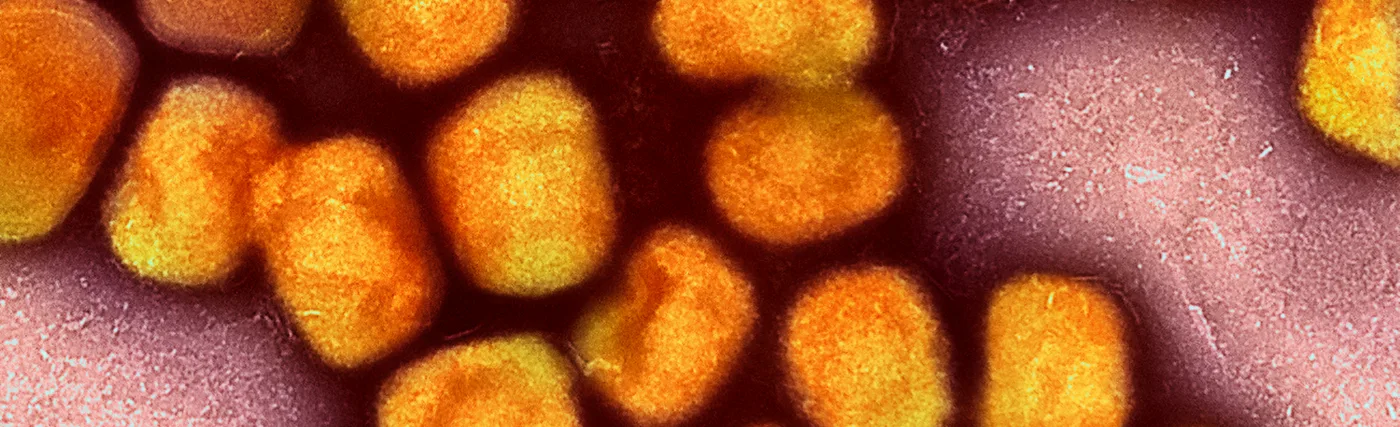
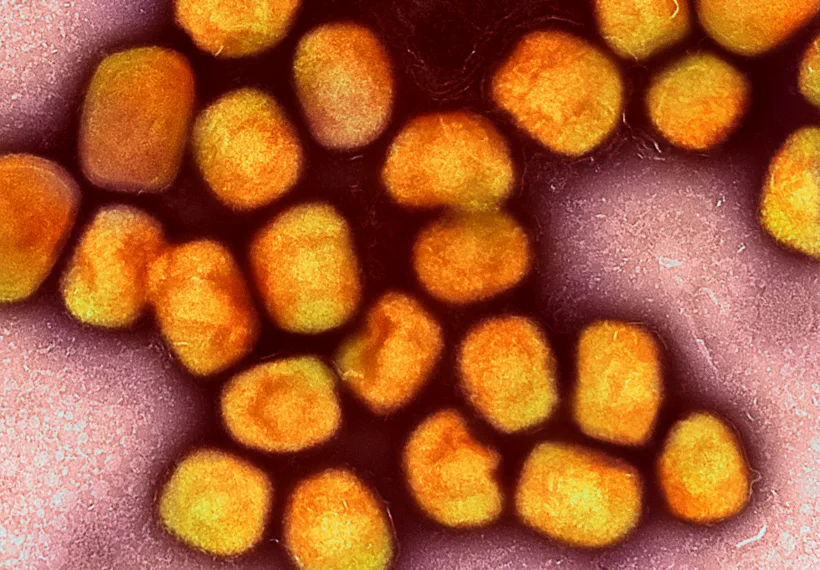
What is Monkeypox? On this episode, Neil deGrasse Tyson and comic co-host Chuck Nice learn essential information about the history of monkeypox, how it’s spread and how people can prevent themselves from getting it with epidemiologist Dr. Anne Rimoin.
Is this going to end up like COVID-19? Learn about the field of epidemiology, how monkeypox spreads, and where monkeypox comes from. Does it really come from monkeys? We take a deep dive into the history of monkeypox and zoonotic diseases. How long has it been around? How contagious is it? How does it transmit? How prevalent is it? Find out how to keep yourself and others safe from the disease.
NOTE: StarTalk+ Patrons can watch or listen to this entire episode commercial-free.
Transcript
DOWNLOAD SRTWelcome to StarTalk, your place in the universe where science and pop culture collide.
StarTalk begins right now.
This is StarTalk, Neil deGrasse Tyson here, your personal astrophysicist.
And I got with me Chuck Nice.
Chuck.
Hey, Neil.
All right, Chuck, we are overdue for a show on Monkeypox.
We so are.
It’s all the rage right now.
It’s all the rage.
The country’s gone monkeypox crazy, you know?
And so we found someone who is in high demand.
We’re just so delighted she could spare a few moments with us.
Please help me welcome Professor Anne Rimoin, an epidemiologist from UCLA.
Anne, welcome to StarTalk.
Thanks for having me.
Yeah, you’re in an endowed chair there.
Endowed Chair of Infectious Diseases and in Public Health named Gordon Levin.
Is that one person or is that like Gordon’s law?
Gordon Levin, the actor?
No, it’s two very generous people.
And so Gordon and Levin.
Levin, Gordon and Levin.
You got it.
You got it.
And you are uniquely qualified to be in this interview and enlighten us because you’ve spent decades on Monkeypox before anyone’s thinking.
You’re all in it before anybody in the rest of the world is thinking about it.
And you’re there in the Congo, the Democratic Republic of Congo, where Monkeypox was prevalent.
And so we have a million questions.
So are you just prescient or like did you know this was coming?
Yeah, yeah.
She wants to be ready for this moment.
So therefore 20 years ago, 20 years ago, before we get into your into all your business, does it say infectious diseases on your business card?
Like, what’s that like when you hand it to someone?
Do they want to claim no longer want to touch the card up a little bit?
They immediately hand to the card right back like this effect, you know, they curl their hands.
So what’s that like?
Well, it’s changed a lot over the last couple of years, let me tell you.
In the in the years before the pandemic, when you’d say epidemiologists, people would say, are you a skin doctor?
Epidermist?
Oh, yeah.
That was the that was the discussion beforehand.
Now today, everybody knows what an epidemiologist is.
We’ve hit the mainstream.
So very, very different, very, very different than it used to be.
And you have knowledge of value to people.
So that gives that has boosted your currency, presumably out there.
Right.
Yeah.
I think that people now actually understand what an epidemiologist.
Put that on the map right for us right now.
Well, an epidemiologist is studying patterns of disease in populations.
So that’s the point of epidemiology.
And in terms of an infectious disease epidemiologist, I’m focusing specifically on patterns of disease in populations.
I’m under trying to understand what the burden of infections are, who’s getting them, why are they getting them and how you can prevent them.
So the who, what, when and where, why?
So that is the mantra of an epidemiologist.
So, so you, your training is useful for any infectious disease.
You just, you happen to have specialty in Monkeypox.
So my training was actually just in community health sciences at, at UCLA.
I got my master’s degree there.
Well, it could go even way back further.
So my undergrad degree was history, but I specialized in African history.
Nice.
Uh, and, and had a particular interest in the Congo.
Uh, and, and then I went on to the, I went into the Peace Corps.
I was a Guinea worm eradication volunteer, which was, uh.
Oh, you, you and, and, and President Carter.
That’s right.
It is the Carter Foundation, uh, was funding it Carter Foundation.
We’ve had them on StarTalk.
It was great.
Just talk with the whole, the whole, the whole program was on Guinea worms.
So, yeah.
There you go.
So I worked on Guinea worm as a, as a Peace Corps volunteer.
And then when I finished, I went, got my master’s in public health at UCLA.
Did a little bit of work for the World Health Organization afterwards and polio eradication.
Something that’s been ringing the bell again recently.
I got, got news for you.
Back to the drawing board on that one.
Exactly.
Exactly.
Listen, I was working on it in India, Nepal and Africa.
So, and then, and then after that, I went and got my PhD in international health with a specialty in disease prevention and control.
And that department is actually now called Global Epidemiology.
So, my area of expertise is really global infectious diseases.
And epidemiologists do a lot of different things.
Some of us specialize in some things, some of us specialize in others.
I really specialize in infectious diseases, but I started working on Monkeypox when I started working in the Democratic Republic of Congo in 2002.
And at that point, I had just finished my PhD.
I started working at the National Institutes of Health.
And because I had worked in eradication programs, I worked in vaccination programs, disease surveillance.
When I got to Congo, I was a program officer, actually, at NIH, working on a project related to malaria and pregnancy and pregnant women in Kinshasa.
I sat down with the director of the National Laboratory, trying to understand the lay of the land.
In Kinshasa, yep.
Jean-Jacques Moyambe, who’s also been in the news quite a bit.
He is the Congolese doctor who really was the first person to discover Ebola in 1976.
He had been leading the work at the National Laboratory.
Well, you all know each other as you must, right?
Otherwise, you can’t communicate anything, right?
Well, I mean, that was the first person I sat down with.
I mean, he was really wonderful.
He started telling me about this problem of monkeypox and that there seemed to be a lot of cases.
But at the time, nobody was interested in analyzing these samples.
Monkeypox wasn’t on the radar.
Everybody was busy with other things.
And so I actually took my per diem and helped send those samples that had been sitting at the National Lab to a collaborating lab in Germany.
We analyzed and found out that there was a lot of monkeypox in there.
The supposition was that there might be some smallpox, sorry, some chickenpox, some monkeypox, but probably not all that much.
We were very surprised at how much monkeypox was there.
And so that was really the beginning of this project.
We demonstrated that there was a lot of monkeypox there.
And then we started an entire research program together to be able to really do intensified disease surveillance and show that there was a lot more there.
So you keep saying monkeypox.
I know.
I’m distracted by that too.
Yeah, you just keep saying monkeypox.
And I just want to know, first of all, I mean, I know I’ve done a bunch of reading because it’s all crazy now.
You know, everybody freaking out.
And I know that it’s, you know, a zoonosis virus.
We know that.
I hear these terms, clades.
I hear this term West African Basin, Congo Basin.
What is all of this?
What is all that?
So monkeypox.
Monkeypox is a zoonotic disease, meaning it starts in animals and it resides in animals, but can cross over into humans.
Monkeypox has traditionally been circulating in animals in sub-Saharan Africa.
Monkeypox is a misnomer.
Monkeypox is called monkeypox because it was first discovered in a monkey colony, a research colony in Denmark in 1958.
So they called it monkeypox.
But it really turns out this is a rodent pox.
No, it’s a Denmark pox.
In the state of Denmark.
I see what you did there, Chuck.
Thank you.
Sorry, we interrupted you.
Please repeat that with Denmark.
So it’s really a rodent pox.
Okay, go on.
It’s really a rodent pox.
And we think that the reservoir species are squirrels, pouch rats, other rodent species.
It probably actually infects a lot of different rodent species.
So monkeys can get it from rodents, just like humans can.
So wait a minute.
Let’s look at this chain of transference here.
Monkeys get it from the rodents.
Does it then mutate in the monkeys and then they give it to us?
Or do they just pass it along to us?
Monkeys can be incidental hosts.
In DRC, most often the cases of monkeypox in the Democratic Republic of Congo, most of the cases are associated with squirrels, other rodent species.
Sometimes people will pick up a monkey that may have a rash on it, may have been infected and they’ll get it from eating a monkey.
But really monkeys, primates, humans, non-human primates, were all incidental hosts.
This is real virus that starts in roads.
By the way, you’re scaring the crap out of me right now.
I’m just saying, maybe because I’m a city person, but you just said, oh, if you pick up a monkey and they have a rash, I’m saying, I’m never picking up a monkey.
That is not a thing that I ever think of doing.
And piggybacking on that, what Neil just said, I’m thinking, you know, Monkeypox.
Okay, here’s the deal.
I don’t hang out with monkeys.
I’m good.
I’m not going to run into any monkeys here in New York City, so I’m okay.
But now that you say it’s a rodent pox, you’re talking about rodents and squirrels, now I’m scared because we got a lot of those.
Yeah.
Yes, we do.
And that’s going to bring me…
I mean, you’re already ahead of the story, but let me tell you that is exactly some of the things that I’m worried about.
So here’s what we know about them.
What she just told you, Chuck, is let her finish the damn story.
Let me translate the professor’s comment.
I’m motivated by fear here.
I’m sorry.
So here’s the deal.
I’ll try and make this quick.
So the situation is this.
Monkeypox has been spreading for a very long time.
We didn’t know Monkeypox was out there because it looks just like smallpox, which is a cousin of Monkeypox.
And when we eradicated Monkeypox or smallpox from the planet, we stopped vaccinating against pox viruses.
And as a result, we started to see some chinks in our herd immunity armor.
And so what happened was is over time, as people were no longer vaccinated, people, when they came in contact with a rodent or a monkey, they would get infected.
This would be people below a certain age, right?
Well, it started out that what we really thought of this was, this is a childhood disease.
So in principle, it was children that were in contact with animals.
And actually, the very first case of Monkeypox in a human was discovered in the Democratic Republic of Congo in 1970 in a nine-month-old child who had not been vaccinated.
And this was when they were, at the end of Smallpox eradication, they were looking for every single case of a pox-like illness and making sure that it wasn’t a case of Smallpox.
That’s part of the certification process for eradicating the virus.
And so that’s how they discovered it was Monkeypox.
Once they eradicated Monkeypox or Smallpox in humans from the planet, what they did was they decided it’s really important to understand what’s going on with Monkeypox here.
Is this going to be important?
Is this something that’s going to fill the ecologic niche?
We don’t know.
So they started a program in DRC to monitor it.
And really the vast majority of the work that we, you know, is the basis of understanding Monkeypox is from 1981 to 1986 in DRC.
And it was really mostly children because you think about it, if everybody was vaccinated and they only stopped vaccinating in 82, it was really only young children that had any susceptibility to this virus.
And that’s why there’s so little known.
So when I got to DRC in 2002, you know, there were all these suspected cases of Monkeypox and a lot of rumors of cases increasing.
And it made sense because we no longer had immunity.
So we started this project in DRC, Professor Muayambe and I together, and we started doing intensified disease surveillance and we ended up having a real understanding that there was a huge increase in Monkeypox since the 1980s, since immunizations stopped.
So we wrote a paper.
It was in the Proceedings of the National Academy of Sciences and showed this 20-fold rise in the incidence of Monkeypox since the end of smallpox vaccination campaigns.
And that should have been a big warning to everybody because that just showed that listen, as immunity goes down and exposure goes up, you’re going to see cases go up.
Let me go back a little bit.
If, we all know, many people know, that the immunity that some milk maids had to smallpox came from their exposure to cowpox, are you saying that the people most susceptible today to monkeypox are people young enough to have not gotten a smallpox vaccine?
Because does a smallpox vaccine protect you against monkeypox in today’s world?
Neil, that is exactly what I’m saying.
So how old do you have to be to have a smallpox vaccine?
I’ve got a scar.
I got my smallpox.
How about you, Chuck?
Yeah, I don’t know.
75?
What’s that do?
You’re too young.
Chuck, you got a scar on your shoulder?
I got one.
No, I don’t.
Chuck, were you born here in the United States?
Okay, well, then you wouldn’t have been vaccinated.
Vaccination in the United States stopped in 71.
So now, how does this spread?
So wait a minute, just another point here, that it is, smallpox vaccination probably does provide some protective immunity, but we don’t really know how much in this particular outbreak.
And because there are all these different modes of transmission that aren’t the standard modes of transmission that we’ve been studying all these years, we just don’t know for sure.
So Chuck, you don’t have to feel that jealous of Neil.
You guys can both be jealous of me.
I’ve been vaccinated and last, I was vaccinated in 2004.
So sooner than both of you, just because I work on Monkeypox.
You got the industrial strength, super concentrated.
Yeah, MPSV like solution.
Okay, so this is on the skin.
So can we presume it doesn’t ever go airborne?
Well, I always say we should be humble about what we know and what we don’t know about this virus.
What we know about this virus is really, as I mentioned before, really concentrated in those early studies in the 1980s in villages, in remote rural villages in Congo.
And that is a very different context.
And so you can imagine that the studies that we have, we have some animal model studies, we have a little bit of knowledge from what happened in the 2000s.
There was a small outbreak in the United States in 2003, 47 cases from imported Gambian rats that were put into a facility next to prairie dogs.
So-
Why would anyone import a rat?
What’s that?
What is going on?
Bats and rats and monkeys and what is going on?
Don’t shoot the messenger here.
I’m just thinking of the sewer rats in New York.
Look, this is our place.
Tell me about it.
Import African rats into the sewers?
The exotic pet trade.
That’s a whole different topic.
That’s another another, oh my gosh.
How do we stop this?
Well, that’s a really good question.
So as we’re talking about these, so the way that we stop it is we have to get in front of it.
How do we get in front of it?
We have to have really good disease surveillance.
We have to really have good situational awareness.
We have to have great testing.
Testing has to be widely available to everyone that even suspects that they’ve been, that they have potentially been exposed.
You left out the most obvious answer.
Stop touching each other.
I’m all for that one.
I’m for that one.
Well, these Zoom calls make it much easier.
I know, I know.
Until Zoom figures out a way to transmit a virus through the computer, the Zoom call is the great protector of us all.
Well, there you go.
But the truth is, is it’s gonna be through a variety of things.
So gotta have really good situational awareness.
That’s testing, good clinical definitions, clinicians know what to look for.
Then we all have really good vaccines.
Now, there are a couple of vaccines that are out there.
There’s the Genio’s vaccine, which is this vaccine.
It’s a two dose vaccine.
And that’s what’s being distributed right now, but it’s a really short supply.
So we just don’t have enough of it.
And we don’t really know how effective it’s going to be in particular in this scenario.
So every day is a new set of data for you.
Every day is a new set of data.
And there are a lot of knowledge gaps, a lot of things we have to understand.
We have to be humble about what we know.
We have a good base to start from, but there’s a lot more we need to know.
And, you know, you’ve been in academia.
It’s really, it takes a lot of time to be able to get studies up and running to be able to understand what’s happening.
I mean, it’s not just that today there’s a new virus and you can turn around and start it.
You have to write protocols.
You have to get funding.
You have to get ethics approval.
You have to then have the logistics of rolling these things out.
So it does take a lot of time to get this done.
And this is the fact we just don’t have the funding and the infrastructure in place to be able to do what we need to do.
How transmissible is this?
How can I get it?
Actually, how can I not get it?
That’s the real question.
That’s the real question.
Yeah.
That’s a really excellent question.
It transmits through various routes.
It’s not as transmissible as something like SARS-CoV-2, virus that causes COVID-19.
It transmits most efficiently from person to person, skin to skin contact, sustained contact, very close contact, but it can also transmit through what we call fomites, contaminated objects, so sheets, towels, clothing, contaminated objects.
And so it’s probably much more contagious the closer you are, the more virus you’re in contact with.
And so when you’re in contact with the lesions that it causes, direct contact, that is probably the most efficient route for transmission.
And that sexual transmission is a perfect example of that.
I remember reading about the milk maids.
They were very specific about it.
They would have to have an open sore while they were milking a cow with cowpox.
Exactly.
So if my skin is intact, how does someone else’s monkeypox get into my skin?
Well, might not.
I mean, the skin can be a good barrier.
It just, it really depends because you can have little-
I have thick skin?
I’m a thick-skinned person, okay.
You could have, you might not know how thin your skin actually is until you try, you test it.
Until you do it, okay.
So that’s one way.
I mean, you could also get it through respiratory secretions.
You could be breathing it in, inhaling it, but it’s, there are a variety of different ways to get it.
But I think-
Respiratory secretion, that would be like a sneeze or a cough.
Right, right.
So bigger respiratory droplets that you might expel when coughing or sneezing.
Beyond skin legions, how might monkeypox also show up on your body?
Monkeypox also, it infects, you’ll have legions in the oropharynx, it can be down your throat, it causes what’s called a cytokine storm, which is similar, SARS-CoV-2 also does that.
So you can see, you’re going to have a massive inflammatory response.
There were just two cases of individuals in Spain that died from brain inflammation, from encephalitis.
And so this can be very…
Triggered by the monkeypox.
Triggered by monkeypox.
So this can be a very serious disease.
Fetality rates are low relative to other things.
And in particular, this West African clade, not the Congo Basin clade, so the West African clade is what’s circulating and that tends to be milder.
But there have been a few deaths that of course, the more cases that we see, the more likely that is.
And of course, when it gets into people who might have a suppressed immune system, it could be a lot worse.
Can it cause blindness?
It can.
It can.
And we’ve seen many instances of that in DRC where we have a fair number of cases that can in fact cause blindness.
If the virus gets into your eye, it can really do some damage.
So, and a reminder too, it isn’t even just about these very acute problems that we have really learned in the last several years how important it is, how viruses can create a lot of long-term consequences.
It isn’t just about the acute infection today, which is substantial and painful and scary and can be very distressing.
But we’ve learned a lot about what viruses can do and causing long-term consequences.
I think that once we get more vaccine into the system and have better surveillance and better testing, that we will have this under much better control.
And I do not anticipate that this will end up being something like SARS-CoV-2, where you see that everybody is going to have to be taking precautions all the time.
That’s a very different kind of virus.
It spreads very differently.
I know we’re getting out of time, but this is a philosophical question.
Because in America, we tend to think of infectious disease as something that we need to protect ourselves from.
But the more and more it looks like the world is closing in on us.
So do we need to change our thinking?
Like it is an investment for us to fight disease outside of this country, so that we can protect ourselves inside the country?
Chuck, absolutely.
I mean, I say this all the time.
An infection anywhere is potentially an infection everywhere.
And we really do need to take that to heart.
Because you live in a global community.
And what happens elsewhere eventually can affect you yourself at home.
And so that’s why we need to be doing better.
We could have averted this situation with Monkeypox.
If we had invested in helping countries like DRC be able to understand what was happening and get in front of it.
But we failed to do so and now we are paying the price.
And this falls under, I also say this quite a bit, it’s much easier to stay out of trouble than it is to get out of trouble.
And now we are in get out of trouble mode, once again, when we had the writing on the wall for a very long time.
Well, all I can say is you and your fellow epidemiologists, especially those who are specifically focused on legislation that affects public health, I don’t know where we’d be without you.
I mean, maybe we’d all still be in the caves, dying of everything else that we look at these woodcuts and paintings of the Black Plague and all of this.
So I don’t think you guys are hero worshiped as much as you should be.
And let me add to that, that Chuck, I don’t know if you noticed, the candor with which Anne spoke of what they don’t yet know.
That’s how you know she’s a real academic.
But what happens is, Anne, what’s wrong with you?
You spent your life and you still don’t know?
I did two hours of research and I know way more than you on the internet.
And I’m going to have a podcast and I’m going to tell everyone what I do know and you should listen to me.
How come you don’t know stuff when I was on TikTok and I just learned everything about it?
So Anne, my last question to you, because this is a shared space in our two Venn diagrams.
What do you do about misinformation and rampant or people taking what they think is information and politically weaponizing it, socially, culturally weaponizing it?
What do you do as a public health professional?
As a public health professional, I try to go on podcasts, for example.
I like audiences here.
Why did we think of that?
No, but it’s really true.
What things that you have to do are you have to get out there in front of it, and you have to be vocal, and you have to get in to as many different places as you possibly can.
And you don’t always want to just talk to the people who are agreeing with you.
You want to talk to everybody.
And you have to be willing to listen to everybody too, because it’s reasonable to have questions.
It’s reasonable to question things, including questioning scientists.
But sometimes you end up with social media today, the speed with which disinformation gets out there, it’s very hard to combat.
It’s very hard to get in front of.
Just like the quote from Mark Twain, in the early morning, you know, when you wake up, a lie can make it halfway around the world before the truth has a chance to put on its pants.
I’m maybe misquoting it a little bit, but that’s pretty much what he said.
Anyhow, Anne, this has been, I don’t want to say delightful because you’re telling us about infectious diseases, but it’s been highly enlightening and informative.
And as Monkeypox continues to develop, either to go back in the can or escape even more, can we get you back on and get an update?
Absolutely.
I’ll be happy to come on any time.
Delighted.
Thank you very much for being on StarTalk.
Chuck, always good to have you.
Always a pleasure.
And Anne, where do we find you on social media?
You can find me on Twitter at A Rimoin.
And Rimoin is R-I-M-O-I-N.
And also on Instagram at AnneRimoin.
Okay.
Excellent.
We’ll look for you there.
Keep us enlightened.
Keep us informed.
Keep us smart.
And we’ve already been doing a great job at that.
All right.
This has been StarTalk.
I’m Neil deGrasse Tyson, your personal astrophysicist.
As always, keep looking up.

 Become a Patron